No, not the breakfast, which is more enough to sustain a human for a week, but the Highlands. The real heart of the Scotland. The full Scottish.
We had been in the Lowlands—Stirling, Glasgow, Edinburgh and hiked the Fife coast. Lovely enough in an English sort of way—rolling hills, farmland, green fields. In parts, urban, suburban, and industrial. Four lane motorways, large power plants, train stations with commuter lines, ports with gantry cranes. Yes, it is Scotland, we know. And we thoroughly enjoyed it.
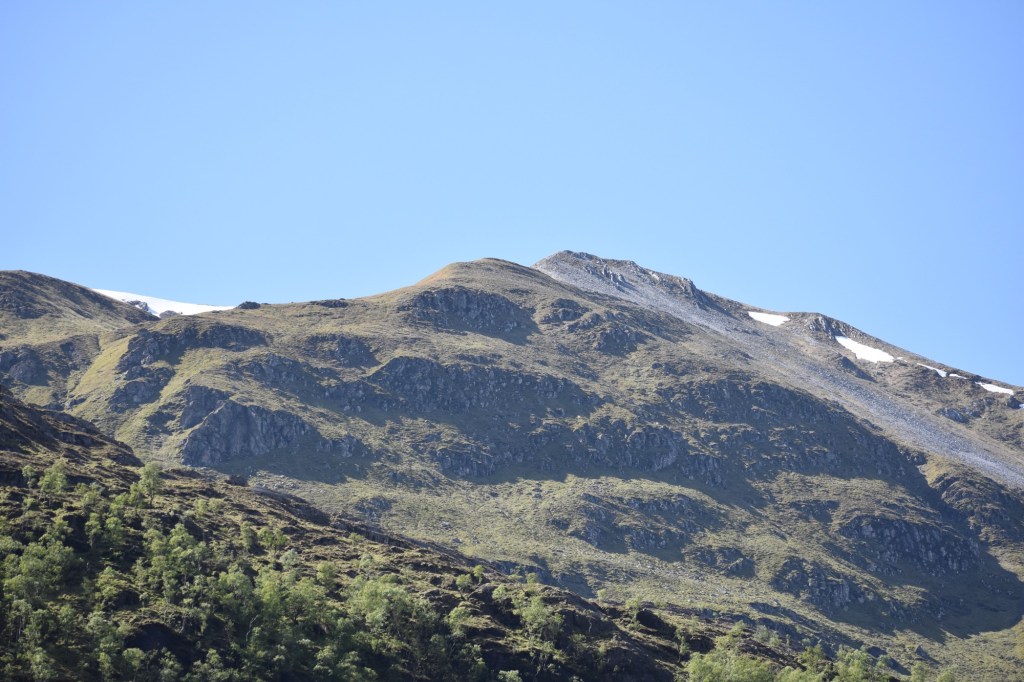
But we had also come for the Highlands. Our trip ten years ago around Skye, Oban and Glencoe had whetted our appetite for the wildness and scenery of the northwest of Scotland.
We started in Inverness. While the town isn’t known for its charm, the River Ness does create some views.
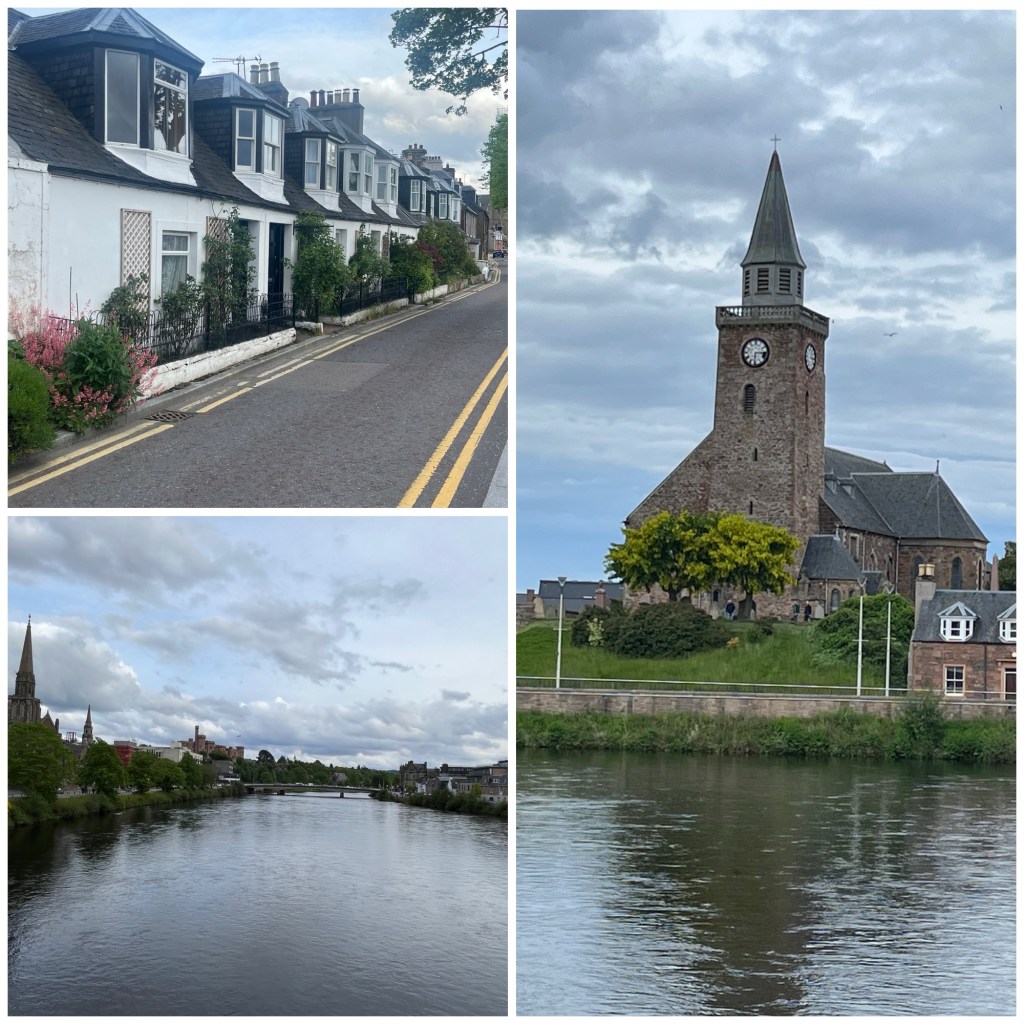
The city is really a great base for a visit to the Culloden Battlefield, the last stand of Scottish resistance to English domination. Definitely a must-do. Over a thousand clansmen killed in an hour with minimal losses by the government forces. The story of Bonnie Prince Charles who was defeated at Culloden is often romanticized but like most wars, the reality is something far different.
From there we chartered a course around Wester Ross, sticking close to the coastline, starting with Ullapool.
Ullapool. We struggled with the pronunciation of the town. It looked simple enough and relatively straightforward compared to many Scottish names. It was the first syllable that was hard. — uu-lapool? O-lapool? All-lapool? We were corrected several times by locals. Never sure we got it right.
A relatively new town, Ullapool was created in 1788 by the British to capitalize on the local herrings runs. And we arrived in time for the biennial lugger festival, celebrating the traditional sailing boats (https://luggerfest.wordpress.com/) used in the area. The celebration centered around the harbor. Locals gathered to listen to music, get a bit to eat, and sign up for rides in the antique and reproduction boats proudly displayed in the marina. A bit of music here and there and several of food trucks selling seafood. We particularly enjoyed the fresh oysters a local oysterman was selling for £1.50 each. Best we have had in ages at price we could afford. A world apart from London’s £8 an oyster. Why didn’t we eat more?

Lots of families, baby strollers and friends meeting up. Fun, festive and very small townish. Other than us, hardly a tourist in sight. Of course, the ferry terminal dominates the town with its twice a day sailings to the islands of Lewis and Harris. Plenty of fish and chip joints, nicknamed “chippies” appropriately. And a very small protest in support of Palestinians. Even the cloudy skies and bit of rain didn’t seem to tap down the fun.
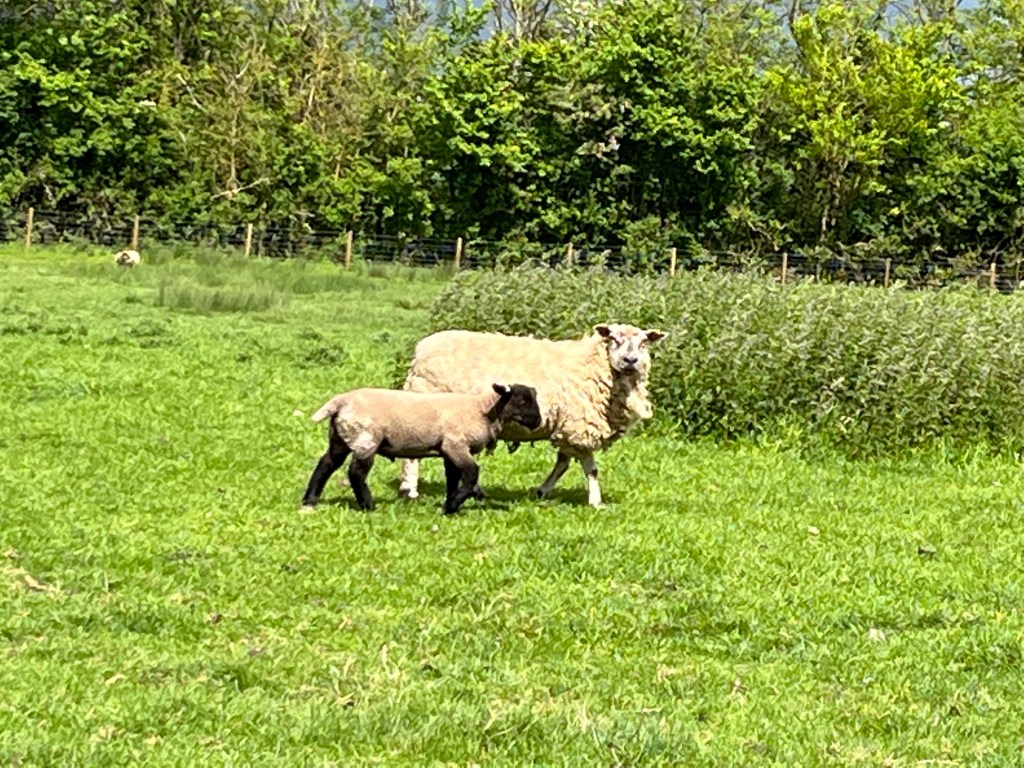
We booked the Clachan Garden B&B for our two days in the Ullapool area. (https://www.clachangardenbandb.co.uk/) It turned out to be the best decision we could have made. The place was charming—the setting amazing. It was in a valley of farmland at the end of Loch Broom—basically a long fjord— stretching out to the Atlantic Ocean miles west. Sheep and tiny lambs were frolicking in the fields surrounding the B&B. Too cute. Working dogs and farm equipment on both sides of the narrow one lane road. Idyllic, yes. But what made the B&B were the hosts, Stephen and Margaret Monroe. They had moved out here many years ago from Newcastle for a simpler life. He was a musician, a classical guitar teacher, a lover of books and she had worked for the local government. They bought a post office to run in Ullapool, then opened a cafe, and finally settled on a B&B. They were both so busy it was hard to see it as a simpler life.
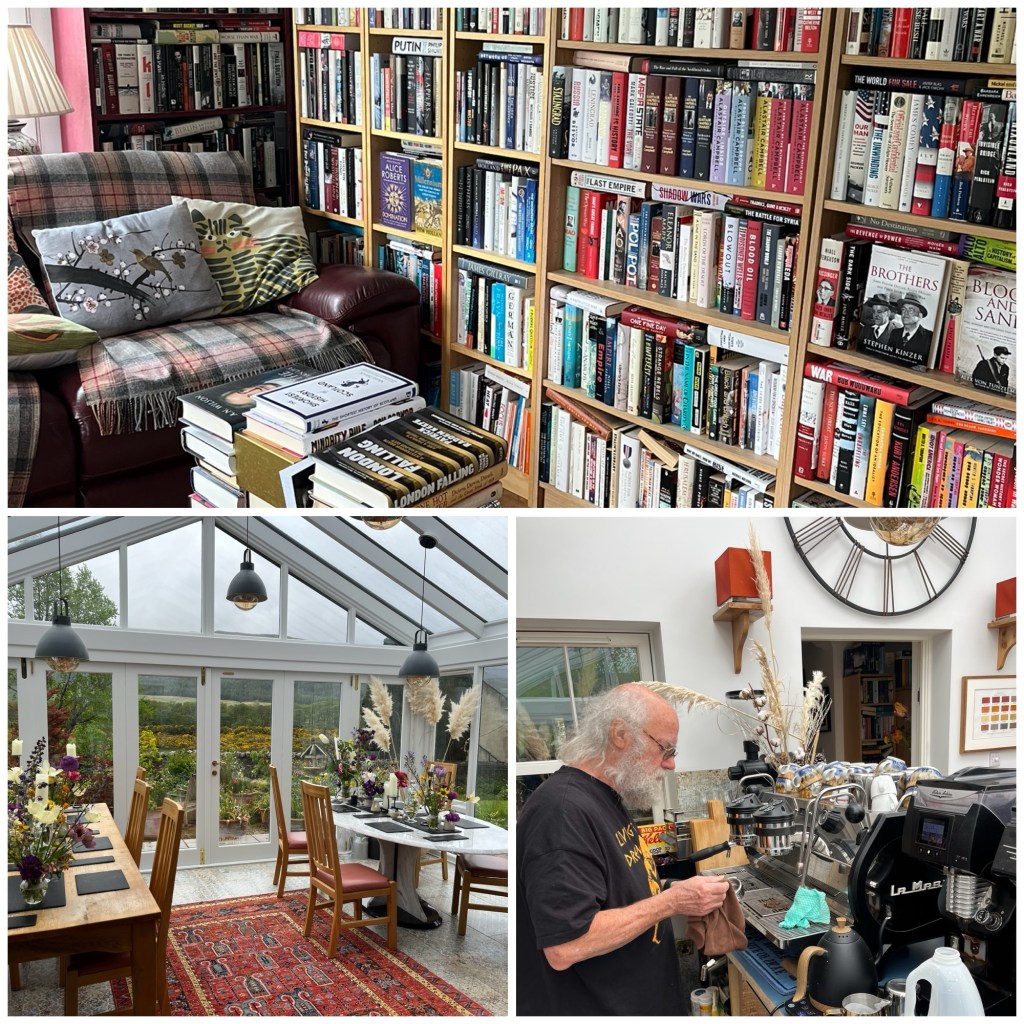
We could have snuggled down in their library forever and Steven encouraged us to thumb through his vast collection. In fact, books lined almost every wall of the cottage. Our two bedrooms rooms felt curated and cozy — named Miss Rose and Mrs. Peacock. And the sunny breakfast room was where we seemed to settle before and after each day of touring. Then there were the six homemade jams for the breakfast toast (got the recipe for the caramelized pear jam from Margaret). And for us the coup d’grace was the La Marzocco espresso machine—not just any old espresso machine but the Rolls-Royce of machines! Stephen had purchased it in — of all places our home town of Seattle! He handled it like a pro—best cafe we had on trip. Yep, Steven and Margaret spoiled us.
On their advice we drove the road to Lochinver on a gray, cloudy Sunday — an appropriate backdrop for the seascapes and scenery. It is reputed to be one of the most beautiful drives in Scotland. We won’t argue with that! A narrow lane with plenty of pull-outs for cars to step aside for oncoming traffic. A few working vans, and locals who knew the road’s dips and curves well enough to zip along. We crawled along, oohing and ahhing at the sights. Unfortunately, the highly recommended pie shop in Lochinver was closed on Sunday but we had lunch with the locals and their dogs in a six table sandwich shop.

It was hard to leave Clachan Garden B&B, but we had a schedule to maintain! We drove through Wester Ross, past both salt and fresh water lochs, waterfalls, through miles of wild rhododendron woodlands, past fields of sheep, a few ruins, but very few Highland cows, between 3000 foot mountains and across glens of rape seed and blue bells. Most of the narrow two-lane roads posted for 60 miles per hour while we preferred 50 or even 40.

We did stop at the amazing Inverewe Gardens—a Michelin 3 star site. And it was. A beautifully maintained botanical garden begun over a 150 years ago.

We ended up just outside of Fort William in the community of Onich. Please, if you are ever there, don’t judge Fort William by the miserable traffic. Park your car and walk down High Street — maybe a quarter mile of lovely old gray stone buildings, a beautiful small park in front of the church and local shops. Delightful!

We planned the trip not only to see the scenery, it also to walk through it. We’re not serious backpackers, but we love a good day hike and our quick visit to the area ten years ago had whetted our appetite. Not enough time back then to take a hike, but just enough for a quick stop to snap a selfie. We vowed to come back. And here we were.
Steall Falls is one of the famous hikes, and our host in our vacation rental highly recommended it. As we expected over a school holiday, it was packed. A steep, rocky climb eventually opened to a meadow and the falls.

Next we drove to the Glencoe National Park and stopped at the visitor center for a recommendation for a 2-3 hour hike that would not be overwhelmed with people, strollers and dogs. Armed with that advice we headed out, past the trail head that led to the most famous path to the Three Sisters or the loch where dozens of cars and tour buses were parked. When we got to our destination we realized it was exactly the spot where we had stopped ten years before. And this time, almost alone, we walked the trail for an hour or two.


We wrapped up our Wester Ross tour with a night in the Dornach Castle (more on Dornach in our next blog) complete with another whiskey tasting and then returned to Inverness to drop off our rental car. We hopped the Caledonian Sleeper night train back to London. An adventure in itself in dealing tiny, tiny spaces. Goodbye to driving on narrow lanes and hello London.
Yes, we’d done the full Scottish.