The Full Scottish

No, not the breakfast, which is more enough to sustain a human for a week, but the Highlands.  The real heart of the Scotland.  The full Scottish. 

We had been in the Lowlands—Stirling, Glasgow, Edinburgh and hiked the Fife coast.  Lovely enough in an English sort of way—rolling hills, farmland, green fields. In parts, urban, suburban, and industrial.  Four lane motorways, large power plants, train stations with commuter lines, ports with gantry cranes.  Yes, it is Scotland, we know.  And we thoroughly enjoyed it.

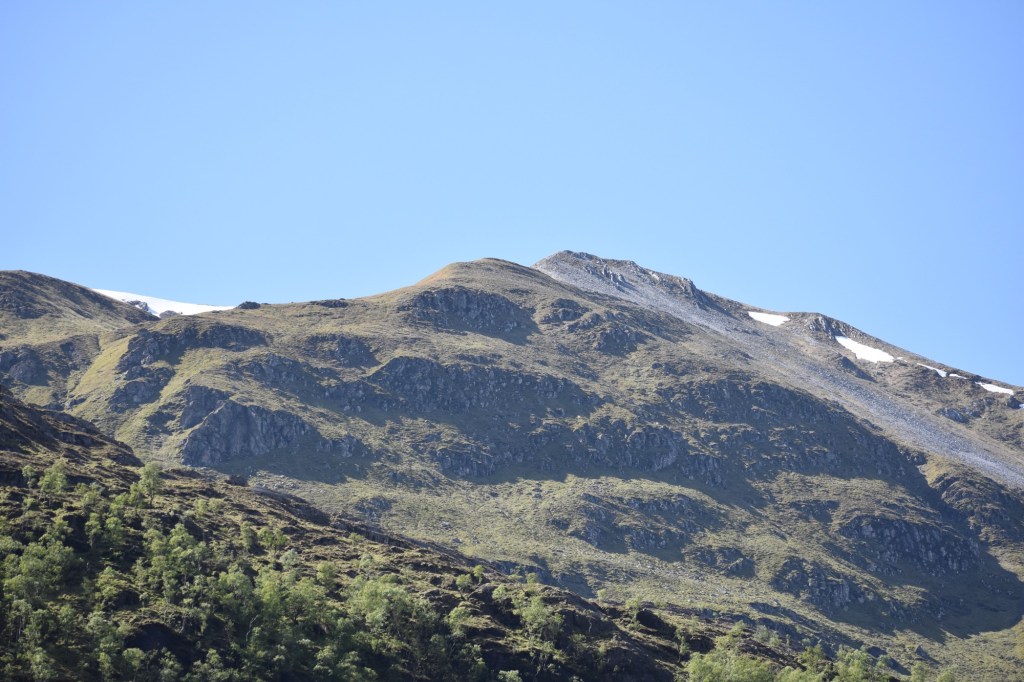
But we had also come for the Highlands.  Our trip ten years ago around Skye, Oban and Glencoe had whetted our appetite for the wildness and scenery of the northwest of Scotland. 
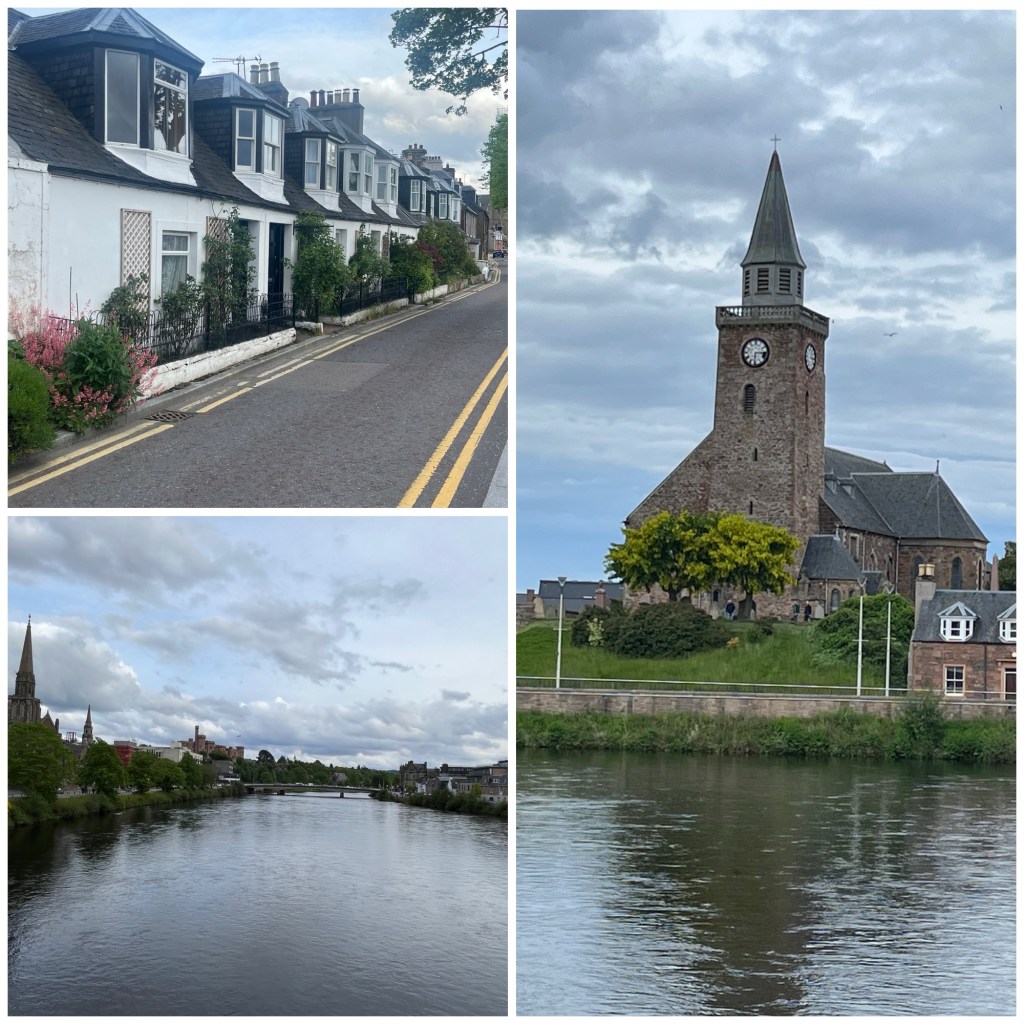
We started in Inverness. While the town isn’t known for its charm, the River Ness does create some views.
The city is really a great base for a visit to the Culloden Battlefield, the last stand of Scottish resistance to English domination.  Definitely a must-do. Over a thousand clansmen killed in an hour with minimal losses by the government forces. The story of Bonnie Prince Charles who was defeated at Culloden is often romanticized but like most wars, the reality is something far different.

From there we chartered a course around Wester Ross, sticking close to the coastline, starting with Ullapool.  

Ullapool.  We struggled with the pronunciation of the town.  It looked simple enough and relatively straightforward compared to many Scottish names.  It was the first syllable that was hard. — uu-lapool?  O-lapool?  All-lapool? We were corrected several times by locals.  Never sure we got it right.

A relatively new town, Ullapool was created in 1788 by the British to capitalize on the local herrings runs. And we arrived in time for the biennial lugger festival, celebrating the traditional sailing boats (https://luggerfest.wordpress.com/) used in the area. The celebration centered around the harbor. Locals gathered to listen to music, get a bit to eat, and sign up for rides in the antique and reproduction boats proudly displayed in the marina.  A bit of music here and there and several of food trucks selling seafood.  We particularly enjoyed the fresh oysters a local oysterman was selling for £1.50 each.  Best we have had in ages at price we could afford.  A world apart from London’s £8 an oyster.  Why didn’t we eat more?

Lots of families, baby strollers and friends meeting up.  Fun, festive and very small townish.  Other than us, hardly a tourist in sight.  Of course, the ferry terminal dominates the town with its twice a day sailings to the islands of Lewis and Harris. Plenty of fish and chip joints, nicknamed “chippies” appropriately. And a very small protest in support of Palestinians.  Even the cloudy skies and bit of rain didn’t seem to tap down the fun. 

We booked the Clachan Garden B&B for our two days in the Ullapool area. (https://www.clachangardenbandb.co.uk/) It turned out to be the best decision we could have made.  The place was charming—the setting amazing.  It was in a valley of farmland at the end of Loch Broom—basically a long fjord— stretching out to the Atlantic Ocean miles west.  Sheep and tiny lambs were frolicking in the fields surrounding the B&B.  Too cute. Working dogs and farm equipment on both sides of the narrow one lane road.  Idyllic, yes.  But what made the B&B were the hosts, Stephen and Margaret Monroe.  They had moved out here many years ago from Newcastle for a simpler life.  He was a musician, a classical guitar teacher,  a lover of books and she had worked for the local government.  They bought a post office to run in Ullapool, then opened a cafe, and finally settled on a B&B. They were both so busy it was hard to see it as a simpler life.
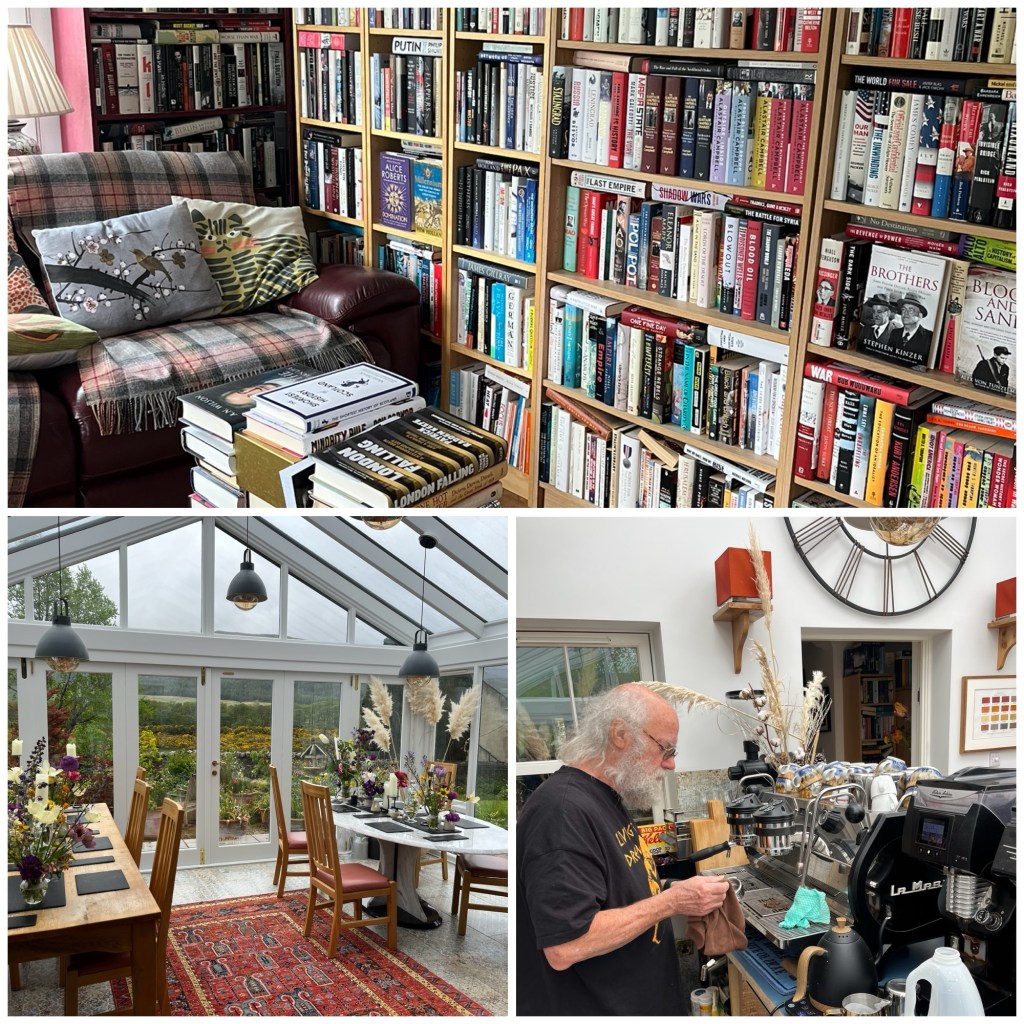
We could have snuggled down in their library forever and Steven encouraged us to thumb through his vast collection.  In fact, books lined almost every wall of the cottage.  Our two bedrooms rooms felt curated and cozy — named Miss Rose and Mrs. Peacock. And the sunny breakfast room was where we seemed to settle before and after each day of touring. Then there were the six homemade jams for the breakfast toast (got the recipe for the caramelized pear jam from Margaret).   And for us the coup d’grace was the La Marzocco espresso machine—not just any old espresso machine but the Rolls-Royce of machines! Stephen had purchased it in — of all places our home town of Seattle! He handled it like a pro—best cafe we had on trip. Yep, Steven and Margaret spoiled us.  

On their advice we drove the road to Lochinver on a gray, cloudy Sunday — an appropriate backdrop for the seascapes and scenery.  It is reputed to be one of the most beautiful drives in Scotland. We won’t argue with that! A narrow lane with plenty of pull-outs for cars to step aside for oncoming traffic.  A few working vans, and locals who knew the road’s dips and curves well enough to zip along.  We crawled along, oohing and ahhing at the sights.  Unfortunately, the highly recommended pie shop in Lochinver was closed on Sunday but we had lunch with the locals and their dogs in a six table sandwich shop.  

It was hard to leave Clachan Garden B&B, but we had a schedule to maintain!  We drove through Wester Ross, past both salt and fresh water lochs, waterfalls, through miles of wild rhododendron woodlands, past fields of sheep, a few ruins, but very few Highland cows, between 3000 foot mountains and across glens of rape seed and blue bells.  Most of the narrow two-lane roads posted for 60 miles per hour while we preferred 50 or even 40. 

We did stop at the amazing Inverewe Gardens—a Michelin 3 star site. And it was. A beautifully maintained botanical garden begun over a 150 years ago.

We ended up just outside of Fort William in the community of Onich.   Please, if you are ever there, don’t judge Fort William by the miserable traffic.  Park your car and walk down High Street — maybe a quarter mile of lovely old gray stone buildings, a beautiful small park in front of the church and local shops.  Delightful!

Church and park in Fort William

We planned the trip not only to see the scenery, it also to walk through it.  We’re not serious backpackers, but we love a good day hike and our quick visit to the area ten years ago had whetted our appetite. Not enough time back then to take a hike, but just enough for a quick stop to snap a selfie. We vowed to come back. And here we were.

Steall Falls is one of the famous hikes, and our host in our vacation rental highly recommended it.  As we expected over a school holiday, it was packed.  A steep, rocky climb eventually opened to a meadow and the falls.

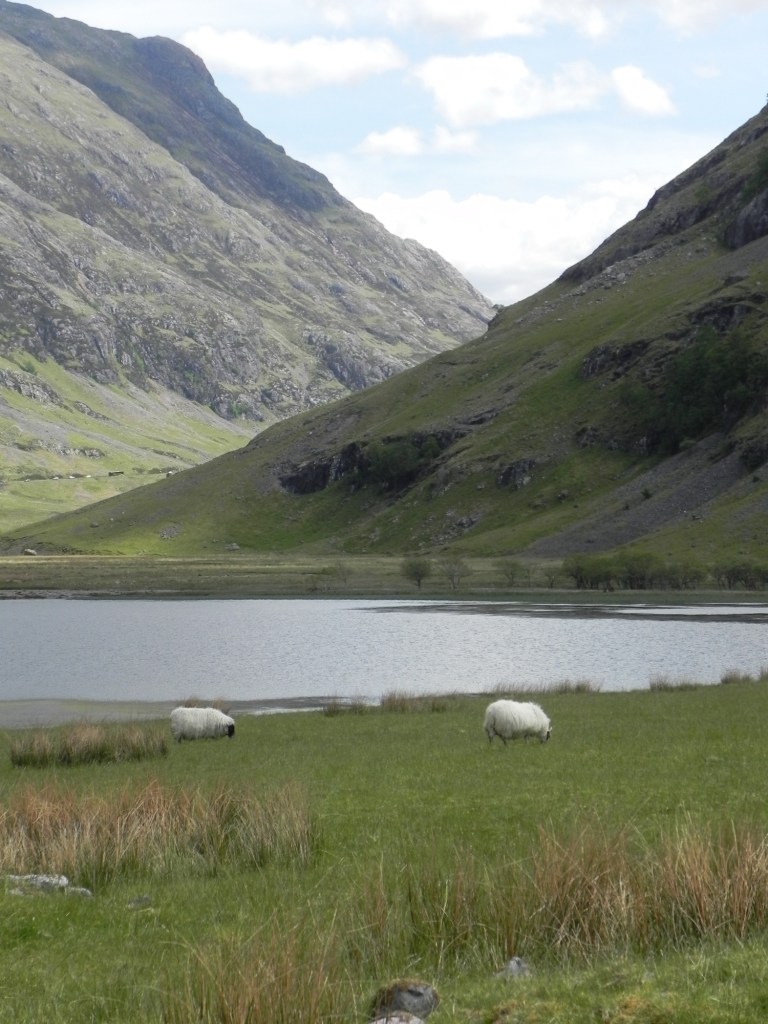
Next we drove to the Glencoe National Park and stopped at the visitor center for a recommendation for a 2-3 hour hike that would not be overwhelmed with people, strollers and dogs.  Armed with that advice we headed out, past the trail head that led to the most famous path to the Three Sisters or the loch where dozens of cars and tour buses were parked.  When we got to our destination we realized it was exactly the spot where we had stopped ten years before.  And this time, almost alone, we walked the trail for an hour or two. 

Now on top with then below

We wrapped up our Wester Ross tour with a night in the Dornach Castle (more on Dornach in our next blog) complete with another whiskey tasting and then returned to Inverness to drop off our rental car. We hopped the Caledonian Sleeper night train back to London. An adventure in itself in dealing tiny, tiny spaces. Goodbye to driving on narrow lanes and hello London.

Yes, we’d done the full Scottish.
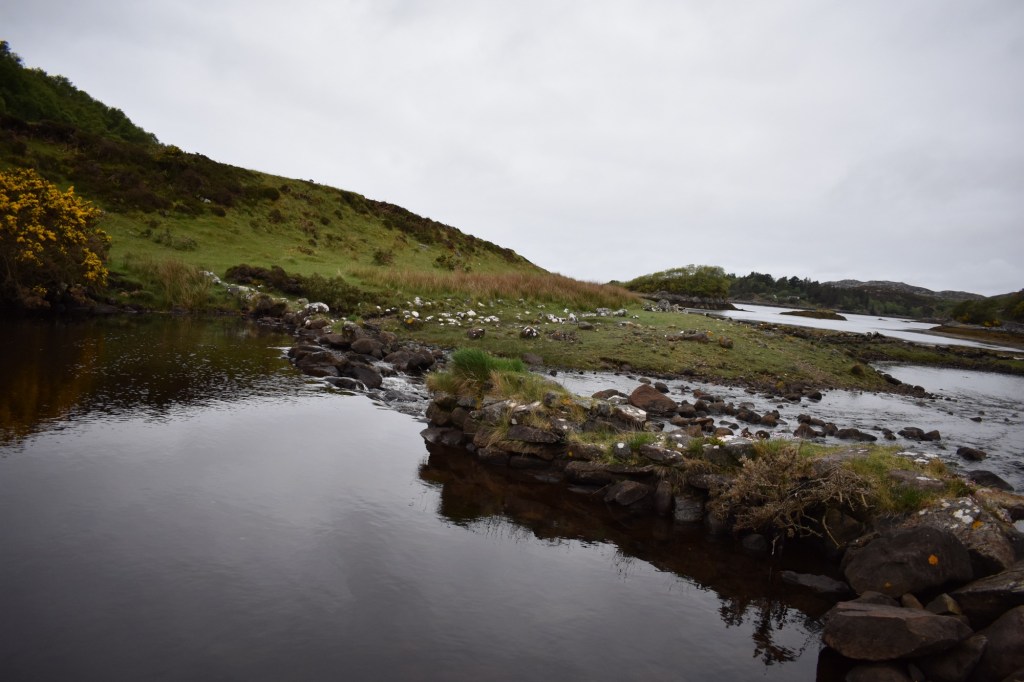
 

Off the Beaten Coastal Path

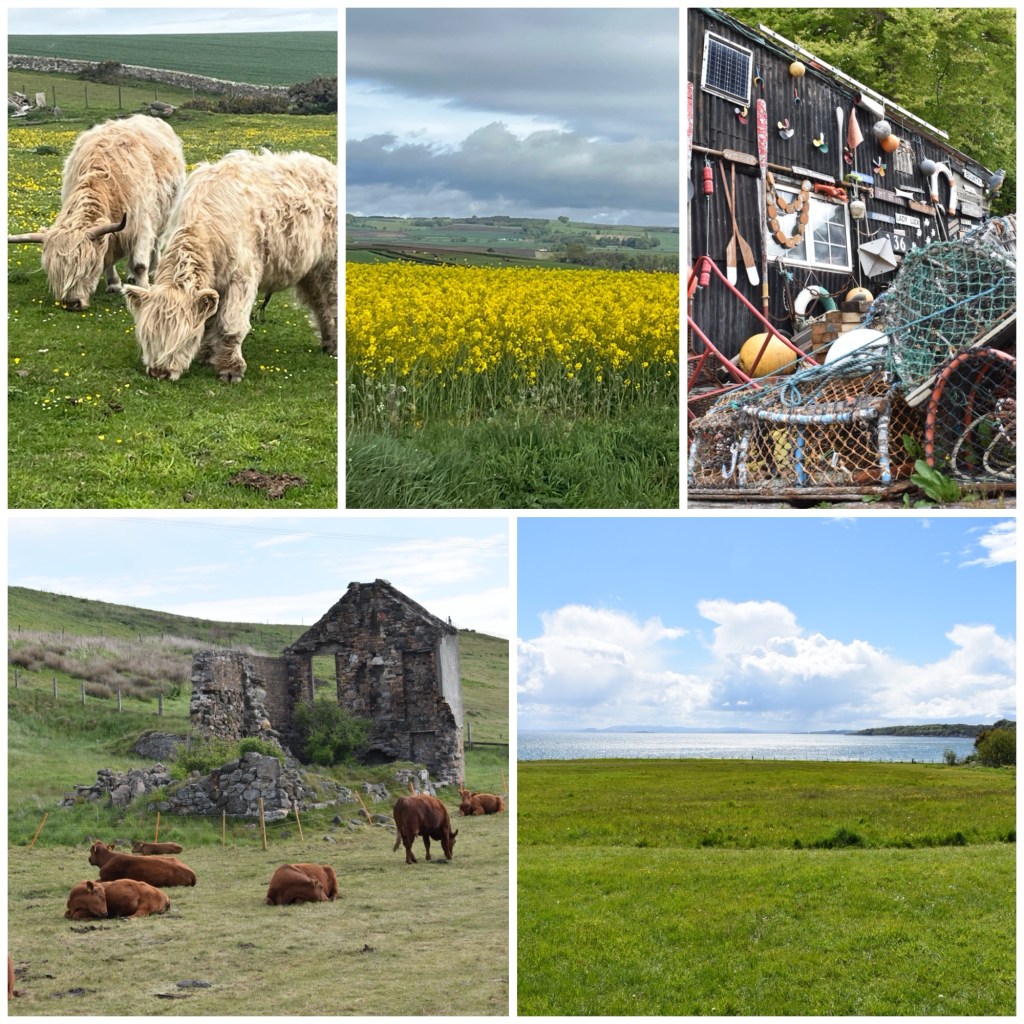
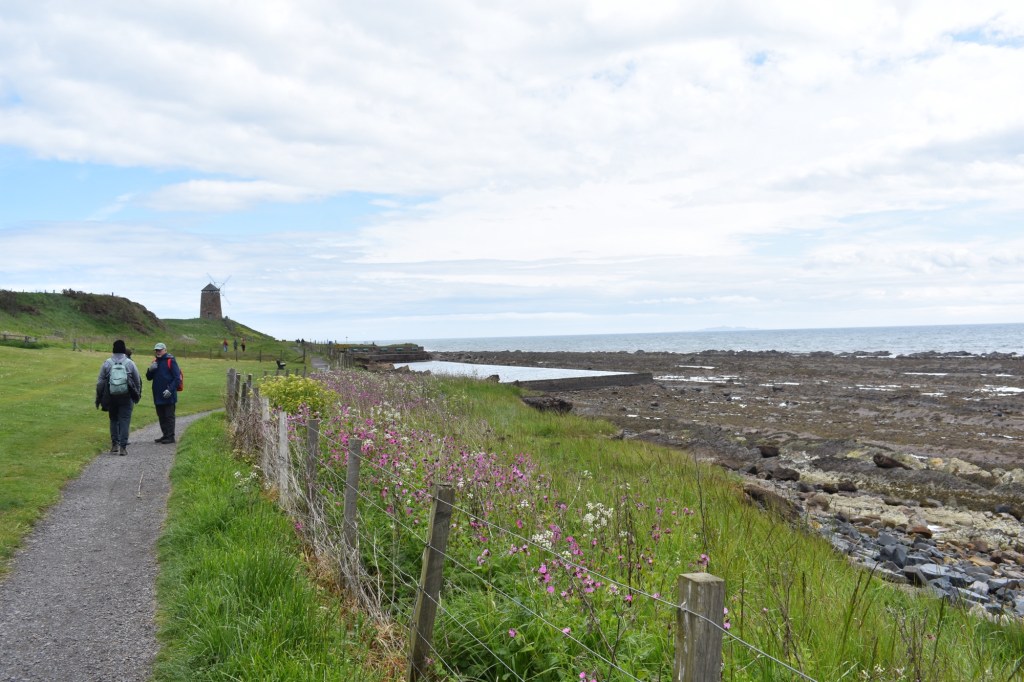
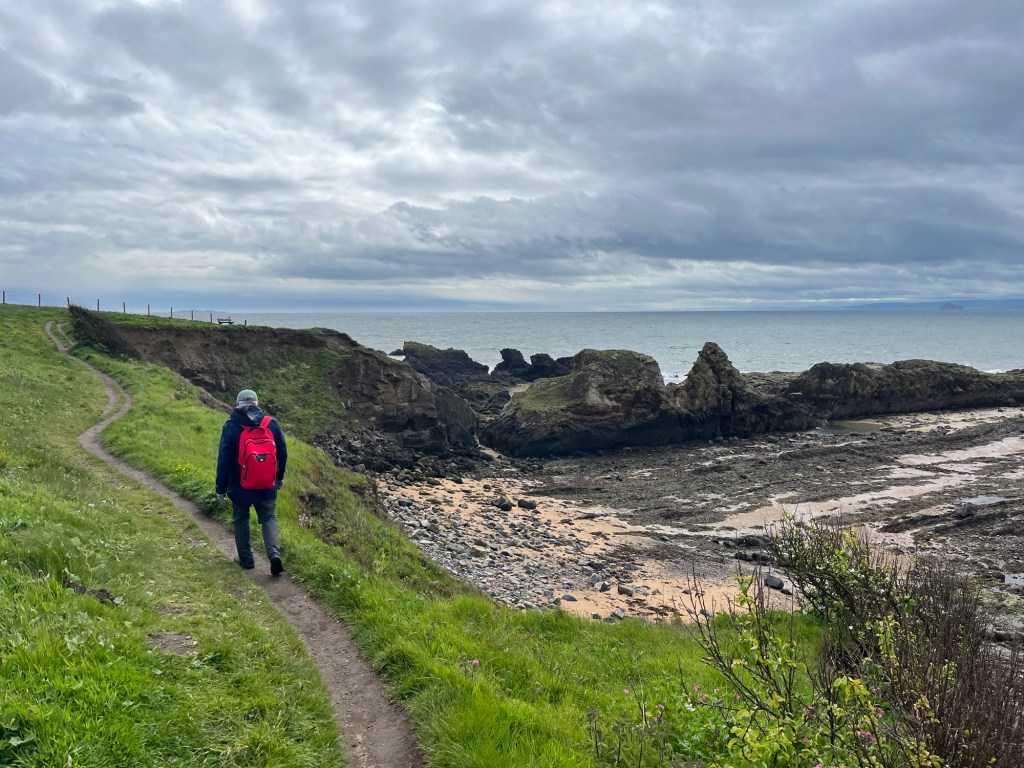
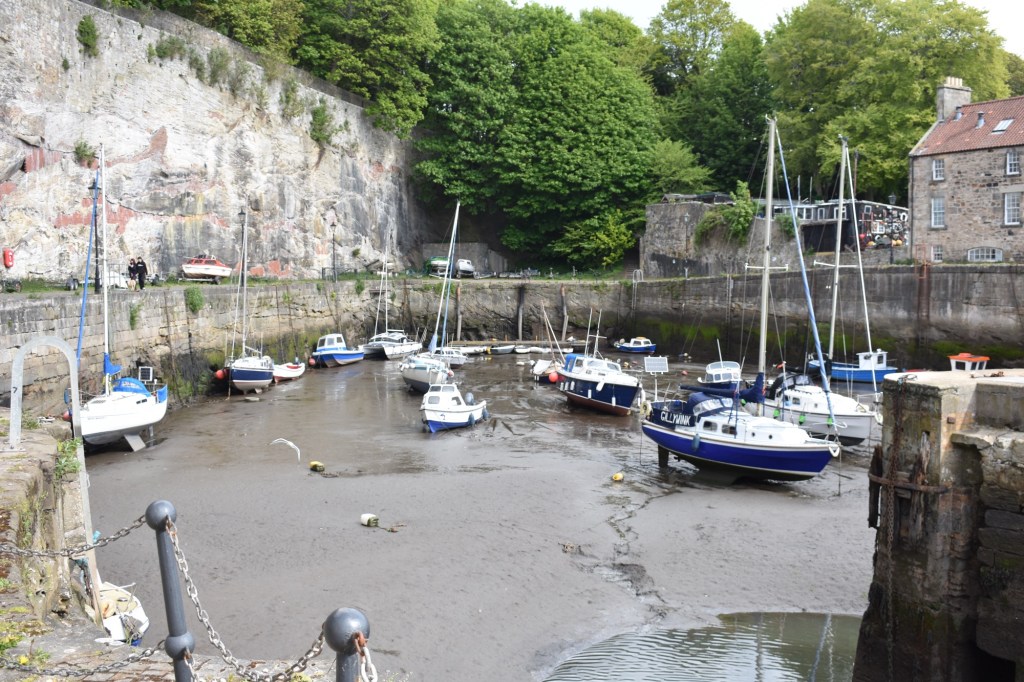
The Fife coastal path in Scotland!  Our bit: Kirkcaldy to Crail. 37 miles. Picturesque most of the time, sometimes industrial. Rural and urban, but mostly rural. And the Firth of Forth and the North Sea on our right. Uncrowded.  A few other hikers but mostly local dog walkers and joggers.  We went through fields with Highland cows and sheep, green rye fields, bright yellow rape fields, quaint coastal fishing villages with their lobster pots stacked everywhere. 

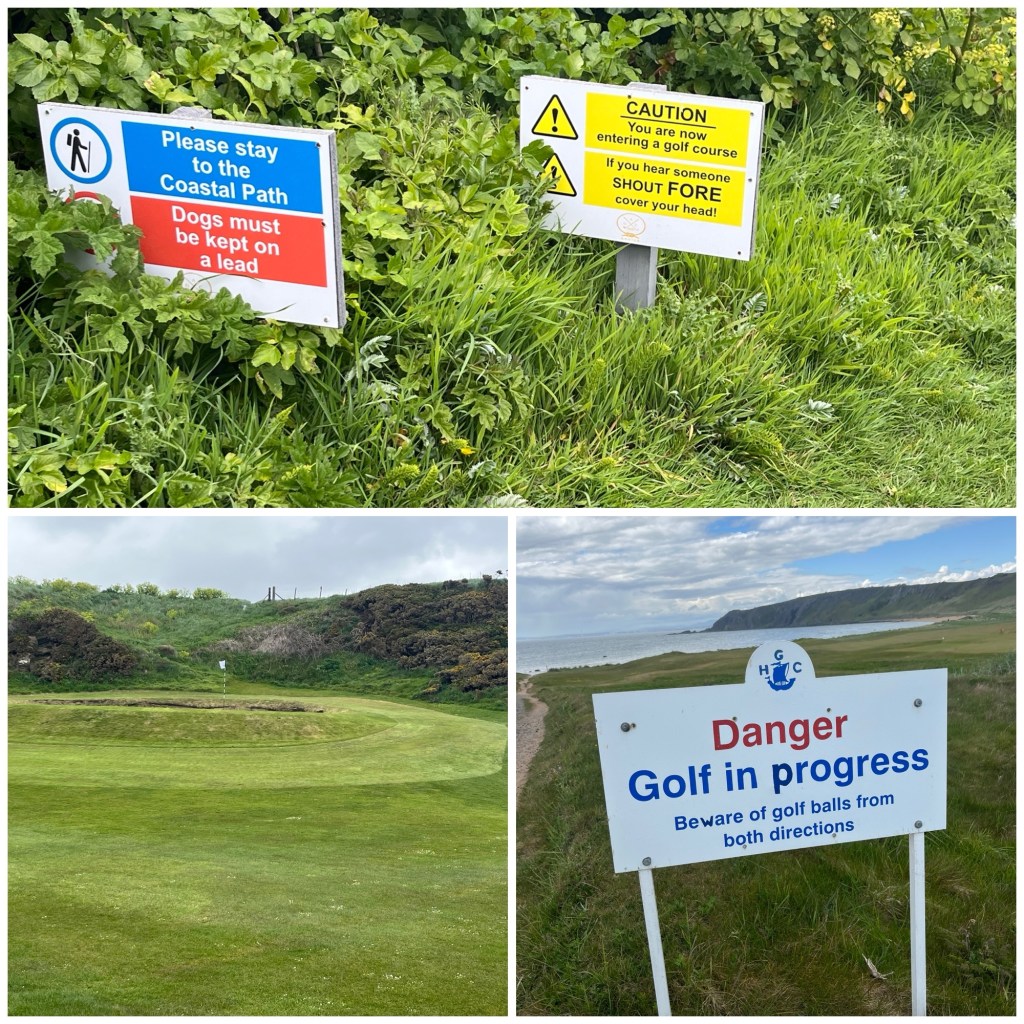
Then there were the golf courses where we literally walked through the fairways, keeping an eye on the golfers teeing off.

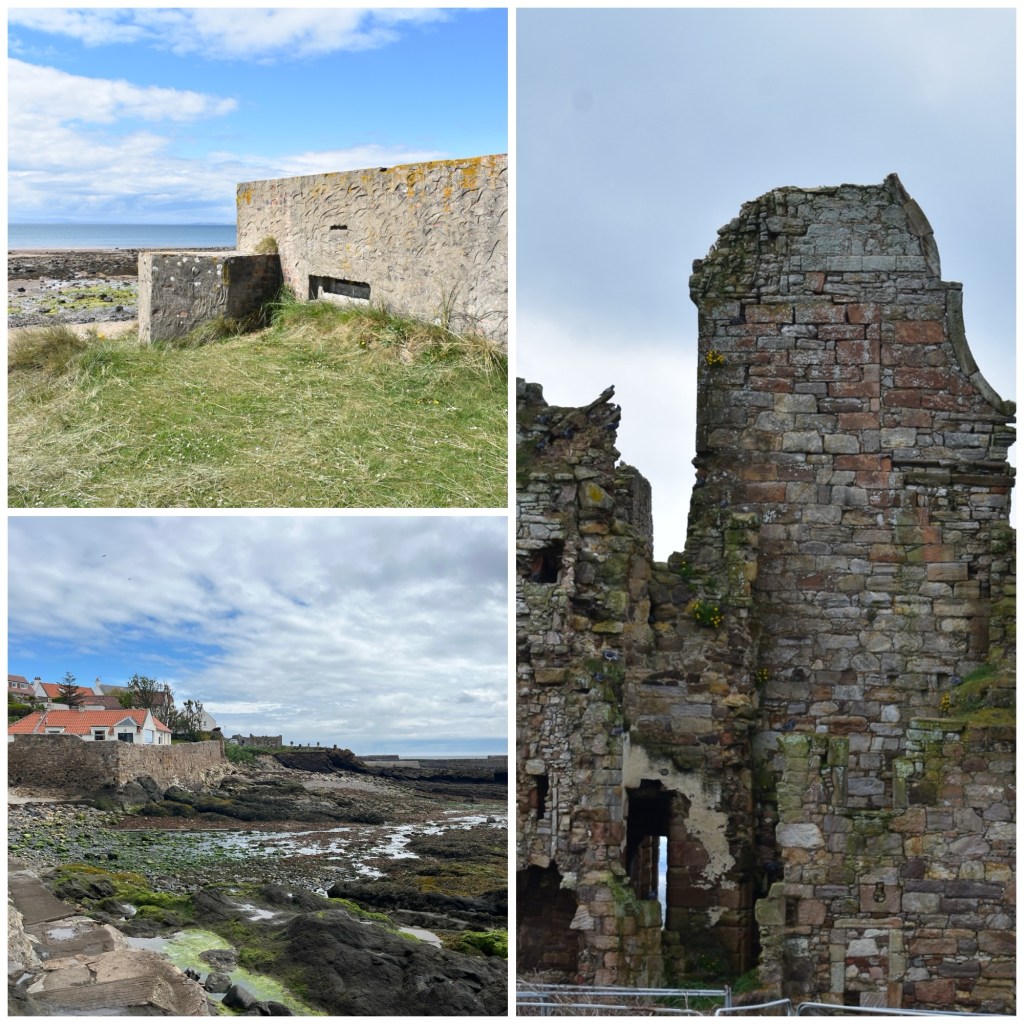
We trekked through suburban communities, past giant wind turbines, grain elevators, WWII bunkers, castles, caves and huge mobile vacation home parks.  

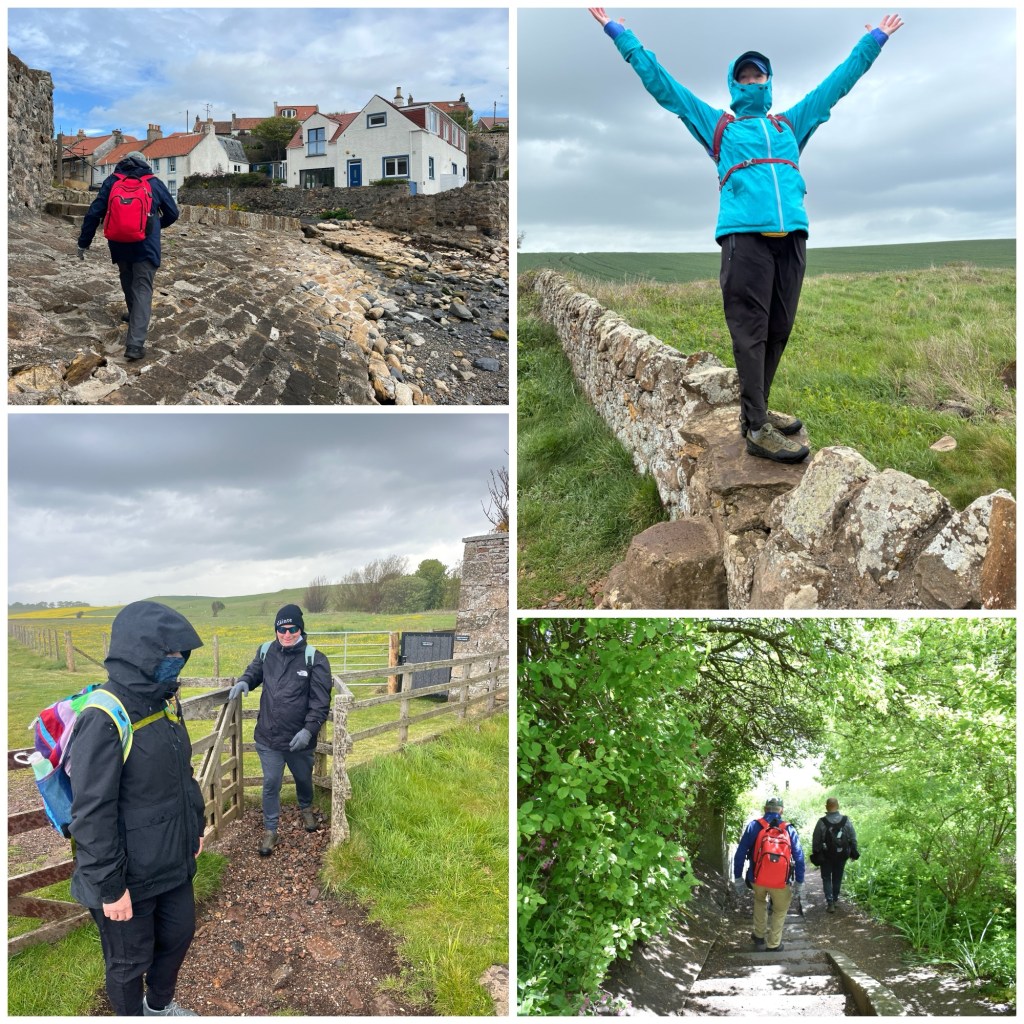
The path was flat, marshy, hilly, rocky, beachy, with cliffs and drop offs, and several stretches along roads—both country and major A roads.  Up stone stairs, down steep paths, over stone fences, through animal gates.  Past playgrounds and cemeteries.

In many places coastal erosion caused the path to be diverted away from the coast.  Lots of “Path closed, danger!” signs. It’s an ongoing serious problem that will continue to alter the path. 

The most infamous part of our hike was the Elie Chain Walk.  It a series of nine chains bolted into coastal cliffs with narrow rocky ledges to walk on just above the crashing waves of the North Sea—a 1/2 mile of terror.  Fortunately for us, the coastal authority lists the safe times to walk it based on the tides.  We were a “red no-go” because of high tides when we reached the chain walk.  The safe alternative path took us high up to the cliff above the chain walk.  Scary enough in its own way.  Looking down, we breathed a sigh of relief.  The chain walk would have been terrifying.  

Walking the safer path instead of the chain walk thru the rocks

We had incredible luck with the weather.  Two days of partly sunny and on the last day when the weather reports said rain and wind all day, doom and gloom, we got one brief shower.  A strong wind off the North Sea was chilly, but we did get some sun and a real sense of what living on the North Sea coast might be like. And this was May.  The locals kept saying “It’s Scotland after all.”

It wasn’t really a strenuous hike like a Cascade mountain trail—the most elevation gain in any one day was about 300 ft. But we were leg weary, exhausted by the end of each day!  14 miles the first day and nearly as much the last day! 12 mile average per day. Some small aches and pains. Nothing that two Ibuprofen couldn’t relieve. While there were small towns and villages along the way, there were significant stretches with nothing but path, coast and us.  

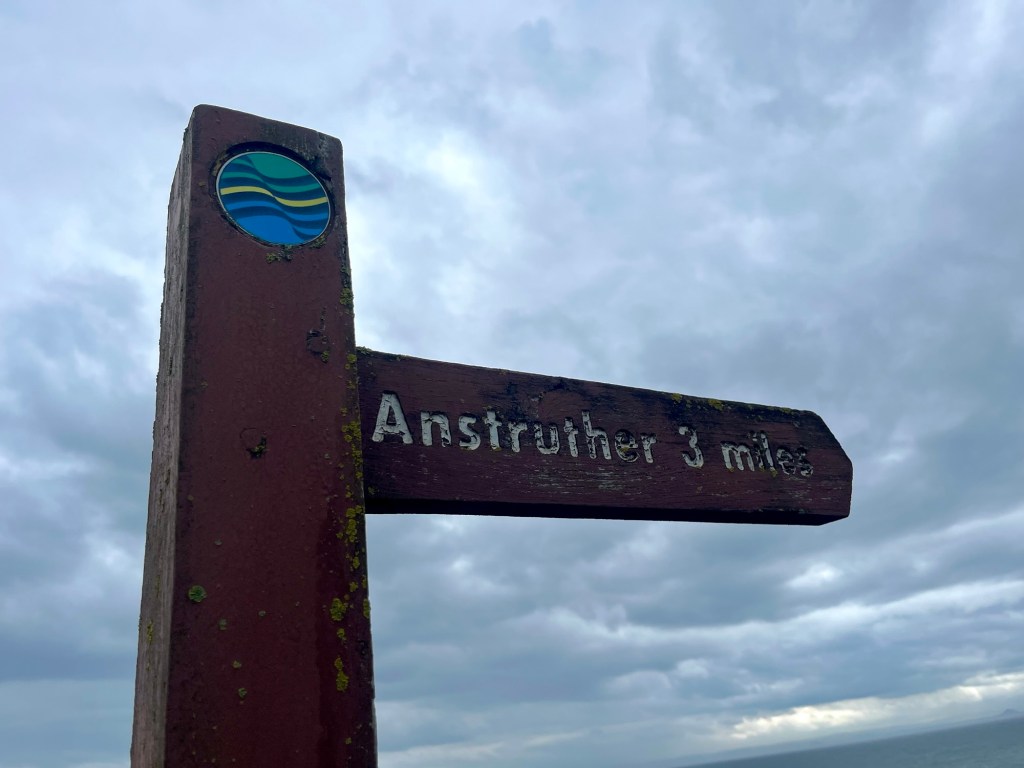
Through all of the twists, turns, and detours, the path was clearly — crystal clearly marked — with Fife Coastal Paths medallions and arrows pointing the right direction.  

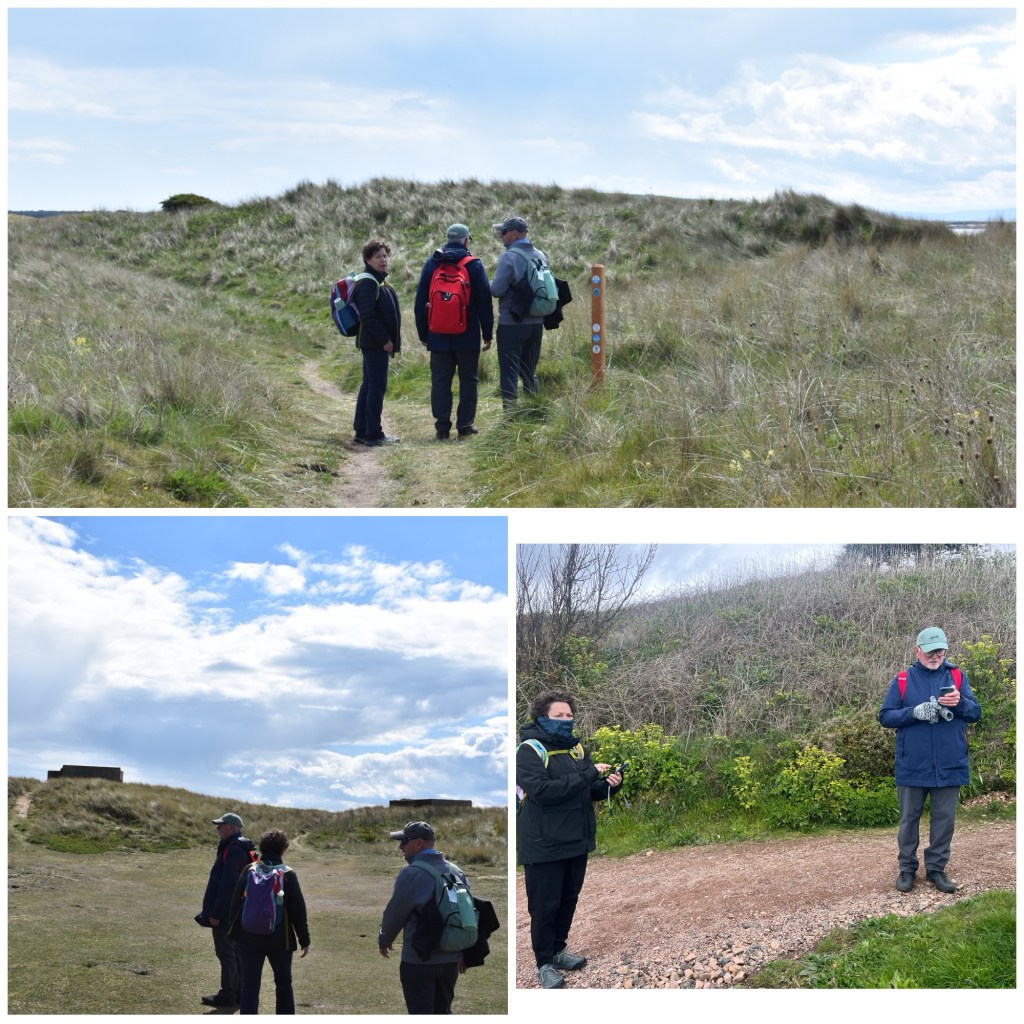
With that and the app provided for our cell phones we never once got lost. Not even close!  Of course, every fork in the path triggered a conference with our hiking partners. 

It was a very pleasant contrast with our Minister Way hike  in York several years ago where we got lost every day and rarely saw another human.

We had arranged the hike through a company, MACAdventures which provided luggage transfers and accommodations along the way — three charming hotels and one B&B.  The Ship Inn https://shipinn.scot/ in Elie was the favorite.  It’s an old inn on the waterfront with a restaurant and a lively bar filled with locals and dogs. Lots of dogs. 

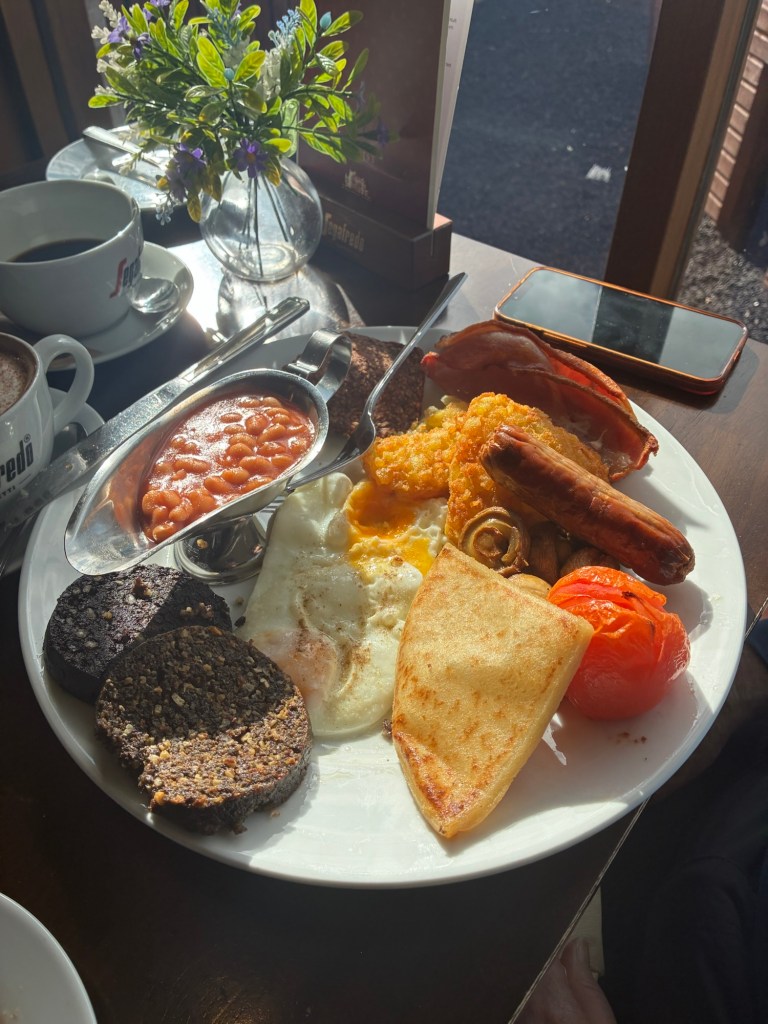
Breakfasts were always included which meant you could start the day on a full Scottish—toast, eggs, fried tomato, baked beans, hash browns, oat pancake, sausage, bacon, black pudding, and, yes, haggis — and skip lunch all together! 

The evening meal was usually in the hotel pub or dining room which also provided the evening’s entertainment — chatting with a fellow hiker or to the locals who often seemed surprised we had chosen their corner of Scotland for our hike, and us loving the sound of the Scottish brogue with its “ayes, nayes, youses”.  

And a wee dram of whisky to top off the evening. “Slainte mhash!”

Would we do it again?  Aye, in a heart beat.  

Back to the Future

Well, this spring we are shaking it up a bit.  For the last few years we have followed our preferred pattern for traveling. Find a home base and from there explore.  Valencia, Spain last year. Ontiente, Spain the year before.  The Dordogne or Occitaine, France and years ago Umbria, Italy. All were explored from a place we called home for two or three weeks, or in the case of Valencia, two months.

Years ago we used to travel a bit like the bad movie, “If It’s Tuesday, It Must Be Belgium.”  (Don’t know it? Don’t bother looking for it. As you might guess it’s about traveling through Europe with a different hotel room every night).  Our version wasn’t quite that hectic or silly, and certainly more interesting, but we did cover a lot of ground in a relatively short period of time when that’s all the time we had. It suited our circumstances then just fine. Can we still manage that? Or have those travel muscles atrophied?  

This year our primary travel focus is the Highlands of Scotland with a week in the Fife region, a few days near Edinburgh, a week in Somerset, and a couple nights in both London and Paris.  Not quite a different hotel room every night, but definitely more movement than we’ve been used to.  The closest we’ve been to near constant movement was four years ago in Spain, mainly in Andalusia, and then we relied upon a nearly full-service travel company to manage all the different hotels, train trips and tours. It was a breeze! Can we do it by ourselves this time?

Glencoe

Well, we aren’t totally on our own.  We’ve shared the planning for the core 21 days with our travel companions and then tacked on 14 additional days on our own.  Even so, the trip involves more than 10 different plane, train and car rentals reservations and 15 different hotels, B&B’s, and vacation rental stays. Lots of planning went into each step.  Lots!  Some pieces of the trip our friends planned.  Some we did. Many we planned together.  We talked, discussed and debated options, texted and emailed ideas and then reservations back and forth.  Some parts of the trip are planned in great detail (dinner reservations on our walk along the Fife Coastal Walk where a hiking service carries our bags from inn to inn as we carry a light rucksack) and others left open (a couple nights in London with only a vacation rental booked).

Making all these arrangements wasn’t the only challenge.  In addition to the four day hike along the Fife coastal path, we also want to do some hiking in Glencoe, around Ullapool and Wester Ross, and near Fort William.  That meant packing bulky hiking gear and enough clothes for those stretches when we wouldn’t have access to washer/dryers.  Weather in Scotland is unpredictable, especially in May.  Sun, rain, wind or even snow at higher elevations? So we also have to pack rain gear and warm layers. Then there’s London and Paris where those hiking shoes will never be seen!  And by the end of the trip the weather in London and Paris could be quite warm.  Short sleeves?  Shorts?  Sandals? Not enough room. Didn’t take long for us to realize our usual carry-on roll-aboards wouldn’t hold it all.

We purchased every book we saw on Scotland over the last year and then had to pare down to just two (plus the one Mary smuggled in when Peter wasn’t looking). Camera?  Bring the big, good camera or rely upon our iPhones?  Big camera won.  Binoculars?  Just one pair. We’ll have to share. And so it went. One large suitcase, one roll-aboard and two backpacks later we were packed.

So how will it go?  Will we survive packing and repacking our bags every second or third day?  Will it get old fast trying to find a decent espresso in each new location or even worse, not finding any at all. Will we miss having our boulangerie, our patio, our market, our neighborhood or will the variety and parade of new vistas more than compensate?  

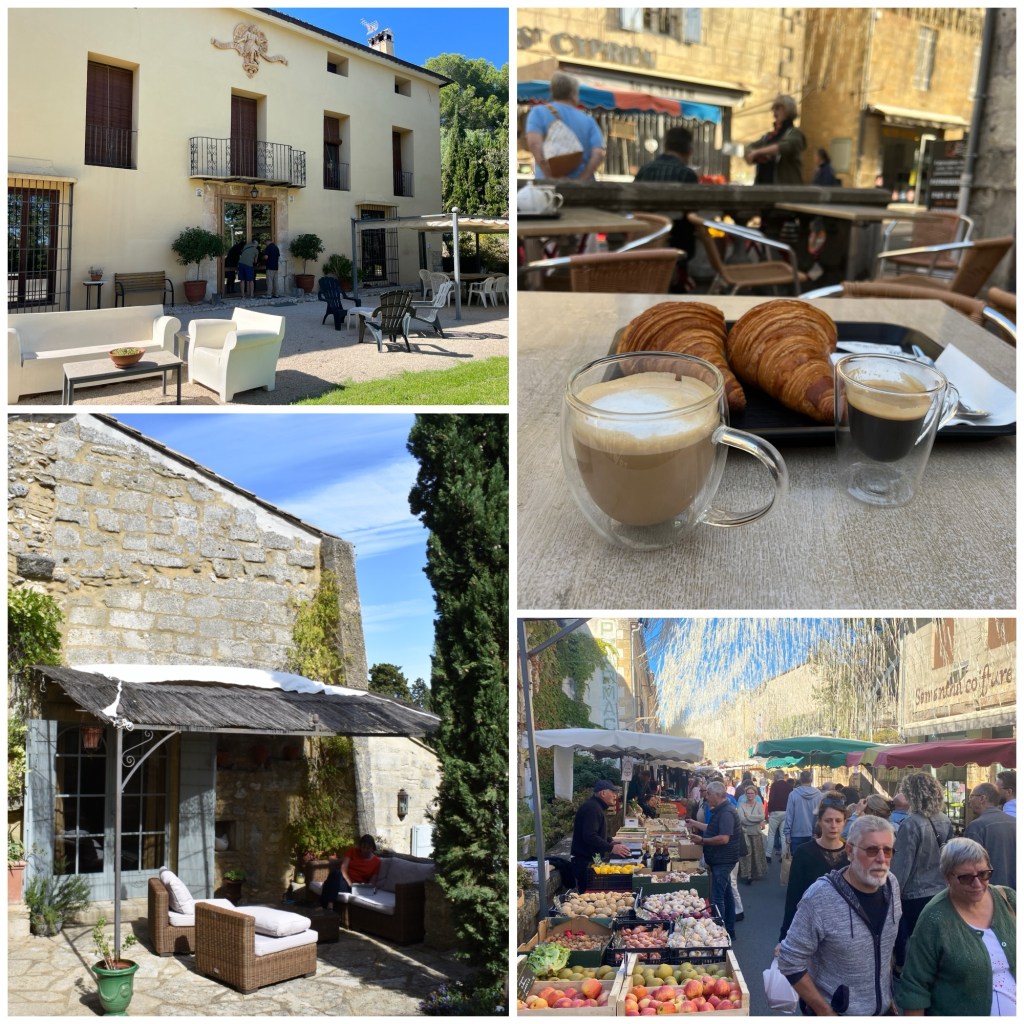
“Our” patio, home, espresso, and market in previous slow trips to France and Spain

Stay tuned.  The adventure has just begun. Oh, and our first hotel was the lovely Holiday Inn at the Newark Airport—a transit stop on our way to Paris.