Tulum: Not Much “Then” a Lot More “Now”

One of our neighbors, a local historian, writes a newspaper column: “Seattle: Then and Now.” We thought of him when we first hit Tulum on the Yucatán Peninsula. Several of our friends who travelled years ago to Tulum to see the magnificent Mayan ruins told us there was almost nothing there then. Apparently you reached Tulum by a dirt road and the town was all but non-existent. Well, times, they have a changed—some things for the better, and some for the worse.
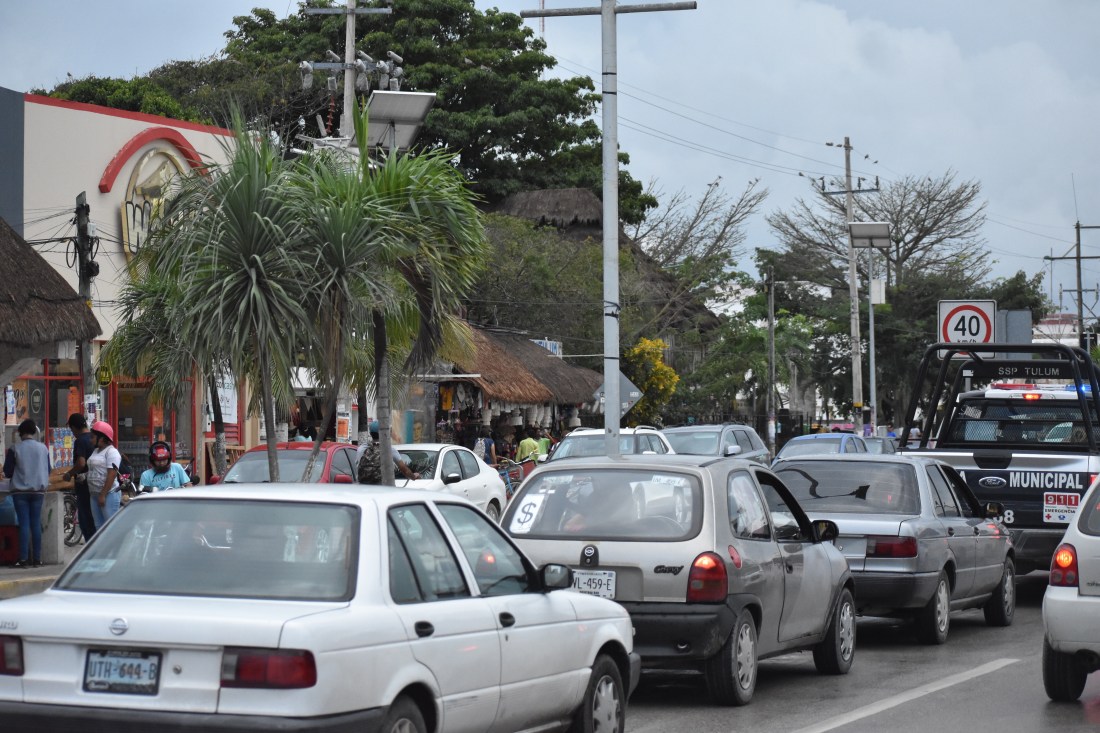
There is a now a modern, straight four lane divided highway running down the coast to Tulum full of cars, tour buses, trucks, motorcycles, three-wheelers and every other version of marginal motorized vehicles. Throw in a few pedestrians, a stray dog or two, hippie hitch hikers, road construction sites, massive & frequent but almost invisible speed bumps and a couple of police roadblocks and you get the picture.

The “freeway” is lined with entrances to mega resorts, billboards advertising Cirque de Soliel, cabaret shows, and, being Mexico, roadside cheap eats, pottery shops, tourist stalls, and fruit venders….and did I mention a stray dog or two.  

Tulum itself is built around a couple mile stretch of this four lane highway with a grass meridian,  large sidewalks and frequent huge, broad speed bumps that also serve as pedestrian crossings.

On one side of the road there is bike lane which is often indistinguishable from the sidewalk….a  very dangerous proposition for pedestrians. On the other side the bike lane is still under construction, with gaps in the sidewalk offering another hazard to shoppers.
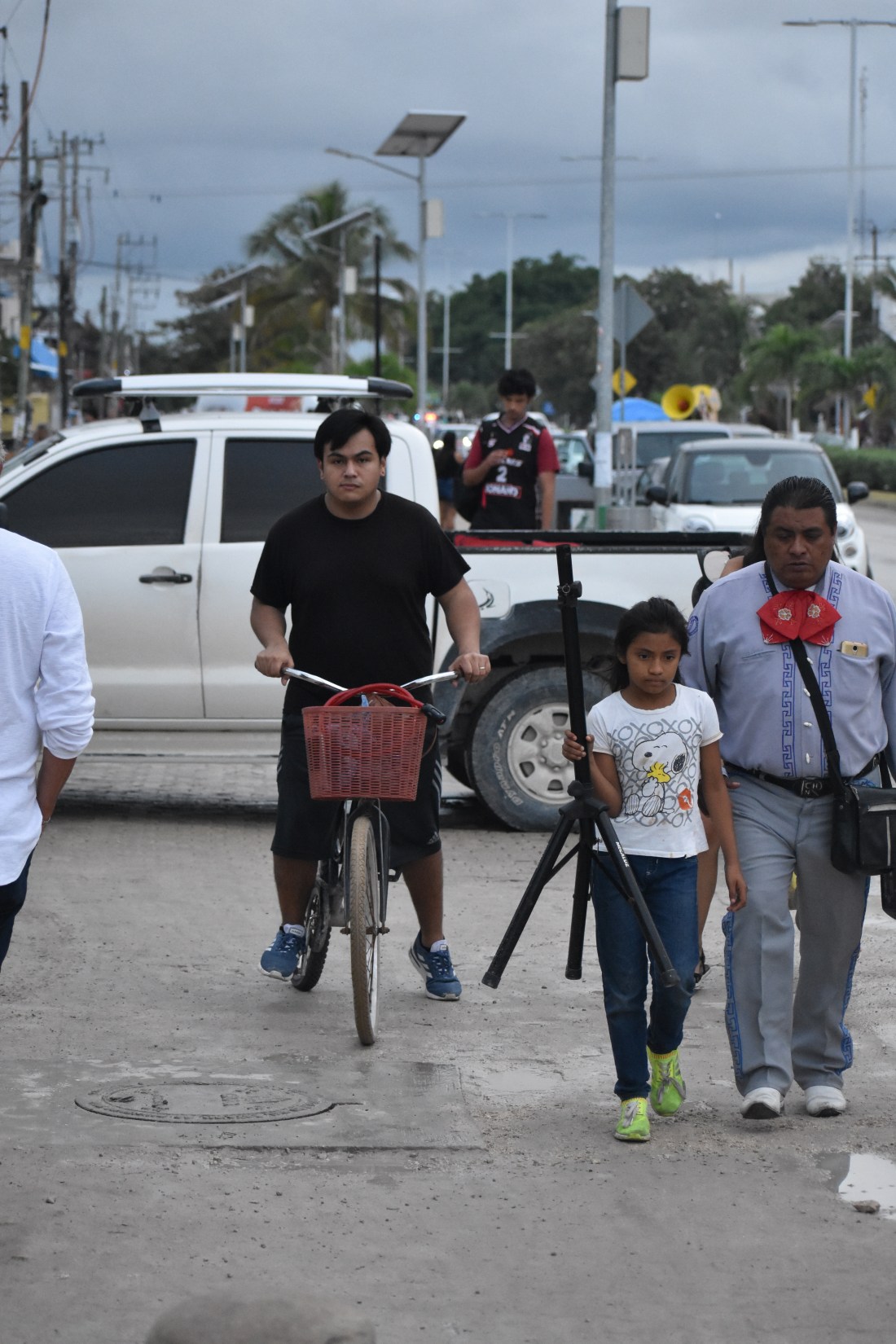
The street is lined with cheap clothing shops, high-end jewelry stores, souvenir stalls, restaurants, bars with pounding loud music. It seems to go on forever with a just public building every now and then to break up the string of tourist oriented businesses.   
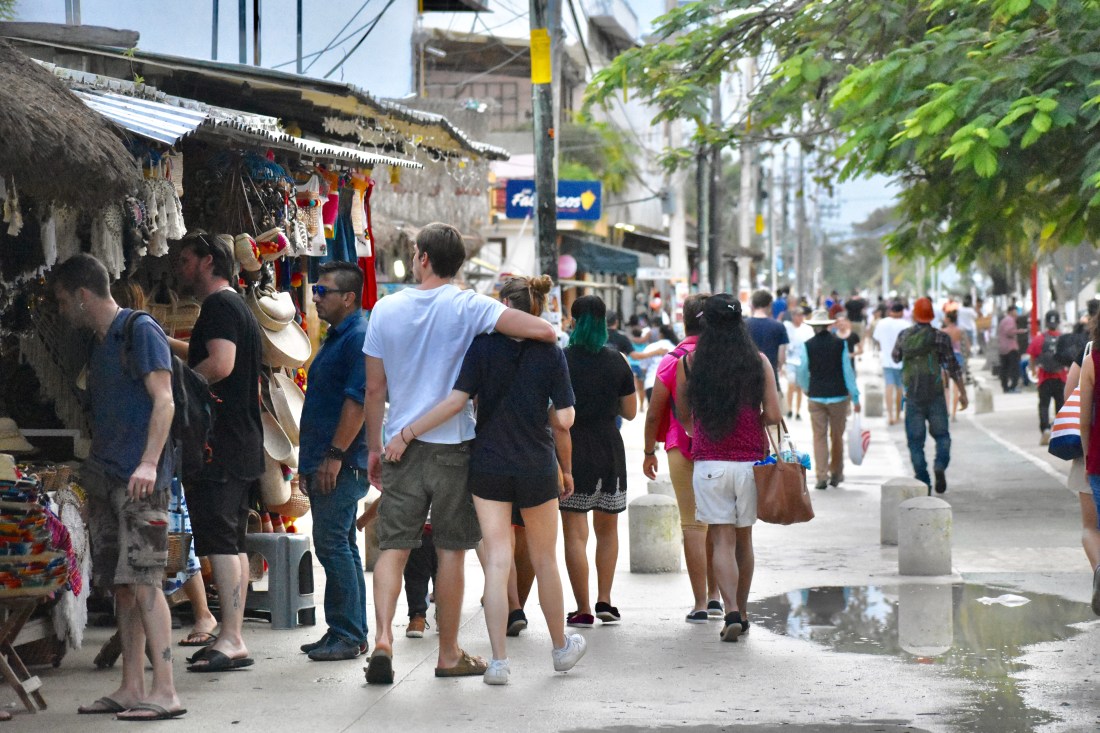
It’s a lively, fascinating combination of a small town experiencing growing pains and a collection of international travelers drawn to the Mexican vibe. Great for people watching and meeting new friends over a Margarita.

Off the main drag, the town is a collection of small shops—auto repair, light manufacturing, cheap, cheap eats, very modest homes and apartments and occasional pushcarts selling fruits or “pozol frio” with loud speakers announcing their wares.
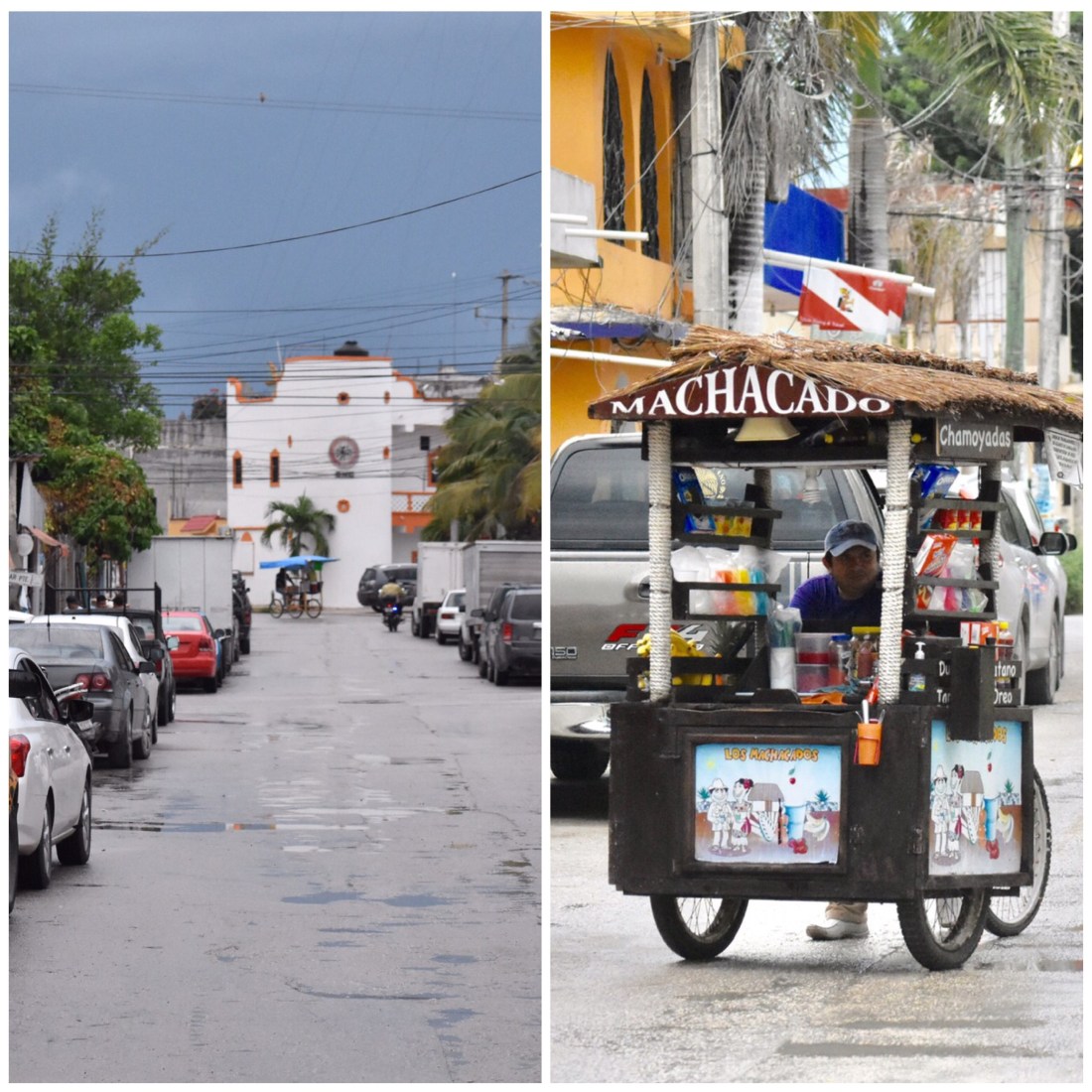
Off, off, off the main drag just as you get beyond the city limits are the tents and shacks right at the edge of the jungle.   Perhaps not your typical charming resort town, but fascinating to wander around and soak in.  By the way, the traffic is awful…chaotic, unpredictable. On the edge of town are two giant supermarkets—modern, selling everything from hardware to food.

So we drove down to the beaches and the hotel zone to get a look at the gorgeous beaches we’d seen in the guide books.  The coastal hotel zone now stretches about three or four miles and, unfortunately, the walls around the hotels and the jungle between them completely block any view of the water.  On the other side of the road is a collection of small tacky shops, restaurants of all sorts and a few high end boutiques, all crammed together. There is an incredible range of quality from shabby tent campgrounds, hotels made from cargo containers, bars decorated with old car parts to glamorous ultra modern “yoga” resorts, eco hotels,  swanky vegan restaurants, boutiques with expensive beach togs and jewelry.  The road is narrow and potholed with more invisible, mountainous speed bumps. There is virtually no parking except in a few pay lots (many with valets).  So add to the traffic, dozens of taxis and mini vans, a number of water trucks (no sewer or water lines here) coca-cola delivery trucks, hordes of bikini clad bicycle riders (often looking very unsteady), swimsuit clad walkers—plus the usual mix of hippie hitchhikers, fruit vendors, construction workers, and of course a few stray dogs— and people just popping out onto the roadway from out of nowhere. Even at 15 miles per hour, driving was a white knuckle experience for the driver and passengers. 

This all would have been very discouraging but we finally decided to stop at hotel and restaurant because by some miracle there was a parking spot across the street.  Once you entered the hotel you stood just above the beach with a magnificent view of the long, white, picture-perfect beach.  
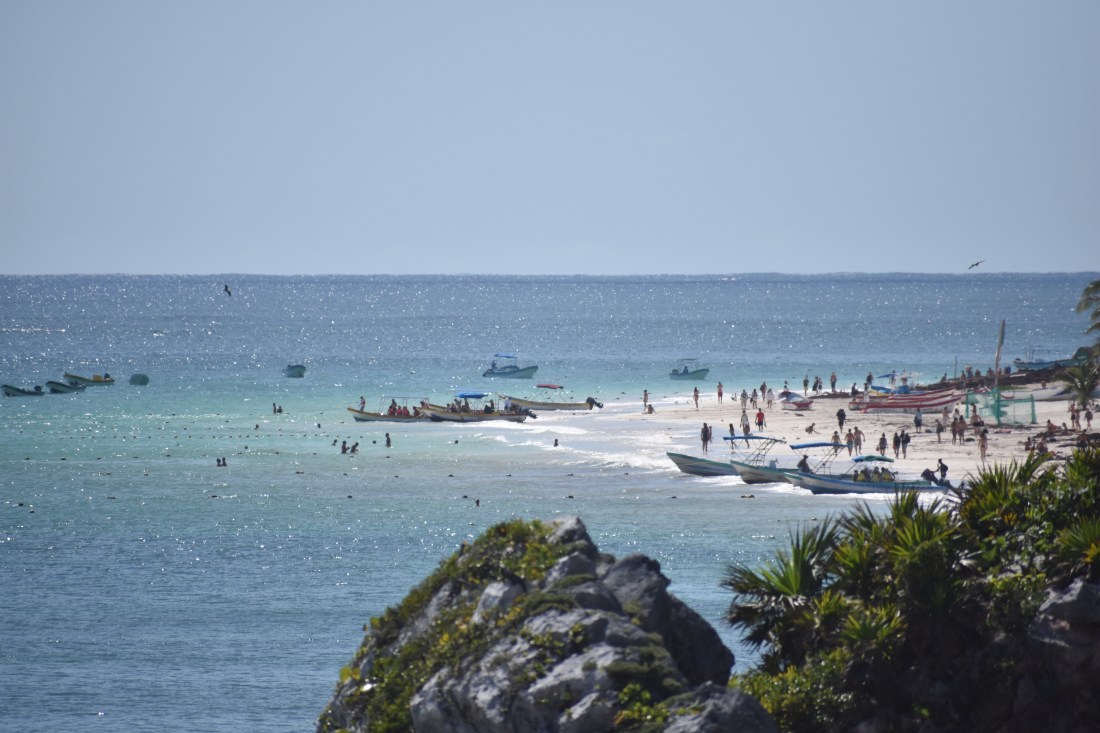
Palapas, families playing in the water and bright colored traditional fishing boats taking snorkelers out to the reef dotted the shore.  Stunning!  

Of course, the three lattes and a bottle of water ($10 by itself) we shared cost as much as the dinner we had last night in a nice restaurant but without the water view. Still worth it.

We are staying just outside of Tulum, in one of the largely gringo enclaves of condos, many of which are vacation rentals.   Dozens and dozens of yard signs line the broad smooth streets advertising new developments in the enormous planned community. Everywhere we saw small crews of men building by hand two and three story condo complexes.
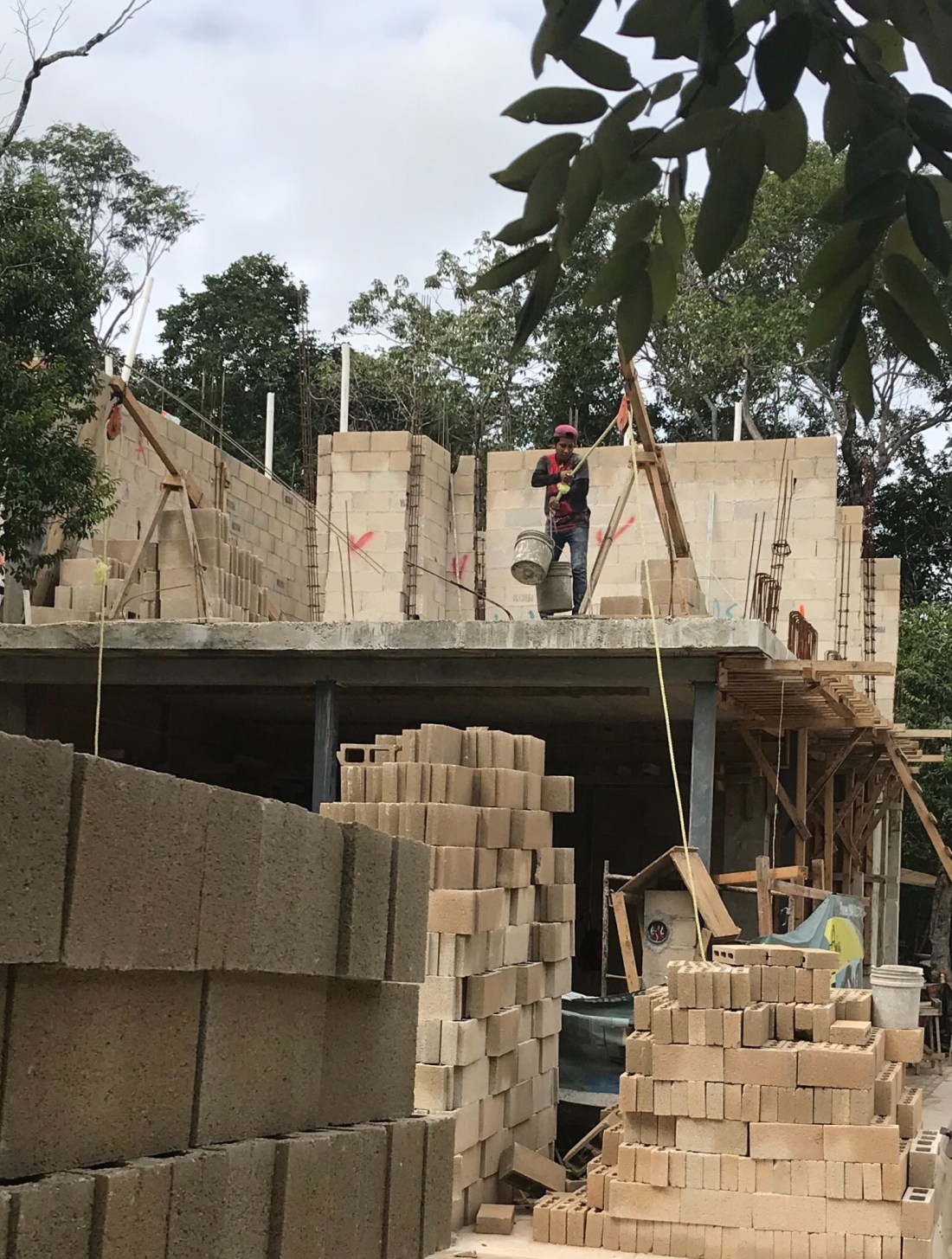
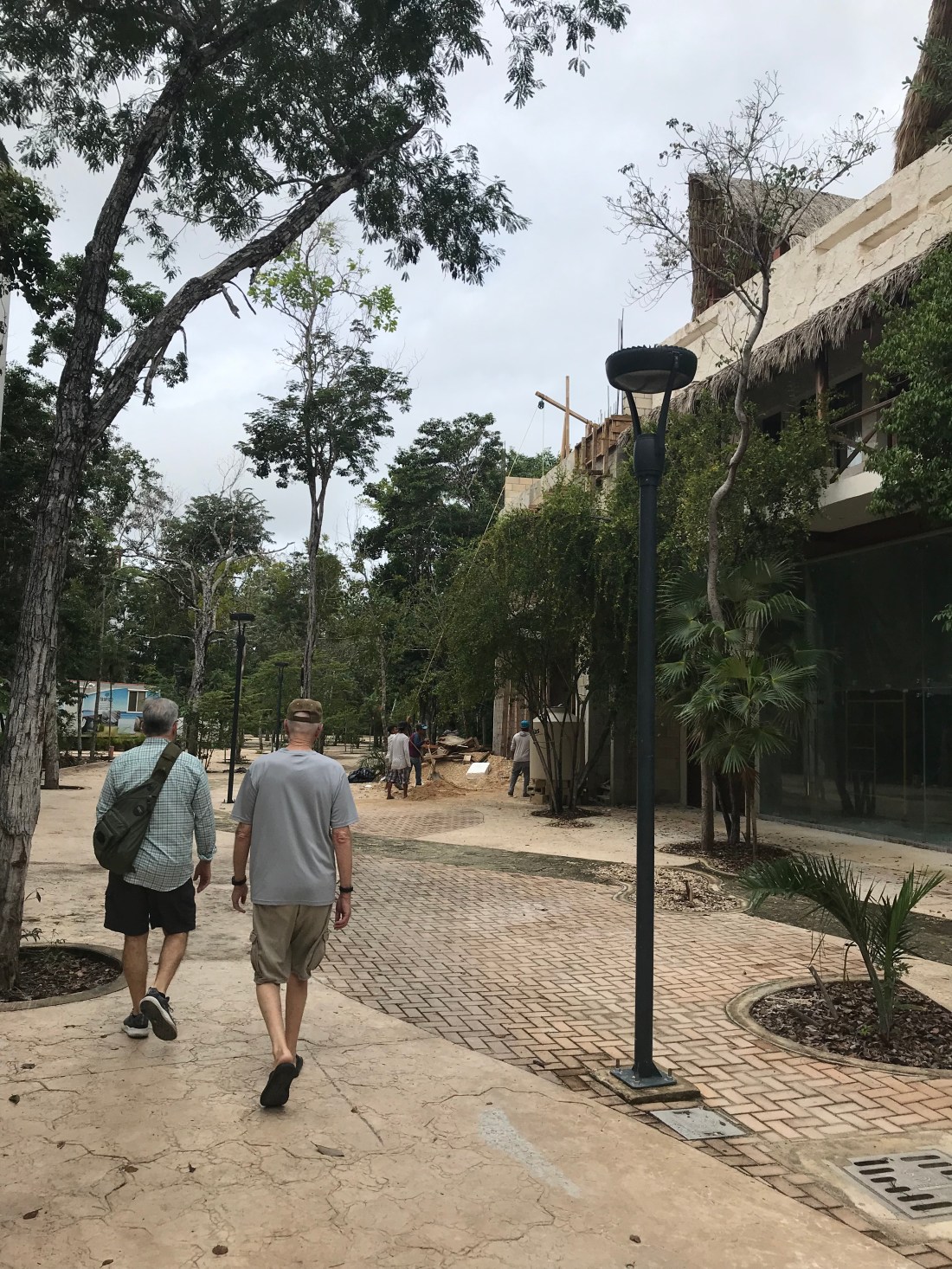
No cement trucks or power tools here; it appears to all be done by hand. Sprinkled in between to walkways, green belts and buildings under construction were new restaurants and small shops waiting for customers.  Lots of bikers here, too, but at least there are well marked and separate lanes for the two wheelers.  

Not a lot of soul, but a calm oasis of sorts close to all the action.
Sleeping with Elephants

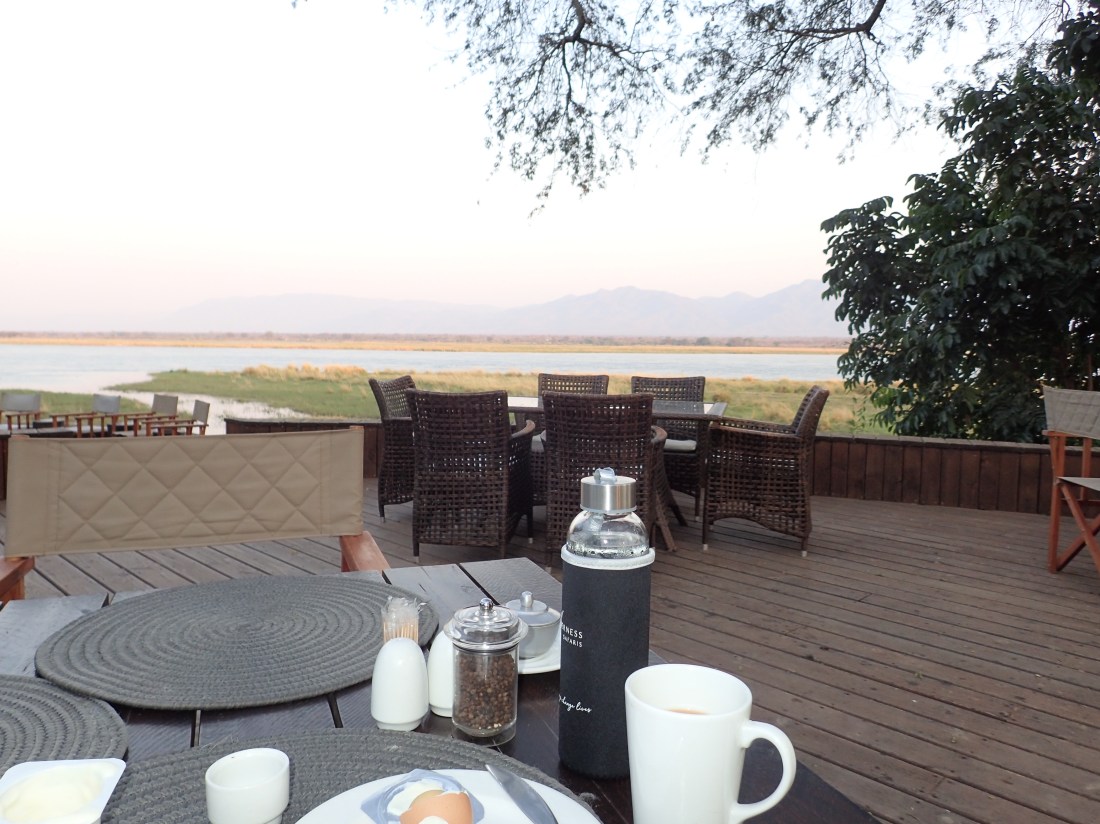
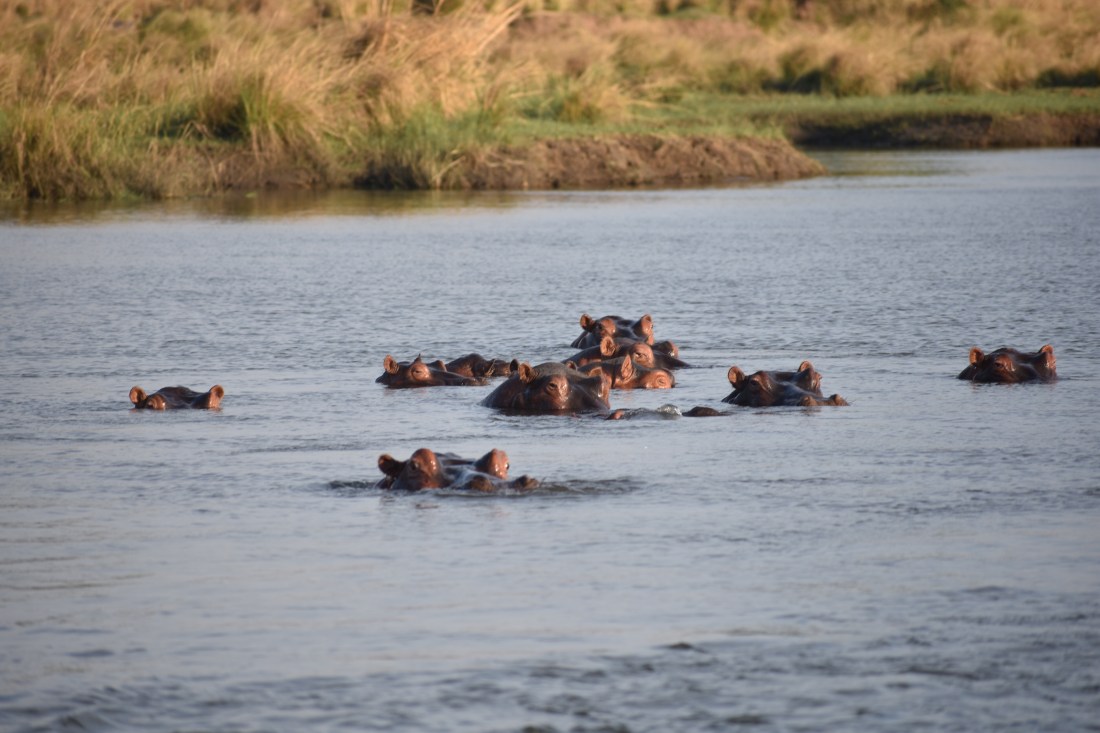
At 5:30am a young man with an unmistakable Zimbabwean accent stood outside our tent and shouted “knock! Knock” or “Wakee! Wakee!” The sun hadn’t quite risen on the Zambezi River just beyond our tent. As we got ready for the morning game drive, we could hear the hippos snorting and splashing in the river a hundred yards away. Tea and a light continental breakfast was ready on the main veranda. Light breakfast was a relative term — usually hard boiled eggs, fresh bread toasted over a fire, sweet rolls of some sort, cereal, yogurt, juice, fresh fruit and cheese and meats.

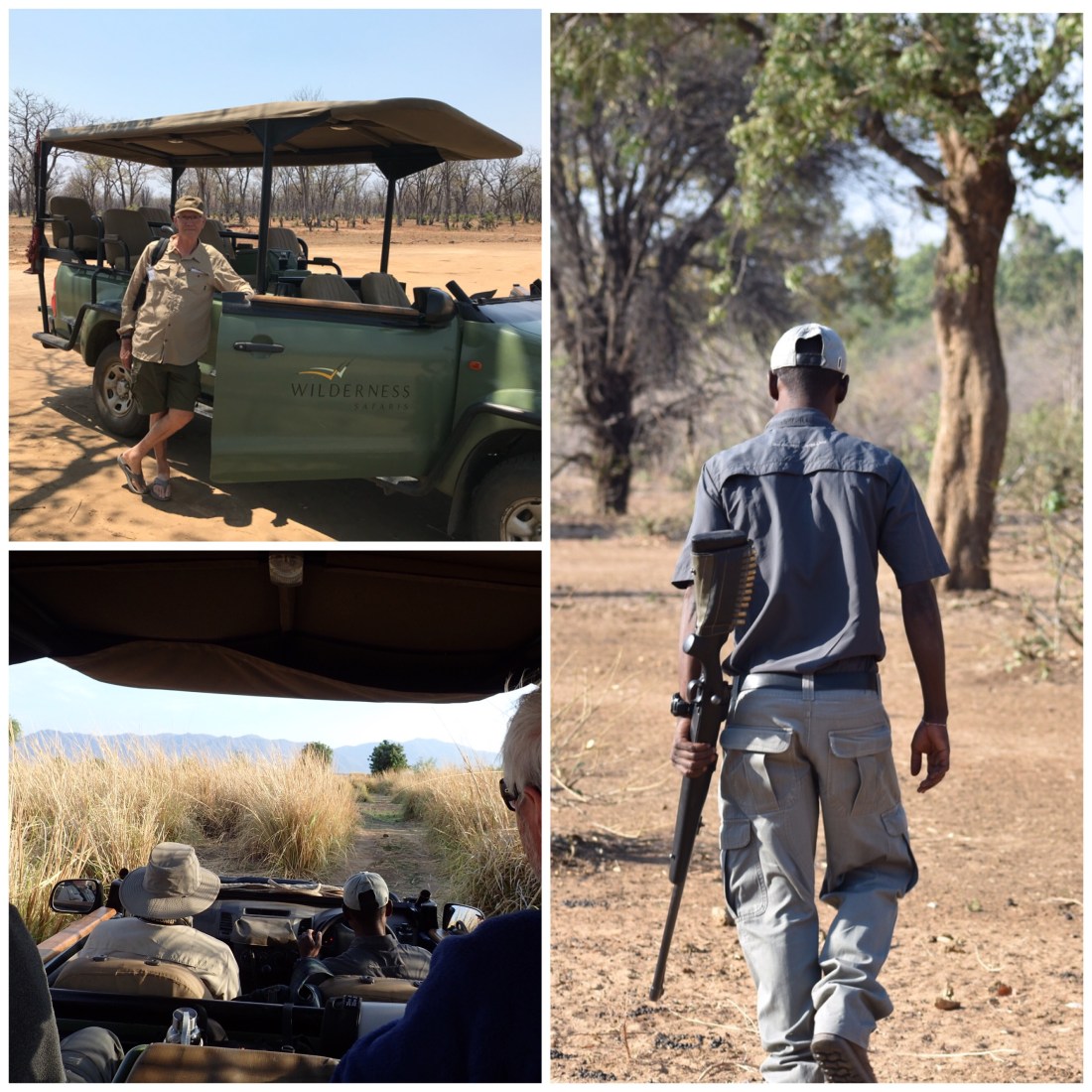
By 6:30 we loaded into the jeeps and began the morning game drive. Peter road shotgun, a Danish couple in front, and Malcolm and me behind in a vehicle that could hold seven. Our guide, Mundoga, a slight, fast talking guy, kept up a happy chatter, exchanging jokes with us and laughing at our responses. A different Mundoga emerged when he was tracking animals — focused, intense and alert, leaning over the side of his door, studying tracks. Once or twice, he grabbed his rifle and walked a ways, leaving us in the safety of the Jeep. Without him we would have seen little, even if the animals had stood up on their hind legs and waved their arms.

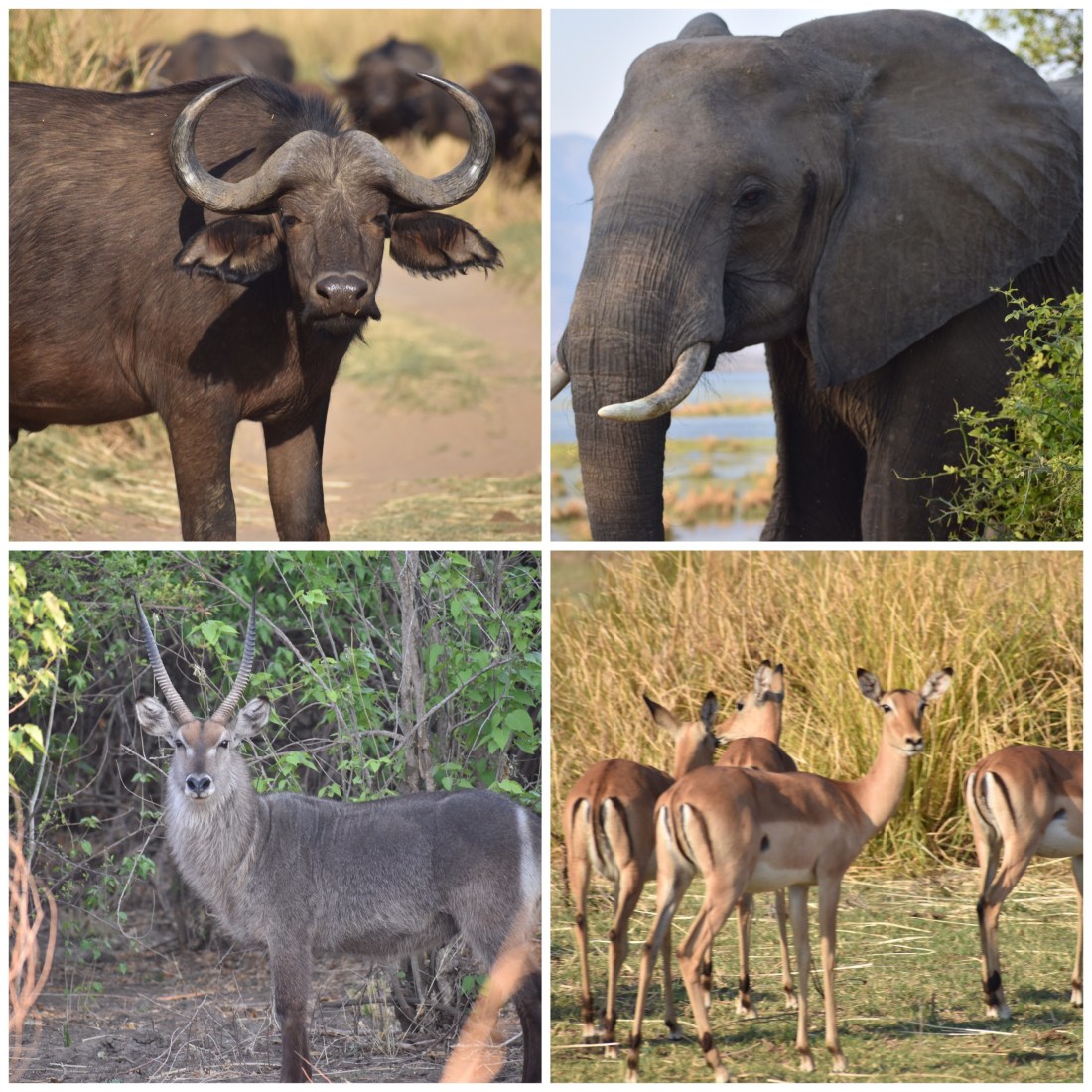
When Mundoga spotted animals, we stopped. At least that first day. As the days went on we drove past the more common elephants, baboons, impalas and Cape buffalo. But initially we all got out our cameras and clicked away. The Danish couple had brought three bags of camera gear. They even had to buy an extra seat on the small aircraft that took us to the camps. Malcolm and me with our little Olympus cameras were clearly out classed. Peter was more respectable with our new Nikon.

We bounced along dirt or grass roads rebuilt each spring after the winter rains. Apparently, the “leave nothing but footprints and take nothing but pictures” philosophy sort of applied to the design of the roads. Any potential obstacle to the road was left where it was. The roads weaved around fallen trees, between termite hills and up and down through ravines carved by the winter rains. It made for a lot of swaying and jostling and slow speeds — our guide called an “African massage”. The smoother, but not necessarily speedier routes were the dried up riverbeds. Riding along them felt a bit like riding on compact snow and ice — some sliding and skidding, always with the potential for getting stuck. Even these four wheel jeeps with their low gears were challenged and at one point we did indeed get stuck in soft sand, requiring all of us to hop out the give a hearty push.

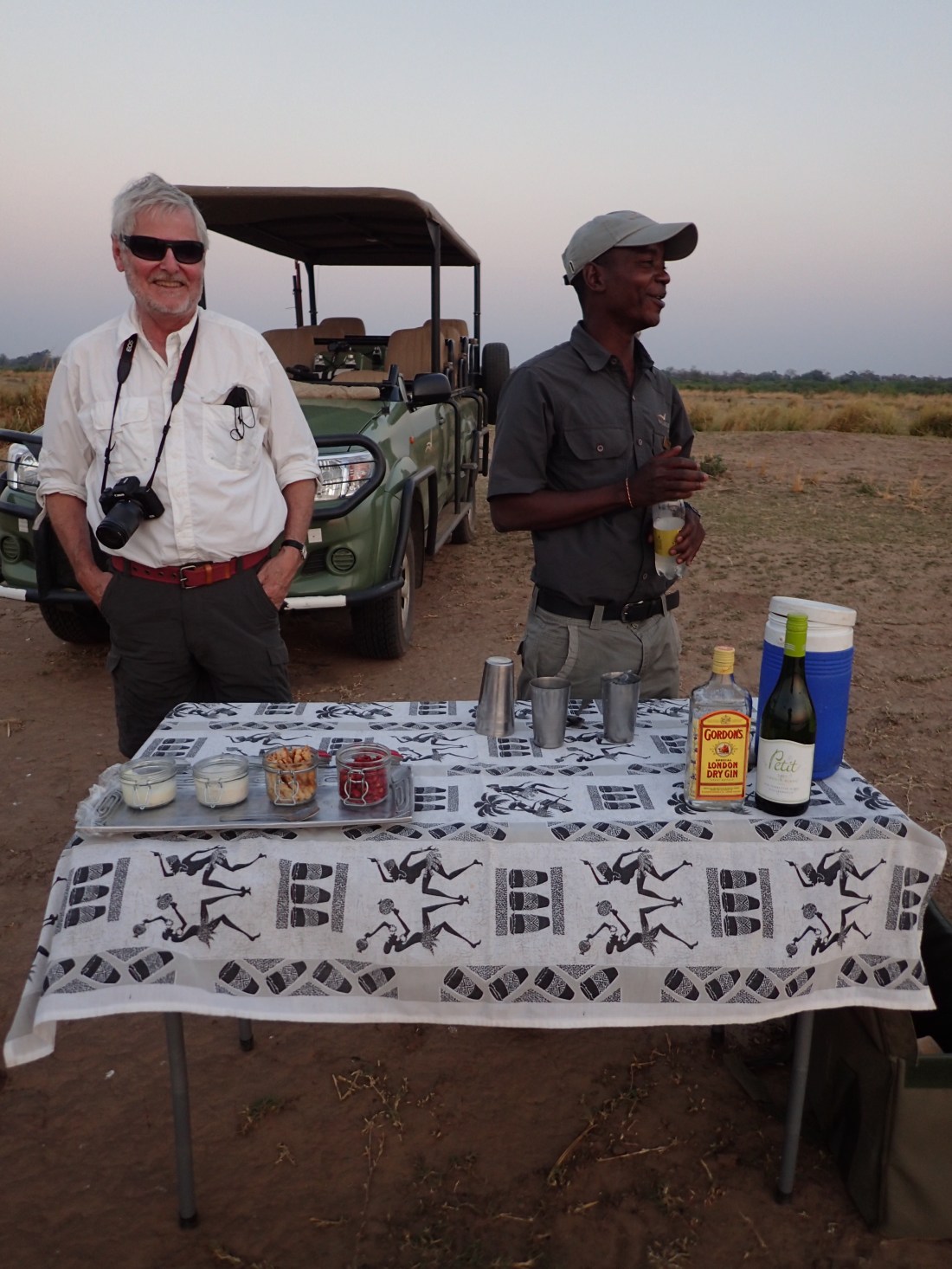
By 7:30 on our first day we could have left Africa having “bagged” most of the major animals, except for the lions and leopard. There would be no rhinos—we were told they had been removed from this area to protect them from poachers. Around 9:30 Mundoga stopped along the banks of the Zambezi, set up a folding table, placed a cloth on top, began to make fresh tea or French press coffee for us, served with a shortbread cookie while we watched the hippos in the river. Across the way we could see Zambia and its mountains.

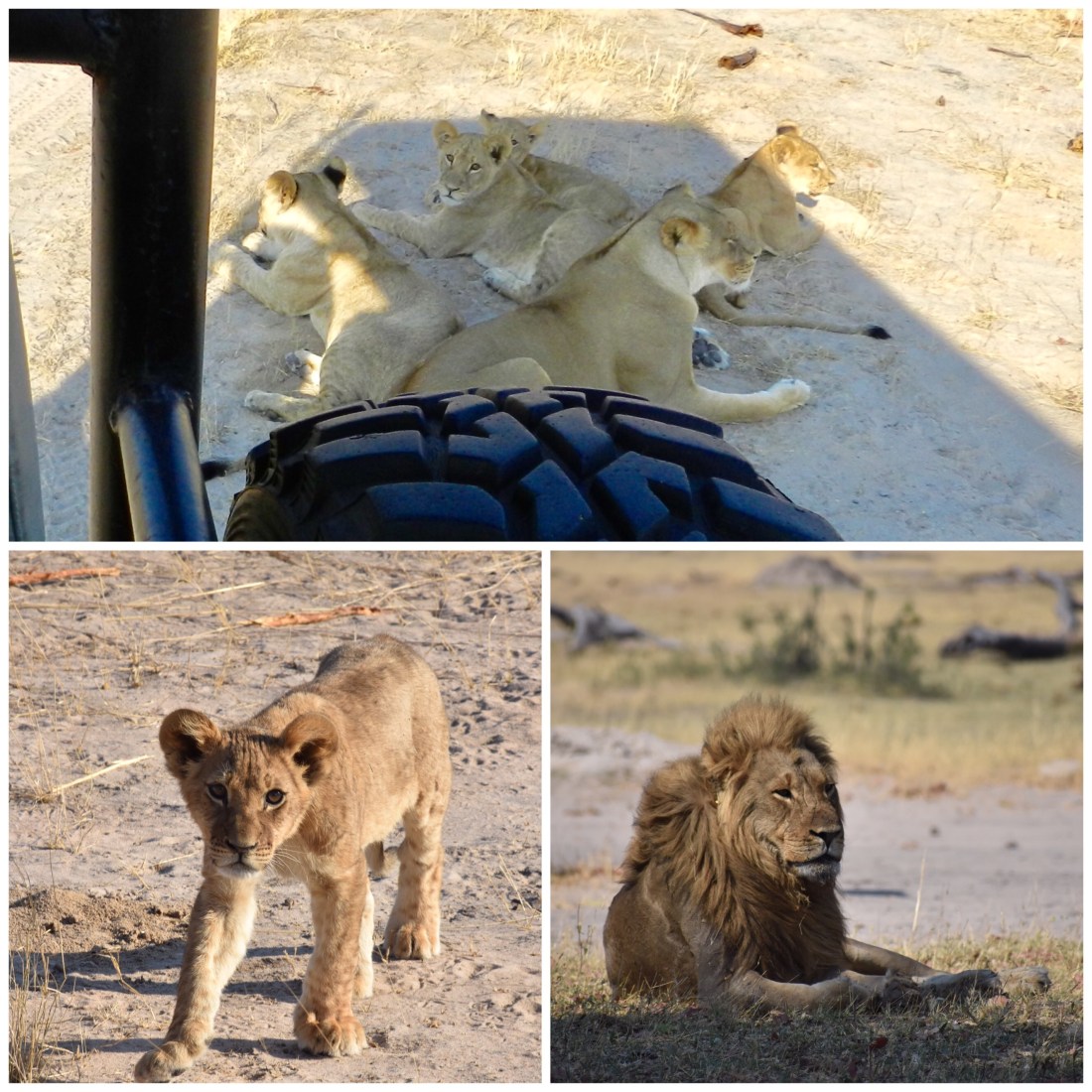
We loaded back in the jeep and went off in search of wild game for another hour or so. Mundoga periodically picked up the radio and called to the other guides, sometimes speaking to them in Shona, his native language, and occasionally in English to share the location of the more elusive animals. The prized sighting was the lions. Once located, we drove within a few feet of them, where they remained unfazed, even bored, by our presence. Once they moved to sit in the shade of our Jeep.

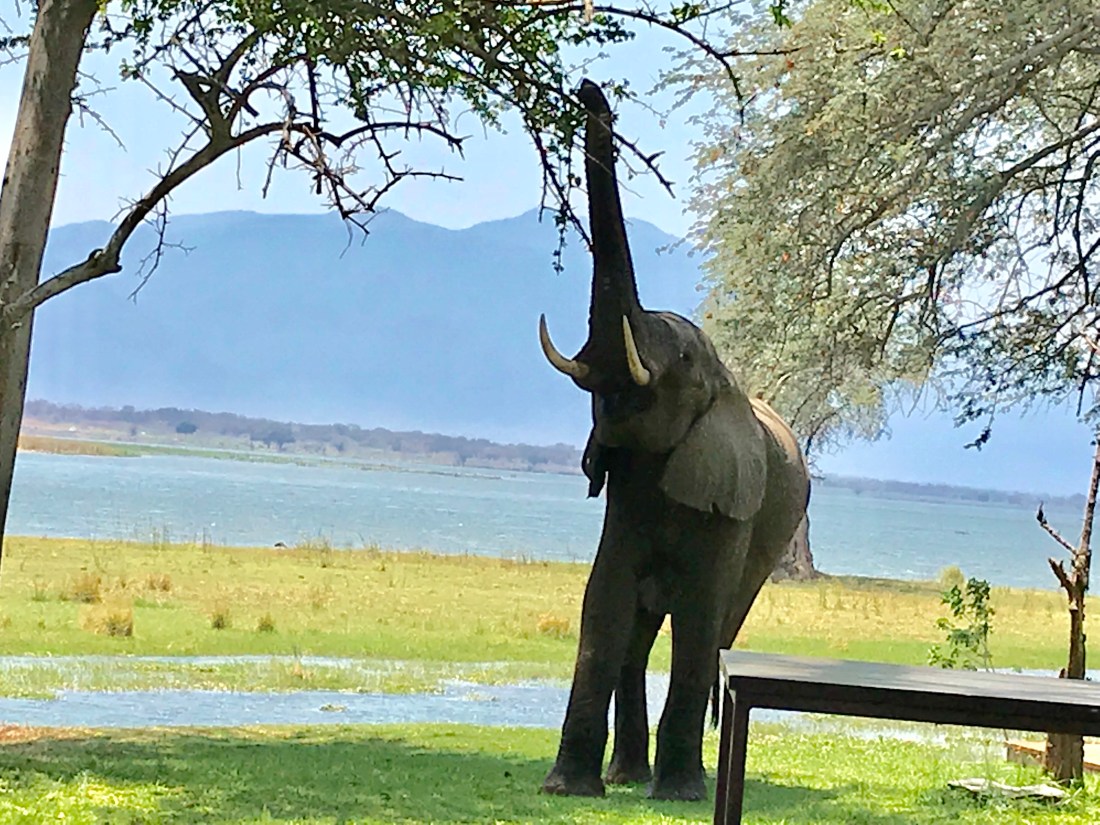
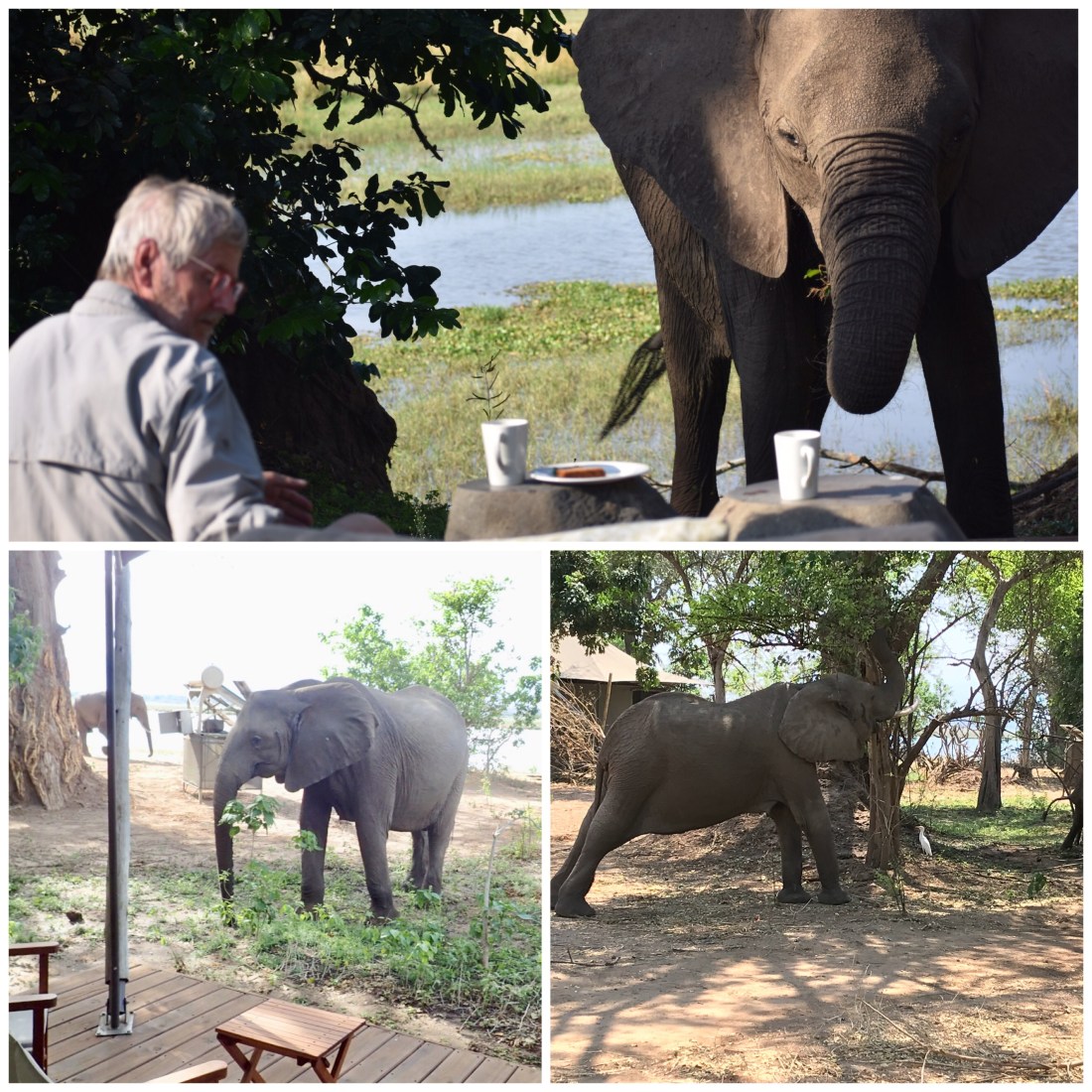
Back to the camp for lunch. We were greeted by the staff with cold wash clothes to eliminate the worst of the road dust. And if time, and the elephants allowed, we might have time for a quick shower. Elephants allow? Yep. At Ruckomechi, the elephants rule. They wander through the camp at will, up to five or six of them at a time, an occasional male, several mature mothers and their babies. If the elephants were between you and your destination, you simply waited. In more extreme cases, the staff drove you to your door. More than once we were held captive as five or six of them surrounded our tent.

The baboons were another hazard. While they clearly ran from us — we suspect because they had learned humans carry slingshots — the real problem was they loved to drop from the trees shading our tents onto our tents, treating the tents as trampolines. Malcolm’s tent was one of their favorite landing sites.

Through the heat of the day we lounged, wrote a little, edited our photographs, read a bit, or went for a swim. Then headed back to the veranda for afternoon tea at 3:30. Tea for some consisted of beer or wine, but we generally stuck with iced tea with the appetizers and sweets served. Then back in the jeeps for the afternoon game drive.

Game was less abundant in the afternoon. But the elephants, the Cape buffalo and the hippos were visible any time of day. And then the safari ritual of a sundowner. Just before sunset, Mundoga again set out the table, often on the banks of the Zambezi where we watched the hippos, and tracker/guide turned bartender. Gin and tonics never tasted so good.

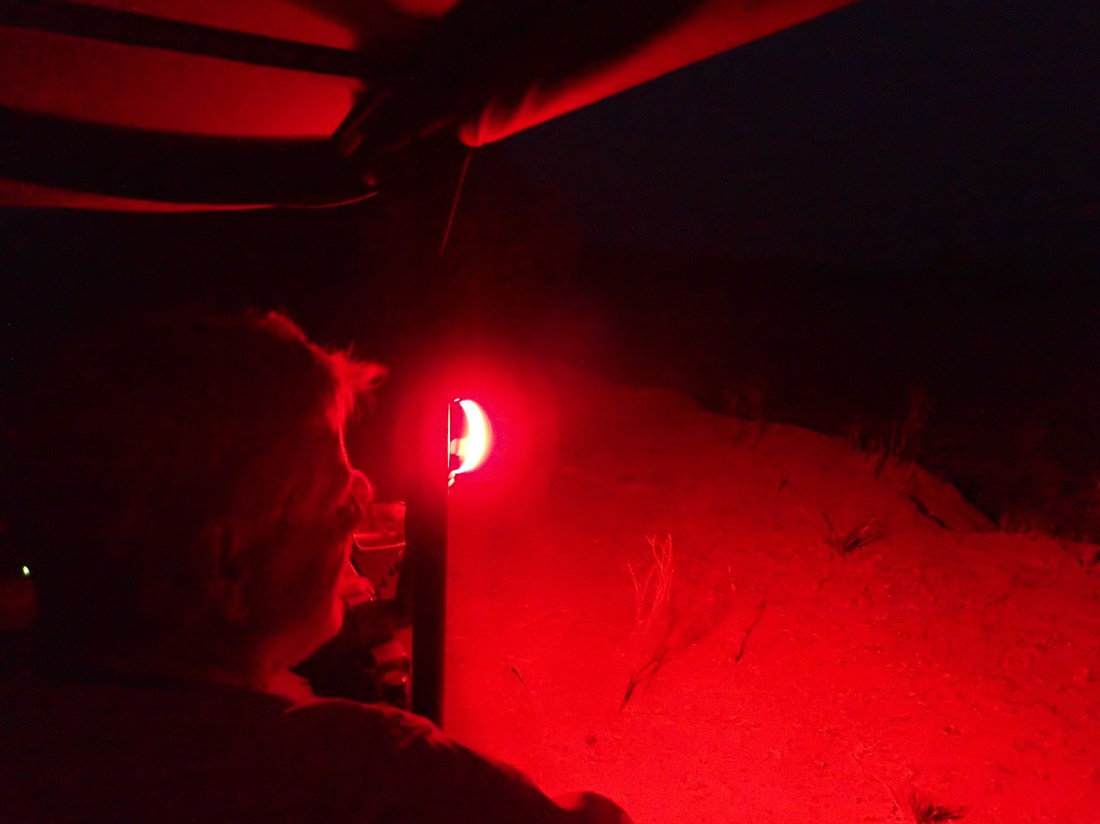
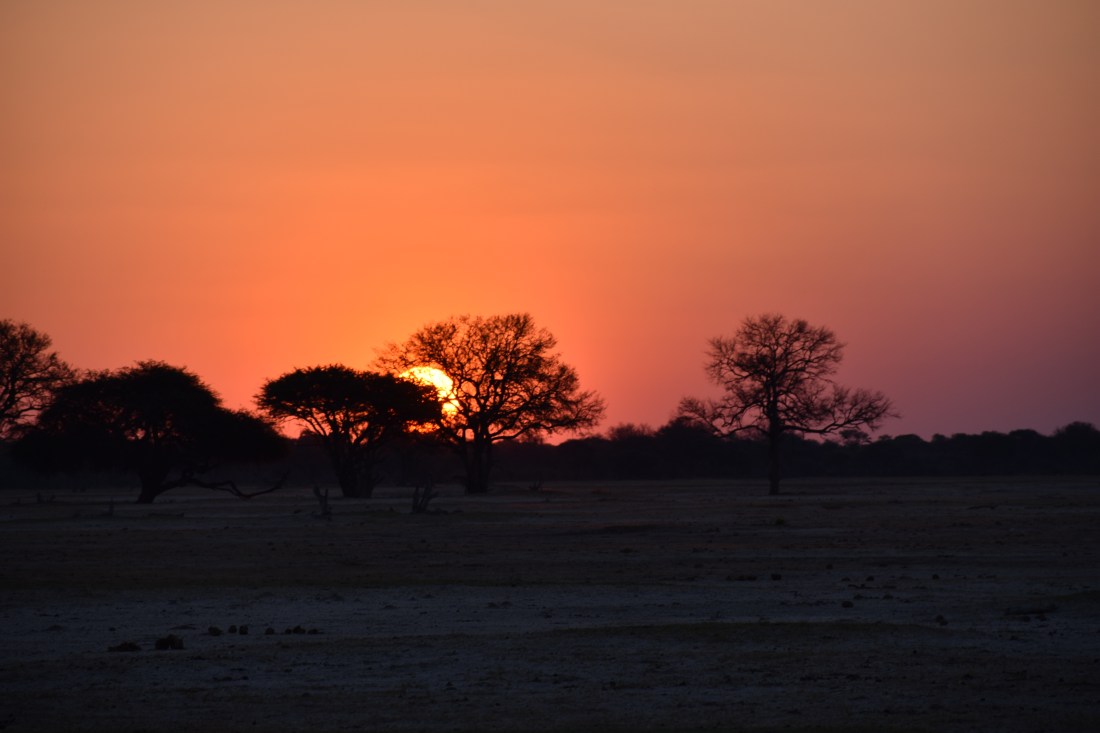
In northern Zimbabwe, on the border near Mozambique, when the sun sets, it gets dark almost immediately. The drink helped calm our nerves for the ride home with only a red light, used primarily to spot nocturnal animals and less for navigation. It was at night that we saw the painted dogs.

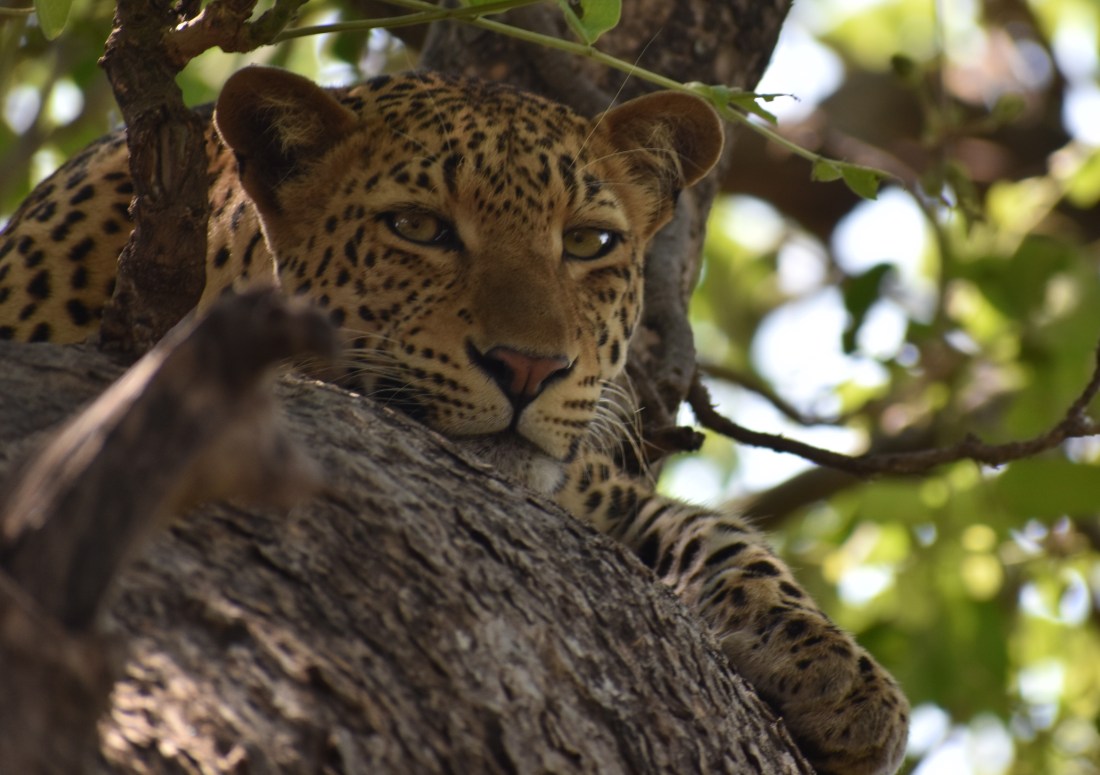
One morning our guide, Mundoga, urged us to load up earlier than usual. A leopard had been sighted, triggering a mad dash across packed dirt roads, onto soft sands in the riverbeds, through six foot high mounds of grass and down narrow animal paths through the scrub brush. Without our guide we would never have seen the leopard laying at the base of a tree. Even after he pointed to the spot I had trouble seeing the cat, he blended in so well. Mundoga was experienced enough to bring us back to the spot in the afternoon to see the leopard draped across the limbs of the tree, a dramatic sight.

We returned the camp for the happy hour before dinner at 8:00 to share around the fire pit stories of each group’s adventures. With a staff of 25, and only 12-18 guests we were well cared for. And well fed.

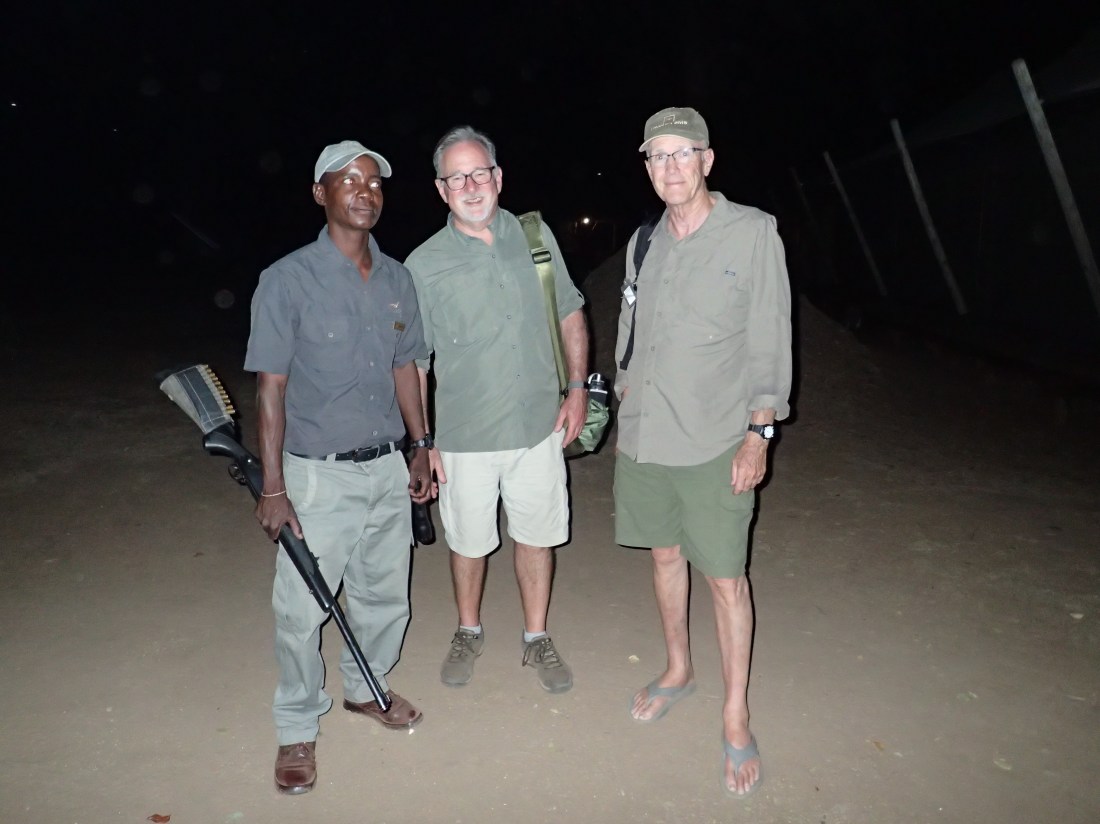
The last duty for Mundoga or one of the other guides was to grab a rifle and escort us to our rooms. Anytime after dark we could only walk around the camp with an armed guard. I thought at first this was over doing the protective bit until I saw a very large male lion with his kill about 500 yards from our tent.

Lights out shortly thereafter, as 5:30 am came quickly.

Greenwich — A Mean Time!

We’ve tried every jet lag cure. It doesn’t seem to matter what we do, the first few days in a place seven or eight time zones aways hurts. Sleepless nights. Afternoons of overwhelming exhaustion. And while our better-living-through-chemistry philosophy leads us to take sleeping pills, we still aren’t at our best those first few days.

So knowing that our safari in Zimbabwe was truly a once in a lifetime trip, we didn’t want to miss a beat. And a four day layover in London — a place we had been to several times before — seemed a great way to get over jet lag before an eleven hour flight, due South, with only one time zone change. Plus we had seen most of the sights we absolutely wanted to see in London. Now we could browse leisurely. Well, part of the plan worked.

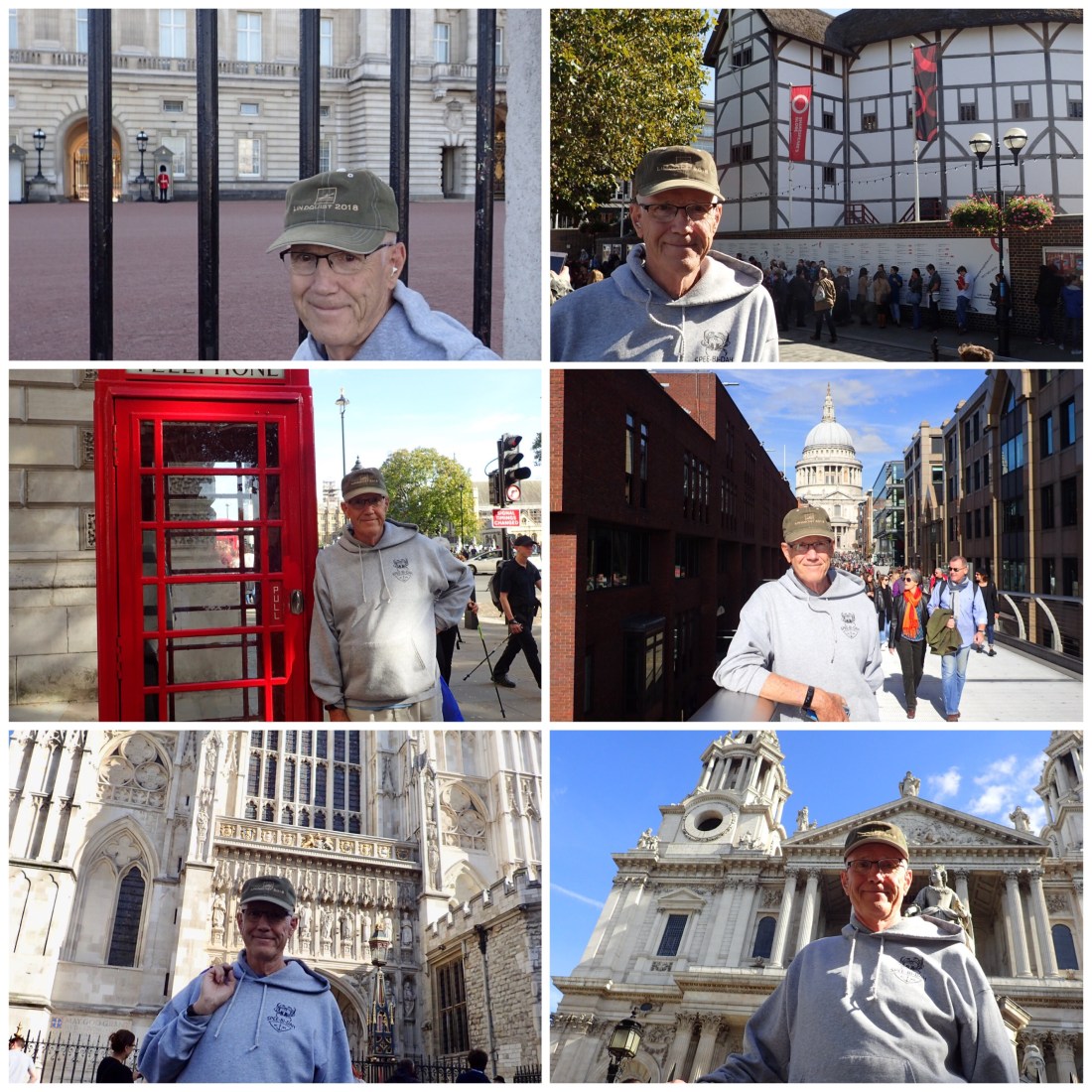
London in those last days of September and first days of October was perfect! Sunny weather, but cool temperatures. Perfect for walking. And we walked. 24 miles in the first two and a half days.

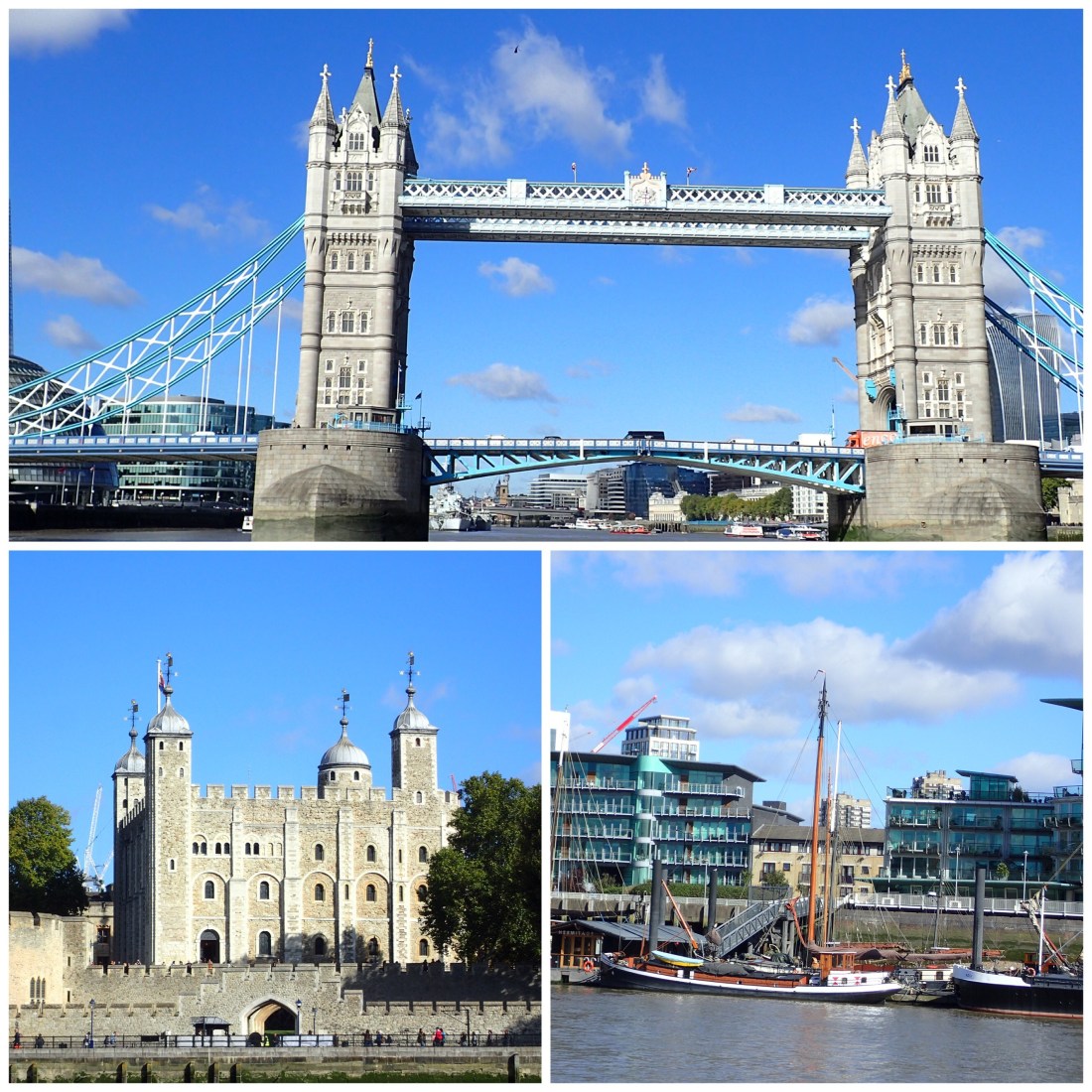
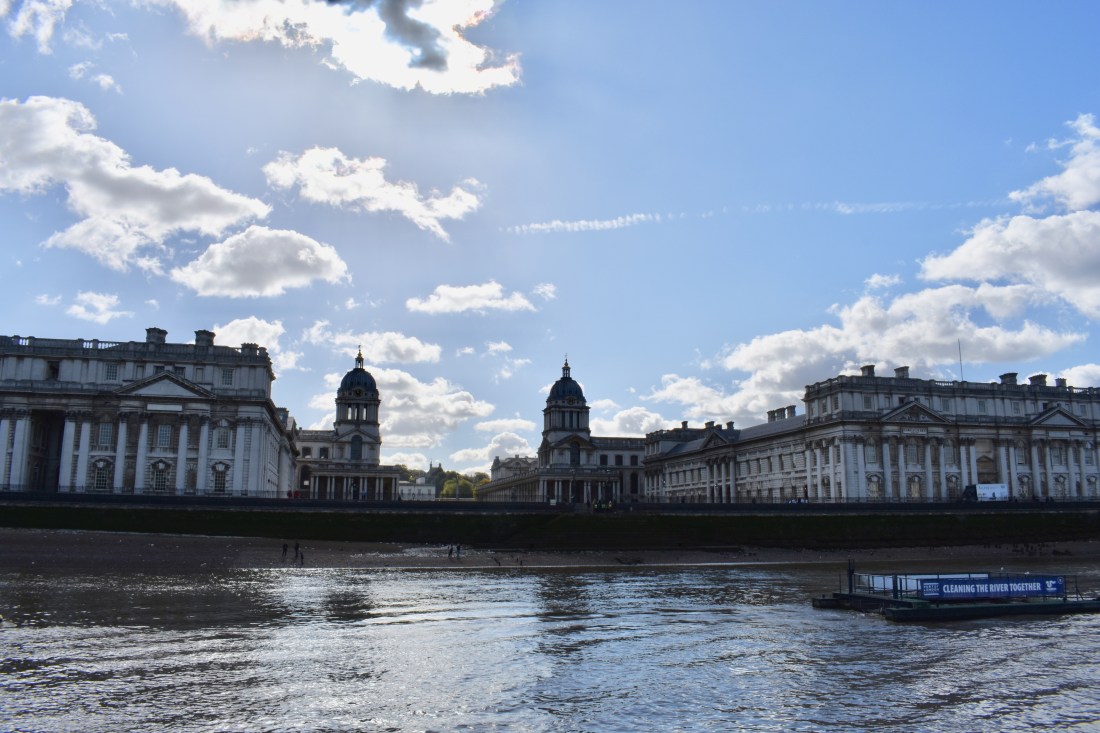
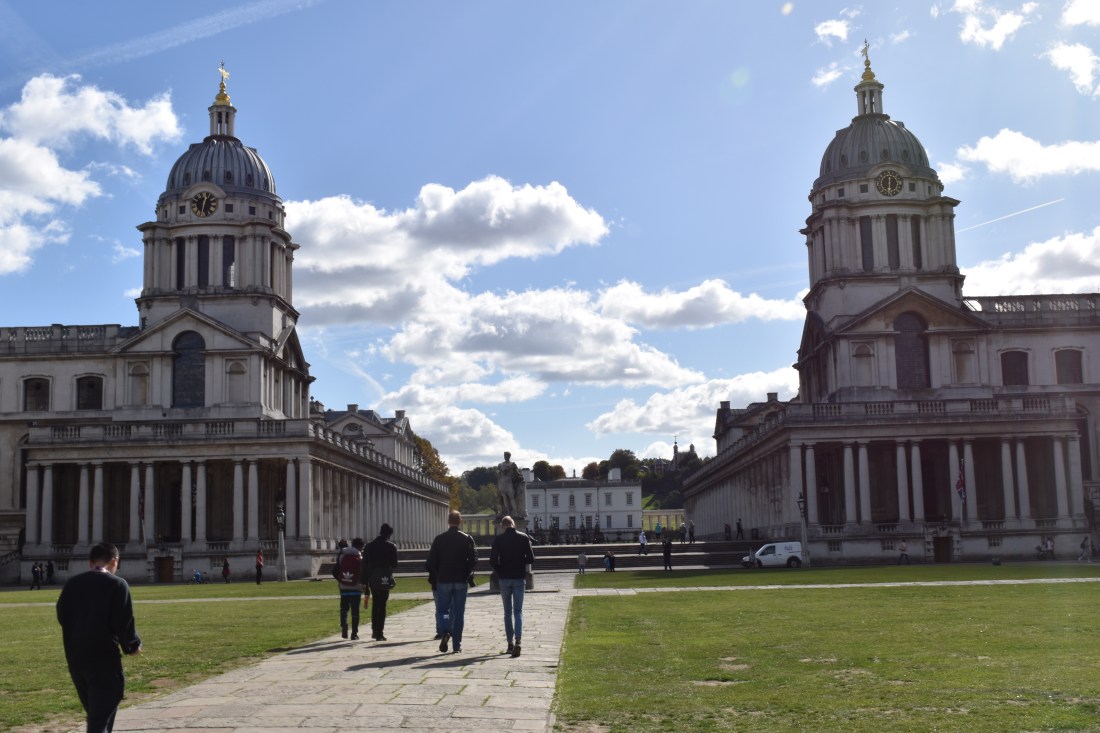
Seeing Greenwich had been on our list before, but it always got missed. This time we hopped the boat at Westminster and enjoyed the views on the way to Greenwich, the birthplace of Henry VIII and his three children. We had anticipated taking the 90 minute tour (greenwhichtours.co.uk 8£) and then taking the Tube back to London for more sights. Didn’t happen. Once we started the tour we realized there was more to see and do than we could accomplish in one day.

We lucked out. Just the three of us signed up for the tour so we got essentially a private tour of the Old Royal Naval College, it’s chapel and the prime meridian as well as the park grounds. While tourists may consider Greenwich to be a second rate tourist site, it was the birth place of Henry VII, Henry VIII, and the remaining Tudors monarchs. As a palace it fell out of favor when Henry VIII divorced wife #1 and was marginally used until Charles II decided to build a riverfront palace on the site. He demolished the original building and started on his grand palace, only to be thwarted as Parliament flexed its control of the purse strings and England’s constitutional monarchy began to emerge. Charles incomplete building sat largely unused until William and Mary decided to build a home for the multitude of British infirm sailors. They donated the land and convinced renowned London architect Christopher Wren to design a home.

Later this became the Old Royal Naval College Today the buildings house a university and art college. We did a quick stop in the Royal chapel where the pattern on the marble floor mimics the rope on Restoration era ships.

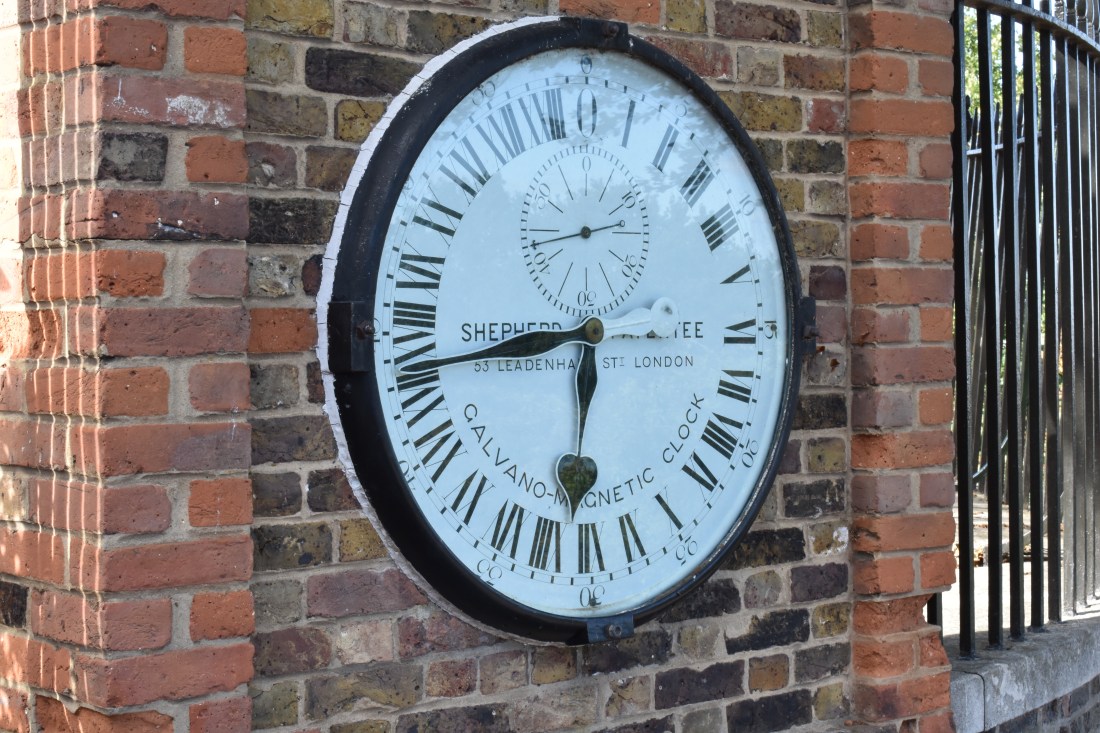
And then began the long climb to the observatory and prime meridian. Wonderful views of the Thames and newer parts of London.

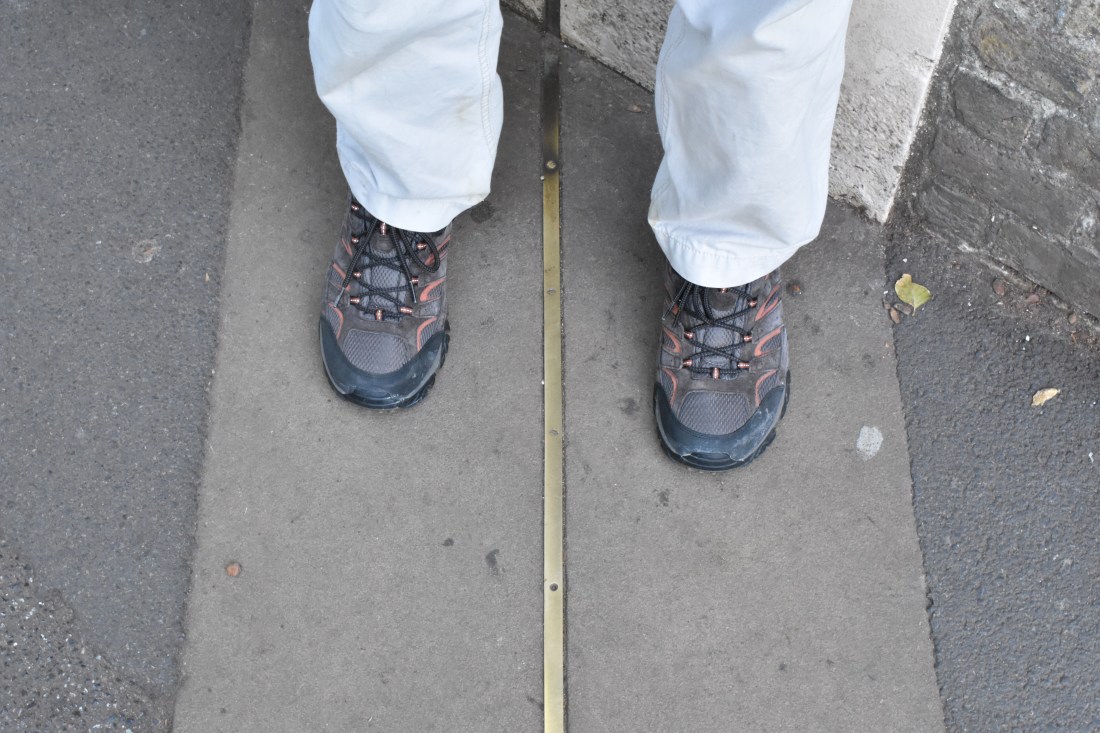
And we took the usual tourist pictures of us straddling the Eastern and Western hemispheres.

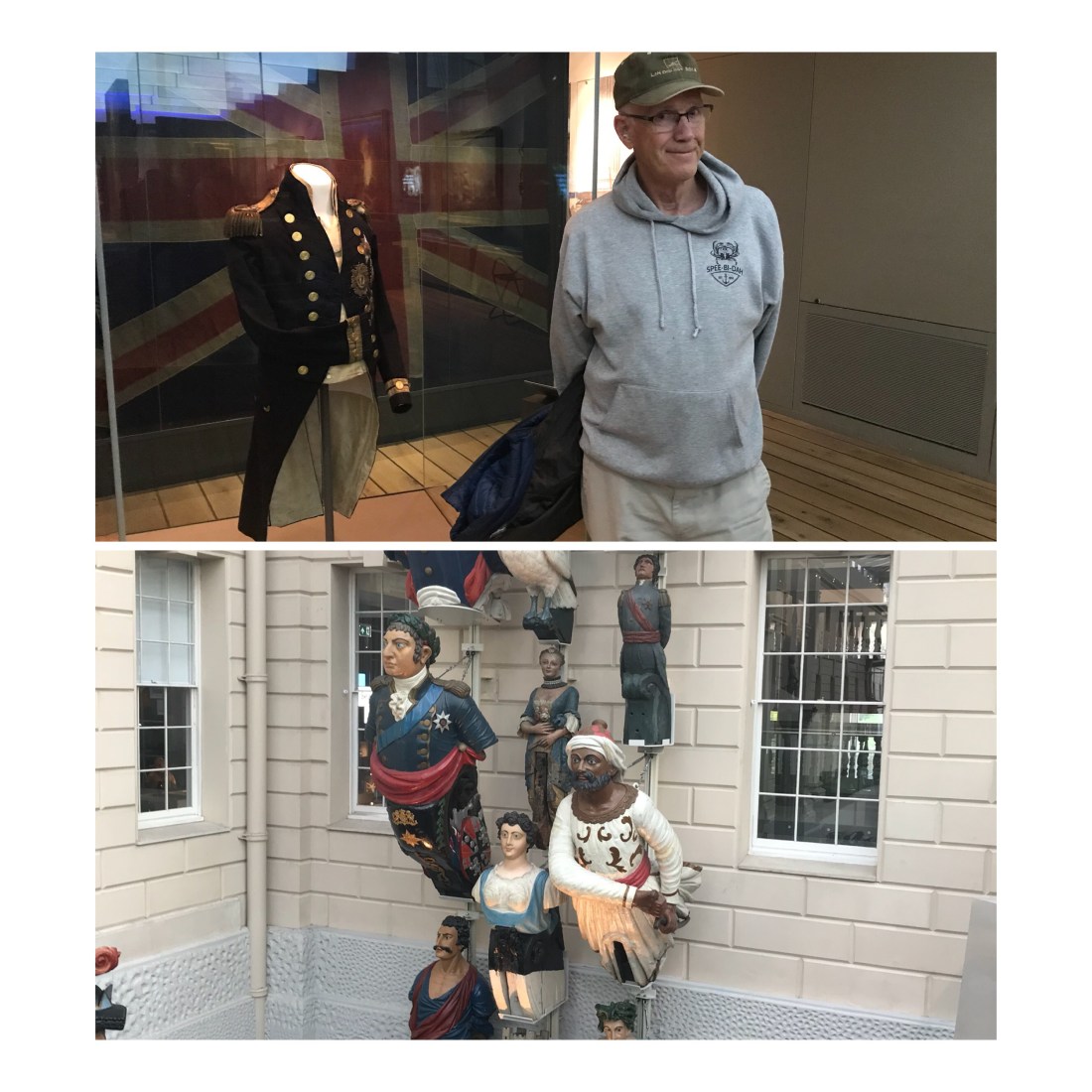
After the tour concluded we decided we could not do all three museums. We opted to skip the Royal Observatory — tough choice— and focus on the other two. Even then we were rushed as we went through the Maritime Museum. We focused in on the Napoleanic era and Lord Nelson’s triumphs with quick spin through Great Britain’s maritime history in the Pacific.

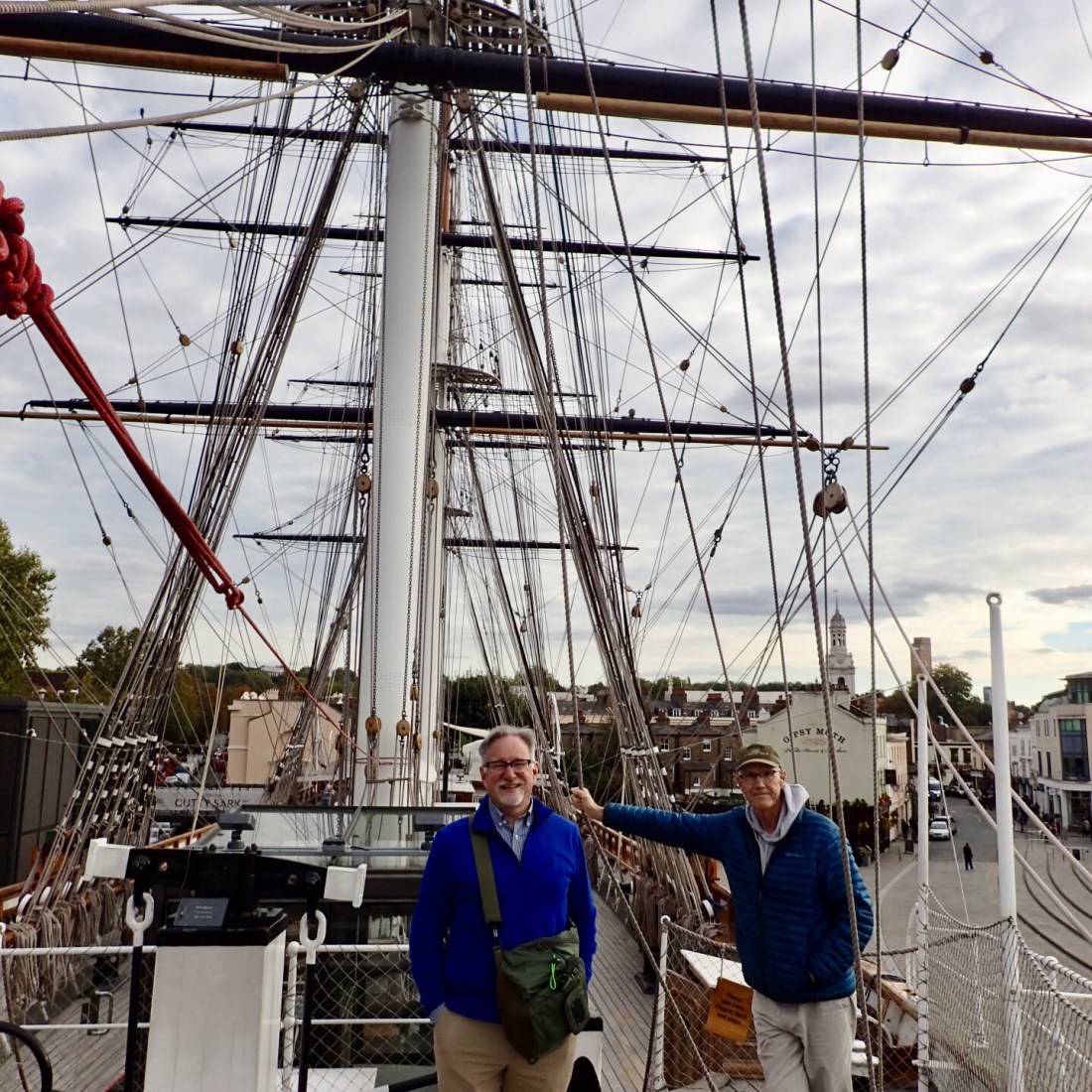
Our last stop of the day was the restored Cutty Sark. It had a $15 entrance fee, but being members of the National Trust brought that cost down for us to $10 a person. Well worth it. This ship, often referred to the fastest sailing cargo ship (although there were multiple races and Cutty Sark didn’t win them all), had a crew of just two dozen. The exhibit is exceptionally well done.

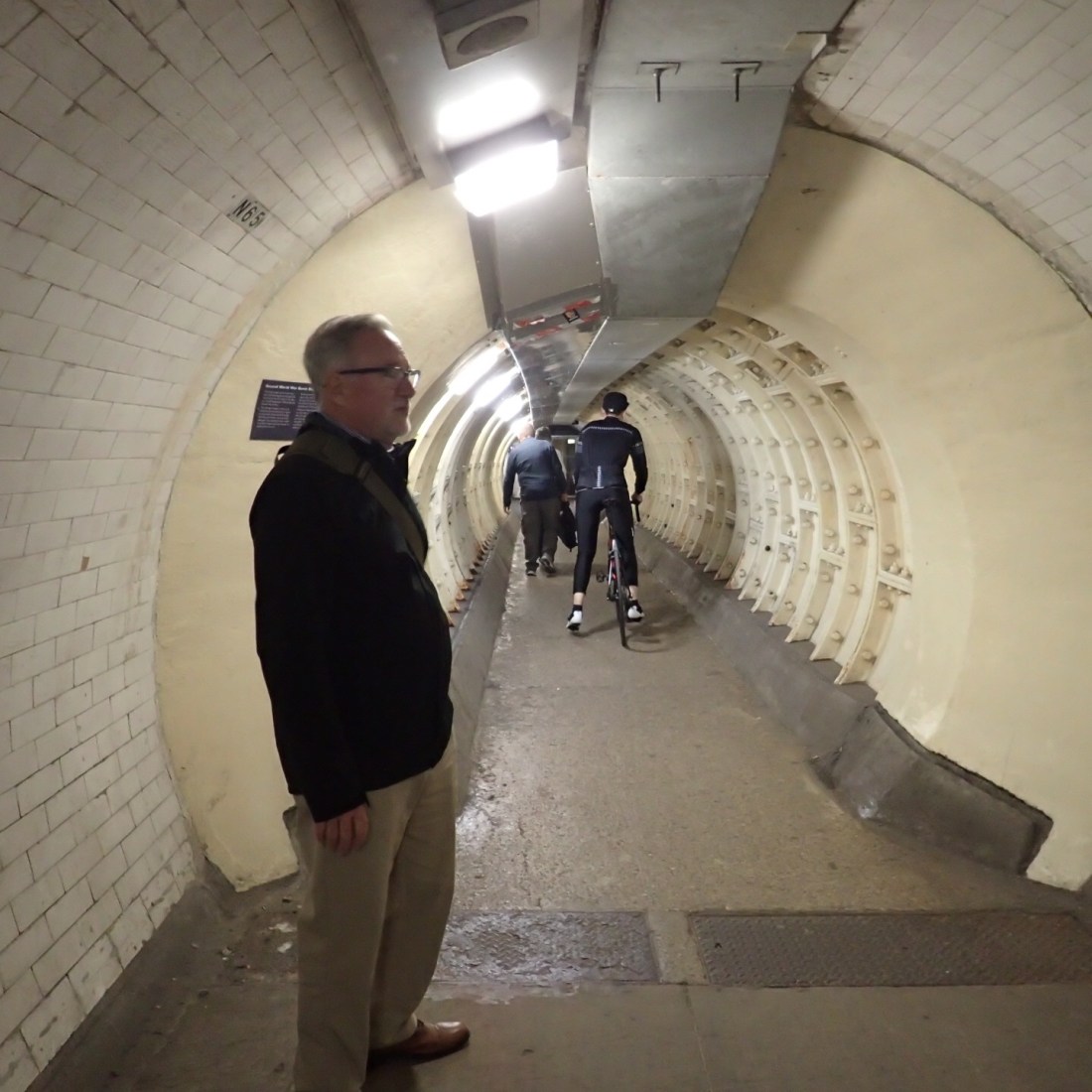
On the advice of our guide, we walked across the Thames — through a pedestrian tunnel build in the early 1900’s so worked could get to London’s docks and warehouses and not be dependent upon the ferrymen that charged exorbitantly. A little spooky to be under the river, particularly when we reached the end that had been repaired after bomb damage at the end of the German bombing of London.

So the bottom line? Greenwich is definitely a first rate sight. (By the way, the term first rate is a British naval term and refers to the size of the ship. Nothing wrong with being second or third rate; you’re just smaller)

Whale of a Good Time

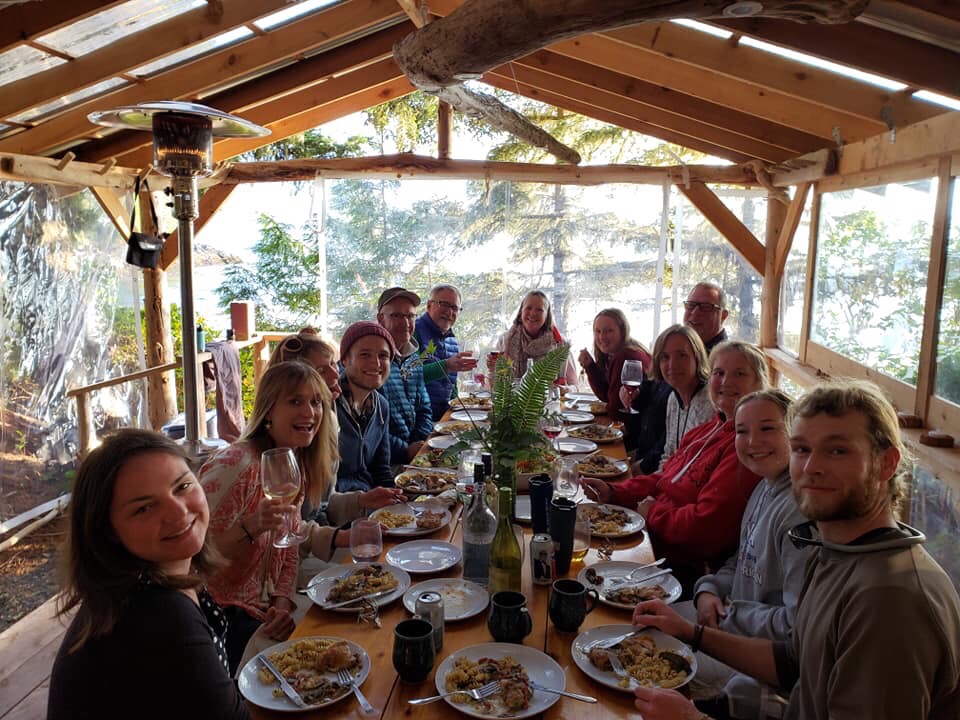
Family vacations are sometimes not all they’re cracked up to be. Even in a close knit family, interests diverge. Taking our extended family on a four day kayaking trip could have been a disaster. A couple members have bodies that have betrayed them. From oldest and the youngest, our ages spanned 62 years. A couple of type A’s futilely try to organize the family. Three of us were veteran kayakers who had been on this same trip the year before while several were nearly kayak virgins. Nonetheless, the awe-inspiring wildlife, comfortable camp site, great guides and a flexible schedule worked magic for whole group. And we had the camp to ourselves. It only holds twelve max.

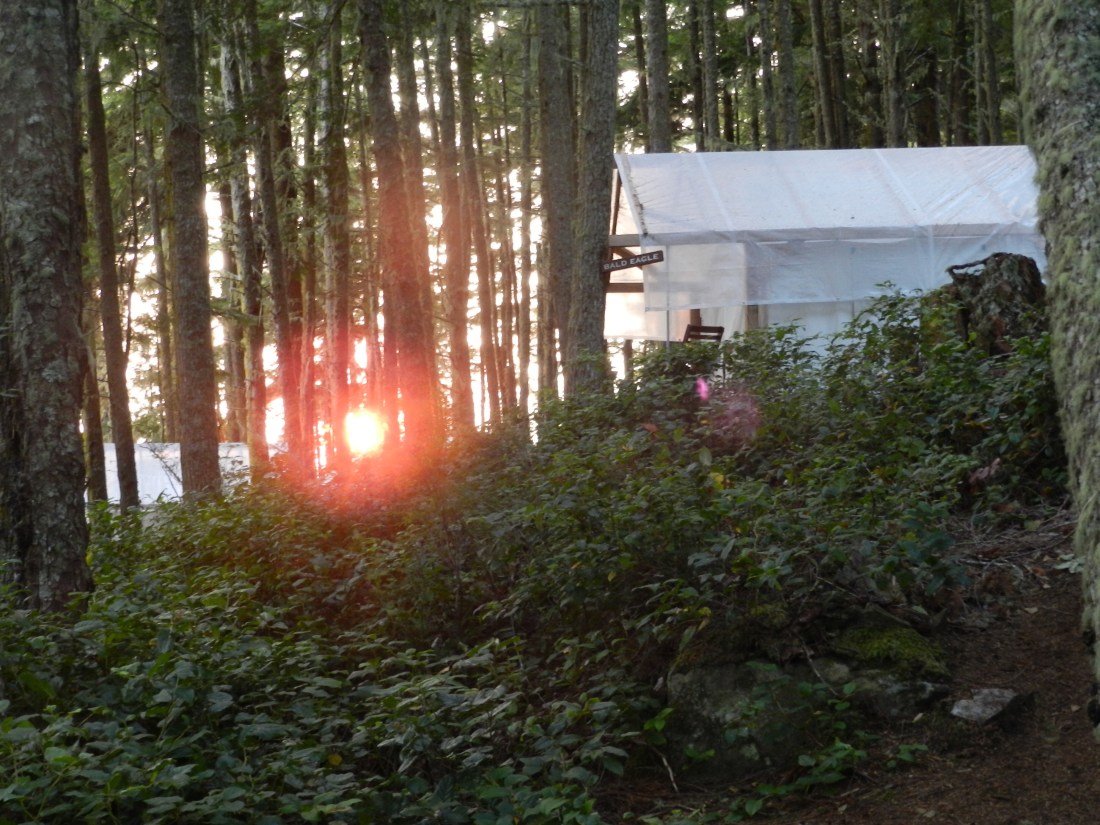
The camp site. No erecting tents, or foam pads on the ground for us. We slept in king size beds with four inch foam mattresses, sheets, fluffy comforters — all under a six foot tent, each placed to provide a bit of privacy. We went to bed clutching hot water bottles the kitchen crew provided to chase away the cool nighttime marine dampness.

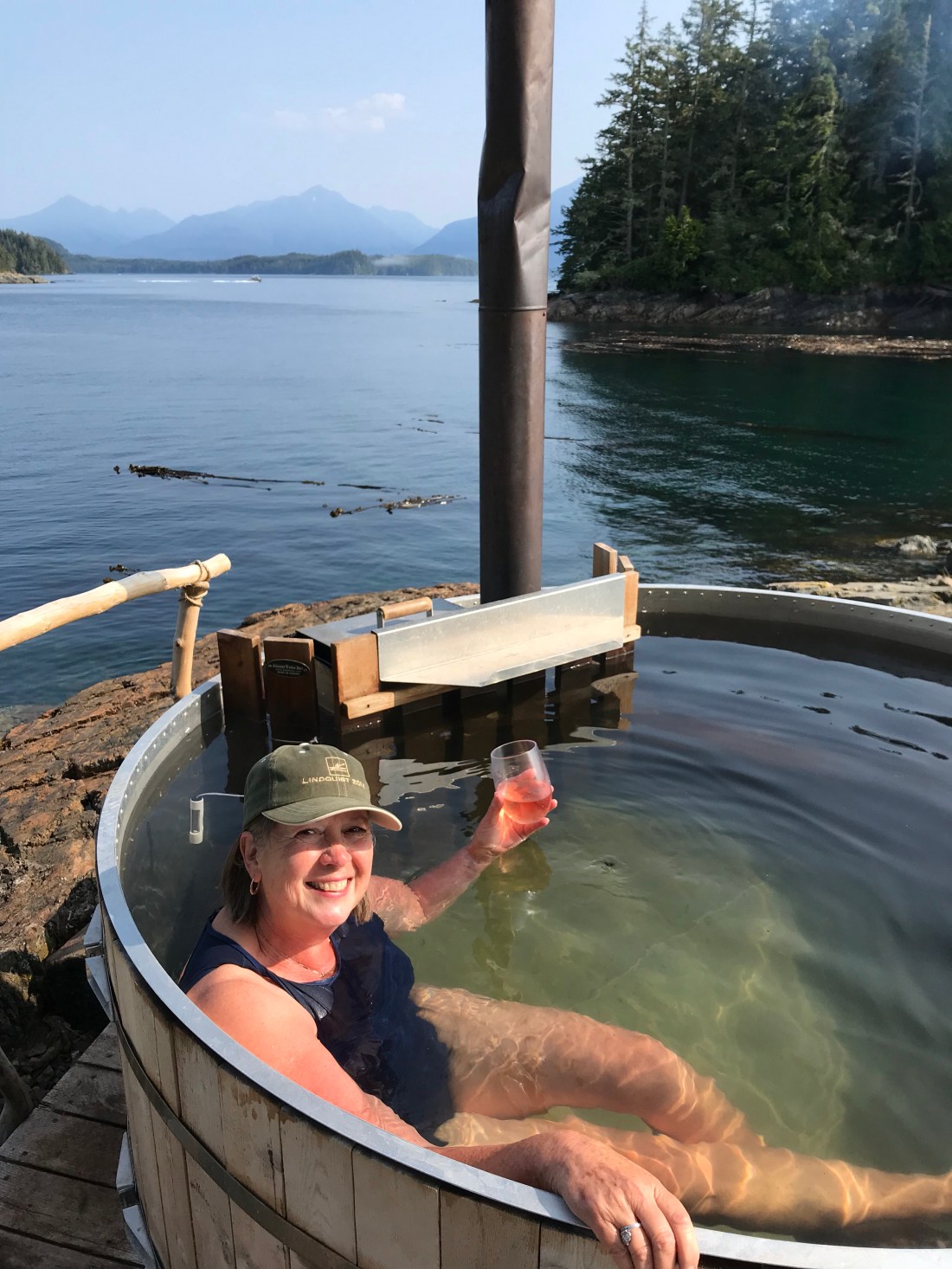
And a salt water hot tub soothed our sore muscles and warmed our cold feet. Solar panels provided electricity for lights and charging our electronics. All the comforts of home, almost.

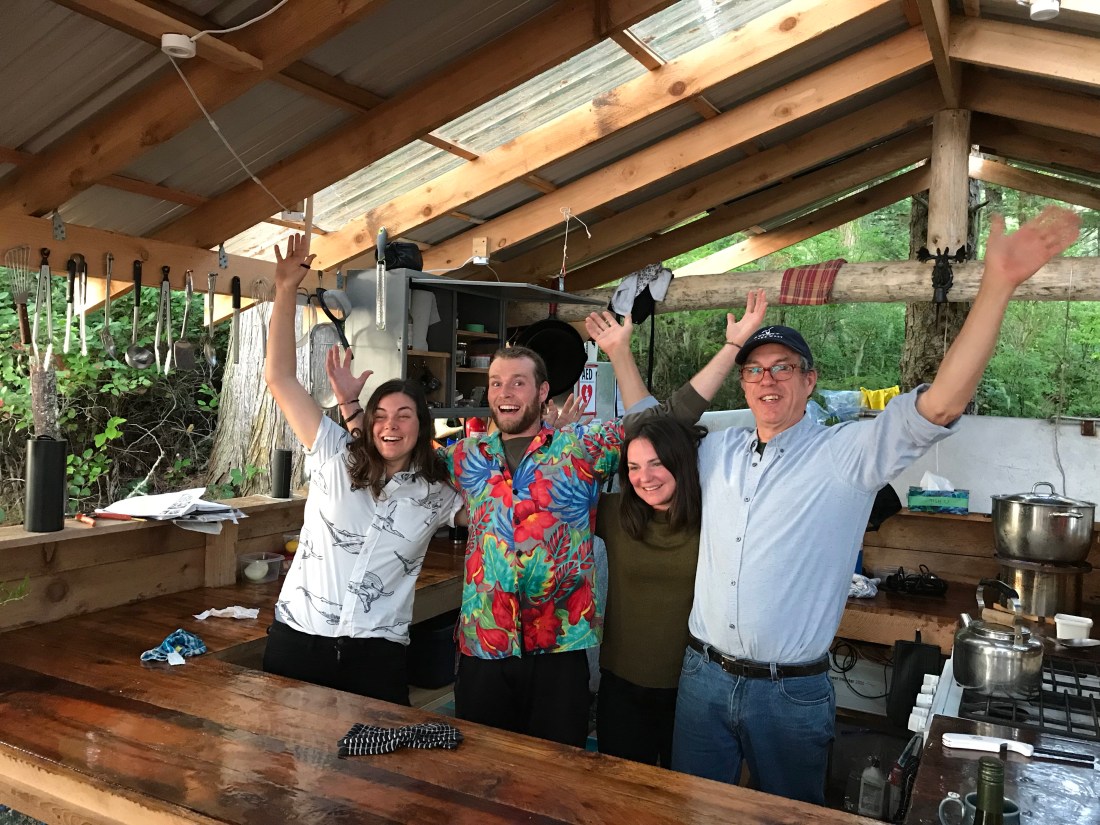
The food. French toast with blueberries. Coconut ginger carrot soup. Ling cod with Middle Eastern pesto. Gorgonzola stuffed dates. We ate well. Our camp had a full time chef and an assistant who had promoted herself to sous chef (actually a Brit from Australia who found this odd job through a website devoted to helping students and others find a cheap way to see the world, trading labor for room and board). Food allergies & quirks were accommodated (and we didn’t make it easy).

If any wildlife appeared, or we wanted to paddle a little longer, the meals were delayed. If we all were hanging out by the hot tub, that’s where the appetizers were served.

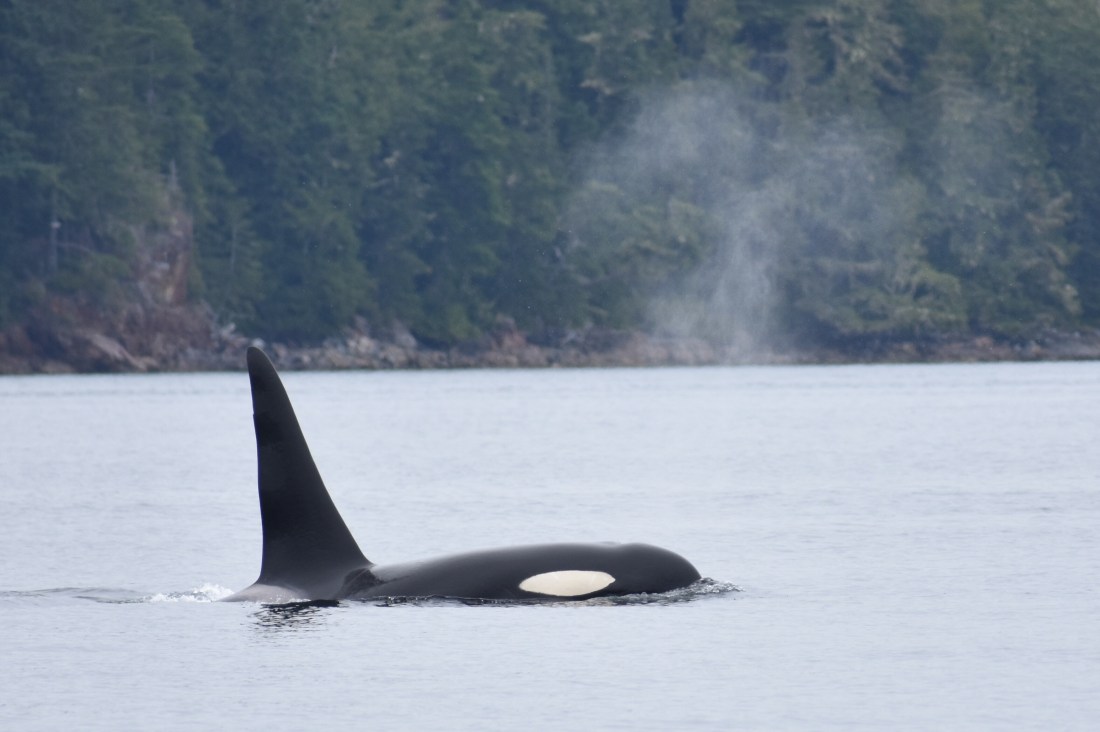
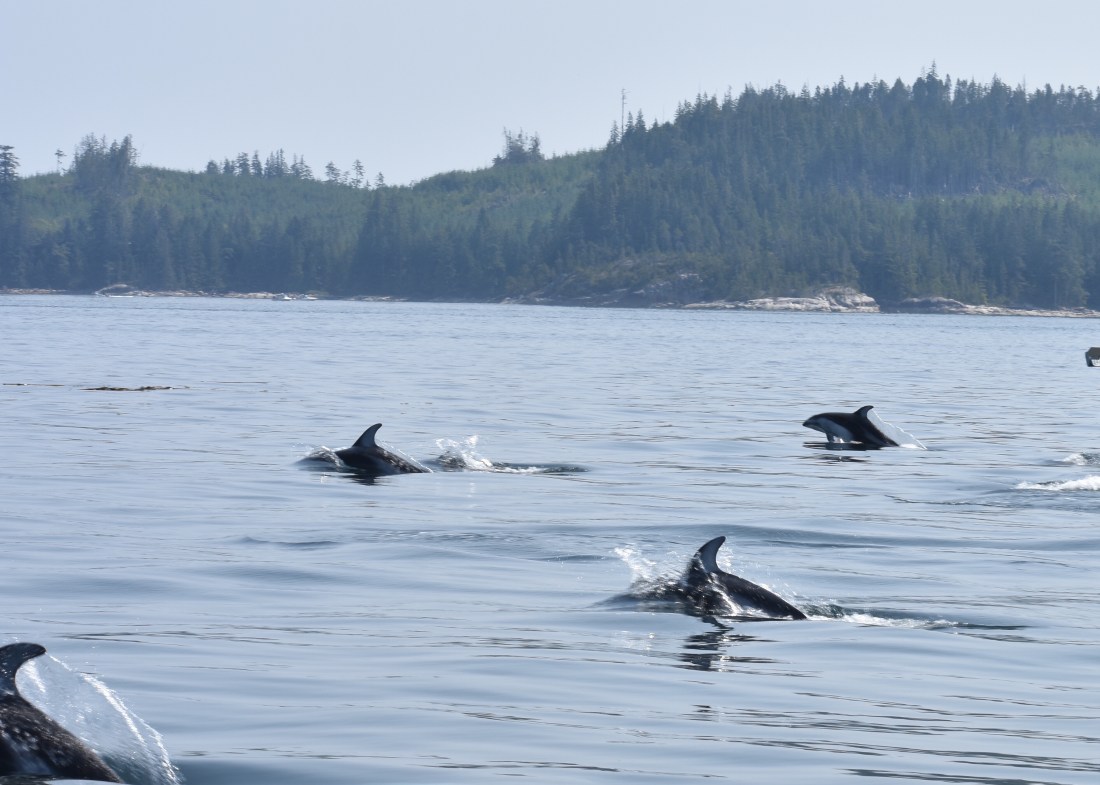
But we really came for the kayaking and wildlife. Located on Blackfish Sound in British Columbia, Canada, our camp was accessible only by boat. The Sound stretches along the northeast side of Vancouver Island and in the summer is a salmon freeway attracting orca (which formerly were inaccurately called blackfish). The regional waters are rich with herring which attracts a second large sea mammal, the humpback whale. And bald eagles, white-sided Pacific dolphin, sea lions, seals, plus other birds.

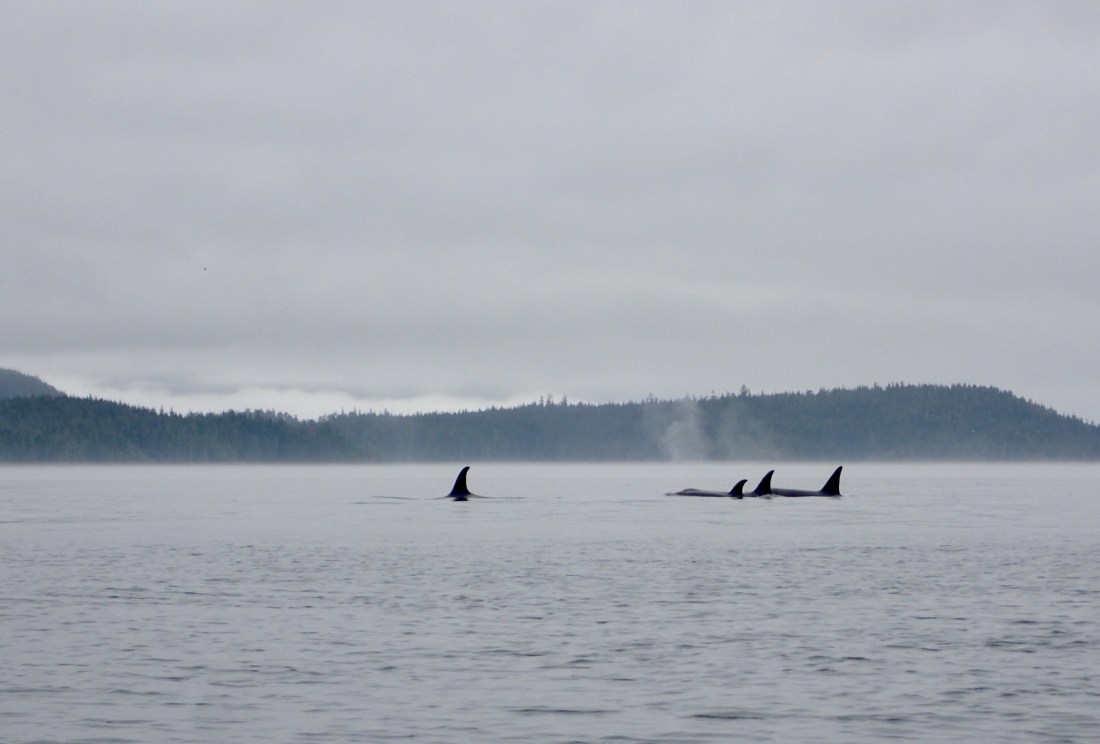
Sitting in our tents at dawn and dusk, we could hear the humpbacks in the fog just beyond our sight. The sound of their blow brought us racing for a glimpse of these huge creatures. On our first morning kayak we had been told to prepare to raft all the kayaks together should we get close to a whale. When the guides first yelled “raft,” I thought the warning was premature; the whales were too far away. But quickly they came close. Instead of humpbacks, it was small pod after small pod of orca. The tall, straight dorsal fin indicated a male, the smaller curved fin was the female and often the small fins of the immature whales were part of the mix.

That first morning we didn’t get very far as we had to repeatedly rafted up, each time accompanied by ohhs and ahhhs. At one point our guide put a hydrophone in the water so we could hear the clicks of the orca pods. Some day scientists will tell us what they mean.

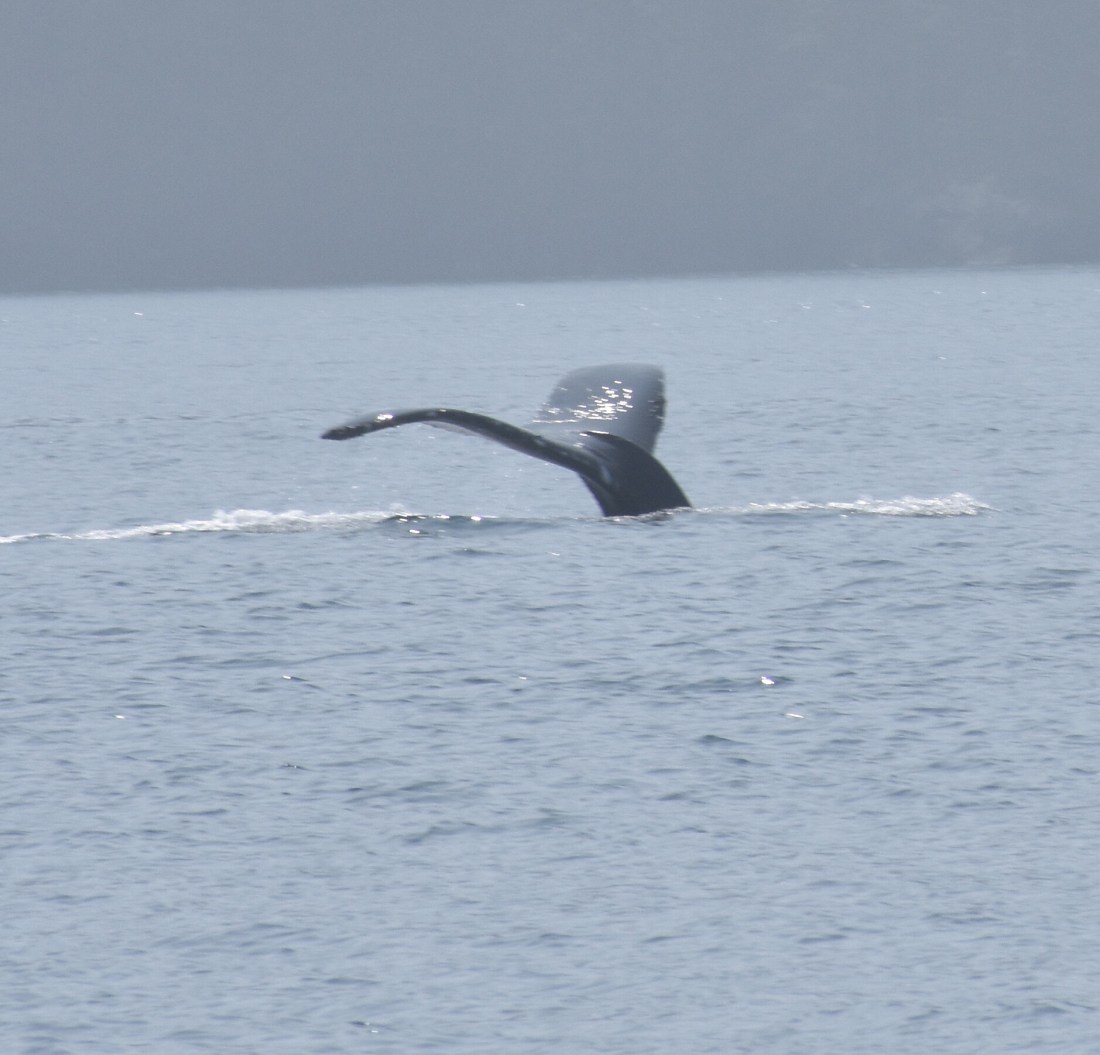
We didn’t get as close to the humpback whales, although a year ago the three veterans had seen them bubble feeding right around our campsite when the herring are running. This year we had to be content seeing them from a distance or when we did get close, through the veil of the heavy morning fog. Almost siting prompted our chant, “tail, tail tail!” With cameras posed hoping for the classic pose. One afternoon we sat on the rocks below our camp and watched two Humpback whales breech repeatedly, causing one of us to yell, “I didn’t know those suckers could fly.” The guides informed us that the big whales rarely breech in these waters where they generally concentrate on feeding so we felt very lucky.

The big attraction to kayaking in Blackfish Sound is, of course, the whales. But our gang seemed to take as much joy in the smaller mammals. The big sea lions act like the bears of the sea, foraging in the bay, using their bulk to intimidate and their speed to impress. Unlike the bigger mammals, the sea lions swim the same waters we kayak and pose a far greater threat to our stability than the big guys who kept their distance.

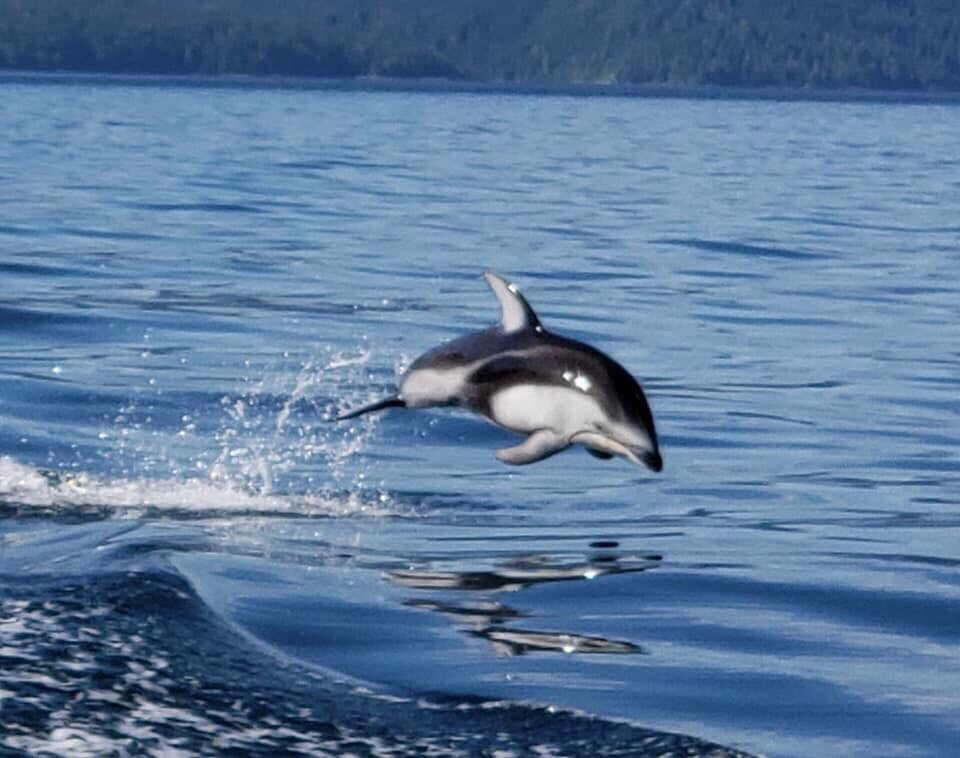
But it was the dolphins playing off the bow and stern of the power boats we rode to and from the camp that earned the biggest smiles. They just simply played with the boats, appearing to leap and dive just for the sheer joy of it. Kind of reminded me of little of puppies. It was hard not to feel a bit of their exuberance.

When the fog prevented us from seeing many mammals on the third day’s whale watching trip, our First Nation’s guide stopped the boat so we could watch seven eagles and hundreds of seagulls feast on a herring ball. The poor fish form a tight knit swirling ball ball when threatened, based upon the premise there is safety in numbers. Those fish lucky enough to be in the middle of the ball survive. The ball is driven to the surface by the sea lion nipping at them from below which invites the attack from above. Eagle after eagle swooped down, talons extended to grab fistfuls of herring. Sometimes the eagle dropped ankle deep into the water; sometime shin deep. And as the eagles rose with their catch up they contorted their bodies, beak to toes, to eat literally on the fly. An occasional seagull followed a bald eagle, hoping for dropped scraps. The immature eagles, about four of them, who hadn’t yet developed the characteristic white heads and tails, were clearly less proficient. They generally made several passes at the herring ball before getting up the courage to dip into the water, and even then, they often came up empty-handed.

The early morning kayaks had a charm of their own apart from the wildlife. We experienced what our guides called an early “fog-ust,” the typical August weather pattern where warm land temperatures and cool water temperatures create morning fog. Islands just a few hundred yards away disappeared. And as we paddled, we hugged the shoreline so as not to get lost in the mist. This lack of visibility enhanced the feeling of floating and made distance sounds seem close. As as the fog shifted, it offered glimpses of the shoreline or tree tops, presented like like brief gifts to those of us who chose to get up early. At times we could see blue sky above and white all around us.

It takes a special person to be a guide on one of these trips. Part cheerleader, part safety patrol, they had to know the waters, know the wildlife and manage a wacky group of paddlers — a bit like herding ducks. And, of course, they had to know how to kayak and how to help us kayak — getting us safely into our kayaks, adjusting our rudder pedals, securing our spray skirts, and making sure our PSD were worn correctly. All the while making sure we were having fun. They succeeded.

The kayaking was really easy, as you might expect for a trip advertised as appropriate for inexperienced kayakers. With coaching from the guides, our least experienced kayakers managed the most strenuous paddle through some pretty strong currents — no sweat. The guides assisted us in and out of the kayaks, making the experience accessible for least flexible and least mobile among us. The strict and understandable no-paddling-after-wine-or- beer rule kept us from the post-dinner kayak. Only some of us went out on the water at every opportunity. The camp site attractions coerced some to stay ashore as an alternative. That’s why it’s called glamping.

Would we do it again? You bet! And maybe again and again. The camp may stay the same. The activities may stay the same. But the wildlife will always change and surprise.

Food for thought

Some people think the only reason I travel is for the food. And what’s wrong with that? Food is culture and by focusing on the food, I’m embracing the culture. Most of the time I don’t think about it and just enjoy the experience of shopping, cooking and eating the food where ever I am, although it is a harder argument to make when I am only hundred miles from home.

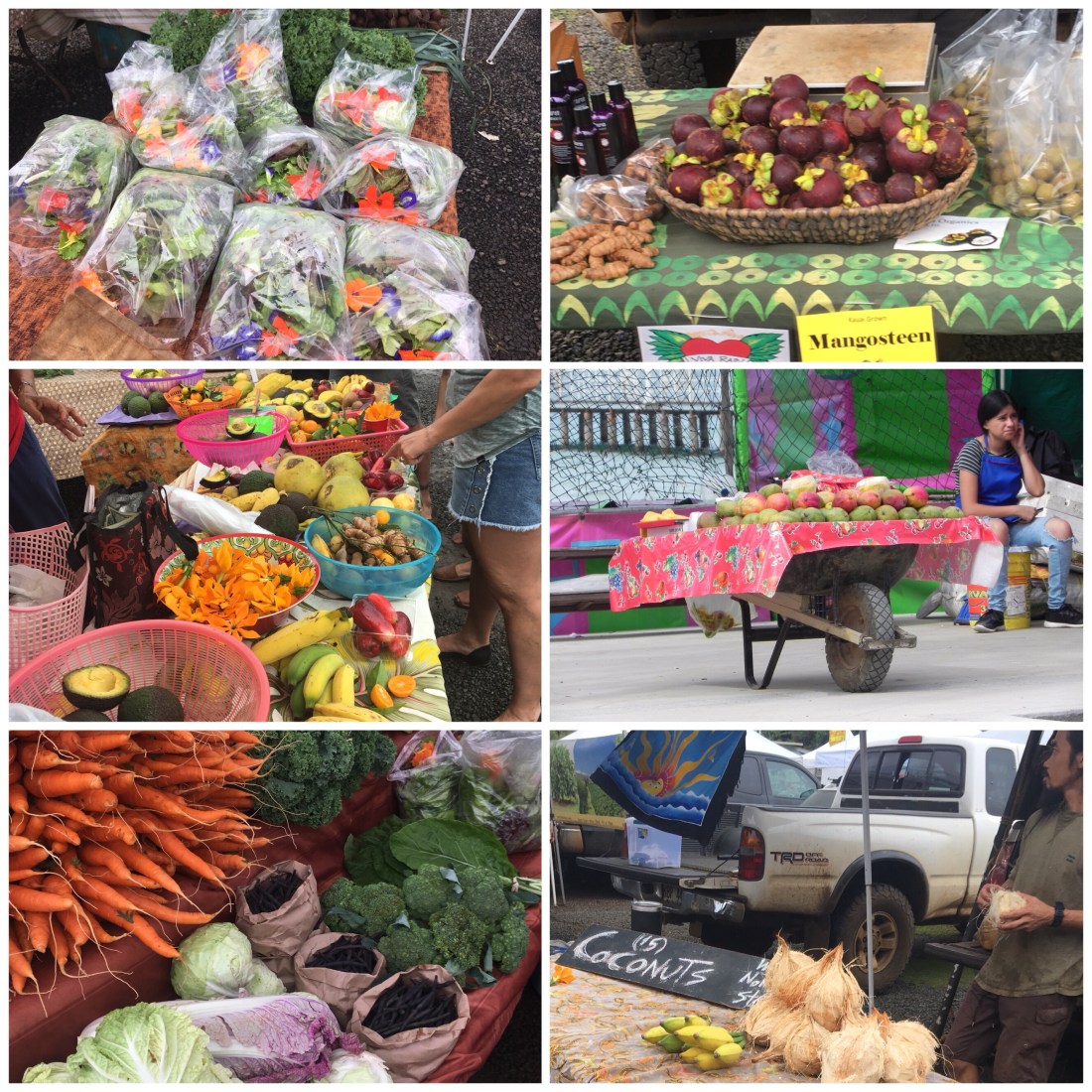
Food markets, particularly outdoor farmers markets have always captivated me. Going through my old slides, or more recently my digital pictures, ripe tomatoes, unique fruits and vegetables, bright-eyed fish dominate. The green cauliflower in Sicily, the maroon mangosteens in Kauai, stall after stall of mushrooms in Provence, demanded to be carried back to our temporary home and served for dinner.

My motivation to cook is not inspired only by the beauty of the food markets. I do get tired of restaurant food (even when it is good) and the whole restaurant scene. “How are your first bites?” from my server totally annoys me. Plus there are rarely enough vegetables and too often they’re just boring. My motto has always been that life is too short for bad food and too often touristy places offer beautiful views but just so-so food.

So we choose whenever possible to rent a place with a kitchen for at least part of our trip. And that often comes with its own set of problems. Rental unit kitchens usually have a weird collection of dishes and cookware. Knives are often mismatched or are a very poor quality set and always dull. My other favorite tools — a micro plane, garlic press, good set of tongs — rarely are included. So I’ve learned to bring my own or improvise.

For long weekend trips to the ocean or mountains I pack a travel set of good knives I gave Peter as a Christmas present years ago. (They go in checked bags when we fly). Worth every penny I spent. We sometimes even bring our espresso machine which we bought on eBay for $25. Okay, that is over the top…but in Kauai for a month, it saved us several hundred dollars and we had better lattes. I also bring my favorite spices — cumin seed, star anise, herb d’provence, smokey paprika — or which ones will match the local cuisine. Although when going on longer trips with limited luggage space my spices may get left at home.

And then I buy staples the first day I get into a supermarket. Olive oil, smallest amount of butter I can find, pepper in a grinder, a good quality salt (local if possible). Depending upon where I am and what I anticipate cooking the list grows from there, focusing on small sizes . Chicken broth concentrate, flour, sugar, soy sauce, mayonnaise, good quality red wine vinegar, plus the paper goods I’ll need and zip lock plastic bags.

Once in my temporary kitchen I know I’ll have to make some adjustments. If I have a cheese grater, but no garlic press, I rub my garlic cloves across fine section of the grater. A crummy pair of tongs? Wrap the gripping end with rubber bands. It’s harder to deal with the flimsy pots and pans.

And if there is a thrift shop close by, I always check it out for additional kitchen towels (can never have enough), glassware (surprisingly often rental kitchens don’t have wine glasses) and serving pieces. Guess most visitors aren’t there to cook three course meals. Or I cruise local flea markets or the inexpensive street markets often attached to farmers markets. My favorite casual tablecloths and the best travel souvenir I have cost about 10 Euros each at one of those markets in Provence. Just wish I had bought more.

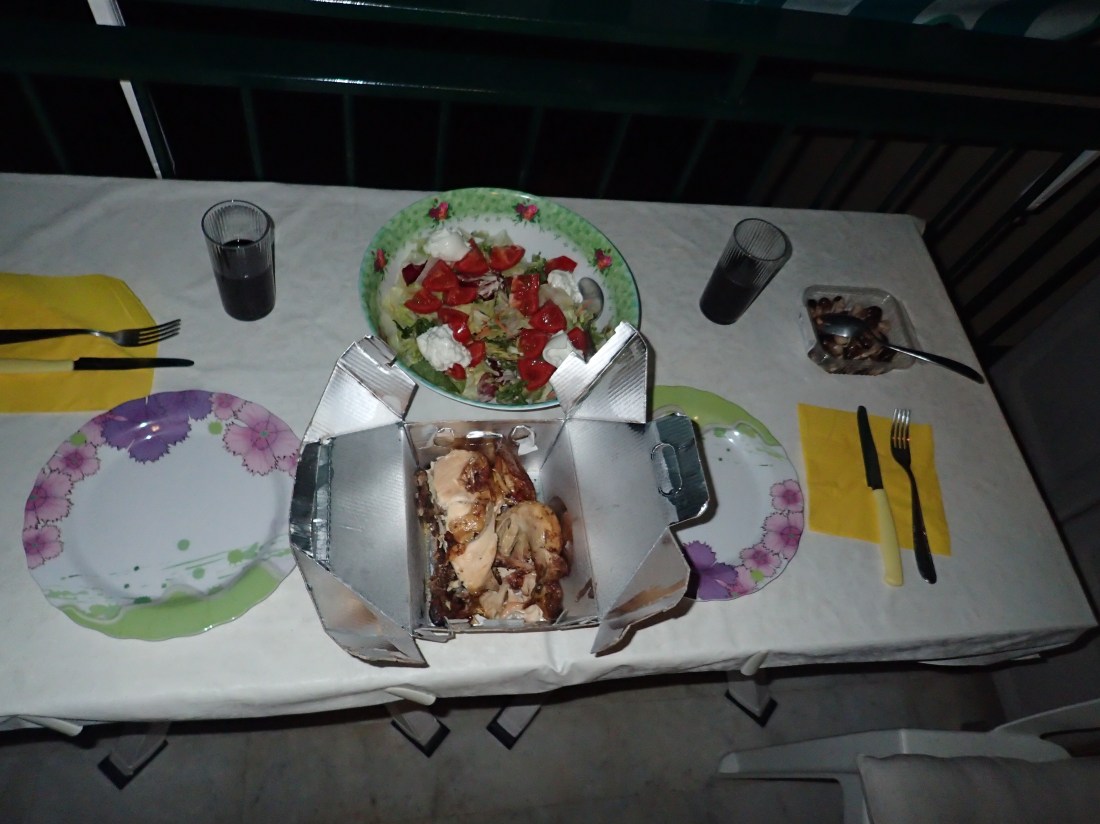
When we are in a foodie’s heaven like Umbria, or Provence, of course we eat out and often a lot, particularly for lunch. We tend to cook more when staying in the countryside to avoid driving after enjoying some wine. And we eat out in the cities where restaurants within walking or subway distance are plentiful. And when we don’t take our own espresso machine we have to locate a good coffee joint to start the day. In between these restaurant stops, we still try to buy food for picnic breakfasts and lunches so we get to play with the local cheeses, cured meats and bread that tantalize us. Eggs and toast in a cottage near Loch Ness where our landlady gave us farm fresh eggs. Take-out roast chicken in Cefalu from a shop the local haunt.

Buying our food also brings us into closer contact with the locals. Our butcher in Apt, Provence who explained in detailed French how to cook a roast we purchased. The young bread peddler in Lourmarin, an underemployed college graduate, helping out her immigrant father. The shop merchant in Croatia shared her truffle recipes with us.

Food is the one piece of cultural heritage that seems to hang on from our immigrant past long after the language and other customs have faded away. Why else do I cook krumkake and meatballs at Christmas based upon a recipe from a Swedish grandmother I never met?

Driving in Sicily?

You’re nuts! Suicidal! Sicilian drivers are crazy, the worst in Europe! The roads are awful! The cities are a nightmare! You’re taking your life in your hands….

We heard it all prior to our trip to Sicily. Despite the dire warnings, we chose to rent a car because many of the big tourist attractions, including the best archeological sites, are in remote areas. And we wanted to spend some time in rural Sicily. You can’t do that very easily on public transportation.

Like most stereotypes, Sicilian drivers included, there is a kernel of truth. Yes, Sicilian drivers are more aggressive than their American counterparts (maybe New Yorkers excluded), but certainly no worse than drivers in the rest of Italy. And we never experienced the terror of a big Mercedes or BMW barreling down on you at 120 mph, lights flashing telling you to move over fast, like we did every few minutes on the German autobahns.

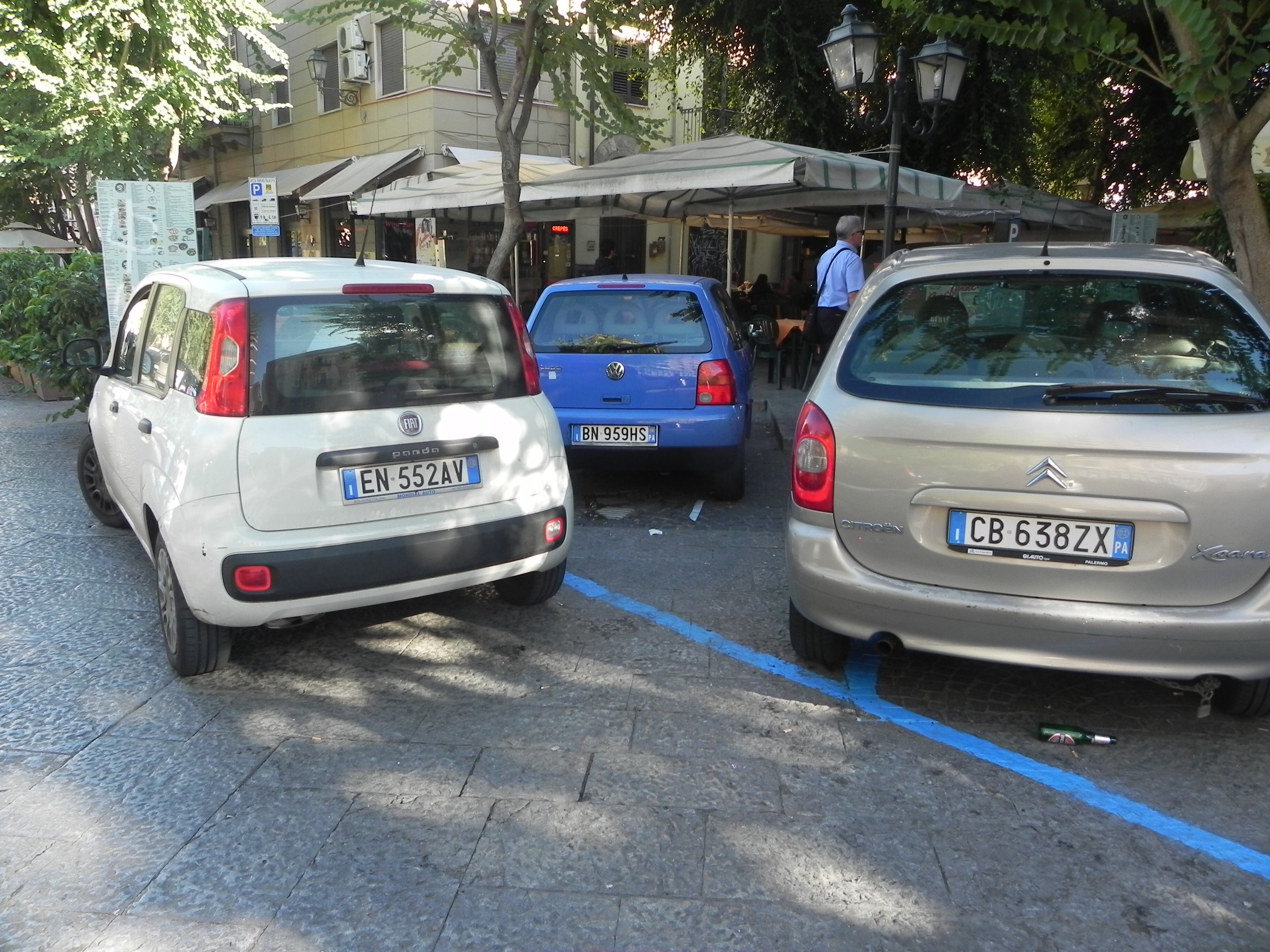
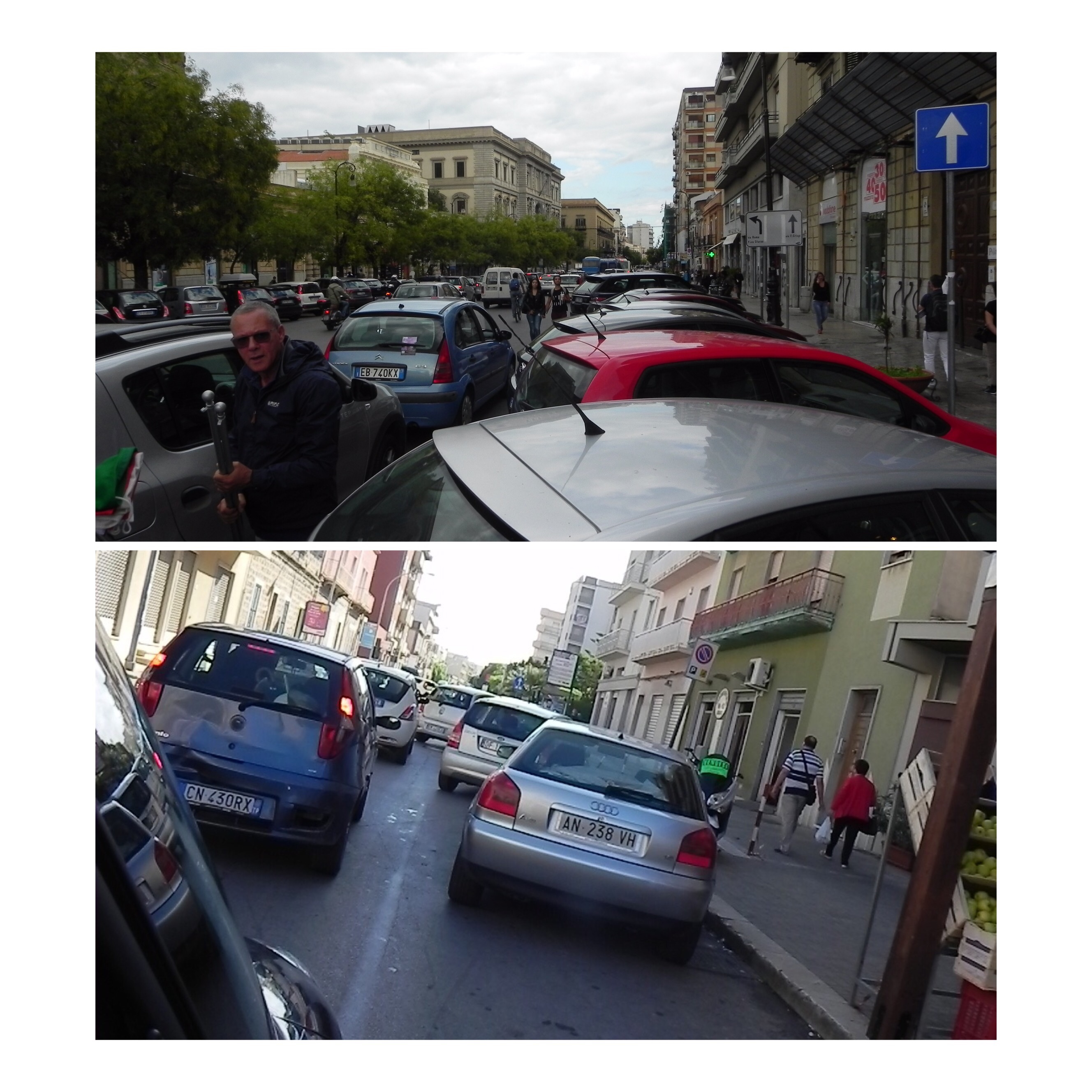
We noticed, however, there seem to be some “unwritten” rules of the road in Sicily.  They can unsettle the non-Sicilian driver, but they are mostly harmless…

–stopping the car in the middle of a road in traffic to talk to a friend is fine…

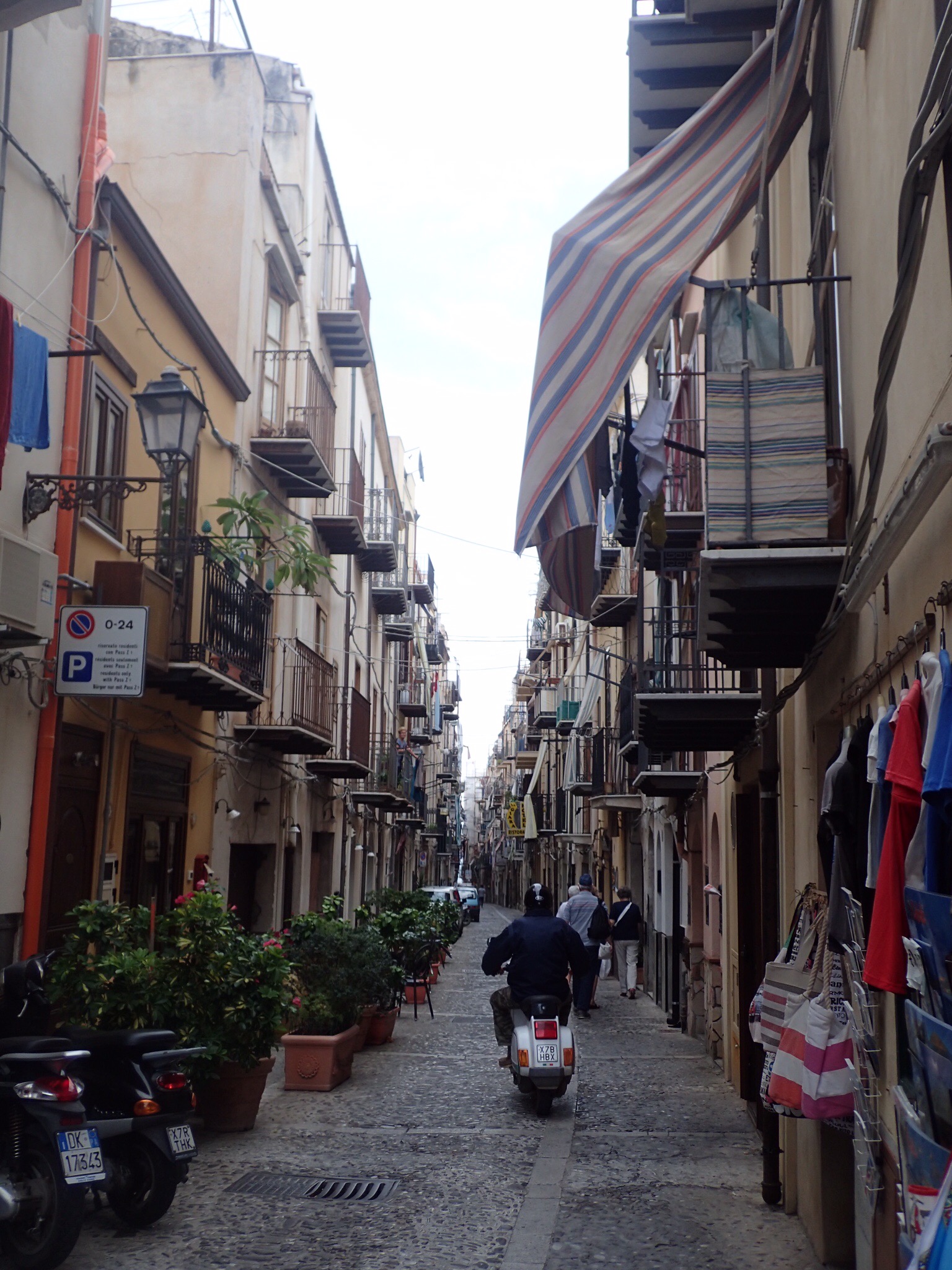
–parking on the sidewalk or curb, nose in, is ok as long as cars and pedestrians can sort of get around you

j

–pulling out from side street into a main street in fine as long as the cars on the main street can get around the nose of your car

–it’s all right to make one lane into two or even three if you think there’s room

–it’s okay to pull to the side of the freeway for a quick picnic, or to stop on the shoulder to snap a picture

–motorcycles and scooters always have the right of way, and can create their own lanes, including on sidewalks and in pedestrian only zones

Still, using a little caution and common sense, driving in Sicily is not a problem. And it got us to some truly beautiful and remote places, far off the tourist routes. Here are some of the lessons we learned on our two week drive around Sicily that helped us reduce the anxiety about driving.

–Consider taking the full collision/damage coverage when renting the car.  I know it’s much more expensive (I never do in the US), but knowing that any damage to the car is covered really helps put your mind at ease.  If you don’t, certainly be very aware of what your policies or credit cards will cover.

–Get a small car. Really, the smaller the better. In the towns and villages the roads are narrow and parking is often very hard to find.  And squeezing past parked cars and dodging motorcycles is easier in a small car.

–Get a good map or GPS system.  We took a picture of a very good road map on the IPad of the day’s trip. You could enlarge it if necessary, you weren’t struggling with a large paper map in a small car, and you never needed a phone or Internet connection to view it. But know that once you get into the warren of small streets and one way alleys that make up most Sicilian towns, any map is useless. You are much better off following the roads signs that tell you the way through the town to the next village, and knowing almost any mistake can be corrected.

–Be sure your hotel, B and B, or Airbnb has parking, preferably secure parking.  Finding on street parking is very difficult in most towns and often limited to residents with permits.

–Recognize that you can never leave anything of value or that even remotely looks like a bag or purse in a parked car. Car prowling and break-ins are common in Sicily, in fact, everywhere in Europe. Better not to tempt fate.

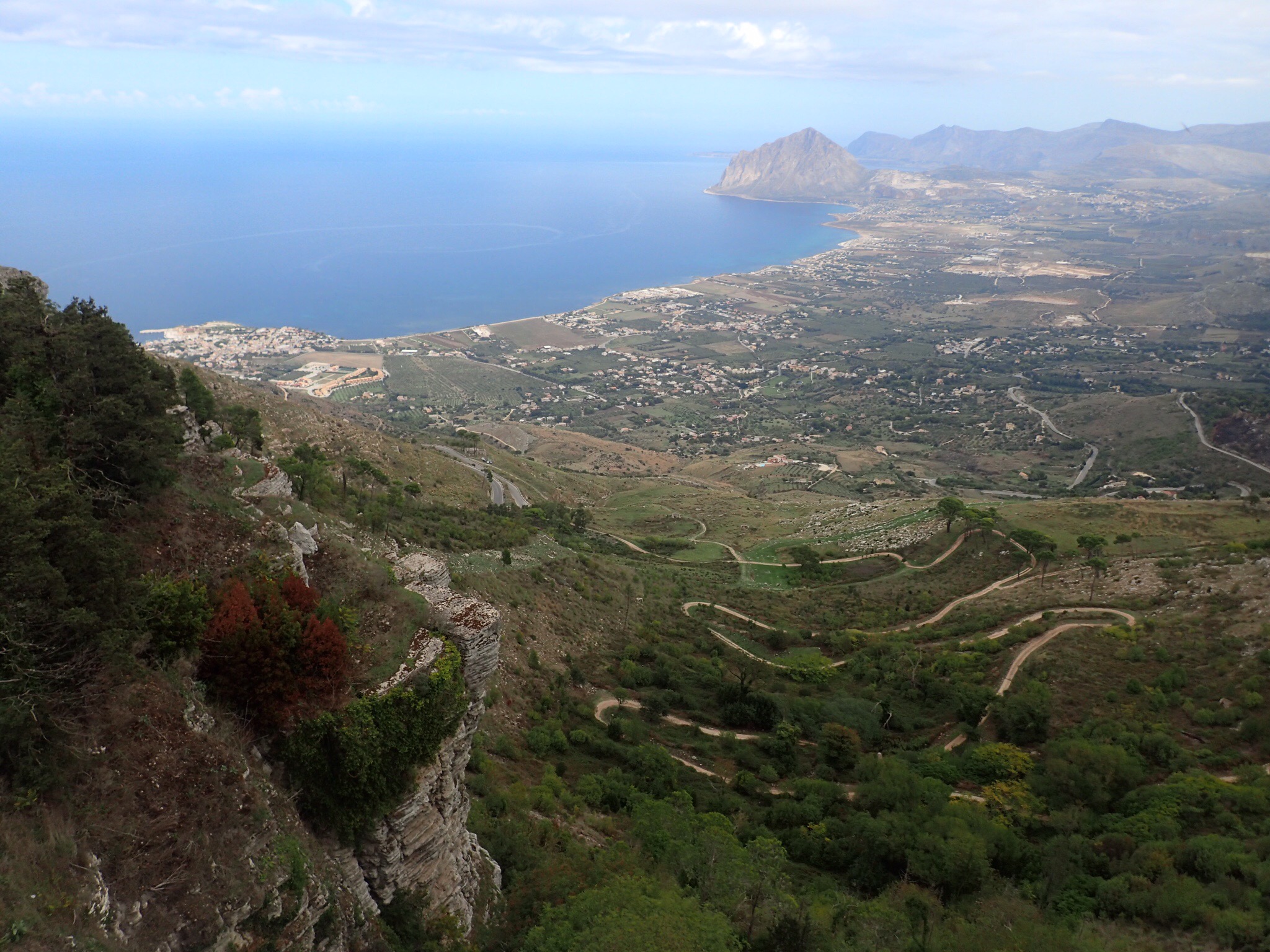
–Expect rural roads to be in worse condition than at home or in northern Italy. Lots of potholes, roads under repair. Particularly in the mountains, roads have unexpected dips of alarming size from erosion, or earthquakes or bad construction. This is a poorer part of the country and the roads show it. Be aware that the island is largely agricultural, so the occasional herd of sheep or cows may block your way. Also, Sicily is very hilly, even mountainous. Great views, but narrow, steep roads with dramatic drop offs.
–Avoid driving in the largest cities, like Catania and Palermo, and leave the driving to professionals—bus drivers, taxi drivers. I would never drive in Manhattan, central London, or Rome if I had a choice. The same applies here.

–Pick up and drop off the rental car at major airports. They are easily reached by well-signed highways. Also, within Italy, typically there is no drop-off charge so you can pick up a car at the Palermo airport and drop it off in Catania at no extra cost. That means not having to double back, giving you more time to tour.

Finally, take a deep breath. You are on vacation and getting lost or making a wrong turn is part of the adventure.  At least that’s what the navigator says when we get lost.

Oh, Canada!

I used to travel a lot for my work, logged a lot of frequent flyer miles and loved being upgraded. And I got spoiled. Very spoiled. So as long as we had the miles since retiring, we traveled business class on any long haul flight. Four or five trans-Atlantic trips ate quite a hole those accumulated miles. And we have discovered with each progressive year, it has become harder and harder to book European trips with miles, even when you’re willing to leave from any west coast city.

Meanwhile our desire to travel hadn’t dwindled. So here we were, looking at another big trip and needing to buy a ticket. I know, no sympathy for us.

A quick check of the online consolidators showed a huge range in fares, depending upon the airlines. Qatar Airlines looked promising with the lowest fare, but only out of Chicago or a few east coast cities which would have been an additional cost for us. And did we really want to fly to Doha? Emirates was the most expensive option, but what do you expect for your own cabin? We settled upon the cheapest, British Airways, which remained the best deal even including their outrageous fees for the privilege of landing in Heathrow.

After entering our destination, preferred travel dates, number of travelers, frequent flyer and trusted travelers numbers and all the other info the website wanted, we examined our choices. A ticket from home to South Africa with a stopover in London got us thinking about getting off the plane in London for a couple days and spending some time letting out bodies adjust to the change in time zones. So we re-entered all the info, this time asking for a multi-city ticket which would allow us to stay in London.
Opps. Price jumped by nearly 25%! For the privilege of leaving the airport we added nearly a thousand dollars to the cost.

We then tried booking two separate round trip tickets. Home to London. London to South Africa. Total price was even higher. We were about the reconcile ourselves to arriving in South Africa after two 10 hour flights and just skipping the layover in London when a friend suggested we look at Canadian departures. For us, just three hours from the closest Canadian airport, leaving from Canada was a viable option

A quick online check showed a couple flights a day out of Vancouver, including British Airways. We booked it, still a competitive price even with the taxes and additional cost for the layover in London. While reading the fine print, we realized the price quoted us was in Canadian dollars, a twenty-two percent discount for Americans at the current exchange rate.

Bottom line? Flying out of Canadian meant we were paying for one of the cheapest direct flights but getting the multi-city experience of four days to play in London. Or put another way, for the cost of a tank of gas, we were saving enough money to pay for our lodging and food in London for three full days. A no-brainer.

Why don’t more people do this? Even if you had to fly to your Canadian airport, you could still save money. A cousin had a similar experience on her last trip to Europe. By flying out of Canada on a plane that was routed through her US hometown airport, she saved $300.

So not only does Canada have better health care, a more sane approach to gun safety, it also offers better airfares! Oh, Canada!

Palermo

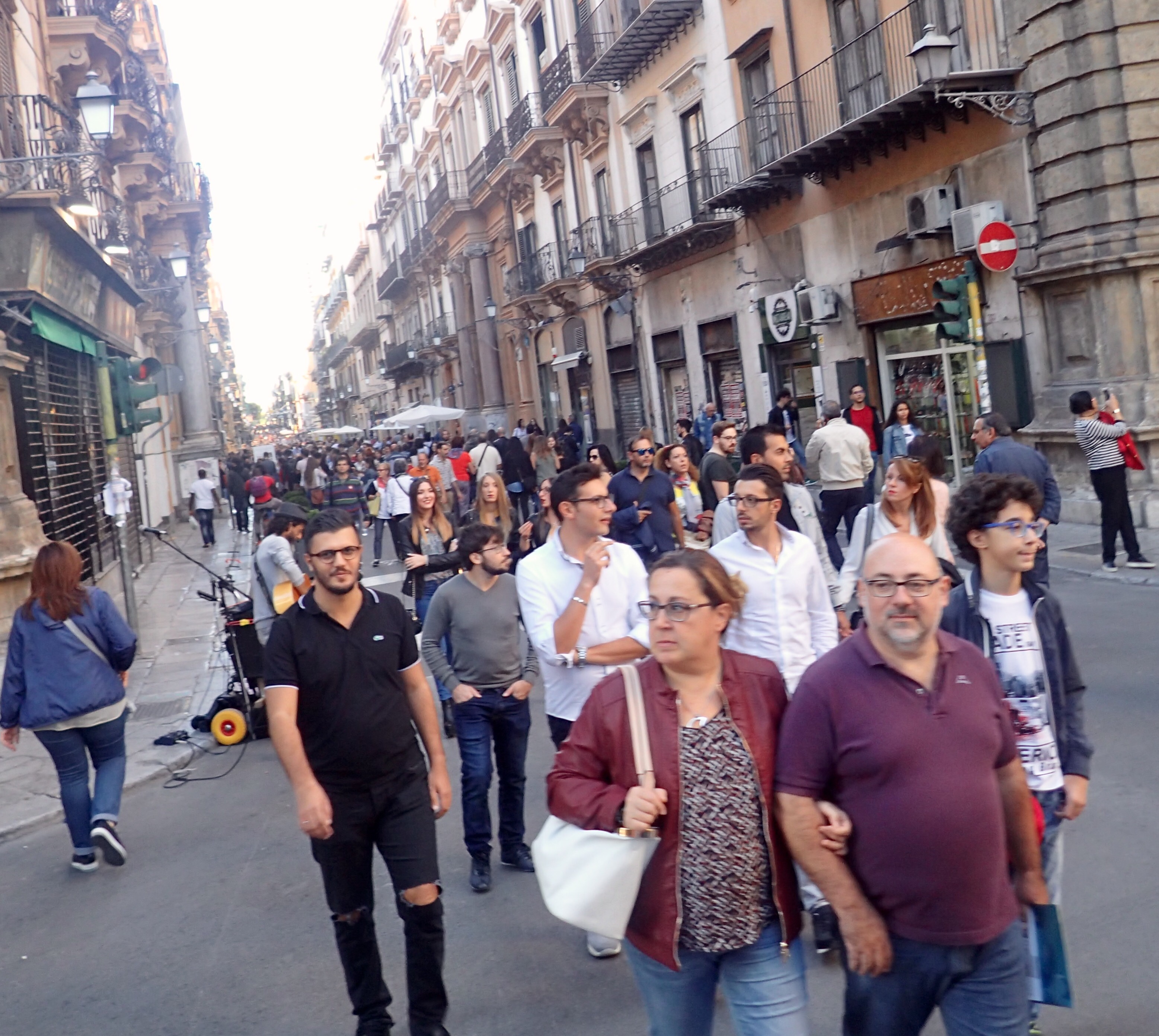
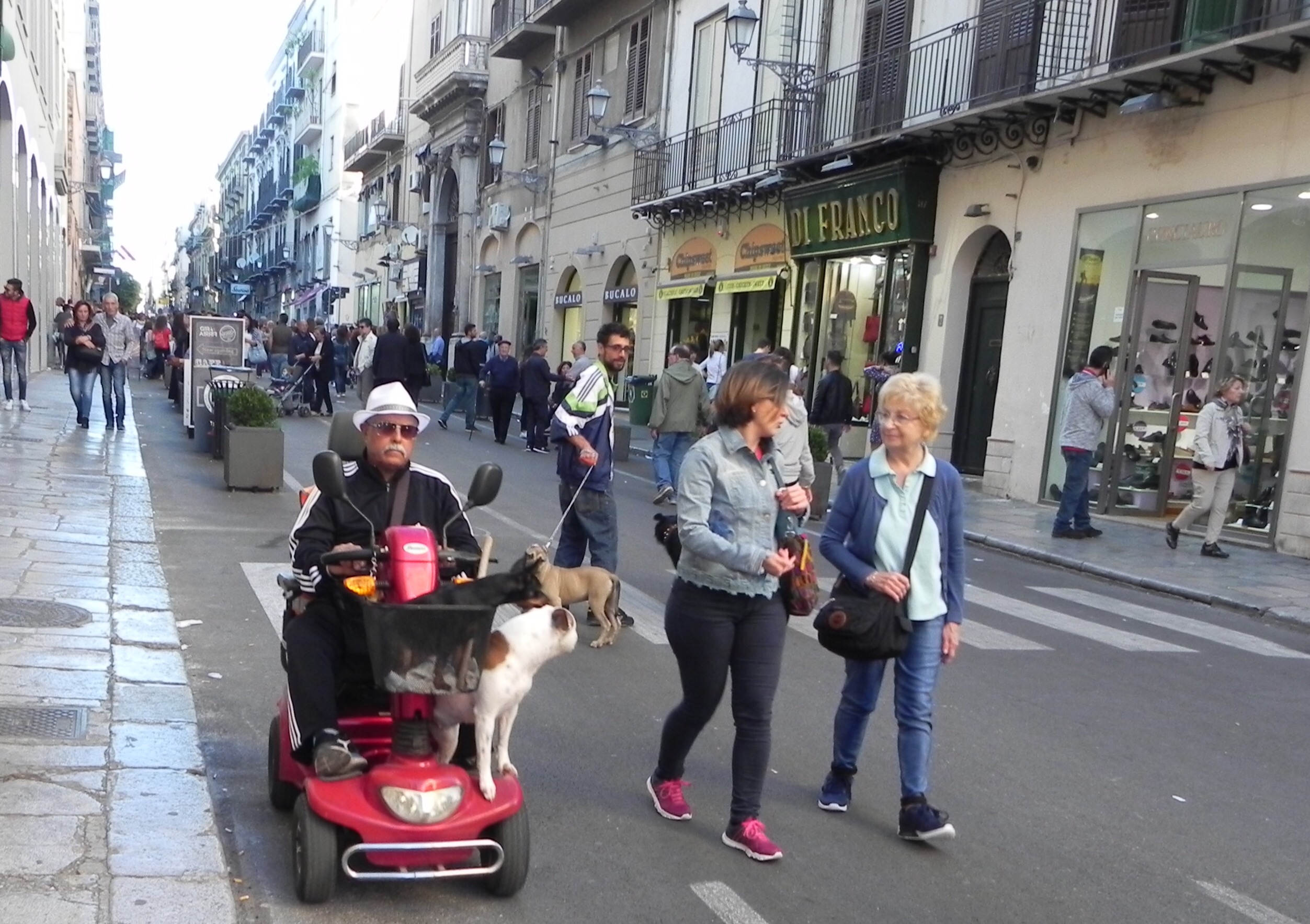
Palermo is a hard city to categorize. Our first impressions of the city on a Sunday afternoon were very positive. If a million plus people live in Palermo, at least half of them were out doing the passiegetta, the long, slow stroll Italians everywhere do to see and be seen. Palermo closes one of its main streets, Via Marqueda,  to traffic for a kilometer or more. Just pedestrians, and a random bike or Vespa or two.  


Groups of teenagers, elderly couples, families with strollers.  Folks walking their dogs.  About every block or so a street musician, including a skinny blond singing Elvis’s greatest hits. Lively and crowded, it reminded me of a carnival or street fair.   

 
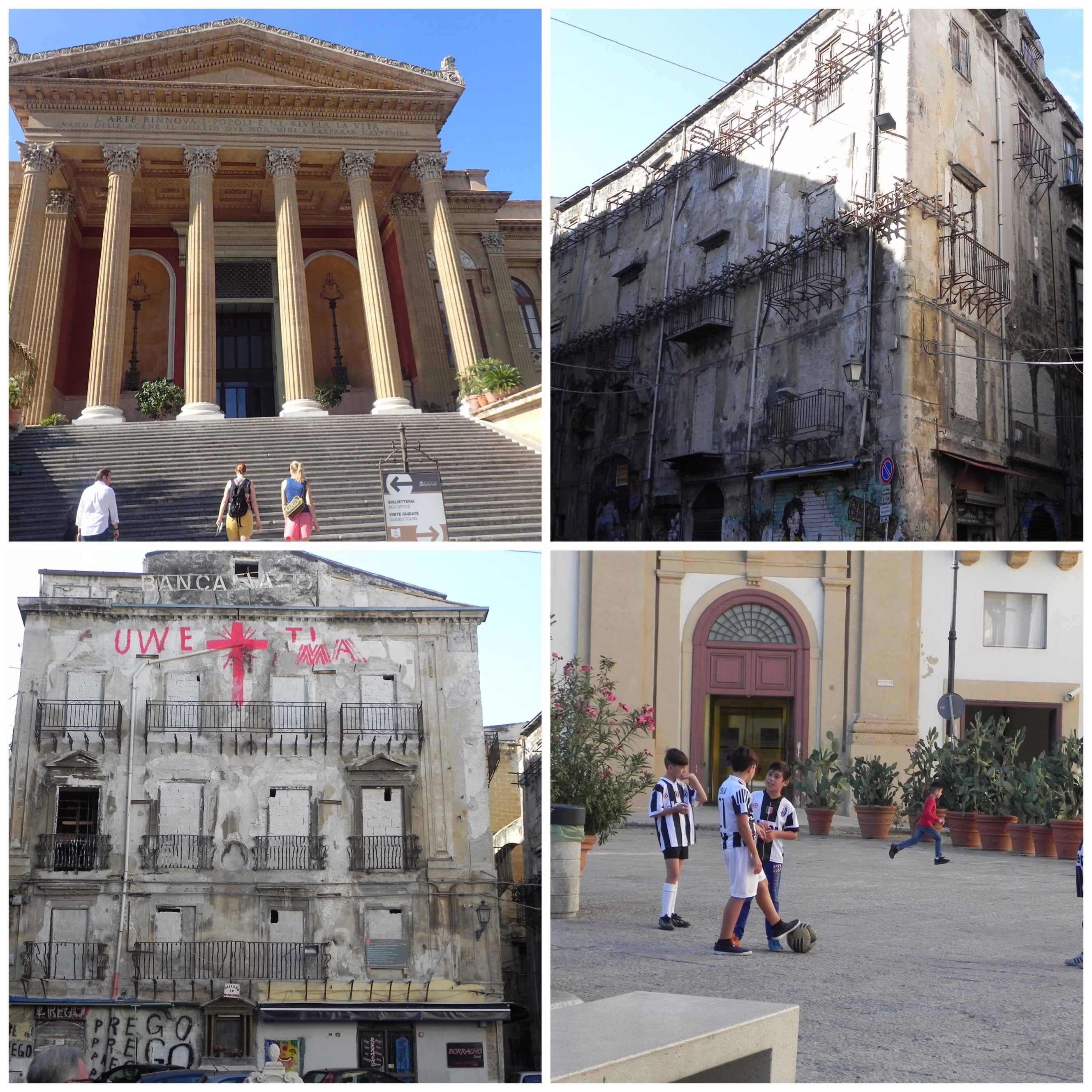
Monday morning showed a more subdued town and much more of the dust and grit Palermo is famed for. The old historic part of town is relatively small and imminently walkable. But Palermo is not a provincial Rome, despite the Roman, Norman, and Arab history. There doesn’t seem to be separate sections of town — either a “good” or tourist, or run down neighborhoods. All are mingled together. We wandered from one street corner to another, never knowing what we would find around the bend — derelict buildings, a street of cafes, or a magnificent palazzo or church, or kids playing.


We had heard Palermo described as the litter capital of Europe. And while we saw a few informal garbage dumps in the countryside, and some dried up fountains were used as garbage receptacles, the capital didn’t strike us as any more littered than any other densely packed city.  In fact, better than some we’d seen. More graffiti perhaps.   

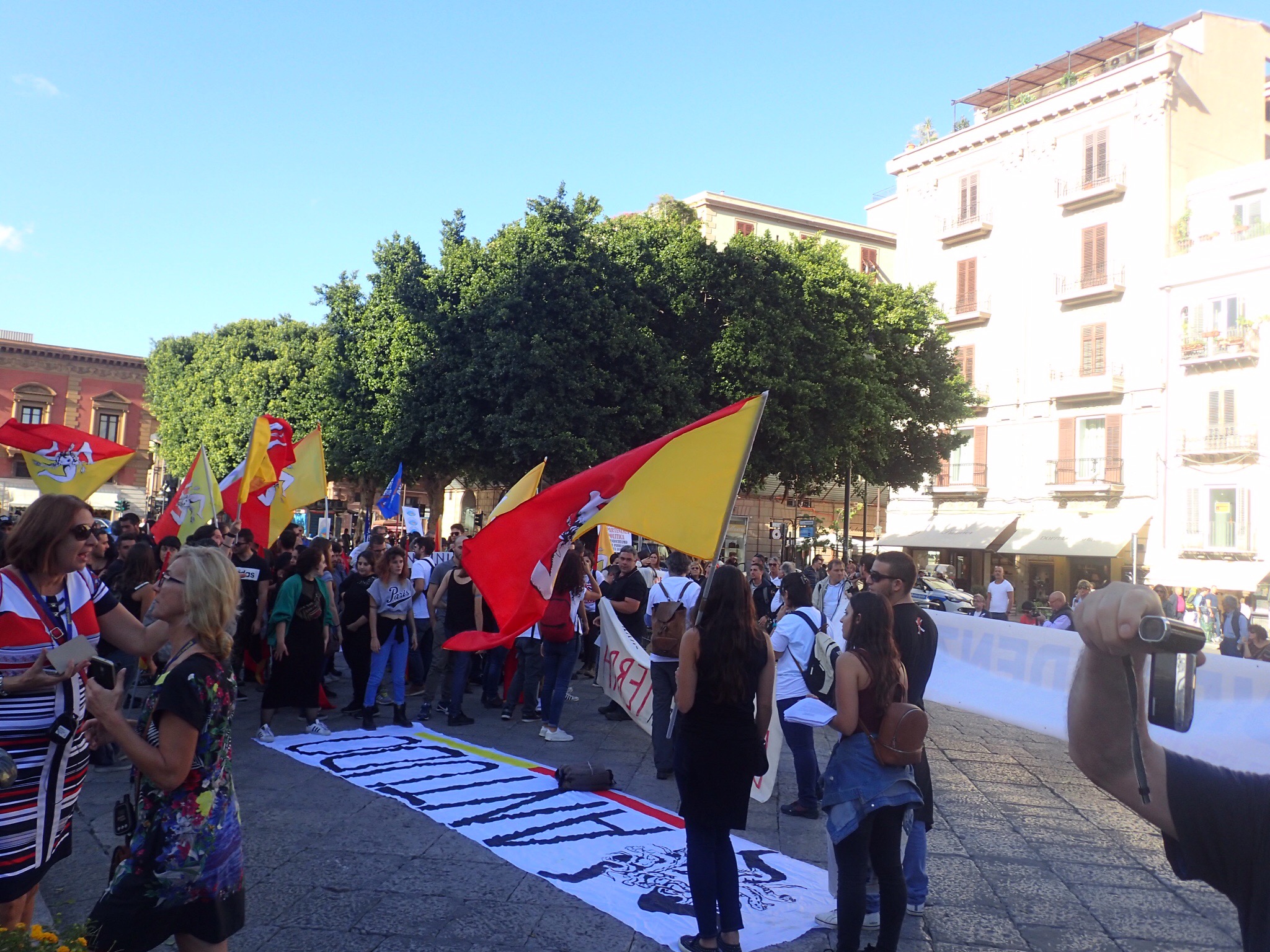
The piazza around the opera house seemed to be the center of the city and a hotbed of activity. Prince Albert of Monaco arrived one afternoon with an entourage and a long motorcade. The next day, protestors assembled, complete with Sicilian flags, banners and a sound system on a shopping cart. We took a lot of pictures. Speculated about the issue. Sicilian independence? Anti mafia? Political party march? 


Finally, we asked a young woman and she explained it was an environmental protest — objecting to the burning of garbage by the local provincial government. Okay. Would never have guessed that. There were almost more police than protesters. And plenty of police cars and paddy wagons for hauling away unruly enviros. Never saw anything to justify the concern. 

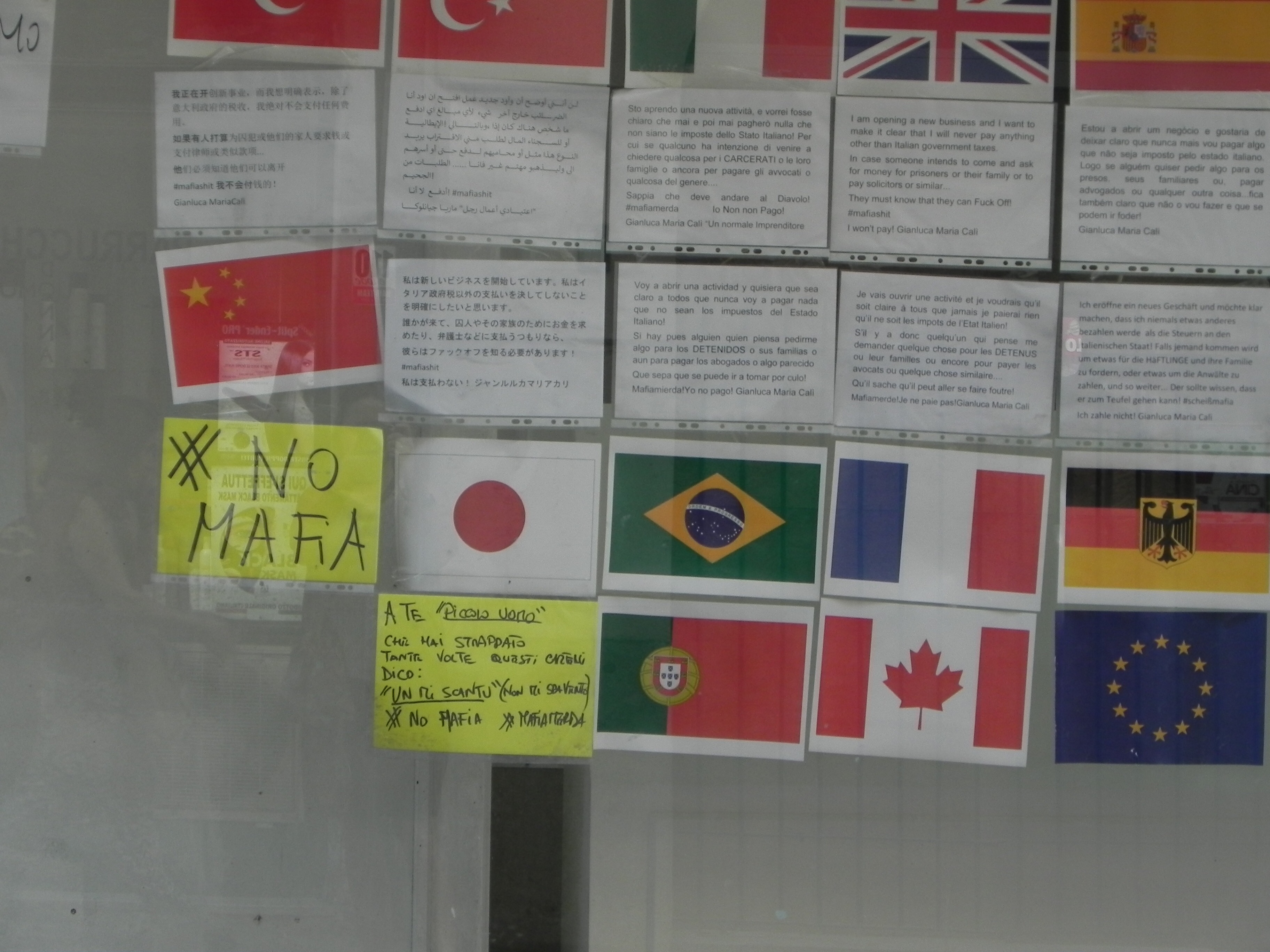
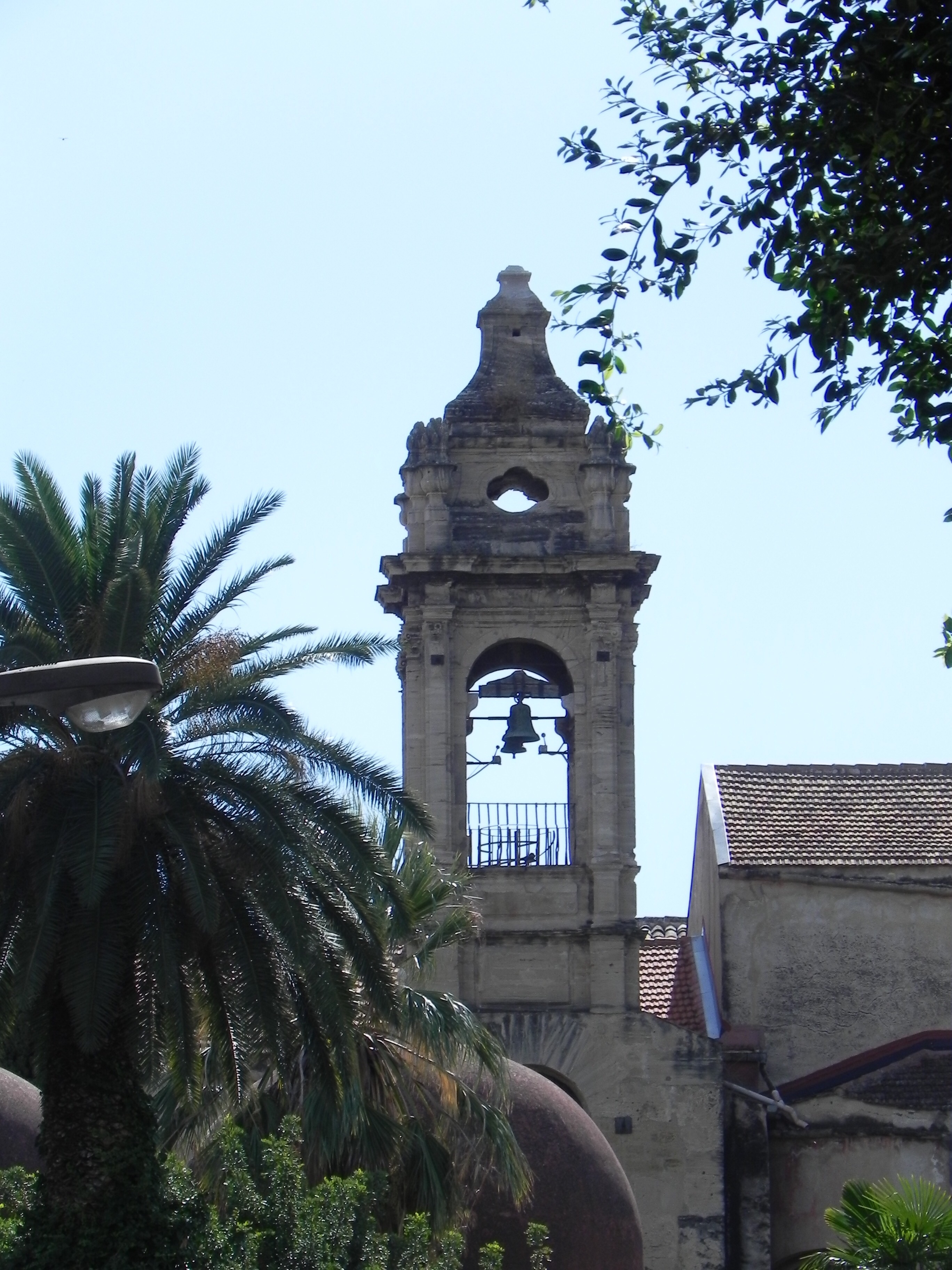
This city was heavily bombed during World War II. Signs marking how historic buildings were damaged & repaired only referred to the war by date, “heavily damaged by bombs in 1943….”.  As a result baroque era churches or seventeenth century buildings stand next to modern boxy apartment complexes.  We saw several signs posted in storefront windows, saying “No Mafia” plus there are a couple shops that only sell local goods & foods produced by folks who won’t pay protection money.


Of course, aside from what we’ve read, and most of that says the mafia has been marginalized, we’ve seen no indication of any criminal activity. Except as we snapped pictures in front of a grand local municipal building, an old guy walked past us and said very clearly to us,  “Palazzo di Mafia”.

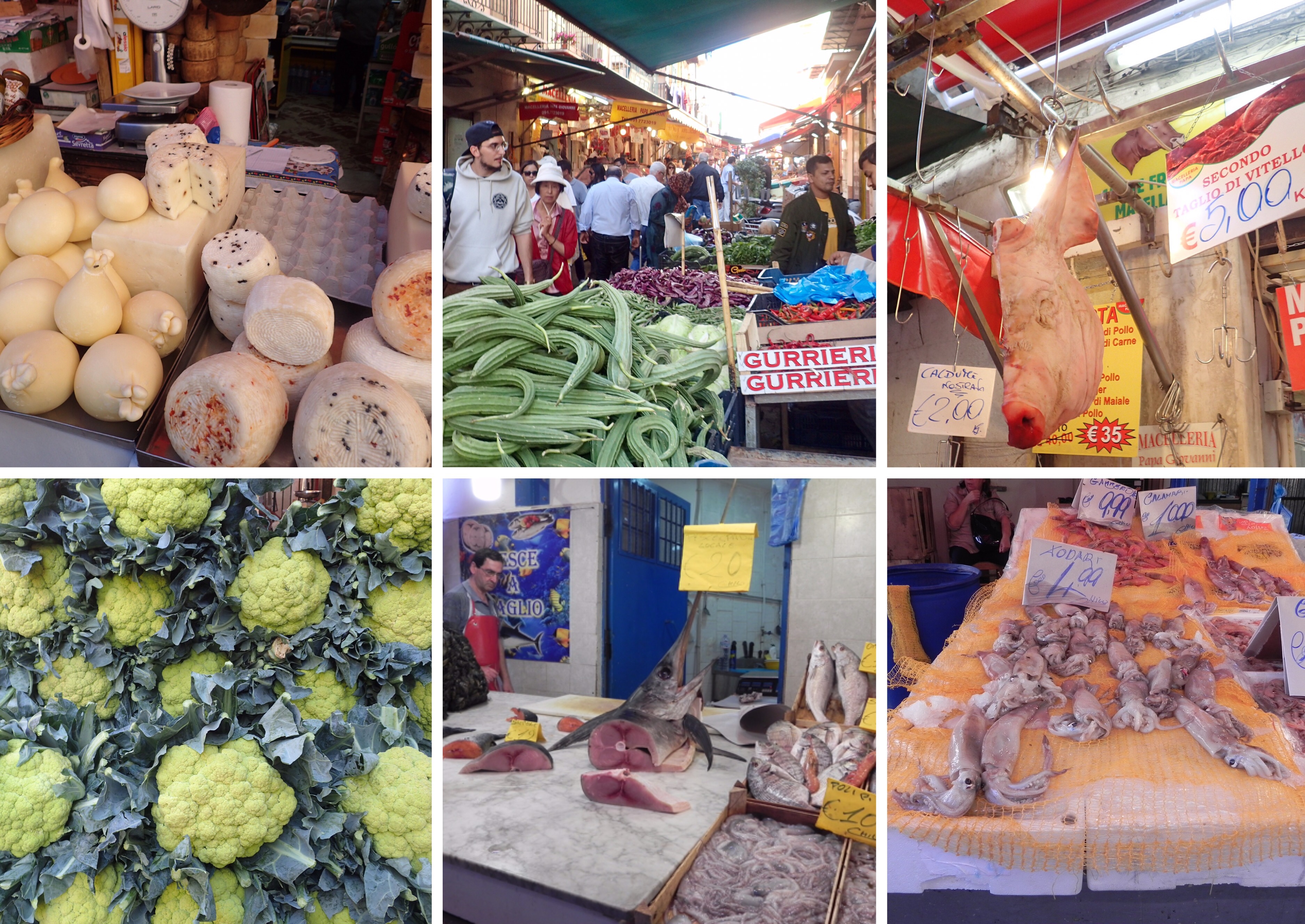
The streets markets in Palermo are pure Sicilian. Hawkers shouting they offer the best fish in Sicily or the freshest produce in Palermo.  Swordfish, squid, lobster, eels, beef sides, pigs’ heads, every kind of sausage and cheese, tomatoes, summer squash and green cauliflower, olives, spices, and much more.  The air smelled of the fish, but also curry, citrus and spices.


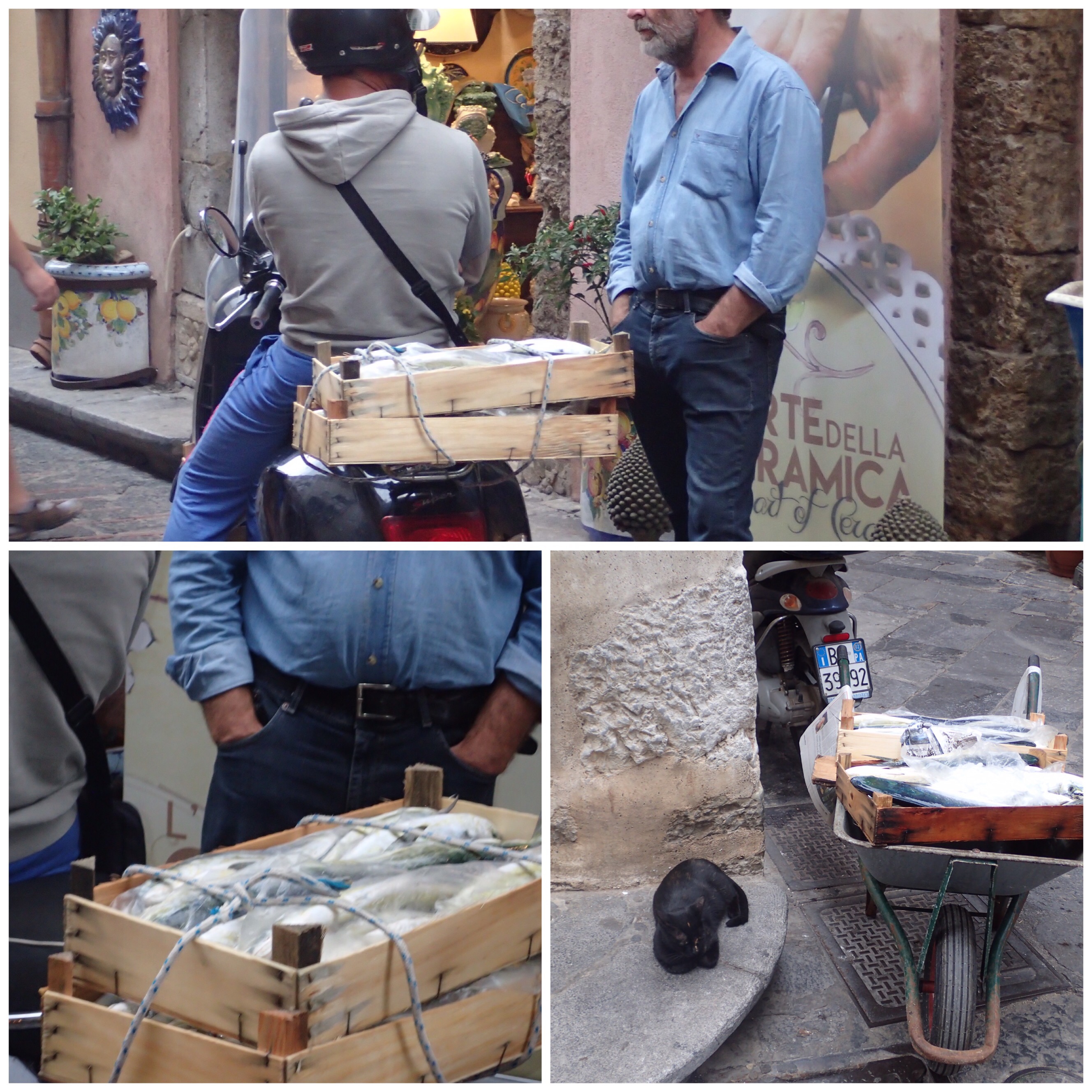
Messy, crowded and loud. But filled with more locals than tourists, the markets clearly are part of life here in Palermo and the other bigger cities of Sicily.  Of course, there are grocery stores, mini-marts, too.  But in small towns like Trapani, we saw residents buying their produce & fresh fish off trucks stationed around the city.  Or the fish was sold out of a wooden box on the back of a bike as we saw in Cefalu.  


Outside the historic district, Palermo may be a very different place, just as the suburbs differ from the hearts of Rome and Paris.  Old Palermo is a mixed bag, but definitely worth a visit.

Saturday night in Trapani


Since we arrived in Trapani, we’ve seen signs for Villa Martinez, but could never see the restaurant. Signs, like many in Sicily, measure the distance to the advertised place in minutes, not kilometers or yards. From all indications the place was within a hundred or so yards of our home base. Finally on our last day, we explored the side roads around our airbnb and found the restaurant, in a development of new homes, the kind of encroachment on the farmland our host vowed to resist. So tonight we returned to Villa Martinez for dinner.  And so glad we did.


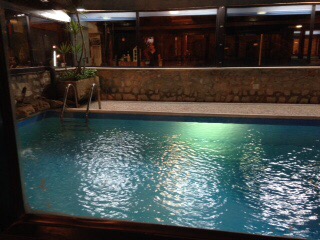
Villa Martinez is clearly a neighborhood, but an upscale neighborhood, joint. And it is kind of strange. The restaurant sort of wraps around an outdoor swimming pool, which became  the hangout for smokers as the evening progressed. We were among the first three or four couples to arrive, quickly followed over the next hour by parties of young parents, kids in tow, and dozens of people of all ages heading to a banquet hall on the opposite of the pool from where we sat. Pretty sure we were the only non-Italians speakers there, and more strongly suspect we were the only tourists of any nationalities this place has seen.

And the food? Great plate of grilled vegetables. Great salad of tomatoes and mozzarella cheese. Nicely grilled meats and fried calamari. It all arrived at once. No courses. No pretensions. But as good as the food was, it was surpassed by being part of an Italian Saturday night dinner scene. Loud, raucous, filled with good cheer and very little drinking, mainly coke and beer. We ordered the only bottle of wine we saw on any table. But babies in strollers. Kids playing hide and seek under the tables. Two young guests had brought their dolls to dinner. At the big table men sat on one end & women at the other with the kids. And almost everyone but us had pizza.

The wait staff bent over backwards to get our order right and to make sure all was well, but like most of the wait staff in Sicily, they ran most of the night, from table to kitchen and kitchen to table.  The banquet also added to the hustle as trolley loads of pasta were rolled out of the kitchen at one end to the banquet room at the far side of the pool.

Guess the moral to the story is get out of the tourist parts of town. Find the neighborhood restaurants (harder to do in Sicily than some other places) and enjoy.

Let’s talk Sicilian food

Anyone who travels to Italy should be thinking about food. Pasta, pizza, fresh tomatoes, and good wine. Sicily is a bit different. For sure, there is plenty of good food to be had; it just doesn’t all fit into what we think we know about food in Italy.

The food in Sicily reflects the history. The Spanish brought tomatoes, prickly pears and corn. Arabs brought citrus, all kinds of citrus, nuts and couscous. Greeks brought olives and grapes. Add those ingredients to the Roman cuisine and you get Sicilian food.

Of course, there is pasta. In fact, some think Sicily invented dried pasta. And given that Sicily is an island, lots of the pasta comes with seafood (for the record, I’ve been to lots of islands, however, where fish has been fished out and is hardly available). Pasta with sardines is traditional. Pasta misto mare (pasta with mixed seafood) is on most menus. Pasta with mussels or clams tempted us. Pasta Trapenese, a wonderful pesto sauce of almonds, tomatoes, garlic and eggplant, available only on the west coast, wowed us. With breadcrumbs in Erice may have been the best. But most restaurants offer only a handful of Sicilian pasta dishes, heavy on the seafood. The pasta dishes Americans know, Bolognese or traditional pesto, are rare.

Squid came grilled or fried and octopus was often offered as a salad. Couscous with fish reflects the Arab influence on Sicily. And like many of the fish dishes was dominated by the canned sardines or anchovy flavor that doesn’t appeal to every palate. Appetizers or antipasti also lean heavily on fish.

Insalata mista was a staple for us, often the only fresh vegetables we saw on the menu. Usually local lettuce & arugula, cherry tomatoes and corn. Yes, corn. Sicilians apparently put corn kernels in their green salads. And sometimes add mozzarella and/canned tuna. The other vegetable dish we saw on almost every menu was caponata, a mix of sautéed eggplant, tomatoes, zucchini, garlic and olive oil. It ranged from outstanding to very good, and was usually offered as an antipasto, more rarely with meat..

We’re not big into sweets, but generally enjoyed the couple we tried. Heavy on the use pistachios or almonds and lighter on the sugar suited us just fine. And, of course, gelato. Pistachio gelato has a rather unappetizing color, but the taste is divine. Cannoli still on our list to try, but only with riccotta.

As for wines, Etna red wines were the best. We drank the Trapenese simply because we were there. Stick with Etna wines.

Sicily seems to offer fewer farmers’ or peasant markets than we saw in Tuscany, Umbria or Provence. Instead, particularly in the northeast, small trucks sell farm fresh produce. What we saw there surpassed in variety anything we saw in the restaurants. A pale green cauliflower, not romanesco, but shaped like our traditional cauliflower. Several kinds of green beans, including romano. And several kinds of summer squash. But none of these made it into the menus.

Pomegranates are big, particularly in western Sicily. A symbol of fertility and bounty, many small towns had stands set up to squeeze you a fresh glass of juice, sometimes mixed with oranges. That, too, is on our list to try.

BTW, do not miss the arincini, the deep fried rice cakes, often in a cone shape.  We met a woman in Rome going through passport control who told us the best arincini are in Taormina. So following her advice we tried them there. And in Cefalu. And in Trapani. Basically they fall into two categories, great and good. Fresher is better. Beware of the places that have them sitting out on display and then heat them up for you in a microwave. They’re just good. We learned to prefer the meat variety – a stuffing of beef, tomatoes and cheese. The other option is ham and cheese which seemed bland. One was often enough for a light lunch.

Espresso! Espresso. Don’t know how the Italians do it, but without a doubt the best coffee we’ve had anywhere. From road side gas stations to uptown restaurants, coffee rocks.

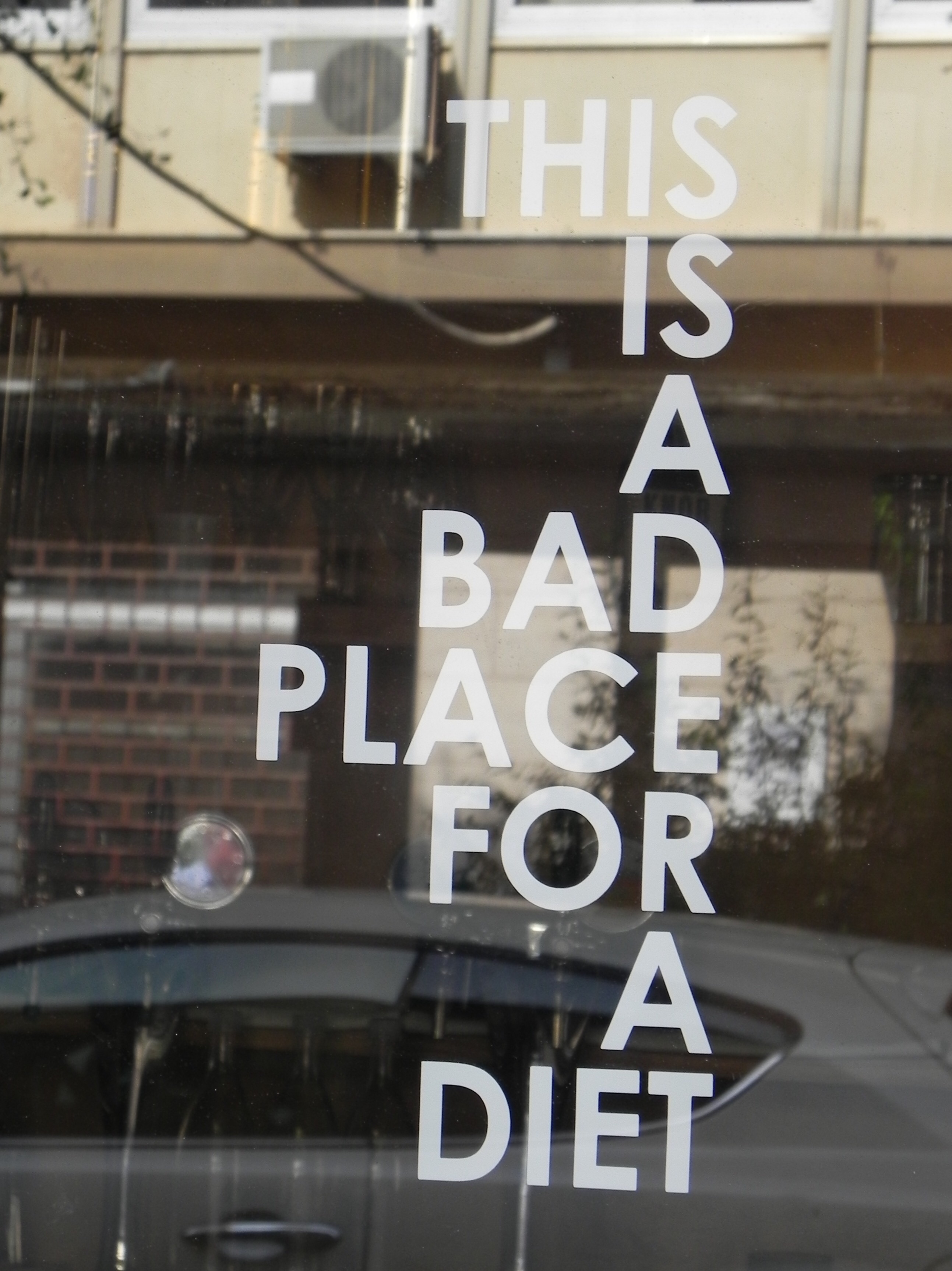
When it come to food, perhaps the best advice is a sign we saw in Marsala: