Loreto Redux

For the last few years our escape from the dreary, wet January/February weather in Seattle was Costa Rica.  Really a magical place which we’ve written about in many of our blogs. But we’ve seen most of Costa Rica on our five trips there, and we had only about two weeks—much less time than our usual month plus — because of a couple of trips planned in the months ahead. 
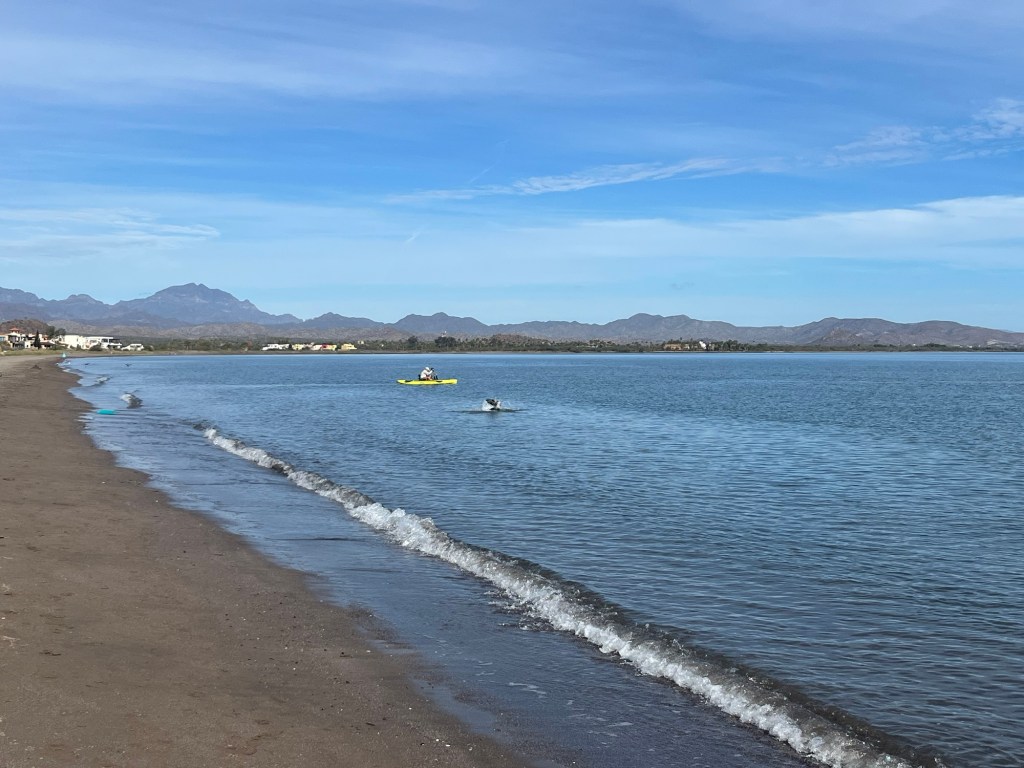
So we decided to try something a little different—Loreto, Baja Sur, Mexico. It’s on the Sea of Cortez about 4 hours north of La Paz and 8 hours from Cabo San Lucas.  We’d been there five years ago to celebrate a friend’s 60th birthday and found the town to be charming.  Tiny, still somewhat authentic.  A world away from the tourist meccas of Cabo, Mazatlan, Puerto Vallerta.   We had also spent time on the Sea of Cortez—the “aquarium of the world” according to Jacques Cousteau—on an UnCruise small ship.  (We wrote about that trip https://chasingthegoodlife.blog/2018/08/14/hometown-whales/)  So we knew there was a lot to see and do in the area especially if nightlife, gambling, and partying isn’t your thing. 

And getting there was much easier than most warm weather escapes from Seattle—one stop in LA and then 120 minutes on to Loreto’s minuscule international airport.  Left Seattle in the early morning and were in our condo at 3:00 pm.  A real contrast to the eight hour, one-stop flight to San Jose, Costa Rica, which required a one night airport hotel stay both coming and going.

Loreto and its surroundings are in a mountainous desert bordering the Sea of Cortez—picture the Southwest US, but on an ocean, complete with saguro like cacti (but technically a cardón we were informed by a naturalist). We’re staying in a gringo development of half Canadian and half US visitors, spread around almost 900 homes, Nopoló, nine miles south of the town of Loreto.  A bit contrived as planned communities tend to be with fake adobe homes and condos. Not our usual vibe.  But the location! The Sea of Cortez on one side, with its islands off in the distance, and the mountains behind us to the west. Stunning views. Beautiful dessert landscaping (who knew how many blooming plants would survive the desert heat?) and immaculate grounds.
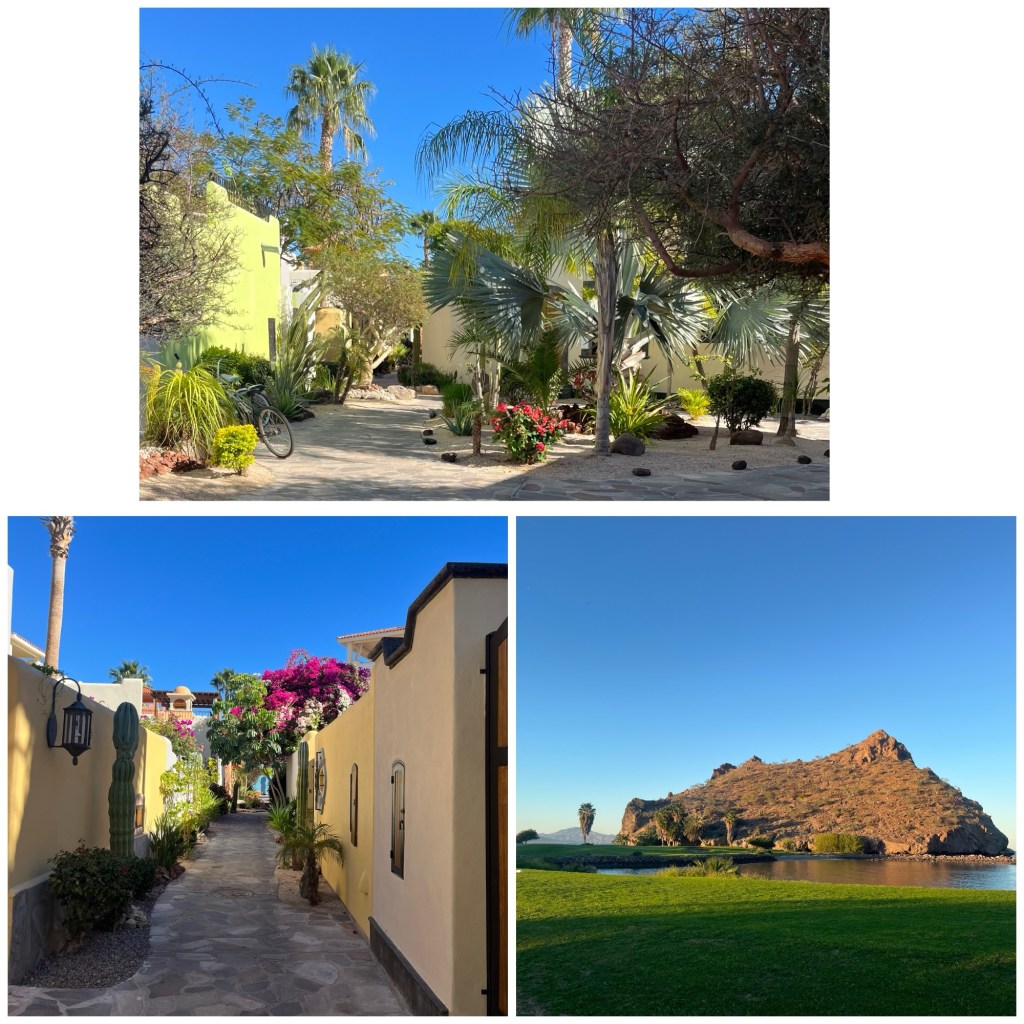
And quiet.  Surprisingly so, given the density and number of homes.  Most mornings and evenings it’s just the sound of birds and the wind in the palms.  

And plenty of choices for excellent short-term rentals—another draw.  Good restaurants, a couple coffee shops, walking paths, a long, half mile beautiful beach to stroll, kayaks to rent.  But, of course, all of this comes at close to US prices.  Still, for a short getaway it checks most the boxes.  

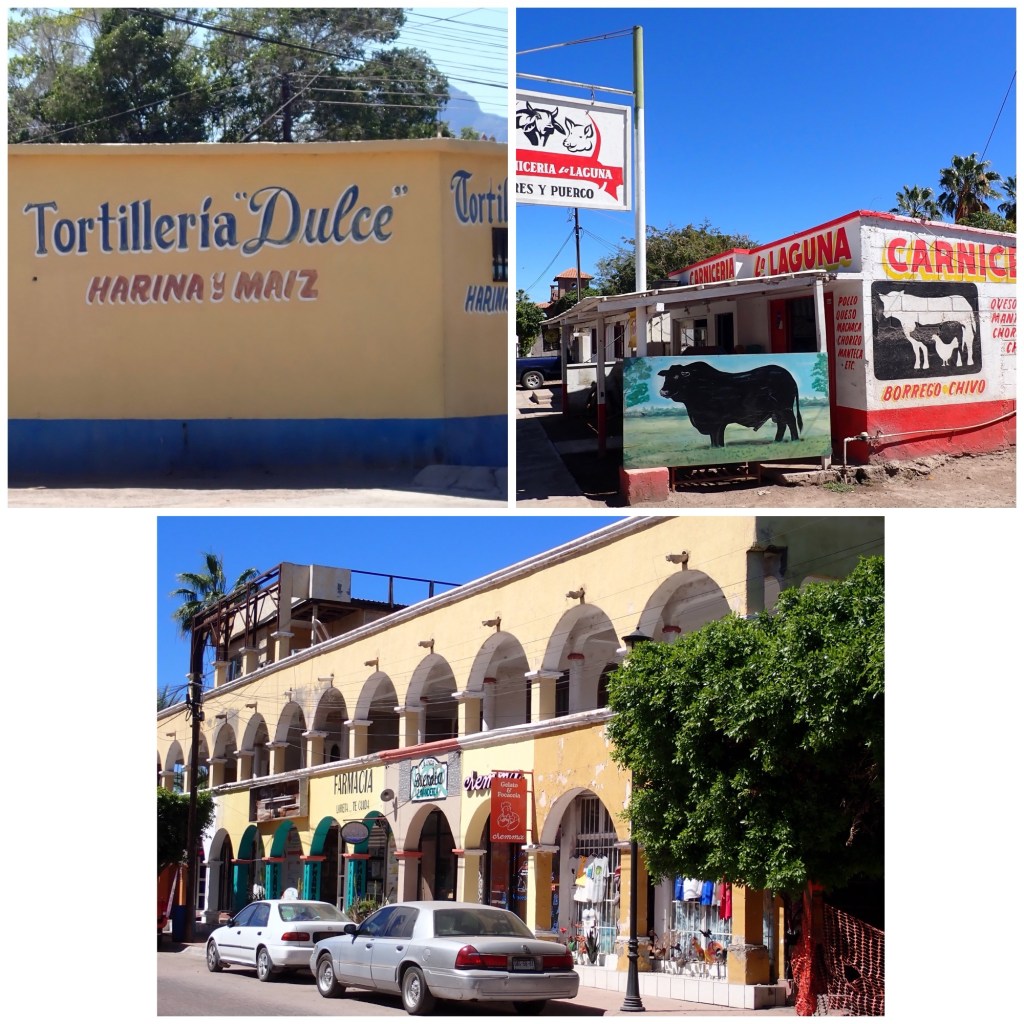
And the town of Loreto, despite the draw of the raw beauty of the area, has remained largely Mexican but with enough infrastructure to support a modest tourism industry.  Parts of the town, particularly on the outskirts, are a bit run down, dusty, ramshackle.  Locals buying meat at the many small carnicerias, tortillas at one of the ancient tortilla factories, whole roasted chickens at the industrial smoking ovens of the Pollo Asado. Typical of most of non-tourist Mexico. 
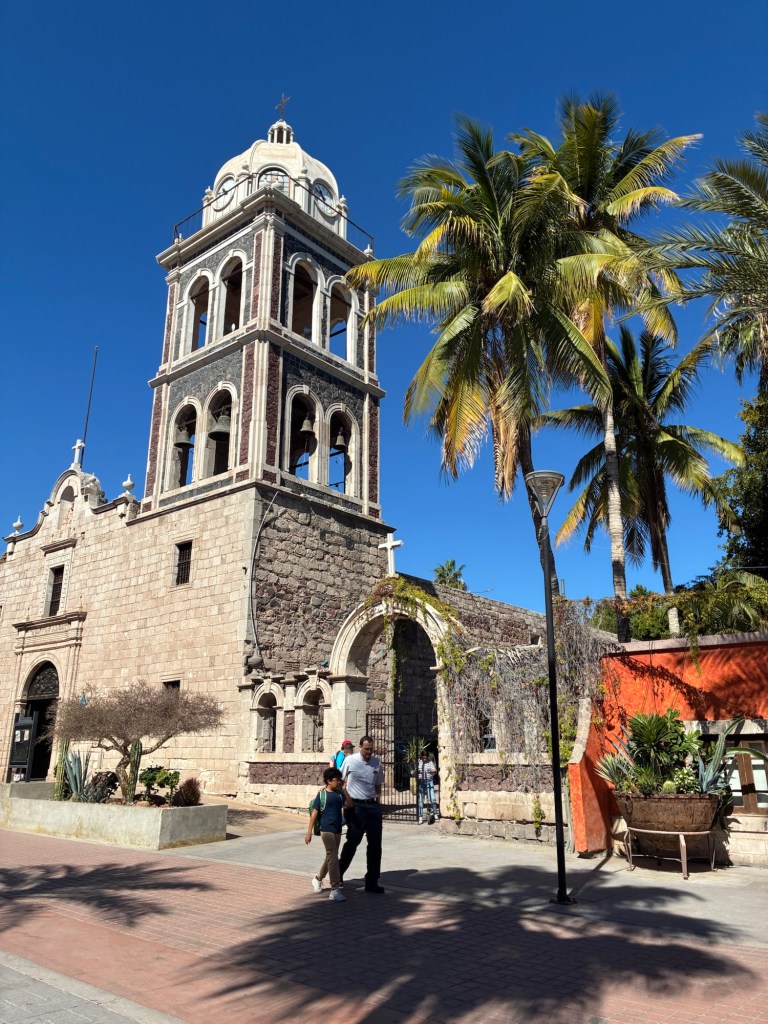
Loreto’s real claim to fame, however, is its modest mission and church, first established more than three hundred years ago as the headquarters for all of Baja and California. 
The town center, with its flower covered pedestrian walkways, and the malecon (the waterfront walk) are lovely and are a reminder of what tourist dollars can do—in addition to providing local jobs.  

The main old hotel on the city square, the promenade and government building.

But it is small time tourism compared to much of the rest of Pacific coast Mexico. There are no mega resorts here, no cruise ship terminal.  The airport has roughly 3 flights a day.  One golf course—although apparently there is a super fancy golf course resort now open about 20 miles south of town.  There was a giant Holland American cruise ship offshore when we arrived and a few cruisers wandering around the town center, but we have no idea how they’d get 2000 people into town.  The Loreto marina is really only suited for the tiny panga fishing boats.  Even the fancy charter fishing boats are moored miles south in Puerto Escondido. 
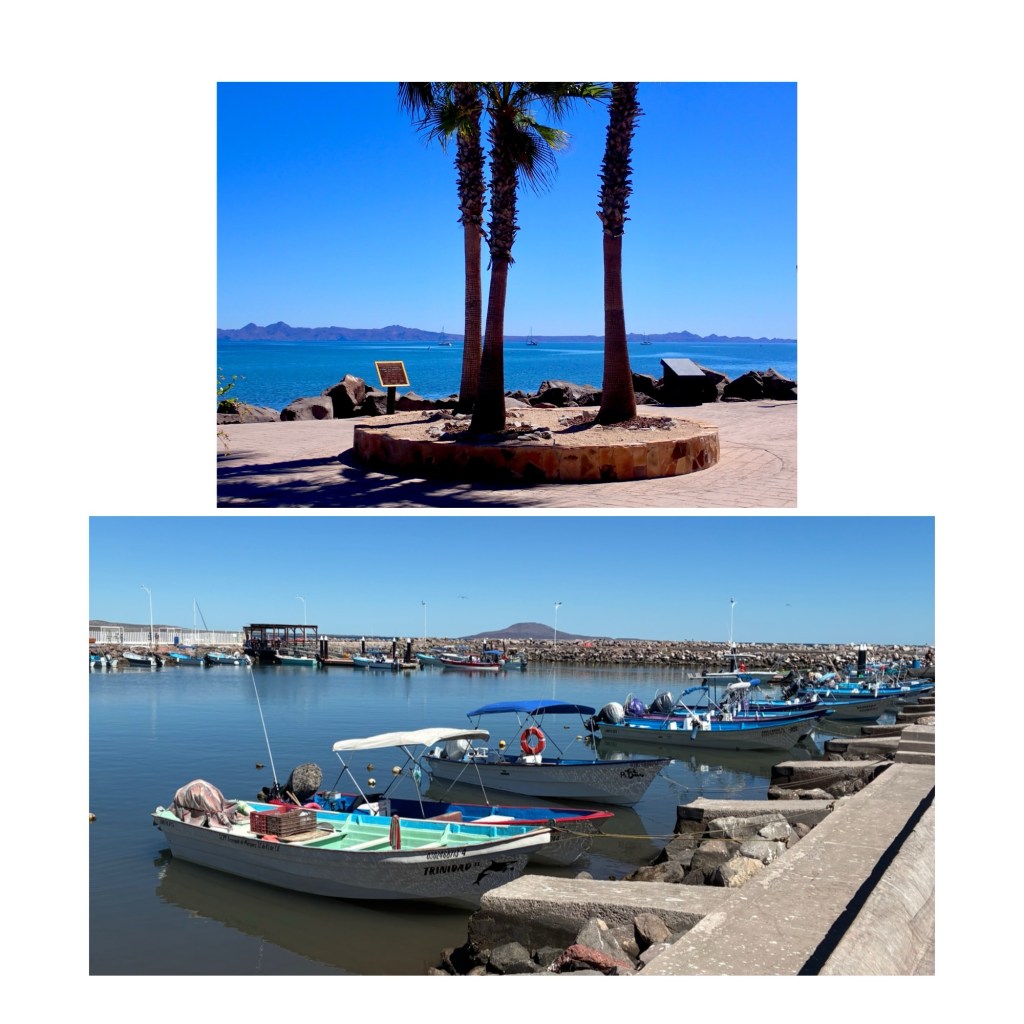
The malacon and marina

Five years ago when we were here we did see Steven Spielberg’s yacht anchored off shore and even got to see him and his entourage whisked off from the marina to the airport in a motorcade of white SUVs to a private jet.  He had hosted the Obamas the week before.  Our tiny, distant brush with celebrity.  
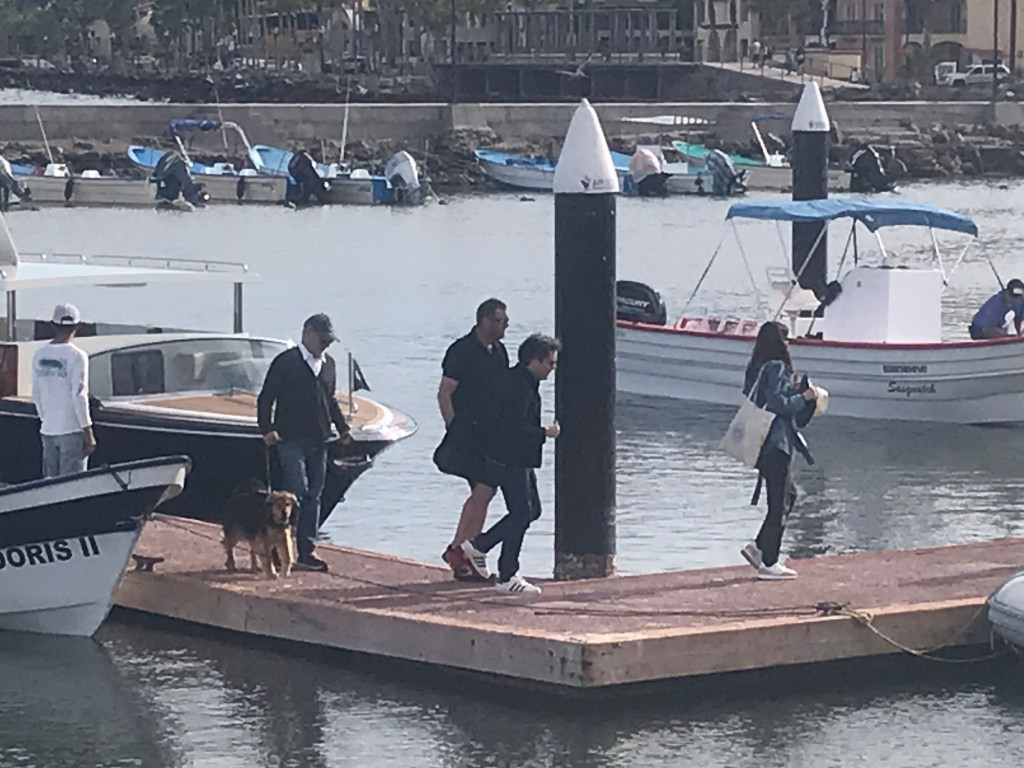
Spielberg leaving Loreto in 2020

I guess we can be thankful that we are staying in bit of a backwater.  By shear bad luck we timed our stay in Loreto with the killing of El Mencho, the narco gang leader, by the Mexican federales in late February. The killing set off acts of violence from the drug gangs all around Mexico, particularly in Guadalajara and Puerto Vallarta across the Sea of Cortez from us.   Roads closed, airports shut down.  Cars and buses set on fire.  Shops trashed.  People sheltering in place.  But in Loreto, absolutely quiet.   Nada.  Something to be said for being off the beaten path.  

So what is there to do and see around sleepy Loreto beyond strolling, reading, beach walking, and napping—certainly not bad options?  Nature is very, very big here.  And marine life is the star. The entire bay in front of the town is a giant national park—the Loreto Bay National Marine Park, a UNESCO World Heritage site, the aquarium of the world. There are boating excursions into the park and if you’re lucky you can see dolphins, whale sharks, and the largest mammal on earth—the blue whale.  And we were lucky to see the Humpback whales attempting to woo potential mates by tale slapping and breaching off shore.  There are snorkeling expeditions to the nearby islands and even swimming with the sea lions for the brave.  

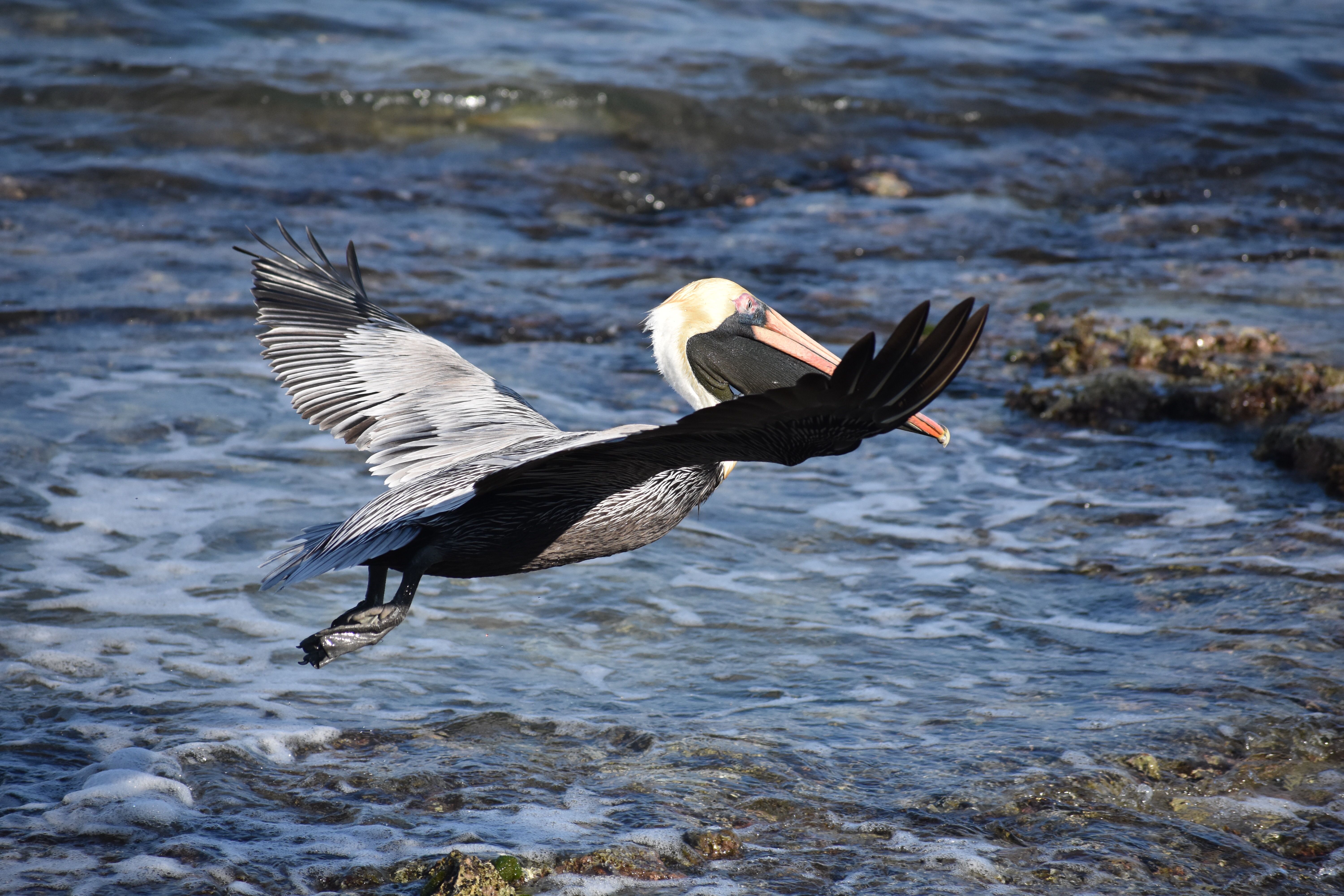
We do like looking at birds and usually during our morning and sunset walks we easily identified six to twelve different species. The pelicans were a show unto themselves.

But even more impressive is the two hour drive across the peninsula to Puerto Adolfo Lopez Mateos and Magdalena Bay.  Here every year from January to March, hundreds of grey whales migrate down from Alaska to calve.  Small pangas (open motorized boats—the number and size is limited by strict environmental regulations), take you out into the bay to witness this natural wonder.  The whales seem to get close enough that you could reach out and touch them.  Of course, you’re not supposed to.  Truly a must do if you’re in Loreto at that time of year.  
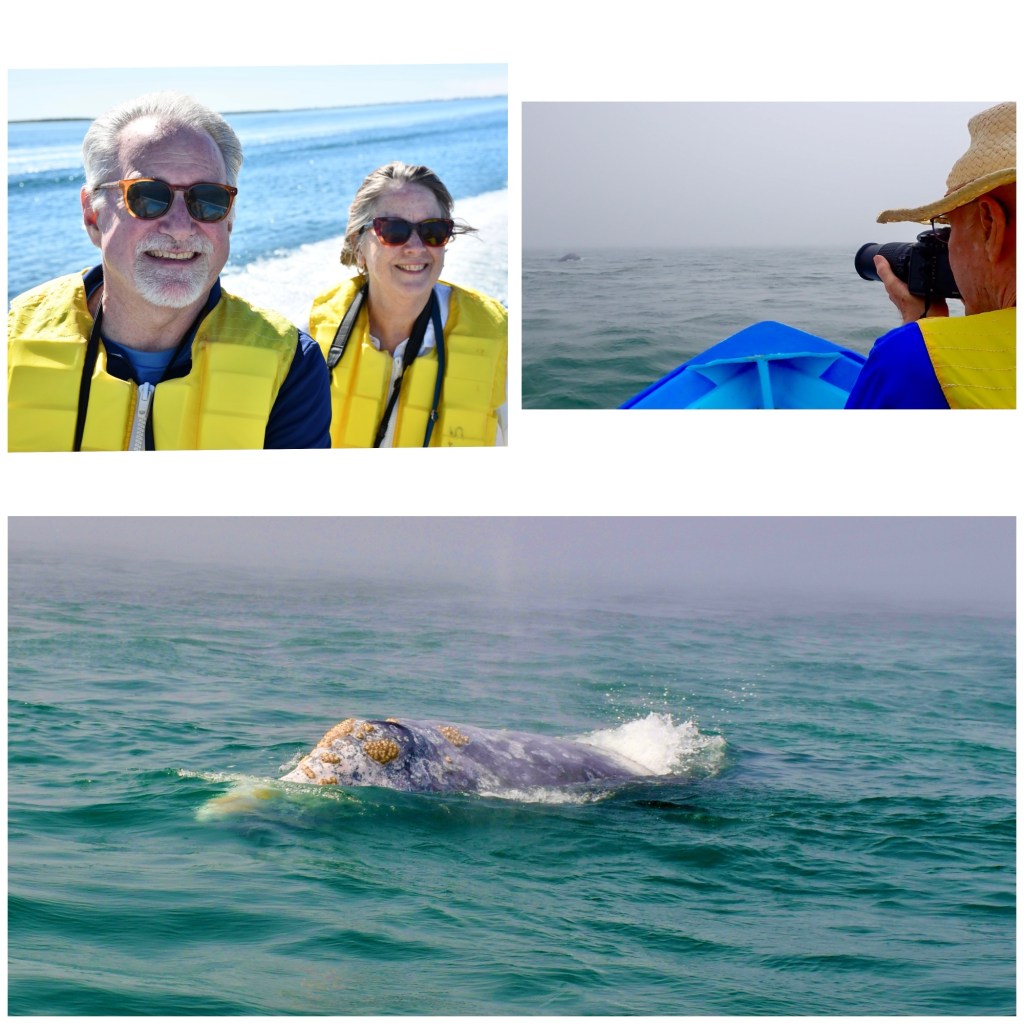
Photo credit to our frequent travel companion Malcolm Lindquist

We’ve made that trip twice before and could not resist a third time this visit.  So up before the sun, literally, and off across the Baja peninsula to the Pacific side.  The first hour of the drive, winding up the side of the mountains as the sun rose was spectacular and we deeply regretted the lack of any safe space to pull over the take pictures. 

Then another hour of straight roads through the barren cardón forests as you gradually go down to sea level again. Unfortunately when we arrived at the coast we saw the first clouds we had seen in two weeks — close to the ground clouds as in dense fog.  So we had to wait a couple hours until the sun burned through the fog and it was safe to leave harbor.  And as the two hour boat ride extended into three hours, the skies became blue again. Well worth the wait and the $40 per person charge.

Aside from hopping in a car or van to go whale watching, there are also several short drives from Loreto worth the time—one to the gorgeous St. Javier Mission in the mountains above the town
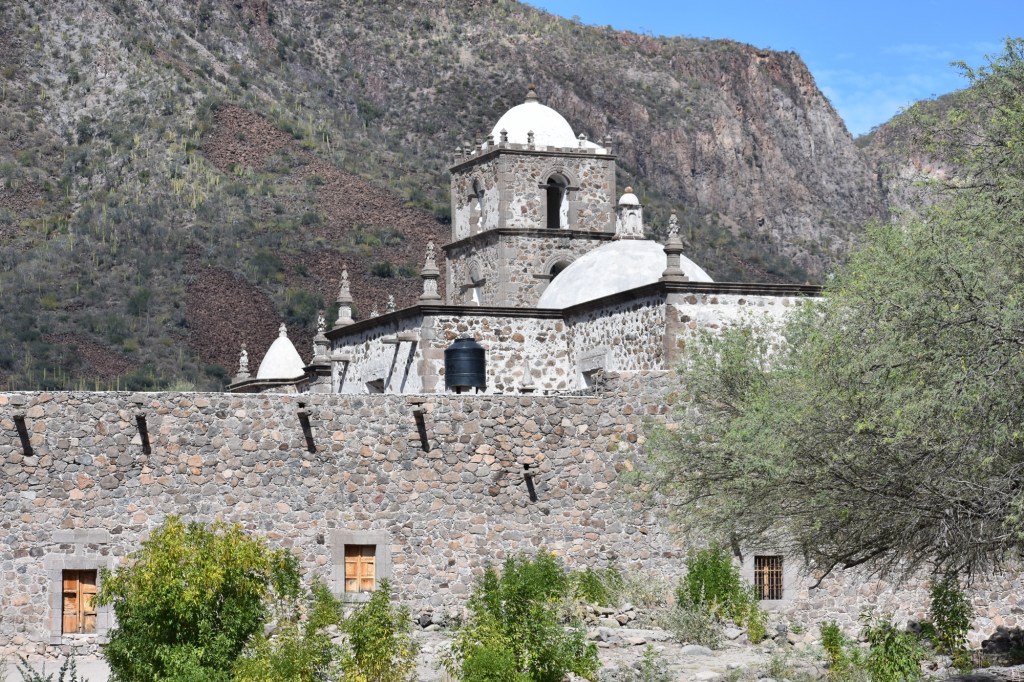
another up the coast past the stunning Bahia Concepcion to the old mission town of Mulege.  It was in Mulege that local resistance to the American invaders kept Baja part of Mexico during the 1848 Mexican—American War. A hero city, Heroica Mulege. 

Certainly more enough to do and see for a two week escape from the cold and rain of the Northwest US.  And we’re enjoying every warm minute of it.
Cozumel with an Open Mind

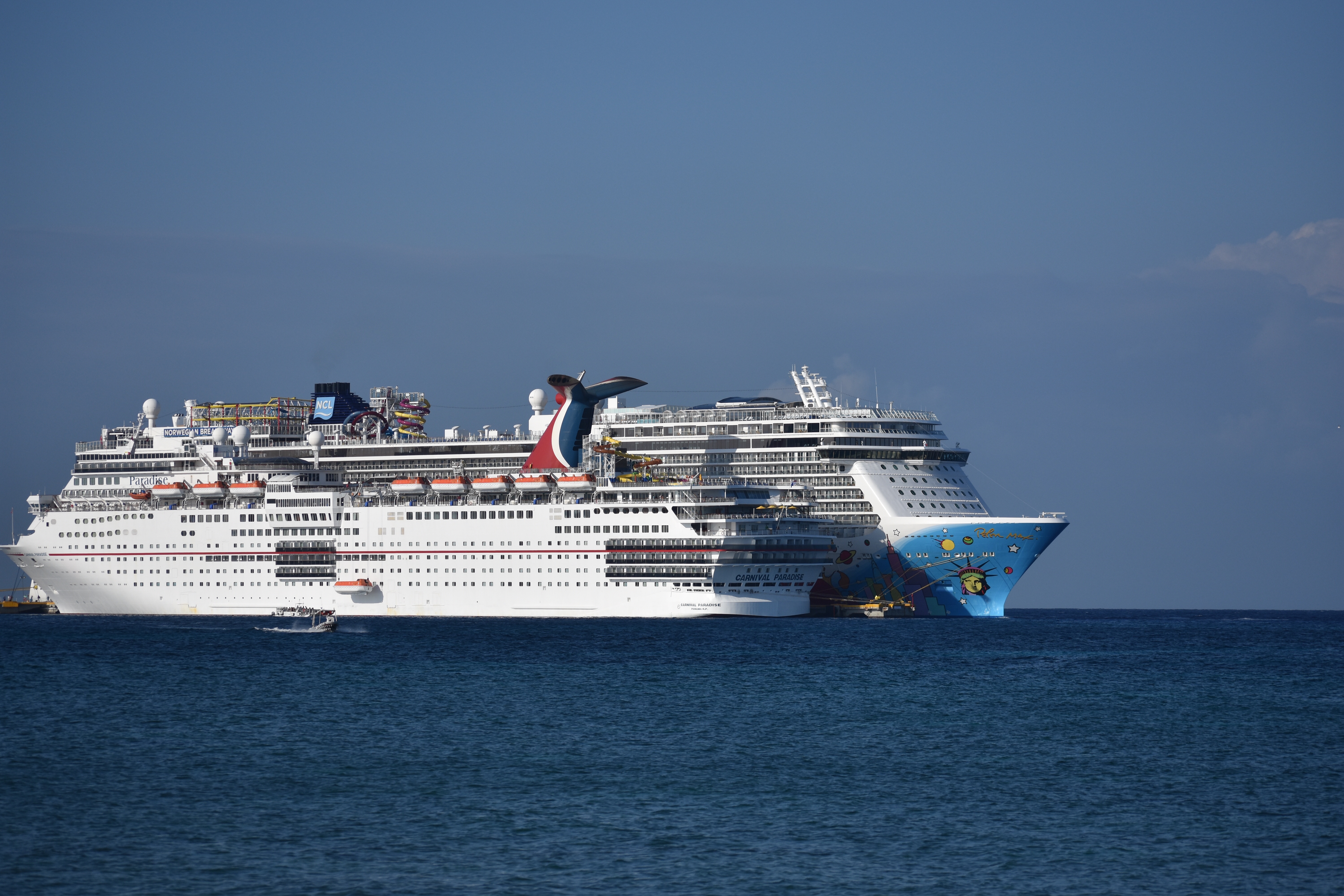
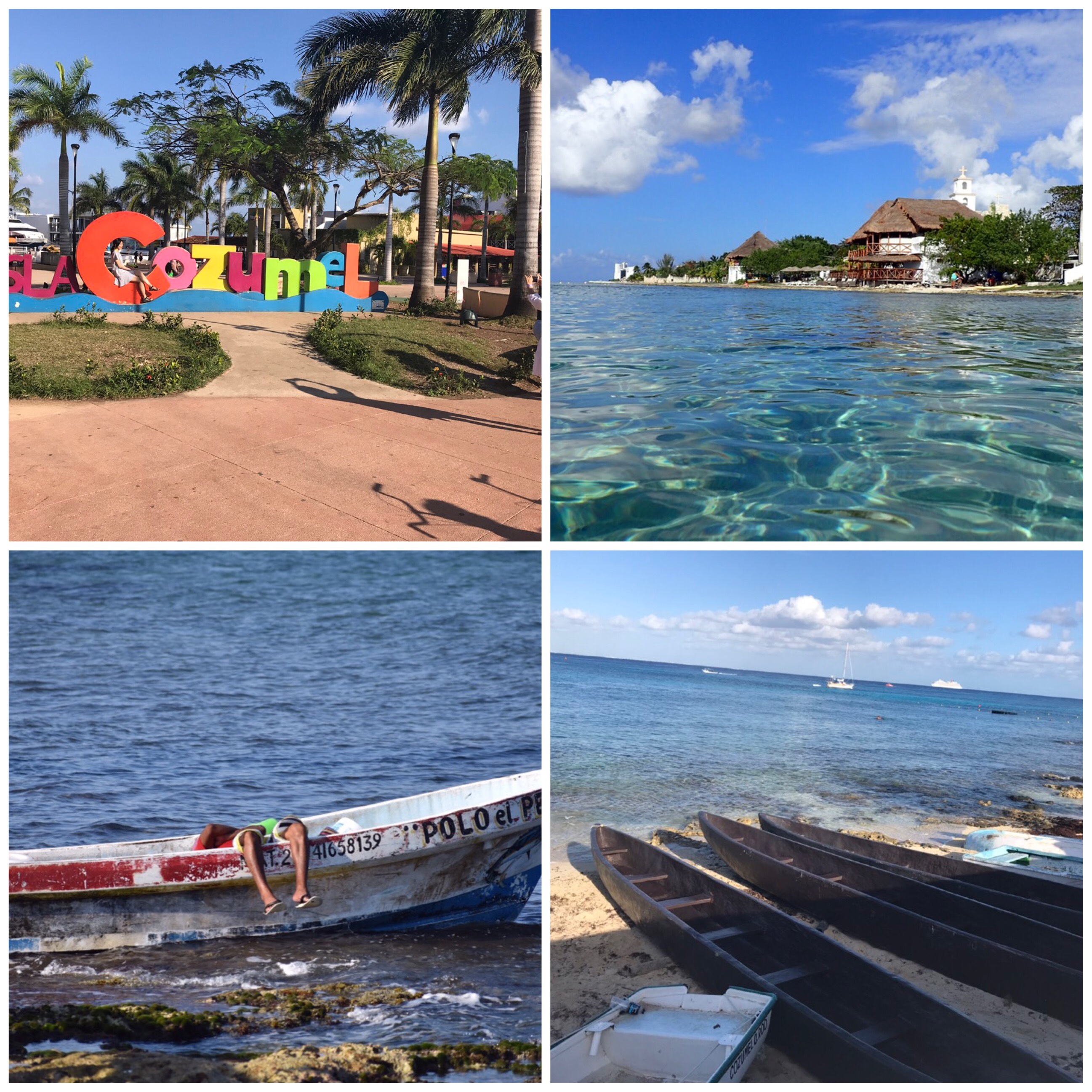
Surprise, surprise! We were convinced that 15,000 cruise ship passengers a day descending on tiny Cozumel would make it a very un-Mexican, tourist trap. We were coming here for the fantastic snorkeling and beautiful beaches, but didn’t expect much more. Yes, San Miguel de Cozumel (the only town on the island) does have its fair share of tacky souvenir shops, loud over-priced bars and restaurants playing American golden oldies, and street hustlers touting rental cars, scooters, jewelry, t-shirts, tequila tastings, and dirt bike tours. But walk five blocks from the town square and cruise ship docks, wait until 5 pm when the big boats start to depart, or spend a Sunday here when there are no cruise ships in port—you are in a different world. Mexican, local, real.

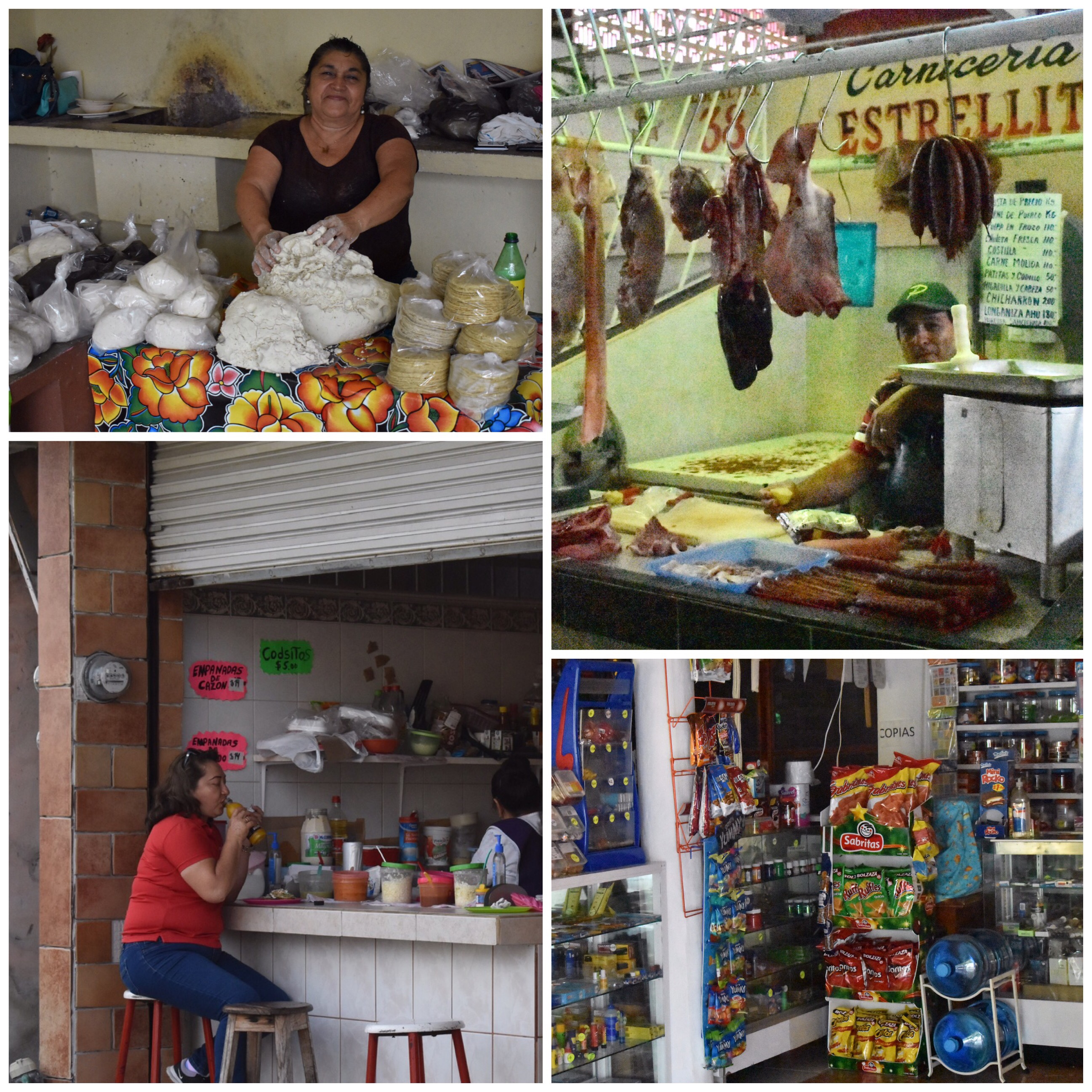
And despite our prejudices, mass tourism has its upsides. The cruise ship dollars make this island wealthier than most Mexican places we’ve visited—more opportunity for decent paying jobs, better infrastructure, less crime and poverty. And we benefitted as tourists too. We found a wide range of excellent, excellent restaurants—from the local, hole-in-the-wall taqueria to fancy seaside establishments with stunning views. Accommodations ranged from $18 a night rooms, backpacker hostels to all-inclusive resorts and beautiful villas on perfect beaches. There were three giant, modern supermarkets, but there were also mom and pop bodegas on every block and a large central market with stalls of fresh fish, live poultry and dozens small food stands.

But we did come for the drop dead gorgeous beaches and beautiful coral reefs that Cozumel is known for, and we weren’t disappointed.

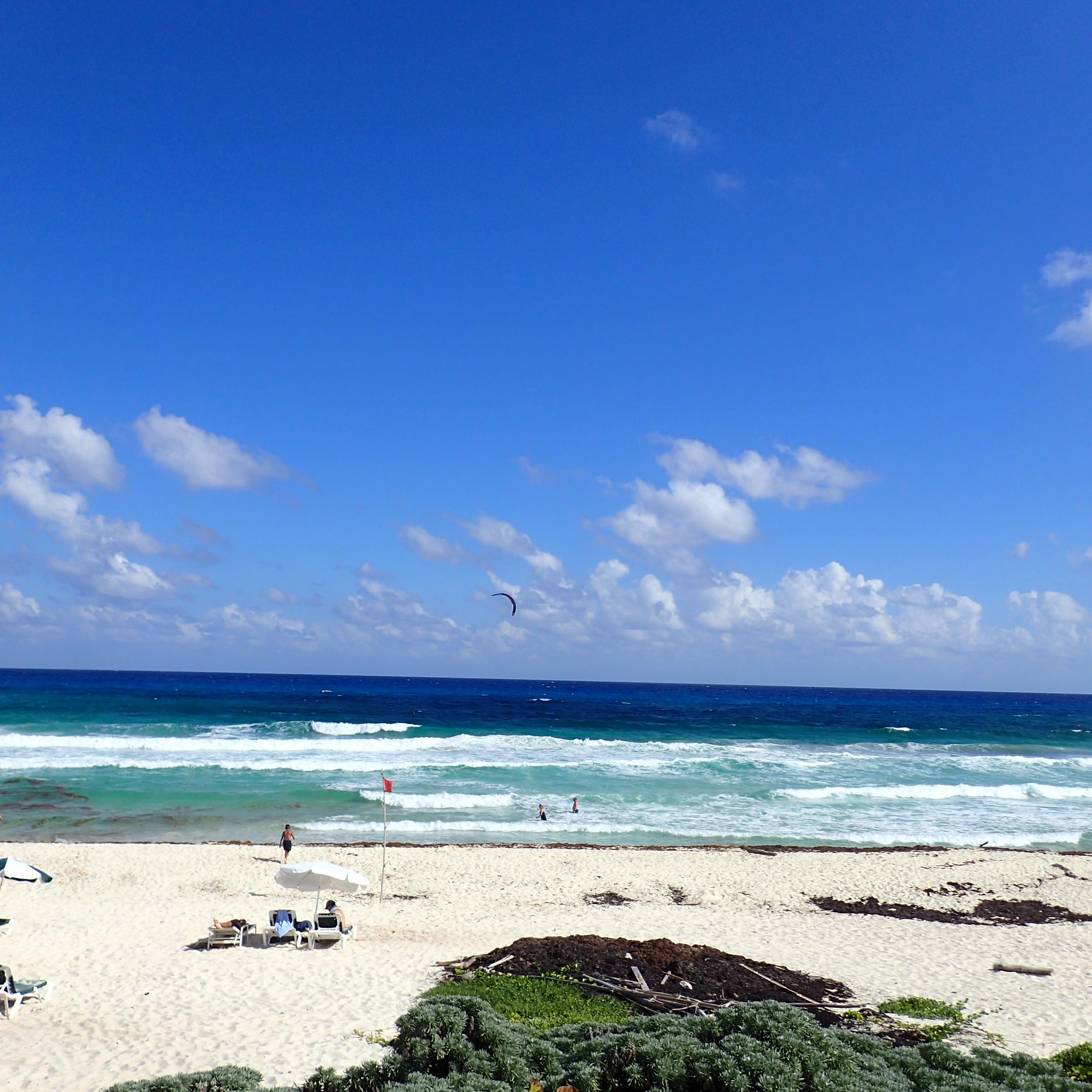
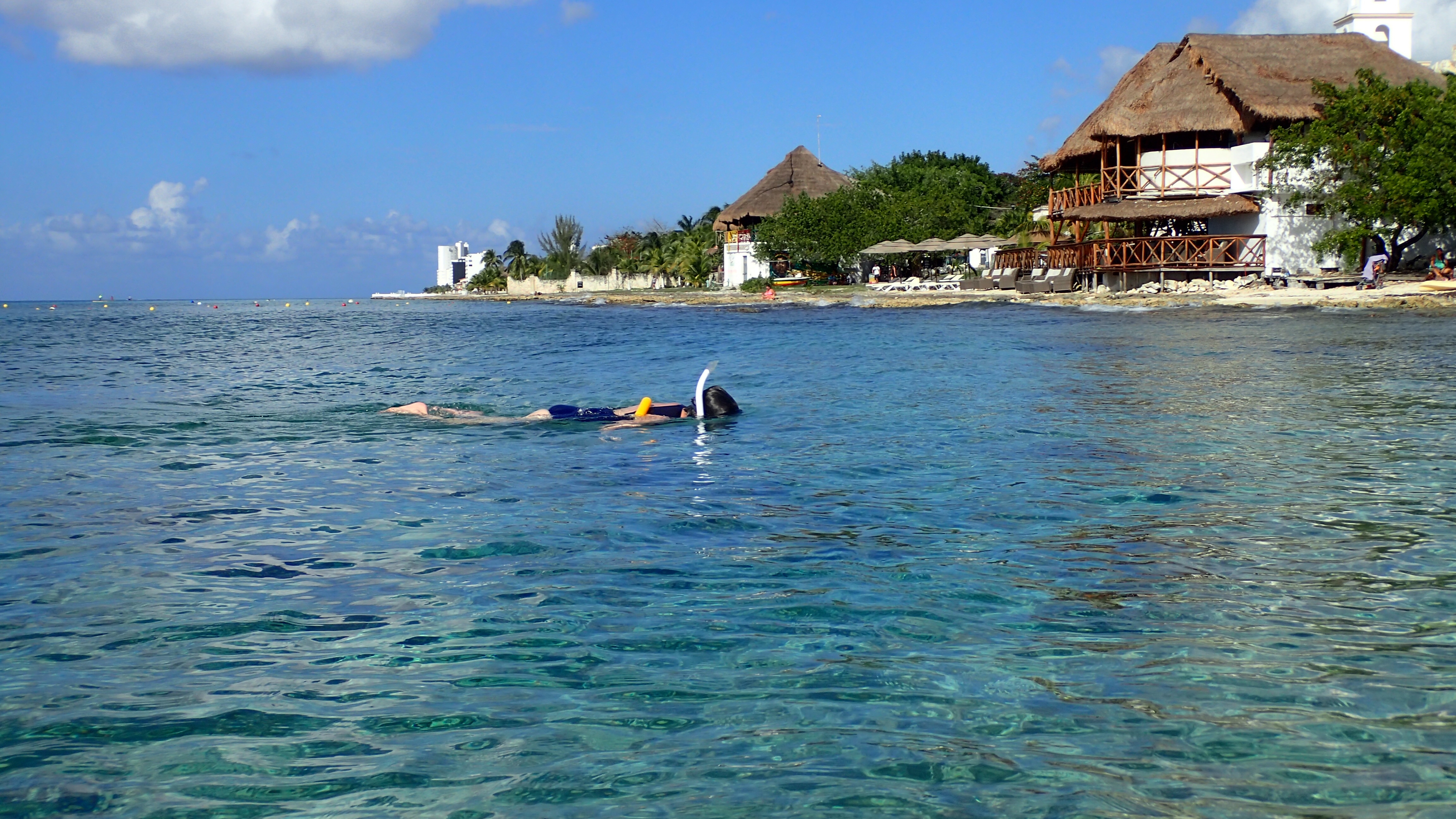
You do need to know that the island has two very distinct sides. The eastern shore facing the Caribbean is wild, virtually uninhabited with only a couple of small hotels and restaurants. The surf is high, the winds strong, and the shore is rocky. Great for kitesurfing, or sunbathing if the wind isn’t too bad, terrible for swimming or snorkeling. The western side, facing the Yucatan, is usually calm with crystal clear waters, barrier reefs and many idyllic sand beaches. The shore is dotted with beach clubs, restaurants, hotels, a mega resort or two, but also public beaches and small coves. This is one of the few places we’ve been where swimming is good almost in the town center! Cozumel is heaven for swimming, snorkeling and diving.

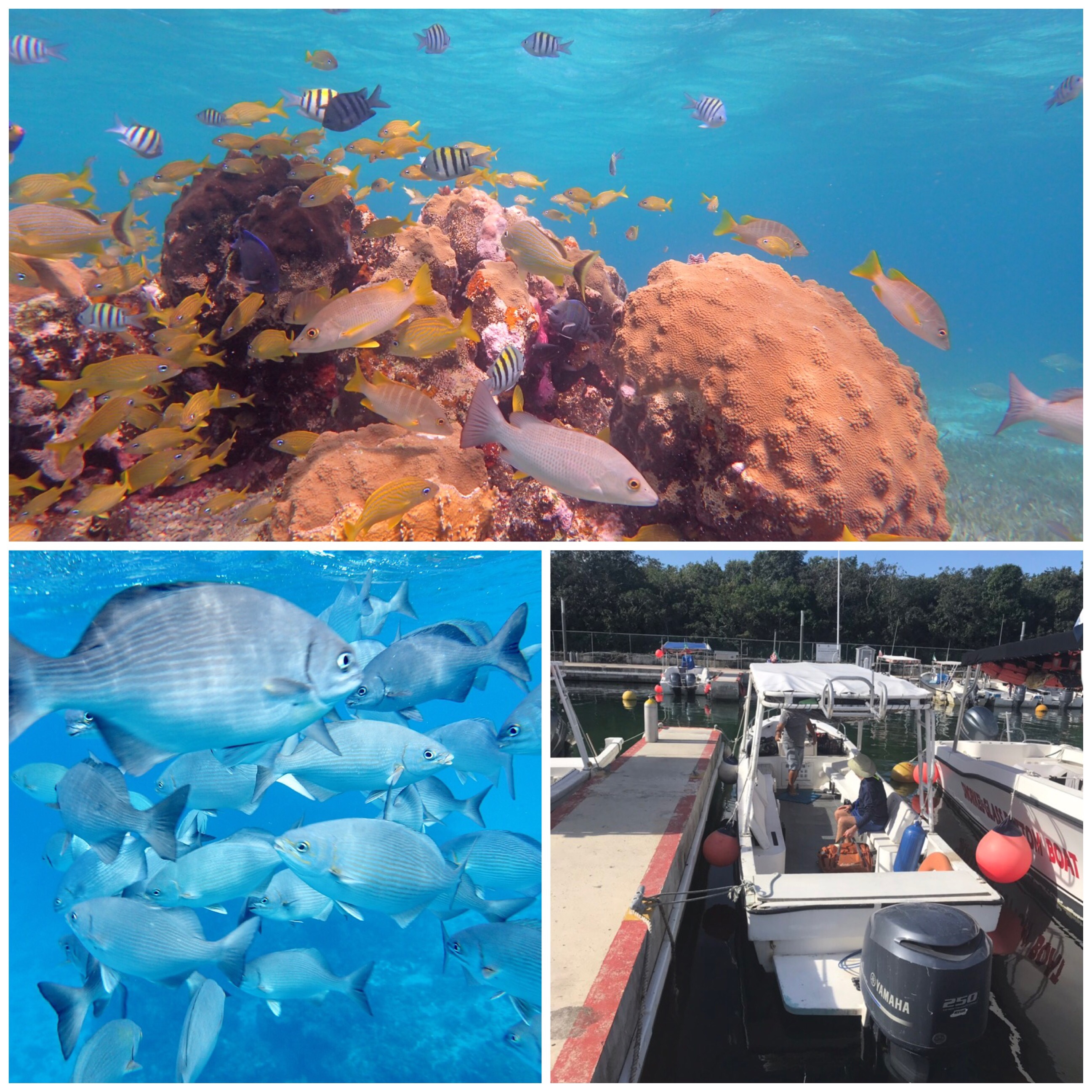
In our search for underwater adventure we stuck to the western shore and were given this bit of advice: sandy beaches typically mean terrible snorkeling and diving—little to see and often poor visibility; rocky beaches mean clear water, lots of fish, and often great coral formations. There are many places to snorkel from the beach—some very close to the San Miguel itself—but the best snorkeling is definitely from a boat. The reefs are well off shore and it would be very dangerous to swim out to them. We booked a four hour tour for $65 per person with a guide that took us to three reefs—Columbia, Palancar, Cielo. It was money well spent. And a bonus: it was Sunday when there wasn’t a cruise ship in town—no other snorkelers in sight and only two others on our boat—a dad and his 15 year old son. We saw rays, barracuda, jacks, and spectacular schools of colorful tropical fish. The water was crystal clear, warm, and ranged from brilliant aqua to deep blue—travel brochure quality.

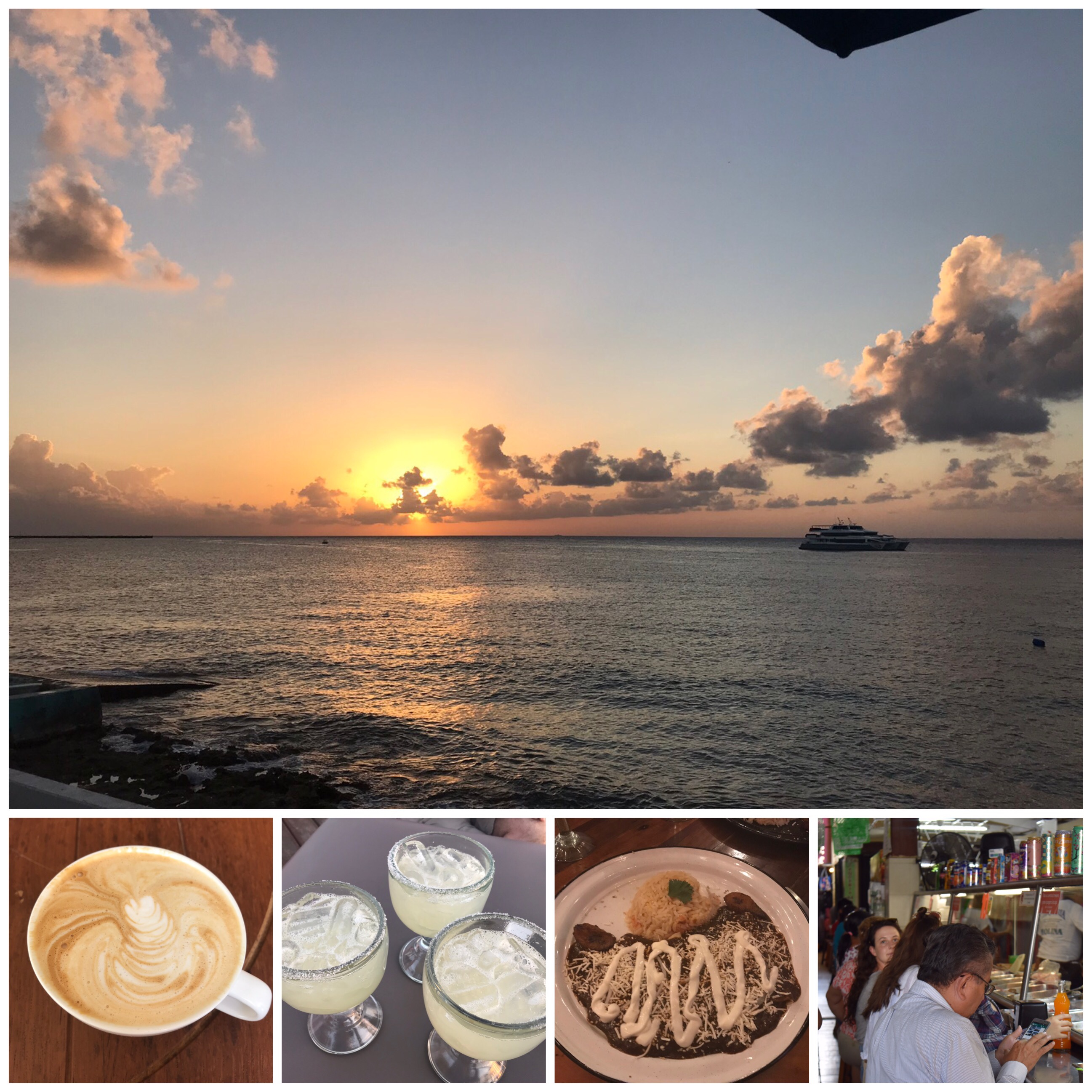
Our meals in Cozumel, particularly dinner, ranged from simple tacos at a locals’ hangout to fine dining in luxurious patio gardens or beautiful seaside palapas. The price for dinner with drinks for three was never more $20 each, and usually much less. And we had to be careful of snap judgements—a seaside restaurant around the corner from us that during the week seemed like a classic tourist trap filled with bus loads of gringos caused us to walk on by. On Sunday, when many places were closed for lunch, we stopped in desperation and discovered the place packed almost exclusively with locals and their children enjoying a meal after church. We now know why—the food was excellent and prices very good.

So Cozumel maybe Mexico’s number one cruise ship destination, but please don’t let that keep you away.

Maya + Kayak = Mayaking

“Mayaking”: described in the tourist brochure as kayaking in the Mayan preserve of the Sian Ka’an Biosphere near Tulum—a UNESCO world heritage site. Corny name, but cute. Later we learned the name was actually pretty significant.

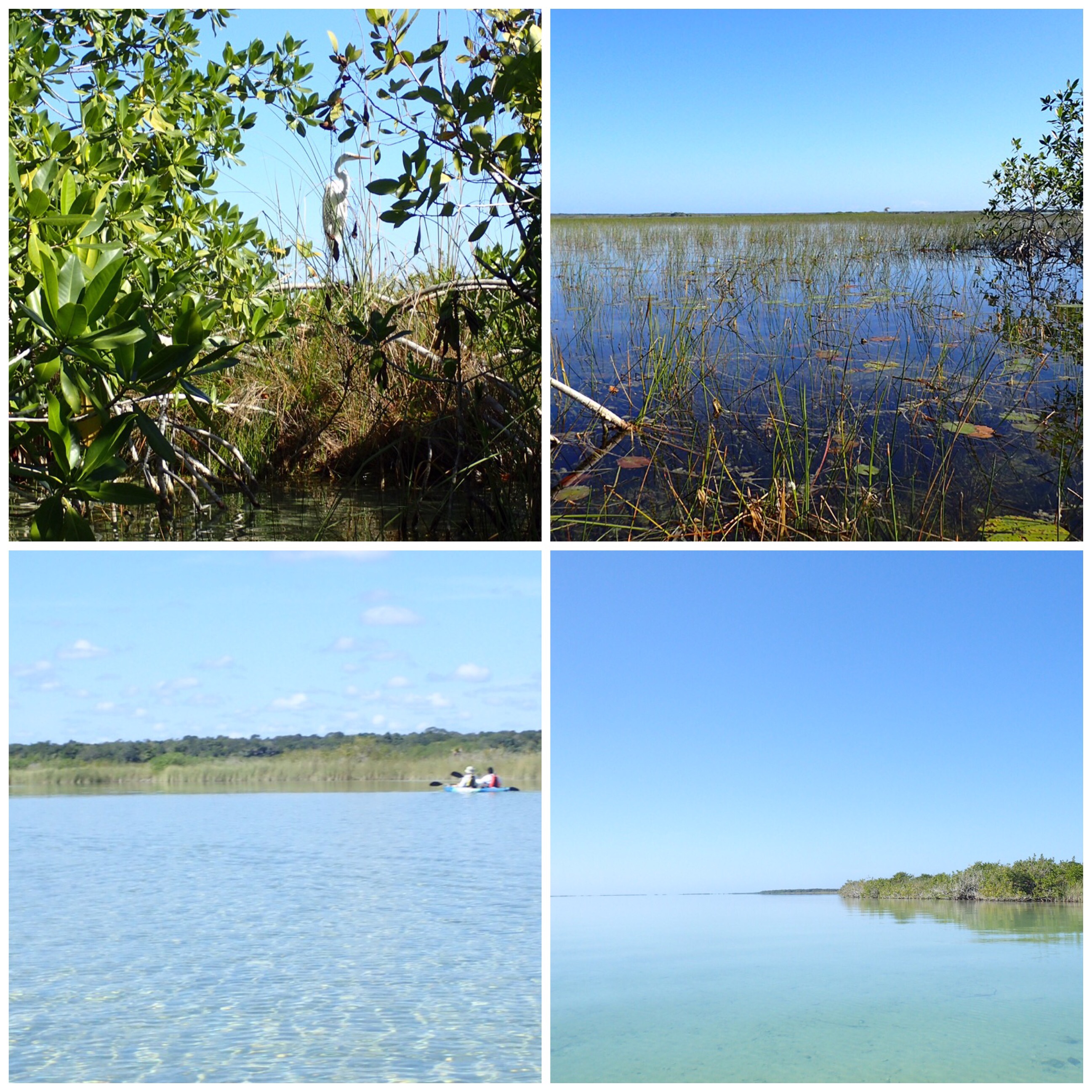
The Sian Ka’an preserve is actually a giant national park—in fact, the fifth largest in Mexico. It stretches down the Yucatan coast from Tulum halfway to Belize. It includes many different ecosystems—brackish coastal lagoons, inter coastal waterways, jungles, freshwater lagoons. It is home to manatees, jaguars, huge saltwater crocodiles, hundreds of species of birds, and rich collection of both freshwater and saltwater fish.

Our tour company, Community Tours, based in the tiny town of Muyil, is completely operated and run by Mayans, part of a local effort to build a local economic base for jobs and to keep kids in the community. Our guide for the three of us, Benjamin, left his village at age eleven as the only way to further his education. After college, he tried living in Mexico City but came back to his roots and culture. Mayan language and culture is very much alive in this region—in fact there are about 800,000 Mayan speakers left in Yucatan. Benjamin’s first language is Mayan and he said his English is much better than his Spanish.

The Community Tours headquarters is right on the main road in Muyil and consisted several whitewashed buildings, including a beautiful open air, thatched roof meeting room that doubled as the dining hall. On the grounds were a butterfly enclosure and, of course, a gift shop that featured local handmade souvenirs (which, strangely enough, Benjamin never urged us to visit).

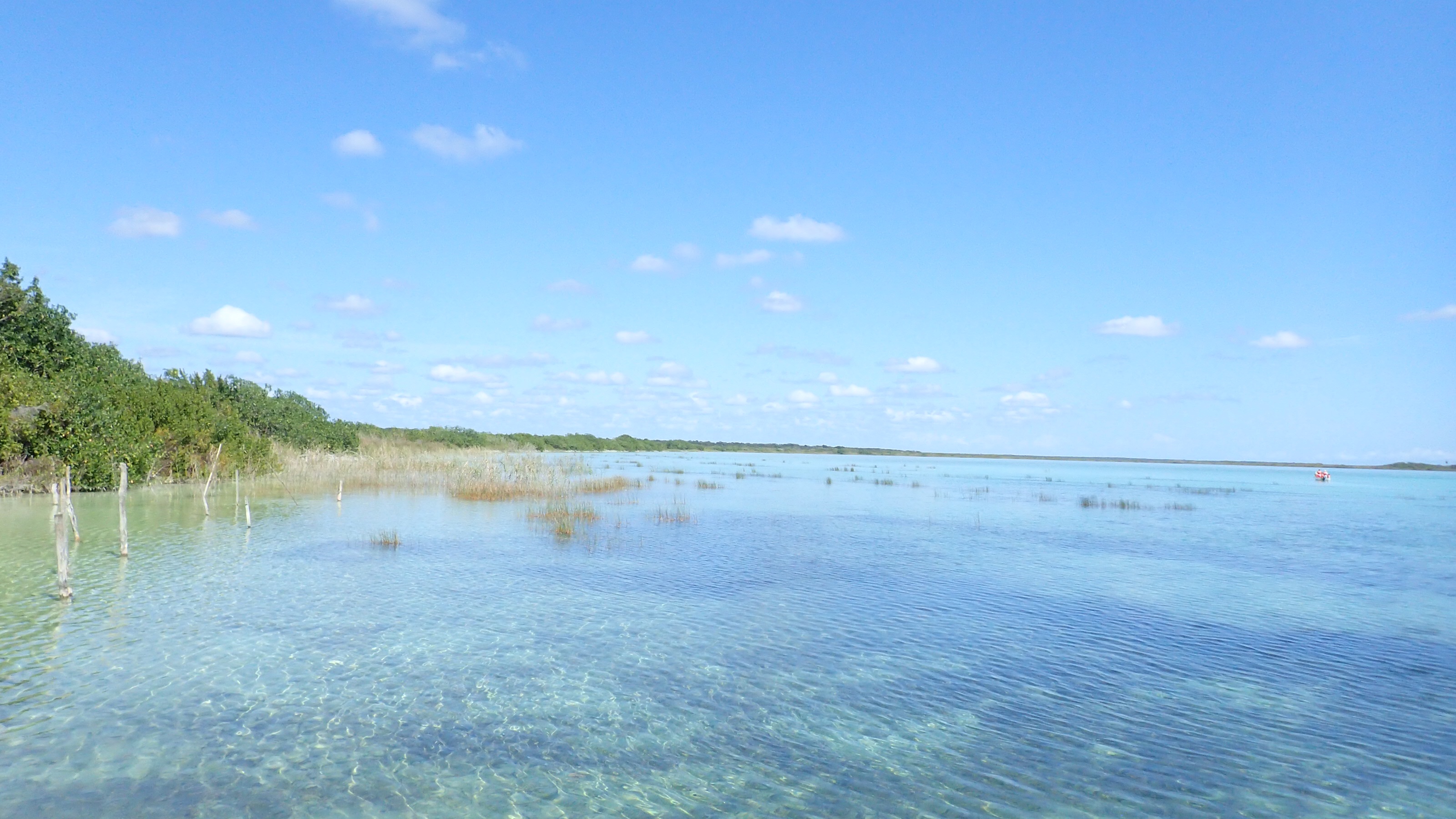
The tour began with a typical Mayan breakfast of fried tortilla chips, ground pumpkin seeds and tomatoes and sautéed summer squash. Sounds slightly strange, but was delicious! As we ate, Benjamin gave us the overview of the kayak tour which would take us onto two huge freshwater lagoons connected by an ancient cut dug by the Mayans. Both lagoons are fed by rain runoff seeping through the Yucatan limestone into the underground rivers—the same rivers that fed the dozens of local cenotes.

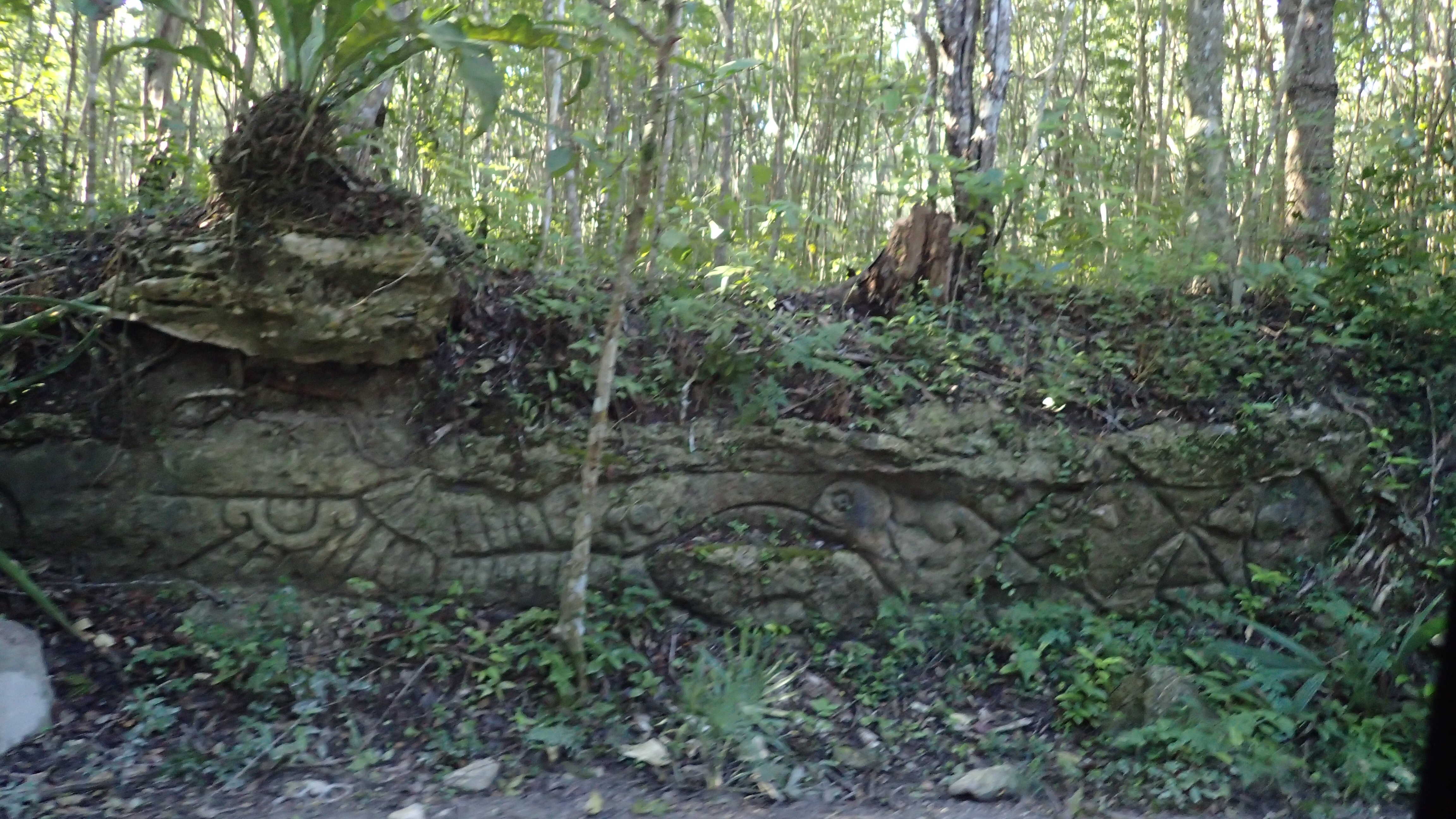
A short, but bouncy van ride took us through the jungle and past barely visible Mayan ruins covered by vines and brush. There are likely dozen more ruins throughout the area that have simply been swallowed up by the jungle. Hard to imagine the size of the population that must have existed before the arrival of the Europeans.

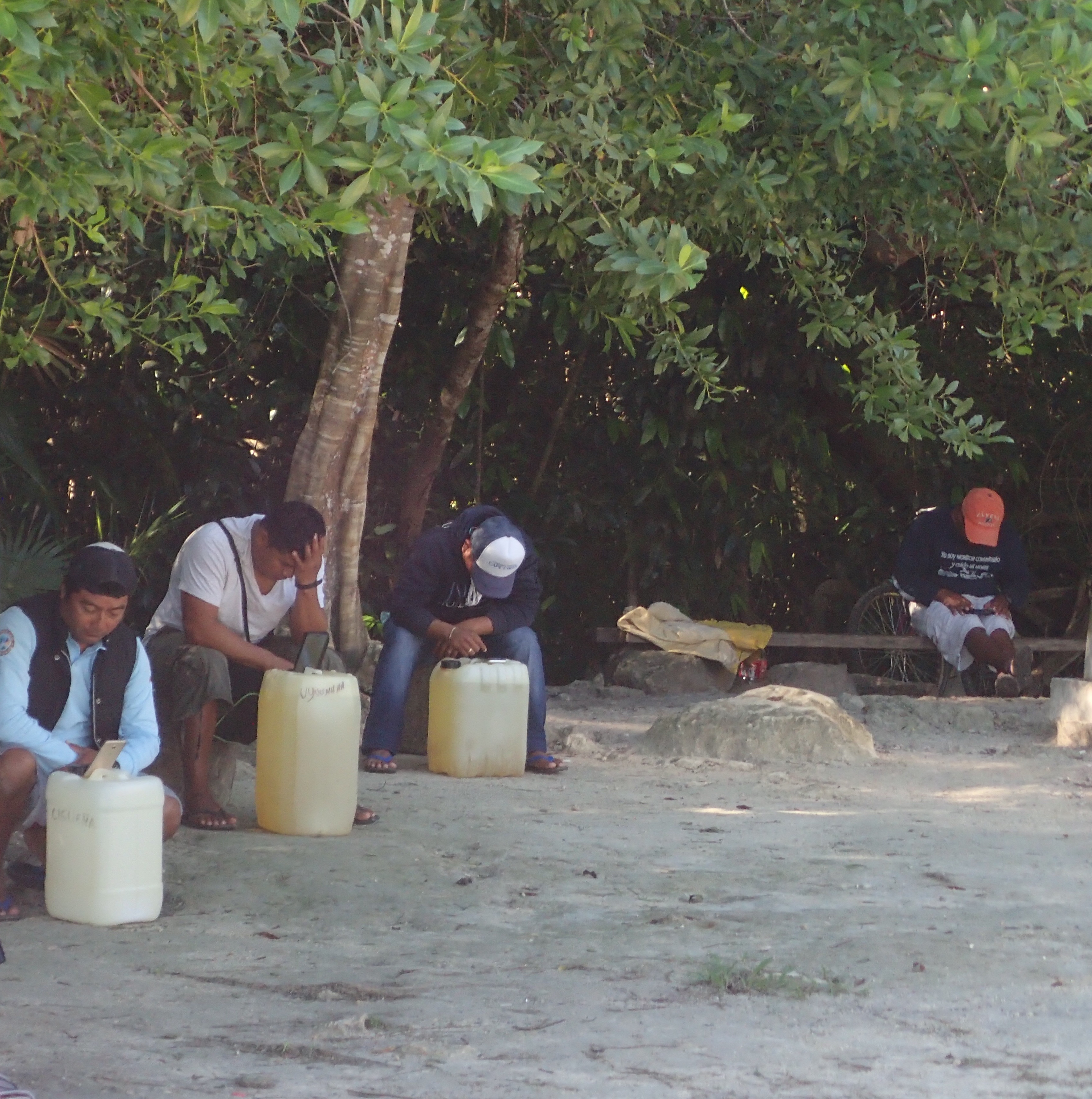
When we arrived at the lagoon, we saw a dozen of more Mayan locals sitting around with cell phones perched on top of huge plastic gas cans. Later we found out they were the boat operators who took less adventuresome tourists out for boat rides on the lagoons.

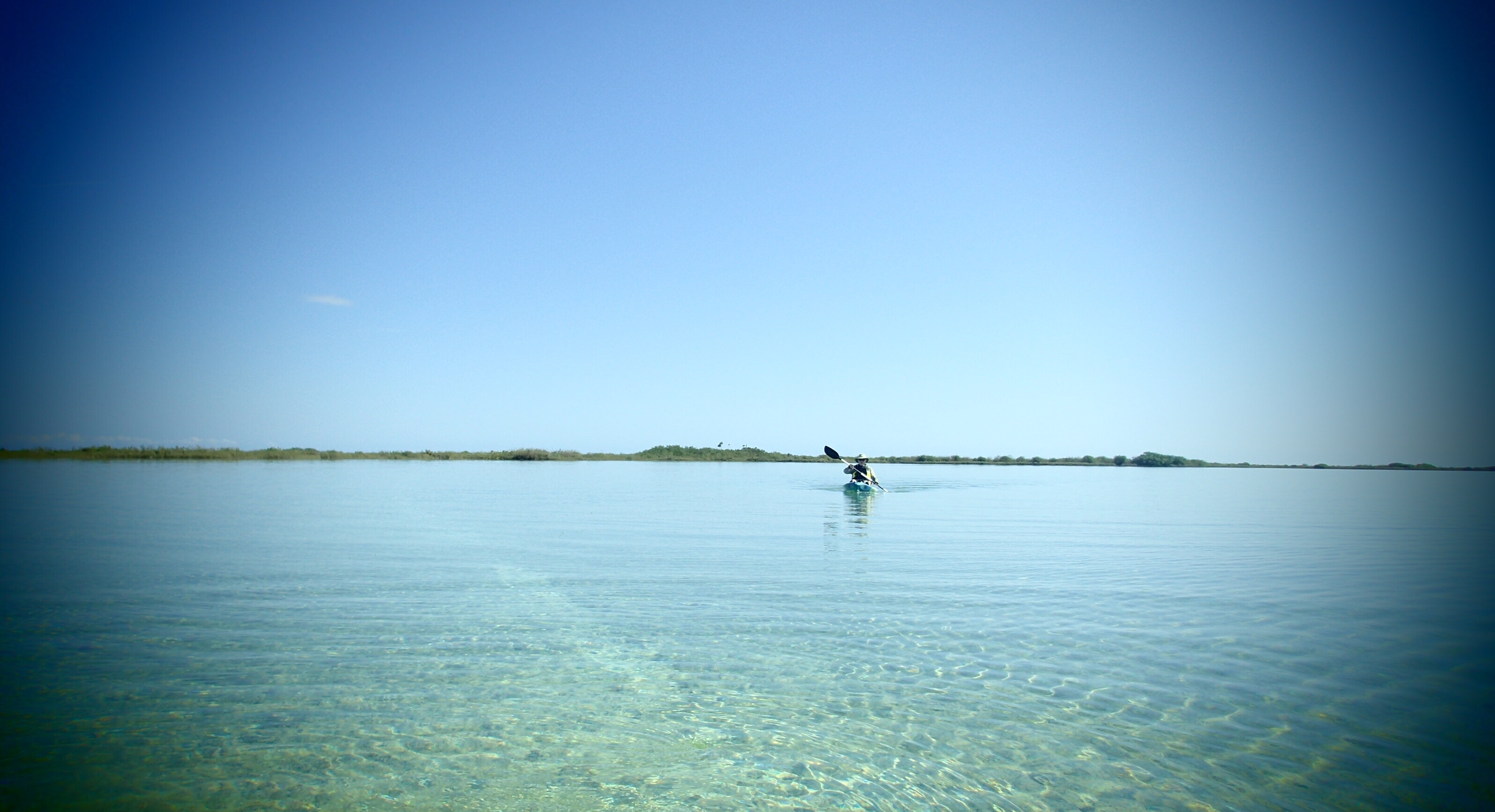
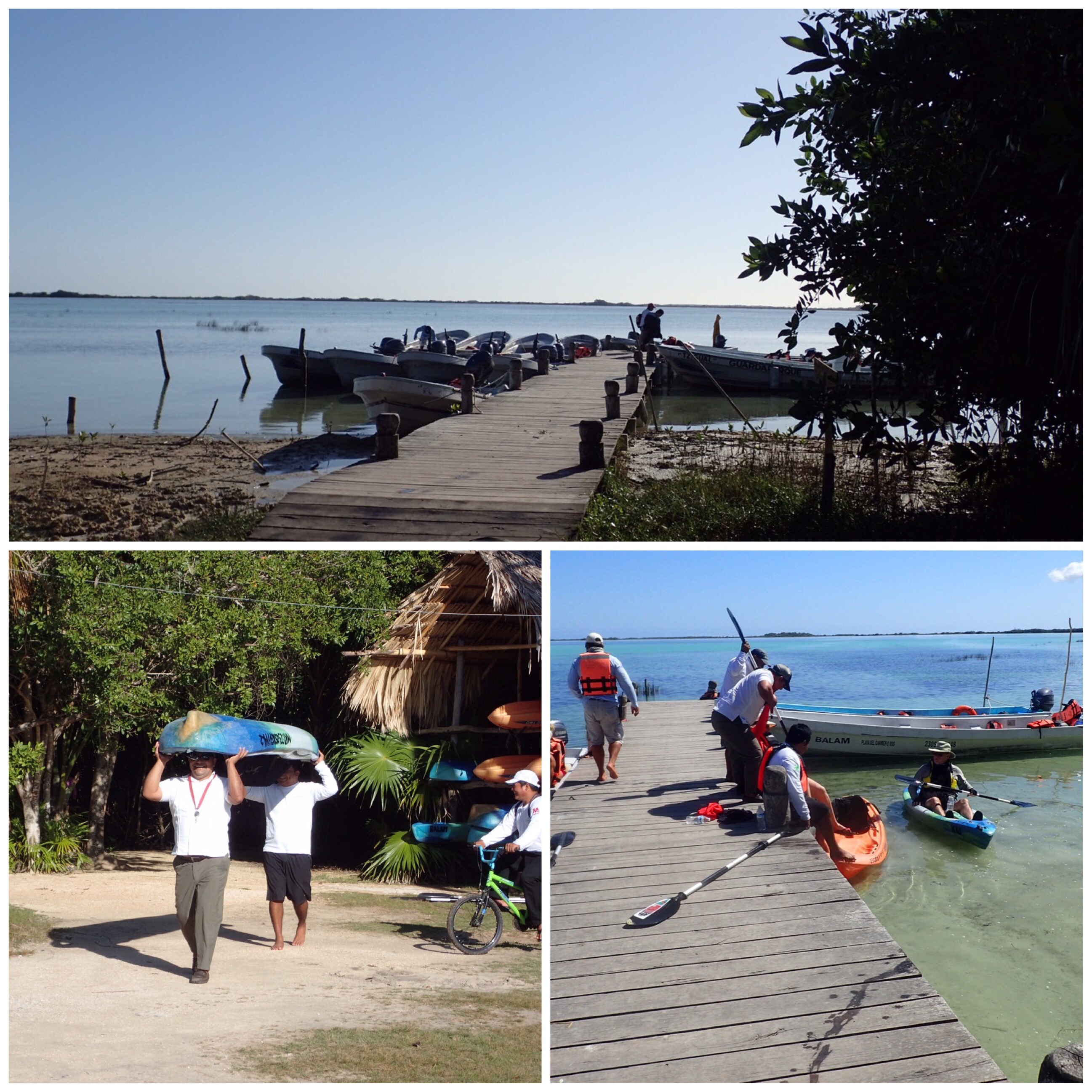
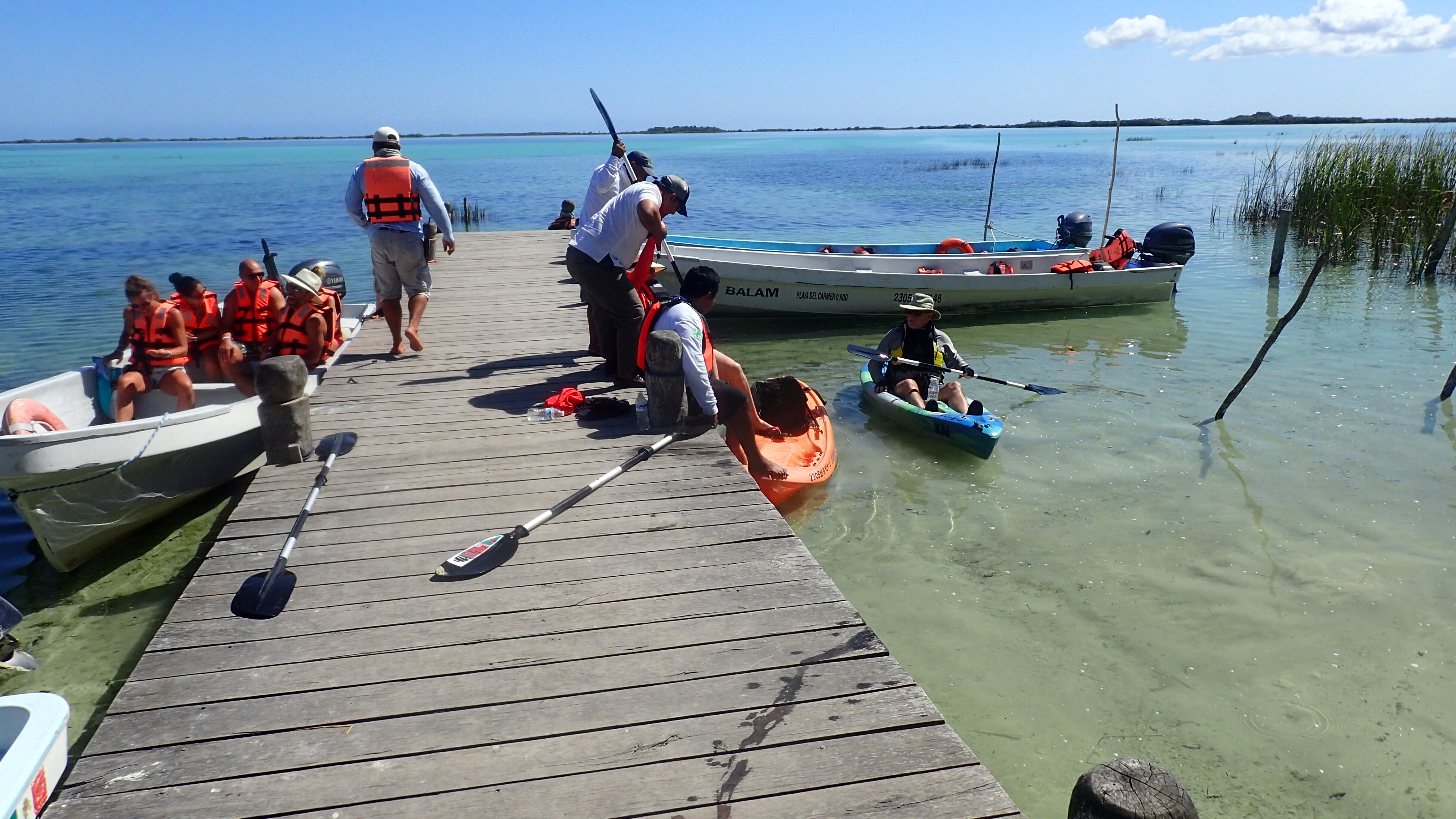
We settled into our kayaks — certainly well used (aka beat-up) sit-aboard kayaks, but with the most comfortable strap-on backs we’ve ever used, first-class paddles and new personal floatation devices. And we were off on the absolutely flat, crystal clear water.

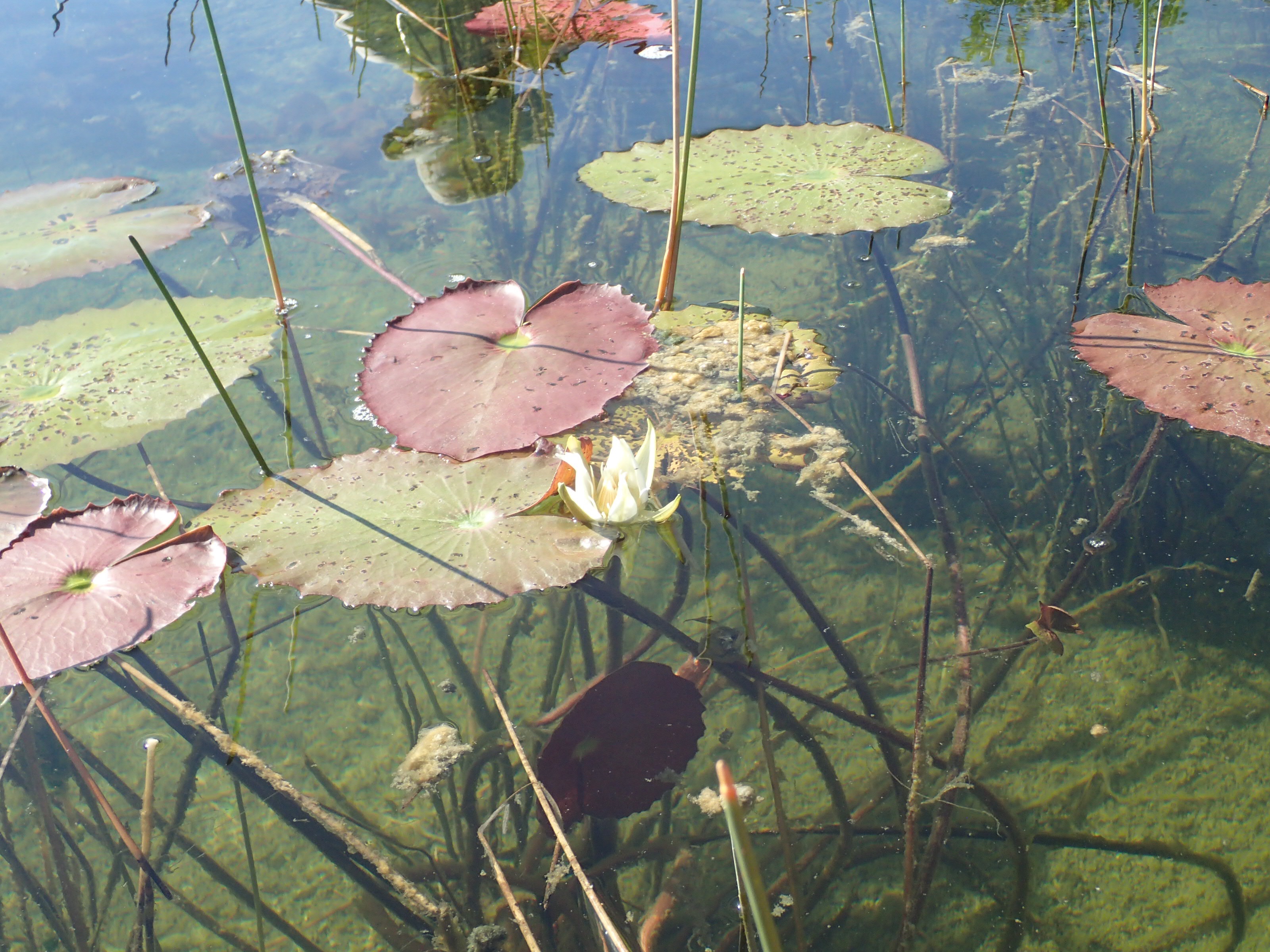
Through water grasses along the shoreline we saw dozens of birds, with Benjamin calling out their names and pausing to show us pictures in his dog-eared bird book, always carefully stowed back in a plastic bag. Some of the birds were known to us like the Great Egret and Green Heron, but others were new, the Black Crowned Heron, Tiger Heron, Tropical Kingbird, Northern Jacana and Anhinga. The water lilies that the raccoons devoured in our fish pond at home in Seattle grew here unscathed.

The first and smaller lagoon was several feet above the larger lagoon and as we ventured through the very narrow canal a slight current made the paddling easy. The entrance to the 500 meter channel was all but invisible to us but Benjamin signaled for us to follow him and suddenly we were in a beautiful narrow waterway barely wide enough for our kayak paddles. An oncoming motorized boat every now and then added to the excitement—forcing us to the side as we used our hands to guide the boat past us.

Benjamin kept checking the reeds along the shoreline for crocodile nests. One of the other guides reported seeing one, but no such luck for us.

Once in the large lagoon we stopped briefly for a dip in the clear water. A soft bottom of silt felt a little strange on the toes, and we were told to avoid the darker rocky or sponge-like objects — actually an important organism that created oxygen that flourished in these waters.

All in all, the kayaking was peaceful, gorgeous and easy. However, by the end of the three hours, our sitting muscles were sore and our paddling muscles tired. It had been almost six months since we had been kayaking! Getting out of the kayaks was a bit exciting as a result, but the Mayans did not let us embarrass ourselves.

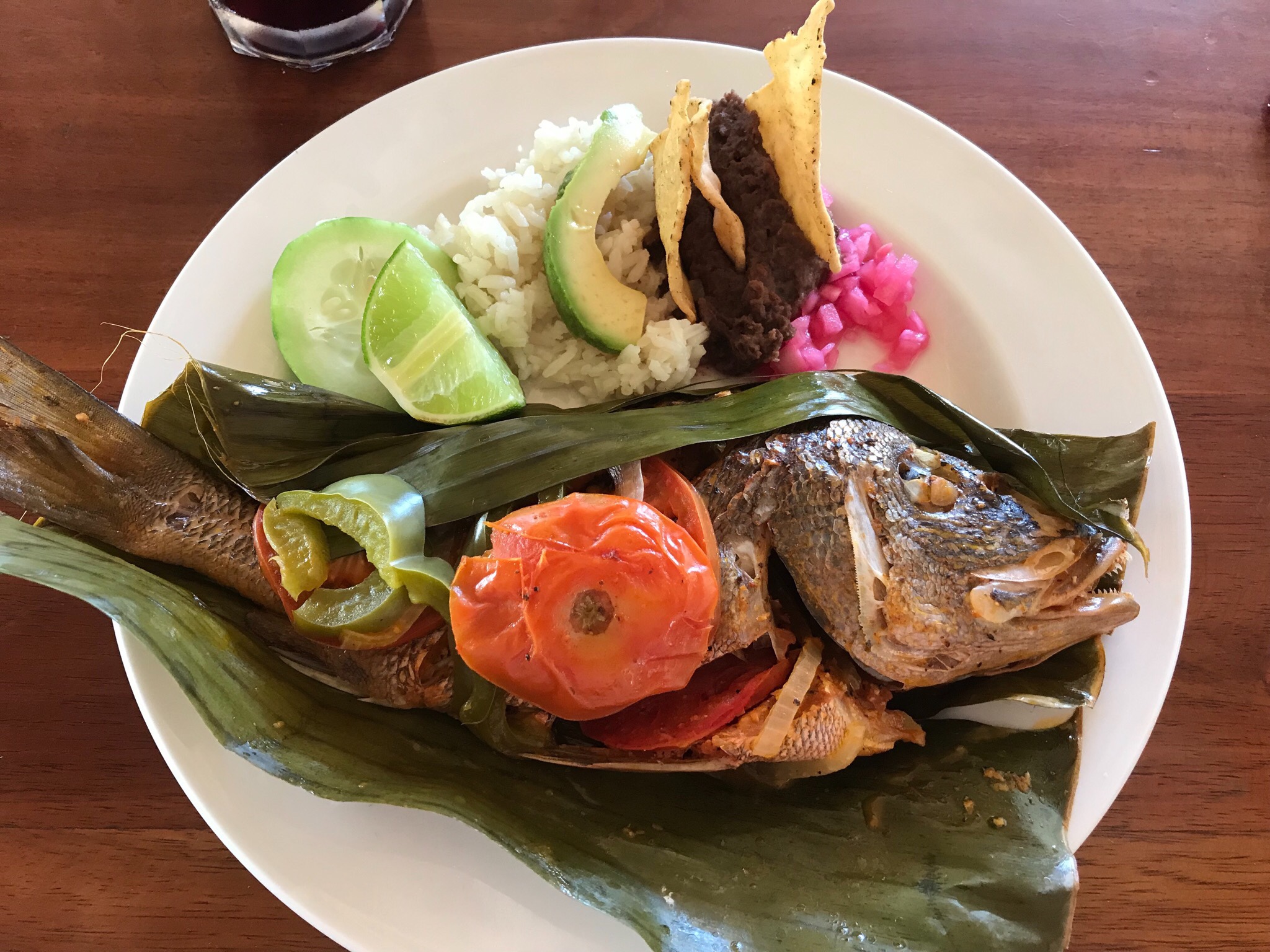
We returned to the lodge for lunch — our choice of chicken or fish cooked in banana leaves and hibiscus juice, again prepared in a more traditional manner. Quite tasty.

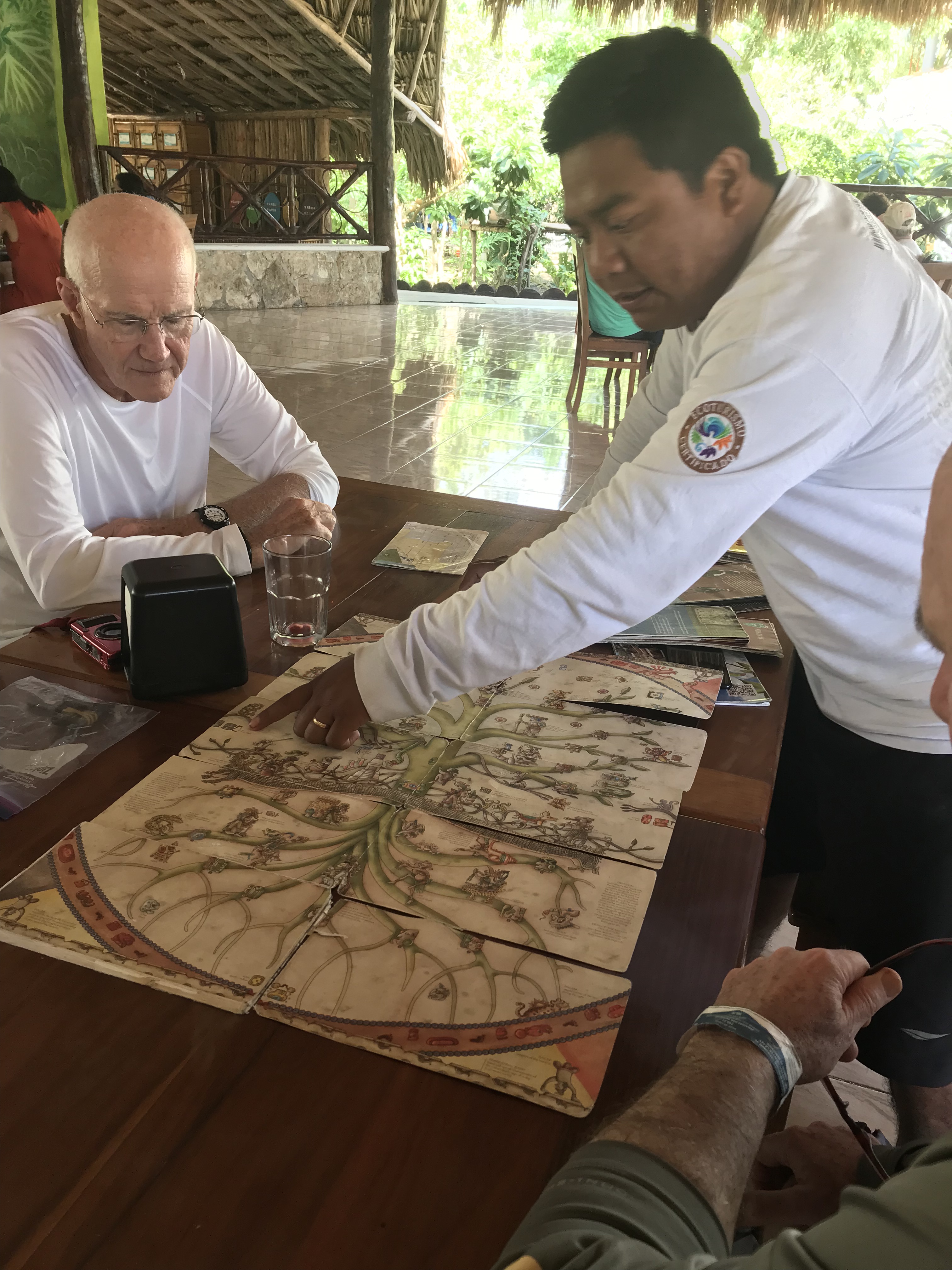
As we were eating, Benjamin used some well-worn, laminated pictures of Mayan drawings to illustrate the tree of life and several Mayan legends. After unsuccessfully trying to teach us some basic Mayan phrases (the word Ka’an has four different meanings based on slight changes in pronunciation), he explained that Sian Ka’an translates to “where the sky is born.”

Not hard to see why after mayaking in this gorgeous part of the Yucatán.

Tulum: Not Much “Then” a Lot More “Now”

One of our neighbors, a local historian, writes a newspaper column: “Seattle: Then and Now.” We thought of him when we first hit Tulum on the Yucatán Peninsula. Several of our friends who travelled years ago to Tulum to see the magnificent Mayan ruins told us there was almost nothing there then. Apparently you reached Tulum by a dirt road and the town was all but non-existent. Well, times, they have a changed—some things for the better, and some for the worse.

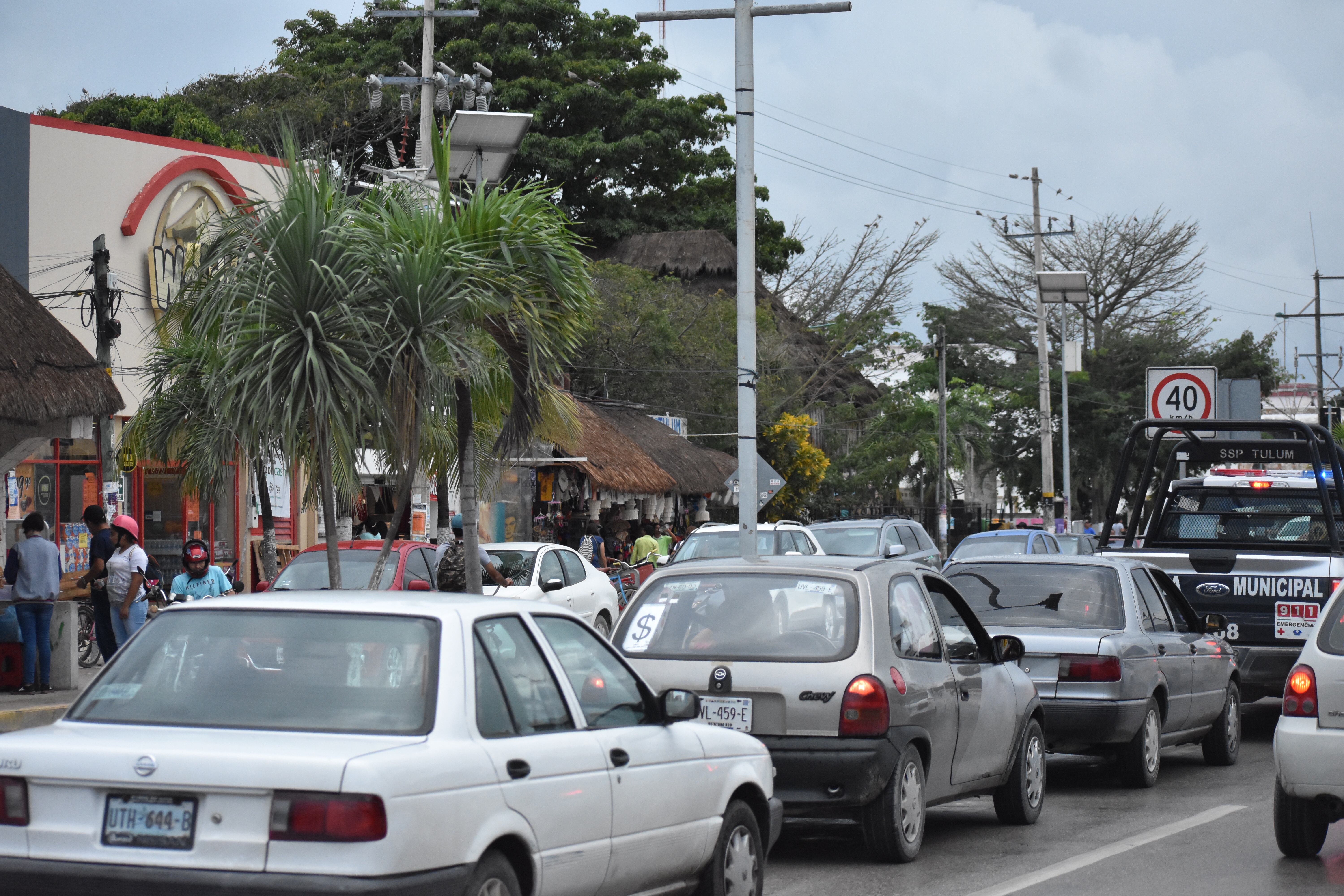
There is a now a modern, straight four lane divided highway running down the coast to Tulum full of cars, tour buses, trucks, motorcycles, three-wheelers and every other version of marginal motorized vehicles. Throw in a few pedestrians, a stray dog or two, hippie hitch hikers, road construction sites, massive & frequent but almost invisible speed bumps and a couple of police roadblocks and you get the picture.

The “freeway” is lined with entrances to mega resorts, billboards advertising Cirque de Soliel, cabaret shows, and, being Mexico, roadside cheap eats, pottery shops, tourist stalls, and fruit venders….and did I mention a stray dog or two.  

Tulum itself is built around a couple mile stretch of this four lane highway with a grass meridian,  large sidewalks and frequent huge, broad speed bumps that also serve as pedestrian crossings.

On one side of the road there is bike lane which is often indistinguishable from the sidewalk….a  very dangerous proposition for pedestrians. On the other side the bike lane is still under construction, with gaps in the sidewalk offering another hazard to shoppers.

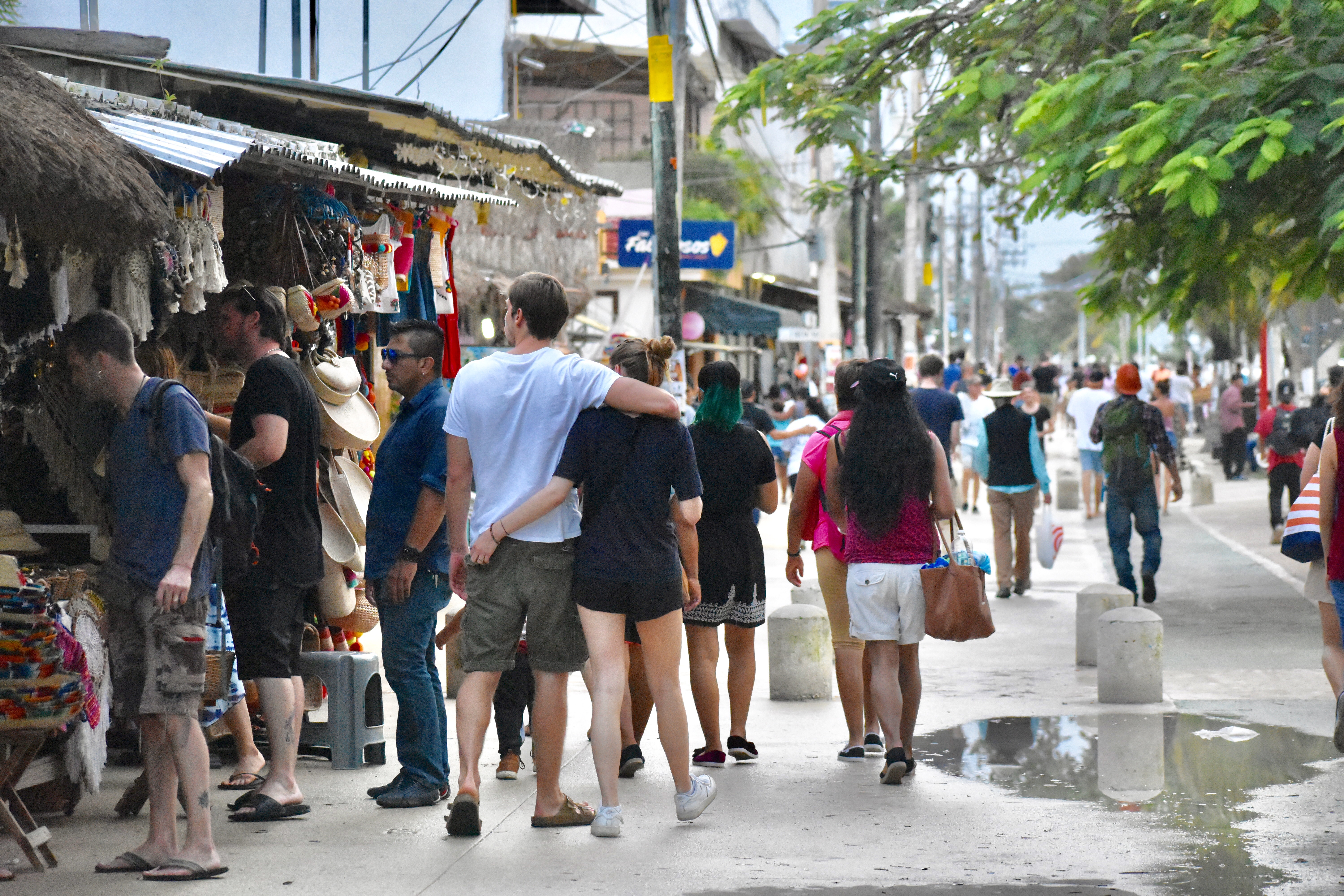
The street is lined with cheap clothing shops, high-end jewelry stores, souvenir stalls, restaurants, bars with pounding loud music. It seems to go on forever with a just public building every now and then to break up the string of tourist oriented businesses.   

It’s a lively, fascinating combination of a small town experiencing growing pains and a collection of international travelers drawn to the Mexican vibe. Great for people watching and meeting new friends over a Margarita.

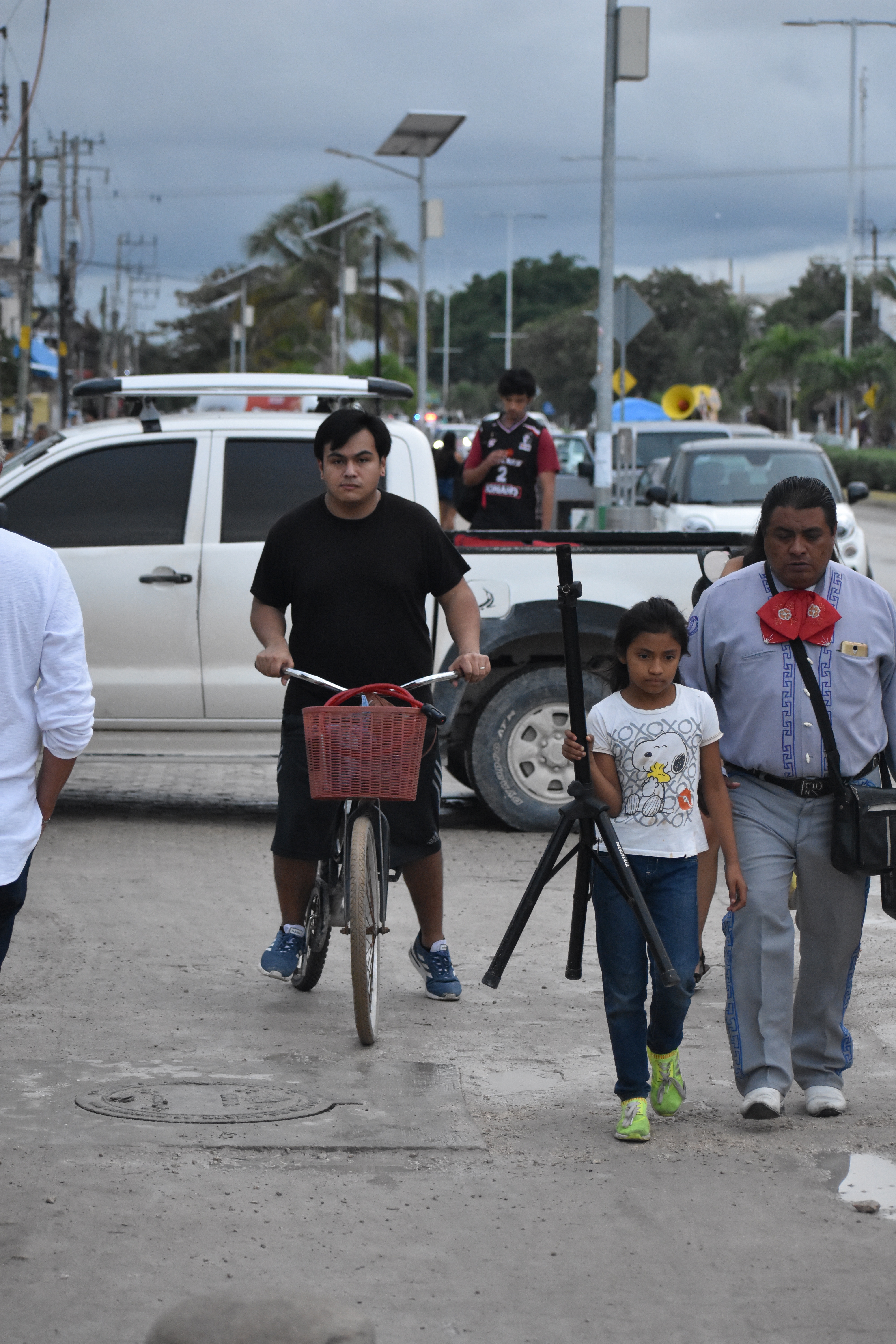
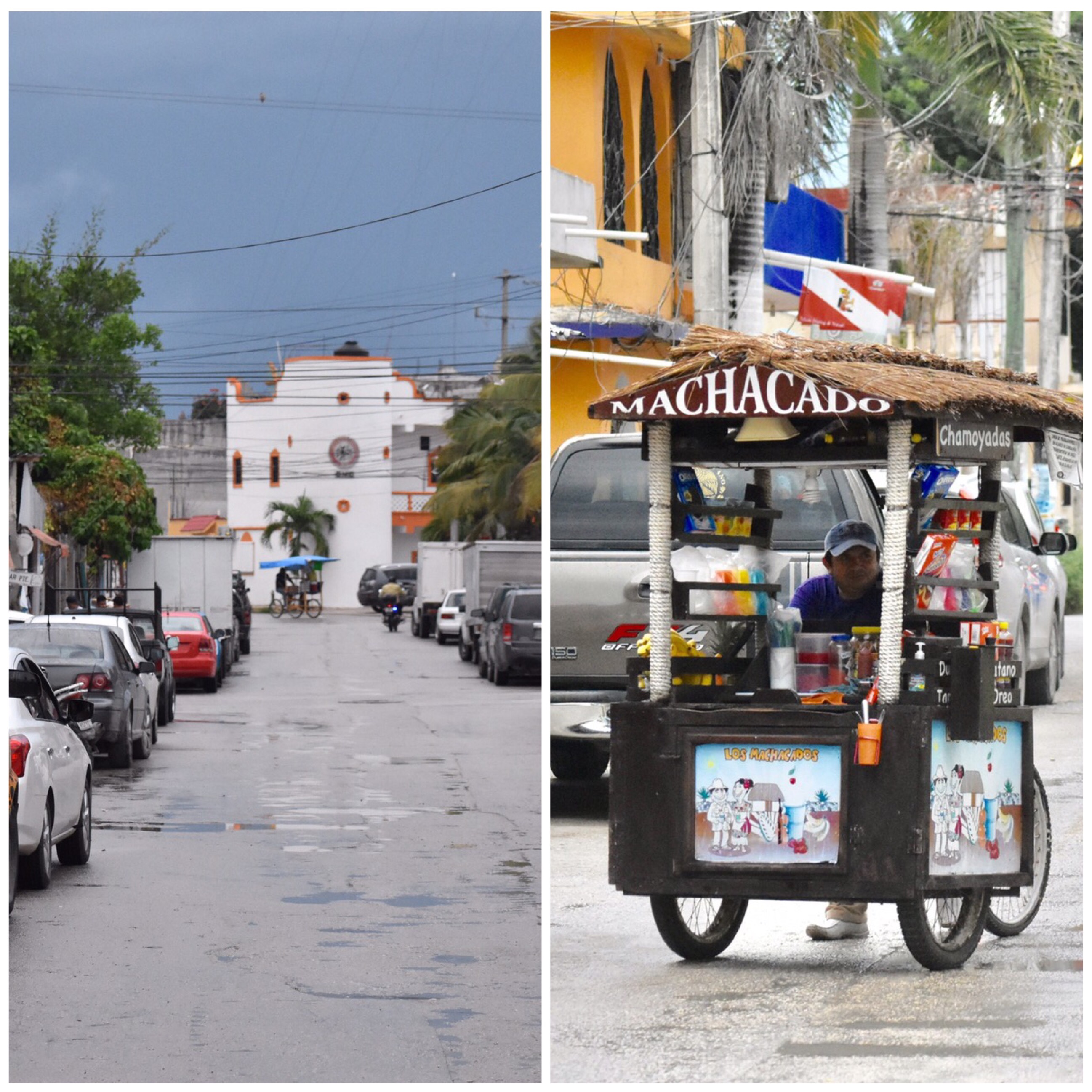
Off the main drag, the town is a collection of small shops—auto repair, light manufacturing, cheap, cheap eats, very modest homes and apartments and occasional pushcarts selling fruits or “pozol frio” with loud speakers announcing their wares.

Off, off, off the main drag just as you get beyond the city limits are the tents and shacks right at the edge of the jungle.   Perhaps not your typical charming resort town, but fascinating to wander around and soak in.  By the way, the traffic is awful…chaotic, unpredictable. On the edge of town are two giant supermarkets—modern, selling everything from hardware to food.

So we drove down to the beaches and the hotel zone to get a look at the gorgeous beaches we’d seen in the guide books.  The coastal hotel zone now stretches about three or four miles and, unfortunately, the walls around the hotels and the jungle between them completely block any view of the water.  On the other side of the road is a collection of small tacky shops, restaurants of all sorts and a few high end boutiques, all crammed together. There is an incredible range of quality from shabby tent campgrounds, hotels made from cargo containers, bars decorated with old car parts to glamorous ultra modern “yoga” resorts, eco hotels,  swanky vegan restaurants, boutiques with expensive beach togs and jewelry.  The road is narrow and potholed with more invisible, mountainous speed bumps. There is virtually no parking except in a few pay lots (many with valets).  So add to the traffic, dozens of taxis and mini vans, a number of water trucks (no sewer or water lines here) coca-cola delivery trucks, hordes of bikini clad bicycle riders (often looking very unsteady), swimsuit clad walkers—plus the usual mix of hippie hitchhikers, fruit vendors, construction workers, and of course a few stray dogs— and people just popping out onto the roadway from out of nowhere. Even at 15 miles per hour, driving was a white knuckle experience for the driver and passengers. 

This all would have been very discouraging but we finally decided to stop at hotel and restaurant because by some miracle there was a parking spot across the street.  Once you entered the hotel you stood just above the beach with a magnificent view of the long, white, picture-perfect beach.  

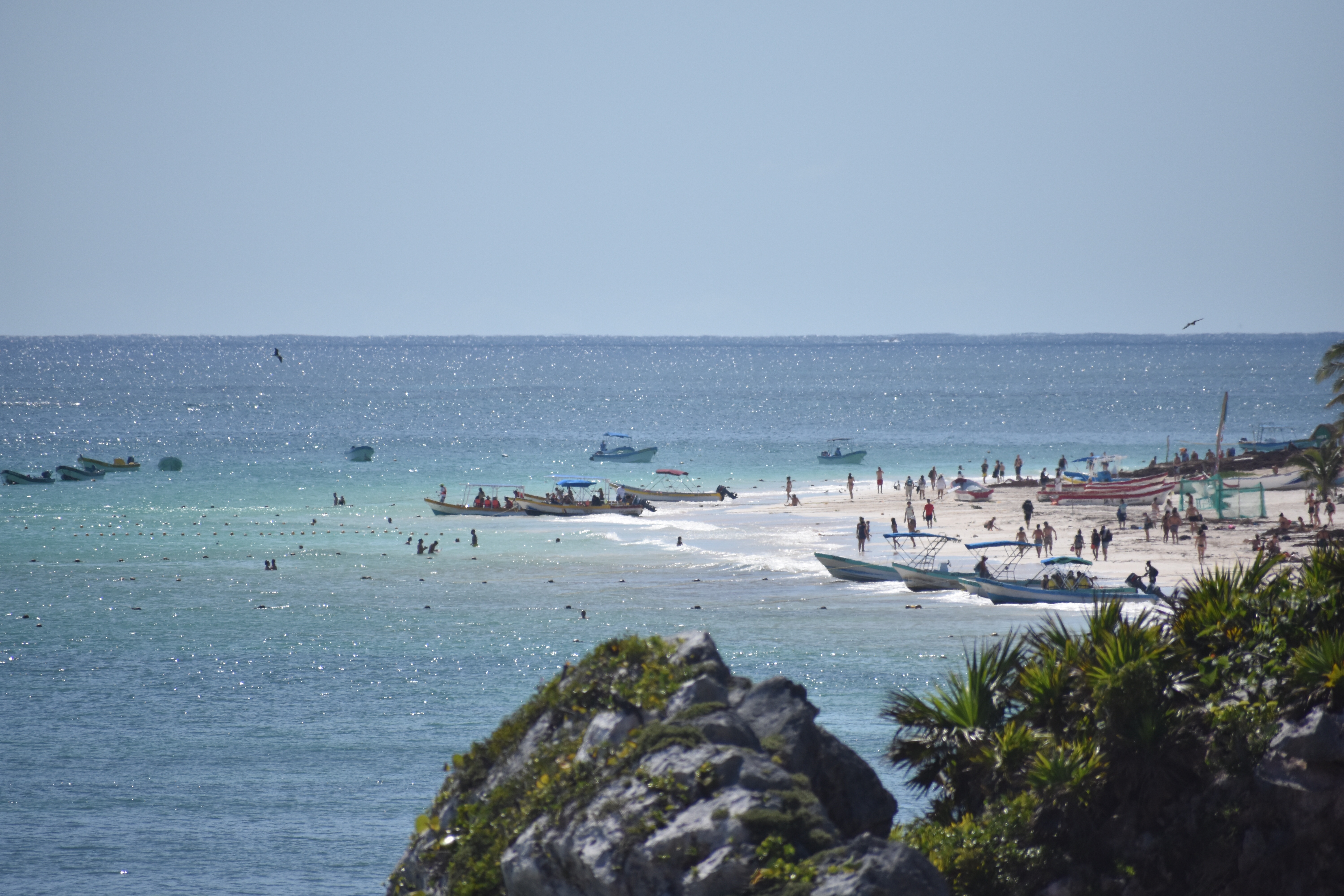
Palapas, families playing in the water and bright colored traditional fishing boats taking snorkelers out to the reef dotted the shore.  Stunning!  

Of course, the three lattes and a bottle of water ($10 by itself) we shared cost as much as the dinner we had last night in a nice restaurant but without the water view. Still worth it.

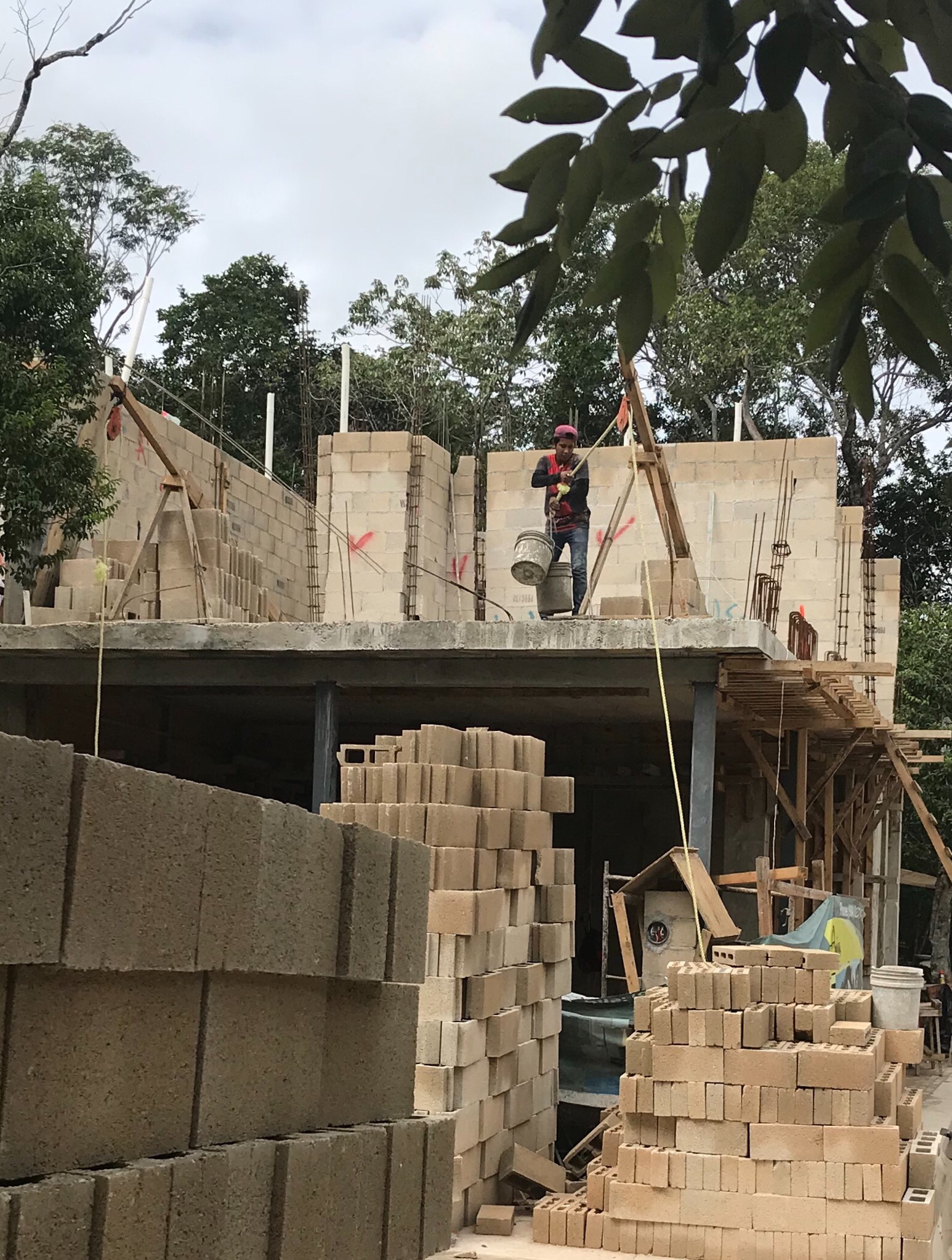
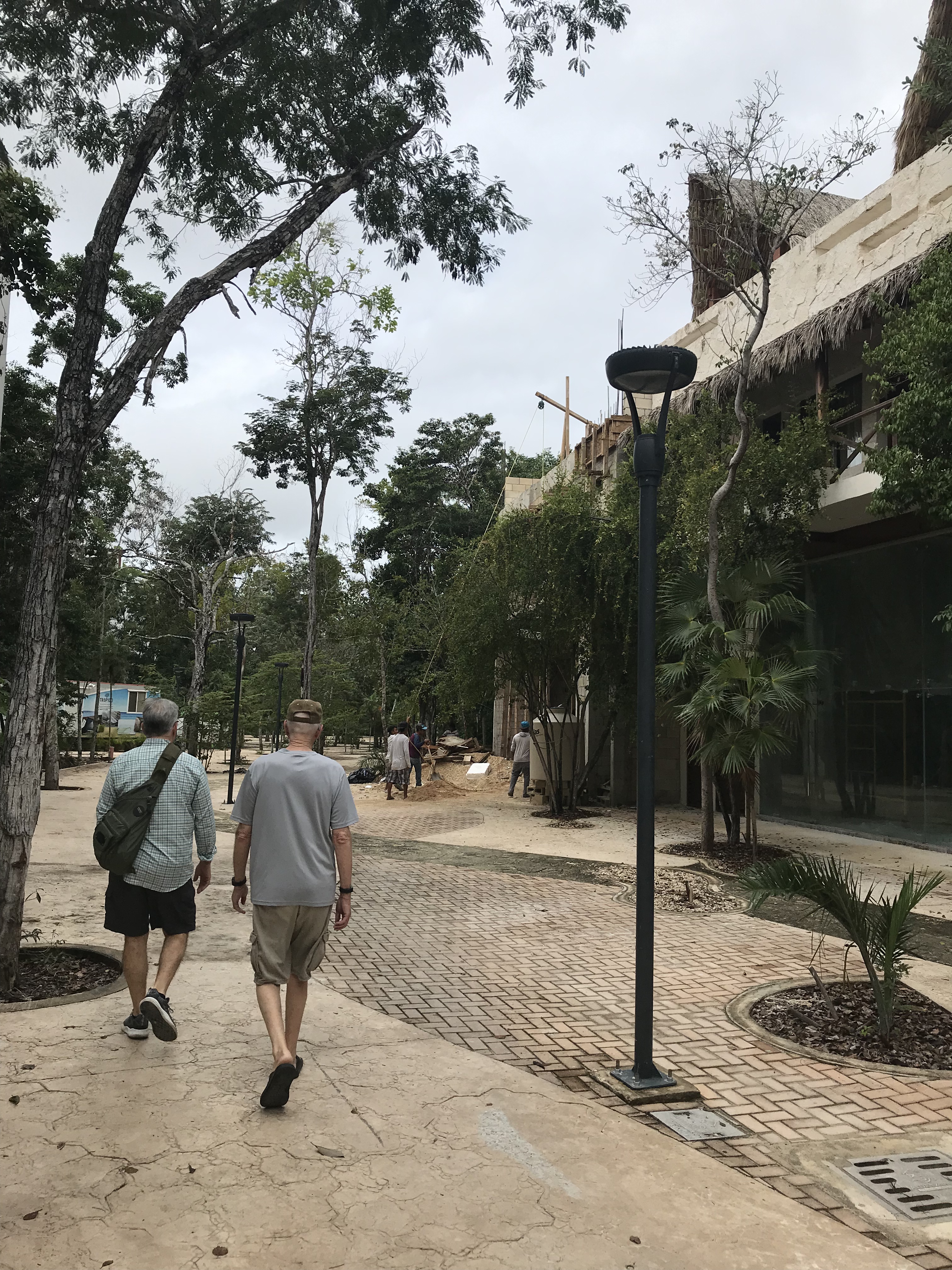
We are staying just outside of Tulum, in one of the largely gringo enclaves of condos, many of which are vacation rentals.   Dozens and dozens of yard signs line the broad smooth streets advertising new developments in the enormous planned community. Everywhere we saw small crews of men building by hand two and three story condo complexes.

No cement trucks or power tools here; it appears to all be done by hand. Sprinkled in between to walkways, green belts and buildings under construction were new restaurants and small shops waiting for customers.  Lots of bikers here, too, but at least there are well marked and separate lanes for the two wheelers.  

Not a lot of soul, but a calm oasis of sorts close to all the action.