Bordeaux in Passing

On our way to spend three weeks in the Dordogne, we decided to stop over for three days in Bordeaux to get over jet lag and get reacquainted with France.
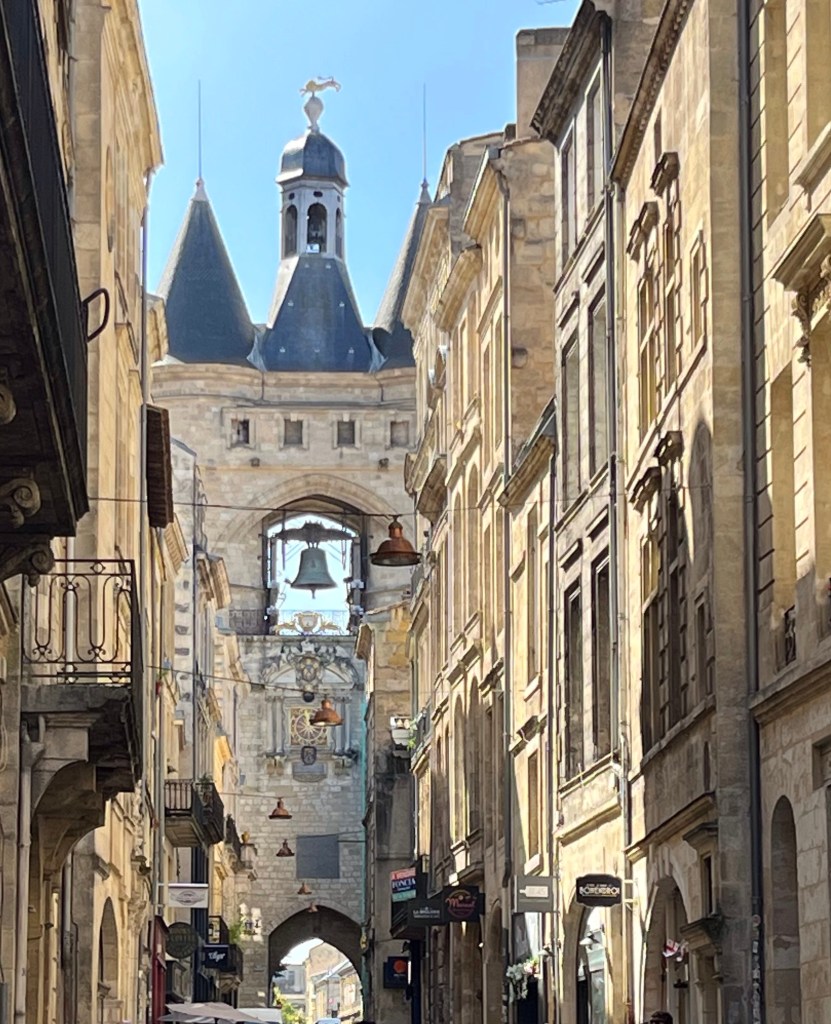
One of the gates to the city from the Gironde River

We’ve been to France a number of times, but never the southwest. We had heard good things about Bordeaux—walkable, big, but not too big, lots of world heritage sights and museums, great architecture, great public transportation, a long and fascinating history, good restaurants and, of course, wine. Wine institutes, wine museums, wine tasting coops, wine schools, wine tours, wine stores and wine bars on every corner.

Yes, three days is really just a passing glance, a superficial look, but enough time to get some initial impressions and one big surprise—finding out Bordeaux was hosting matches for the once every four years Rugby World Cup. A huge deal, similar to the soccer World Cup, the event brings in tens of thousands of crazed rugby fans.

The reality hit home our first dinner in the city. Jet lagged, we were looking for an early dinner around 6:00 pm, and learned very quickly that restaurants opened between 7:00 and 8:00. Worse yet, most were already booked for that evening, largely because of the rugby fans. We finally found a restaurant that was open and had seating called Risotto—which, oddly enough, only served lasagna. And the lasagnas were named after film stars like Lasagna Al Pacino or Lasagna De Niro. Cutesy names aside, the food was really very good. We struck up a conversation with two Aussies and Welshman next to us, who, no surprise, were here for the rugby. The Aussies were traveling all over France to catch the matches. The Welshman was here for one or two matches. For us, the conversation was primer on which teams were favorites and everything rugby. It was a delightful evening and fun to see their passion for the game.
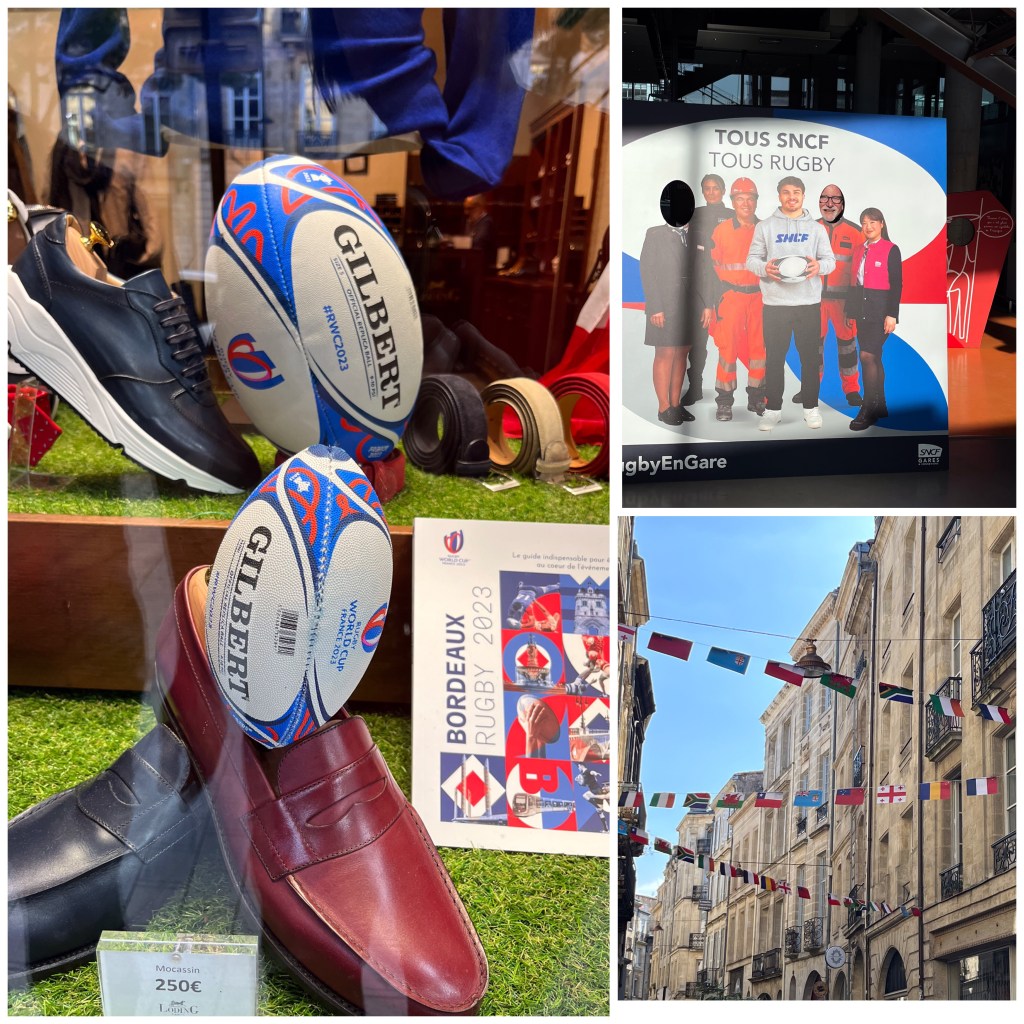
The next day, wandering around the city, the rugby paraphernalia was everywhere—flags of the teams hanging in every square, window displays featuring rugby gear and footballs, pictures of the teams in store fronts. Major tourism dollars were flowing through the rugby pitch into Bordeaux.

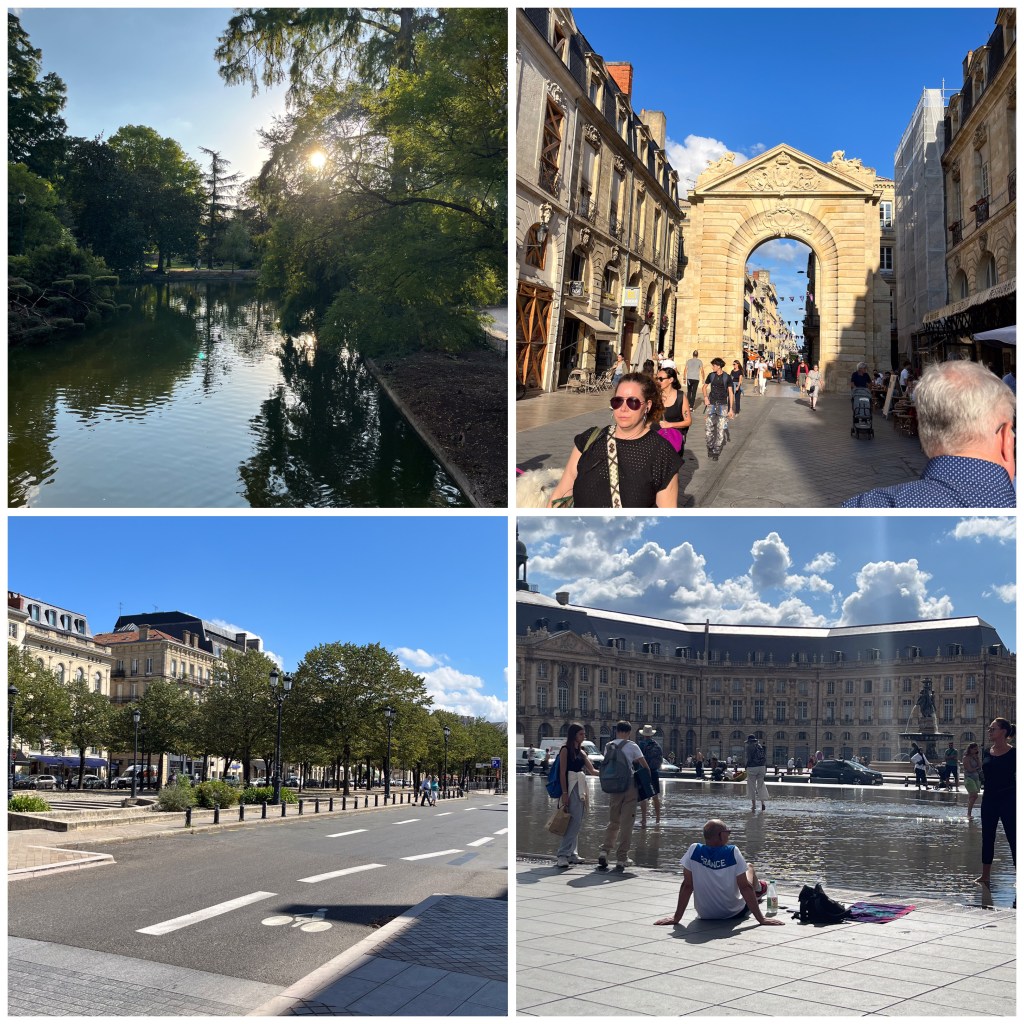
As we wandered we had to dodge holes in the sidewalks, construction barricades and detours. We never quite figured out what was going on — a city-wide facelift for the anticipated spillover crowds from next year’s summer Olympics? A post pandemic economic boost for the construction trades? Or just routine late summer repairs? It did give the city a somewhat rough feel until you looked beyond the mess to see through the windows into upscale apartments, fine clothing stores and small artisan shops — or paused to look at the broad avenues and handsome parks.
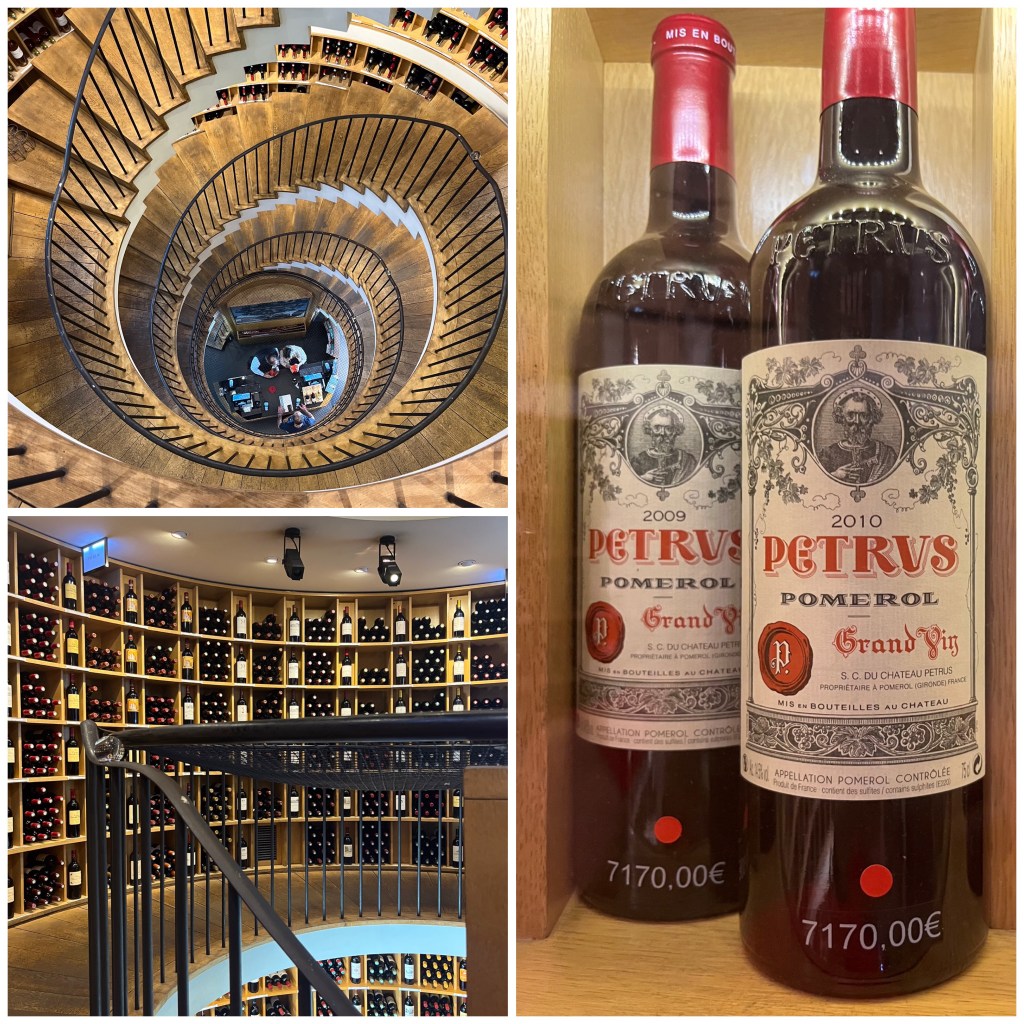
With limited time in Bordeaux, we chose to focus on food and wine. First stop was a famous wine store, L’Intendant. Know for its spiral staircase and four floors of Bordeaux wines. Quite the temptation, but we resisted, knowing we were headed to the Bergerac region, less well known and similar varietals and much cheaper prices.
We did, however, make time for a food tour of regional specialties. No surprise there for those who know us. And as we have found elsewhere, a food tour often provides a bit of history, a bit of culture as well as a lot of good tastes. Canelés, a rum flavored pastry reflects a bit of the French colonial past in the Caribbean and makes use of the extra yolks when egg whites were used to clarify wine in the 18th century. Some of the food we tried is more modern in origin like the Dunes Blanches, a kind of cream puff filled with “air cream” said the English translation. Both were our kind of sweets — interesting and not cloyingly sweet.
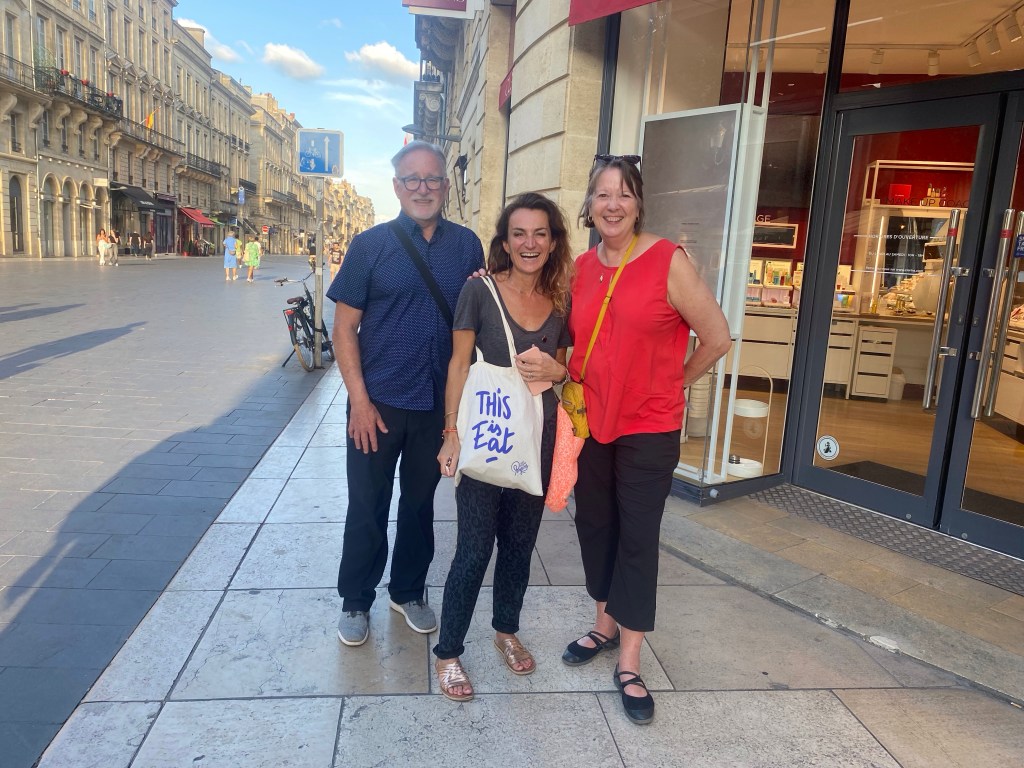
But without a doubt the highlight of the food tour were the slices of cured duck breast we sampled with an array of cheese (a soft goat cheese, a Comte and a walnut washed cheese), bread and wine. Or maybe the jams and jellies created to serve with foie gras and charcuterie plates. (We will be sharing jars of the grape and Sauternes jelly and the fig and walnut jam with our friends in the coming weeks.). Thanks to https://www.bordeaux-foodtour.com/ for a fabulous day!
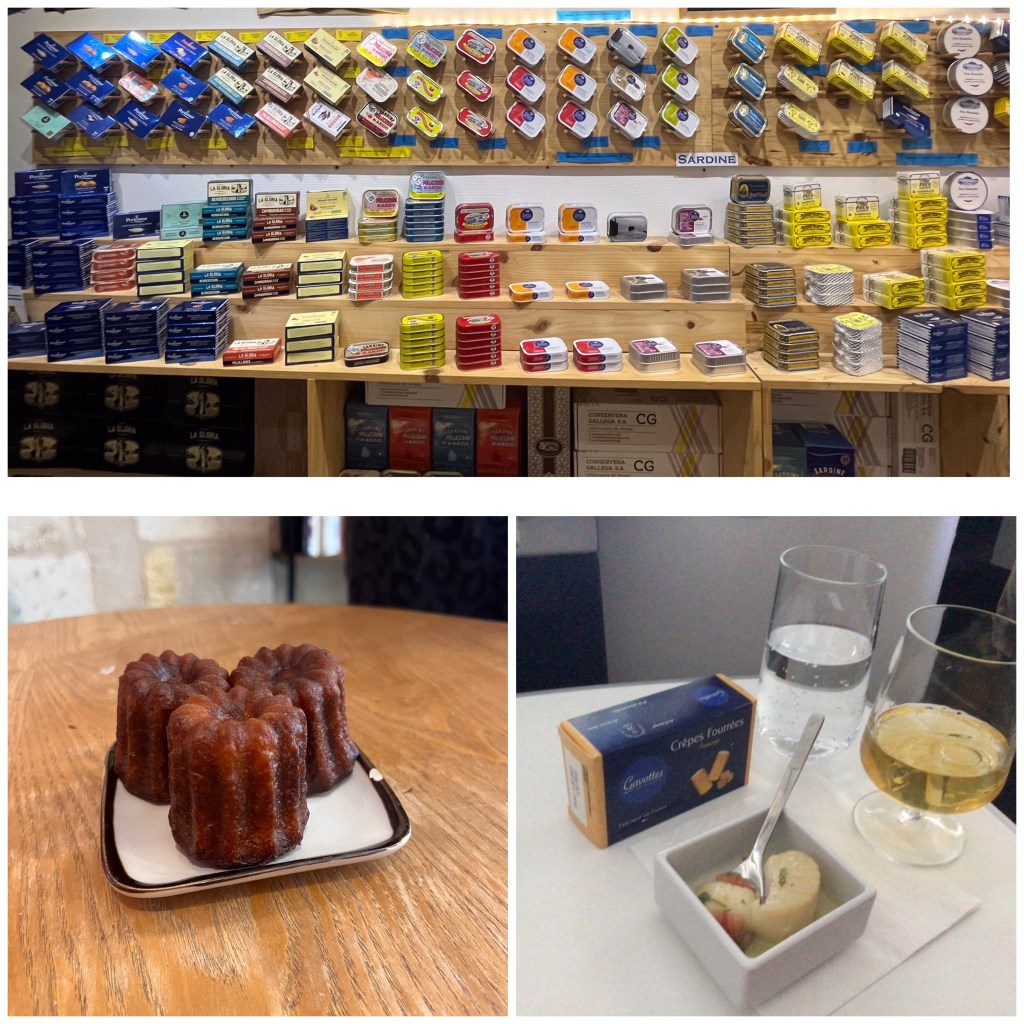
And probably the most unusual stop on our tour was a small store devoted to canned fish — an international collection of curated tins of fish and jars of rillettes — tuna, sardines, mackerel salmon and more. Our niece back home would love this place.

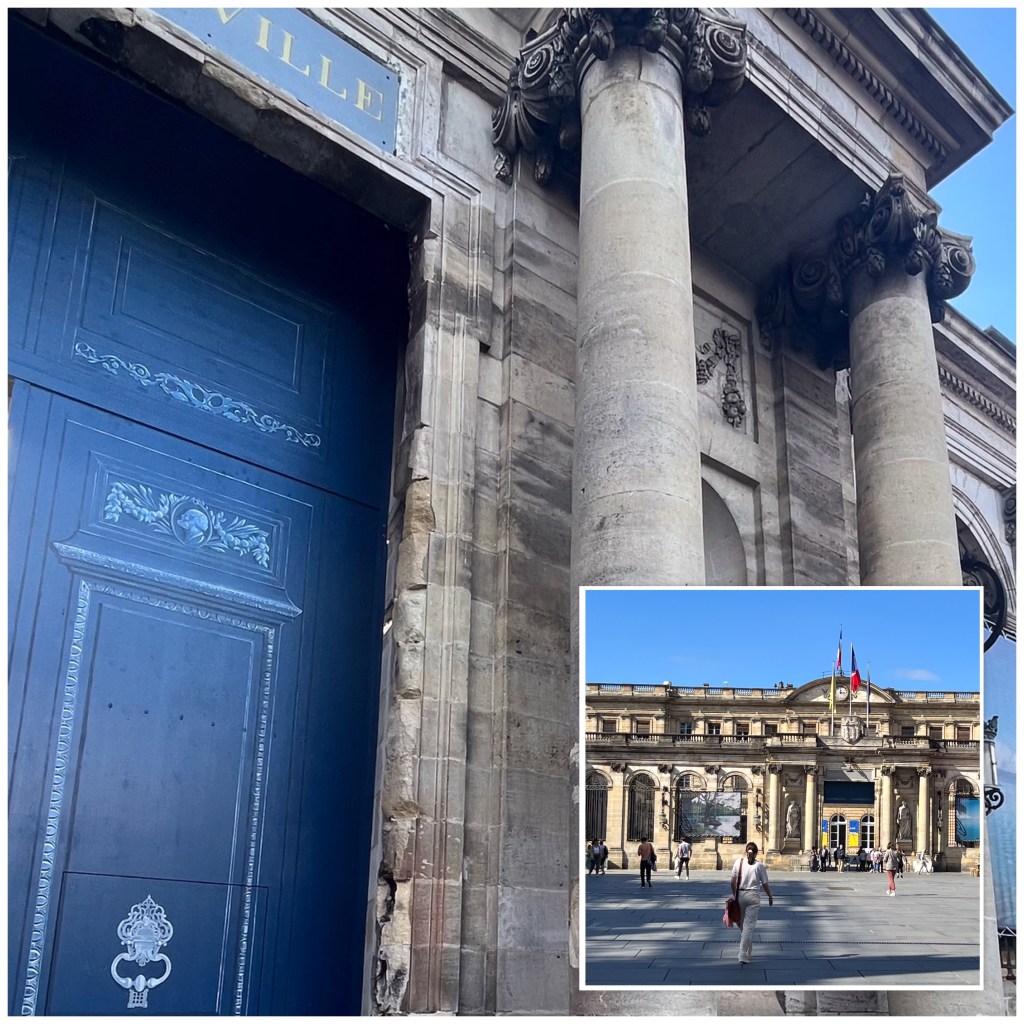
As we walked around the area the city, our guide pointed out the cathedral where Eleanor of Acqutaine married her first husband in the 12th century, where a statue of Louis XVI had once stood before the revolutionaries tore it down in the 18th century, and where just this year protestors had burned down the centuries old huge wooden gate at the Hotel de Ville (city hall) upset the retirement age was being raised to 62. Such is the history of Bordeaux.

The cathedral

Medieval doors to city hall must be repaired after damage in the spring 2023 protests

There so much more to see and do in Bordeaux. We only had enough time to scratch the surface in passing, but enough time to add Bordeaux to our “we gotta get back there” list.
Bon Appétit in Provence

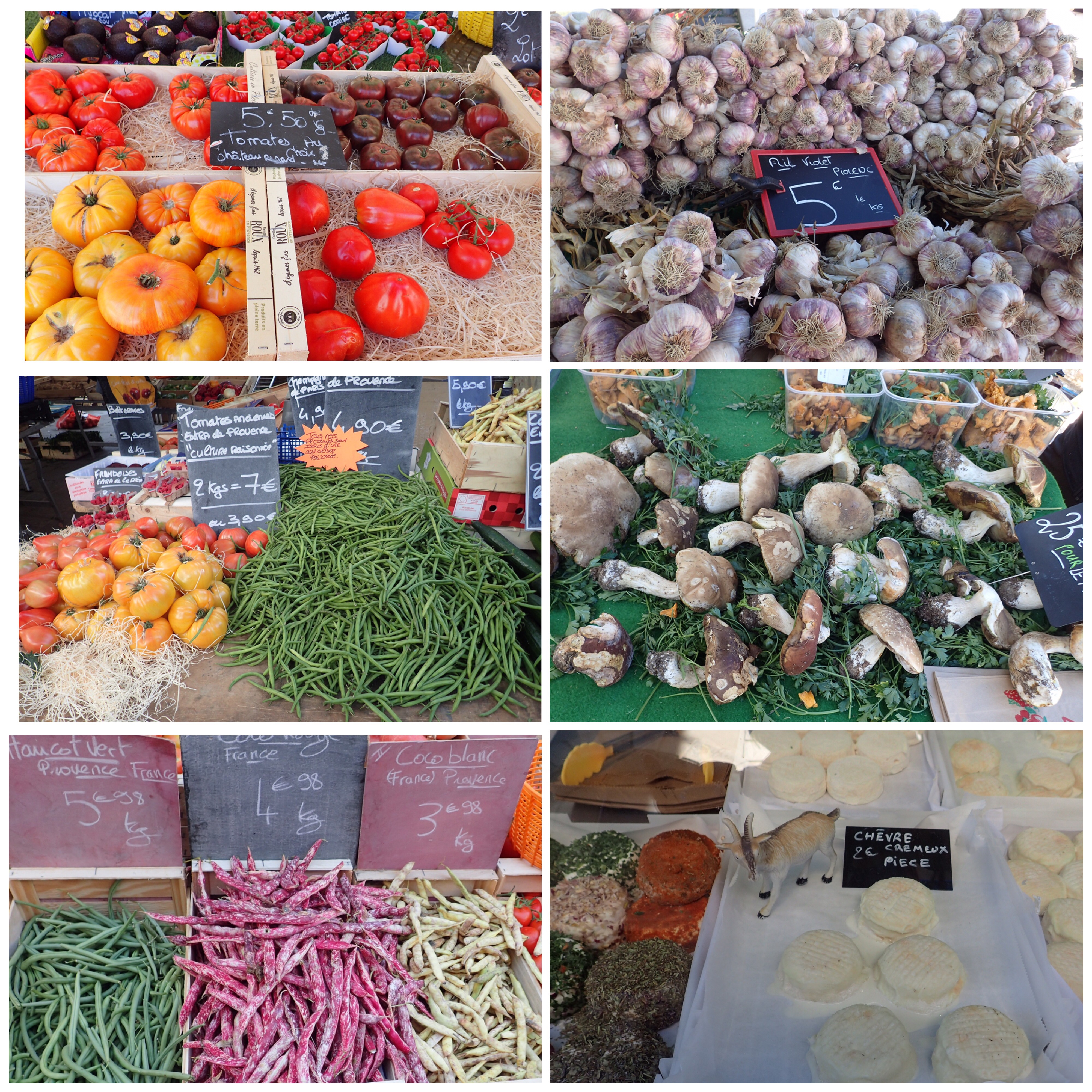
For too many years on various trips to the south of France and parts of Italy, we were frustrated by seeing the tempting food in the markets and having no place to cook. Not to mention in France, the wonderful boulangeries, boucheries, fromageries, charcuteries, poissoneries, and pâstisseries. We remedied that by staying in vacation rentals and Airbnb’s with well supplied kitchens. But this time in the south of France, we decided to up the ante and take a cooking class. What could be more fun? Fall’s bounty in the markets, picking up some tips from a local expert, and topped off by eating a great lunch we had made.

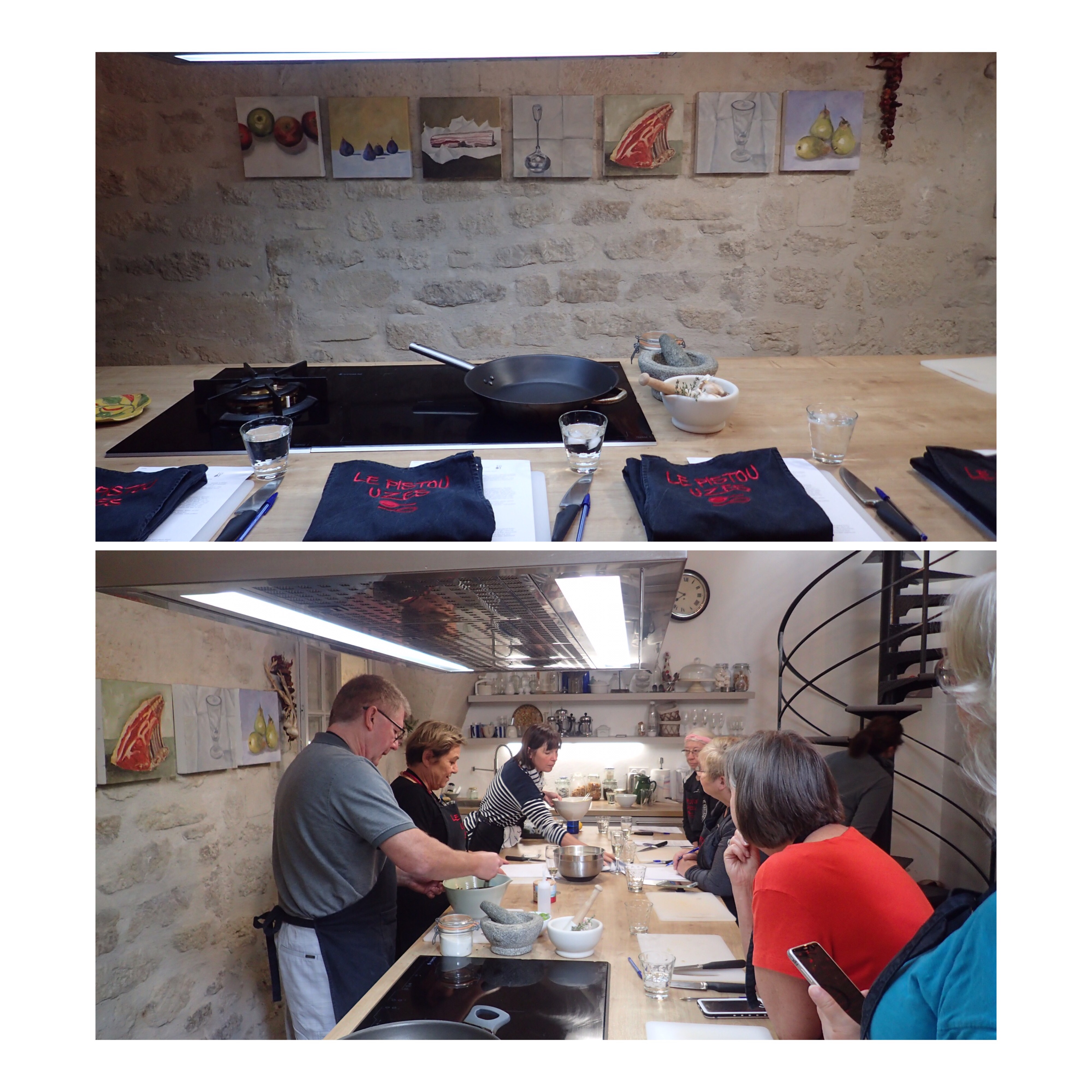
So Peter did some research and found a Irish woman, Petra Carter, who runs a small cooking school, Le Pistou, in Uzes near where we were staying for ten days. A former B&B owner and a sixteen year resident of France, she was a wealth of local knowledge. She taught a variety of classes. Foods of the south of France for tourists, and Lebanese or Indian for the locals in the winter months! Apparently, the locals get enough of Provençal food at home and in the restaurants and are desperately looking for some variety.

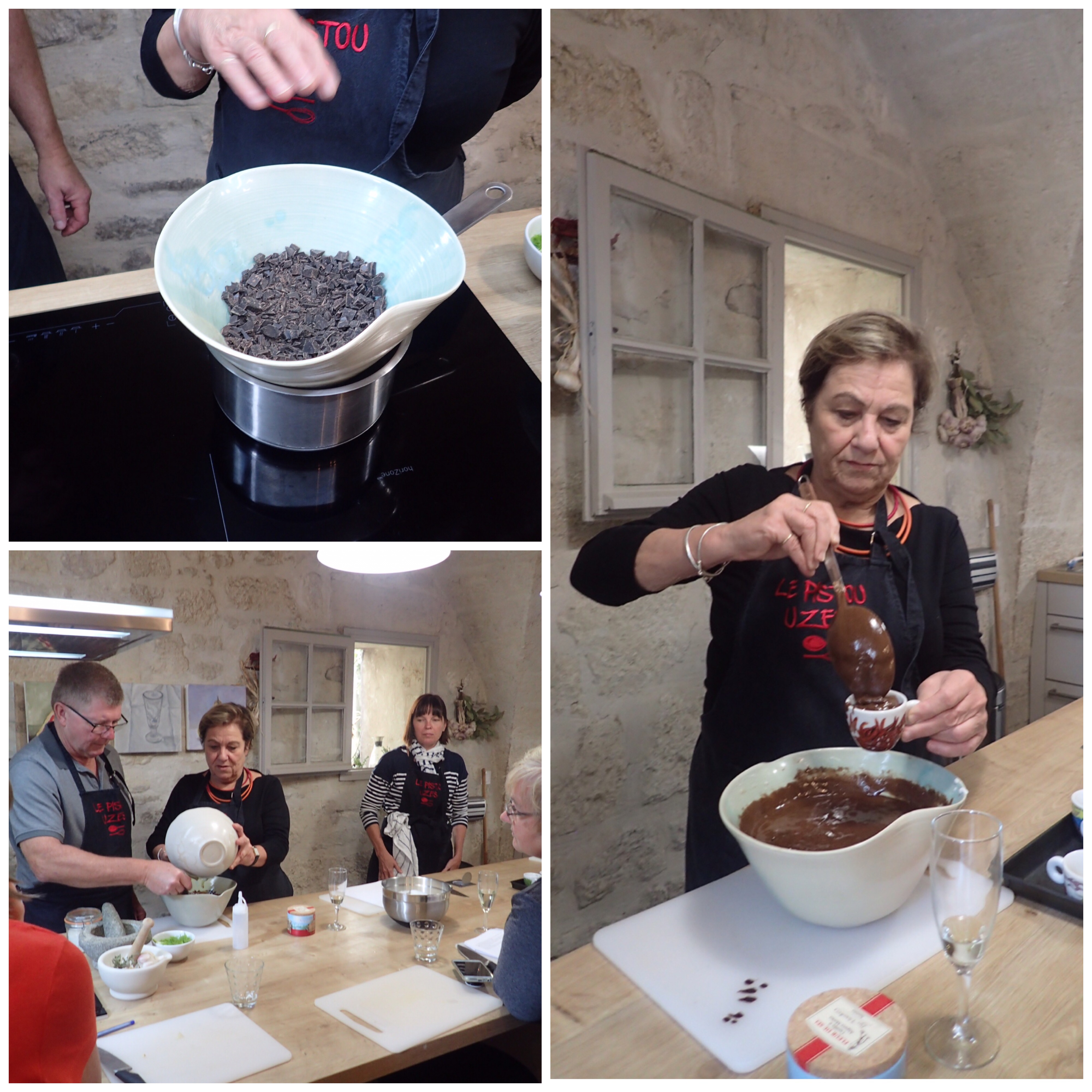
Our group of four arrived promptly at 9:30am, and we met the four other students—a couple from Canada, a woman from Australia, and a woman from Alaska. Petra acted more as a hostess at a dinner party than a teacher or task master. She carefully introduced each of us to the others, and to her assistant, and generally chatted us up. Lots of laughter. Introductions complete, we put on the aprons and took our seats along a long stone counter.

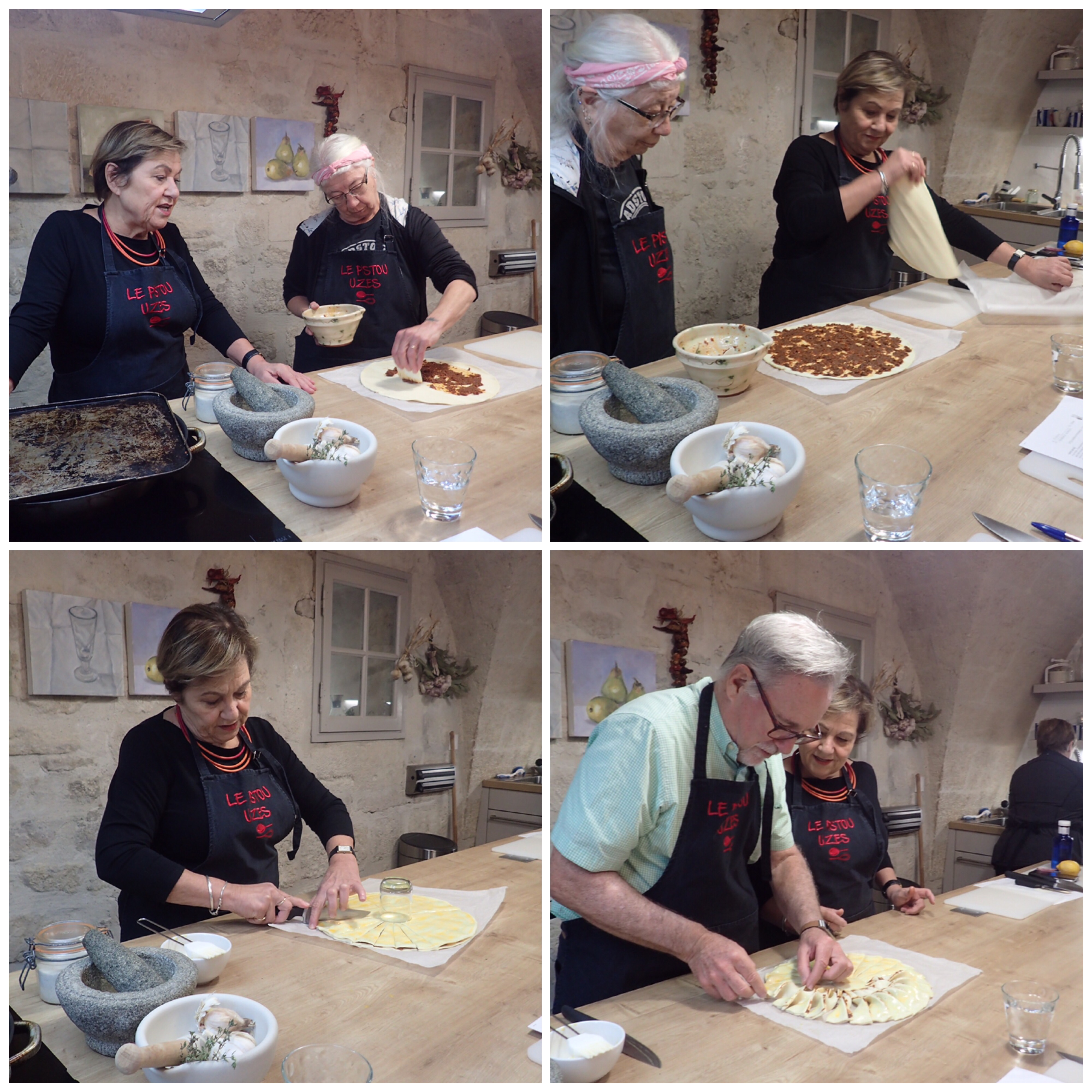
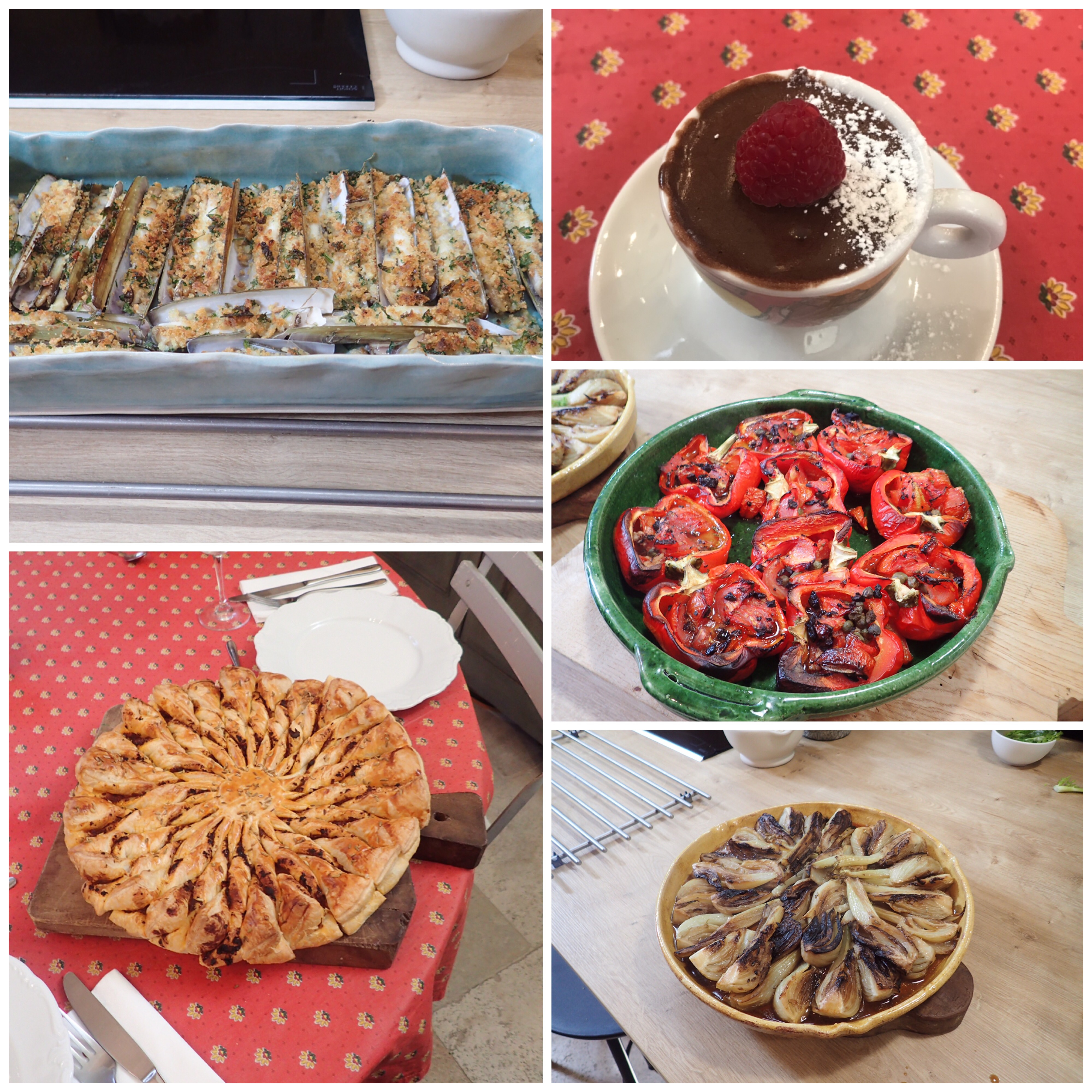
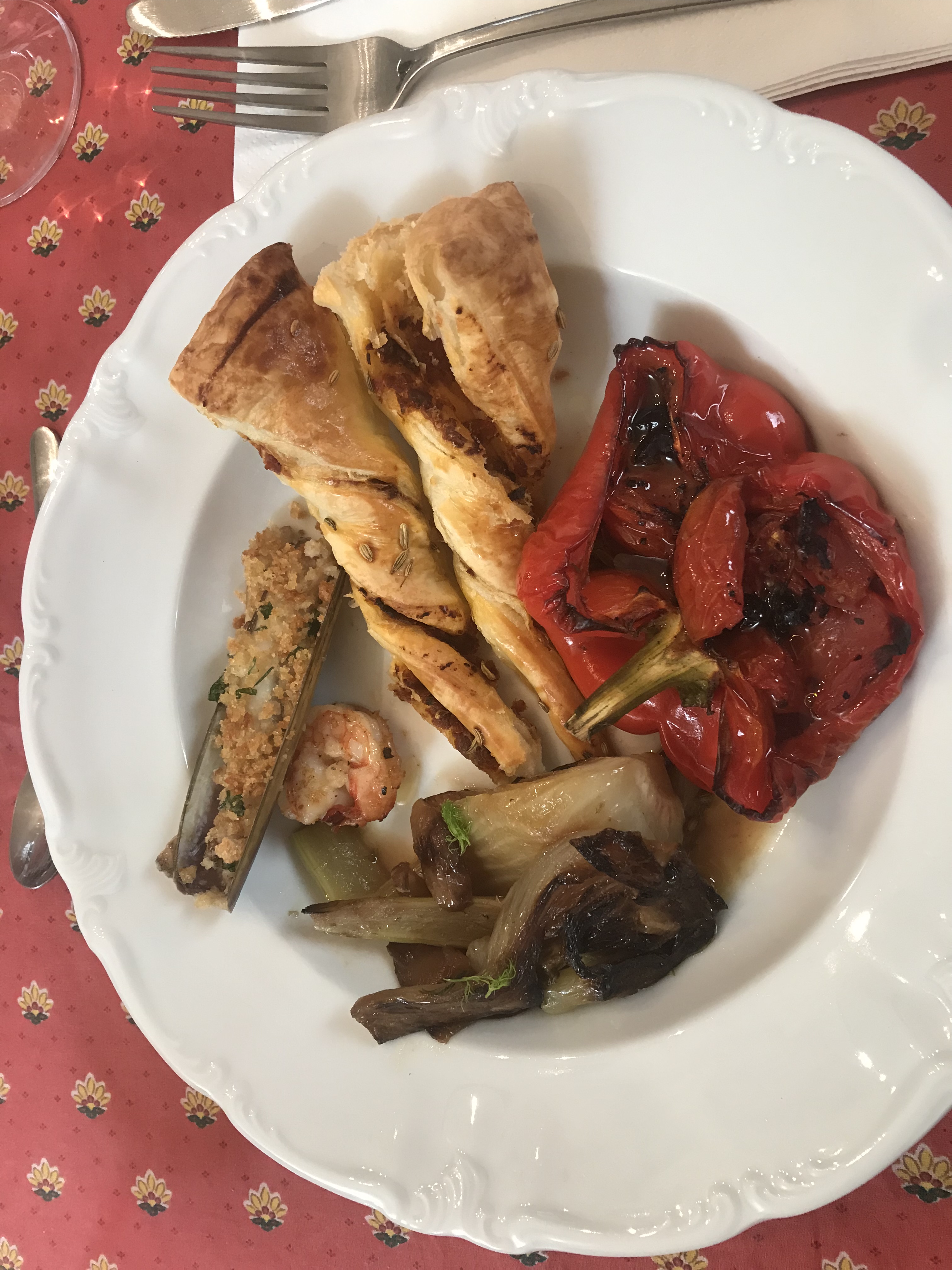
First on the cooking agenda was a twisted tart of sun dried tomatoes and fennel seed. The French do have the best pastry in the stores’ refrigerator cases. Nothing like the tubes of Pillsbury dough we see at home or the frozen rectangles of Pepperidge Farm puff pastry. The array of choices in France is inspiring — all butter, whole wheat, gluten-free, low-fat or whatever. One variety is appropriate for pizza crusts, another for a sweet tart and some are more like puff pastry. I was familiar with the options from our previous trip to Provence and had made an open face tart our first night in Uzes with some creamy goat cheese and zucchini. Petra’s version was something else, using an all butter round puff pastry. One student spread the topping of sun dried tomatoes blended with a bit of olive oil and bit of minced garlic on the bottom crust that sat on a piece of parchment paper. Then, after laying the top round in place, our instructor carefully sliced the tart and showed us a technique for twisting it to create a fancy shape—like a sun with radiating rays. No surprise—the French name: Tart du Soliel. Given the quality of the pastry in France, we were told home cooks often make a variation on a tart for a light meal or with a sweet filling for dessert. All in all, a pretty easy and impressive dish once you know the techniques. Of course, the challenge at home will be getting the pastry.

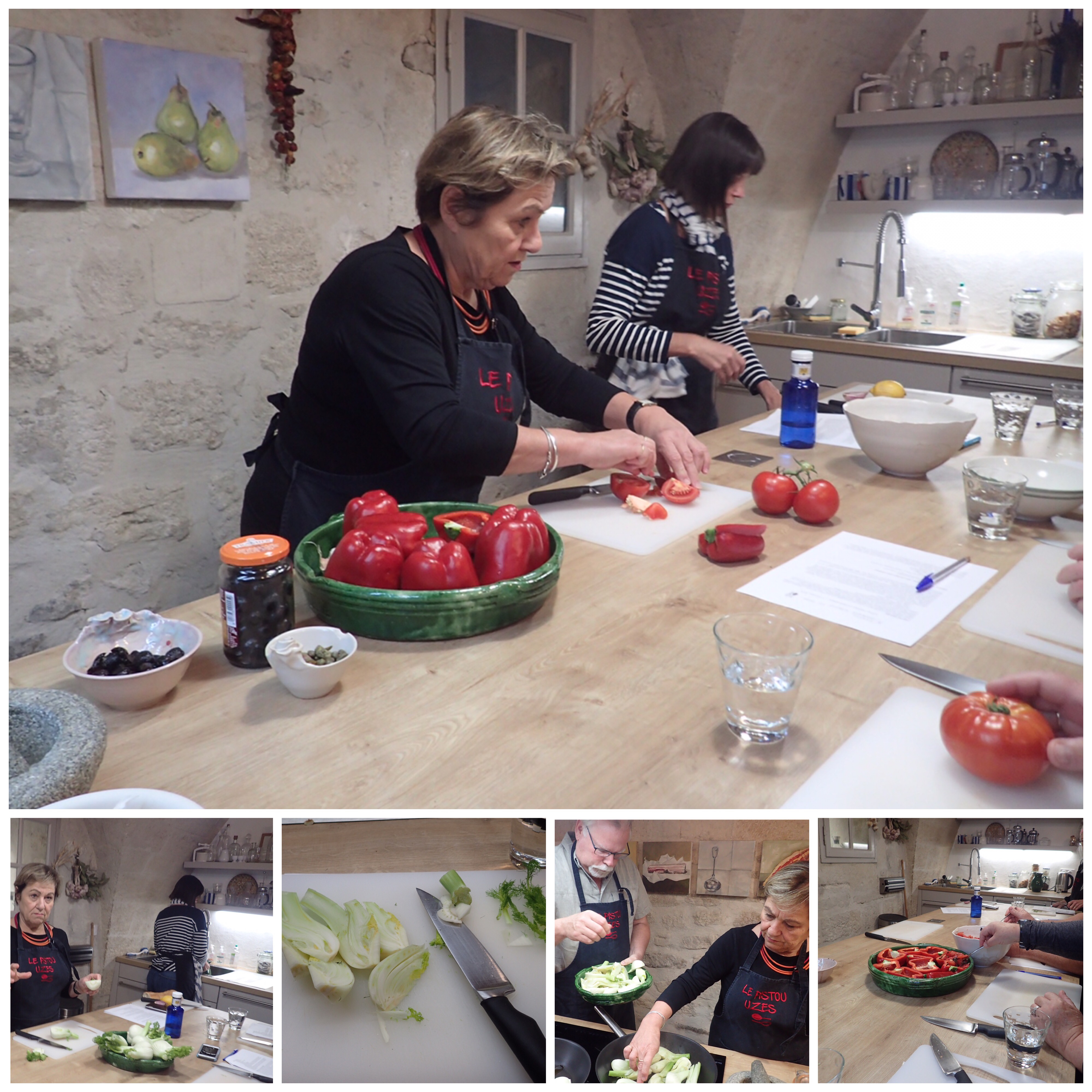
With one appetizer in the oven, the vegetables for our lunch were next. A pile of unblemished, fat fennel bulbs. Bright red peppers with some slight scarring from the summer winds. A bowl of big red tomatoes, the kind we can only get from our own gardens or in the farmers’ markets. She demonstrated the technique for cutting each. Fennel bulb in thin wedges, being careful to keep a good bit of the core in each wedge to keep it intact. Cutting the red peppers through the stem but leaving it in place so the pepper won’t collapse during roasting. Tomatoes cut and seeded, as Petra didn’t want too much liquid in the final dish. And then she turned to vegetables over to us to replicate her example.

As we chopped away, Petra gave us a history lesson on the cuisine of southern France. Not surprisingly, it was largely dictated by the warm weather crops that grew well here— tomatoes, peppers, summer squash, olives. (Many would say more Italian than French.) Not much butter or cream or rich sauces we associated with the French high cuisine. The big meal of the day was lunch. Without ovens in their homes, women cooked the family meal in the ovens of the boulangerie after the bread for the day was done. (And the men, our host noted, usually sat around drinking Pastis, the anise flavored liquor of the region). So the backbone of Provençal meals was slow cooked and oven roasted foods. Salads only arrived with the tourist onslaught.

The fennel wedges were tossed in a single layer into a sauté pan with a good drizzle of olive oil to brown. No salt. A little pepper. And then arranged in a circular pattern in a shallow baking dish. Topped with a bit of fennel seed and more olive oil and popped into the oven, to be garnished with bits of fresh fennel fronds when it came out. The halves of peppers were placed in a deeper dish. The tomatoes was tossed with olive oil, capers, some pepper, Herbes de Provençe, and spooned into each pepper. Then a teaspoon (or a bit more) of home made red wine vinegar was added to each pepper. And it, too, went into the same oven with the fennel.

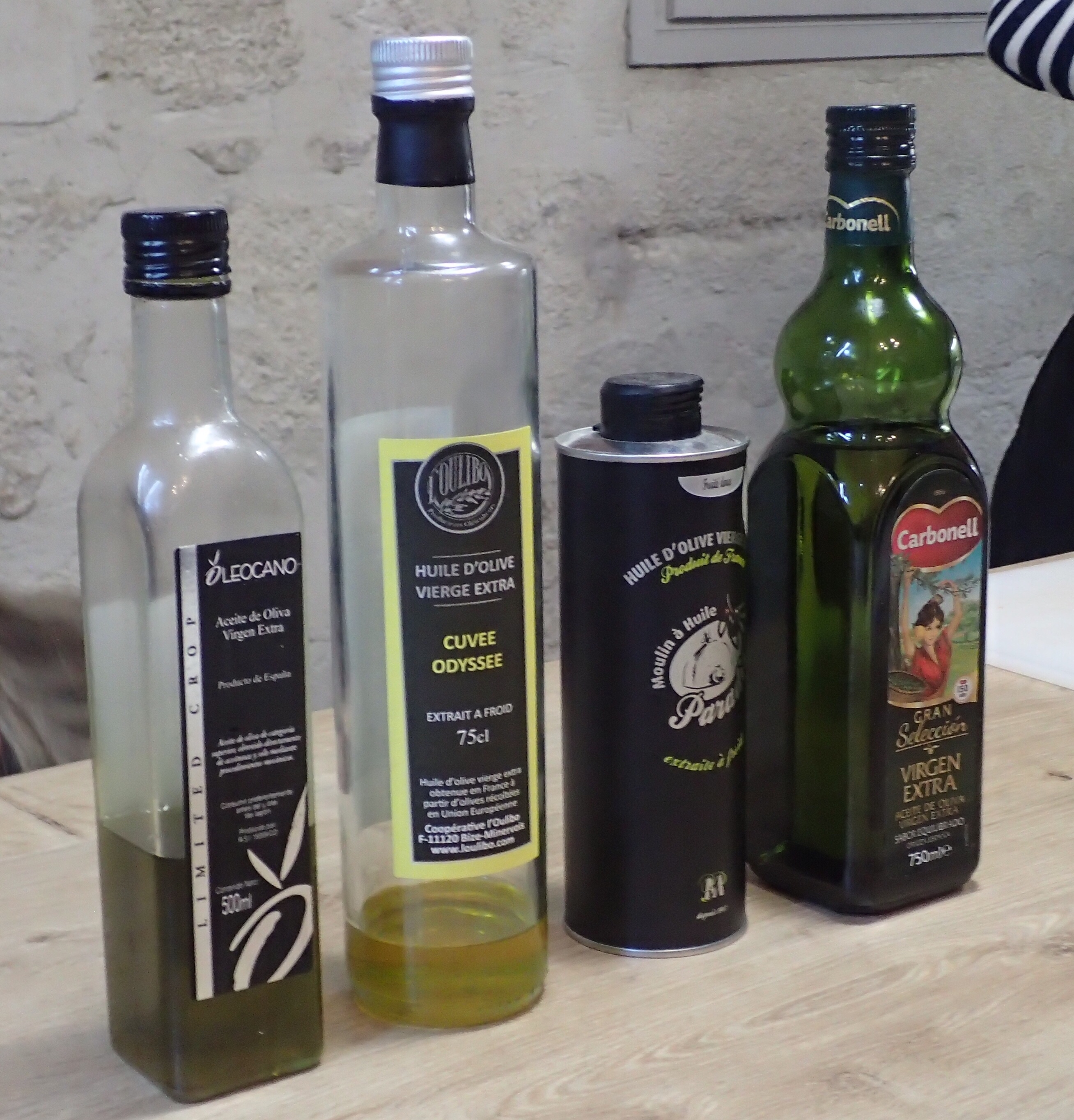
A question about her favorite olive oil led to an impromptu tasting. She brought out four bottles. Poured a bit of each in small bowls and asked us to taste. The flavors ranged from light and subtle to peppery or vegetal. And prices ranged from 7€ to 15€. Her advice? Buy to best you can for cooking (be a bit extravagant) and a little better for finishing. And the olive oil tasting led to an olive tasting and a lecture about those canned black olives that kids put on the end of the fingers. They may be forever banished from our house after Petra explained how they are made — picked unripened & very green, pitted, bathed in lye and soaked in rusty water! Yes, rusty water, to turn them black. Delightful, heh!? No more black olives on my pizzas!

And of course there was a cheese dish — in fact, three. Midway through our cooking, out came some cheese Petra had made. One was a simple spread of strained yogurt to which she had added pink peppercorns and cardamon. She had a second variation with cumin and coriander. Both served on slices of baguettes. She showed us her collection of vintage molds for the cheese (which set us out on a mission to find one to take home) but confessed to generally just using wire mesh strainers. As we munched away and sipped champagne, she demonstrated how to marinate aged goat cheese rounds in olive oil and spices. And she told us that the best and cheapest containers come from Ikea, no less.

The final cheese dish was only slightly more complicated—a round of Camembert (a cow cheese from the north of France—the local cheese is either sheep or goat) placed in its original wooden round box with the lid used underneath for more support. She cautioned us to make only shallow slices in the top of the cheese before turning the task over to one of us. Her intention had been to top the cheese with a liqueur, hazelnuts and honey but then remembered one of us was allergic to nuts. No problem! The recipe was altered. A splash of kirsch, sprinkle some barberries, a bit of honey and fennel seeds on top and bake that little treasure in its wooden box. Word of warning. For this recipe only use the wooden rounds that have staples in them; glued ones will fall apart.

All three of the cheese recipes were more about a technique which you could vary either the herbs, the spices, add nuts or honey and just enjoy.

The surprise of the day was the dessert — an olive oil chocolate mousse. Yes, olive oil. Dairy free and absolutely silky. The technique was similar to a standard mousse. Separating eggs, carefully adding the yolks to melted chocolate and the olive oil, whipping the whites and folding them into the chocolate. In a twist on flavoring the chocolate with a bit of vanilla or a liqueur, she had us grate a tonka seed (reputedly a hallucinogen in larger quantities) into the mixture. Subtle and delicious. Spooned into tiny demitasse cups.

And meal was rounded out by flambéd prawns and grilled razor clams with garlic crumbs. We were each given a handful of prawns and told to remove both veins. Petra fussed about the quality of the shellfish, not sure it was as fresh as she would have preferred. She showed us how to loosen the long narrow razor clam from its shell and open the shell up so it could be filled with bread crumbs tossed with garlic and olive oil. While the clams went under the broiler, she quickly sautéed the prawns and then taught one of the least experienced cooks how to flambé using Pastis. Frankly after tasting the prawns, her concerns about their freshness was unfounded, and it was the best use of Pastis ever! Only a subtle licorice flavor permeated the prawns.

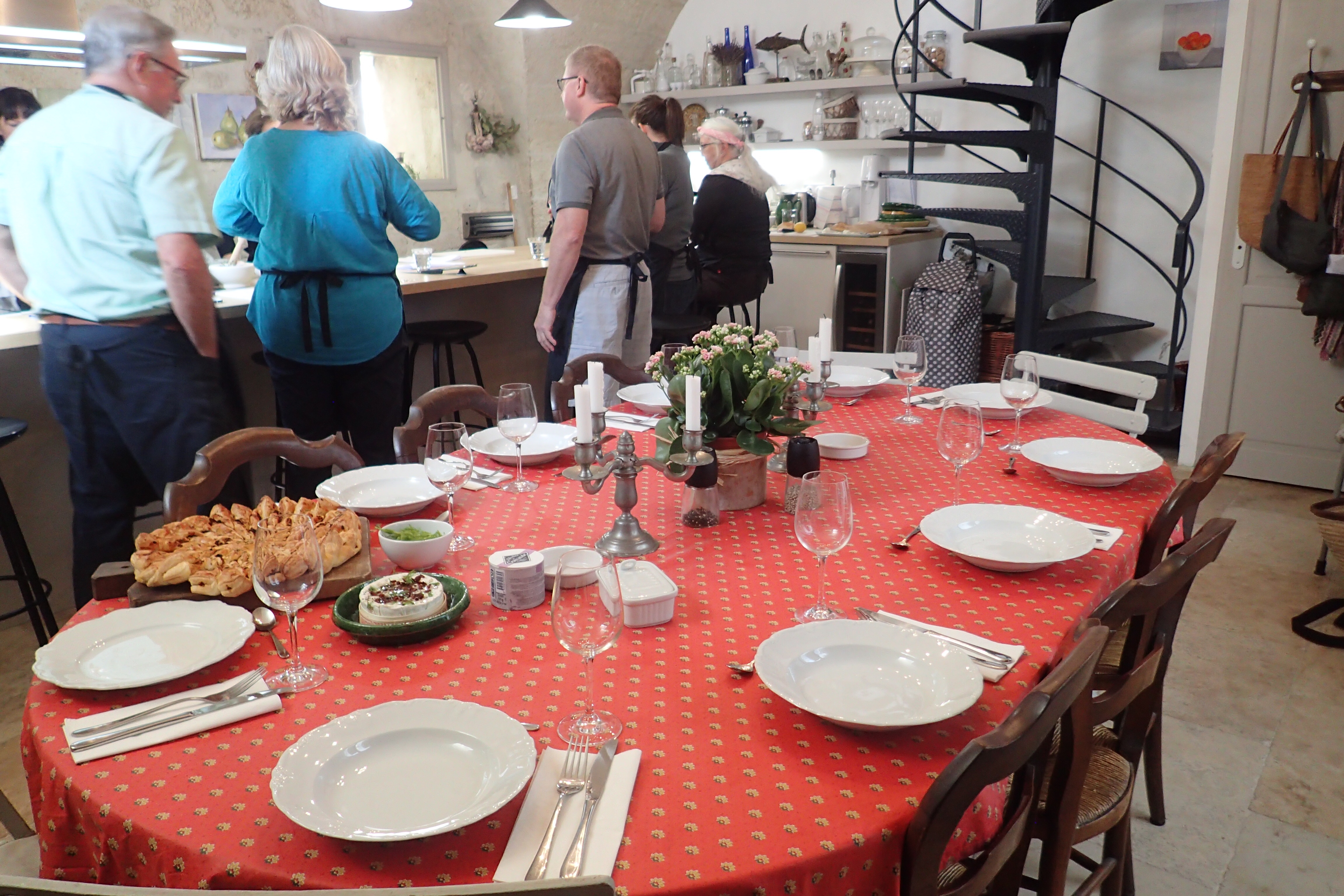
And after all the food was prepared, laid out on a buffet, the plates were filled and wine glasses topped off, we sat around the table for more than an hour and half, eating, sharing travel and food stories, learning more about the politics and real estate of Uzes. We left with cheek kisses all around almost six hours after we started.

By the way, Petra made sure we did the cheek kisses the right way, but also cautioned us, hugging in France between friends is just not done. All the kissy-kissy stuff is fine, but bodies should never touch. Good to know.

Ah, la belle France.

Budget Business class?

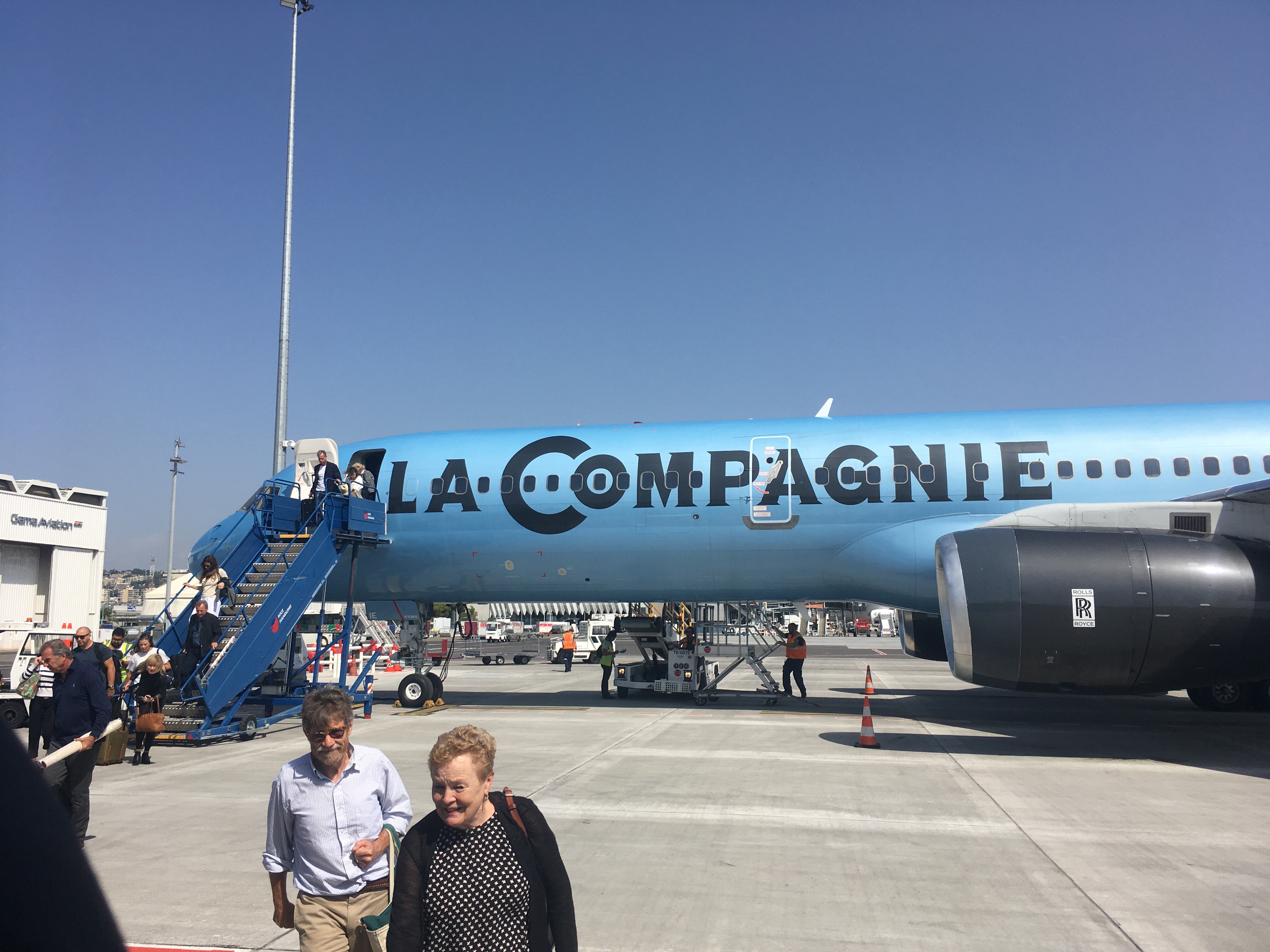
Who doesn’t want to sleep on those long overnight flights to Europe? As we’ve gotten older and more spoilt, we’ve tried with mixed results to use miles to get to Europe in comfort. And it seemed to be getting harder to reclaim those miles for international trips. So we jumped at the chance to buy a business class ticket on La Compagnie.

La Compagnie advertises itself as a “boutique” airlines. In their terms “boutique” means small (70 passengers total), great service (one flight attendant for every ten rows), but not all of the amenities of a big, swanky outfit. The airline has been operating for a few years, mainly a Newark to Paris flight. We heard a Newark to London flight had been abandoned, but that a new flight to Nice was just starting up. For about $1200 each we booked two tickets in mid-September, 2019.

The 11:30 pm departure wasn’t a problem and meant we could have flown in to Newark the day of our departure. Instead we opted for a weekend in NYC, got a late checkout from the hotel, had quick bite to eat in the theater district, saw Broadway matinee performance, 6:30 dinner reservation, picked up bags at hotel and took Lyft to the Newark Airport ($75). Got to the airport around 9:30 pm. The airline said we could have checked in as early as 9:00 but that we had to be checked in 50 minutes before the flight.

Check in was really really easy…no one else there at all. Not a person. Two staff to check us in And they directed us to the Art Lounge, a facility they share.

The Art Lounge is a little shabby if you are used to the ones the big international carriers have. The furniture definitely needs updating. The lounge is small but a major part is sectioned off for La Compagnie. We had our choice of seats, and plenty of room to spread out. The food options were decent — a couple hot dishes, cheese and crackers, basic booze options. Nothing to compare to the top of line lounges but more than adequate for an hour or two wait.

The lounge sits outside of security! But that’s not a problem since you get to use the priority line. Good thing, as the regular security line was immense. They announced in the lounge when it was time to go to the gate, about a half an hour before boarding. We went to the gate at about 10:20 which turned out to be way too early since we didn’t actually board until 11:10.

The international departures area in Newark is a total zoo—crowded beyond belief. The situation was complicated that evening because a Norwegian flight boarding next to us had been delayed and people were very cranky. And there was a British Airline flight delayed as well with people camped out on the floor.

However, the boarding was lightening fast. We were in the plane in what seemed like seconds and completed the boarding and closed the doors before I could put my things away. None of the usual people bumping into you as they they try to get by you. And before we were completely settled in our seats, the flight attendant came by with sparkling wine or juice.

The plane is great—-reasonably new, obviously modern, quite clean, very spacious. Much better aesthetically than the usual crowded business class sections on British or Air France. Seating is two and two. There are three sections with a lot of space between them. This flight was 2/3’s full so there were three flight attendants—one for every 15 passengers, all French, all very charming. There are three bathrooms, one in front, two in the middle, so you are never more 6 rows away. The entertainment system is definitely heads above other business class airlines. It is a very large, super light tablet that you can either have in front of you or slide out and set on your tray. Better noise cancelling headphones as well. The seats are a little smaller and perhaps a bit firmer than other business class seats, but still very nice. Not quite full flat beds, the seats reclined to about 175 degrees. A full size pillow and a very comfortable quilt made for a very pleasant, if short, night’s sleep. It was lights out with everyone fed just a bit more than an hour after takeoff.

The food options for our late dinner were a choice of salads — rare beef or a lobster — on a bed of greens with salad, a chocolate cake and a roll. And the drink choices were not as varied as the big airlines offer, but we were satisfied with our cognac. Breakfast options include an omelette or France toast with some very sweet, ripe fruit. And both meals were nicely presented.

Our arrival in Nice was as smooth as our departure. We whizzed through customs using the special lane for La Compagnie and elite class flyers (just had to present our boarding pass). There weren’t too many planes arriving when we did, so it wasn’t that big of a deal, but it could have been.

All in all, the experience was definitely worth the price. And we will be watching this airlines for future travel to Europe.