For the last few years our escape from the dreary, wet January/February weather in Seattle was Costa Rica. Really a magical place which we’ve written about in many of our blogs. But we’ve seen most of Costa Rica on our five trips there, and we had only about two weeks—much less time than our usual month plus — because of a couple of trips planned in the months ahead.
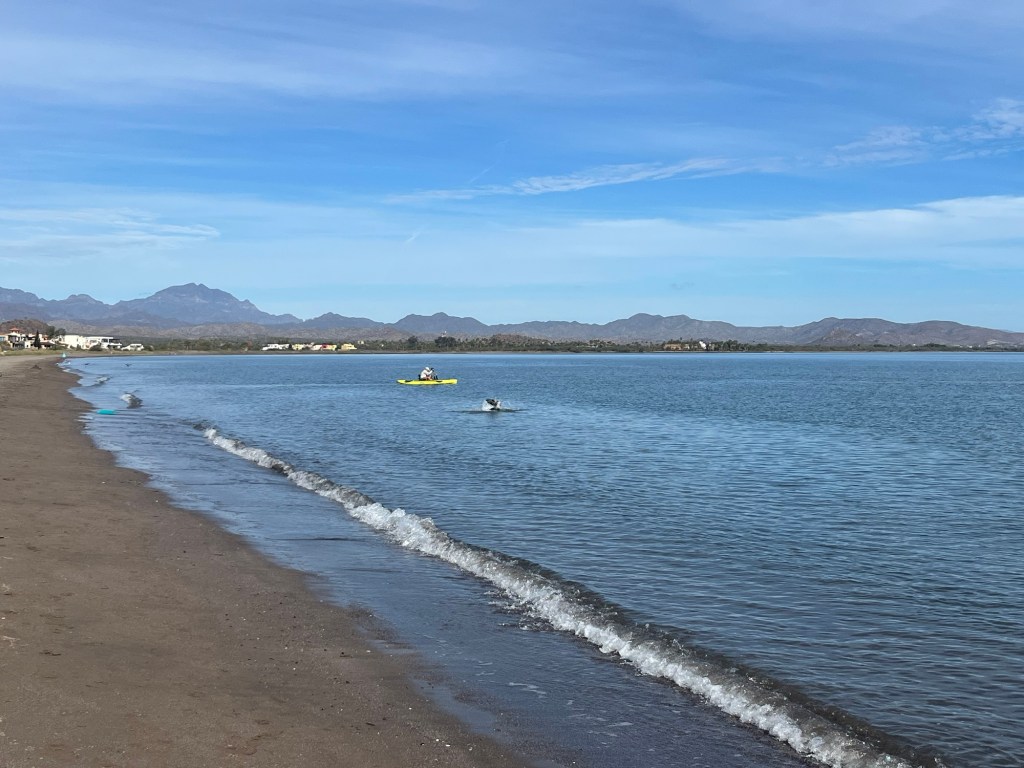
So we decided to try something a little different—Loreto, Baja Sur, Mexico. It’s on the Sea of Cortez about 4 hours north of La Paz and 8 hours from Cabo San Lucas. We’d been there five years ago to celebrate a friend’s 60th birthday and found the town to be charming. Tiny, still somewhat authentic. A world away from the tourist meccas of Cabo, Mazatlan, Puerto Vallerta. We had also spent time on the Sea of Cortez—the “aquarium of the world” according to Jacques Cousteau—on an UnCruise small ship. (We wrote about that trip https://chasingthegoodlife.blog/2018/08/14/hometown-whales/) So we knew there was a lot to see and do in the area especially if nightlife, gambling, and partying isn’t your thing.
And getting there was much easier than most warm weather escapes from Seattle—one stop in LA and then 120 minutes on to Loreto’s minuscule international airport. Left Seattle in the early morning and were in our condo at 3:00 pm. A real contrast to the eight hour, one-stop flight to San Jose, Costa Rica, which required a one night airport hotel stay both coming and going.
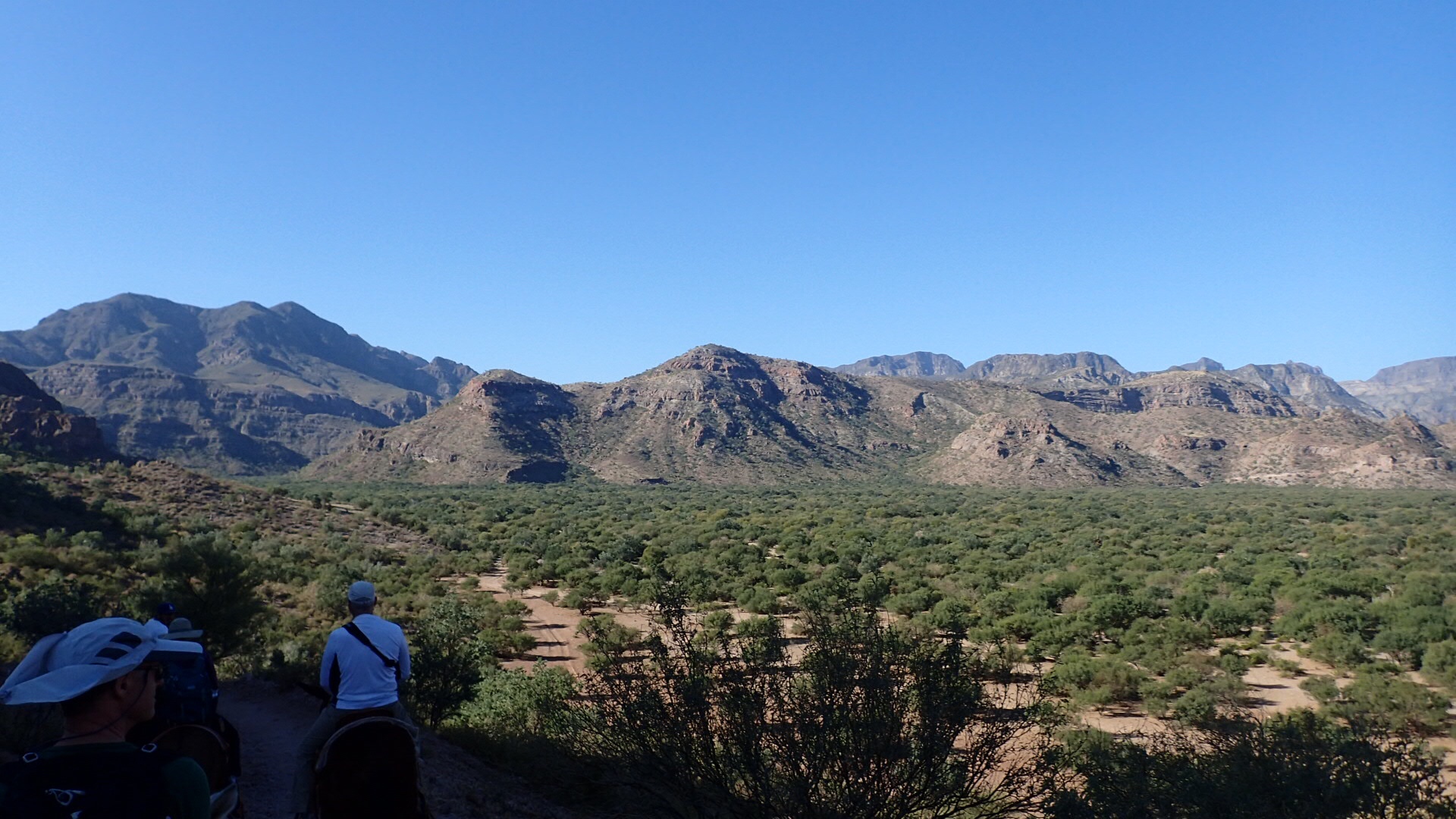
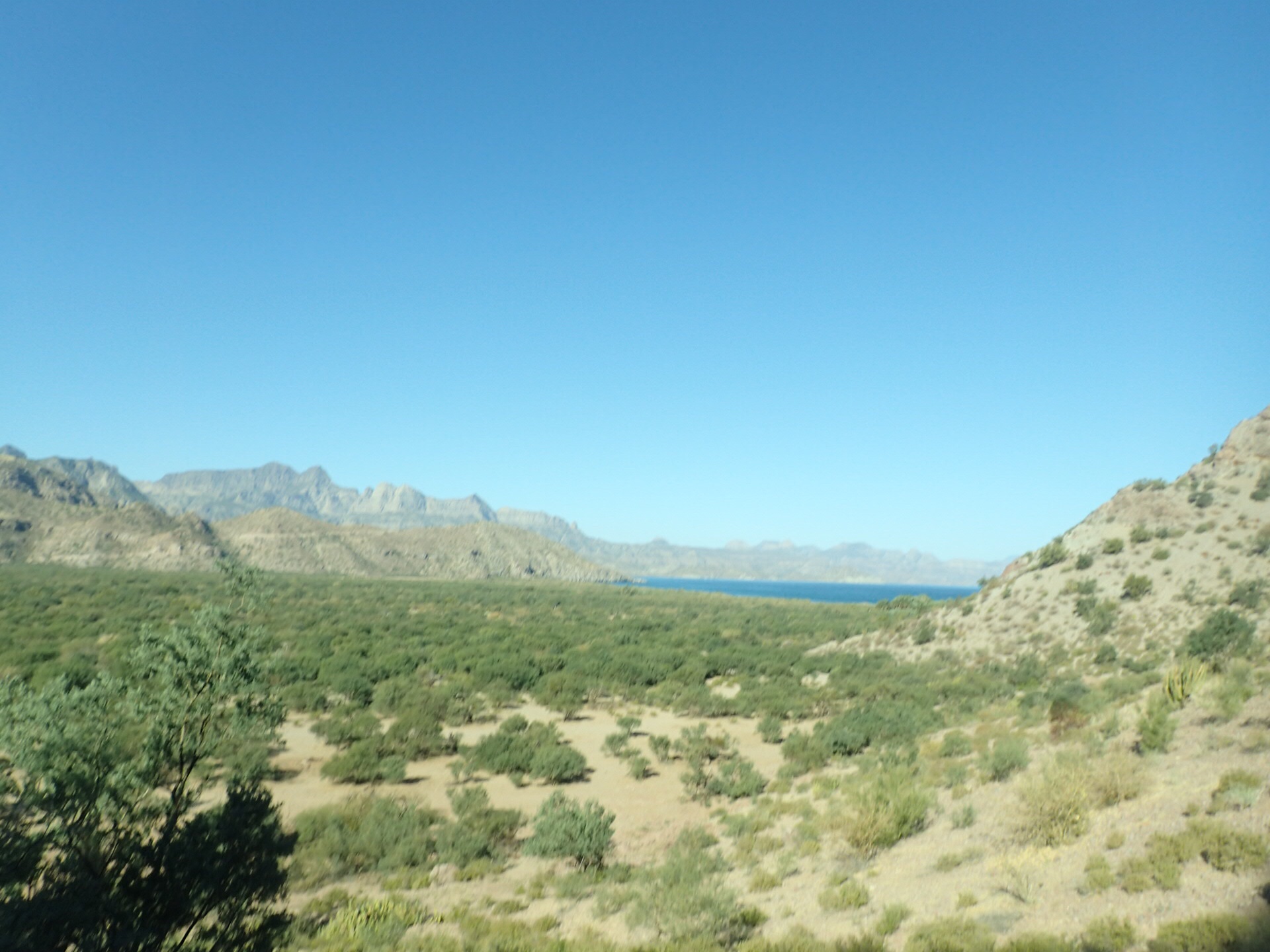
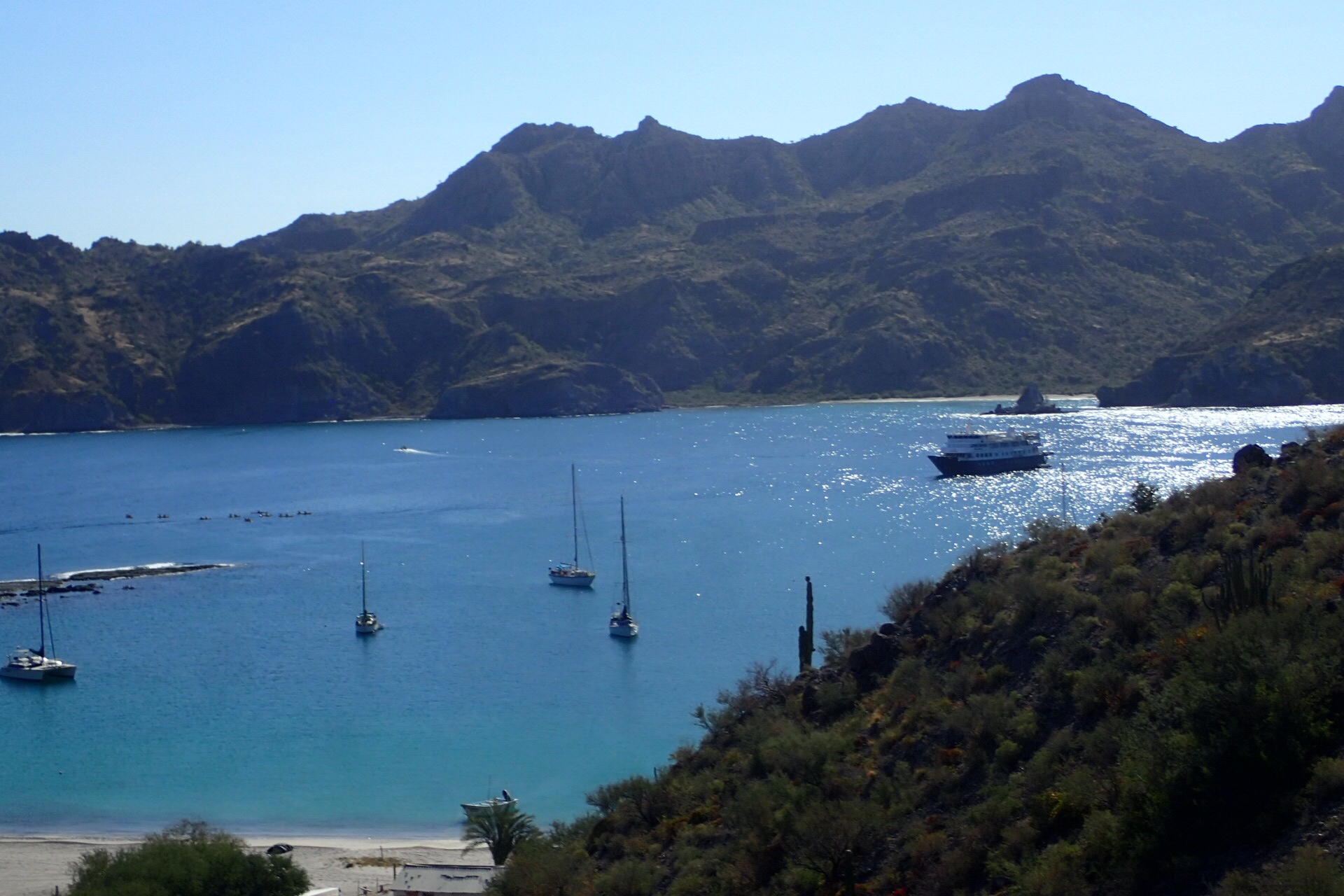
Loreto and its surroundings are in a mountainous desert bordering the Sea of Cortez—picture the Southwest US, but on an ocean, complete with saguro like cacti (but technically a cardón we were informed by a naturalist). We’re staying in a gringo development of half Canadian and half US visitors, spread around almost 900 homes, Nopoló, nine miles south of the town of Loreto. A bit contrived as planned communities tend to be with fake adobe homes and condos. Not our usual vibe. But the location! The Sea of Cortez on one side, with its islands off in the distance, and the mountains behind us to the west. Stunning views. Beautiful dessert landscaping (who knew how many blooming plants would survive the desert heat?) and immaculate grounds.
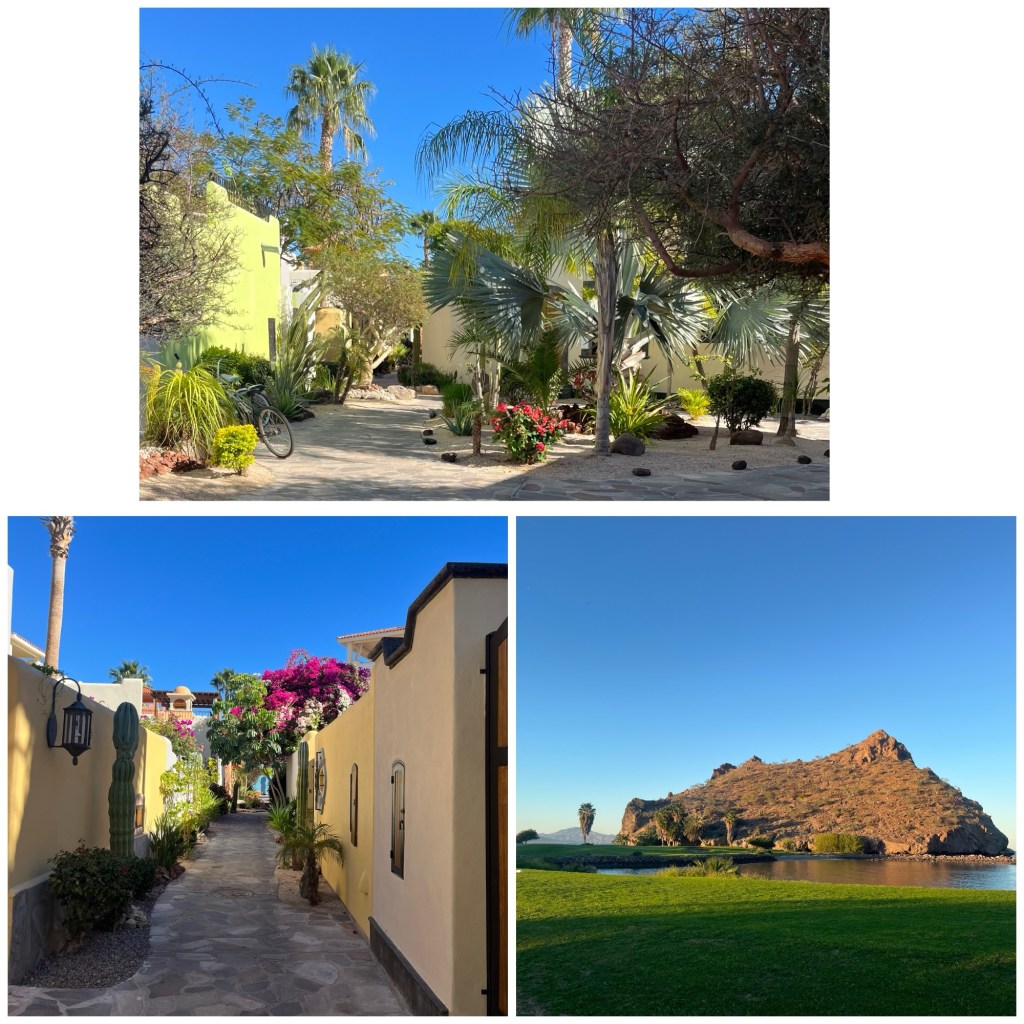
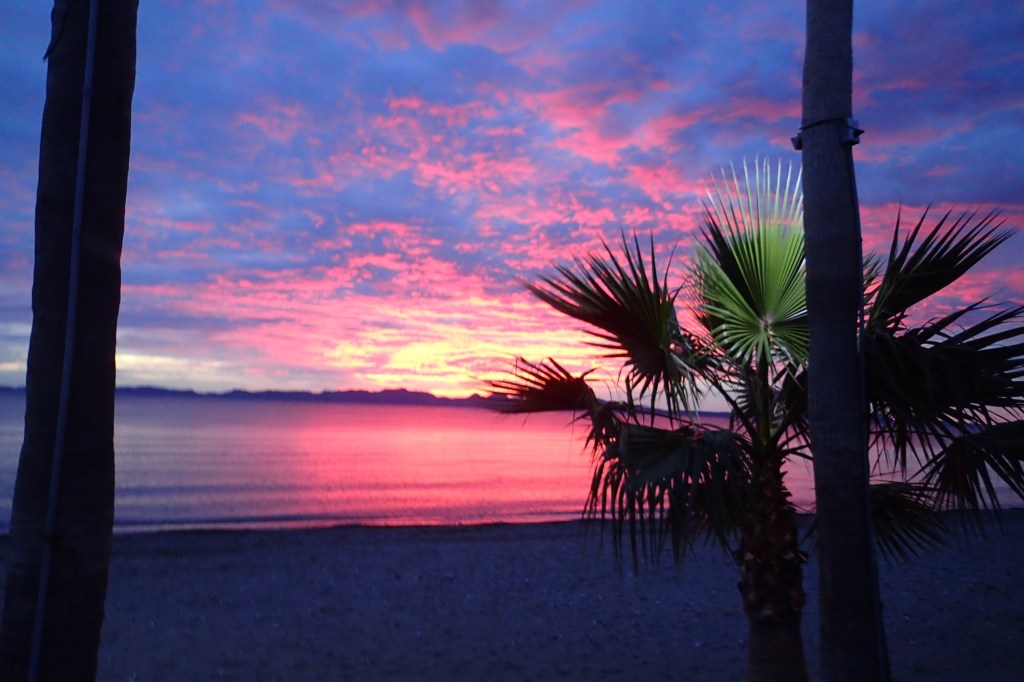
And quiet. Surprisingly so, given the density and number of homes. Most mornings and evenings it’s just the sound of birds and the wind in the palms.
And plenty of choices for excellent short-term rentals—another draw. Good restaurants, a couple coffee shops, walking paths, a long, half mile beautiful beach to stroll, kayaks to rent. But, of course, all of this comes at close to US prices. Still, for a short getaway it checks most the boxes.
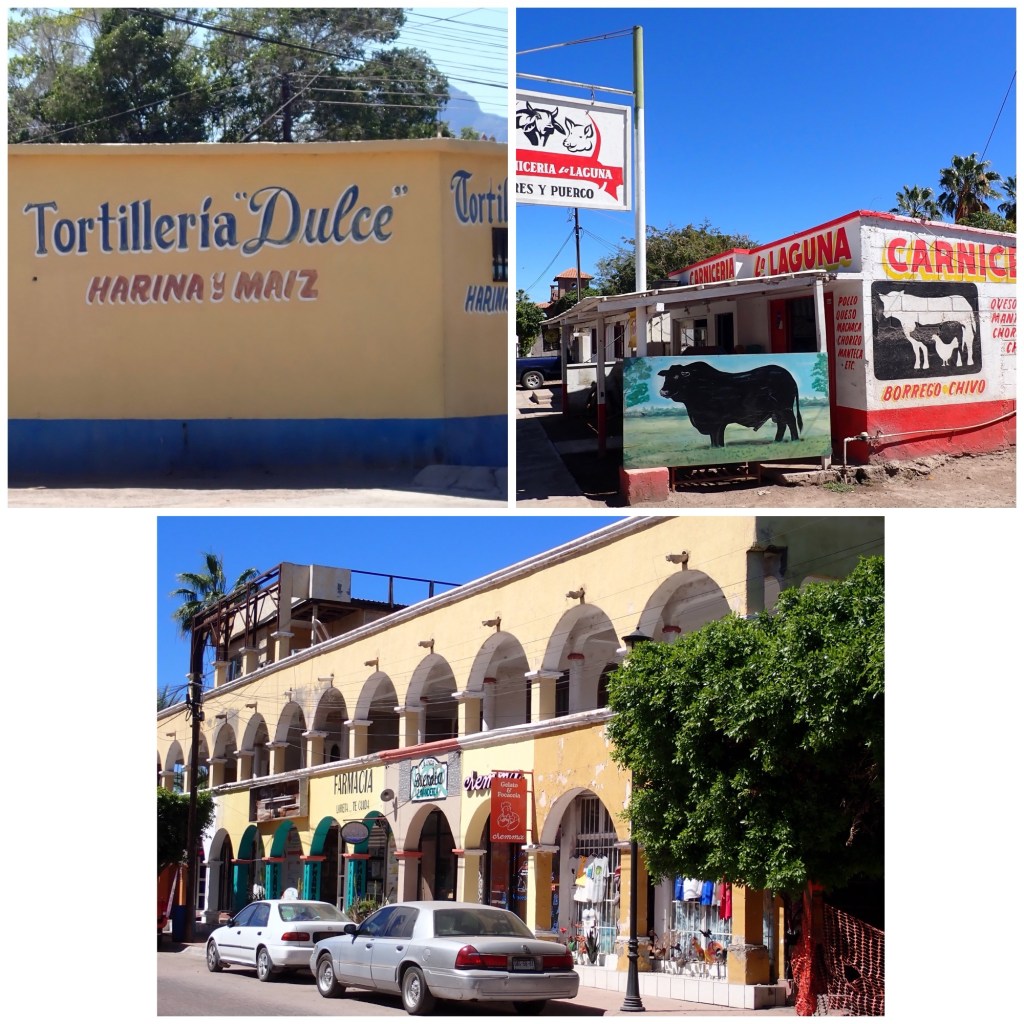
And the town of Loreto, despite the draw of the raw beauty of the area, has remained largely Mexican but with enough infrastructure to support a modest tourism industry. Parts of the town, particularly on the outskirts, are a bit run down, dusty, ramshackle. Locals buying meat at the many small carnicerias, tortillas at one of the ancient tortilla factories, whole roasted chickens at the industrial smoking ovens of the Pollo Asado. Typical of most of non-tourist Mexico.
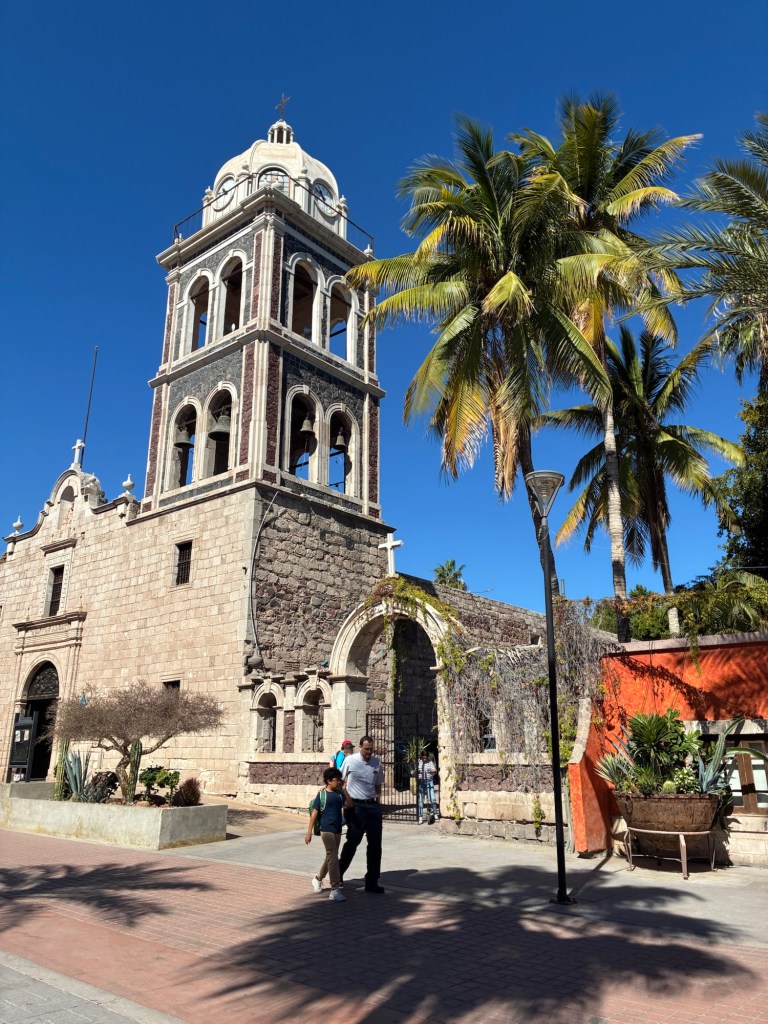
Loreto’s real claim to fame, however, is its modest mission and church, first established more than three hundred years ago as the headquarters for all of Baja and California.
The town center, with its flower covered pedestrian walkways, and the malecon (the waterfront walk) are lovely and are a reminder of what tourist dollars can do—in addition to providing local jobs.
But it is small time tourism compared to much of the rest of Pacific coast Mexico. There are no mega resorts here, no cruise ship terminal. The airport has roughly 3 flights a day. One golf course—although apparently there is a super fancy golf course resort now open about 20 miles south of town. There was a giant Holland American cruise ship offshore when we arrived and a few cruisers wandering around the town center, but we have no idea how they’d get 2000 people into town. The Loreto marina is really only suited for the tiny panga fishing boats. Even the fancy charter fishing boats are moored miles south in Puerto Escondido.
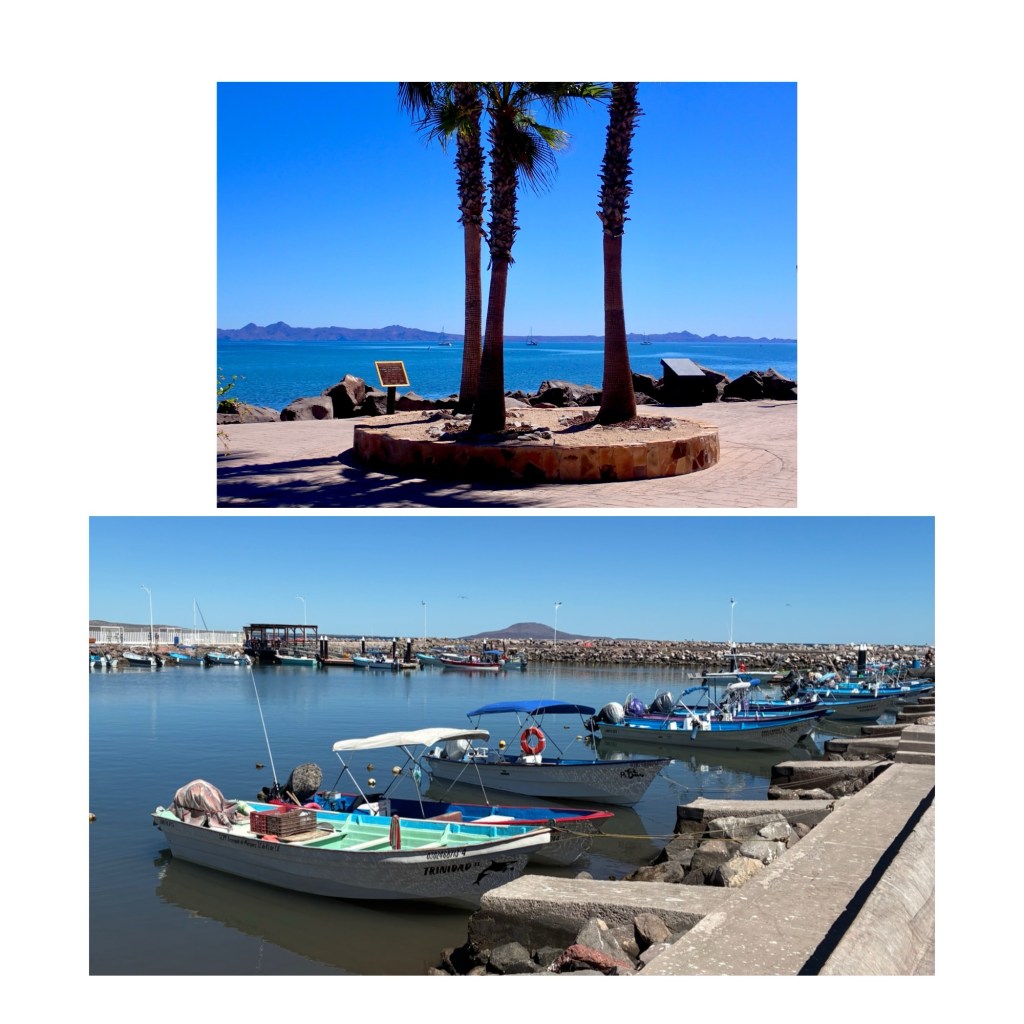
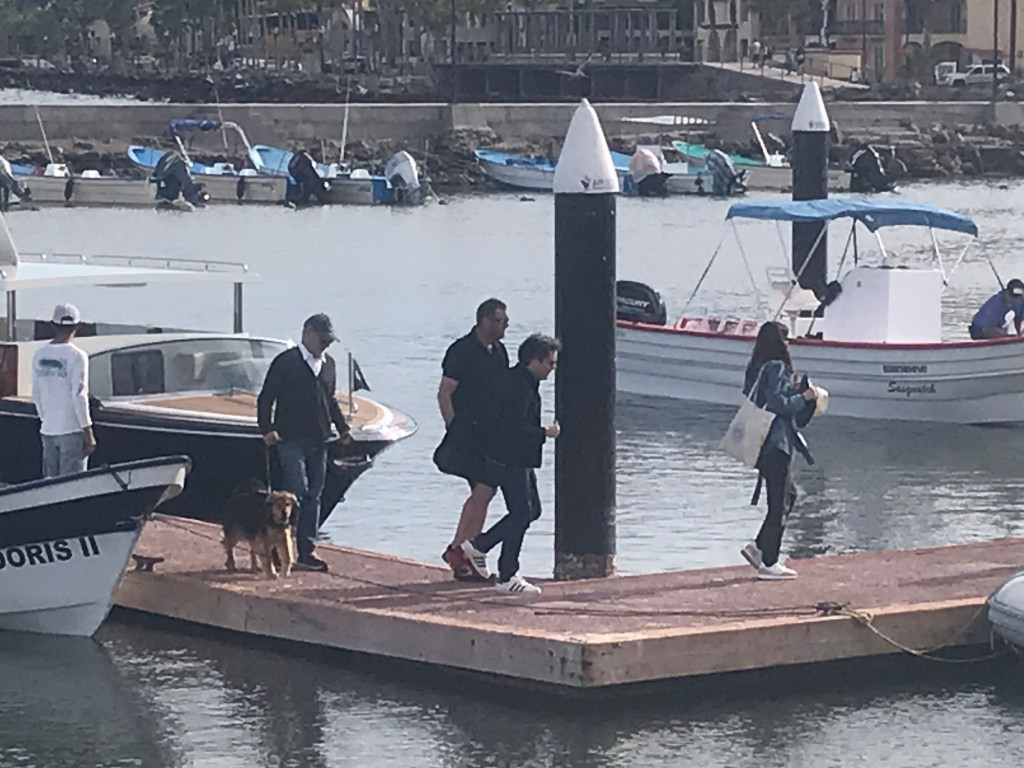
Five years ago when we were here we did see Steven Spielberg’s yacht anchored off shore and even got to see him and his entourage whisked off from the marina to the airport in a motorcade of white SUVs to a private jet. He had hosted the Obamas the week before. Our tiny, distant brush with celebrity.
I guess we can be thankful that we are staying in bit of a backwater. By shear bad luck we timed our stay in Loreto with the killing of El Mencho, the narco gang leader, by the Mexican federales in late February. The killing set off acts of violence from the drug gangs all around Mexico, particularly in Guadalajara and Puerto Vallarta across the Sea of Cortez from us. Roads closed, airports shut down. Cars and buses set on fire. Shops trashed. People sheltering in place. But in Loreto, absolutely quiet. Nada. Something to be said for being off the beaten path.
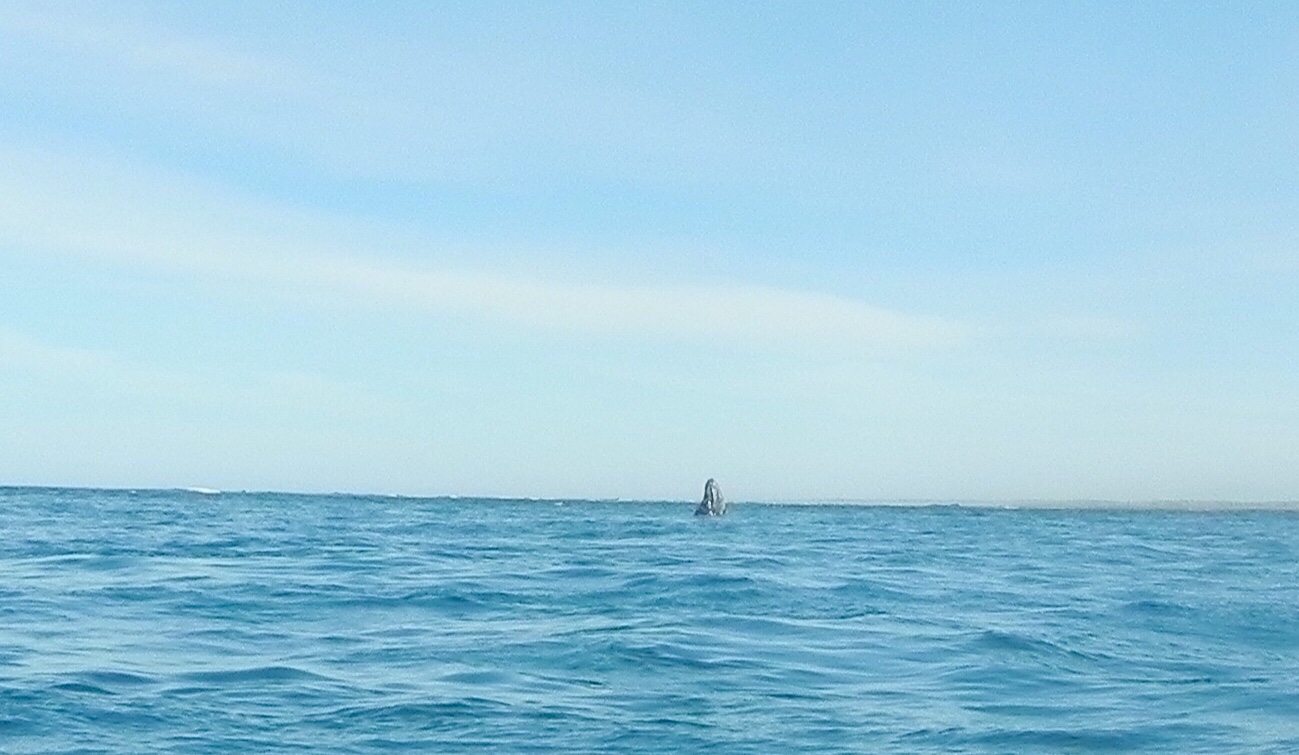
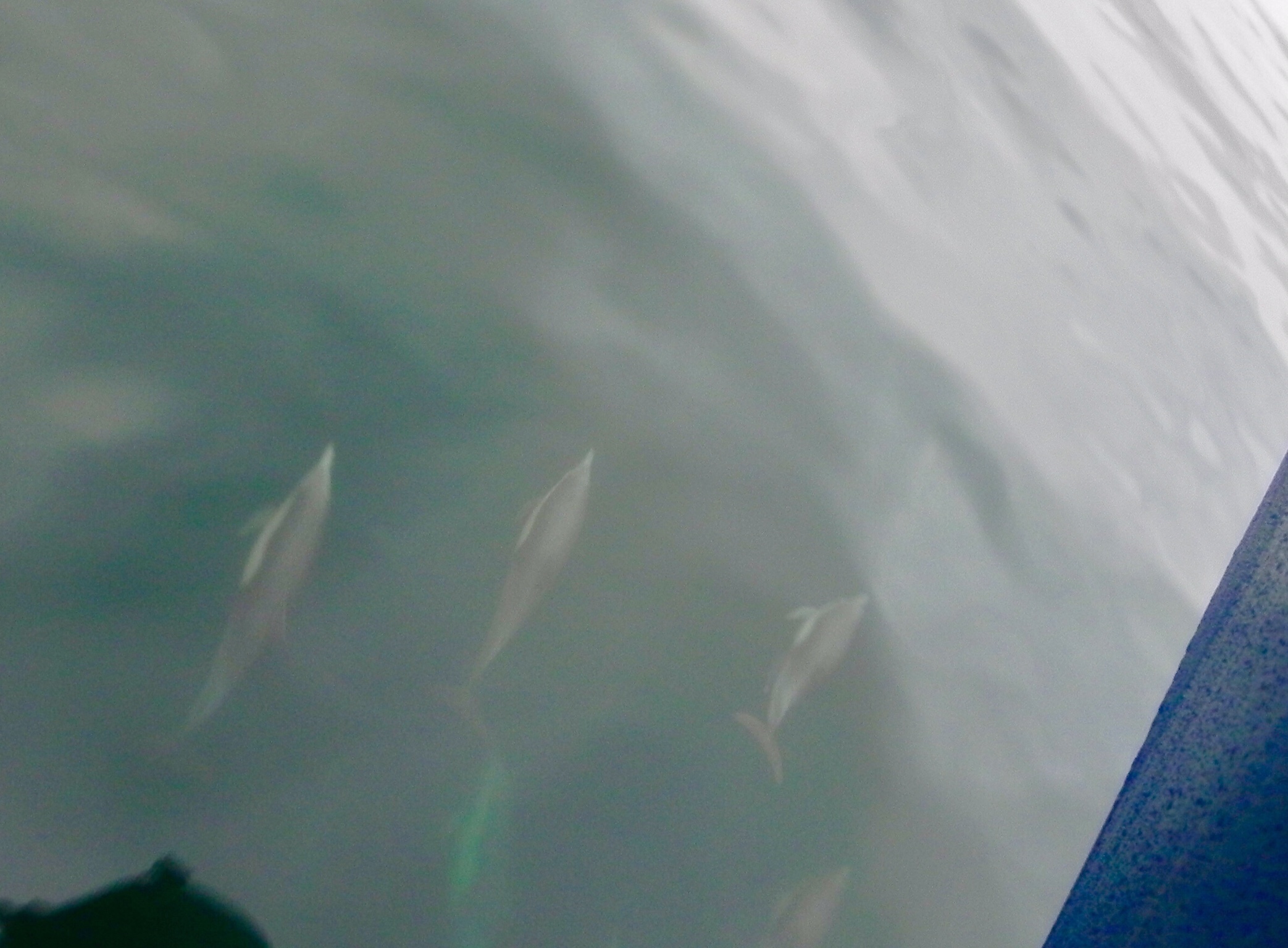
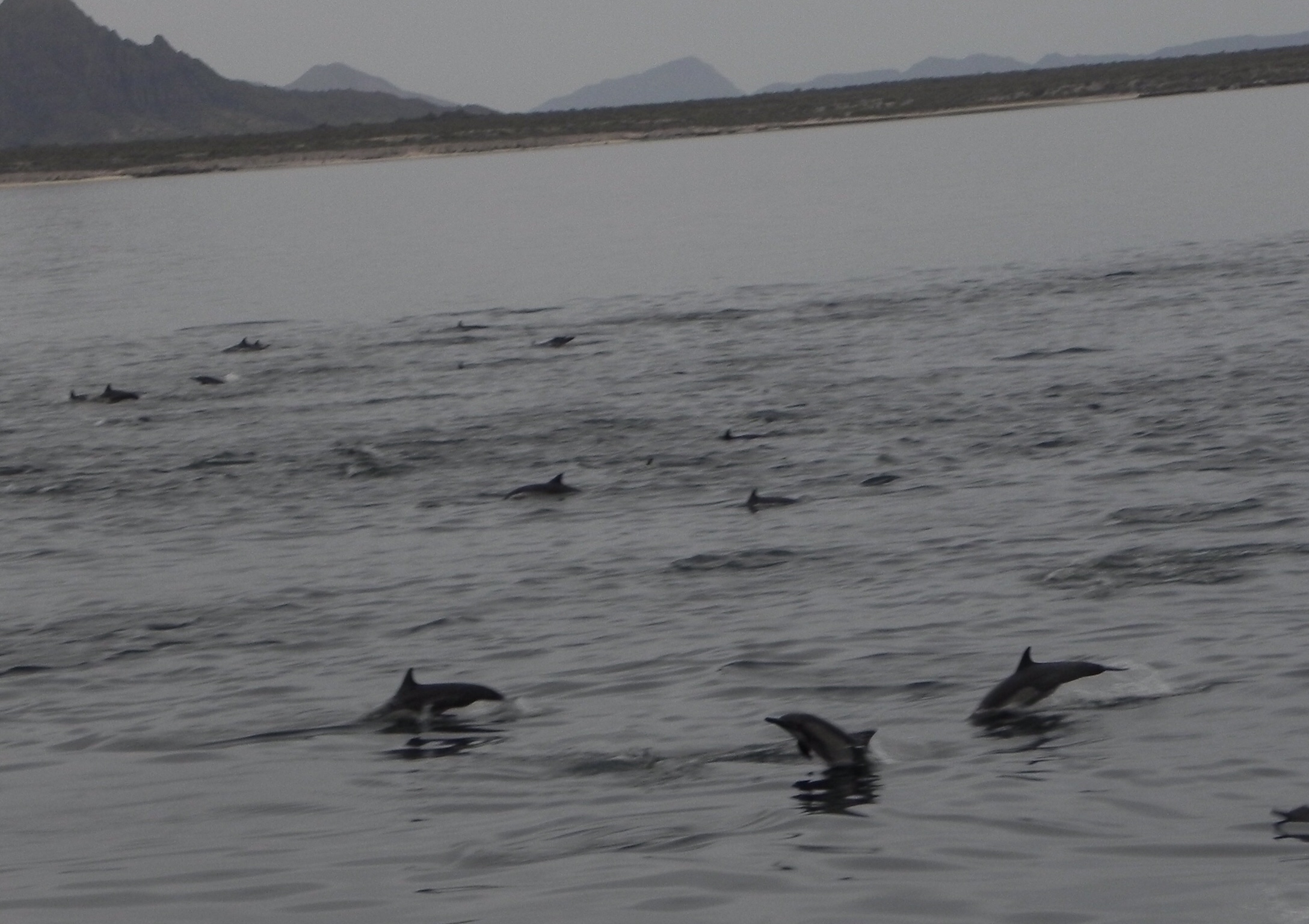
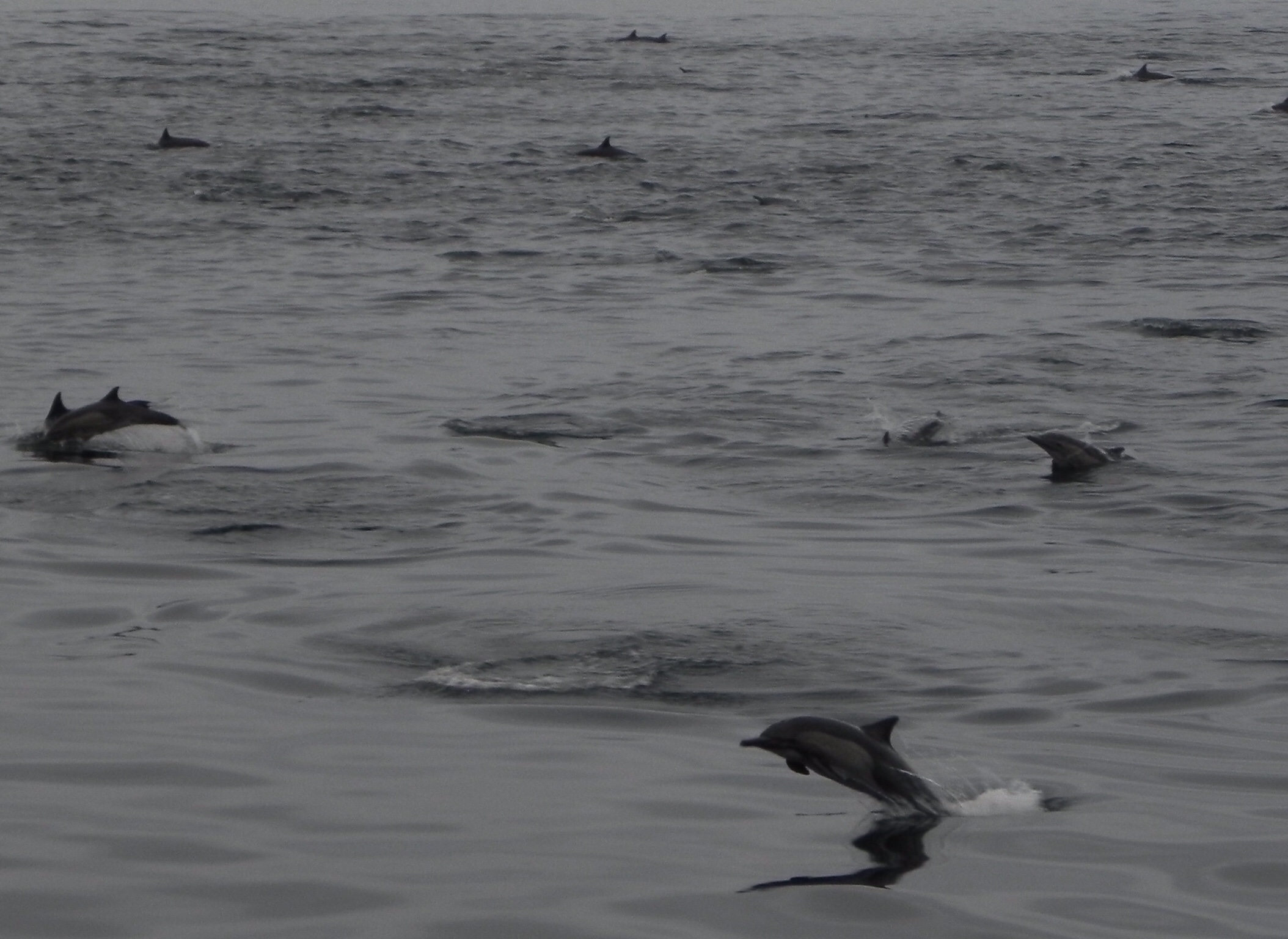
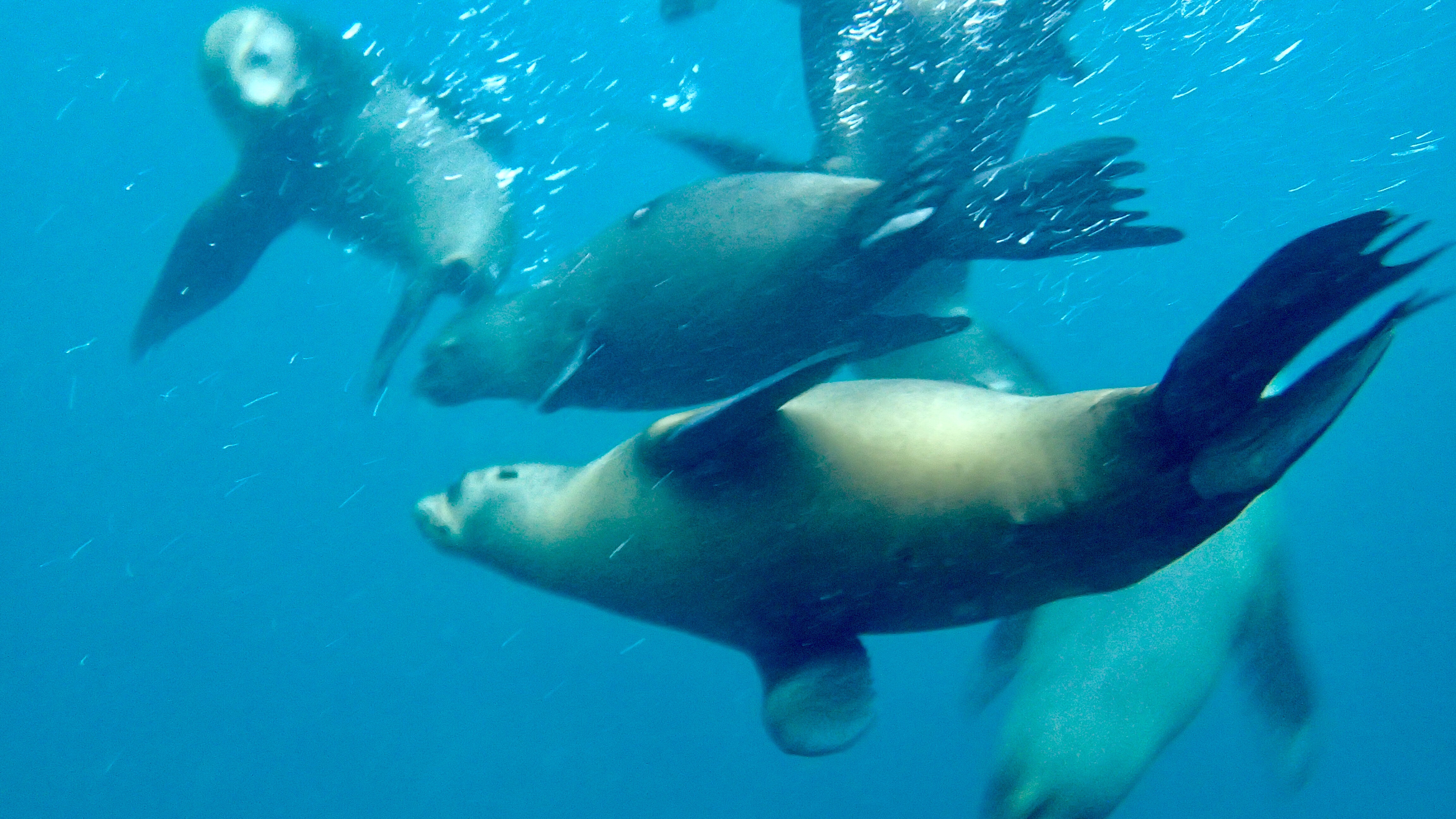
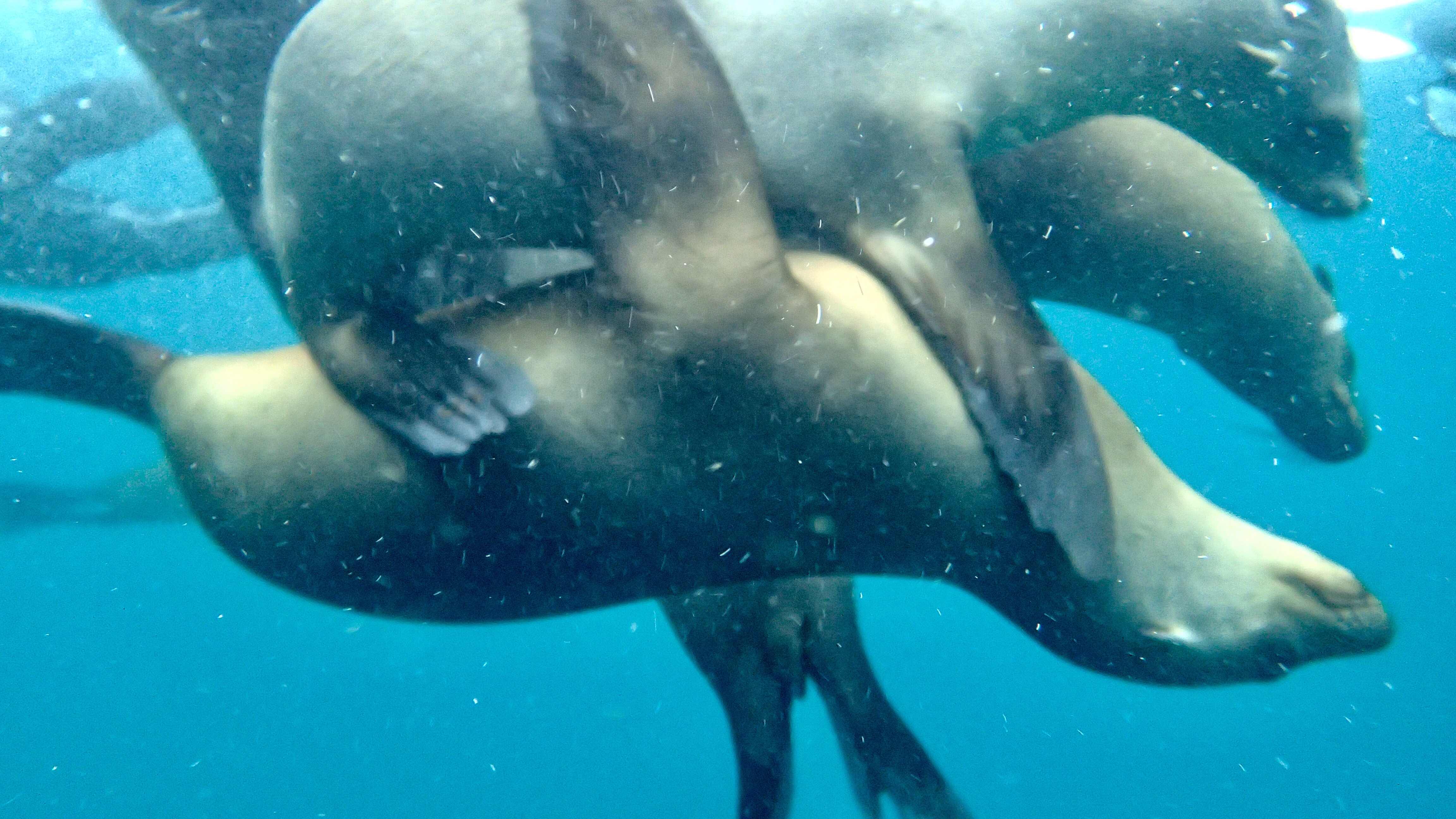
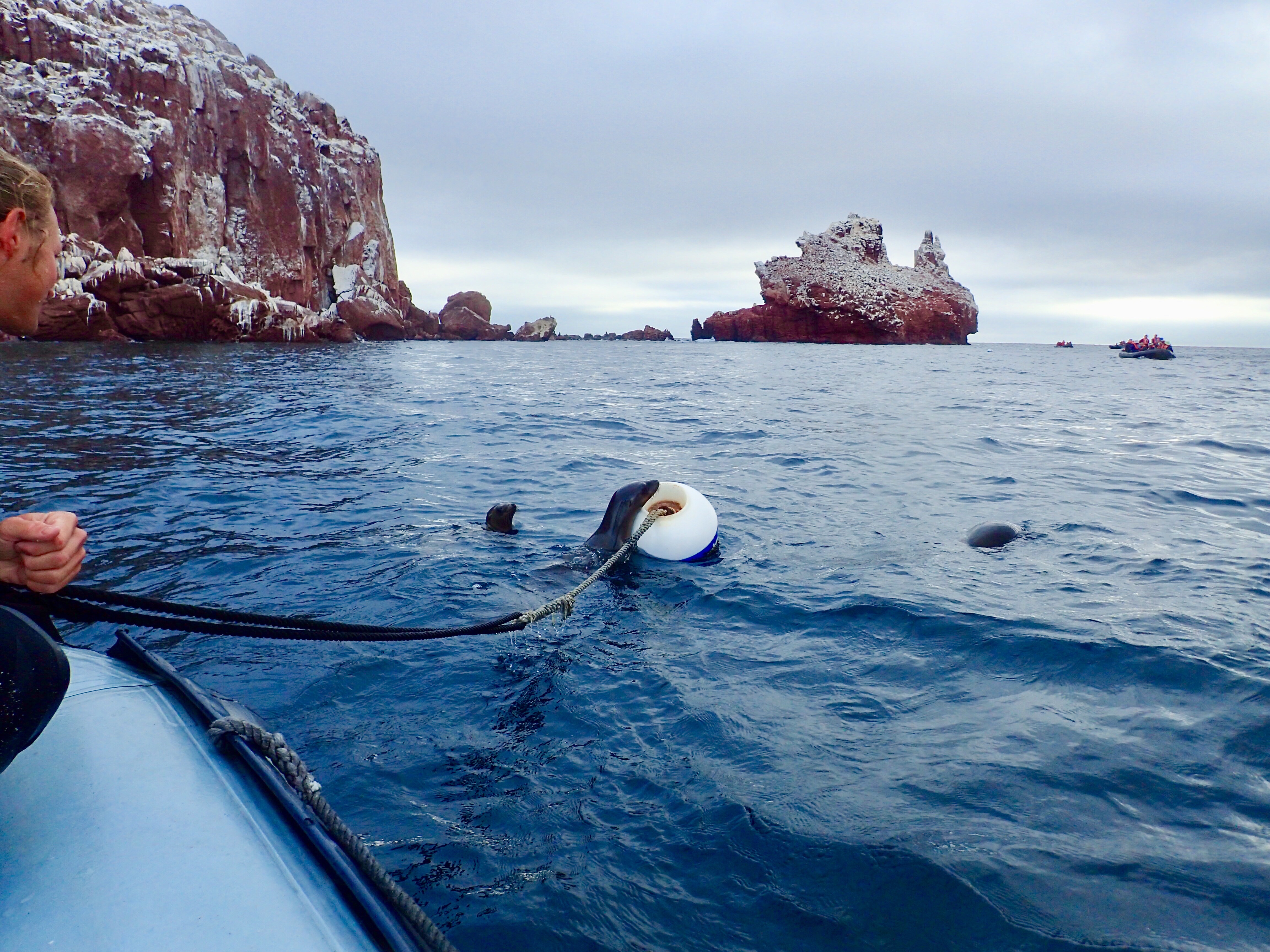
So what is there to do and see around sleepy Loreto beyond strolling, reading, beach walking, and napping—certainly not bad options? Nature is very, very big here. And marine life is the star. The entire bay in front of the town is a giant national park—the Loreto Bay National Marine Park, a UNESCO World Heritage site, the aquarium of the world. There are boating excursions into the park and if you’re lucky you can see dolphins, whale sharks, and the largest mammal on earth—the blue whale. And we were lucky to see the Humpback whales attempting to woo potential mates by tale slapping and breaching off shore. There are snorkeling expeditions to the nearby islands and even swimming with the sea lions for the brave.
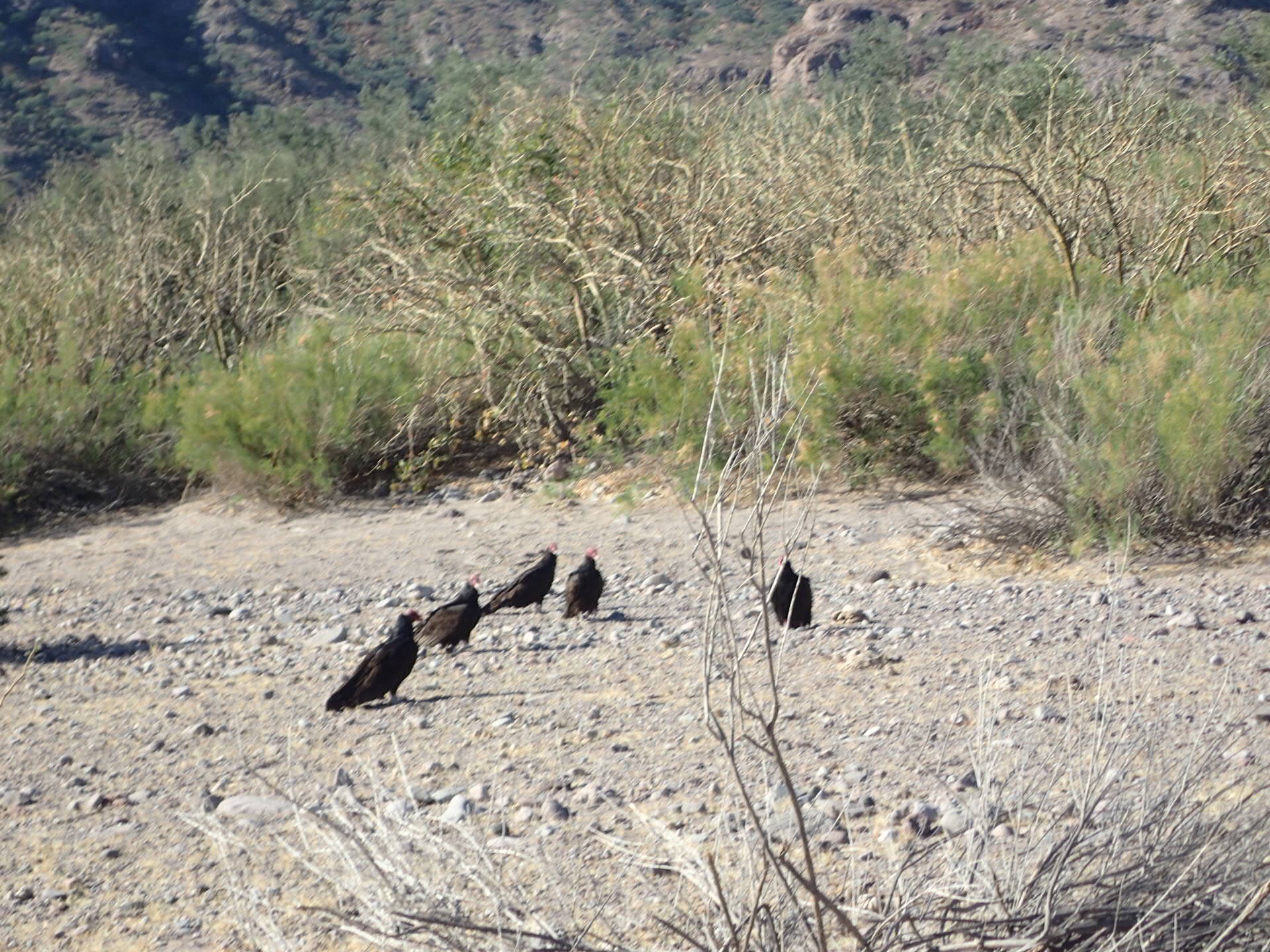
We do like looking at birds and usually during our morning and sunset walks we easily identified six to twelve different species. The pelicans were a show unto themselves.
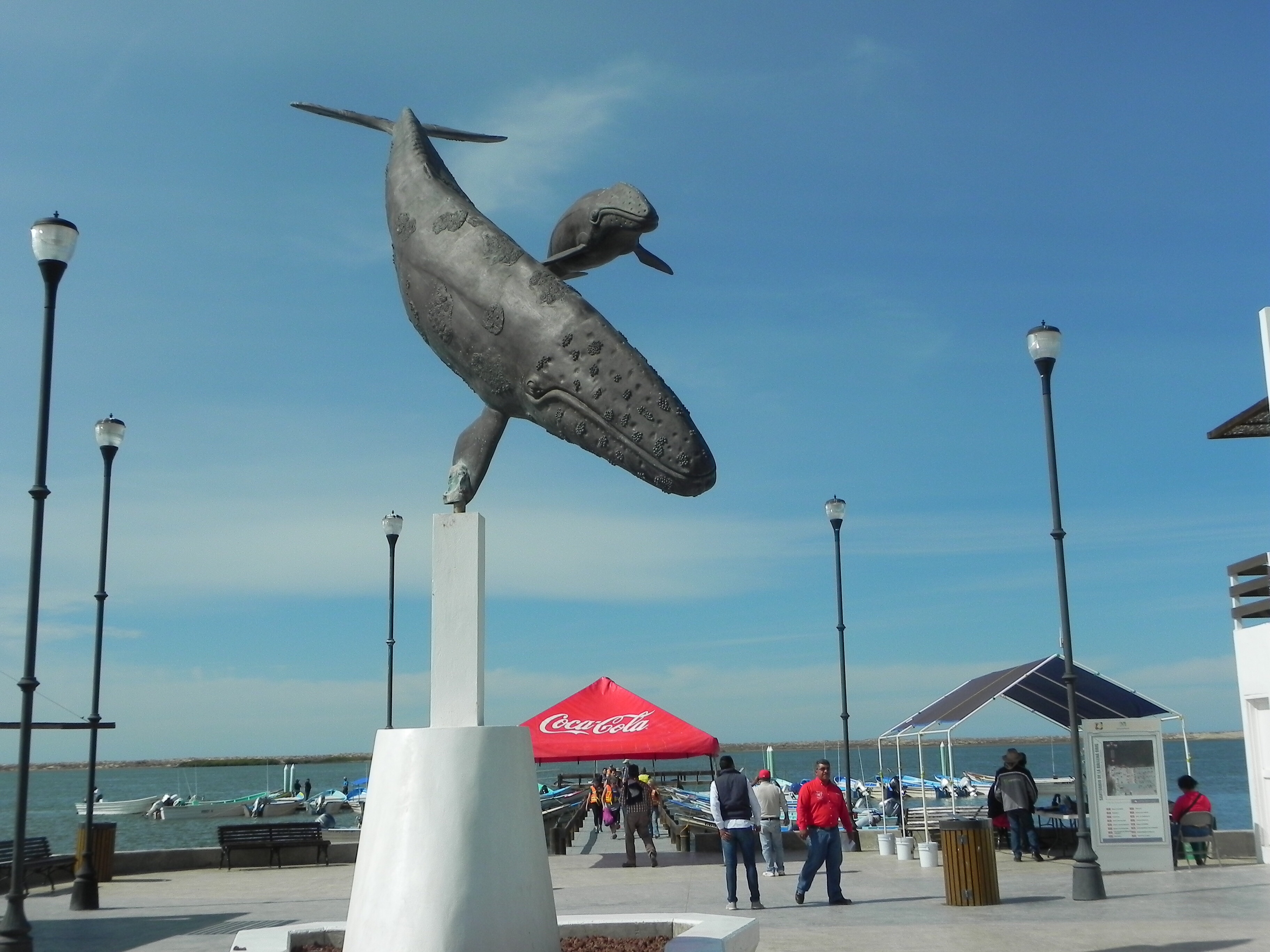
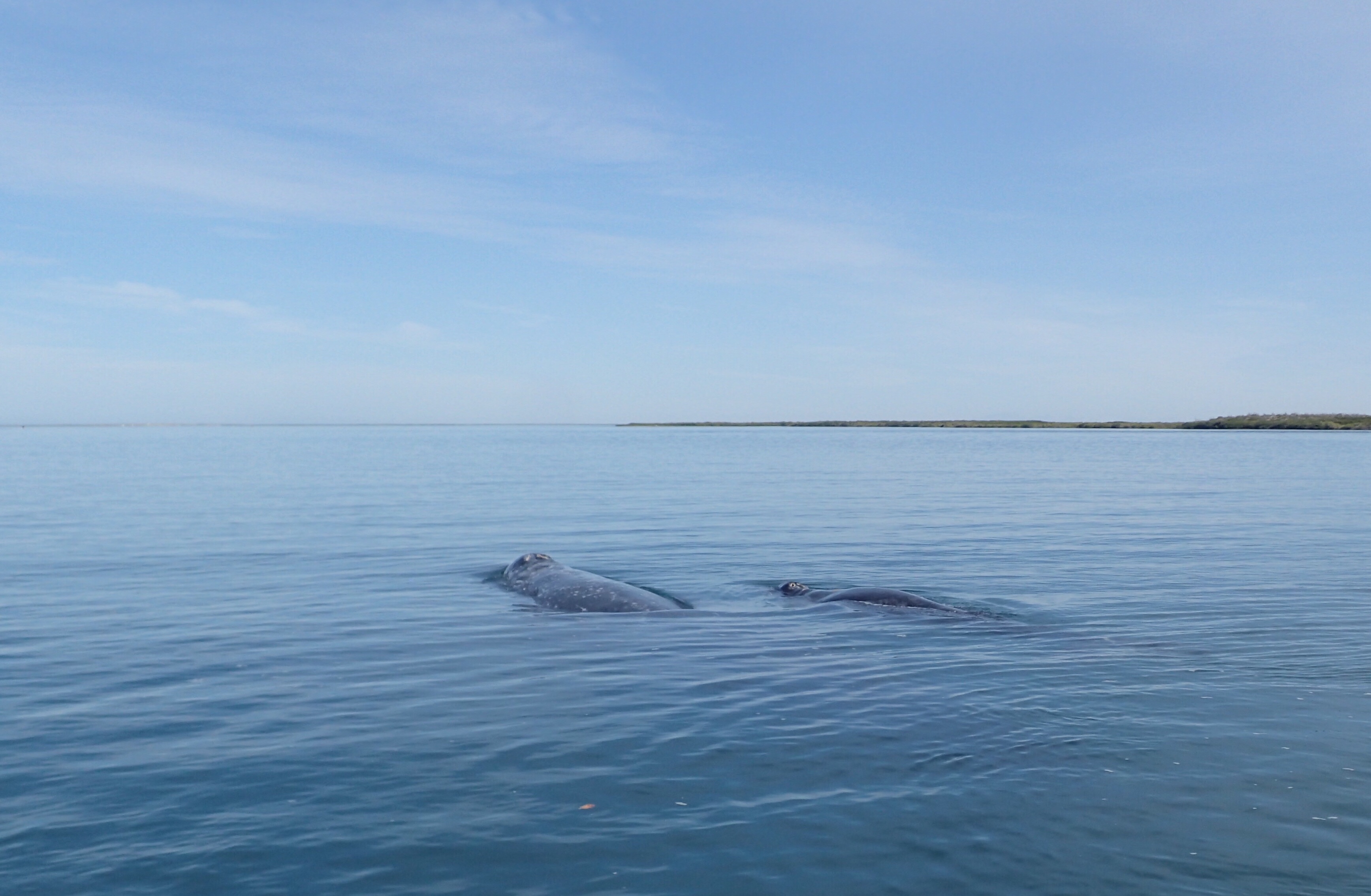
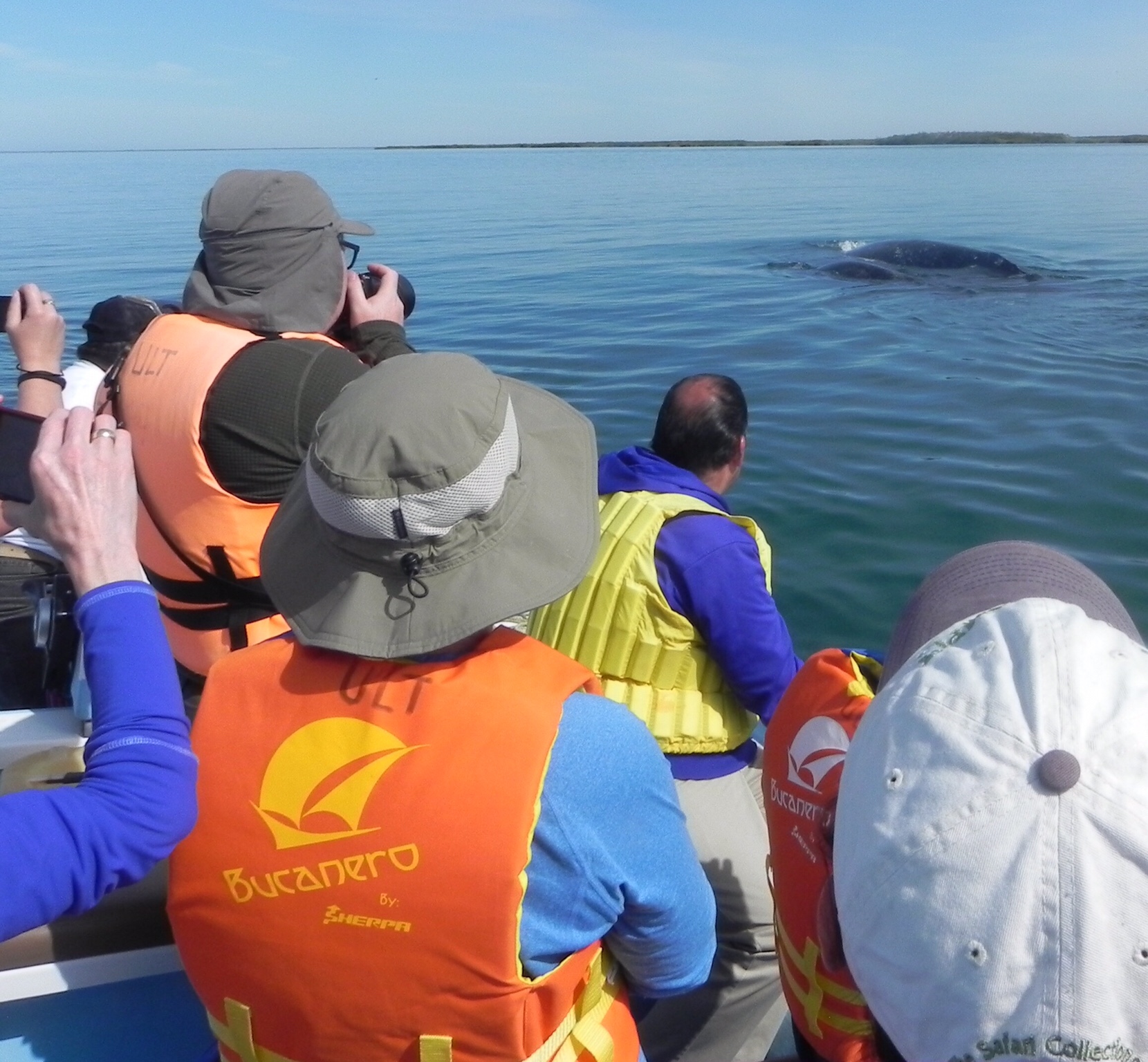
But even more impressive is the two hour drive across the peninsula to Puerto Adolfo Lopez Mateos and Magdalena Bay. Here every year from January to March, hundreds of grey whales migrate down from Alaska to calve. Small pangas (open motorized boats—the number and size is limited by strict environmental regulations), take you out into the bay to witness this natural wonder. The whales seem to get close enough that you could reach out and touch them. Of course, you’re not supposed to. Truly a must do if you’re in Loreto at that time of year.
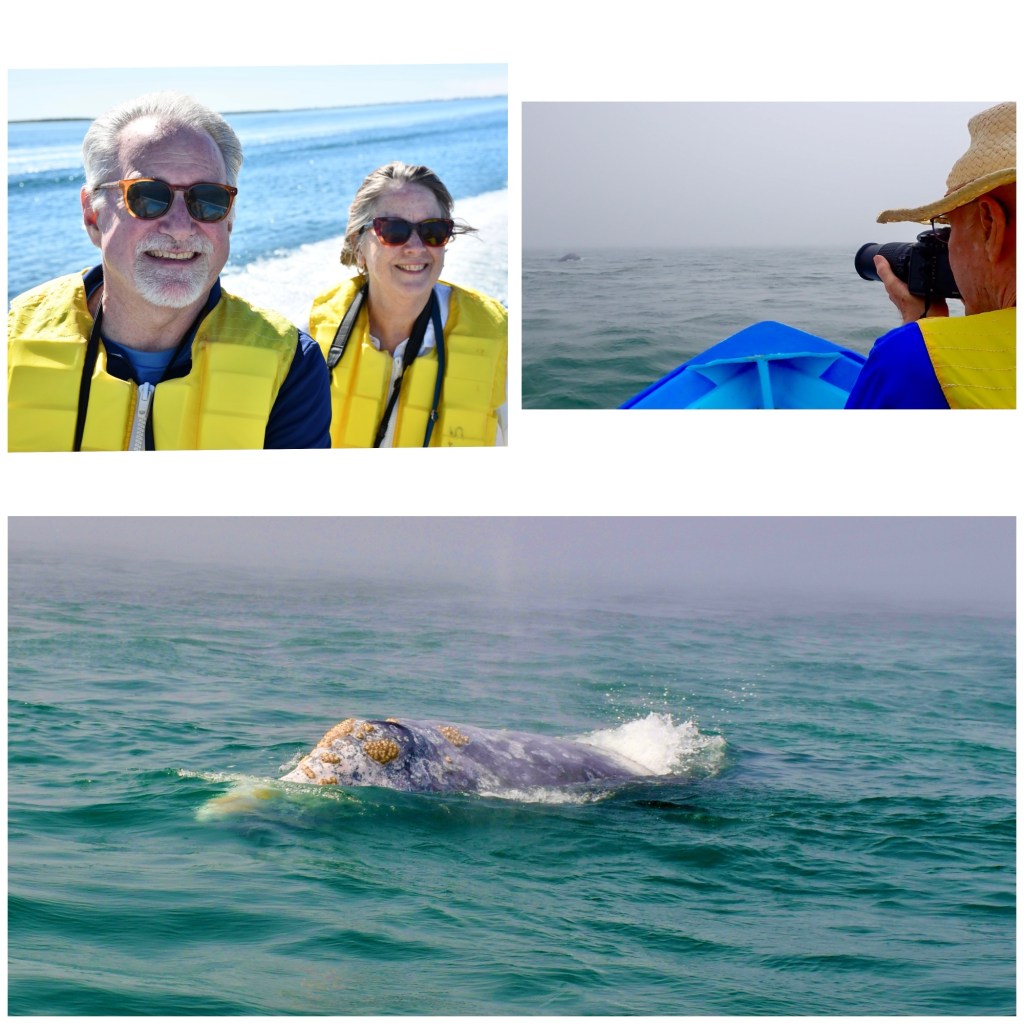
We’ve made that trip twice before and could not resist a third time this visit. So up before the sun, literally, and off across the Baja peninsula to the Pacific side. The first hour of the drive, winding up the side of the mountains as the sun rose was spectacular and we deeply regretted the lack of any safe space to pull over the take pictures.
Then another hour of straight roads through the barren cardón forests as you gradually go down to sea level again. Unfortunately when we arrived at the coast we saw the first clouds we had seen in two weeks — close to the ground clouds as in dense fog. So we had to wait a couple hours until the sun burned through the fog and it was safe to leave harbor. And as the two hour boat ride extended into three hours, the skies became blue again. Well worth the wait and the $40 per person charge.
Aside from hopping in a car or van to go whale watching, there are also several short drives from Loreto worth the time—one to the gorgeous St. Javier Mission in the mountains above the town
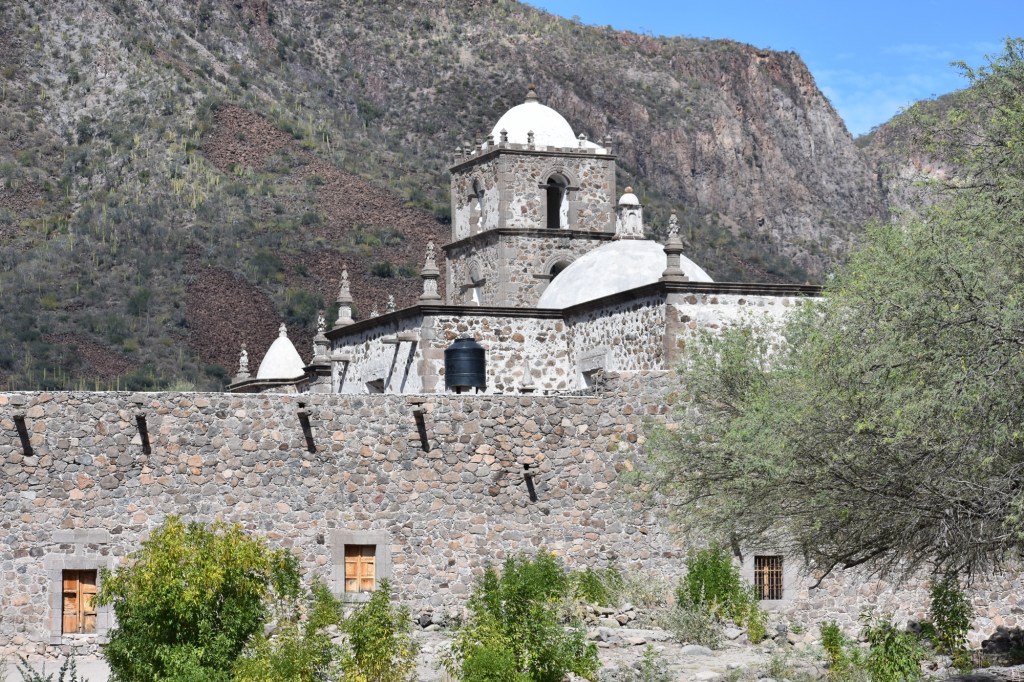
another up the coast past the stunning Bahia Concepcion to the old mission town of Mulege. It was in Mulege that local resistance to the American invaders kept Baja part of Mexico during the 1848 Mexican—American War. A hero city, Heroica Mulege.
Certainly more enough to do and see for a two week escape from the cold and rain of the Northwest US. And we’re enjoying every warm minute of it.

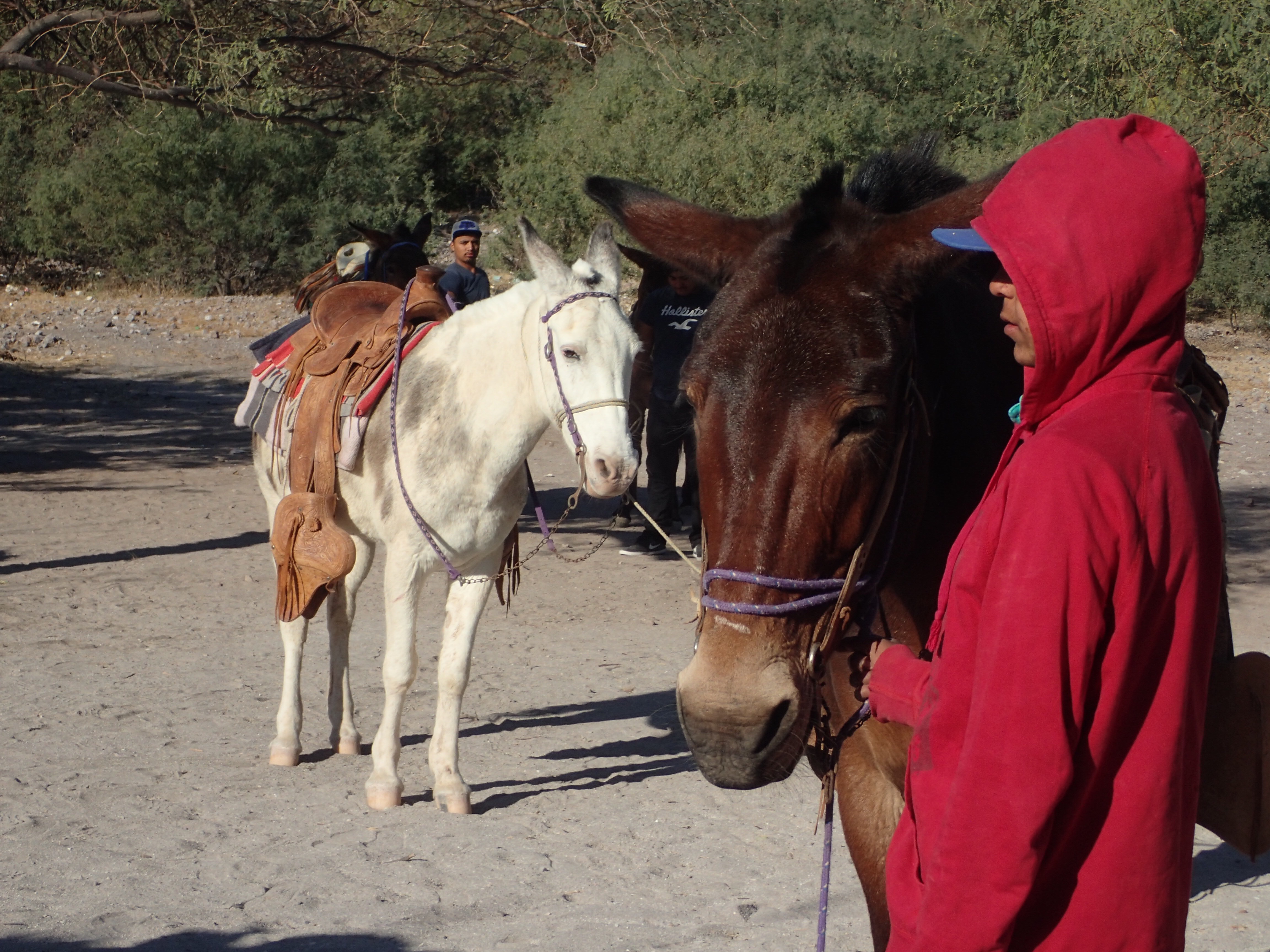
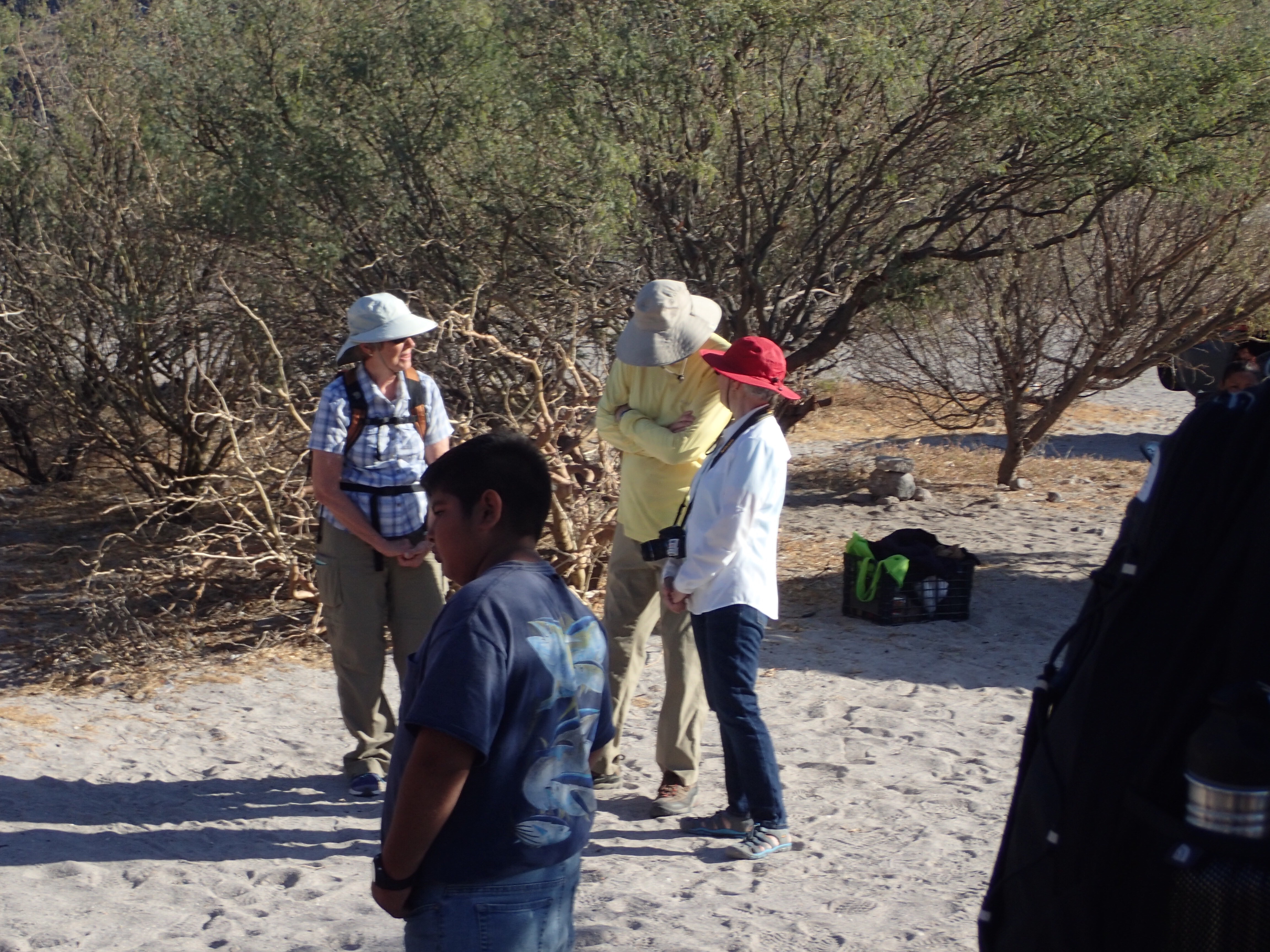
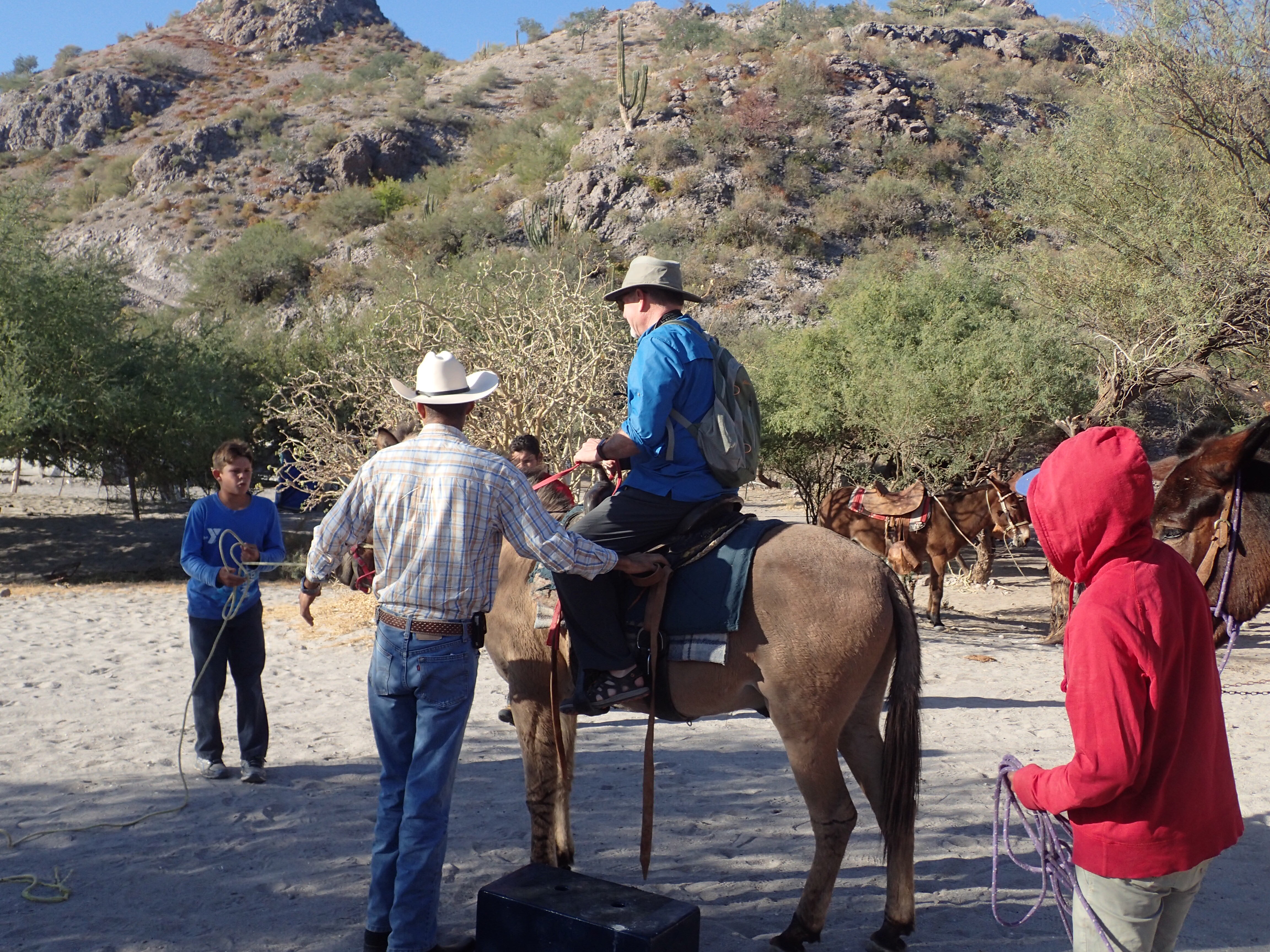
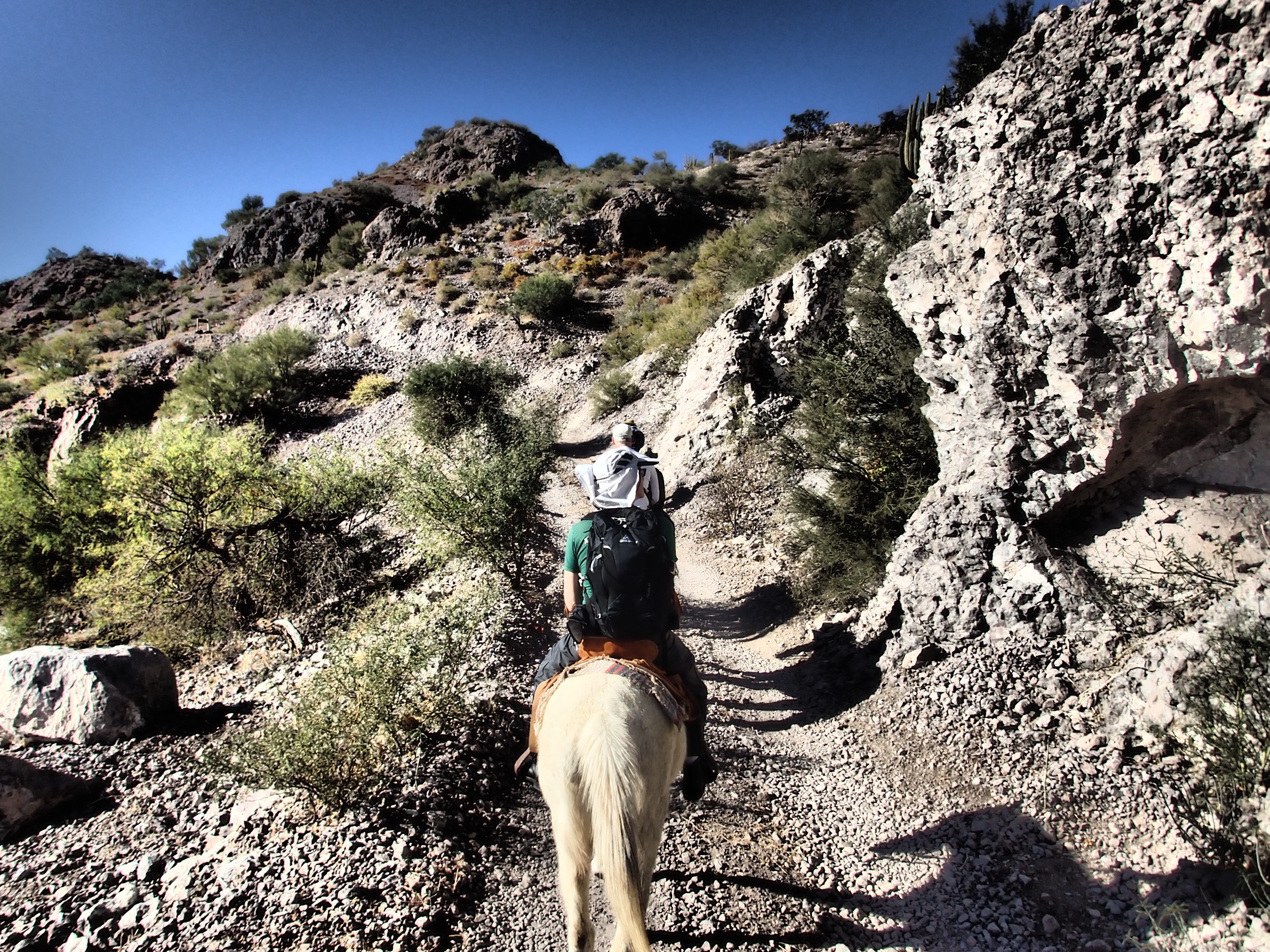
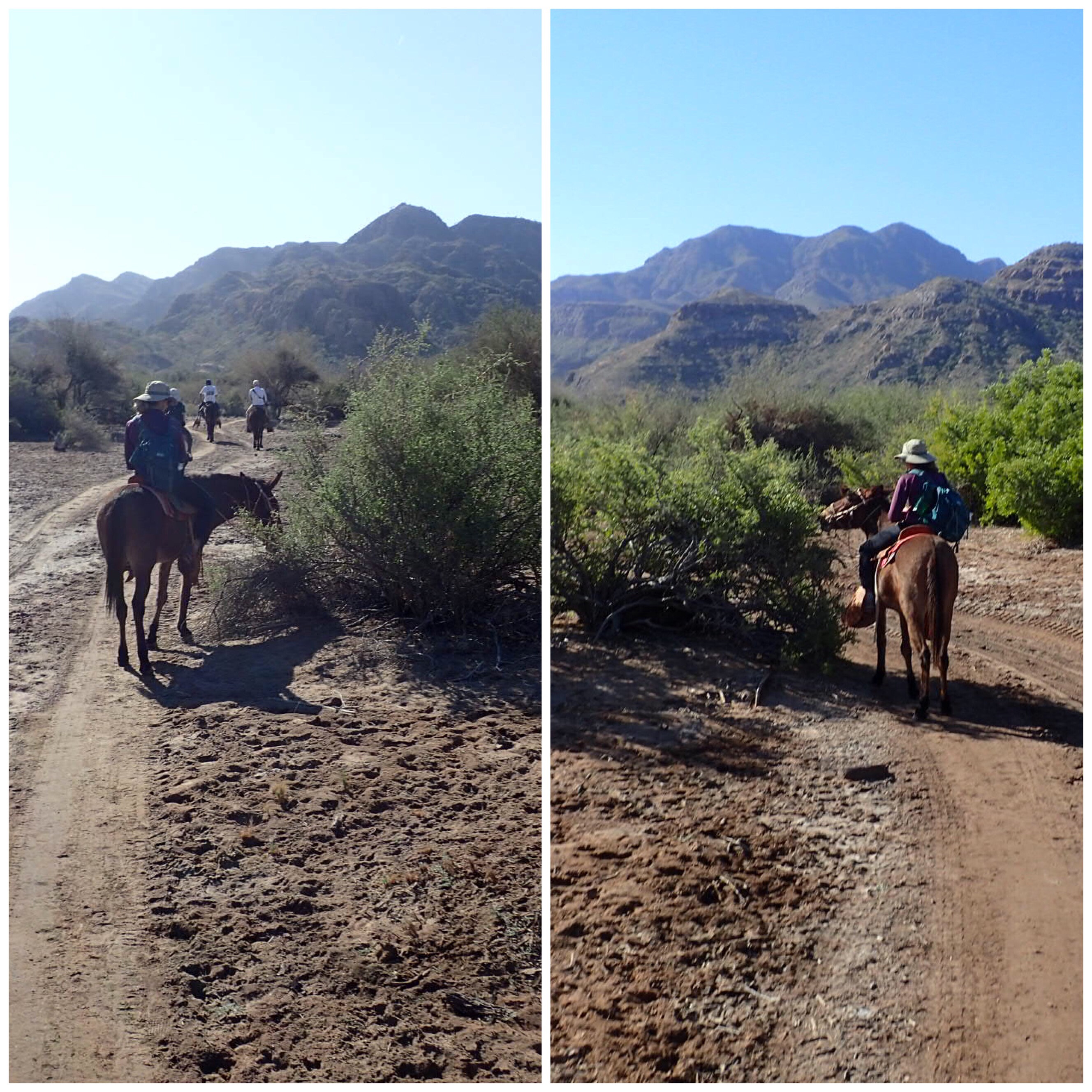
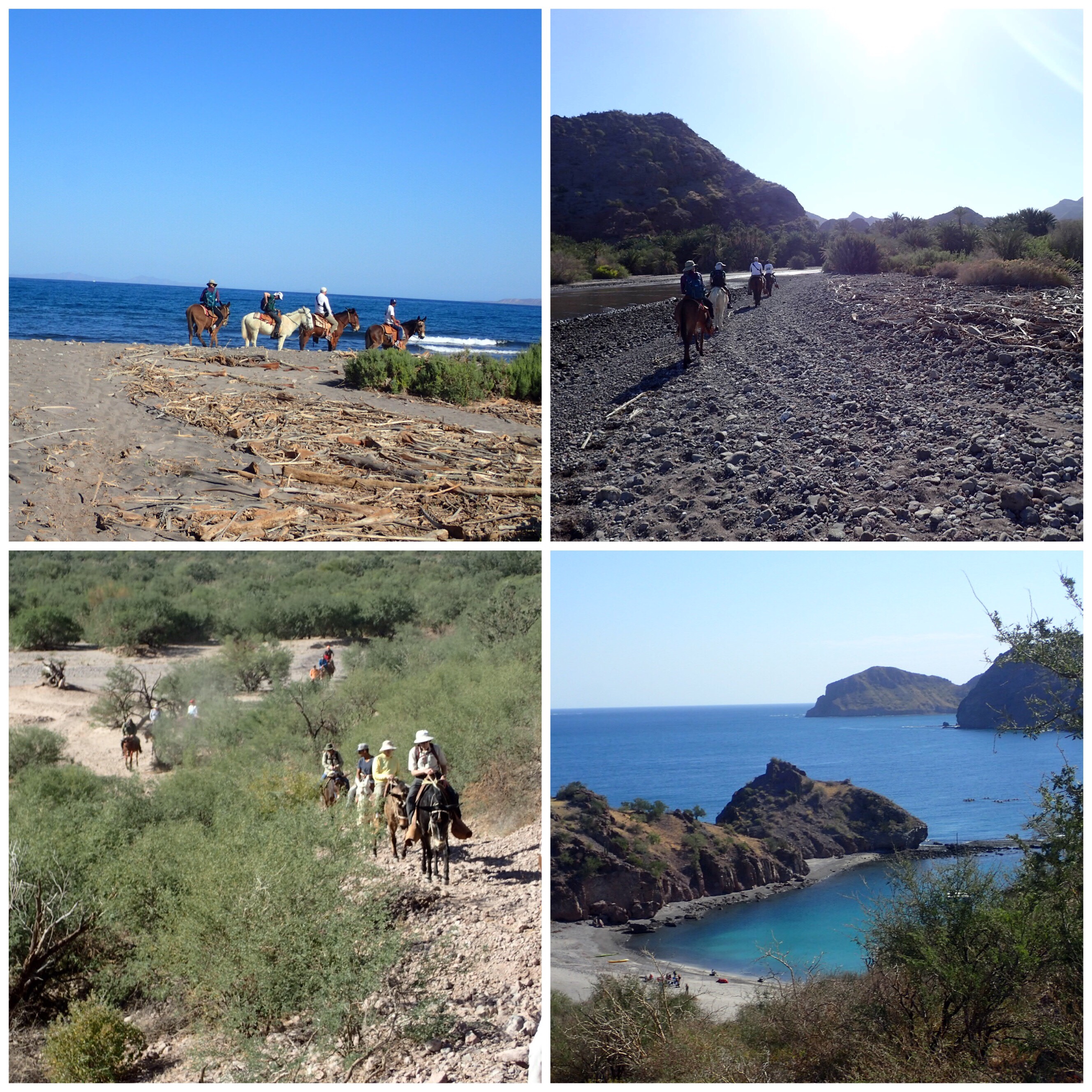
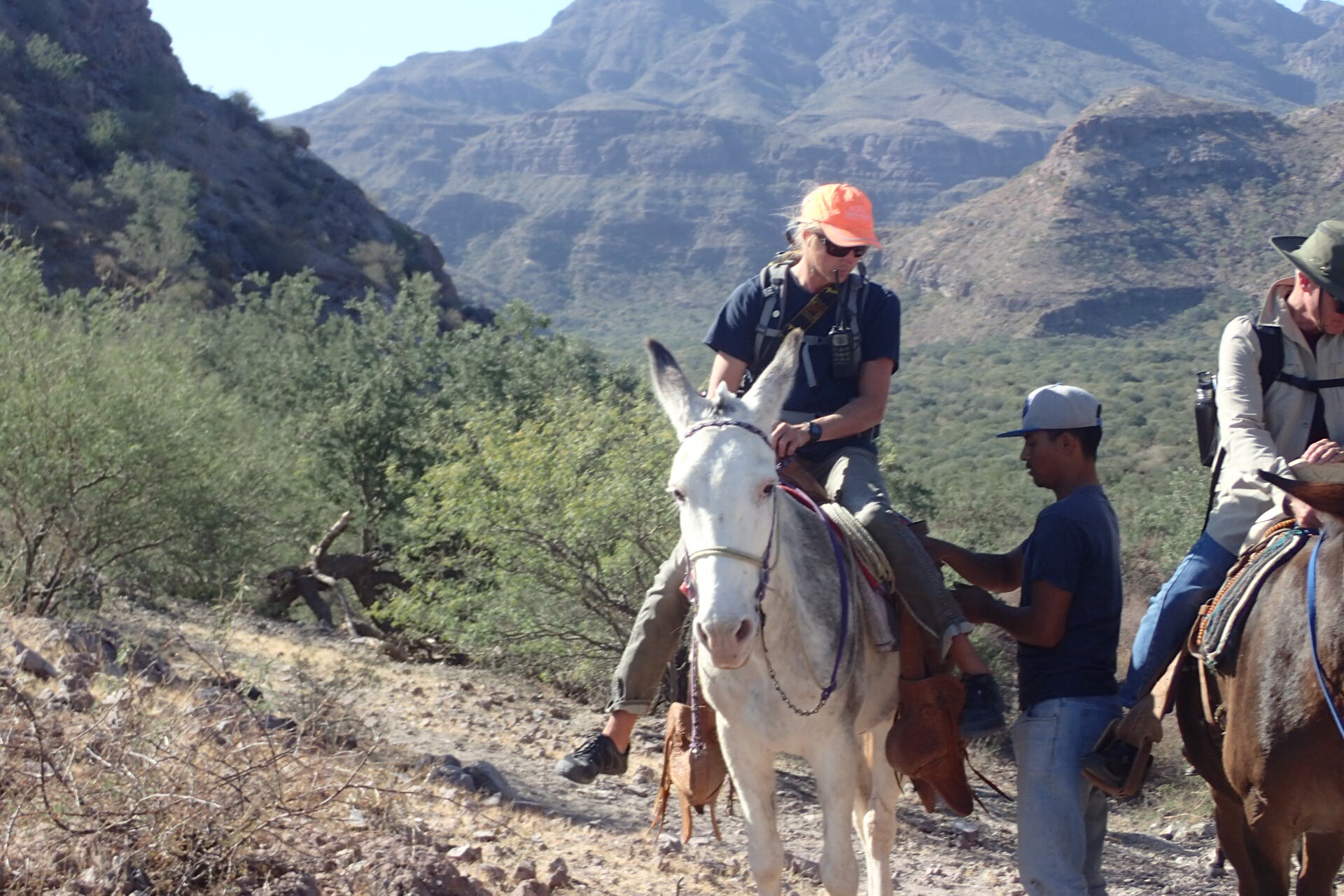
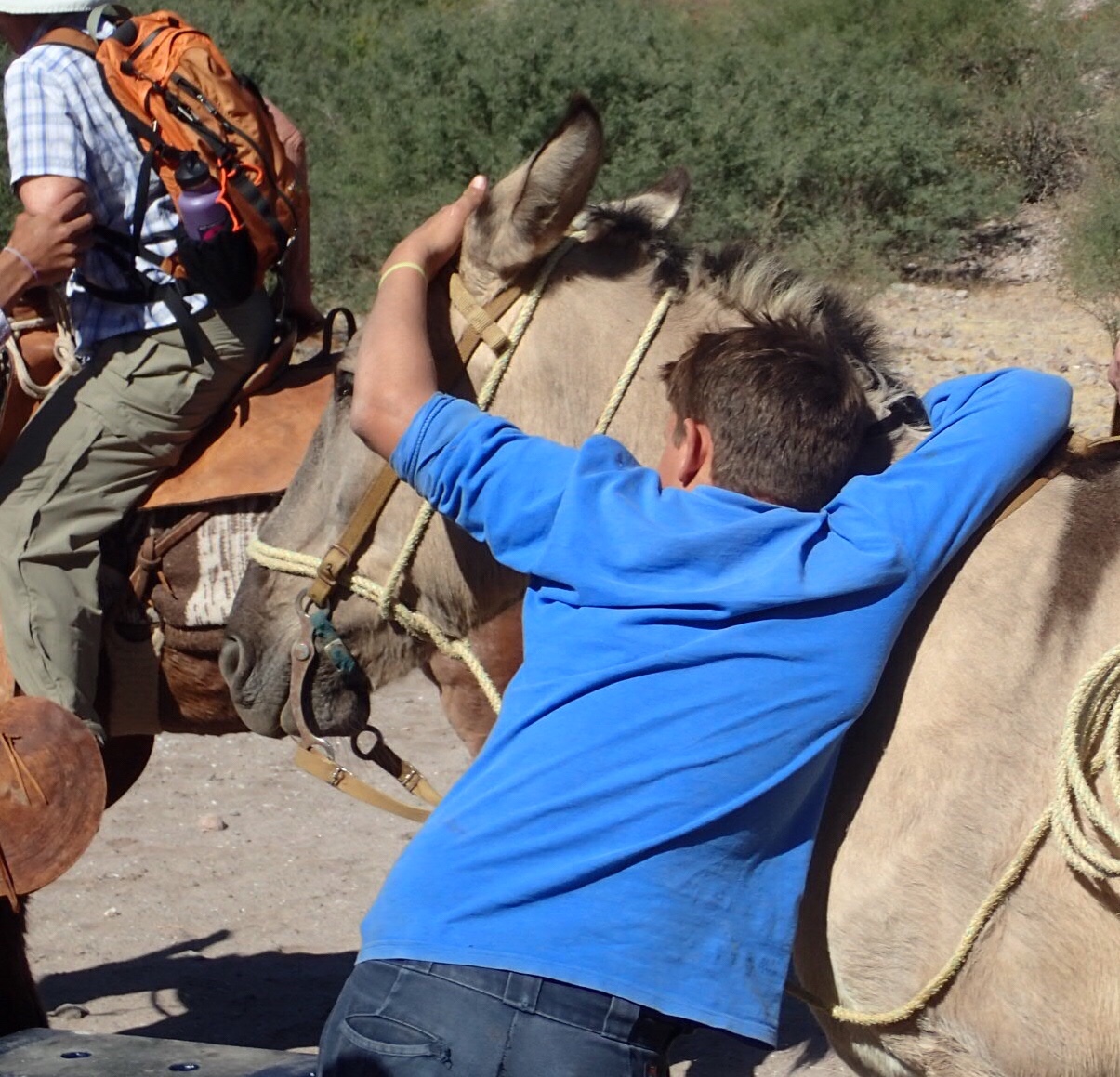
 Our mule train started up a broad dirt road and I was encouraged when my gray mule moved right along to get to the front of the pack. Those initial steps were the only lively ones out of him. After that he had to be strongly urged to keep up, and picked up speed only to prevent the mule behind us from passing. Uphills were a real struggle. But that happened later.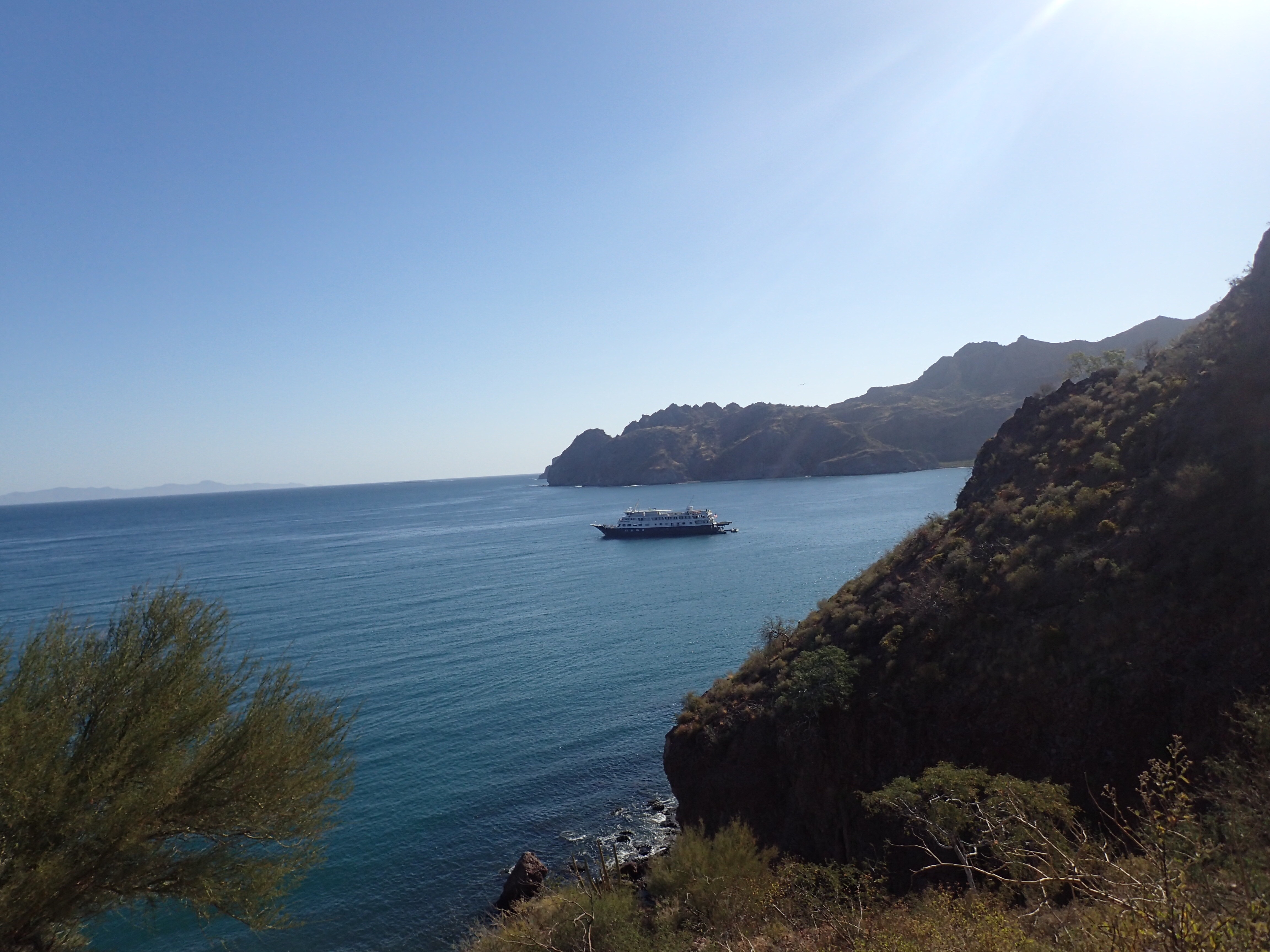
 Chasing the Good Life