Traveler not tourist

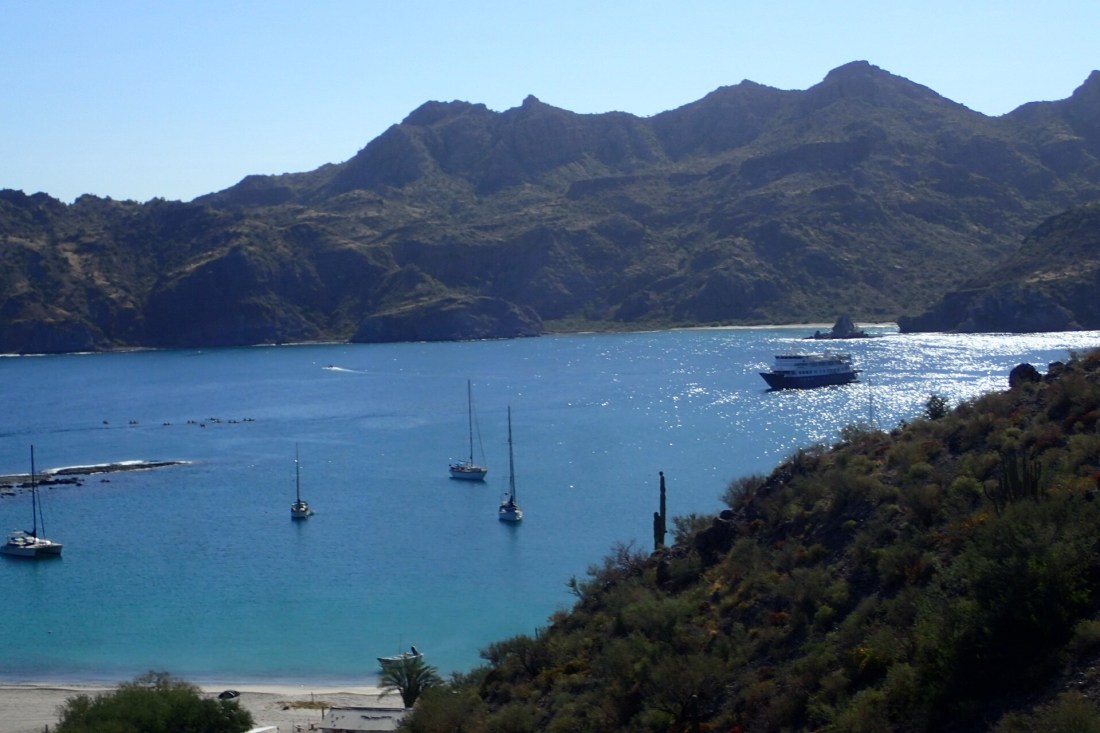
On the last night of our adventure cruise around the Sea of Cortez, the captain praised our ship of sixty passengers for being travelers and not a tourists. Travelers not tourists? Made me think about the difference.

A tourist may see a lot, as suggested by the title of a decades old (and very poor) movie, If It’s Tuesday, It Must Be Belgium. Looking at the world primarily from a bus, or following the raised umbrella of a guide, or gazing at the sea from the twelfth floor of a cruise ship are definitively being a tourist. I understand the attraction. For one thing, it’s often the most affordable option. It feels safe. You’re unlikely to stumble into the wrong part of a city or unclean restaurant and your guide is likely good at keeping pickpockets at bay. And it doesn’t challenge your lack of language while in a foreign place. All good reasons. For some tourists with physical challenges, tour buses and big cruise ships open up new horizons. These big trips may mean you miss some things, but at least you get to see and experience some of the world different from home.

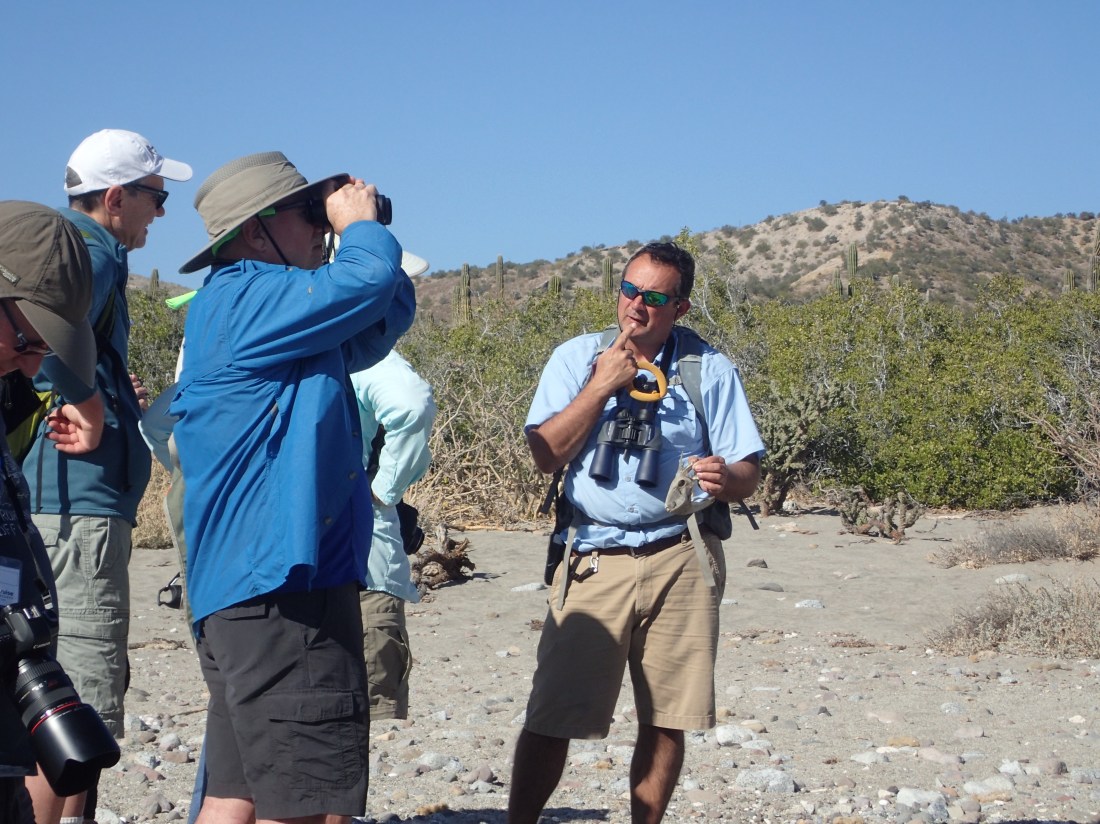
What do you get on a small boat adventure cruise that’s different? For starters, you travel small. Even though there were 60 passengers on our latest cruise, our outings ranged from nine to twelve people with one or two expert guides. The guides could point out the Cardon cactus and explains the differences from its cousin the Saguaro. They explained why the elephant bush grew where it did. A fish skeleton on the shoreline could be identified. This was not a march through the Baja desert accompanied by a lecture, but an exploration of objects either the guide or one of us found on the beach or desert around us. A little bit of biology and a little bit of geology with some natural history thrown in. With every found object, those interested circled around as the guide pointed out the details. Others continued their search for the next object. Everyone’s curiosity was satisfied. It is the difference between a small seminar class and a huge lecture hall.
Secondly, you get into places big boats and tour buses can’t go. You end up in the wilderness. An uninhabited desert island, a marine preserve where they only thing you can take home with you is a picture or your memories, close enough to hear a glacier calving. More often than not at night you can’t see any lights from civilization, just the stars and moon. On our most recent cruise, we watched a total lunar eclipse in the wee hours of the morning. And while it may not factor into planning the itinerary, you also get off the grid —no cell phones, no internet, no news.
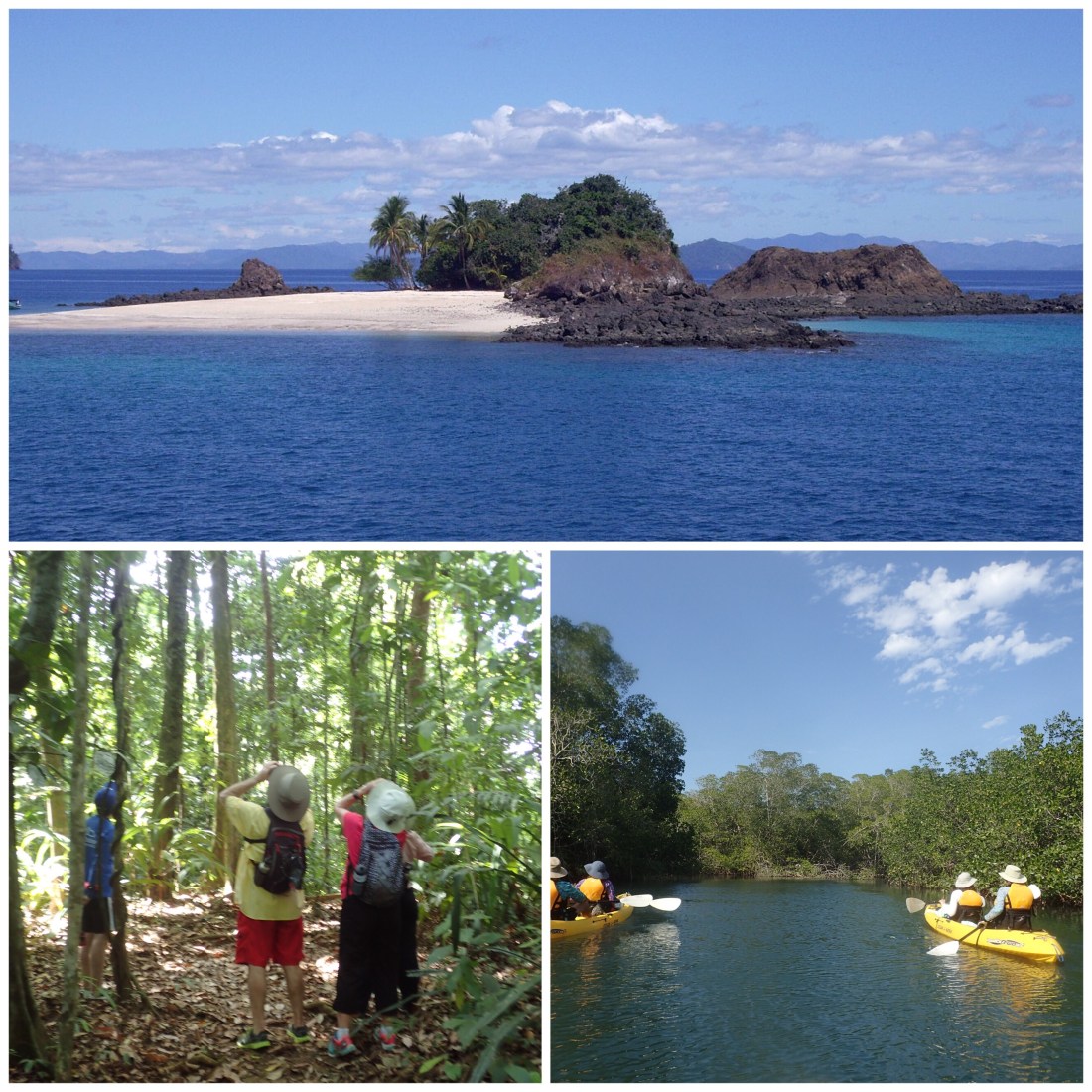
Small boat cruises mean you take the time to move slowly. A drift snorkel. A hike through the jungle for some bird watching. A kayak paddle through a lazy river past. Sure, some of these things can be seen from a big ship cruise or from a tour bus, but you don’t experience them. A big cruise ship has to run on a tight schedule, often set by the minute with no variation. Our first adventure cruise completely changed direction 45 minutes into the trip in order the follow a pod of orca — our itinerary was flexible.

The people who go on these adventures most frequently have had other adventures. So evenings are spent telling stories of past travels, recommendations for the best routes and tips on the best time to go. Friendship are made. Not necessarily something that can’t happen on a tour, but the conditions of the smaller experience make it more likely, if not impossible to avoid.

Of course, small group adventures tours aren’t for everyone. That isolation and escape from people costs a lot. The staff to traveler ratio bumps up the cost even more. Not everyone is prepared to pay the premium price or if they do pay that price, they want more comfort than an adventure cruise may offer. If you can’t use the all the gear — the snorkels, wetsuits, paddle boards and kayaks —you may not want to pay for the cost of this inventory. And most of these tours require physical agility and stamina that not everyone has. Big cruises are known for big food buffets, big pools and and entertainment — elements completely lacking on adventure tours.

But adventure cruises aren’t lacking in the finer things, depending upon your cruise company. Hot tubs, a sauna and massages were options on each of our adventure cruises. And for my money, getting up close to the animals, makes it all worth it. And that’s why I choose to be a traveler.

Whale of a story

The whole purpose of the trip was to see sea mammals. That and getting out of Seattle’s gloom and doom weather. We’ve seen whales in various places in the Salish Sea & Alaskan waters but this trip promised something more. And it delivered.

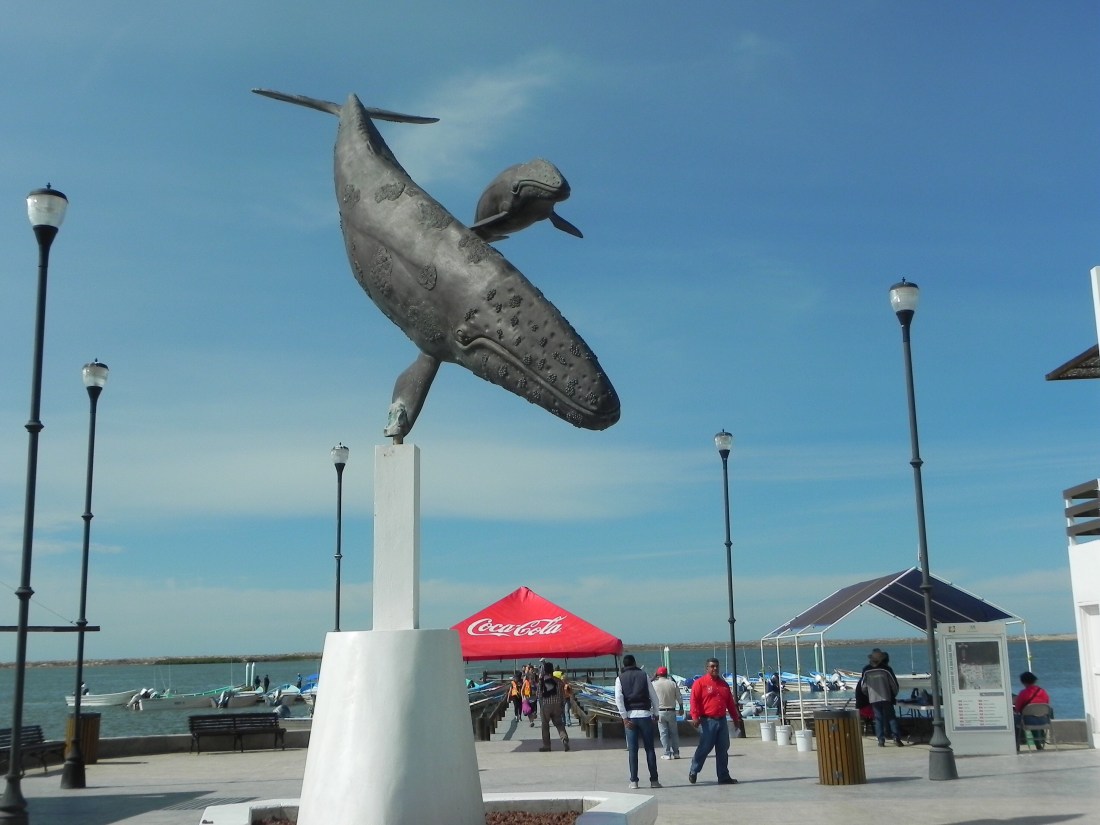
From the eastern shores of Baja, we rode in vans to Magdalena Bay where Gray Whales give birth to their calves. At three different times since Europeans arrived on this coast, the whales have been hunted to near extinction and still they survive. At one time their numbers were below 300 animals. Now there are likely over 26,000. Each year they make this 7000 mile journey from their feeding grounds to this large bay.

The town, Puerto Lopez Mateos, doesn’t offer much beyond the whales. And before tourism became a business, fishing kept the town alive. The cannery is still there and operating. Today there’s a school, a restaurant or two, a military outpost and the docks for the whale watching industry. Beyond the two or three paved roads, homes line the dirt streets.

But once we got to the docks, we could see what kept the town alive. Several stands offered whale watching expeditions. Cheap tourist trinkets were sold in other stands. A snack bar served hungry tourists.

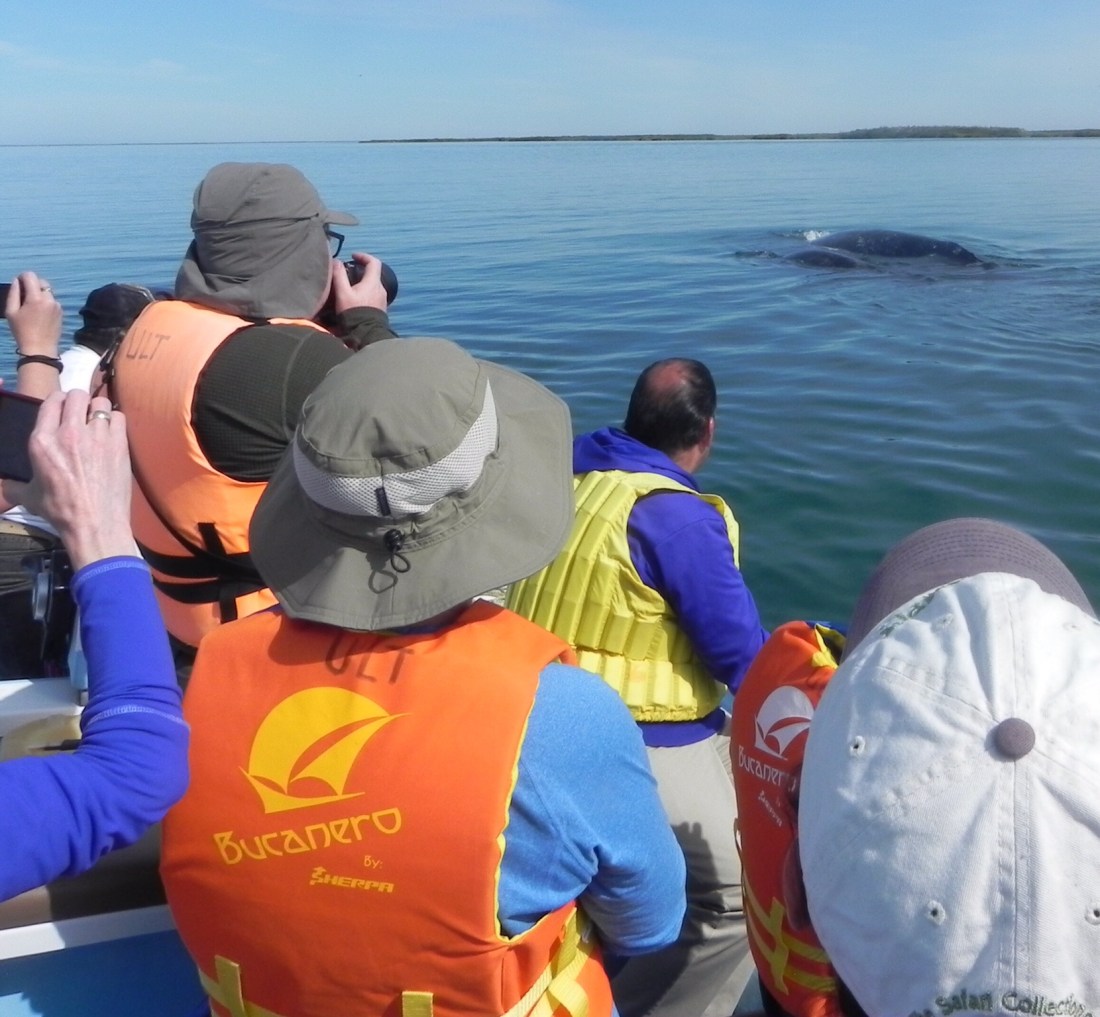
We boarded the pangas, the small open touring boats that would take us out into the coastal waterways. Eight or nine to a boat. Our panga had hardly motored more than 100 yards when we encountered our first whale. A mom with her calf, who in his excitement bumped up against one of the boats. I was surprised at how close we got to the pair, but it was the only time luck brought us that close.

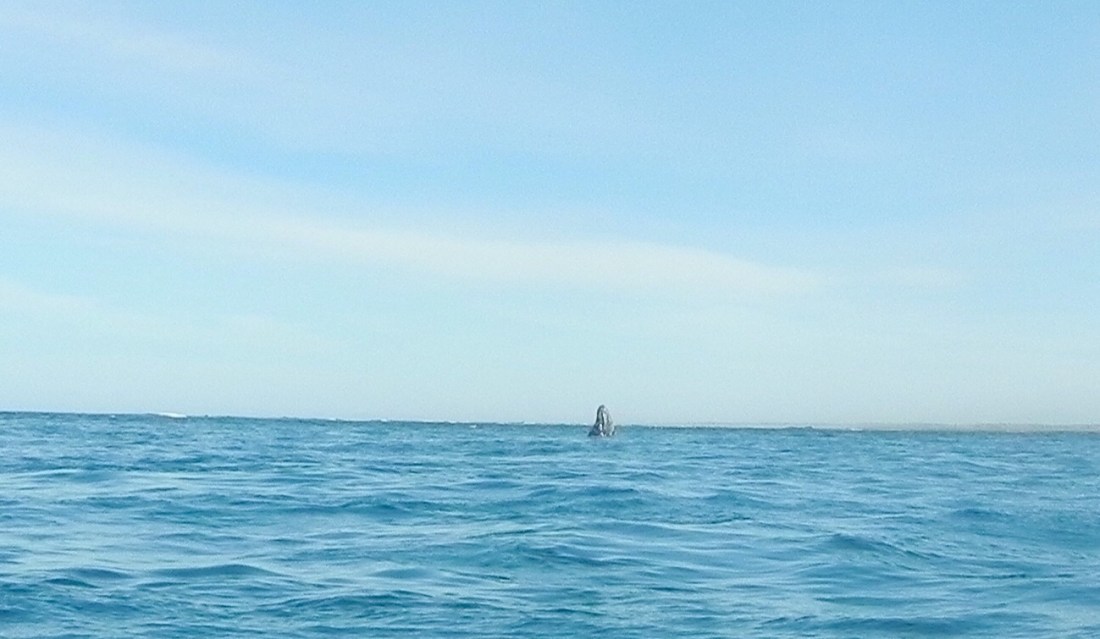
At one point our boat sat in the broad channel where Magdalena Bay opens to the Pacific. Big rollers came in from the Pacific and the whales were all around us. Our heads were whipping from one side to another as the other people in the boat kept seeing whales. All the tail splashing and fin slapping was happening at some distance. But closer by, whales again and again popped up doing a sky hop which we were told was how they looked around above water. Very impressive.

Later that day, back on the Sea of Cortez in the Parque Nacional Bahia de Loreto, just as the sun was setting, a Blue Whale and her calf surfaced several times around the boat. The largest animal on earth, it really didn’t look like much….a giant blimp almost completely submerged except for a long backbone, sometimes with a second small blimp next to it.

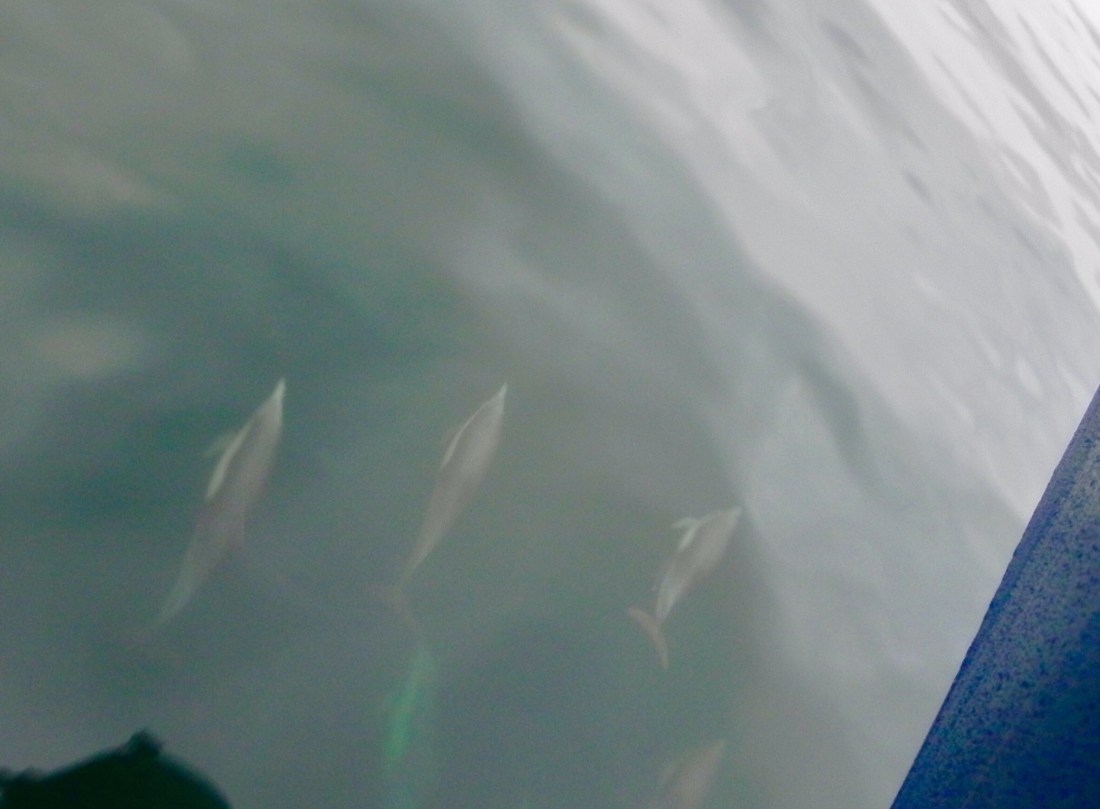
It was a day or two later in the same waters when the captain spotted a group of bottle-nosed dolphins. As we got within a couple hundred yards of them, they turned and headed right for our boat. It appeared they wanted to play on our bow wave, a feat we had experienced several times in our little chartered trawler in the San Juan Islands of the Pacific Northwest.

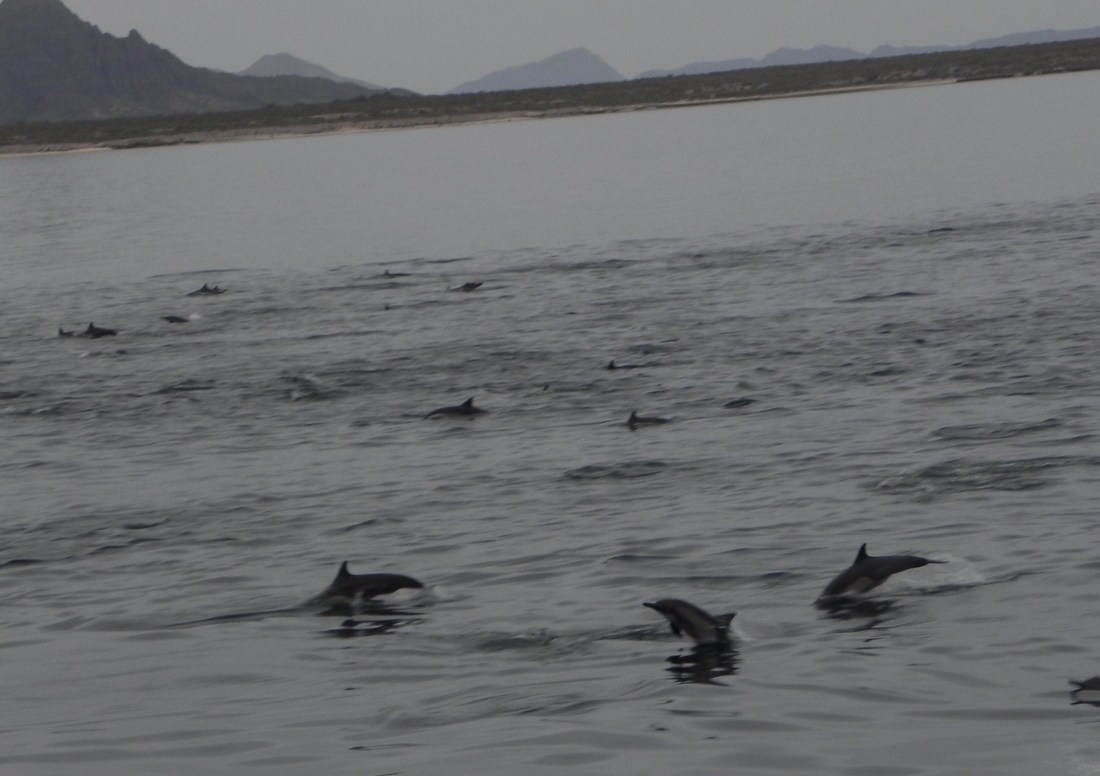
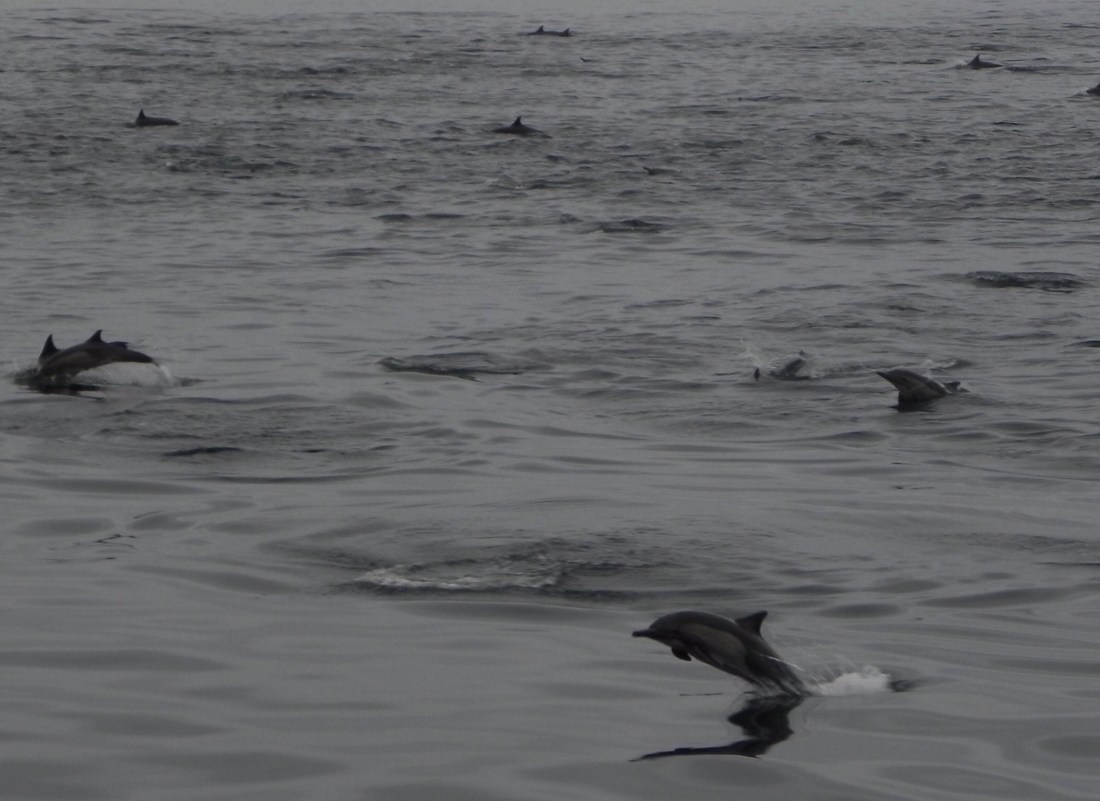
Later we spotted a huge group of common dolphins, probably 100 or more of the creatures, in a fairly tight knot, leaping and diving in a feeding frenzy. The captain piloted the boat through the group three times. Each time, many of the dolphins left their feeding to play with our boat. We all wandered down to dinner that night grinning. You just can’t help but react with a smile to the sheer exuberance of the dolphins.

But the best was yet to come.

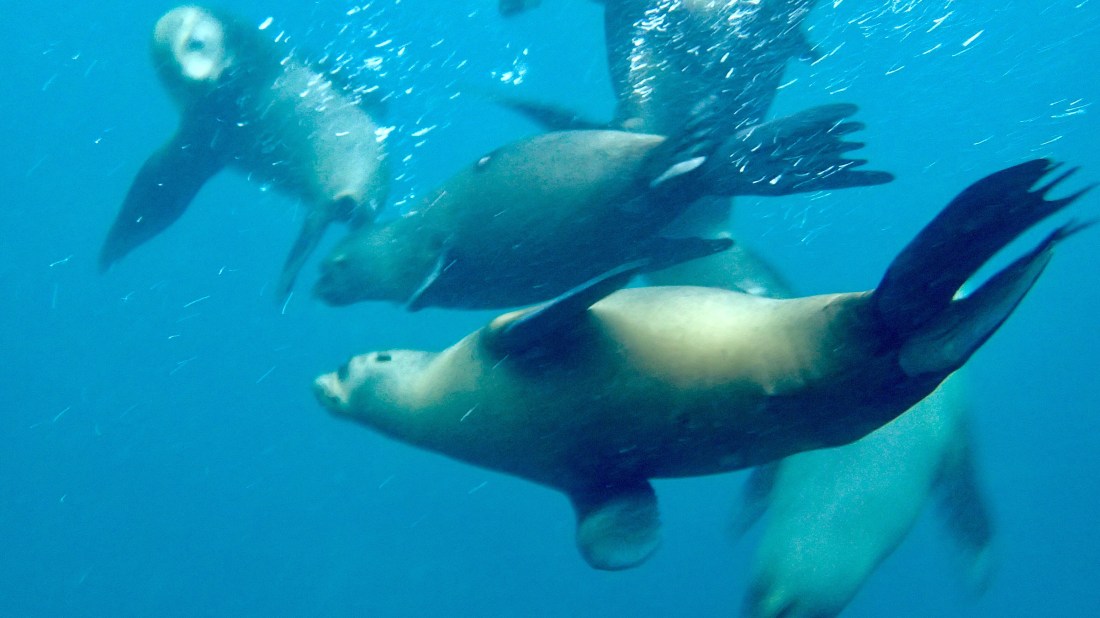
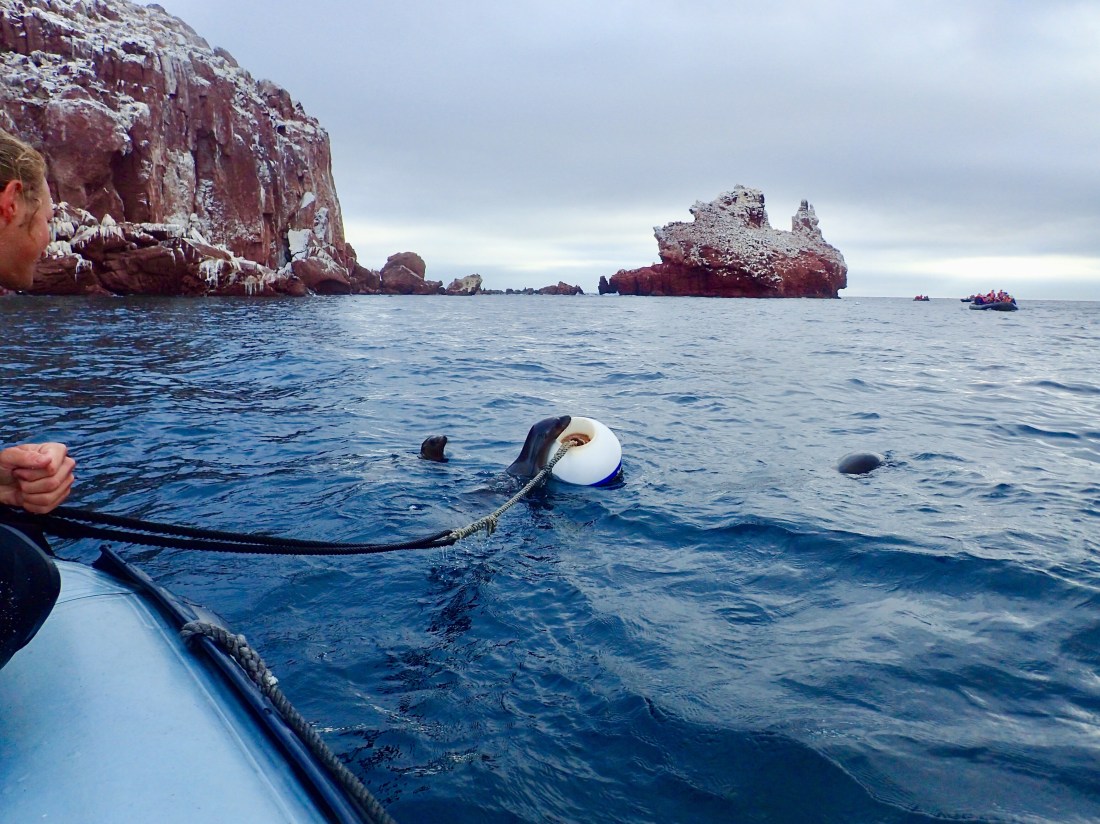
On the last full day of our cruise, we had to don our wetsuits by 7:30am and hit the water. It was an overcast morning which didn’t make the water look too appealing. But as our boat got near the rocks where the adult sea lions rested after a night of fishing, the juvenile sea lions made a beeline for us. One by one we rolled off the side of the zodiac skiff into the cold water and into the midst of a teenage sea lion party.

Adult sea lions, and particularly the big males don’t make as charming swim buddies. That’s part of the reason for the early morning snorkel. The big guys would be more likely to leave us alone. When one big male lumbered past us, I was grateful he was intent on getting home.

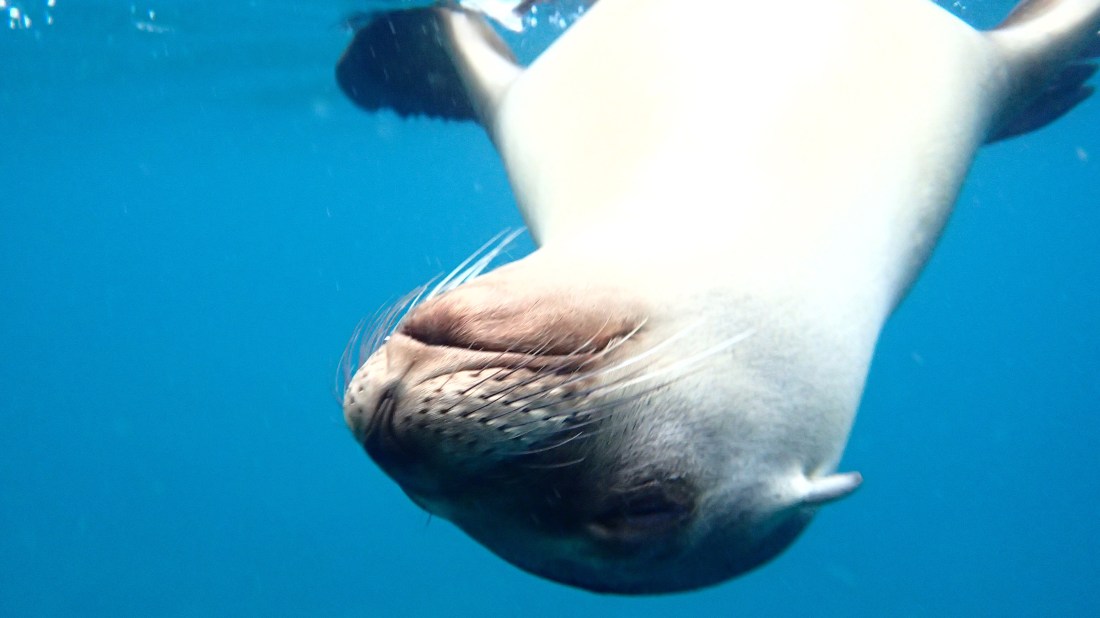
The juveniles were something else all together. Like frisky pups, they swam right up to our faces. They nipped at our fins. And I watched one guy bite on Peter’s fin and shake his head. I swear he as trying to steal it.

It seemed they delighted in sneaking up to us & darting in front of our faces. They watched us carefully as they swam past, the eyes tracking our movements.

Three of the pups found a puffer fish which they batted around like a beach ball. Glad I wasn’t like that puffer fish.

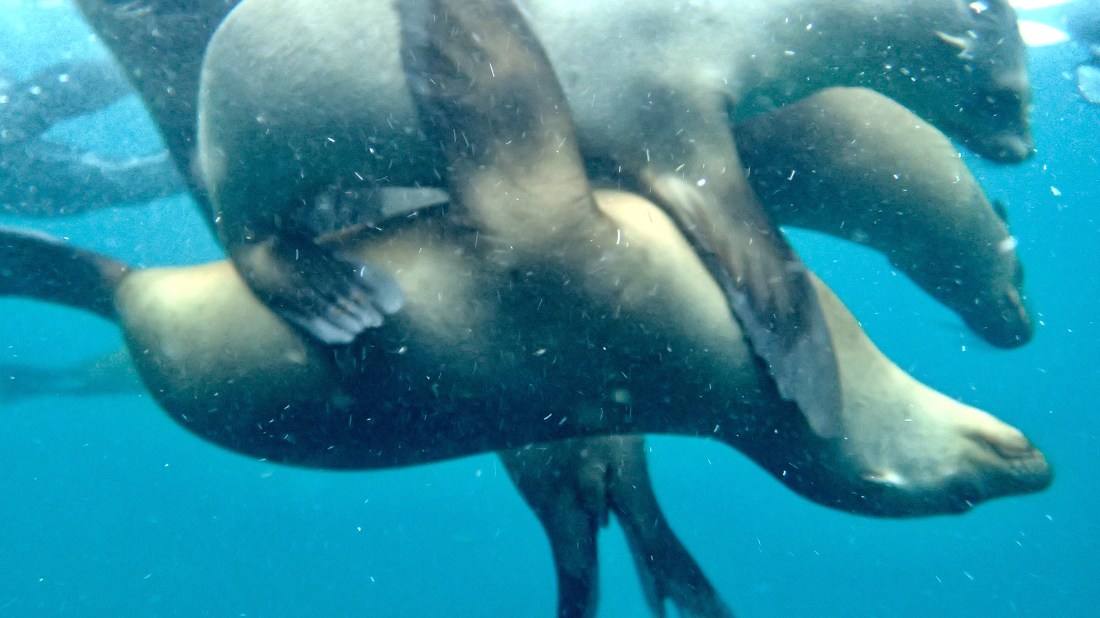
At times they abandoned their individual water ballet and clung together, looking for all the world like they enjoyed each other’s company.

They followed us out to our skiff at the end of our snorkel and seemed to regret us leaving as much as we did. Okay, probably not.

But was a grand ending to a week of sea mammals.

Mule riding in Baja:

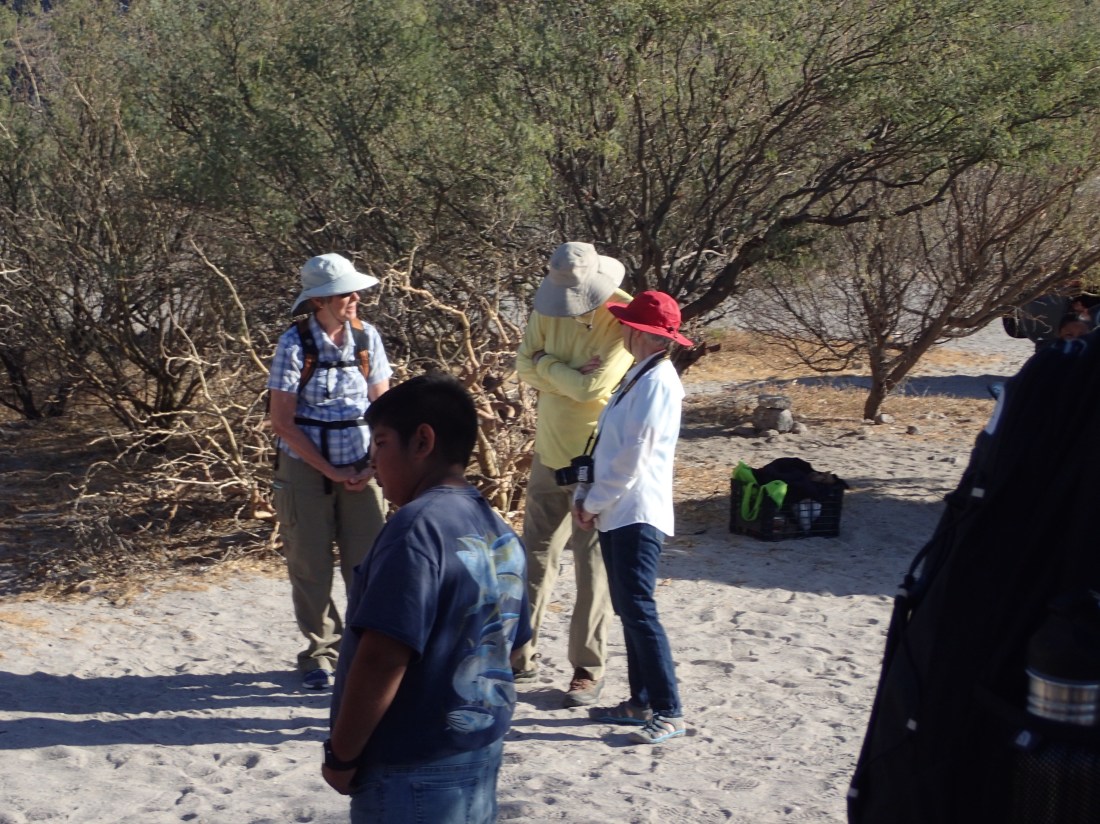
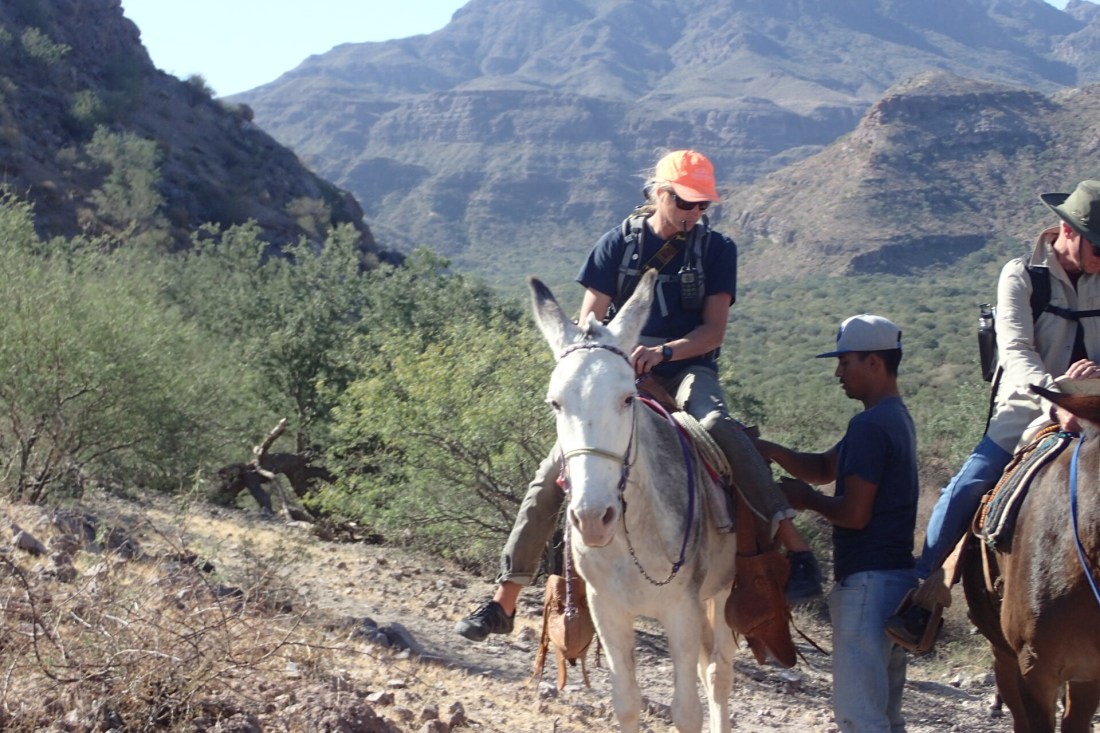
Riding a mule was never on my bucket list. But when it was proposed to the group of us, my thought was, “when will I ever have this chance again?” Quickly followed by, “just gonna do this once.” So my husband, my brother and I all raised our hands when they asked who wanted to go riding. We were on the eastern shores of the Baja Peninsula and the small boat cruise company had connections with a local family who would once a week gather enough mules to take groups off the boat riding.

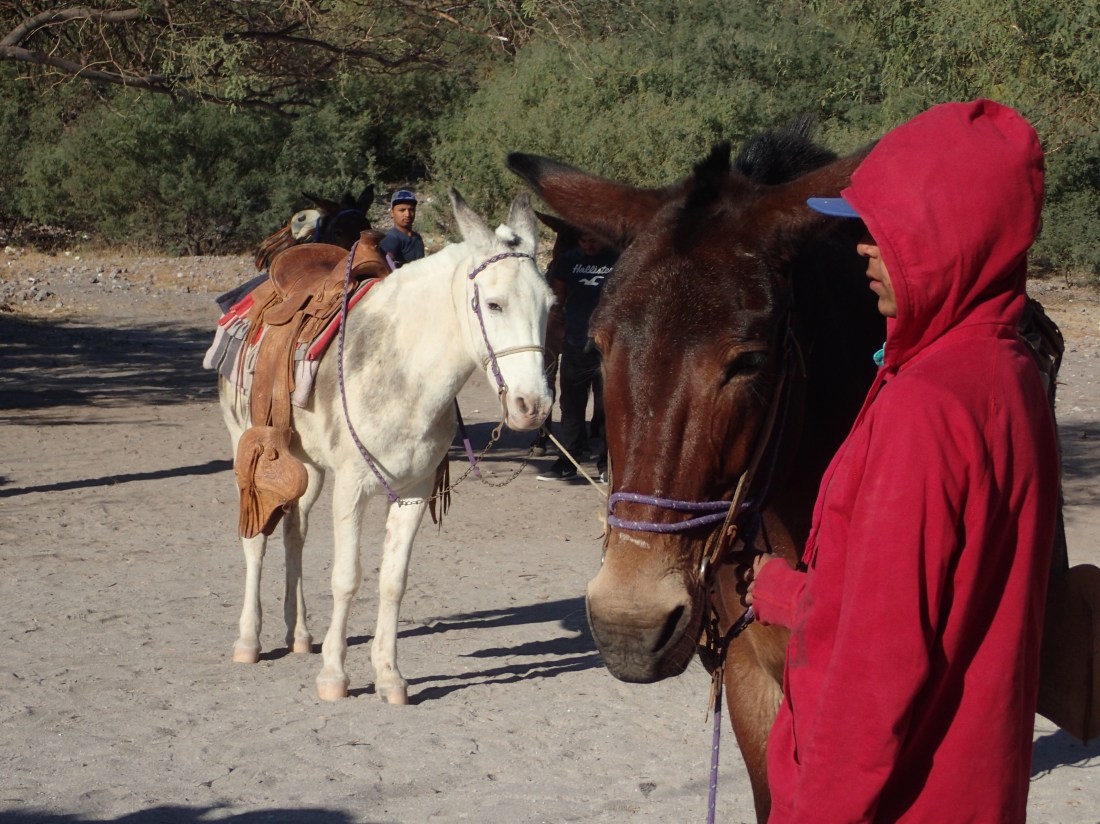
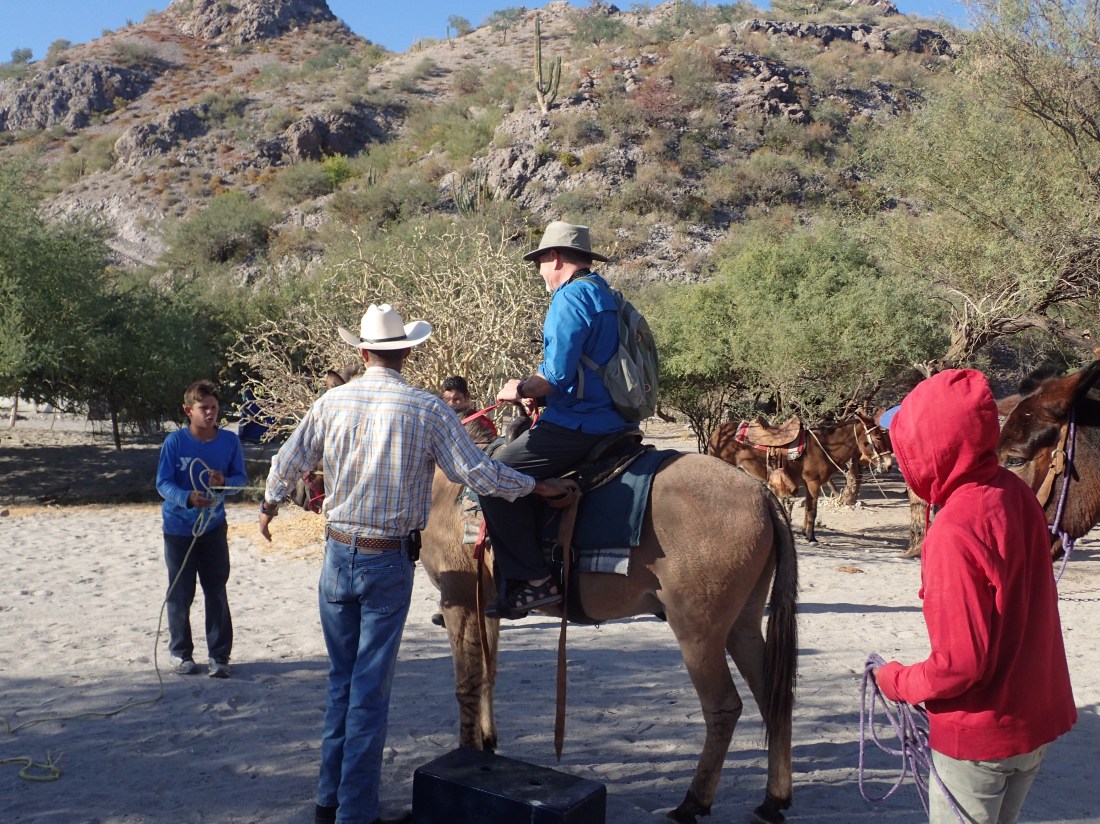
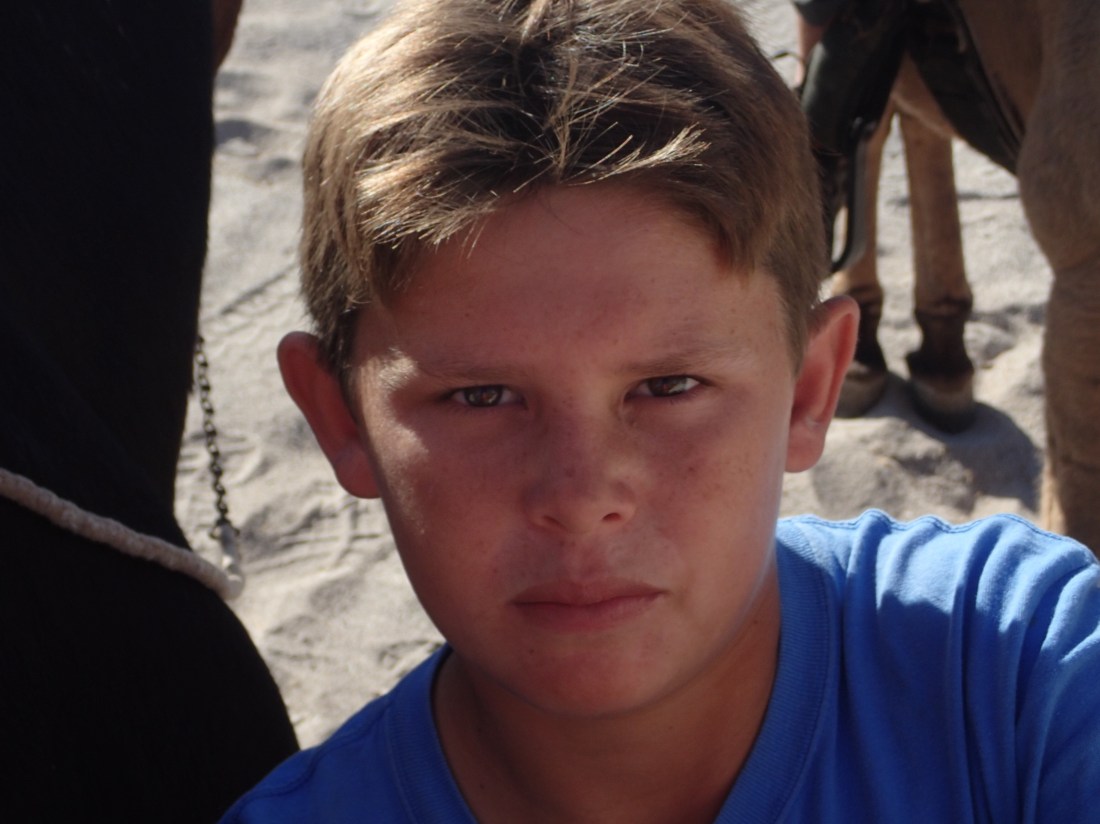
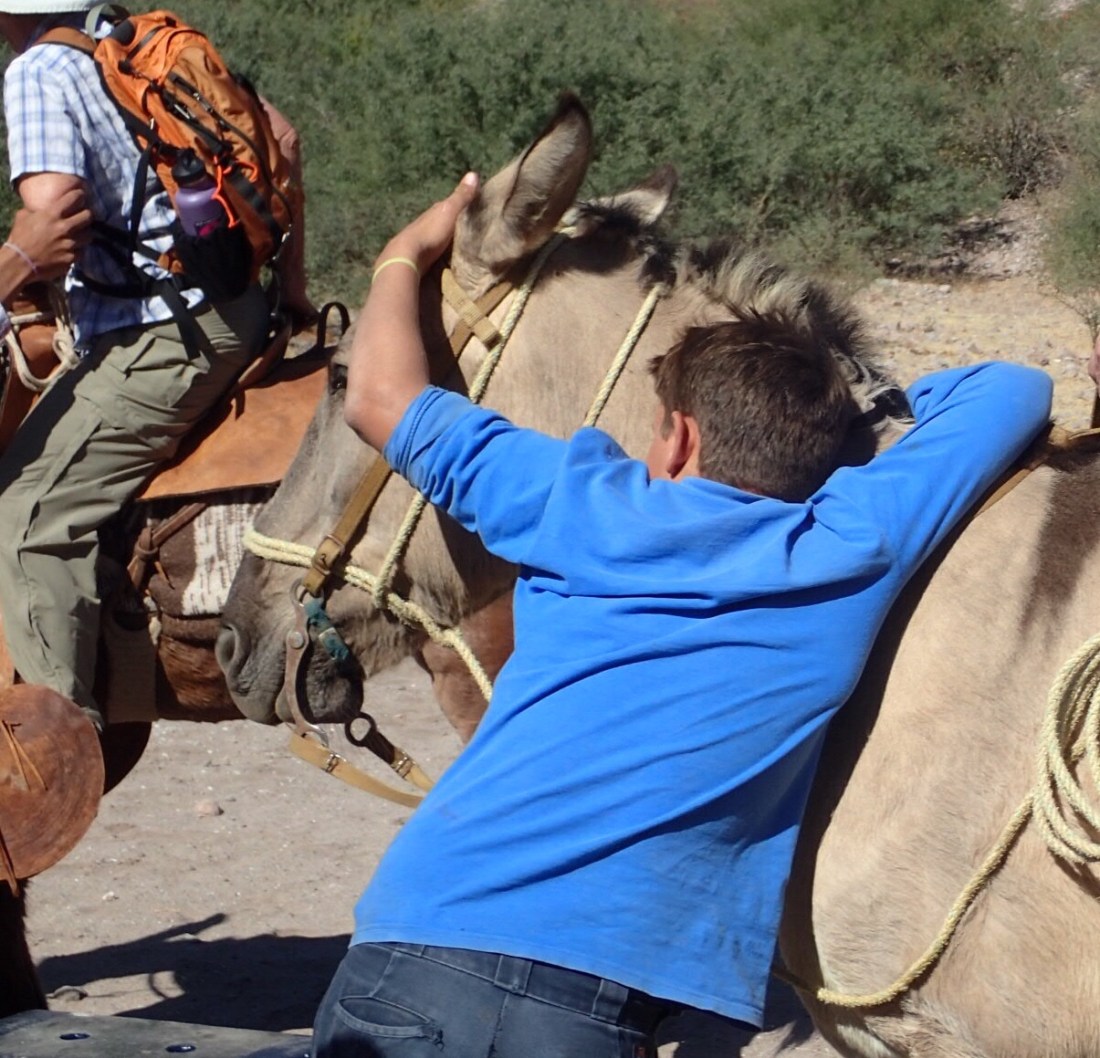
It started as a rather strange process, vaguely reminiscent of junior high dances or waiting to be picked for a kick ball game in grade school. The whole group of us stood in a line or rough semi-circle. The local vaquero stood in his cowboy boots beneath his cowboy hat, looking first at each mule as it was brought forward, then at the line of gringos and with a point of his finger and a nod of his head indicated who was to get on the mule.

Peter went first. Was that a good thing or not? Malcolm and I were among the last.

I tried to discern a rhyme or reason for how we were matched with our mules. By weight? By height? Were timid riders matched with mild mannered mules? Did zodiac signs come into play? But the cowboy has his method and no one questioned his wisdom. And after we were loaded on the mules, young boys led our mules to the side in a rather haphazard mix of nervous riders and fresh mules.

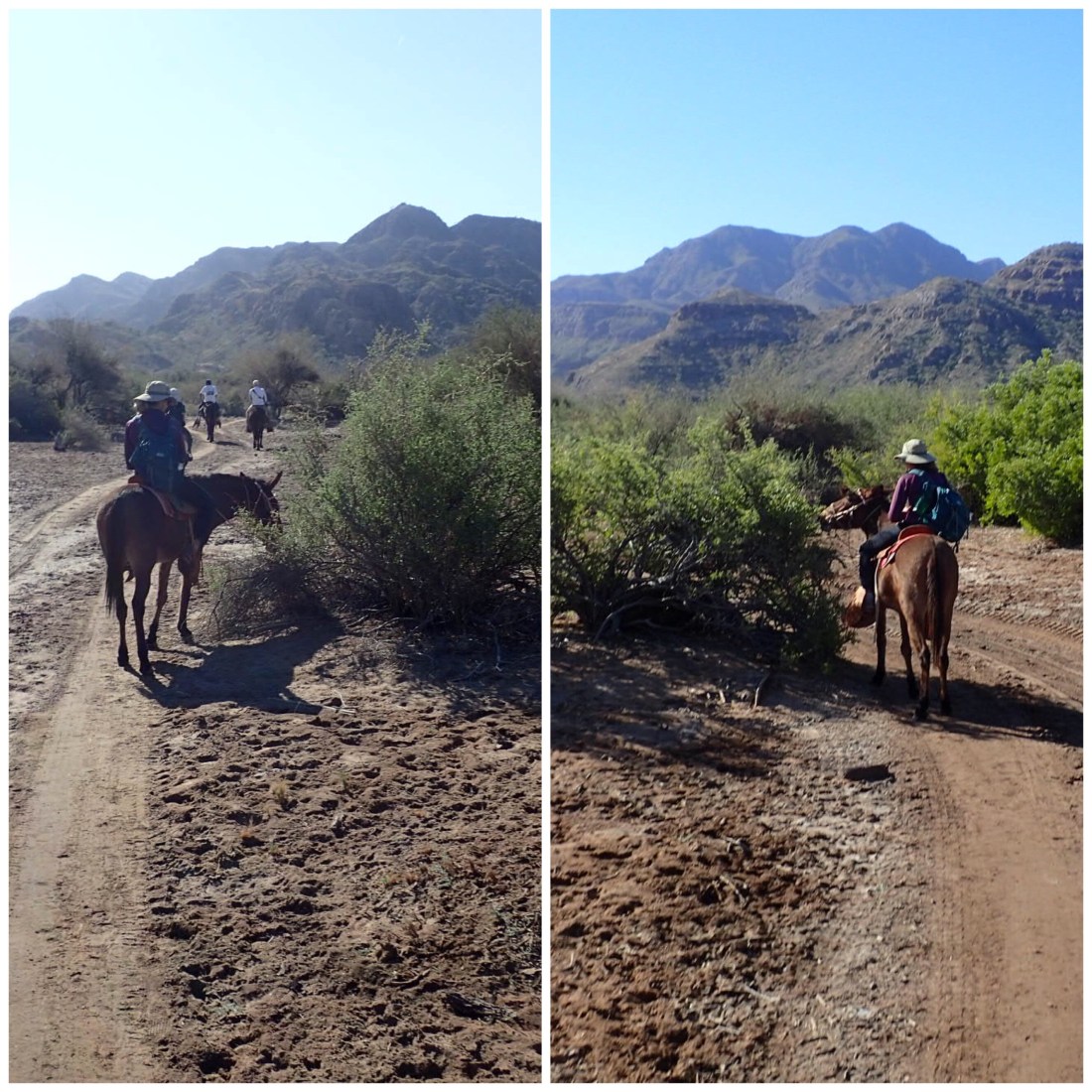
Our mule train started up a broad dirt road and I was encouraged when my gray mule moved right along to get to the front of the pack. Those initial steps were the only lively ones out of him. After that he had to be strongly urged to keep up, and picked up speed only to prevent the mule behind us from passing. Uphills were a real struggle. But that happened later.
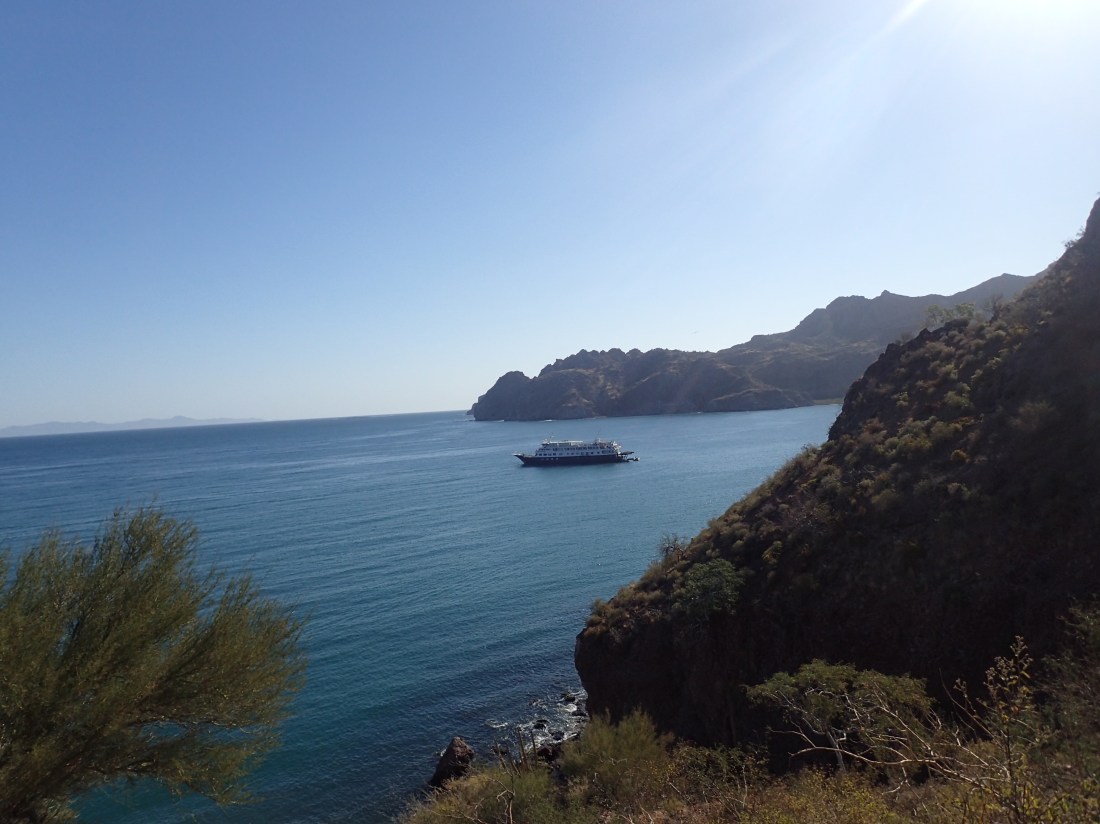
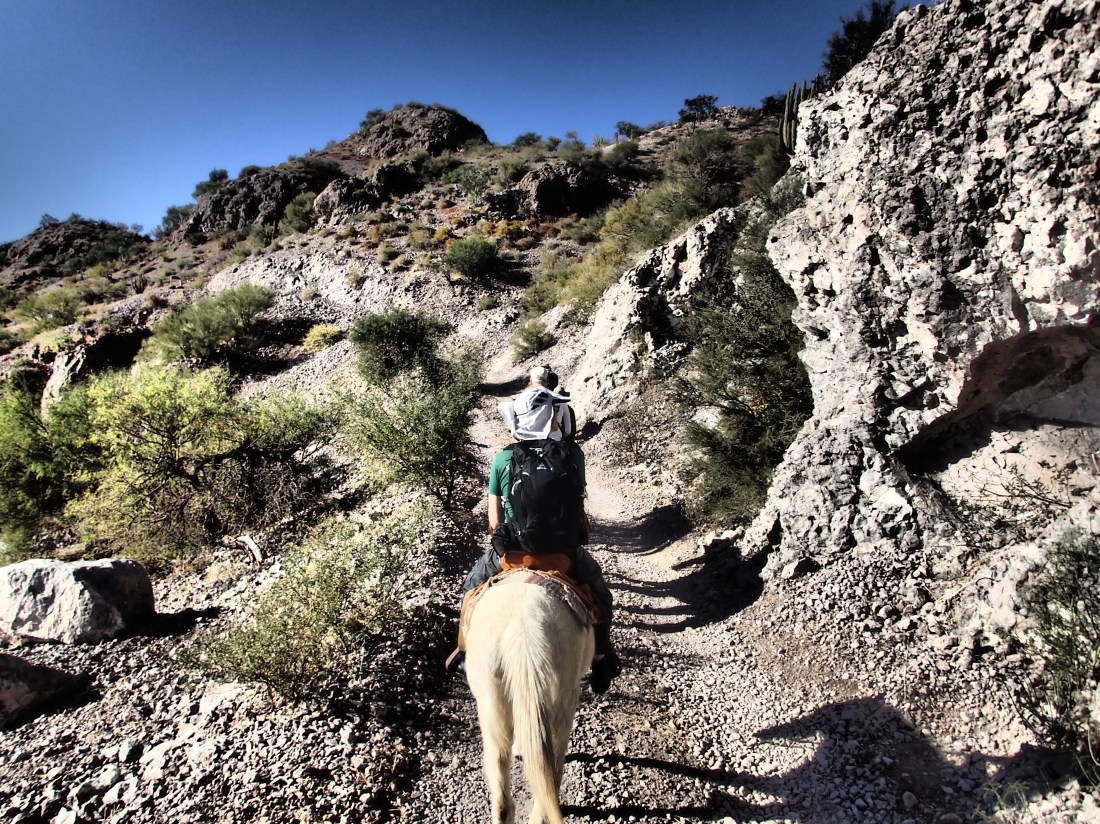
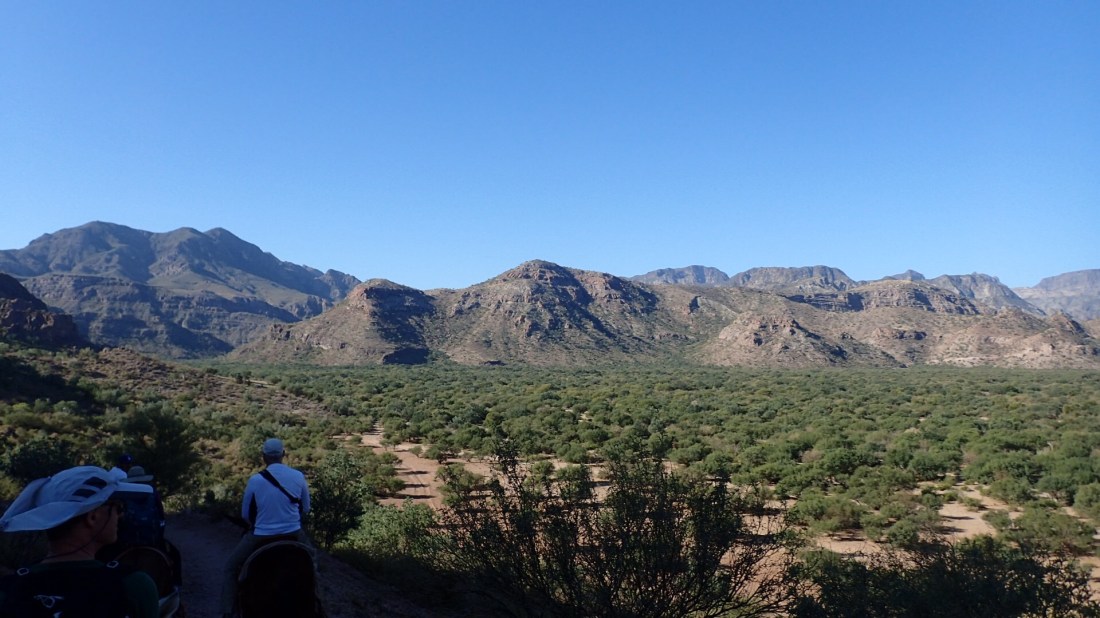
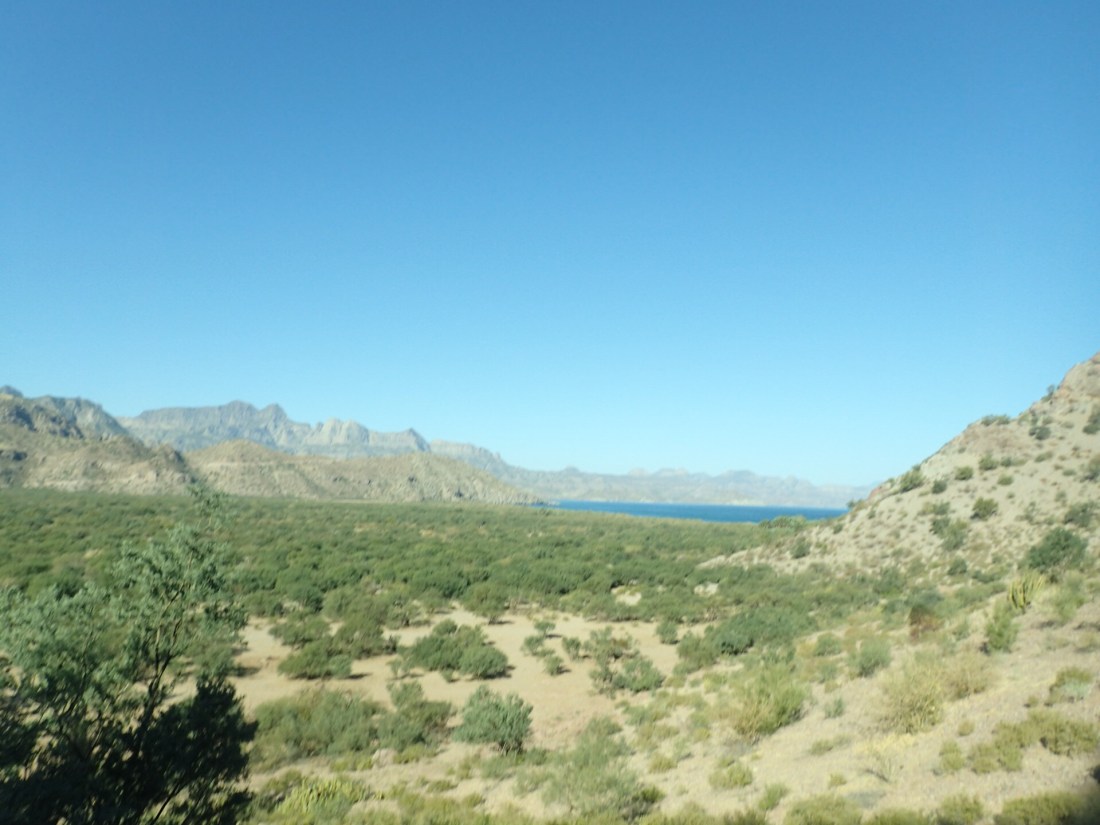
Initially the path was wide enough for a car and the views of the Aqua Verde Bay below us were spectacular. I began to feel brave enough to take out my camera.

I got feeling pretty comfortable, swaying and rolling to the easy gate of the mule. Figured I looked pretty competent, too. Felt sort of like an adult version of the pony rides at the zoo or at a carnival. Clearly, I thought to myself, we had made the right choice to go mule riding.

But as the reached to ridge line, the path narrowed. And the distance to be covered was revealed.

As the mule made its way through the brush on the valley floor, it became clear any control I thought I had of this mule was just an illusion. He knew the route. He was going to go at his pace. I was, quite literally, just along for the ride. The mule in front of us made that even more abundantly clear as he stopped at each bush that caught his fancy for a snack.

Stubborn as a mule is not an inappropriate phrase.

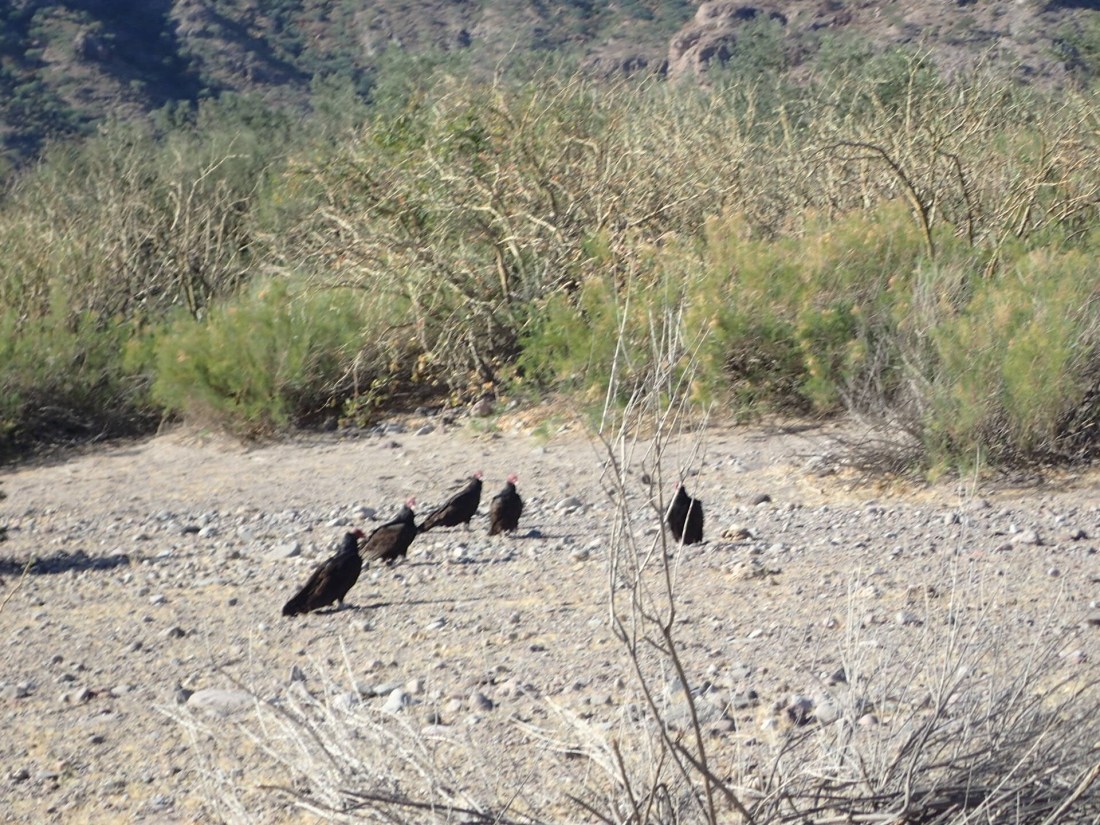
A small flock of turkey vultures sat on the ground not far from our mule trail, not the least bit disturbed by our presence, perhaps waiting for an errant rider to fall off a mule.

Not long after passing the vultures, I became uncomfortably aware of my sit bones. I had always thought I was well padded, but was discovering my natural padding was not quite where I needed it for this mule ride. And while the scenery remained gorgeous, I began to worry the end was not in sight. Just how long is a two hour ride?

The final stretch came when the Aqua Verde Bay was back in view. We stopped at the top of the ridge and our cowboys tightened the cinches on our mules.

We had been instructed to lean back on steep descents. At this point I began to worry if my legs would support me when I finally did get off. But I leaned back and hoped for the best. As a side note, our guides hopped off their mules and lead them down the steep terrain. What did they know that we didn’t? No pictures here; I was too busy holding on.

The good news is none of us embarrassed ourselves by falling off. And while we all walked a little funny for the first few steps, we were able to move. The real soreness didn’t set in for a couple hours and for days later I was rather painfully reminded of the fun from my one and only mule ride.

Driving in Sicily?

You’re nuts! Suicidal! Sicilian drivers are crazy, the worst in Europe! The roads are awful! The cities are a nightmare! You’re taking your life in your hands….

We heard it all prior to our trip to Sicily. Despite the dire warnings, we chose to rent a car because many of the big tourist attractions, including the best archeological sites, are in remote areas. And we wanted to spend some time in rural Sicily. You can’t do that very easily on public transportation.

Like most stereotypes, Sicilian drivers included, there is a kernel of truth. Yes, Sicilian drivers are more aggressive than their American counterparts (maybe New Yorkers excluded), but certainly no worse than drivers in the rest of Italy. And we never experienced the terror of a big Mercedes or BMW barreling down on you at 120 mph, lights flashing telling you to move over fast, like we did every few minutes on the German autobahns.

We noticed, however, there seem to be some “unwritten” rules of the road in Sicily.  They can unsettle the non-Sicilian driver, but they are mostly harmless…

–stopping the car in the middle of a road in traffic to talk to a friend is fine…

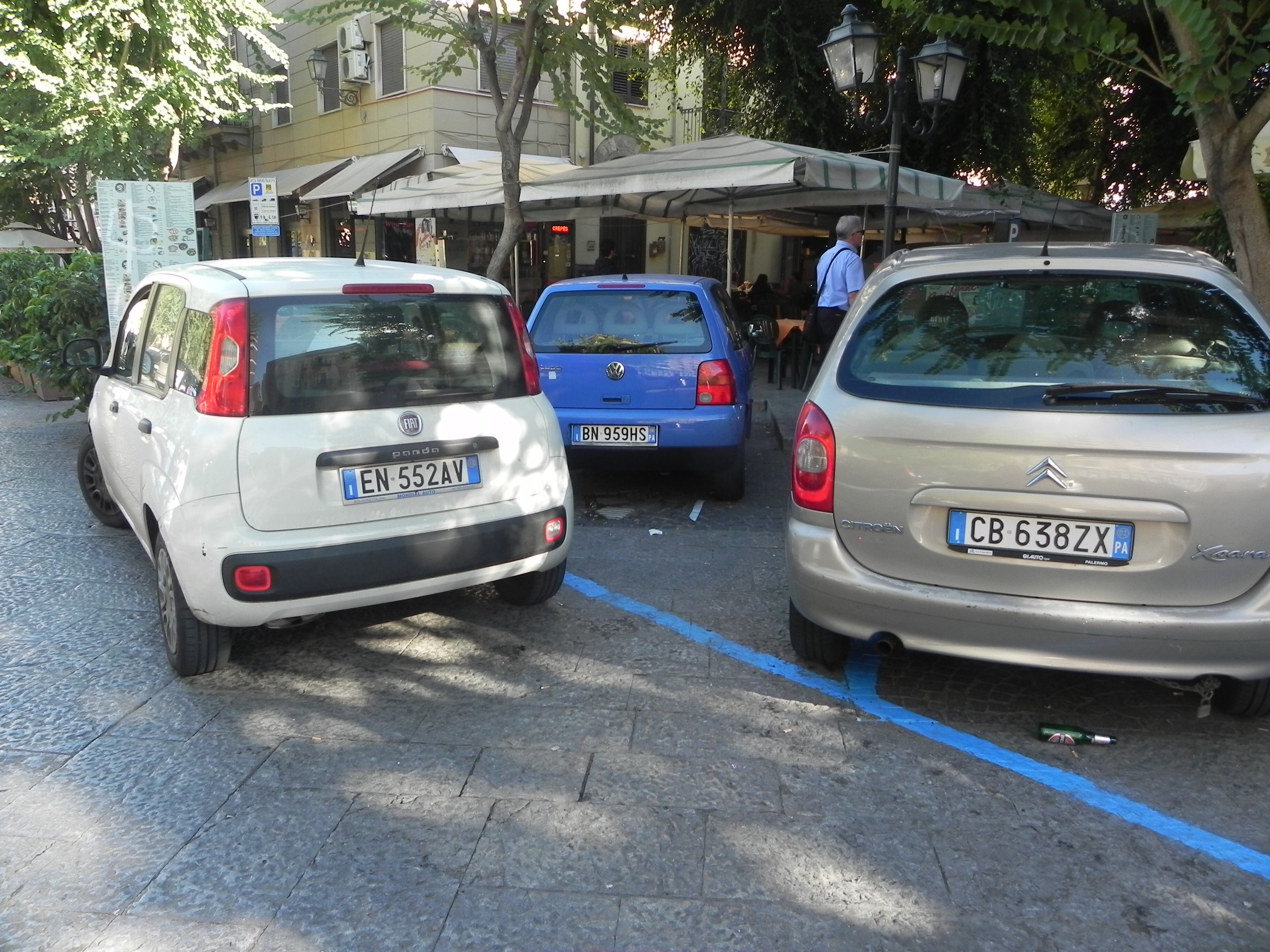
–parking on the sidewalk or curb, nose in, is ok as long as cars and pedestrians can sort of get around you

j

–pulling out from side street into a main street in fine as long as the cars on the main street can get around the nose of your car

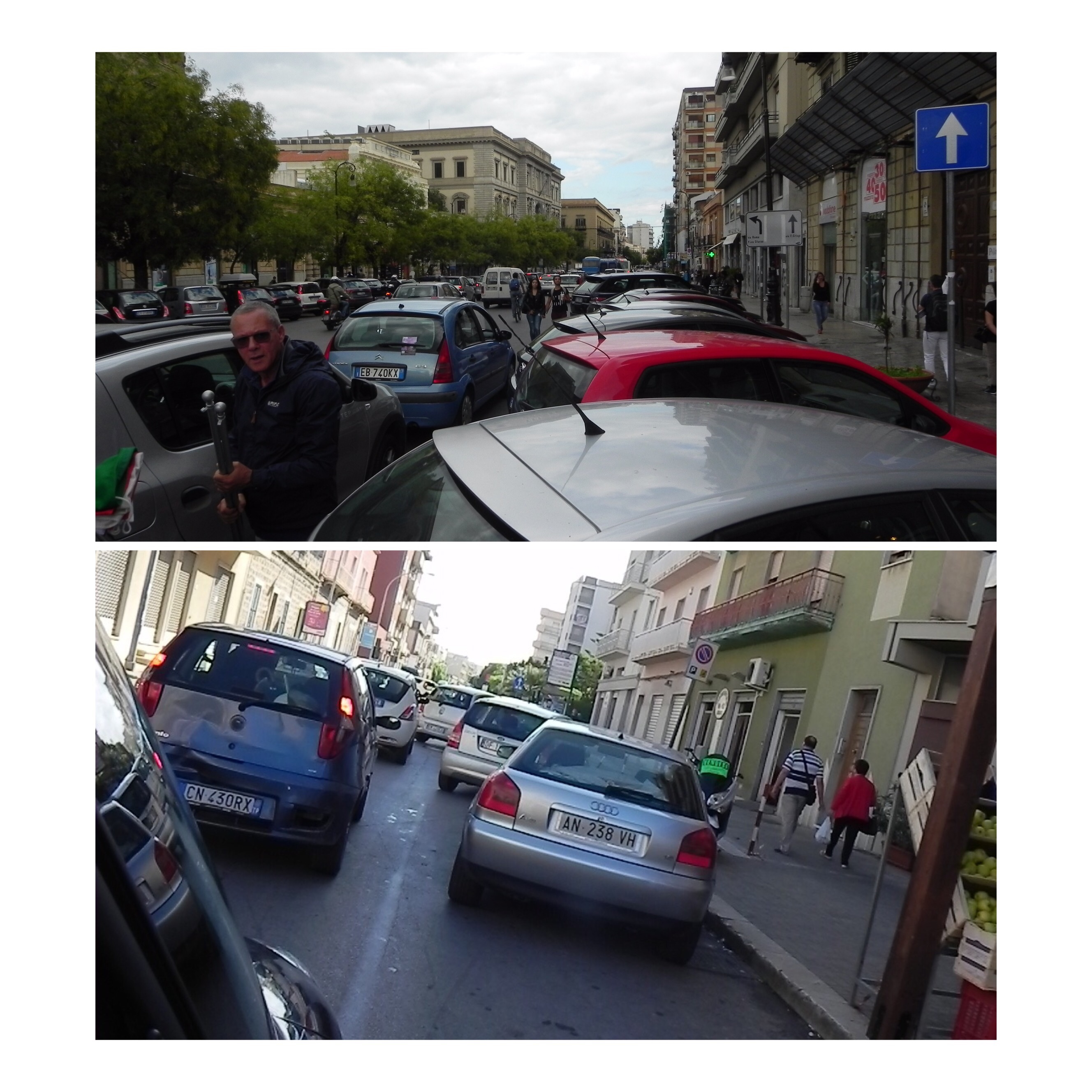
–it’s all right to make one lane into two or even three if you think there’s room

–it’s okay to pull to the side of the freeway for a quick picnic, or to stop on the shoulder to snap a picture

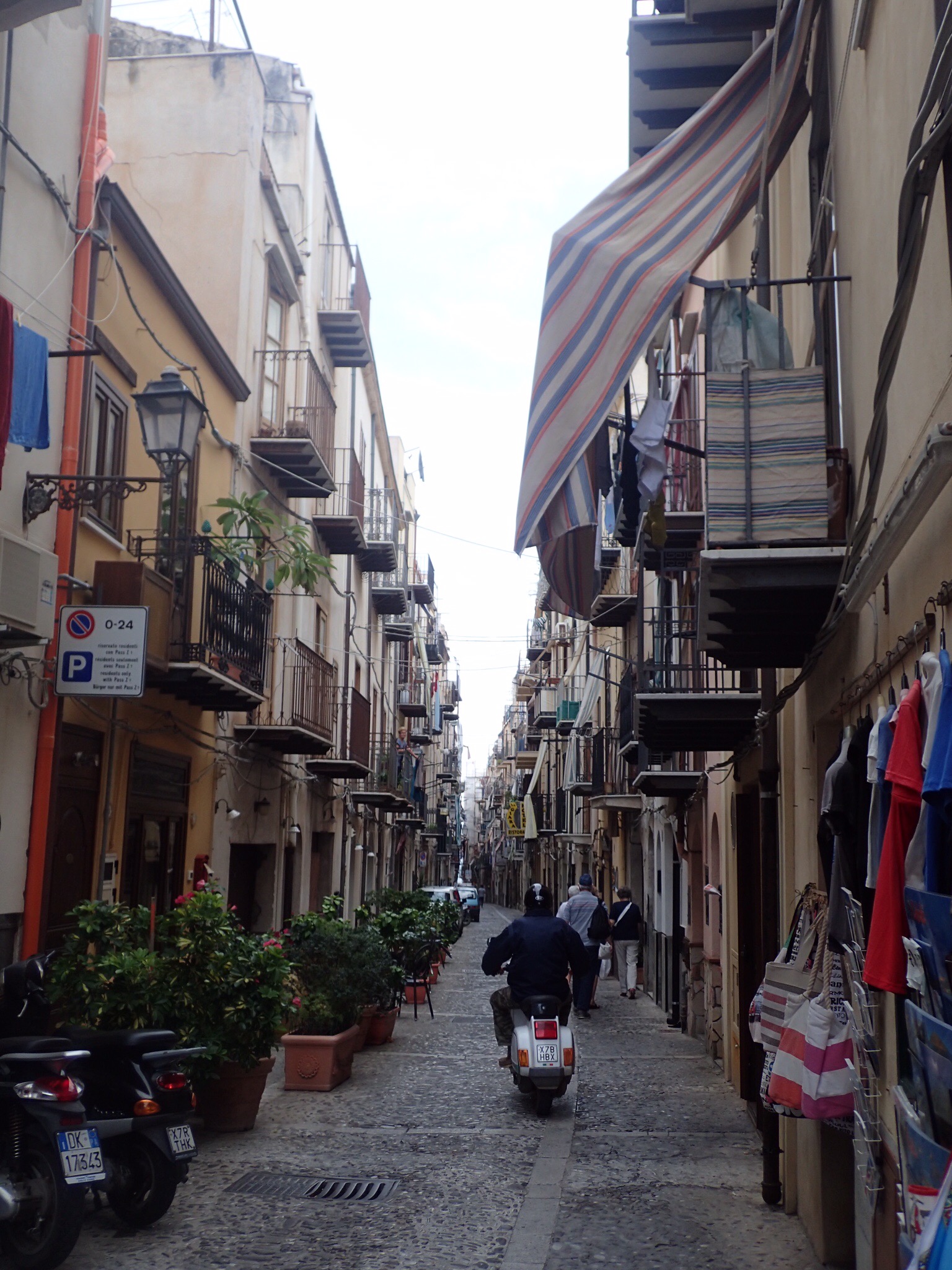
–motorcycles and scooters always have the right of way, and can create their own lanes, including on sidewalks and in pedestrian only zones

Still, using a little caution and common sense, driving in Sicily is not a problem. And it got us to some truly beautiful and remote places, far off the tourist routes. Here are some of the lessons we learned on our two week drive around Sicily that helped us reduce the anxiety about driving.

–Consider taking the full collision/damage coverage when renting the car.  I know it’s much more expensive (I never do in the US), but knowing that any damage to the car is covered really helps put your mind at ease.  If you don’t, certainly be very aware of what your policies or credit cards will cover.

–Get a small car. Really, the smaller the better. In the towns and villages the roads are narrow and parking is often very hard to find.  And squeezing past parked cars and dodging motorcycles is easier in a small car.

–Get a good map or GPS system.  We took a picture of a very good road map on the IPad of the day’s trip. You could enlarge it if necessary, you weren’t struggling with a large paper map in a small car, and you never needed a phone or Internet connection to view it. But know that once you get into the warren of small streets and one way alleys that make up most Sicilian towns, any map is useless. You are much better off following the roads signs that tell you the way through the town to the next village, and knowing almost any mistake can be corrected.

–Be sure your hotel, B and B, or Airbnb has parking, preferably secure parking.  Finding on street parking is very difficult in most towns and often limited to residents with permits.

–Recognize that you can never leave anything of value or that even remotely looks like a bag or purse in a parked car. Car prowling and break-ins are common in Sicily, in fact, everywhere in Europe. Better not to tempt fate.

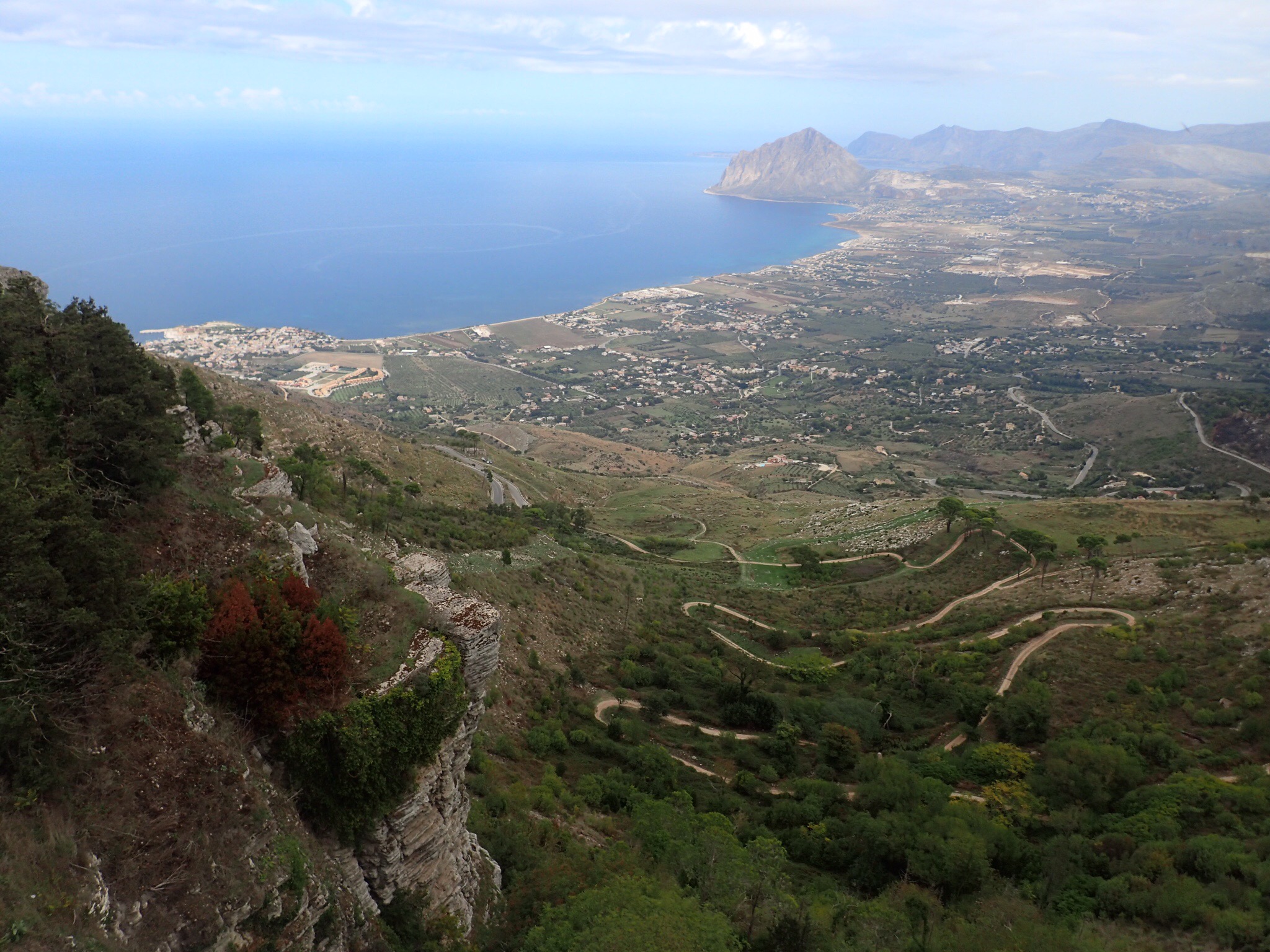
–Expect rural roads to be in worse condition than at home or in northern Italy. Lots of potholes, roads under repair. Particularly in the mountains, roads have unexpected dips of alarming size from erosion, or earthquakes or bad construction. This is a poorer part of the country and the roads show it. Be aware that the island is largely agricultural, so the occasional herd of sheep or cows may block your way. Also, Sicily is very hilly, even mountainous. Great views, but narrow, steep roads with dramatic drop offs.

–Avoid driving in the largest cities, like Catania and Palermo, and leave the driving to professionals—bus drivers, taxi drivers. I would never drive in Manhattan, central London, or Rome if I had a choice. The same applies here.

–Pick up and drop off the rental car at major airports. They are easily reached by well-signed highways. Also, within Italy, typically there is no drop-off charge so you can pick up a car at the Palermo airport and drop it off in Catania at no extra cost. That means not having to double back, giving you more time to tour.

Finally, take a deep breath. You are on vacation and getting lost or making a wrong turn is part of the adventure.  At least that’s what the navigator says when we get lost.

The Road to Ruins

We really weren’t prepared for what we found in Sicily. Yes, we knew that Sicily had been conquered many times–Greeks, Carthaginians, Phoenicians, Romans, Arabs, Normans, Spanish–and we knew there were plenty of ancient archeological sites to visit, but the size, beauty, and the incredible state of preservation of the sites was truly amazing. A caveat: while we have an amateur’s interest in archeology, neither of us is really very knowledgeable about the ancient world. We leave that to people smarter and more serious than us.  


Part of the reason that the ancient sites are so well preserved is that many are in remote corners of Sicily. That means a rental car or a bus tour. There are a few sites, such as Ortygia in Syracuse, the Greek theater in Taormina that can be easily reached, but most are a drive from the major cities of Catania and Palermo. The good news: a “drive” in Sicily usually means two hours at most. Another option is to join a group and take an excursion by bus, and we saw plenty of those in the parking lots adjoining the sites. The upside to a tour is that you usually get a knowledgeable guide–but not always. We did run into an Italian guide leading a group of thirty in the Villa Romana del Casale site reading verbatim from a guide book. Another Italian guide turned to us, very frustrated and angry, and said in English, “I don’t know why they let him in here! He knows nothing about this place.” The downside of a bus tour is that you are often in a crowd and herded at the guide’s pace, leaving little time to linger at what interests you.   


We opted for the rental car and a good guide book. That gave us the flexibility to set our own itinerary and pacing. The visits almost always involved a full day–most sites are enormous. Leave for the site in the morning, tour until early afternoon, eat lunch at a country restaurant, tour a little more, and home for dinner.

We visited five major archeological sites: the Greek theater in Taormina, Villa Romana del Casale, Morgantina, Valle dei Templi, and Segesta. Each was unique and world class. There were many more that we didn’t have time to explore. 

Easily the most accessible site was the Greek theater in Taormina, literally in Taormina itself. No car necessary–in fact, no cars allowed in the center of town. The theater is actually a Roman theater built on top of a Greek theater. The enormous size, and brick and cement construction techniques do scream Roman, not Greek. The setting is otherworldly, perched on a cliff, the open end of the theater framing a view of Mt. Aetna. Even in ancient times, if the performance was a bust, you had the view to console you. The theater is so well preserved, it is still used for concerts today. 

Villa Romana del Casale in remote central Sicily is famous for its absolutely stunning Roman floor mosaics with dramatic hunting scenes, bikini clad women athletes, scenes from the Odyssey, and lots and lots of exotic animals. The site itself is the ruins of a very large Roman villa, now covered and crisscrossed with elevated walkways for visitors. The walkways are extremely narrow and often very crowded. Get there early when the doors are first opened or, as a Dutch couple we met suggested, tour during the afternoon lunch break when every Italian & tour bus group is eating a very big meal.

The other archeological sites were large and open air, and with room for all the tourists and tour groups, so you never felt mobbed.

Close to Villa Romano is Morgantina, the remains of a substantial Greek city perched on two hills. Morgantina is more of a working archeological site, enormous, with only small parts completely excavated. No crowds, in fact, barely anyone at all, even though we were there on the once monthly free admission day. You definitely got sense of a real city — two commercial market places or agoras (the original shopping malls),  administrative offices, religious buildings, a theater, public meeting places and grid street pattern with very modern sounding names like West 7th Street. It was a very leisurely stroll in a beautiful setting. Unfortunately, unlike the other sites, there were no amenities (café, water fountain, gift shops) and most of the signs explaining the excavations had faded to a bleached white and were unreadable.

The Valle dei Templi is probably the most famous and visited ancient site in Sicily. And with good reason. Near the town of Agrigento, the Valle dei Templi stretches along a sloping ridge for a mile and has the remains of seven Greek temples, several almost perfectly preserved. The setting, overlooking the sea, is breathtaking. The star is the Temple of Concordia. The size of the Parthenon, it is everything you want in a Greek temple–perfection of proportions, fully intact, and a stunning location. In addition to the temples, the Valle also has a remarkable “garden” in a gorge below the ridge full of citrus trees, palms, and other exotic plants. Here since ancient times, it offers a cool respite from the heat. There is also a moving modern addition, a memorial to heroes who lost their lives fighting violence and corruption around the world, including the two Sicilian judges, Borsellino and Falcone, who were murdered by the Mafia in 1992.

Perhaps the most evocative and picturesque of all the ancient sites we visited was Segesta. It is about and hour and a half west of Palermo in the hilly, remote Sicilian countryside. The good news is that the main east-west freeway goes right by the site so it easily reached by car or bus. The magnificent temple of Segesta sits by itself below the ancient city of Segesta. When you climb up the steep hill (or take the shuttle bus) to the main archeological site, you get a truly breathtaking view of the temple below. Be prepared to fill up your camera’s memory card. The ancient city of Segesta has it all–a theater, an agora, fortified walls, kilns, ancient public baths and toilets. And the views! The temple below, across the rolling hills with olive trees, and out to the Gulf of Castellammare. And while we were touring, the view included a huge flock of sheep being herded by three dogs and shepherd, bells clanging. If you could visit only one ancient site in Sicily, Segesta would be our recommendation.

Sicily truly does offer the amateur archeologist or just curious tourist a lot to choose from–the only downside is which of the many world class ancient sites to visit.

Oh, Canada!

I used to travel a lot for my work, logged a lot of frequent flyer miles and loved being upgraded. And I got spoiled. Very spoiled. So as long as we had the miles since retiring, we traveled business class on any long haul flight. Four or five trans-Atlantic trips ate quite a hole those accumulated miles. And we have discovered with each progressive year, it has become harder and harder to book European trips with miles, even when you’re willing to leave from any west coast city.

Meanwhile our desire to travel hadn’t dwindled. So here we were, looking at another big trip and needing to buy a ticket. I know, no sympathy for us.

A quick check of the online consolidators showed a huge range in fares, depending upon the airlines. Qatar Airlines looked promising with the lowest fare, but only out of Chicago or a few east coast cities which would have been an additional cost for us. And did we really want to fly to Doha? Emirates was the most expensive option, but what do you expect for your own cabin? We settled upon the cheapest, British Airways, which remained the best deal even including their outrageous fees for the privilege of landing in Heathrow.

After entering our destination, preferred travel dates, number of travelers, frequent flyer and trusted travelers numbers and all the other info the website wanted, we examined our choices. A ticket from home to South Africa with a stopover in London got us thinking about getting off the plane in London for a couple days and spending some time letting out bodies adjust to the change in time zones. So we re-entered all the info, this time asking for a multi-city ticket which would allow us to stay in London.

Opps. Price jumped by nearly 25%! For the privilege of leaving the airport we added nearly a thousand dollars to the cost.

We then tried booking two separate round trip tickets. Home to London. London to South Africa. Total price was even higher. We were about the reconcile ourselves to arriving in South Africa after two 10 hour flights and just skipping the layover in London when a friend suggested we look at Canadian departures. For us, just three hours from the closest Canadian airport, leaving from Canada was a viable option

A quick online check showed a couple flights a day out of Vancouver, including British Airways. We booked it, still a competitive price even with the taxes and additional cost for the layover in London. While reading the fine print, we realized the price quoted us was in Canadian dollars, a twenty-two percent discount for Americans at the current exchange rate.

Bottom line? Flying out of Canadian meant we were paying for one of the cheapest direct flights but getting the multi-city experience of four days to play in London. Or put another way, for the cost of a tank of gas, we were saving enough money to pay for our lodging and food in London for three full days. A no-brainer.

Why don’t more people do this? Even if you had to fly to your Canadian airport, you could still save money. A cousin had a similar experience on her last trip to Europe. By flying out of Canada on a plane that was routed through her US hometown airport, she saved $300.

So not only does Canada have better health care, a more sane approach to gun safety, it also offers better airfares! Oh, Canada!

Bringing it home: food souvenirs

Okay,  so we’re food obsessed. Ask anyone who has traveled with us and they’ll report we’ve dragged them to farmers’ market after farmers’ market with us ohhing and ahhing over the mushrooms, the tomatoes, the melons, the grapes.  And that’s before we get to the fish, dried salamis and bread.

And after we come back from any trip, the cuisine of the last place we visited creeps into our meals. This trip we were wowed by a couple things about Sicilian food.

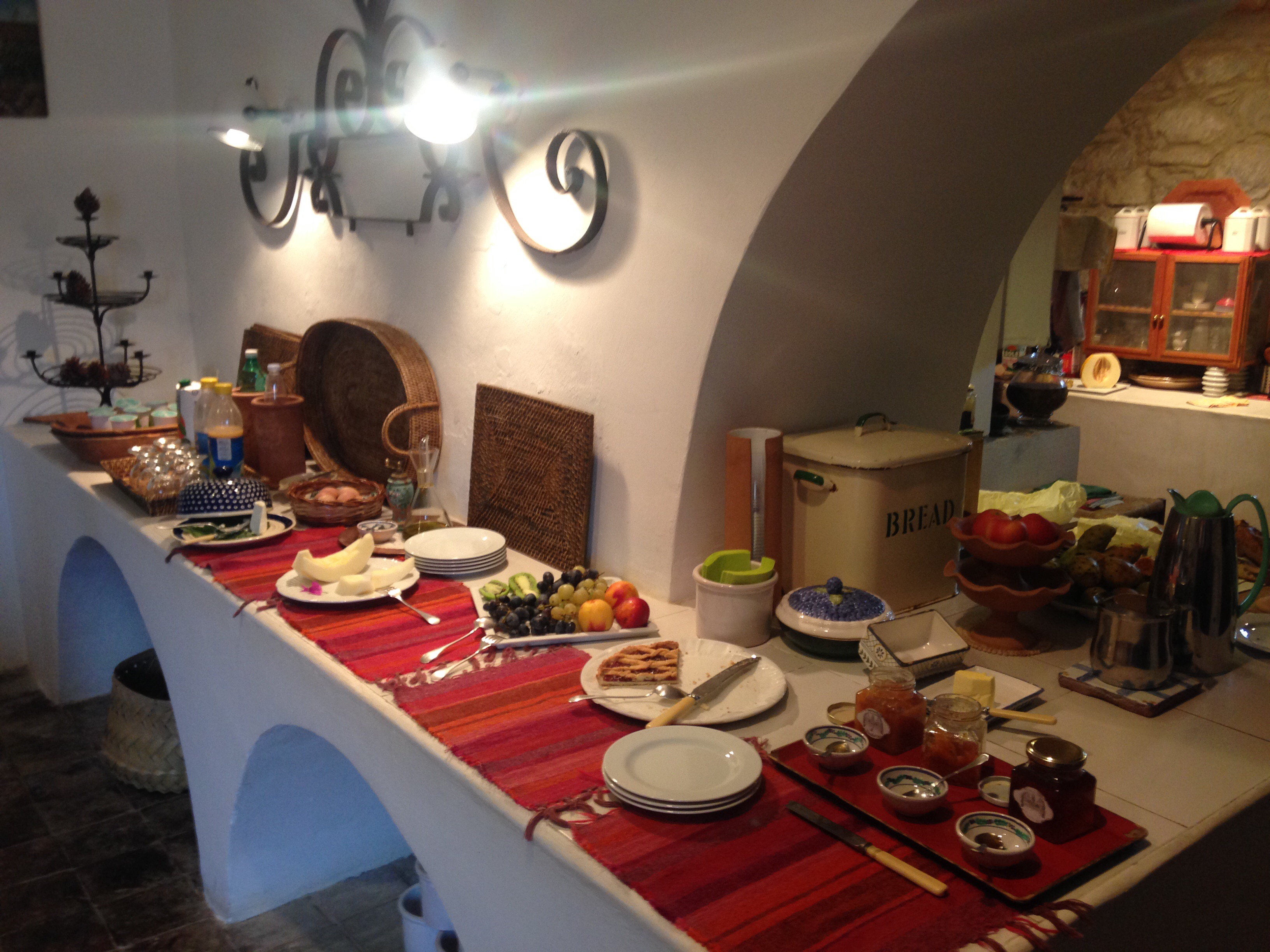
In the agriturismo where we stayed outside of Enna we were served a lovely breakfast. Coffee, juice, fresh breads with homemade marmalades and fresh fruit, including prickly pears. But the stand-out dish was a local creamy ricotta cheese our host served with a halved hard cooked egg and drizzled with her homegrown olive oil. Her invention and outstanding!


So good in fact that as soon as got home we began to try to replicate the dish. First a trip to our favorite Italian deli and grocery store for a top notch olive oil. Then purchase some cage-free eggs. And the final step was making our own ricotta, which turned out to be easy to do. After checking out a number of recipes, we settled upon a simple one — gallon of whole milk (several sites said to avoid organic or ultra-pasteurized milk), lemon juice (alternative to vinegar which sounded unappealing) and salt. Heat the milk to 185-200 degrees, add the lemon juice and let the curds form. Separate them from the whey and drain. (Whey can replace water in my bread recipes.)  And you have ricotta cheese. So we were ready.
 Breakfast from Sicily!

Damn good. Next time, a bit more salt in the process and a little less pressing or draining of the curd. The cheese was better the second day and great on toast with a bit of lemon peel, honey and olive oil. Lesson learned? Top notch olive oil is essential when it’s the main flavoring. And a little goes a long way!

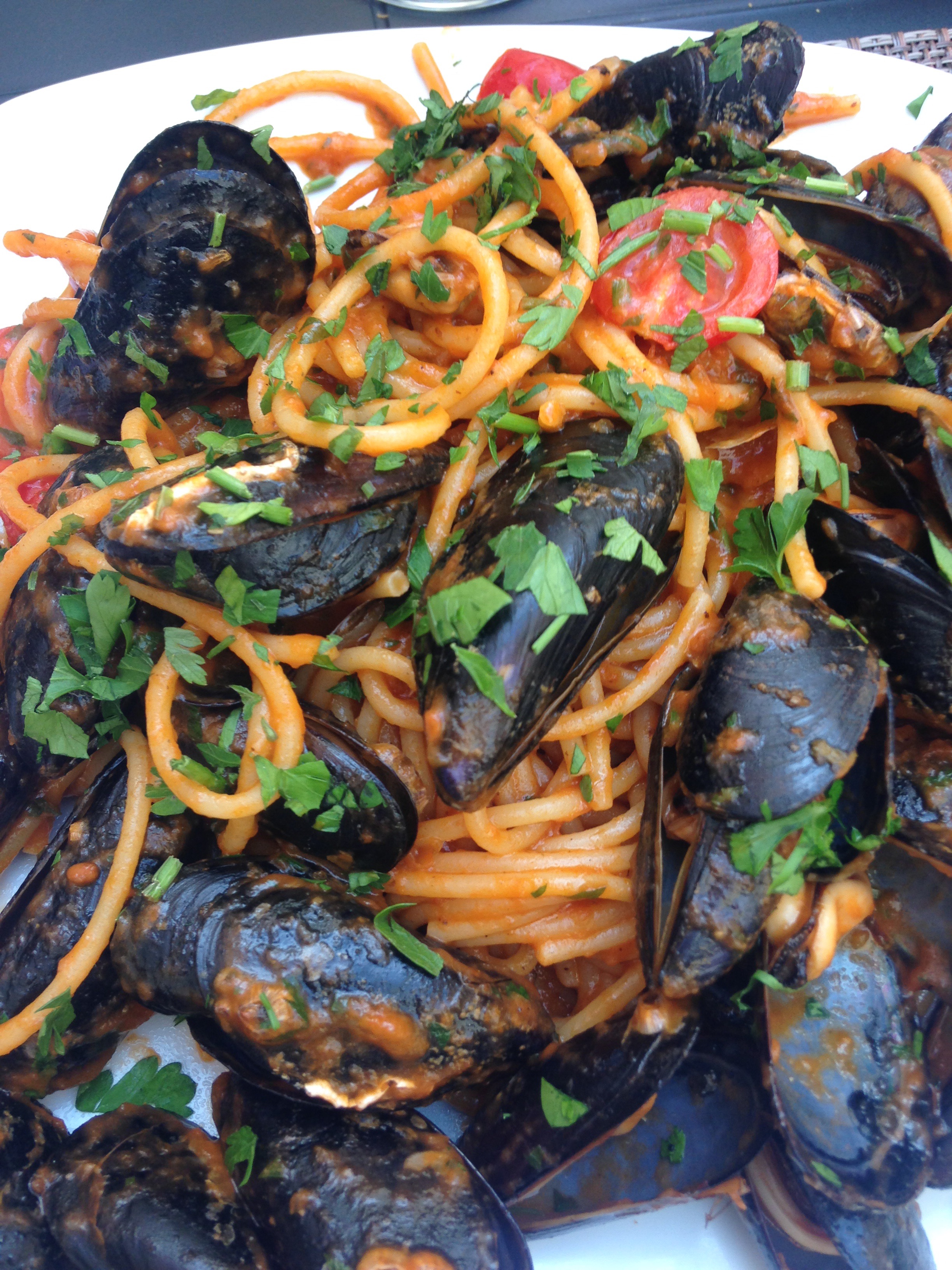
Sicily offered lots of pasta options. Pasta with sardines is the regional specialty which didn’t quite grab us. Pasta with mussels was good.


But the pasta that stood out from all the seafood-based versions was pasta Trapanese. It’s a pesto of sorts tossed with the local pasta, bussiate–a long corkscrews pasta that is rather thin and a bit rough. The best version of the sauce was a mix of finely ground almonds and hazelnuts and roughly chopped cherry tomatoes, seasoned with basil, garlic and Parmesan cheese. Sometimes, however, the sauce was very smooth, sometimes was made of just almonds, and sometimes had just a bit of a kick from peppers. My attempts to replicate the sauce have been well-received, although I have been unable to find the bussiate pasta itself, except online.

When we put together a Sicilian meal for our friends we’re going to search out a red wine from Etna. The region around the famous volcano produced some very good wine that we drank with meals in Taormina and Cefalu. Probably the very best wine was made from the Nero d’Avola grape, which also happened to be the name of our favorite restaurant in Taormina.   The wines in other parts of Sicily were drinkable, but not ones we will seek out at home.  We did try Marsala wine in Marsala–a sweet, port like wine–which, though not on the top of our list of favorites, was nonetheless excellent (and Marsala was a charming town).

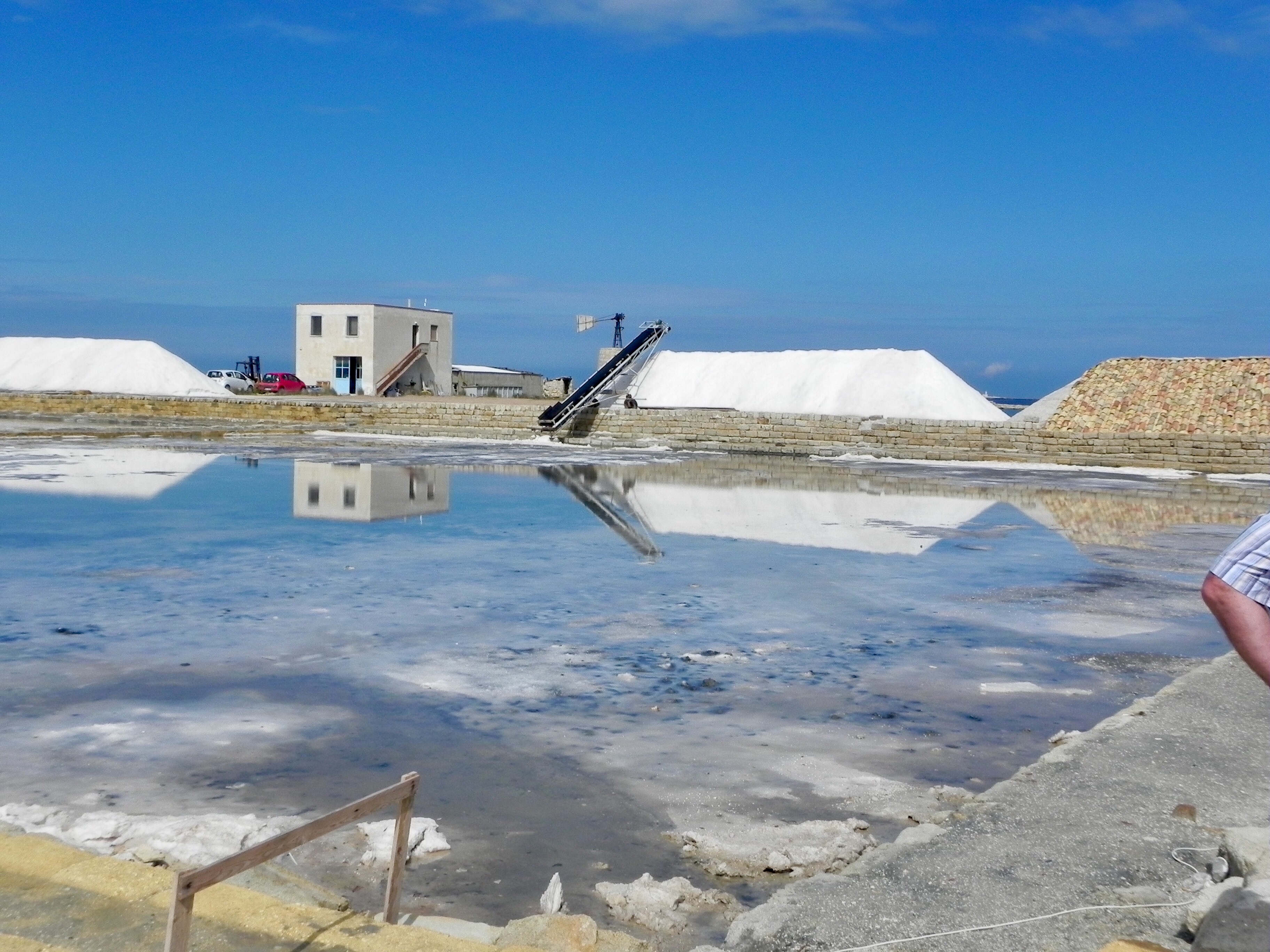
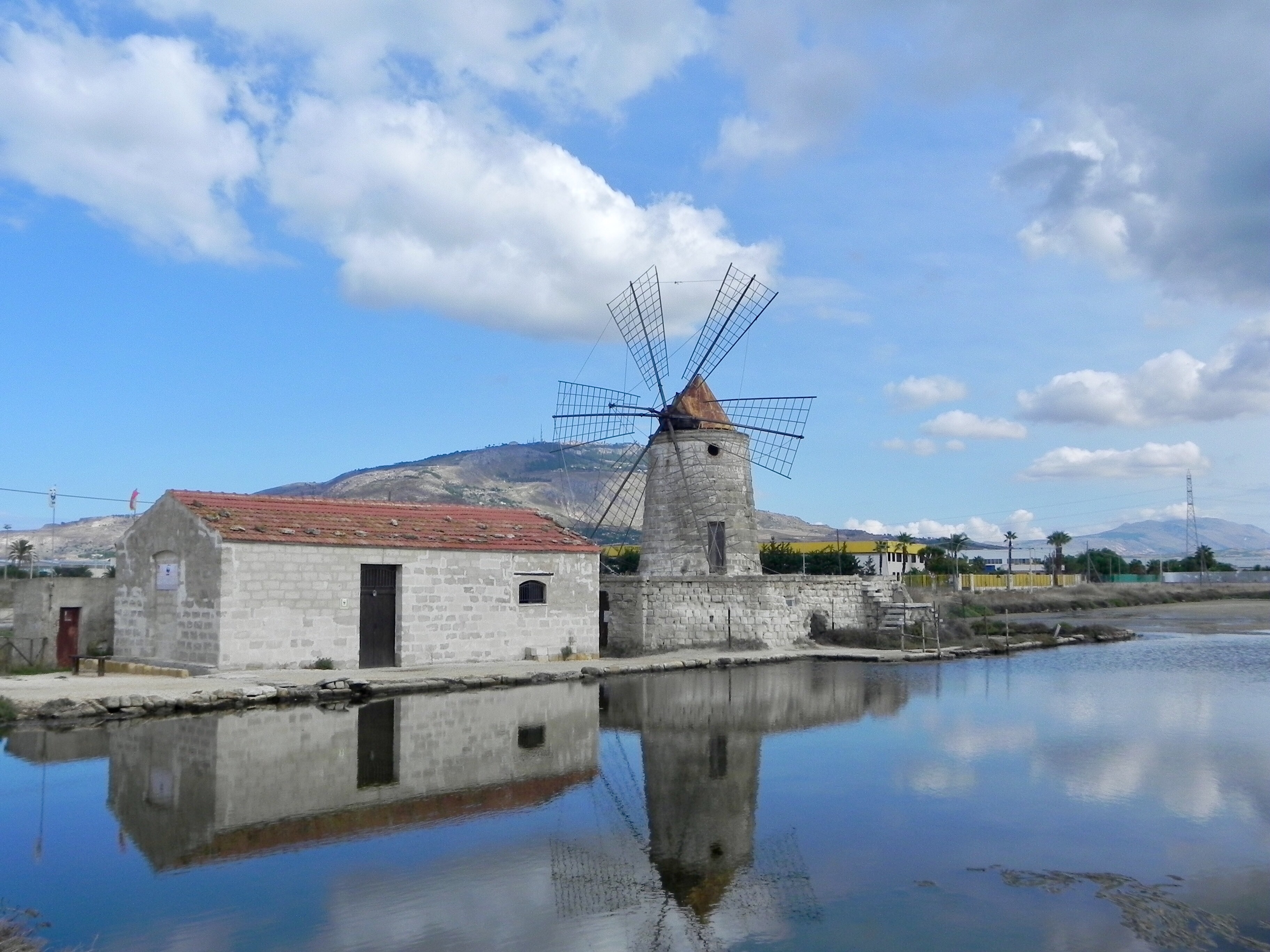
The last change to our at-home dining will be the addition of high quality, sea salt collected in the traditional way. We toured the salt flats outside of Trapani where the process for producing salt has hardly changed for hundreds of years. A succession of evaporation ponds are flooded and allowed to evaporate in high summer increasing the salinity in each succesive pond until the salt crystals are formed.


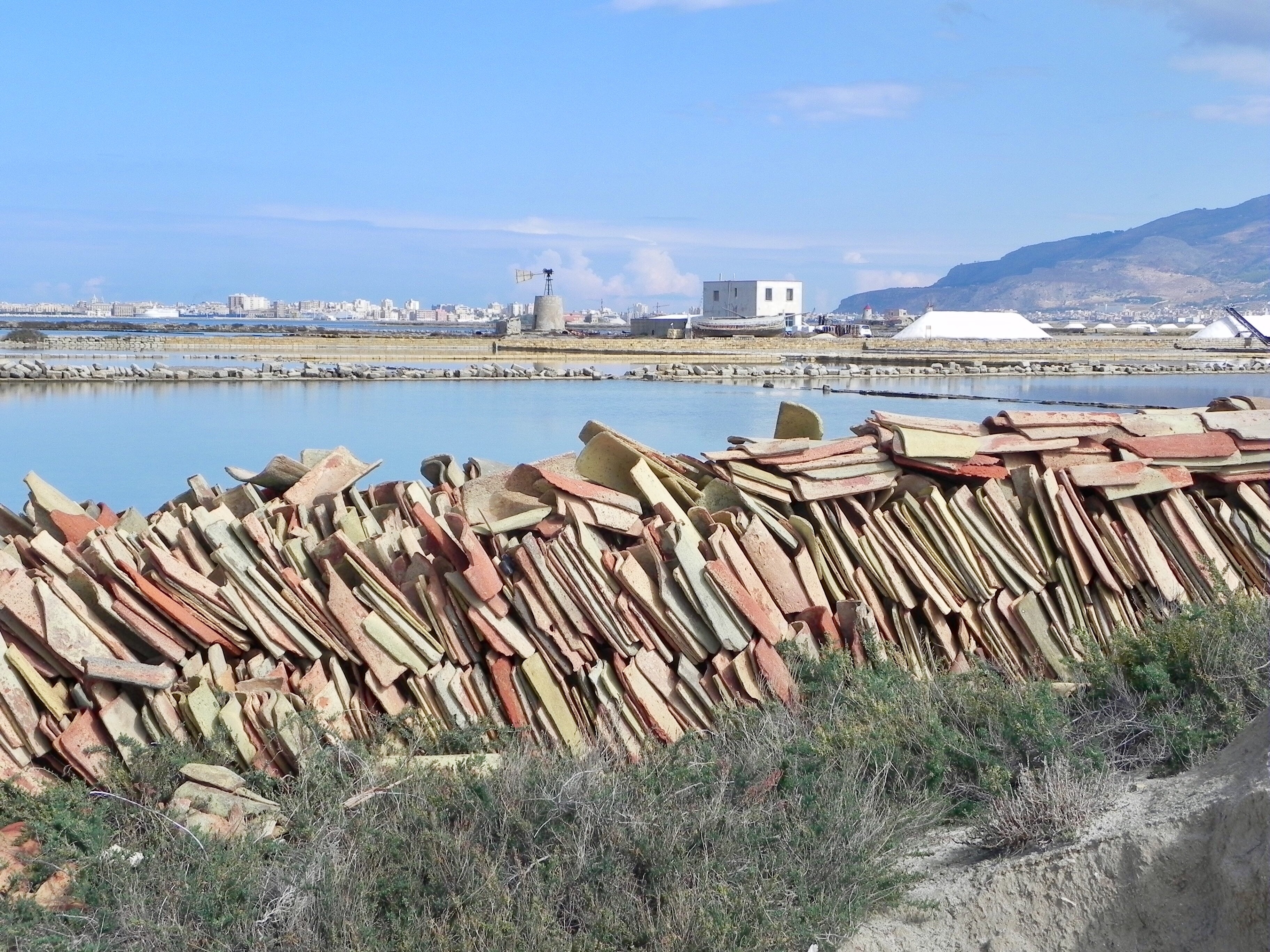
Originally windmills were used to pump the sea water from pond to pond and the salt was harvested by men raking and shoveling the salt into baskets they carried to dry land (hellish work in the baking hot Sicilian summer) where it was covered by terra-cotta tiles to fully dry. 


Today the windmills have been replaced by electricity and the baskets have been replaced by conveyer belts, but the rest of the process remains the same, and produces a far different product from the finely ground salt of the large mechanized processes. We like the slightly more complex flavor and the crunch of the bigger grains when added to the end of cooking at when sprinkled over our plate at dinner.   

The windmills may no longer work, but they do provide a great photo op for the many visitors to the salt flats.

A different way

Hotel rooms are a drag when you’re gone for several weeks.  Dinky little bathroom sinks for washing clothes.  Sitting and sleeping on the bed.  The noise of doors up and down the hallway slamming.  That’s why we prefer plunking down in one spot,  renting a house and doing day trips.  But sometimes that isn’t practical, or sometimes you have more ground to cover than a day trip allows.

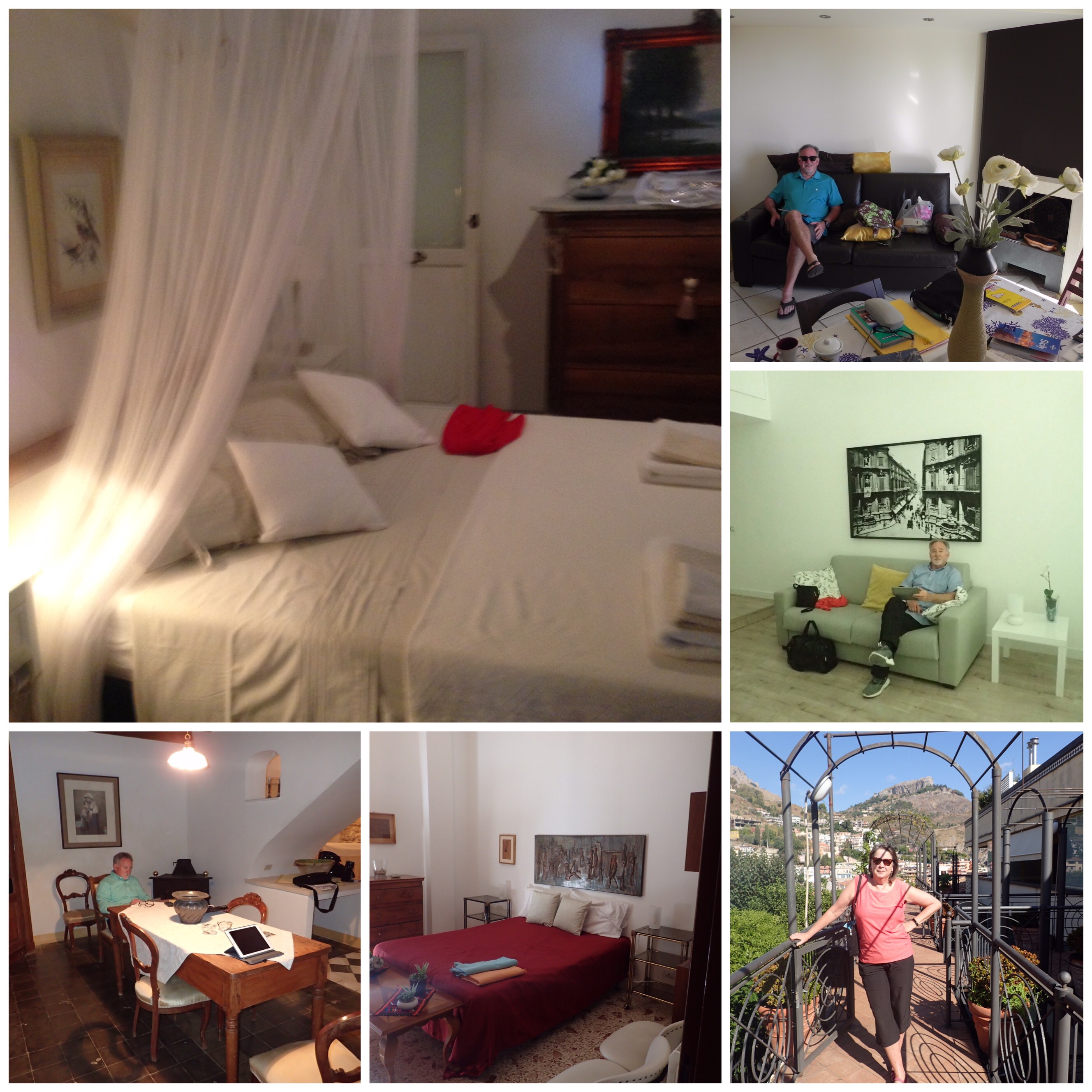
This is the first extended trip we’ve done entirely by airbnb’s. We have used them before here and there, for short stays in the states or as one option for a night or two on longer trips. But in Sicily we chose five airbnb’s and one agriturismo. No hotels. Here are our take-always.

There’s a bit of anxiety when you’re in a country where you don’t speak the language, the phone system isn’t familiar and there’s no front desk to greet you. While each place gave us good directions (sometimes too detailed) and adequate contact info (addresses, emails, phone numbers) one way streets, driveways that shot off at 180 degrees from the main road and country roads caused some confusion. No real problems, just a tense moment or two. In a three week trip, no big deal. If you only have a week, maybe you don’t want the hassle. 

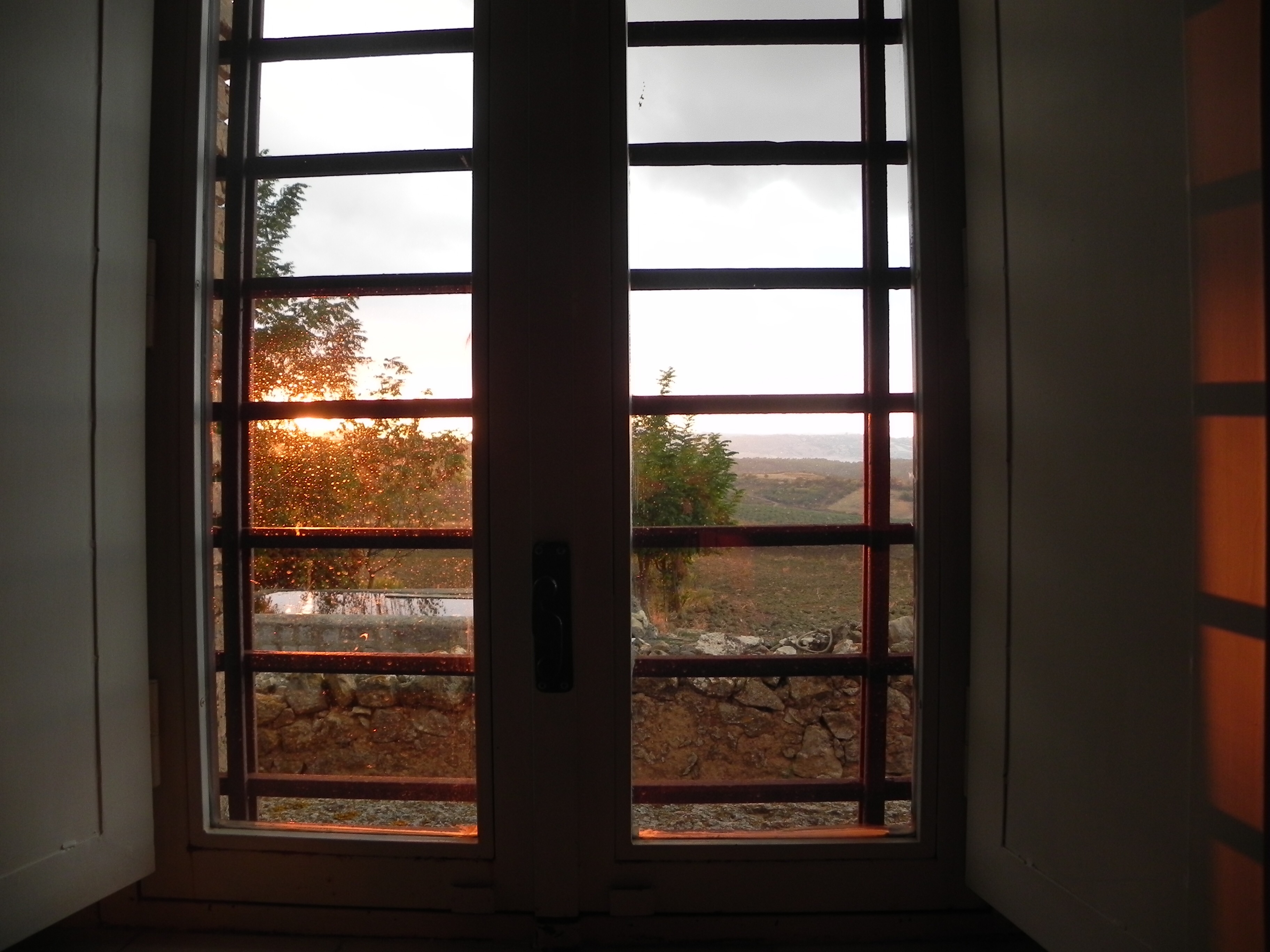
Not all airbnb’s were what they appeared to be online. While all were good — modern or historic, or someplace in between — they were not always quite what we had anticipated.  It didn’t seem to matter if the units were one in huge complex, or just the ground floor of an old farm house, each had its surprises.  One had a drop dead view not quite captured online.  And we didn’t expect to be awakened by the construction sounds.  Figuring out the locks and keys was more complicated than a hotel key generally is.


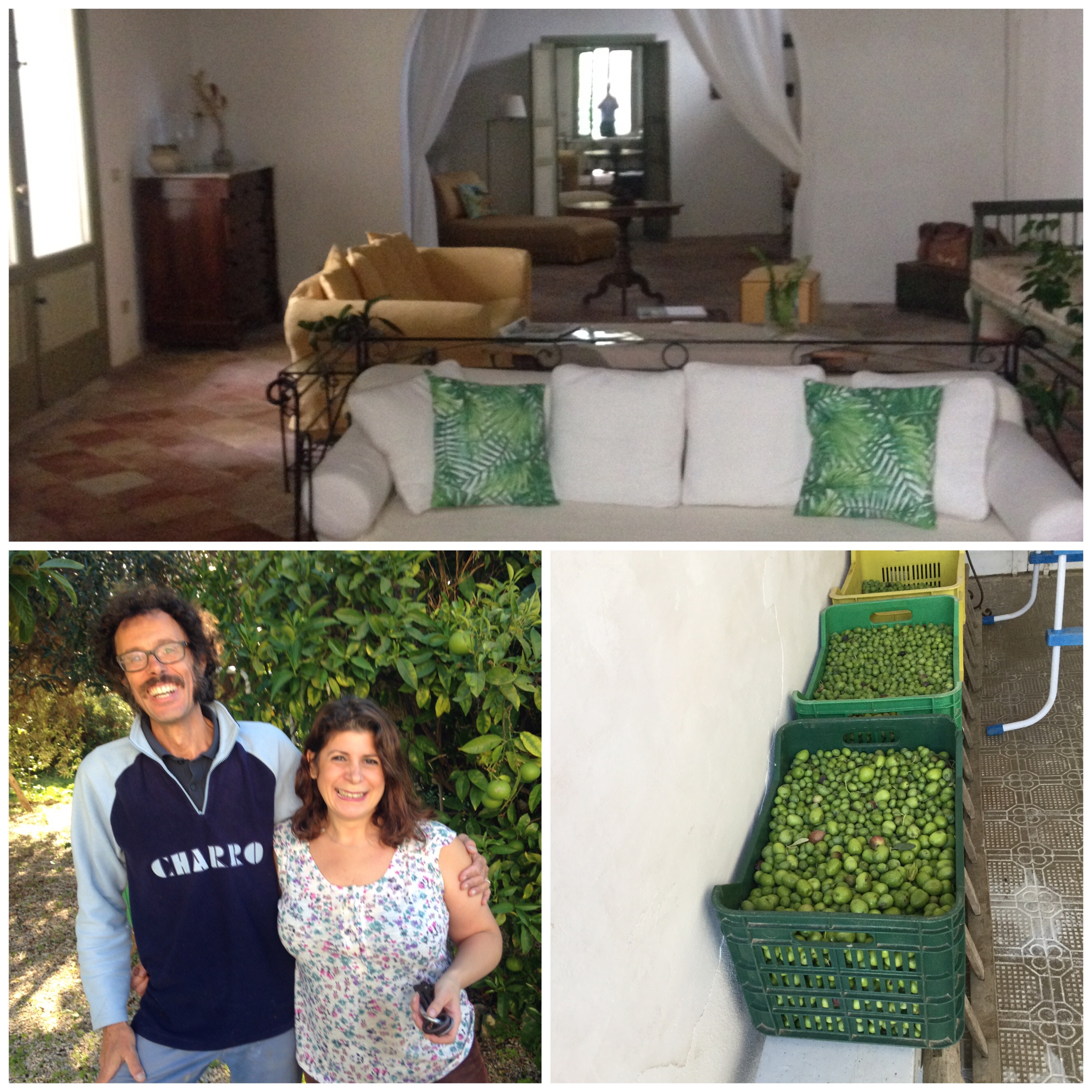
Our hosts often made our day!  A retired woman in Cefalu who left us three umbrellas in case it rained, (it did — a torrential downpour while we lunched under patio umbrellas) beach towels for swimming and pointed out on the map all best markets. In Palermo, we talked schools and education with our host. In Trapani we got to watch the family harvest their olives (some huge ones for eating and smaller ones to be pressed for oil) and enjoy their home that had been in the family for 300 years.

We stayed two to five nights at each airbnb. And when we weren’t out touring, we had a table for writing, places to layout the map and comfortable chairs for sitting. Just like home. We love the space of an apartment over a hotel room. And we loved being able to fix a breakfast before we ventured out each day. And sometimes we almost felt like a local, nodding to the neighbors who were also sitting breakfasting on the balcony  or enjoying an evening glass of wine.  And doing laundry in a real machine instead of the sink was heaven.  Having a pool, sometimes even a private pool, made us feel decadent.

Except for three places, wifi was a problem. Sicily’s infrastructure may be the real problem. And while we’ve had connection issues before in a hotel, at times we were frustrated on several occasions on this trip, unable to stay connected. In a hotel there might have been some recourse. In an airbnb you go with the flow or lack of a flow. However, we were always able to find a cafe or restaurant that had wifi (and a very entertaining evening at a bowling alley in search of connectivity) so we were able to do e-mail, check the news and do a little writing.

The  key to successful stays at airbnb’s is very careful reading of the online description.  Do your homework!  Pour over whatever pictures are available and note what they don’t show you.  We not only read the descriptions, and re-read the descriptions but also read the reviews, looking for our specific red flags — noise, location, accessibility of host.   Locate the unit on google maps.  Check out the neighborhoods online or in guidebooks.  And know what you want.  Elevator or are you willing to up up flights of stairs?  Check on parking if you’re renting a car.  Gotta have all the conveniences of home?  Go for a modern place.  Want charm?  Look at older buildings.  It’s hard to find charm and all the conveniences we’re accustomed to at home in one place, at least on our budget.  And be ready to roll with quirks you find in any home.  If you want predictability, stick with hotels.

Of course, one of the big advantages is the cost. Often airbnb’s cost a third to half of what a hotel room might be. It seems like a really good value to us — more local flavor, more room, and ability to do some simple cooking.  

Palermo

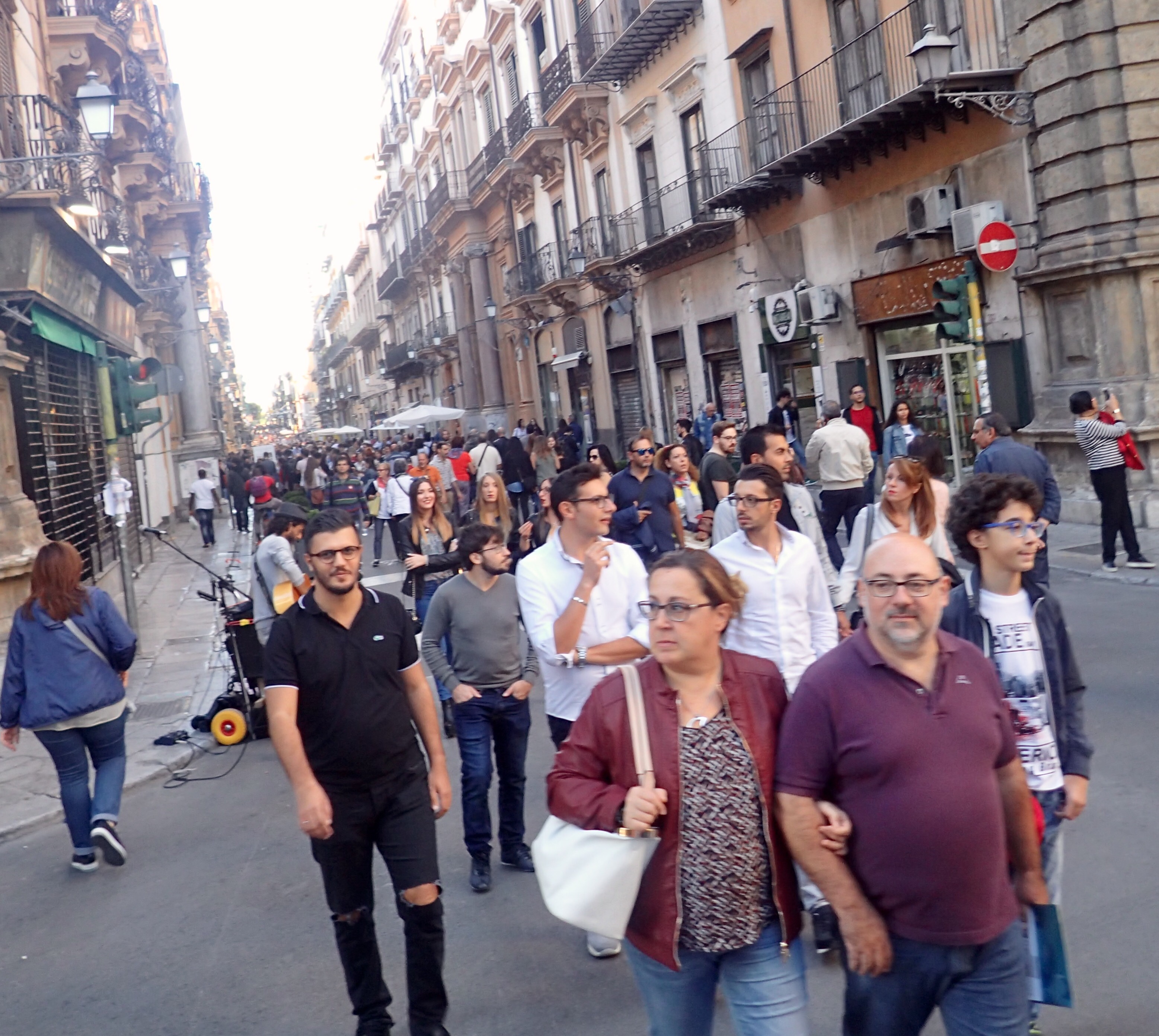
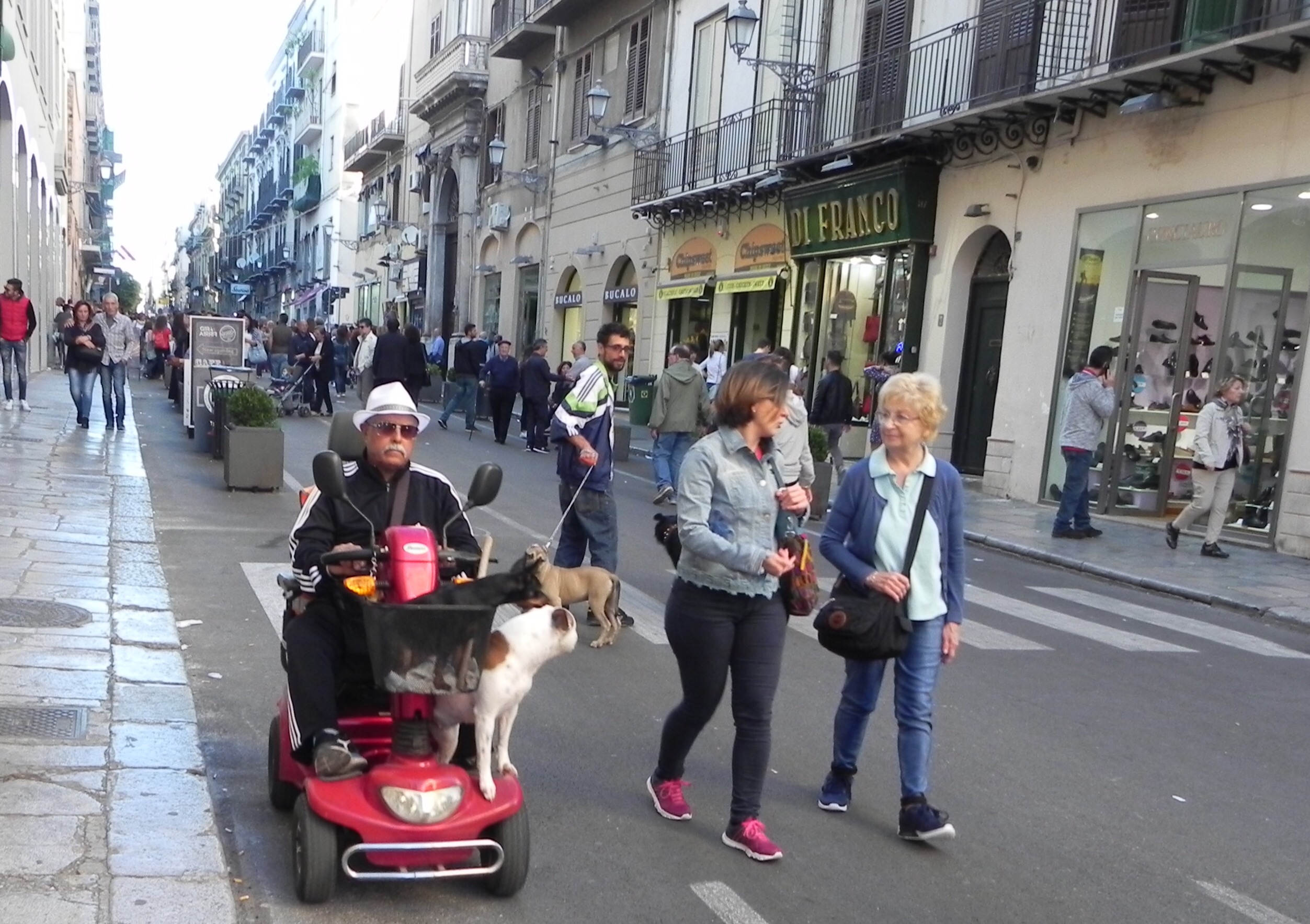
Palermo is a hard city to categorize. Our first impressions of the city on a Sunday afternoon were very positive. If a million plus people live in Palermo, at least half of them were out doing the passiegetta, the long, slow stroll Italians everywhere do to see and be seen. Palermo closes one of its main streets, Via Marqueda,  to traffic for a kilometer or more. Just pedestrians, and a random bike or Vespa or two.  


Groups of teenagers, elderly couples, families with strollers.  Folks walking their dogs.  About every block or so a street musician, including a skinny blond singing Elvis’s greatest hits. Lively and crowded, it reminded me of a carnival or street fair.   

 
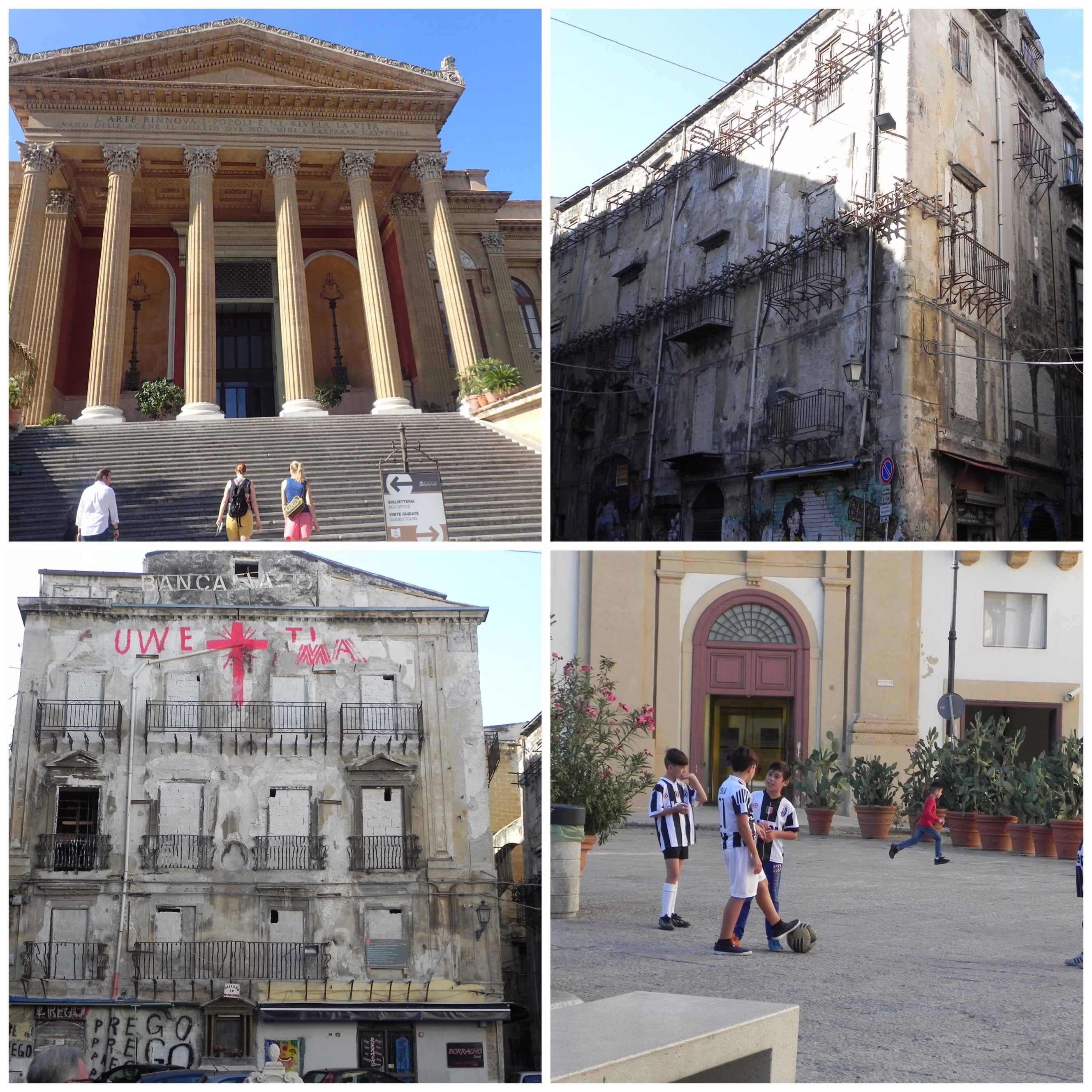
Monday morning showed a more subdued town and much more of the dust and grit Palermo is famed for. The old historic part of town is relatively small and imminently walkable. But Palermo is not a provincial Rome, despite the Roman, Norman, and Arab history. There doesn’t seem to be separate sections of town — either a “good” or tourist, or run down neighborhoods. All are mingled together. We wandered from one street corner to another, never knowing what we would find around the bend — derelict buildings, a street of cafes, or a magnificent palazzo or church, or kids playing.


We had heard Palermo described as the litter capital of Europe. And while we saw a few informal garbage dumps in the countryside, and some dried up fountains were used as garbage receptacles, the capital didn’t strike us as any more littered than any other densely packed city.  In fact, better than some we’d seen. More graffiti perhaps.   

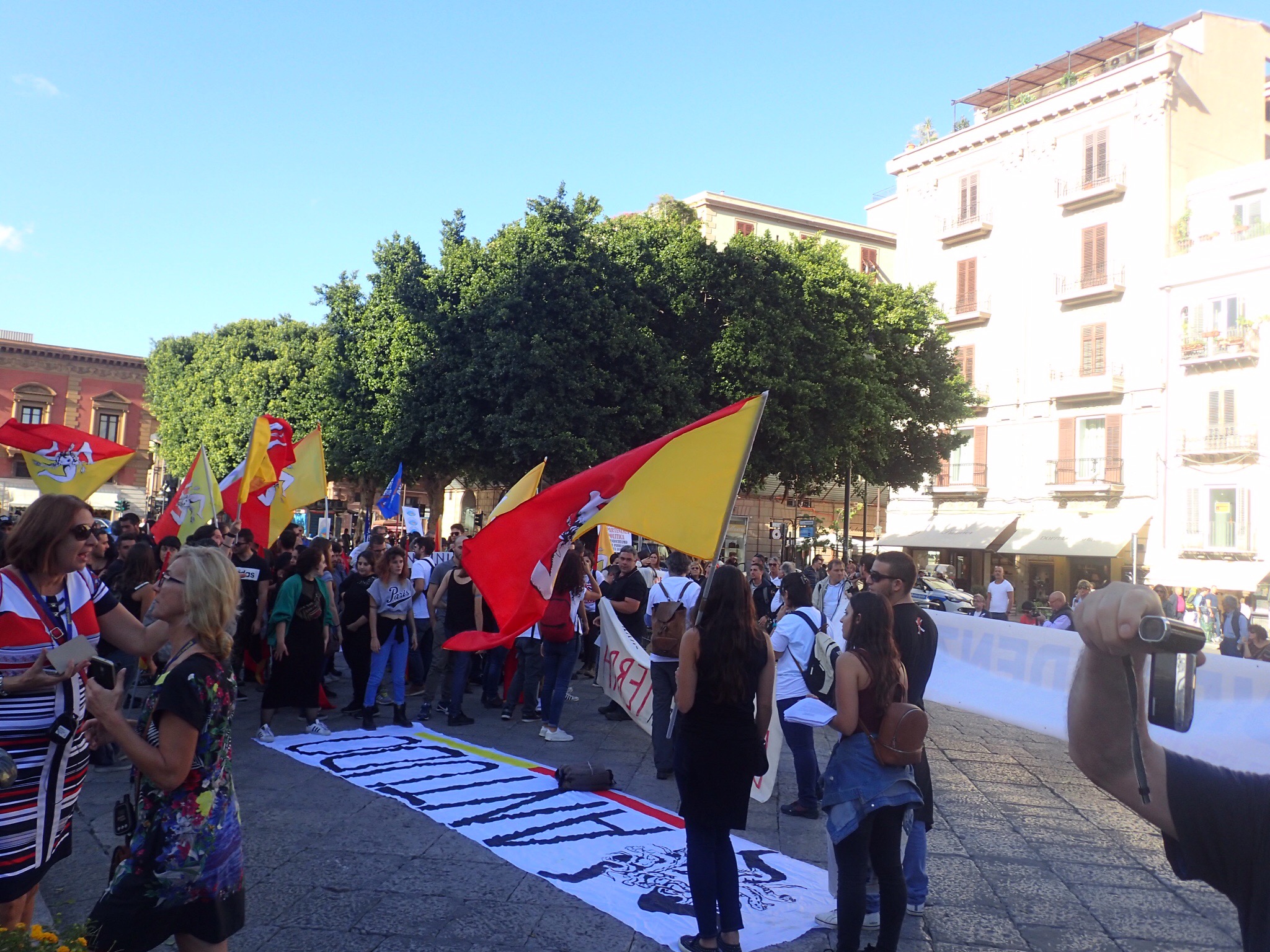
The piazza around the opera house seemed to be the center of the city and a hotbed of activity. Prince Albert of Monaco arrived one afternoon with an entourage and a long motorcade. The next day, protestors assembled, complete with Sicilian flags, banners and a sound system on a shopping cart. We took a lot of pictures. Speculated about the issue. Sicilian independence? Anti mafia? Political party march? 


Finally, we asked a young woman and she explained it was an environmental protest — objecting to the burning of garbage by the local provincial government. Okay. Would never have guessed that. There were almost more police than protesters. And plenty of police cars and paddy wagons for hauling away unruly enviros. Never saw anything to justify the concern. 

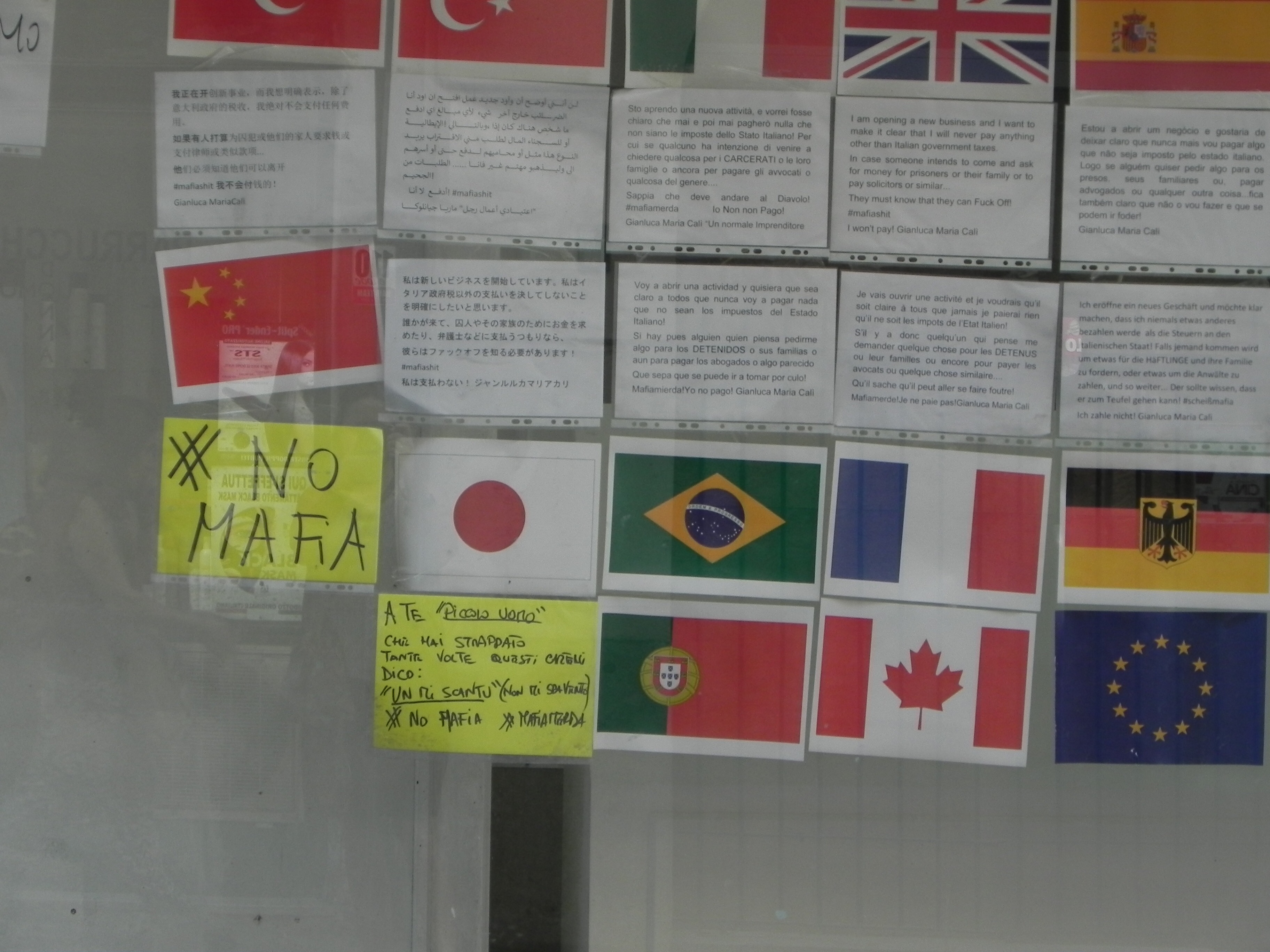
This city was heavily bombed during World War II. Signs marking how historic buildings were damaged & repaired only referred to the war by date, “heavily damaged by bombs in 1943….”.  As a result baroque era churches or seventeenth century buildings stand next to modern boxy apartment complexes.  We saw several signs posted in storefront windows, saying “No Mafia” plus there are a couple shops that only sell local goods & foods produced by folks who won’t pay protection money.


Of course, aside from what we’ve read, and most of that says the mafia has been marginalized, we’ve seen no indication of any criminal activity. Except as we snapped pictures in front of a grand local municipal building, an old guy walked past us and said very clearly to us,  “Palazzo di Mafia”.

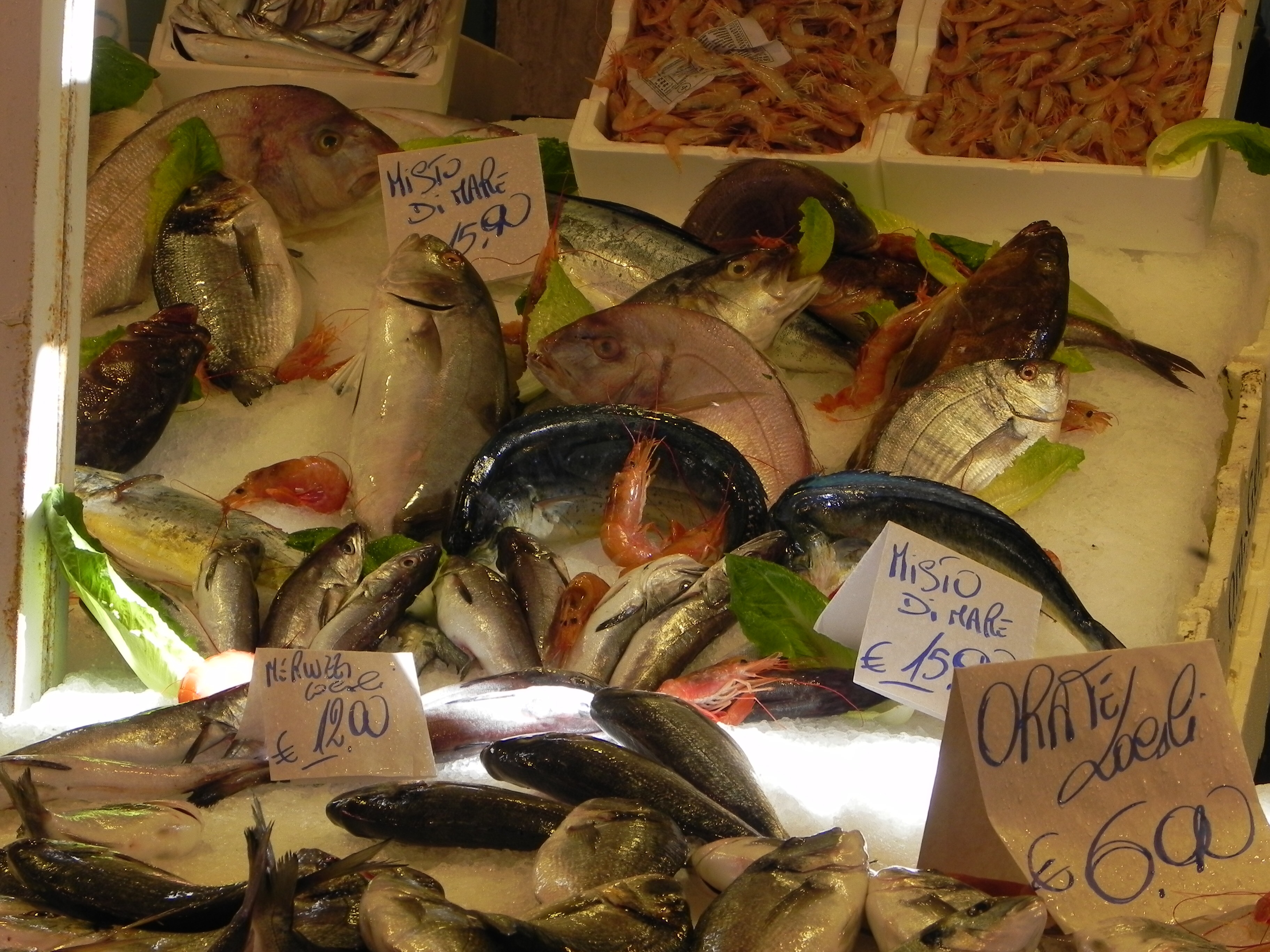
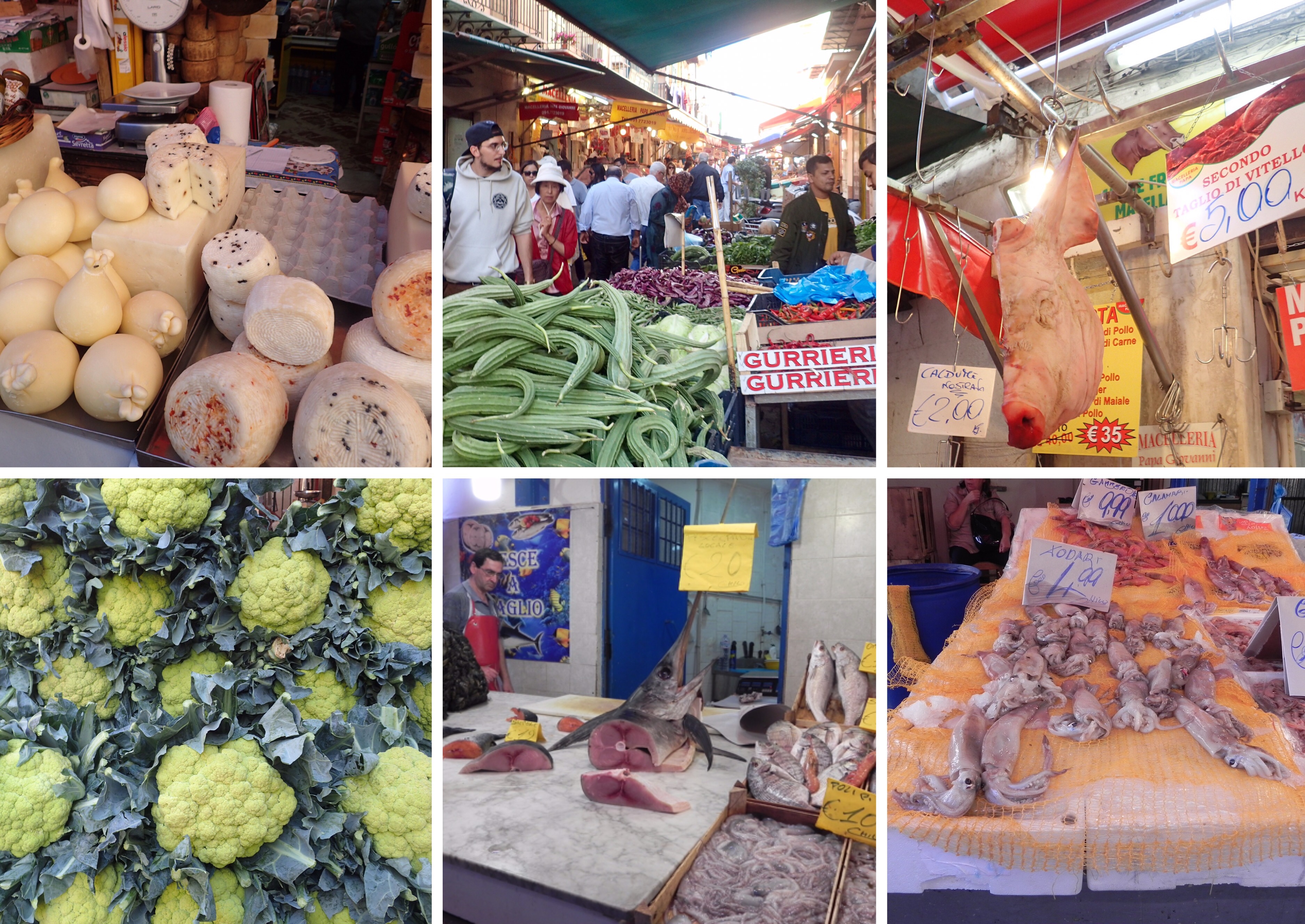
The streets markets in Palermo are pure Sicilian. Hawkers shouting they offer the best fish in Sicily or the freshest produce in Palermo.  Swordfish, squid, lobster, eels, beef sides, pigs’ heads, every kind of sausage and cheese, tomatoes, summer squash and green cauliflower, olives, spices, and much more.  The air smelled of the fish, but also curry, citrus and spices.


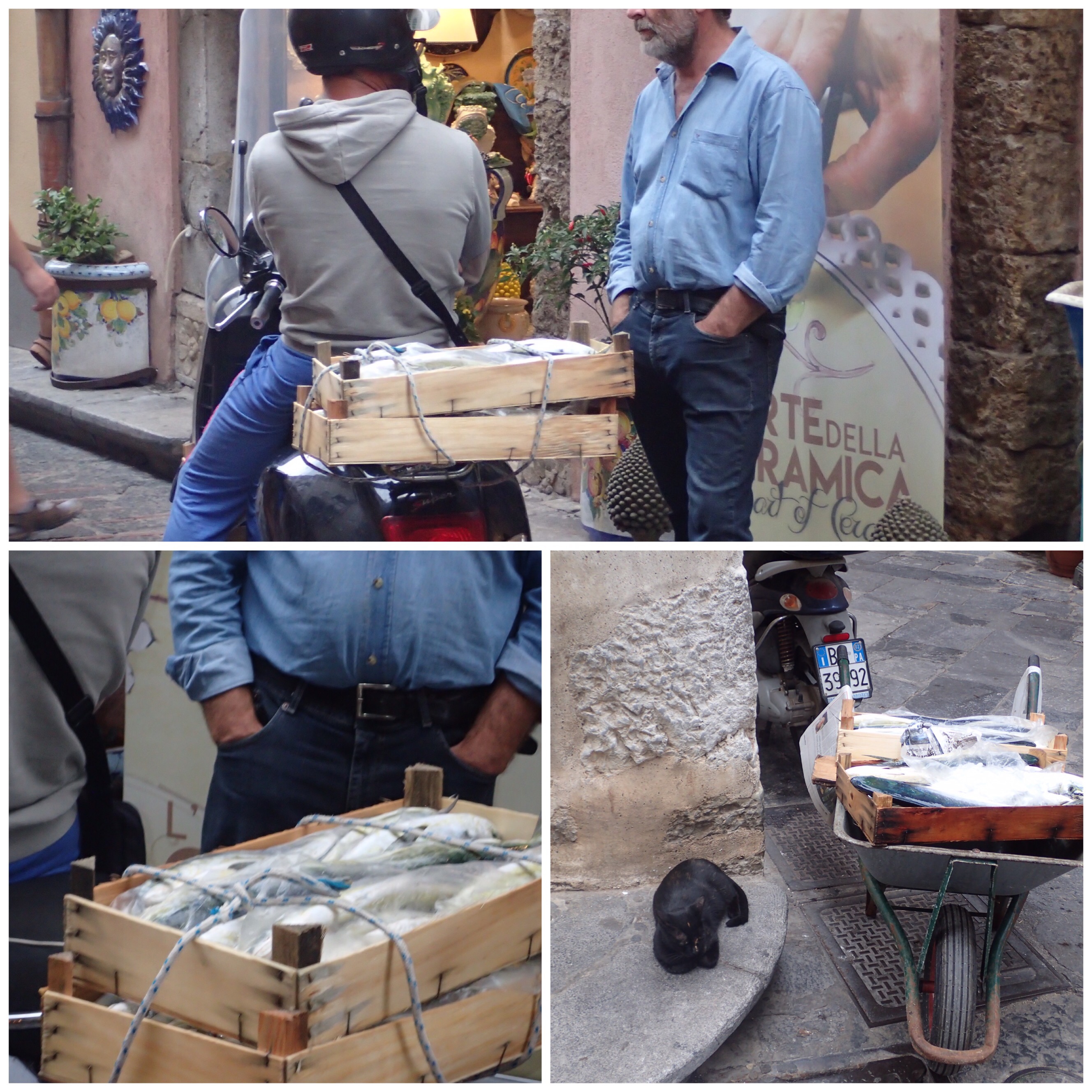
Messy, crowded and loud. But filled with more locals than tourists, the markets clearly are part of life here in Palermo and the other bigger cities of Sicily.  Of course, there are grocery stores, mini-marts, too.  But in small towns like Trapani, we saw residents buying their produce & fresh fish off trucks stationed around the city.  Or the fish was sold out of a wooden box on the back of a bike as we saw in Cefalu.  


Outside the historic district, Palermo may be a very different place, just as the suburbs differ from the hearts of Rome and Paris.  Old Palermo is a mixed bag, but definitely worth a visit.

Country life

Agriturismo, they’re called in Italy. They give you a chance to stay in a rural setting and, maybe if you’re lucky, become part of the family for a day or two. They give small family farmers an financial option other than selling to big farming operations or to developers. Often the owners get a tax break for keeping the farm going and raising a traditional crop — olives in our agriturismo in Italy, truffles in the farmhouse in France, coffee in Costa Rica — and make a profit by opening the farm up to tourists. But as our host said in Provence, the money from tourists is easier than farming with a higher return!

In Sicily we stayed in a masseria, a term to describe a farm community in remote areas that belonged to a pardone or landed gentry, and included everything and everybody needed for self-sufficiency. Housing for the men who did the actual work —- the plowing, harvesting, who built and maintained the wagons and plows, who tended the horses and cows — plus their families who probably worked as cooks, grooms and gardeners. Space for building wagons, storing crops, and maybe forging tools.


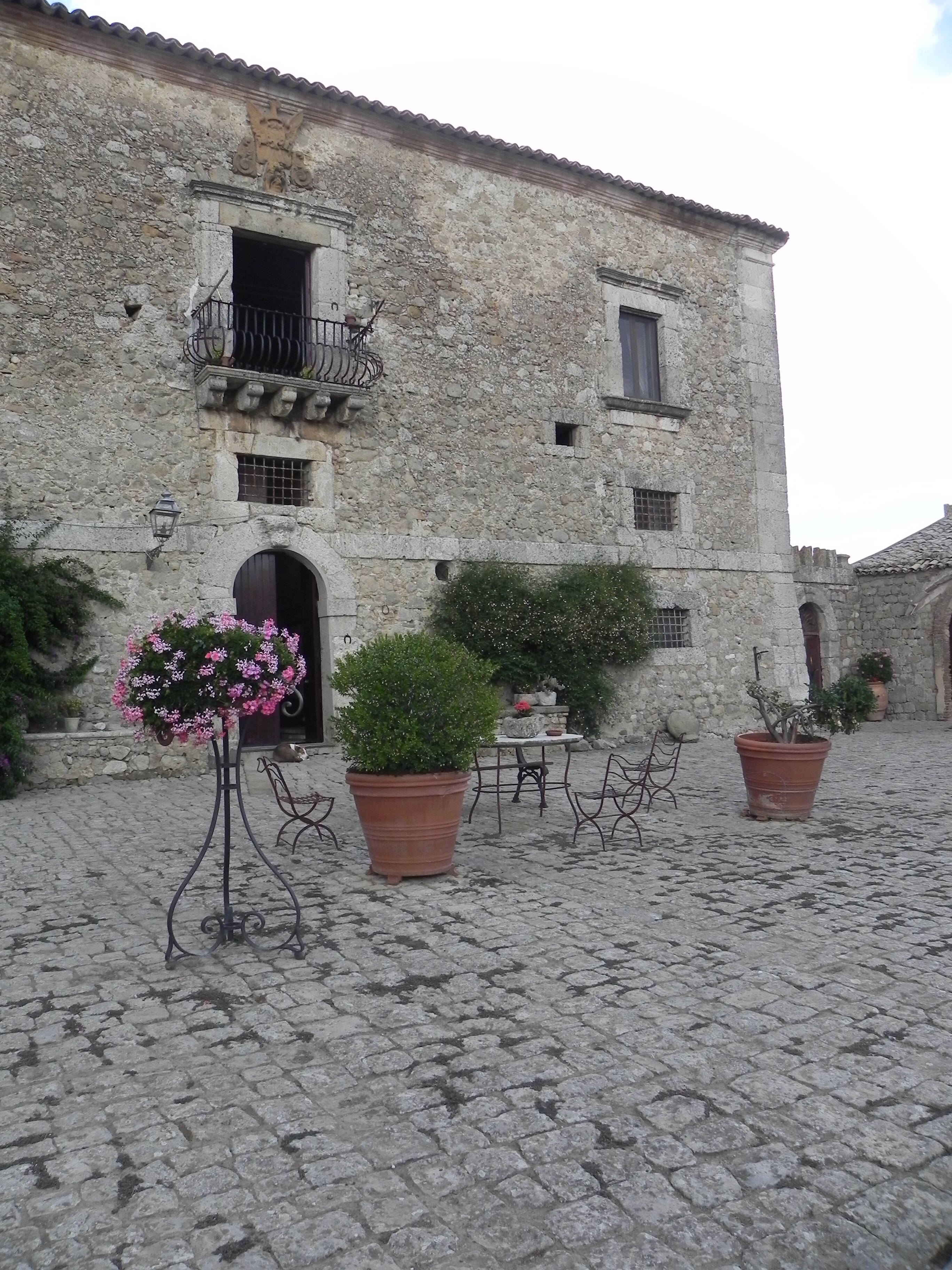
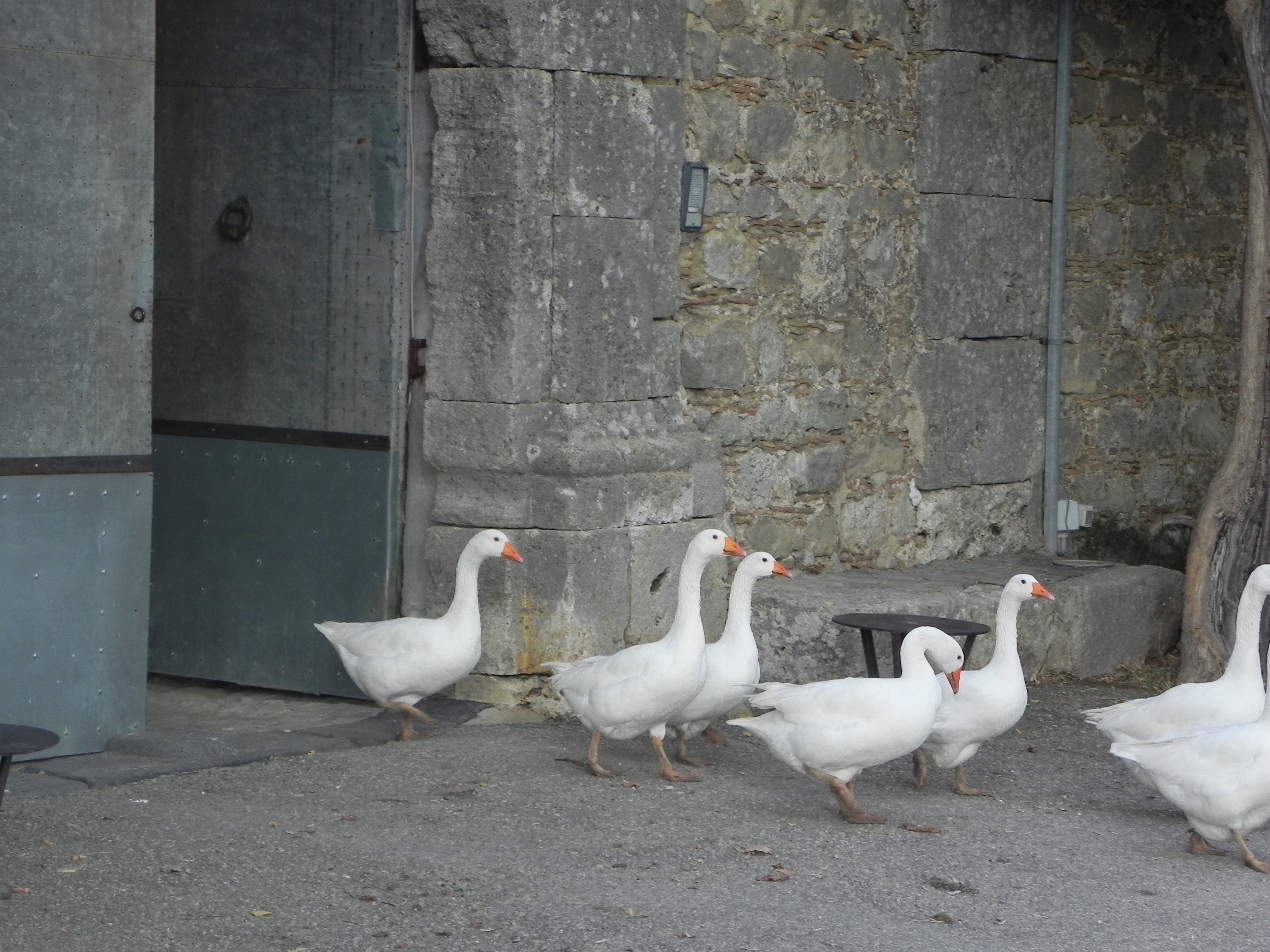
In our masseria, near Enna in central Sicily, the main house formed one side of a large square courtyard that opened to the long drive up a hill lined with trees. The entrance, I suspect, was meant to impress. The remaining three sides of the courtyard were storage and work rooms, facing into the courtyard. Perhaps originally for grain or hay storage, stables for the padrone’s horses or laundry rooms. Today those rooms had been converted into banquet facilities and a breakfast room for the guests.
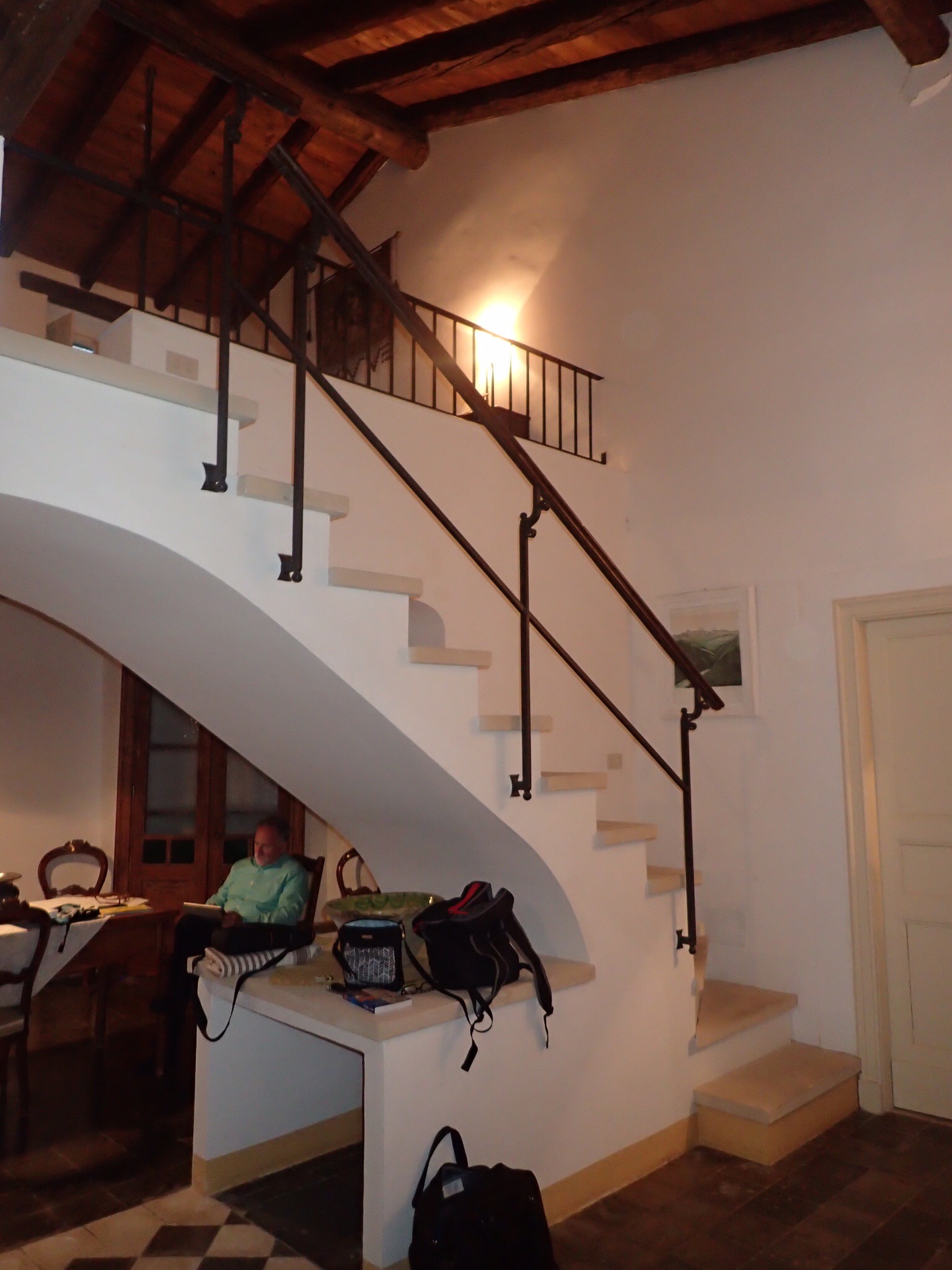
The other necessary farm buildings were outside the main courtyard and behind the big house — including the workers quarters. As paying guests we stayed in the workers apartments, although transforming stable into bedrooms for guests is not uncommon. Our room had been beautifully restored and modernized with all the amenities including air-conditioning. Certainly better than the farm workers had it 200 years ago.

The best part of an agriturismo usually the host, often gregarious and charming as someone in the tourist industry must be. They are loaded with information about their region. They can give you insider tips on sites and restaurants you might otherwise miss. They can fill you in on the lore of their often historic homes. And they’ll probably share with you the wine, or olive oil or crops their farm produces. The highlight of our stay in Sicily was the evening of wine, bread and olives with our host. Friends raved about the day they got to help with the grape harvest in Umbria on an agriturismo. Riding in a truck to the coffee co-op with our hosts at a Costa Rican coffee farm was not something the average tourist gets to do.


Breakfast is almost always included in an agriturismo. Some even include dinners as well. I was a bit surprised to be presented a hardcooked egg, cut in half along side a thick slice of fresh ricotta cheese and over both was a good amount of olive oil, salt and pepper. Divine. The cheese completely lacked the chalky consistency I associate with ricotta and the egg was farm fresh. And of course, breakfast included bread and homemade orange and tangerine marmalade, as well as honey.

The down side of an agriturismo is they are often in more rural regions where quiet can be too much of a good thing. And because these places are often somewhat remote and isolated, guests may find the wifi is slow or non-existent, cell phone coverage is spotty and televisions aren’t included. And if meals aren’t served, the drive to dinner can be long and tricky though country roads and into poorly lit villages.

But we prefer to think about the inconveniences as adventures and one way to keep pieces of country life alive.