Location, location, location!
The view from our window says it all—a mercado, a public market! It’s the Mercado de Ruzafa (Spanish) or Mercat de Russafa (Valencian).
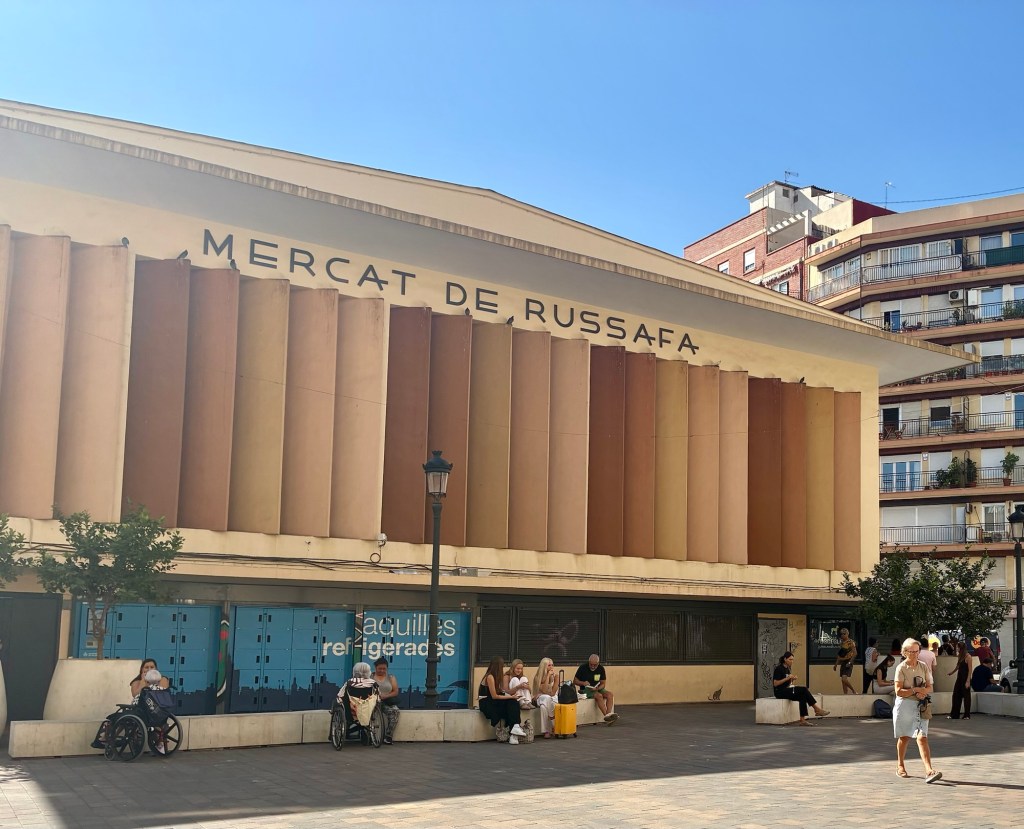
It’s in an ugly, ugly concrete building—no getting around that fact. Even a little decorative paint can’t hide that. Not pretty like the spectacular art deco Mercado Central or the even fancier Mercado de Colon. But inside, wow! Foodie heaven. A home cook’s paradise. An ocean of food stalls!
In our scientific count, we found 29 stalls selling either meat, poultry, or charcuterie. Some even specialize—there are several pork only, a couple that specialize in just chicken, one guy sells only ground meats, a dozen selling jamon and charcuterie.
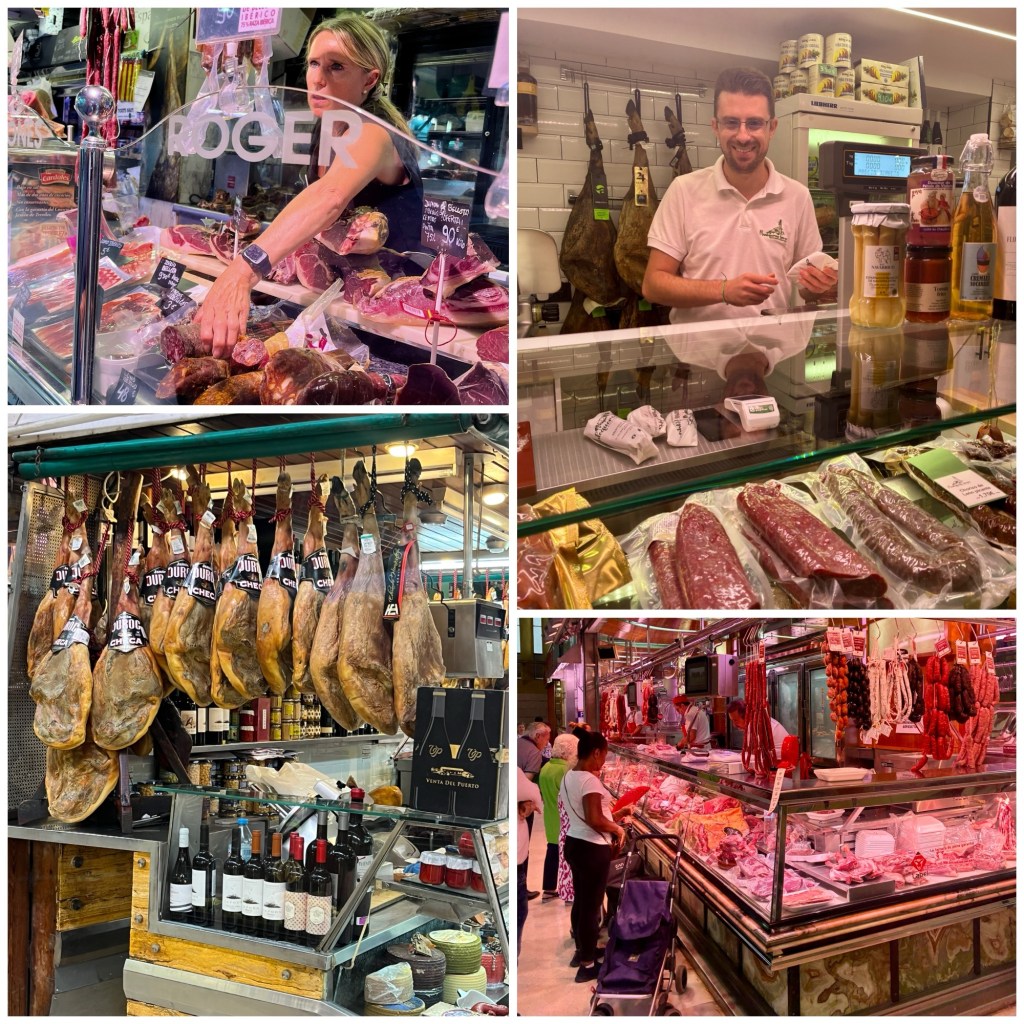
Want a thick or thin chop — they cut your meat to order. Our chicken folks are amazing—like samurai warriors. They cut and debone a whole chicken in seconds. You tell them exactly what you want. Knives flash and presto—a package of perfectly cut, trimmed and sliced whole chicken. Bones saved for broth. Service and a show.
There are 19 fish stalls housed in a separate wing of the market where the temperature is kept lower to help keep things fresh. Most of the seafood is laid out artistically on beds of crushed ice. Fish sculpture extraordinaire.
Of course, there are dozens of fruit and veggie stalls. Most sell only seasonal produce. I asked one lady if she had oranges—it is, after all, Valencia. She said not today but come back in 10 days—the fall crop will be in then. One stall offers the very best romaine lettuce. There is always a crowd as each customer buys a head plus whatever else looks good. You have to ask politely “Quien es ultimo?” “Who is last?” in order to know where to stand.
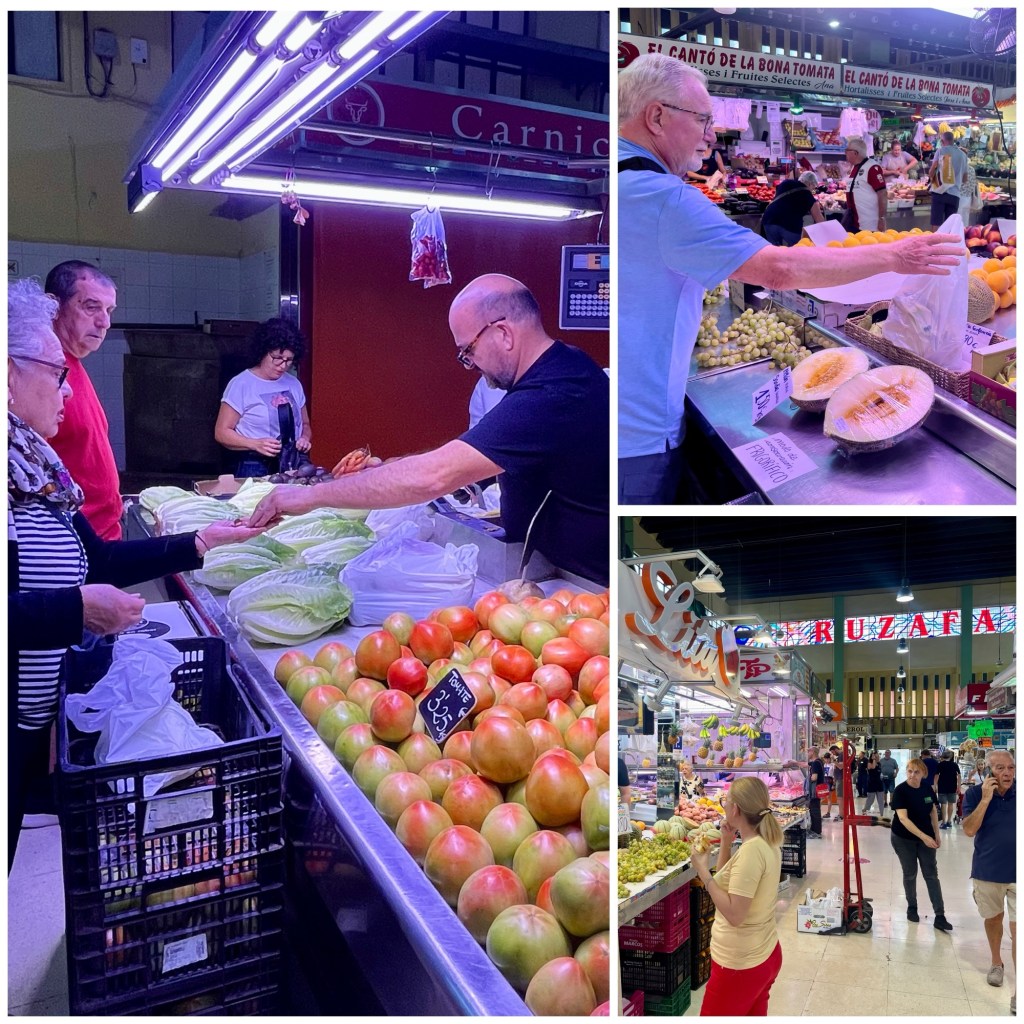
A few specialize in tropical or South American produce for the immigrants—clearly not seasonal and imported. But those stalls are the exceptions.
And there’s the rest, the other stalls—nuts and dried fruits, the egg lady, bakeries, prepared food take out, spices, olives, pastries, the mushroom guy, specialty stalls with Italian, Greek, South American, Mexican foods, dry goods, candy, wines and spirits, sushi, vermouths only, coffees only, even a tea only place. We’ve found our favorite cheesemonger in one of the smaller stalls carries mostly Spanish varieties, and our young egg lady who has both regular eggs and eggs from pasture raised hens.
There is, of course, a restaurant and bar where the locals and Mercado workers hang out. A little dark and dingy. But lively. They all seem to start the day with a beer, vermouth, or a shot of something stronger.
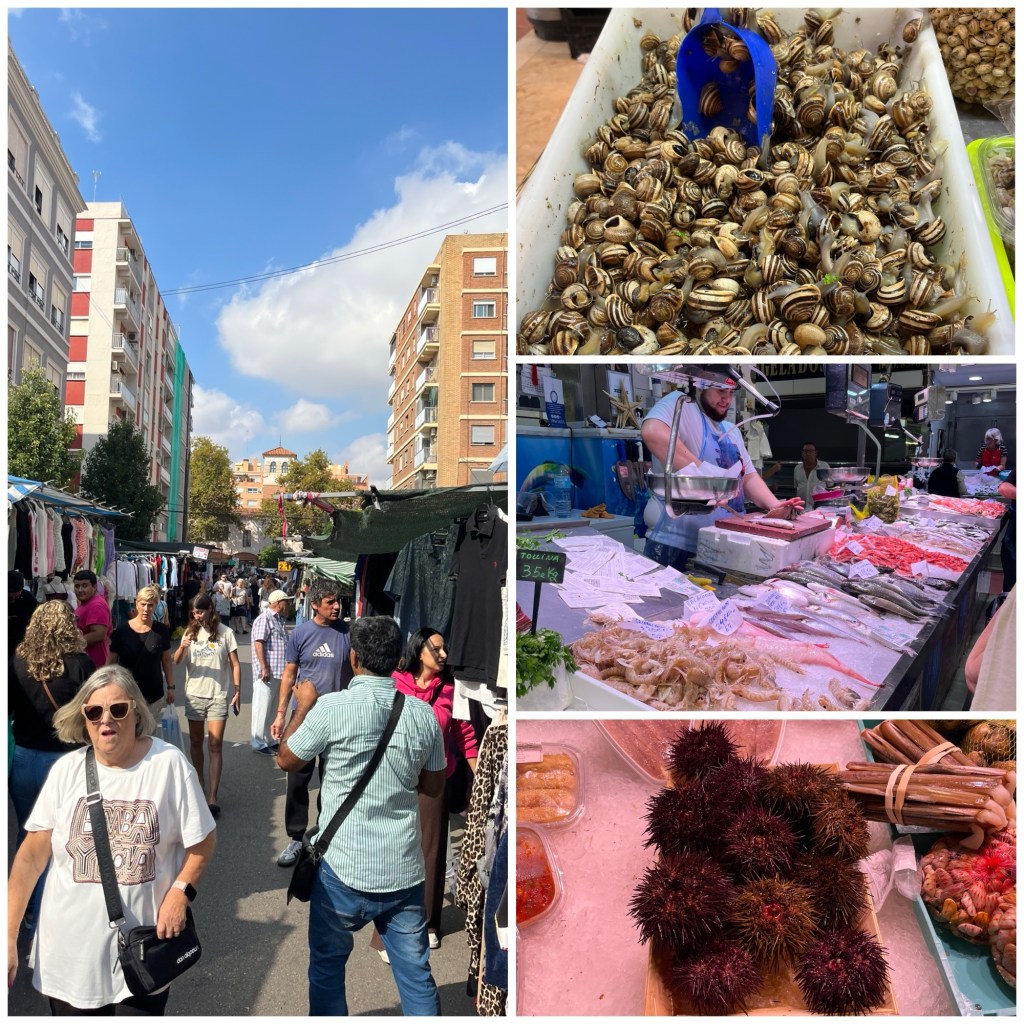
The public market in the marina district — no surprise — is known for seafood. The area used to be a small fishing village before Valencia absorbed it. But Thursday when we wandered out there it was also flea/street market day. Since Monday is our neighborhood’s street market, we thought we knew what to expect. Nope. This one was enormous—maybe five times size of ours in Ruzafa. It ran down the main street about 10 blocks to the public market and filled many side streets. Enough underwear, table clothes, shirts, kitchenware and used shoes for the entire planet.
Then we got to actual market — Mercado del Cabañal. Newer than many markets, and still filled with jamon, fresh meats and tons of vegetables as you would expect. But the seafood! Wow! Fish, and a particular shellfish is not cheap here, but the quality and variety is amazing. The legacy of the old fishing village.
What you don’t really have at the Mercado de Ruzafa or Mercado del Cabañal are tourists. Expats, yes, immigrants, yes, tourists, very few. A real contrast to the Mercado Central and the Mercado de Colon.
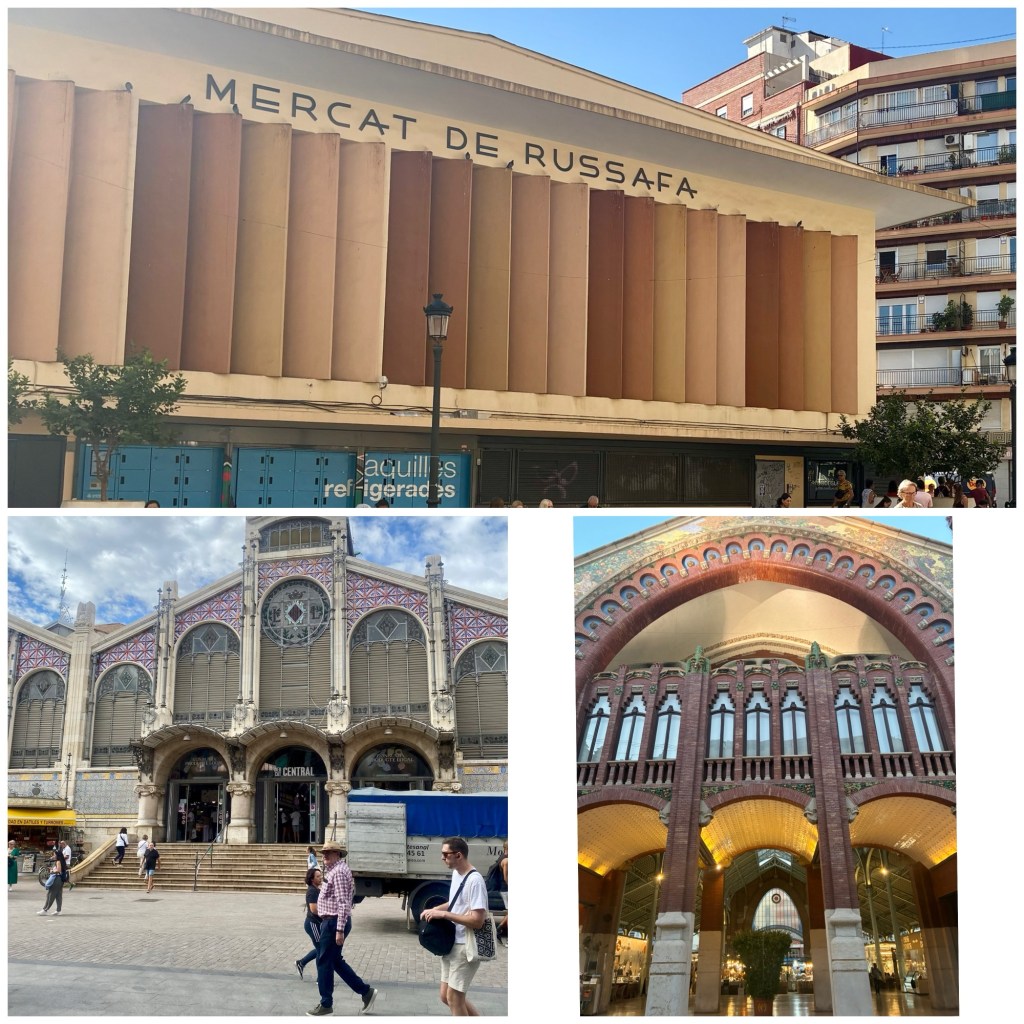
The grand Mercado Central in the old city isn’t entirely tourists—our Valencian friends shop there. But because of its beauty and its location close to so many historical sites, it is included in all the guide books and on all city tours. Bottom line? The locals definitely fight their way through the selfie shots and tour groups with barely enough room for their small shopping carts.
The Colon Market is a whole different vibe. Gorgeous building. Built in 1916 as a market, it’s been extensively renovated, and beautifully maintained. Upscale restaurants and bars spread over two floors. It’s filled with little booths selling locally made fashion, artsy jewelry and pricey souvenirs. And only a few real food stalls—probably just so it could still call itself a mercado.
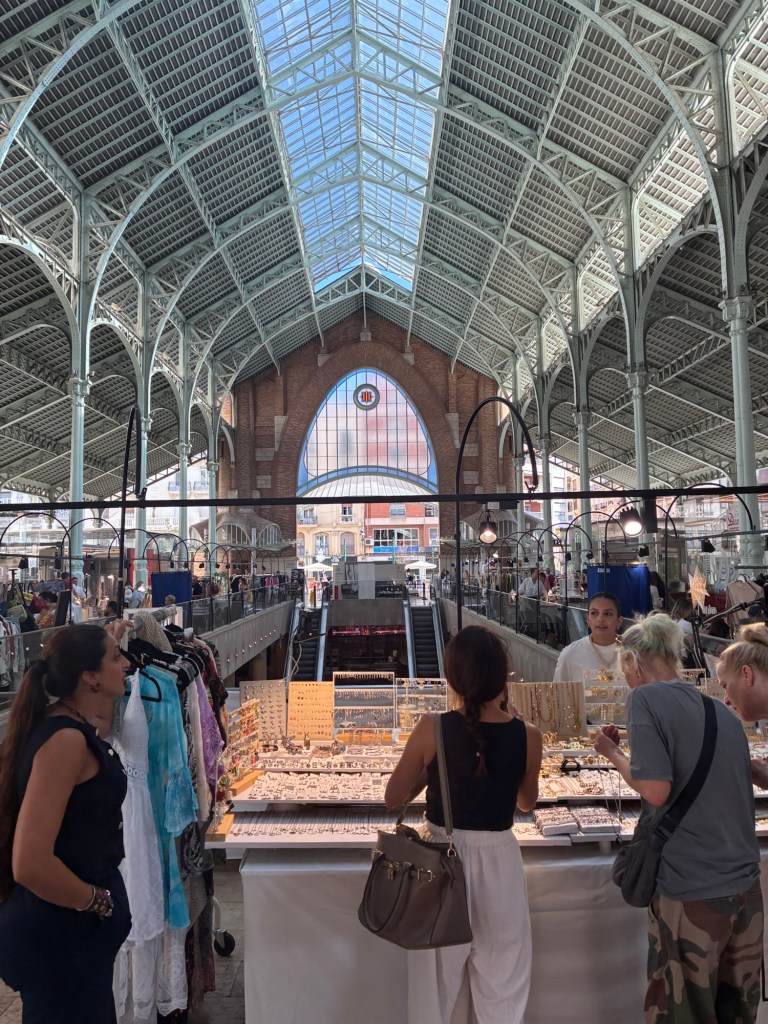
Tourists, yes. Mobs. Many Spanish, but sitting down to a coffee, you’re just as likely to hear Dutch, German, British English, or American English.
And dotted all around the city, there are many more neighborhood mercados, each with its own flavor.
It’s our mission before we leave to visit as many as we can. Mercado mania.
But for now, and probably always, the Mercado de Ruzafa is our happy place.

 Chasing the Good Life