
Anyone who knows us, knows we’re foodies. Some have even said we’re food obsessed. So it’s no surprise that one of the first things we did in Valencia — and just about the only thing we booked before our arrival — was to take a cooking class. We knew paella, a dish most people associate with Spain, properly should only be eaten in or near Valencia and only at lunch. We had eaten an authentic version a year ago so we knew what we commonly cook at home is really what our instructor called “rice with stuff.” We were ready to be educated on how to cook real paella.
Paella is a peasant dish and like most peasant dishes the authentic version is the one your grandmother learned to prepare using what was local, readily available and cheap. The word paella actually is the Valencian word for pan and paella is cooked in a specific pan that is round, shallow and slightly concave with two handles. By definition paella can’t be cooked in just any old pan.
And the rules? Oh boy, there are lots of rules for cooking paella. According to our experts at myfirstpaella.com, never, ever, should seafood be mixed with chicken and/or rabbit paella. The Valencian style contains only chicken, rabbit and snails, and flat green beans. No onions, no red peppers, no peas. And no chorizo — that’s nearly a criminal offense! It is best cooked outside over a wood fire with just one cook (although many people may offer advice to that cook) and regardless of how many you’re serving it must all be cooked in one pan. Why? Because people would argue which pan is best.
Our cooking lesson began at the local market, Mercat de Russafa (or Mercado de Ruzafa in Spanish). The word russafa is from Moorish times—garden. In other words “market in the garden”. Not quite a garden now—a giant concrete building but housing a very impressive collection of food stalls with darn few tourists in sight. This is where the fresh ingredients for our meal originated.
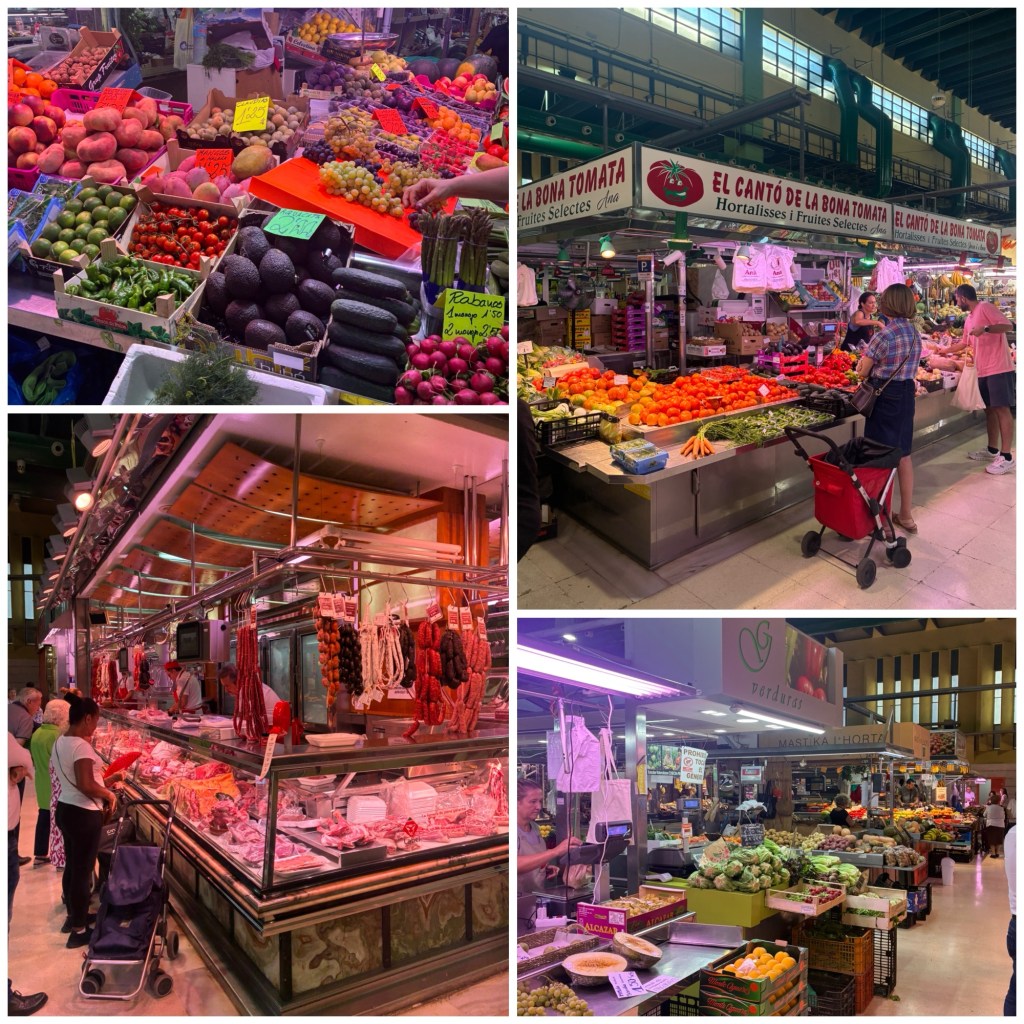
And we were given a very helpful tip—don’t order fish in restaurants in Valencia on Mondays because none of the fish stalls anywhere in the city are open. The fish will always be at least two days old (all markets are closed Sundays). Reminds us of Anthony Bourdain’s famous line from Kitchen Confidential “Never eat sushi on Monday.”
Once we arrived at the kitchen, a few blocks from the market, we were greeted by tapas —patatas bravas, jamon, manchego cheese, olives and mussels. And large water glass servings of Sangria (red wine, usually tempranillo, citrus slices, a bit of rum, a jigger of sweet vermouth, a spoonful of brown sugar and orange soda served over ice). Immediately I asked for the recipe for the potatoes — a dish served everywhere in Spain—often dreadful as we had in Madrid (French fries with pink gravy) or more commonly just ho-hum. This version was fabulous. Fried cubes of potatoes, served with a large scoop of a thick sauce of garlic, lemon, salt, paprika, olive oil and tofu (I suspect silken tofu). Outstanding.
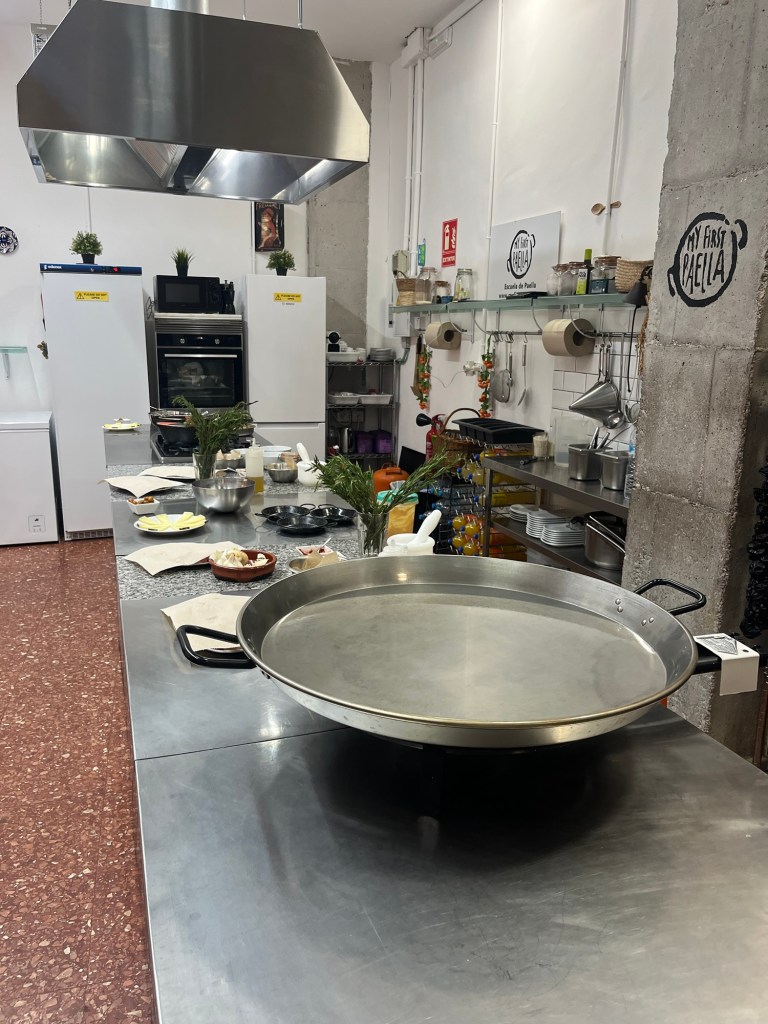
So our lesson started almost immediately with a violation of the rules. We were using two pans. There were 13 of us — a group of eight traveling together from Detroit, and then a couple from the UK, a young professional from New York City and the two of us. We were divided into two groups — the Detroit crew and the rest of the enrollees. Let the fight begin!
First an enormous of amount of oil went into each pan and placed on large gas fired ring. The oil puddled in the center of the concave pan — we fried the small pieces of chicken and rabbit in the center with the delicate rabbit liver cooking slowly on the cooler edge. But before the meat went in, the oil was salted! As each new ingredient goes into the pan, we were told, it must be salted! When the meat was well browned, we added torn (not cut) romano beans to the oil puddle as the meat was pushed to the edges. Once the beans blistered, we removed the rabbit liver and it was shared among the group — at least among those willing to try rabbit liver. Our instructor explained at home his family added several chicken or rabbit livers, maybe some kidneys and heart to the pan to be shared at this point. There were some very skeptical looks among our crowd.

The basic sauce for the paella included two kinds of paprika (a sweet version and a coarsely ground mild pepper version), finely minced garlic and grated Roma tomatoes. More salt. The sauce cooked until “pasty.” Then in went the lima beans. More salt. Then came the saffron (which had been pounded in a pestle, mixed with a bit of hot oil and a small amount of water). More salt.
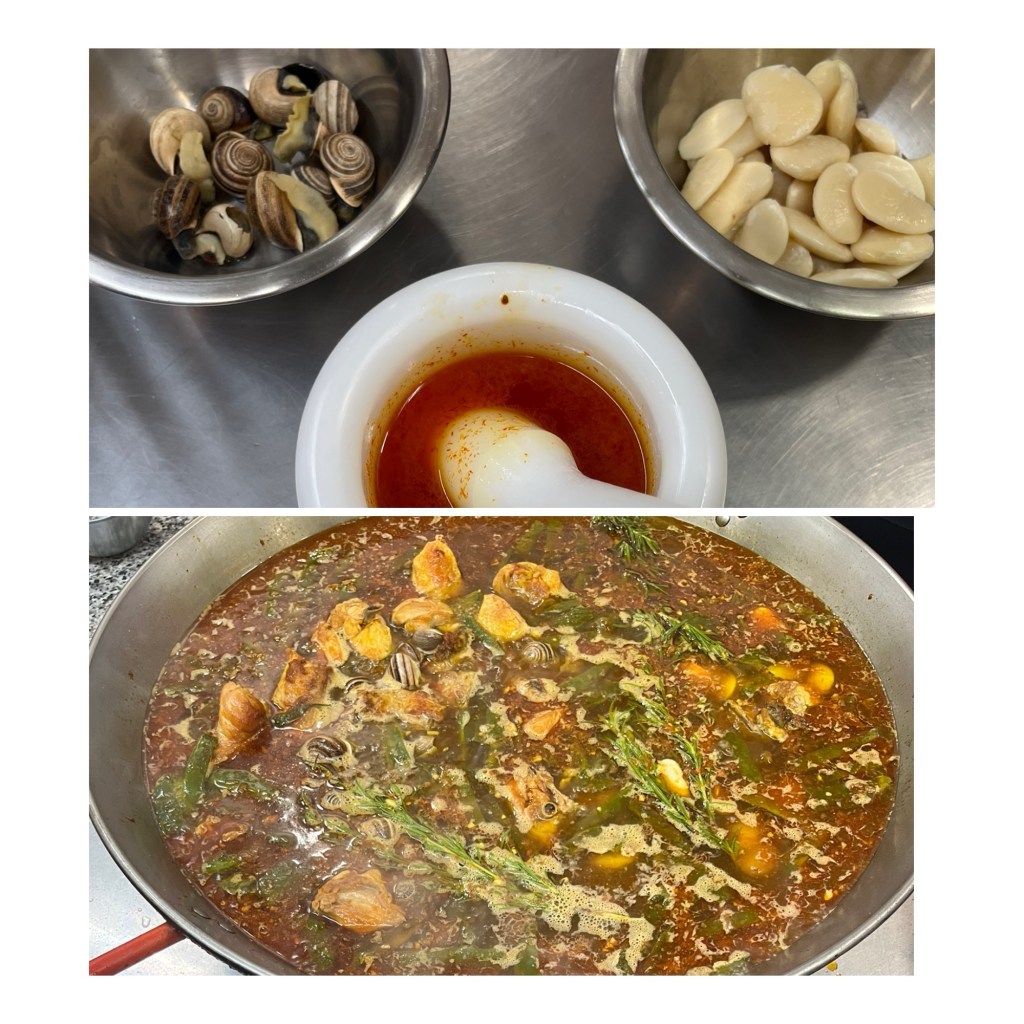
And finally plain water – not chicken broth or anything fancy. “Be careful!” our instructor said “so there is no tsunami” as we poured the water to a depth of about a half inch—carefully measured by the instructor with a slotted spatula—a technique we would like to think he learned from his grandmother. And more salt. Several large pieces of fresh rosemary stewed for a few minutes but removed before the final cooking stage otherwise they might burn and leave a bitter taste.
We all had to taste the broth at this point to see if it was salty enough. Some said yes, some said no. But it didn’t seem to matter what we said, our teacher just added more salt and asked us to taste again. And added more salt.
The secret we were told to good paella is all about the balance. Not too much garlic — one clove for every two or three people. Not too much saffron — six stands per person. Not too much liquid — “Paella needs to breath.”
Only when the broth met his salt quotient, did the rice go in. “Don’t make a mountain,” he said but spread it around the pan. The flame was turned up, the pan was shaken and everything was left to cook. No lid.
Properly made paella takes nearly an hour to make, including 15-20 minutes after the rice is added. When finished the rice should be about half an inch thick with 3 distinct textures – an almost crispy carmelized texture from the bottom of the pan, a soft texture from the middle and a bit that is al dente near the top layer. Bottom line — paella is all about the rice. An experienced cook can tell by tapping the bottom of the pan with a spoon if the rice is done — a metallic sound means the rice lacks a crispy caramelized bottom layer. We’ll see when we get home if have the ear for that test.
Once cooked, the dish needs to sit for five minutes. We used that time to have a shot of a aniseed liqueur, Cazalla.
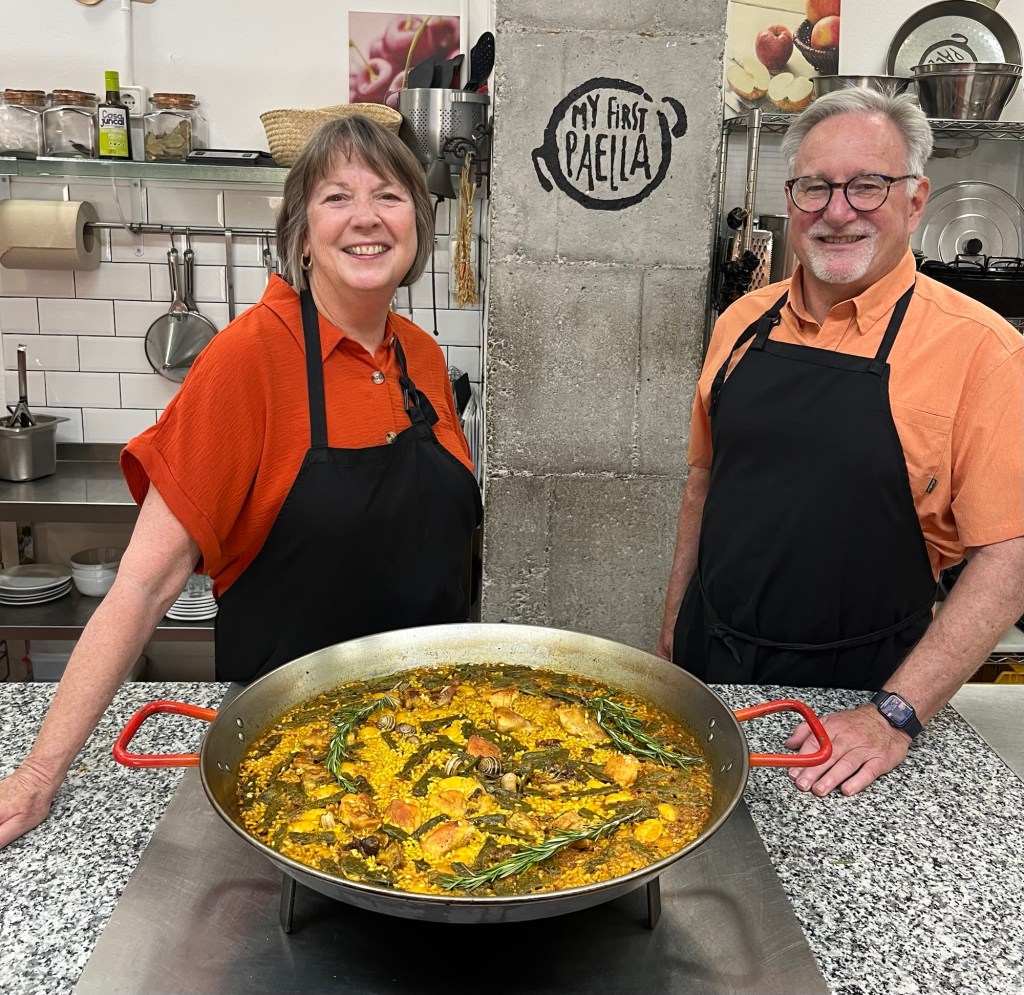
Then we all sat down to enjoy what we had prepared, plus what our instructors had made while we cooked — a small salad of tomatoes with a spicy (not very) vinaigrette and capers which seemed to balance the richness of the paella, and wine. Our confidence in our instructor was not misplaced — the rice was perfectly seasoned—very tasty. A perfect paella which everyone thoroughly enjoyed. A delightful afternoon and loads of fun.
A traditional Valencian sponge cake and orange slices dusted with cinnamon completed the meal with a small glass of moscat—a sweet white wine.
DELICIOSO!!!

 Chasing the Good Life
Looks yummy! What a great experience!
LikeLike