
We wrote a blog several years ago about how comforting it was to travel back to the familiar. You know the stores, restaurants, the roads. What to see, what to avoid. And yet we also usually find something or some place new to explore. This was our fifth trip to Costa Rica and again, we were planning on spending part of our time in Potrero, our home base, on the Nicoya peninsula on the Pacific side. Lovely beaches, decent tourist infrastructure, but not over taken by souvenir shops Then a few days in Monteverde chasing birds. But this time we would add a trip down south to the Osa Peninsula. A new horizon.
What is stunning about Costa Rica is how many completely different climatic and geographic regions are packed into a small country. Dry, almost desert on the North Pacific coast, tropical rain forest on the mid Pacific coast, even more dense, hot tropical forests further south, the temperate central valley, the cool Cloud Forest in the mountains, the Caribbean lowlands, and the high southern mountains.
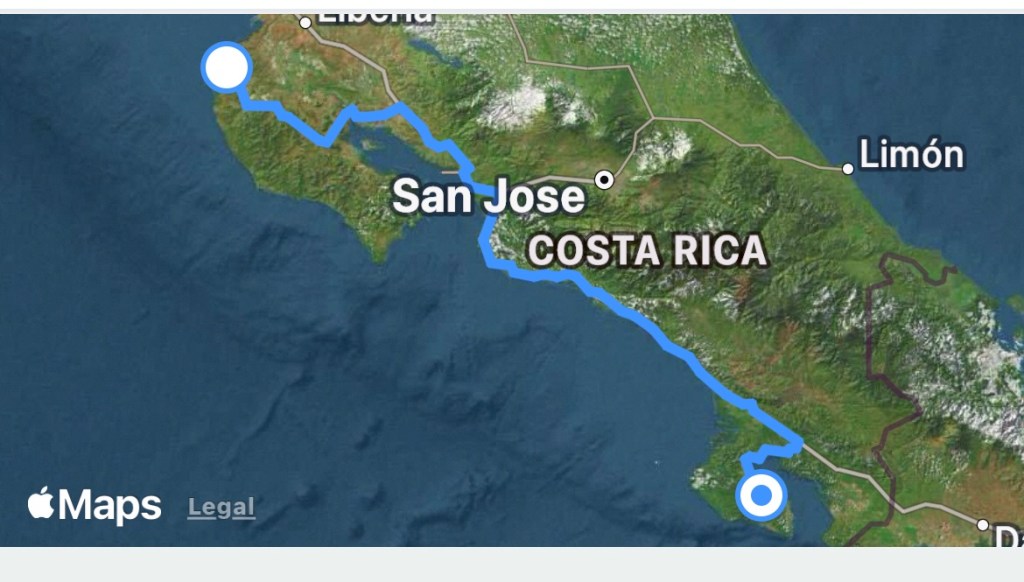
Osa is a long drive from San Jose. Even longer because you inevitably find lots of construction zones and a very slow truck or two to follow for tens of miles. So we decided to stop in Uvita on the central Pacific coast along the way to break up the trip.
Some suggest our first stop, Uvita, is an alternative to the more touristy Quepos and Manuel Antonio, just a bit further down the road. It’s a town with no main square or center, and has one main attraction—the Ballena Marine national park. This very unusual park has a huge sand spit that from above looks exactly like a whale’s tail. Unfortunately we were there at high tide; no whales tail but a gorgeous beach.

It was also prime time for the humpback whale migration so dozens of small whale watching boats were being launched through the rough, heavy surf, occasionally dumping a tourist or two into the water.
We spent two days there exploring the national park, looking for monkeys, watching birds and walking the beautiful local beaches. A good stop along the way to the Osa Peninsula.
The Osa Peninsula is one of the more remote parts of Costa Rica—very different than where we’ve been before. We read that this area was less developed, less touristed than our previous haunts. It’s in the far south, super tropical, on the Golfo Dulce (the only tropical fjord in the northern hemisphere). The peninsula is almost entirely a national park, the Corcovado National Park, and mostly inaccessible except by boat or long hikes, as in three and four day long hikes with a ninety minute boat ride from Puerto Jimenez before you even start to walk. Spectacular wildlife—birds, monkeys, sloths, tapirs, jaguars, and snakes—lots of snakes. One of the real natural treasures of the world—it said to be the most biodiverse place on the planet.
Fortunately, it is possible to drive down the eastern side of the peninsula to Puerto Jimenez, a little run down village of mostly Ticos, some expat hippy/yoga types, and a few serious eco tourists/birders/hikers. You can drive further south on a dirt road with multiple stream crossings to Carate, but we wisely chose to end our drive at Puerto Jimenez. The town houses the main information center for the national park and you book your tours there—you must have a guide to get into the park. There is also a small airstrip with flights from San Jose, Liberia and Quepos should you not want to make the long drive. It was little disconcerting when we were sitting at a local restaurant at the port when a small plane buzzed by seemingly inches over our heads. We noticed none of the locals flinched.
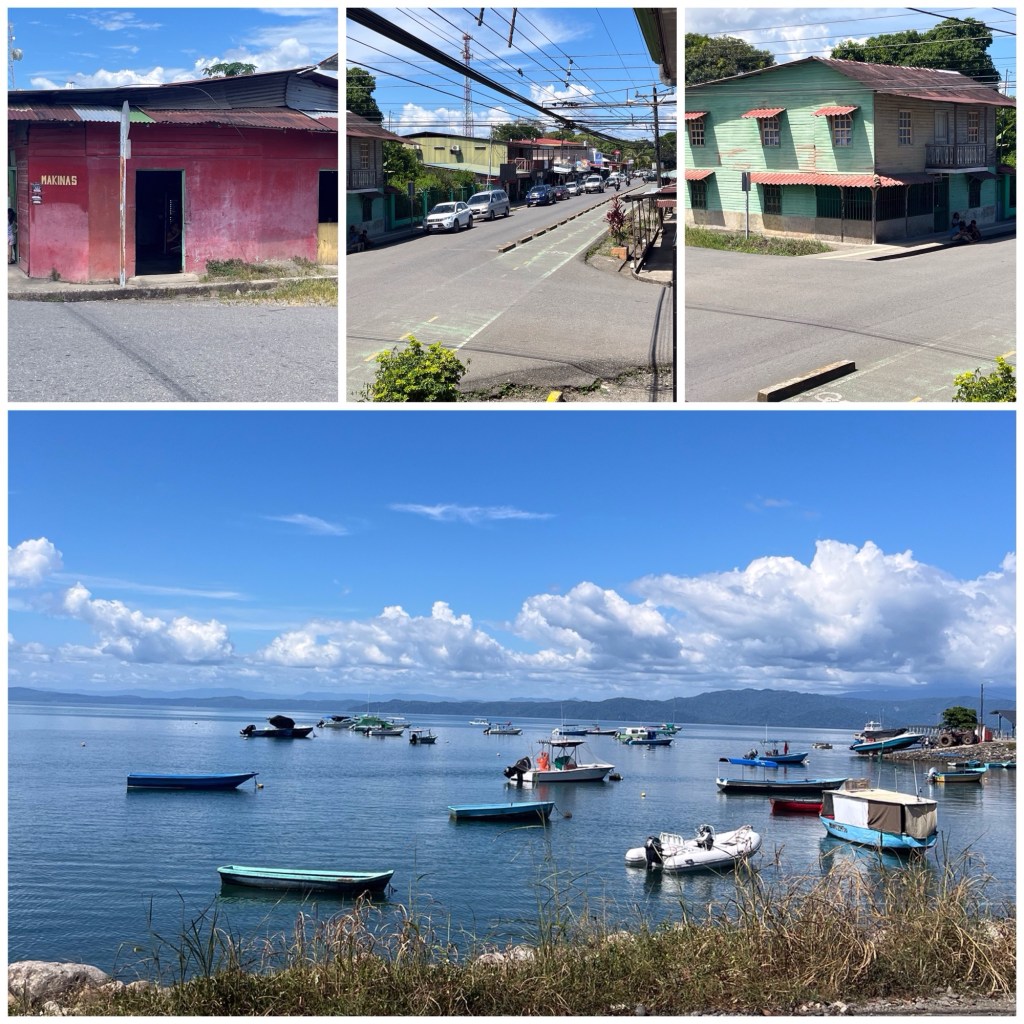
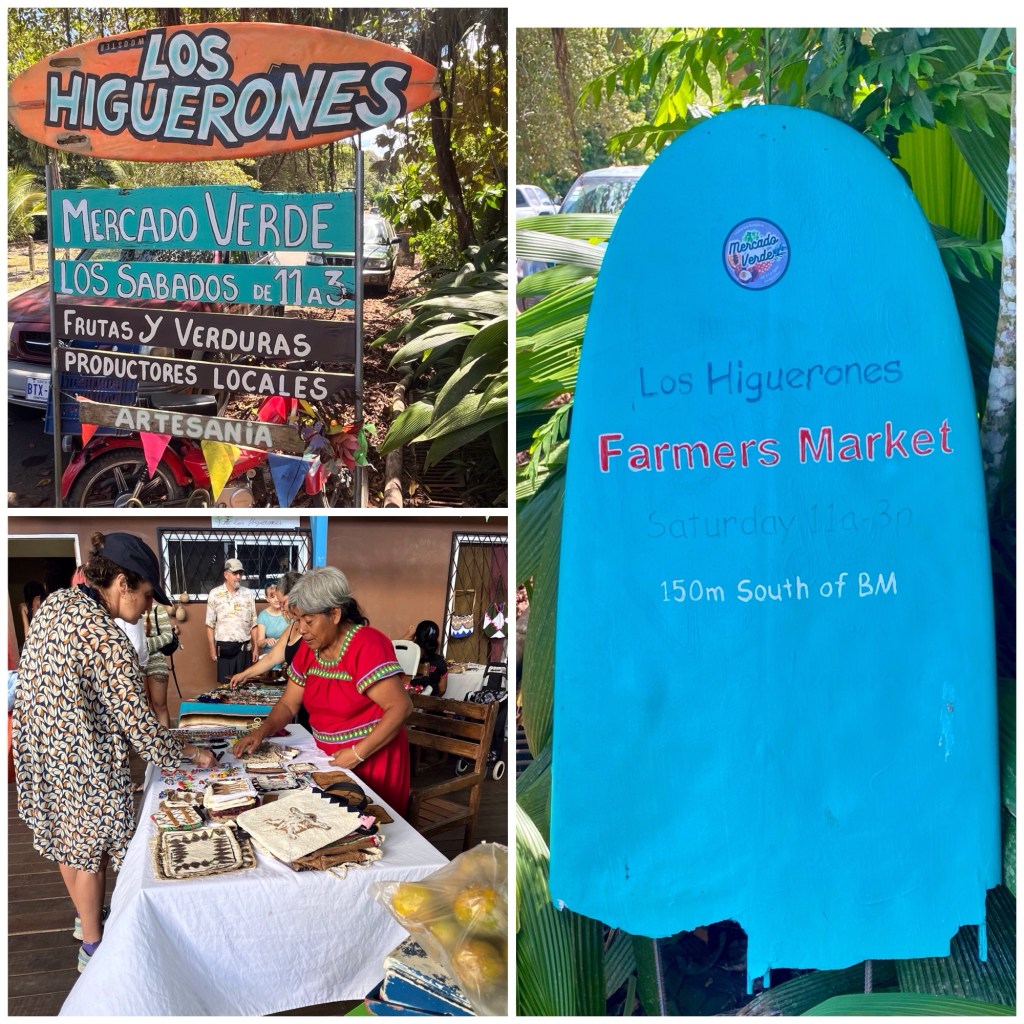
There’s not much else to the town. A few restaurants, couple of yoga studios, a gas station, a BM grocery store, and a heavily advertised Saturday farmers market that takes five minutes to see but includes some indigenous people’s crafts..
Just a few but very rugged miles outside of town is another of Costa Rica’s gorgeous beach’s—Playa Preciosa. From here you can almost see Panama.
Part of Osa’s charm is its lack of serious tourist infrastructure. So we had a hard time finding a place to stay except for a few very upscale eco resorts. We wound up in the Corcovado Private Villas. We think it might have been an eco resort that fell on hard times in during Covid. We had been warned a four-wheeled vehicle was required. The website gave us a GPS waypoint that took us up a steep dirt road that reinforced the idea we needed four wheels. Unfortunately when the GPS announced “you have arrived” we were in front of nothing but a barbed wire fence. So, of course we drove on, using all four wheels on our car, as the road became progressively worse. Back home we would have called it a mountain logging road. Luckily, a kind local on a motorbike recognized we were somewhere we didn’t belong and led us back to civilization. Of course, this part of Costa Rica lacks reliable cell reception as in we had no “bars”. We had to backtrack several miles to get cell service and a new set of directions — different but only slightly better. We finally arrived. Our traveling partner in the backseat had her eyes closed most of the way up to resort, muttering occasionally “oh my goodness.” The “check in” guy, Esteban, listened rather calmly to our annimated story about getting lost and told us he too had gotten lost a few days before using the original directions. We suggested that maybe they might want to delete those directions from their website.
The complex consisted of a dozen or so separate units spaced some distance from each other along the steep trail to the top of the hill. There we found the pool, hot tub and “restaurant” which served an inclusive breakfast and you could order a dinner in advance with a very limited menu. Oh, and the whole stay was cash only and it was very unclear who you paid and when. Nobody seemed to be in charge but we figured somebody, sometime, somewhere would take our money.
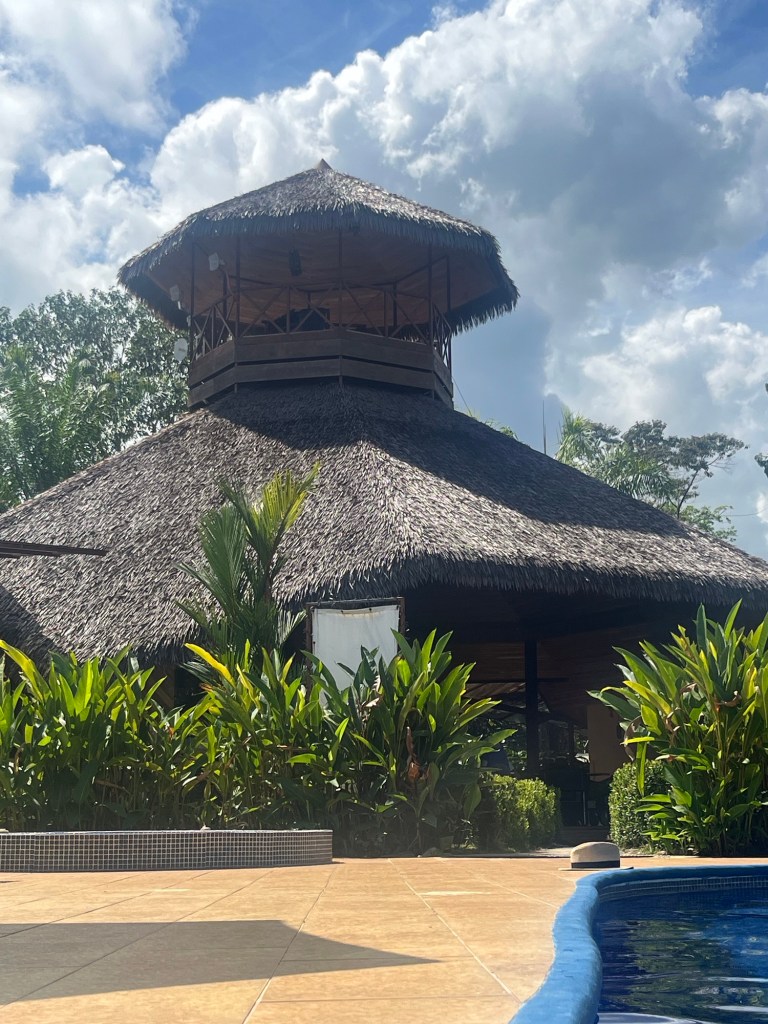
The villas themselves were a bit run down, with few amenities, but very serviceable. And with gorgeous views of the green jungle teeming with birds and a few monkeys just a few feet from our balcony.
The upside, and it was a huge upside: the 70 acres of amazing tropical forest right adjacent to the national park. Some of reviews said the wildlife here was better than what they saw in the park. While we are not truly serious birders, what we experienced in the few days on the property could change our minds. Toucans, fiery billed arcaries, multiple varieties of parrots, lineated woodpeckers, and dozens more. At least several new life birds for us.
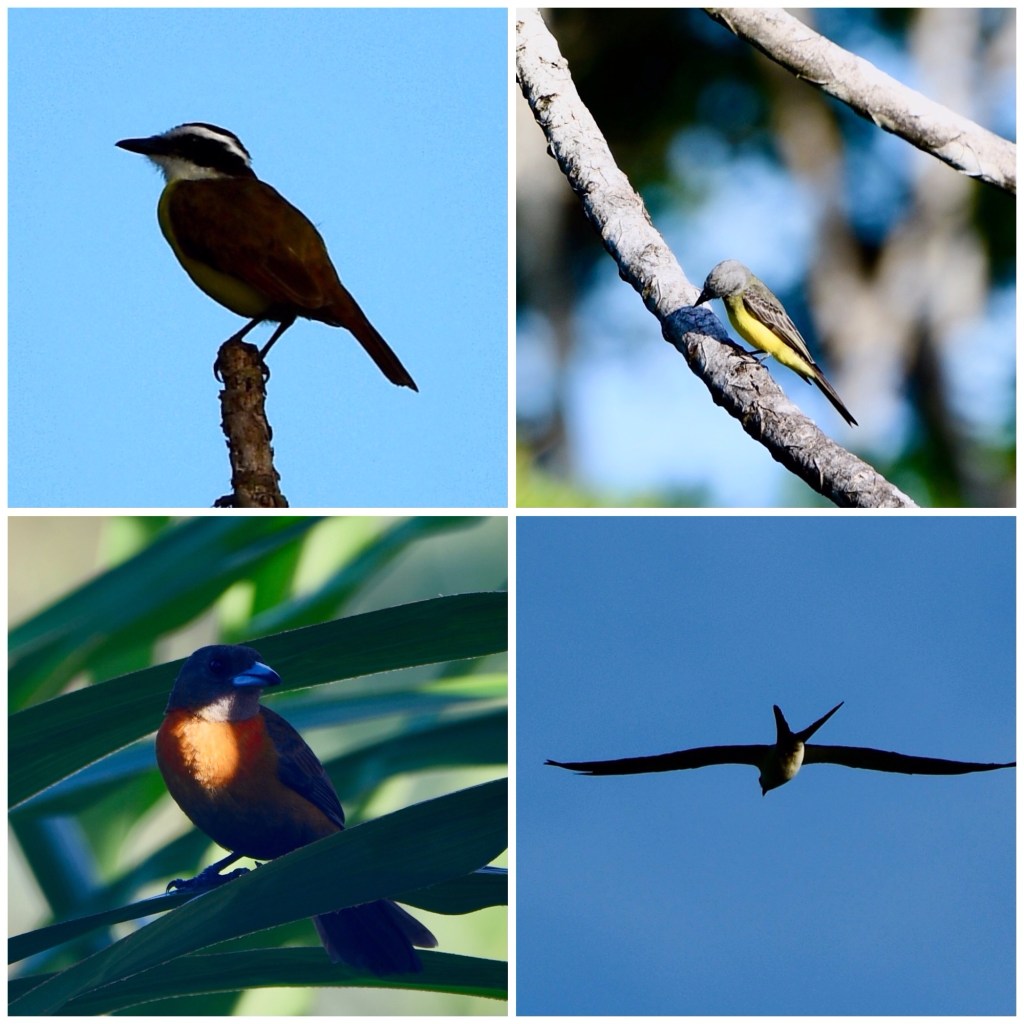
But the star attraction were the scarlet macaws—a very large bright red, yellow, blue parrot with the most awful loud sqwauk of a call which you could hear for miles. Our villa and common area seemed to be a macaw freeway with birds flying over all day, stopping to rest in the nearby trees. What a show. A very loud show.
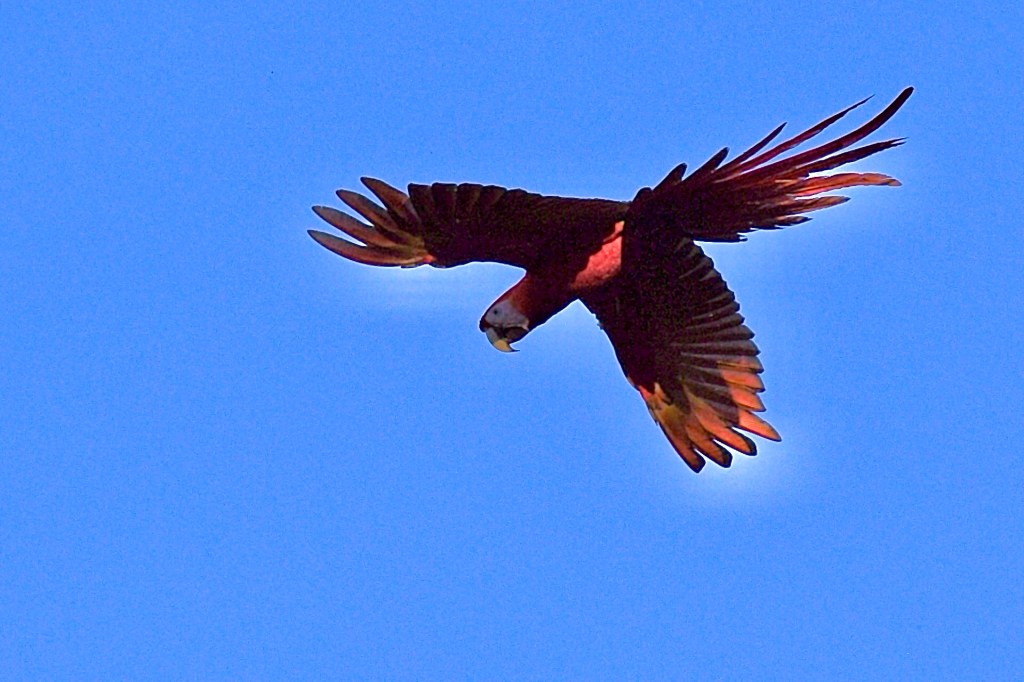
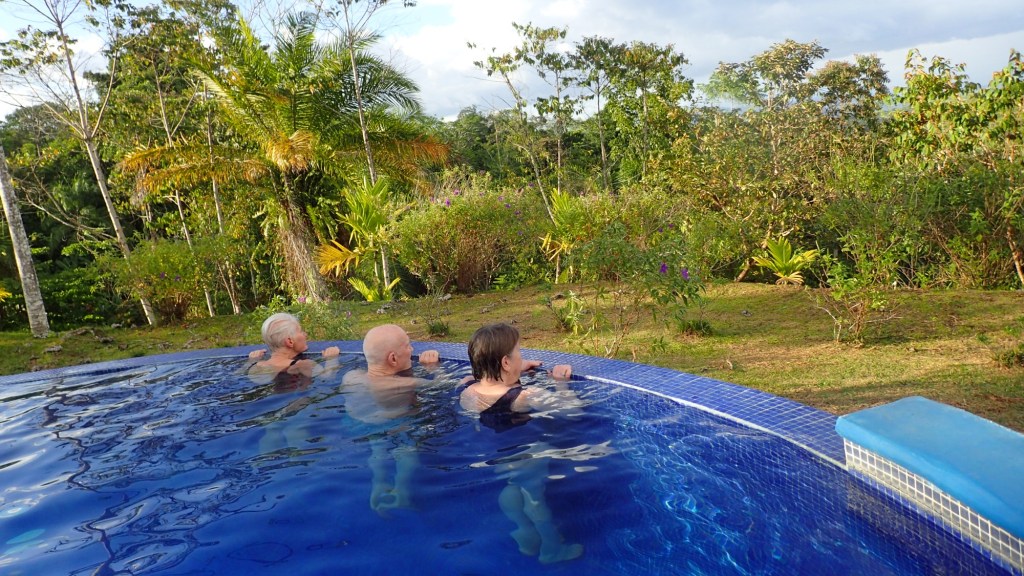
And you could see most of this from a magnificent infinity pool at the top of the property. In one 45 minutes stint in the pool, we saw white faced monkeys, yellowed throated toucans, green parrots and, of course, lots of scarlet macaws, plus monkeys just a few yards away peeking through the foliage. Pool birding was a new experience for us. As we said, we aren’t serious birders.
And the dinner, humble as it was (arroz con pollo) was very good. However, the parting comment from our young server as we walked home to our villa was a little disturbing, “Be careful of the snakes.” We walked with all four iPhone flashlights focused on the ground.
Yes, the property needs work and serious investment. But if they ever upgraded to a high-end eco resort, we probably couldn’t afford it. By the way, while writing this in our villa some white-faced monkey is having a shit fit not far away.
The Osa Peninsula surprised us by living up to its reputation — a natural wonder, still largely pristine, a biodiverse sanctuary, and one Costa Rica’s many different climatic and geographic regions. It’s also a great example of Costa Rica’s commitment to preserving natural habitats by setting aside huge areas as national and provincial parks.
It gave us a lot to think about on the 10 hour drive back north to Potrero— basically nearly the entire length of the country.

 Chasing the Good Life
loved your blog. Thanks for the travel experience. We learned a lot. Love, Bill and Sally
LikeLike