
Sometimes we’re a little slow. Well, maybe a lot slow.
The first time we were in Costa Rica seven years ago we kept driving by modest roadside establishments with signs advertising “soda” this or “soda” that. Of course, we thought they were selling local soft drinks to thirsty Ticos and tourists. Only, when by chance, we actually stopped to get a cold soda, did we realize that a “soda” was actually a restaurant—more specifically, a small family run restaurant with a limited local menu. And we soon found out these “sodas” were often gems of local cuisine serving great food at ridiculously cheap prices. Yes, the menu is limited. Yes, the ambience is sometimes is missing (but not always—we’ve eaten in sodas on the beach with sand under foot and up in the mountains with stunning views of volcanos). But you are likely eating with locals, maybe being served by someone whose grandma is cooking in the back.

And the food! Almost always fresh local ingredients, always prepared to order. The limited menus in most sodas usually features Costa Rica’s star menu item—the casado plate (which translates as “the husband’s plate” or “married plate”). Rice, beans, plantains, salad, maybe some fresh fruit and a choice of protein—fish, pork, or chicken. The protein can be grilled, stewed, or braised. Big portions meant to serve the very hungry.
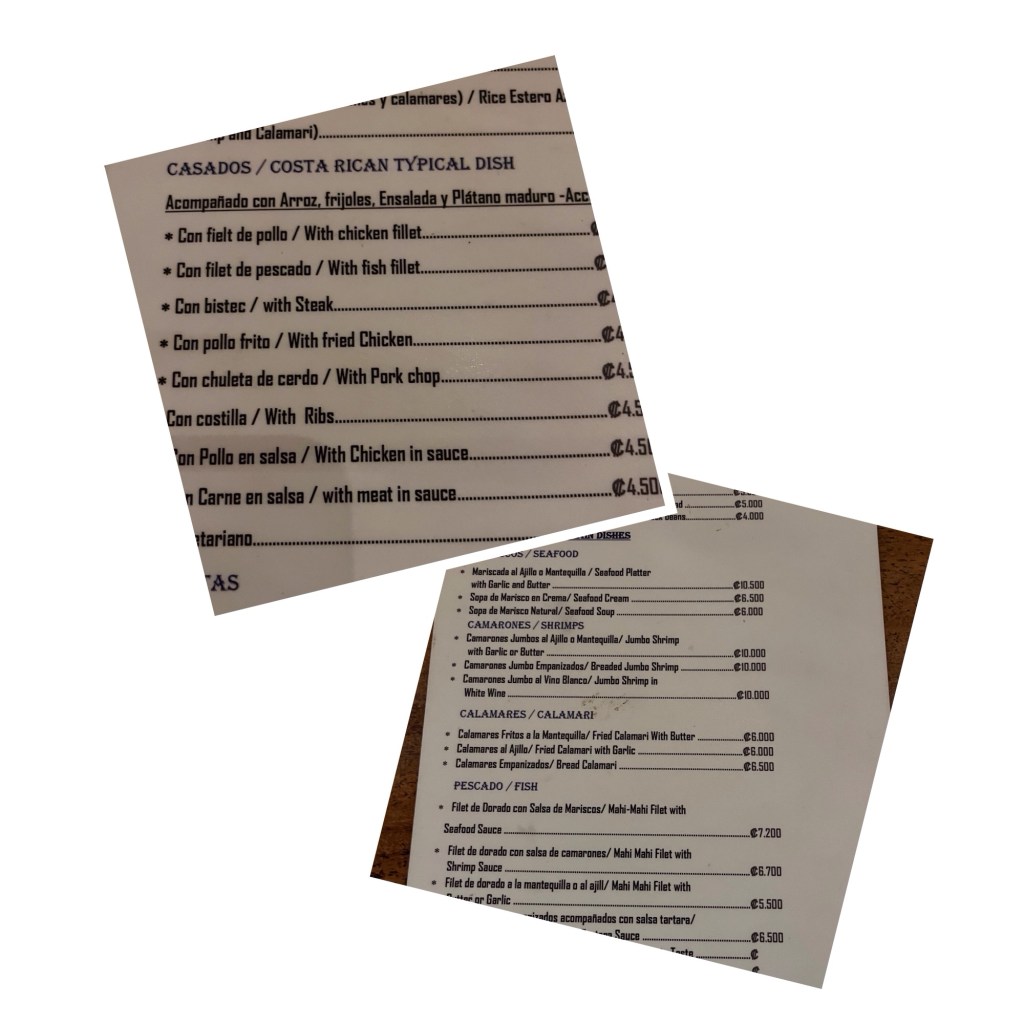
The typical price is between 2000 CRC and 4000 CRC or $4 to $8. And most sodas take US dollars in addition to Costa Rican colones, and many accept credit cards. A few only take cash. Other local dishes include arroz con pollo, (rice and chicken, sometimes in a tomato sauce), gallo pinto (rice and beans), ceviche. Almost all serve the local beer (Imperial), sodas (Fanta orange soda is ubiquitous), and fruit juices. Whether is a result of widespread tourism or simply the influence of North American culture on the locals, hamburgers and margaritas are often on the menu as well.

You will almost always be eating outside on a covered patio with a kitchen tucked in a small space in the back. No air conditioning here. Most will be filled with locals. Often there are small children playing near by, and an occasional dog or two strolling through the soda. Once, up in the mountains, as we ate, the waitress called a dozen or so children playing in the field next to the soda to serve them their lunch on paper plates which they promptly ran off with to eat under a nearby tree, dodging the local cattle as they went.
The owners of one soda, in a very, very remote area up in the mountains when we were staying on a small coffee plantation across the dirt road, would wait until we drove by their home on the long driveway, then run down from their home to the soda to open up just for us. We were clearly their only business for the night. Mom would cook and her young daughter would happily sit at the next table, coloring. The food was absolutely amazing—and as you can imagine, cooked to order. Best pollo y arroz ever! We ate there three times and, despite the language barrier, began to feel like part of the family.
You’ll never have to worry about finding sodas in Costa Rica—they are everywhere. Really, everywhere. Big towns, small villages, remote rural areas, industrial zones. In the more upscale resort communities such as Playa Flamingo or Samara on the Pacific coast, they are often located just outside the town centers on the roads that lead into to town or in the nearby little Tico villages.
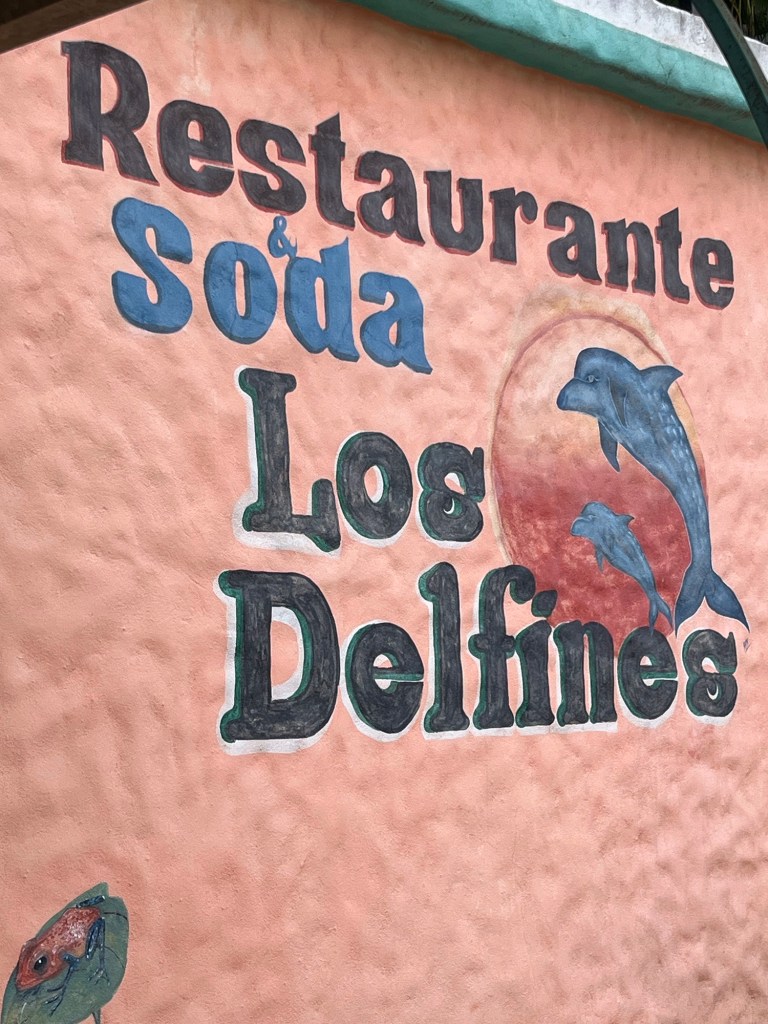
Recently we were in Samara on the Nicoya Peninsula in a beautiful AirBnB in the hills above the town. Our wonderful hosts recommended a number of local restaurants. They were all lovely beachfront establishments with spectacular sunset views, music, and tropical cocktails. But the food was very ordinary and at US prices $20-40 for an entrée. The clientele was almost exclusively gringos—not surprising for a tourist town. And, yes, of course, we are in fact gringo tourists. So we fit right in.
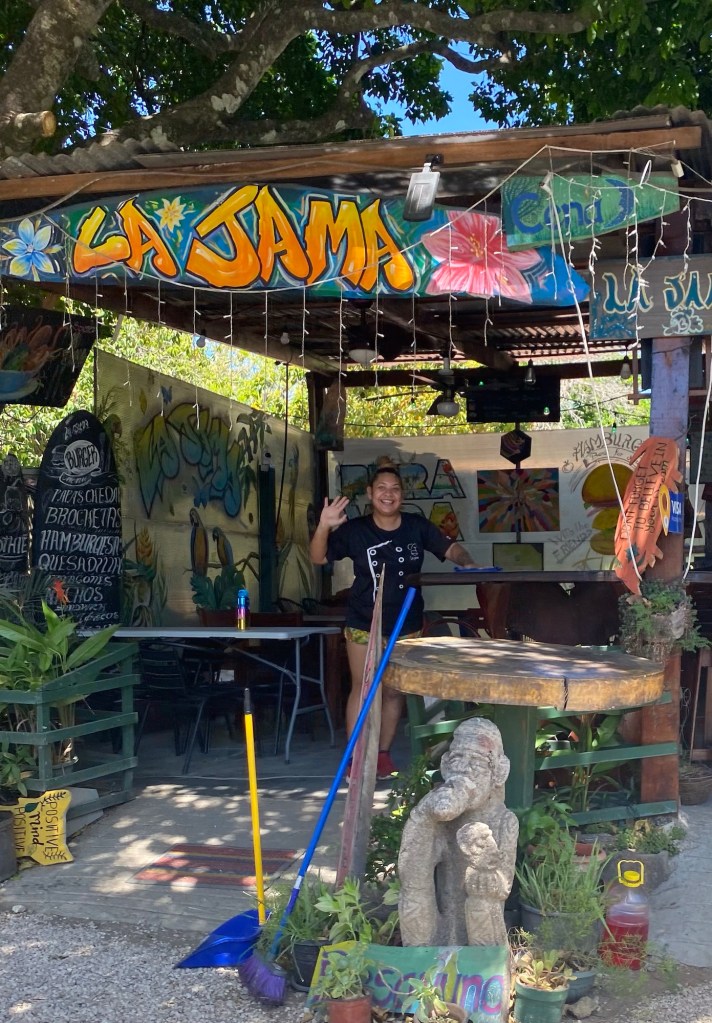
The next night we were off in search of a soda….pura vida!

 Chasing the Good Life