
Travel is full surprises and curiosities. Little did we know when we were on our way to Nantes, France, that we’d be staying across the street from a collection of phantasmagorical mechanical creatures right out of 19th century, including one very, very large mechanical elephant. It’s one of Nantes biggest tourist attractions—Les Machines de I’lle. Years ago, the city of Toulouse turned down the opportunity to house the exhibit—thinking it too kitschy. Poor decision.
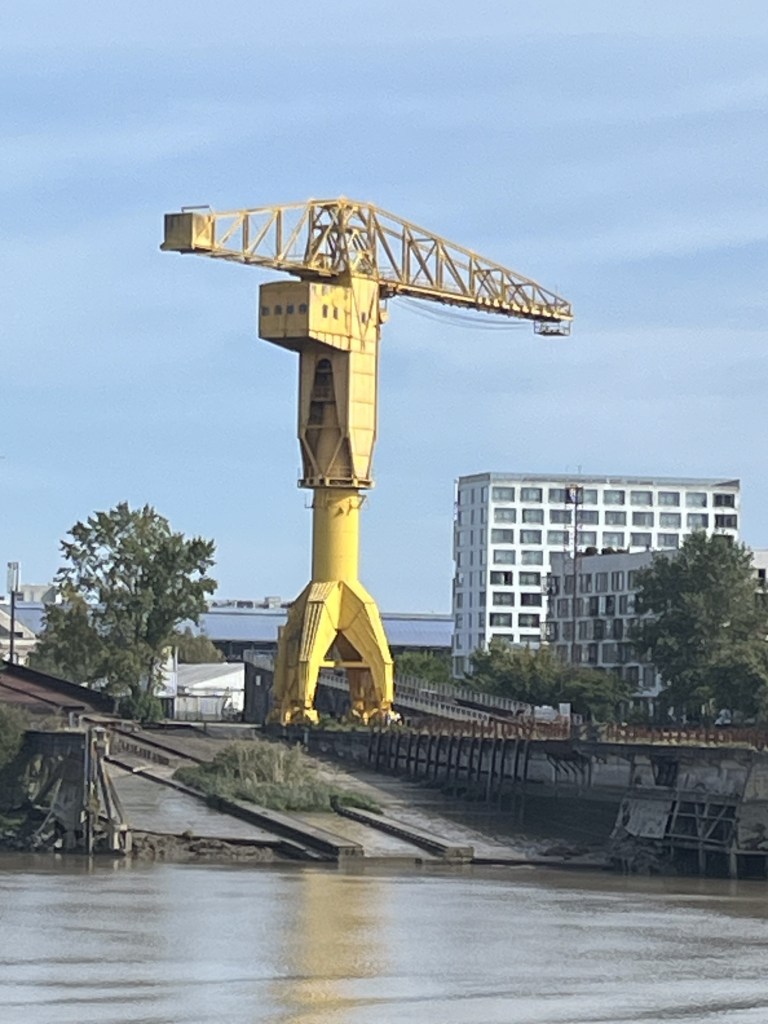
Les Machines de I’lle complex is huge, located on the site of the old shipyards. There are still remnants from the old shipbuilding days—dry docks, a massive crane, ramps where the newly constructed ships slid into the murky Loire, now a park of sorts.
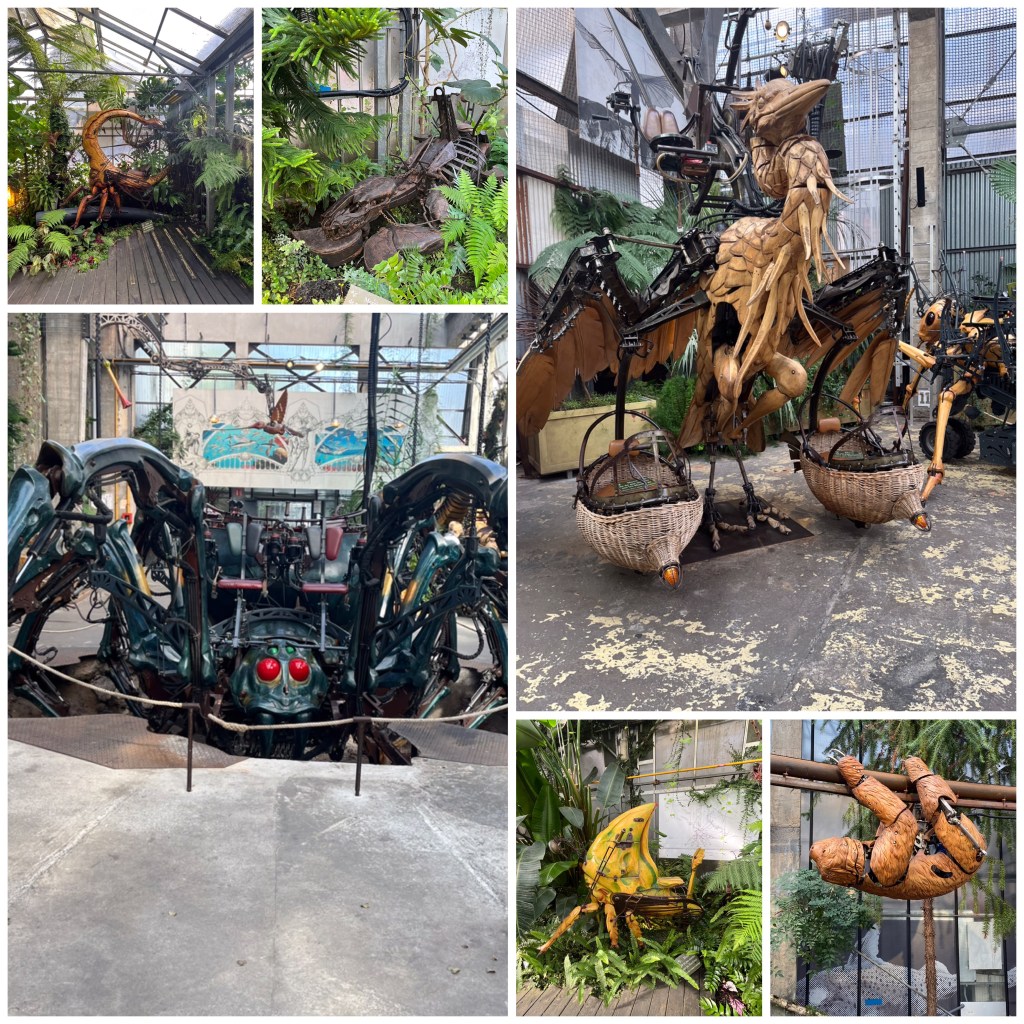
The menagerie of mechanical creatures is housed in the Gallerie des Machines. It’s a monstrous old warehouse with dozens of creatures — a giant spider, a heron, sloth, caterpillar, hummingbirds. All move. All are created out of old metal parts with a very steampunk look. Most animals take a few riders from the audience as part of the show put on by the guides. Unfortunately for us, the “show” was in French. But no matter—the excitement on the children’s faces and the squeals of laughter was the universal language.
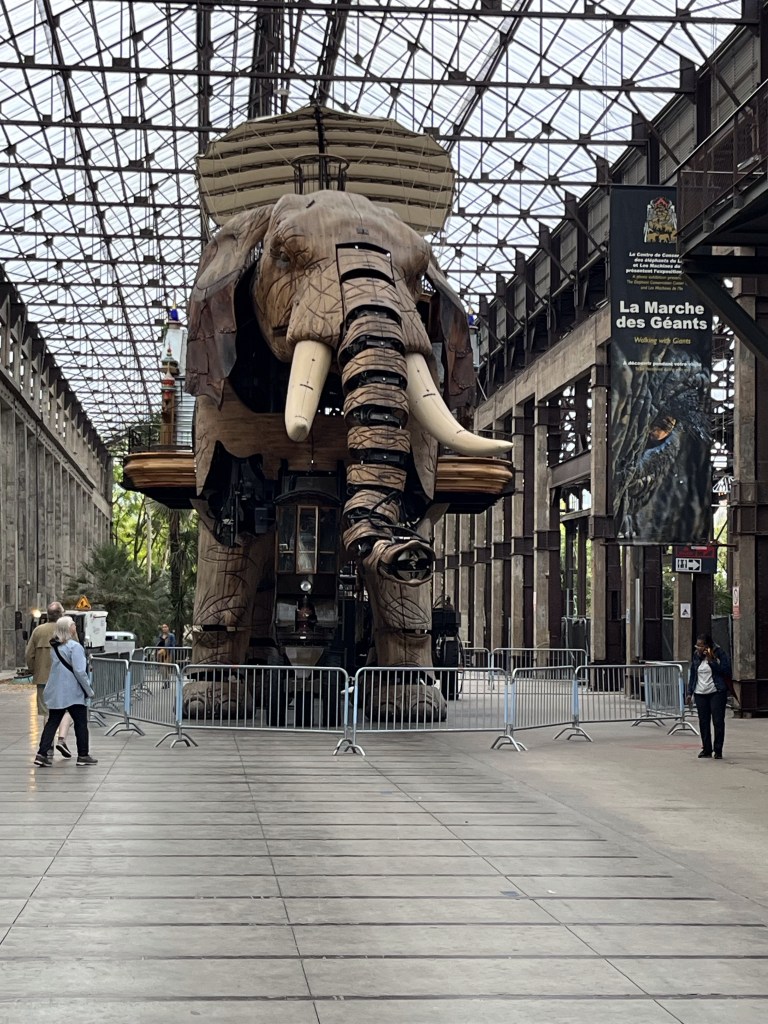
But the star attraction is the giant elephant. It is free range. Standing three stories high, and carrying up to 50 passengers, the elephant walks around the grounds bellowing and spraying water at unsuspecting tourists.
The complex also includes two retro carousels, one that revolves around a three story aquarium of mechanical sea creatures.
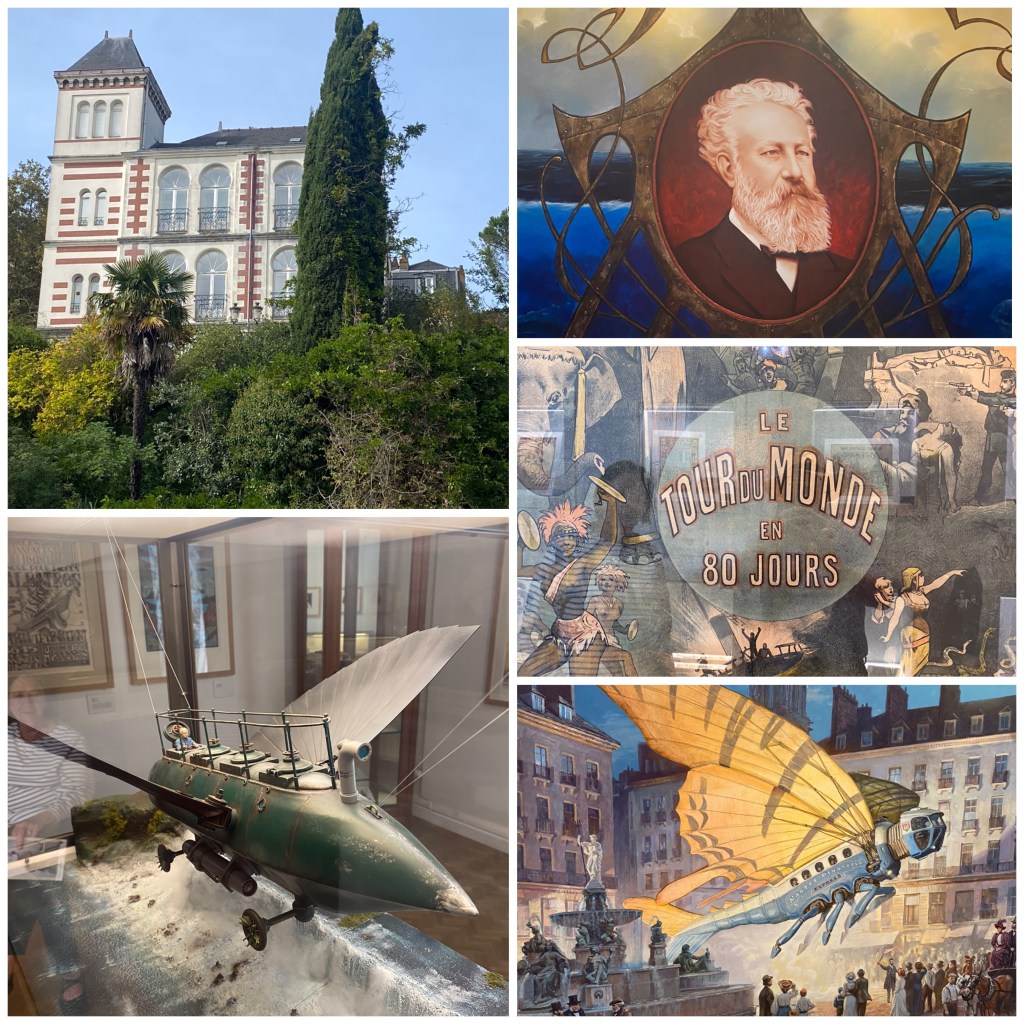
You had a sense that all of this might have been inspired by late 19th century science fiction writers like Jules Verne, and, well, turns out he was a native of Nantes. There is a Jules Verne museum in the city—a house where he once lived overlooking the Loire river and the Machines de I’lle. For us, it was a little disappointing. Not much to see. A few books, some posters from the movies made from his books. A few half-hearted displays.
The rest of the Isle de Nantes, across the Loire from the city center, was once dominated by the shipyards and waterfront with warehouses and rail lines for moving goods. You can still see where ships once tied up. Today it’s the site of a massive building project to create a new medical center and home to several schools, as well as the Temple of Justice and Commerce Center and an architectural school and university, punctuated by sculptures and art.
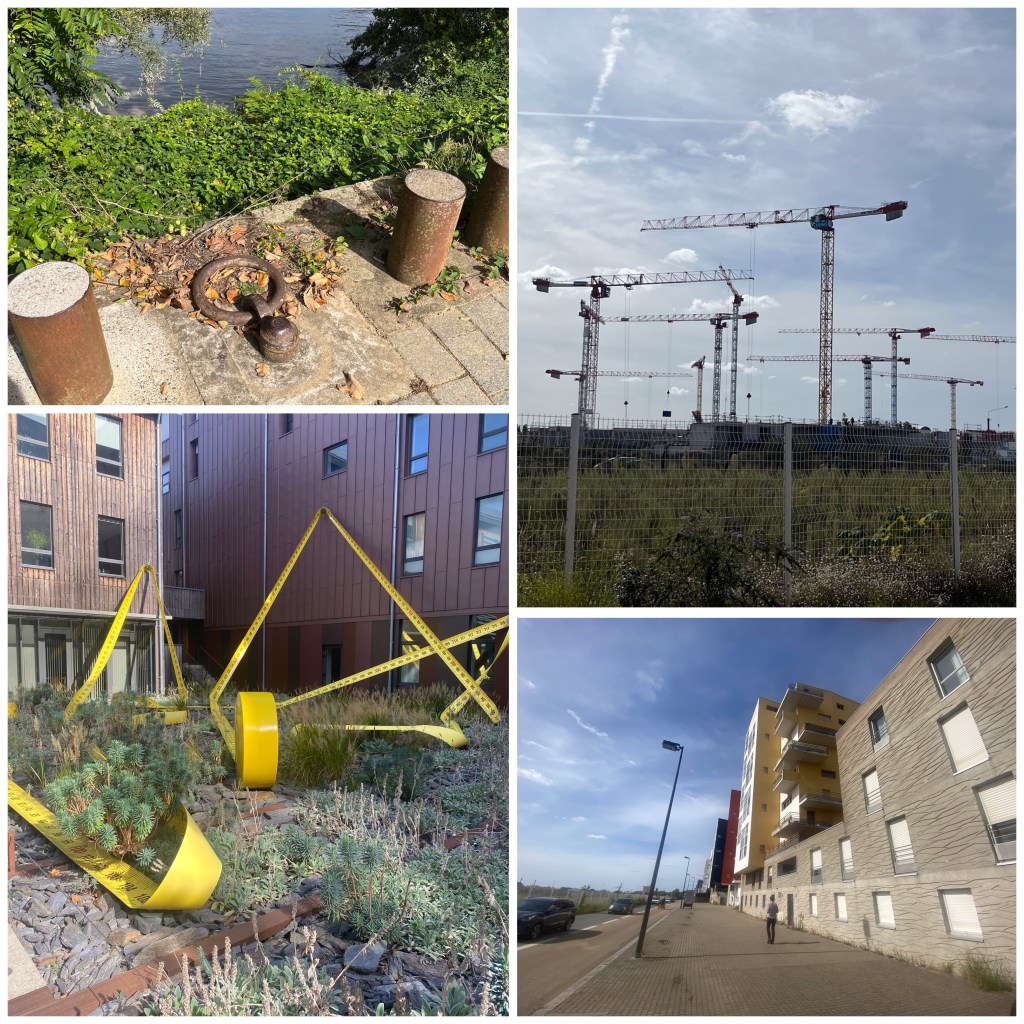
What makes the community really different, however, is the planning that is going into the new residential five and six story buildings. We were told by the owner of a fabulous oyster bar (https://www.lelieujaune.fr/) that the new structures must include ground floor store fronts, a certain percentage of low income homes as well as office space and high end units — all to create a mixed community. All very progressive, he said. We liked that. But it is certainly different than the old Nantes on the right bank of the river.
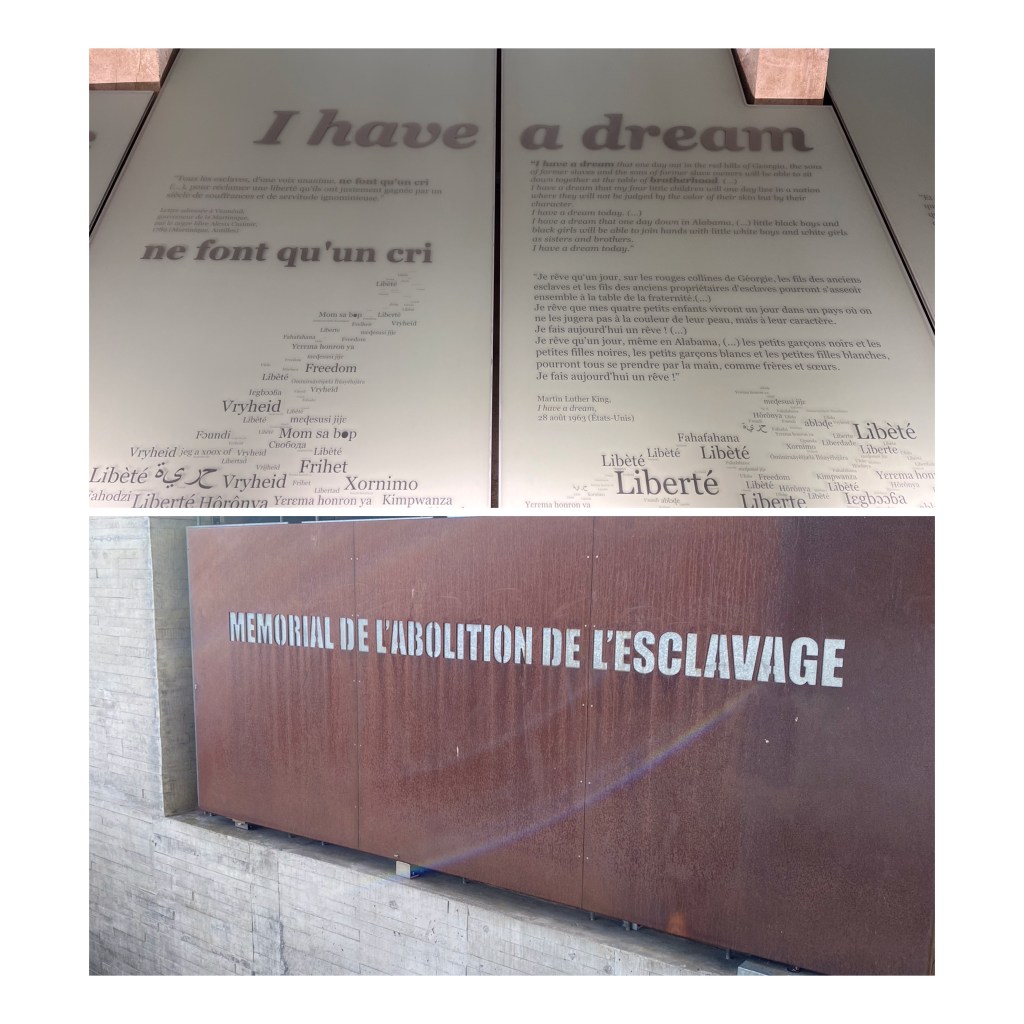
Nante and the Loire River was also played a role in the slave trade. That history is marked by memorial along the right bank of the river, where the ships could very well have tied up.
The historic center of Nantes isn’t all that old. It really came into its own with the Industrial Age and all that shipbuilding which led to a building boom. The old buildings largely had to be rebuilt after a massive bombing by the Allies in the fall of 1944 near the end of World War II.
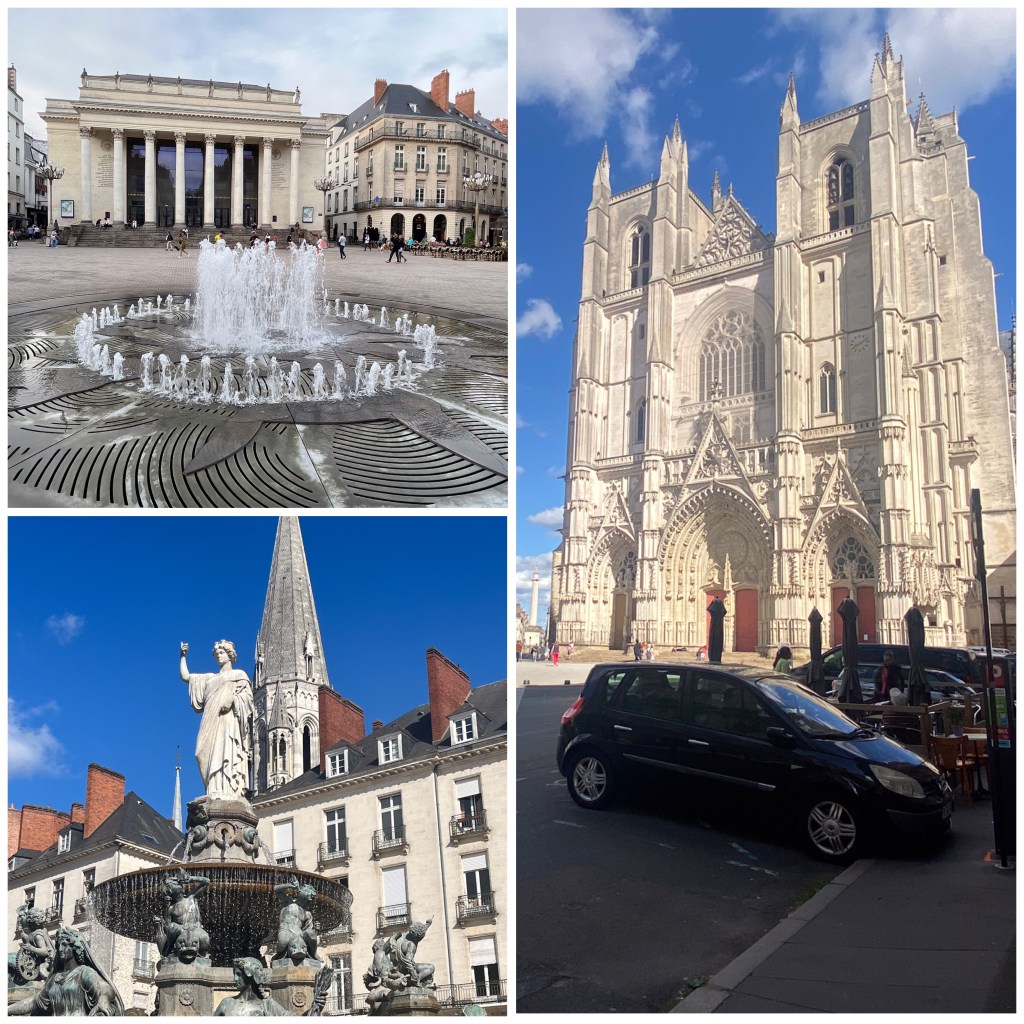
Amazingly, photographs of the bombed city show the main fountain in the square somehow avoided destruction. We aren’t sure if the display around that fountain to World War II is a permanent exhibit, but it certainly offers a grim view of this city’s destruction.

There is a small medieval quarter in Nantes, Bouffay, close to the Ducs de Bretagne royal palace. Beautiful narrow, winding cobblestone streets, old churches, atmospheric squares filled with dozens of restaurants of every ethnicity. The royal palace itself is worth a stroll through, and grounds and the ramparts walk are free. It sits next to where the Loire River used to pass, before its diversion to its current flow. We hired a private guide (a Peruvian who has lived in France for 10 years and is also a jewelry maker https://instagram.com/stories/piedraspreciosas81/3206317892185479660?igshid=MzRlODBiNWFlZA==) for two hours to walk us through this area, point out a few of the remaining bits of medieval history and introduce us to the Jardin des Plantes, a beautiful botanical garden across from the main train station.
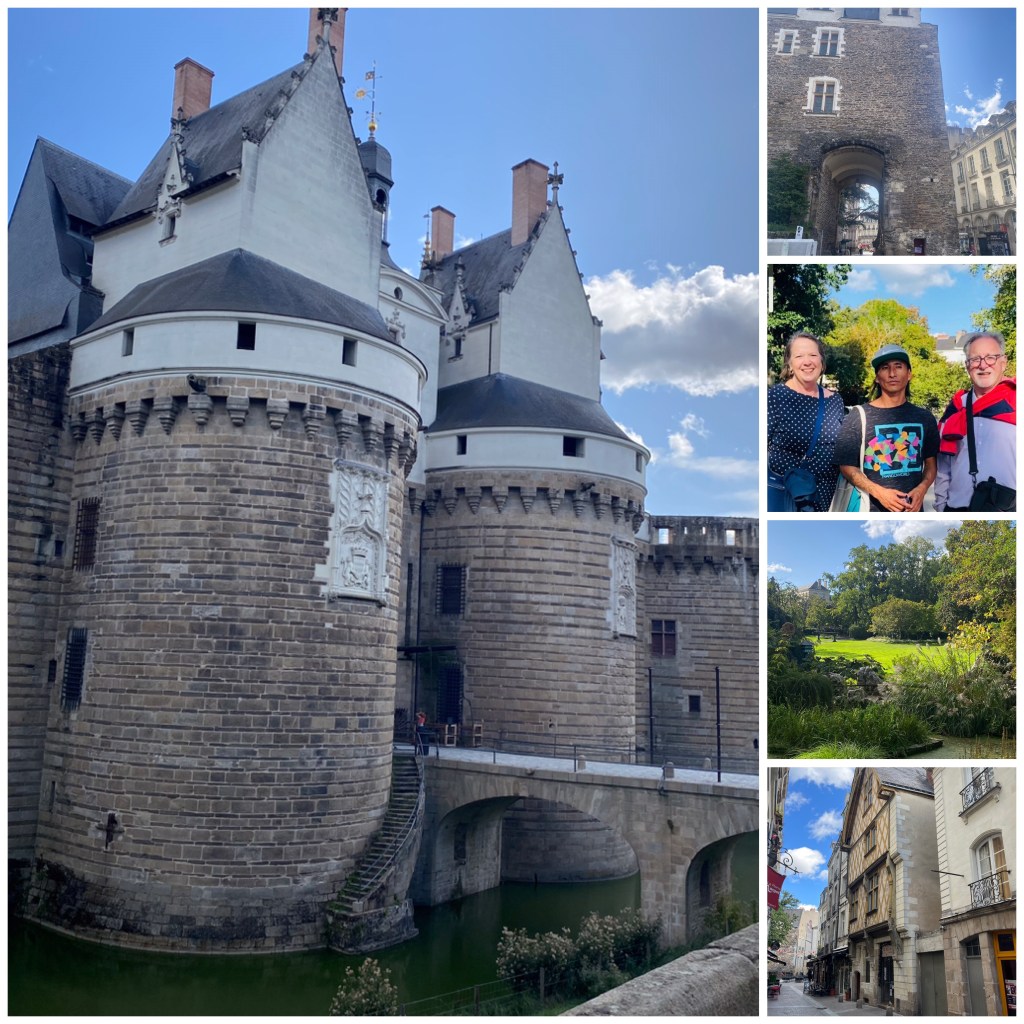
As only a local can, he tipped us off to a good option for a dinner of mussels and fries, as well as helping us master the tram system.
Steampunk Nantes was quite a surprise and definitely more than what we expected. And the city itself is delightful and well worth a visit.


 Chasing the Good Life
Mary, I hope you and Peter are enjoying this trip as much as I am enjoying it! What wonderful experiences! From the caves to Steampunk Nantes! As always your descriptive writing takes me right there! Thanks so much for sharing! Oralee
>
LikeLike