New Horizons in Costa Rica

We wrote a blog several years ago about how comforting it was to travel back to the familiar.  You know the stores, restaurants, the roads.  What to see, what to avoid.  And yet we also usually find something or some place new to explore.  This was our fifth trip to Costa Rica and again, we were planning on spending part of our time in Potrero, our home base, on the Nicoya peninsula on the Pacific side.   Lovely beaches, decent tourist infrastructure, but not over taken by souvenir shops  Then a few days in Monteverde chasing birds. But this time we would add a trip down south to the Osa Peninsula.  A new horizon. 

What is stunning about Costa Rica is how many completely different climatic and geographic regions are packed into a small country.  Dry, almost desert on the North Pacific coast, tropical rain forest on the mid Pacific coast, even more dense, hot tropical forests further south, the temperate central valley, the cool Cloud Forest in the mountains, the Caribbean lowlands, and the high southern mountains. 

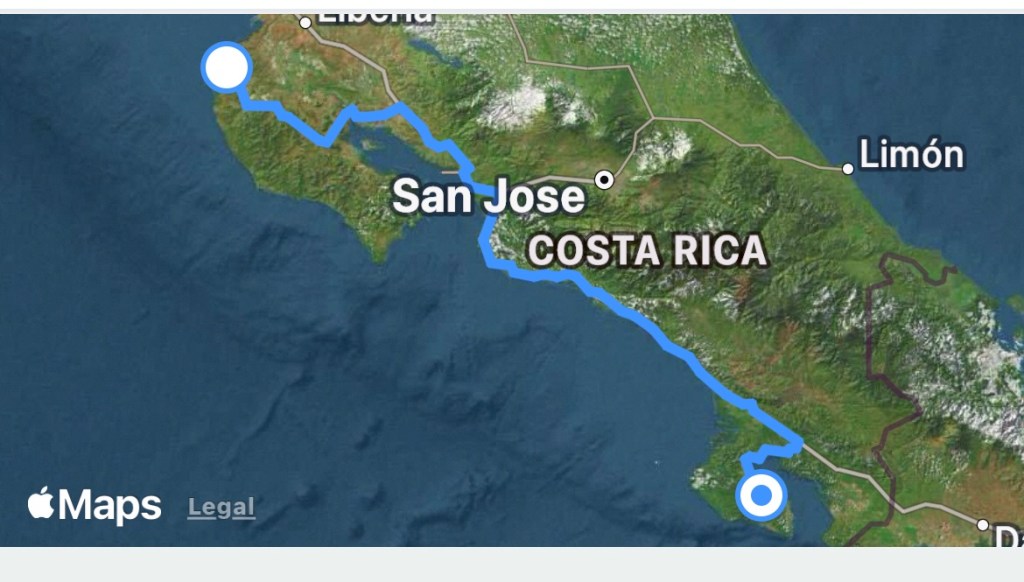
Osa is a long drive from San Jose. Even longer because you inevitably find lots of construction zones and a very slow truck or two to follow for tens of miles. So we decided to stop in Uvita on the central Pacific coast along the way to break up the trip.  

Some suggest our first stop, Uvita, is an alternative to the more touristy Quepos and Manuel Antonio, just a bit further down the road. It’s a town with no main square or center, and has one main attraction—the Ballena Marine national park. This very unusual park has a huge sand spit that from above looks exactly like a whale’s tail.  Unfortunately we were there at high tide; no whales tail but a gorgeous beach.

It was also prime time for the humpback whale migration so dozens of small whale watching boats were being launched through the rough, heavy surf, occasionally dumping a tourist or two into the water.

We spent two days there exploring the national park, looking for monkeys, watching birds and walking the beautiful local beaches. A good stop along the way to the Osa Peninsula.

The Osa Peninsula is one of the more remote parts of Costa Rica—very different than where we’ve been before. We read that this area was less developed, less touristed than our previous haunts. It’s in the far south, super tropical, on the Golfo Dulce (the only tropical fjord in the northern hemisphere). The peninsula is almost entirely a national park, the Corcovado National Park, and mostly inaccessible except by boat or long hikes, as in three and four day long hikes with a ninety minute boat ride from Puerto Jimenez before you even start to walk. Spectacular wildlife—birds, monkeys, sloths, tapirs, jaguars, and snakes—lots of snakes.  One of the real natural treasures of the world—it said to be the most biodiverse place on the planet. 

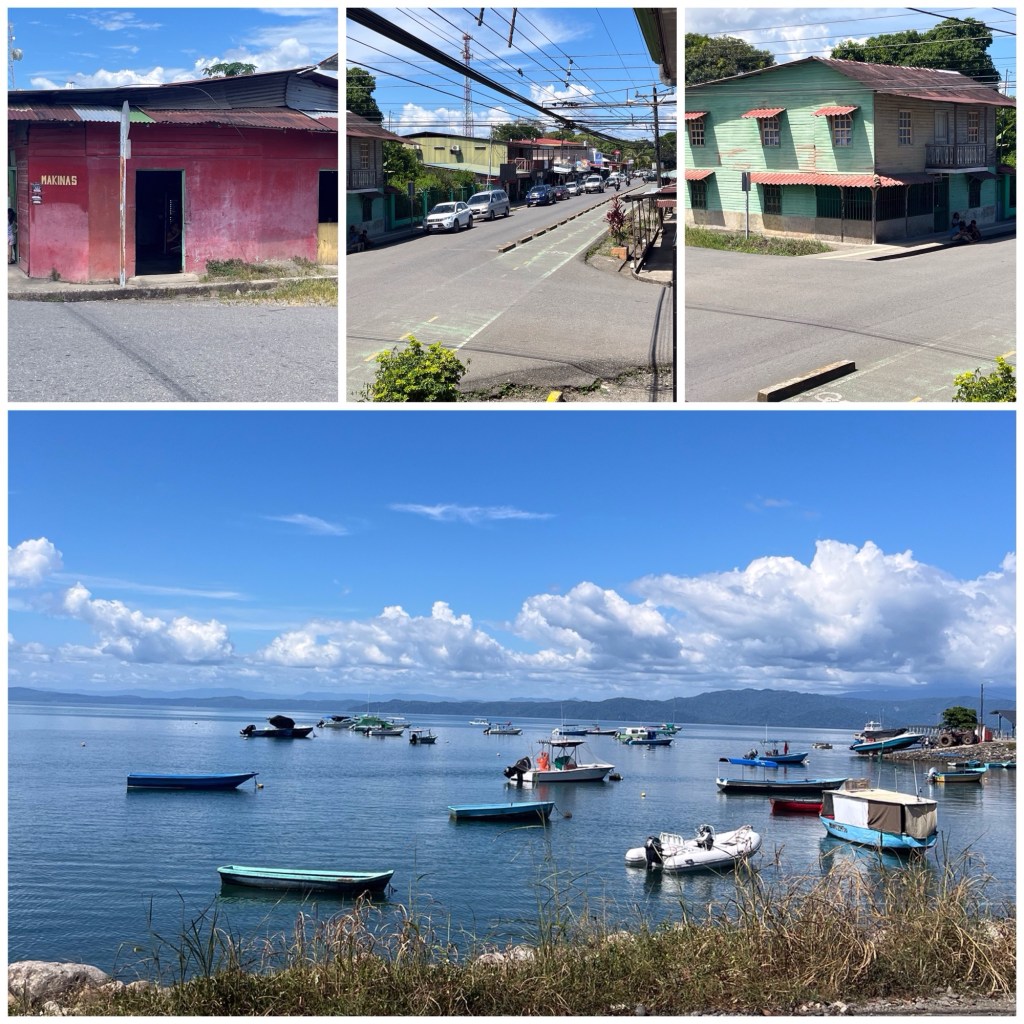
Fortunately, it is possible to drive down the eastern side of the peninsula to Puerto Jimenez, a little run down village of mostly Ticos, some expat hippy/yoga types, and a few serious eco tourists/birders/hikers. You can drive further south on a dirt road with multiple stream crossings to Carate, but we wisely chose to end our drive at Puerto Jimenez. The town houses the main information center for the national park and you book your tours there—you must have a guide to get into the park.  There is also a small airstrip with flights from San Jose, Liberia and Quepos should you not want to make the long drive.  It was little disconcerting when we were sitting at a local restaurant at the port when a small plane buzzed by seemingly inches over our heads.  We noticed none of the locals flinched.

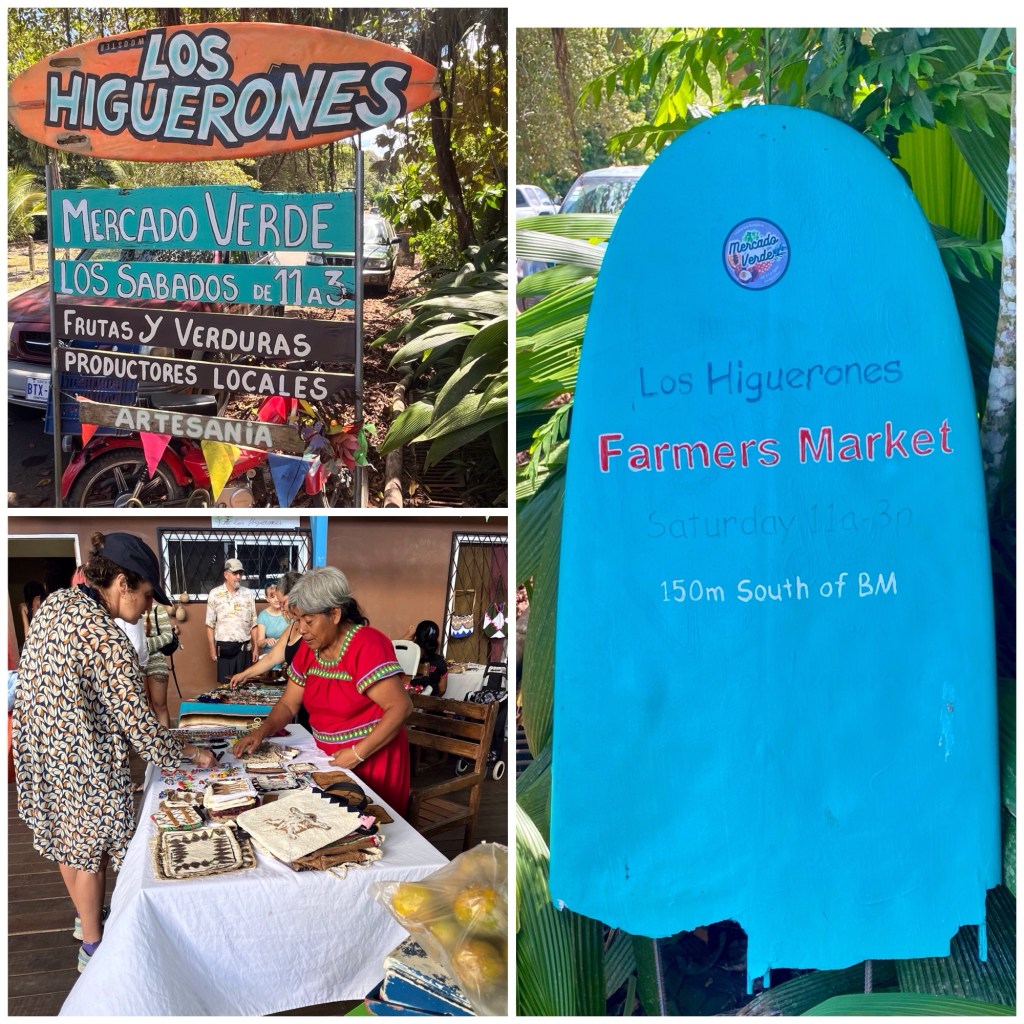
There’s not much else to the town. A few restaurants, couple of yoga studios, a gas station, a BM grocery store, and a heavily advertised Saturday farmers market that takes five minutes to see but includes some indigenous people’s crafts..

Just a few but very rugged miles outside of town is another of Costa Rica’s gorgeous beach’s—Playa Preciosa. From here you can almost see Panama.

Part of Osa’s charm is its lack of serious tourist infrastructure.  So we had a hard time finding a place to stay except for a few very upscale eco resorts.  We wound up in the Corcovado Private Villas.  We think it might have been an eco resort that fell on hard times in during Covid. We had been warned a four-wheeled vehicle was required. The website gave us a GPS waypoint that took us up a steep dirt road that reinforced the idea we needed four wheels.  Unfortunately when the GPS announced “you have arrived”  we were in front of nothing but a barbed wire fence.  So, of course we drove on, using all four wheels on our car, as the road became progressively worse.  Back home we would have called it a mountain logging road. Luckily, a kind local on a motorbike recognized we were somewhere we didn’t belong and led us back to civilization.  Of course, this part of Costa Rica lacks reliable cell reception as in we had no “bars”.   We had to backtrack several miles to get cell service and a new set of directions — different but only slightly better.  We finally arrived.  Our traveling partner in the backseat had her eyes closed most of the way up to resort, muttering occasionally “oh my goodness.”  The “check in” guy, Esteban, listened rather calmly to our annimated story about getting lost and told us he too had gotten lost a few days before using the original directions.  We suggested that maybe they might want to delete those directions from their website.  

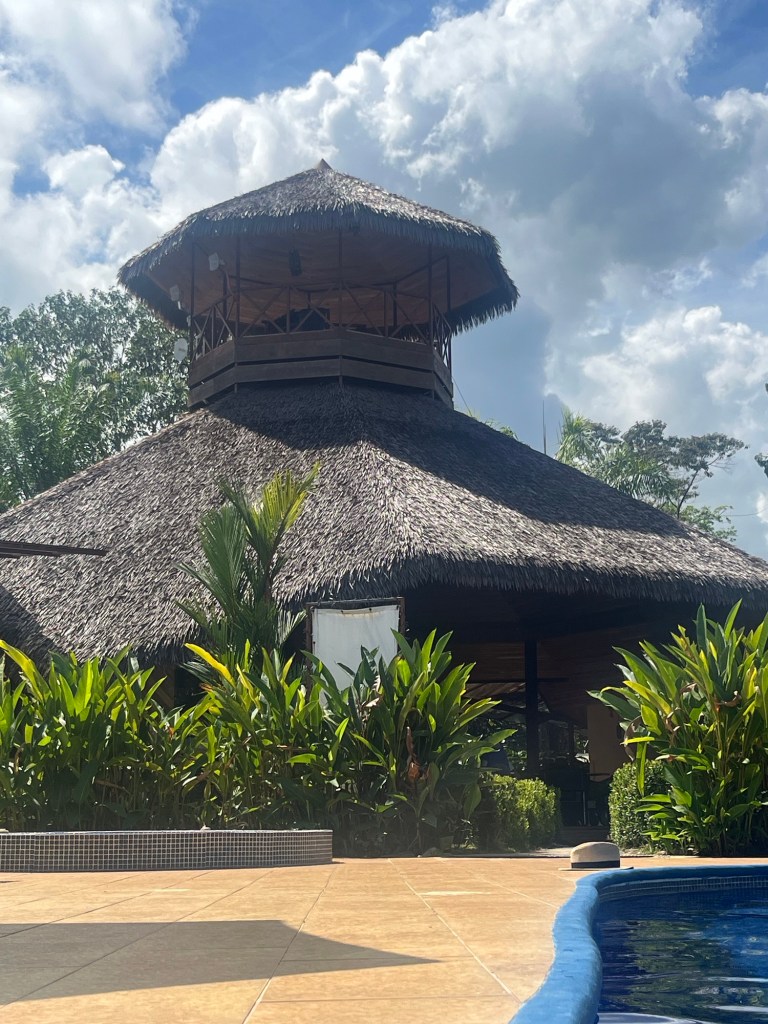
The complex consisted of a dozen or so separate units spaced some distance from each other along the steep trail to the top of the hill. There we found the pool, hot tub and “restaurant”  which served an inclusive breakfast and you could order a dinner in advance with a very limited  menu.  Oh, and the whole stay was cash only and it was very unclear who you paid and when. Nobody seemed to be in charge but we figured somebody, sometime, somewhere would take our money.

The villas themselves were a bit run down, with few amenities, but very serviceable.  And with gorgeous views of the green jungle teeming with birds and a few monkeys just a few feet from our balcony.

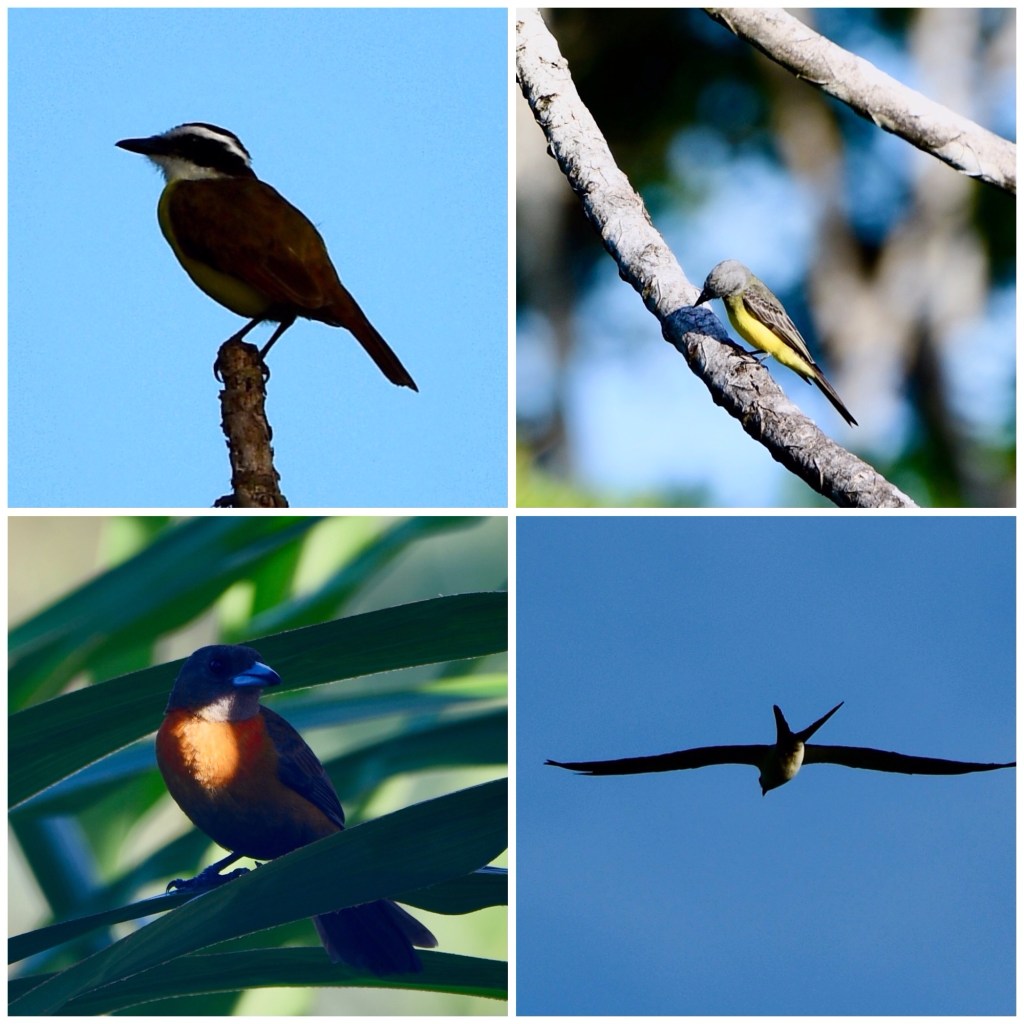
The upside, and it was a huge upside: the 70 acres of amazing tropical forest right adjacent to the national park.  Some of reviews said the wildlife here was better than what they saw in the park.  While we are not truly serious birders, what we experienced in the few days on the property could change our minds.  Toucans, fiery billed arcaries, multiple varieties of parrots, lineated woodpeckers, and dozens more.  At least several new life birds for us. 

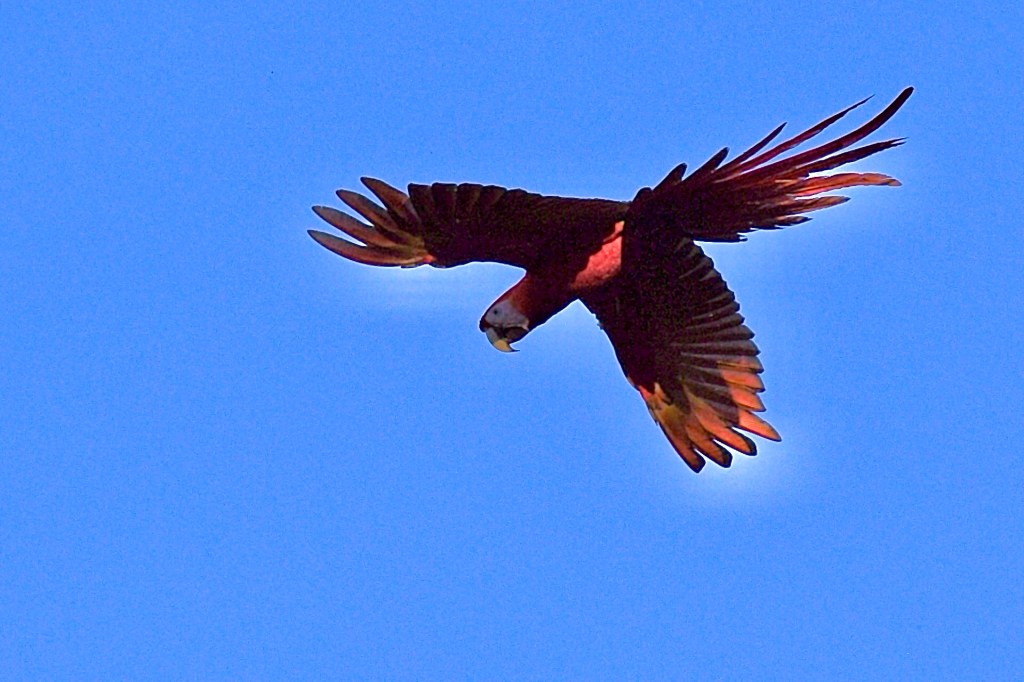
But the star attraction were the scarlet macaws—a very large bright red, yellow, blue parrot with the most awful loud sqwauk of a call which you could hear for miles.  Our villa and common area seemed to be a macaw freeway with birds flying over all day, stopping to rest in the nearby trees.  What a show.  A very loud show.

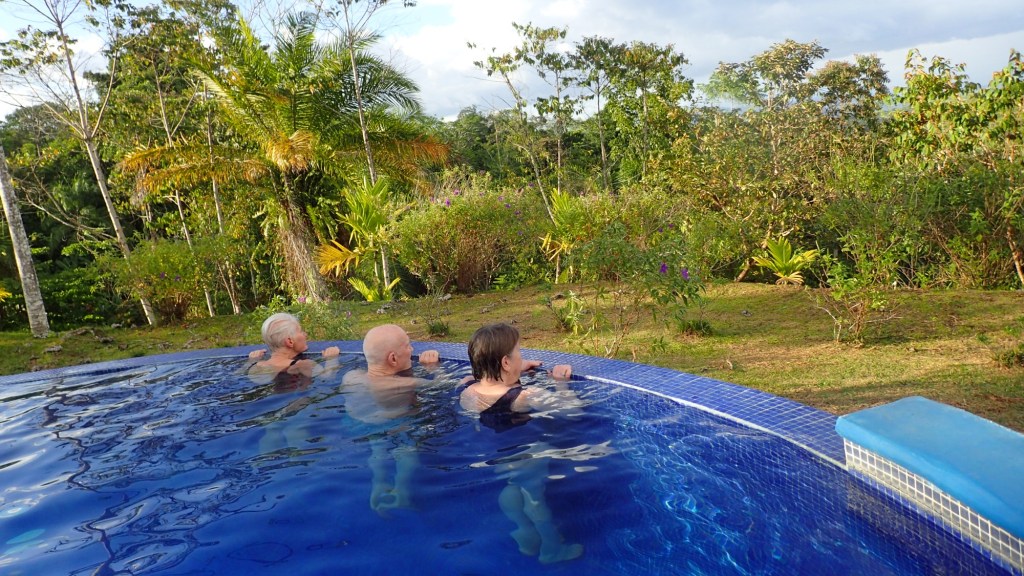
And you could see most of this from a magnificent infinity pool at the top of the property.  In one 45 minutes stint in the pool, we saw white faced monkeys, yellowed throated toucans, green parrots and, of course, lots of scarlet macaws, plus monkeys just a few yards away peeking through the foliage. Pool birding was a new experience for us. As we said, we aren’t serious birders. 

And the dinner, humble as it was (arroz con pollo) was very good. However, the parting comment from our young server as we walked home to our villa was a little disturbing, “Be careful of the snakes.”  We walked with all four iPhone flashlights focused on the ground.

Yes, the property needs work and serious investment.  But if they ever upgraded to a high-end eco resort, we probably couldn’t afford it.  By the way, while writing this in our villa some white-faced monkey is having a shit fit not far away.

The Osa Peninsula surprised us by living up to its reputation — a natural wonder, still largely pristine, a biodiverse sanctuary, and one Costa Rica’s many different climatic and geographic regions. It’s also a great example of Costa Rica’s commitment to preserving natural habitats by setting aside huge areas as national and provincial parks.  

It gave us a lot to think about on the 10 hour drive back north to Potrero— basically nearly the entire length of the country.

Why Here??

This was the question we got from the young grocery clerk practicing his English in Ontinyent, Spain. Nobody comes here, was his implication. Another clerk had asked us the same thing in the same tone. And it was actually a very, very good question!

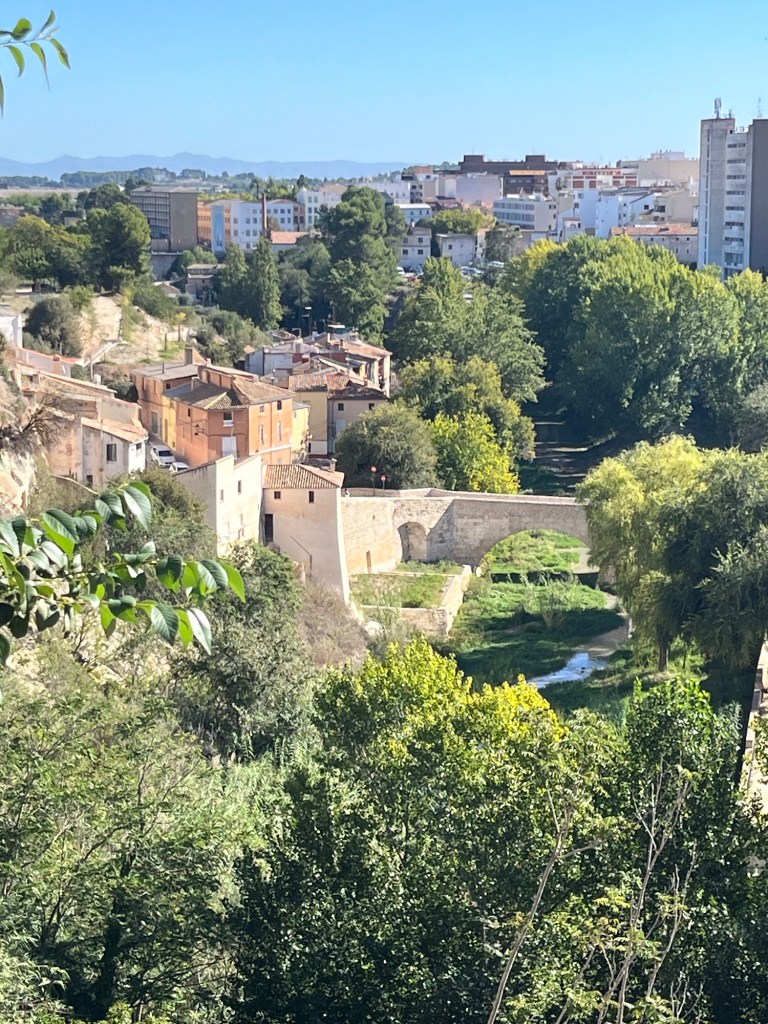
Ontinyent (in Valencian) or Onteniente (in Spanish) is a rural county seat in the Valencia province of no real historical or touristic interest. Population: 35,000. Yes, like all towns and villages in this area it has a past dating back to Moorish times and even before. It has a sort of cute medieval old town surrounded by Franco era apartments. Its only real tourist claims to fame are a series of clear pools on the Clarino River called the Pou Clar. People swim there in the summer, but the parking lot near the pools is closed in the high season and you need to hike about a mile and half to get there. The pools are surrounded by terraced hills of olive and orange trees. You might think picturesque but light industry, agricultural supply and farm equipment shops and rural housing projects kind of ruin the pastoral views.

So back to the question, why are we spending two weeks here?

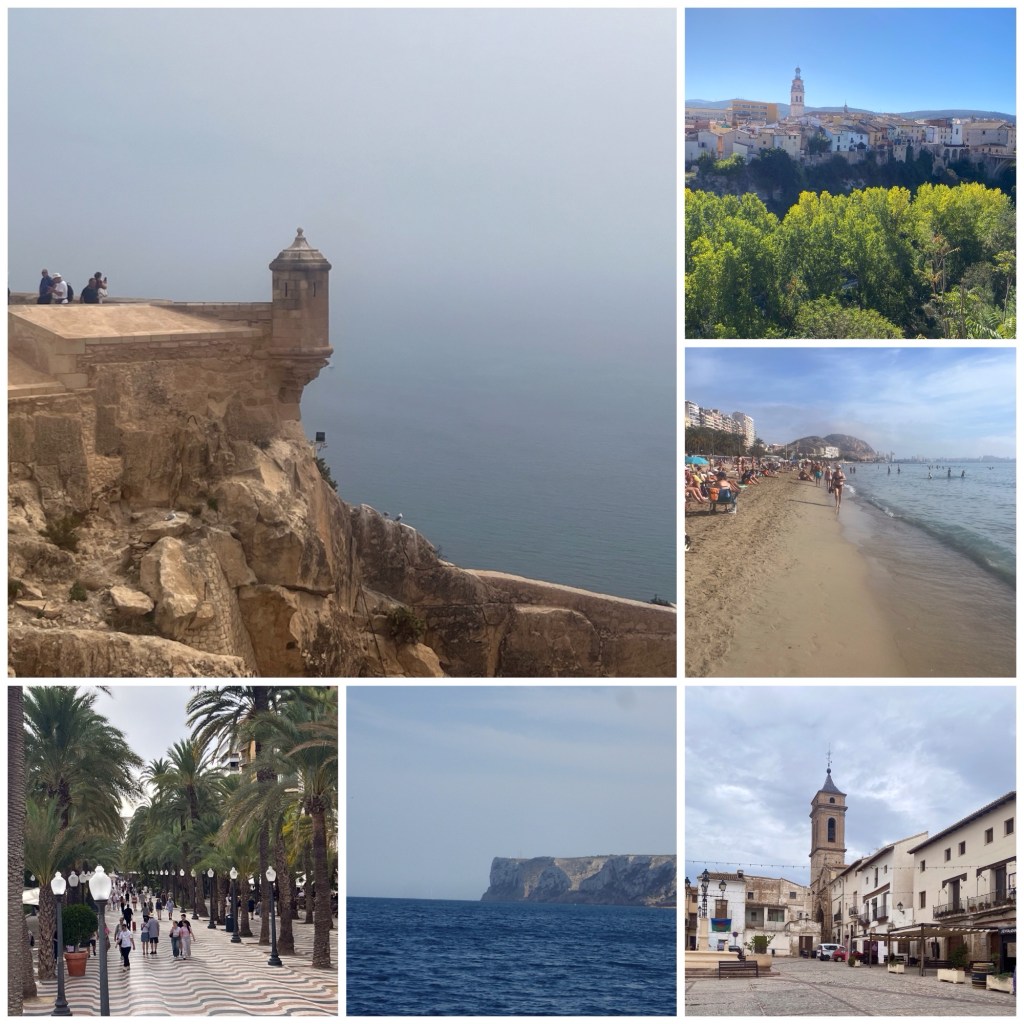
In part, it was exactly because we wanted to be off the beaten path, away from the heavily touristed towns and cities, but close enough to make day excursions to those sites. And it turns out Ontinyent is a perfect location for exactly that. Valencia—one hour. Alicante—one hour. The seaside resorts of the Costa Blanca—one hour. The historic towns of Denia, Gandia — 40 minutes. The Albufera lagoon and El Palmar (the home of paella)—one hour. The quaint hill town of Bocairent—15 minutes. And one of the best, the castle hill town of Xativa—twenty minutes. National parks and hikes nearby. Kayaking on the Mediterranean. More than enough to keep us busy for two weeks.

Of course, a rental car is an absolute necessity. And driving in a foreign country can be stressful. But the good news is that the roads and freeways here are amazing—well maintained, excellent signage, and not very crowded. Spanish drivers are on the whole some of the most courteous we’ve encountered. With a good GPS system, we never got lost—even in the town and city centers.

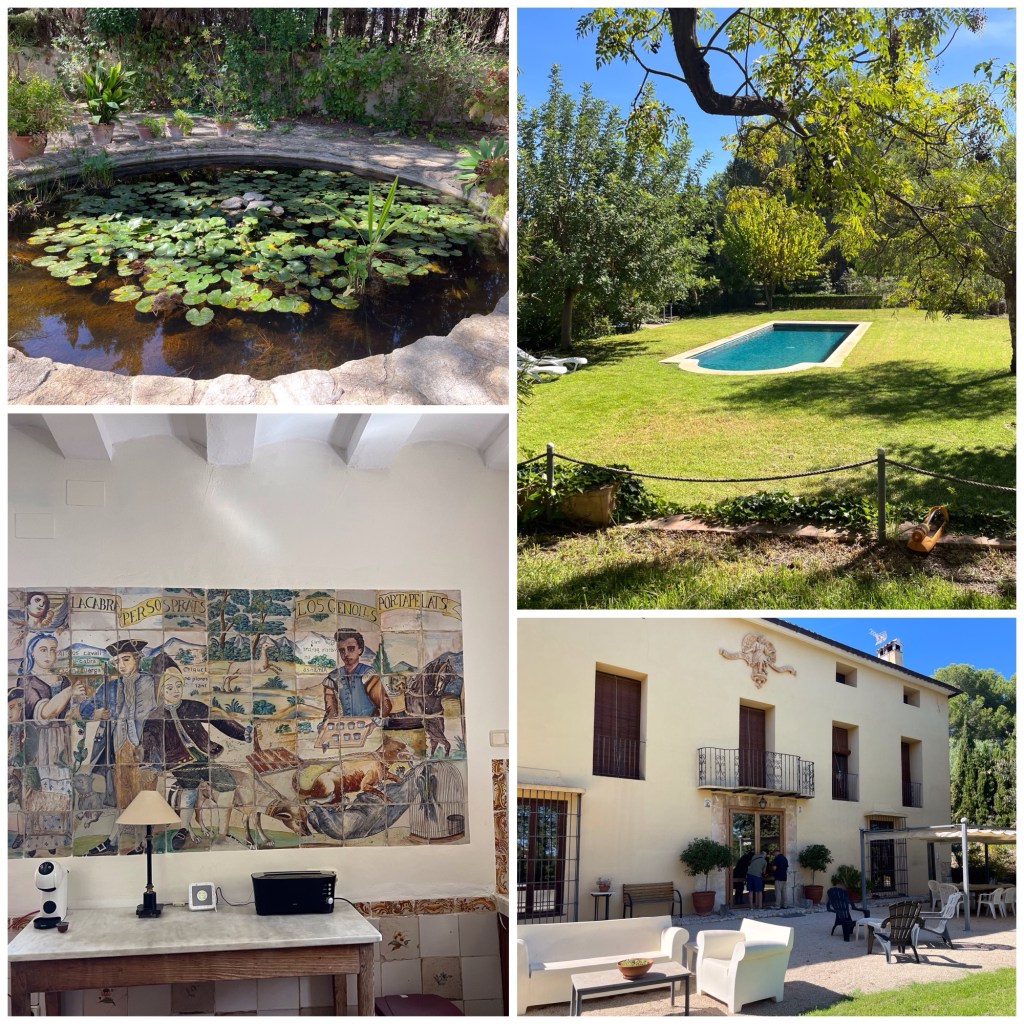
One other huge draw—our manor house. It really was a big, big factor. We rented the house (an AirBnB) for two weeks just outside Ontinyent. La Baronia de Dalt. It is a grand old manor house with large, lovely grounds and a swimming pool. Five bedrooms, three en-suite. 5 bathrooms. AC. Large dining room, big kitchen and two large outside patios for al fresco meals. Lots of art work and beautiful tiles. And all at price you’d be lucky to pay at a Holiday Inn Express in the US. We were two couples, but the house could have easily had four couples or one very, very large family.

Still with all the charms the manor house had, the real attraction was the surrounding sites. A bit of the history of the Romans. Then Visigoths. Obvious remains of the Moors, and Christians in the Middle Ages. Often in the same site.

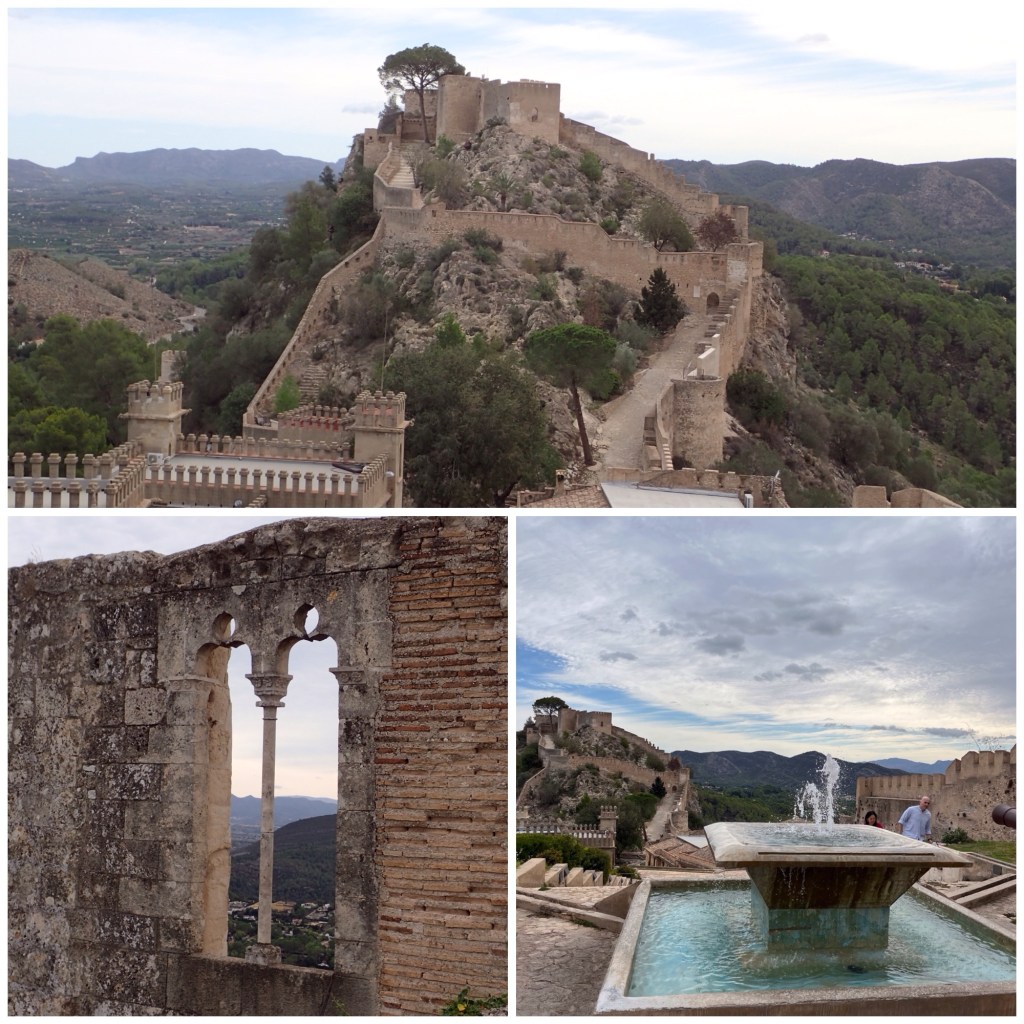
Our favorite place nearby is Xativa, a short drive away. The huge castle complex high above the town dominates. Thankfully, you can drive to the top although locals seem to use the 30 minute hike up to the top as an exercise routine. It is a defensive marvel. Steep cliffs on all sides. The Romans saw its value. Hannibal used it in his war against the Romans. The Moors expanded it. The Christians continued to use it until modern weapons in the early 1700’s and several earthquakes made it obsolete.

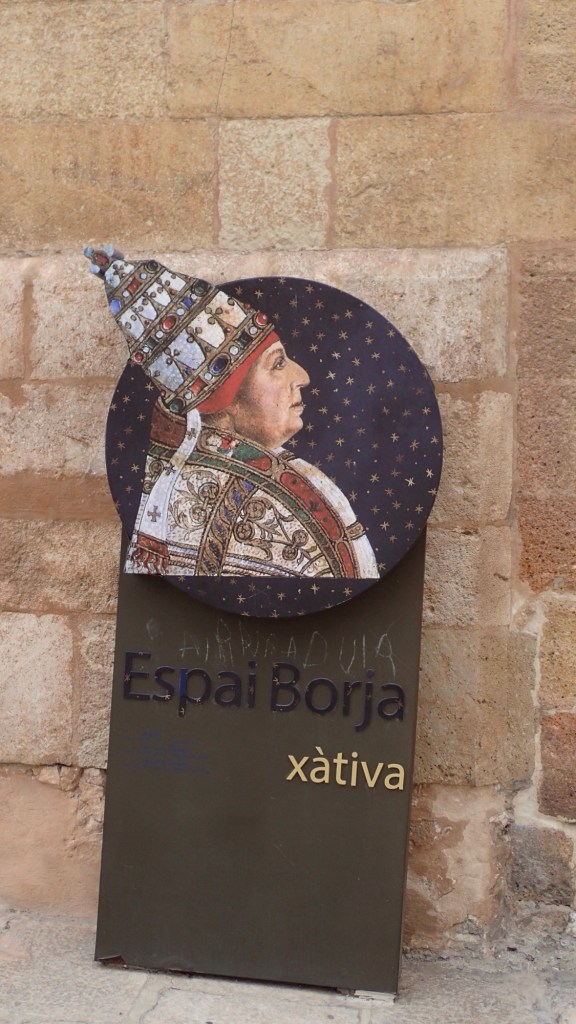
The medieval town far below is famous for one family—the Borjas. Two Spanish Popes were born here. Calixtus III and Alexander VI (father of Lucretzia and Cesare)—both with less than stellar reputations. Were they really that bad or were they simply victims of an anti-Spanish Italian propaganda campaign? Anyway, this is a pro Borja town.

The old town is delightful to wander around. On Tuesdays and Fridays there is a huge outdoor market that takes over several plazas and streets.

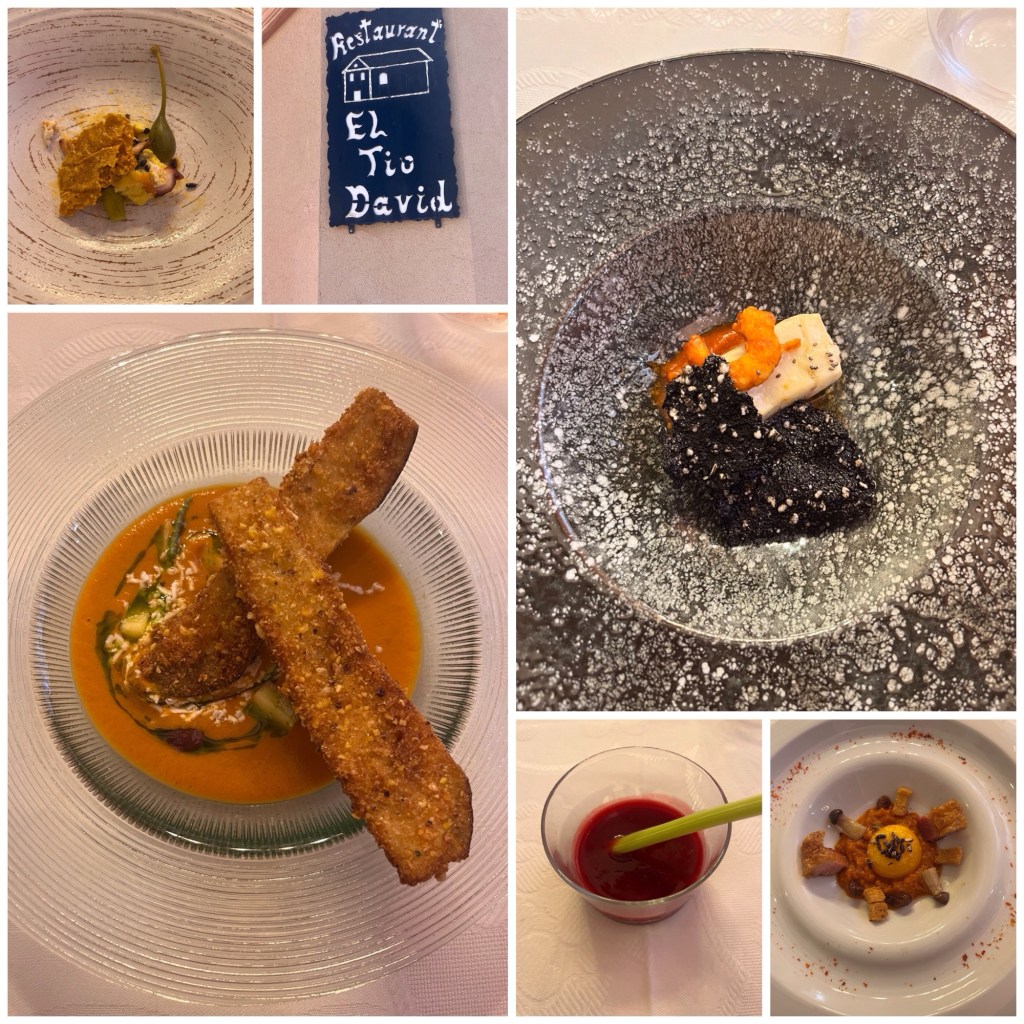
And there are plenty of top-notch restaurants hidden away in these little towns — we were surprised at the number of Michelin stars within a half an hour or so, including one where we had probably the best meal of the trip.

The area is also known for its excellent wines—not as famous as Rioja or Penedes—but very good and at prices that astounded us. A glass of excellent red at restaurant was often less than bottled water. The local grape, bobal, produces a fine red wine comparable to a Cotes du Rhône.

So “Why here??” Great sightseeing, beaches, hiking, wonderful food, good wine, fewer crowds, great accommodations, and, by the way, perfect weather in October. We think the answer is pretty clear.

Paella: Is the Original Best?

We’ve had bacalao (reconstituted salted cod) in Lisbon, cassoulet in Carcassonne, haggis in Scotland, ratatouille in Provence, buckwheat crepes in Brittany, khachapuri in Tbilisi, sushi in Tokyo, bouillabaisse in Marseilles, sauerkraut soup in Slovenia, and many other local dishes in the their place of origin. Being foodies, we assume that locals know best and the place where the dish originated will make the best version. And in most cases, it’s true.

But sometimes, the authentic version disappoints. Not because of the quality of the food or preparation, but because our pre-conceived notions are wildly wrong. For us, the bouillabaisse in Marseilles, in one of the top bouillabaisse restaurants, Chez Fon Fon, was a case in point. We expected a San Francisco style cioppino (our ignorance) and got a strong, fishy, gray-brown broth as a first course and then the fish that was stewed in the broth for a second course, followed by the potatoes that had cooked with the fish. All served with a trio of mayonnaise based sauces on the side. The fish had been caught that morning and was presented to us before cooking to allow us to confirm its freshness. End result to our palates? Overly fishy, not particularly attractive in appearance. Glad we experienced the meal, but not our cup of tea.

So, in Spain, just outside of Valencia, on a huge freshwater lagoon, the L’Albufera, surrounded by rice paddies, is a small town—El Palmar. It is reputedly the birthplace of paella—the ubiquitous rice dish that can be found in food carts, public markets, restaurants and bars all over Europe. It is probably the only Spanish dish that most Americans can name. And yet just like barbecue purists might scoff at a Texas BBQ product in Anchorage, a restaurant we walked into in Madrid had big sign in English “This is Madrid! We do NOT have paella.” We’ve had so many bad versions of the dish (one in Barcelona allegedly at one of the top paella restaurants) we were worried about what we might get. We had also heard that paella in Spain is often mass produced, frozen, sent off to restaurants to be reheated. There are so many bastardized variants—we wouldn’t be surprised to find a pineapple and ham Hawaiiana version.

We made the foodie pilgrimage to El Palmar anyway. We had to know.

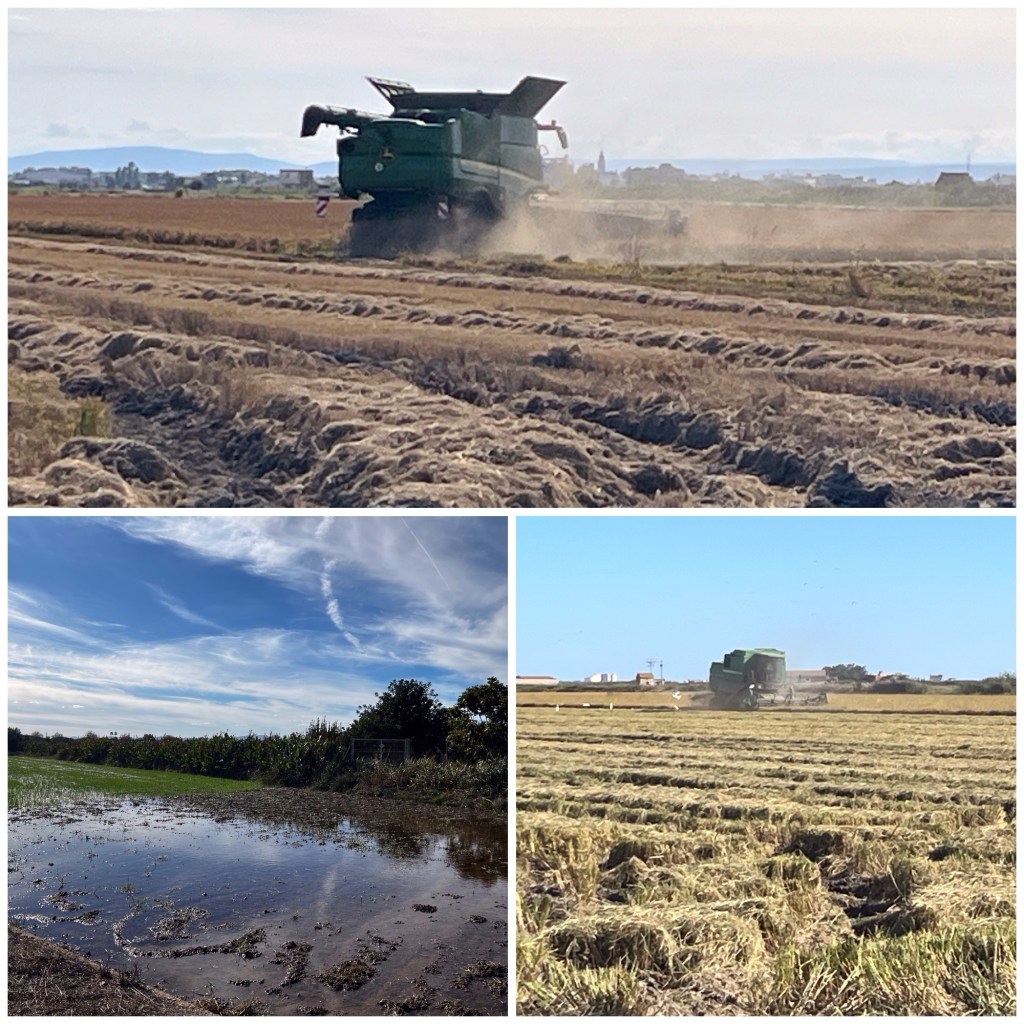
Driving in from the south, once we got off the A-7 freeway, and as we got close to El Palmar, rice paddies and irrigation canals everywhere. Promising.

El Palmar itself is not much—dusty, a bit run down, one long main street along a canal that empties into the L’Albufera, a few quaint old fishermans’ huts (A-frames with thatched roofs restored to add some small character to the town), and dozens of paella restaurants. And signs everywhere announcing Paseos de Barca—boat rides on the lagoon.

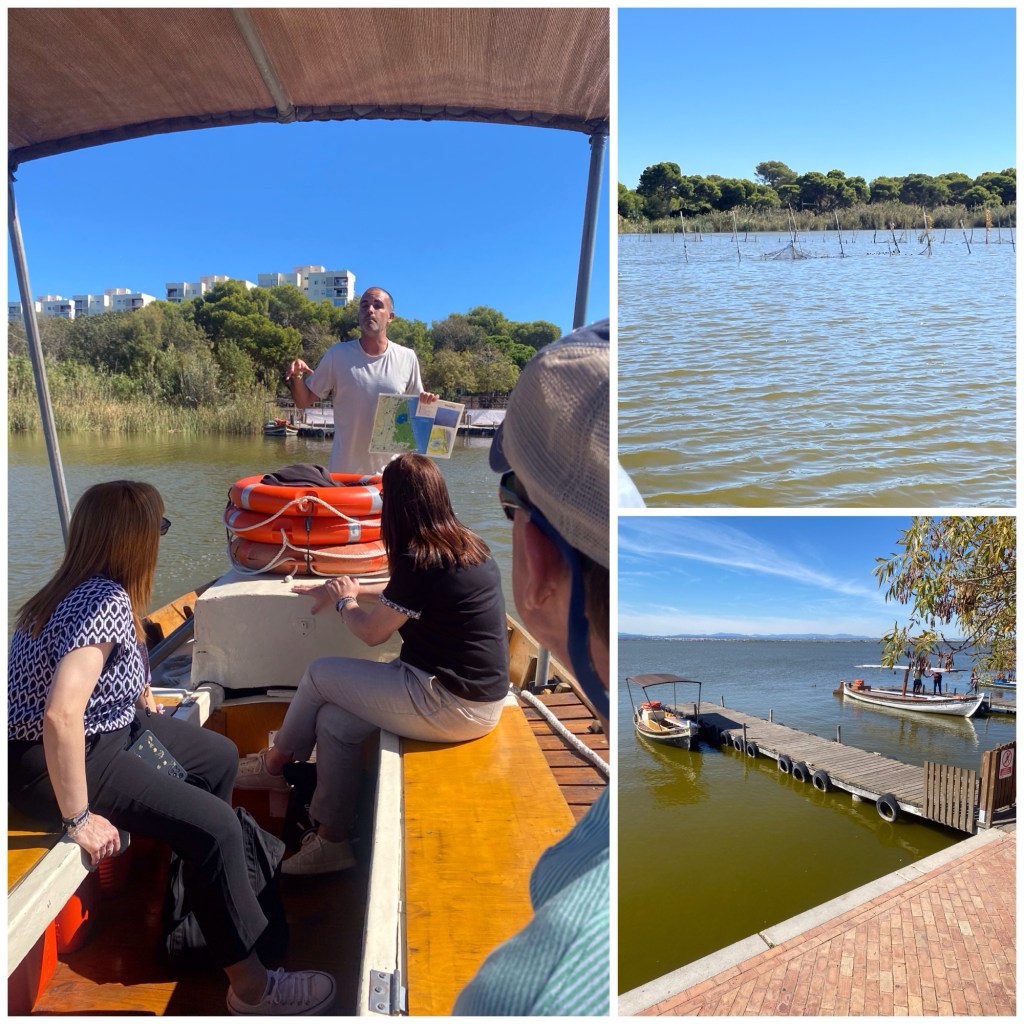
Yes, we did take a boat ride on the lagoon. We stumbled onto a small boat—there were 8 passengers and it was delightful. 5 euros a person. A steal.

Lots of good information written in multiple languages. Our boatman also spoke English and told us the lagoon is now polluted even though fisherman still work the nets, it’s a meter deep, that it is flushed from time to time into the ocean. We wandered through narrow channel and chased the mallards and moorhens out of our way.

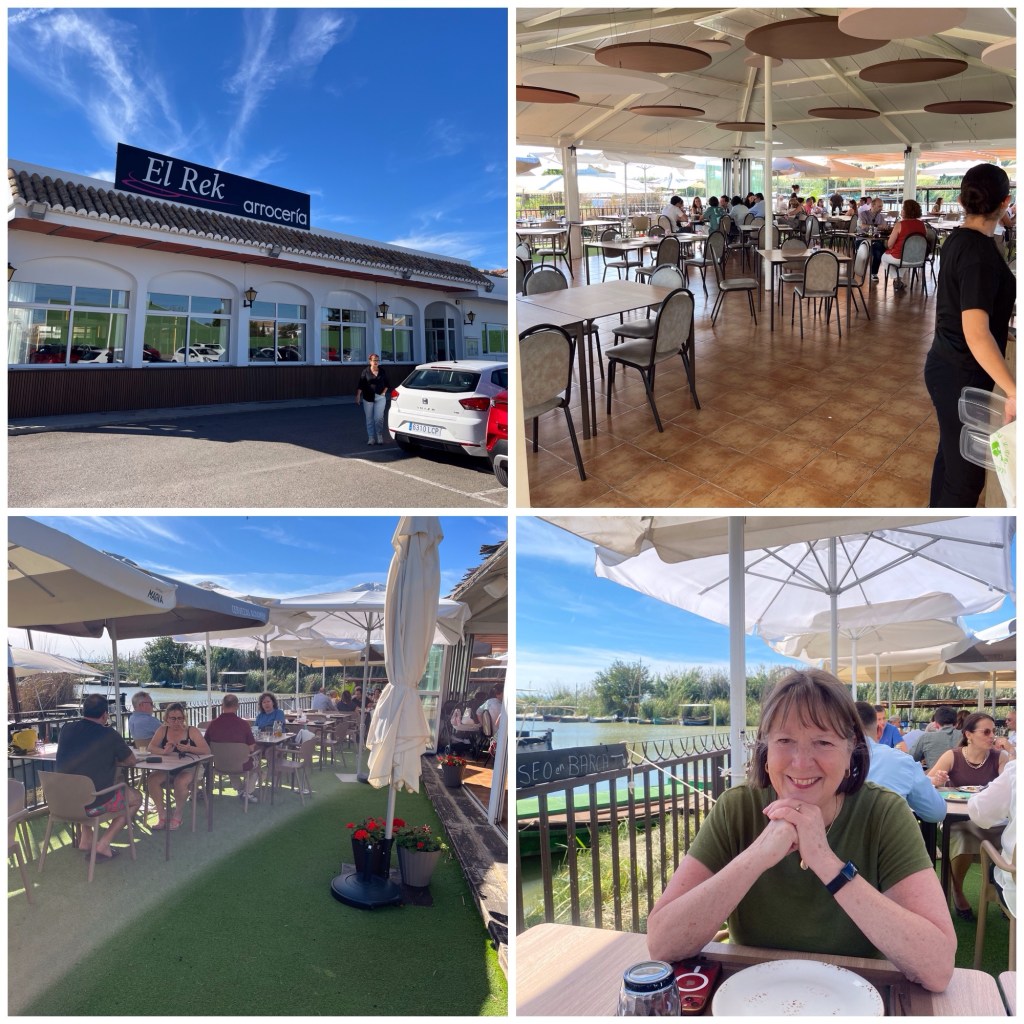
Then it was time. With some trepidation we led our friends to a restaurant with a good reputation and good reviews, El Rek. https://www.arroceriaelrek.com/ The sight of a bus load of tourists coming out of the huge restaurant as we went in was not encouraging. Uh-oh, tourist trap? Well, at least they were Spanish tourists.

Once in the restaurant we were encouraged to see several long tables of locals, dressed for a celebration, enjoying their meal. Very promising.

The waiter asked us as we walked in “Did we order the paella in advance.” “No.” I said. “No worries.” he said. When we looked at the menu, it said, in Spanish, “If not ordered in advance, the paella will take an hour.” Very, very promising.

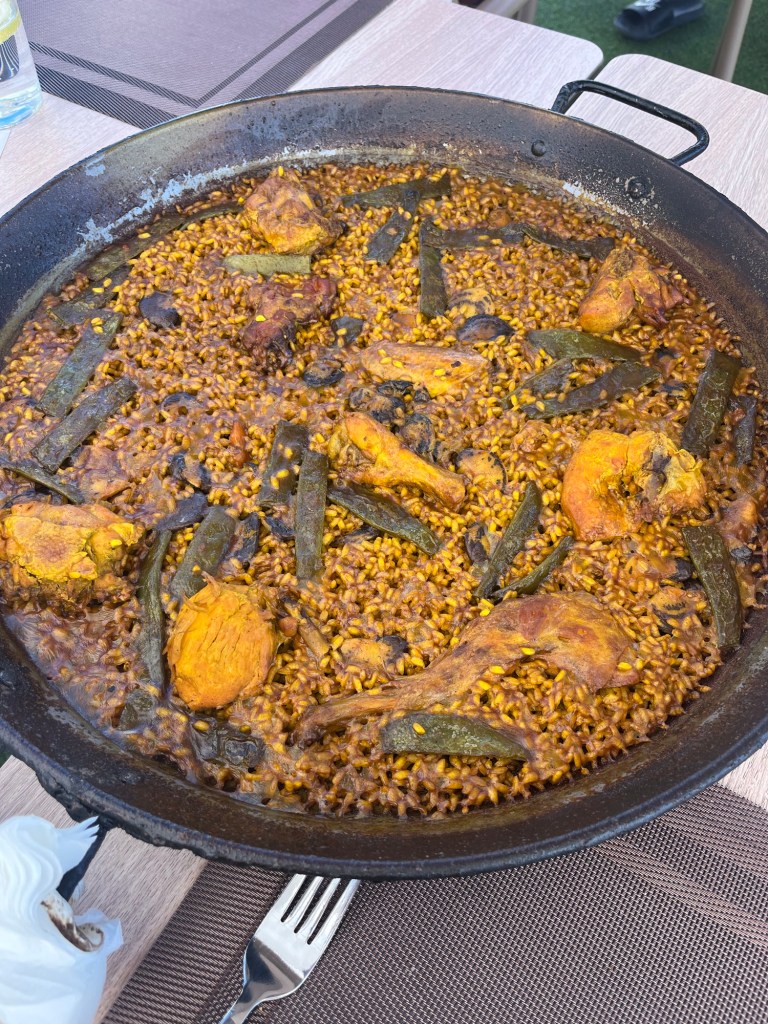
When we looked at the menu (on our phones from a QR code like many restaurants we have been in here), the first paella listed was the traditional Valencia paella—rabbit and chicken. Yes, there were variants, including a version with local snails (not escargot) several seafood versions. The smallest size was for two people.

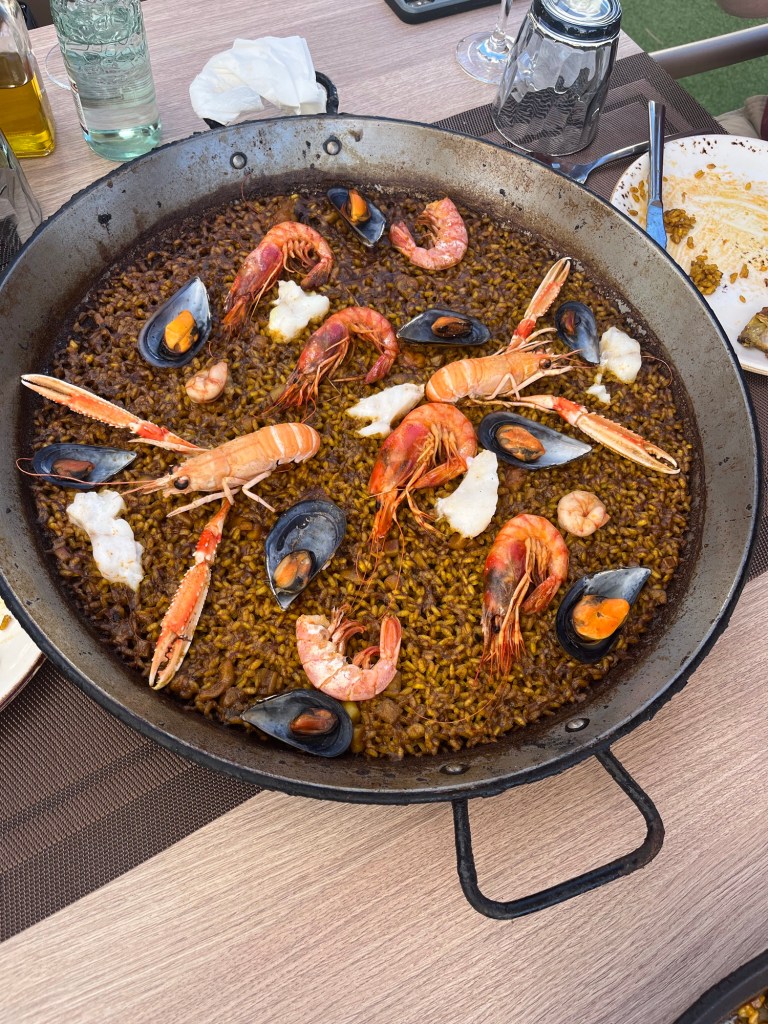
We ordered a bottle of white wine and the house green salad to sustain us as we waited the one hour for our traditional chicken and rabbit paella and the seafood in shells version. Maybe 45 minutes later the long-anticipated paellas were placed in front of us.

Paella is really all about the rice. The mark of a good paella, we have been told, is the crispy, deeply brown edges. And it is generally eaten communally, with a spoon from the cooking pan — in fact, paella means pan in Spanish — and we saw locals scraping every last morsel of rice from the pan. We opted for serving spoons and separate plates. American style, perhaps?

The chicken and rabbit version came with a few mature fava and romano beans. Less meat and fewer vegetables than what I have been served at home. Rice was cooked through, but not the least bit mushy, obviously enhanced by a very rich stock. No sweet red peppers, or chunks of ham, pork or decorative peas. But tasty. Very tasty.
The fish version fell into the same category as our first sample of authentic bouillabaisse. If you like canned sardines and anchovies, you might like it. A bit fishy for us. The shellfish was a bit overdone and underwhelming. However, we have to acknowledge, coming from the Pacific Northwest, catching our own crab, salmon, and shrimp, we’re spoiled when it comes to seafood.

Still, we ate every bit. We concluded that traditional version is really the way to go.

And did the paella, prepared and served in the traditional way with the traditional ingredients using the locally grown rice in the town that originated the dish, live up to its reputation? The answer is a resounding “Si!”

Valencia: More than Oranges

We had allotted three days in Valencia itself. We were staying for two weeks an hour outside the city so we thought it would be plenty of time to get acquainted with the town. Mistake! Clearly not enough time. We never made it to the Jardin du Turia, the 9 mile long river park, the Ciudad de las Artes y las Ciencias with its space age designed buildings, the port and its beaches. Instead we ate, drank and laughed our way through the city with expat friends who now live in Valencia.

It all started with Peter’s former colleague who just two weeks ago moved to Valencia with her husband, her mother and three dogs. We reached out and set up a rendezvous with her for our first full day in the city. Next thing we knew, she had arranged an “American luncheon” with four other formerly Seattle based expats. We arrived at restaurant to a warm welcome — hugs all around — and quickly after exchanging names, establishing we had friends in common back home and had visited the same restaurants and neighborhoods in Seattle, the laughter and stories started. And we certainly took advantage of their knowledge of the city. One couple had been here for over two years and knew the city well. Where do we go to buy kitchen knives? (Our travel kitchen knives had been confiscated by the train security people on our trip from Madrid.)  Where can we get good coffee? (Spain offers lots of great food and wine, but the coffee is spotty — particularly for coffee obsessed Seattlelites.) What should we be sure to see? We learned the morning discount at the local gym went from 9am to 3pm! Noon is Seattle translates to 3pm in Spain. We asked for advice on a good food/city tour. One of our new friends, David, a very knowledgeable amateur historian, offered to show us around the next day instead. Bingo! We were delighted by his generosity.

We met at 9:00am the next morning at a favorite local coffee shop with breakfast foods. Decent cappuccinos as promised.

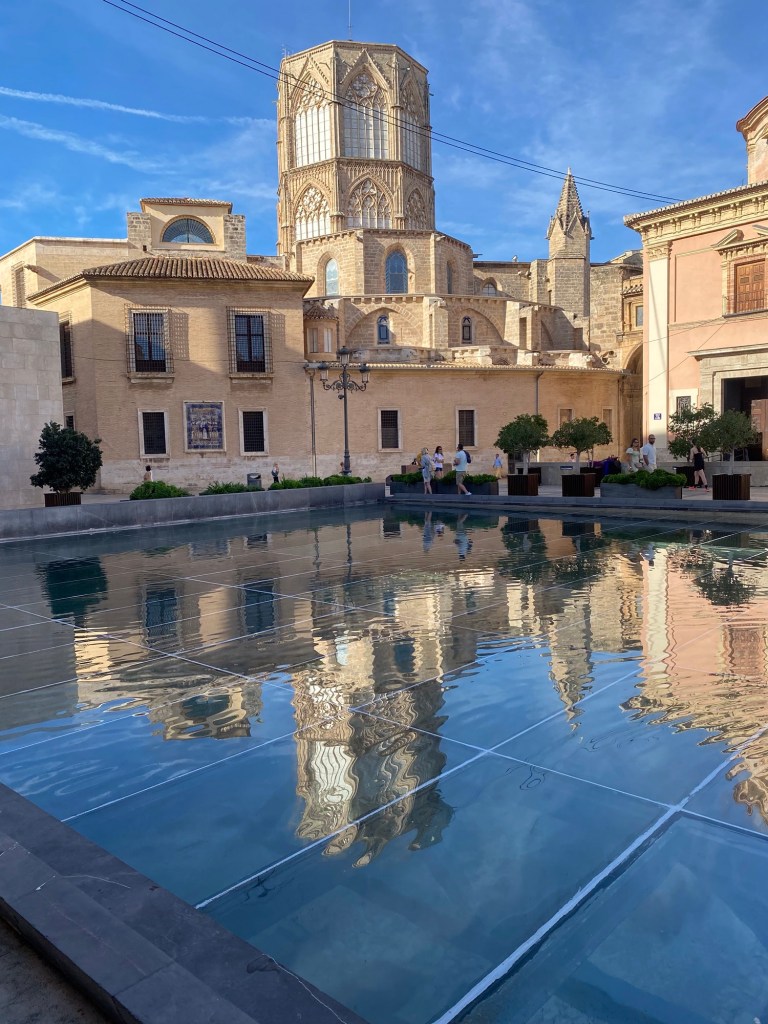
David approached Valencia’s historic core from a chronological perspective — from Roman times to modern day so we started at L’Almoina.  This square was dead center of Roman Valencia where the two main Roman roads intersected


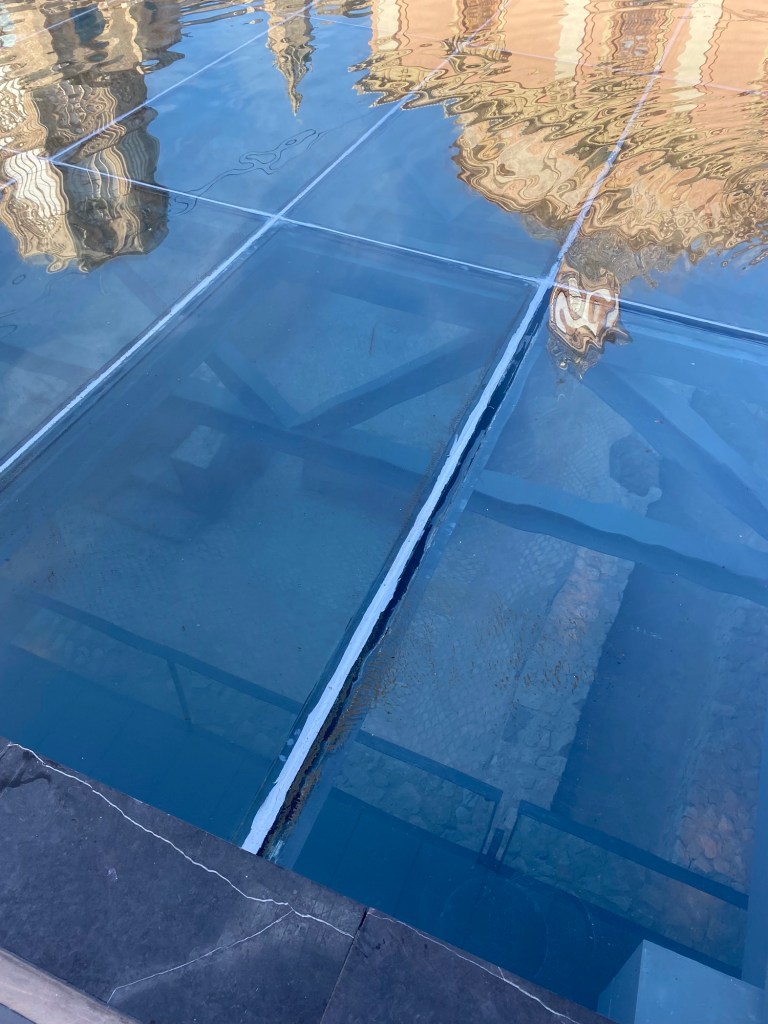
Beneath a square  through a reflecting pool you can just make out the Roman, Visigothic and Islamic ruins. 

The Roman ruins through the reflecting pool.

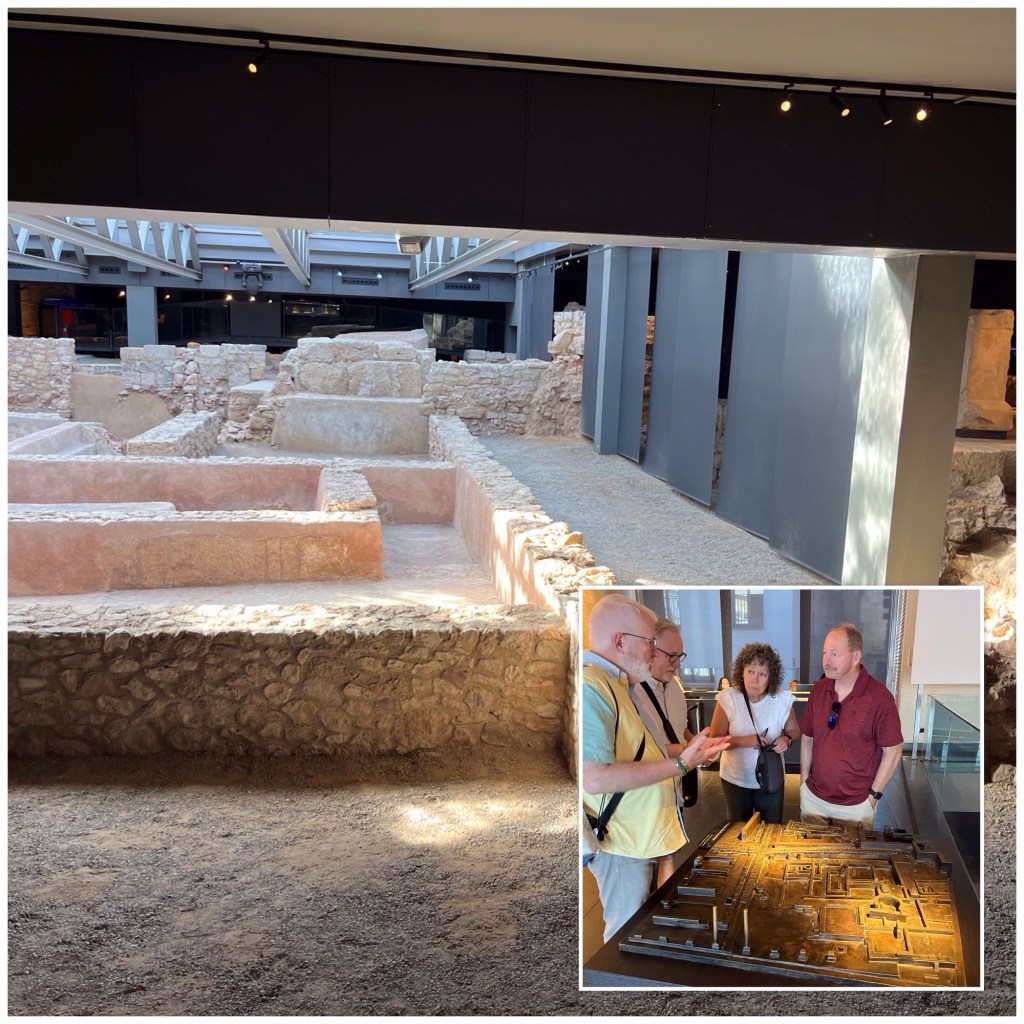
Once down the stairs inside the museum, you can see the remains of the baths, forum and city life on what was once an island in the Rio Turia.  Fascinating glimpse into the city’s ancient past and a reminder of how extensive the Roman world was.

Roman ruins and a scale model of what has been excavated

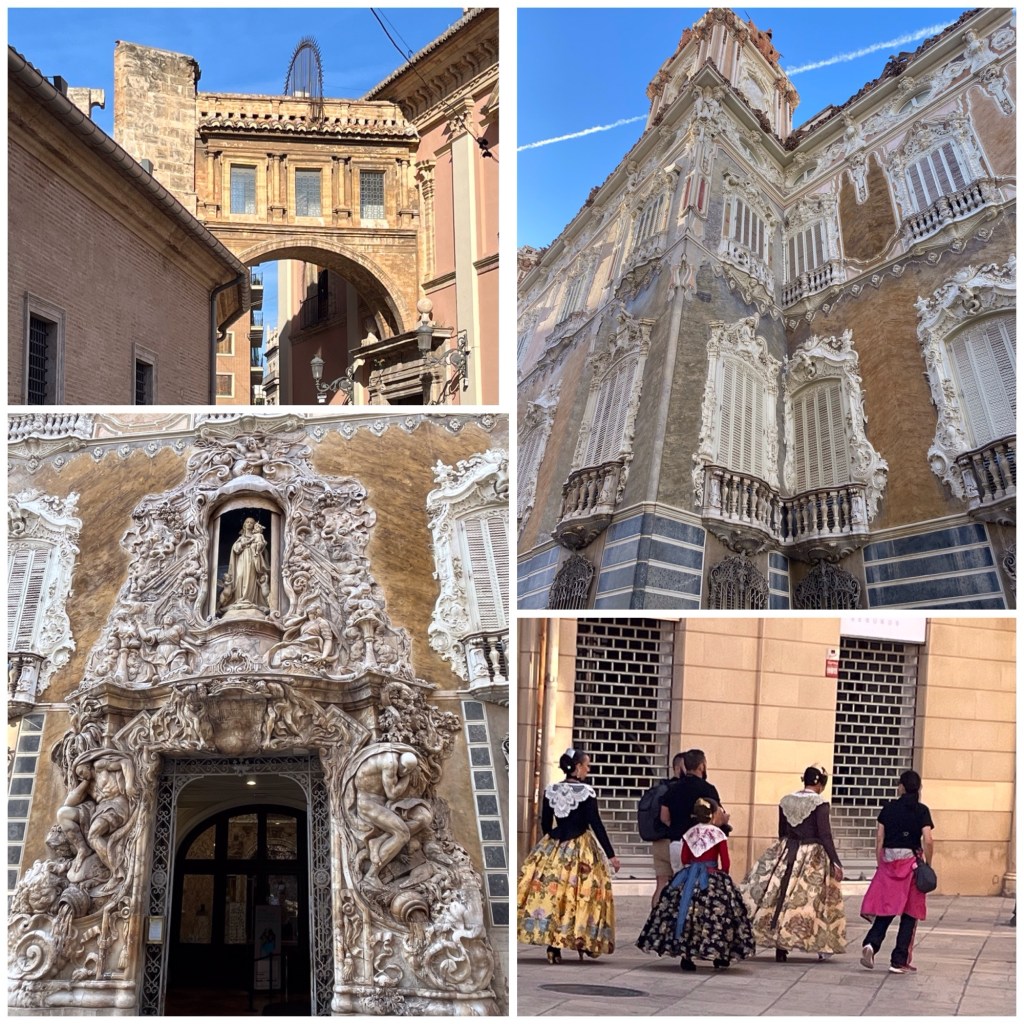
From there we hit to top medieval  tourist sites –  at the Palace  of the Marquis of Aguas we laughed at the over-the- top baroque decorations, including a statue of the Samari on the top of building, the grand Cathedral with the “real” Holy Grail, Plaza de La Virgen and so much more.

Baroque Rococo palace the scenes around the historic center of Valencia

The biggest oh’s and ah’s were probably reserved for the Silk Market, a UNESCO World Heritage site.  Beautiful twisting columns, originally painted to look like palms beneath a blue sky (you get mere glimpses of the colors today) and the second floor of the Consulado Del Mar where the merchants’ court sat beneath a fifteenth century carved ceiling moved into the structure after it was constructed. And the gargoyles!

Silk Market

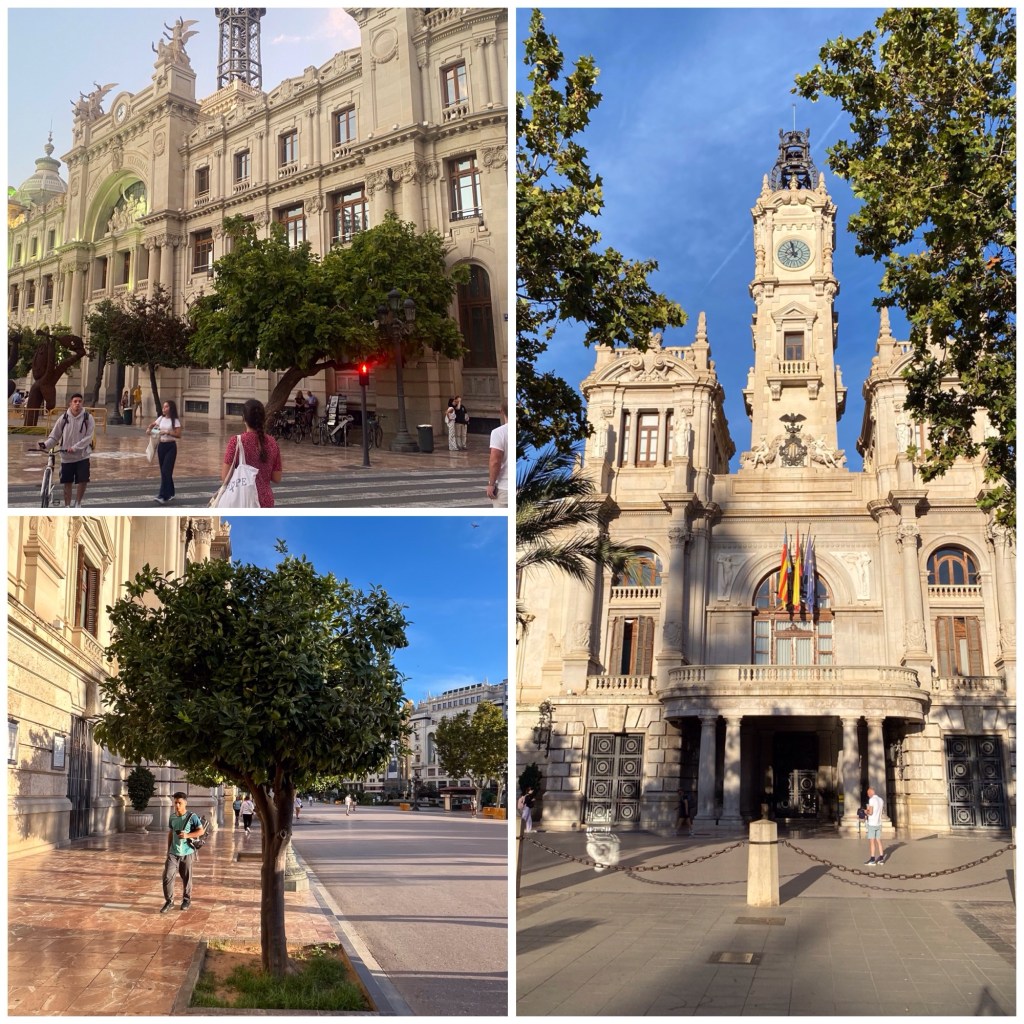
We ended our tour back where most start, between the city hall and the post office and telegraph building.

Post and Telegraph build, city hall and an ubiquitous sour orange tree planted through out the city

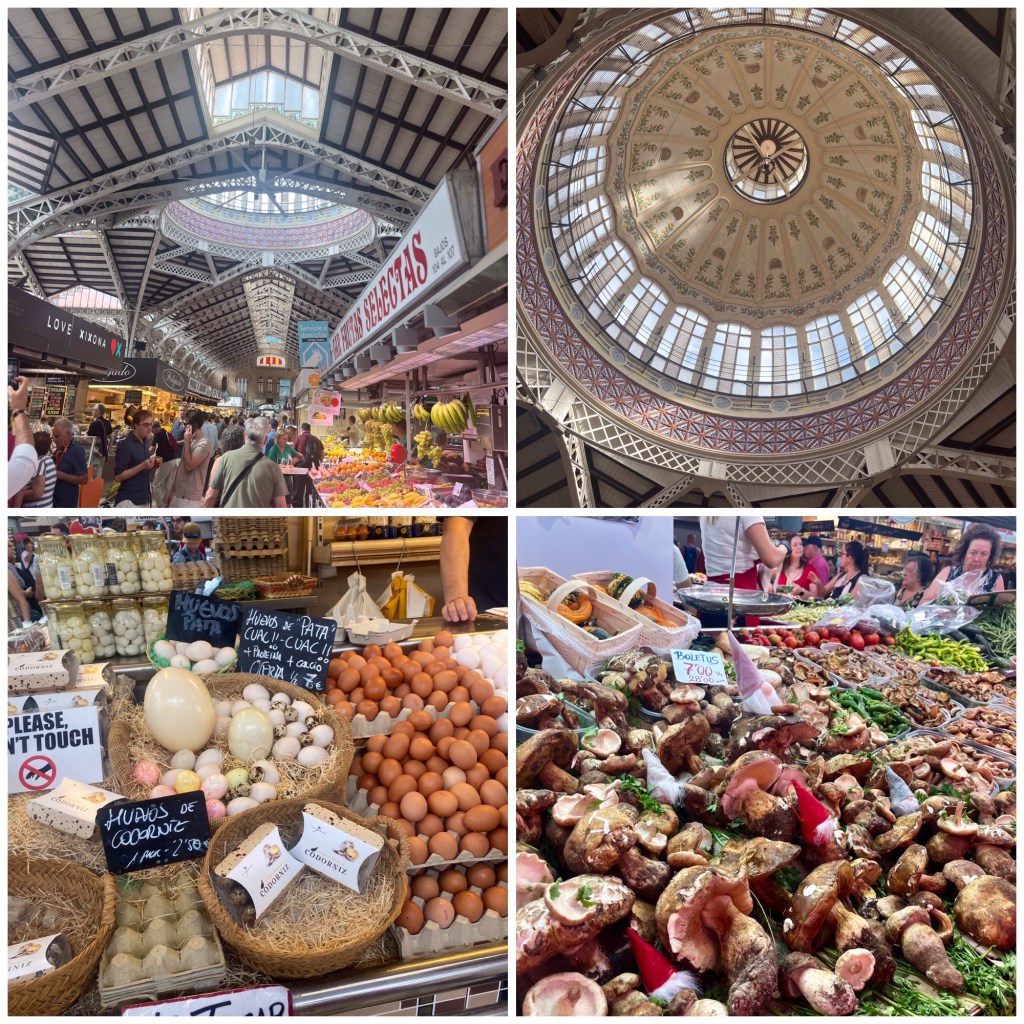
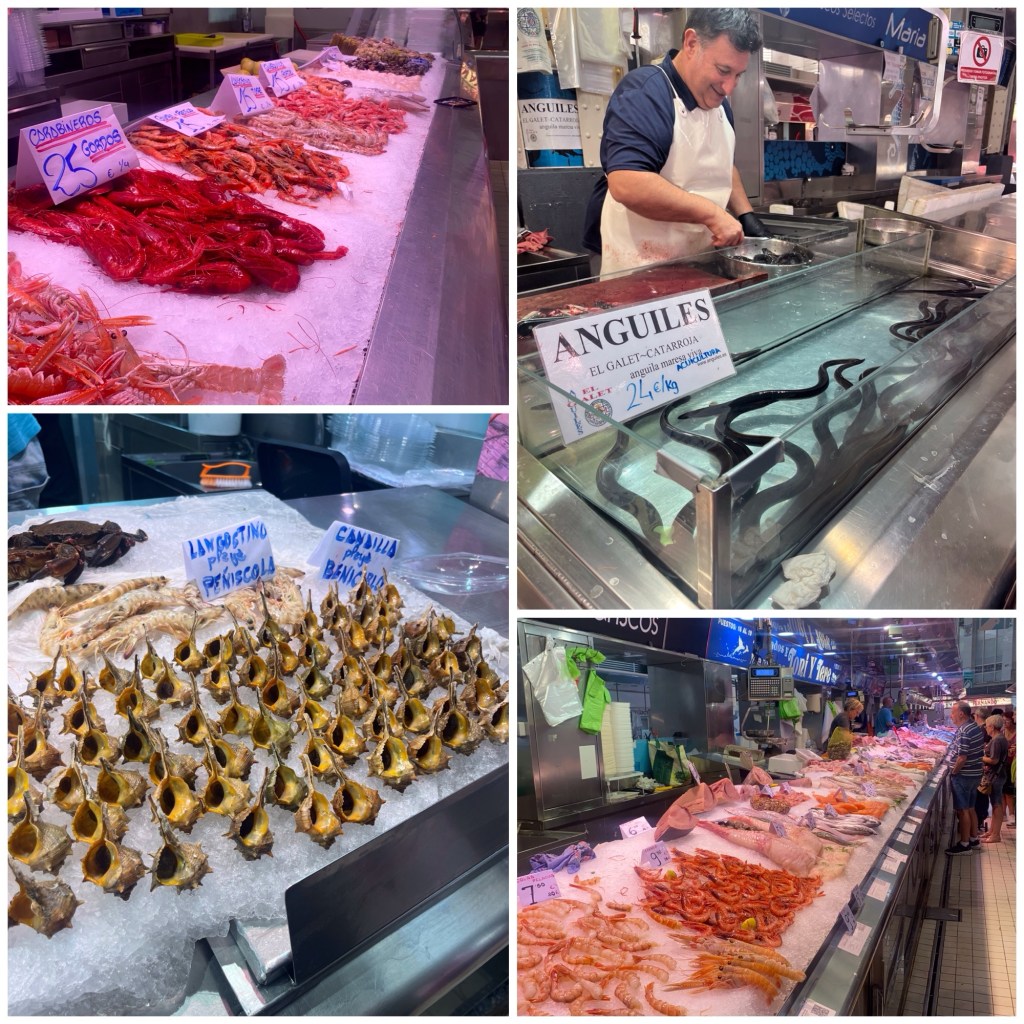
We skipped the Central Market — a not to be missed site — as we had seen it the day before.  The largest covered market in Europe—over a 1,000 stalls. Foodies that we are, it was almost our first stop in Valencia and worth every crowded moment we spent among the tourists and the locals doing their shopping. 

Central Market

And while we mainly purchased cheeses and cured meats for snacking, the vegetables, fruits and fish made us wish we had time to cook a couple of dinners.

And in true Valencian style, we ended city tour with a three hour lunch with our friends.  More good food, more good wine and more good laughs as we sat and enjoyed the company of these old and new friends.  Quite an introduction to the city!    

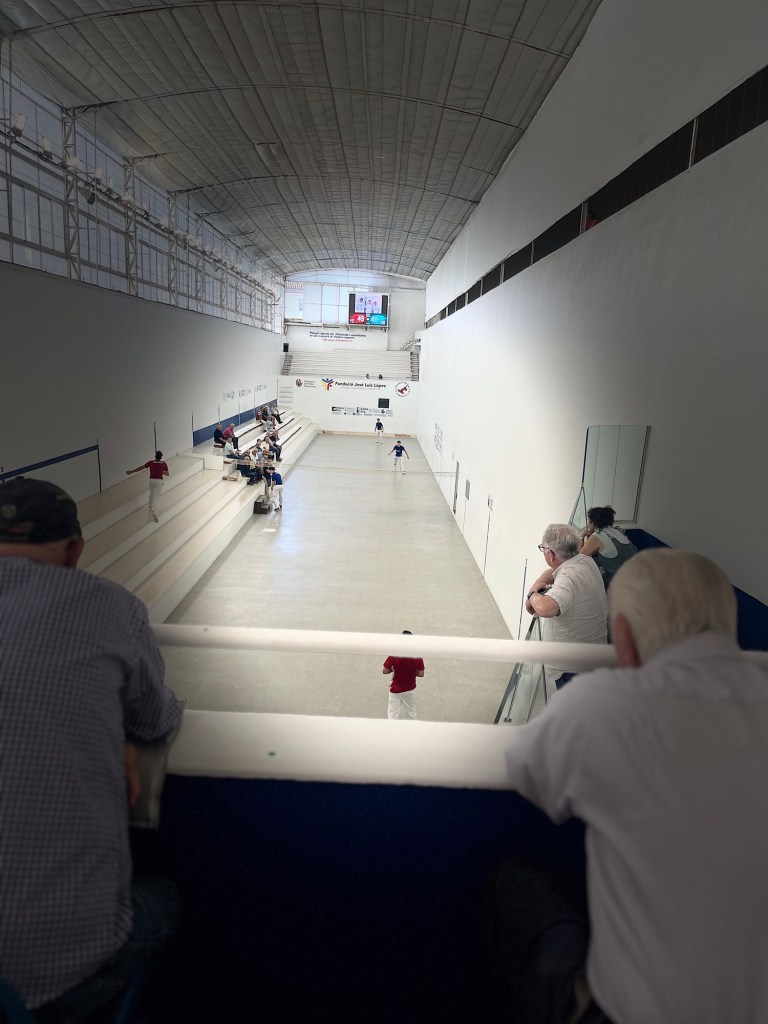
We managed to squeeze in a few other special moments in Valencia. Just happened our temporary home was right next door to a restaurant recommended by our host and we discovered attached to the restaurant was a Pelayo court—a game that is a cross between tennis and handball. We bought tickets for an amateur match. The mother of one of the players explained the game to us — the scoring was like tennis, but the rules were wildly different. Every surface of the court was playable, including any spectator who got in the way of the ball, as long as the ball fell back onto the floor of the court. Wild!

 Historically, the game had been played in the streets of Valencia and still retained a bit of the rough and tumble feel of a street game. With mom beside us, we cheered on her son to victory.

Our three short days were not enough to fully enjoy Valencia! We are beginning to understand why our new and old friends have chosen to make this place their new home. We will be back for a much longer stay.


Taking the Waters

We’re not strangers to Costa Rica, nor are we experts — not at all. We’ve traveled here for a month or so four times in recent years. We’ve found areas that draw us back year after year (around Potrero, in Guanacaste and Monteverde). And we visited areas that we enjoyed — just not enough to return to year after year when there is so much more to be seen. For such a small country, Costa Rica has so much variety.

This trip we decided to spend a few days in La Fortuna on the base of the volcano, Arenal. We had passed through the area five years and been intrigued.

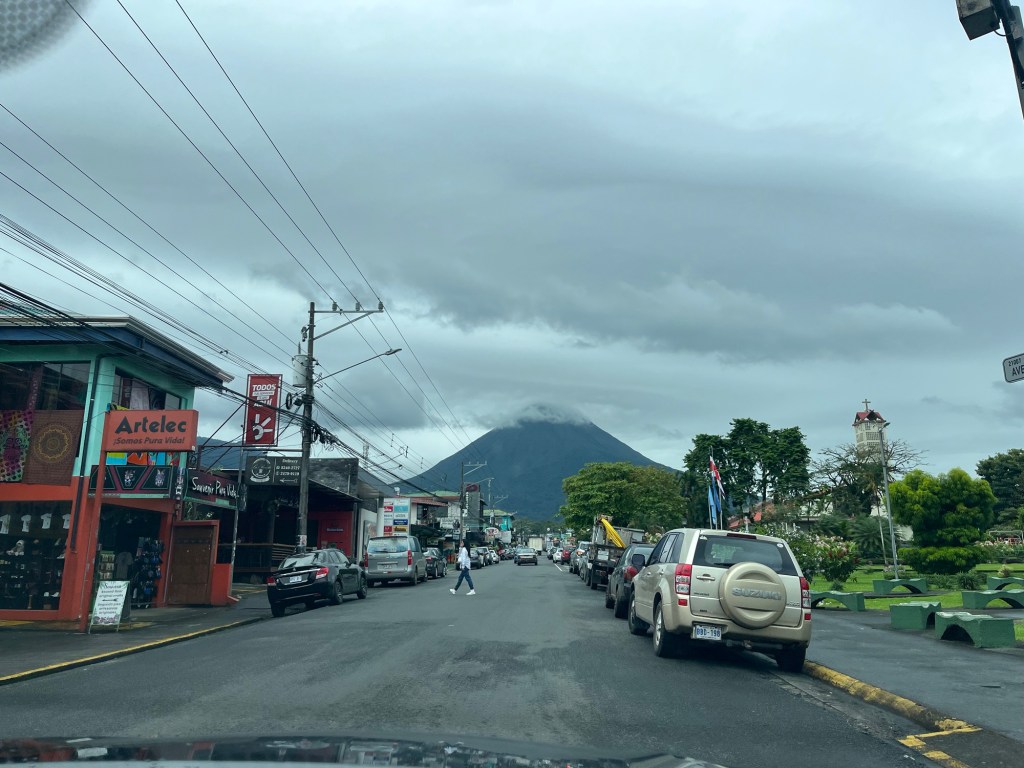
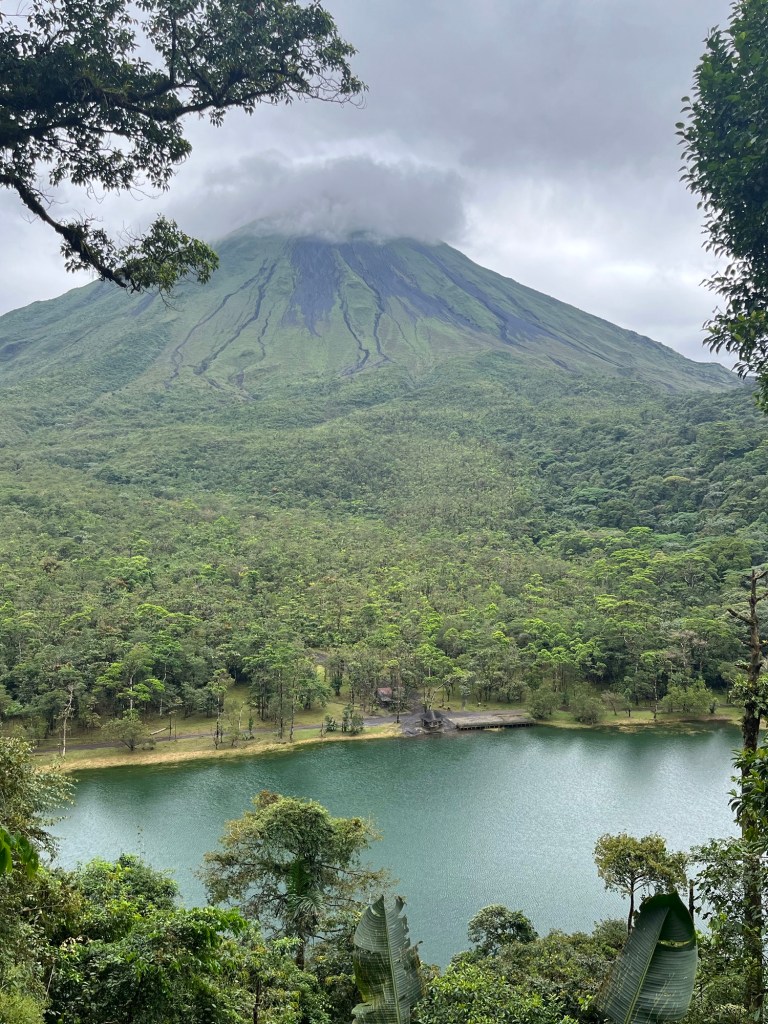
La Fortuna is the most heavily touristed areas of Costa Rica, according to the guide books. The main attraction is Arenal, the volcano. Before 1968 the town was just another agricultural crossroads and then the volcano erupted, putting on a show until 2010 for the tourists who soon arrived. The town isn’t much to look at today, except almost everywhere you look, you see the big cone.

And where there are volcanoes, there are often hot springs. Today, along with the main attraction, hiking, zip-lining, horse back riding and various water sports lure tourists. No zip lines or horses for us — we were there for the hot springs spas. The roads in and out of La Fortuna are filled with everything from modest to ultra-swanky to middle of the pack spas like the one we found — Los Lagos.

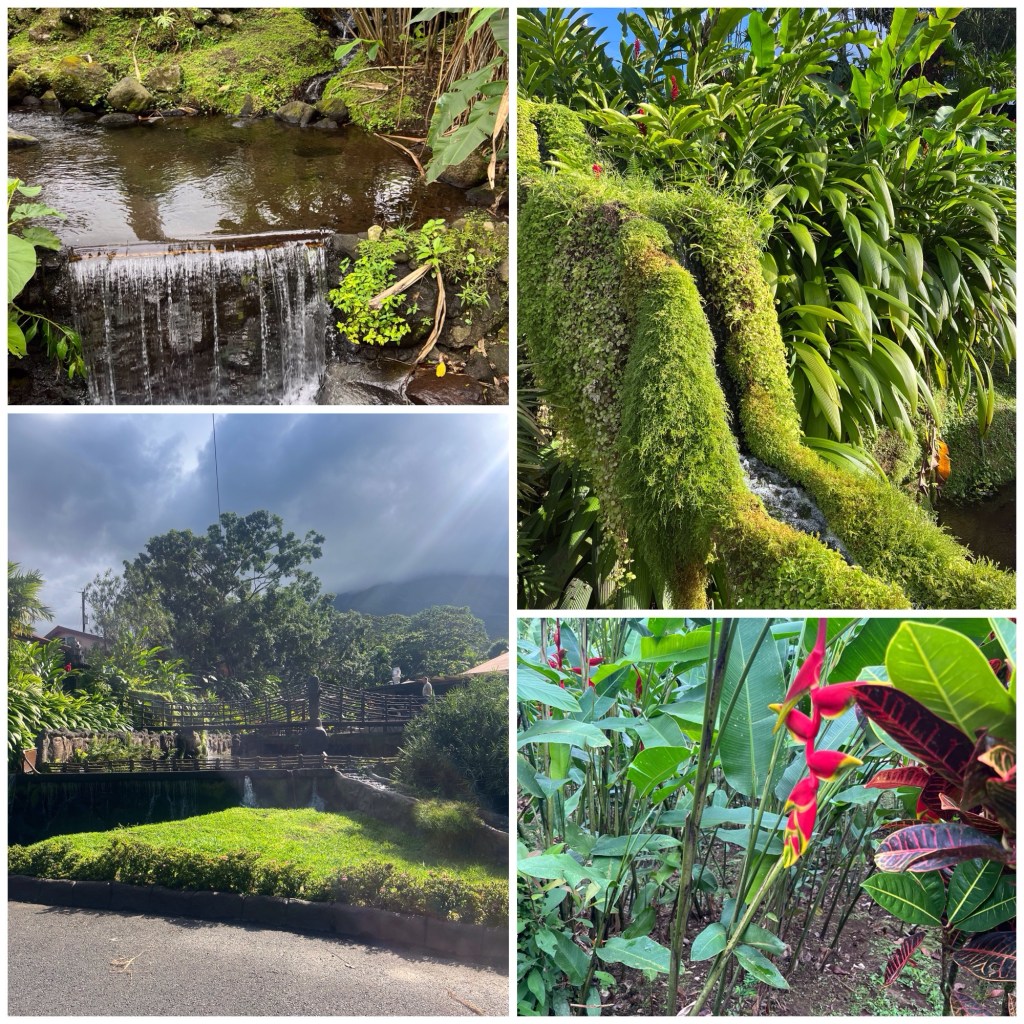
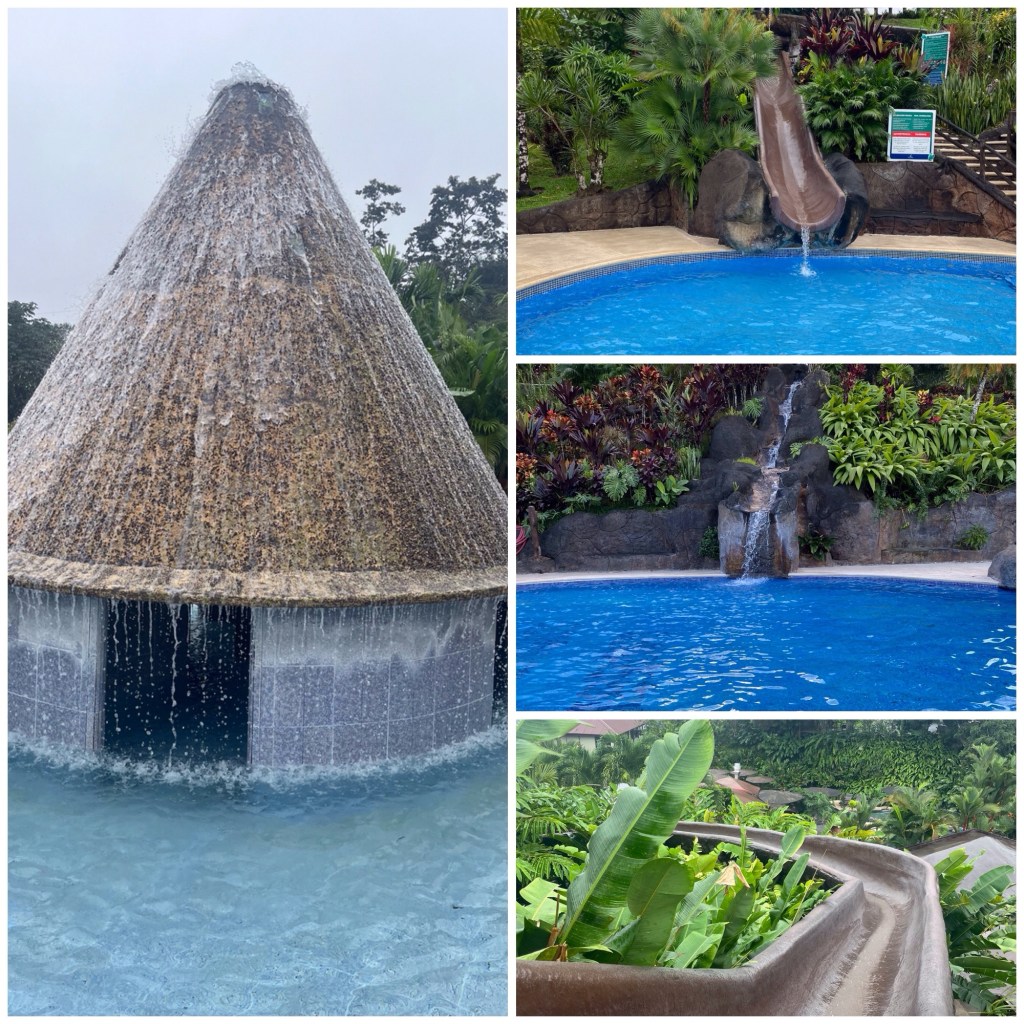
Our initial impression of Los Lagos Hot Springs Spa and Resort was simply “wow.” An impressive entry, lush vegetation, streams crisscrossing the grounds and cascading small waterfalls. A restaurant, a swim up bar adjacent to the largest of the hot springs pools, a spa and a series of walking paths through a “jungle.” The resort also has lockers and changing rooms for day visitors. The hotel rooms are a little dated—you have real keys to open the doors—and are need some upgrading. But still very nice.

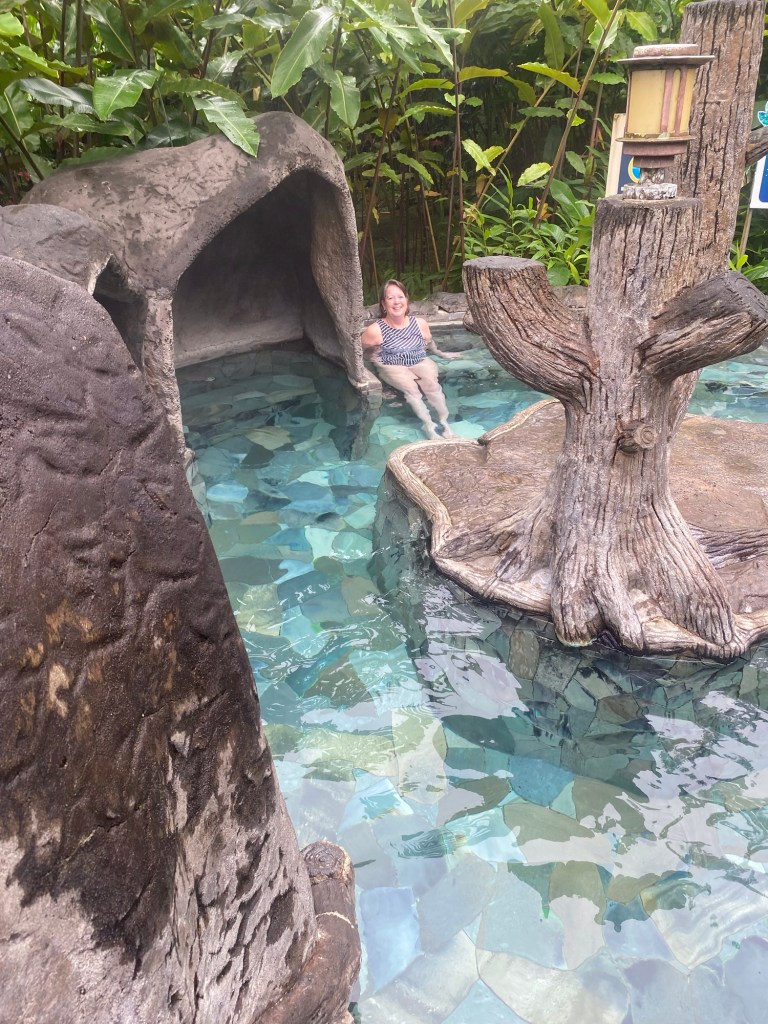
Our primary focus was the hot springs. While a little cheesy with their faux rock appearance, the pools did not disappoint. Varied in temperature from a cool mid-70’s to almost too hot for us—100+. Each hot springs pool had a sign indicating water depth and temperature.

Some pools were built for two. Most were bigger. A few had jacuzzi jets and reclining couches built in.

We started at the top and wandered from pool to pool down the hill until we, like Goldilocks, found the pool that was just right for us. Most of the time, we had the pools almost to ourselves. Our fellow soakers were largely locals; gringos seemed outnumbered.

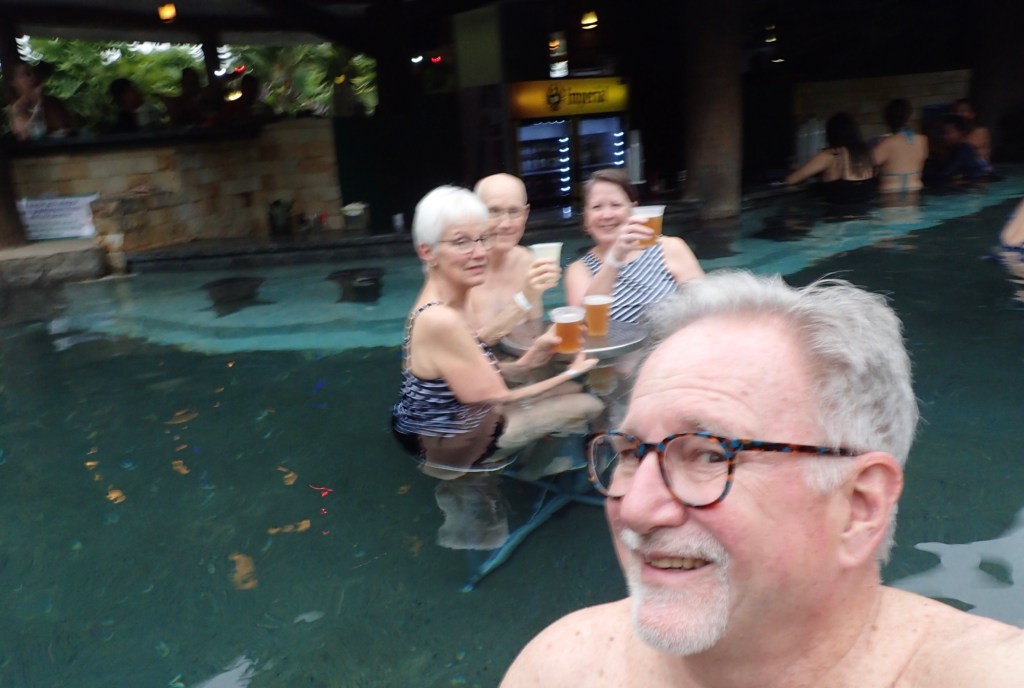
Of course, we had to try the swim up bar. Yes, tacky, but still great fun. Sitting on the submerged stools was harder than it looked, but highly entertaining. And in this family friendly pool, the water was cool enough for the kids to enjoy.

The resort also had a couple regular swimming pools (fed from natural spring water, the resort info said) with water slides for the kids and a wading pool for the littlest with a fountain shaped like a volcano.

We drove to the upper reaches of the resort to the lookout point and we almost saw the top of Arenal. Apparently, you can be here weeks, even months, and never see the top of Arenal.

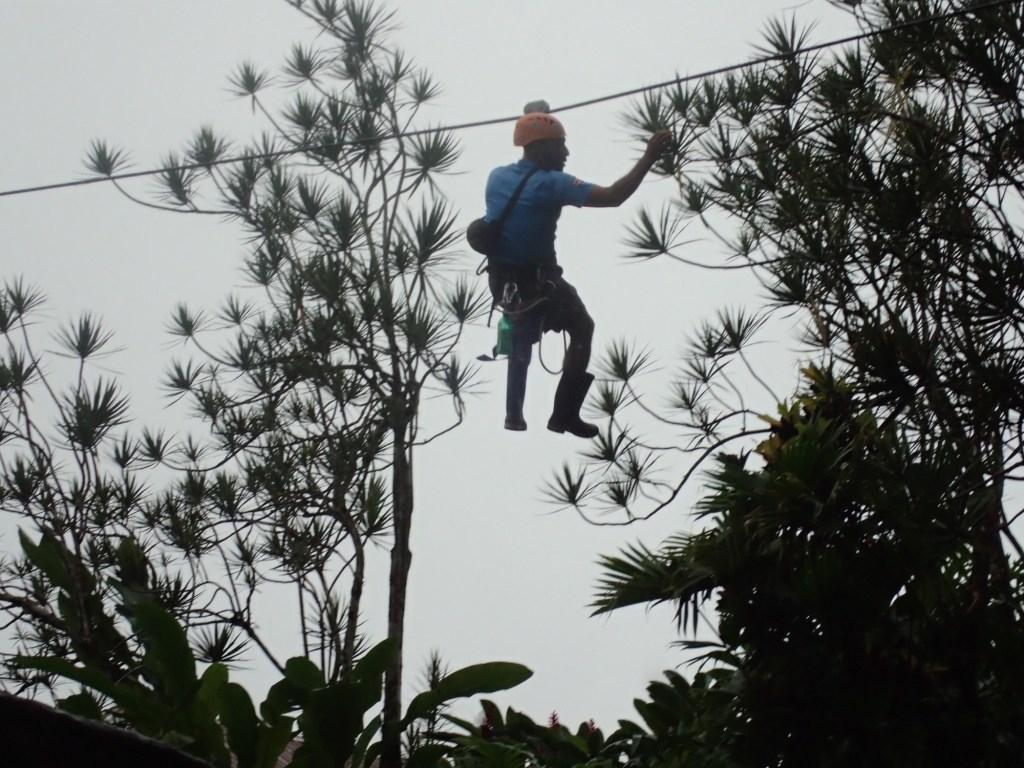
From that high view point there are a series of zip lines, and we saw folks harnessed in for the ride, and watched them end their trip zipping along above the swimup bar far below.

We certainly enjoyed our indulgent dips into the hot springs. With more time, we might have found the energy to explore more of what the area has to offer. Next time. But then, those hot springs are awfully tempting.

Spanish Surprises, Spanish Delights

A month in Spain surprised us and delighted us! Top ten of each!

Surprises

1. Adjust your clock! As a Spaniard told us in the south no one would get up before the sun rises at 8:00. Kids have to be in school at 9:00. Parents go to work by 10:00. Just move your US clock up two or three hours. Breakfast at 9-10am. Lunch at 2-4pm. Dinner after 9pm. In restaurants at 8:30 you’re eating with tourists, at 10:00 with locals.

2. Crossing streets can be hazardous — not because the Spanish are crazy drivers. They seem pretty polite. But not motorized scooters and bicyclists. Proceed with caution. The crosswalks are a few yards away from the corner to give left-turning vehicles a place to go. The cars will usually stop for pedestrians in the crosswalks, but the two wheelers often do not. Be careful!

3. Spain is up close and personal. Tapas bars are crowded. Tables are close together in restaurants. They seem to like it that way! One Spaniard told us it’s as if we must feel the “breath of the people on our cheeks.”

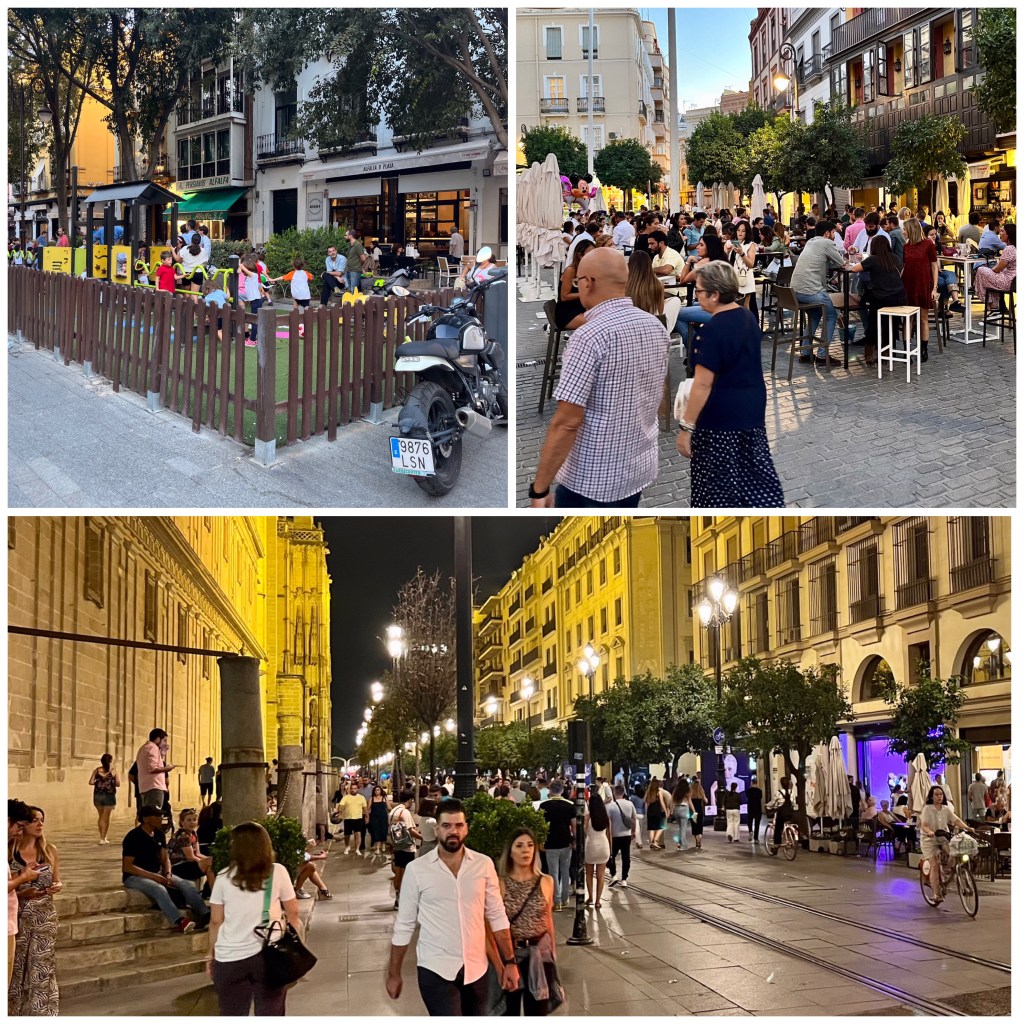
Crowds at popular tapa bars spill out into the street

4. Service can seem abrupt. Not rude. Just very few of the pleasantries that pass for polite banter back home. In restaurants, the waiters fly around. No “how’s your day going” or “how are those first bites tasting.” In one restaurant we were reminded of the old British comedy Fawlty Towers, given the yelling and frantic pace of the wait staff. (Of course, a fine dining experience in Spain is quite different.) We’re talking about the tapas bars, the bistros and more casual restaurants where we hung out.

5. Order what you want. Ordering a 1 euro espresso and 2 euro snack is absolutely OK. One Spaniard told us there are almost no public restrooms in Spain because you just stop, have a quick bite or drink and use the WC. Want to split a dish? Not at all uncommon and, in fact, it is often expected a table would share several dishes. Not very hungry? Order a half portion or even a tapa portion.

6. Franco’s legacy lives on. And it’s unresolved—feelings still run deep. Some still admire the fascist leader, others loathe him. This should not be a surprise to those of us from a country still dealing with the legacy of slavery and segregation. Franco died more than 45 years ago. Today’s right wing politicos trace many of their issues back to what they see as a better time when Franco defined what it meant to be Spanish.

7. The Catalan independence movement is a very strong undercurrent in Barcelona. Yes, we’d read about the desire by many Catalans for an independent Catalonia, with the region split roughly 50/50 in polls. Seeing the pro-independence flags hanging from balconies all over Barcelona, the graffiti in Catalan, and the police presence on the Day of Spain national holiday when pro-Spanish nationalists paraded through the streets of the city in an in your face political march, made it very real, very immediate, very intense.

“We take power” in Catalonian and Catalonian flags

8. Catholicism is more cultural than practiced. Cathedrals and basilicas are everywhere, but often empty. The birth rate is 1.2 children. The south is more Catholic, the north less so. Another legacy of the Spanish Civil War—the Catholic Church was strongly supportive of Franco as his army moved from the south to the north in the war. Many in the north still resent the Church for its complicity in the Franco years.

9. Royal family is definitely not the icons the British royals are. The Spanish king and his family are not very visible, often criticized for corruption and are seen by many as a drain on the economy. As one person reminded us, few people would even recognize a picture of the king, queen or their children. The former king is now living in Dubai in exile and not welcome back. Again some of this attitude may go back to Franco’s death and the hasty re-establishment of the monarchy one day later.

10. The Spanish do not like spicy food—a shock to us.

The delights?

1. Spanish high speed trains! Clean, efficient, comfortable. Taking a five hour train ride was less complicated than any airplane trip we have ever taken anywhere. Easier security. Roomier. Less waiting time. Departure and arrival near the city centers.
2. Tapas and the wine scene. Usually quick, often delicious, and almost always cheap. Spanish omelette (tortilla), potatoes with a paprika sauce (patatas bravas), Russian salad (ensalada Rus), Spanish ham (jamón) or anchovies on toast were staples. But many tapa bars have their own specialties or twists on these standards. Some were simple affairs. Some were gastronomical masterpieces. And wines by the glass—often the house wine was outstanding—house made vermouths, and cavas (the Spanish version of champagne).
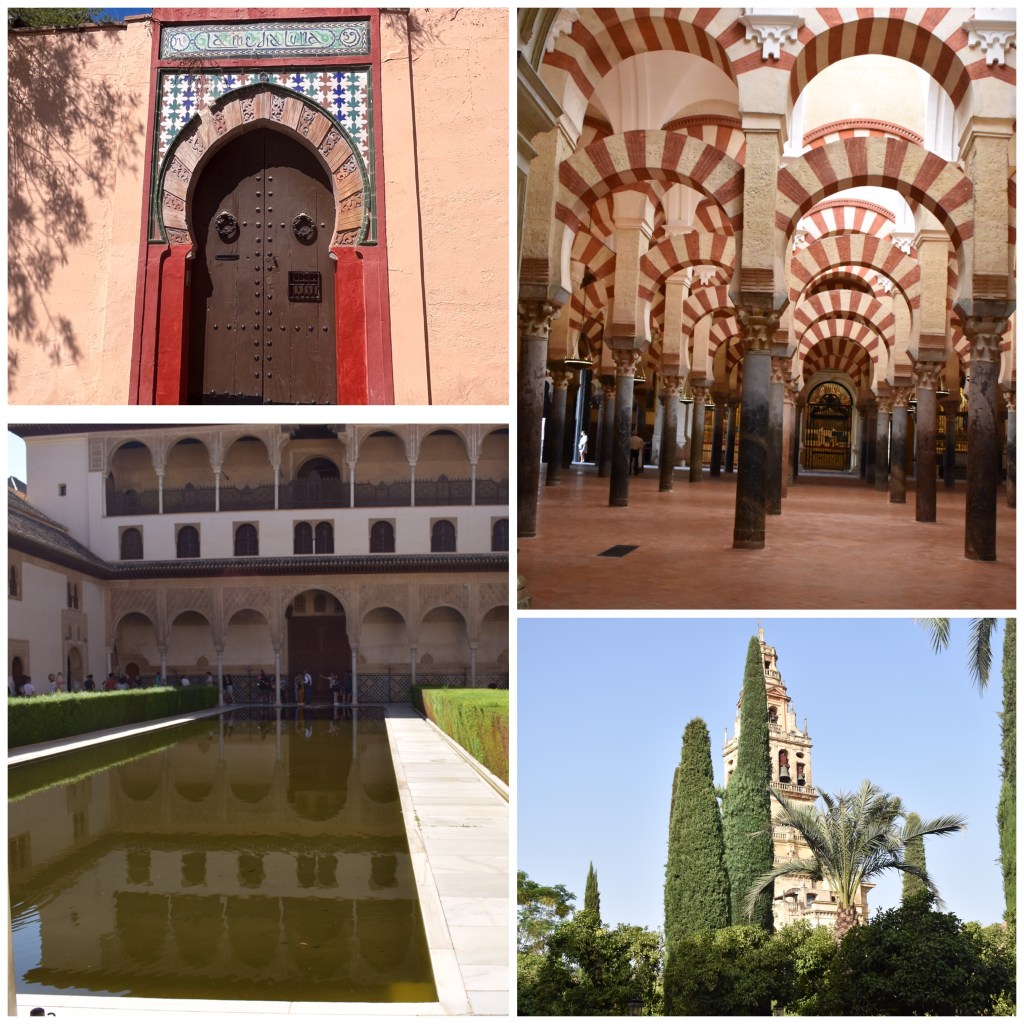
3. Moorish architecture. From the Alhambra in Granada, the Mezquita in Cordoba, the Alcazar in Seville to simple doorways in small villages, the Moorish influence infuses much of the Andulacian region. Complex, intricate designs. Gorgeous tile work. Beautiful water features. Cool garden courtyards.

4. Living the streets! The energy, the liveliness. Sunday afternoon extended families gather in outdoor restaurants for long lunches with kids running around the table. Particularly on weekend evenings before dinner, couples, families and groups of friends just saunter down the main streets seeing and being seen. In many squares, playgrounds for the kids and, conveniently, cafes or bars for the parents.

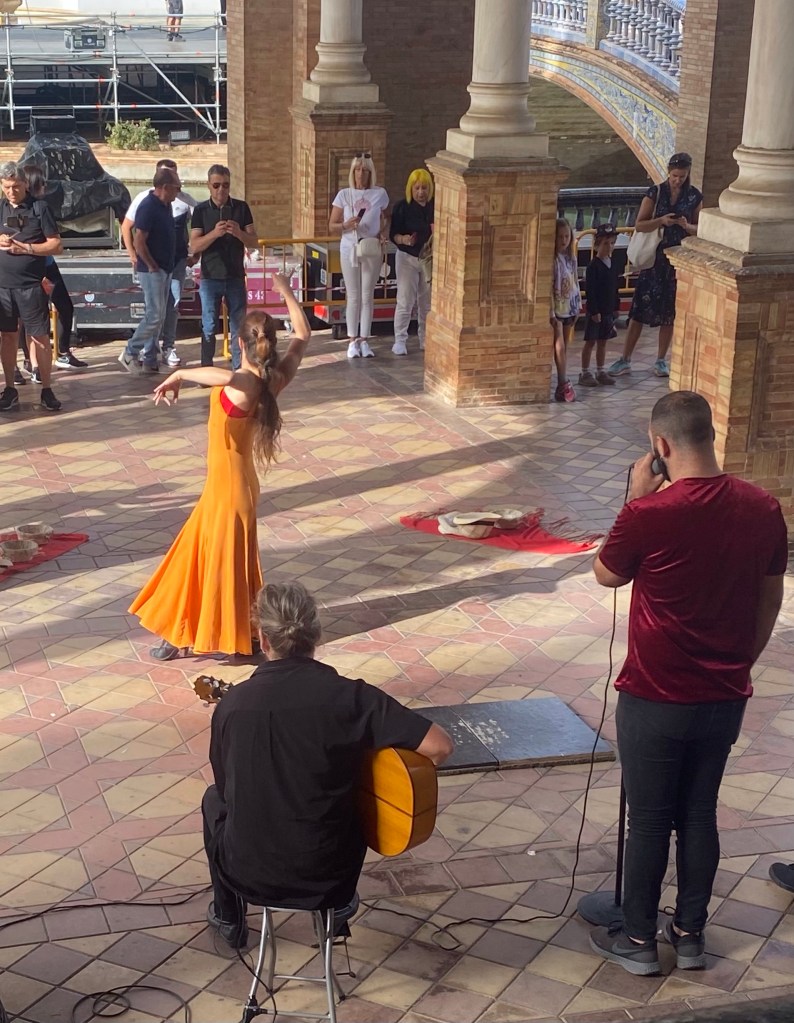
5. Flamenco! Okay we went to see a show mainly because it seemed the thing to do. We weren’t prepared to be so impressed. The guitar mastery. The singing — somewhere between the Moslem call to prayer and Portuguese fado. Then there was the dancing. We learned there are several styles reflecting Gypsy, Moorish and Jewish influences. Don’t miss it if you are in Spain!

Pictures weren’t allowed at our flamenco show but we did see this street performer.

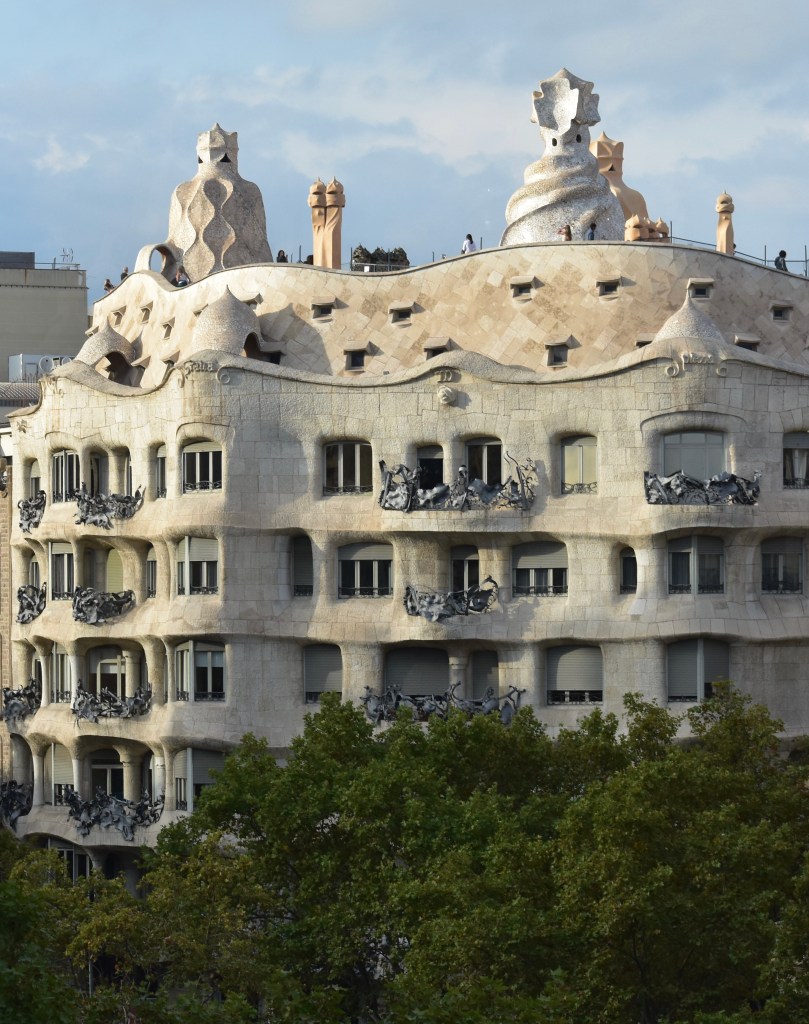
6. The Belle Époque and Art Nouveaux in Barcelona. Blocks and blocks of late nineteenth and early twentieth century homes and apartments. Several of Gaudi’s stand out among the less experimental and fanciful designs. The broad octangular intersections to create the space for horse drawn vehicles to turn around and space for some of the best architecture.

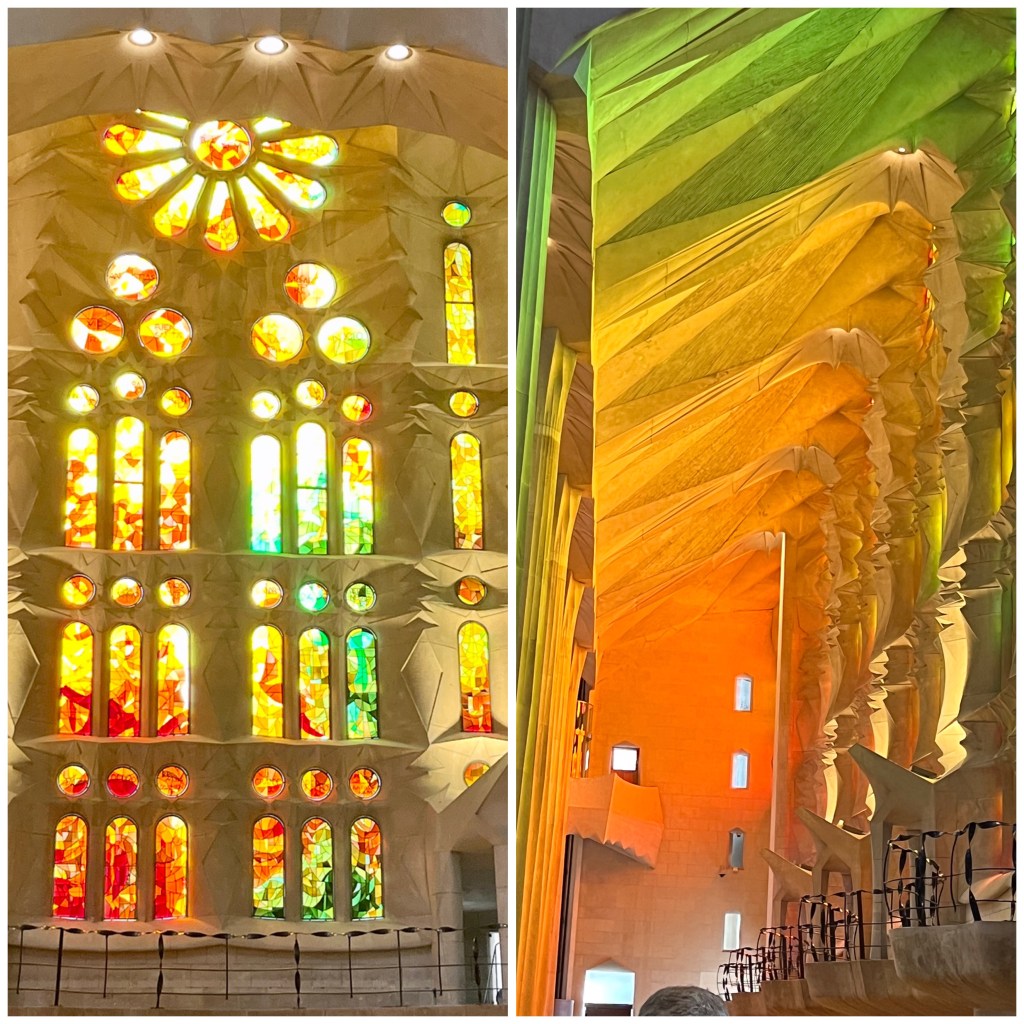
7. The stained glass window of Sagrada Família. While the entire structure is amazing, the afternoon light coming through the west windows stunned us.

The window on the left generates the light on the right. Totally dazzling.

8. The white villages of Andalusia. We loved our “home” in Vejer de La Frontera. All the charm of Italian hilltop villages with the overlay of Moorish style.

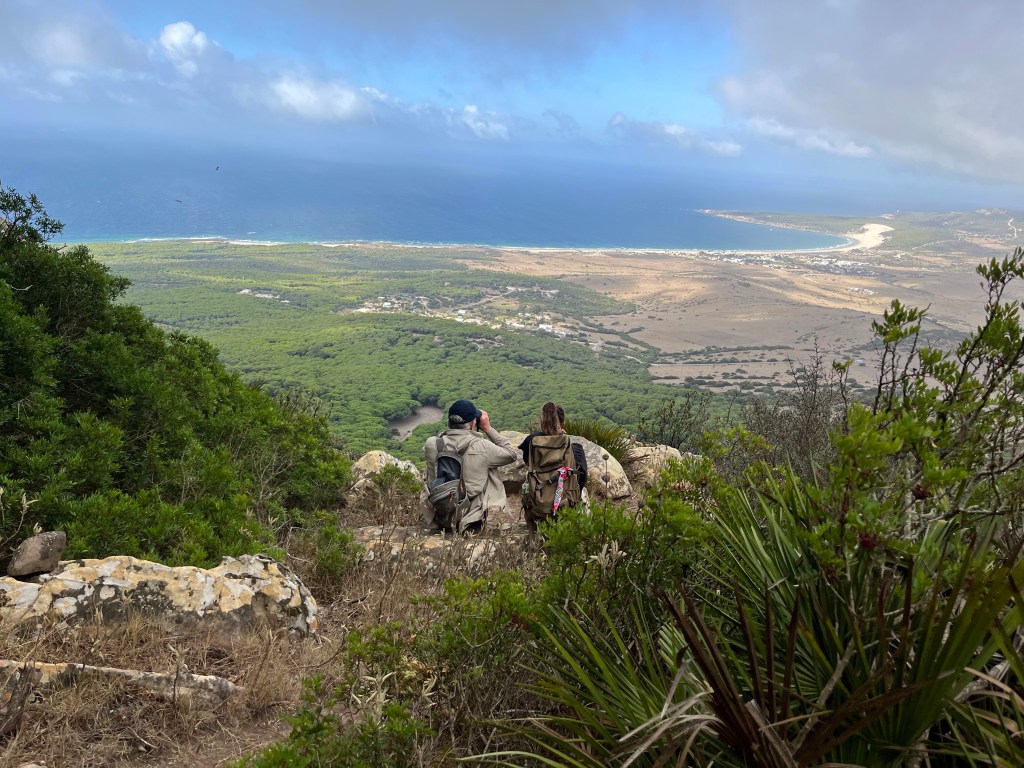
9. Hiking in El Estrecho Natural Park. A steep climb from nearly sea level to cloud forests with views to the sea and Morocco.

10. The cost. Food in restaurants is unbelievably cheap compared to the US and the rest of Europe. Meals for two with drinks rarely cost more than 30 euros. Wine—3 euros, espresso-1 euro, tapas-2-3 euros (or free with a glass of wine). Again, you can spend much more but the quality at most moderate restaurants and tapas bars is so good, why bother. Prices do climb a bit in the heavily touristed Barcelona.

Barcelona Undercurrents

Barcelona is, without any question, a beautiful city. And an historic city. And that history has left wounds which are apparent today, even if they aren’t always obvious.

It was our last full day of our month long trip to Spain, October 12. Columbus Day or Indigenous People’s Day back home. In Barcelona and Spain it was the Day of Spain, a national holiday. The street in front of our hotel was closed, we were told, for a parade. (One more instance of a gap in translation — not a parade but a march). Of course we altered our plans for the day to hang around and watch the action.

A block from our hotel barricades were set up and police stood by as city workers scrubbed away graffiti on the sidewalk. Not sure what it was all about.

In Catalunya Square, the main square of Barcelona, a number of tents had been set up and music blared. The early crowd was obviously having a good time.

But we had heard that this was not a day the pro-independence Catalans celebrated. They would be staying home. A few years ago fights had broken out between factions — the pro-Spanish unity groups versus the pro-Catalonian independence groups. And there has been a controversial referendum on Catalan independence a few years ago. We don’t know the whole story for sure, but Franco’s legacy of represssing the Catalan language and speech still hurts here. One young man told us about his Catalan grandmother being exiled to France during the Franco years and Catalans being arrested for simply speaking their native language.

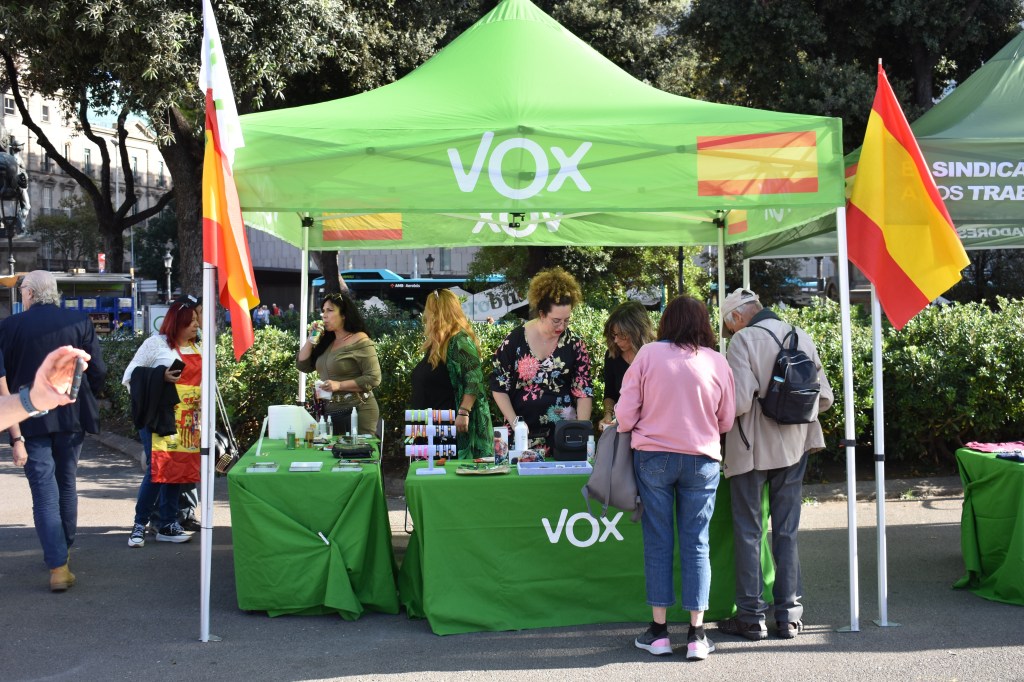
The ultra right-wing party of Spain. For more info on Vox https://www.reuters.com/article/uk-spain-election-vox-factbox-idUKKBN1XK0LQ
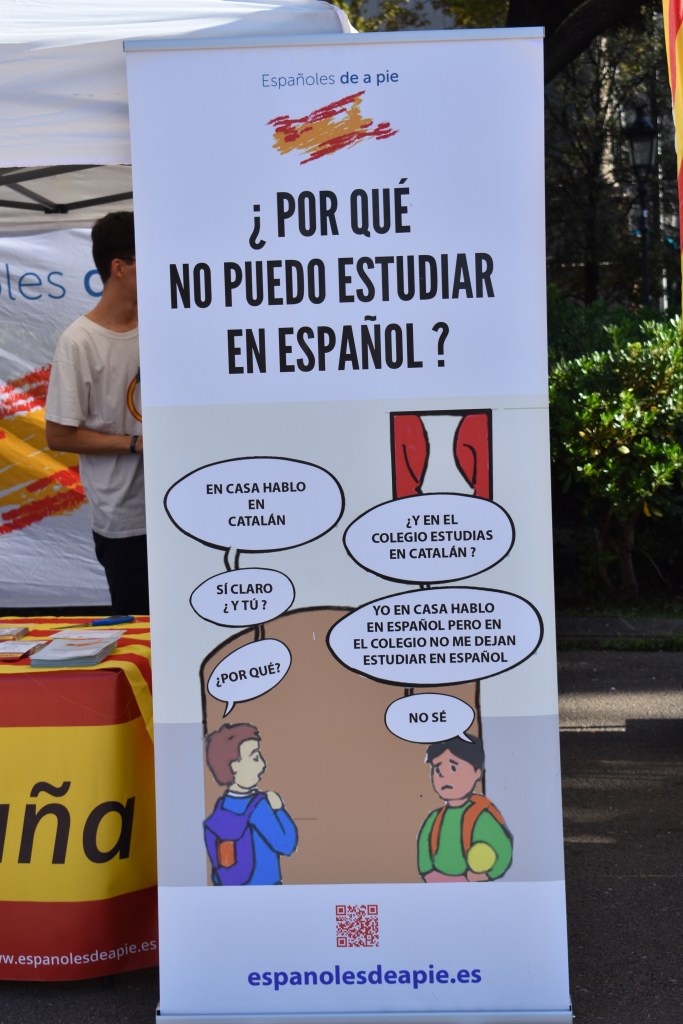
The gist of the banner, “I speak Spanish at home. Why not at college?” Apparently in an effort to preserve the Catalan language a certain percentage of college classes must be taught in the regional language. Not a surprise that this has become a political issue.
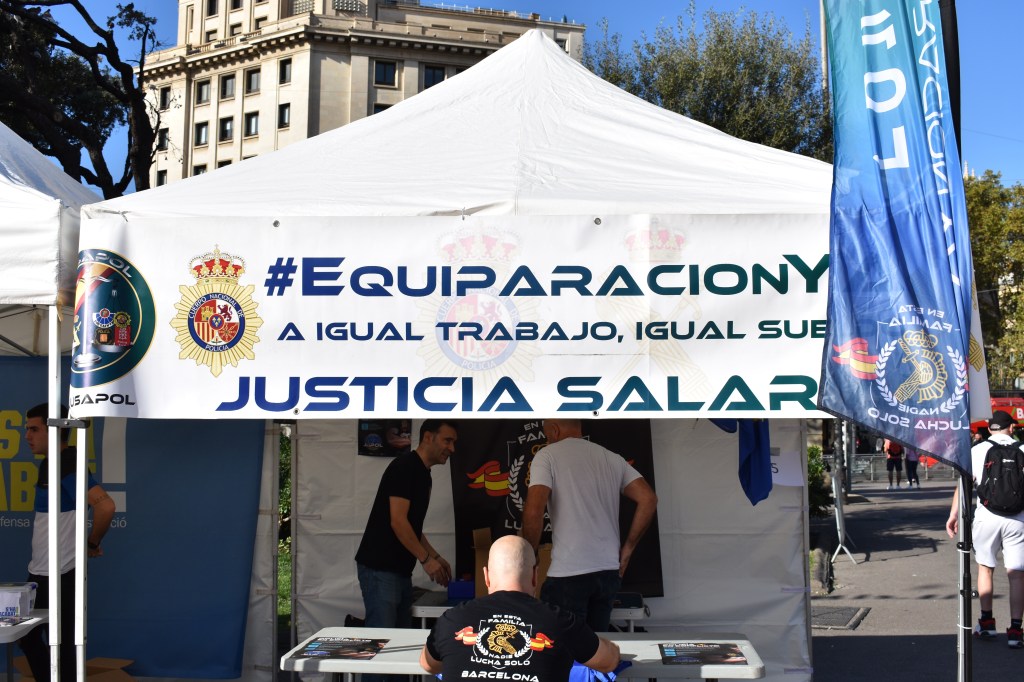
“Equal work, equal pay” with a reference to the lower wages paid in the south of Spain.

Emotions were clearly high. Complaints about Catalonia not paying enough in taxes. Signs in green — the color of the Vox right wing party — declaring no steps backwards.

Aspects of the march and rally felt like a MAGA event, but we don’t really know, except many participants carried both green Vox signs and Spanish flags. Apparently, the vote for the Catalan region to separate from Spain reflected a nearly fifty-fifty split. The issue may or may not split strictly along cultural lines.

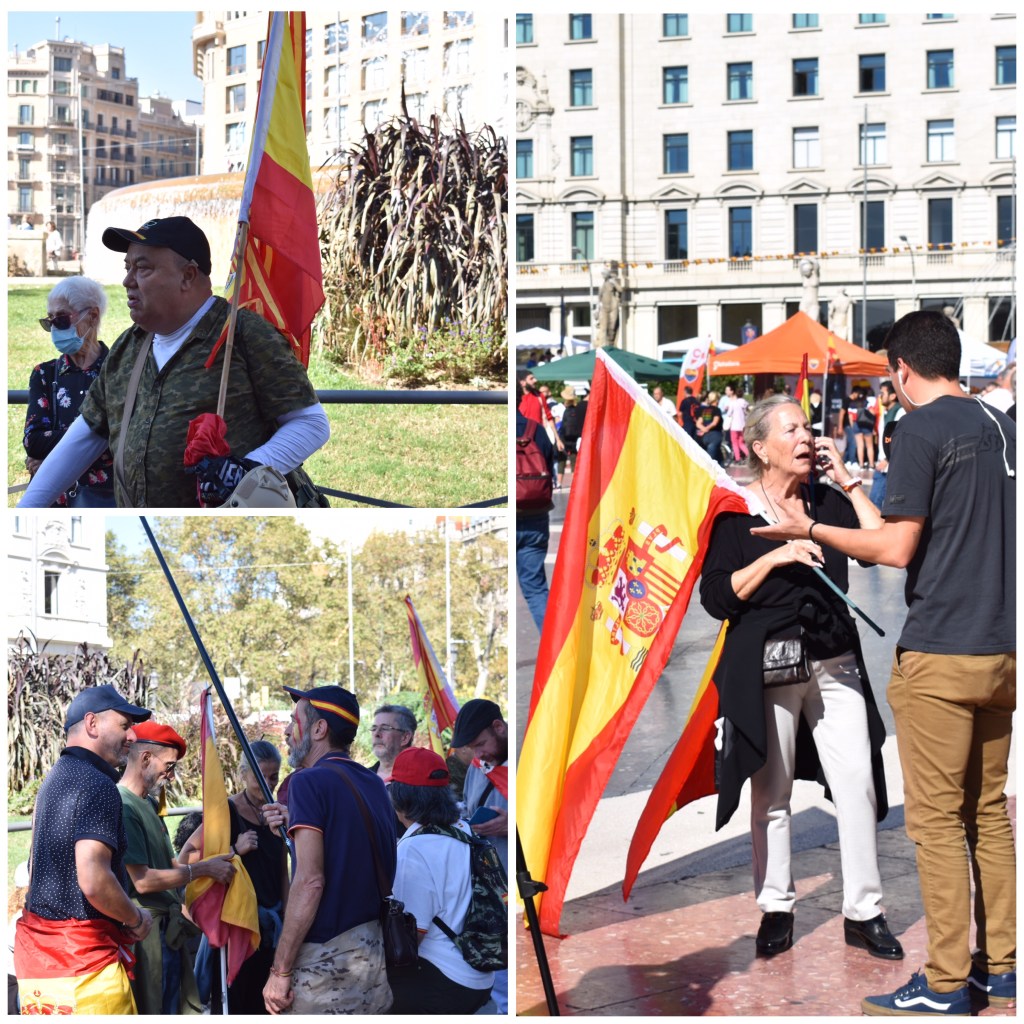
Couple of the guys all dressed up and a very animated woman being interviewed by the media

And it does remind us that behind the historical sights, the charming cafes and beautiful buildings in almost any tourist destination, there is lies a complex set of not necessarily resolved issues.

As we walked the neighborhoods in the five days we were Barcelona, we kept noticing flags hanging from the windows—flags that supported the creation of an independent Catalonia. Despite the flashy pro Spain events of today, we know that a strong undercurrent for independence still exists.

Somehow we do have a knack for finding political demonstrations. And we do find them fascinating, often more so than the tourist sights. What does that say about us?

Seville Part 2; wrapping it up

We spent nine days in Seville — longer than your typical American vacation would allow most to do. But we’re retired. We have the time. And we like settling into a place for a while. Seville was a good option for us.

We did the major sights with guides the first two days we were here. After that we just explored the neighborhoods, took a day trip to Cordoba and another to the Doñana National Park.

First Cordoba. We were wowed by the Mezquita. The contrast between the Moorish elements and the 16th century church was stark. The openness and space of the mosque. The iron gates and small chapels of the church. Not knowing much about either religious tradition, we weren’t sure what to make of the differences, but certainly felt the Moorish design was more comfortable and less intimidating.

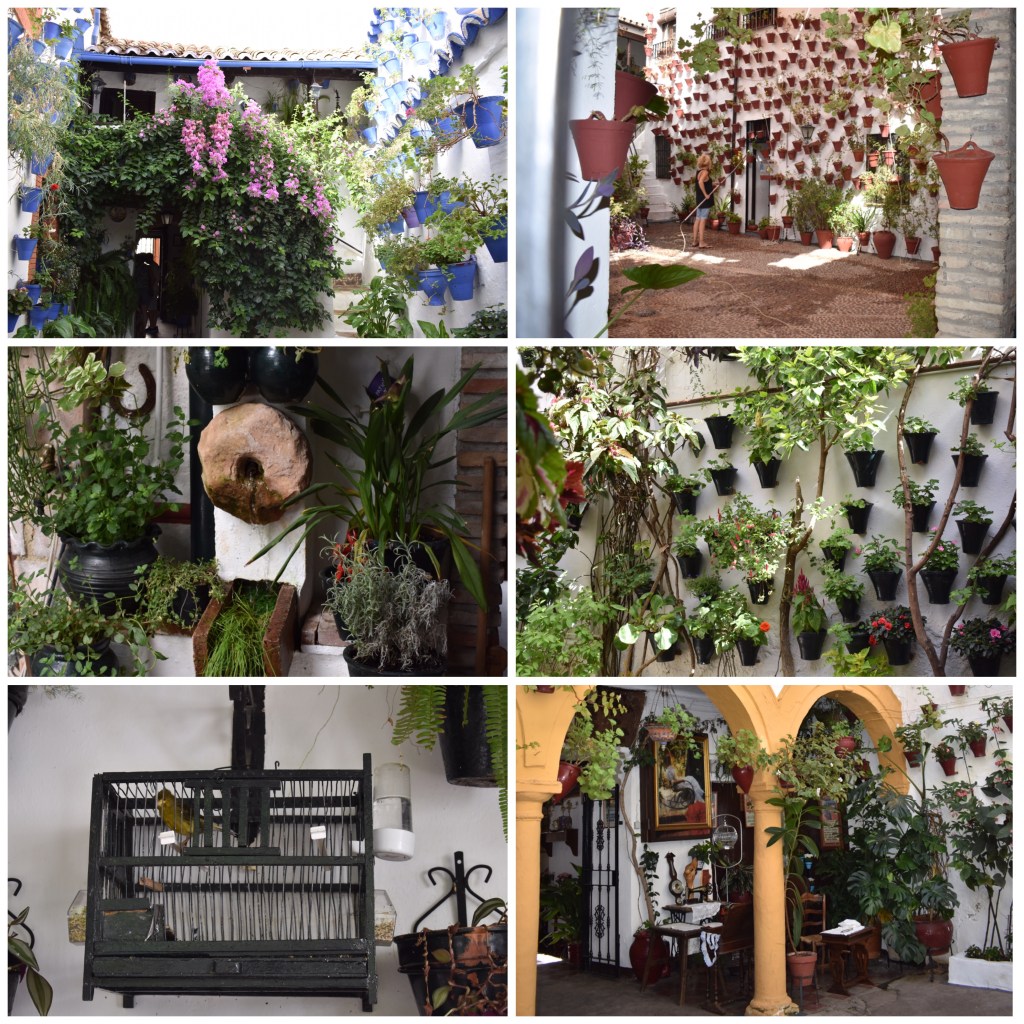
A not-to-be-missed sight for us was the patio garden tour. Every May Cordoba holds a contest to determine the best patio. Some patios are private and others are shared by several homes. A group of the perpetual winners in the annual contest have put aside their competitive spirit and come together to create a walking tour — for a small fee. Each garden had similar components — lots of plants in pots hanging on the walls of the patio, a bird or two chirping away in a cage and water. The patios are small oasis’s for escaping the heat (even in early October it was 90°). Bougainvillea. New Guinea impatients. Azaleas. Impressive.

We also visited the small synagogue, built in 1314, and used for over a hundred years until the Jews were expelled from Spain. And this is one of just two or three synagogues remaining in Spain. Before the Inquisition, Spain had a flourishing Jewish community. We visited on Yom Kippur and came away reminded of how fragile tolerance can be.

The trip to Doñana National Park was like a trip to an entirely different world. The town on the edge of the park, El Rocio, is a white washed but largely modern town for the horsey crowd. We were told by our guide that all of the new townhouse style homes come with stables! And that at the height of the season the sleepy town swells to thousands. Hardly a person in sight and just a couple horses the day we were there.

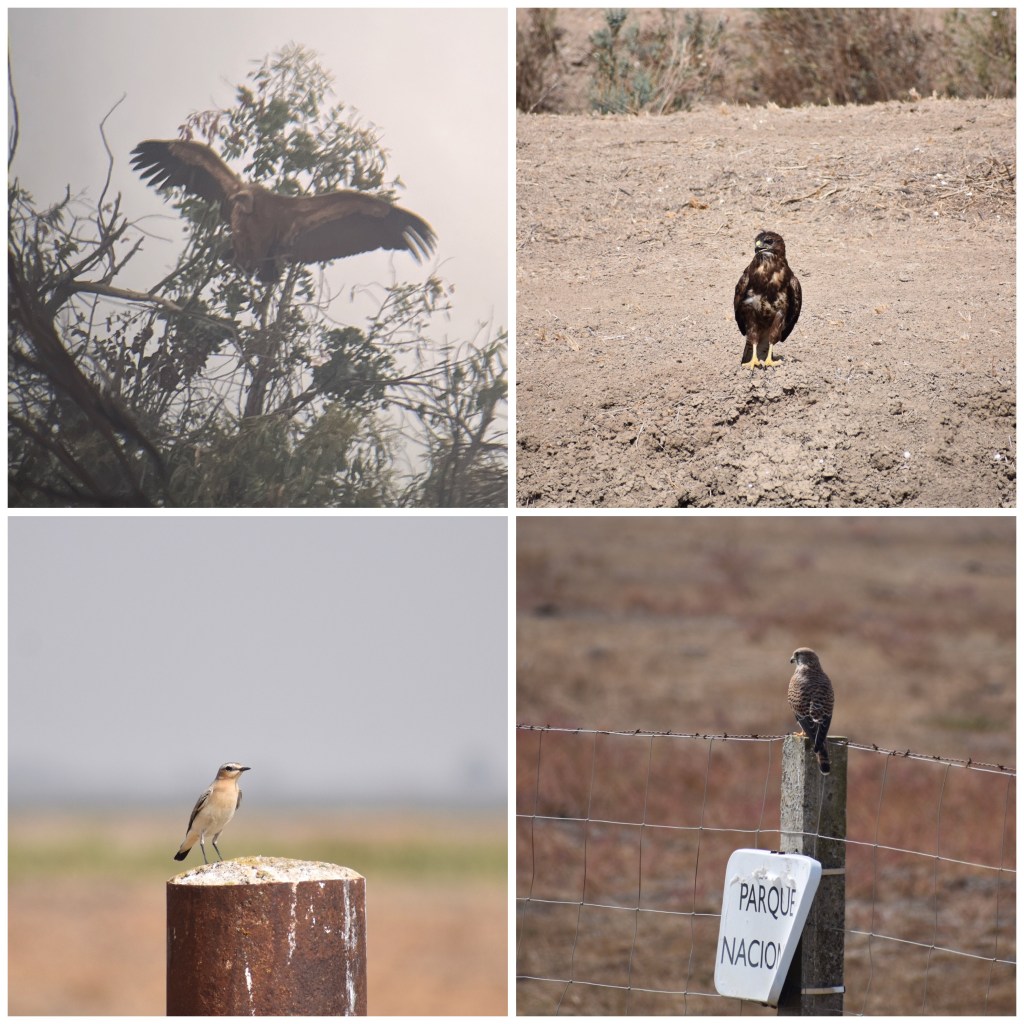
We spent the day in a four wheeled drive Jeep, driving over what looked to be dried river beds, although our guide said not so. However, much of the area is under water after the winter rains. But the only water we saw was in irrigation canals. There are three main attractions to see in the park. We saw two of them — what our guide called the queen of the park, the Imperial Eagle. We dubbed the Griffon Vulture the crown Prince. The king, the Iberian Lynx, remained elusive. We didn’t complain; we added over a dozen birds to our life list.

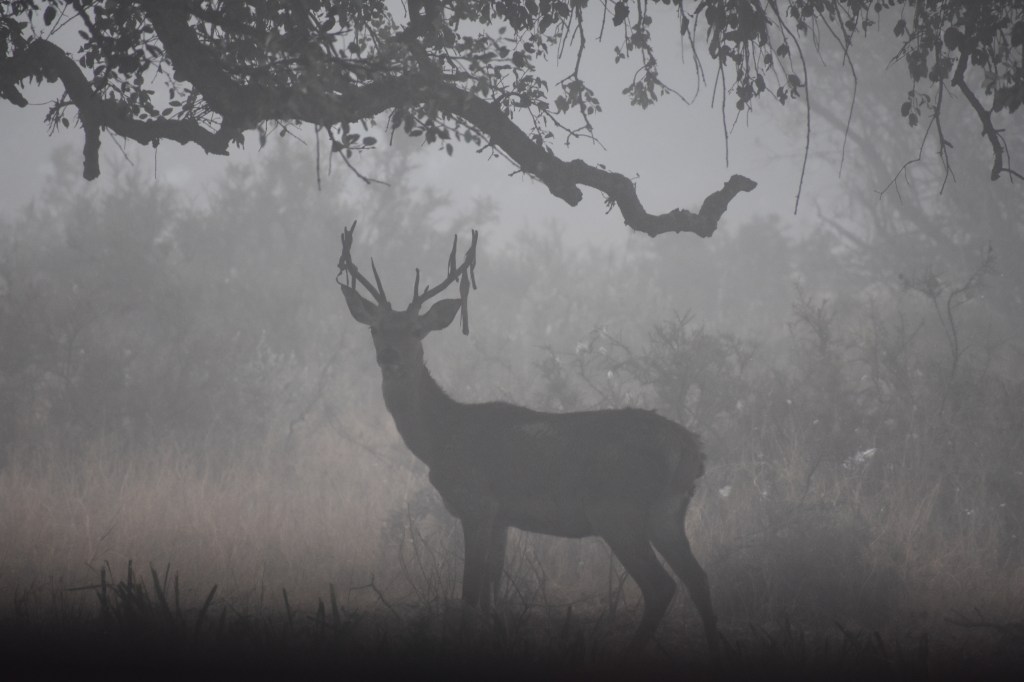
And we saw plenty of the Red Deer, some of the bucks with huge sets of antlers.

Red deer through the morning mist

Back in Seville we wrapped up our visit soaking up the ambiance and checking off a couple more sights.

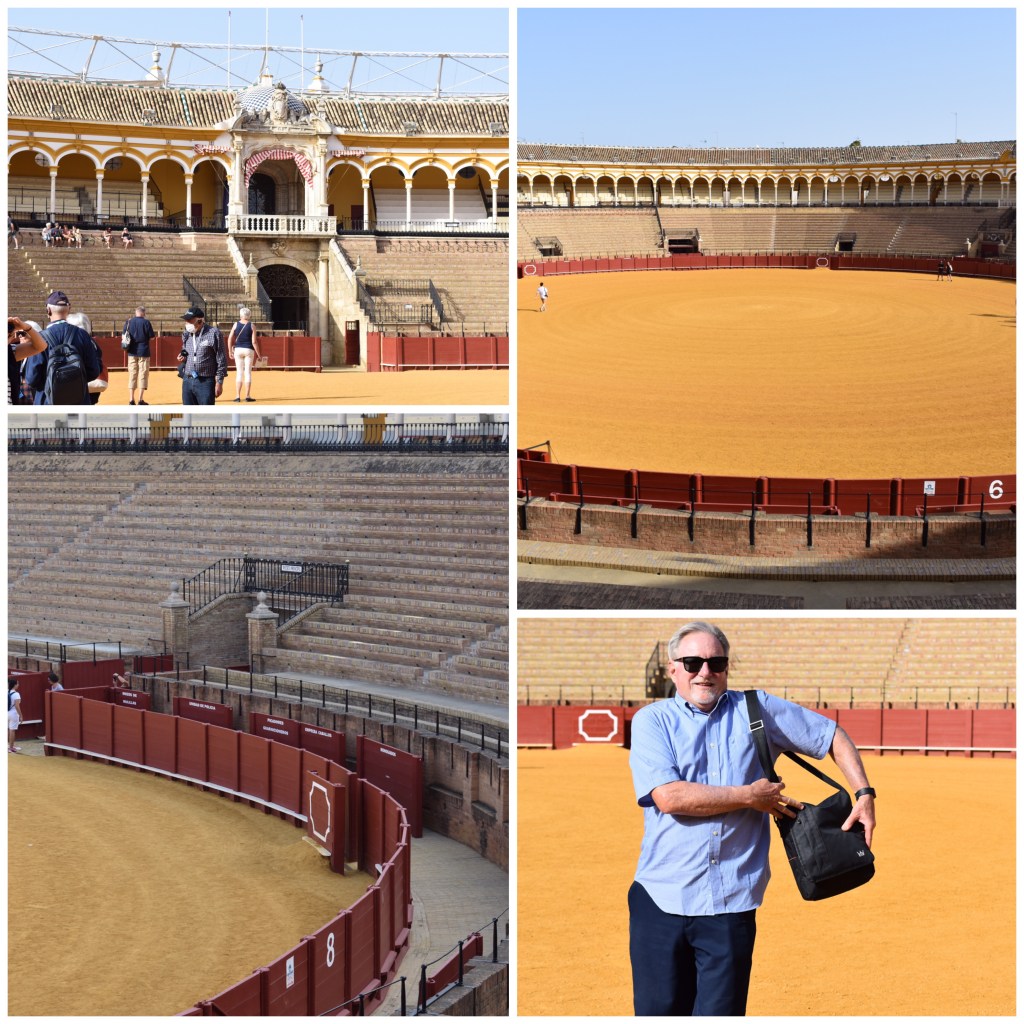
Old pictures of the Seville Bull Arena show the ring hasn’t changed much over the years. It’s hard to imagine today’s audience sitting on the brick benches, but apparently they do. The section for the press seemed too close to the action, but then I thought about the photographers who stand alongside the field in football games and occasionally get hit. Of course, like all the other tourists Peter had to pretend he was a bull fighter.

The Archivo General de Indias (Archives of the Indies) was a gorgeous Renaissance building. We tried to translate the descriptions of the items in class cases with limited success — treaty between Spain and Portugal dividing up the new world, contract between Columbus and Spanish monarchs, reports from the colonies. Interesting even if we were looking at copies of the originals.

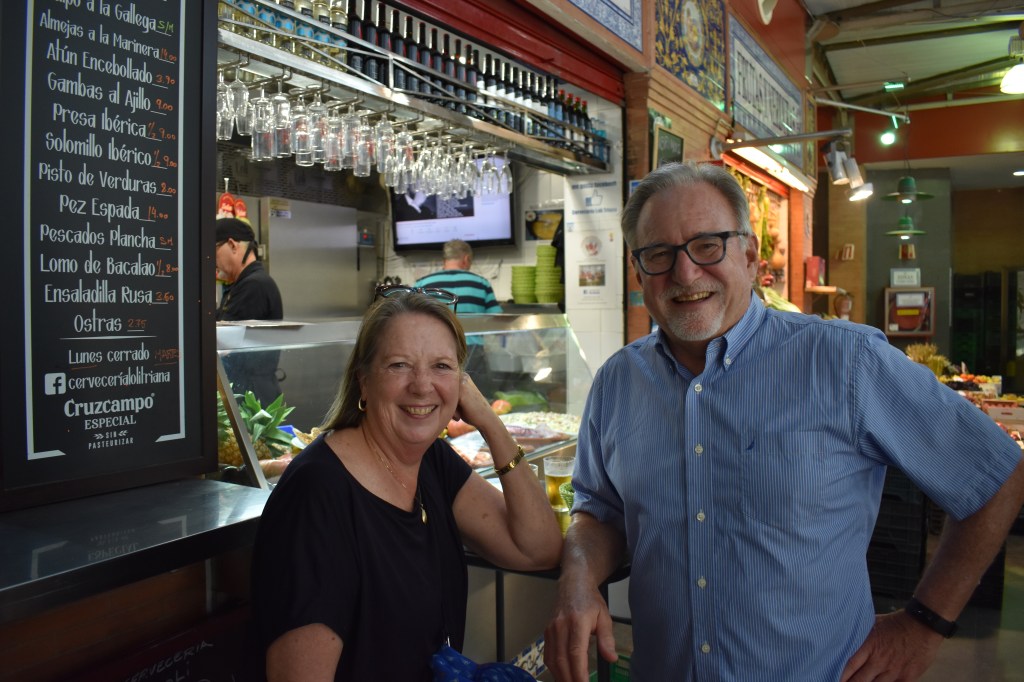
Of course, then there was our pursuit of food. We had toured the Triana Market with our guide on our second day in Seville. An excellent place to buy fish of all sorts, some meat stalls and a lot of small establishments offering tapas. A great place for a snack. We tried to tour the Mercado de Arenal, only to discover it was a victim of the pandemic. Only a few places remain open — a bike rental shop, a small vegetable stand and maybe one or two others. Sad.

We had originally intended to do quite a bit of our own cooking while in Seville. However that didn’t happen. The two of us could eat dinner in a casual tapas bar with a couple glasses of wine and three or four tapas for a quarter the cost for dinner back home. Maybe less. So why cook? Plus, the markets with fresh fruit, vegetables, meats and local delicacies just weren’t around the tempt us. The mini-markets in the old part of the city where we stayed did provide the basics — so-so bread, cheese, juice and such for breakfast. Shopping there we did cook a light dinner of sausage and vegetables on pasta one night after too big a lunch. That was about the extent of our cooking.

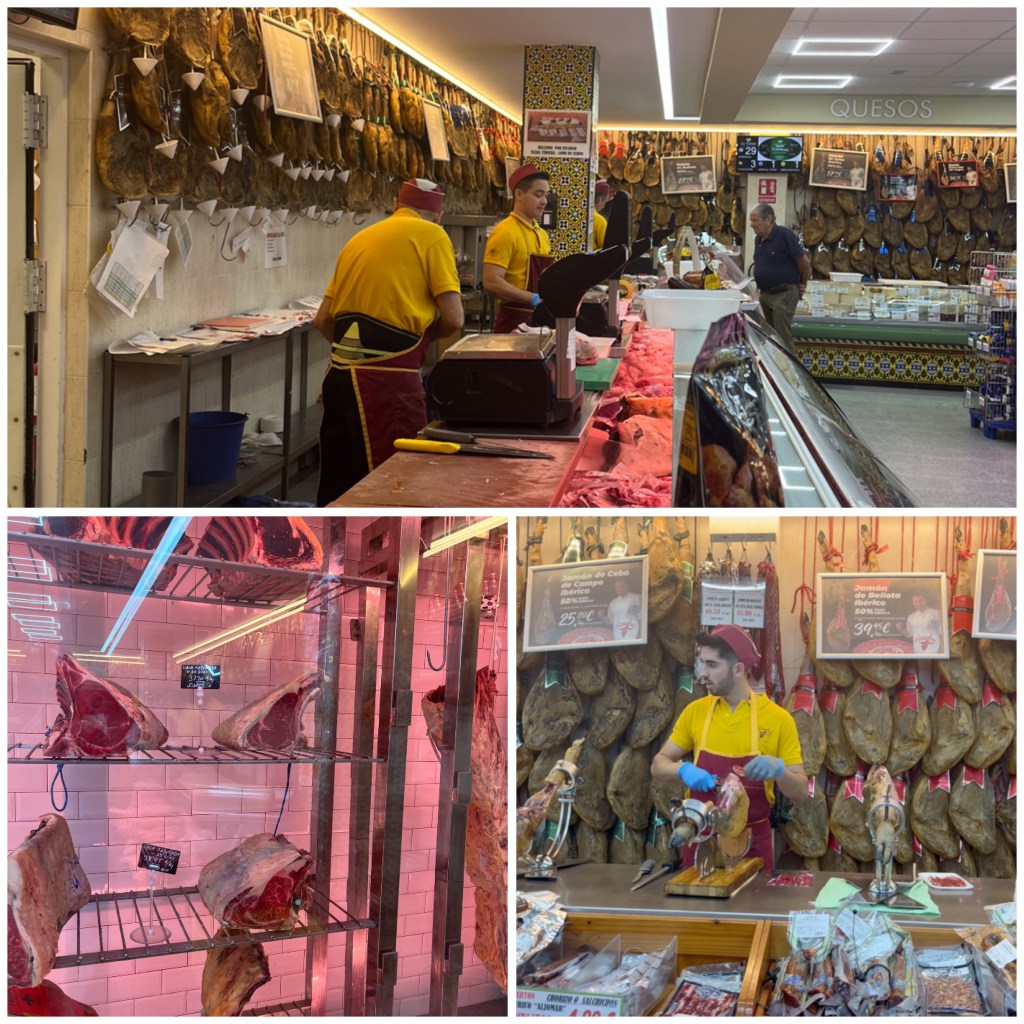
Then on our next to last day when we found a mega-charcuterie store in Triana. A huge number of jamons hanging behind the meat counter. Butcher hacking up whole chickens. A huge selection of different cuts of pork that we don’t see at home. A glass case of aged veal and beef. A case full of Spanish cheeses.

We finally found where locals shop — probably a quarter mile from the nearest tourist attraction. We drooled and quickly went to the Triana Market for lunch.

Seville was our last stop in Andalusia. We have heard that our next destination, Barcelona, is quite different. We shall see. For now, we have been charmed by this corner of Spain.

Think Small

We’ve done an awful lot of traveling over the years. Big cities like Rome, Tokyo, London, Moscow are great. Even the smaller cities or big towns — Avignon, Granada, Prague — are amazing. The cathedrals, the town halls, the castles, the museums! But we’ve come to the realization that our fondest memories often come from the small towns and villages where we’ve been lucky enough to spend some real time — from a week to a full month — Gradil in Portugal, Motovun in Istria, Buoux and San Siffert in France, Potrero in Costa Rica, Kinvarra in Ireland and now Vejer de la Frontera in Spain. Again and again our memories (and our stories) come from those small corners of the world.

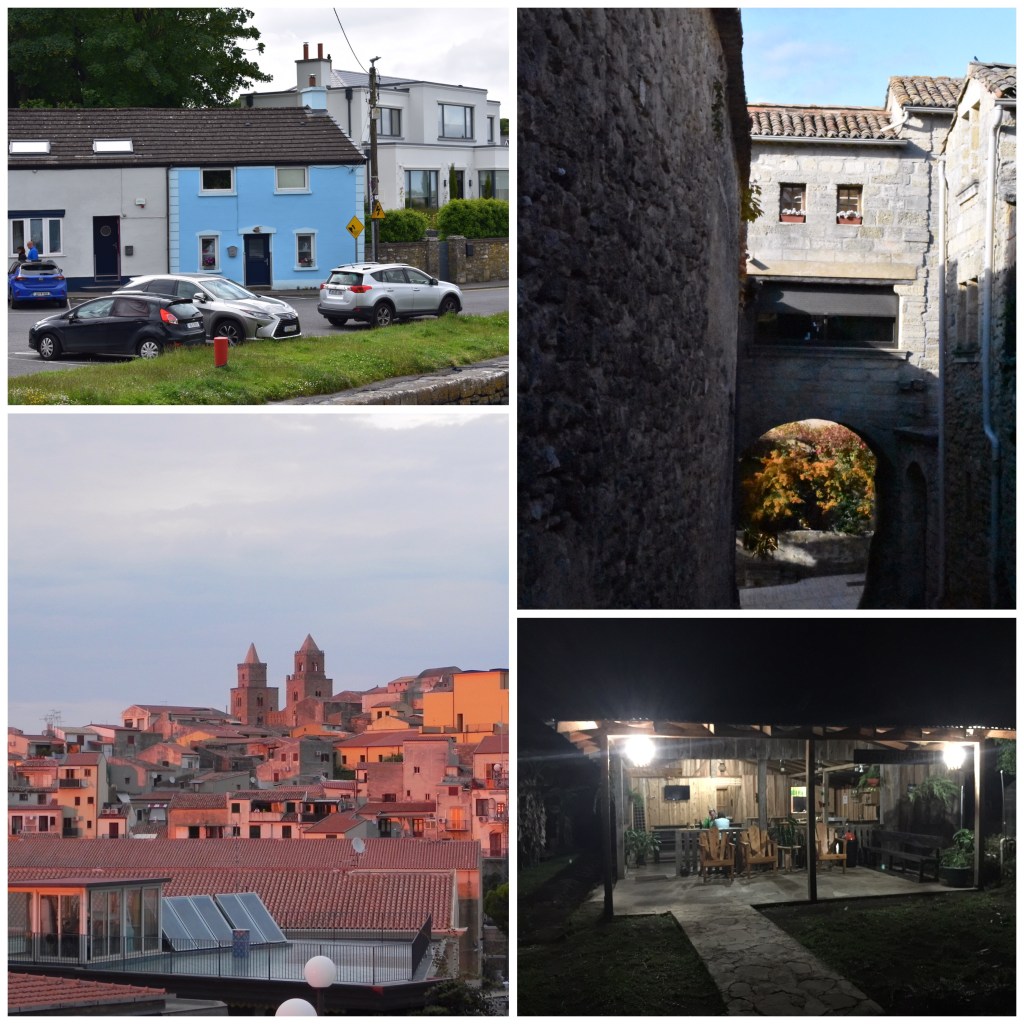
Clockwise from top left Kinvarra, St. Siffert, Cevalu, near MonteVerde

These are towns most people have never heard of. Some are big small towns like Vejer and Motovun, but others like Buoux and San Siffert are dots on the map with maybe one restaurant or cafe and virtually nothing else.

While small, we have chosen these locations with care. We look for a place offering multiple day trips and sights within an hour or so drive. We look for villages big enough to have a coffee shop, a restaurant or two and a market. And we look for charm — some historical buildings, often on a hilltop with views and a place a bit off the beaten tourist trail.

What makes these small towns more attractive to us? Being able to return to a home base where you get to know the locals feels almost homey. It gives us, however superficial and temporary, a sense of belonging to speak to the same neighbors each day, drink espresso at the same cafe. It also encourages us to slow down, focus more on being somewhere rather than dashing off to catch all the must see sights in a famous city.

Of course, this comes with a few caveats. For the most part, you need a rental car. Most of these small towns are not easily reached. And you need the luxury of time. If you are in a country for a short stay, you will want to see the major sights before venturing off the beaten path. Fewer locals will speak English. And in most of these towns, good mobility is essential —lots of walking, often on cobblestones with steep hills. No taxis.

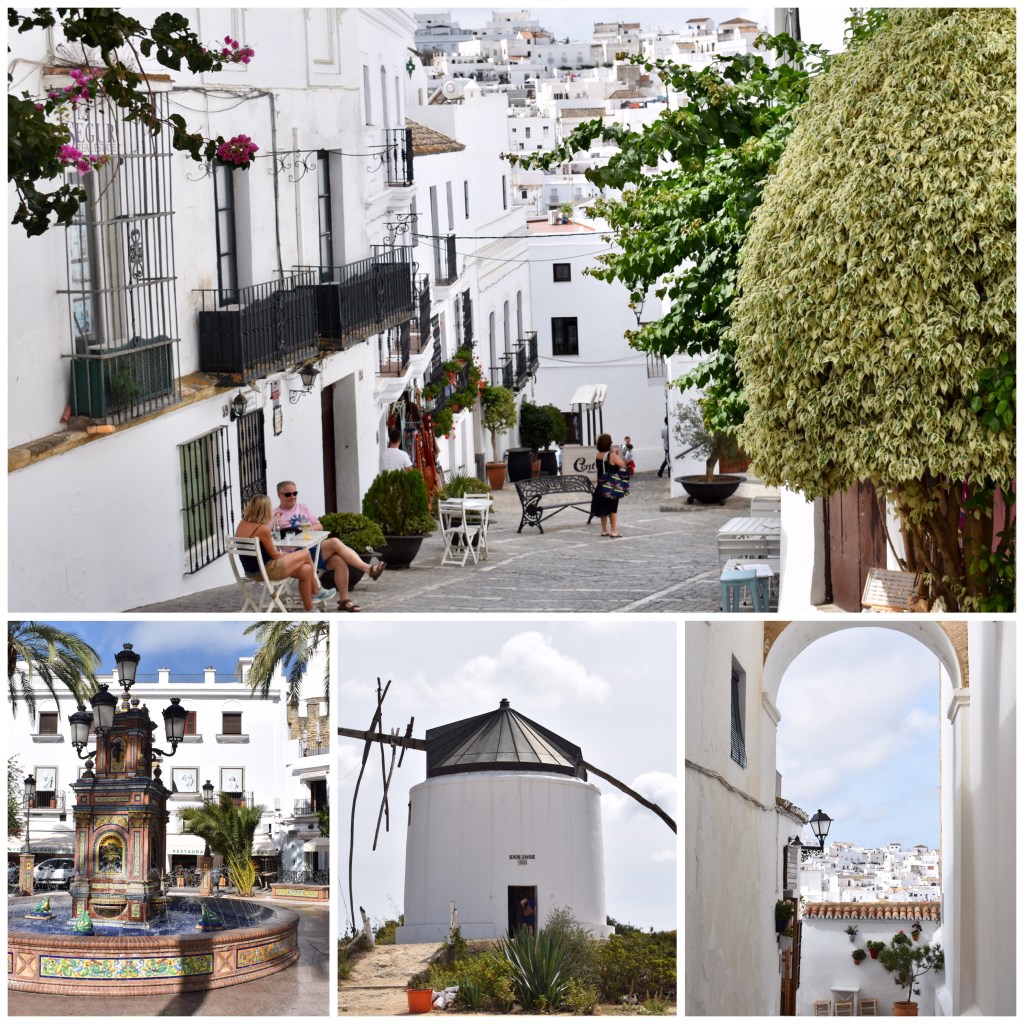
That said, we were lucky enough to find Vejer de La Frontera — one of the best examples of a great small home base in southern Spain. From there we could drive in 15-30 minutes to a number of different beaches for walking and swimming. Want to try wind or kite surfing or just plain old-fashioned surfing?

Not exactly our thing, but another option. Gibraltar was 90 minutes away, Cádiz 40 minutes. Roman archeological ruins, the other more famous white villages and Jerez, the Sherry capital, all within easy drives. From our home base we could hike from the village or drive in under an hour to more challenging hikes. Enough to keep us busy for a week.

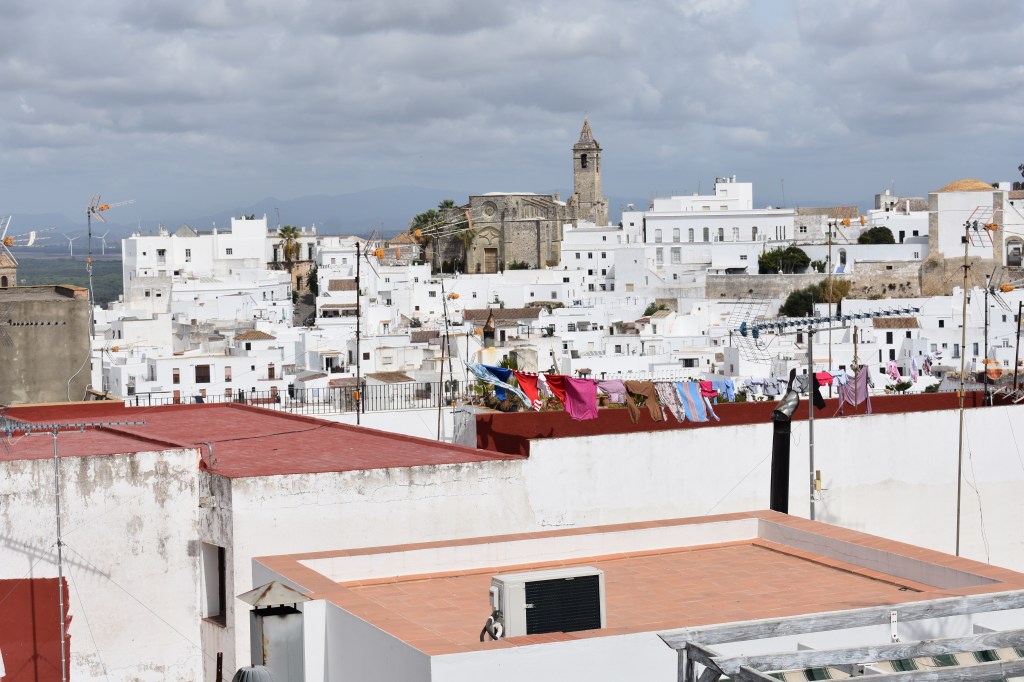
Then there was the town itself. Just wow! Approaching from the east, the white buildings in the distance just spilled down the very steep hill. Once we arrived in the town, we realize there were two hills – one ancient and one modern, but in both all the buildings were white. Definitely a Pueblo Blanco. The only exceptions were the beige sandstone church in Castle perched high above the old town town itself. And despite all its picturesque qualities, it was a real — complete with laundry hanging from clothes lines.

View of the old town and church from our “home” in Vejer de La Frontera

In the valley between the two, there was a community of white washed buildings two and three stories high built 100 years ago. That’s where we stayed. Our place was one of several sharing a small courtyard. Our neighbor, José, greeted us as we came and went and locked the courtyard gate promptly at 9:00pm. He spoke such a colloquial version of Spanish we could barely understand him, but through pantomime and speaking louder he managed to explain how to manage the gate.

At the street level in both parts of town there were often shops and restaurants and on the upper floors apartments and homes which meant there were a lot of locals. It is a tourist town, but mainly Spanish with a handful of Brits, Germans and French. Amazingly, we never heard an American accent in the week we were there.

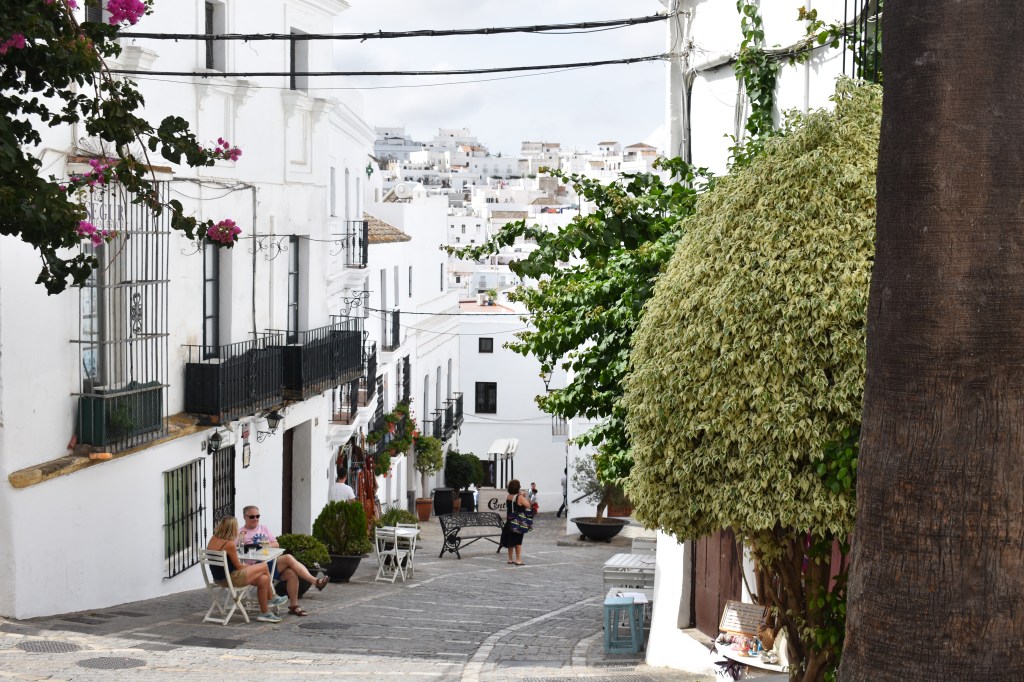
From the old town in Verja de La Frontera looking towards new town

The streets are narrow and steep but nevertheless, cars, taxis, scooters, motorcycles come through at terrifying speeds, often plastering pedestrians against the stone houses. In August they run bulls through the same streets. We wondered which was more dangerous – cars or bulls. But we soon found the best pedestrian friendly routes through the town.

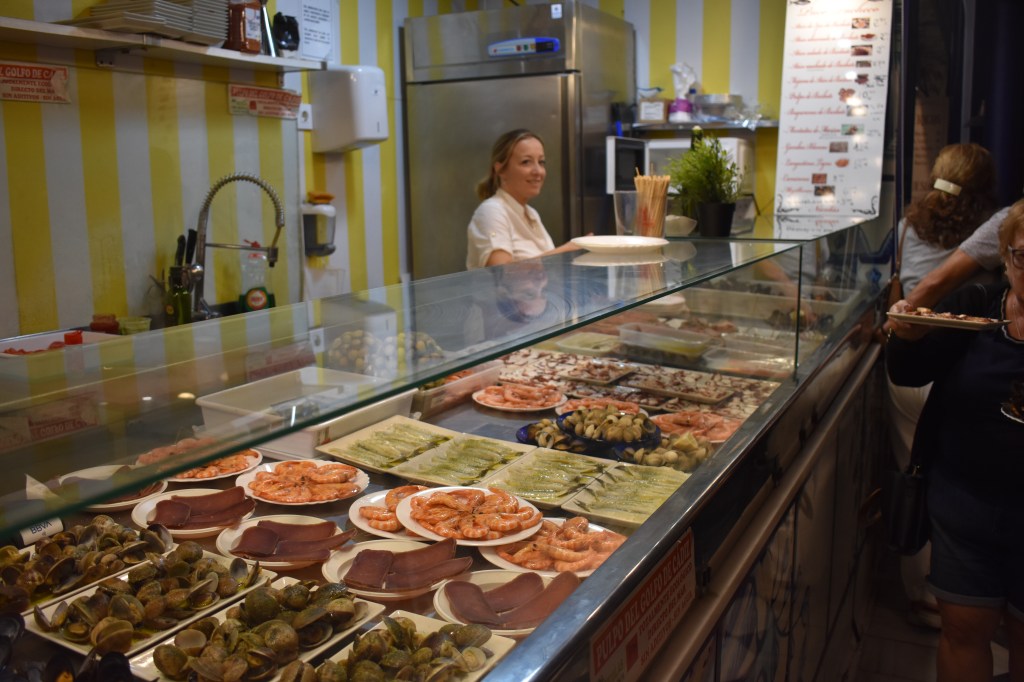
And from our foodie perspective, the town was heaven. There were plenty of restaurants, a number of big grocery stores, wine bars, cervecerias, pastry shops, cafes and a food market (a smaller version of the San Miguel market in Madrid) offering tapas from the vendors selling fresh seafood or charcuterie.

Seafood tapas at market

On the advice of two British ex-pats we found several amazing restaurants — El Jardin del Califa a standout for ambiance and food and El Quixote for its food and friendly staff. El Jardin del Califa sprawls on the side of a hill over multiple levels. Inside is a warren of passageways stairs and very narrow low doorways – sort of a reflection of the town. The main dining area is a lovely courtyard patio, the cocktail lounge has a beautiful rooftop terrace with breathtaking views. And the food – Morrocan! Tangines, couscous, dates and olives. El Quixote — wonderful fusion food and no ambiance, but lots of locals. Basically Spanish dishes with some very Asian accents — scallops with a kimchi cream sauce browned with a culinary blowtorch at the table, a stir fry of Iberian pork and vegetables served on Asian noodles. All delicious.

Night view from terrace at El Jardin del Califa

Not all small towns are food havens like Vejer de La Frontera, of course. But most will have some very good regional cuisine or specialties. We still dream about the fois gras in St Siffert, goat cheese in Apt, truffles in Motovun and oysters in Kinvarra.

Yes, we will continue to travel to the great cities and towns for their history, culture, vibrant energy, and gastronomy. But there will always be a place in our travels to think small.

Seville, Part 1

“Seville doesn’t have ambiance, it is ambiance”, wrote James Michener. And our introduction to Seville certainly supports that assertion. We spent our first two days with our guides rubbing shoulders with tourists from all over, dodging cars and motorcycles along the narrow streets and seeing the sights. Yes, Seville does have something special.

The tower of the Sevilla Cathedral

Like most travelers, we read guidebooks to prep for a new destination, talk to fellow travelers to get tips, but once there, often just follow our nose. We have learned, however, that a good local guide provides more insights than a guidebook and knows the community better than our fellow travelers. They invite you to see their towns through their eyes, with their insider’s knowledge, passion and pride.

We hired guides for two different tours of Seville — Penelope for the more typical tourist route. The Royal Alcázar and gardens. The Sevilla Cathedral. The Barrio Santa Cruz. The Jewish quarter. And the second day Maria led us on a gastronomy tour — because after all, we travel on our stomachs. A couple shops that offer local delicacies or traditional foods. The Triana Mercado. And several tapas bars. A brief dip into tasting sherry. We asked both of them for tips on where to get good local food, where to shop and what other sites to visit. Armed with their advice, we are ready to take on Seville on our own for the next few days.

Seville Cathedral and our local guides

In both cases we got much more than we bargained for.

First the food. Like many tourist cities, food is more expensive and often less authentic the closer you are to the major sites. We found good tapas restaurants off small squares a bit further away from the Seville Cathedral. We love the Spanish approach in many restaurants. Order a couple dishes and share them. Splitting or sharing meals is expected. Tapas bars often offer dishes in three sizes — tapas, media raciones, and raciones or plato (single, double or full order).

Upper left meatballs, pork cheek tapas sized and Russian salad media racine sized below

Tapas are often eaten standing at the bar or around a tall table in the midst of a crowd. As Penelope said, it is as though Spaniards want to feel the breath of others on our cheeks. And because the bars are so crowded, everyone practically yells to be heard. Intimate, yes. Quiet, no.

Many restaurants don’t even open for dinner service until 8:30 in the evening. But the tapas bars are busy starting with the lunch crowd in the early afternoon, then the after work crowd grabbing a snack (and a drink) a couple hours before dinner and they may stay full late into the night for the dinner crowd.

While food is always on our minds, our trip to Seville and Spain has not been entirely about food.

Yes, we are interested in the Spain’s history, but capturing it is complicated. The right wing in Spain would like you to believe that historic conquest of the Moors made Spain more Spanish, and keeping immigrants out now does the same. As you look around and see ancient palaces in the Moorish style built by people who lived here for hundreds of years, it’s hard to say to say their descendants aren’t as Spanish as anyone else. Identifying the Seville Jewish ghetto ignores the breadth of Jewish contribution to the city. And looking at the architecture built after the second conquest (“reconquista” is a term now appropriated by the right wing), it’s good to remember in the 14th century the Christian King Pedro I had the 10th century Moorish castle rebuilt by Muslin workman to capture both cultural traditions. Such is the complexity of history!

And if Seville is not just about the food, it is not just an historical museum. It is also a living city.

The Metropol Parasol, informally know as The Mushrooms, was built as an urban renewal project a dozen years ago—controversial both for its design and changing (some would say destroying) a decaying neighborhood. An elevator ride for 10€ takes you up to the viewing platform. From there you climb up to walk around the top of the structure with incredible views of the city. Exiting down the flight of stairs you go past placards describing how many bolts were used, how much Finnish pine was used (and trees replanted) and other points of civic pride. The largest wooden structure in the world!

The Mushroom

From the top of the Metropol Parasol, we counted over 30 churches, monasteries and convents. No wonder at 9:00am each morning the church bells ring and ring and ring.

Seville’s Cathedral

Seville is know for its religious processions, where during Holy Week, or in honor of a church’s patron saint, members of neighborhood group carry floats depicting religious statutes are carried from their home church to the cathedral and back. A process which can take hours, if not the full day. While we were not there for Holy Week, we did stumble across a training session.

Clockwise from bottom left, first team stopping, getting out, second team getting into place and lifting float.

As we continue to explore Seville, we will continue to hear Maria and Penelope in our ears, reminding of the lessons they shared with about their home.