This was the question we got from the young grocery clerk practicing his English in Ontinyent, Spain. Nobody comes here, was his implication. Another clerk had asked us the same thing in the same tone. And it was actually a very, very good question!
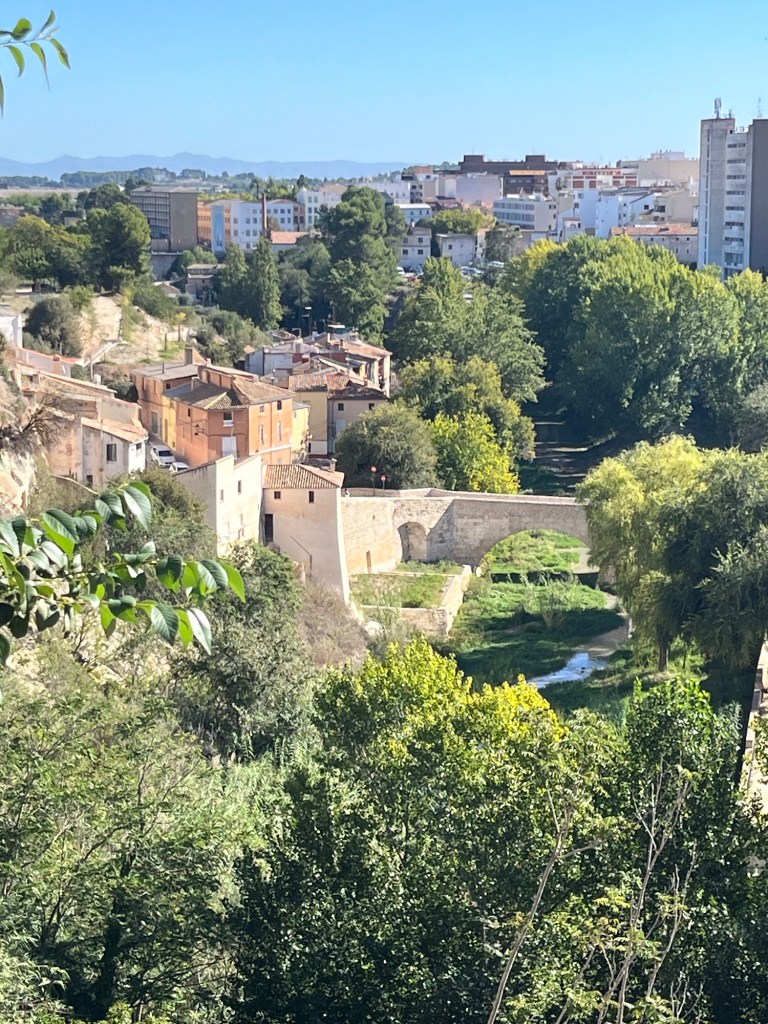
Ontinyent (in Valencian) or Onteniente (in Spanish) is a rural county seat in the Valencia province of no real historical or touristic interest. Population: 35,000. Yes, like all towns and villages in this area it has a past dating back to Moorish times and even before. It has a sort of cute medieval old town surrounded by Franco era apartments. Its only real tourist claims to fame are a series of clear pools on the Clarino River called the Pou Clar. People swim there in the summer, but the parking lot near the pools is closed in the high season and you need to hike about a mile and half to get there. The pools are surrounded by terraced hills of olive and orange trees. You might think picturesque but light industry, agricultural supply and farm equipment shops and rural housing projects kind of ruin the pastoral views.

So back to the question, why are we spending two weeks here?
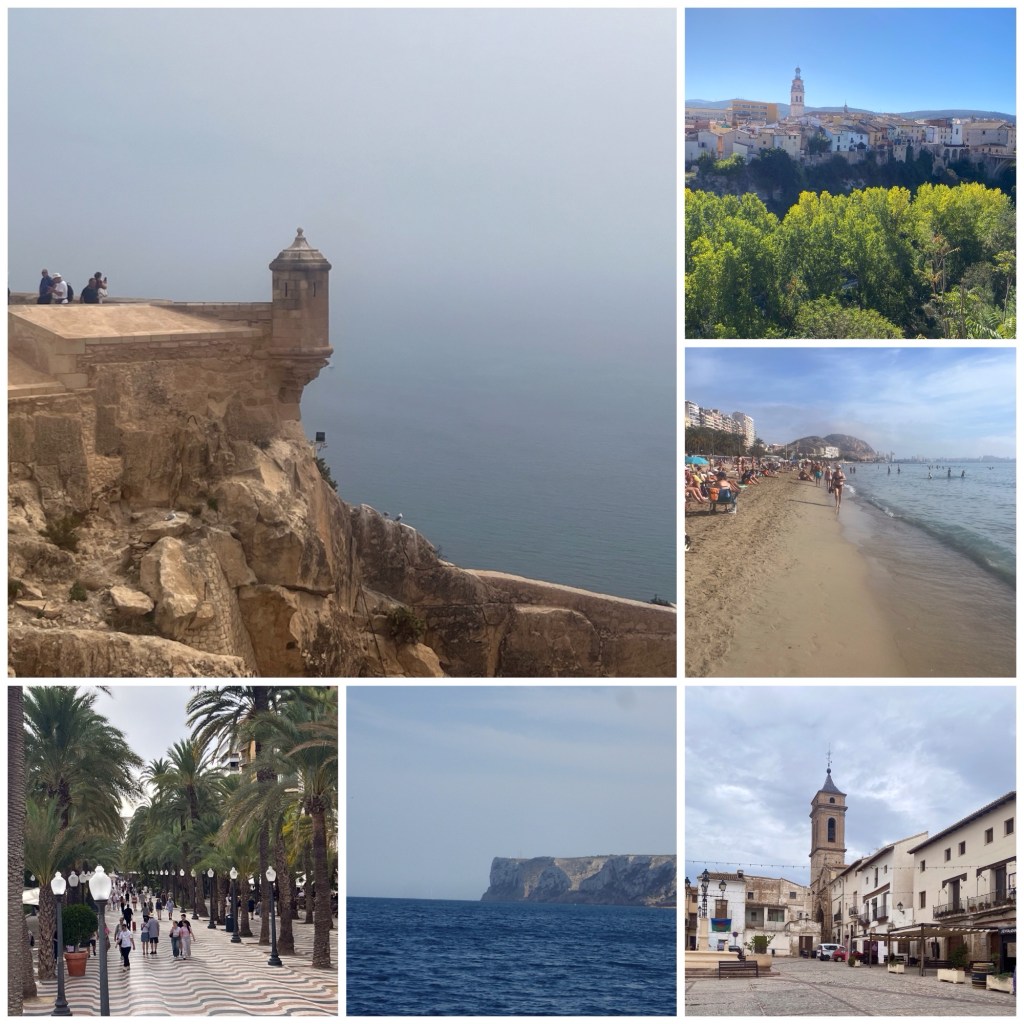
In part, it was exactly because we wanted to be off the beaten path, away from the heavily touristed towns and cities, but close enough to make day excursions to those sites. And it turns out Ontinyent is a perfect location for exactly that. Valencia—one hour. Alicante—one hour. The seaside resorts of the Costa Blanca—one hour. The historic towns of Denia, Gandia — 40 minutes. The Albufera lagoon and El Palmar (the home of paella)—one hour. The quaint hill town of Bocairent—15 minutes. And one of the best, the castle hill town of Xativa—twenty minutes. National parks and hikes nearby. Kayaking on the Mediterranean. More than enough to keep us busy for two weeks.
Of course, a rental car is an absolute necessity. And driving in a foreign country can be stressful. But the good news is that the roads and freeways here are amazing—well maintained, excellent signage, and not very crowded. Spanish drivers are on the whole some of the most courteous we’ve encountered. With a good GPS system, we never got lost—even in the town and city centers.
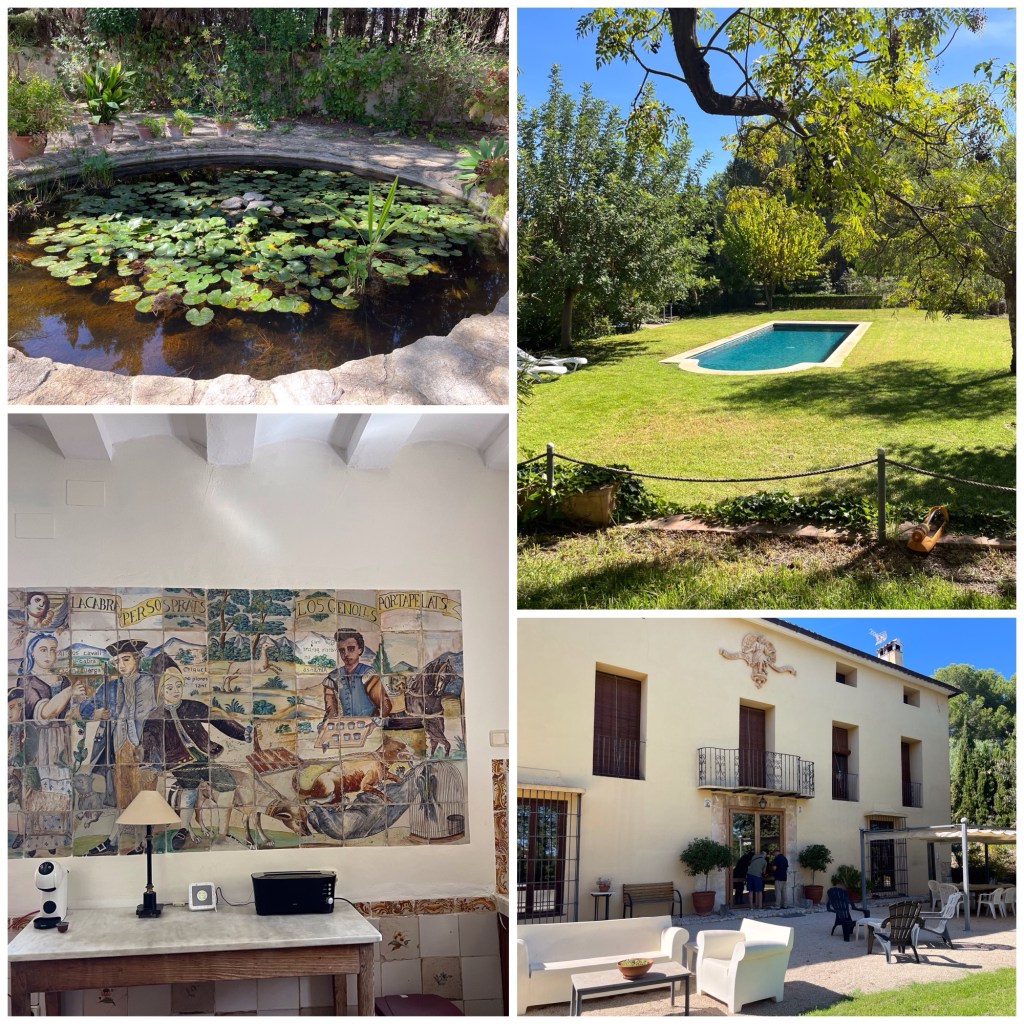
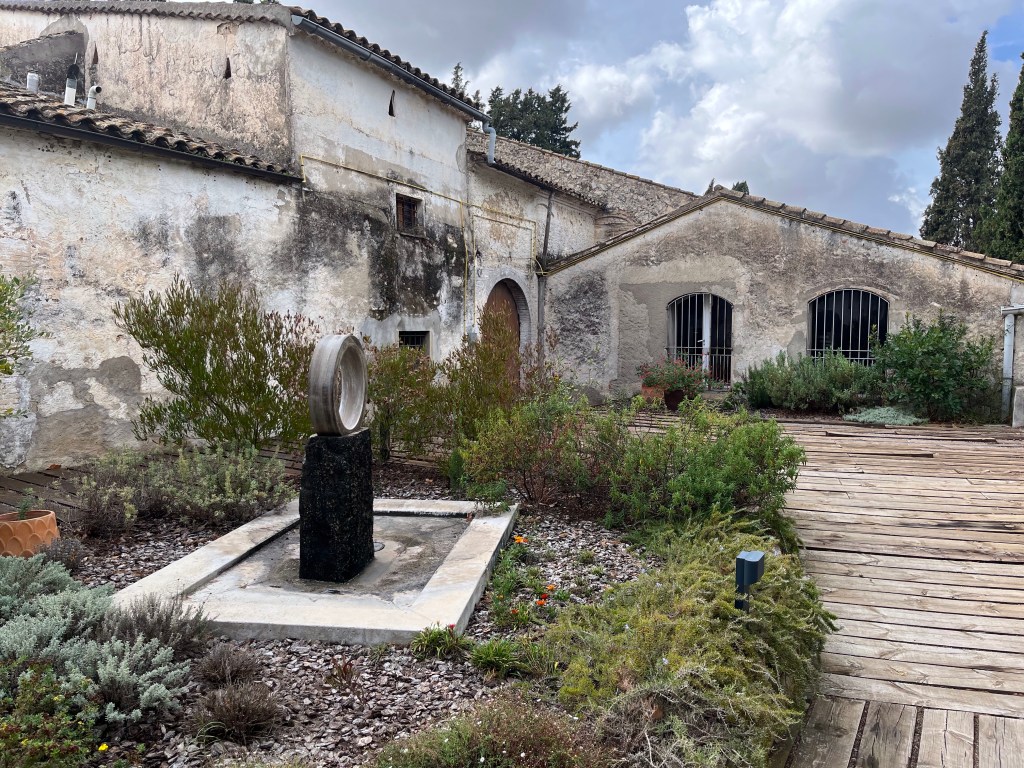
One other huge draw—our manor house. It really was a big, big factor. We rented the house (an AirBnB) for two weeks just outside Ontinyent. La Baronia de Dalt. It is a grand old manor house with large, lovely grounds and a swimming pool. Five bedrooms, three en-suite. 5 bathrooms. AC. Large dining room, big kitchen and two large outside patios for al fresco meals. Lots of art work and beautiful tiles. And all at price you’d be lucky to pay at a Holiday Inn Express in the US. We were two couples, but the house could have easily had four couples or one very, very large family.
Still with all the charms the manor house had, the real attraction was the surrounding sites. A bit of the history of the Romans. Then Visigoths. Obvious remains of the Moors, and Christians in the Middle Ages. Often in the same site.
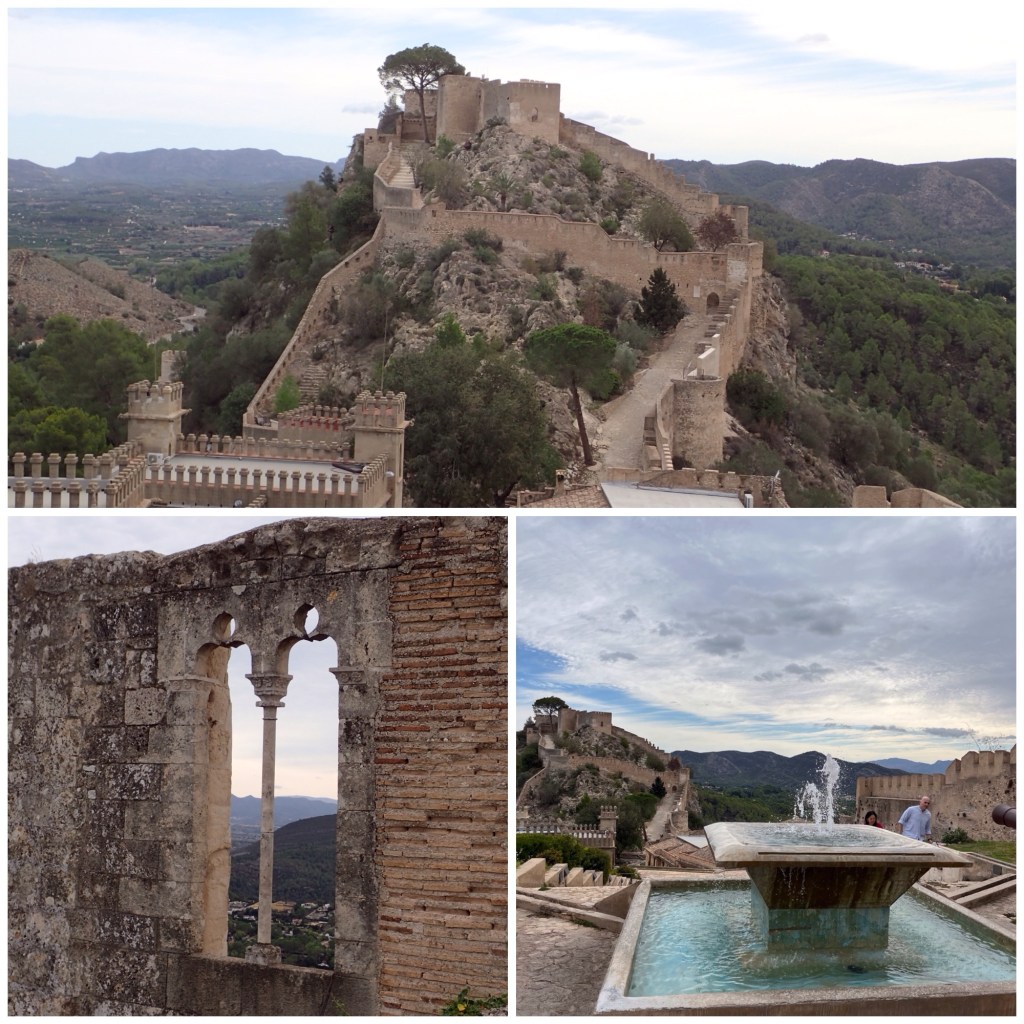
Our favorite place nearby is Xativa, a short drive away. The huge castle complex high above the town dominates. Thankfully, you can drive to the top although locals seem to use the 30 minute hike up to the top as an exercise routine. It is a defensive marvel. Steep cliffs on all sides. The Romans saw its value. Hannibal used it in his war against the Romans. The Moors expanded it. The Christians continued to use it until modern weapons in the early 1700’s and several earthquakes made it obsolete.
The medieval town far below is famous for one family—the Borjas. Two Spanish Popes were born here. Calixtus III and Alexander VI (father of Lucretzia and Cesare)—both with less than stellar reputations. Were they really that bad or were they simply victims of an anti-Spanish Italian propaganda campaign? Anyway, this is a pro Borja town.
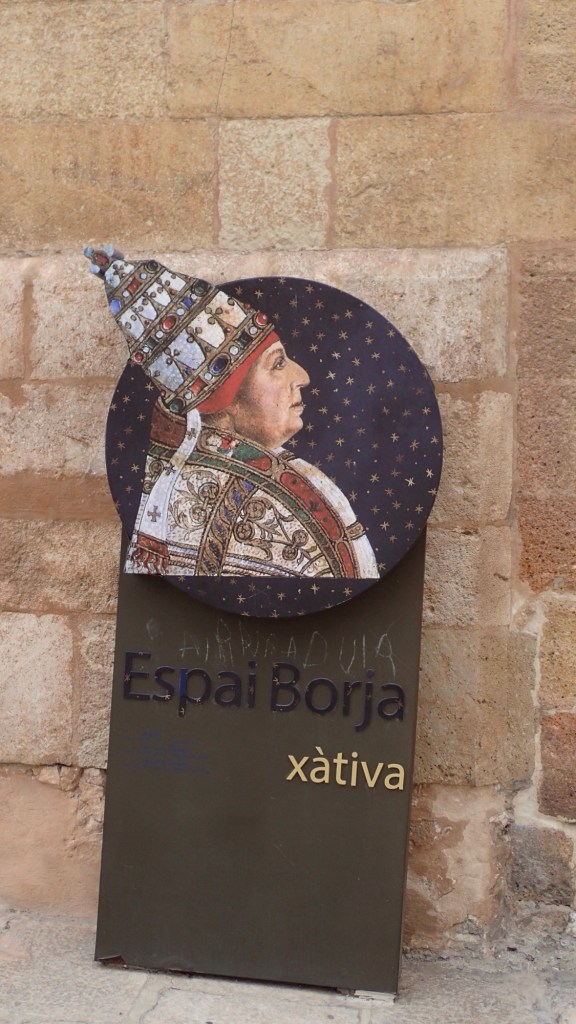
The old town is delightful to wander around. On Tuesdays and Fridays there is a huge outdoor market that takes over several plazas and streets.
And there are plenty of top-notch restaurants hidden away in these little towns — we were surprised at the number of Michelin stars within a half an hour or so, including one where we had probably the best meal of the trip.
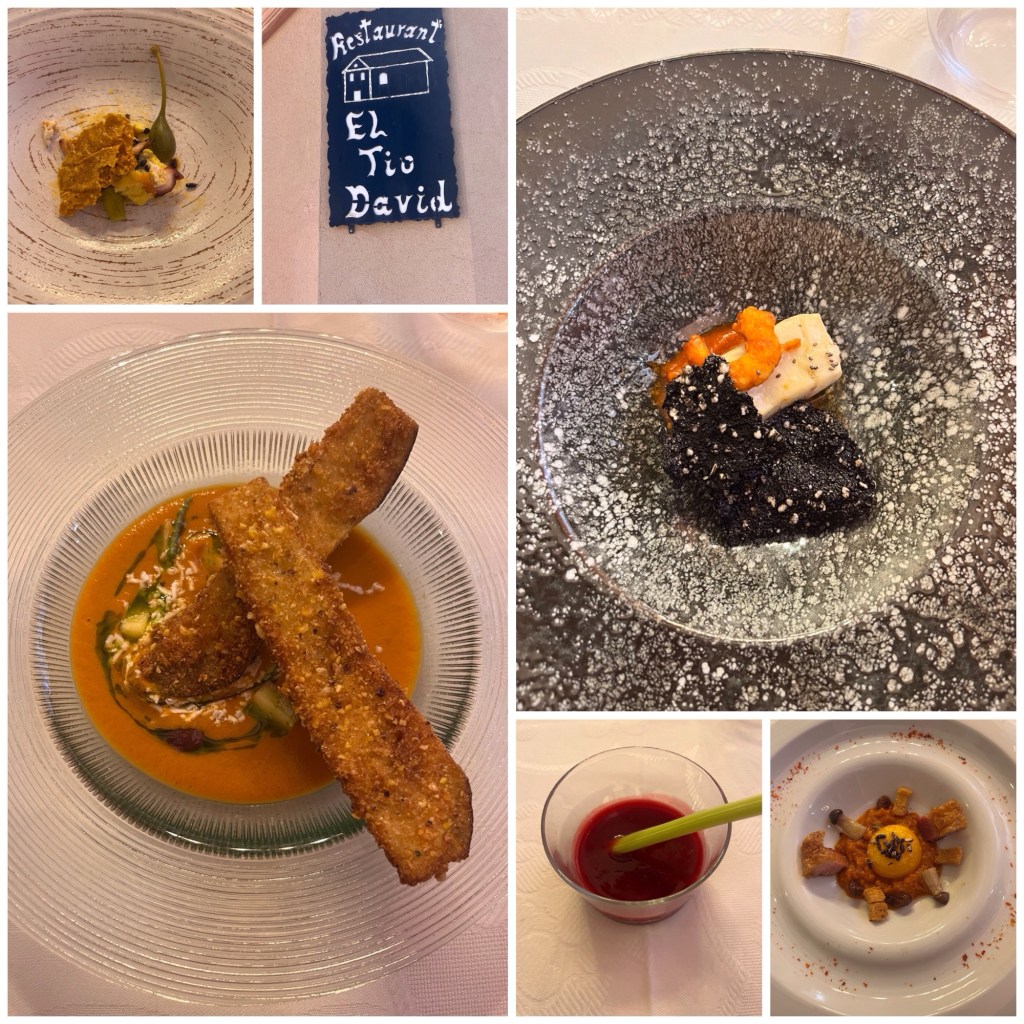
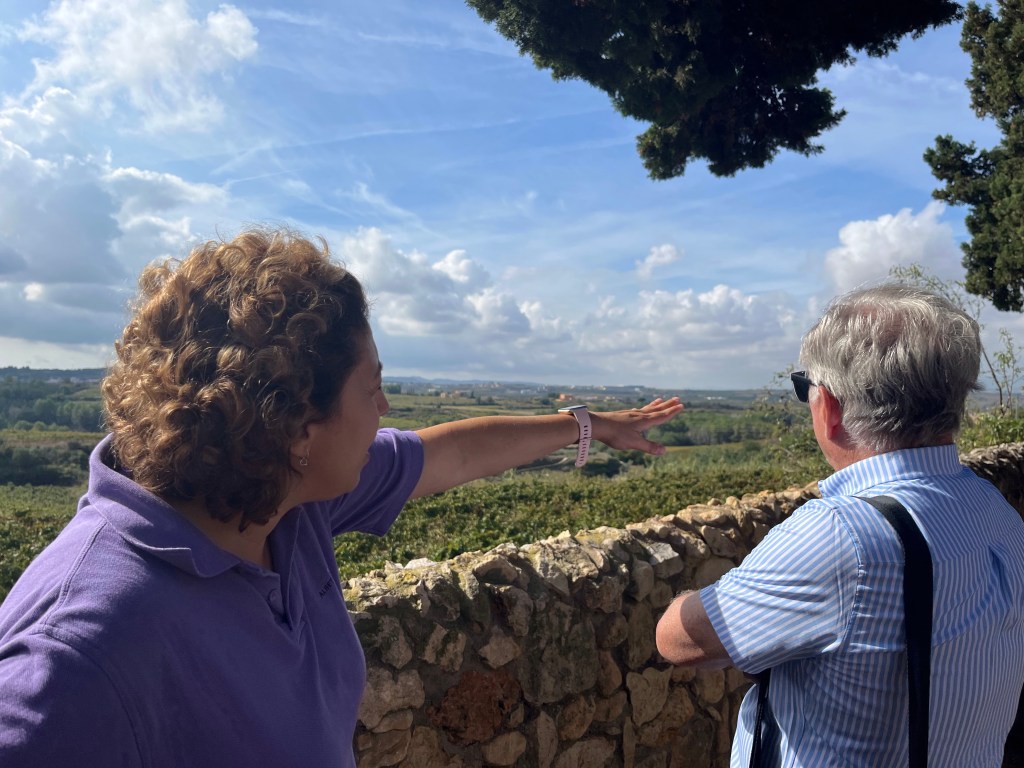
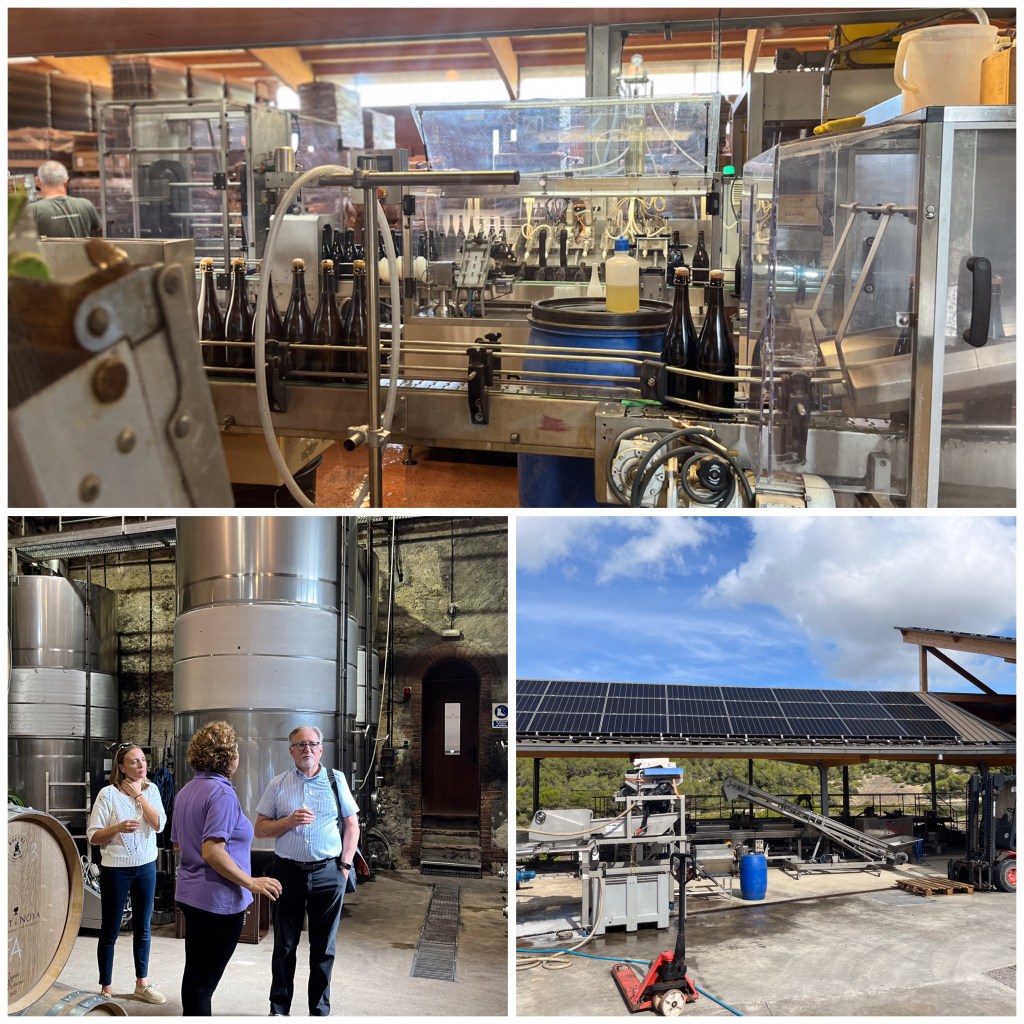
The area is also known for its excellent wines—not as famous as Rioja or Penedes—but very good and at prices that astounded us. A glass of excellent red at restaurant was often less than bottled water. The local grape, bobal, produces a fine red wine comparable to a Cotes du Rhône.
So “Why here??” Great sightseeing, beaches, hiking, wonderful food, good wine, fewer crowds, great accommodations, and, by the way, perfect weather in October. We think the answer is pretty clear.


 Chasing the Good Life