Brittany on Our Stomachs

Anybody that know us, or reads this blog, knows we are always interested in food, first and foremost. So as we started this trip over five weeks ago with a food tour in Bordeaux, we ended the trip with a food tour in St. Malo, Brittany.

Our guide was from Normandy, whose specialty was, not surprisingly, the beaches of Normandy. He said he was happy do our food tour, one he loves, but doesn’t get to do that often. We then proceeded to go on a whirlwind shopping trip with him.

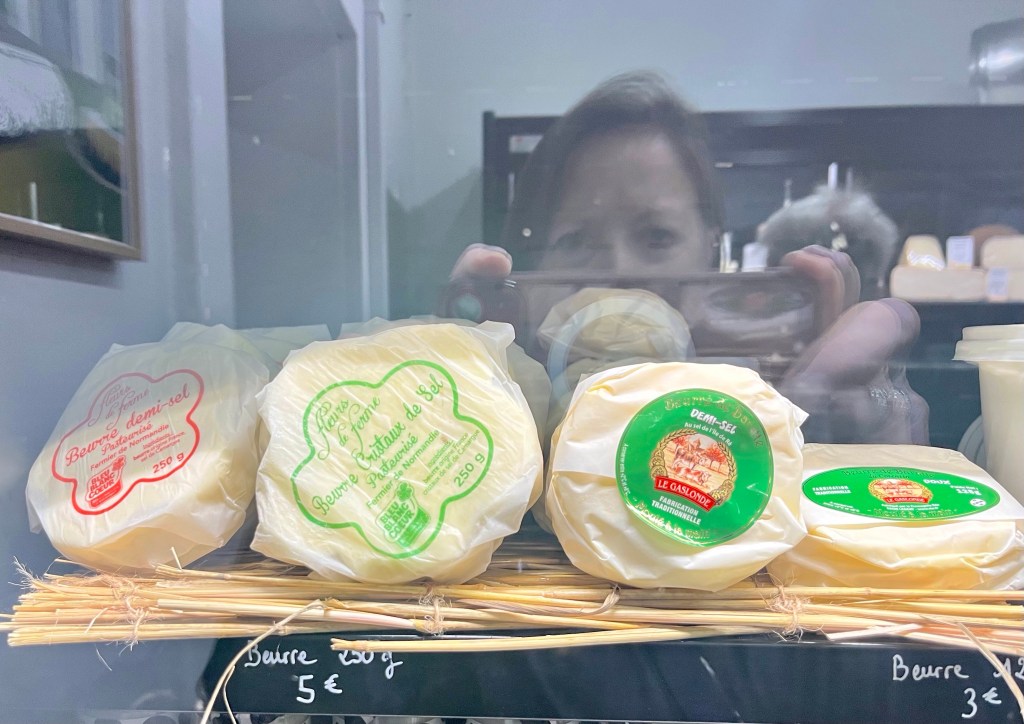
First stop was a cheese and butter store [http://www.lesfromagersmalouins]. Brittany is known for its butter, crammed with as much richness and salt as possible. We had tasted good Breton butter from a supermarket in St Cyprien. Definitely better than anything at home, including the Amish butter we splurge on during the holidays. Unfortunately the store in St. Malo was out of Breton butter so we had to settle for Norman butter. The staff asked me if we wanted deux butter (little salt) semi-sel or regular and nodded approvingly when we bought the entire inventory of “full salt” butter — 2 packages to take home to savor.
He also guided us to try several cheeses to eat with a baguette and espresso before we continued the tour — a brie (with a layer of a curry spice mix that started as a medicinal remedy. Unfortunately, our quest to find the spice was unsuccessful despite checking in several shops). Then a Timanoix (a semi- soft cheese with an edible rind washed in a walnut liqueur) and finally, a Camembert, again a Norman cheese. Did we detect a cultural bias?
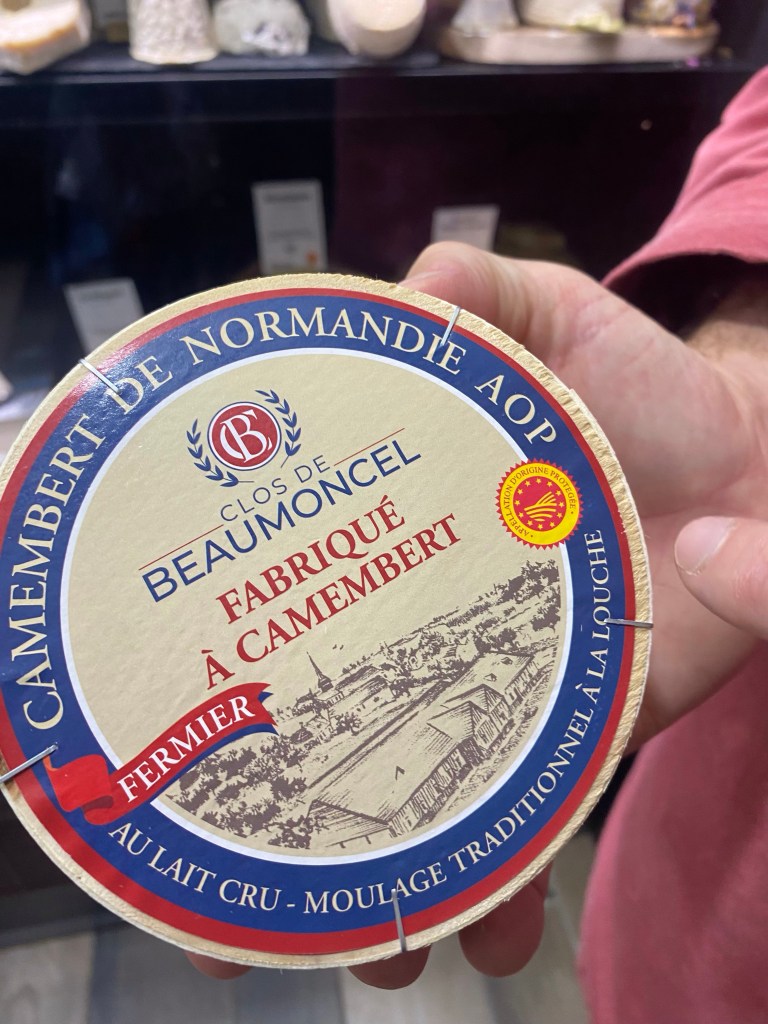
We also opted the take some cheese home to enjoy later — a great Roquefort, some more of the Timanoix and the curry Brie.

Fortified with espresso and a “light” breakfast we headed to a spice shop. St. Malo has always been a trading center and home to privateers and pirates, and unfortunately slave traders.

Window display in an antique shipping crate

It was the center the East India Company’s continental trading post. Epices Roellinger, started by a retired 3 star Michelin chef and now run by his family offered a mind boggling assortment of spices. The selection of peppers alone — Vietnamese, Cambodian, multiple Indian, Sichuan and many more overwhelmed us. All with a different degree of heat and different tastes. We bought a red black pepper from Cambodia simply because it seemed the most unusual, but still fit within the foods we cook at home.

The choices of a dozen or so different vanilla beans (we smelled several and were amazed at the differences) blended curries, shelf after shelf of other spices and variety of dried herbs were too much to take in. We needed hours here to take full advantage of the options.

Of course, Brittany is famous for its oysters. We have been sampling them since we arrived in Nantes almost two weeks ago. But the size of the operation in Cancale — just one of many such operations along the Brittany coast — was astonishing.
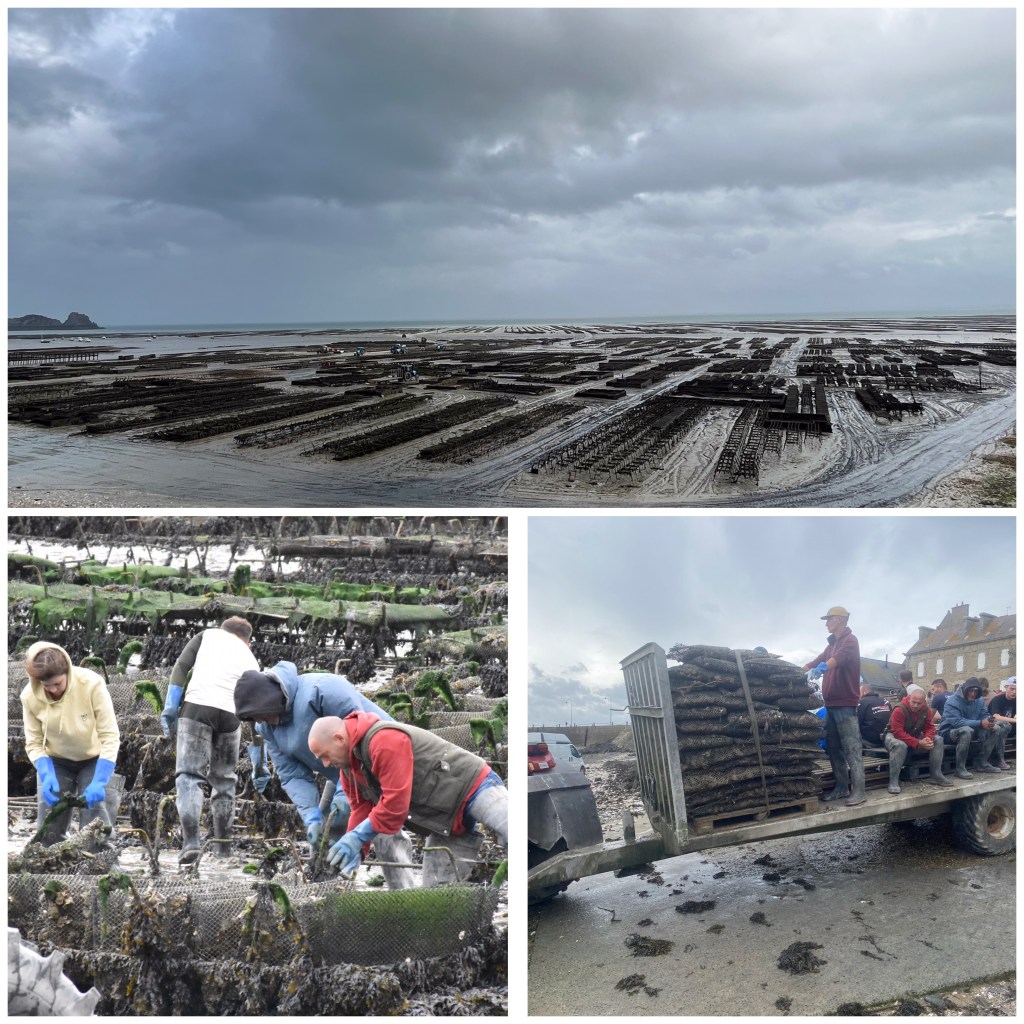
The bags of oyster are cleared of seaweed, loaded onto trailers and moved into different areas for exposure to different parts of the sea, we were told.

Just above the oyster beds, a collection of striped tents offered local oysters for sale, shucked right in front of us. Of course, we had to share a plate of oysters — a variety pack. Unlike at home, the smaller oysters are considered a rip-off (too little meat for the price) and French connoisseurs prefer the four year old #4’s. Actually the #4’s were pretty small and delicate. We joined the workers on the steps by the beach, slurping away and tossing the empty shells for the seagulls.
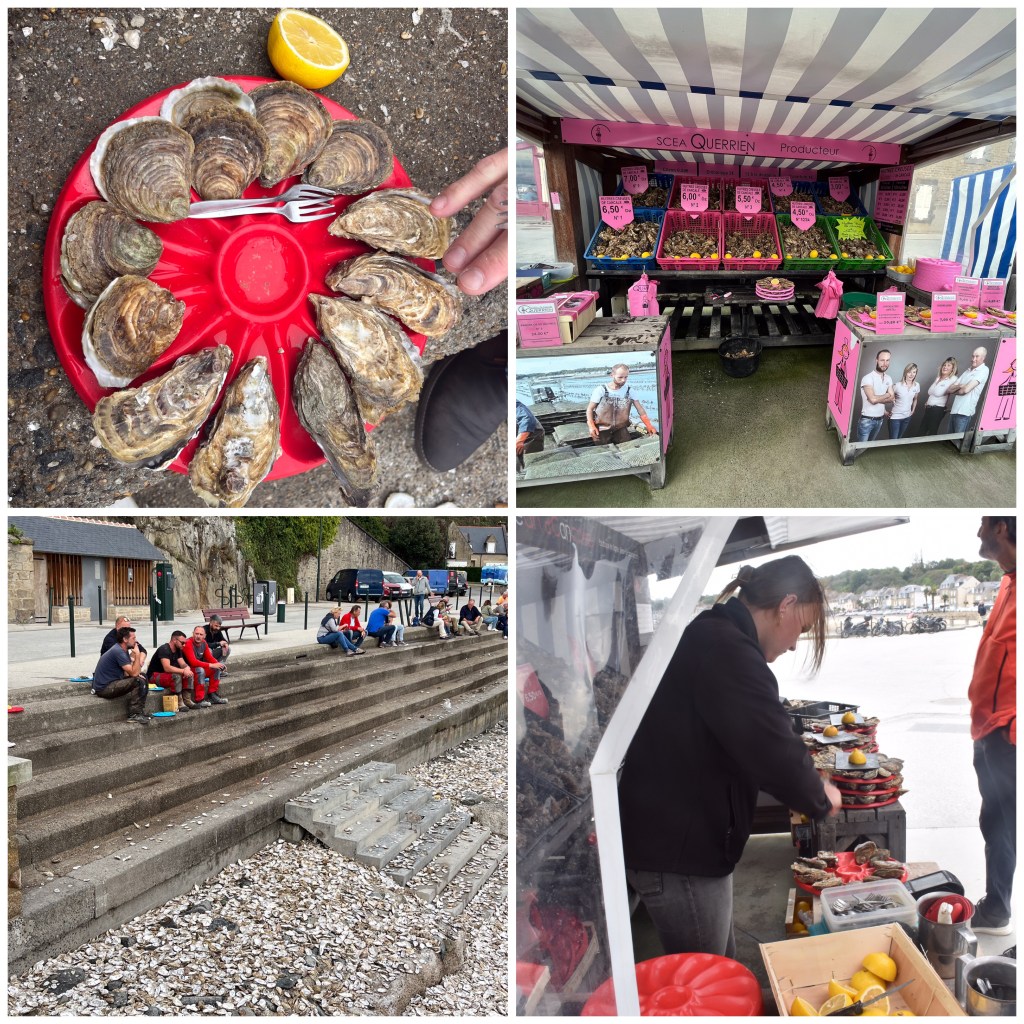
Then we headed across the street to lunch.
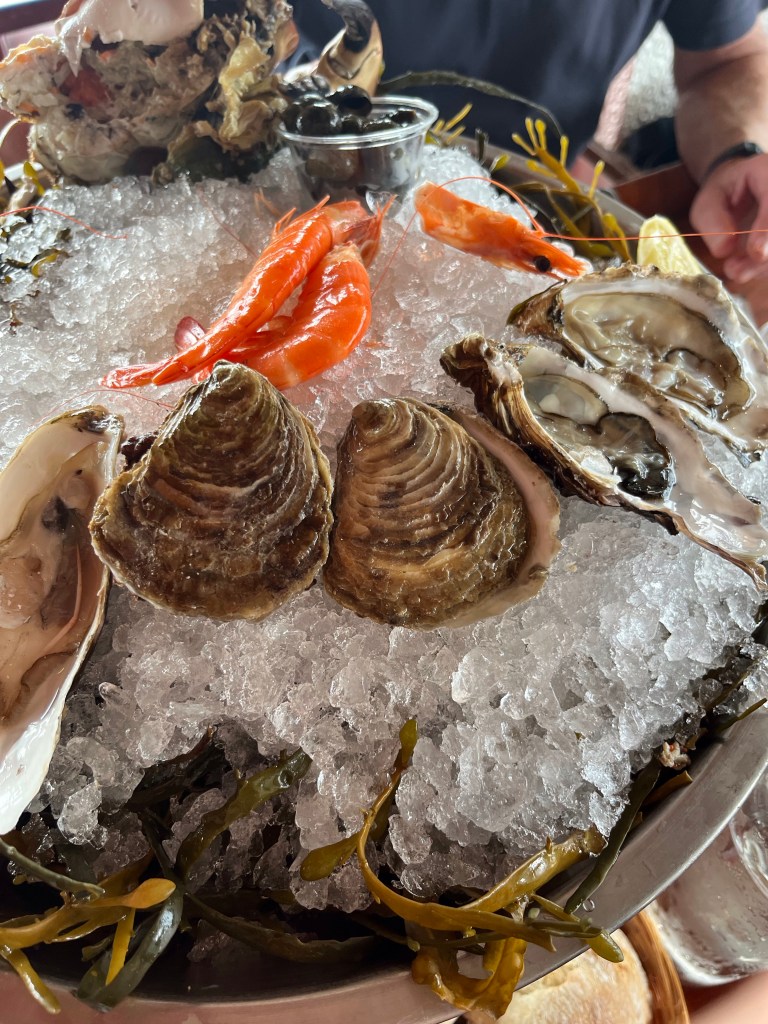
Unfortunately we had half devoured the platter before we remembered to take a picture — langoustines, more oysters, a local crab, periwinkles, cockles and more.

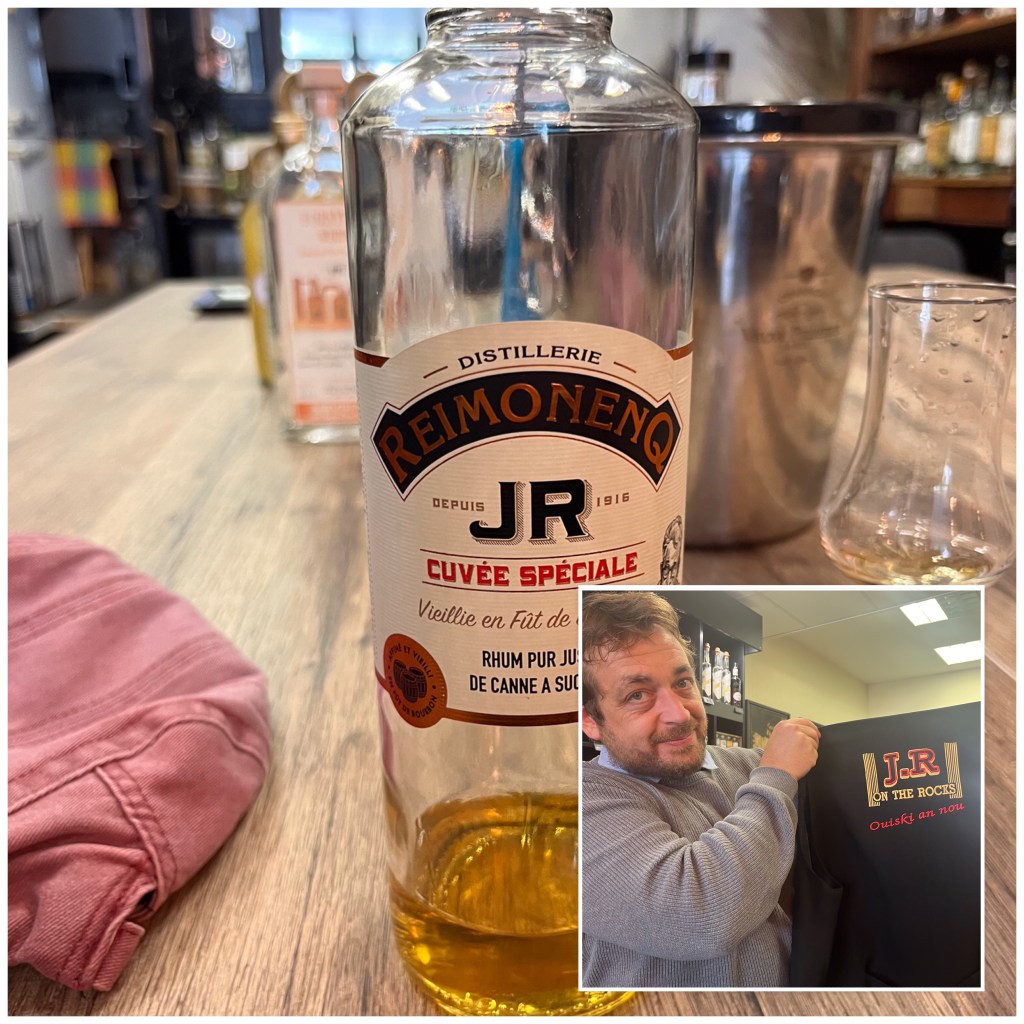
Stuffed from a platter of fresh seafood, we headed for a rummery. Yes, a rum store—filled with artisanal rum from the French West Indies.[https://www.officinearhum.fr/]. What we didn’t expect was a lesson in rum tasting (quite different from wine tasting) and a locally produced sipping rum named after the character JR from the TV show Dallas. We had to buy a bottle. Wish we had more time to talk more with the owner-distiller whose shop resembled a science lab with hand labeled specimen bottles stored in an old apothecary cabinet. Several small casks of spirits being aged. A delightful man with a clear passion for rum! If you’re ever in St Malo, look him up.
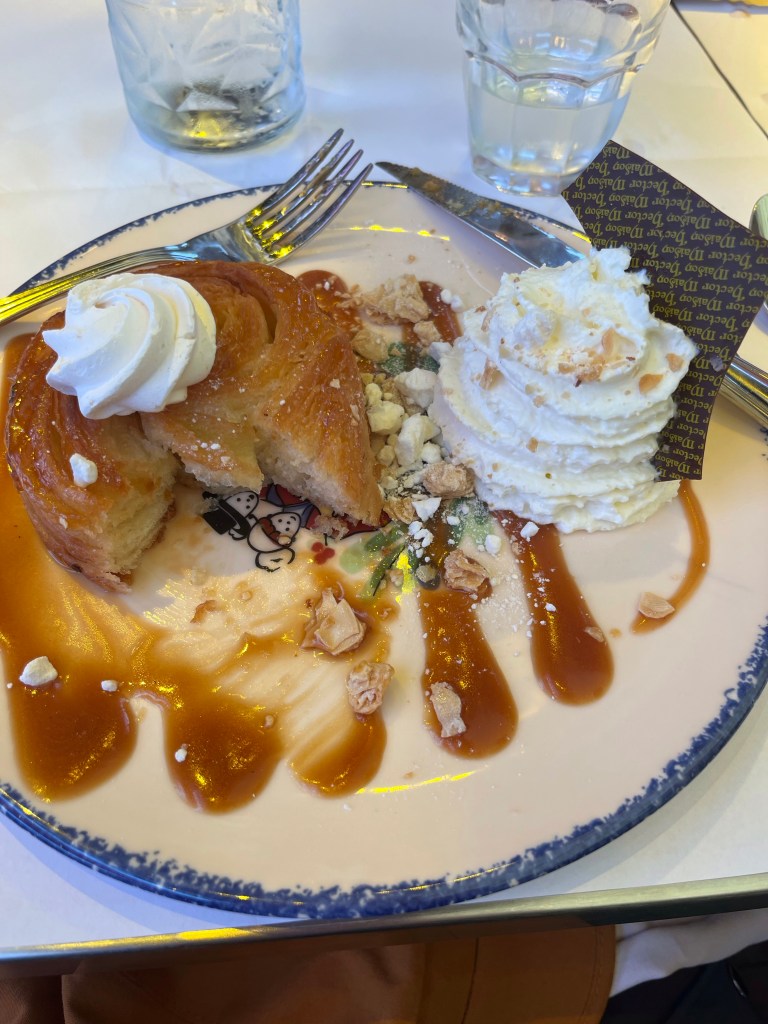
With full stomachs and a bit of rum, we were ready for a nap. But we had one more stop on our food tour. We had read about a Breton specialty, Kouign-amann. Butter and carmelized sugar — what’s not to love. Again, the food tempted us before we remembered to record its beauty. A cross between puff pastry, a croissant and a cinnamon roll.
Needless to say, we skipped dinner that night.

Between these various treats we learned a lot about the region and France. Our guide, a former teacher, proudly told us about his one daughter studying at a vocational school to become a jockey and horse trainer. His other daughter was on track to become a dancer or a veterinarian! Typical eleven year old anywhere! He also provided a historical context to the towns we had visited — St Malo, Cancale, Dinard — which were all largely destroyed like much of the Breton sea coast after the allied landing at Normandy. Their pre-war appearance was largely replicated in the postwar era. And, of course, we talked politics — he’s no fan of Macron, France’s president, and politicians in general, except for DeGaulle. In turn, he wanted to know more about tenure for teachers and how our schools worked. [https://www.normandytour.fr]. He had learned his English as an exchange student in the California and on several subsequent trips to the US.

That’s one of the things we like about a food tour — as much as the food itself — talking while you share food and sometimes a meal gives you a chance to build some mutual cultural understanding.
Bordeaux in Passing

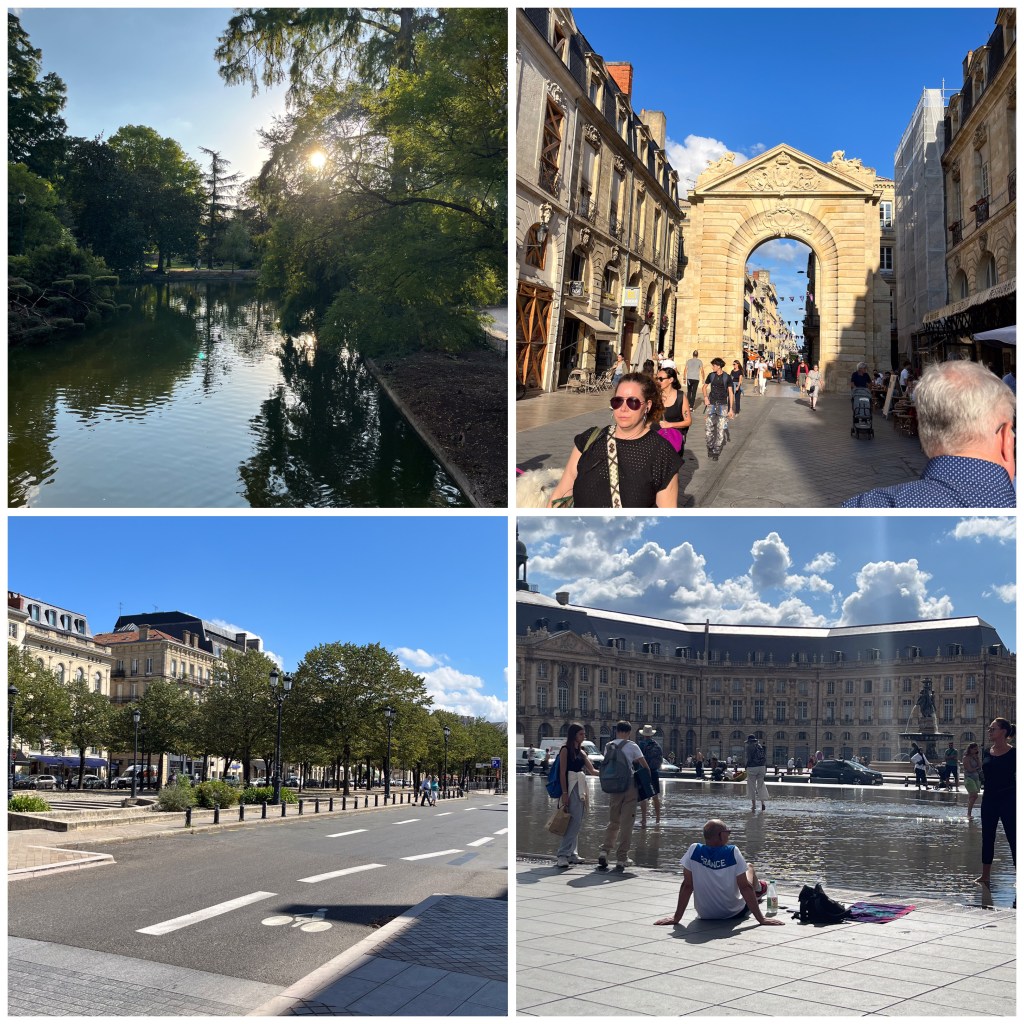
On our way to spend three weeks in the Dordogne, we decided to stop over for three days in Bordeaux to get over jet lag and get reacquainted with France.

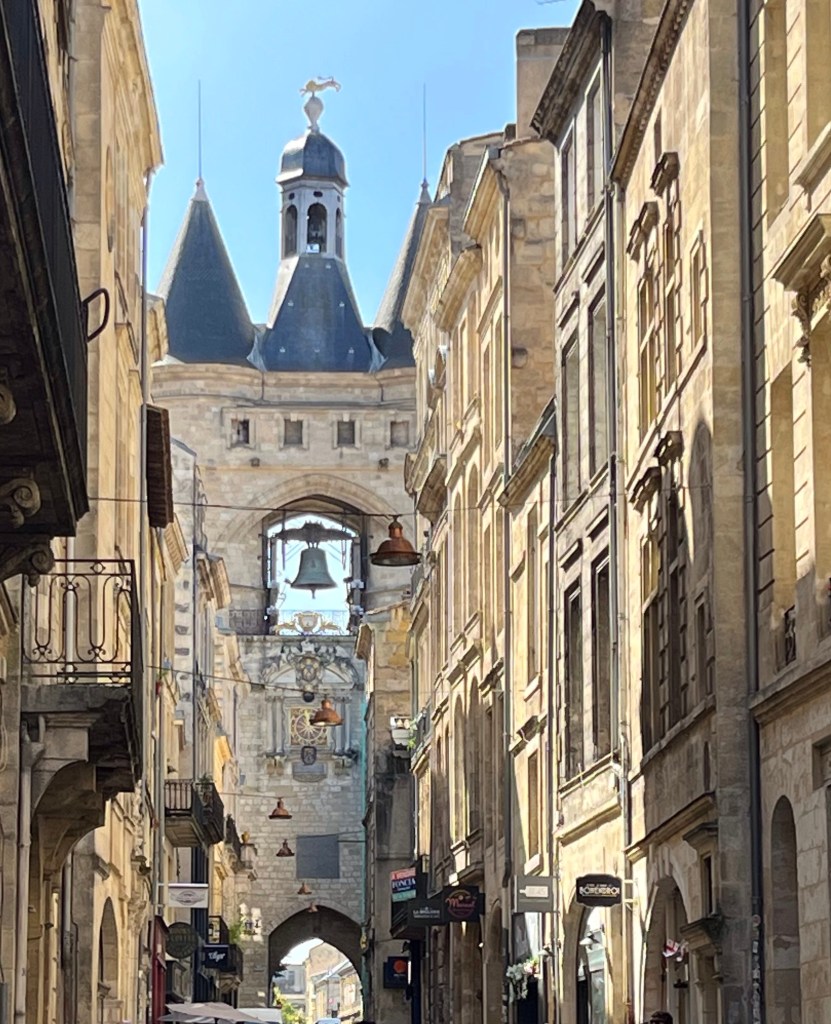
One of the gates to the city from the Gironde River

We’ve been to France a number of times, but never the southwest. We had heard good things about Bordeaux—walkable, big, but not too big, lots of world heritage sights and museums, great architecture, great public transportation, a long and fascinating history, good restaurants and, of course, wine. Wine institutes, wine museums, wine tasting coops, wine schools, wine tours, wine stores and wine bars on every corner.

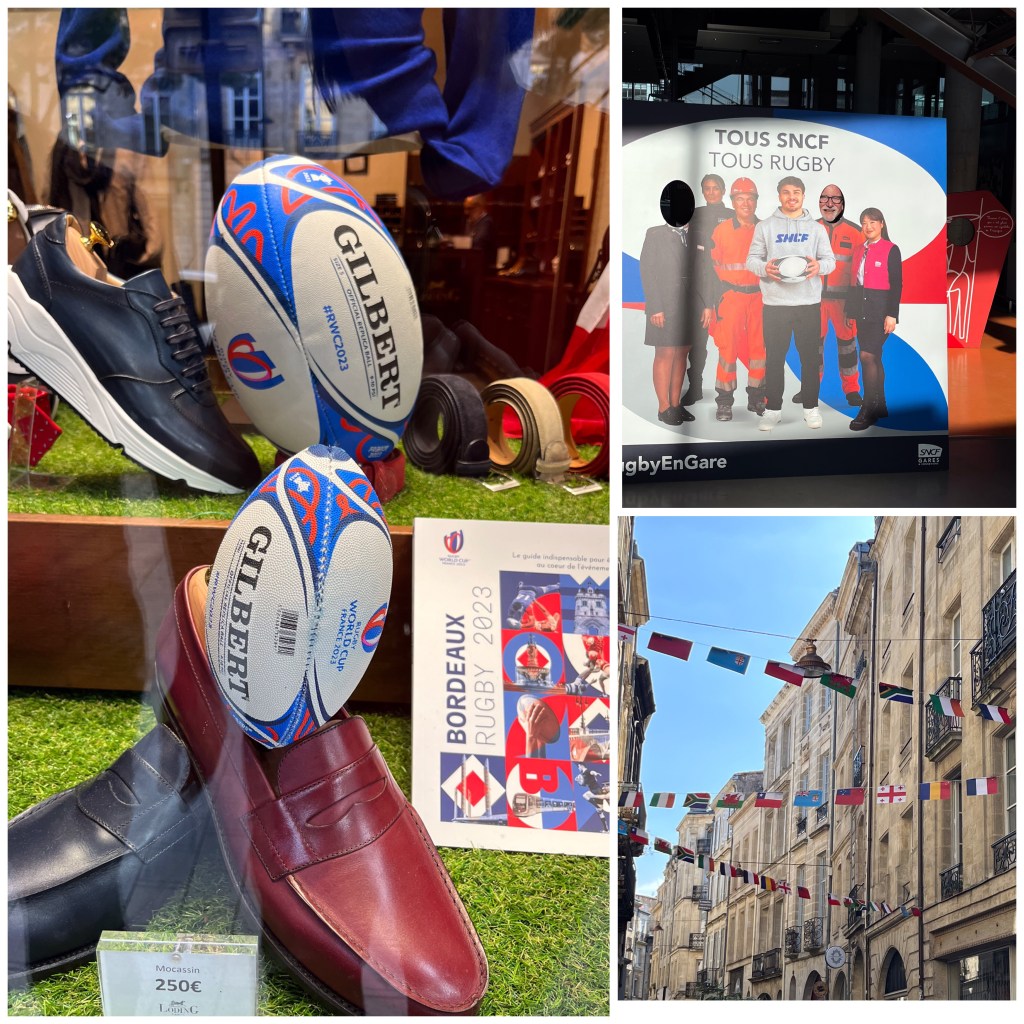
Yes, three days is really just a passing glance, a superficial look, but enough time to get some initial impressions and one big surprise—finding out Bordeaux was hosting matches for the once every four years Rugby World Cup. A huge deal, similar to the soccer World Cup, the event brings in tens of thousands of crazed rugby fans.

The reality hit home our first dinner in the city. Jet lagged, we were looking for an early dinner around 6:00 pm, and learned very quickly that restaurants opened between 7:00 and 8:00. Worse yet, most were already booked for that evening, largely because of the rugby fans. We finally found a restaurant that was open and had seating called Risotto—which, oddly enough, only served lasagna. And the lasagnas were named after film stars like Lasagna Al Pacino or Lasagna De Niro. Cutesy names aside, the food was really very good. We struck up a conversation with two Aussies and Welshman next to us, who, no surprise, were here for the rugby. The Aussies were traveling all over France to catch the matches. The Welshman was here for one or two matches. For us, the conversation was primer on which teams were favorites and everything rugby. It was a delightful evening and fun to see their passion for the game.

The next day, wandering around the city, the rugby paraphernalia was everywhere—flags of the teams hanging in every square, window displays featuring rugby gear and footballs, pictures of the teams in store fronts. Major tourism dollars were flowing through the rugby pitch into Bordeaux.

As we wandered we had to dodge holes in the sidewalks, construction barricades and detours. We never quite figured out what was going on — a city-wide facelift for the anticipated spillover crowds from next year’s summer Olympics? A post pandemic economic boost for the construction trades? Or just routine late summer repairs? It did give the city a somewhat rough feel until you looked beyond the mess to see through the windows into upscale apartments, fine clothing stores and small artisan shops — or paused to look at the broad avenues and handsome parks.

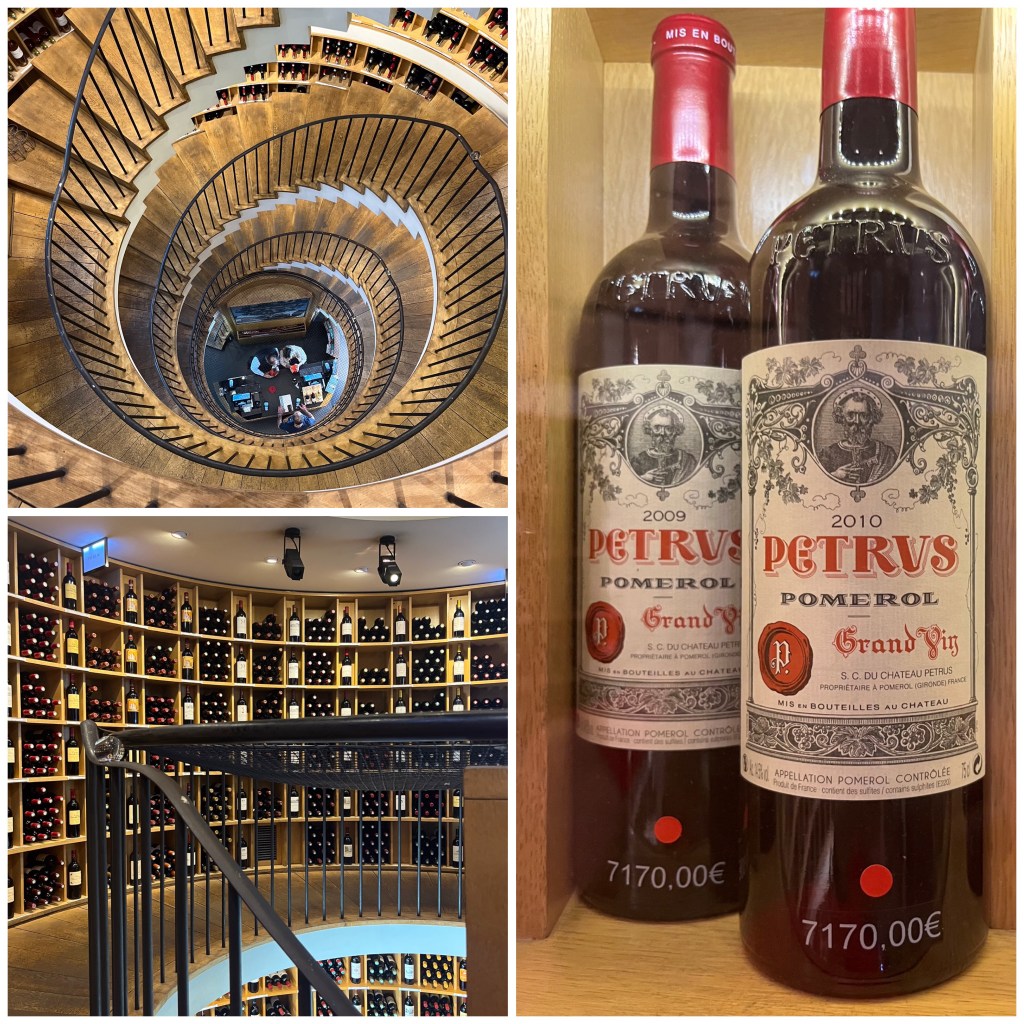
With limited time in Bordeaux, we chose to focus on food and wine. First stop was a famous wine store, L’Intendant. Know for its spiral staircase and four floors of Bordeaux wines. Quite the temptation, but we resisted, knowing we were headed to the Bergerac region, less well known and similar varietals and much cheaper prices.

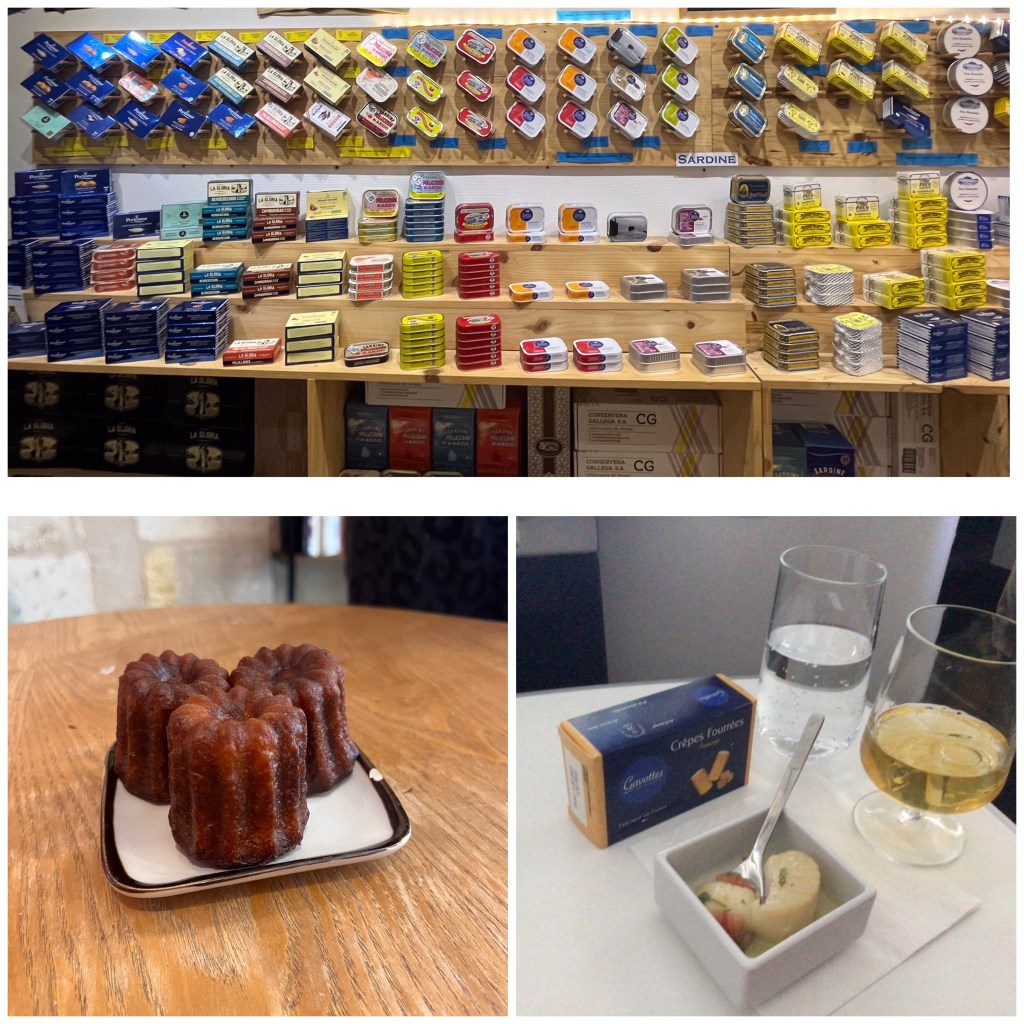
We did, however, make time for a food tour of regional specialties. No surprise there for those who know us. And as we have found elsewhere, a food tour often provides a bit of history, a bit of culture as well as a lot of good tastes. Canelés, a rum flavored pastry reflects a bit of the French colonial past in the Caribbean and makes use of the extra yolks when egg whites were used to clarify wine in the 18th century. Some of the food we tried is more modern in origin like the Dunes Blanches, a kind of cream puff filled with “air cream” said the English translation. Both were our kind of sweets — interesting and not cloyingly sweet.

But without a doubt the highlight of the food tour were the slices of cured duck breast we sampled with an array of cheese (a soft goat cheese, a Comte and a walnut washed cheese), bread and wine. Or maybe the jams and jellies created to serve with foie gras and charcuterie plates. (We will be sharing jars of the grape and Sauternes jelly and the fig and walnut jam with our friends in the coming weeks.). Thanks to https://www.bordeaux-foodtour.com/ for a fabulous day!

And probably the most unusual stop on our tour was a small store devoted to canned fish — an international collection of curated tins of fish and jars of rillettes — tuna, sardines, mackerel salmon and more. Our niece back home would love this place.

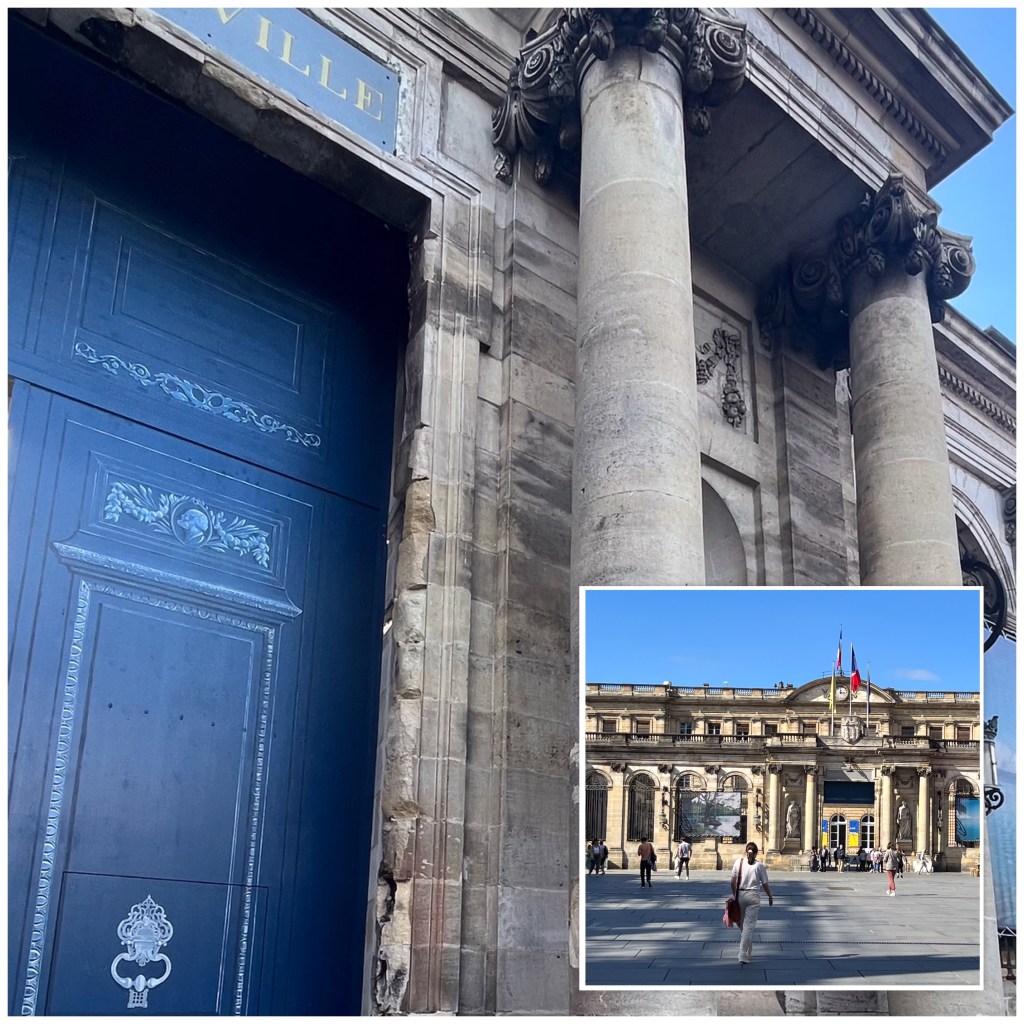
As we walked around the area the city, our guide pointed out the cathedral where Eleanor of Acqutaine married her first husband in the 12th century, where a statue of Louis XVI had once stood before the revolutionaries tore it down in the 18th century, and where just this year protestors had burned down the centuries old huge wooden gate at the Hotel de Ville (city hall) upset the retirement age was being raised to 62. Such is the history of Bordeaux.

The cathedral

Medieval doors to city hall must be repaired after damage in the spring 2023 protests

There so much more to see and do in Bordeaux. We only had enough time to scratch the surface in passing, but enough time to add Bordeaux to our “we gotta get back there” list.

Eating Madrid

Well, first impressions after a night and a day or two. Madrid is amazing—seems more lively than Rome, Paris, or London, more restaurants per acre, more potential foodie experiences than any place we’ve been! “Living in the streets” is their motto and it shows. They say “an army travels on its stomach”. Well, so do we. Maybe jet lagged fogged impressions but seems this is a city we are going to love.

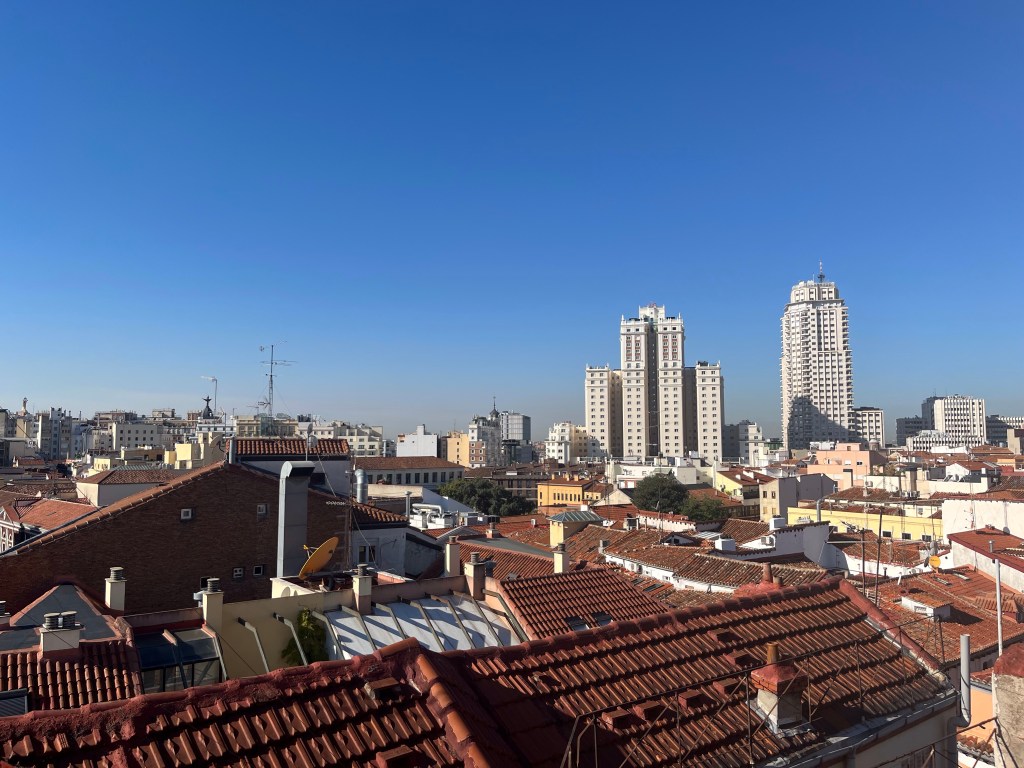
View from our hotel terrace in the Malasana district


We arrived at 10:30 pm at our beautiful very IKEA Nordic apartment in the Malasana district just north of the city center, unpacked, and went out to get a bite to eat not expecting much. Yes, we know Spaniards eat late….but 11:30 pm? Young people (and a very few older ones) everywhere. Malasana turns out to be a very hip twenty something mecca where we probably increased the average age ten years district wide.

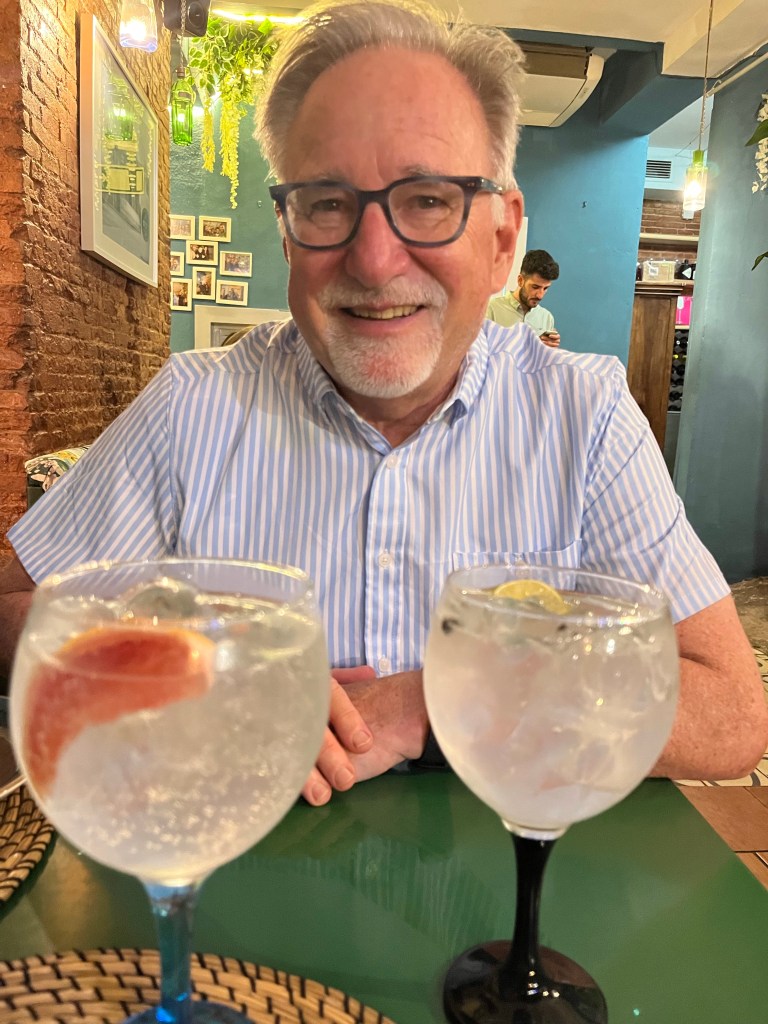
Decided to eat at the first place we found — the funky La Pasa Gin Bar (the real name). Yes, a gin bar, and run by Dominicans (no, not the monks). The place was packed but our host found us a table—we were clearly from another planet and exotic to them. Ordered “gin tonicas.” In Madrid, this prompts a floor show. Did we like citrusy, dry, aromatic, spicy? We settled on one citrusy and one dry drink. Our server returned with two large goblets filled with ice and four gin bottles for us to smell and select. With a flourish he poured the selected gins (we opted for two different Spanish gins—we are in Spain after all) into the goblets each with different garnishes or aromatics — juniper berries in the citrus version and sour orange slice in dry. Each tasted totally different from the other. Gin and tonics back home pale in comparison.

Dry on the left and citrusy on the right


Yes, there was food—an eclectic mixture of Caribbean, Italian, Spanish and a small measure of Thai. Jamon croquettes, burrata cheese salad and chicken skewers on Thai rice noodles. Generous portions for sure. Food was good, gin tonicas great, people watching superb. Best of all, the Dominicans were great hosts.

So far have yet to meet any local who hasn’t squeezed out us of our very limited Spanish and added their slightly better English to engage us in conversation. Everybody is ready to drop everything and schmoze. Clearly they are charming us!

Next morning we had arranged a food and market tour. Always our preference to get to know a city first by its markets and food stores, and with an apartment kitchen we were ready to do some cooking. The historic sites can wait. Our guide turned out to be German—a charming young woman fluent in Spanish who had given up a career in finance in London to do this. It really is helpful in some ways to have a foreign perspective—she had gone through the learning experiences and was well aware of the cultural shocks you would find in Madrid.

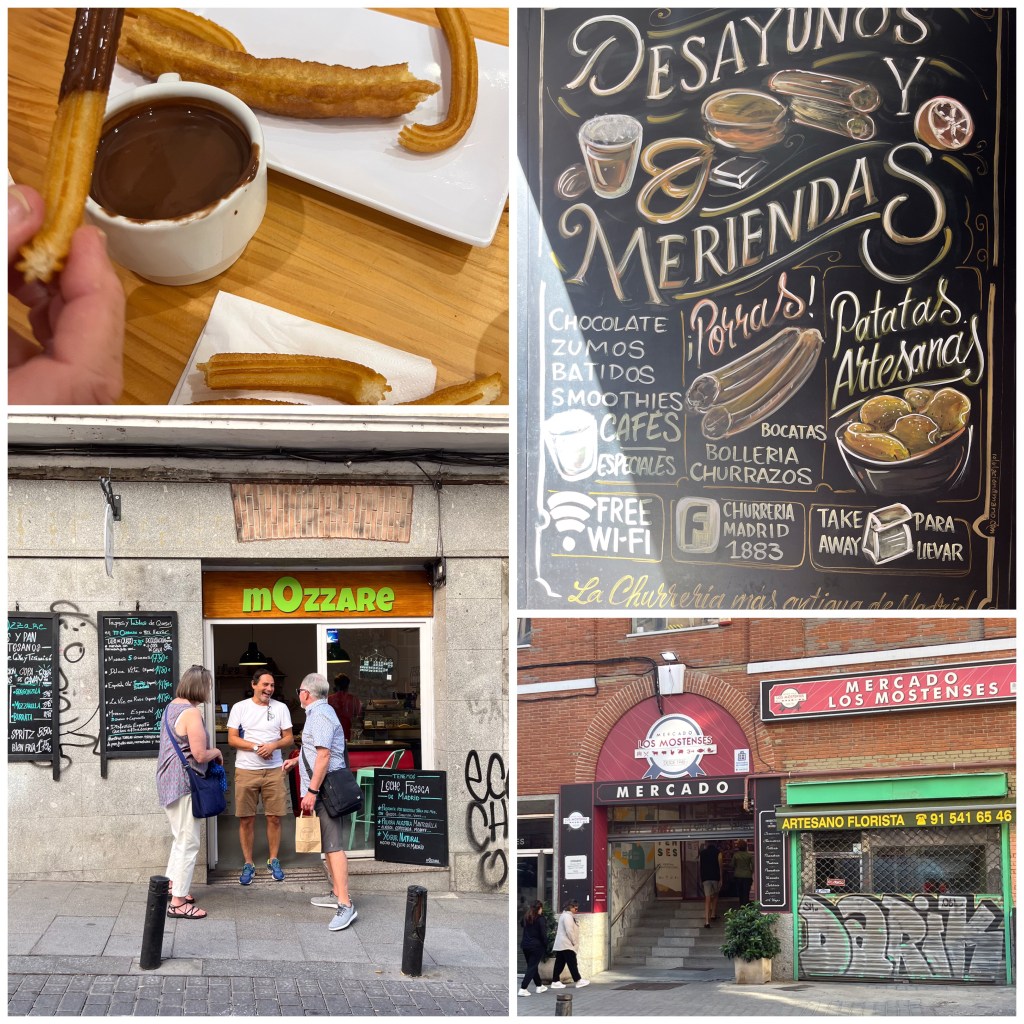
We started the tour with Churros in a restaurant that had been in operation over 100 years, a plaque on the sidewalk outside announced — the city of Madrid’s tribute to the older establishments. Not normally a fan of churros, these were delicious! Ate every bit! And then wandered to a cheese shop that only sells small batch cheeses in Spain, even if the style of the cheese is French or Italian. The owner also makes his own butter and ricotta in-house. And then it was off to the market.

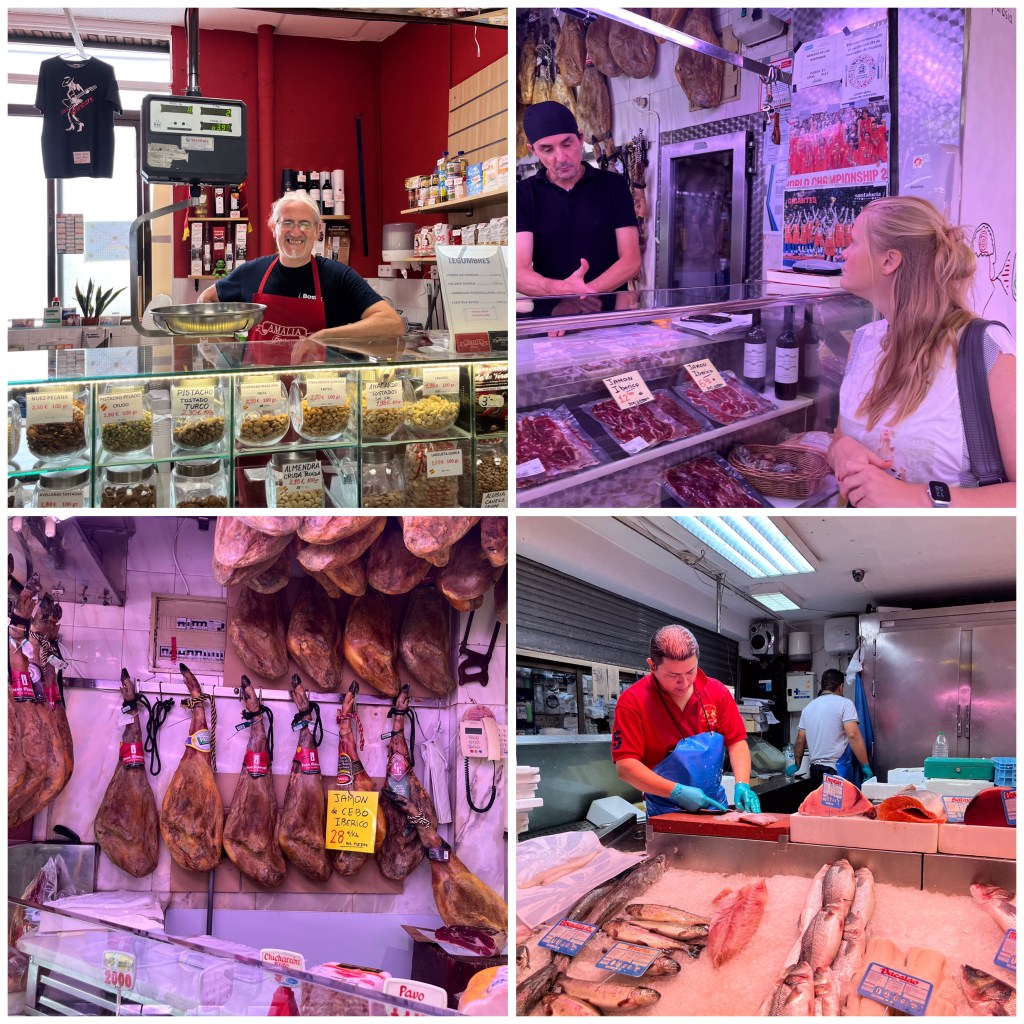
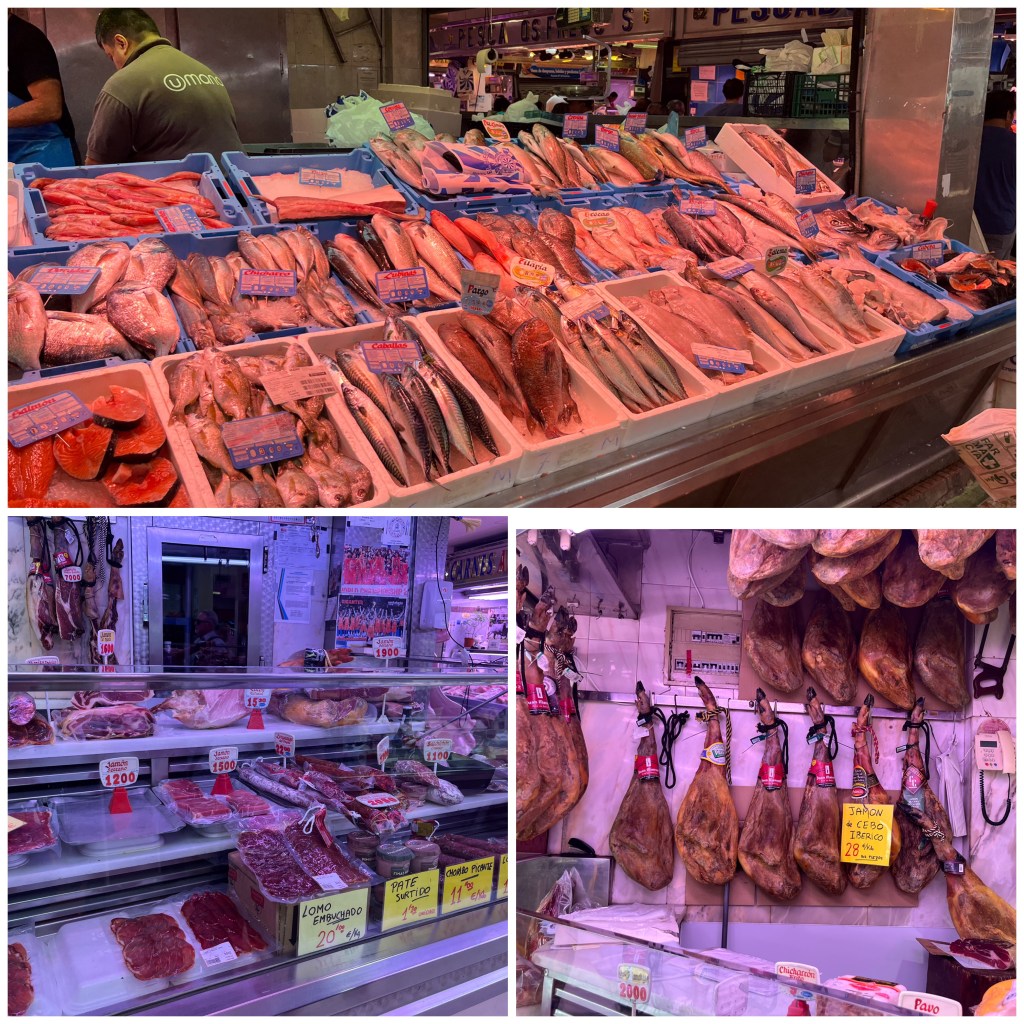
The highlight was Los Mostenes market near our apartment—a local covered market well off the tourist path. It didn’t look like much from the outside, but inside it was two floors of food stalls and small cafes with a stool or two offering specialties from around the Spanish speaking world. The prices were less than half of those at the famous San Miguel market. It was bustling with locals.

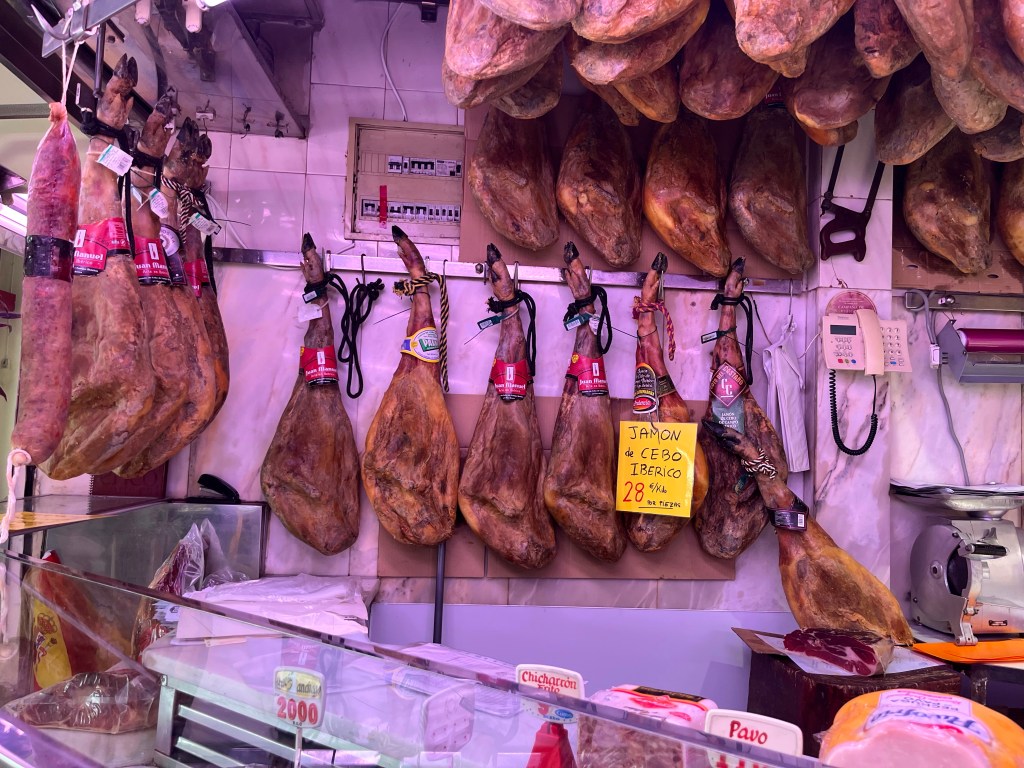
After chatting with the local jamon merchant (who was critical of the high prices of jamon in the tourist stores) and several other vendors she knew well, we stopped at the local fishmonger, bought some shrimp, calamari, and took them over to small counter restaurant in the corner of the market, where the owner pan fried them with a squeeze of lemon for lunch for us.

The options were endless

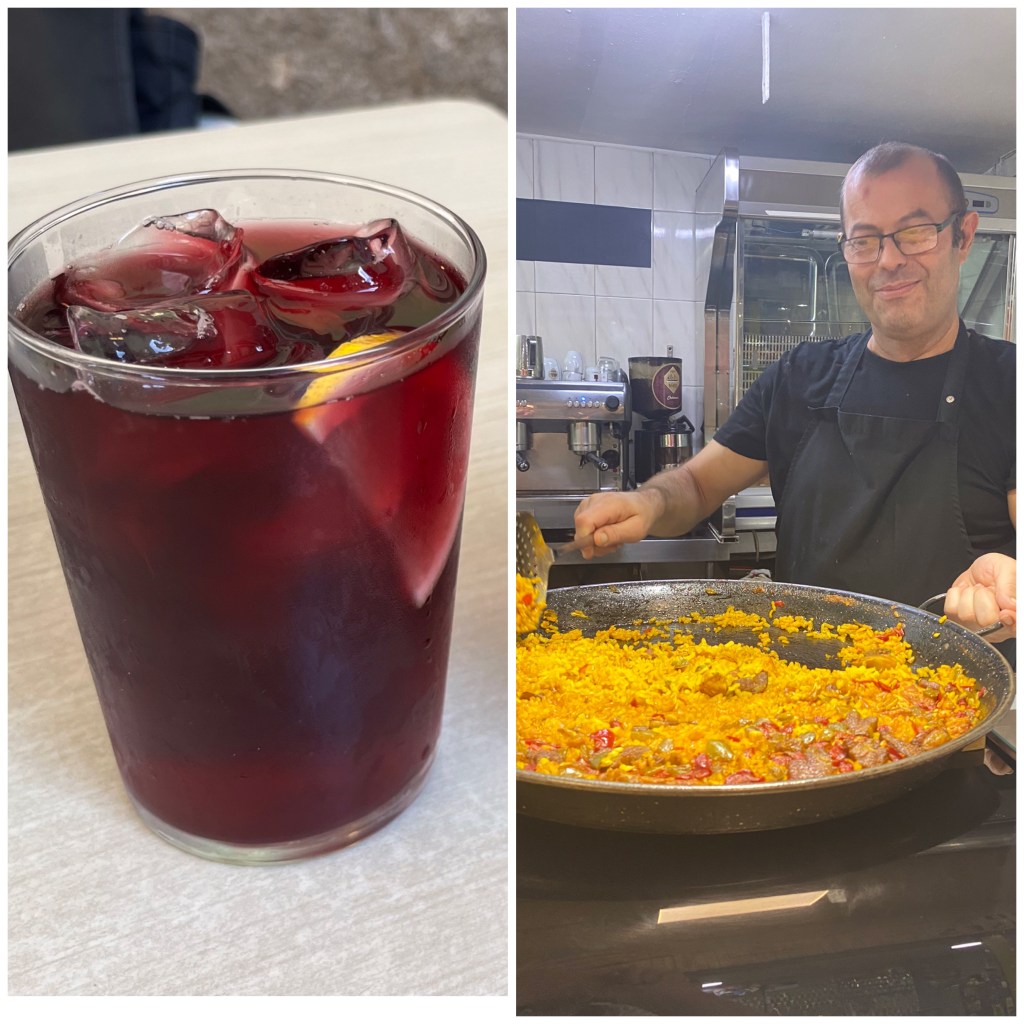
We were sitting next to a butcher still in his bloody apron who was on his lunch break. Local charm. We loved it and our three course meal — tortilla (a Spanish omelette), paella (the owner was not from Madrid so he was “allowed” to make paella) and our seafood which could not have been better prepared. We were also introduced to summer red wine — a fruity red mixed with sparking lemon soda — more commonly consumed than sangria. Again delicious.


We ended our first day armed with a list of restaurants to try, routes to walk and tips on how to navigate dining customs in Madrid. Obviously four full days and five nights in the city will be insufficient to do it all. Traveling on your stomach takes time.

We will simply be forced to return.