Getting to Know You, Valencia

It’s been a learning process, for sure.

Part of the challenge of living in Valencia for two months is that, yes, we are tourists and, no, we’re not quite tourists.  Staying in a long term rental means there are sheets to wash, sinks to clean, floors to mop and garbage to take out as well as sights to see. All part of the deal.

Valenica, like any major city, is so much more than the “must see” highlights in the old town center.  It has a huge variety of neighborhoods—swanky, working class, trendy, suburban, beachfront, and industrial. Places we would never see if we were here for just a few days or a week.
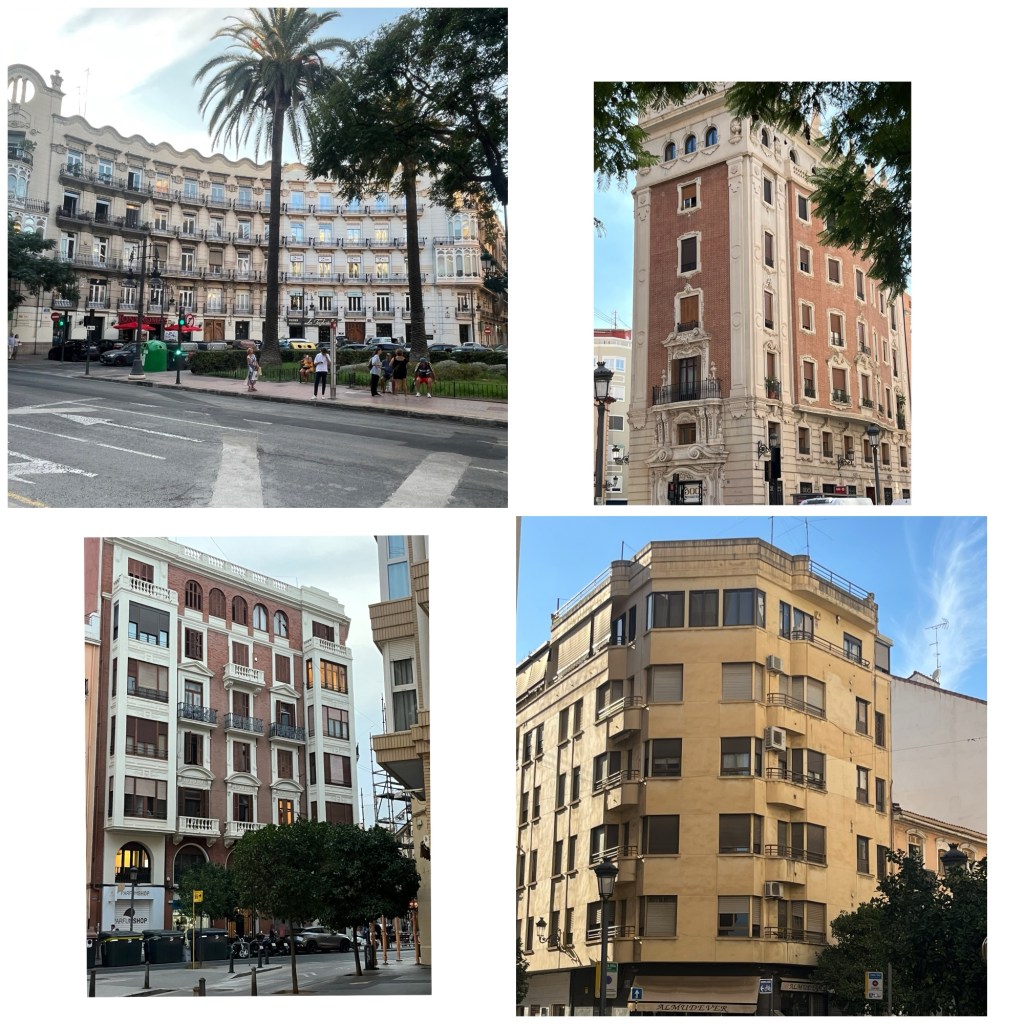
Some date back to the mid-nineteenth century and some to the post Franco era.  Valencia was the capital of the Republic during the civil war, 1936-39, and bombed extensively by the fascist Franco. Even the historical center has these stunning contrasts.
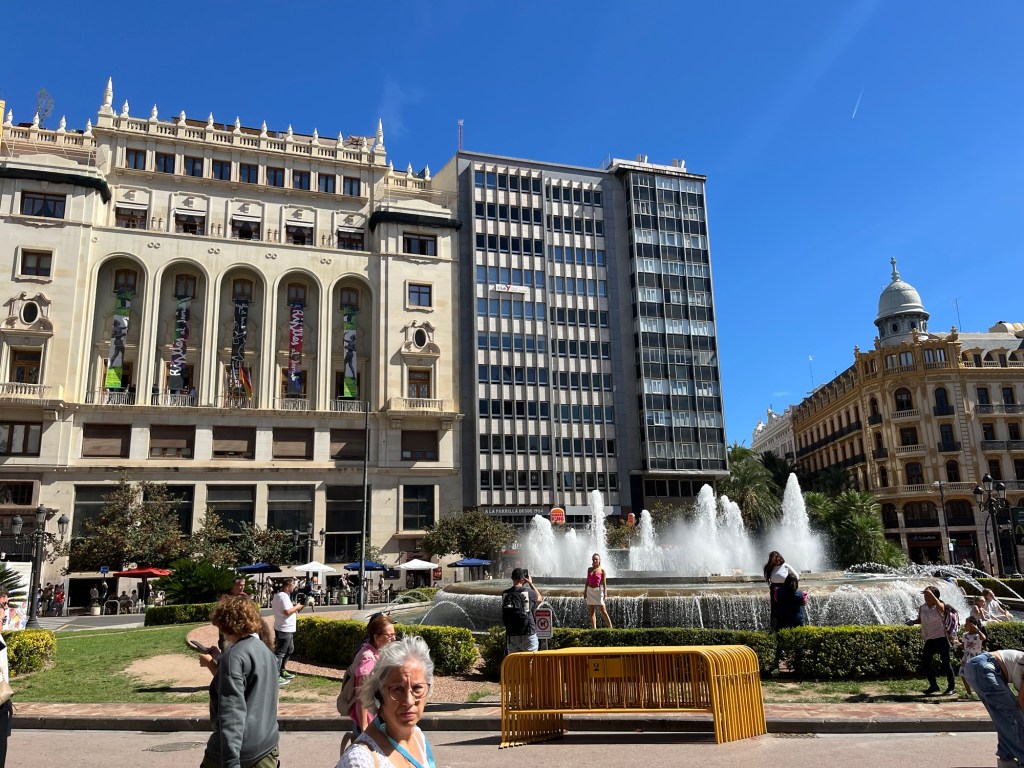
We’re living in the “trendy and hip” neighborhood of Ruzafa, a twenty minute walk from the city center. Endless restaurants, bars, nightclubs, tattoo parlors, and vintage clothing shops.  At night, the place is crazy.  And crazy loud.

Still, people do actually live in Ruzafa. Lots and lots of them in four to six story apartment buildings ranging from grandiose and ornate to humble concrete boxes. 

During the day, we hear school children, see seniors strolling, watch dog walkers, and dodge business types off to work. Many of the residents do their daily or weekly shopping in the huge, concrete public market, Mercado de Ruzafa. 
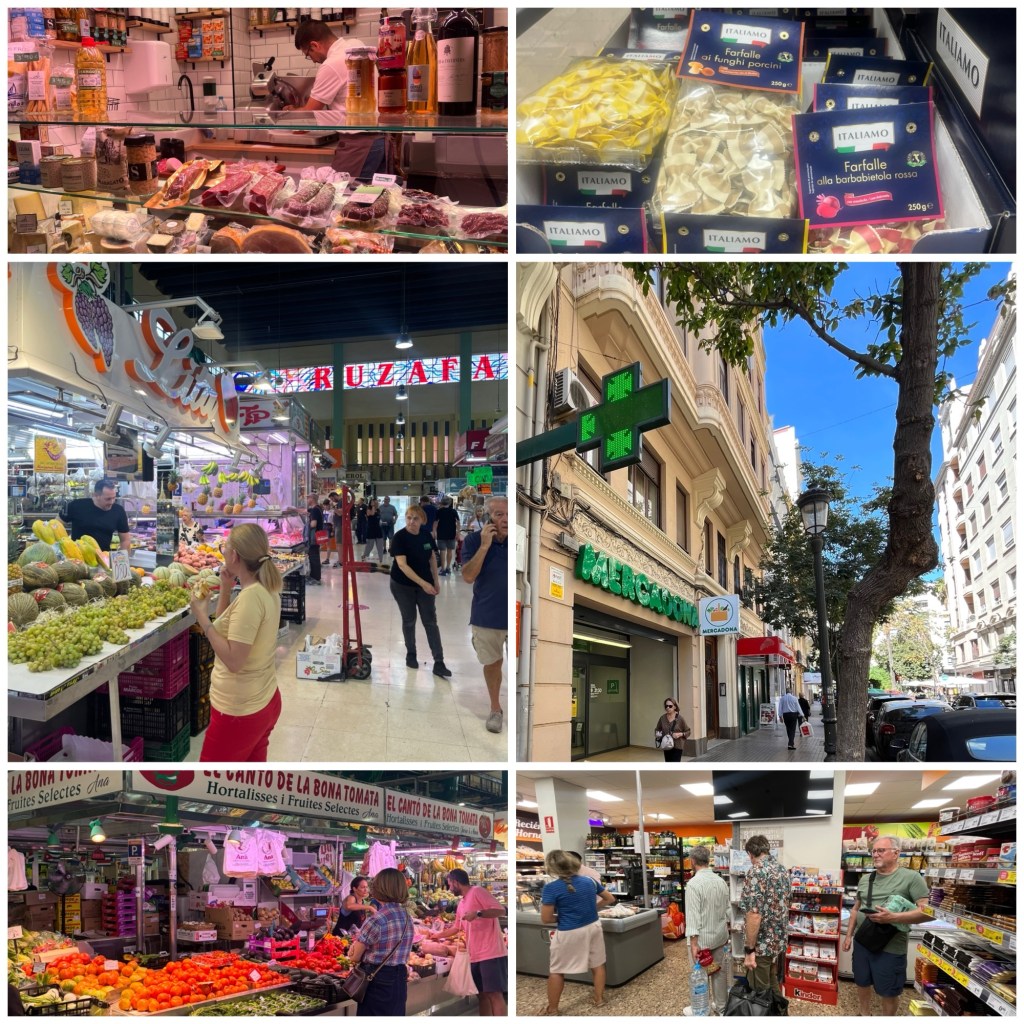
The Mercado on the left with hardly a tourist in sight and supermarket on right also without tourists.

But the same folks pack the giant American style supermarket, Mercadona—which by the way, you could easily miss since the entrance since it’s a nondescript single door amid all the others at street level.  Minimal signage.  And there are also dozens of mini-marts and fruit and vegetable stands that stay open well after the Mercado and Mercadona are closed.

So living here we’ve learned to shop at both the Mercado and the Mercadona for our home cooked meals. We can’t eat every meal out—though it’s tempting.  We’ve also relied upon someone else to do the “home” cooking and  bought excellent prepared food at some of the specialty takeout stores.  A real lifesaver at times.
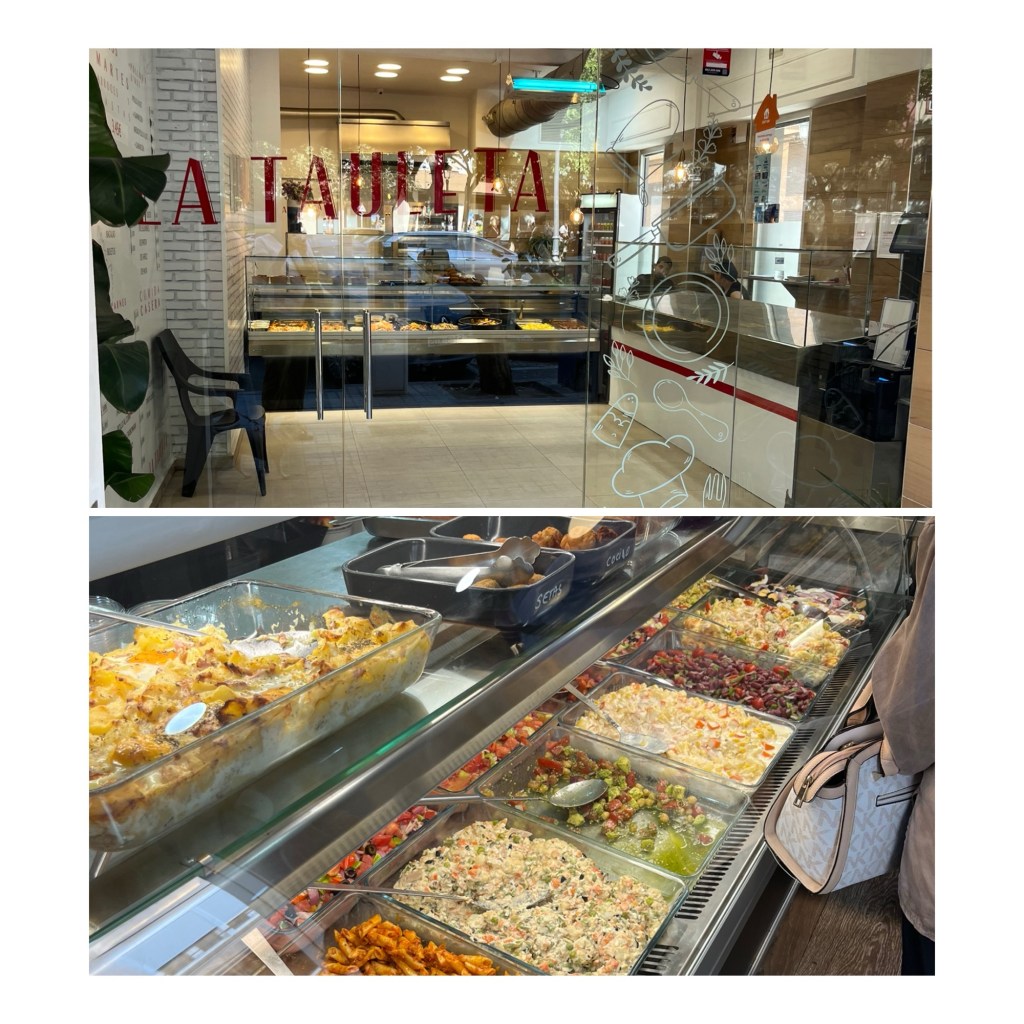
Lasagna, paella, roast chicken & or a variety of salads — lots of choices

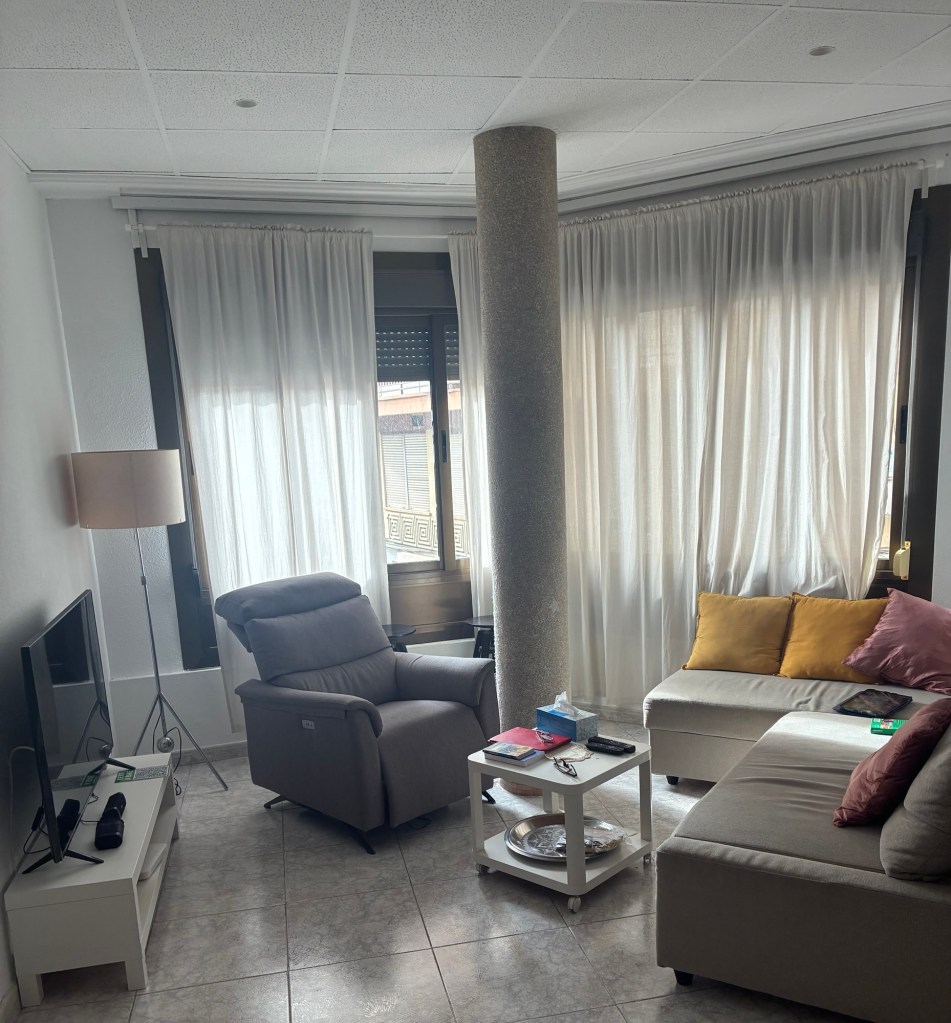
Another part of living here is that get togethers with friends often don’t take place at home.  Many apartments are tiny, not really suitable for even small gatherings. Like ours.
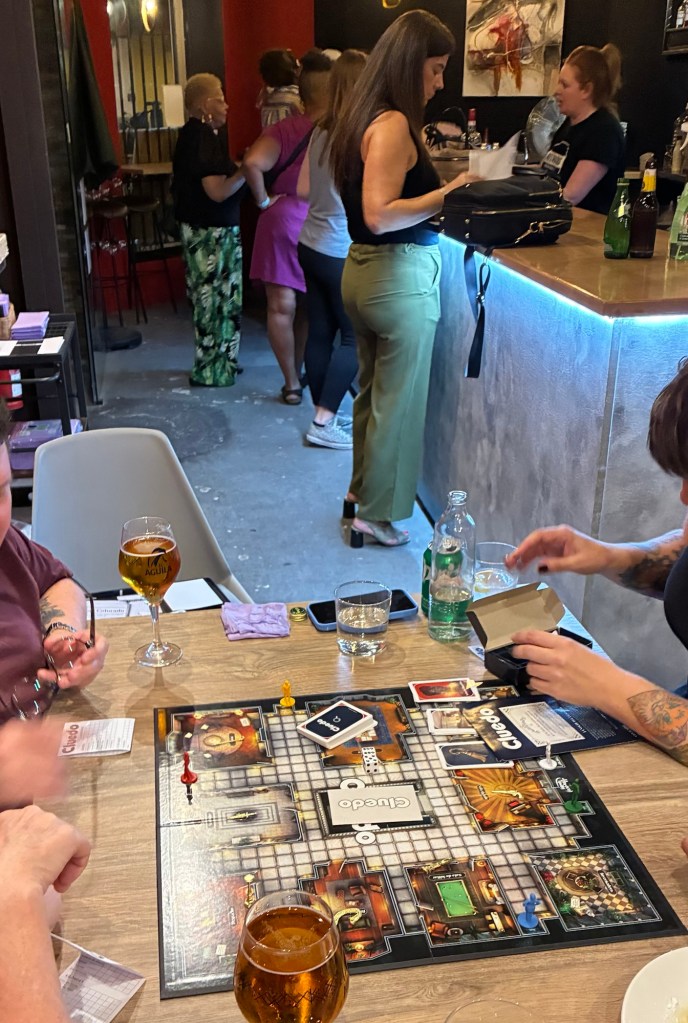
You meet at a restaurant or bar for the evening or for lunch and the table is your for as long as you like—often hours.  Our friends even invited us to a game night at a local Irish pub where different groups huddled around tables — ate, drank and played board games all evening.
And as for getting around, well, mastering public transit is a must—none of our Valencia friends have cars.  Cars are a luxury, parking impossible, and the traffic horrific. Getting a license is a linguistic and bureaucratic challenge.  The good news is that there’s a great transit system and it’s dirt cheap.  Clean subways and air conditioned buses!  We’re still struggling with bus routes that our friends know like the back of their hands. More good news—taxis are plentiful and inexpensive for those times you want a little more comfort. 

There’s adjusting to “Spanish time”.  Meals: lunch at 2:00, dinner at 10:00. Always check the hours and days for restaurants, stores, and museums. The 2-5 pm siesta still happens for many establishments, including museums in the heart of the tourist district.  Also, closing days wildly vary.  Seems each time we walk down a familiar street something new is open and something familiar is closed.  No rhyme or reason.  And in September we’re seeing signs hanging in windows saying “Closed for a vacation.” Four times so far this trip we found ourselves on the outside looking into a closed museum, closed store, or closed restaurant. 

Small things call for adjustments, too. In almost all bars, coffee shops, restaurants, the waiter will come to the table to take your order. It may take time, but they’ll get to you. On the other hand, if dining outside, you may need to go inside to the register to pay the bill. Almost always you have to ask for the check. We’ve been assured by our local friends that you rarely clear your own dishes, no matter how casual the bar or restaurant is. Tipping is not expected. Cash is almost non-existent. Everybody pays “con tarjeta”—with a phone or credit card.  And you can use a card for even the smallest transactions.  

Perhaps one of the hardest lessons has been to navigate the streets with bike lanes.   Very common throughout the city, they are usually painted red and sometimes run alongside the road, but also often merge onto the sidewalks so you’re never sure whether you’re in a bike lane or on a sidewalk. DO NOT WALK in the bike lanes!  The bikes and scooters barrel along at insane speeds and own those lanes. When you’re walking along, reading a map or looking at the sights, it’s way too easy to drift into the danger zone.
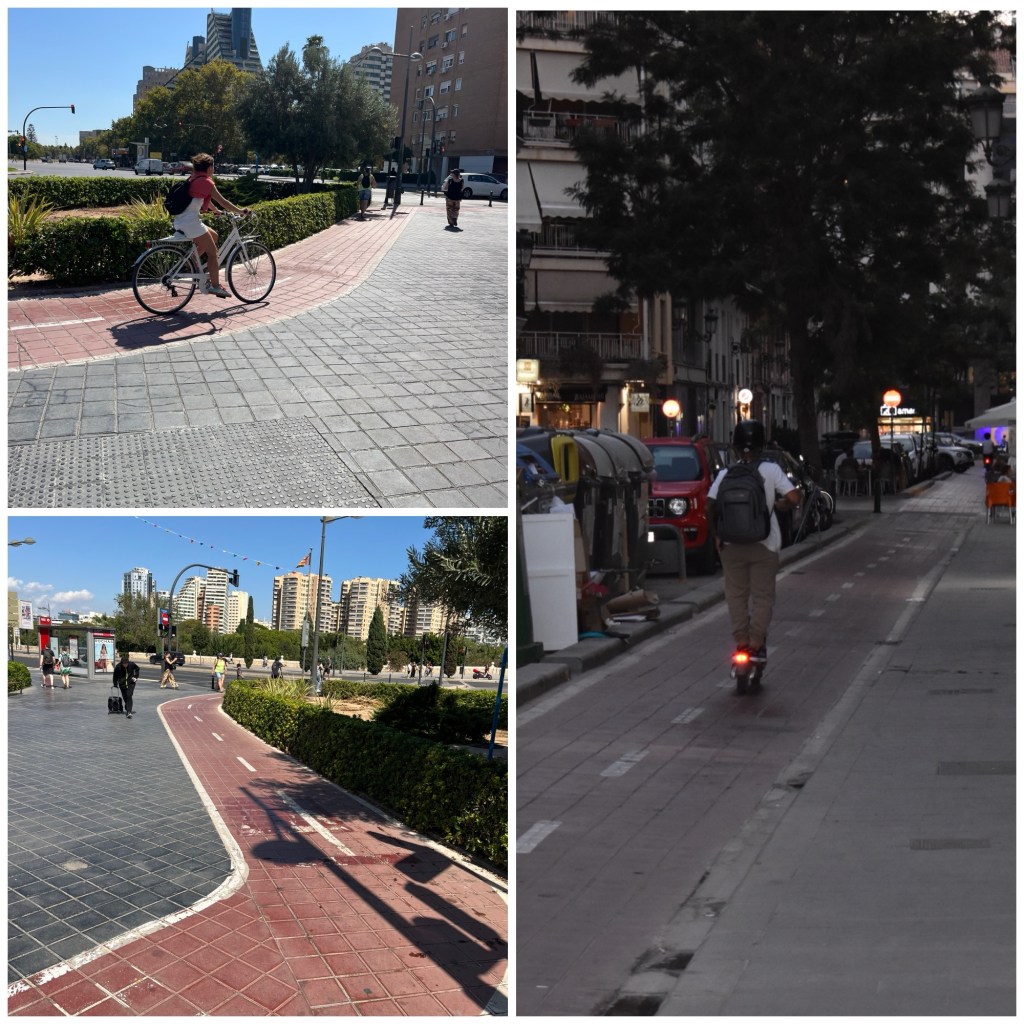
Drivers in cars, on the other hand, are generally courteous, stopping for any one standing at a cross walk.  Such courtesy takes a little getting used to although locals hardly look up from their phones when they hit a crosswalk without a light.  It’s different at stoplights.  There bicycles, and pedestrians, even moms pushing  strollers, ignore red  lights if there are no vehicles within striking distance.

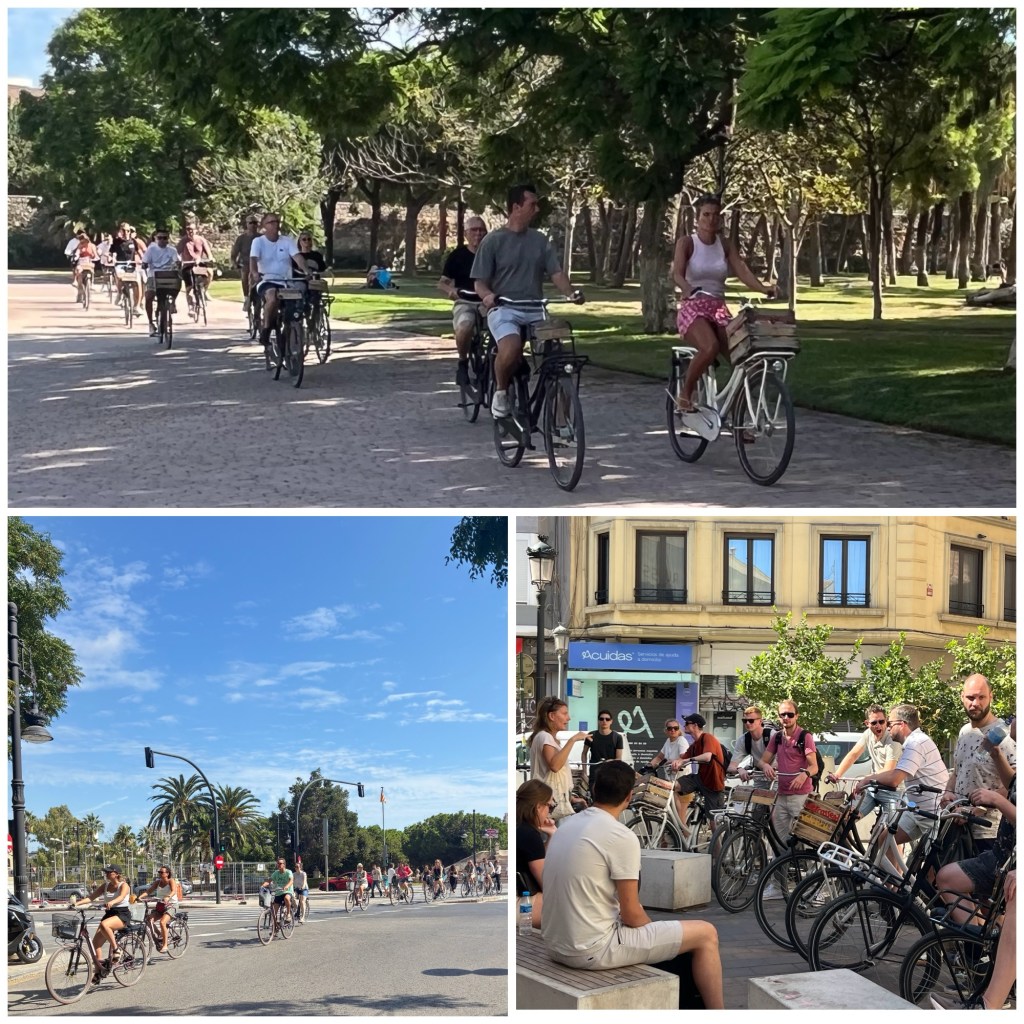
But there is even a worse danger. In the old city large groups of tourists get on bikes and ride around the major sights. Just imagine. 10-20 people who may not have ridden a bike for years trying to follow the guy with the bright baseball cap in front of the herd. It’s fairly benign in the city parks but around the historical sites just imagine those bikes wobbling through dozens of walkers, strollers and pedestrians. All because Valencia is a flat and “bike-able” city.  
These differences, especially the small ones, keep us on our toes as we try to make sense of it all. And that’s part of the adventure!

Yes, we’re starting to know you, Valencia, both as wide-eyed tourists and as everyday residents.  
Valencia: More than Oranges

We had allotted three days in Valencia itself. We were staying for two weeks an hour outside the city so we thought it would be plenty of time to get acquainted with the town. Mistake! Clearly not enough time. We never made it to the Jardin du Turia, the 9 mile long river park, the Ciudad de las Artes y las Ciencias with its space age designed buildings, the port and its beaches. Instead we ate, drank and laughed our way through the city with expat friends who now live in Valencia.

It all started with Peter’s former colleague who just two weeks ago moved to Valencia with her husband, her mother and three dogs. We reached out and set up a rendezvous with her for our first full day in the city. Next thing we knew, she had arranged an “American luncheon” with four other formerly Seattle based expats. We arrived at restaurant to a warm welcome — hugs all around — and quickly after exchanging names, establishing we had friends in common back home and had visited the same restaurants and neighborhoods in Seattle, the laughter and stories started. And we certainly took advantage of their knowledge of the city. One couple had been here for over two years and knew the city well. Where do we go to buy kitchen knives? (Our travel kitchen knives had been confiscated by the train security people on our trip from Madrid.)  Where can we get good coffee? (Spain offers lots of great food and wine, but the coffee is spotty — particularly for coffee obsessed Seattlelites.) What should we be sure to see? We learned the morning discount at the local gym went from 9am to 3pm! Noon is Seattle translates to 3pm in Spain. We asked for advice on a good food/city tour. One of our new friends, David, a very knowledgeable amateur historian, offered to show us around the next day instead. Bingo! We were delighted by his generosity.

We met at 9:00am the next morning at a favorite local coffee shop with breakfast foods. Decent cappuccinos as promised.

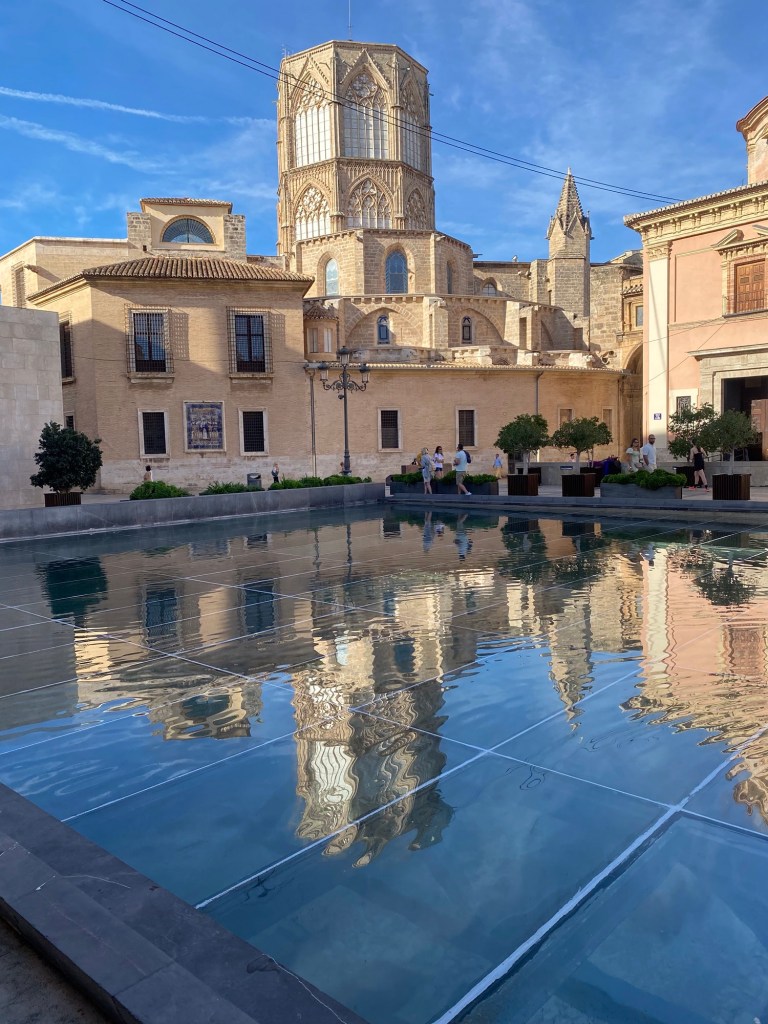
David approached Valencia’s historic core from a chronological perspective — from Roman times to modern day so we started at L’Almoina.  This square was dead center of Roman Valencia where the two main Roman roads intersected


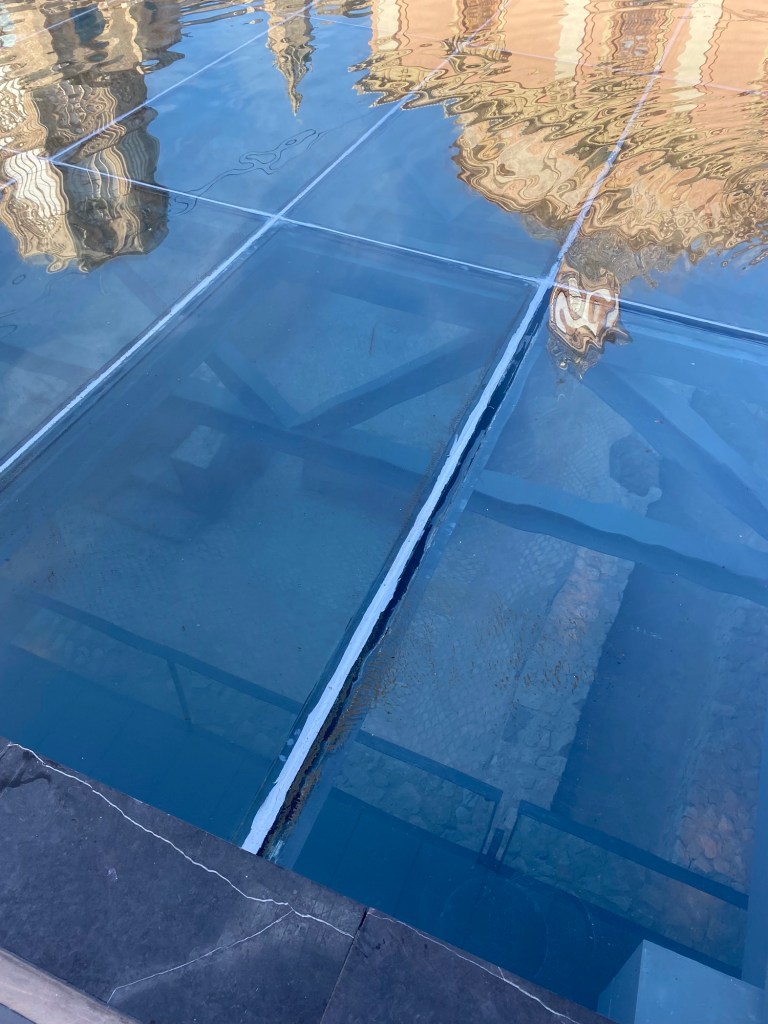
Beneath a square  through a reflecting pool you can just make out the Roman, Visigothic and Islamic ruins. 

The Roman ruins through the reflecting pool.

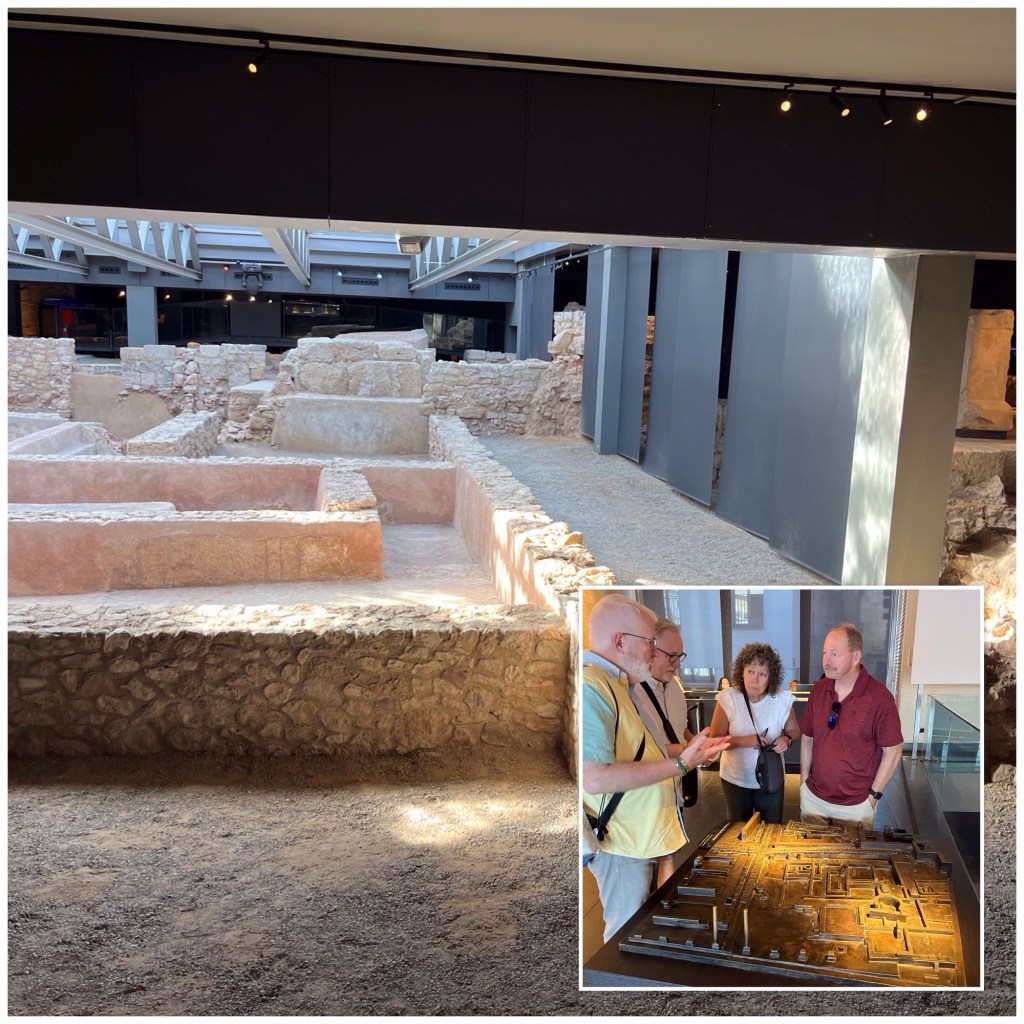
Once down the stairs inside the museum, you can see the remains of the baths, forum and city life on what was once an island in the Rio Turia.  Fascinating glimpse into the city’s ancient past and a reminder of how extensive the Roman world was.

Roman ruins and a scale model of what has been excavated

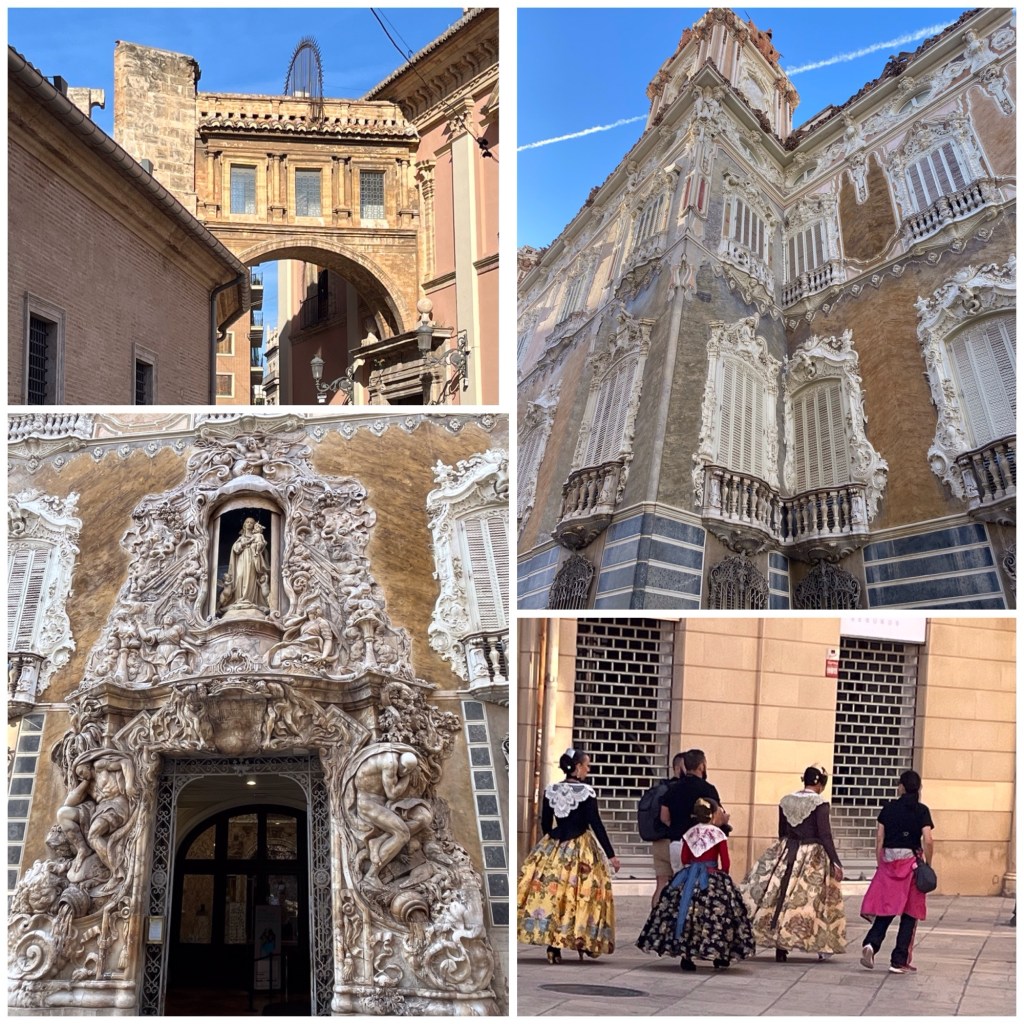
From there we hit to top medieval  tourist sites –  at the Palace  of the Marquis of Aguas we laughed at the over-the- top baroque decorations, including a statue of the Samari on the top of building, the grand Cathedral with the “real” Holy Grail, Plaza de La Virgen and so much more.

Baroque Rococo palace the scenes around the historic center of Valencia

The biggest oh’s and ah’s were probably reserved for the Silk Market, a UNESCO World Heritage site.  Beautiful twisting columns, originally painted to look like palms beneath a blue sky (you get mere glimpses of the colors today) and the second floor of the Consulado Del Mar where the merchants’ court sat beneath a fifteenth century carved ceiling moved into the structure after it was constructed. And the gargoyles!

Silk Market

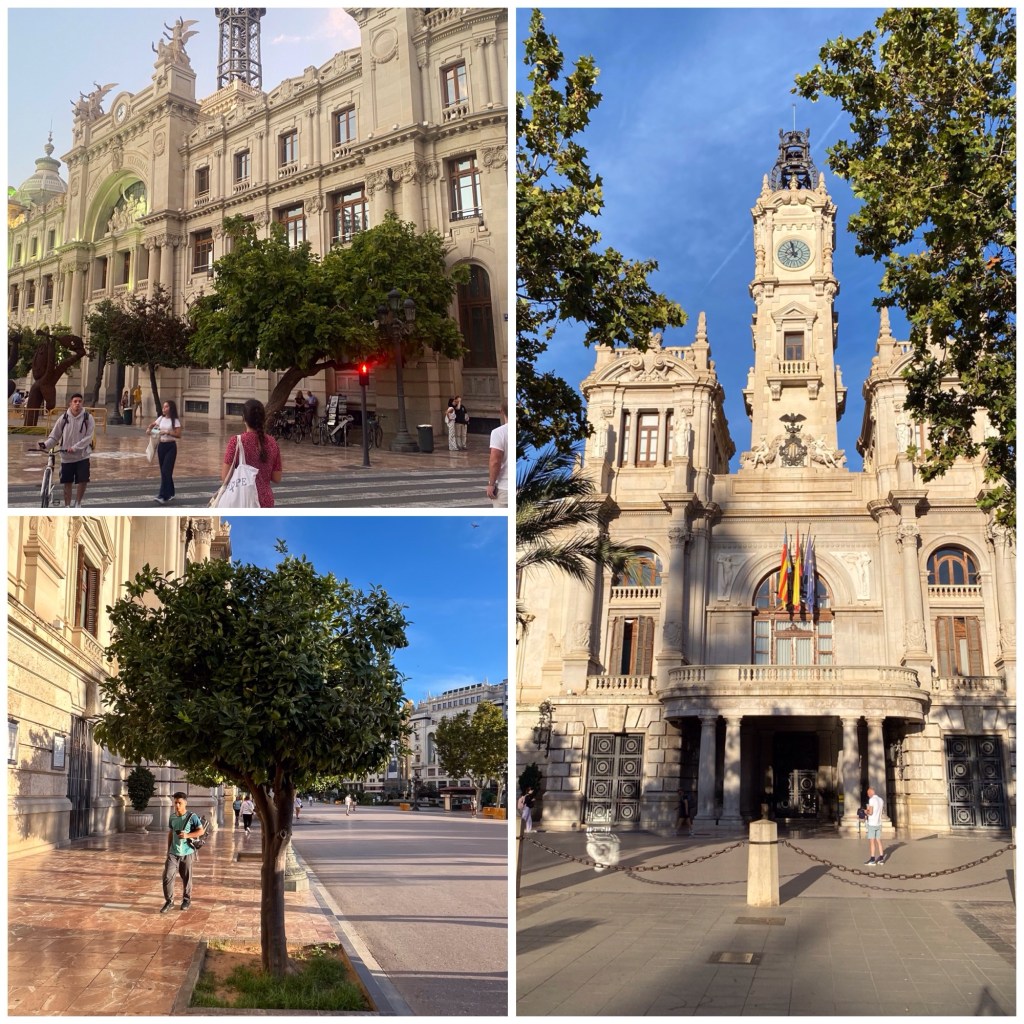
We ended our tour back where most start, between the city hall and the post office and telegraph building.

Post and Telegraph build, city hall and an ubiquitous sour orange tree planted through out the city

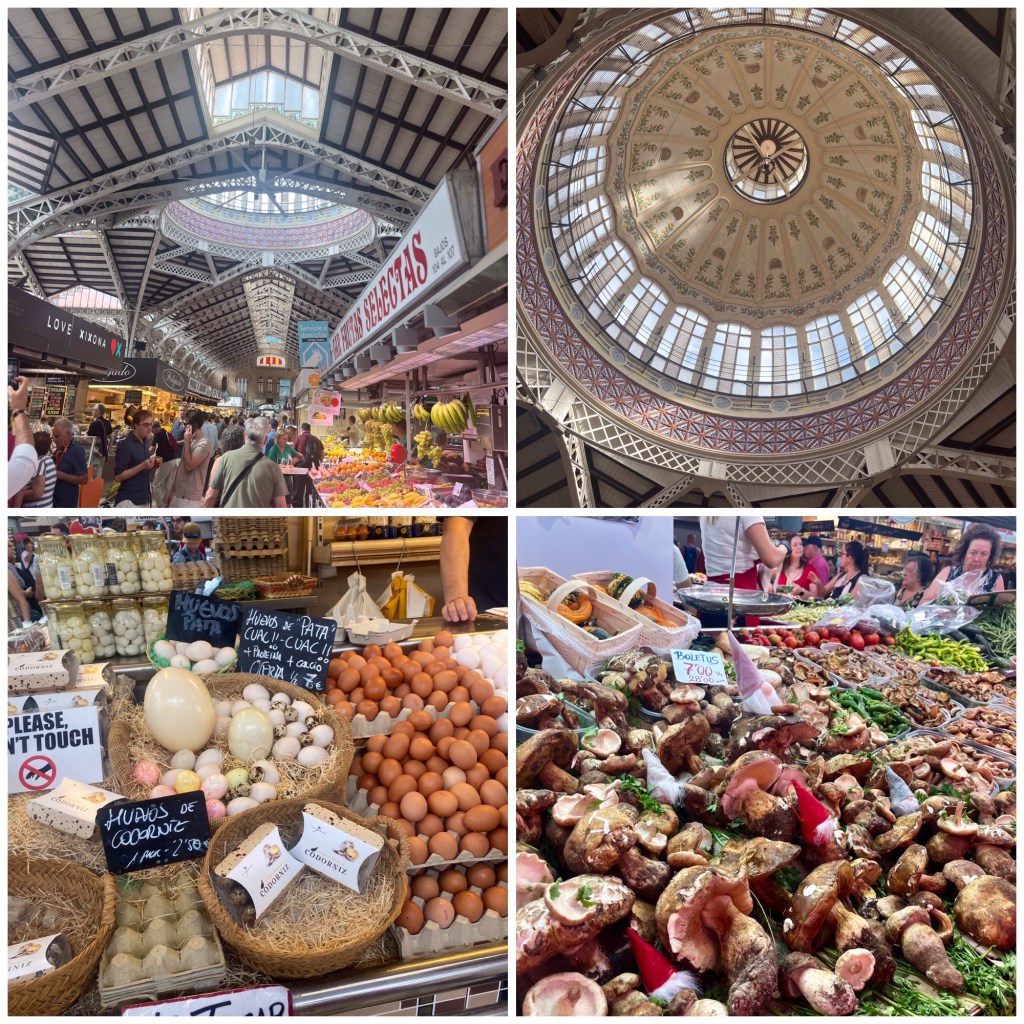
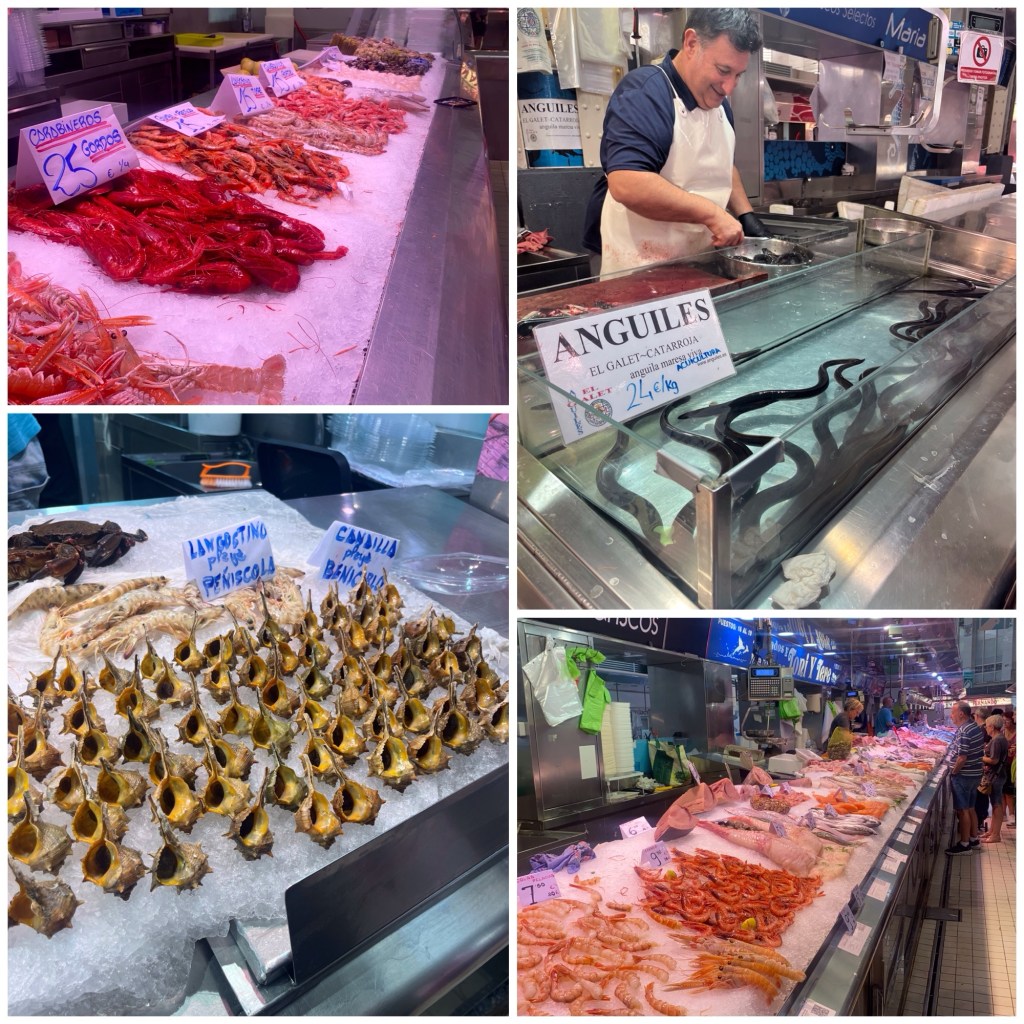
We skipped the Central Market — a not to be missed site — as we had seen it the day before.  The largest covered market in Europe—over a 1,000 stalls. Foodies that we are, it was almost our first stop in Valencia and worth every crowded moment we spent among the tourists and the locals doing their shopping. 

Central Market

And while we mainly purchased cheeses and cured meats for snacking, the vegetables, fruits and fish made us wish we had time to cook a couple of dinners.

And in true Valencian style, we ended city tour with a three hour lunch with our friends.  More good food, more good wine and more good laughs as we sat and enjoyed the company of these old and new friends.  Quite an introduction to the city!    

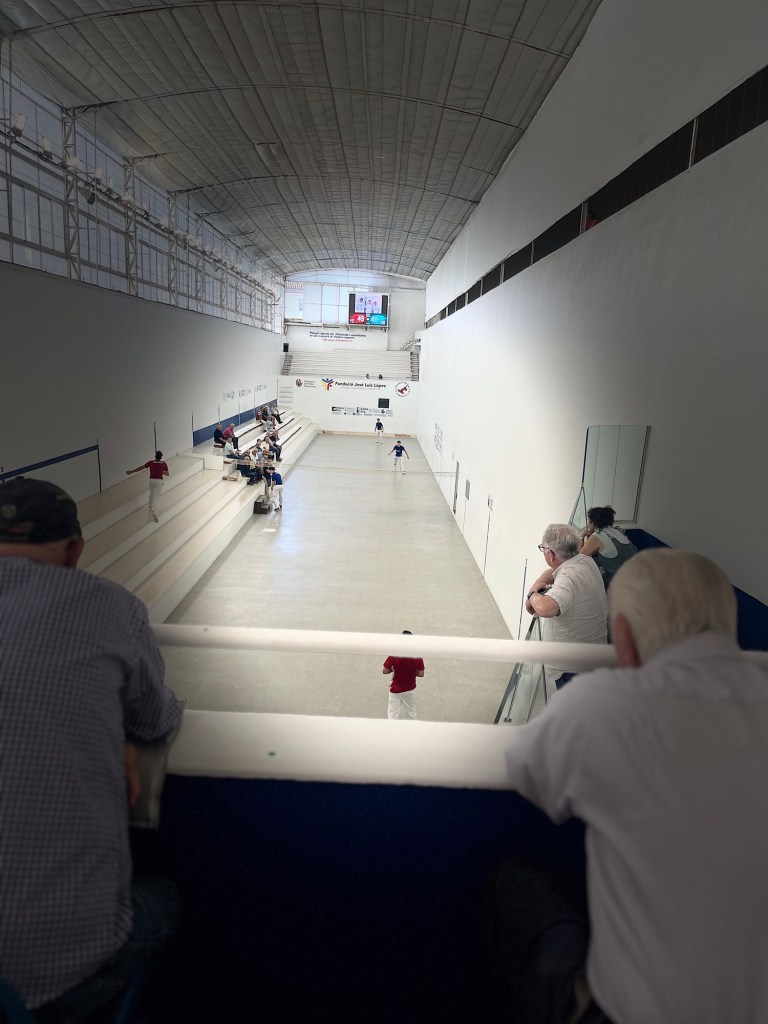
We managed to squeeze in a few other special moments in Valencia. Just happened our temporary home was right next door to a restaurant recommended by our host and we discovered attached to the restaurant was a Pelayo court—a game that is a cross between tennis and handball. We bought tickets for an amateur match. The mother of one of the players explained the game to us — the scoring was like tennis, but the rules were wildly different. Every surface of the court was playable, including any spectator who got in the way of the ball, as long as the ball fell back onto the floor of the court. Wild!

 Historically, the game had been played in the streets of Valencia and still retained a bit of the rough and tumble feel of a street game. With mom beside us, we cheered on her son to victory.

Our three short days were not enough to fully enjoy Valencia! We are beginning to understand why our new and old friends have chosen to make this place their new home. We will be back for a much longer stay.


In Praise of the Familiar

We travel for many reasons—adventure, broadening horizons and having new cultural experiences, relaxing, socializing—to name a few. That often means exploring new places, traveling to new countries or new regions in countries already visited. But once in awhile it’s really great to go back to some place you’ve been to several times. That’s why we’re back in Potrero, Costa Rica.

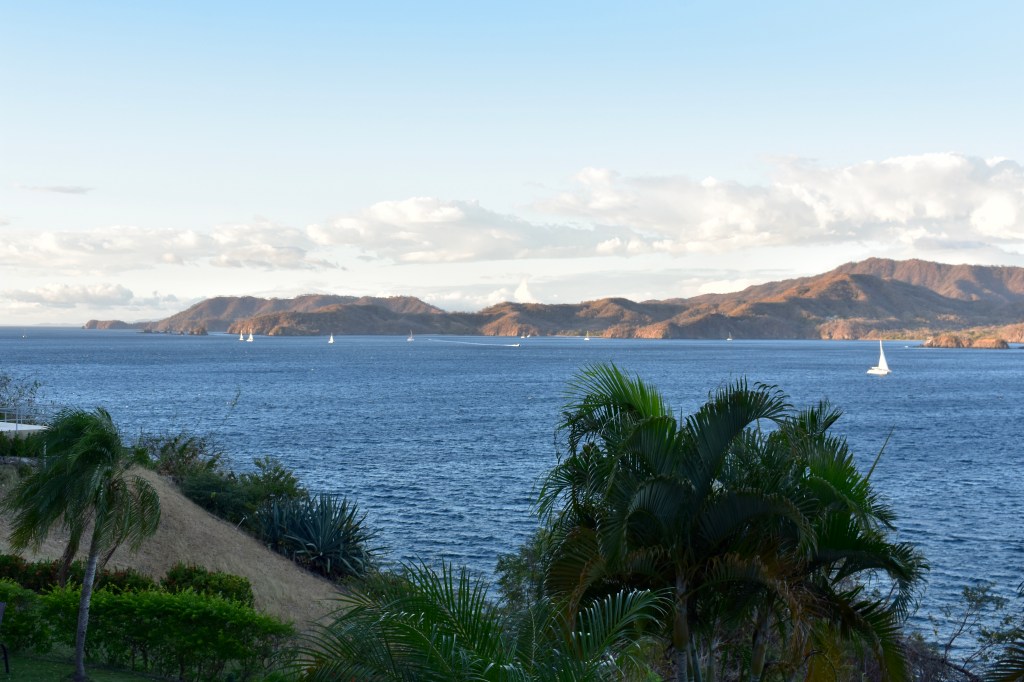
Potrero Bay

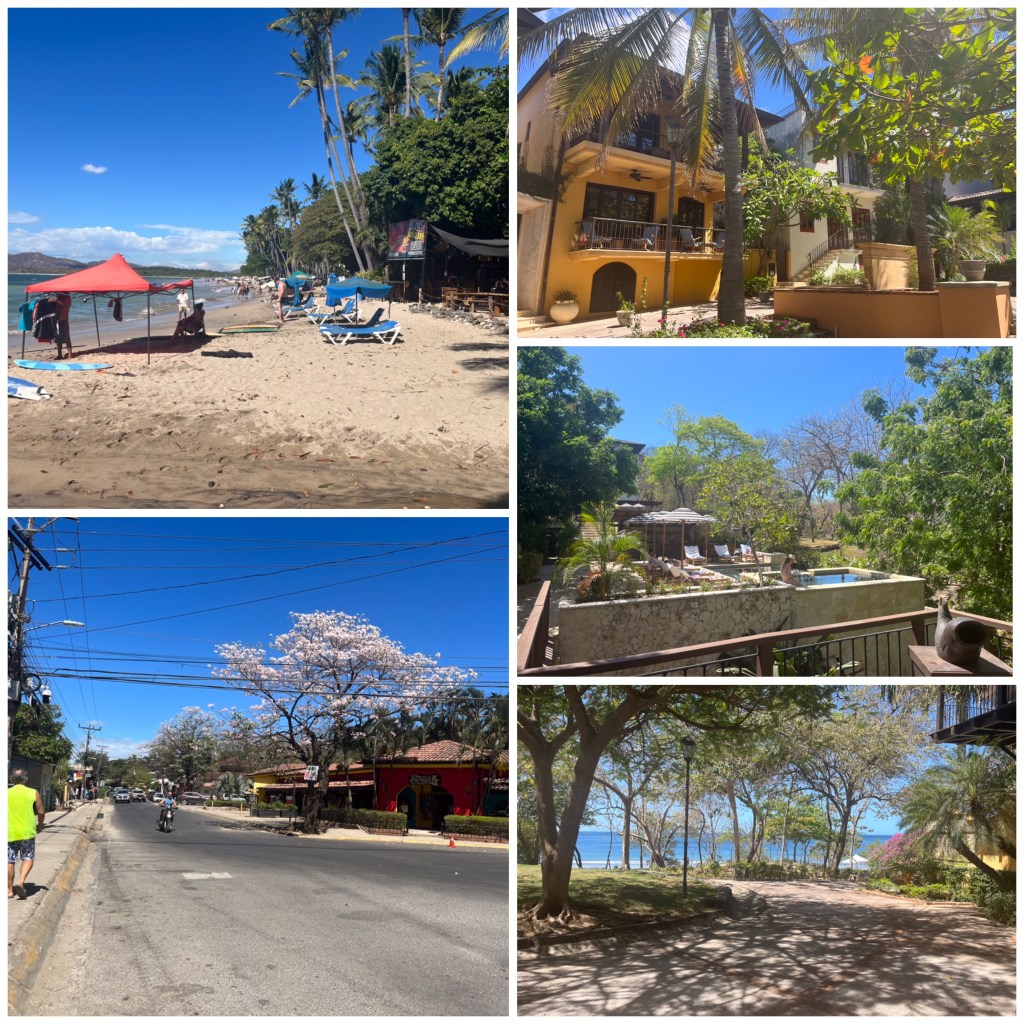
There isn’t really much to do in Potrero—other than enjoying the gorgeous beaches. There are no mega resorts, only a few “fancy” restaurants. The area is mix of locals (Ticos) and ex-pats/tourists—largely Canadians. No zip lines, no white water kayaking, no extreme mountain biking. We have seen a few ATV tours. Playa Flamingo nearby has a few more amenities, a couple of resorts, snorkel and dive options, sunset catamaran and deep sea fishing tours. A brand new marina complex will add more options. And now there is a super fancy huge development about five miles away, Las Catalinas, modeled on an Italian Cinque Terre village. If you want the full tourist and surfing dude experience, Tamarindo is 40 minutes away.

Tamarindo on the left and Los Catalinas on the right — worlds apart

We’ve visited this area now for the third time. For us, it’s been an alternative to Hawaii—relatively easy to get to, cheaper, and just as beautiful. Each time we come here we make new discoveries, find new “secret” places. But we also have the comfort of knowing where to find the best fruit stands, the fish market, locals’ grocery stores and the ones stocked to North American tastes. We know the best “sodas” (family run Tico restaurants) and there are still a couple we have yet to try. And where the ATM’s are located — always a good thing.

Twice we’ve had minor medical issues and we found an excellent local clinic (fluent English spoken). By the way, last year, one exam, two follow-up visits and a course of antibiotics—$80. Probably less the insurance copays at home. This year’s trip cost just slightly more for doctor visit, lab work and prescription.

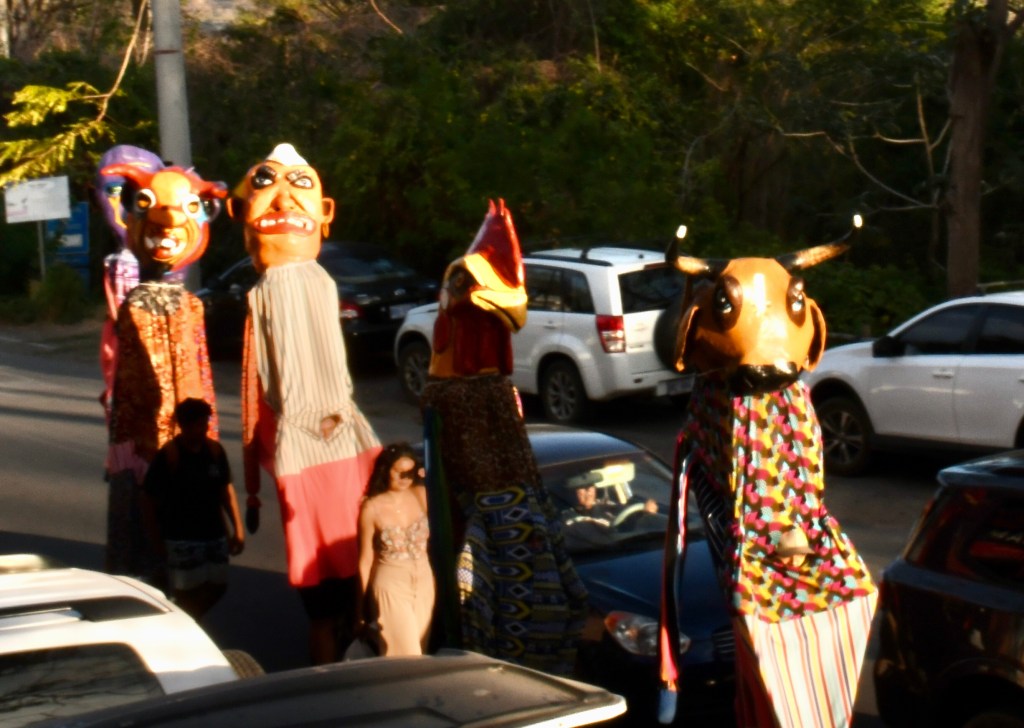
We knew this year to watch for the annual Madri Gras parade — a purely local extravaganza that lasts 15 minutes. There are no signs posted to alert you of this funky event. We found out about it from repeat visitors who clued us in last year. So this year we passed along the information to other newbies. The kids loved the candy that was thrown.

Mardi Gras Parade
The Mardi Gras pirate

And we’ve found some very helpful resources here—our local “fixer” Jennifer and an outstanding local guide, Graven—resources that we use again and again. Jennifer runs a great taco bar restaurant www.amigostacosybeer.com/in Playa Flamingo, rents golf carts, and has local contacts among guides and tourist services http://rentagolfcartcostarica.com/.

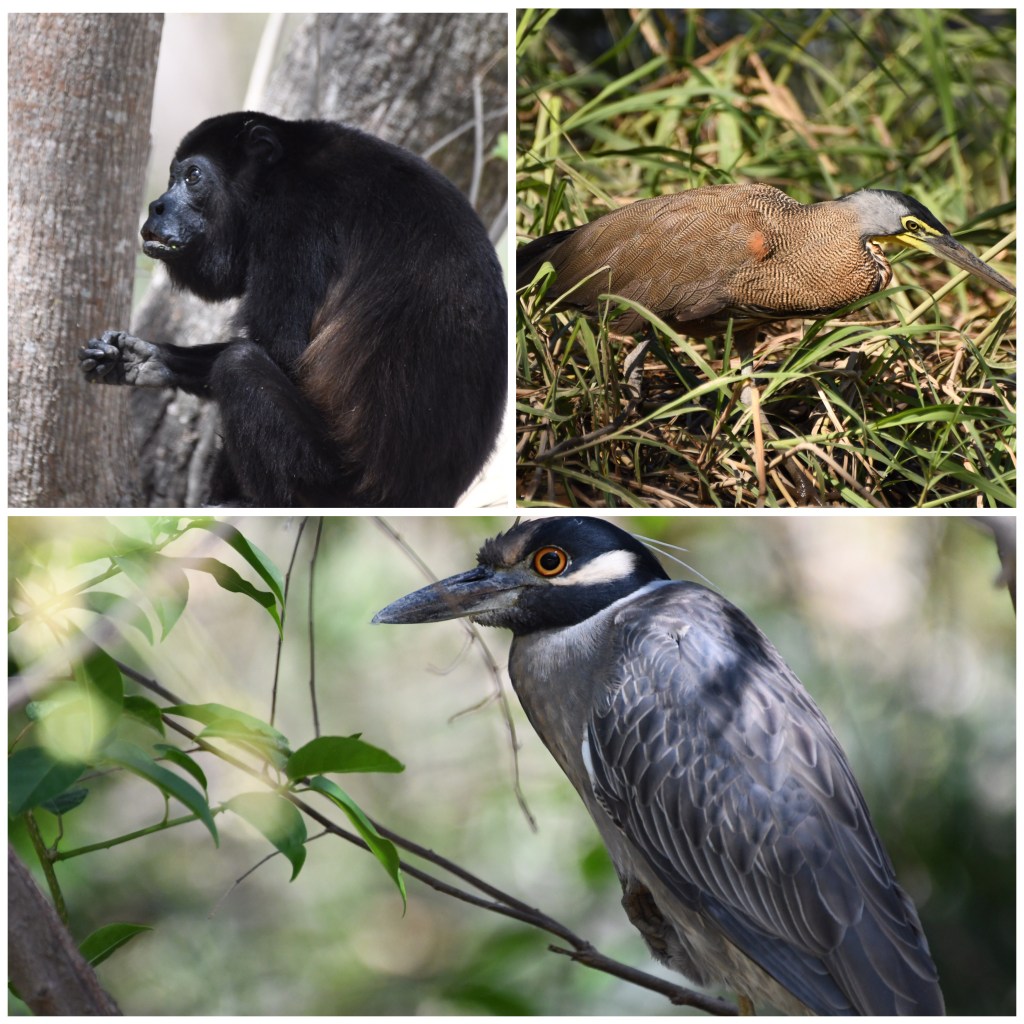
We e-mailed her a few weeks before our trip and she lined up a birding trip on the Tempisque River with Graven that we had done before and loved. This year’s tour was just as much fun as we remembered, and because we were dealing with unpredictable nature, we saw more monkeys this year and different birds. Next time we may try one of Graven’s hikes or other tours.

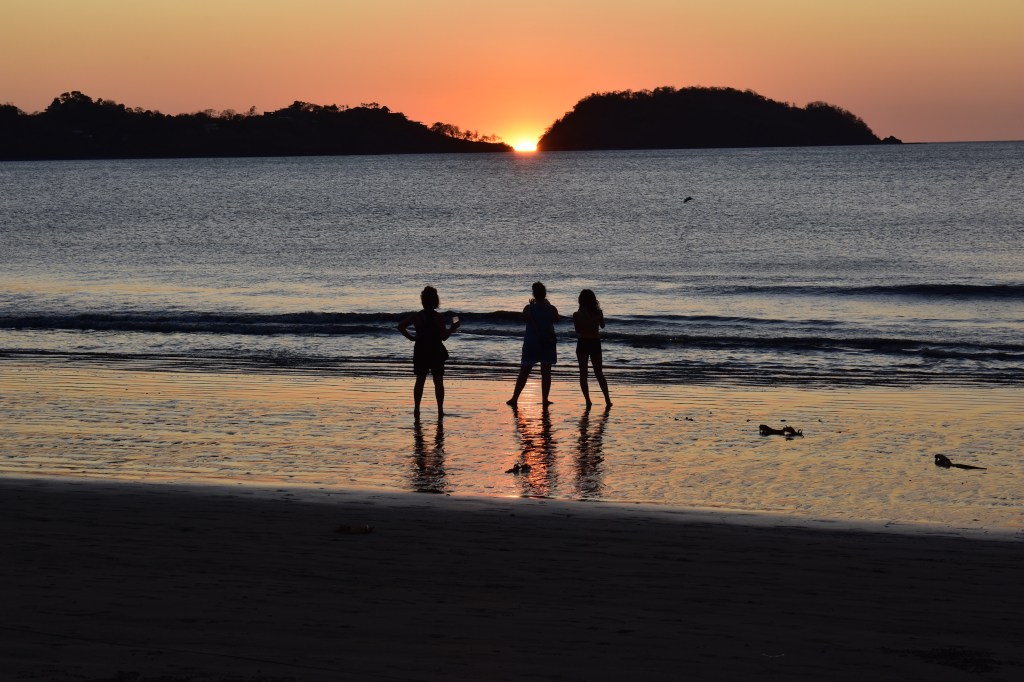
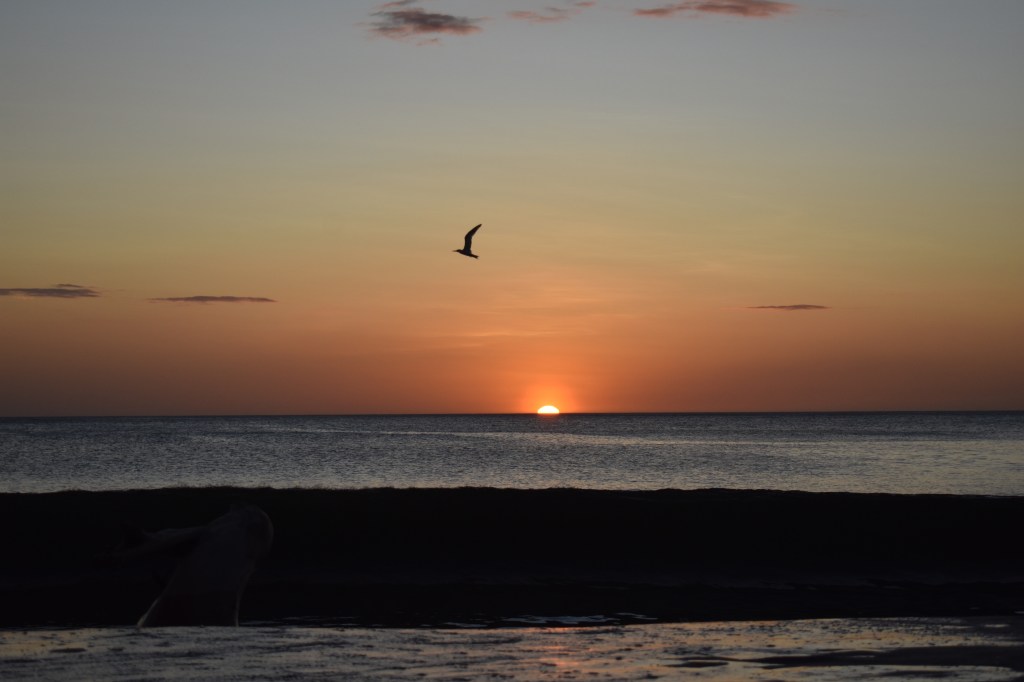
We’ve also learned to let our mood and the weather determine which beaches we walk in the mornings and where to go to catch the sunset in the evening.

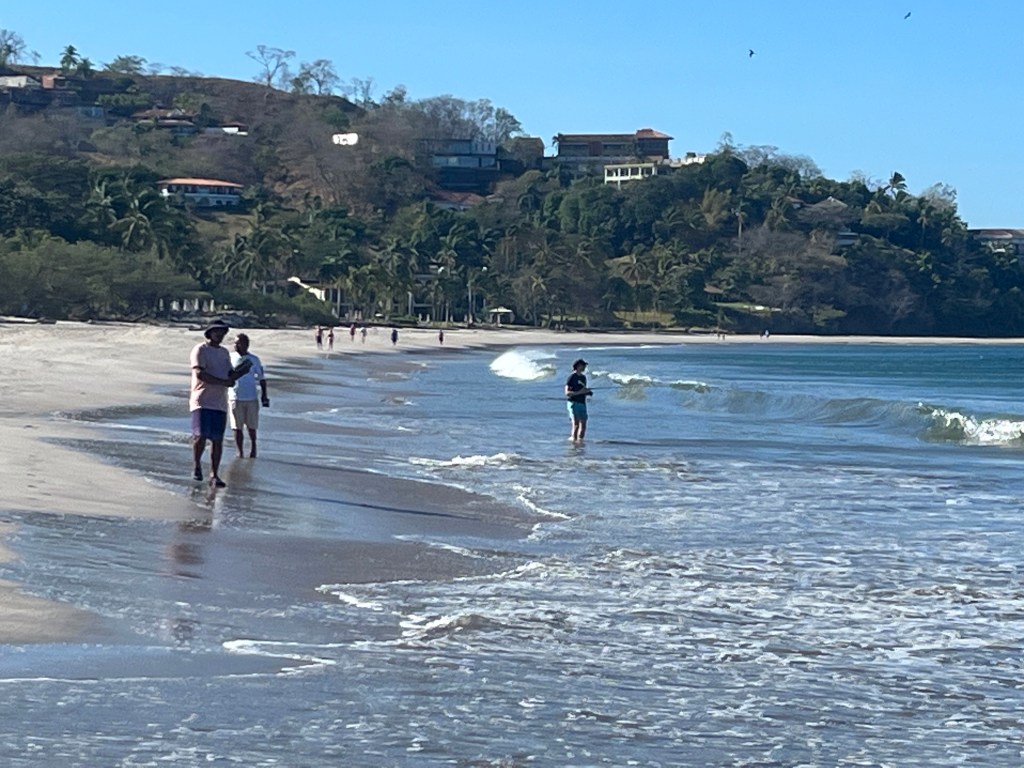
Playa Flamingo is the most touristed beach with two of the largest hotel complexes, a long whiteish sand crescent with hawkers selling tents and chairs for a couple twenty dollar bills (all negotiable). At midday the beach can be crowded. When the tides are right Ticos are out with fishing poles or even just fishing line, catching tuna and jack fish in the surf. At sunset, we sat among locals and no gringos within sight.

Locals fishing from the beach at Playa Flamingo

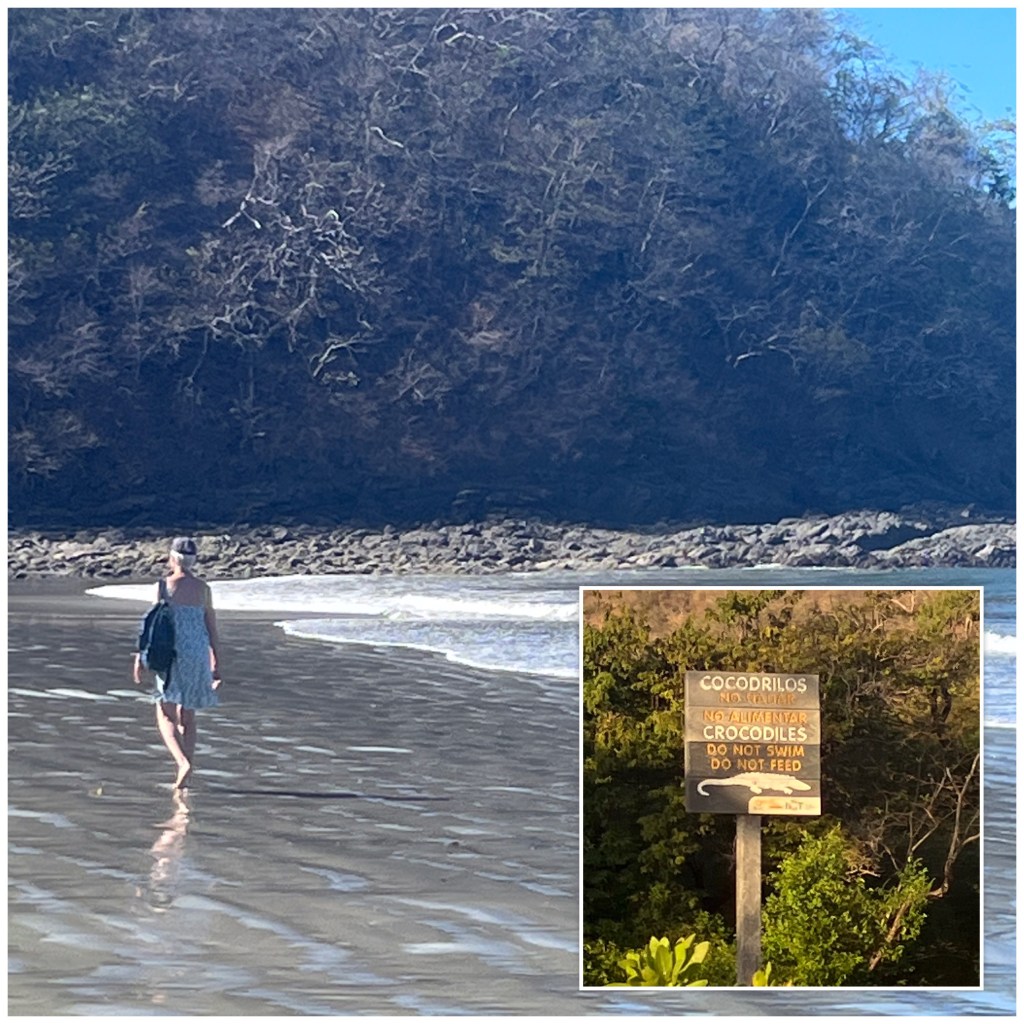
To escape the wind (which was wild this year), we walk Prieta Beach, a short white sand beach, often all by ourselves. It’s located north of town, down a steep and somewhat intimidating dirt road. No signs, almost impossible to find. We were lucky to stumble on it last year and it is now our favorite. It’s seems almost like our own private paradise. On the weekend, the beach attracts a few locals. Snorkeling is marginal there, but Prieta is still a spectacular place to swim and play in the waves. A short walk connects to another lovely, slightly more crowded beach, Penca (and a sign warning of crocodiles in the lagoon behind the beach).

Looking for a beachside restaurant? We go to Playa Potrero. The bay itself is less inviting here—darker sand, a little muddy—but it’s a great beach to walk and watch the sunset. Several small places offer decent margaritas and basic food. These places attract mainly tourists, but our attitude when we eat there is, hey — we’re tourists! Las Brisas, at the far end of the bay, has become our traditional first night in Potrero dinner! The evening dinner is often punctuated with Howler monkeys howling behind the restaurant.

Of course, when we go back to a place several times, we can’t help but make comparisons. The roads seem in better shape this year — fewer potholes. But as a consequence, more traffic, more wild Tico drivers, and fewer golf carts (which are street legal here). Some of our favorite restaurants have closed. New ones have opened. Prices are higher, but still low for what we’re getting. The pandemic has disrupted the local economy here as much as back home—marginal businesses struggled. But recovery seems to be in full swing. Lots of construction and we worry that bit by bit Potrero may go the way of some of our former favorite places.

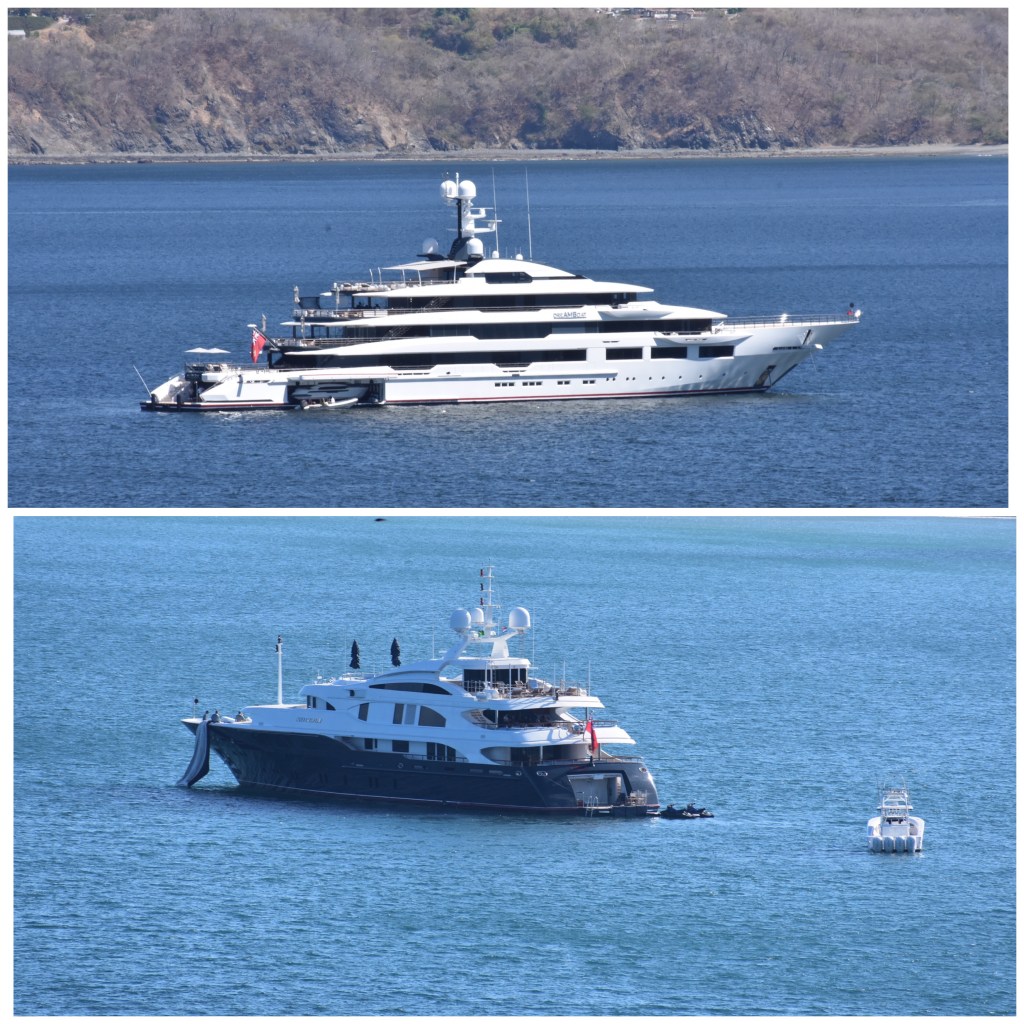
Another big change is the presence of mega yachts — Howard Schultz of Starbucks 100+ foot yacht was here, plus Arthur Blank (one of Home Depot’s founders — the liberal, not the current right-wing owner) even bigger yacht, and another yacht that charters for $325,000 a day plus expenses. Strange, because as we said, there’s not much here to attract that crowd. We never saw those big boats the first two times we were here. Sign of today’s economy?

Upper boat is registered to Arthur Blank of Home Depot fame and the other is available for charter at $325,000 a week plus expenses.

Yes, there is something very comforting about the familiar. It takes a while to know a place and each return visit adds new layer of understanding and new finds. We hope to return again next year to escape the northern hemisphere cold and make some new discoveries.