Changes

Change is good, right?  Progress is important, right?   New is better, right?  

Coming back to our favorite corner of Costa Rica, Potrero and Playa Flamingo on the Nicoya Peninsula for the fifth time in eight years, we’re not so sure.  Maybe.  

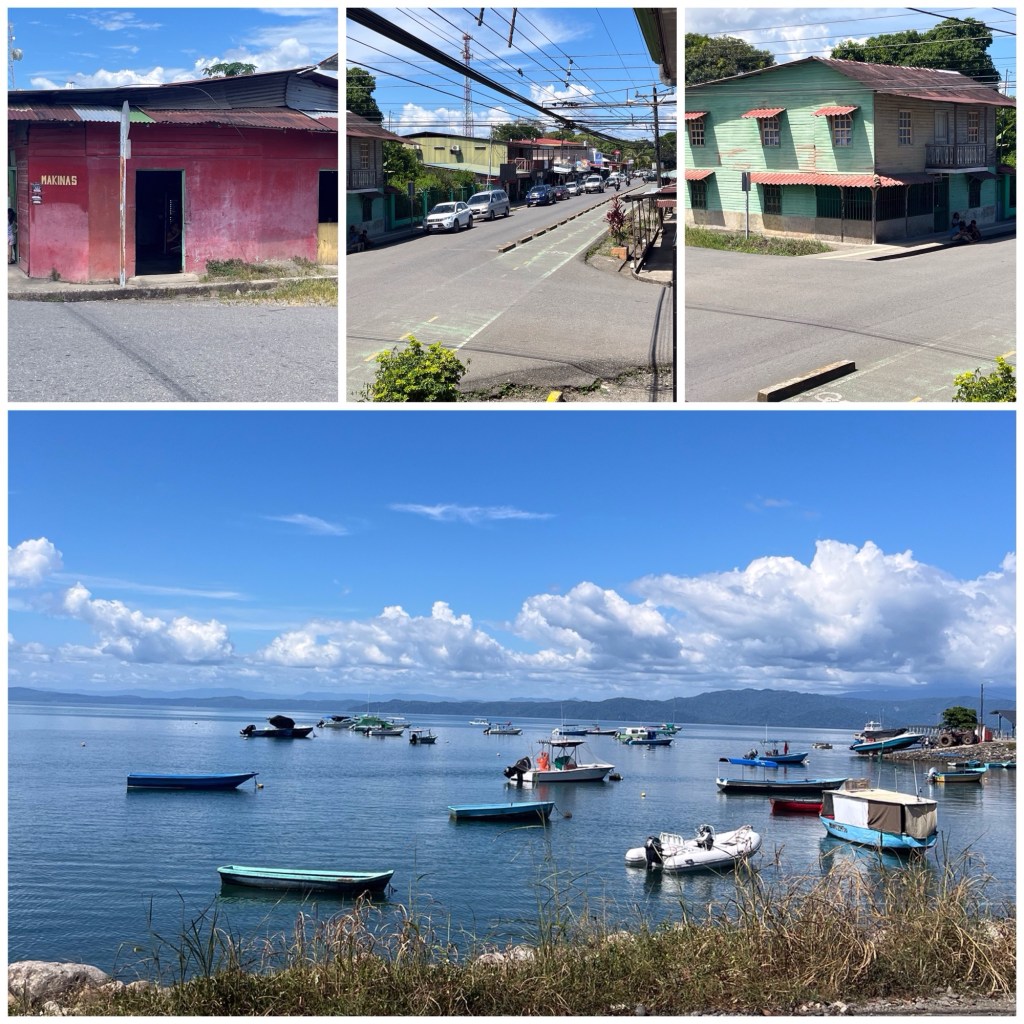
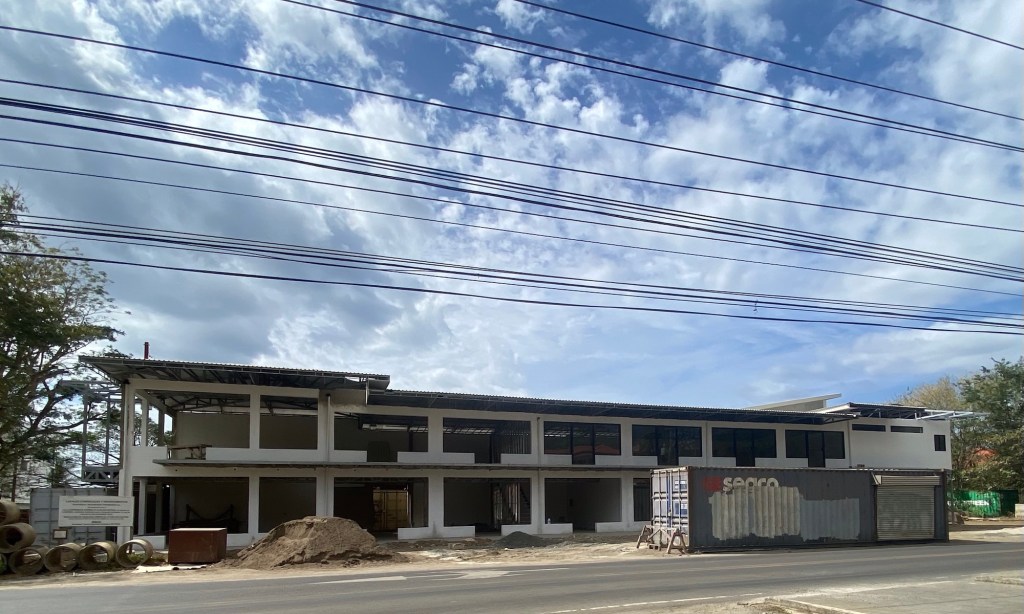
Gone are the two little funky stands where we bought our wonderful fresh fruits and vegetables.  One is being replaced by a modern office complex.  The other is permanently closed.  

Our favorite little fruit stand used to be here. 
Now we have to drive 20 minutes south to the closest produce stand.
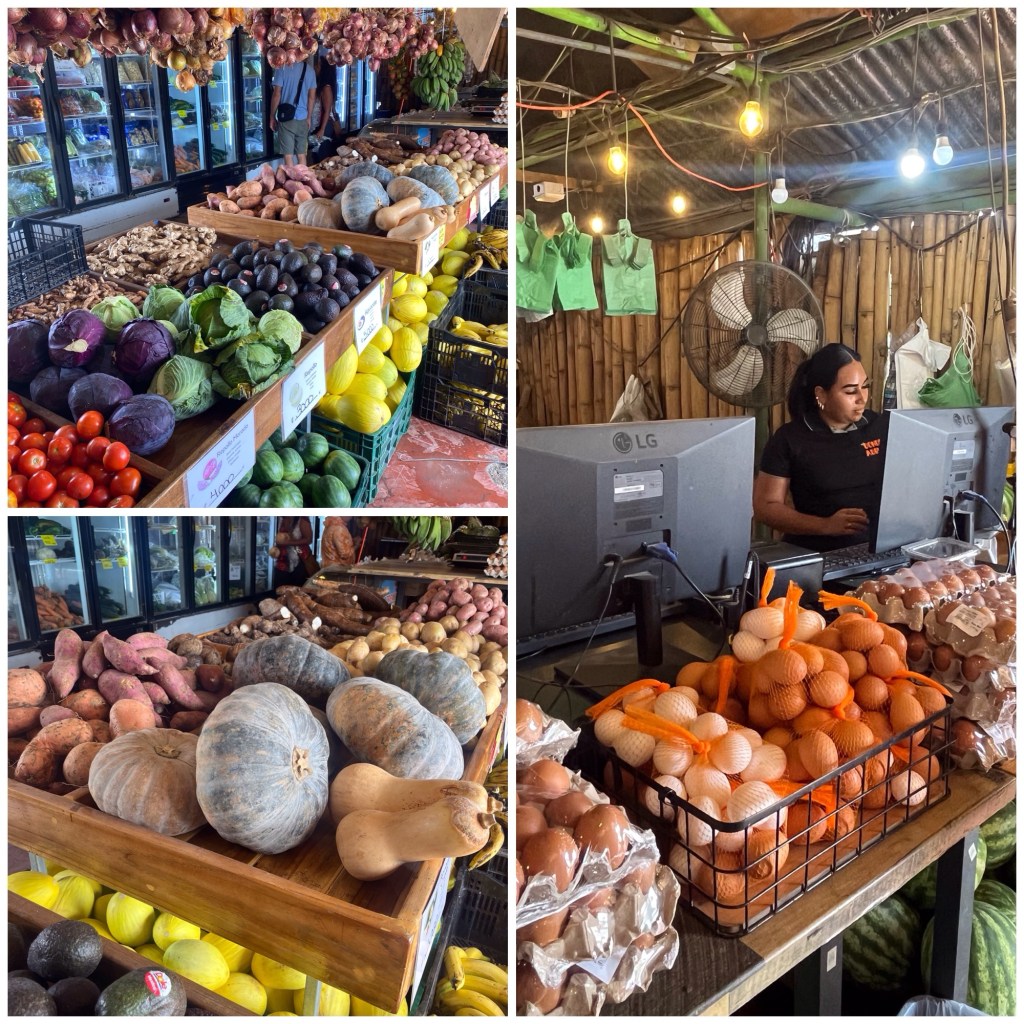
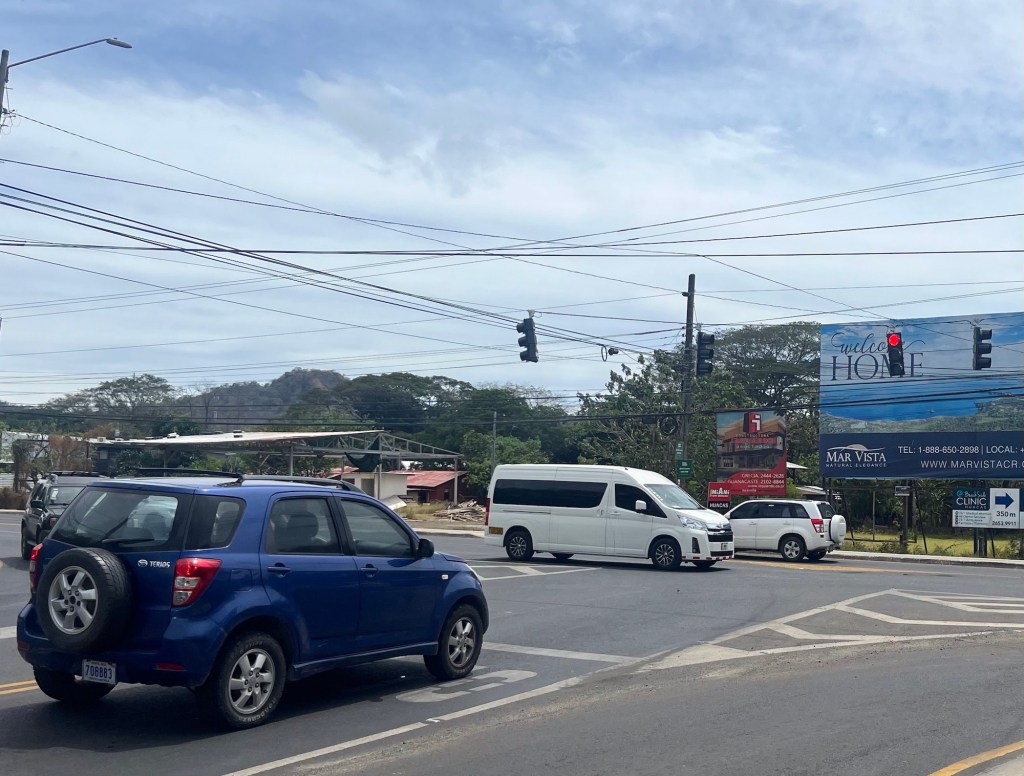
Why did the local fruit stands close? Why did several of the smaller soda restaurants we liked disappear?  Probably the land was too valuable for mom and pop businesses. New homes, office complexes, storage units, medical facilities, and a huge new gas station have sprung up in the last year.  We even have the first ever stop light in the region in nearby Huacas!  And God knows, with the increase in traffic that was one change that was really needed.  
The very upscale Playa Flamingo Marina is finally open with an elegant collection of shops and restaurants, and, yes, a helicopter pad that seems quite busy ferrying in guests. 
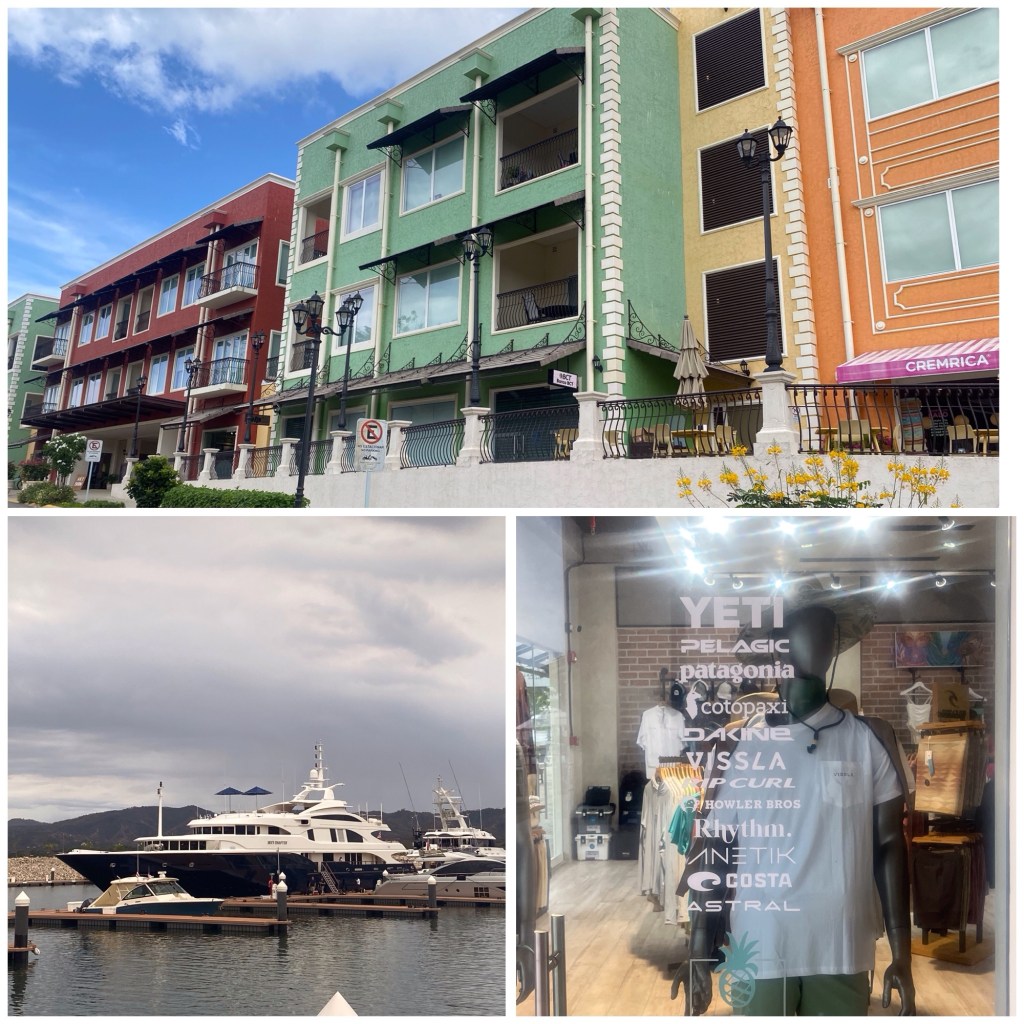
The new Marina which will be doubled in size in a year or two with even more upscale products for tourists and the yacht crowd

When we first came eight years ago, the bay was filled with humble pangas and a few fishing charters—all moored on buoys.  Now there are a few mega yachts and dozens of smaller yachts in the new marina. The super mega yachts are too big for the marina and have to drop anchor in the bay and send their tenders in. We have seen a few of those lately, including Starbuck’s Howard Schultz’s 254 ft yacht Pi. But no worries, there are plans in the near future to provide super mega yacht moorage, double the size of the marina’s commercial space and add a 200 “key” hotel (not 200 rooms because apparently the each unit will have several rooms).

Just today the first ever cruise ship, The World,  pulled into Potrero Bay—it’s a luxury residential ship where “condos” start 2.3 million.  But no where to dock…yet.  
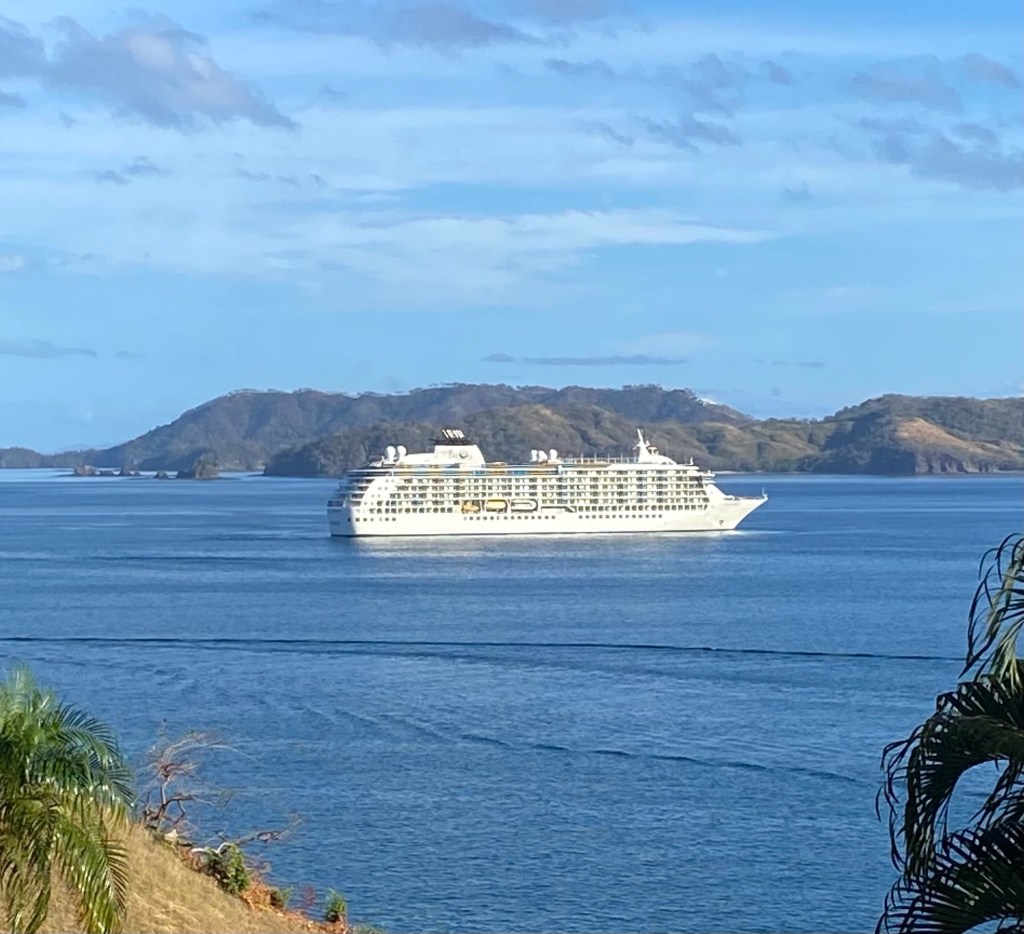
“The World” a floating condo in Potrero Bay

And with the all the new development, prices have risen accordingly.  A casado plate (the typical Costa Rican meal of rice, beans, some protein, plantains and a salad) in a local soda, a small family run restaurant, was $4-$6 dollars a few years ago is now typically $8-10.  A regular restaurant meal with a drink was $10-15 is now $20-25. Yes, still a bargain compared to our hometown Seattle prices—but not the incredible deal it used to be. And should you go to a “tourist” restaurant you will be paying nearly Seattle prices.

Our local grocery, the Massai Market always catered to the gringo crowd, but we also saw a fair number of Ticos as well. Now gringos dominate. The market has been upscaled and has a new, large refrigerated wine and spirits room—the selection would rival most U.S. stores.  Single malt whiskies, pricey bourbons, expensive grand cru wine, champagnes.  All at US prices. 
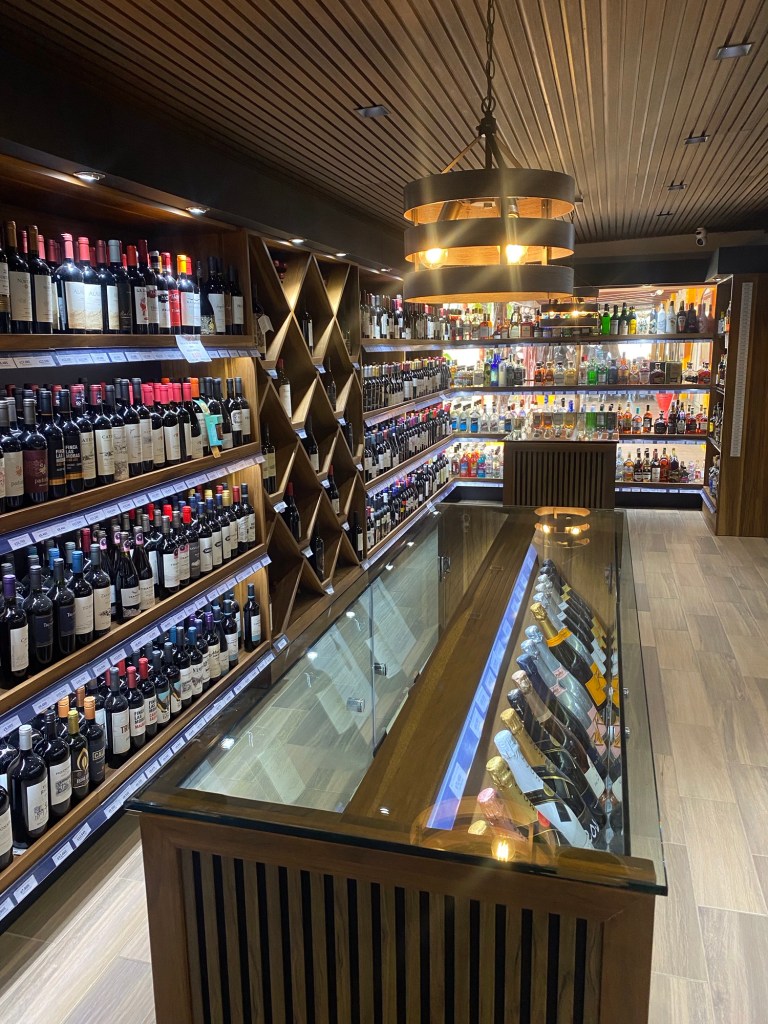
There is also another brand new grocery store — this one away from most of the new development and closer to the Tico area of town. It’s clientele is mainly locals so the changes aren’t just for the gringo crowd.

Maybe the good news is that despite all that is changed, much has remained as it always was.  The beaches are still uncrowded, particularly for our morning walks. We watch the sunset from the beach surrounded by locals—nary a gringo in sight. 
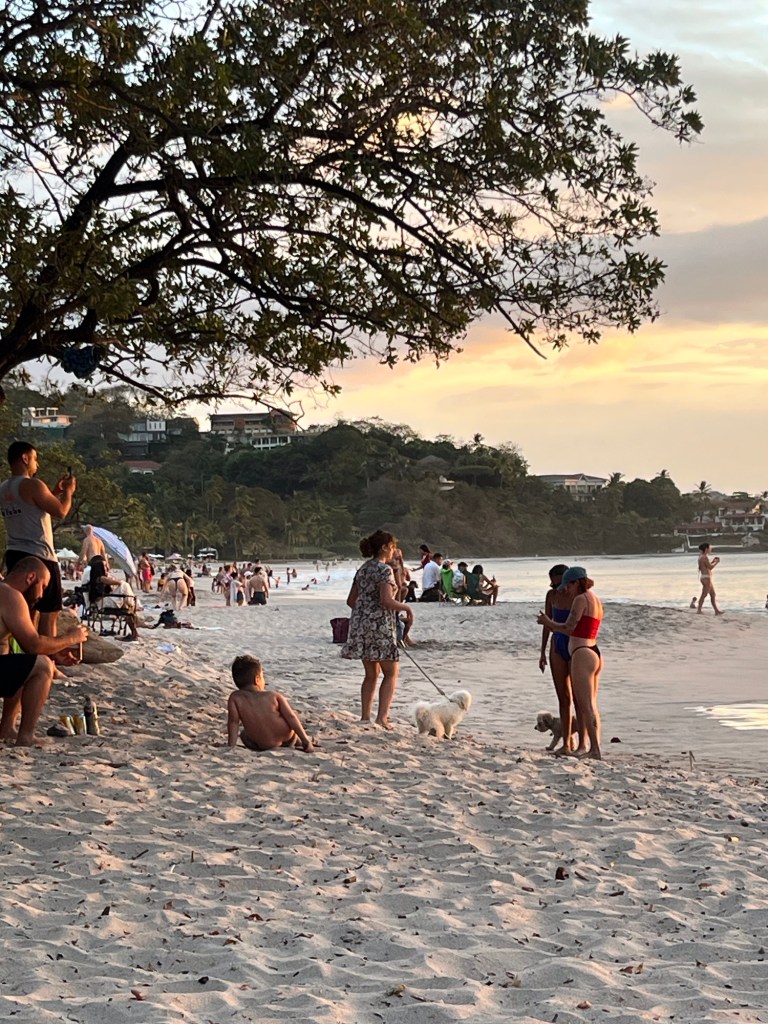
The Ticos are still warm, friendly people, the food is great, and the natural beauty of the area still awes. 

We also know that while we maybe missing the quaintness of mom and pop fruit stands, sodas, and a bay filled with pangas bobbing on mooring buoys, the Ticos here see more jobs, better pay, better infrastructure, better housing.  The biggest source of foreign income in Costa Rica is tourism.  Since we’ve been coming here we’ve seen a dramatic improvement the roads, cell coverage and internet. All huge pluses for the locals.  

One change that is not welcome by the locals and the tourists alike is climate change.  On our way up to Potrero and Playa Flamingo, we stopped in Uvita at the Ballena Marine Park.  Along the beach there were signs in Spanish and English warning that rising seas were threatening pristine coastal areas and swaths of coconuts trees that lined the shore showed the damage.
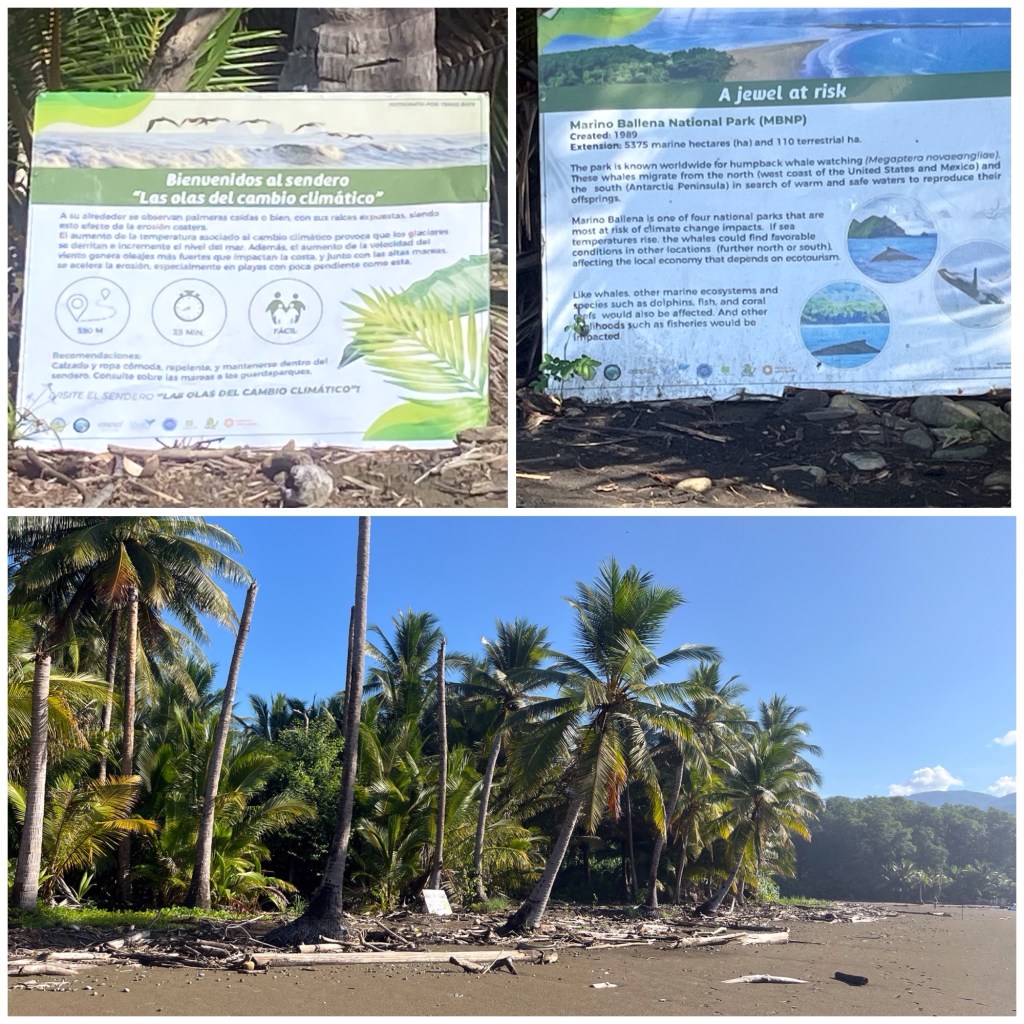
Warning in Spanish about the “waves of climate change” and in English about the risk to the beaches while the damage to the trees is evident.

In Potrero last November, it rained for 21 straight days, causing massive flooding and cutting off whole communities for weeks.  Tourism came to grinding halt—causing a number of businesses to fold. The climatic forces that created the Cloud Forest are out of balance, potentially leading to loss of this precious ecosystem. Our guide in Santa Elena this year told us “summer” came just two days before we got here. And every year we come, Potrero seems to be a degree or two hotter.  The beaches here show the signs of high tides and storms eating into the headlands.  

Will we come back to Playa Flamingo and Potrero?  Probably.  Our thinking now is that we will continue to make forays into different parts of Costa Rica next year, looking for a bit of what captivated us on our first trip here and has lured us back again and again.  
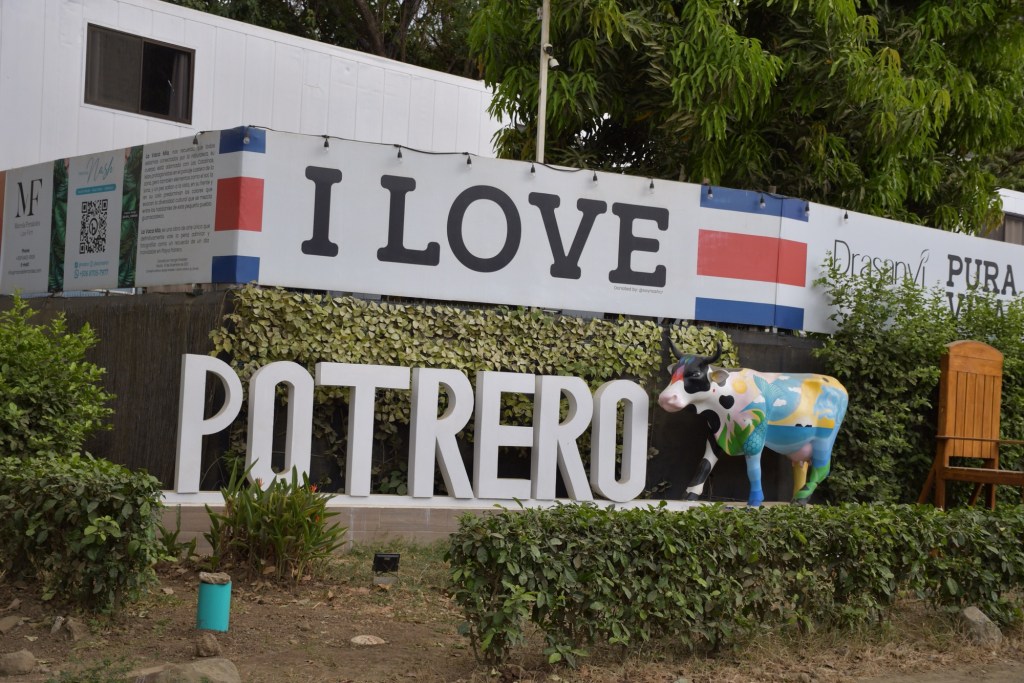
New Horizons in Costa Rica

We wrote a blog several years ago about how comforting it was to travel back to the familiar.  You know the stores, restaurants, the roads.  What to see, what to avoid.  And yet we also usually find something or some place new to explore.  This was our fifth trip to Costa Rica and again, we were planning on spending part of our time in Potrero, our home base, on the Nicoya peninsula on the Pacific side.   Lovely beaches, decent tourist infrastructure, but not over taken by souvenir shops  Then a few days in Monteverde chasing birds. But this time we would add a trip down south to the Osa Peninsula.  A new horizon. 

What is stunning about Costa Rica is how many completely different climatic and geographic regions are packed into a small country.  Dry, almost desert on the North Pacific coast, tropical rain forest on the mid Pacific coast, even more dense, hot tropical forests further south, the temperate central valley, the cool Cloud Forest in the mountains, the Caribbean lowlands, and the high southern mountains. 

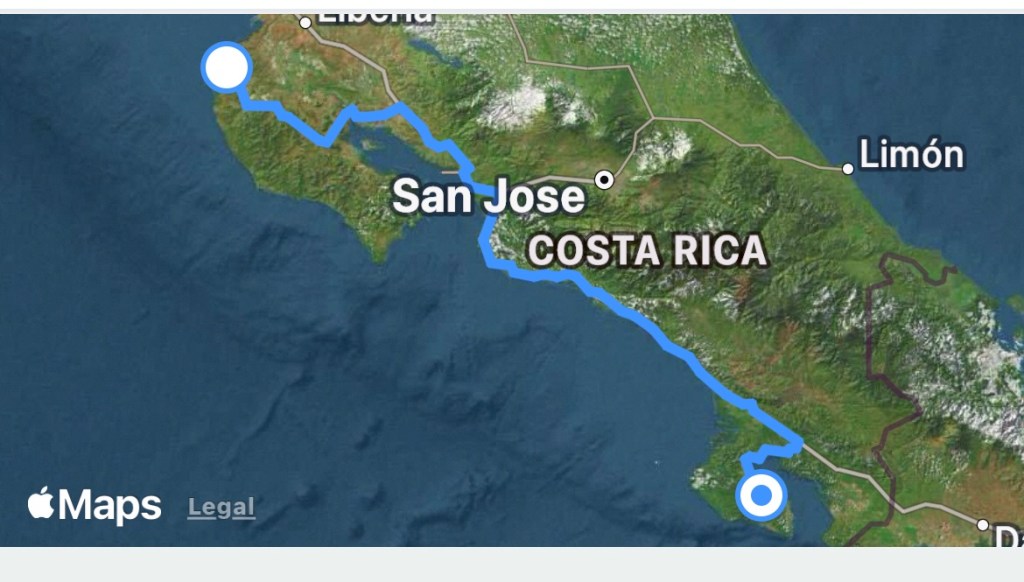
Osa is a long drive from San Jose. Even longer because you inevitably find lots of construction zones and a very slow truck or two to follow for tens of miles. So we decided to stop in Uvita on the central Pacific coast along the way to break up the trip.  

Some suggest our first stop, Uvita, is an alternative to the more touristy Quepos and Manuel Antonio, just a bit further down the road. It’s a town with no main square or center, and has one main attraction—the Ballena Marine national park. This very unusual park has a huge sand spit that from above looks exactly like a whale’s tail.  Unfortunately we were there at high tide; no whales tail but a gorgeous beach.

It was also prime time for the humpback whale migration so dozens of small whale watching boats were being launched through the rough, heavy surf, occasionally dumping a tourist or two into the water.

We spent two days there exploring the national park, looking for monkeys, watching birds and walking the beautiful local beaches. A good stop along the way to the Osa Peninsula.

The Osa Peninsula is one of the more remote parts of Costa Rica—very different than where we’ve been before. We read that this area was less developed, less touristed than our previous haunts. It’s in the far south, super tropical, on the Golfo Dulce (the only tropical fjord in the northern hemisphere). The peninsula is almost entirely a national park, the Corcovado National Park, and mostly inaccessible except by boat or long hikes, as in three and four day long hikes with a ninety minute boat ride from Puerto Jimenez before you even start to walk. Spectacular wildlife—birds, monkeys, sloths, tapirs, jaguars, and snakes—lots of snakes.  One of the real natural treasures of the world—it said to be the most biodiverse place on the planet. 

Fortunately, it is possible to drive down the eastern side of the peninsula to Puerto Jimenez, a little run down village of mostly Ticos, some expat hippy/yoga types, and a few serious eco tourists/birders/hikers. You can drive further south on a dirt road with multiple stream crossings to Carate, but we wisely chose to end our drive at Puerto Jimenez. The town houses the main information center for the national park and you book your tours there—you must have a guide to get into the park.  There is also a small airstrip with flights from San Jose, Liberia and Quepos should you not want to make the long drive.  It was little disconcerting when we were sitting at a local restaurant at the port when a small plane buzzed by seemingly inches over our heads.  We noticed none of the locals flinched.

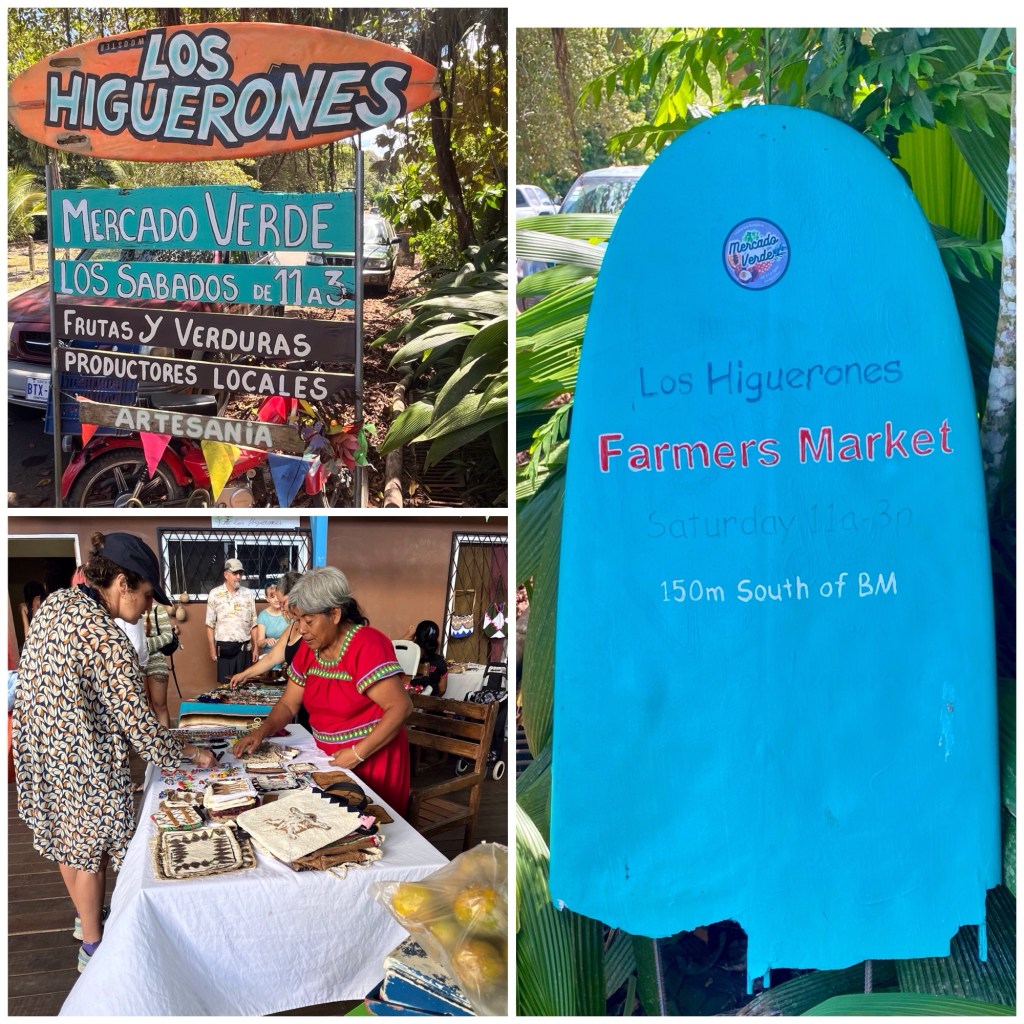
There’s not much else to the town. A few restaurants, couple of yoga studios, a gas station, a BM grocery store, and a heavily advertised Saturday farmers market that takes five minutes to see but includes some indigenous people’s crafts..

Just a few but very rugged miles outside of town is another of Costa Rica’s gorgeous beach’s—Playa Preciosa. From here you can almost see Panama.

Part of Osa’s charm is its lack of serious tourist infrastructure.  So we had a hard time finding a place to stay except for a few very upscale eco resorts.  We wound up in the Corcovado Private Villas.  We think it might have been an eco resort that fell on hard times in during Covid. We had been warned a four-wheeled vehicle was required. The website gave us a GPS waypoint that took us up a steep dirt road that reinforced the idea we needed four wheels.  Unfortunately when the GPS announced “you have arrived”  we were in front of nothing but a barbed wire fence.  So, of course we drove on, using all four wheels on our car, as the road became progressively worse.  Back home we would have called it a mountain logging road. Luckily, a kind local on a motorbike recognized we were somewhere we didn’t belong and led us back to civilization.  Of course, this part of Costa Rica lacks reliable cell reception as in we had no “bars”.   We had to backtrack several miles to get cell service and a new set of directions — different but only slightly better.  We finally arrived.  Our traveling partner in the backseat had her eyes closed most of the way up to resort, muttering occasionally “oh my goodness.”  The “check in” guy, Esteban, listened rather calmly to our annimated story about getting lost and told us he too had gotten lost a few days before using the original directions.  We suggested that maybe they might want to delete those directions from their website.  

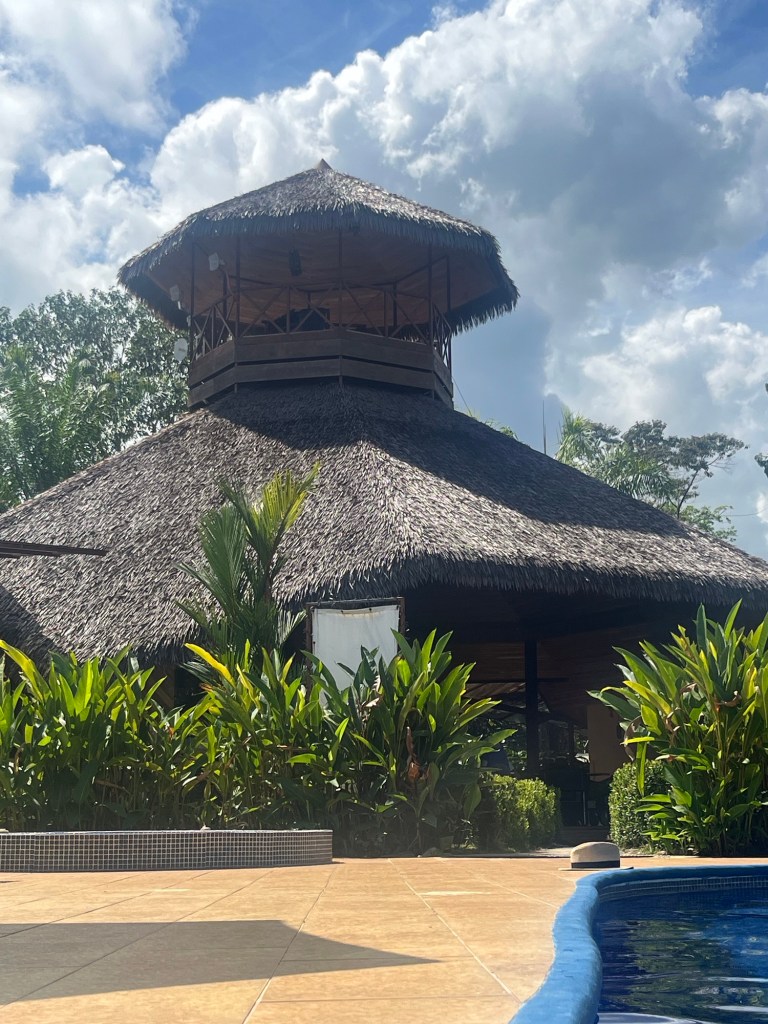
The complex consisted of a dozen or so separate units spaced some distance from each other along the steep trail to the top of the hill. There we found the pool, hot tub and “restaurant”  which served an inclusive breakfast and you could order a dinner in advance with a very limited  menu.  Oh, and the whole stay was cash only and it was very unclear who you paid and when. Nobody seemed to be in charge but we figured somebody, sometime, somewhere would take our money.

The villas themselves were a bit run down, with few amenities, but very serviceable.  And with gorgeous views of the green jungle teeming with birds and a few monkeys just a few feet from our balcony.

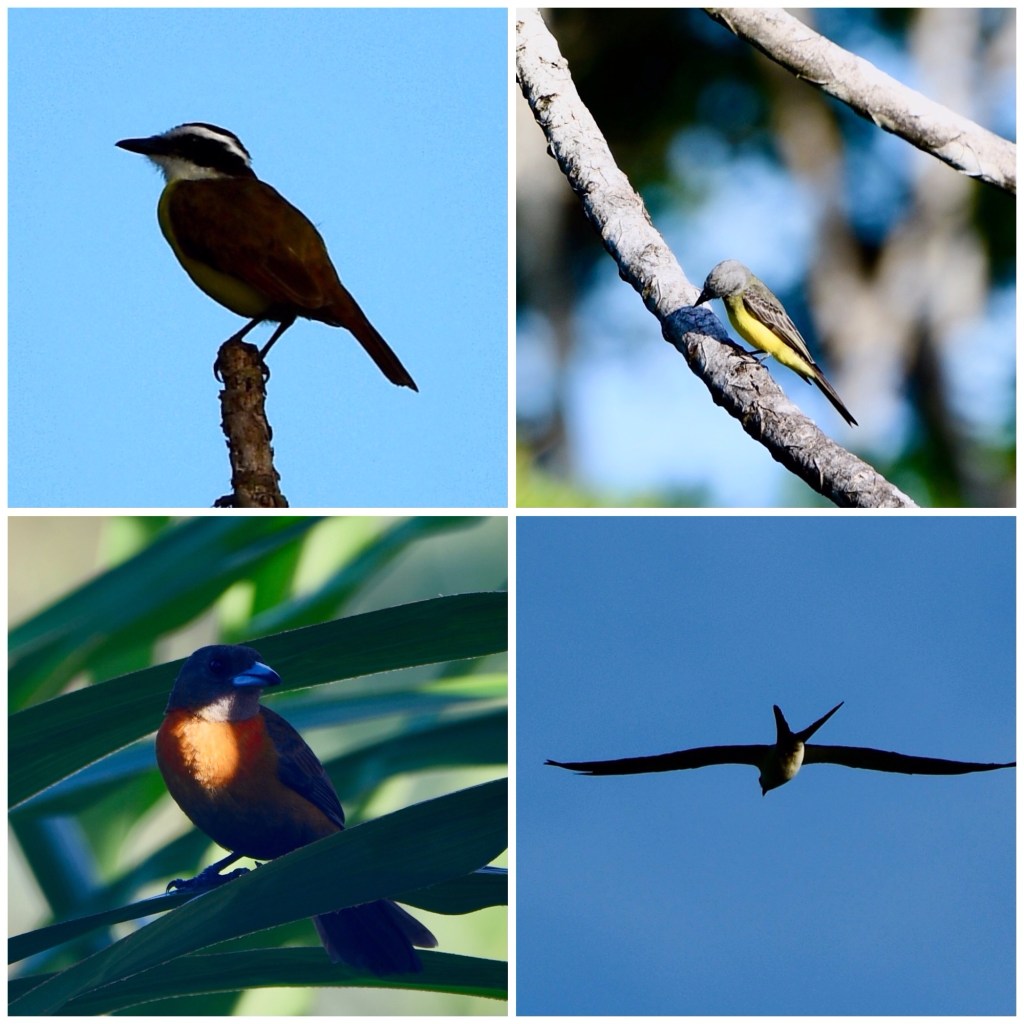
The upside, and it was a huge upside: the 70 acres of amazing tropical forest right adjacent to the national park.  Some of reviews said the wildlife here was better than what they saw in the park.  While we are not truly serious birders, what we experienced in the few days on the property could change our minds.  Toucans, fiery billed arcaries, multiple varieties of parrots, lineated woodpeckers, and dozens more.  At least several new life birds for us. 

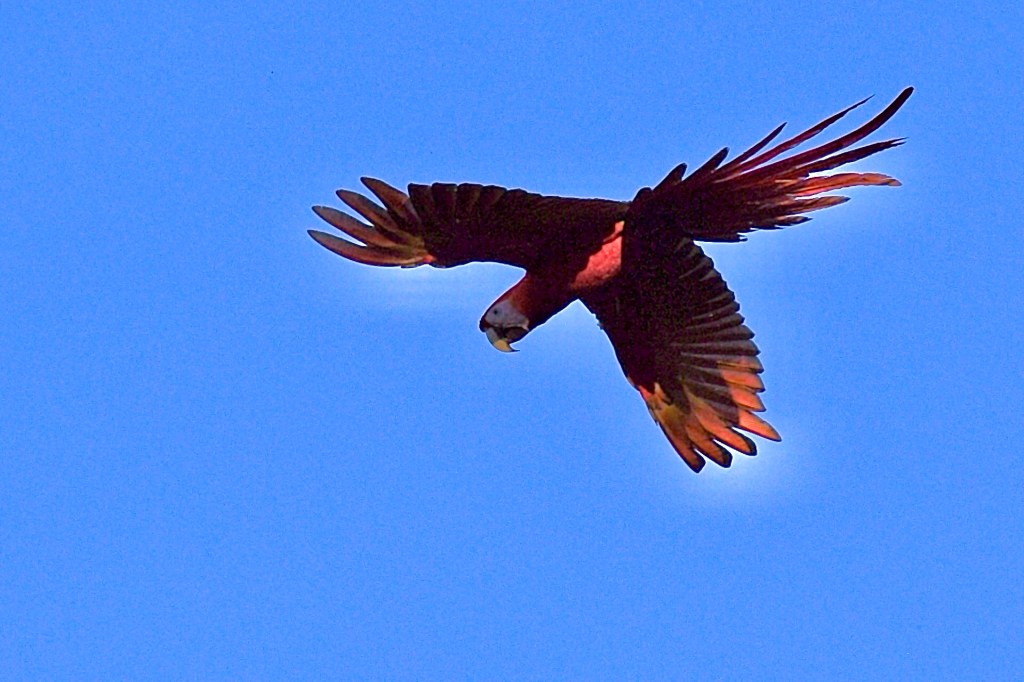
But the star attraction were the scarlet macaws—a very large bright red, yellow, blue parrot with the most awful loud sqwauk of a call which you could hear for miles.  Our villa and common area seemed to be a macaw freeway with birds flying over all day, stopping to rest in the nearby trees.  What a show.  A very loud show.

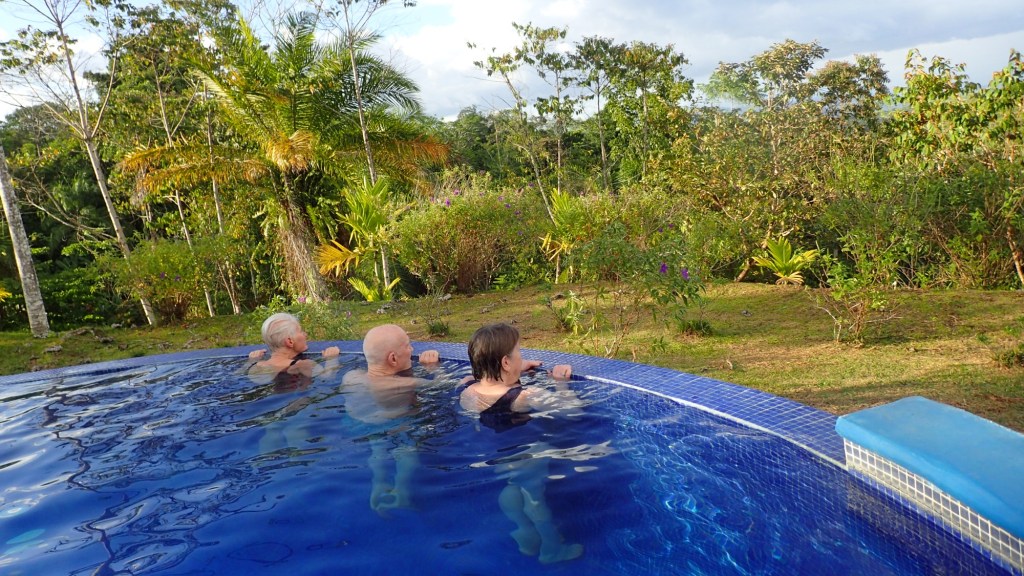
And you could see most of this from a magnificent infinity pool at the top of the property.  In one 45 minutes stint in the pool, we saw white faced monkeys, yellowed throated toucans, green parrots and, of course, lots of scarlet macaws, plus monkeys just a few yards away peeking through the foliage. Pool birding was a new experience for us. As we said, we aren’t serious birders. 

And the dinner, humble as it was (arroz con pollo) was very good. However, the parting comment from our young server as we walked home to our villa was a little disturbing, “Be careful of the snakes.”  We walked with all four iPhone flashlights focused on the ground.

Yes, the property needs work and serious investment.  But if they ever upgraded to a high-end eco resort, we probably couldn’t afford it.  By the way, while writing this in our villa some white-faced monkey is having a shit fit not far away.

The Osa Peninsula surprised us by living up to its reputation — a natural wonder, still largely pristine, a biodiverse sanctuary, and one Costa Rica’s many different climatic and geographic regions. It’s also a great example of Costa Rica’s commitment to preserving natural habitats by setting aside huge areas as national and provincial parks.  

It gave us a lot to think about on the 10 hour drive back north to Potrero— basically nearly the entire length of the country.

Guiding Lights

For years we scoffed at hiring a guide when we traveled, figuring we could read the books, or ask around and figure out most stuff about sights on our own. We looked at groups in museums, massed before a work of art and listening to a guide drone on and on about the artist, the symbolism, the technique …. and we winced. Probably we were scarred by many trips to the old Soviet Union and their pedantic guides.

But in recent years, we have learned to hire a guide to get a really good overview of a city, or when we want a deep dive into the details of a site. We learned on our Zimbabwe safari that without the guides we would have missed a lot, even giraffes standing right in front of us among the trees. In Costa Rica, we would never have seen a spider monkey or identified it’s call. In Spain, we might have missed the Griffon vultures—one of the biggest birds on the planet. Yep, a good guide, particularly a private guide or small group guide is usually worth every penny you pay.

We’re casual bird watchers — we don’t get up at the crack of dawn to visit sewage treatment ponds or horribly remote locations. Our life lists are pretty hit and miss. But we do enjoy stopping on a walk to look at a bird. Our identification skills are pretty lame, so when we’re in a nature lover’s paradise, we hire a guide. Case in point: Monteverde in Costa Rica.

Six years ago we had booked a birding tour through a kiosk at a hostel/backpacker hotel/cafe in St. Elena. The guide turned out to be fabulous. So for our latest trip we hunted him down online (luckily Peter had recorded his name in our journal from our trip six years ago).

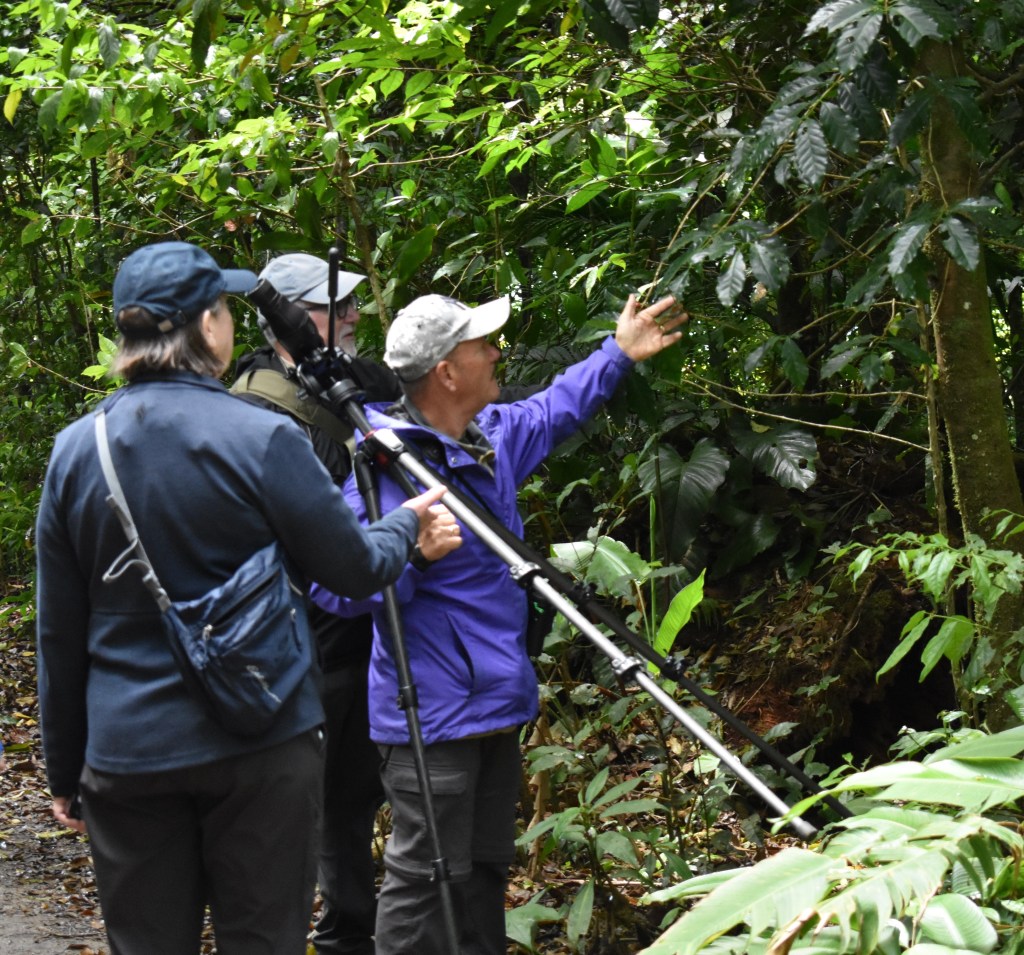
Adrian is exactly what you want in a guide. First and foremost, he is wildly enthusiastic. He leaves you with the impression that he not only loves his job, but he simply enjoys a walk looking for birds. When we spotted a rare one, he was more excited than we were. “Oh! Oh! Oh!” He would say, grabbing his spotting scope and trotting off with us closely following, “This one is special.”

With 30 years of experience, he knew every sound, every nook and cranny in the Curi Cancha Reserve. We were surprised that he wasn’t taking us back to the more famous Monteverde Reserve just down the road where we had been six years ago. But as he explained, Monteverde had become way too crowded and had imposed too many restrictions on visitors and guides. Another advantage of a great guide, we thought, as we toured Curi Cancha, most of the time by ourselves.

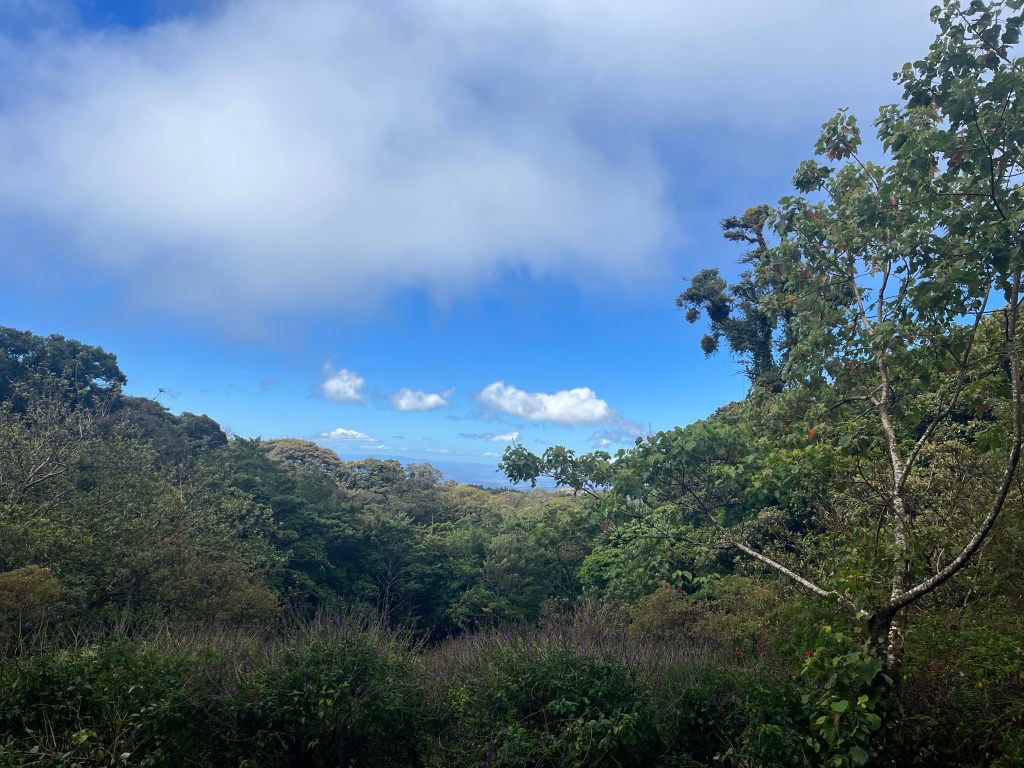
First question he asked us before we took off? “Who is keeping the list.” For each bird we saw, he patiently and deliberately repeated the name several times, even spelling it if needed. He did complain that they kept changing the official names of birds which made his job challenging at times. His upbeat demeanor carried us through the less than ideal weather. After all, it’s called the Cloud Forest for a reason.

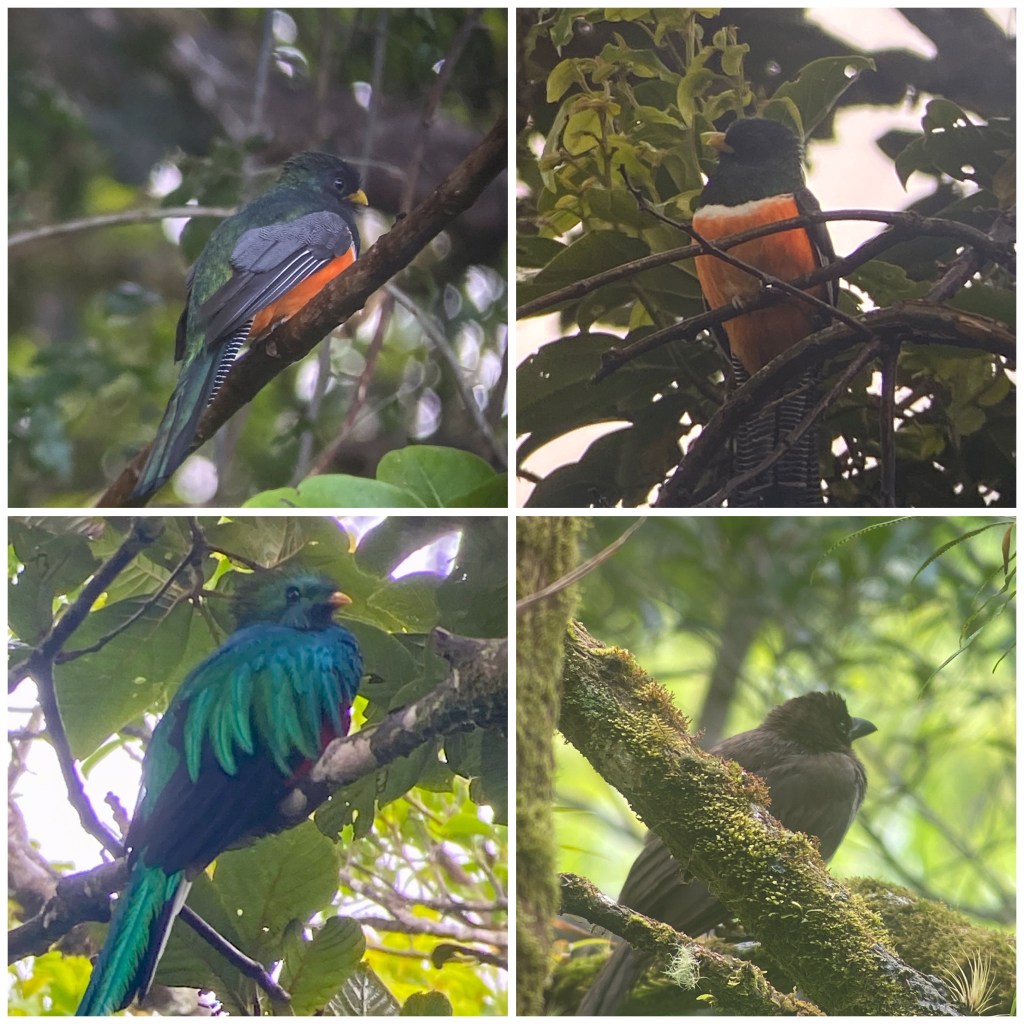
When the other guides zigged, he zagged, leading us into quieter parts of the forest. He knew where the owl generally hung out (it didn’t show for us) and where to find the spectacular resplendent quetzal, the star attraction of the Cloud Forest. But as the other groups gathered in front of the tree where the quetzals pick fruit, he took us back into the woods where it would sit to digest it’s meal. In short, he knew the ropes and had a few tricks up his sleeve! In the end, we saw 48 different species in four hours!

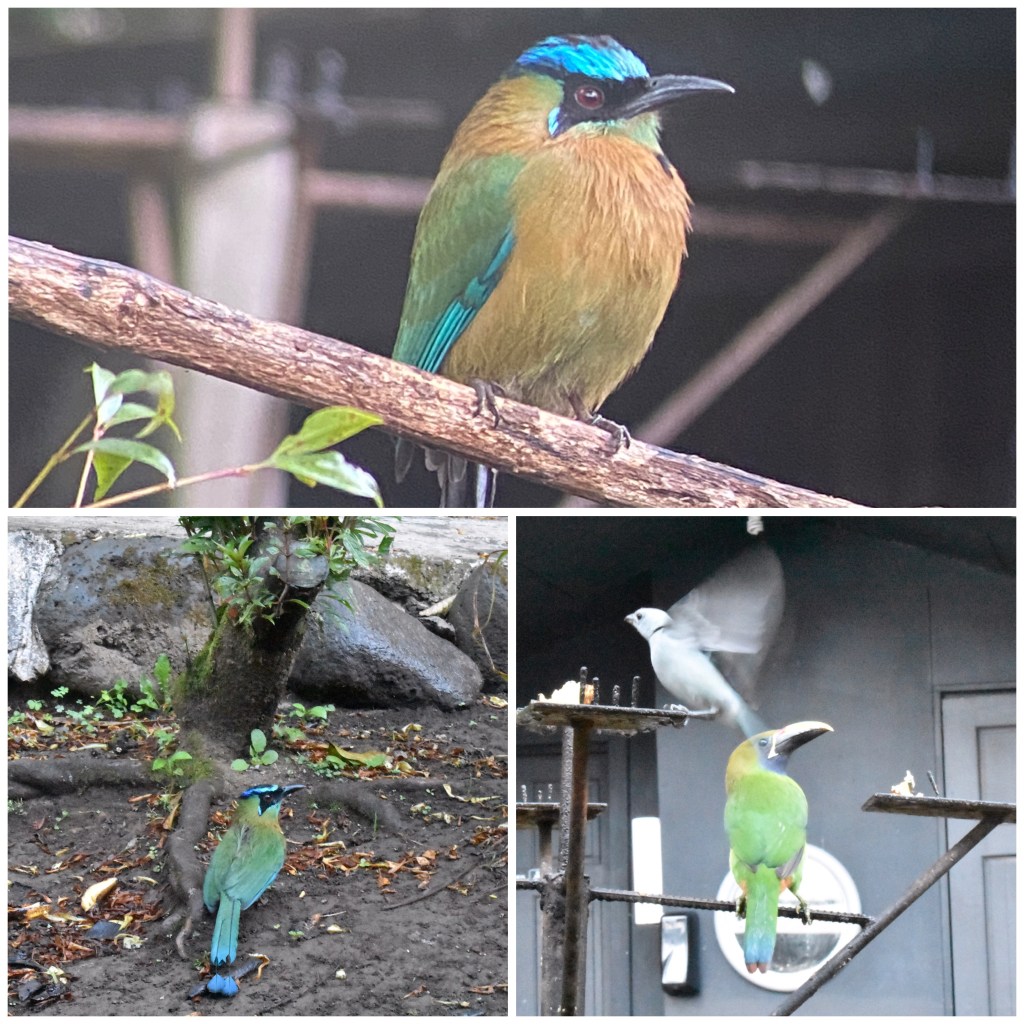
When he spotted a bird, he quickly set up his spotting scope, lined up the bird and stood back so we could take a look. If we wanted, he used the scope and our smartphones to capture dramatic pictures of the birds. When the birds moved too quickly, he used a green laser, pointing just below the bird, careful not to hit it with the light, so we could find it with our binoculars. He also knew which birds would fly away from the light and used the laser very judiciously.

And since we aren’t purists, we didn’t care that some of our bird sightings happened at a cafe with bird feeders. We enjoyed the mid-tour break for coffee almost as much as we enjoyed seeing the birds clustered around the feeders.

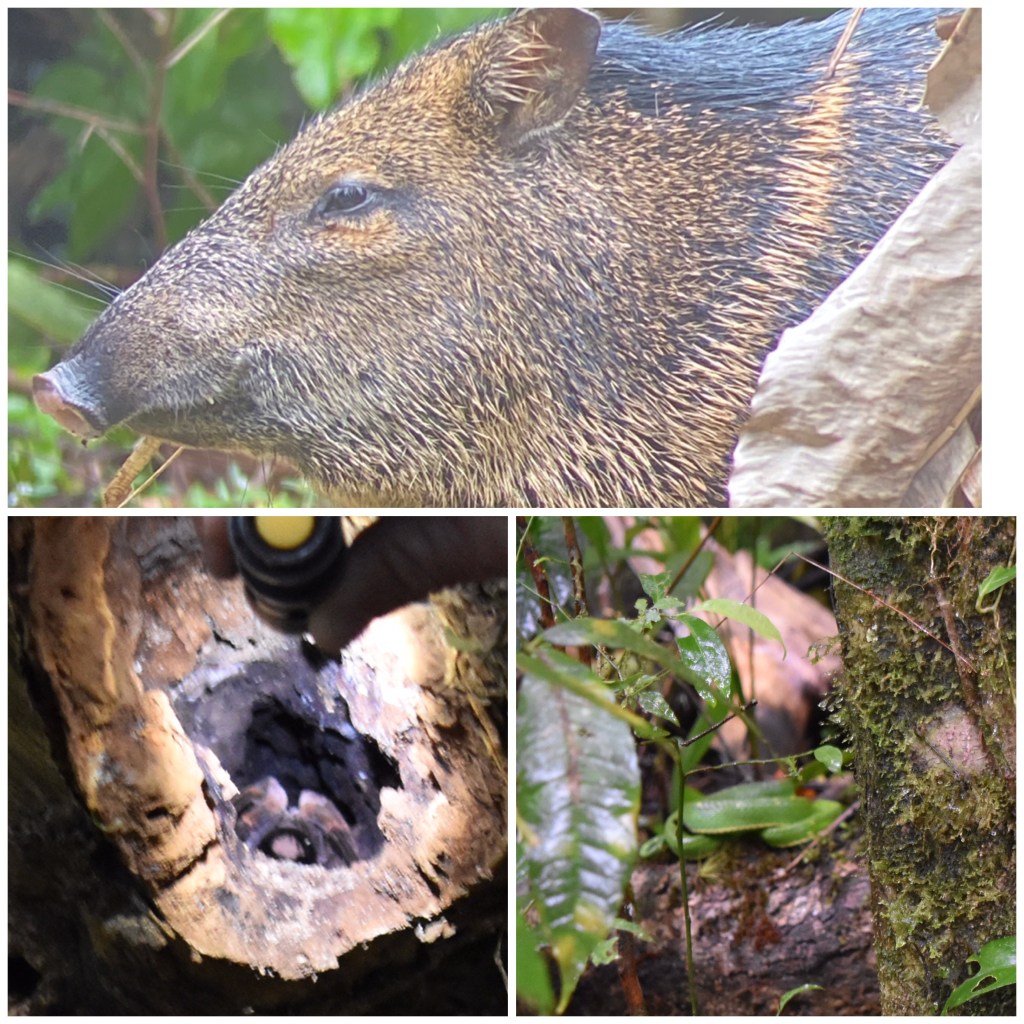
He didn’t just talk about the birds, we also got a lesson in the plants around us and the evolution of eco-tourism in Costa Rica. The wild pigs, known as peccaries, are new to Curi Cancha and were originally shy, but have learned that within the park they have nothing to fear — until the pumas choose to return, too. Adrian made us sure we saw the tarantula, and poisonous Green Pit Viper. These guides are all trained, many with college degrees in ecology or environmental studies.

But the great guides don’t just show you the sights, they also give you a glimpse into their community. Of course, we talked about the pandemic and it’s impact on his life, how a frugal lifestyle meant he had money in savings to survive. He had suffered a medical scare two years ago that brought him closer to his family and helped reorder his priorities. But he also shared how the Costa Rican medical system worked for him. He now takes more days off and limits the number of tours per week. And he gave us a clue to one aspect of how the tourist industry works when he told us next time to contact him directly for a better price on the tour. (adrianmendezc@hotmail.com)

As we ended our day the sun came out and we said to Adrian, “see you next year!”

No More Monkey Business

We’re back in Costa Rica for the third time. The first time was six years ago and then again in 2022 when we were first traveling as the pandemic became more manageable. We planned this year’s trip to take us to some new places and revisit our favorite “been there & done that’s.” The repeat visits generated comparisons — Is the traffic worse here? Are the prices higher this year?

Probably making such comparisons is inevitable and probably largely guesswork. But without a doubt the pandemic left it’s mark on Costa Rica.

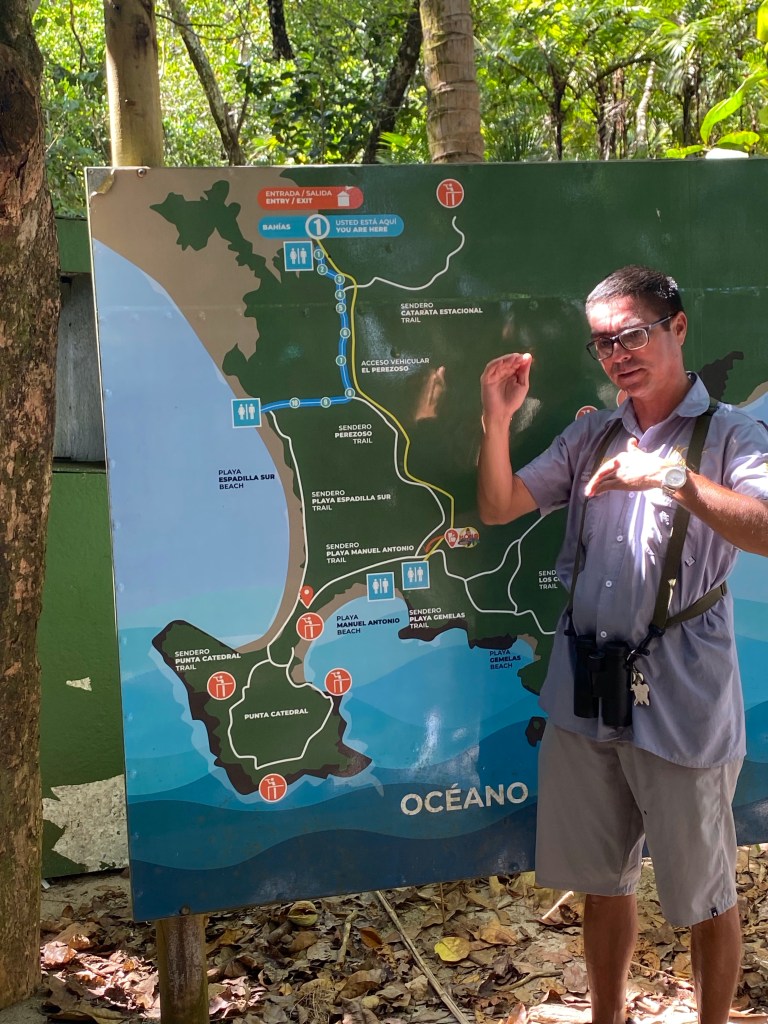
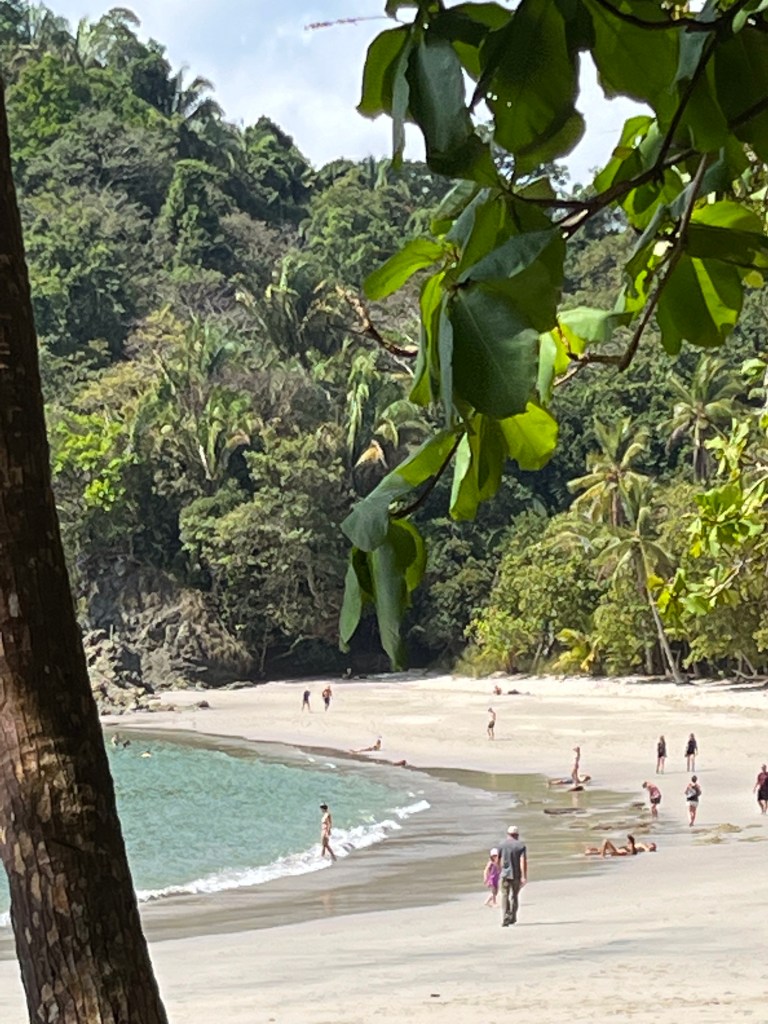
One of Costa Rica’s biggest tourist attractions — Manuel Antonio National Park — is not the biggest park in Costa Rica, but sits reasonably close to the capital with gorgeous beaches. Six years ago, the beaches in the park were packed with families and tourists — and outnumbering the human visitors were the ever vigilant White-faced Monkeys (also known as Capuchin). Notoriously clever thieves, they were constantly on the lookout for bags or purses that might contain food. We were warned never to set our bags down as the monkeys were lightening fast at stealing them — often carrying them up into a tree and disdainfully throwing down all the non-edible items inside. As we walked the paths, we stepped around and over the mama monkeys and their babies. You had to get dozen of yards away from the beach and the picnickers to get a sense of the real park. On our visit this year, we struggled to see even one White-faced Monkey.

Why the change? The pandemic. The park was closed that first year. The park naturalists noticed monkeys began dying from starvation. Many of them had lost the ability to forage for food when there were no tourist backpacks to raid. This triggered a re-examination of park procedures. Now entry is limited and requires a reservation. Visitors are checked at the entry gates to make sure they don’t bring in any food that might attract the monkeys. As a result, the park is less crowded and is cleaner and, most importantly, the monkeys have reverted to their more natural state.

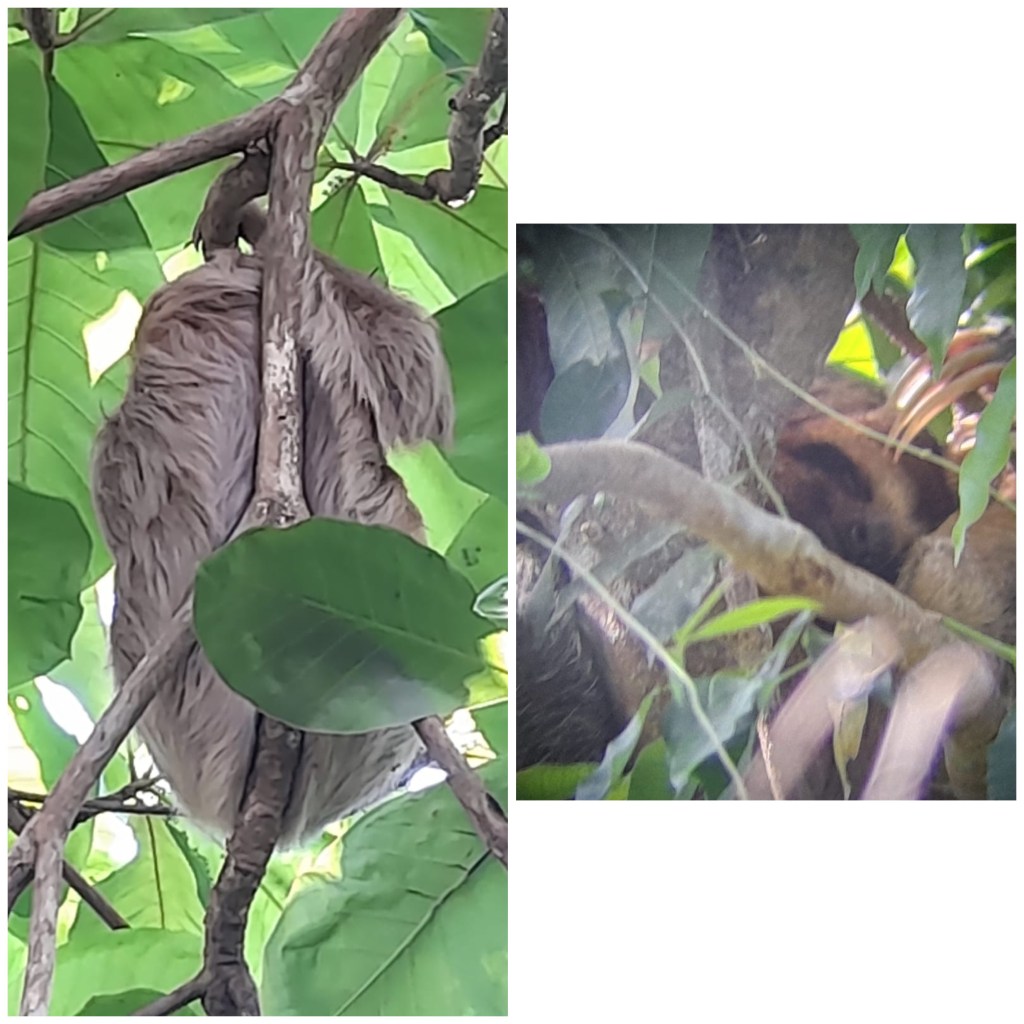
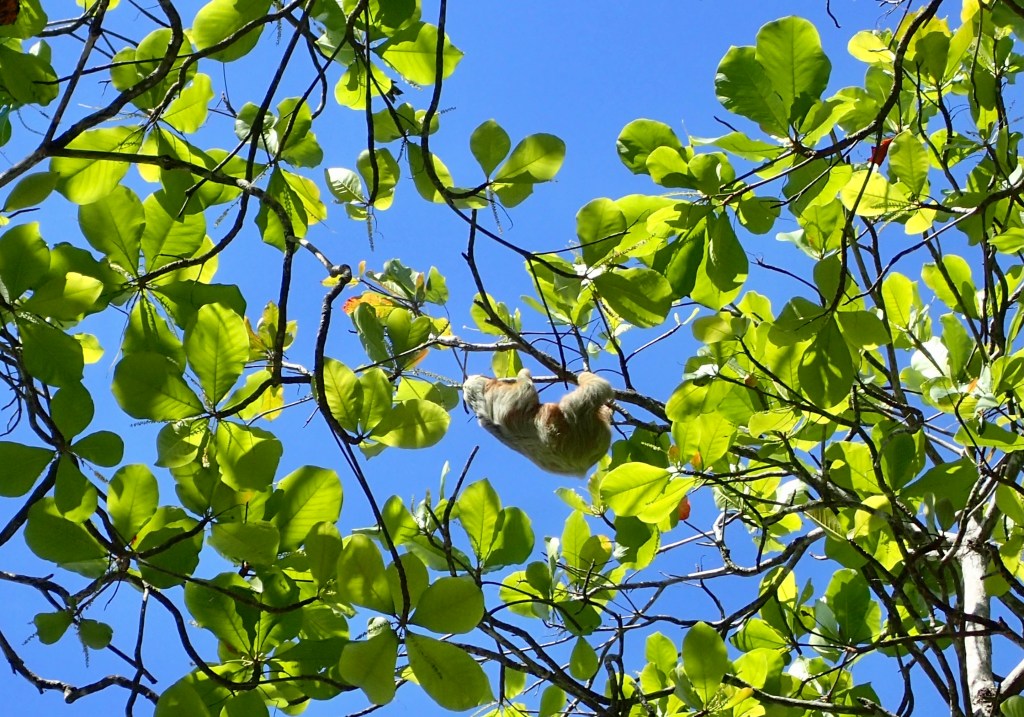
Without the monkeys lurking about, and with the help of our guide, we were able to focus on the other critters of the park. An immature sloth sleeping in a tree with mama watching from not too far away.

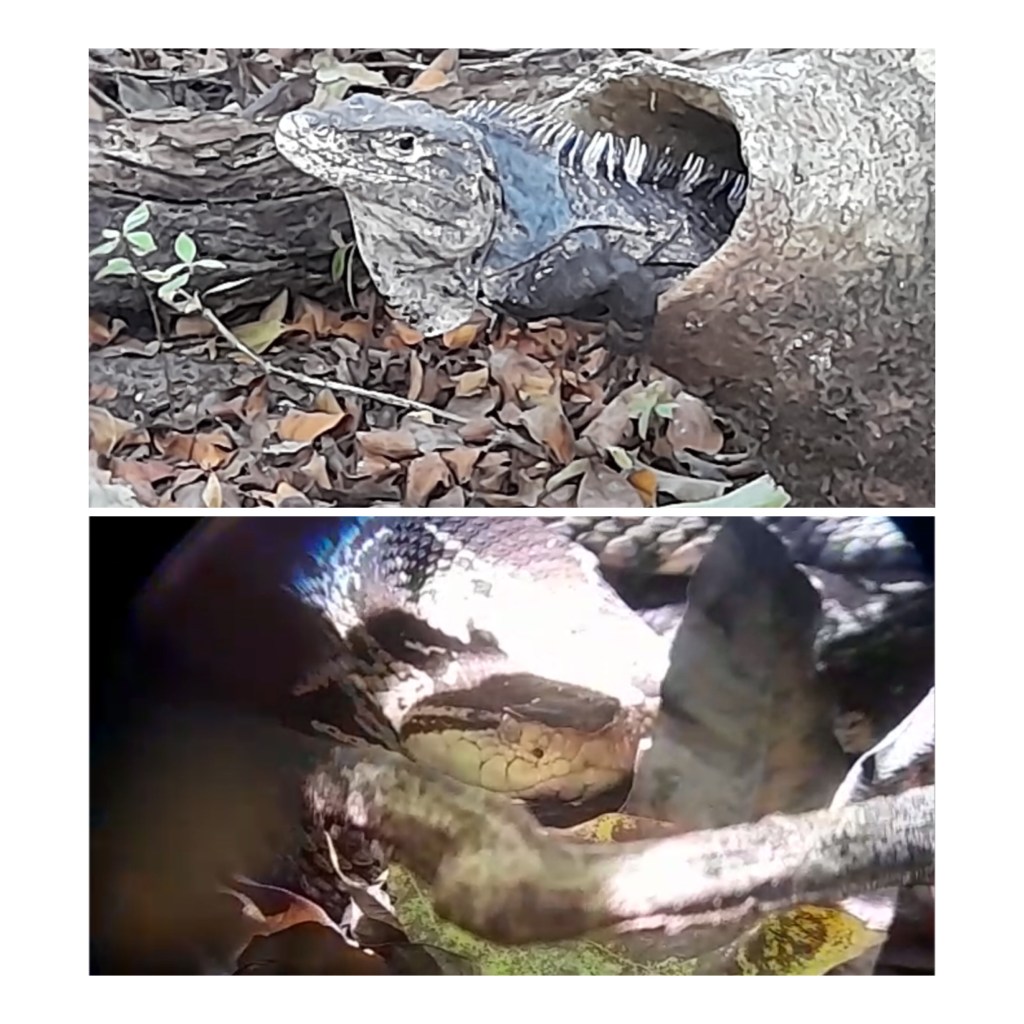
A lizard and a Fer de Lance snake patiently waiting for their meals to wander by.

An agouti mom and her two little ones, playing in the underbrush.

Anyone planning a trip to Manuel Antonio needs to remember the park is closed one day a week for repairs, cleaning and to give nature a chance to rebound — unless, of course, you can pay $36,000 as film production crews (scenes from The Castaway with Tom Hanks were filmed here) and the famous (Steven Spielberg, and Will Smith to name a few) do in order to have the beaches to themselves.

Costa Rica takes its natural beauty seriously. Roughly 28% of the country’s total land is set aside as national parks or nature reserves. School tour groups get in the parks free and we were told by our guide that annual visits to the park are a routine part of the curriculum to build a national sense of pride and consensus to preserve the bio-diversity.

Yes, it is different here now after the pandemic but some of the changes are definitely better for both tourists and the animals. Pura Vida!