Au Revoir – leaving France again

When we left Spain, almost exactly a year ago, we wrote a blog about what surprised us in Spain and what delighted us. As we were wrapping up this year’s trip to France over the last few days, we our conversation veered into the same direction. Not shocking that there were fewer surprises — we’ve been to France several times before. Nonetheless, certain things stand out in our minds.

A good guide makes all the difference in the world. We’ve written before about the value of a guide. Our trip to Mont St Michel, our tour guide reinforced that opinion. Anne-Isabelle [anne,isabelle.gendrot@gmail.com] greeted as just as the tour buses started to roll from the huge parking lot three kilometers from the actual village (you definitely want to get to Mont St Michel early).
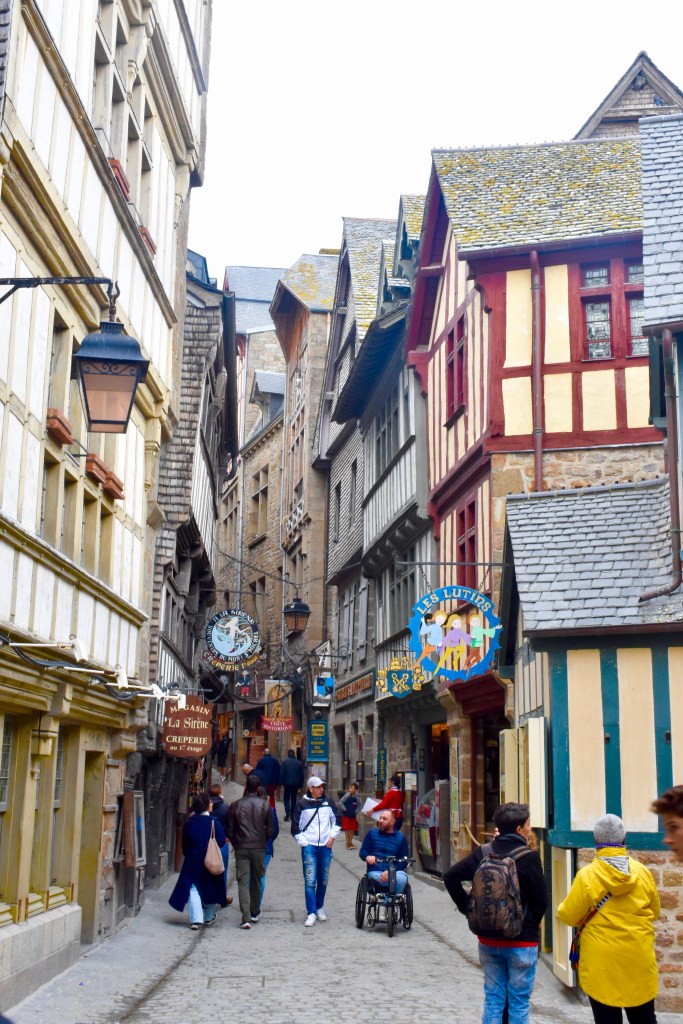
Without her guidance, we might have not have been able to look past the Disney-esque appearance of the village, beyond the trinket shops and flashy restaurants, to actually appreciate the history, the architecture and the beauty of the place.
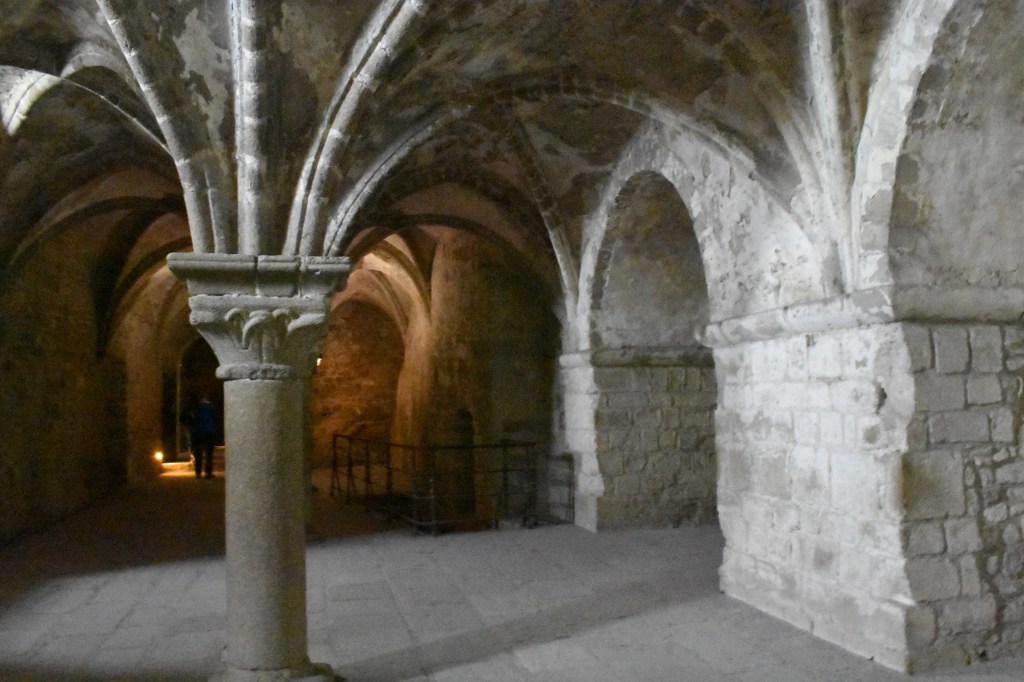
A passageway in the Abbey

She set the record straight, separating myth from fact. Her energy and enthusiasm helped us up the all the steps (and there’s a lot of them). And as a good guide does, she shared with us much more than what we could have read in a good guidebook — a couple sharp rebukes to the Norman flag flying alone over the monument when the Bretons helped pay for the restoration, the local legends that were largely fantasies, and to the Nazi’s use of Mont St. Michele as their vacation playground during the occupation.
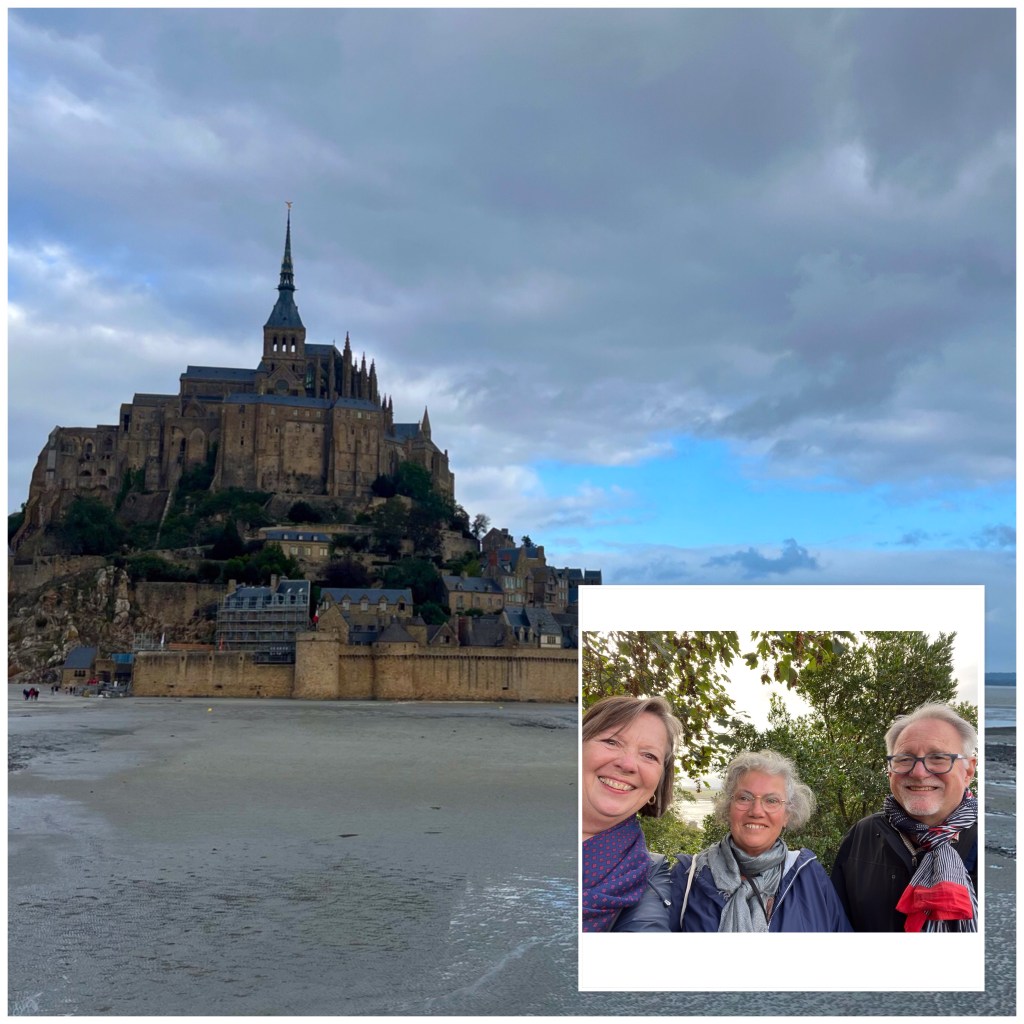
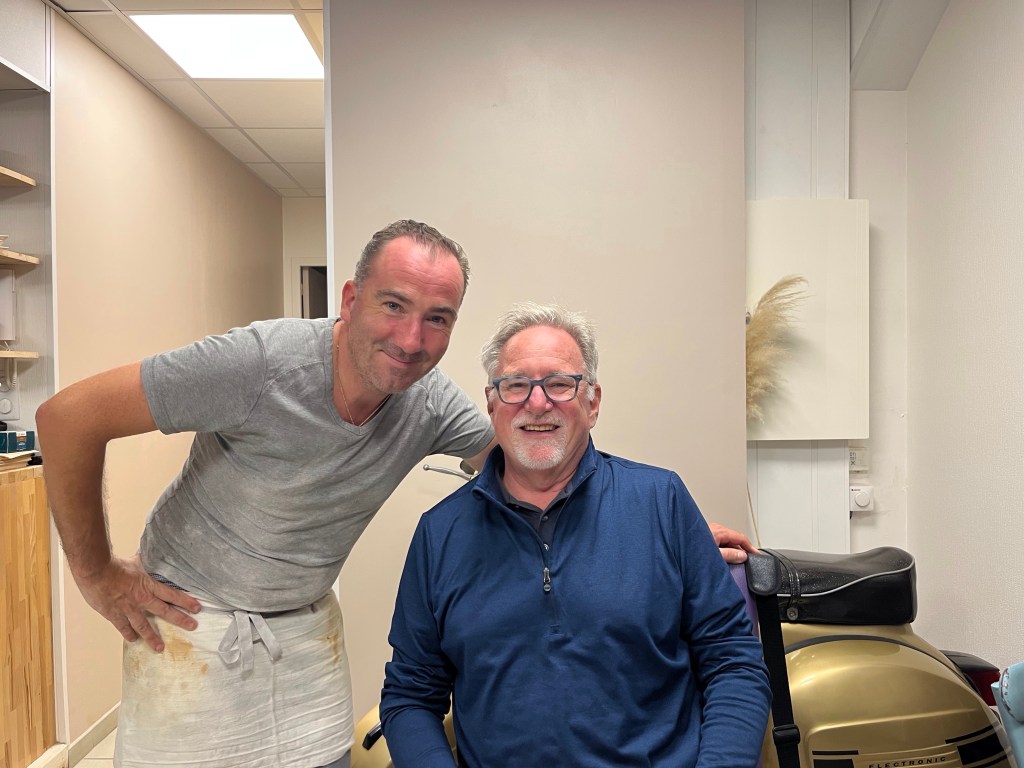
This trip reminded us to forget the silly notion of French rudeness. Everywhere we went, locals went out of their way to be helpful. We needed the help of almost every clerk in the post office to mail a package home and everyone smiled as we fumbled our way through the process. Or when we were assigned to nonexistent train seats and needed the help of strangers to figure it all out. In a pizza joint, the owner/baker almost joined us at the table, stopping by to chat in a mixture of French and English any time he had a minute or two. And the staff in the restaurants, those snooty French waiters? Amazingly patient with us and often stretched their English to explain the menus. Perhaps Paris and crowded cities are different. In the Dordogne and Brittany friendliness ruled.
It is easy from a distance to forget France is a multicultural country. Up close it becomes self-evident. The Basque, Occitane, Breton, Corsican, and other cultures are alive and well, particularly in the far corners of France. France is a former colonial power, the people on the streets visually represent that history. It is also a country of immigrants. Our tour guide in Nantes was a native of Peru who has lived and worked in France for ten years.

In Brittany particularly, but maybe elsewhere, too, there is a sense of place and belonging that is deeply rooted in the local culture and a source of pride. An acquaintance who has lived in Brittany for 30 years, laughed when we suggested she was almost a native. Oh no, she was still a newcomer. Our guide Anne-Isabelle described how happy she was to discover that as a resident of St. Malo for years, she uncovered the fact her grandmother was born there — which made her a Malouin, a real citizen of St. Malo.

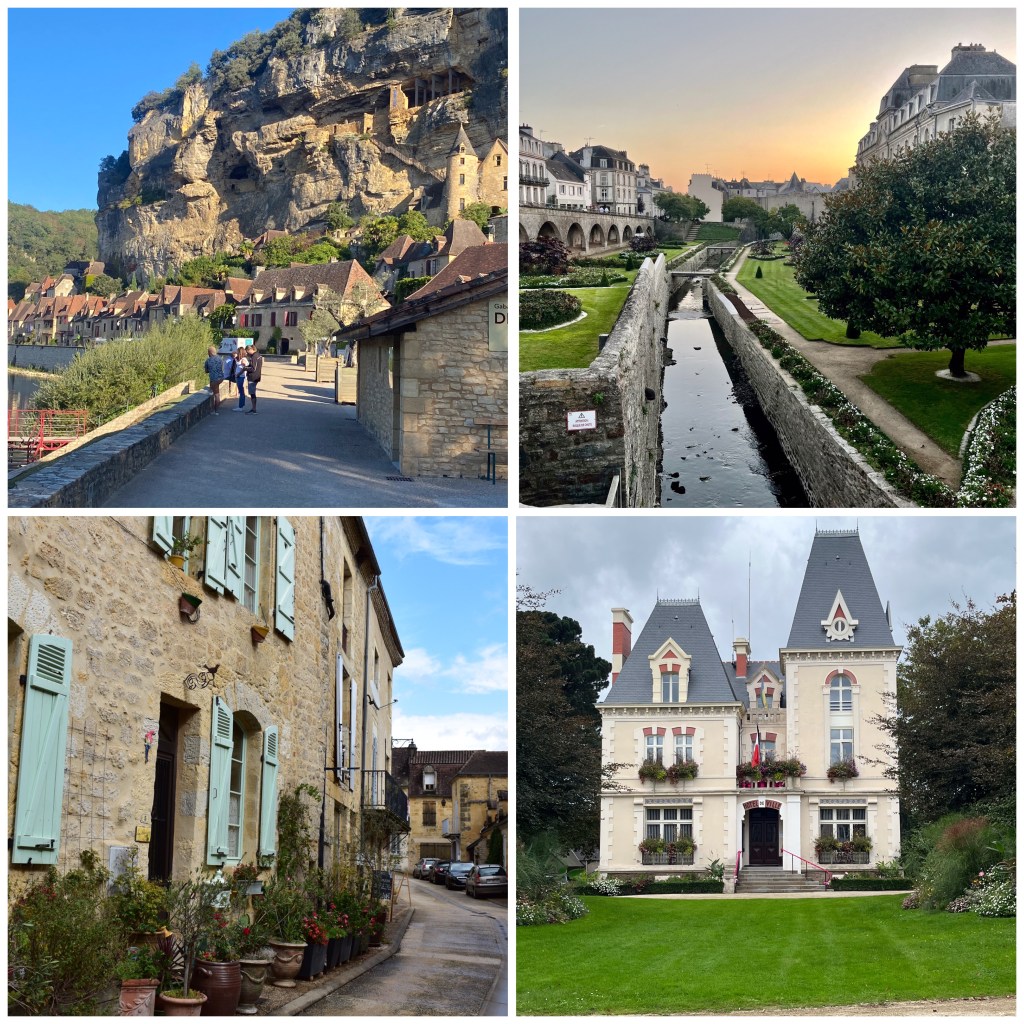
Regional differences matter. That’s a big reason why we head back to France. From food, to architecture, to the countryside, it’s hard to get bored when Brittany is so different from the Dordogne which is so different from Provence, which is different again from the Loire Valley. Vive la difference!
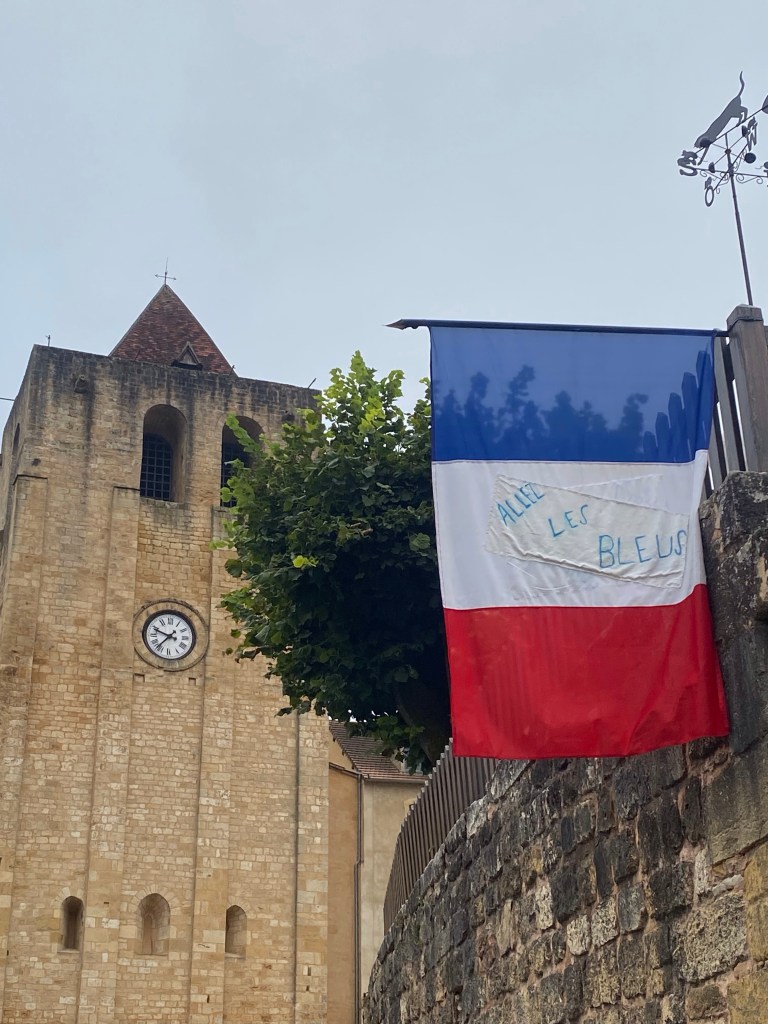
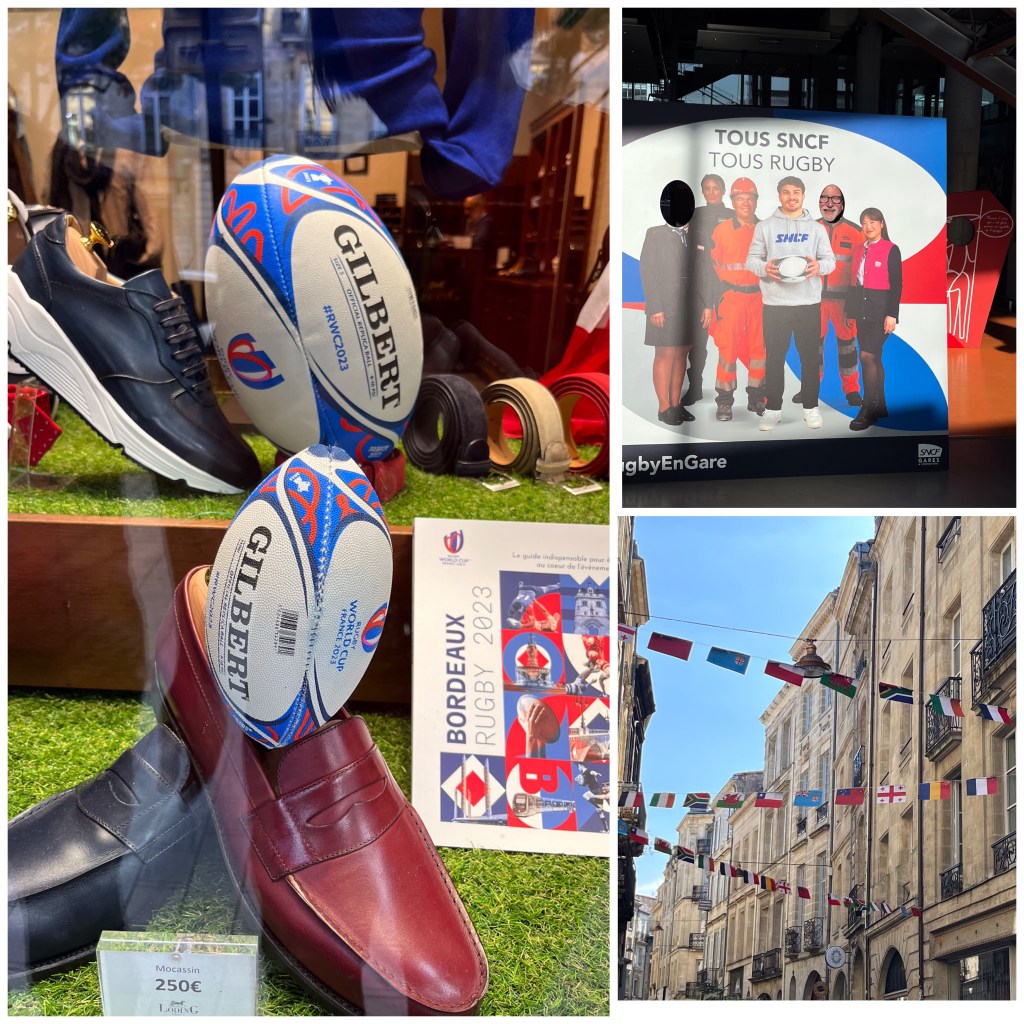
Part of the fun of returning to a place you have been before is the new discoveries. We knew soccer (or football as it is called here) was a big sport, but we were amazed to discover how many French fans were following the Rugby World Cup. Rugby? Really? In France? Most towns where ever we were had store windows celebrating the local team. Grocery stores had displays right next to the wine. Tourist shops sold memoribilia. And the flags and banners were everywhere. When we stopped in Bordeaux, one of the many sites for the regional matches, our first restaurant was packed with Australian fans and a few Welsh, too. Who knew?
And that’s why we travel.
Our Town — St Cyprien

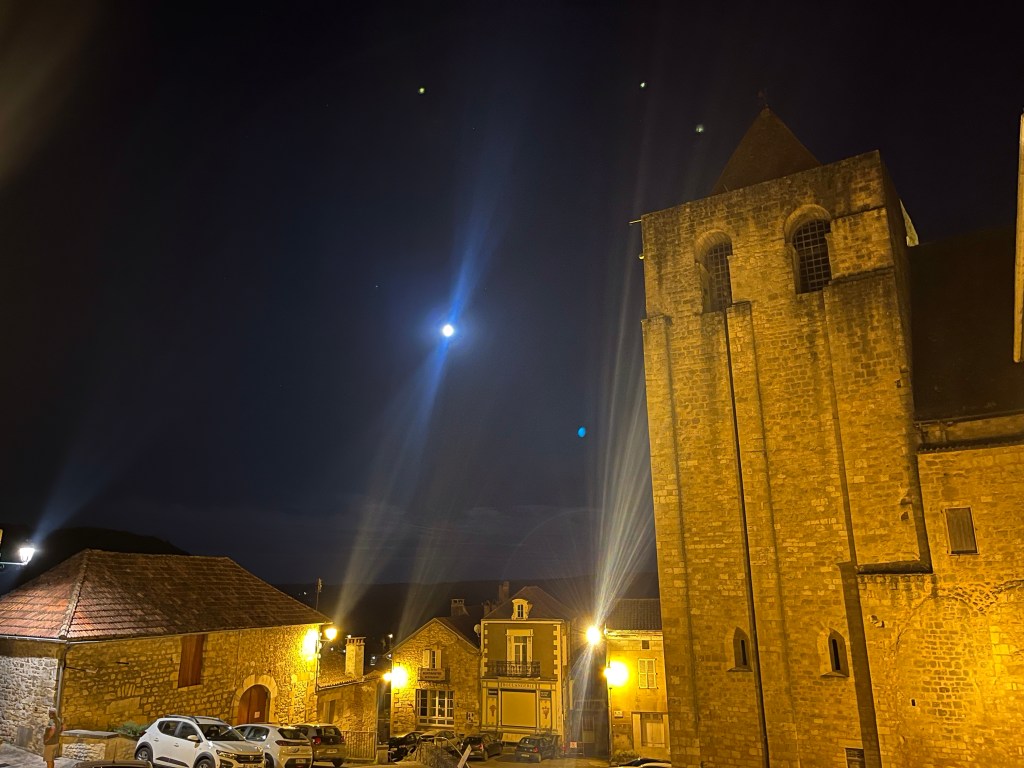
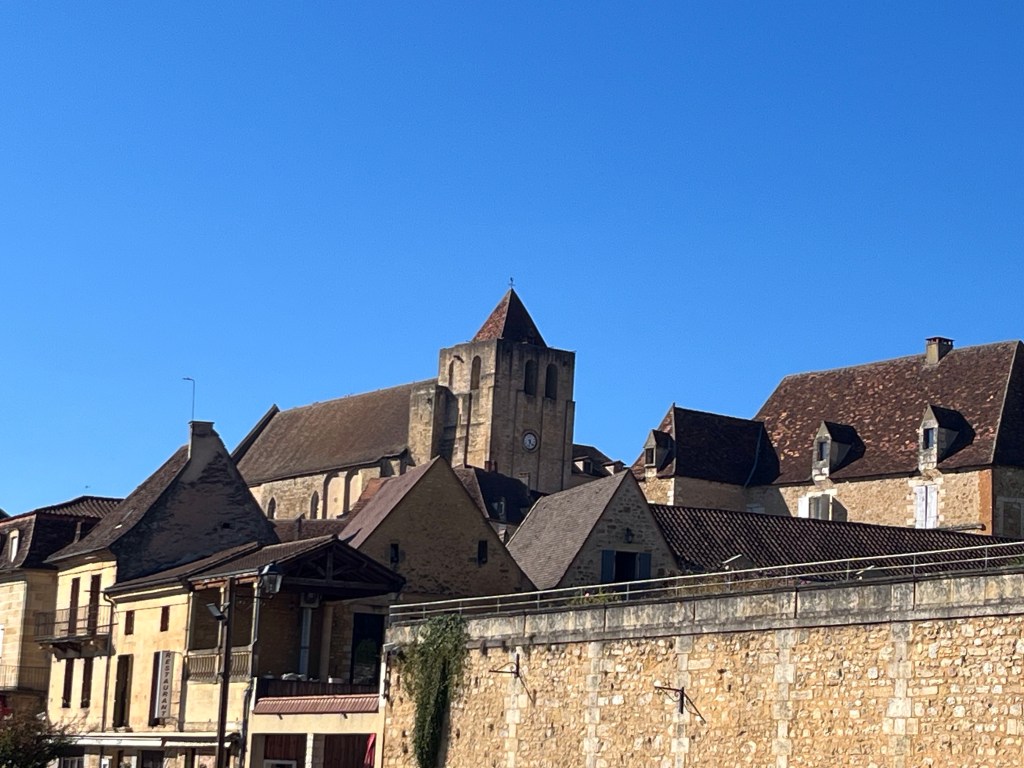
It barely gets a passing mention in the Michelin green guide and no stars at all. Rick Steves doesn’t say a word about it, though he raves about its Dordogne neighbors—Sarlat, La Roque-Gageac, and Beynac. It doesn’t have any great attractions—no museums, no castles, no great cathedrals, no magnificent châteaus, and no prehistoric caves. It does have a very large, rather drab, old abbey. But it’s our town, St. Cyprien, in the heart of the Dordogne.

Safe to say we’ve kind of fallen in love with this place.

What drew us to St. Cyprien was first it’s location—perfect for day trips and outings. And kayaking down the Dordogne.

Two castle/chateaus are within a 15 minute drive—Chateau Beynac and Castlenaud. These two great impressive fortresses sit high up on rock cliffs on opposite sides of the Dordogne River—staring at each other. On the front lines of the Hundred Years War, they changed hands between the English and the French frequently. Brooding Chateau Beynac is part of the story of the great Eleanor of Aquitaine and her son Richard the Lionhearted. Castlenaud offers a fine collection of medieval weaponry and armor, including a number of siege machines. A kilometer or two down the river is the another spectacular chateau, Les Milandes, formerly owned by the Josephine Baker, American dancer and singer, resistance fighter in WWII, and civil rights activist. The chateau is now a museum to her incredible life, complete with many of the costumes she wore in her Paris reviews in the 20’s and 30’s.

Open any guidebook, and you’ll find a dozen more chateaus or castles in the area. But nothing in St Cyprien.

The valley is peppered with insanely cute towns and villages, among the most beautiful in France, most much prettier and more touristed than our St. Cyprien. La Roque-Gageac, Sarlat, Beynac, Rocamadour, St. Leon de Vezere, just to name a few. And the big towns of Bergerac and Perigueux are close by as well.

And the prehistoric sites! If you’re a fan of Neanderthals, cave paintings, and prehistory, this is ground central. There’s Lascaux 4 with its perfectly recreated cave (the Sistine Chapel of prehistoric art), Font de Gaume, the only real cave you can visit with polychrome paintings, and the prehistory museum in Les Eyzies, with its fabulous collection of ancient artifacts. And again, open any guide book, dozens more. Enough to make you an amateur archeologist. St Cyprien has only one cave above the city where it’s hermit and source of the town name once hung out.

The second thing that drew us to St. Cyprien (well, it might have been the first) is the food and the wine. In the Dordogne, fois gras, duck, walnuts, and truffles are the stars on the food side; Montebazillac (sweet Sauterne style white) and Pecharmant (a Bordeaux style red) on the wine side.

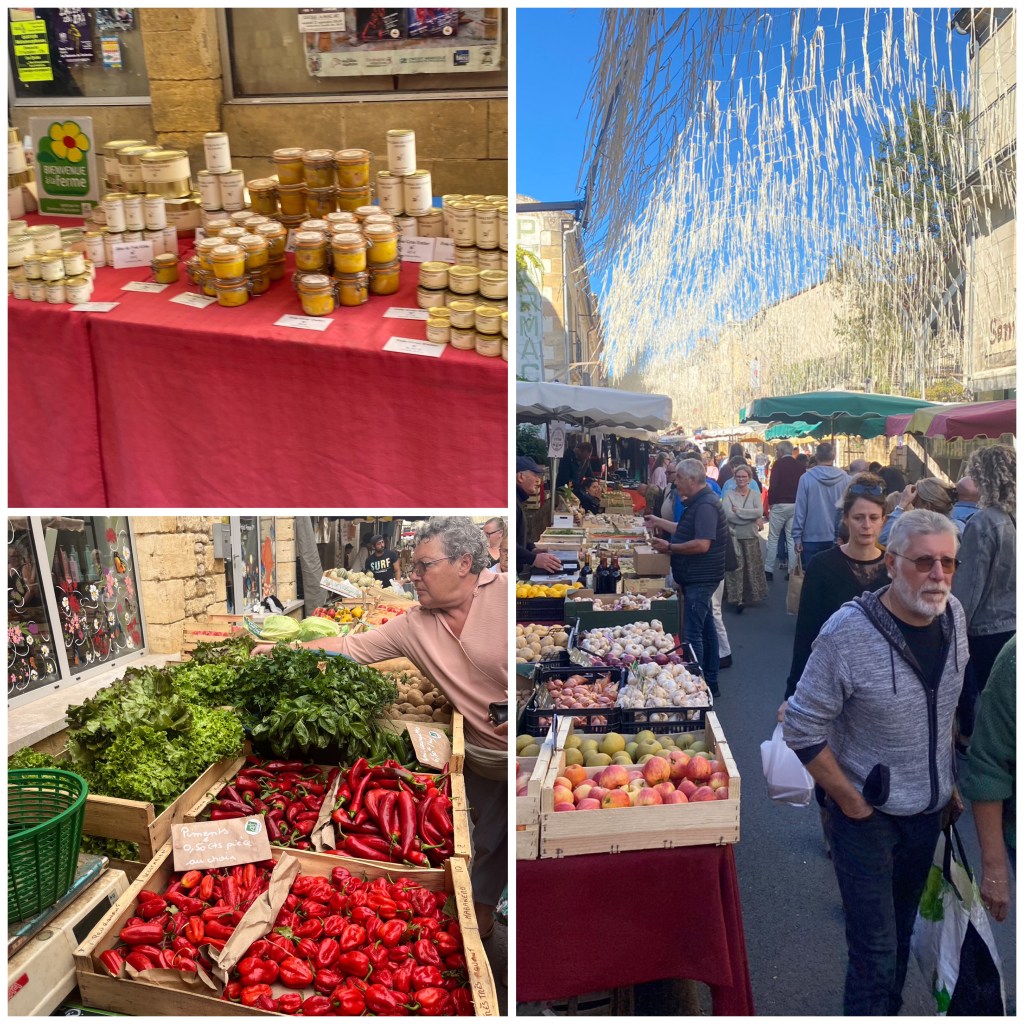
And the markets! Every day there is a farmers market somewhere that would put to shame anything we have in the US. We were lucky—one of the best and biggest was the Sunday market in St. Cyprien.

Specialty shops are everywhere. In St. Cyprien, we had several boulangeries, boucheries, a fabulous cheese shop, a wine store, two coffee shops, and one store specializing in fois gras and duck related products— one of the few places where we could buy goose fois gras in Dordogne (most of it is exported). And this is not a tourist town.

Excellent restaurants are nearby—from local pub food to Michelin starred establishments. And the prices are crazy cheap by US standards.

And finally, it’s easy to find beautiful accommodations, particularly if you want to rent a home or villa. It seems every French person or British expat (and there’s lots of those) are renting homes, villas or apartments. We were lucky and found a magnificent house near the abbey.

Walking down the main street of St. Cyprien, particularly on a non market day, you’d think nothing special here. Kinda dull. But spent a few days here or a few weeks as , you get to know a place—the lady at the boulangerie with her preppy “bon jour” every morning, the cats and dogs we see regularly, the rugby practices on a Sunday morning, the pouty waitress at the local bar, and the same locals walking their kids to school everyday. And the out of the way corners of the town with roses and historic timbers.

St. Cyprien—our town.

Caving In

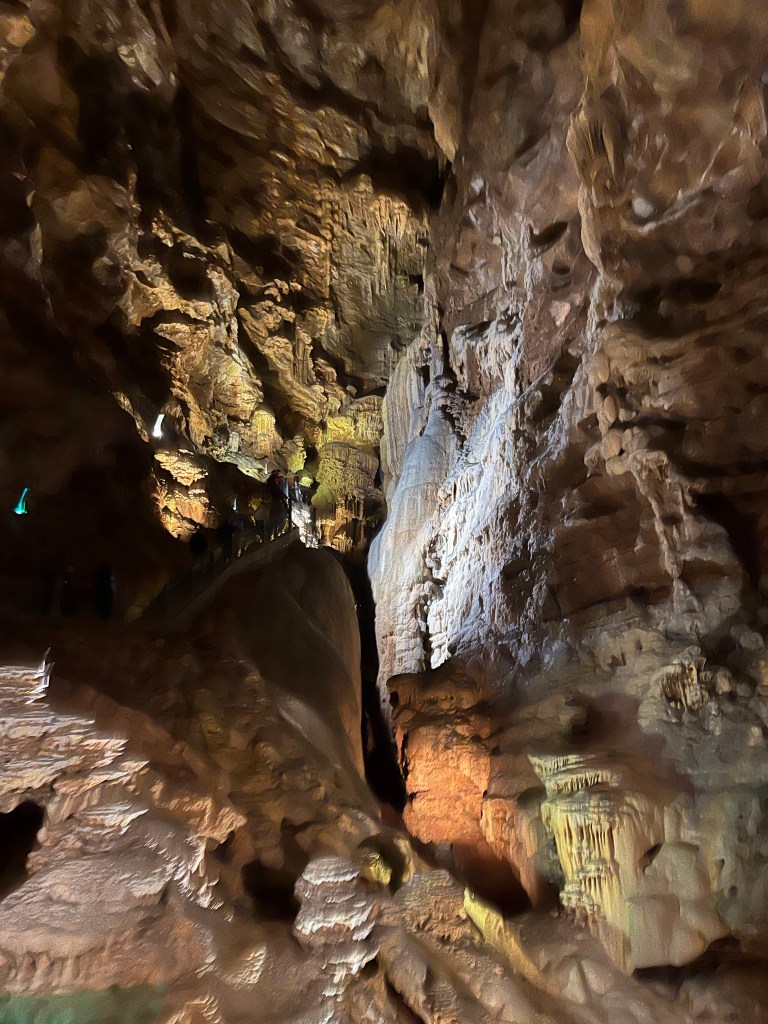
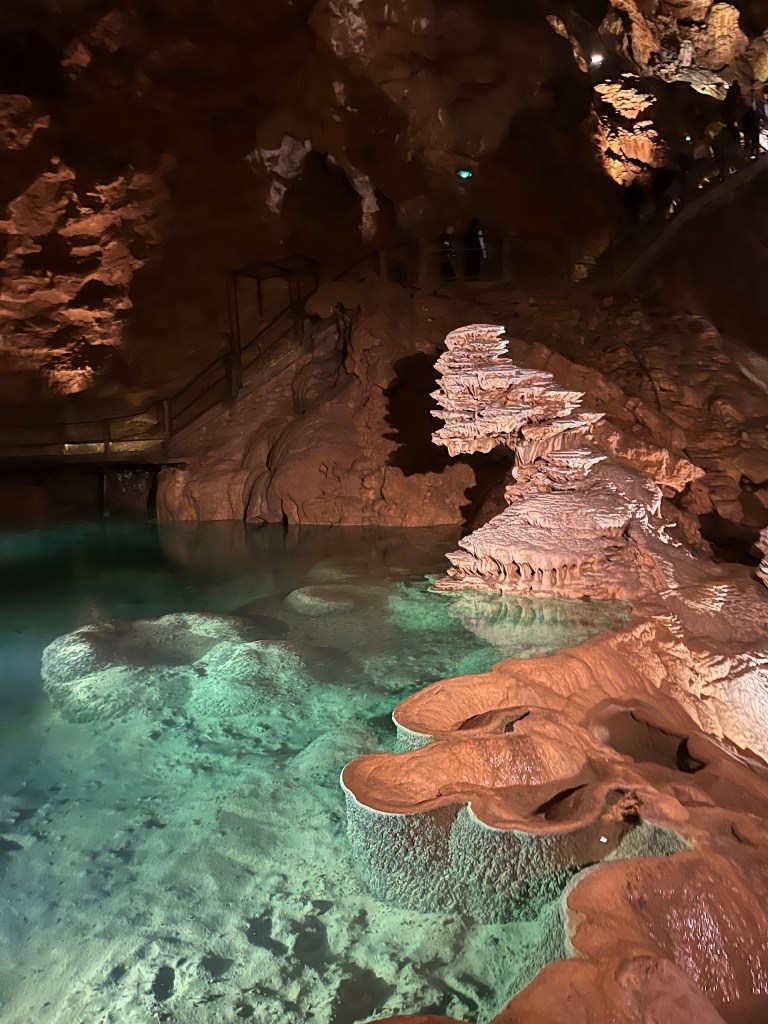
We decided to visit the Gouffre de Padirac cave system, reputed to be a spectacular underground river and a top sight in the Dordogne, just a little over an hour drive from our house in St. Cyprien. We didn’t really know what we were getting into, which was probably a good thing, but our friends who were visiting wanted to see the caves. Brochure pictures looked intriguing. Not our usual thing, but — hey! Something different to try!

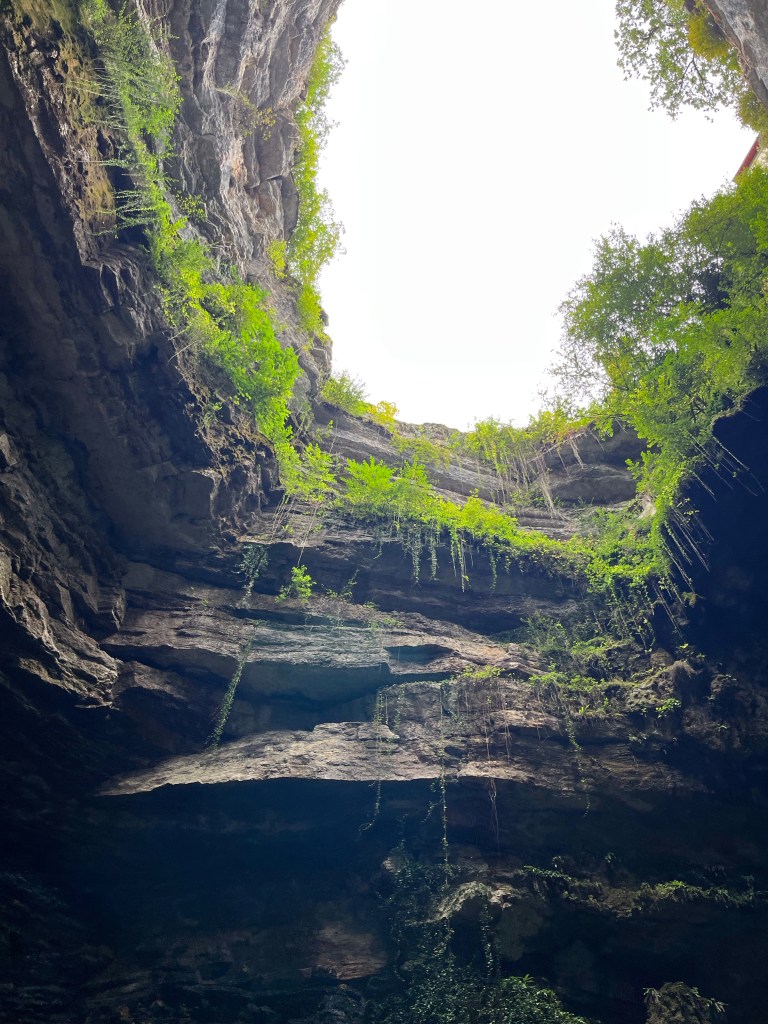
The visit begins with a knee knocking descent into a huge, deep chasm, 338 feet (103 meters) below the surface. The chasm has been known for centuries and potassium nitrate was extracted from there in the 15th and 16th centuries.

Looking up from half way down

You can take three elevators down to the bottom, but, stupidly, we decided to walk down the caged staircase so that that we could hyperventilate into a panic by the time we reached the bottom.

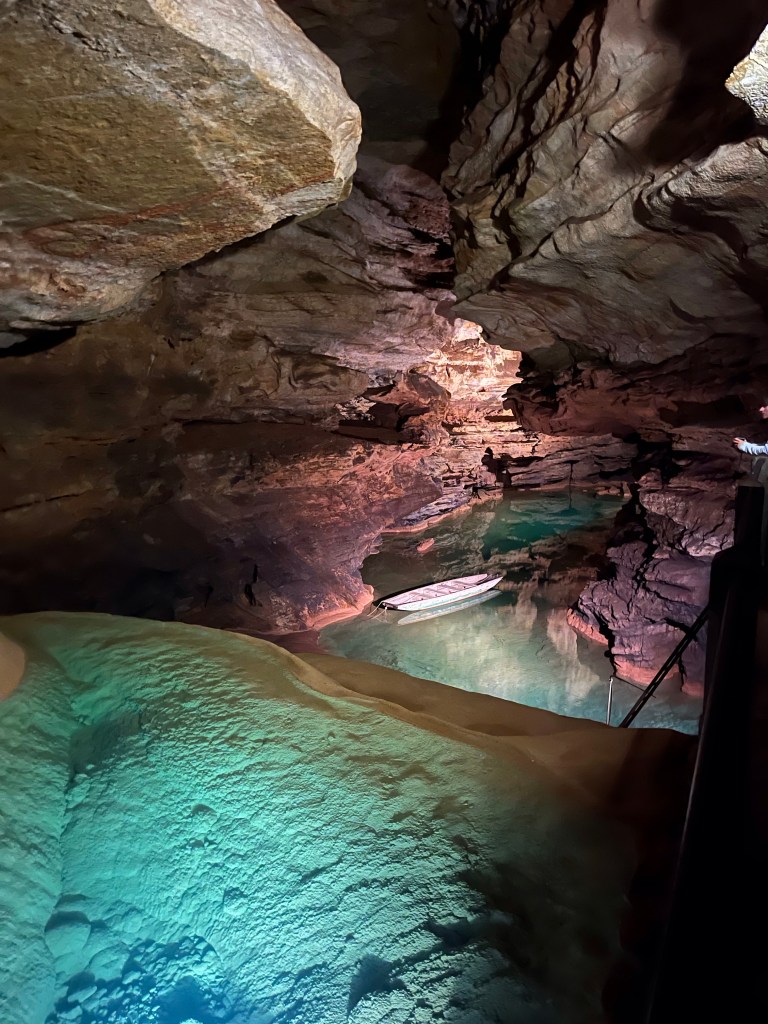
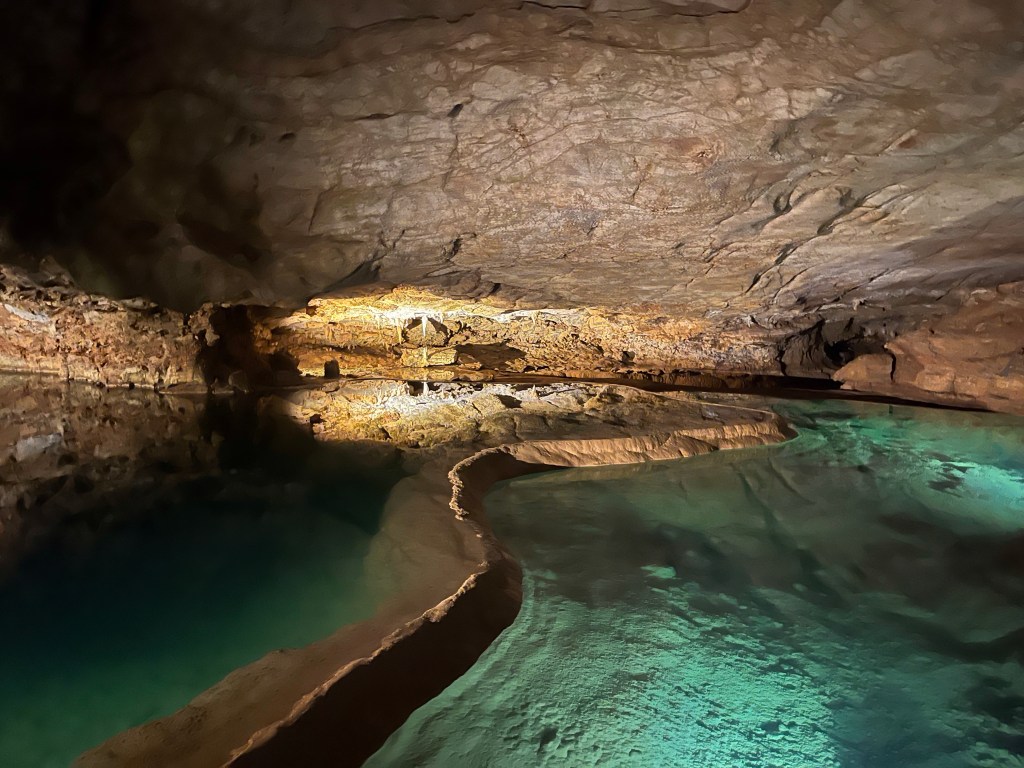
And then you enter the cave. The first few hundred meters is a walk in sometimes claustrophobic passageways—not really much to see but eyes acclimatize, you get used to the chilly temperature and the overall dampness. Then, after having to fight with the automatic ticketing machine that guards the next phase of the visit (unless you’ve downloaded your passes in advance you’re screwed— no internet three hundred feet underground), you get into a small boat that takes you along an underground river with a boatperson who both punts and paddles through the narrow channel, trying to avoid the returning boats coming the other way. Hard not hit your head on the cave ceiling or protruding side walls. All the time we were trying to listen to an audio guide (available in several languages, although Mary opted to ignore the whole audio thing — was hard enough to focus on feet, not hitting your head and breathing) that really just relives the adventures of the first modern explorers who came here in the 1890’s. By the 1930’s tourists began to visit.

At the end of the boat ride you come to the most spectacular part of the caves. Another several hundred meter walk. Really was amazing. Stalactites 180 ft long, huge cathedral sized rooms, massive flowing calcite rock formations and more under ground pools with crystal clear water illuminated by the lighting system. No pictures allowed but, of course, every French person was snapping photos, so what the “merde” we joined in. When in France….do as the French.

We cut our visit a wee bit short—too many additional stairs and bridges across the chasms. At this point, Mary and our friend had enough (Mary’s knees were shaking and her pal is a loyal friend). The cave stretches for 25 miles (40 km) and empties into the Dordogne River. Only two people in history have made it all the way to the end. Wisely, only the first 2 km are open to the public.


For us, it was back to the boats, and a quick escape—this time, intelligently, using the three elevators to get out. Would we do it again? No. Would we recommend it to others? Yes, with multiple caveats. Claustrophobic, no. Fear of heights, no. To see something so unique? Yes!

Vive la Difference! Vive la France!!

After three extended trips to France, mainly in the rural south and southwest of France, we are by no means experts on things French. Our most recent three weeks in France, however, have brought back into focus how things are different from North America — at least in this corner of France.

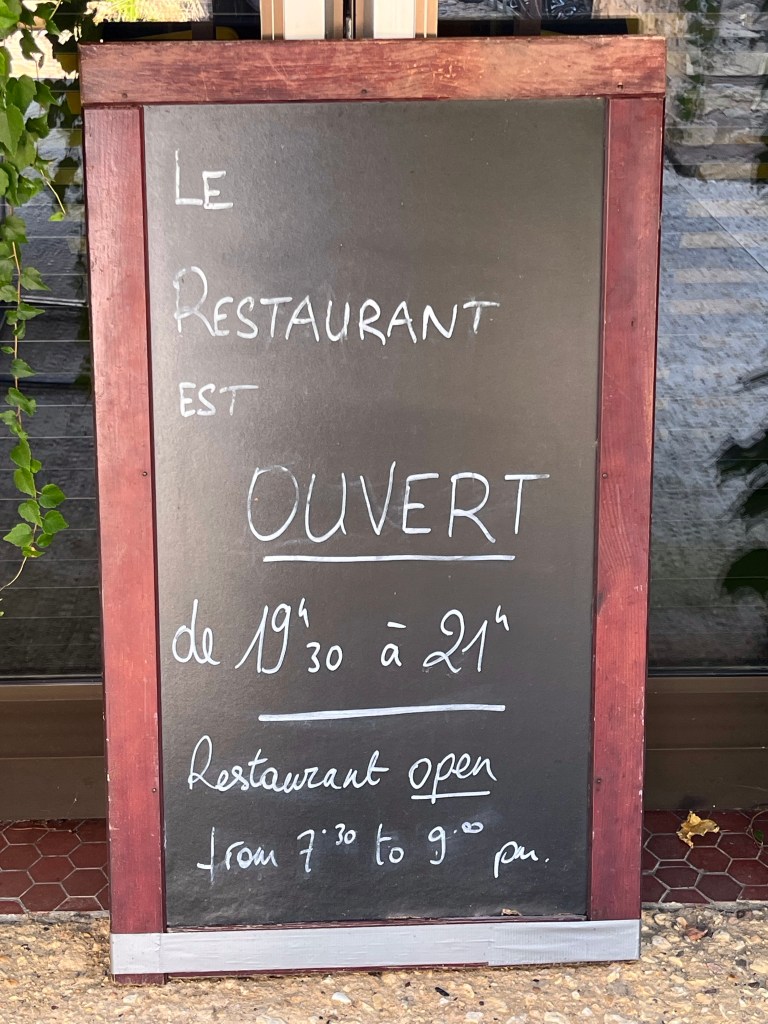
First of all, planning your day means remembering almost every shop, every store, every site will close for lunch for an hour and a half to two hours. Not so much for big stores and big cities, maybe. On this trip in our little town of St. Cyprien in the Dordogne, the boulangerie closes for lunch until 2, the boucherie until 2:30 and the frommagerie until 3.

We were dismayed when we drove for 30 minutes to a wine co-op for some tasting only to discover that it was closing in 6 minutes for a 90 minute lunch break. And we arrived at the car rental return at the Bergerac airport at 12:04 only to find the agent was lunching until 2:00. Everything was locked up. Drop the key in the key box, said the sign. Made us nervous, but we did get the correct billing a few days later by e-mail.

Restaurants serving lunch, of course, usually remain open as the shops close. However, in turn, the restaurants generally close to 1:30pm, or at least that’s about when the chef leaves and the food service stops, although the bar often stays open. Again, maybe not in the heaviest touristed towns, but generally so. On the other hand, dinner service does not even begin before 7:00pm, and if you arrive then, you are likely to dine alone. On the other end, we’ve seen potential diners turned away, or closed signs posted at 9:00pm.

In addition to long lunch hours, the shops, particularly in the smaller towns, shut down the day after the town’s weekly open air market. Sunday afternoon in St. Cyprien (our little town in the Dordogne) after the open air market closes, is a ghost town. And most of the shops remained closed on Mondays, including all the coffee joints and bakeries, much to our dismay!

The Sunday market and the same street on Monday

We did use the weekly closing to our advantage in Perigieux where we toured the medieval town and took pictures without anyone photobombing out shots.

Old city hall square in Perigrieux

As far as cultural courtesies go, only in the big grocery stores can you get by not saying “Bonjour” as you enter and “au revoir” as you leave. Everywhere else it is just plain courtesy to exchange these pleasantries. If you ask a question of the staff, even in the big stores, begin your question with “Bonjour.” In fact, it is rude not to do so.

On the food front, we are worlds apart. The French eat their main meal at lunch, followed by a light dinner in the evening, although we are told this pattern is fading. Most restaurants serve a “plat de jour” or a fixed price meal with an appetizer “entre” and “plat” main dish and dessert. Often it’s a very good deal. French fries come with lots and lots of meals. The fried potato seems more ubiquitous here than almost anywhere else we’ve been. Unlike in North America, however, French fries are not a finger food in France. They are eaten with a fork and often served with a side of mayonnaise.

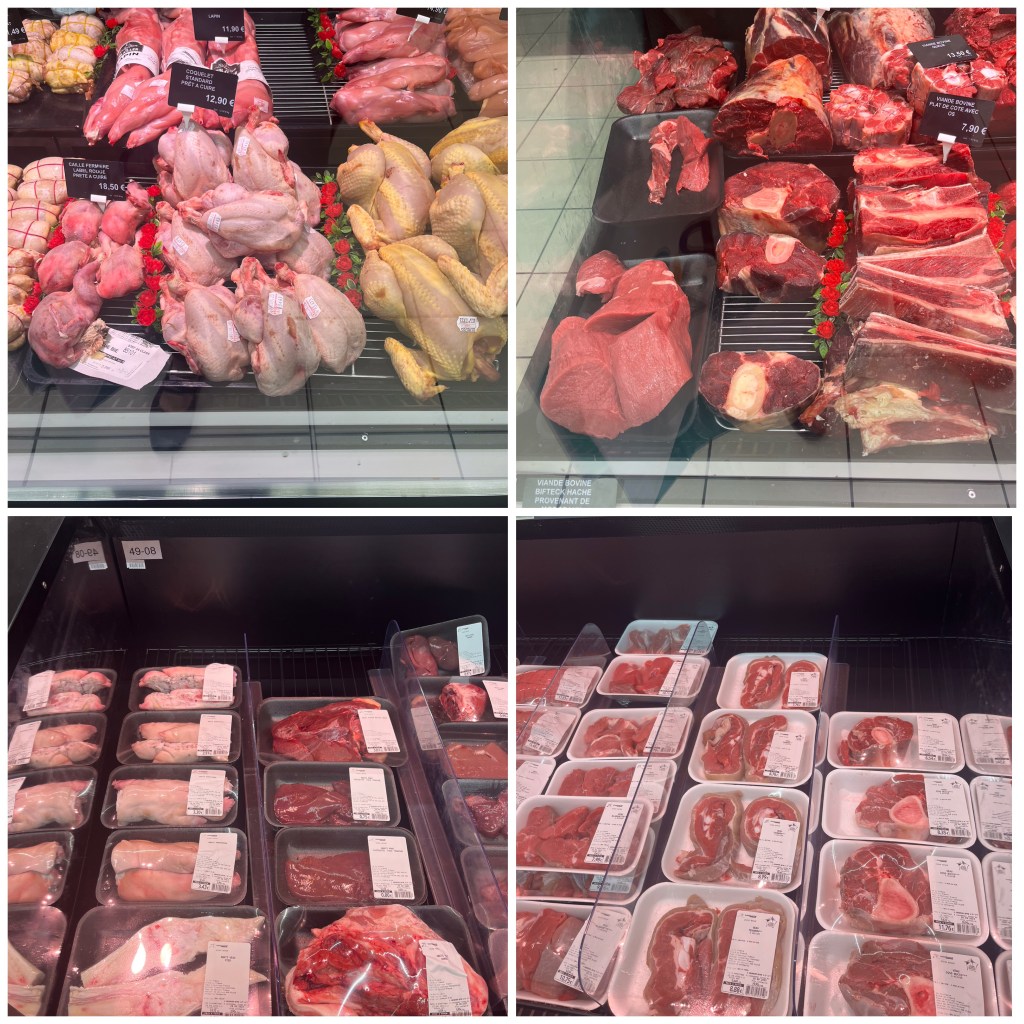
Be braced in the large French grocery stores for a vast variety of cuts of meats, and a full array of lamb, pork, veal, beef and chicken as well as offal. The selection puts our largest and best grocery stores to shame. Cuts we have to search for at home, or special order, were almost always available in stores we saw. Probably says something about the centralization and conglomeration of the North American food supply chains and the French preoccupation with fresh and local.

Small sample of meat selection from a grocery store in Le Bugue — multiple kinds of poultry, beef cut to order, beef for braising and offal.

The same is true, not surprisingly, for cheeses. Who knew goat cheese comes in so many shapes, sizes, styles and ages? At home we would think four or six different goat cheeses was a unbelievable selection! Most cheese stores also stock the cow and sheep cheeses from around France.

Proceed with some caution when shopping in a supermarket’s produce department. In some stores the check-out process operates like our neighborhood store at home. In our corner of France, often you must weigh the produce on an electronic scale in the produce department, receive a bar coded sticker with weight and price of whatever you’re buying to stick on the produce bag. If in doubt, we pause and watch what the other shoppers are doing. And most of the time at the check-out counter, you will be left to bag your own groceries. So don’t forget to bring your own bag or be prepared to buy a reusable bag with the store’s logo. Only small specialty shops seem to offer bags for free.

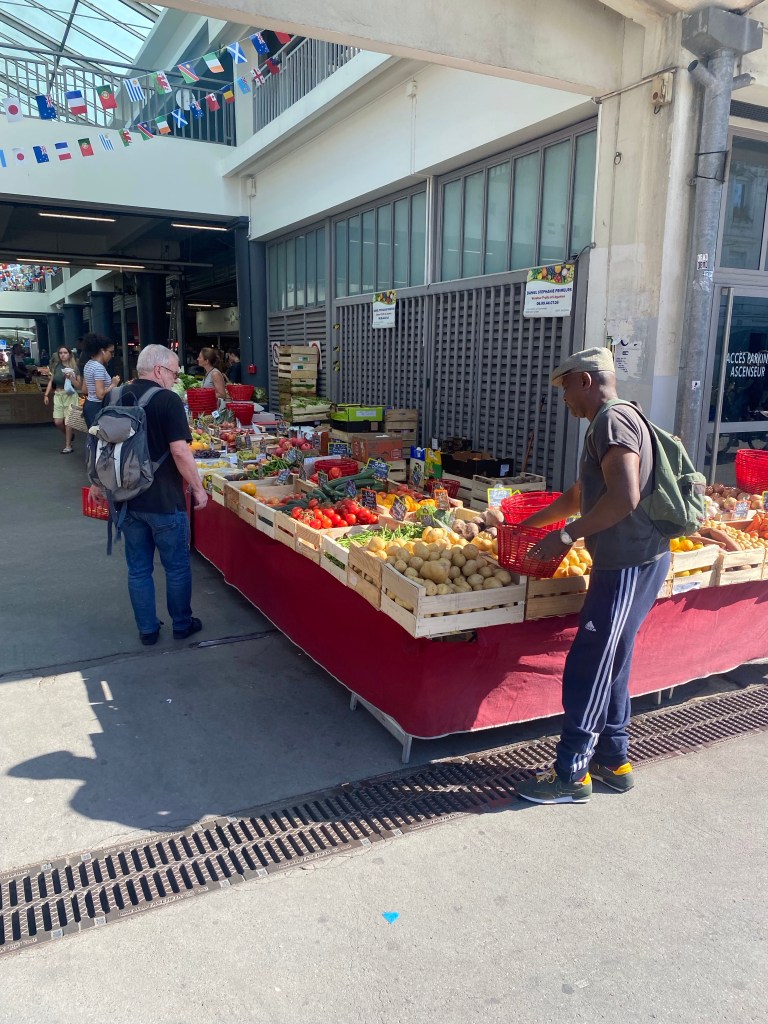
In the farmer’s markets the rules change again. Often, but not always, you are given a plastic bowl by the proprietor and expected to put your selection of fruits and vegetable in it. When you are done with your selection, you and the basket to the proprietor who weighs each item tells you what you owe. Sometimes your produce is placed in a bag, more often locals simply put their vegetables in their basket or bag they brought. And, compared to the farmers’ markets we shop at home, the prices in southwestern France are ridiculously low. But note: prices for some fruit and some other produce is higher in supermarkets than at the open air markets.

Open air market in Bordeaux

Driving in France? Be prepared for an endless sequences of roundabouts, very narrow country roads often with large trucks and farm equipment, tolls on all the major freeways, and fast drivers who think nothing of passing on curves or limited sight stretches. Oh, and your speeds are monitored electronically, which can often be a shock when you get home and see the pile of speeding tickets in the mail.

It’s the little things that can trip you up. There’s no way we can ever pass for French. And we are sure we’re unaware of some cultural toes we have stepped on. Our goal is to fit in as best we can, and avoid as many faux pas as possible and, ultimately embrace the differences!

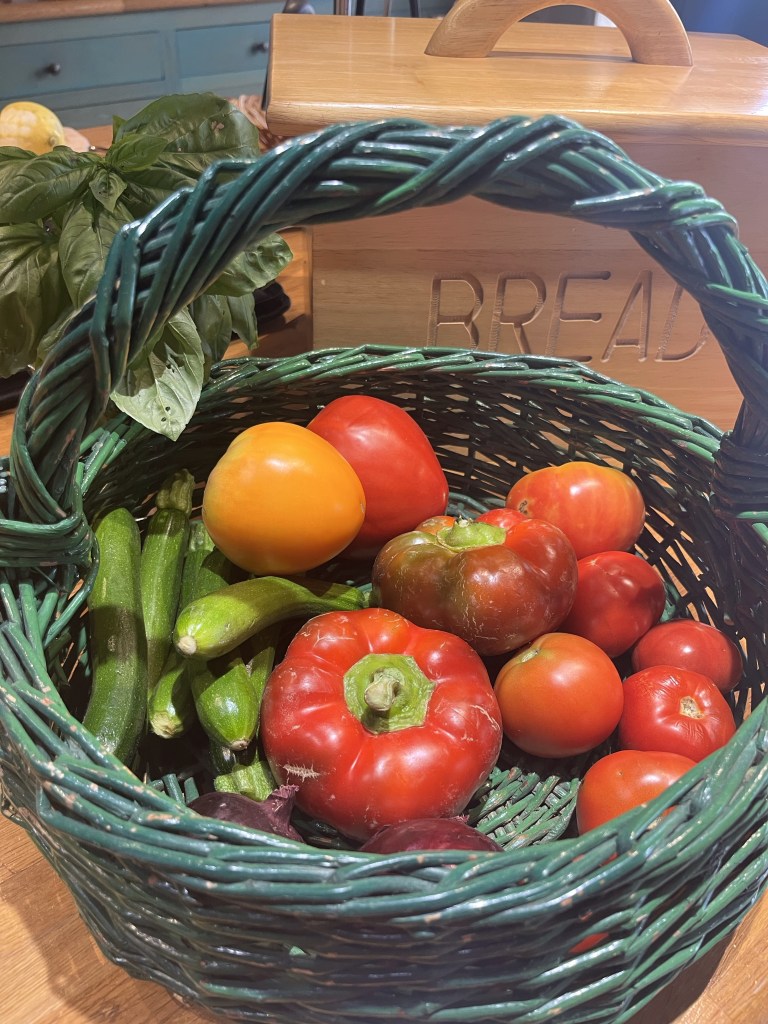
Our bounty from one St Cyprien open air market.