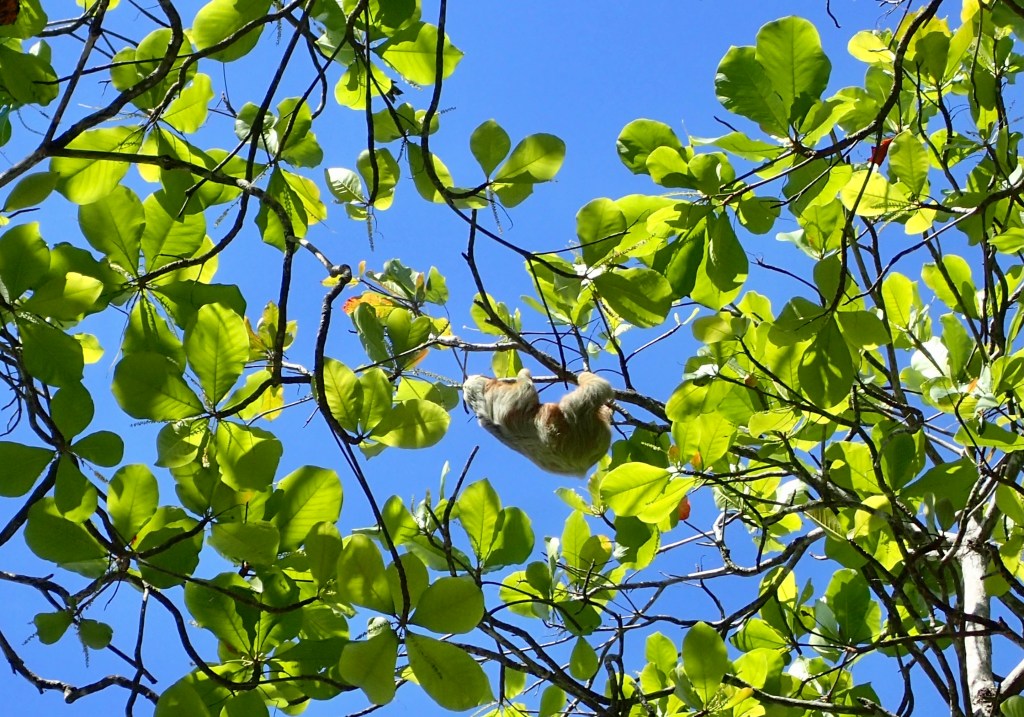
So, so cute! Really, who couldn’t love monkeys?
They are definitely part of the Costa Rican nature experience. Every other time we’ve been to Costa Rica we’ve encountered them. In nature preserves and national parks, next to our rentals, near restaurants, hanging on the power lines. Even watched them from an infinity pool on the Osa peninsula. They are everywhere. We’ve seen three of the four species in the country—howlers, white-faced, and spiders. The only one we haven’t seen is the very rare squirrel monkey.
But this trip we’ve only had a fleeting glimpse of them — very disappointing. In fact, one of our travel companions, Denise, an animal lover, was quite upset and worried that she would get back home never having seen a monkey. And we were coming to the end of our visit. It was our last four days and we were now up near Monteverde in the Cloud Forest. Desperation time!
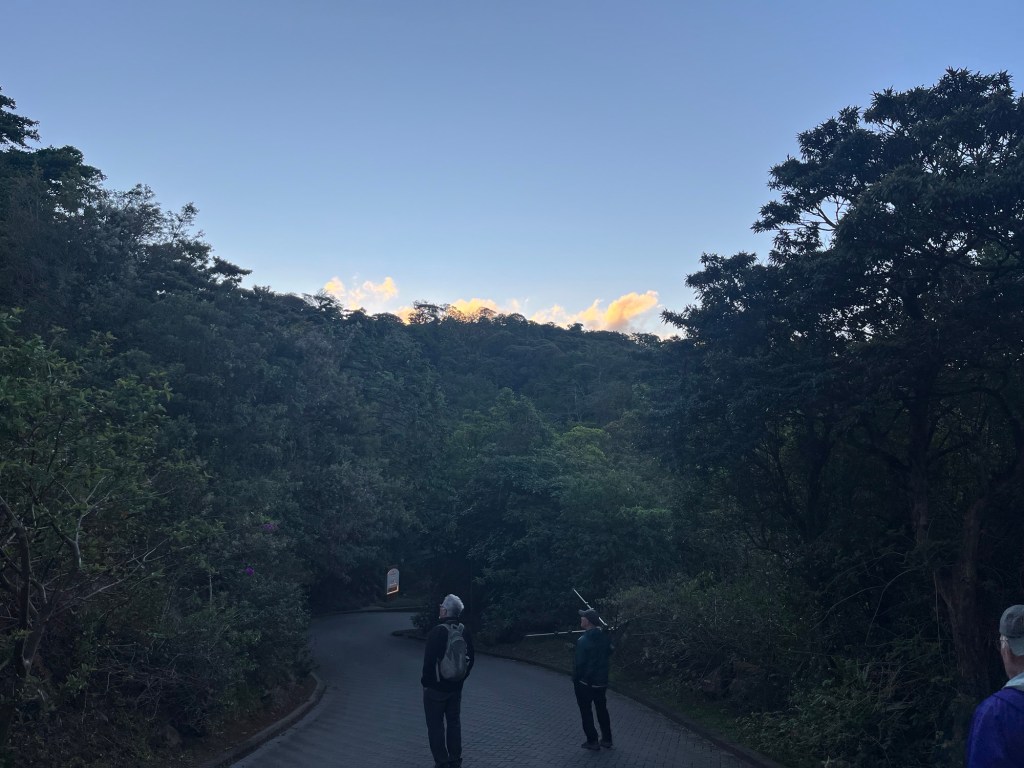
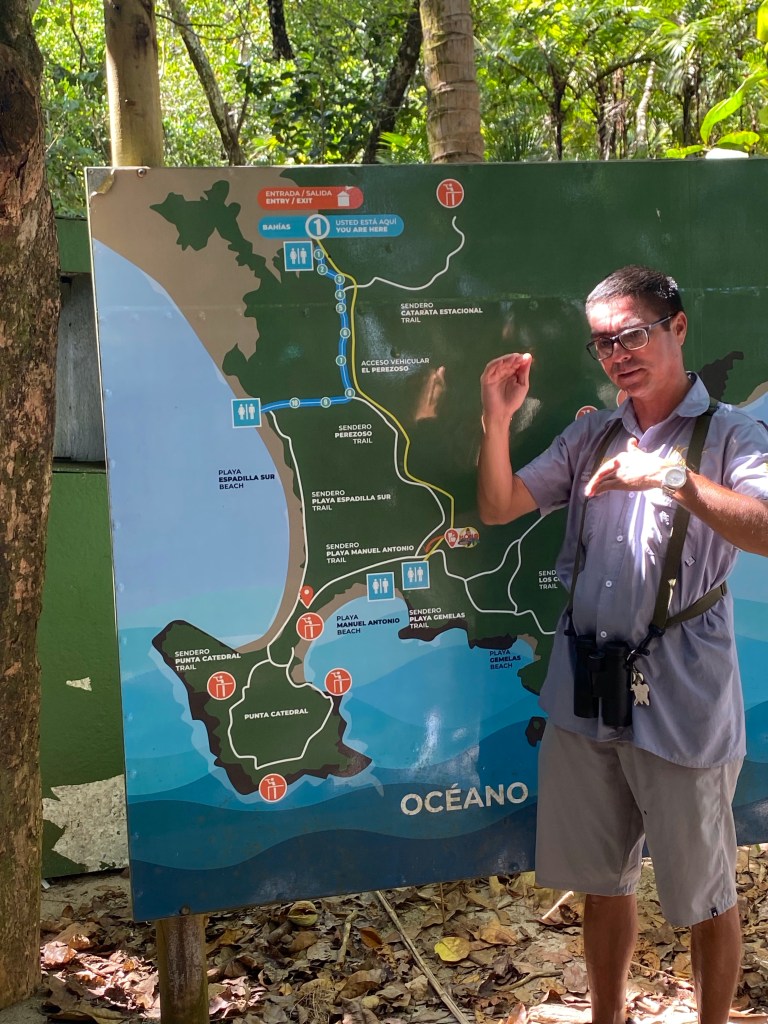
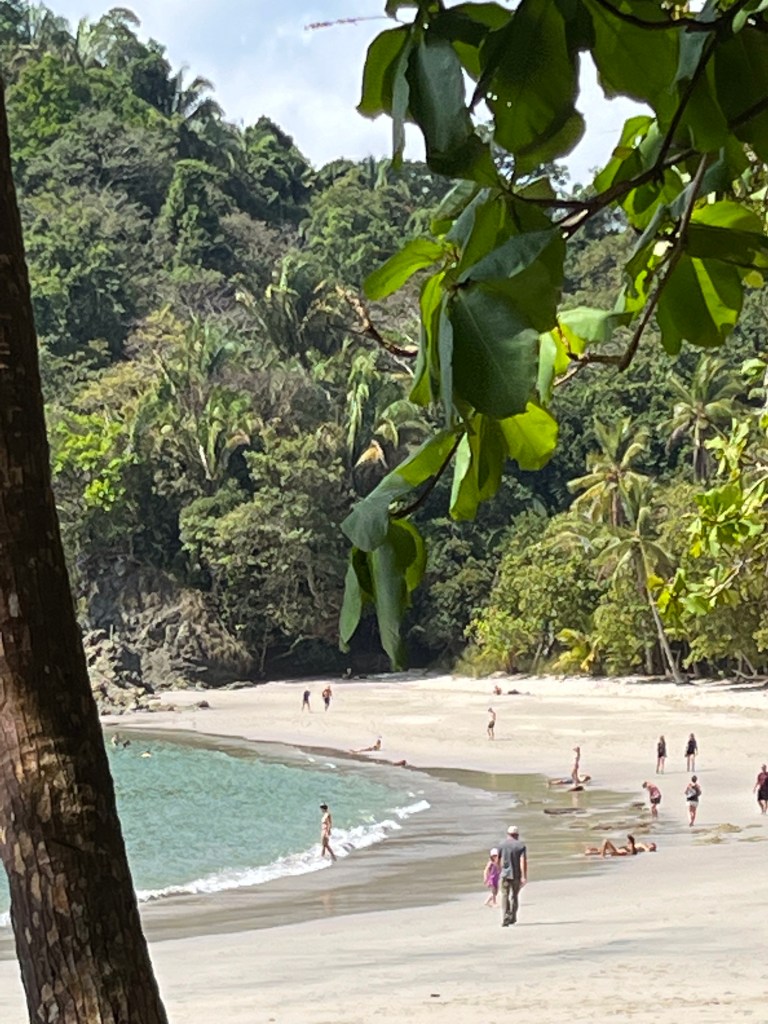
We had an easy solution. We’d been told by our favorite birding guide, Adrian Mendez, [adrianmendez@hotmail.com] if you want to see the white-faced monkeys, go to Stella’s, a local coffee shop. You’ll definitely see them there busily trying to steal food from unsuspecting patrons eating outside. It reminded us of our first encounter years ago when they tried to grab our backpacks in Manual Antonio National Park. The park now bans tourists from bringing in any food because the monkeys got so used to human food they couldn’t feed themselves and died off during Covid when the park was closed for two years. So we were all set to head to Stella’s for a lunch for our up close and personal encounter with monkeys.
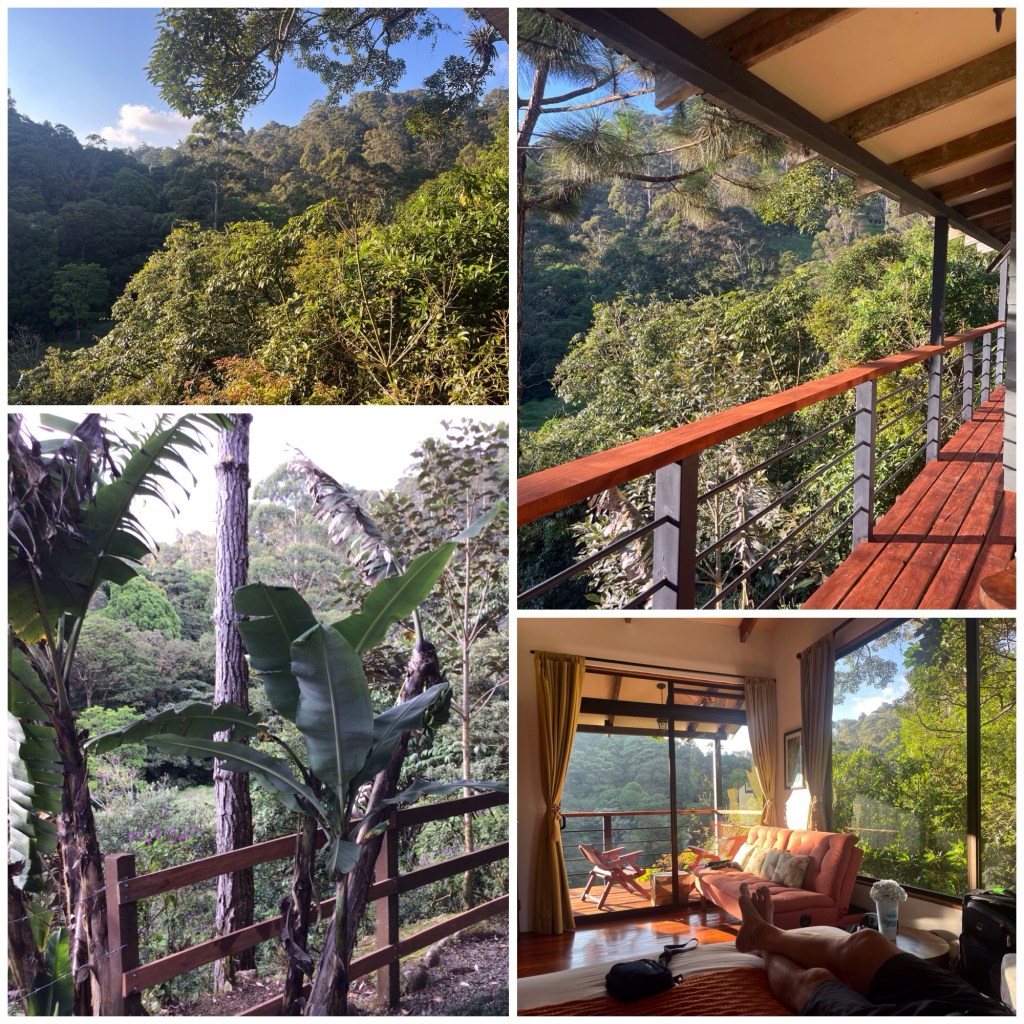
But as luck would have it, we didn’t have to leave our vacation rental at all. We had booked a lovely rental outside of Santa Elena. Beautiful serene setting, lovely views of trees complete with a stream just below our house, and surrounded by the Cloud Forest jungle. We could sit on our wrap around balcony and bird watch from armchairs.
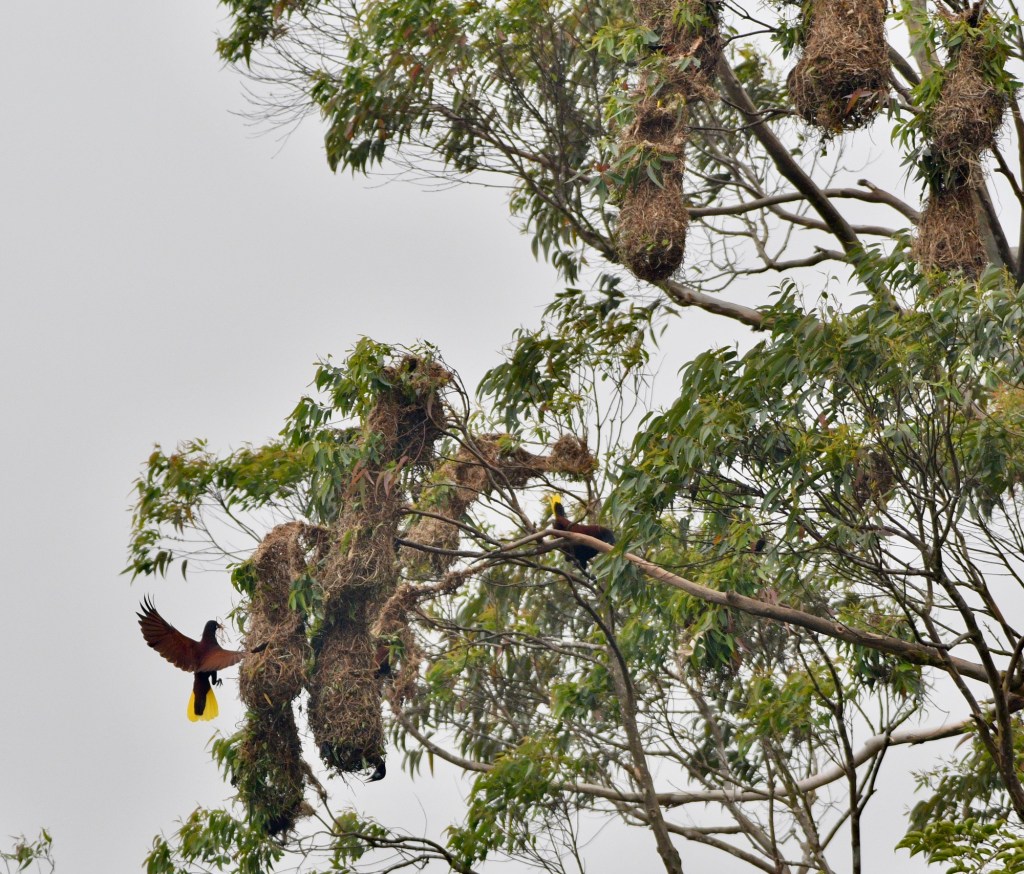
Nearby there was a large colony of Montezuma oropendolas. It is a spectacularly beautiful bird with a very unpleasant, noisy call. The birds build large hanging nests high up trees—an amazing feat of engineering given the high winds in this region.
Peter was outside watching the oropendolas when he yelled “Monkeys!” “Denise, come quick!” We all grabbed our cameras and phones and ran outside. From the yard we could see several white-faced monkeys, snapping off the bromeliads in the trees and eating the juicy base of each plant. Cute. So cute.
We keep moving around to get a better look—first outside the house under the trees and then on to the balcony as the monkeys got closer and closer.
Now we realized there weren’t just several monkeys, but a lot of monkeys.
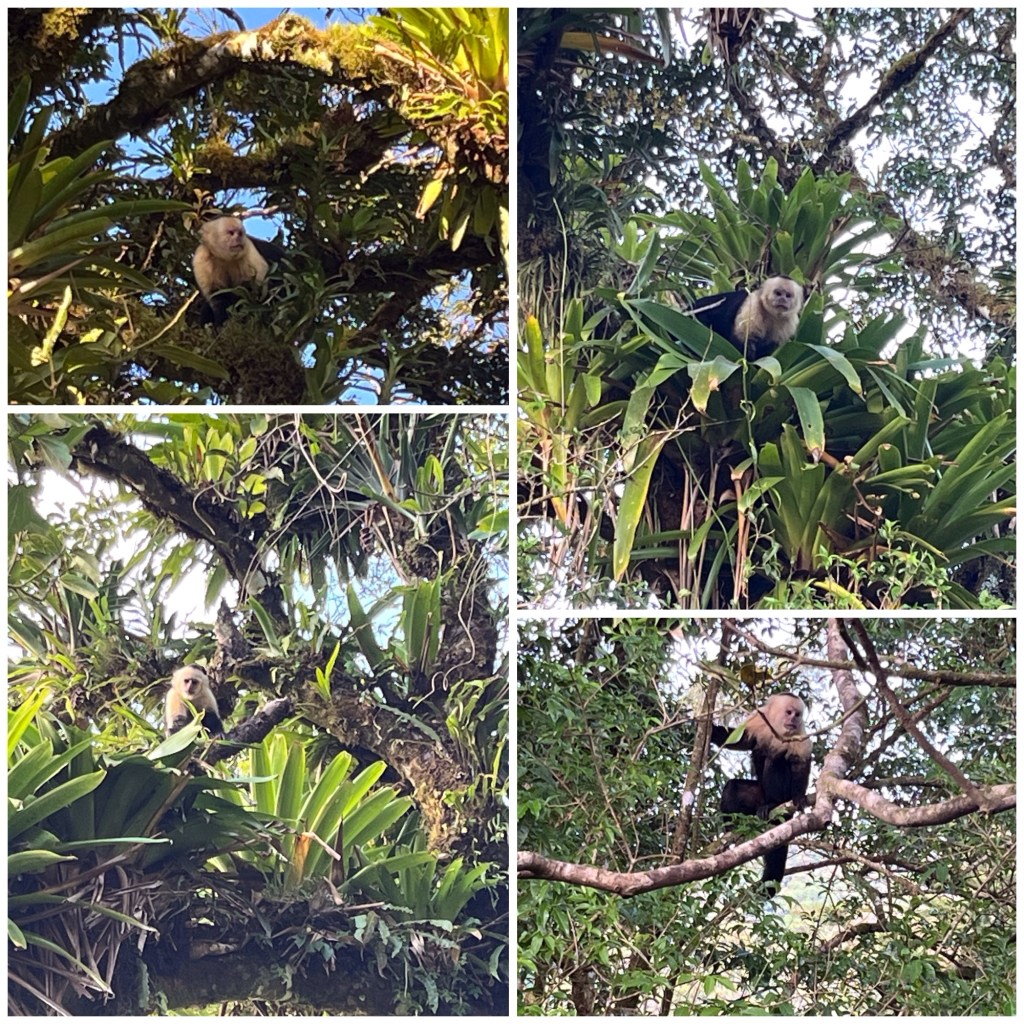
We were happily snapping photos and taking videos when we saw a large male getting closer and closer. He was focused on us. Maybe even glaring at us. We just kept taking pictures of the cute ones.
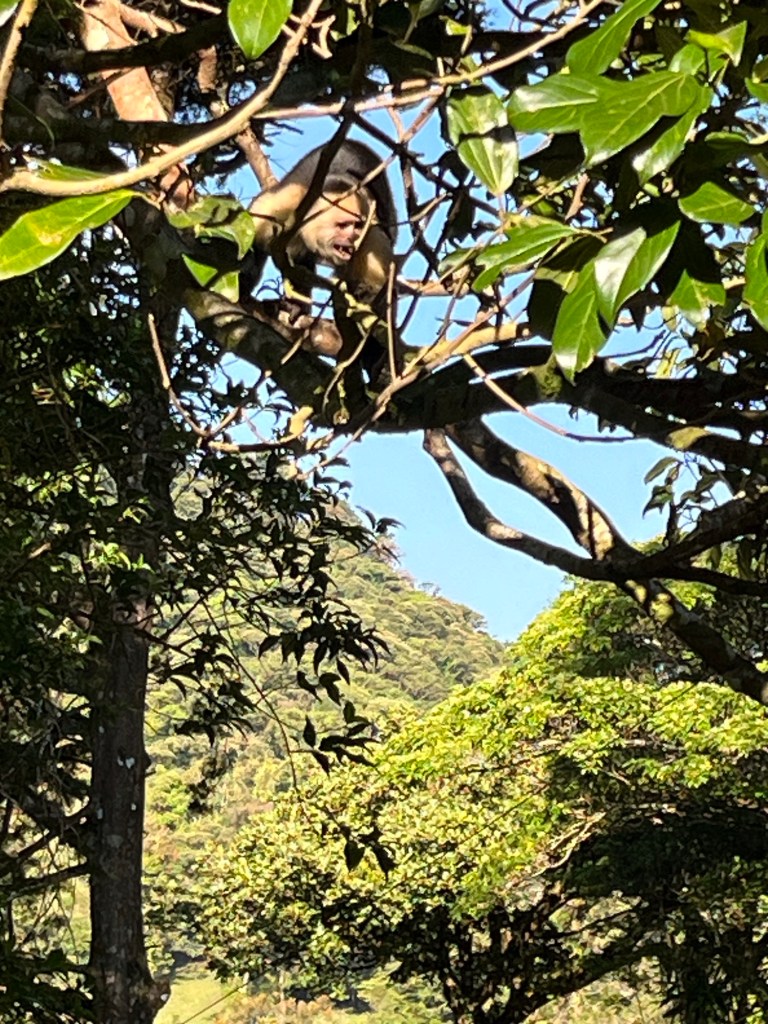
And he kept moving closer until he was on a branch just ten feet or so from our balcony viewing point. We continued taking pictures. Obviously, we missed his message. The fangs came out, the snarling began. He started charging up and down the branch very excitedly now only a few feet from us.
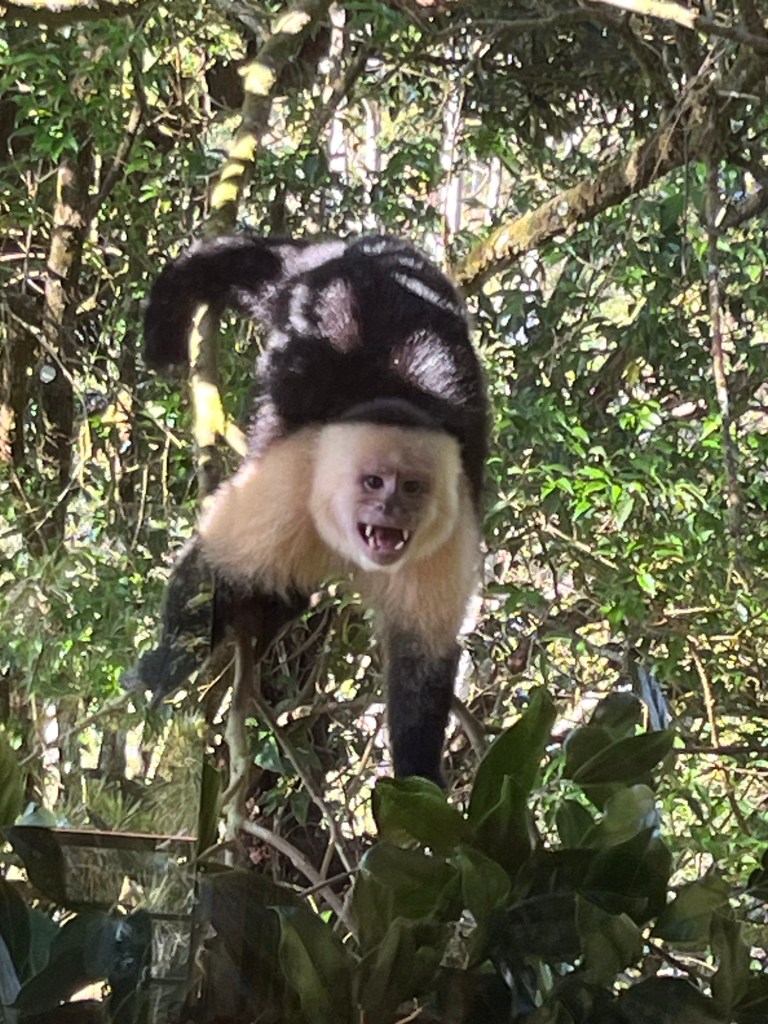
Wisely, we quickly retreated inside, closed and locked the sliding glass door, and watched from a large bedroom window. He glared at us through the window, and then for emphasis he snapped a large branch off and threw to the ground.
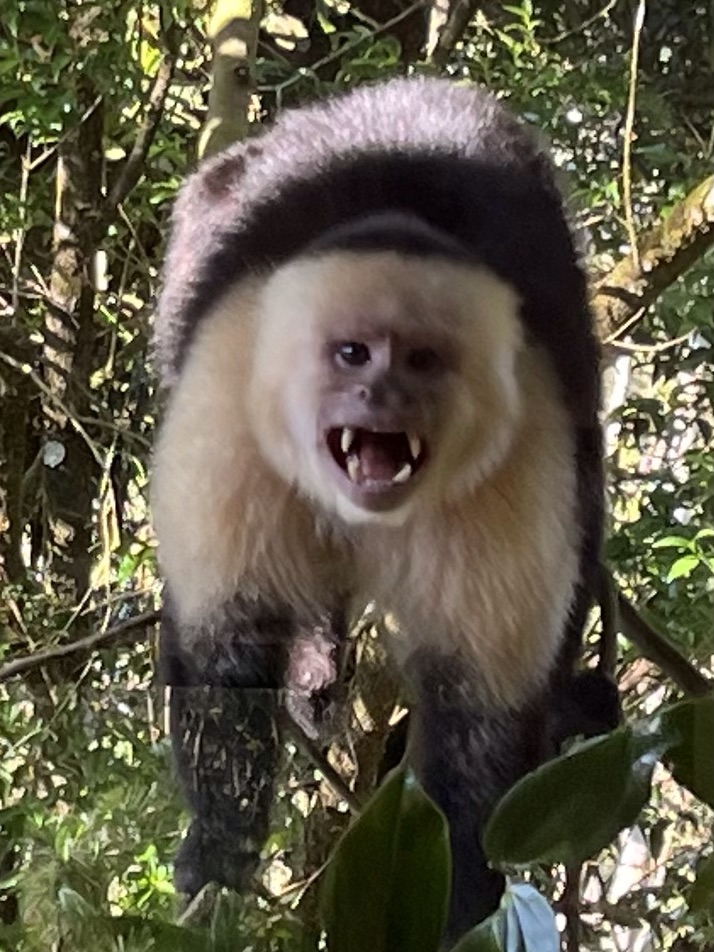
But as a final parting gesture, he turned around, pointed his ass at us, and shit. Yes, we did indeed get the message.
About a half an hour later, we were in the kitchen retelling the story when he showed up again outside the sliding glass door, snarling at us. He broke another branch off an ornamental tree. And then with special emphasis grabbed the lid off the recycle bin and tossed to the ground looking straight at us! So there! Just in case we hadn’t received the earlier message. We locked the kitchen sliding glass door, and every other door and window in the house.
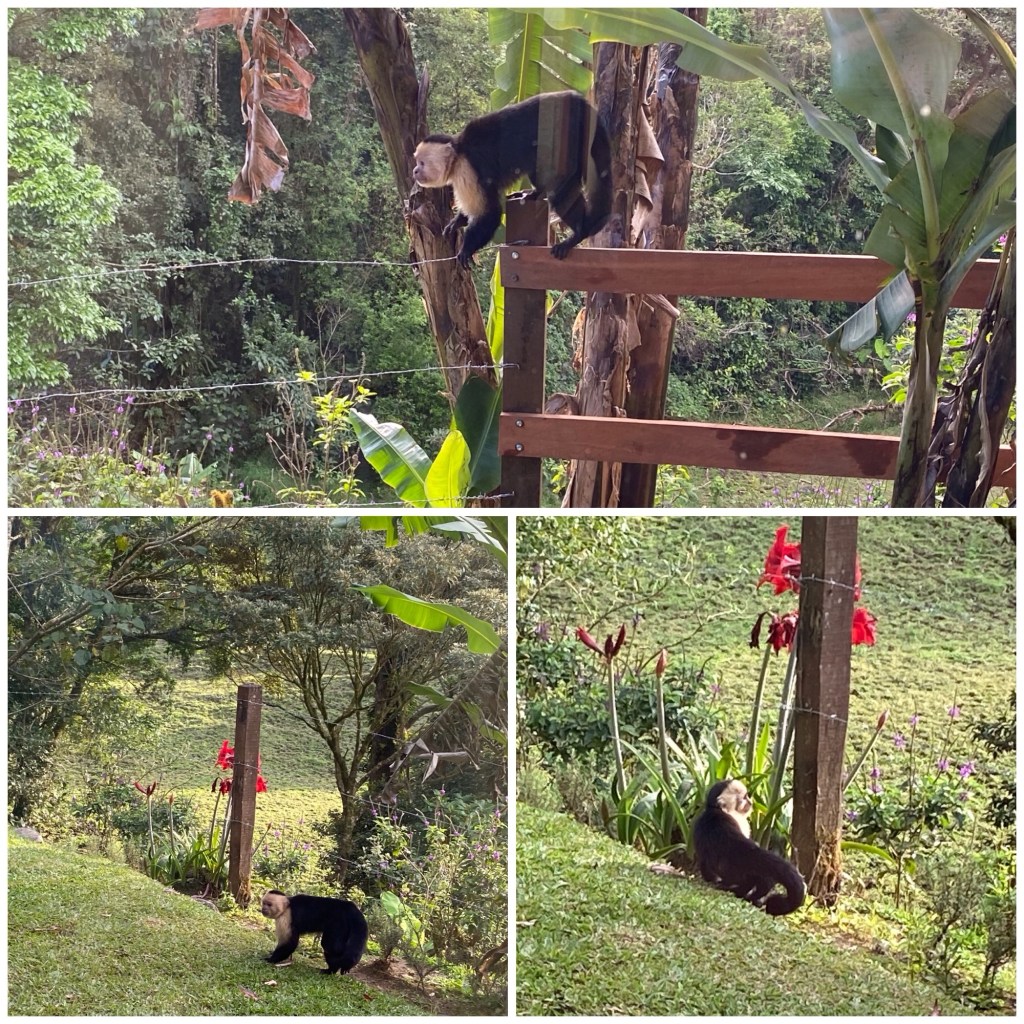
Sitting in the living room, we watched the whole troop march by, babies and all, as though they were patrolling the perimeter of their territory.
We worried. Could we make it to the car to go to dinner? As we left that evening we were startled to see a white faced monkey sitting by the car. Was it him? Waiting in ambush? The monkey ran to the other side of the car. We drew straws to see who had to go out first.
That night Denise didn’t sleep very well. Every unidentified sound might be a monkey trying to break in.
But she had seen her monkeys.
 Chasing the Good Life