Let’s make one thing clear! This is not a complaint or a whine or a criticism. Just a reality check.
Copenhagen is a stunningly beautiful city in a progressive country with architectural treasures and a great history. It reputed by one of those “scientific” surveys to be the happiest city in the world. A city of hygge.
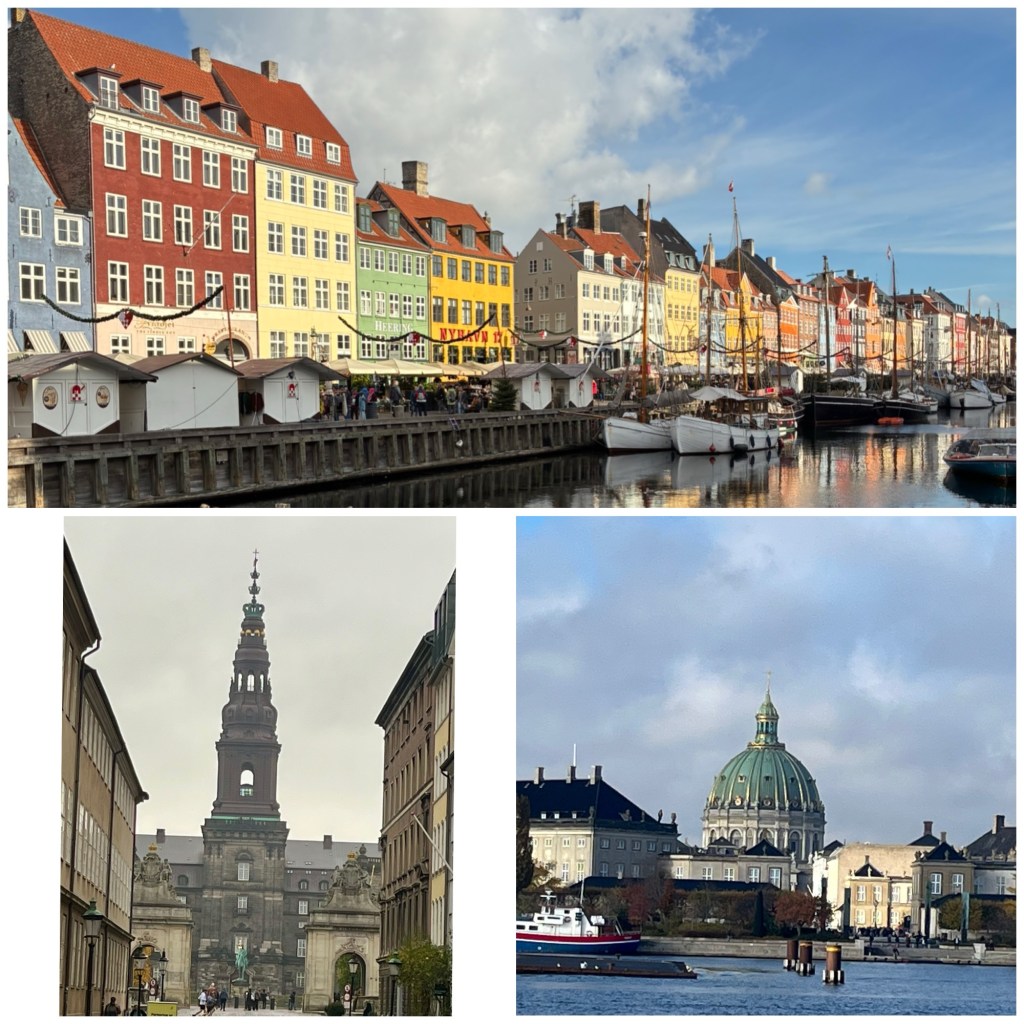
But despite all the pluses, it was still a shock transitioning back through Copenhagen to the United States after two months in Valencia, Spain.
We had booked our flight to Valenica through SAS, Scandinavian Airlines, because they were restarting a direct flight for the first time since 2009 from Seattle to Copenhagen and offering some of the best prices to Europe we could find. We also jumped at the chance to spend a few nights in Copenhagen on the way back. We had been there several times in the 90’s on our way to and from Russia. It was time to revisit.
The first shock is weather. It shouldn’t have been, obviously. We knew better. Northern Europe is after all north. And we arrived on November 1st. We left sunny Valencia in the high 70’s to arrive in rainy Copenhagen in the high 40’s. And windy. And gray.
Shorts and tee shirts gave way to long pants, sweaters, and rain coats. Layers on top of layers. Window checks from our hotel. Were the people in the street below wearing raincoats, parkas, skull caps, scarves, and carrying umbrellas? We had been smart enough to pack warmer clothes, but still our bodies somehow felt abused.
The second is sticker shock. Most travelers know that the Scandinavian countries are expensive—really expensive—but coming from Spain and low cost Valencia in particular….oh… my….god! Two lattes and two small rolls with cheese in Copenhagen—$32. In Valencia that’s a dinner for two with two glasses of decent red wine. A 45 minute train ride round-trip for two to Helsingborg from Copenhagen—$123. A 2 hour round-trip train ride to Benicassim from Valencia—$30. For two. To Madrid on a high speed train—$60. A plain gin and tonic in our mediocre hotel bar—$22. A top of the line G&T in a fabulous Valencia bar—$8.

Museums in Valencia are mostly free. The National Museum in Copenhagen $20. The Glyptoteket, a wonderful art museum, the same! So it goes. Of course, wages are higher in Denmark than in Spain. Denmark also has one of the best social services systems in the world—free child care, elder care, schooling, good pensions, and great health care. But as a traveler, not a local, the shock was real. We had to reset.
Then there was the different daily schedule in the same time zone. In Valencia, we got up at 9, sometimes, but not always, got out of apartment by 10, ate lunch at 2, dinner at 9:30 or later, and in bed at 1. Usually, we took an afternoon stroll around until the sun started setting around 6:30 the last week we were in Valencia—daylight savings time ended.
In Copenhagen, however, it was dark at 4:30. People started dinner as early as 5:30 and following that pattern, we could have been ready for bed at 9—about the time the restaurants in Valencia were opening. Different life cycles. A jolt to our recent biological clocks.
At first we thought there was a big difference in the street life. In Valencia, people live in the streets. They eat, play, and socialize in the restaurants and squares outside. The noise is sometimes deafening. Because of the small apartments, you have friends and family gatherings at restaurants. It was not unusual to see tables of 15 or 20 celebrating birthdays, anniversaries, or graduations partying late into the night —almost always outside. We usually went to bed at 1 am on weekends when the partying was liveliest, because that was when restaurants legally had to get their tables off the street and things finally quieted down.
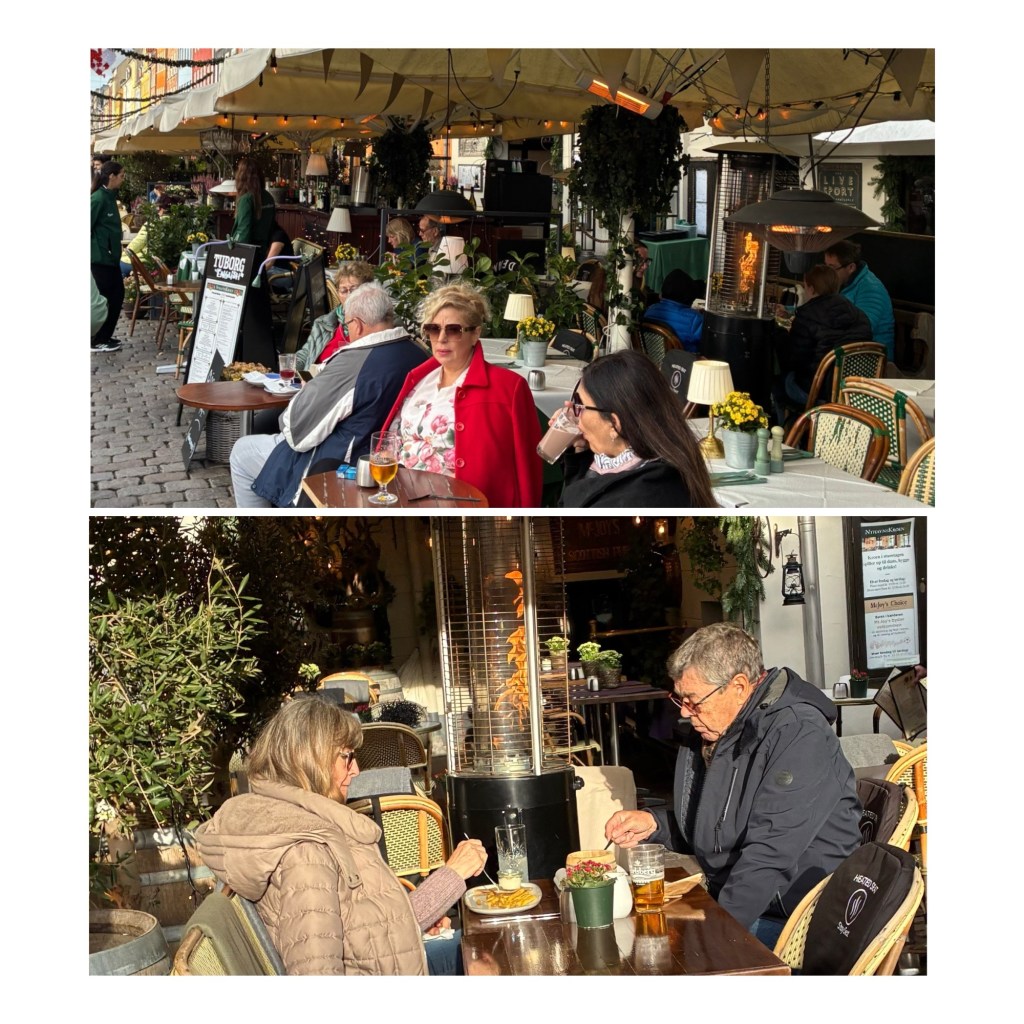
In Copenhagen, dead silence around 8 pm our first night at our hotel near the city center. Almost nobody out and about. We thought at first maybe the zombie apocalypse had arrived. We slept with the windows wide open even though we’re on a fairly active street and the reception desk had warned us about street noise. However, we rarely saw a car driving down our street, just bicycles. Lots of bicycles! Of course, the late fall weather in Copenhagen precludes much outdoor restaurant seating except for a few chairs for desperate smokers. But then we began to see the life in the streets. Blankets were hung over chairs at outdoor tables. Without the rain, those seats probably would have been taken. We found Nyhavn, the tourist waterfront. There cafes, bars and restaurants line the quay. Even in November, people were huddled next heaters for lunch in puffy parkas trying pretend it was July. The locals say any sun brings people out. And in summer, we sure it’s bumped up another notch but still not the living in the street vibe of Valencia.
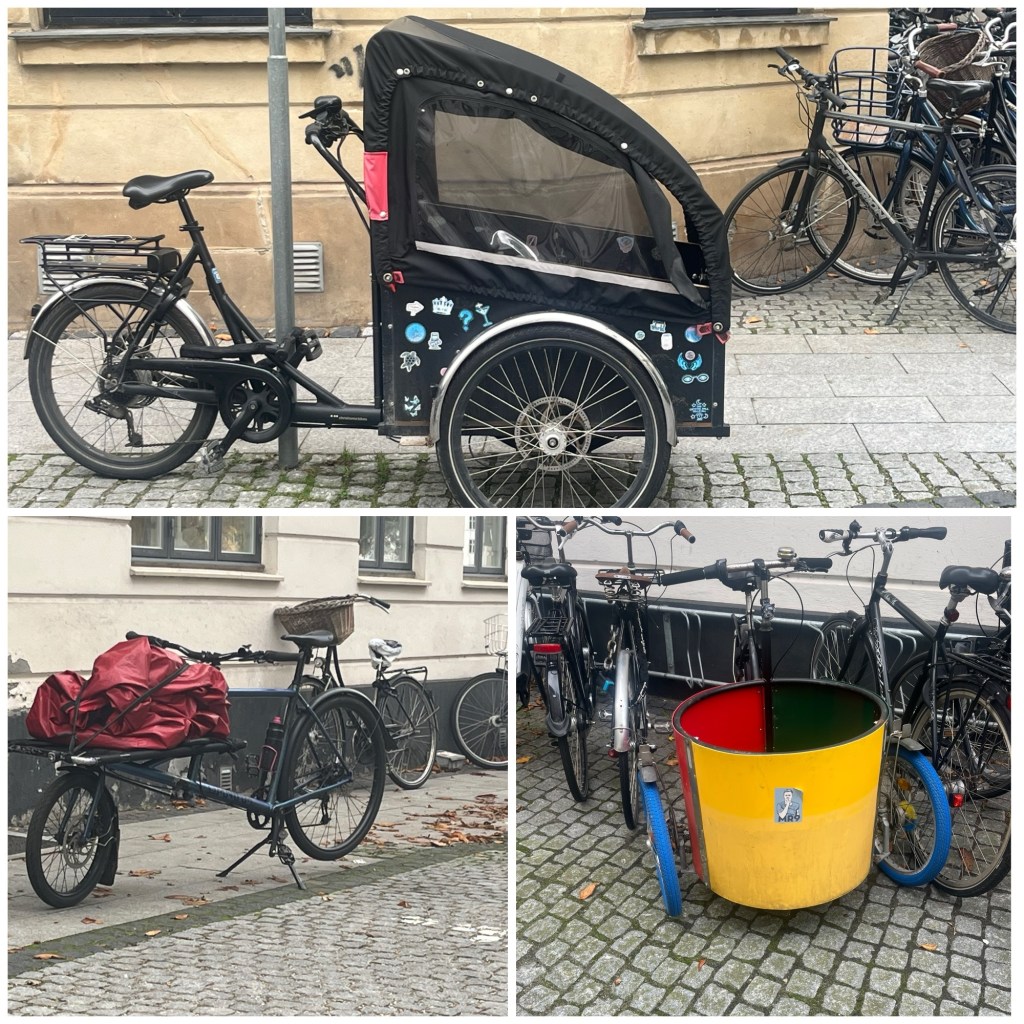
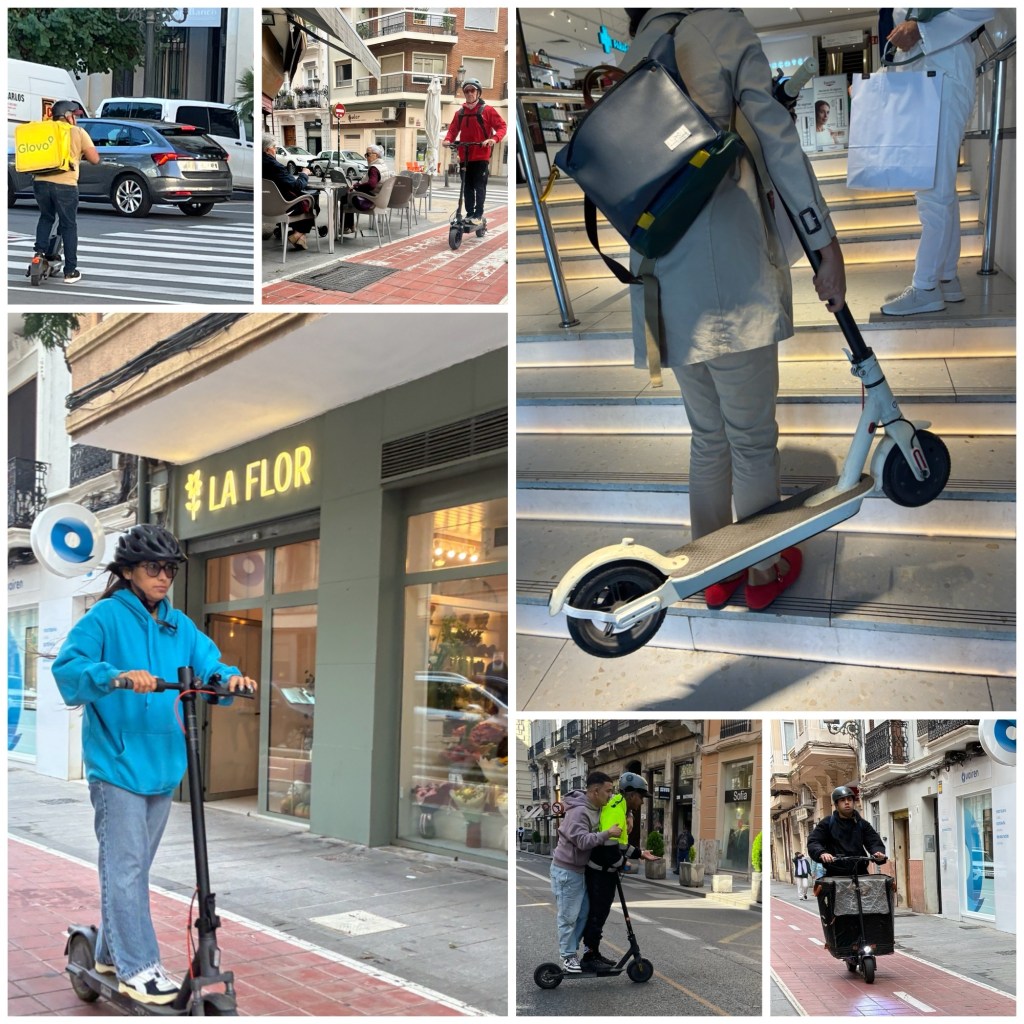
So at first the transition was indeed a shock—the contrasts enormous. But once we adjusted a bit, more similarities emerged. Both cities have a bike culture. In Valencia bikes and motorized scooters were everywhere, sometimes zipping along in the bike lanes and sometimes not. Sometimes following traffic signals and sometimes not. In Copenhagen bikes are the primary mode of transportation. Commuters, students pedaling away.
Entire families head out on often with mom and the kids in the front “basket” and Dad pedaling from the rear seat. During rush hour the bike lanes are packed and riders follow the rules of the road, even using turn signals! Some bikes are specially built to move boxes and pallets. We even saw a couple wrestling a refrigerator onto their bike with a wooden passenger crate — heading to the recycle center?
Then there’s the food scene. Valencia is crammed with restaurants—we counted 25 in a short 3 block walk from our apartment. Every imaginable enthicity, not just Spanish. Every price range—from cheap kebab take-away joints to Michelin starred restaurants. We had four Michelin rated places within two blocks of our home in Ruzafa. Everyday it seemed there was a food festival. We enjoyed a rice festival with paella stalls, but missed a seafood “experience” in an old grand warehouse, an Octoberfest, a potatas bravas festival, and festival featuring the flavors of Latin America. And yes, Copenhagen has plenty of restaurants. Around our hotel we have Italian, Vietnamese, Japanese, Indian, and Danish. But not the density. Not the insane variety in price and quality. And we haven’t found any food festivals yet although we’re sure we could find a herring fest if we looked hard enough. When we walked maybe two miles from the city center we found a few blocks packed with small shops and restaurants. Still subdued compared to Valencia.
It’s a tale of two cities and we’re glad we don’t have to make a choice. Both are a traveler’s dream — flat, walkable, fascinating with deep histories, abundant culture and art, and great food. Vikings or Moors, Danish modern or Valenican art deco, Cervantes or Hans Christian Anderson, smørrebrød or paella. We enjoyed both.

 Chasing the Good Life