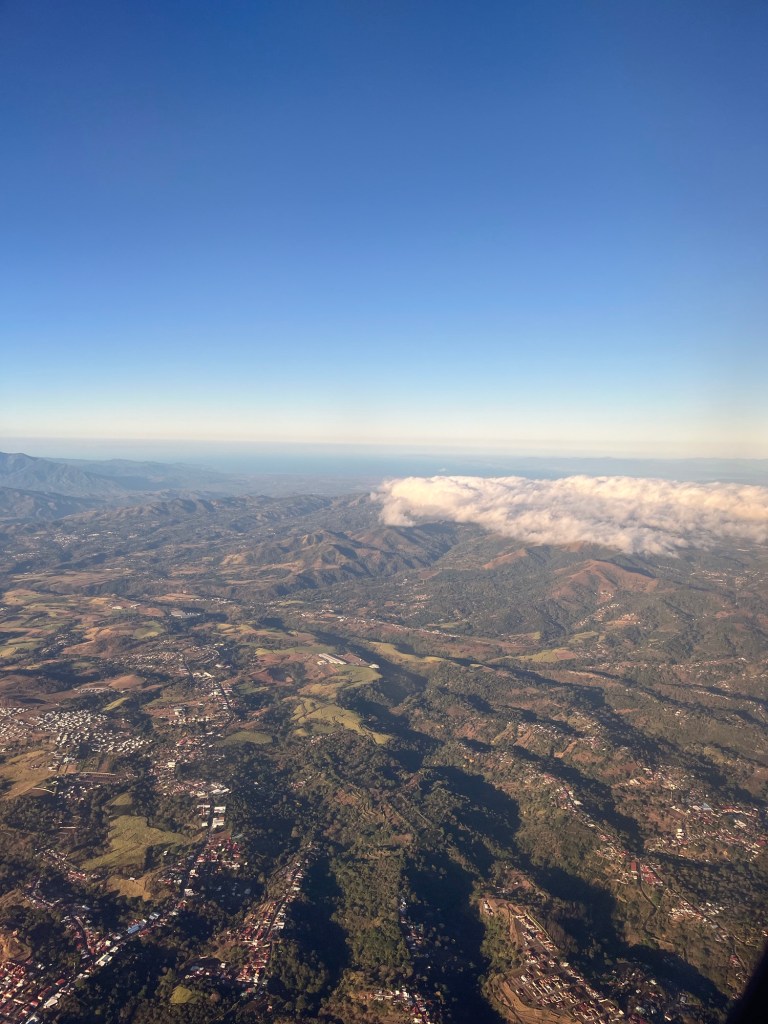
We left sea level about an hour into the drive from the Pacific coast. 98 degrees the car thermometer read. After three weeks in the tropical jungle and tropical desert of Costa Rica, we were heading to the mountains where the forecast said the high temperature would be 75 degrees. A mere 66 miles from Playa Flamingo to Monteverde in the mountains if we were crows, but by road— 122 miles. Three and half hours to go 122 miles. Normal in Costa Rica.
We’ve learned to shy away from the “major” roads — almost all of which are only two lanes inevitably clogged by the hundreds of slow moving trucks that transport goods. Costa Rica lacks navigable rivers and has almost no railroads .Everything goes by road. And given the many mountain ranges, there is rarely a direct road from point A to point B. The smaller roads may be narrower and more potholed, sometimes gravel, but ultimately your speed is the same. The traffic is more manageable and driving through the hamlets and villages much more interesting.
Our plan was to drive until the temperature dropped out of the 30+ Celsius range and then break up the drive with a quick bite to eat. Our rental car was all wheel drive so we weren’t overly concerned about the steep, narrow and rutted roads we knew were part of the day’s drive. It always amazed us that the road to a major tourist destination like the Monteverde Cloud forest could be so bad.
About half way up the Tilaran Mountains, after passing a few scattered homes tucked into the mountain sides, a warning light came on in our rental saying the transmission was overheating. Panic! This was a new car. And the manual that came with it was all in Spanish!
Luckily, almost simultaneously we came to a wider spot in the road with a covered parking area beside what looked to be an abandoned restaurant. As soon as we stopped the “abierto” came on. It didn’t look too promising from the outside and the livestock pen underneath might have put off some people, but we were hungry and we had to let the car sit and cool down…so why not!
Inside it looked, well, okay. Empty, completely empty, but tidy and clean. We were pretty sure the owner/waiter spoke no English, but Peter could speak a little tourist Spanish so we knew we’d muddle through. The menu wasn’t big. Mainly familiar Tico fare—casados, arroz con pollo, some grilled meats — all,big meals. The fast food page (comida rapida) had hamburgers, hot dogs, tacos which seemed more appropriate for lunch. And, of course, Imperial beer, because it had already been that kind of day. Our expectations were pretty low until we began to smell the beef for the hamburgers grilling.
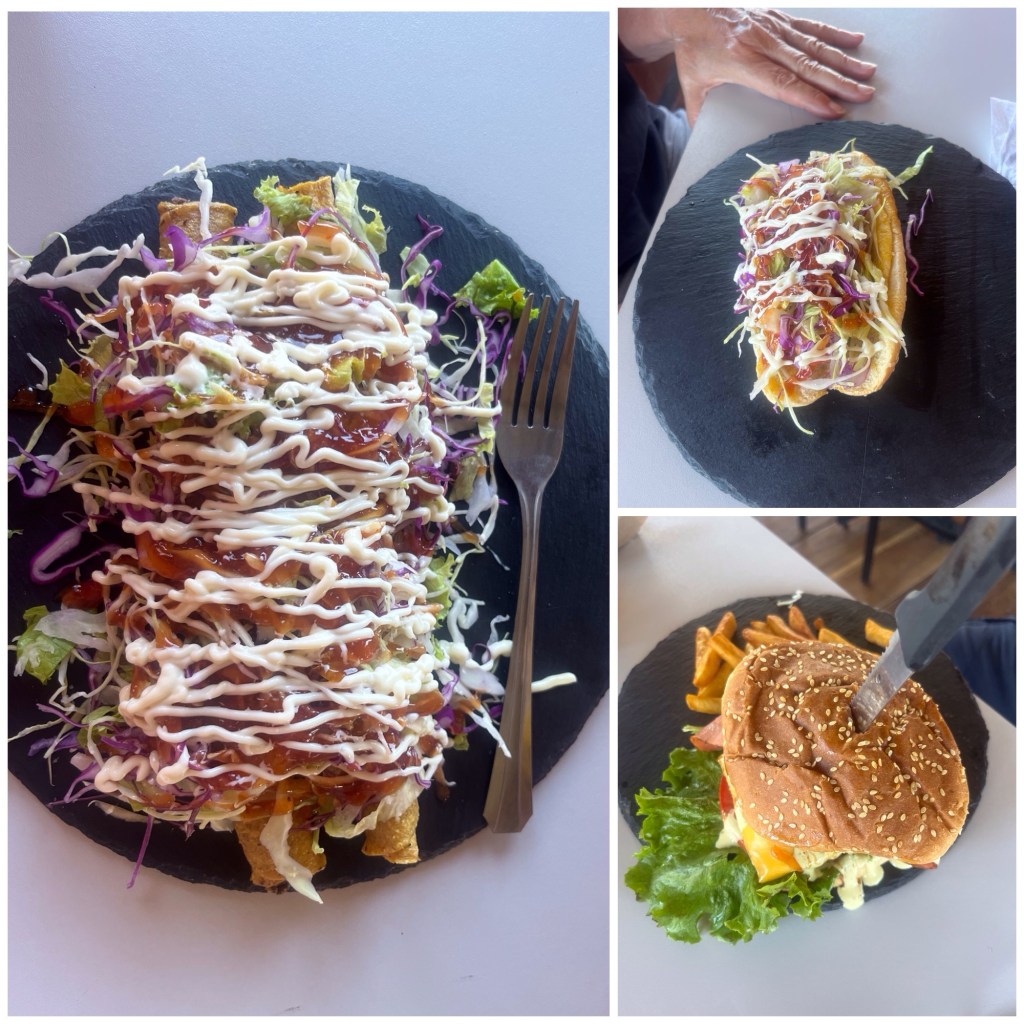
When the food arrived, we were wowed! It could have come out of a high priced gastro-pub anywhere back home. Elegant presentation. Fresh ingredients. Cooked to order. (Tacos were $5 US and hamburgers just a bit more.) The tacos were four fried cylinders of ground beef under a pile of sliced vegetables dressed with a cheesy white sauce and slightly spicy sweet tomato sauce. The hotdog came with the same treatment, and the hamburgers had two kinds of cheese, slices of ham and were as juicy as you want them to be. Messy but wonderful. Definitely a knife and fork burger. Service was efficient and attentive.
Oh, and the view!
The mountains above usThe Gulf of Nicoya in the distance below us
The transmission cooled down. And we were off once again, headed to our rental outside of Santa Elena. However, our day of surprises was not quite over. With fewer than ten miles to go our GPS told us we would arrive in 40 minutes. But first we had to pause for a small group of dairy cows to be driven across the road.
We knew going into it that the day was likely to be challenging — travel days usually are. And we had been on these roads before. But good old fashion dumb luck had landed us at Rancho El Corral for a very memorable meal. Serendipity. Almost makes us wish we were going back on that awful road when we leave here in a few days! Almost….
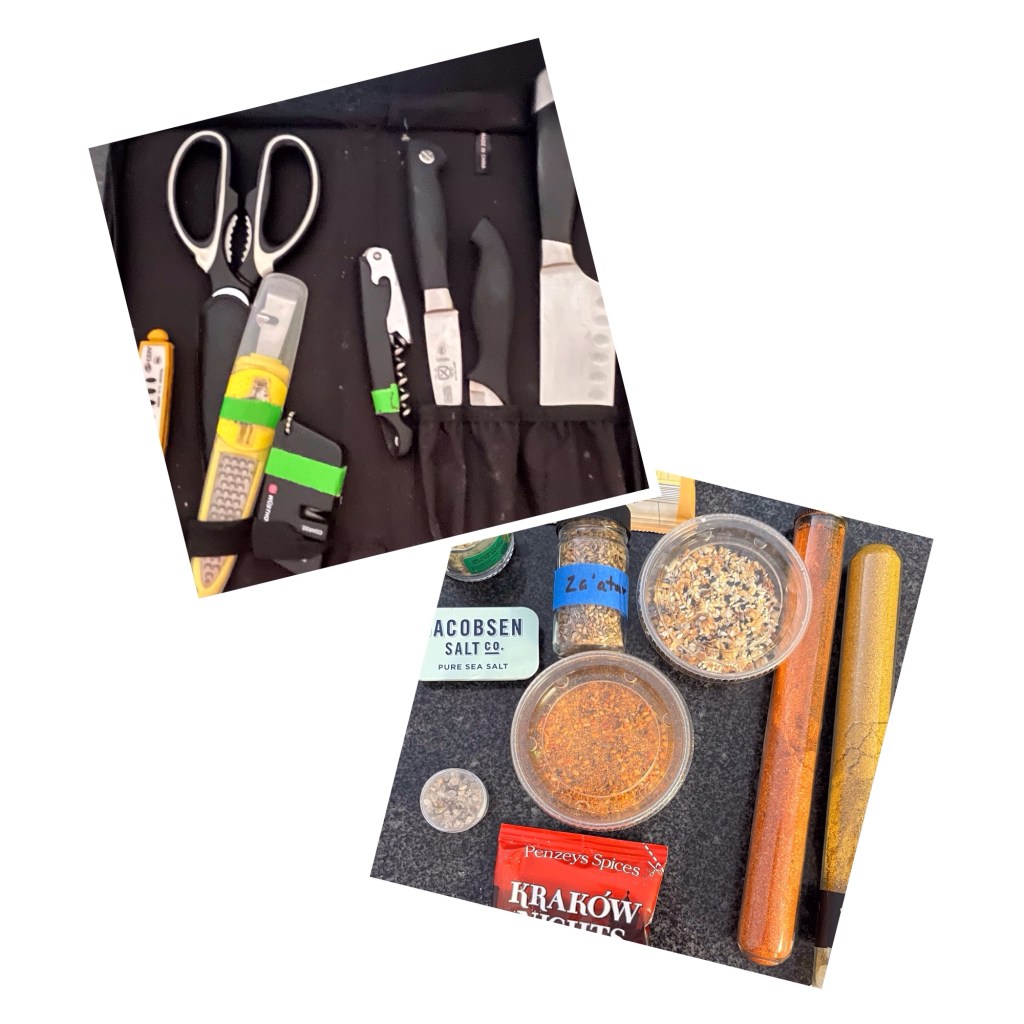
It was a tragedy in Madrid! We were catching the train to Valencia and Peter had packed our chef knives in his suitcase. We travel with our own knives—most rentals understandably have cheap sets. Dangerously dull. We had flown everywhere with this set, including a train ride in the EU just a year ago. But apparently laws and security have changed. Peter was pulled aside after his bags went through a metal detector. An officious security employee held each knife and the scissors up to a poster on the wall that showed an outline of a tiny pocket knife. He carefully measured each one—surprise, our knives were way too big. Our precious set was tossed into a locked metal bin never to be seen again. We had to muddle through at our rental home with the miserable set provided. Our knife sharpener could do little to improve them
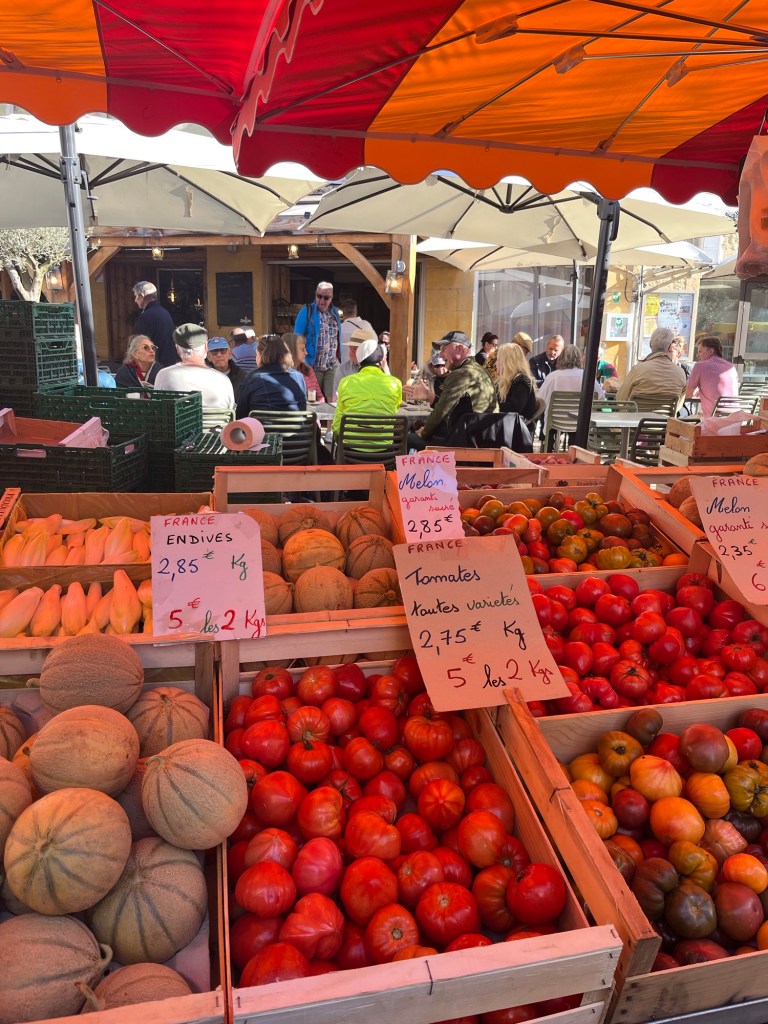
Yes, we do travel on our stomachs. We often begin a visit to a new city or region with a food tour. And a great part of the enjoyment of any trip is hitting the open air markets, buying some produce and fixing a dinner. Any AirBnb we rent must have a good kitchen. It gives us a reason to linger as we walk through the food stalls. It opens up conversations with locals when you ask for advice on how to cook something we don’t see at home. Everyone in a food market loves food and most are eager to talk about it.
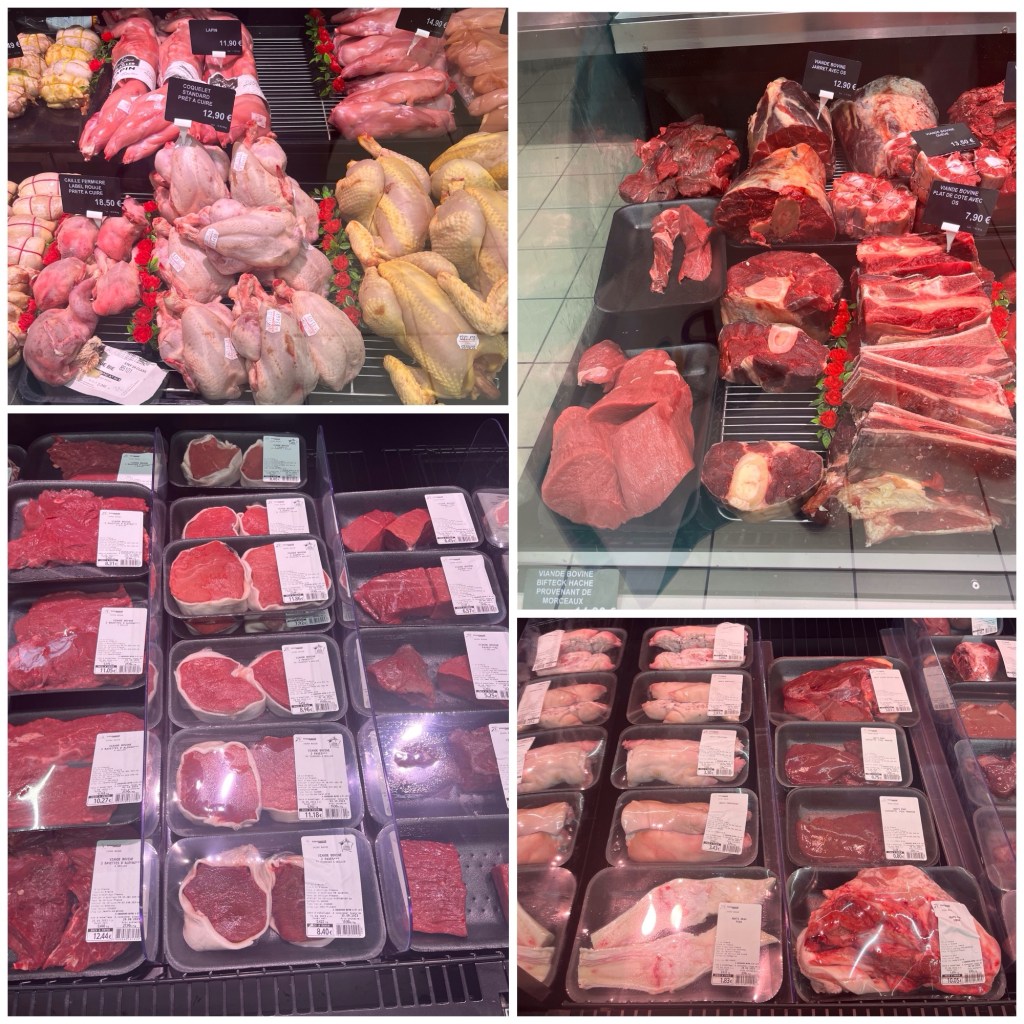
But even shopping European supermarkets brings us joy. Do you know how many different cuts of meat are available outside of the US? Whole chickens grouped by age, not packaged away in matching sets of pieces and sealed in uniform plastic trays. Beef cheeks (delicious when slowly braised in red wine with onions, garlic and some tomatoes), lamb breast or pork collar! Sure, you can hunt these cuts down in the US, but our local stores, as great as they are, rarely carry them.
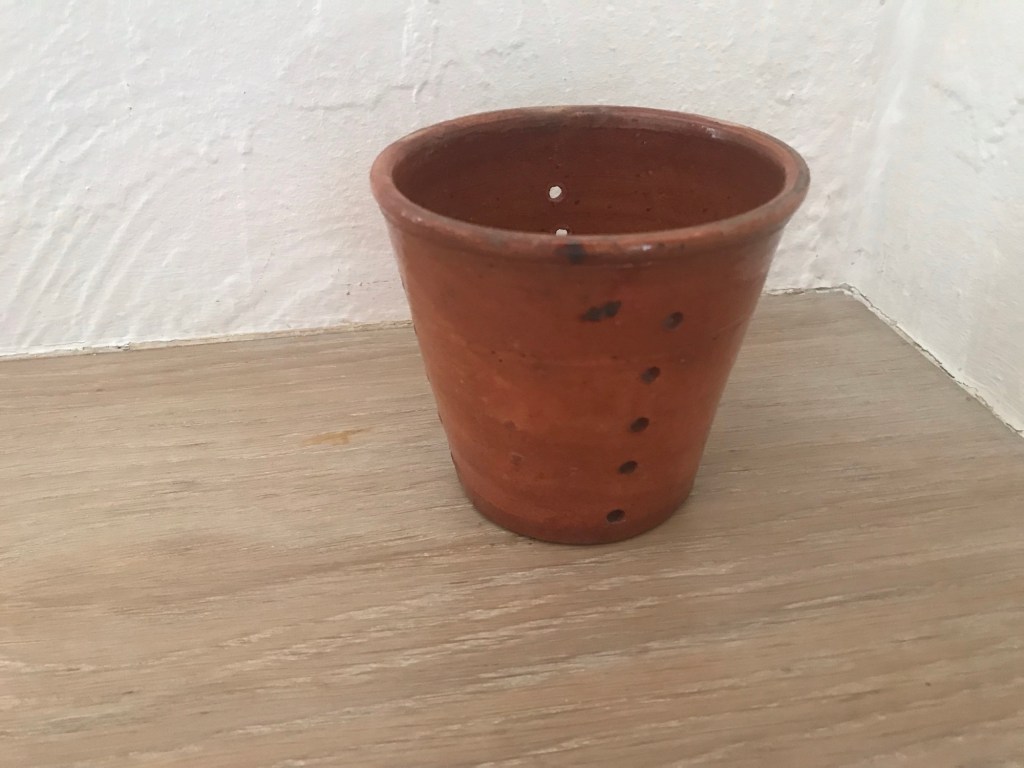
The best souvenirs we bring home are food related — our cataplana from Portugal, chopstick rests from China, a special bottle of Spanish olive oil, an old cheese straining pot we found in a flea market in Provençe for less than a dollar.
So how do we pack for a trip where home cooking is going to be big part of the fun. First, a good knife set, (chef’s knife, a paring knife and a serrated blade) assuming you are traveling by plane or car. Lacking a good knife set, or for future train travel in the EU, a knife sharpener. A small meat thermometer and wine opener are essential. As room allows: a small hand grater, and a vegetable peeler.
Spices and seasonings are very important as well. Yes, we often bring some of our own. We think about where we’re going and what kinds of foods we will likely find. Whether the rental has a grill or an oven. What food items will be easy or impossible to acquire once we’re settled in. For years a small metal candy box served as the spice kit, filled with small plastic cups of our favorite spices. The box suffered damage on the last trip. So now we are using glass vials Costco sold vanilla beans in—wrapped in a kitchen towel because most rental kitchens have only one or two towels. We also use small plastic condiment cups with lids saved from our favorite take-out spots or purchased at our local restaurant supply store.
We never packed liquids until this year. In Spain last fall we were given home pressed olive oil in a glass bottle. We had to get it home safely. Cut up a yoga mat, wrap the bottle, put it in a cardboard tube. Presto! Problem solved. So on our trip to Costa Rica a small bottle of fish sauce went in that tube, and along with some other spices and some added cushioning; it arrived just fine. We knew the good produce available in Costa Rica would lend itself to Asian cuisine — stir frys, Asian salads skewers of chicken and pork. Interestingly, we found Costa Rican brands of soy sauce and other Asian seasonings in most grocery stores!
Knowing we have some basic spices, we start with a very flexible shopping list, grouping food items based upon recipes or dishes we want to cook. If a critical ingredient isn’t to be found, the recipe gets tossed. We were going to make a Thai dish with ground chicken, coconut milk, lime peel and a few other things. No ground chicken. Flipped the recipe to chicken lettuce wraps, using whole chicken breasts we minced. You have to be flexible. Yesterday I found some handmade tortillas for sale at a produce stand! Street tacos for dinner tonight!
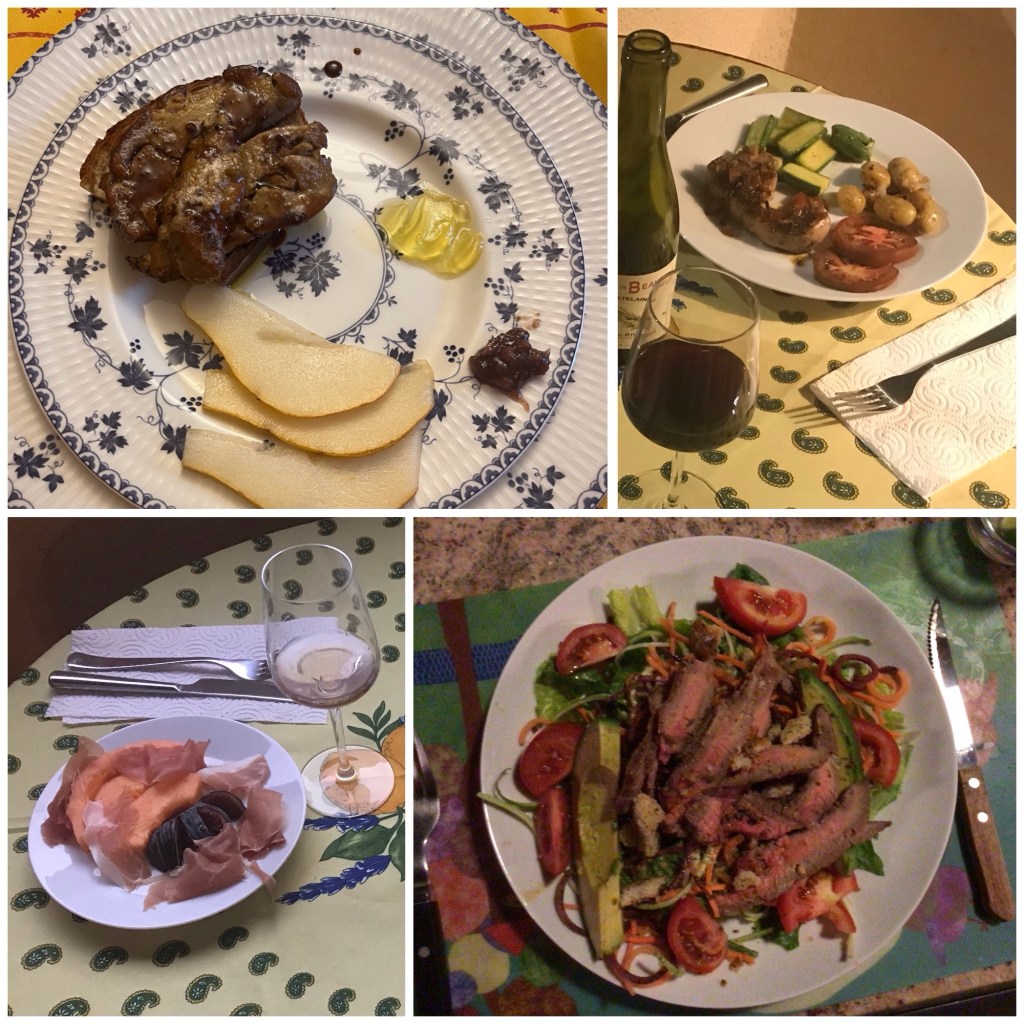
And, of course, some destinations are easier than others. In France? Ou la la! Grab pastry dough at the supermarket, local goat cheese at the fromagerie, and zucchini or mushrooms or sweet peppers from the farmers market. Viola! A vegetable, cheese tart. Add some lettuce tossed with a vinaigrette. A fabulous dinner. It’s a little tougher in other areas where farmers’ markets are few and the supermarkets are less grand. But still doable. As long as you have WiFi or cell reception, you don’t need to pack a cookbook. And we have downloaded a recipe app that allows us to take our old reliable recipes on the road.
Meals can be super simple — some charcuterie, some cheese, a jar or two of artichoke or tapenade, a loaf of bread and some olives or pickled vegetables from the market.
On the other hand, our evening’s entertainment is opening a bottle of local wine, fixing a dinner with the local ingredients and enjoying the comforts of our rental home. It all fits in with our mode of travel — go slow, eat good food and soak in the ambiance.
We just have to be sure to walk a lot so we can fit in our clothes on the way home.
We wrote a blog several years ago about how comforting it was to travel back to the familiar. You know the stores, restaurants, the roads. What to see, what to avoid. And yet we also usually find something or some place new to explore. This was our fifth trip to Costa Rica and again, we were planning on spending part of our time in Potrero, our home base, on the Nicoya peninsula on the Pacific side. Lovely beaches, decent tourist infrastructure, but not over taken by souvenir shops Then a few days in Monteverde chasing birds. But this time we would add a trip down south to the Osa Peninsula. A new horizon.
What is stunning about Costa Rica is how many completely different climatic and geographic regions are packed into a small country. Dry, almost desert on the North Pacific coast, tropical rain forest on the mid Pacific coast, even more dense, hot tropical forests further south, the temperate central valley, the cool Cloud Forest in the mountains, the Caribbean lowlands, and the high southern mountains.
Osa is a long drive from San Jose. Even longer because you inevitably find lots of construction zones and a very slow truck or two to follow for tens of miles. So we decided to stop in Uvita on the central Pacific coast along the way to break up the trip.
Some suggest our first stop, Uvita, is an alternative to the more touristy Quepos and Manuel Antonio, just a bit further down the road. It’s a town with no main square or center, and has one main attraction—the Ballena Marine national park. This very unusual park has a huge sand spit that from above looks exactly like a whale’s tail. Unfortunately we were there at high tide; no whales tail but a gorgeous beach.
It was also prime time for the humpback whale migration so dozens of small whale watching boats were being launched through the rough, heavy surf, occasionally dumping a tourist or two into the water.
We spent two days there exploring the national park, looking for monkeys, watching birds and walking the beautiful local beaches. A good stop along the way to the Osa Peninsula.
The Osa Peninsula is one of the more remote parts of Costa Rica—very different than where we’ve been before. We read that this area was less developed, less touristed than our previous haunts. It’s in the far south, super tropical, on the Golfo Dulce (the only tropical fjord in the northern hemisphere). The peninsula is almost entirely a national park, the Corcovado National Park, and mostly inaccessible except by boat or long hikes, as in three and four day long hikes with a ninety minute boat ride from Puerto Jimenez before you even start to walk. Spectacular wildlife—birds, monkeys, sloths, tapirs, jaguars, and snakes—lots of snakes. One of the real natural treasures of the world—it said to be the most biodiverse place on the planet.
Fortunately, it is possible to drive down the eastern side of the peninsula to Puerto Jimenez, a little run down village of mostly Ticos, some expat hippy/yoga types, and a few serious eco tourists/birders/hikers. You can drive further south on a dirt road with multiple stream crossings to Carate, but we wisely chose to end our drive at Puerto Jimenez. The town houses the main information center for the national park and you book your tours there—you must have a guide to get into the park. There is also a small airstrip with flights from San Jose, Liberia and Quepos should you not want to make the long drive. It was little disconcerting when we were sitting at a local restaurant at the port when a small plane buzzed by seemingly inches over our heads. We noticed none of the locals flinched.
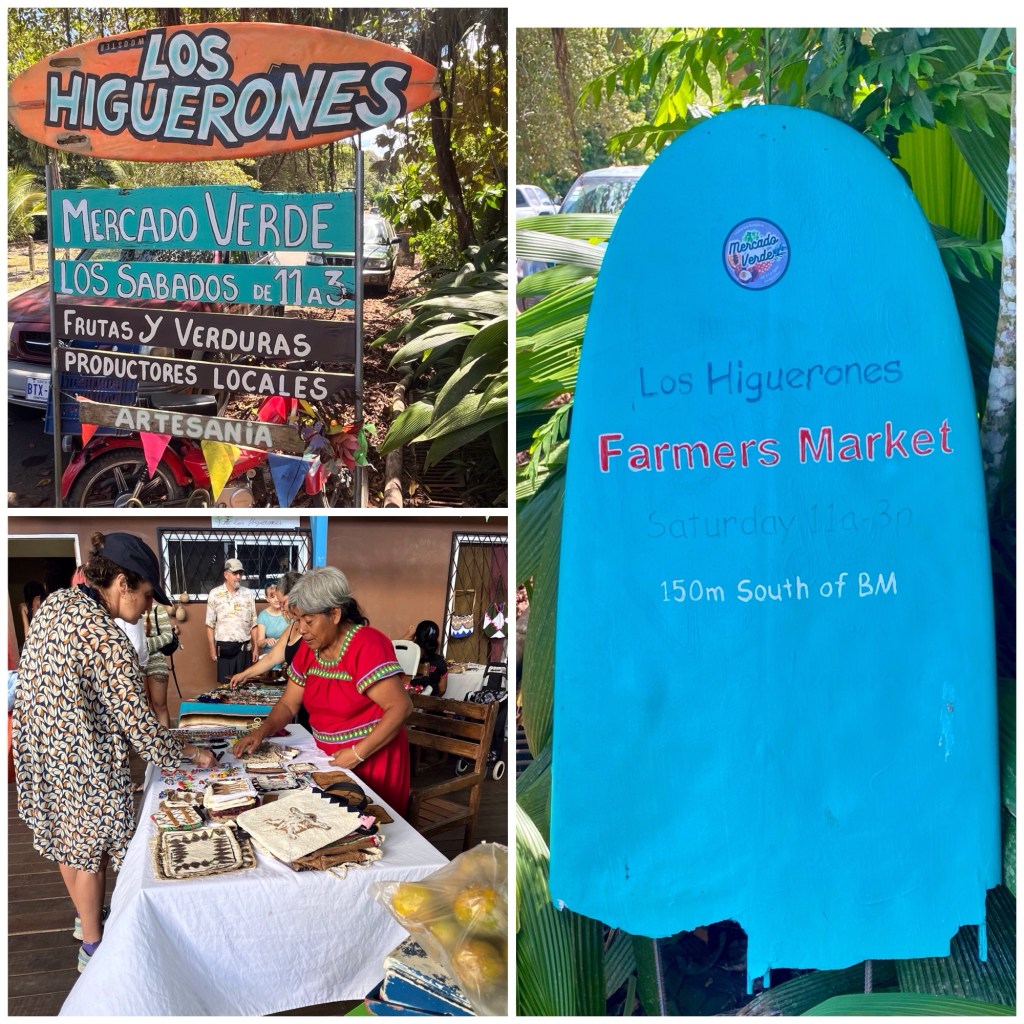
There’s not much else to the town. A few restaurants, couple of yoga studios, a gas station, a BM grocery store, and a heavily advertised Saturday farmers market that takes five minutes to see but includes some indigenous people’s crafts..
Just a few but very rugged miles outside of town is another of Costa Rica’s gorgeous beach’s—Playa Preciosa. From here you can almost see Panama.
Part of Osa’s charm is its lack of serious tourist infrastructure. So we had a hard time finding a place to stay except for a few very upscale eco resorts. We wound up in the Corcovado Private Villas. We think it might have been an eco resort that fell on hard times in during Covid. We had been warned a four-wheeled vehicle was required. The website gave us a GPS waypoint that took us up a steep dirt road that reinforced the idea we needed four wheels. Unfortunately when the GPS announced “you have arrived” we were in front of nothing but a barbed wire fence. So, of course we drove on, using all four wheels on our car, as the road became progressively worse. Back home we would have called it a mountain logging road. Luckily, a kind local on a motorbike recognized we were somewhere we didn’t belong and led us back to civilization. Of course, this part of Costa Rica lacks reliable cell reception as in we had no “bars”. We had to backtrack several miles to get cell service and a new set of directions — different but only slightly better. We finally arrived. Our traveling partner in the backseat had her eyes closed most of the way up to resort, muttering occasionally “oh my goodness.” The “check in” guy, Esteban, listened rather calmly to our annimated story about getting lost and told us he too had gotten lost a few days before using the original directions. We suggested that maybe they might want to delete those directions from their website.
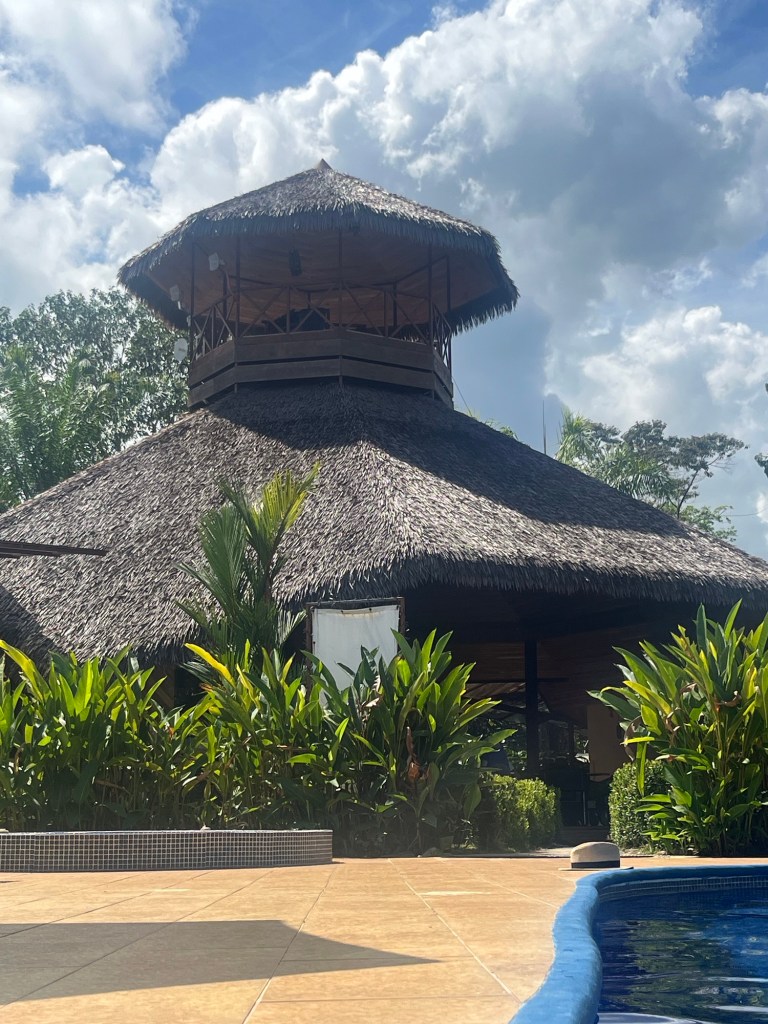
The complex consisted of a dozen or so separate units spaced some distance from each other along the steep trail to the top of the hill. There we found the pool, hot tub and “restaurant” which served an inclusive breakfast and you could order a dinner in advance with a very limited menu. Oh, and the whole stay was cash only and it was very unclear who you paid and when. Nobody seemed to be in charge but we figured somebody, sometime, somewhere would take our money.
The villas themselves were a bit run down, with few amenities, but very serviceable. And with gorgeous views of the green jungle teeming with birds and a few monkeys just a few feet from our balcony.
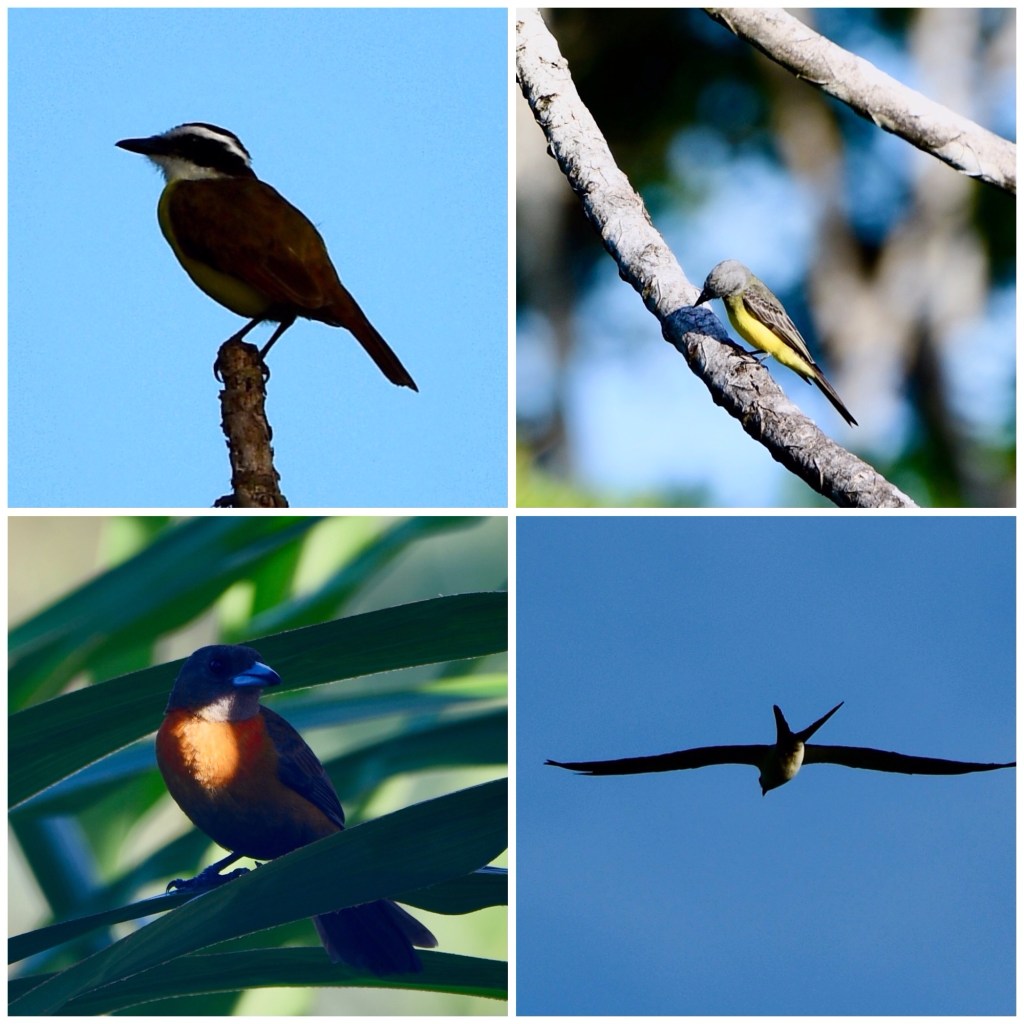
The upside, and it was a huge upside: the 70 acres of amazing tropical forest right adjacent to the national park. Some of reviews said the wildlife here was better than what they saw in the park. While we are not truly serious birders, what we experienced in the few days on the property could change our minds. Toucans, fiery billed arcaries, multiple varieties of parrots, lineated woodpeckers, and dozens more. At least several new life birds for us.
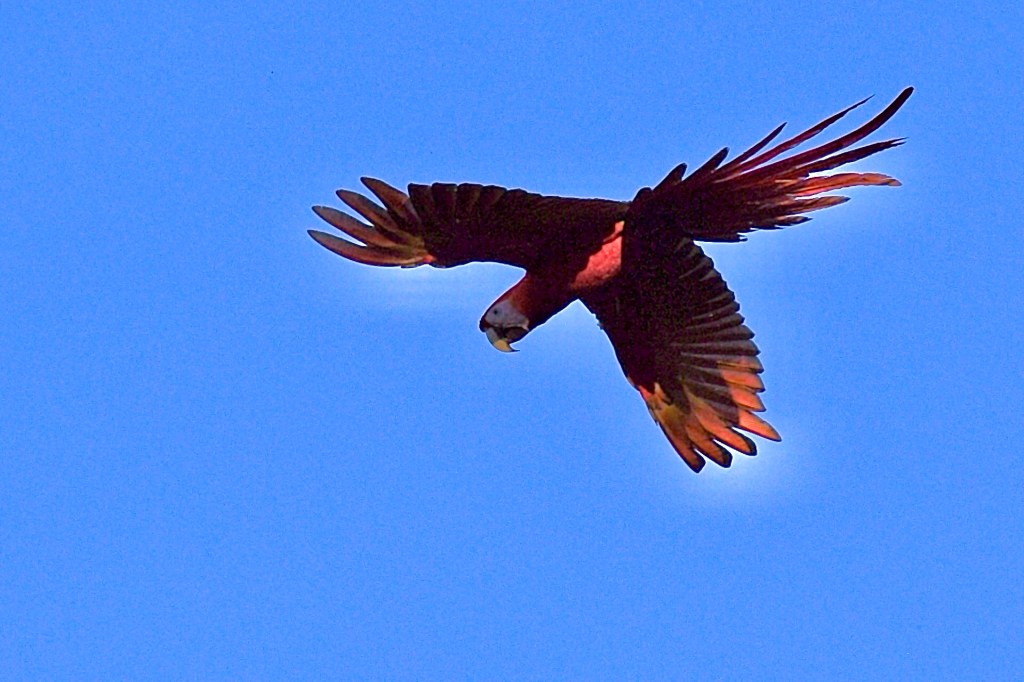
But the star attraction were the scarlet macaws—a very large bright red, yellow, blue parrot with the most awful loud sqwauk of a call which you could hear for miles. Our villa and common area seemed to be a macaw freeway with birds flying over all day, stopping to rest in the nearby trees. What a show. A very loud show.
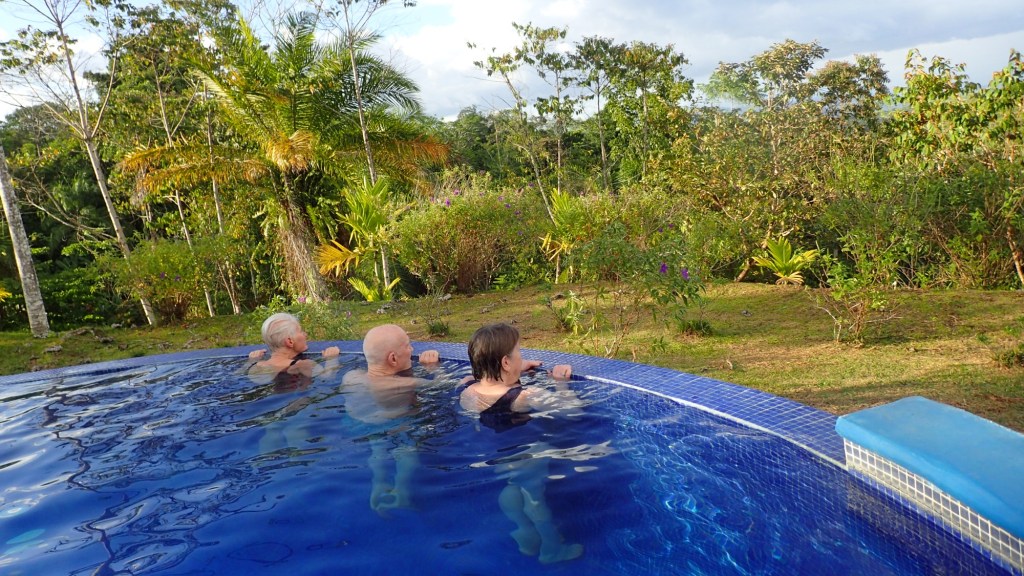
And you could see most of this from a magnificent infinity pool at the top of the property. In one 45 minutes stint in the pool, we saw white faced monkeys, yellowed throated toucans, green parrots and, of course, lots of scarlet macaws, plus monkeys just a few yards away peeking through the foliage. Pool birding was a new experience for us. As we said, we aren’t serious birders.
And the dinner, humble as it was (arroz con pollo) was very good. However, the parting comment from our young server as we walked home to our villa was a little disturbing, “Be careful of the snakes.” We walked with all four iPhone flashlights focused on the ground.
Yes, the property needs work and serious investment. But if they ever upgraded to a high-end eco resort, we probably couldn’t afford it. By the way, while writing this in our villa some white-faced monkey is having a shit fit not far away.
The Osa Peninsula surprised us by living up to its reputation — a natural wonder, still largely pristine, a biodiverse sanctuary, and one Costa Rica’s many different climatic and geographic regions. It’s also a great example of Costa Rica’s commitment to preserving natural habitats by setting aside huge areas as national and provincial parks.
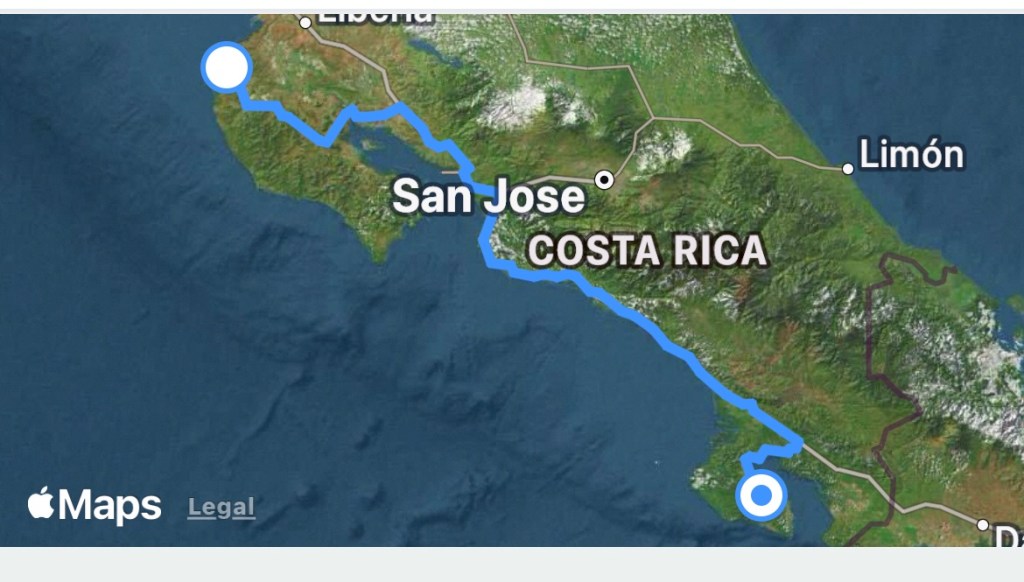
It gave us a lot to think about on the 10 hour drive back north to Potrero— basically nearly the entire length of the country.
We’re clearly foodies. Some would say we are obsessed with food, particularly when we travel. We remember vividly the chilled cherry soup we had in Budapest 35 years ago. Or the fresh tuna sashimi we ate on a Micronesian island almost every day we were there 9 years ago. We do look for iconic regional foods when we travel — buckwheat crepes in Brittany, paella in Valencia and fish couscous in Trapani. We seek out the best in local produce in the peasant markets in France and on occasion, eat at Michelin star restaurants we can afford. And we are often surprised that many of those Michelin starred restaurants are tucked into corners of rural Spain and France. Who knew?
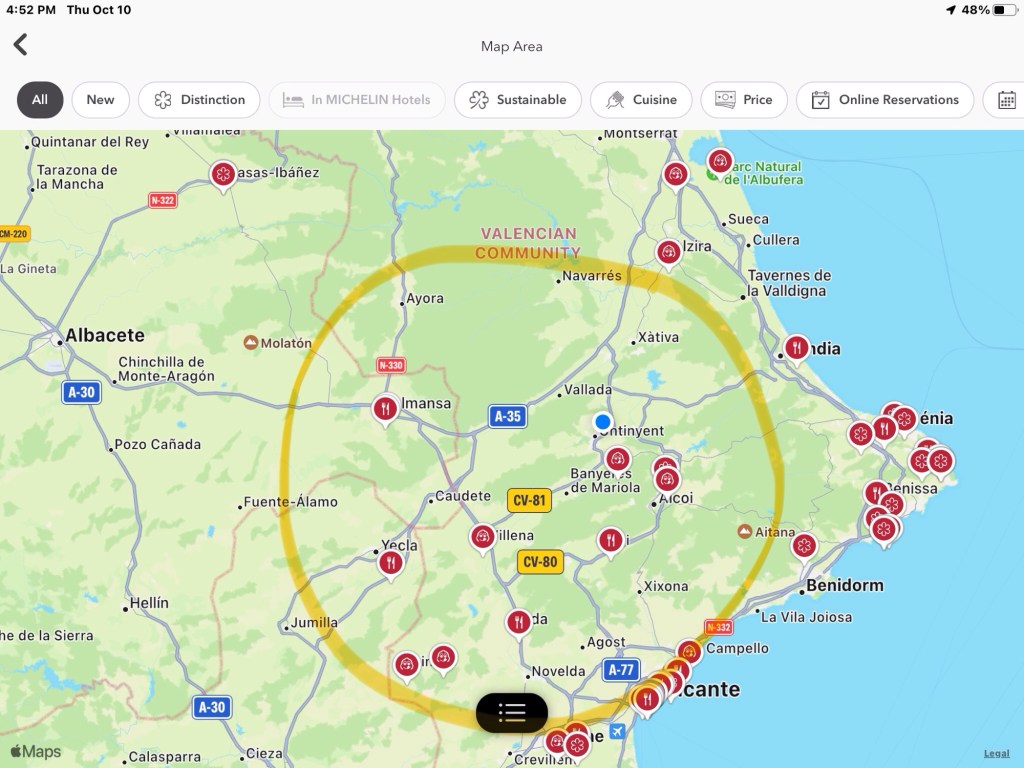
Peter found there were dozens of Michelin restaurants near where we stayed in the Valencia region. A couple were one and two star places — out of our price range. One three star nearby that was rated as the 14th best restaurant in the world by some magazine. 500€ with wine pairing. Really out of our price range. We found two restaurants nearby that were sort of “honorably mentioned” places, called bib gourmand. I guess you’d consider 1/2 stars. And in our price range.
Michelin restaurants within an hour of our headquarters in Valencia
We expected a good meal when we walked through the door of Casa El Tio David. https://casaeltiodavid.com/en/. It had a bib gourmand rating, after all. We did not expect to leave with what felt like new friends. Tio David is a family owned operation — father and son out front (both named David) and Mom in the kitchen.
The son spoke enough English, largely the universal language of travelers in Europe. Very eager to help us make good choices through the menu. For about $45 a person, we could each get four “snacks,” three appetizers and an entrée or two half orders of the entrées. What a deal!
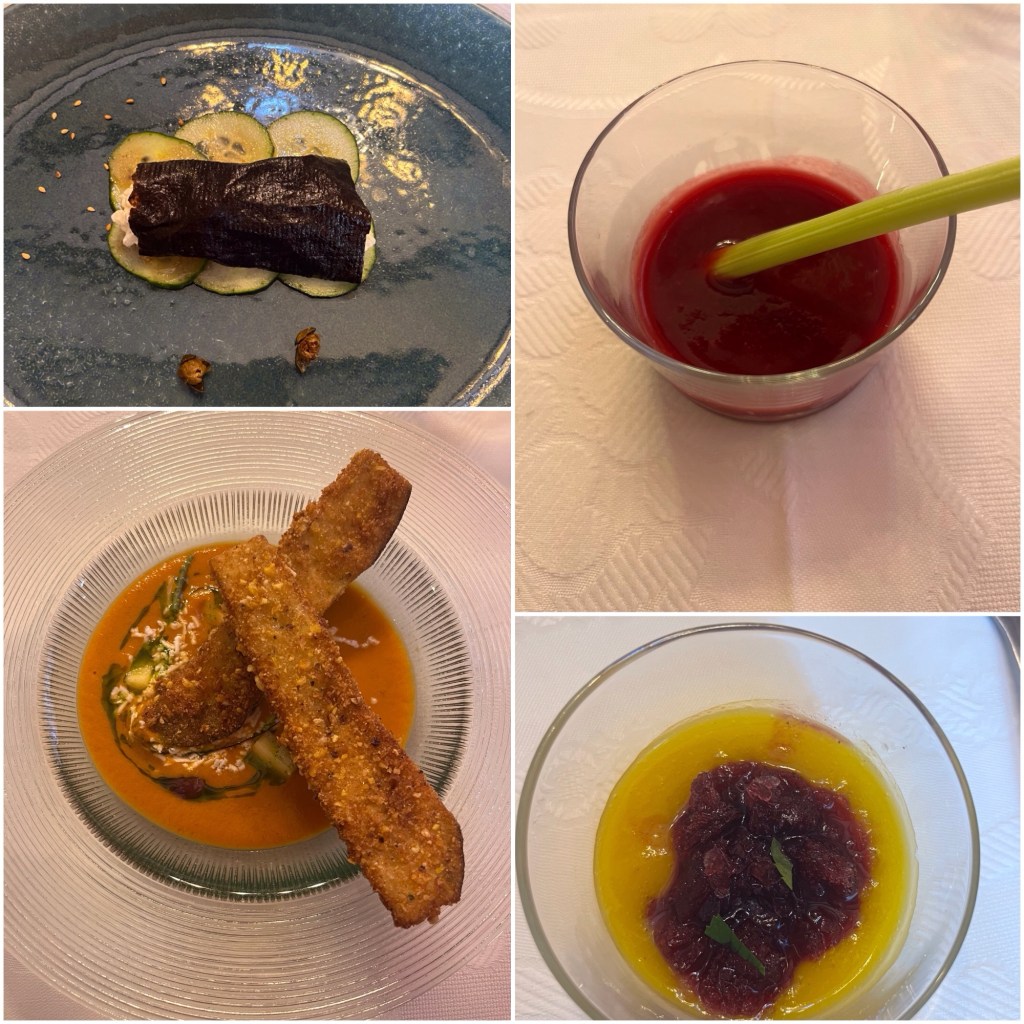
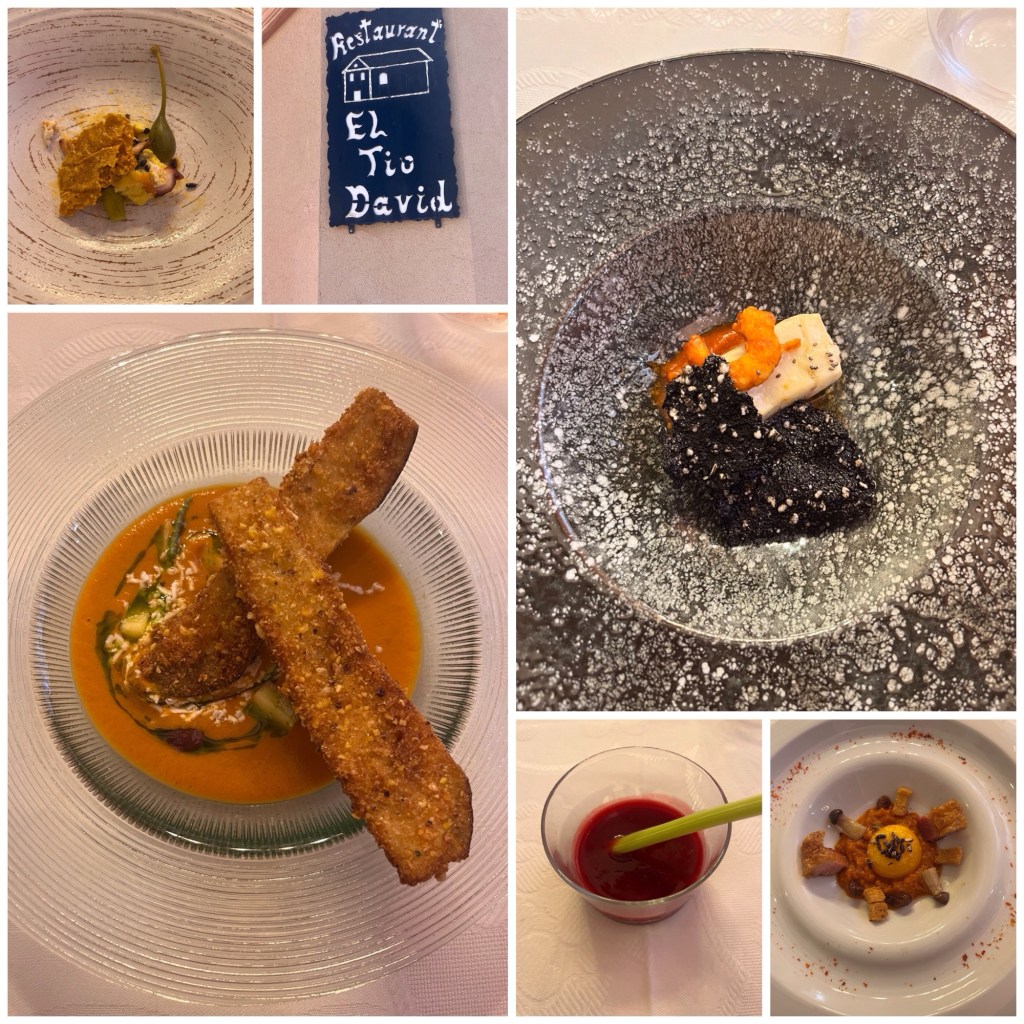
Almost before we had ordered, the first “snack” appeared. An olive oil ice cream with a lightly pickled asparagus tip and a drizzle of fresh olive oil. Not sweet. Very rich and the asparagus tip was a perfect textural and clean taste….a quality we experienced over and over again. Essentially simple rustic dishes, the son explained, food he grew up with, now elevated with textures, contrasting flavors and unexpected twists. Crispy local black rice. Fried capers. Tiny herb leaves. We told Dad half way through the meal that he had married well. Big smiles as he patted his stomach.
Some of the snacks and appetizers clockwise from upper left: nori stuffed with caviar, farm cheese and onion on cucumber slices and fried capers; a “snack” a variation on a Bloody Mary made with beetroot; a palate cleanser of peach purée with iced sangria (wine seeped in cinnamon and verbena), served with a bit of brandy poured over; romesco soup, with fig oil, apple cubes and olive, and eggplant “toasts”
With each dish, Dad came to the table and with great enthusiasm described what we were about to enjoy. All in Valencian. We understood almost none of it. The son would then translate, usually an abbreviated version. The four of us shared a bottle of cava, but decided we wanted some red, a half bottle, with the entrée, a braised lamb. After some discussion with the son about which wine would be best (he was a very knowledgeable sommelier) he brought a whole bottle to the table, told us to drink half and “Dad would enjoy the rest.”
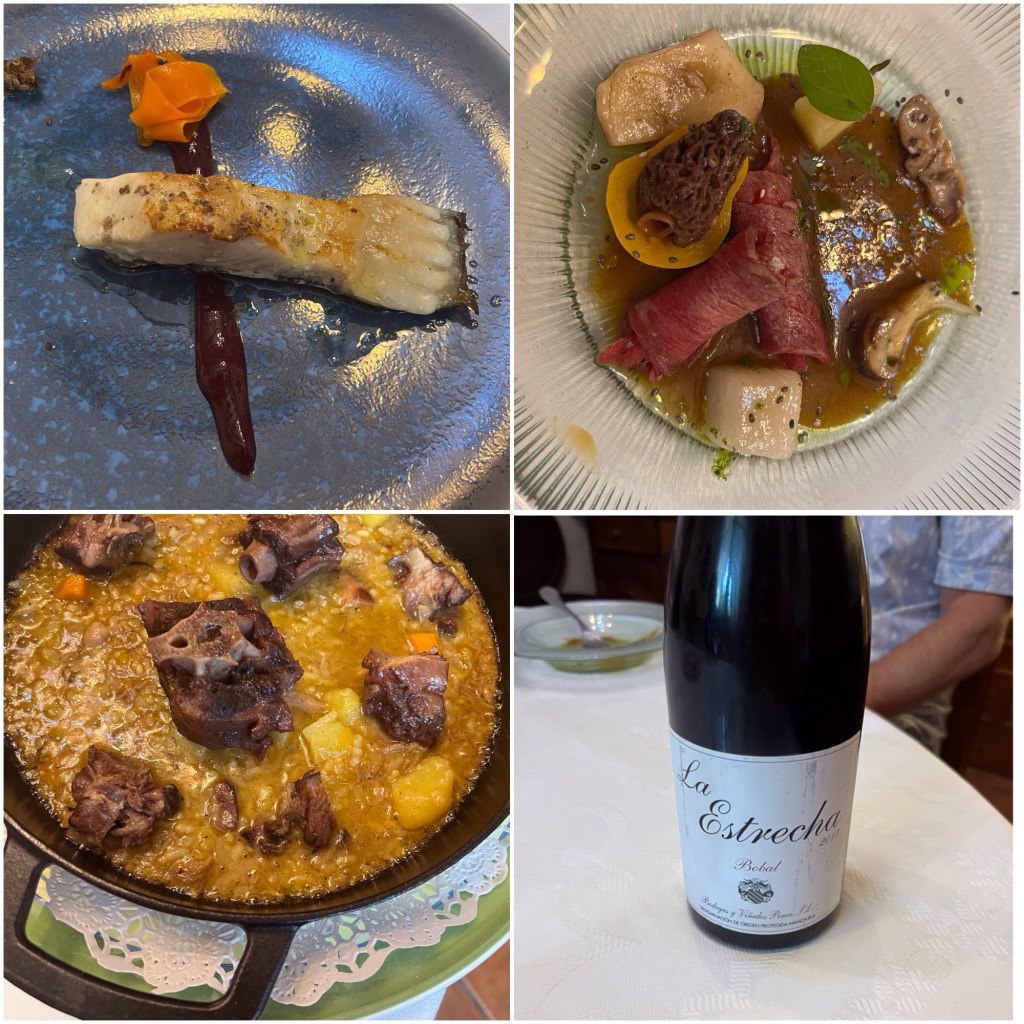
Clockwise from upper left, a half entrée of turbot on a purée of local berries, carrot slices and fried capers, an appetizer of smoked beef rounds in beef reduction with morels, and garden vegetables, the wine with shared with Dad, and an entrée of oxtail paella with sweet potato, carrots and potatoes.
We enjoyed the lunch so much we decided to come back on our last evening in the area. But the real reason—because of the father/son tag team. As is so often the case, the staff made the evening special. They made it a party. After running the restaurant for 25 years, they still brought joy and fun and enthusiasm to the job.
Two of the desserts we enjoyed. A pastry — sort of baked French toast with an apple base and served with frozen egg custard. Chocolate mousse with soft cream puff .
We sent our compliments to the chef and said our adios, three hours after we sat down for our two o’clock lunch.
On our second visit the food was as good, the staff just as much fun. No disappointment at all. And then there was the Moorish lamb, the corvino (a white fish) served with shrimp and baby squid, tomato, and black rice chips, tiny octopus slices with lightly pickled garden vegetables, capers, fried lentils and seeds or chorizo purée with fried bacon cubes, a smoked egg yolk, mushrooms and brandy soaked raisins — dishes we were too busy enjoying to remember to take pictures.
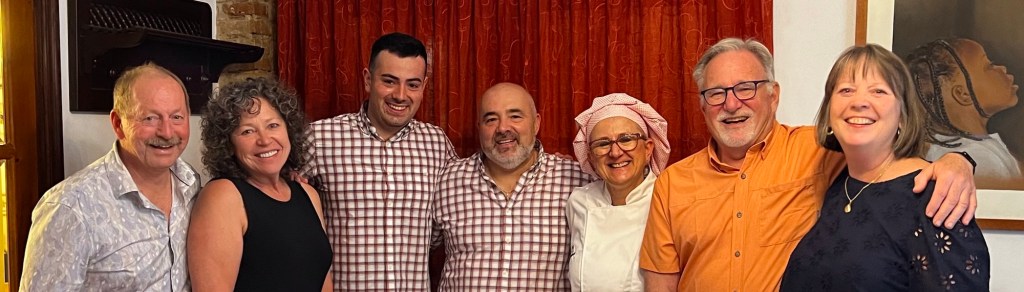
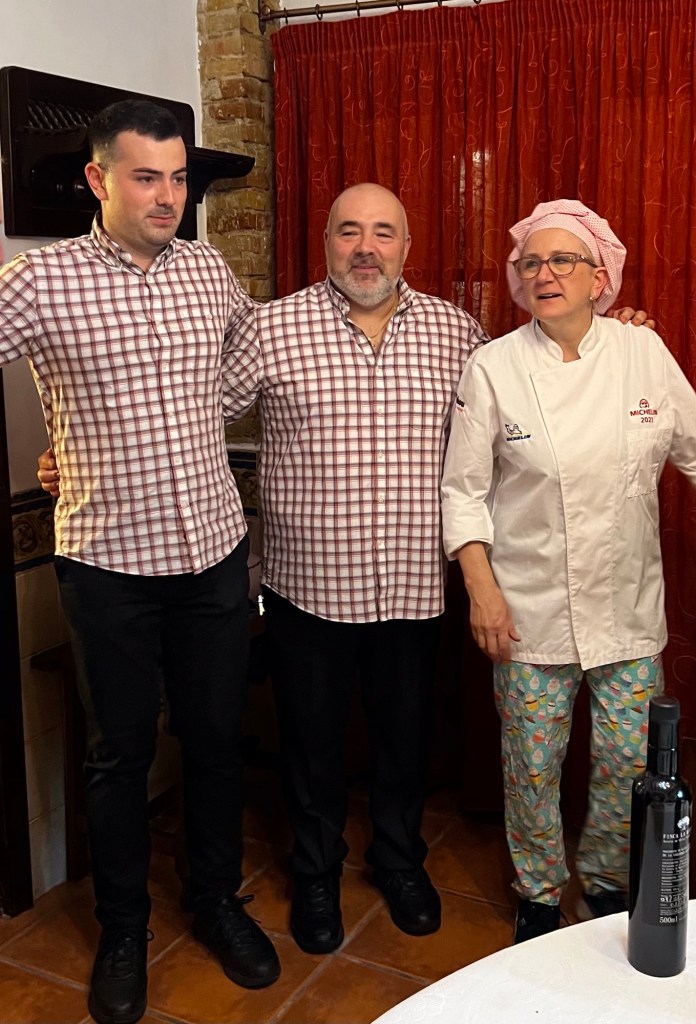
The final delight came when the son told us mom, the chef, wanted to meet us! She arrived dressed in her official Michelin coat, chef’s hat on and fresh lipstick! Hugs, bis’s and handshakes all around. She presented us with bottles of olive oil. Proudly they explained the olives came from their trees, that they had picked the olives themselves and each bottle was hand numbered and lettered with the date of production and their version of a “Best Buy” date. With great reluctance we said goodbye four hours after we had sat down.
We doubt any fancy meal, regardless of how great the food is, will top this experience. Ever.
David, David and Francesca of Casa de Tio David
And if you are ever anywhere near this restaurant, stop by and say hello to our friends!
A friend told us he and his partner, experienced travelers, no longer were interested in the “A” sights — sort of been there, done that. We agree. Generally major tourist sights are “A” listed for very good reasons — they are amazing and should be seen at least once. The Eiffel Tower, Big Ben, the Colosseum, the Great Wall, the Alhambra, the Kremlin or Sagrada Familia! And they are also usually mobbed with other tourists.
Sagrada Familia’s mob on an October day
After visiting those gems, we now are looking for the quieter corners. Less visited, but special in a different way.
That’s why we chose the Valencia region of Spain. Lots of “B” sites, plenty of history, and beautiful country.
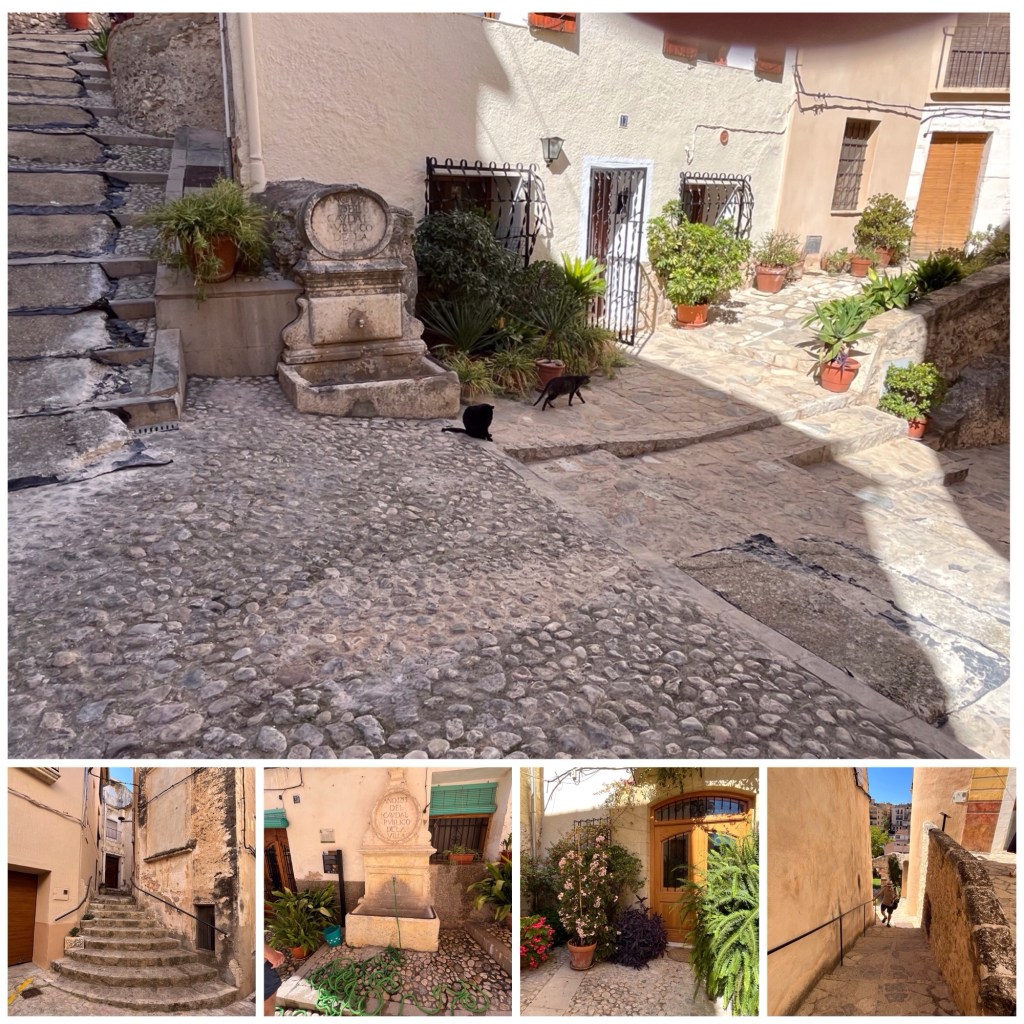
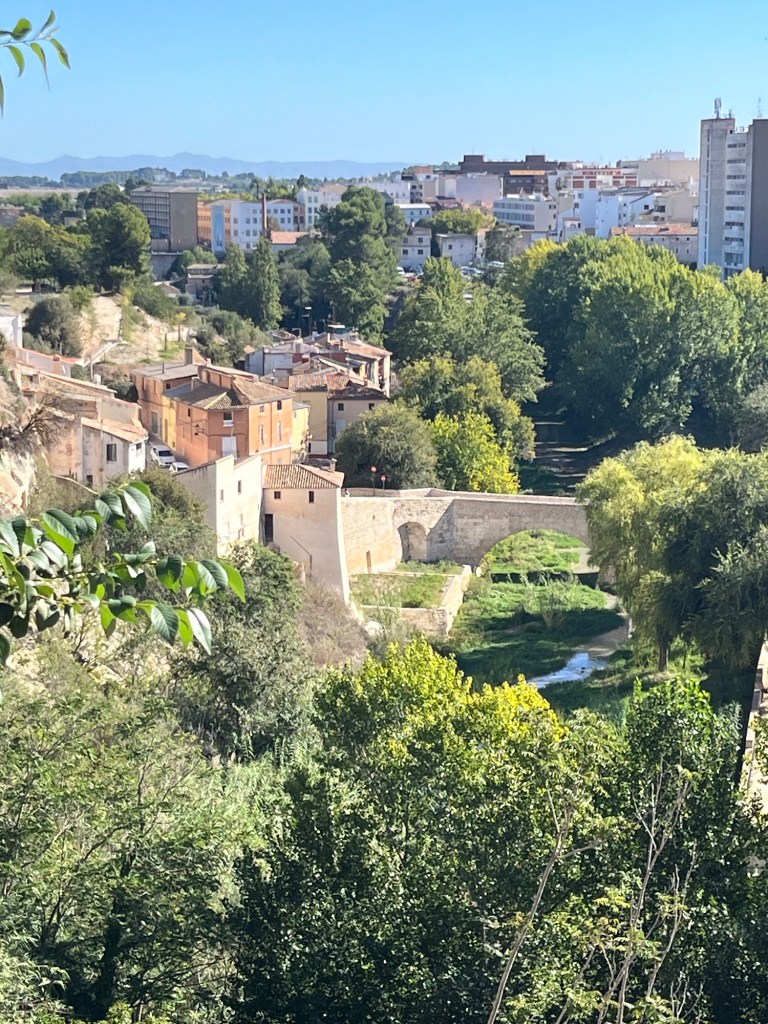
Case in point: Ontinyent (in Valencian) or Onteniente (in Spanish), our home town, in the midst of the La Valle d’Albraida, has a historic medieval quarter built on the streets created by the Moors. Narrow passage ways that bend and curve and end. A good morning walk.
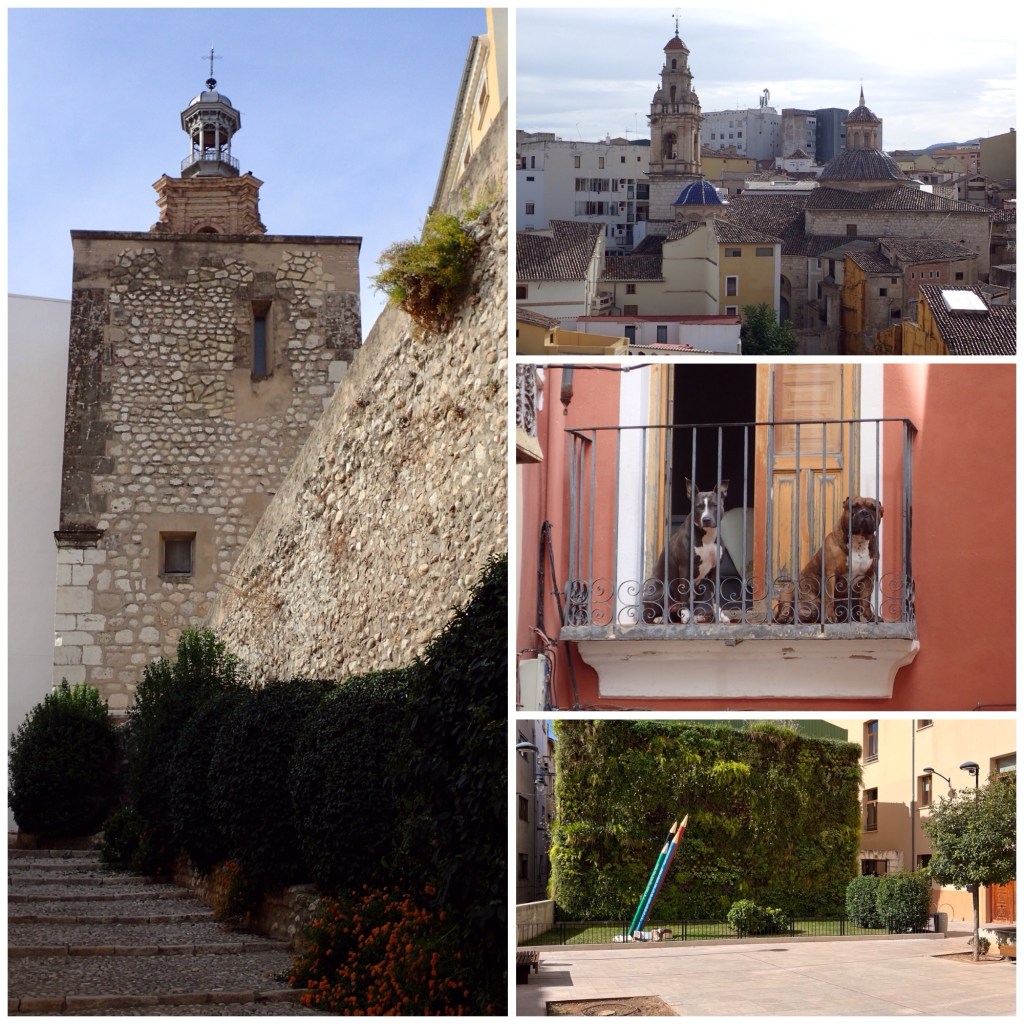
Tallest church spire in the Valencia region, some modern art and local residents we met on our walk
Maybe twenty minutes away is the small town of Bocairent. We walked the old quarter, following a map of late eighteenth century fountains. Many are still used today and most have a tile plaques providing details. Through the gaps between the buildings we could see into the valley and across to the caves. They were apparently used by Moors for storing grain centuries ago. We did not tour the caves as the tourist information official told us, we would have to “walk like cats and dogs” to see the caves.
Sights around Bocairent, and clear evidence the old water fountains still serve a purpose
Not much further away was the town of Requena, the heart of the local wine industry, primarily from a grape largely unknown at home, bobal. Wine has been grown in this region since the seventh century. We wound up at a winery recommended by a friend, Murviedro. A tasting there included a tour of the network of caves, used centuries ago for storing wine, olive oil and other goods. Once connected to houses above, when the houses were demolished to create a square, the caves were forgotten until recently rediscovered. It was an unusual setting for a wine tasting. We ended up with eight bottles of wine, including the four “young” bottles that were included in the price of the tasting (reservations recommended). All very drinkable.
The winery, with old storage casks in the caves and stairs that once led to a house above.
Another nearby town, Villena, with its Atalaya Castle, made clear the Moorish influence on the region. Built in the Twelfth century as a fortress against the Christian invasion, it was used in subsequent centuries as a gift for royal favorites, a safe haven in times of turmoil, and ultimately a prison (complete with graffiti from priests, captured in the 18th and 19th century wars). Good information posted on each floor as we climbed to the top. Really well done. Today the town appears to be going through a renaissance with the old Moorish style homes being refurbished and jazzed up.
The fortress looking down on the church that was once a Moorish mosque
We saved the best for our last day in the region. We didn’t have a lot of time so we picked one of the closer towns, Albaida. We followed our GPS right to the main square in front of the church. It looked like a pretty sleepy place on the Day of Spain holiday.
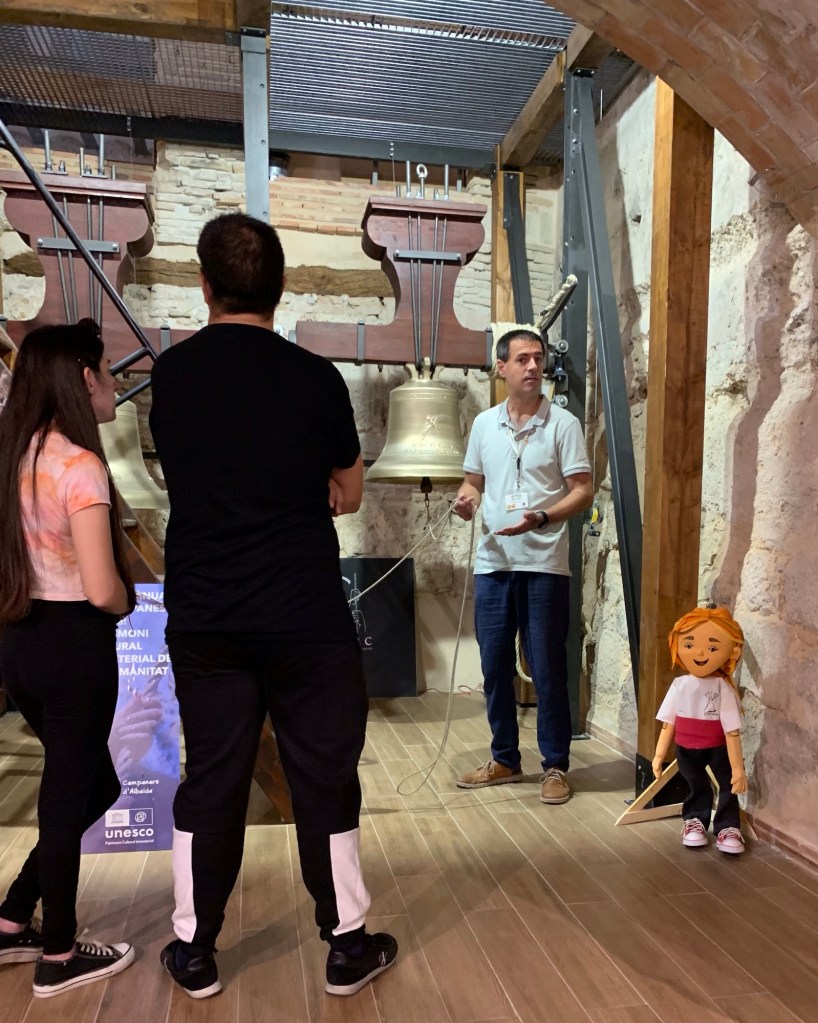
Peter found an open door and was invited in. Turns out this was a school for the bell ringers. Kids as young as six began learning the craft and that’s part of the reason why bell ringing at Albaida’s church is a UNESCO Heritage activity, continuously practiced in the traditional way — by hand — for 800 years. Other towns may hand ring their bells on special occasions or mechanically mark the hours of the day. Not Albaida. Every day, every hour and every quarter hour from morning to night, they ring the bells by hand.
We were invited to try ringing the learner bells ourselves and then got to climb to the top of the tower to hear the real thing! I lost count of the steps — there were a lot. We — four Americans and a handful of locals — gathered beneath the bells and waited. One of the young men in the group, and a stylish grandmother both chipped into help the guide explain things in English to us Americans. Typical of the response we get from locals here — pleased to help us and slightly surprised we Americans chose their community for our holiday.
Finally, using the ropes that extended to the ground floor the bells began to move. Unbelievable sound! Three slow, loud gongs followed by a song of bells. We never saw the woman who rang the bells that day!
It’s these little things — finding hidden treasures that sometimes just locals know about, chance encounters with people who offer an insiders perspective, and a chance to see things seeing up close and personal. It keeps us coming back to the small places. Onteniente, Bocairent, Requena, Villena, Albaida—these are on no ones “A” list, but are still little gems.
This was the question we got from the young grocery clerk practicing his English in Ontinyent, Spain. Nobody comes here, was his implication. Another clerk had asked us the same thing in the same tone. And it was actually a very, very good question!
Ontinyent (in Valencian) or Onteniente (in Spanish) is a rural county seat in the Valencia province of no real historical or touristic interest. Population: 35,000. Yes, like all towns and villages in this area it has a past dating back to Moorish times and even before. It has a sort of cute medieval old town surrounded by Franco era apartments. Its only real tourist claims to fame are a series of clear pools on the Clarino River called the Pou Clar. People swim there in the summer, but the parking lot near the pools is closed in the high season and you need to hike about a mile and half to get there. The pools are surrounded by terraced hills of olive and orange trees. You might think picturesque but light industry, agricultural supply and farm equipment shops and rural housing projects kind of ruin the pastoral views.
So back to the question, why are we spending two weeks here?
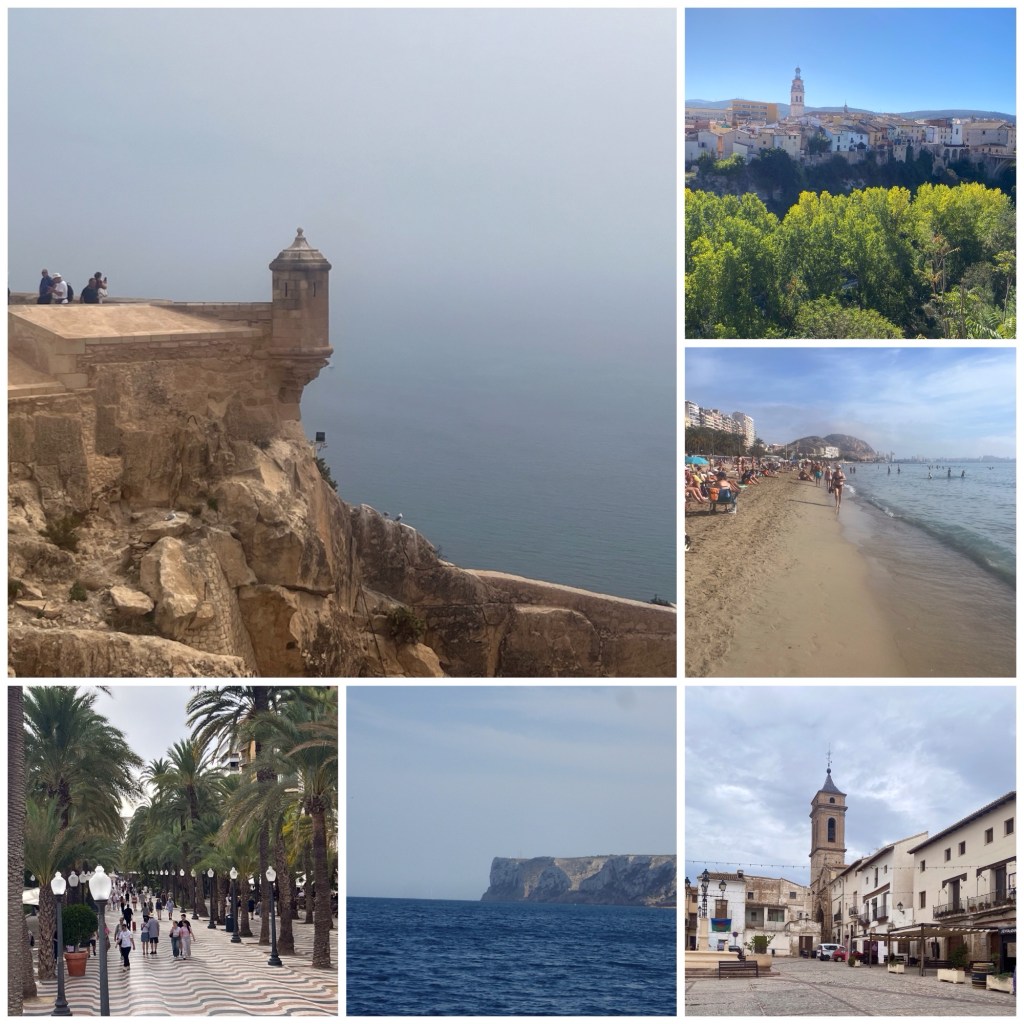
In part, it was exactly because we wanted to be off the beaten path, away from the heavily touristed towns and cities, but close enough to make day excursions to those sites. And it turns out Ontinyent is a perfect location for exactly that. Valencia—one hour. Alicante—one hour. The seaside resorts of the Costa Blanca—one hour. The historic towns of Denia, Gandia — 40 minutes. The Albufera lagoon and El Palmar (the home of paella)—one hour. The quaint hill town of Bocairent—15 minutes. And one of the best, the castle hill town of Xativa—twenty minutes. National parks and hikes nearby. Kayaking on the Mediterranean. More than enough to keep us busy for two weeks.
Of course, a rental car is an absolute necessity. And driving in a foreign country can be stressful. But the good news is that the roads and freeways here are amazing—well maintained, excellent signage, and not very crowded. Spanish drivers are on the whole some of the most courteous we’ve encountered. With a good GPS system, we never got lost—even in the town and city centers.
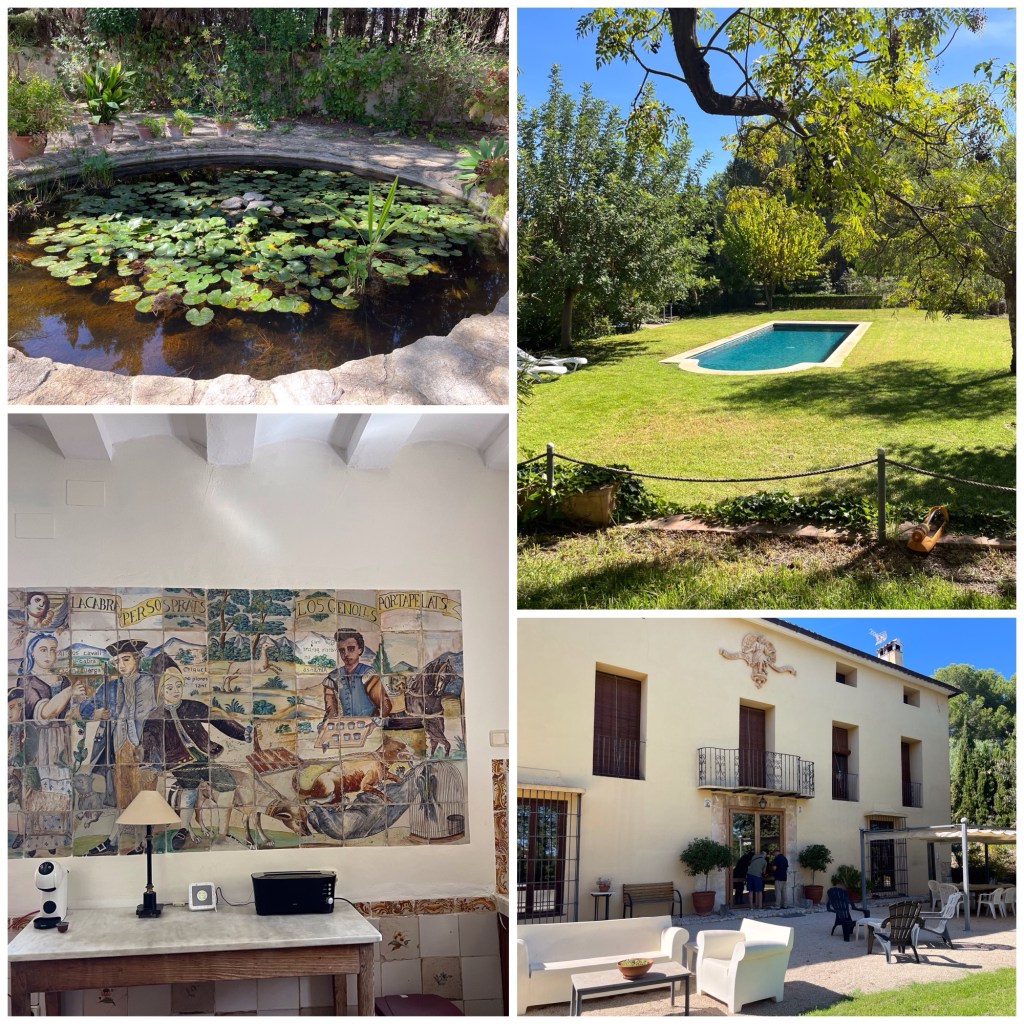
One other huge draw—our manor house. It really was a big, big factor. We rented the house (an AirBnB) for two weeks just outside Ontinyent. La Baronia de Dalt. It is a grand old manor house with large, lovely grounds and a swimming pool. Five bedrooms, three en-suite. 5 bathrooms. AC. Large dining room, big kitchen and two large outside patios for al fresco meals. Lots of art work and beautiful tiles. And all at price you’d be lucky to pay at a Holiday Inn Express in the US. We were two couples, but the house could have easily had four couples or one very, very large family.
Still with all the charms the manor house had, the real attraction was the surrounding sites. A bit of the history of the Romans. Then Visigoths. Obvious remains of the Moors, and Christians in the Middle Ages. Often in the same site.
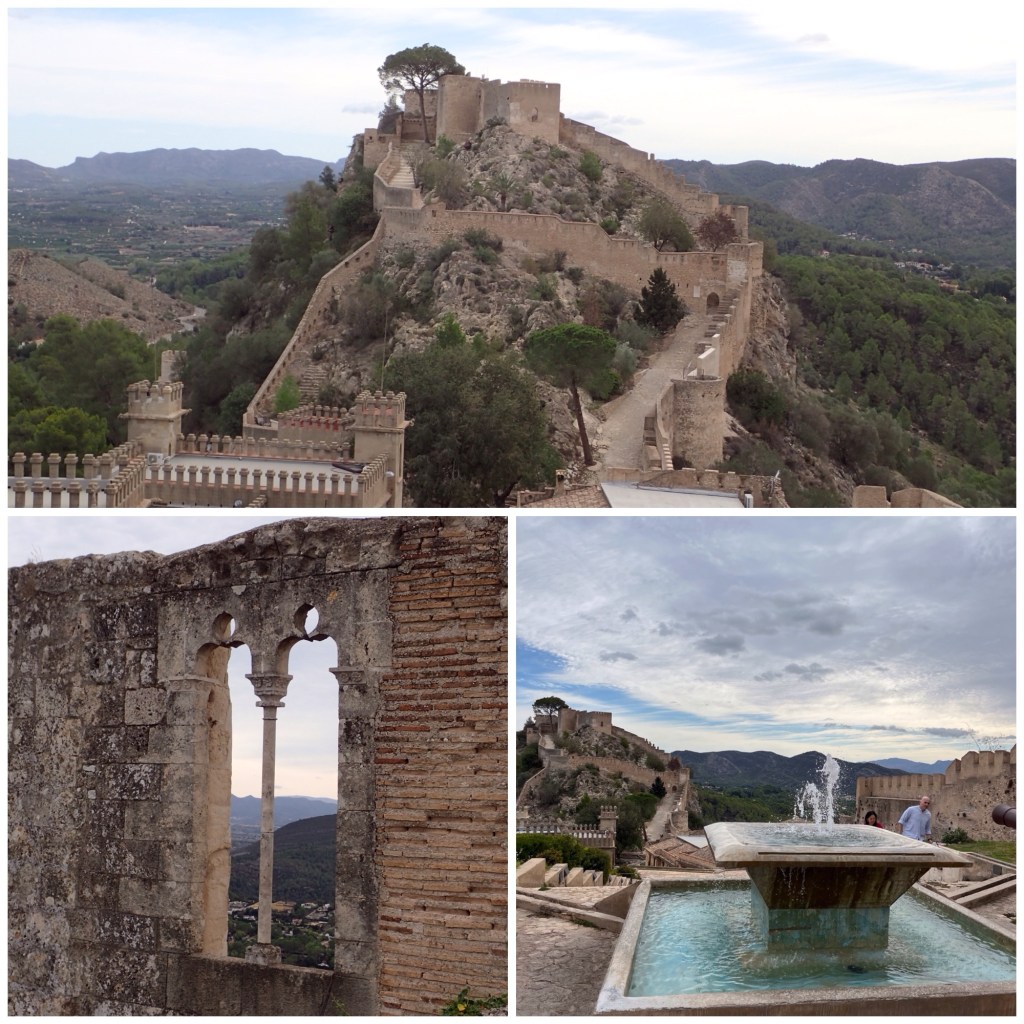
Our favorite place nearby is Xativa, a short drive away. The huge castle complex high above the town dominates. Thankfully, you can drive to the top although locals seem to use the 30 minute hike up to the top as an exercise routine. It is a defensive marvel. Steep cliffs on all sides. The Romans saw its value. Hannibal used it in his war against the Romans. The Moors expanded it. The Christians continued to use it until modern weapons in the early 1700’s and several earthquakes made it obsolete.
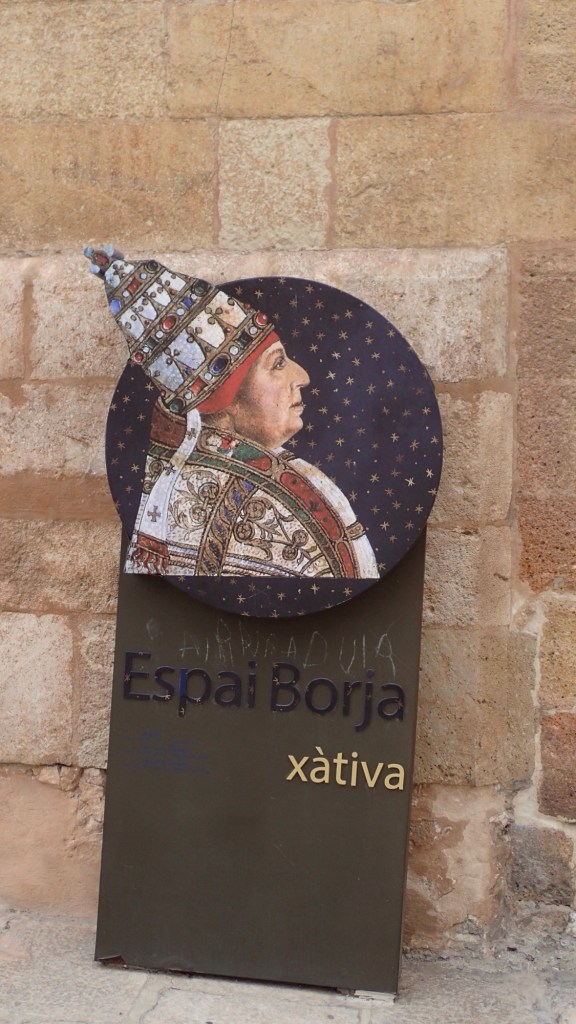
The medieval town far below is famous for one family—the Borjas. Two Spanish Popes were born here. Calixtus III and Alexander VI (father of Lucretzia and Cesare)—both with less than stellar reputations. Were they really that bad or were they simply victims of an anti-Spanish Italian propaganda campaign? Anyway, this is a pro Borja town.
The old town is delightful to wander around. On Tuesdays and Fridays there is a huge outdoor market that takes over several plazas and streets.
And there are plenty of top-notch restaurants hidden away in these little towns — we were surprised at the number of Michelin stars within a half an hour or so, including one where we had probably the best meal of the trip.
The area is also known for its excellent wines—not as famous as Rioja or Penedes—but very good and at prices that astounded us. A glass of excellent red at restaurant was often less than bottled water. The local grape, bobal, produces a fine red wine comparable to a Cotes du Rhône.
So “Why here??” Great sightseeing, beaches, hiking, wonderful food, good wine, fewer crowds, great accommodations, and, by the way, perfect weather in October. We think the answer is pretty clear.
We’ve had bacalao (reconstituted salted cod) in Lisbon, cassoulet in Carcassonne, haggis in Scotland, ratatouille in Provence, buckwheat crepes in Brittany, khachapuri in Tbilisi, sushi in Tokyo, bouillabaisse in Marseilles, sauerkraut soup in Slovenia, and many other local dishes in the their place of origin. Being foodies, we assume that locals know best and the place where the dish originated will make the best version. And in most cases, it’s true.
But sometimes, the authentic version disappoints. Not because of the quality of the food or preparation, but because our pre-conceived notions are wildly wrong. For us, the bouillabaisse in Marseilles, in one of the top bouillabaisse restaurants, Chez Fon Fon, was a case in point. We expected a San Francisco style cioppino (our ignorance) and got a strong, fishy, gray-brown broth as a first course and then the fish that was stewed in the broth for a second course, followed by the potatoes that had cooked with the fish. All served with a trio of mayonnaise based sauces on the side. The fish had been caught that morning and was presented to us before cooking to allow us to confirm its freshness. End result to our palates? Overly fishy, not particularly attractive in appearance. Glad we experienced the meal, but not our cup of tea.
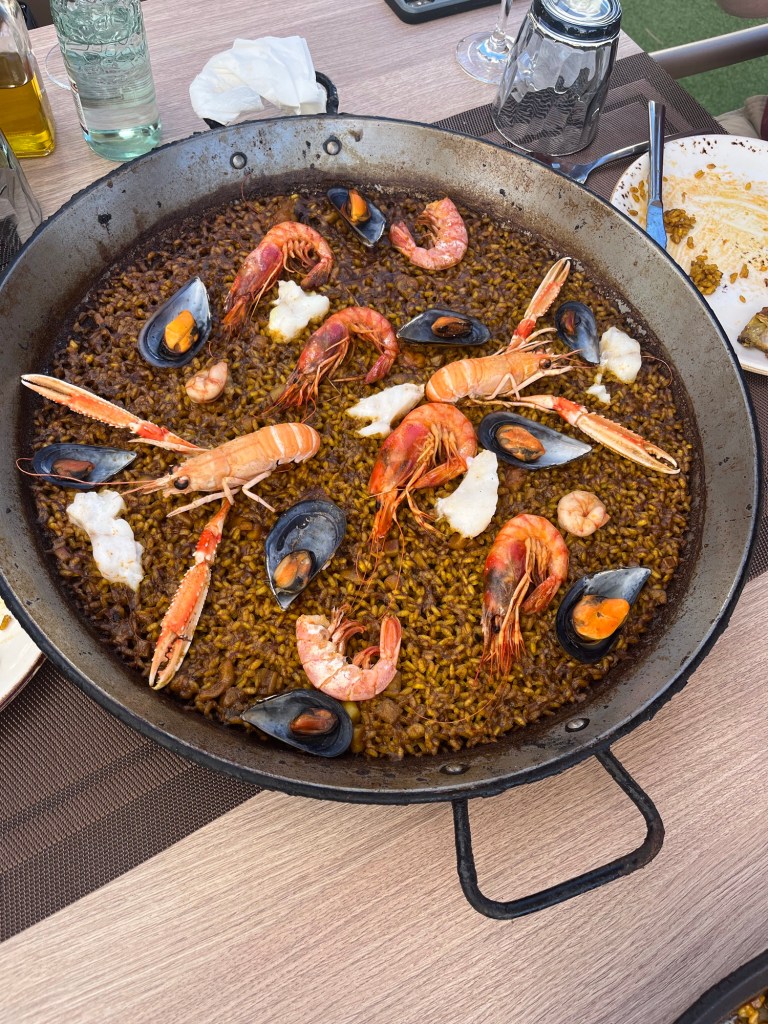
So, in Spain, just outside of Valencia, on a huge freshwater lagoon, the L’Albufera, surrounded by rice paddies, is a small town—El Palmar. It is reputedly the birthplace of paella—the ubiquitous rice dish that can be found in food carts, public markets, restaurants and bars all over Europe. It is probably the only Spanish dish that most Americans can name. And yet just like barbecue purists might scoff at a Texas BBQ product in Anchorage, a restaurant we walked into in Madrid had big sign in English “This is Madrid! We do NOT have paella.” We’ve had so many bad versions of the dish (one in Barcelona allegedly at one of the top paella restaurants) we were worried about what we might get. We had also heard that paella in Spain is often mass produced, frozen, sent off to restaurants to be reheated. There are so many bastardized variants—we wouldn’t be surprised to find a pineapple and ham Hawaiiana version.
We made the foodie pilgrimage to El Palmar anyway. We had to know.
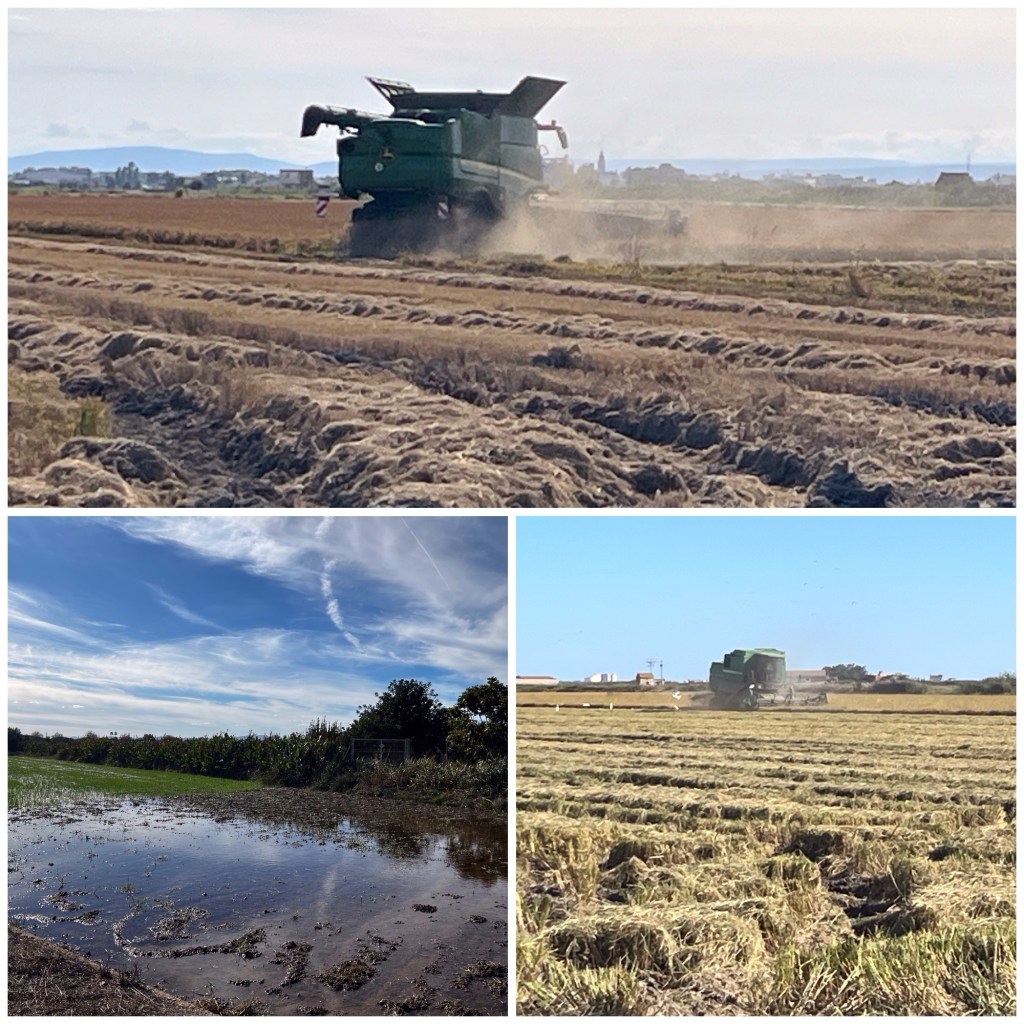
Driving in from the south, once we got off the A-7 freeway, and as we got close to El Palmar, rice paddies and irrigation canals everywhere. Promising.
El Palmar itself is not much—dusty, a bit run down, one long main street along a canal that empties into the L’Albufera, a few quaint old fishermans’ huts (A-frames with thatched roofs restored to add some small character to the town), and dozens of paella restaurants. And signs everywhere announcing Paseos de Barca—boat rides on the lagoon.
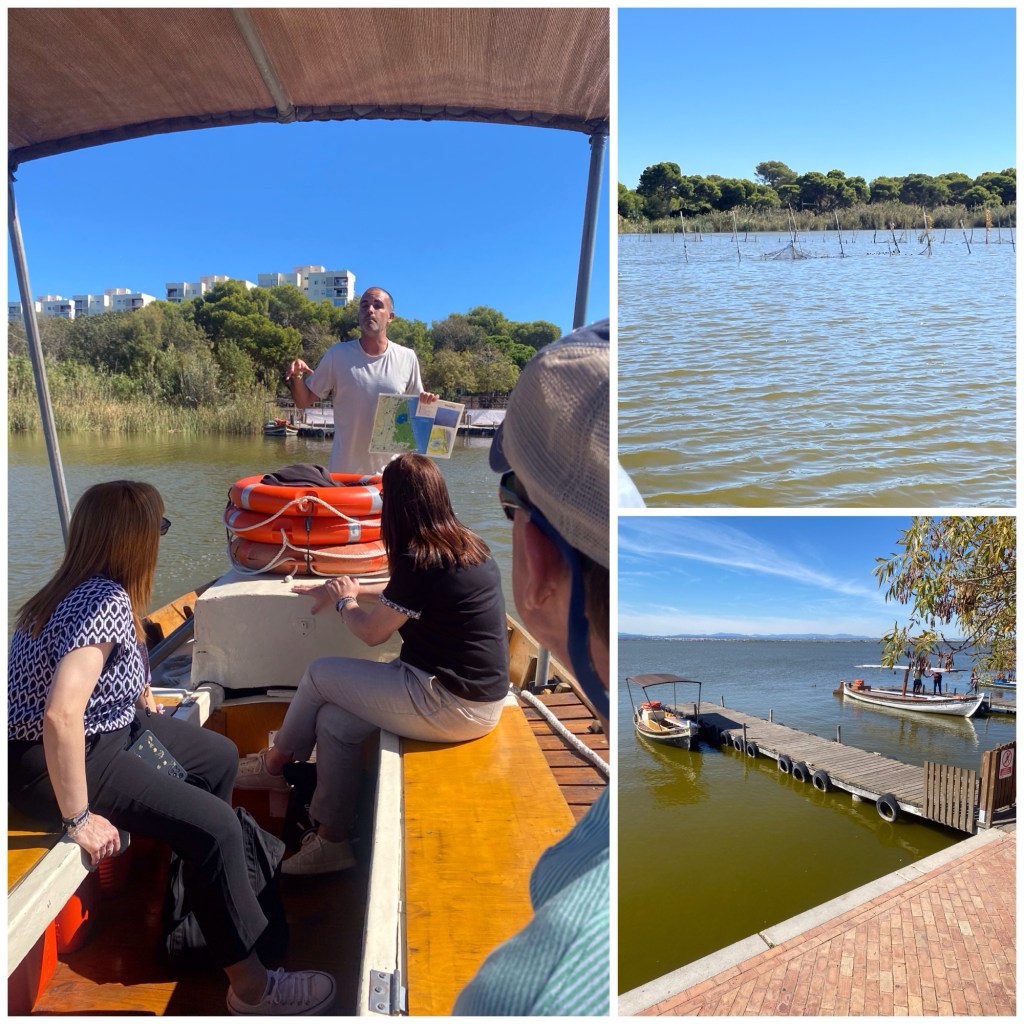
Yes, we did take a boat ride on the lagoon. We stumbled onto a small boat—there were 8 passengers and it was delightful. 5 euros a person. A steal.
Lots of good information written in multiple languages. Our boatman also spoke English and told us the lagoon is now polluted even though fisherman still work the nets, it’s a meter deep, that it is flushed from time to time into the ocean. We wandered through narrow channel and chased the mallards and moorhens out of our way.
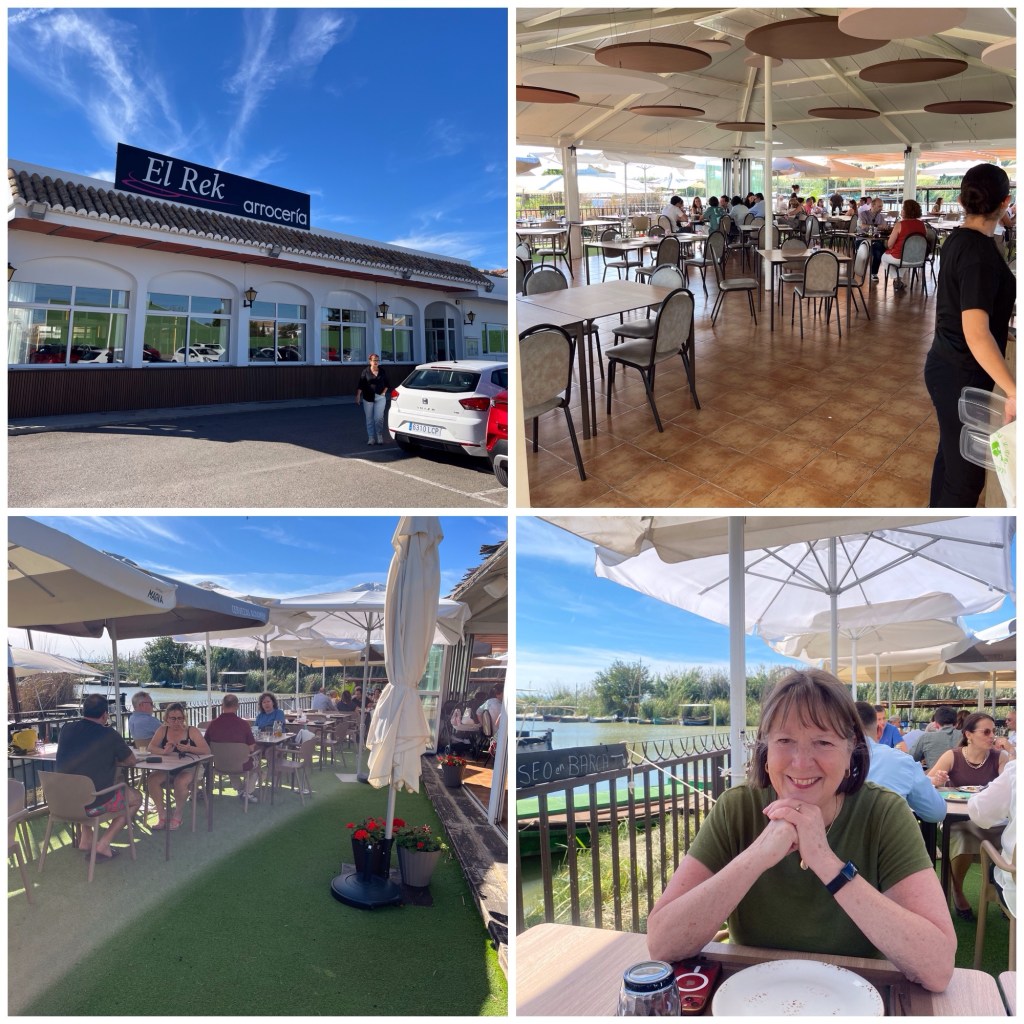
Then it was time. With some trepidation we led our friends to a restaurant with a good reputation and good reviews, El Rek. https://www.arroceriaelrek.com/ The sight of a bus load of tourists coming out of the huge restaurant as we went in was not encouraging. Uh-oh, tourist trap? Well, at least they were Spanish tourists.
Once in the restaurant we were encouraged to see several long tables of locals, dressed for a celebration, enjoying their meal. Very promising.
The waiter asked us as we walked in “Did we order the paella in advance.” “No.” I said. “No worries.” he said. When we looked at the menu, it said, in Spanish, “If not ordered in advance, the paella will take an hour.” Very, very promising.
When we looked at the menu (on our phones from a QR code like many restaurants we have been in here), the first paella listed was the traditional Valencia paella—rabbit and chicken. Yes, there were variants, including a version with local snails (not escargot) several seafood versions. The smallest size was for two people.
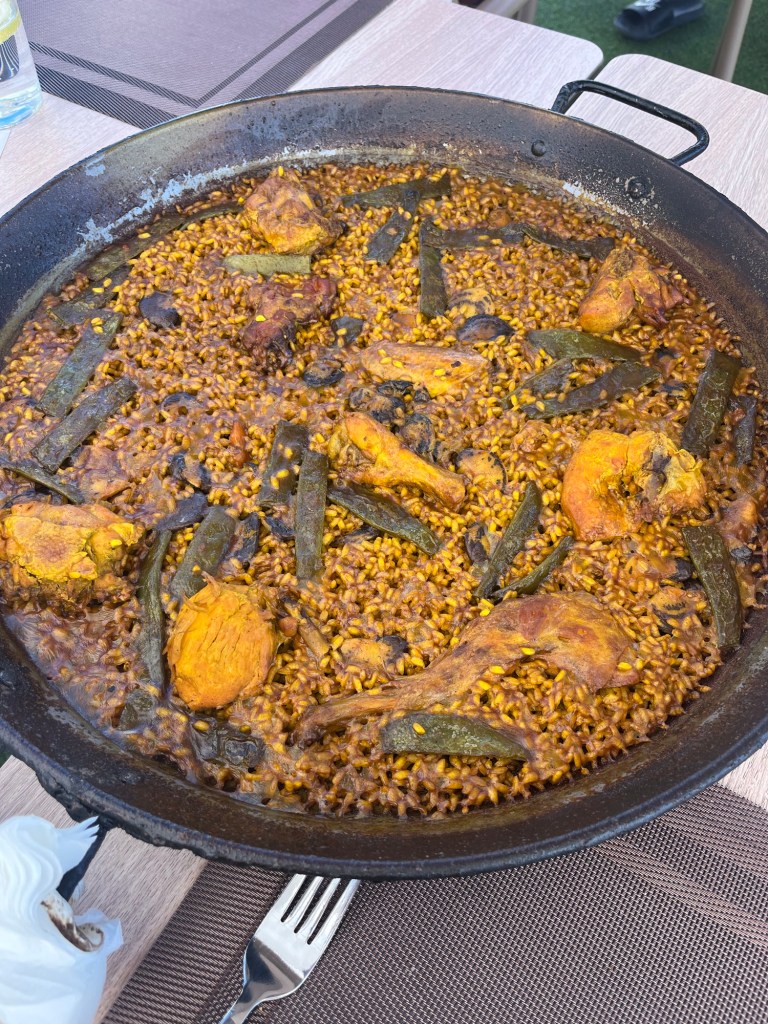
We ordered a bottle of white wine and the house green salad to sustain us as we waited the one hour for our traditional chicken and rabbit paella and the seafood in shells version. Maybe 45 minutes later the long-anticipated paellas were placed in front of us.
Paella is really all about the rice. The mark of a good paella, we have been told, is the crispy, deeply brown edges. And it is generally eaten communally, with a spoon from the cooking pan — in fact, paella means pan in Spanish — and we saw locals scraping every last morsel of rice from the pan. We opted for serving spoons and separate plates. American style, perhaps?
The chicken and rabbit version came with a few mature fava and romano beans. Less meat and fewer vegetables than what I have been served at home. Rice was cooked through, but not the least bit mushy, obviously enhanced by a very rich stock. No sweet red peppers, or chunks of ham, pork or decorative peas. But tasty. Very tasty.
The fish version fell into the same category as our first sample of authentic bouillabaisse. If you like canned sardines and anchovies, you might like it. A bit fishy for us. The shellfish was a bit overdone and underwhelming. However, we have to acknowledge, coming from the Pacific Northwest, catching our own crab, salmon, and shrimp, we’re spoiled when it comes to seafood.
Still, we ate every bit. We concluded that traditional version is really the way to go.
And did the paella, prepared and served in the traditional way with the traditional ingredients using the locally grown rice in the town that originated the dish, live up to its reputation? The answer is a resounding “Si!”
We had allotted three days in Valencia itself. We were staying for two weeks an hour outside the city so we thought it would be plenty of time to get acquainted with the town. Mistake! Clearly not enough time. We never made it to the Jardin du Turia, the 9 mile long river park, the Ciudad de las Artes y las Ciencias with its space age designed buildings, the port and its beaches. Instead we ate, drank and laughed our way through the city with expat friends who now live in Valencia.
It all started with Peter’s former colleague who just two weeks ago moved to Valencia with her husband, her mother and three dogs. We reached out and set up a rendezvous with her for our first full day in the city. Next thing we knew, she had arranged an “American luncheon” with four other formerly Seattle based expats. We arrived at restaurant to a warm welcome — hugs all around — and quickly after exchanging names, establishing we had friends in common back home and had visited the same restaurants and neighborhoods in Seattle, the laughter and stories started. And we certainly took advantage of their knowledge of the city. One couple had been here for over two years and knew the city well. Where do we go to buy kitchen knives? (Our travel kitchen knives had been confiscated by the train security people on our trip from Madrid.) Where can we get good coffee? (Spain offers lots of great food and wine, but the coffee is spotty — particularly for coffee obsessed Seattlelites.) What should we be sure to see? We learned the morning discount at the local gym went from 9am to 3pm! Noon is Seattle translates to 3pm in Spain. We asked for advice on a good food/city tour. One of our new friends, David, a very knowledgeable amateur historian, offered to show us around the next day instead. Bingo! We were delighted by his generosity.
We met at 9:00am the next morning at a favorite local coffee shop with breakfast foods. Decent cappuccinos as promised.
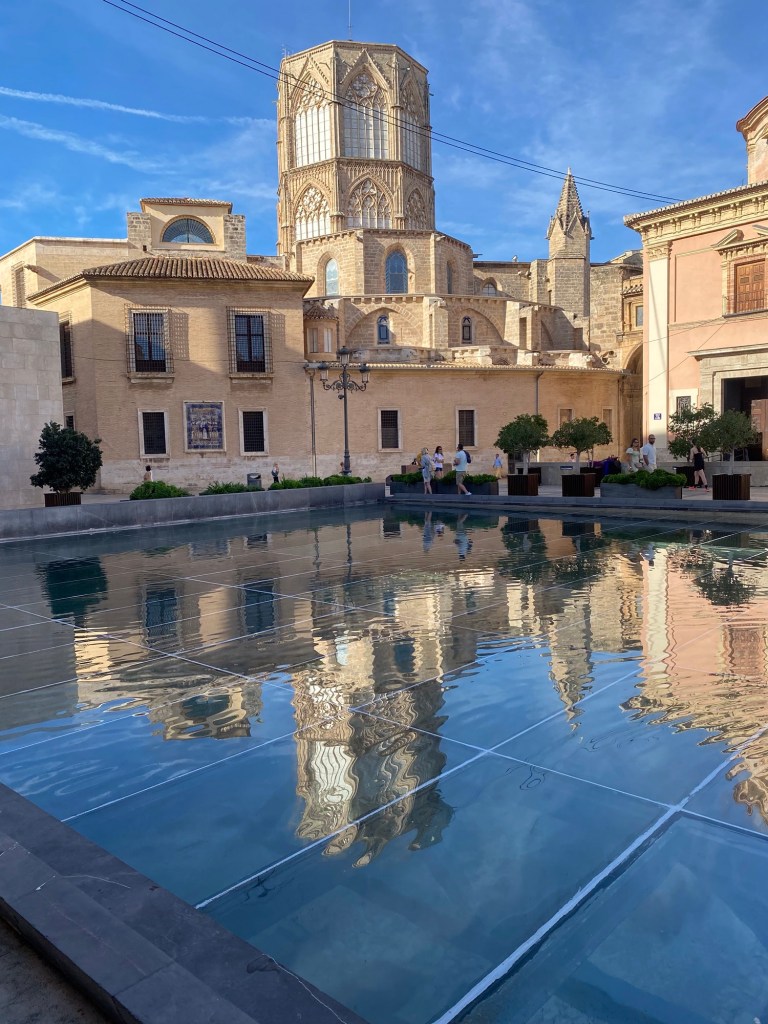
David approached Valencia’s historic core from a chronological perspective — from Roman times to modern day so we started at L’Almoina. This square was dead center of Roman Valencia where the two main Roman roads intersected
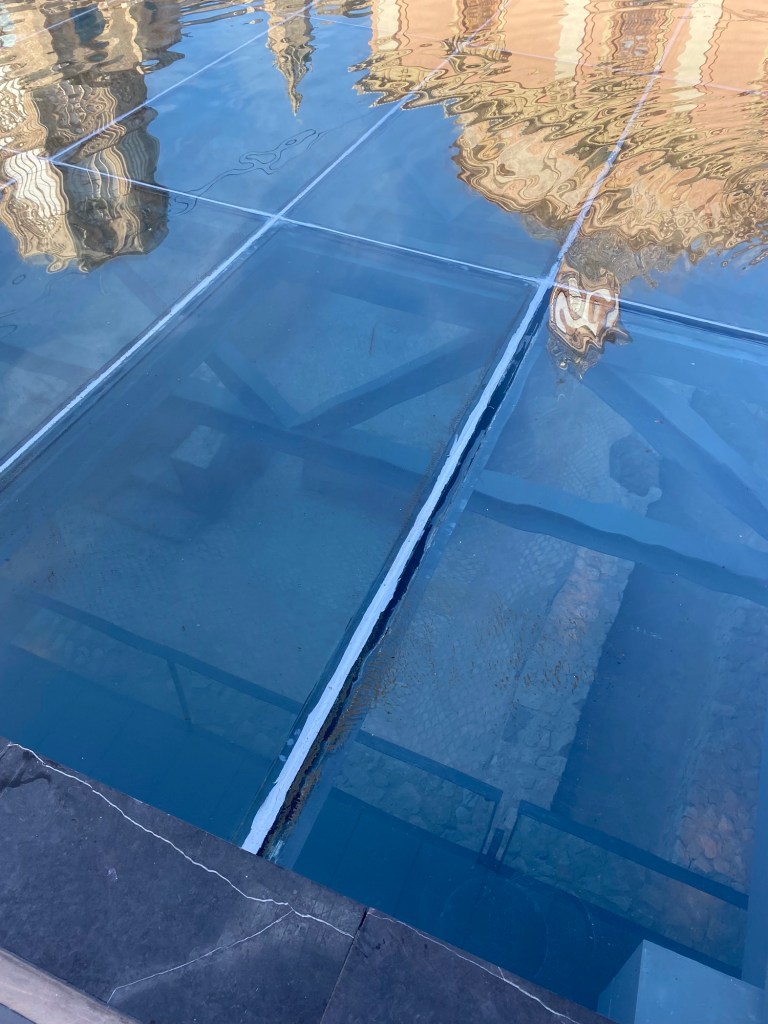
Beneath a square through a reflecting pool you can just make out the Roman, Visigothic and Islamic ruins.
The Roman ruins through the reflecting pool.
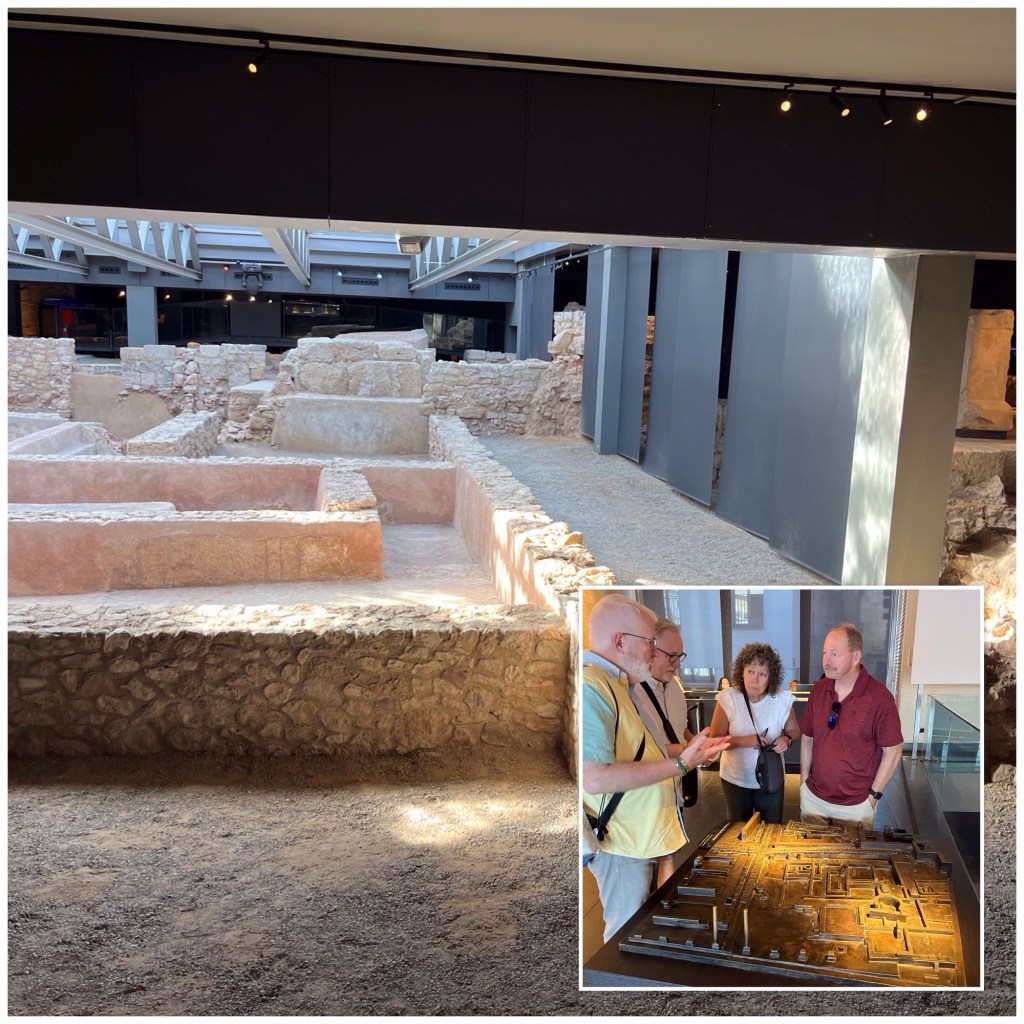
Once down the stairs inside the museum, you can see the remains of the baths, forum and city life on what was once an island in the Rio Turia. Fascinating glimpse into the city’s ancient past and a reminder of how extensive the Roman world was.
Roman ruins and a scale model of what has been excavated
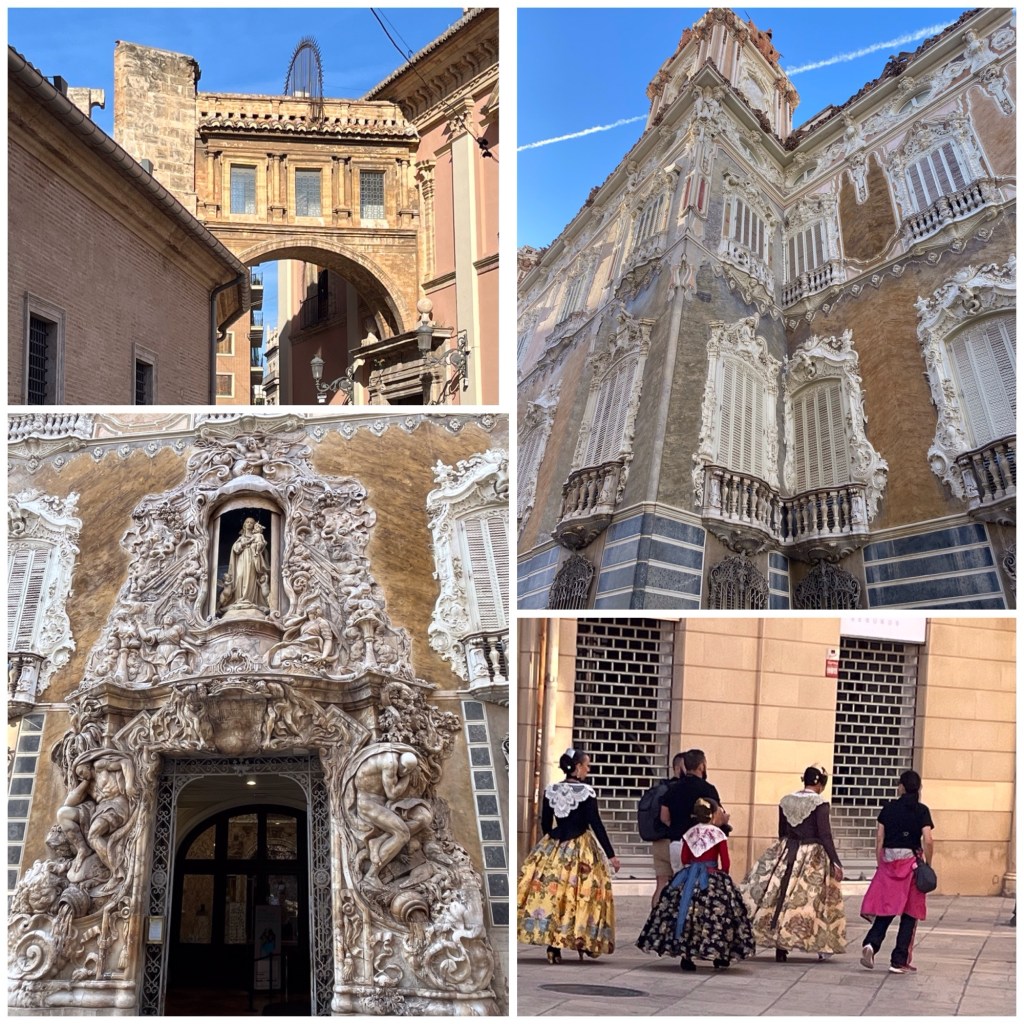
From there we hit to top medieval tourist sites – at the Palace of the Marquis of Aguas we laughed at the over-the- top baroque decorations, including a statue of the Samari on the top of building, the grand Cathedral with the “real” Holy Grail, Plaza de La Virgen and so much more.
Baroque Rococo palace the scenes around the historic center of Valencia
The biggest oh’s and ah’s were probably reserved for the Silk Market, a UNESCO World Heritage site. Beautiful twisting columns, originally painted to look like palms beneath a blue sky (you get mere glimpses of the colors today) and the second floor of the Consulado Del Mar where the merchants’ court sat beneath a fifteenth century carved ceiling moved into the structure after it was constructed. And the gargoyles!
Silk Market
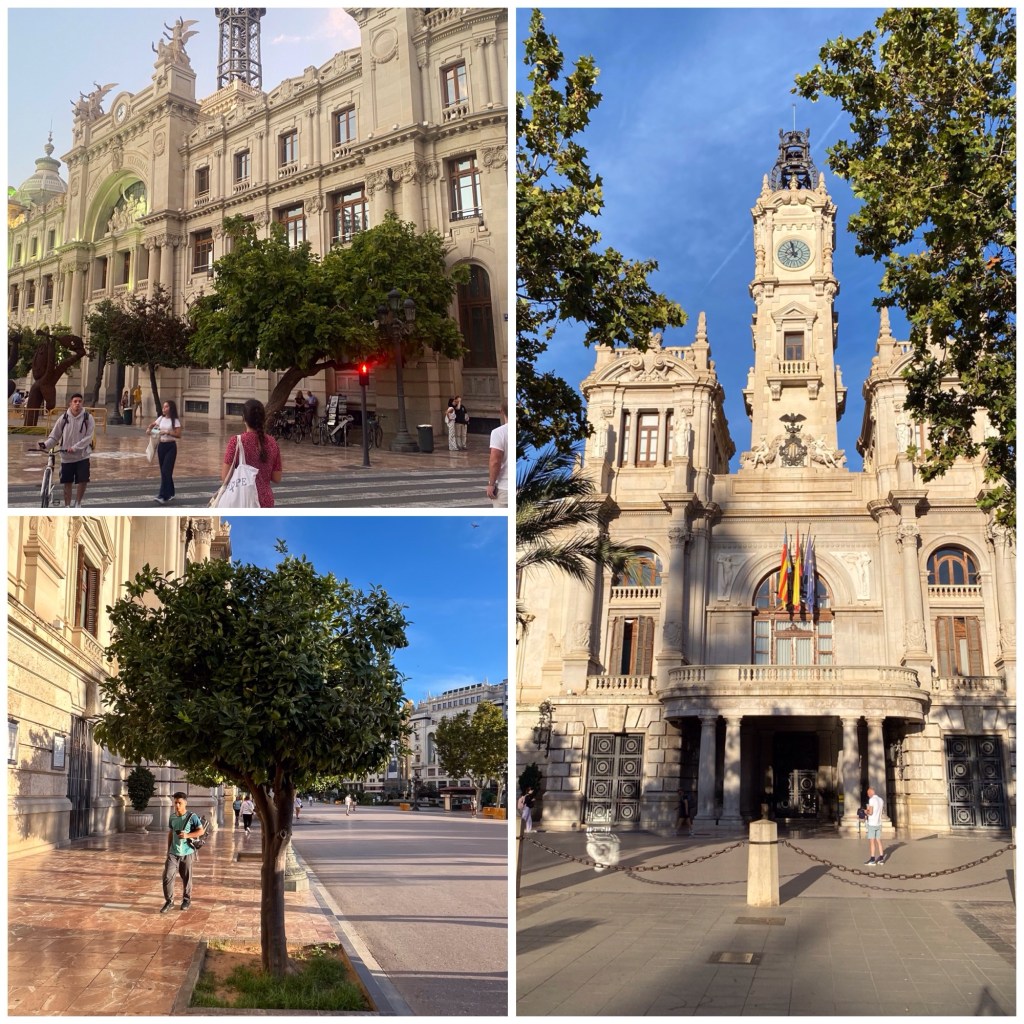
We ended our tour back where most start, between the city hall and the post office and telegraph building.
Post and Telegraph build, city hall and an ubiquitous sour orange tree planted through out the city
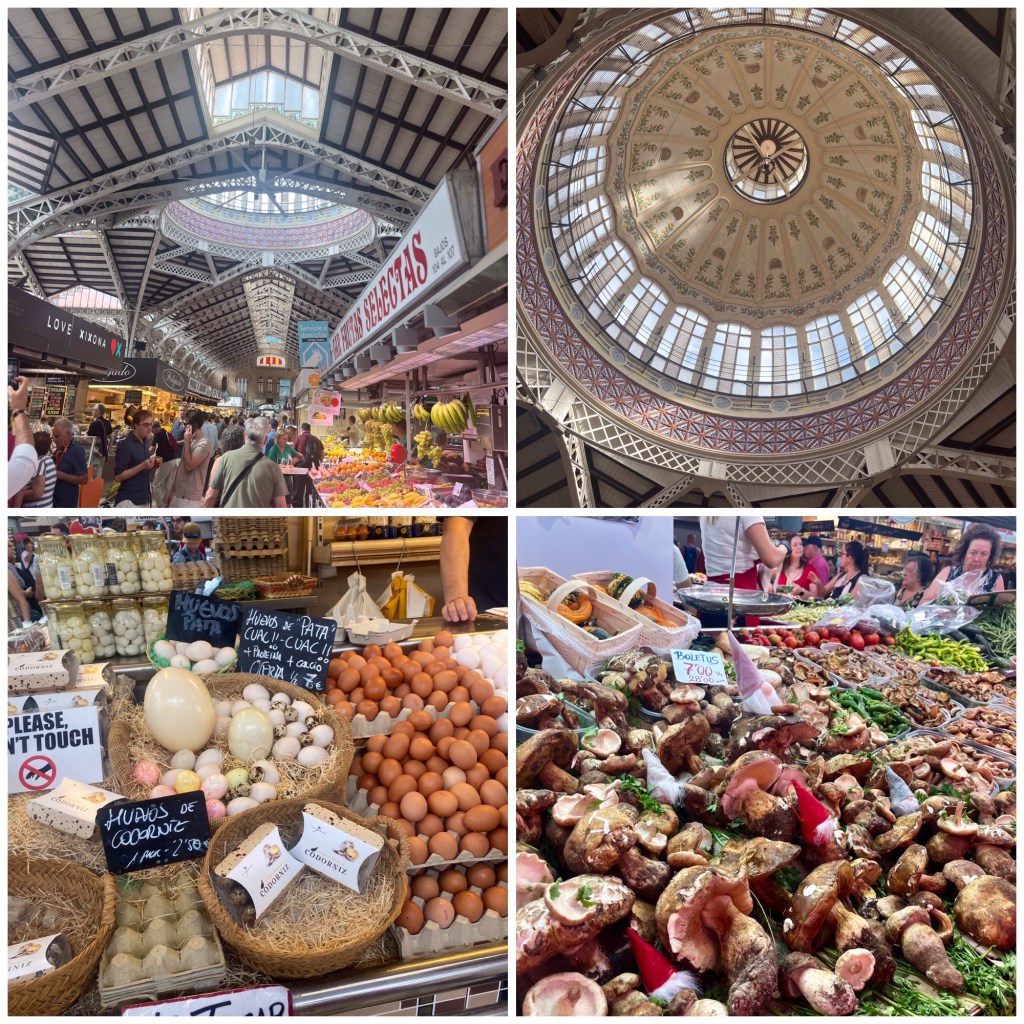
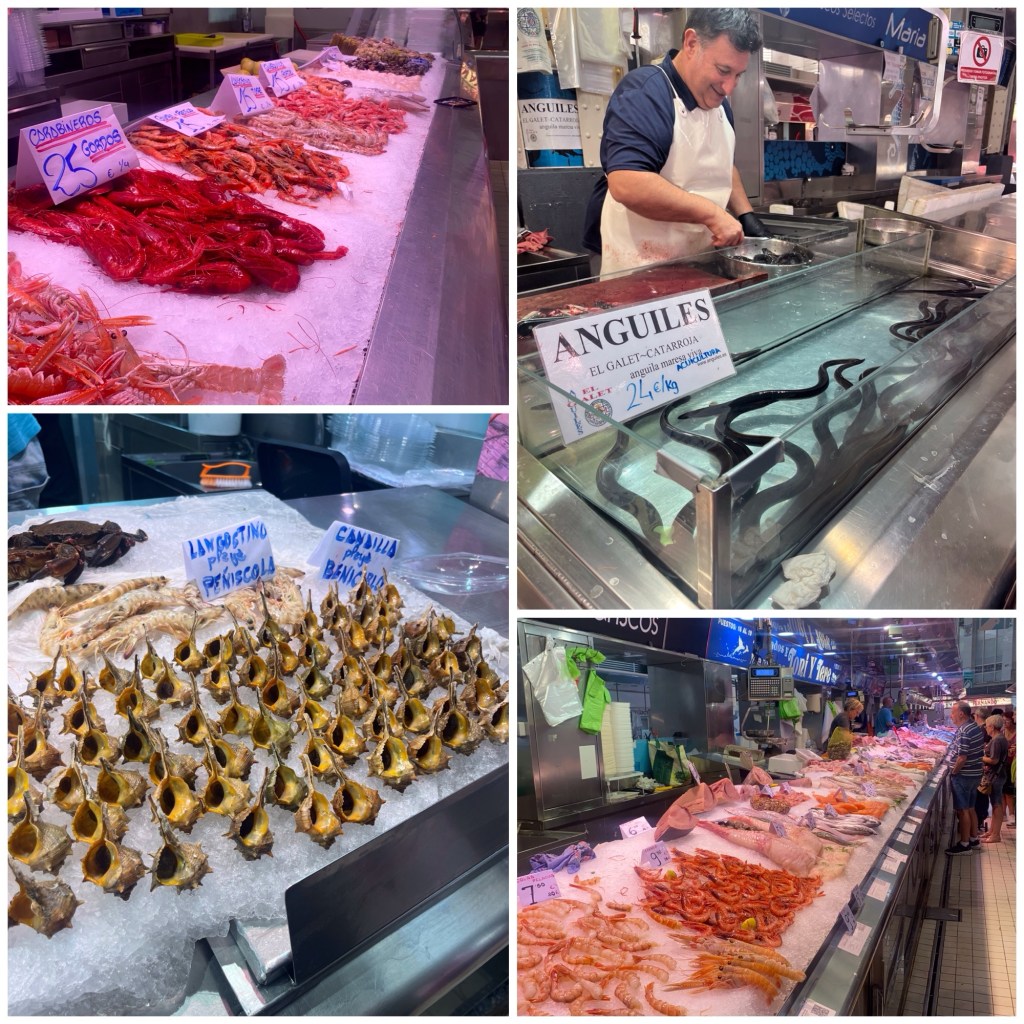
We skipped the Central Market — a not to be missed site — as we had seen it the day before. The largest covered market in Europe—over a 1,000 stalls. Foodies that we are, it was almost our first stop in Valencia and worth every crowded moment we spent among the tourists and the locals doing their shopping.
Central Market
And while we mainly purchased cheeses and cured meats for snacking, the vegetables, fruits and fish made us wish we had time to cook a couple of dinners.
And in true Valencian style, we ended city tour with a three hour lunch with our friends. More good food, more good wine and more good laughs as we sat and enjoyed the company of these old and new friends. Quite an introduction to the city!
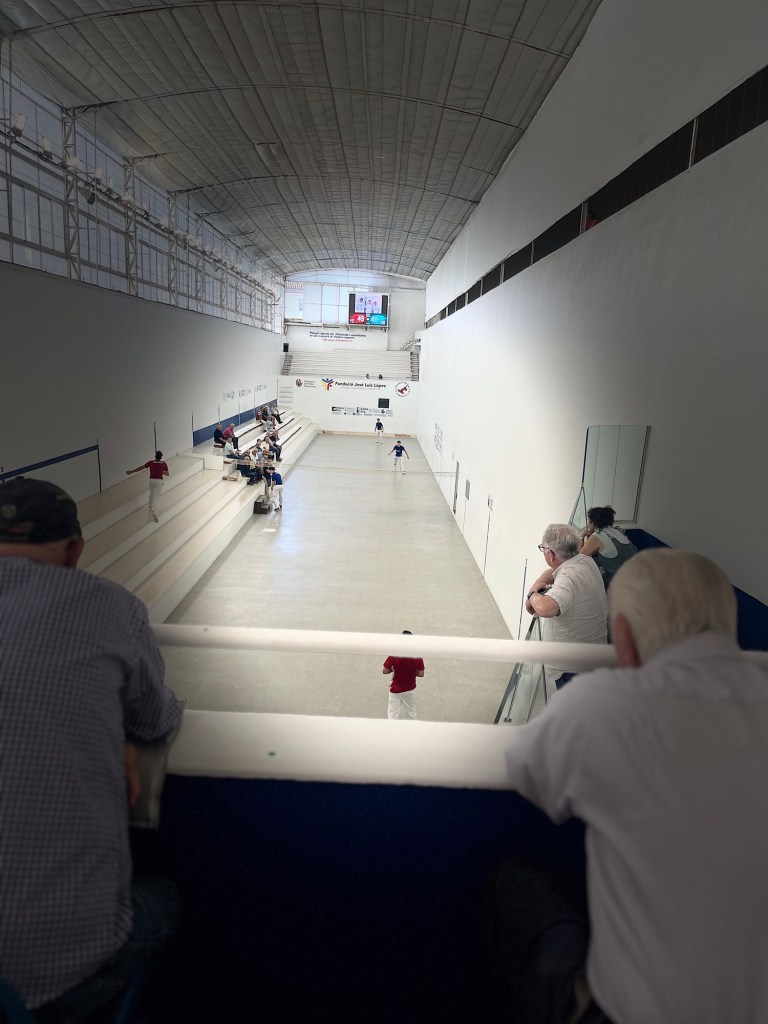
We managed to squeeze in a few other special moments in Valencia. Just happened our temporary home was right next door to a restaurant recommended by our host and we discovered attached to the restaurant was a Pelayo court—a game that is a cross between tennis and handball. We bought tickets for an amateur match. The mother of one of the players explained the game to us — the scoring was like tennis, but the rules were wildly different. Every surface of the court was playable, including any spectator who got in the way of the ball, as long as the ball fell back onto the floor of the court. Wild!
Historically, the game had been played in the streets of Valencia and still retained a bit of the rough and tumble feel of a street game. With mom beside us, we cheered on her son to victory.
Our three short days were not enough to fully enjoy Valencia! We are beginning to understand why our new and old friends have chosen to make this place their new home. We will be back for a much longer stay.
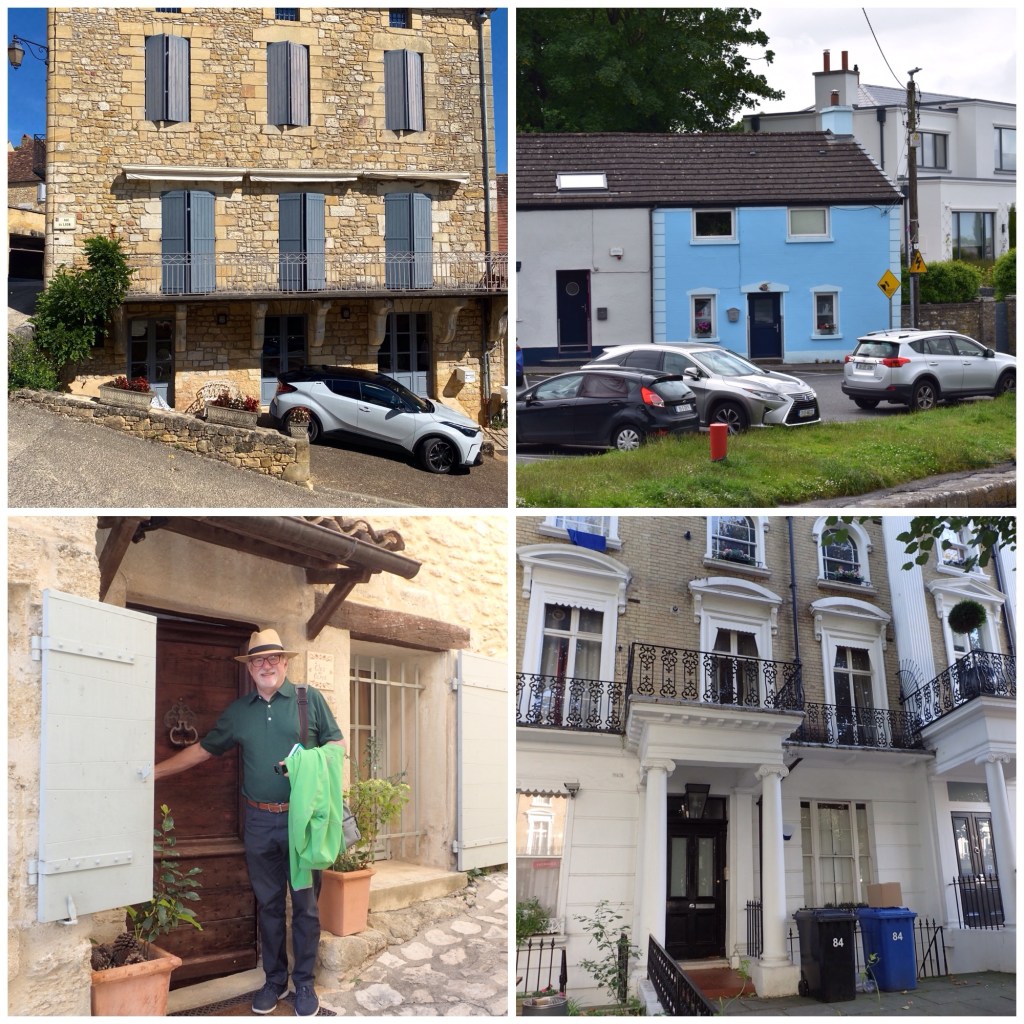
We’ve used AirBnB’s for years with amazingly good experiences. Some truly fabulous accommodations—a gorgeous 19th century house in the Dordogne, a spectacular modern villa in Istria, a stunning apartment overlooking the Opera House square in Palermo, a fisherman’s cottage on an Irish bay. And dozens more great stays. And never more than a minor problem checking in—and even that was very rare.
Some of our “homes” over the years — St. Cyprien, France; Kinvarra, Ireland, Uzés, France, and London, UK
This time was different.
We flew to London from Seattle, traveling with another couple. Three nights in London in transit to a month in Spain near Valencia. After going through customs and immigration at Heathrow, our travel companion checked her e-mail only to find out that the AirBnB she had booked for the four of us had been cancelled. The notification was sent to her while we were in the air. Panic, disbelief, anger, grudging acceptance, action. The five steps of travel grief.
We had arranged a driver, Kevin, to pick us up at Heathrow and take us to a luggage drop (surprisingly—at a dry cleaners) near our now non-available apartment. We had a very early arrival so we needed someplace to store the luggage until the 3:00pm check-in time. The issue was where now to tell Kevin to go. Fortunately, it’s a long drive into London so we had some time. We told him to go to the original drop off address until we found a new temporary home. Kevin was a charming, upbeat fellow. A talker. “No worries, mate! London’s a big town— you’ll find something.”
Three cellphones were in now in full operation. Our friend was on the line to AirBnB customer service to find out what the hell had happened. (Note to self—always have that number for future rentals). After several calls back and forth she discovered the property had been sold. The lack of notification from the owner violated AirBnb policies. Small comfort to us. Ironically, we had read an article several months ago describing this exact issue with short term rentals. As property values sky rocket in cities like London, the owners can make more money selling than continuing to do short term rentals.
Now we had to find something fast. Really fast. Two of us were furiously checking other options. Lots of discussion and passing of phones among the four of us. Too small! Too far from the center! Too expensive! Ugly! But then, even before we hit central London, Eureka! We found a new place, and booked it. It was in Westminster near St. Vincent Square—15 mins walk from Westminster Abbey and the Houses of Parliament. Fit all the criteria we had laid out.
“Home” Sweet “Home” second try
A second quick search found a new luggage storage place close to our new home—a small postal services store. (Seems these luggage storage places are either in dry cleaners or private postal service shops. Wonder why?) And Kevin delivered us there safe and sound. AirBnB customer service transferred the payment to our new booking and provided a small discount for the inconvenience. Actually, they were very helpful. Done!
Thoroughout the drive into London, our cabbie had been reassuring and upbeat. London cabbies are a special breed. The test to become a driver is actually a series of tests, mainly oral, that replicate the kind of nice or obnoxious, demanding person who might be a passenger. The process takes at least 18 months, more commonly 2-5 years depending on the amount of time the person can devote to study. As one cabbie told us, it may be easier to get a law degree. Most cabbies we have encountered are well versed on London history, know how to get to the most obscure addresses and are simply charming.
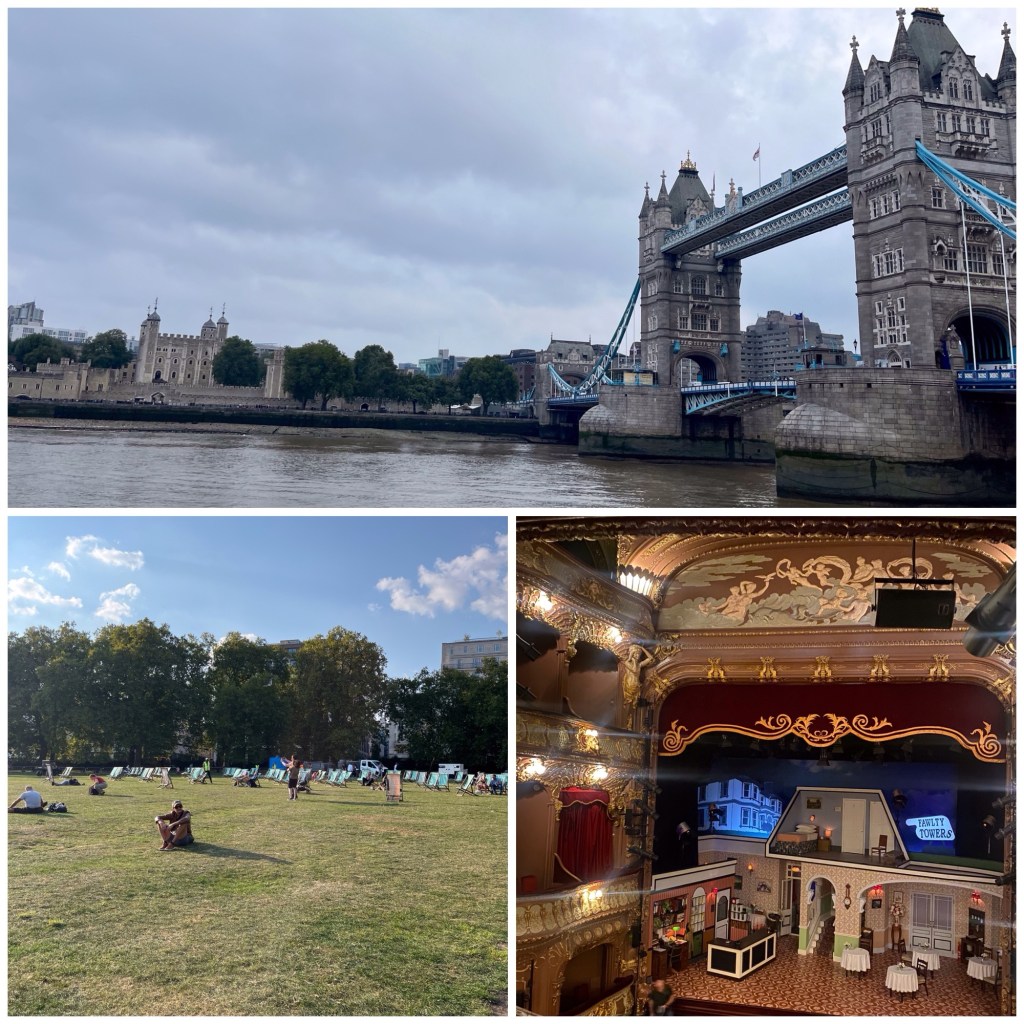
Once quickly settled into our new home, we had three lovely days in central London. We took in the evening prayer service at Westminster Abbey (free and offered at 5:00pm in place of Evensong some days) to the lucky hundred or so who show up first) saw a West End play (recreation of the old Brit TV comedy, Fawlty Towers – delightful) strolled the south Thames river walk past Westminster through China town and the Green Park.
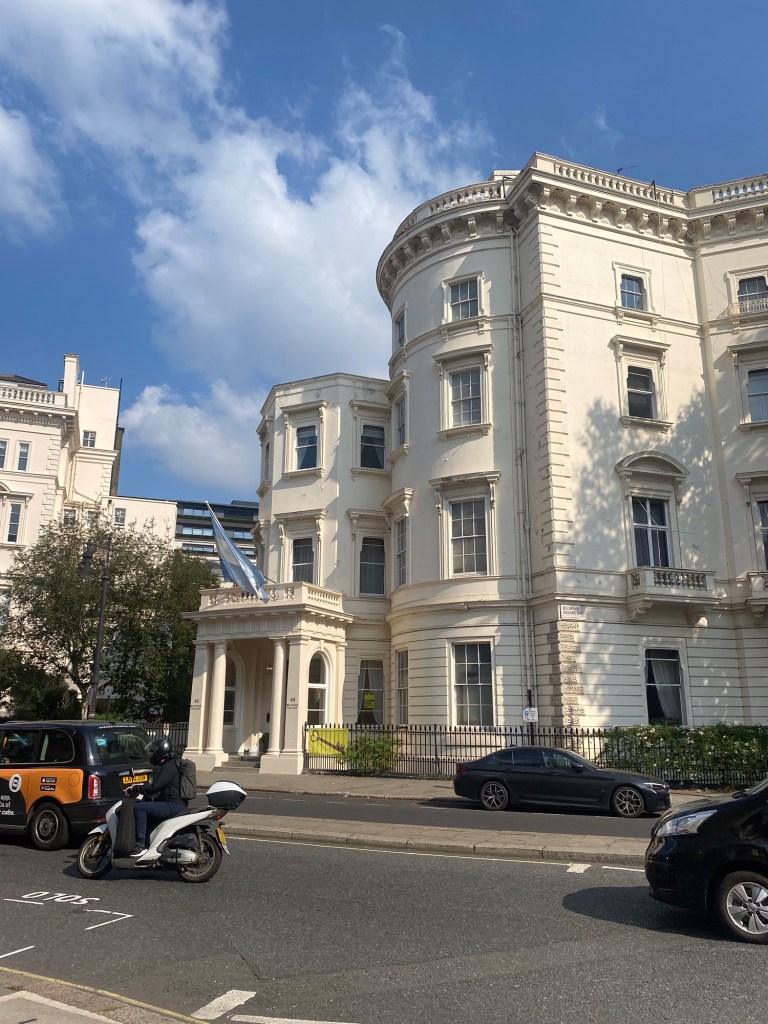
And we managed to catch a bit of a special London event we had heard about — rarely open sites of historical or architectural interest, (Open House Festival) and toured two Belgrave Square historic mansions (one was the Argentine Ambassador’s residence). And managed to find some excellent pub meals.
The housing crisis was a distant memory.
As the old cliche goes, “Handed lemons, make lemonade.”
Our third trip to the Cloud Forest in Costa Rica was probably our best. Maybe because we were ready for a break from the unseasonably hot weather on the Pacific Coast. Maybe because the roads were familiar, and now much improved from earlier trips. Maybe it was simply because the area is so gorgeous.
The Cloud Forest is special even for nature-rich Costa Rica. The wind from the warm Caribbean side blows the clouds up and over the continental divide, keeping the jungle below cool and wet. The clouds just hang on the mountain tops.
There was a 30 degree temperature difference between the Cloud Forest and the lowlands a few miles away when we were there this year. 98F vs 68F. We heard that climate change and the rising sea temperatures are changing this pattern a bit, meaning less rain fall in the mountains and more on the costal plains. It is worrisome—so much flora and fauna are dependent on the very specific micro climates of the Cloud Forest.
The big draw in the Cloud Forest are birds! Birders from all over the world flock here (pardon the awful pun). Situated between North and South America, Costa Rica is known for its incredible biodiversity and the amazing number of different birds reflects that richness. 918 at last count.
A disclaimer—we aren’t really serious birders. A passionate birder friend gradually sucked us in years ago when we traveled together. At first, we saw birding as an excuse to take a walk in the woods, green belts, or seashores. Then we began keeping track of the birds we saw. Technology, of course, made it easier with finger tip accessibility to information on birds and help identifying them. We were hooked. Now where ever we travel, we try to take a walk and look for birds. But in a place like Costa Rica’s Cloud Forest, you don’t need a book or a life list. Just grab a pair of binoculars and enjoy.
Seven years ago we birded in the Monteverde National Reserve, the most famous of the many Cloud Forest sites. We hired Adrian Menendez, an outstanding local guide. We haven’t been back to that park since, but have reconnected with Adrian. He’s led us up remote mountain roads, through other regional reserves and into private parks.
Over two mornings with Adrian this year, we saw nearly a hundred different species!
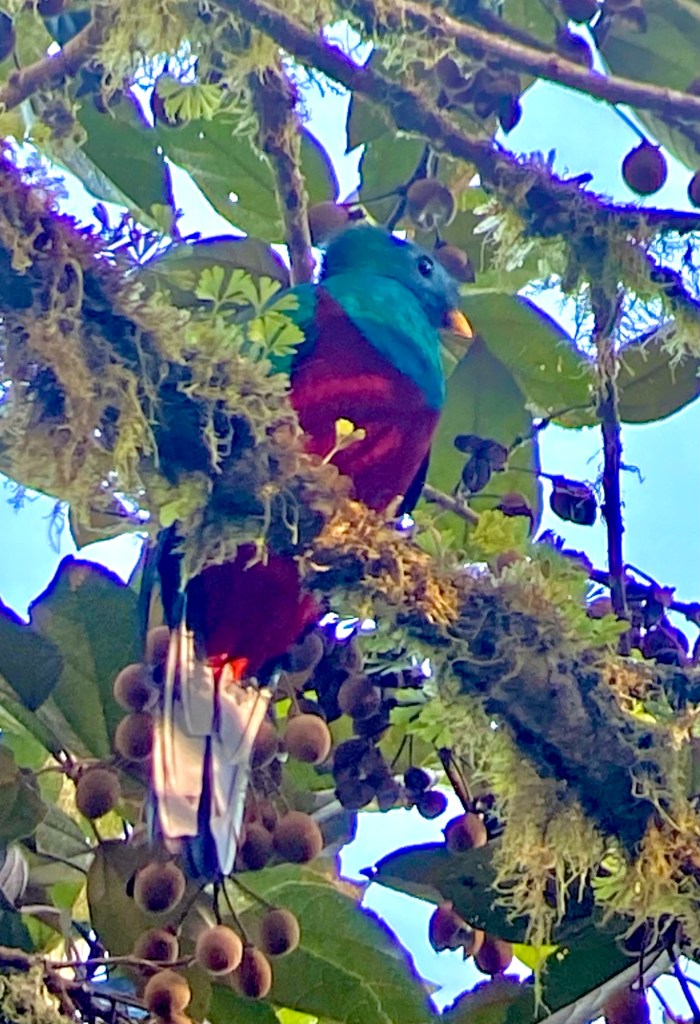
Of course, we would see very few birds without him. Not only does he know the sounds of birds and can locate them primarily by sounds, he also knows where the different species hang out. These mountains have been his birding territory for 31 years. He knows where an owl hangs out, or under what bush you’ll find the shyest of birds or where the wild avocado trees are found that the Resplendent Quetzal likes to eat.
On our first day, we drove just barely over the continental divide and walked along a mountain road not far from the Santa Elena Reserve. And there was a Resplendant Queztal just waiting for us. And the Red-faced Spinetail with its precarious hanging nest. And 39 other species!
Red-faced Spinetail and its nest
From there we went into the Reserva Bosque Nuboso, where many of the paths were paved to allow handicapped access. And benches are provided for seniors. It was later in the day so fewer birds were active. At the highest point we were 5608 feet above sea level, roughly the same elevation as Paradise on Mount Rainier. No wonder there was a bit of huffing and puffing!
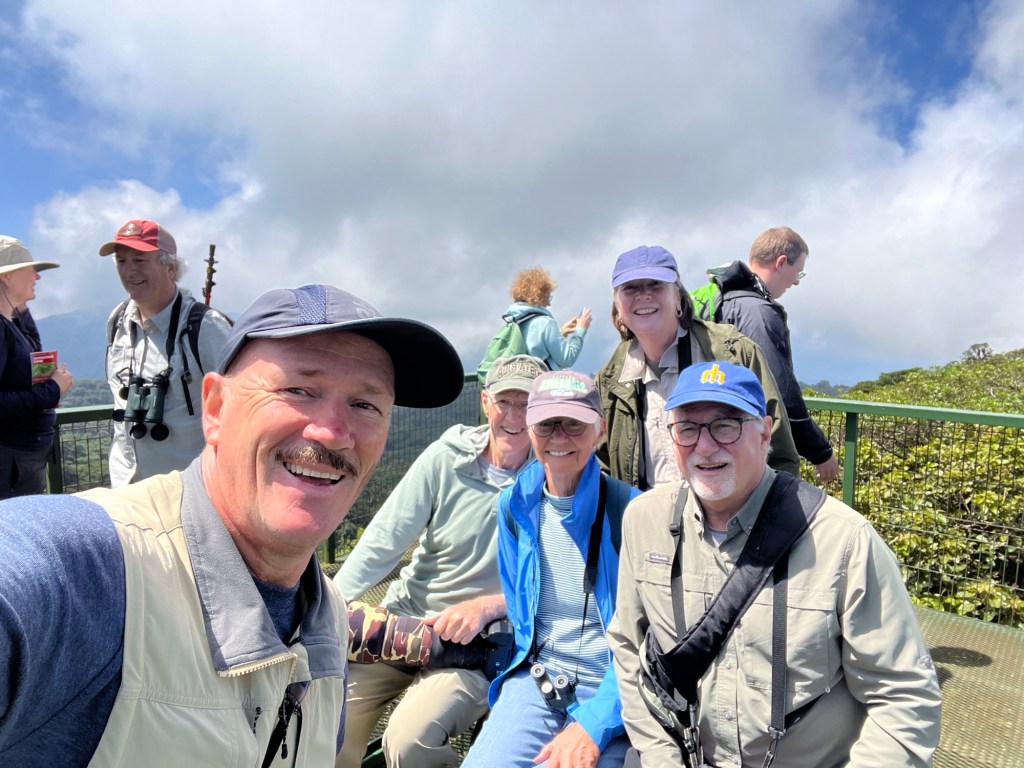
Sitting on top of the world with Arenal Volcano behind the clouds
The highlight of the day came when an Ornate Hawk Eagle flew over head followed by the American Swallowtail Kite, on its migration north. From a platform tower we could see several of Costa Rica’s volcanoes, including Arenal which last erupted in 2010 (because of the threat of another potential eruption, all cars are required to back into parking spots to expedite an emergency exit — not a comforting thought)
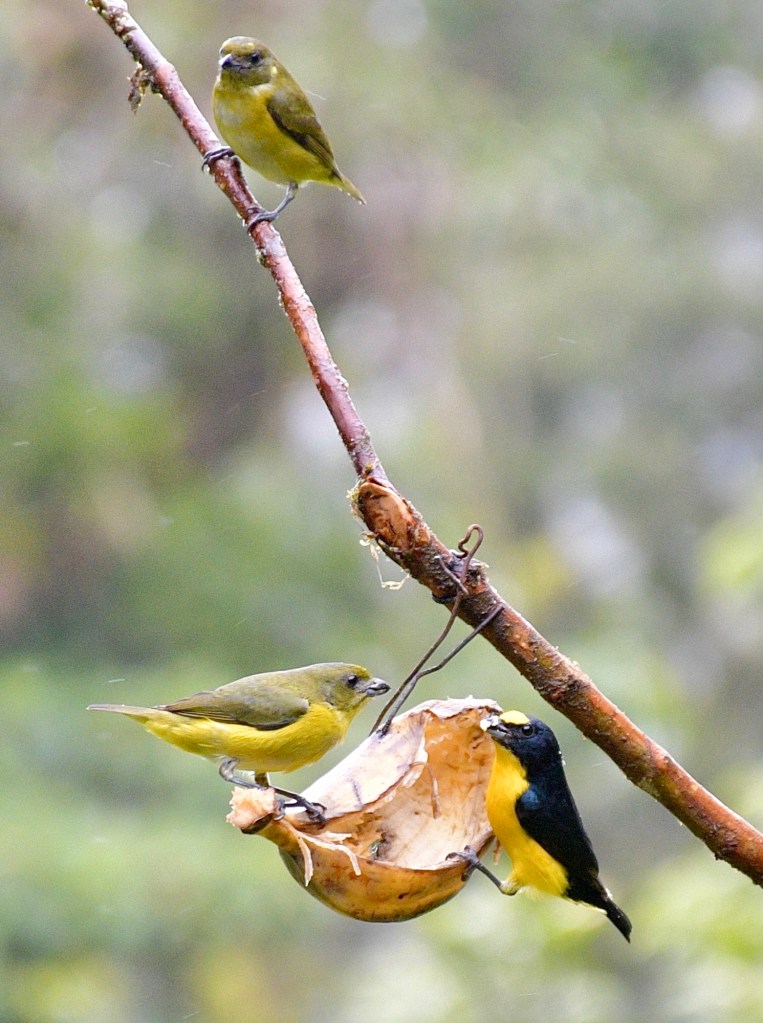
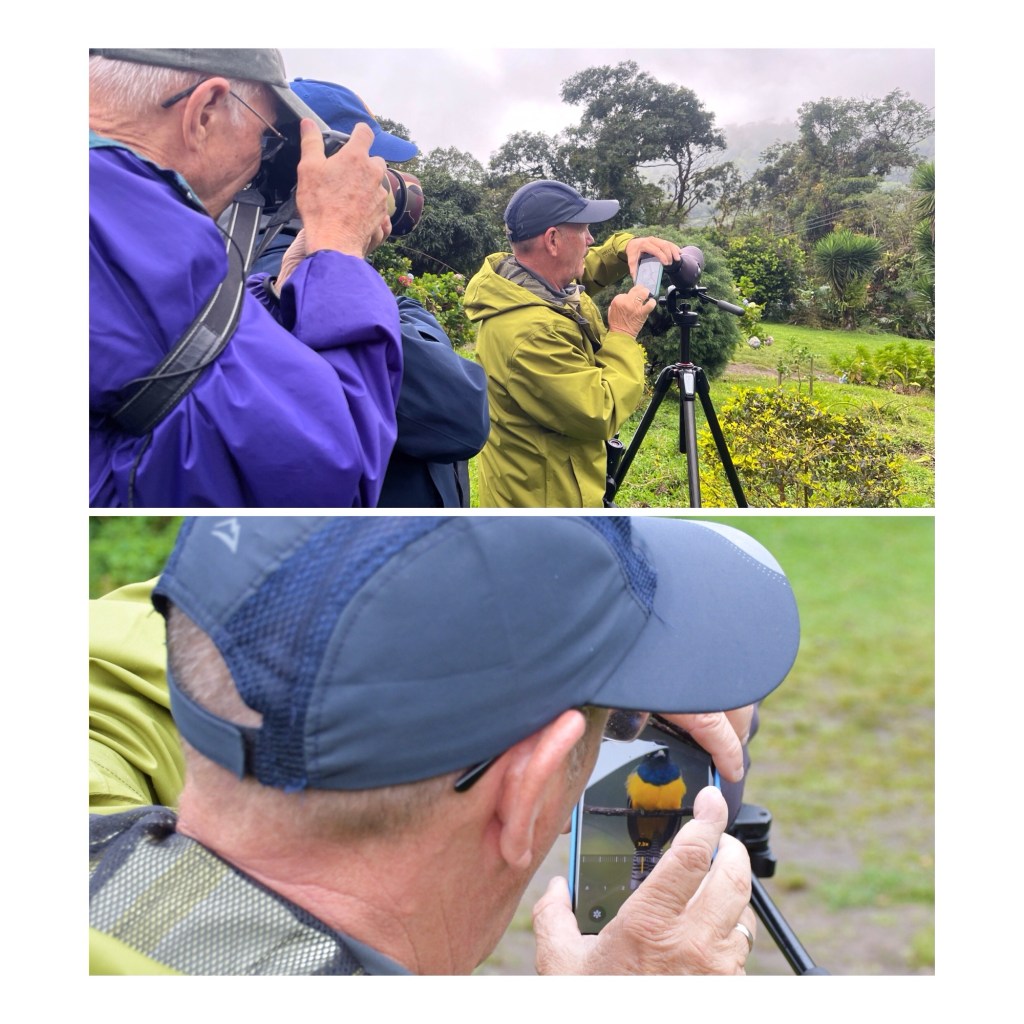
We woke up the second day to fierce winds and rain. Not a good day for birding. Adrian, however, had a plan. We drove about 20 minutes south of Santa Elena and a bit lower on the western slopes of the mountains to Finca Ecológica San Luis, a private reserve run by Adrian’s cousins. Some birding purists might scoff at the feeding stations around the reserve that lures the wild birds in. We didn’t care. We appreciated sitting in rustic shelters, dry, and up close and personal with our avian friends.
Some of the birds we had seen before — White-fronted Parrot, Chachalaca, Montezuma Orependola, Baltimore Oriole.
But most of the birds we were seeing for the first time — Lessen’s Motmot, Broadwinged Hawk. Gartered Trogon, and the big draw of the area—the unusual looking Three-wattled Bellbird with a song that sounded either like a brass gong or an ET alien that could be heard a half a mile away.
The Cloud Forest is truly one of the world’s magical places whether you’re there for the birds or simply for a walk in the woods. And that’s why we keep coming back.
[Full disclosure: we have to share photo credits for this post with Malcolm and Adrian.]




















 Chasing the Good Life