Why Here??

This was the question we got from the young grocery clerk practicing his English in Ontinyent, Spain. Nobody comes here, was his implication. Another clerk had asked us the same thing in the same tone. And it was actually a very, very good question!
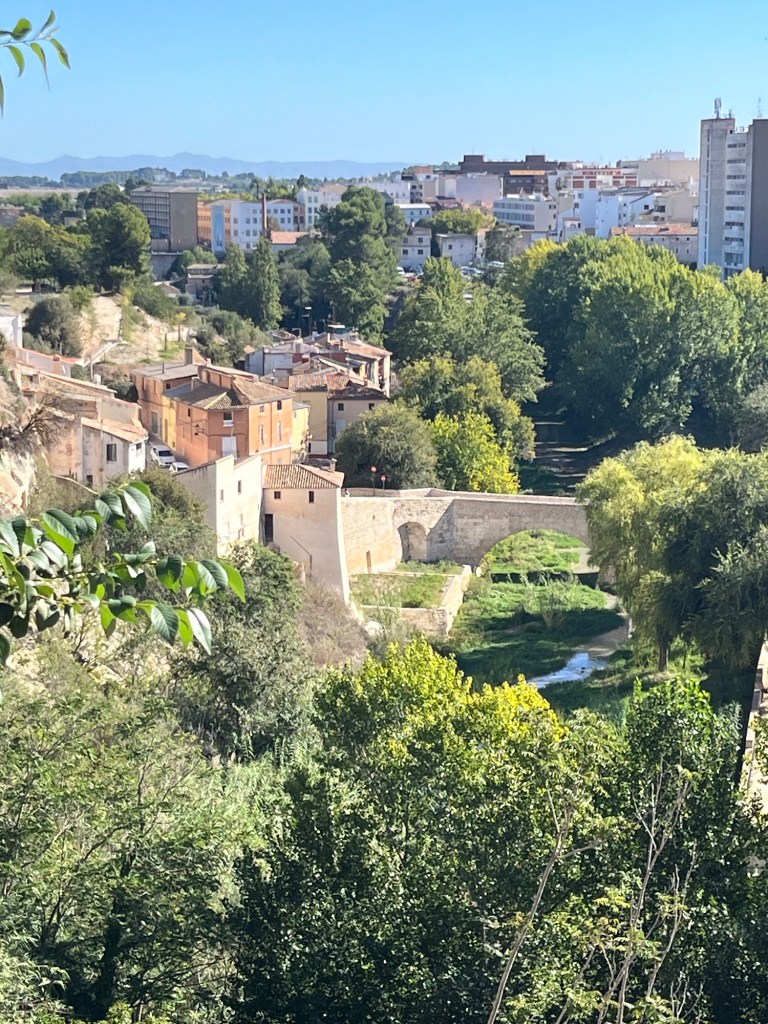
Ontinyent (in Valencian) or Onteniente (in Spanish) is a rural county seat in the Valencia province of no real historical or touristic interest. Population: 35,000. Yes, like all towns and villages in this area it has a past dating back to Moorish times and even before. It has a sort of cute medieval old town surrounded by Franco era apartments. Its only real tourist claims to fame are a series of clear pools on the Clarino River called the Pou Clar. People swim there in the summer, but the parking lot near the pools is closed in the high season and you need to hike about a mile and half to get there. The pools are surrounded by terraced hills of olive and orange trees. You might think picturesque but light industry, agricultural supply and farm equipment shops and rural housing projects kind of ruin the pastoral views.

So back to the question, why are we spending two weeks here?

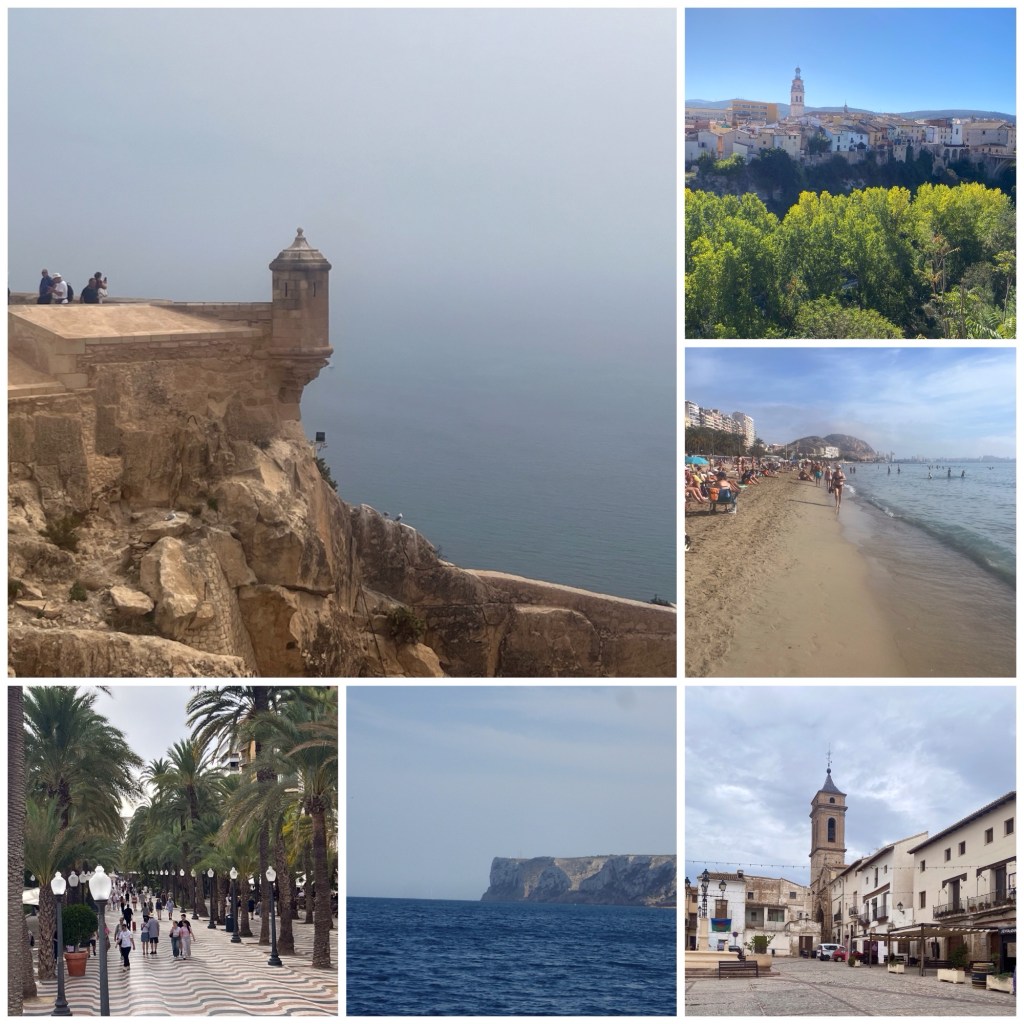
In part, it was exactly because we wanted to be off the beaten path, away from the heavily touristed towns and cities, but close enough to make day excursions to those sites. And it turns out Ontinyent is a perfect location for exactly that. Valencia—one hour. Alicante—one hour. The seaside resorts of the Costa Blanca—one hour. The historic towns of Denia, Gandia — 40 minutes. The Albufera lagoon and El Palmar (the home of paella)—one hour. The quaint hill town of Bocairent—15 minutes. And one of the best, the castle hill town of Xativa—twenty minutes. National parks and hikes nearby. Kayaking on the Mediterranean. More than enough to keep us busy for two weeks.
Of course, a rental car is an absolute necessity. And driving in a foreign country can be stressful. But the good news is that the roads and freeways here are amazing—well maintained, excellent signage, and not very crowded. Spanish drivers are on the whole some of the most courteous we’ve encountered. With a good GPS system, we never got lost—even in the town and city centers.

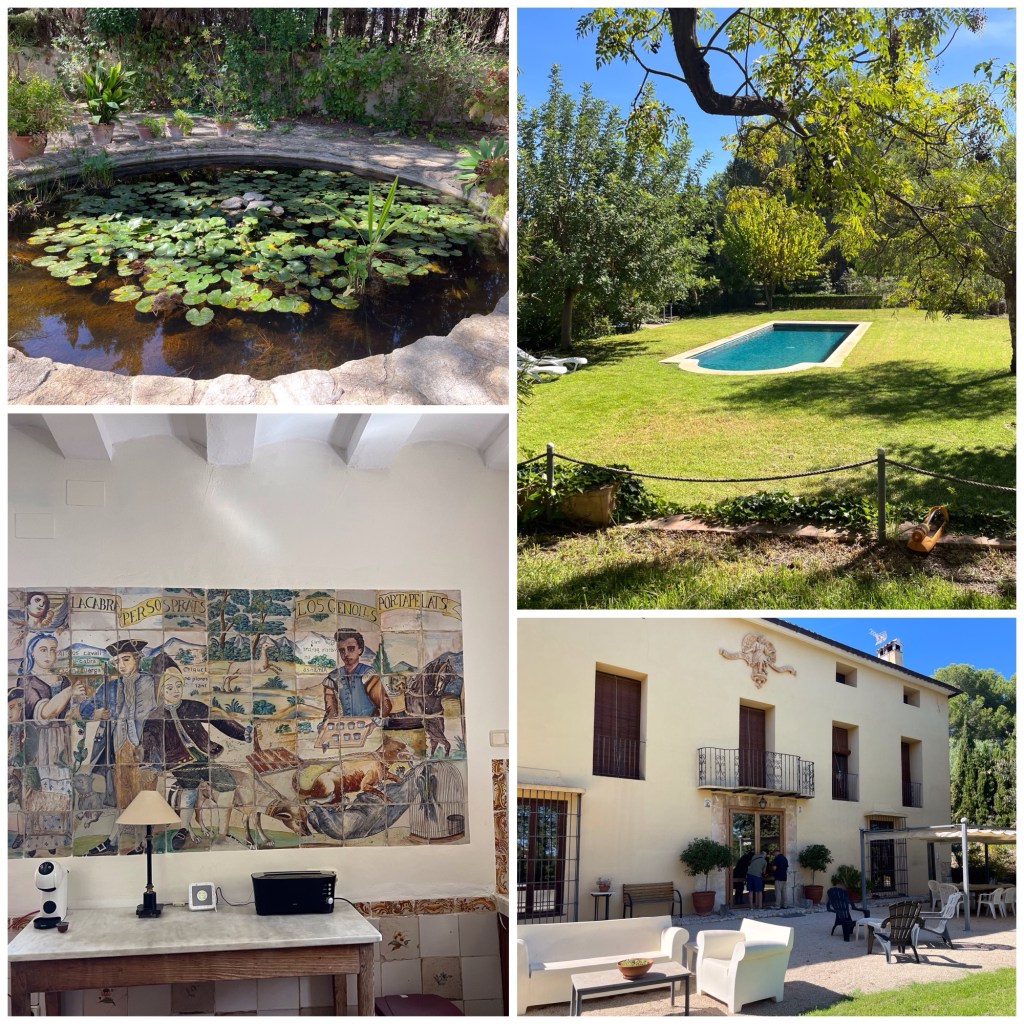
One other huge draw—our manor house. It really was a big, big factor. We rented the house (an AirBnB) for two weeks just outside Ontinyent. La Baronia de Dalt. It is a grand old manor house with large, lovely grounds and a swimming pool. Five bedrooms, three en-suite. 5 bathrooms. AC. Large dining room, big kitchen and two large outside patios for al fresco meals. Lots of art work and beautiful tiles. And all at price you’d be lucky to pay at a Holiday Inn Express in the US. We were two couples, but the house could have easily had four couples or one very, very large family.
Still with all the charms the manor house had, the real attraction was the surrounding sites. A bit of the history of the Romans. Then Visigoths. Obvious remains of the Moors, and Christians in the Middle Ages. Often in the same site.

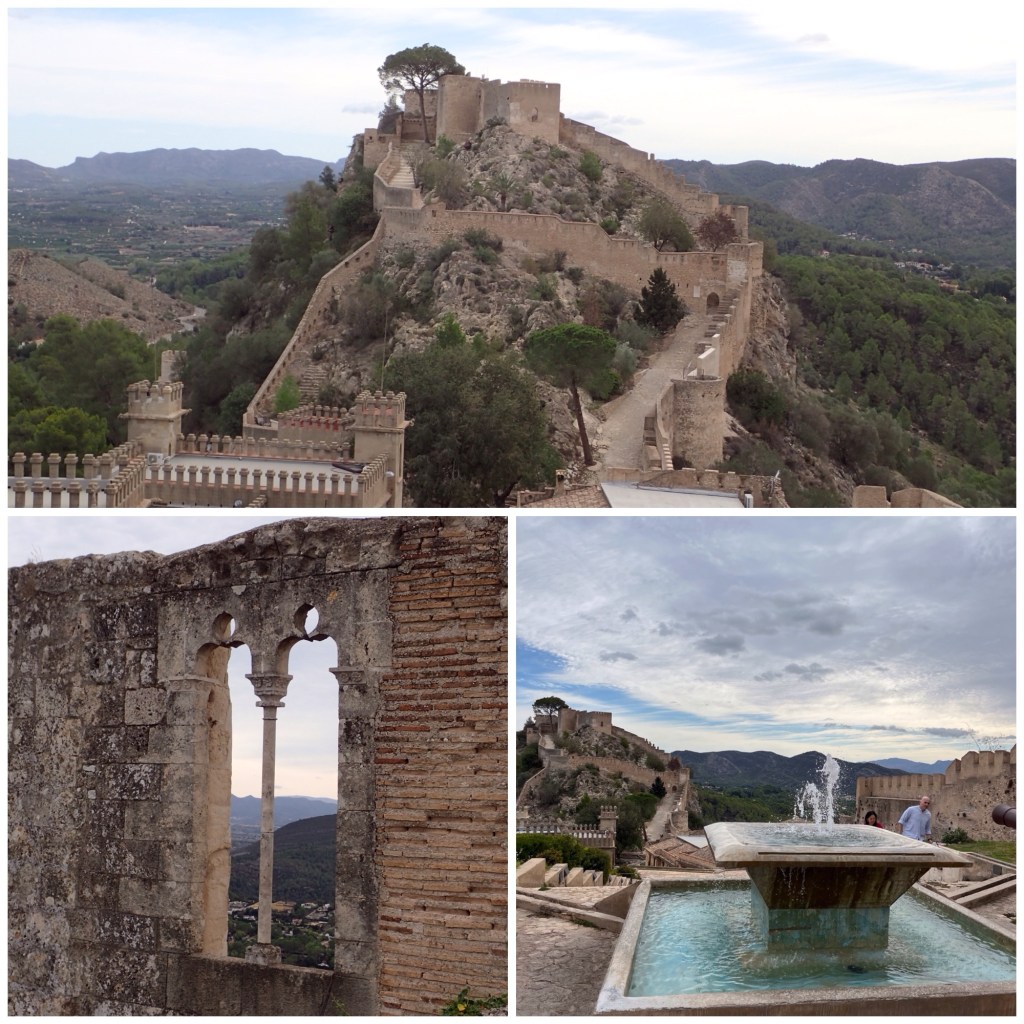
Our favorite place nearby is Xativa, a short drive away. The huge castle complex high above the town dominates. Thankfully, you can drive to the top although locals seem to use the 30 minute hike up to the top as an exercise routine. It is a defensive marvel. Steep cliffs on all sides. The Romans saw its value. Hannibal used it in his war against the Romans. The Moors expanded it. The Christians continued to use it until modern weapons in the early 1700’s and several earthquakes made it obsolete.
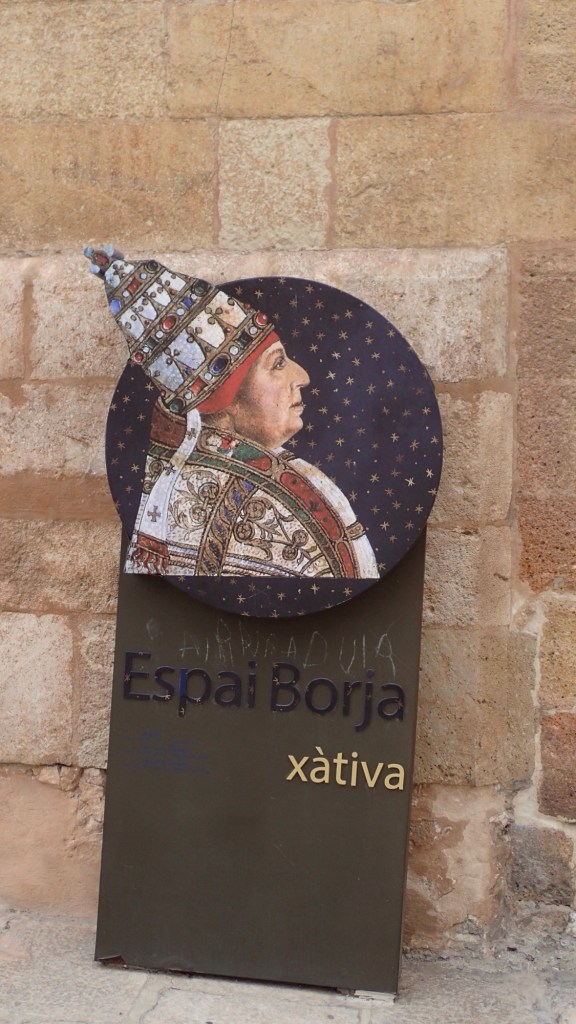
The medieval town far below is famous for one family—the Borjas. Two Spanish Popes were born here. Calixtus III and Alexander VI (father of Lucretzia and Cesare)—both with less than stellar reputations. Were they really that bad or were they simply victims of an anti-Spanish Italian propaganda campaign? Anyway, this is a pro Borja town.
The old town is delightful to wander around. On Tuesdays and Fridays there is a huge outdoor market that takes over several plazas and streets.

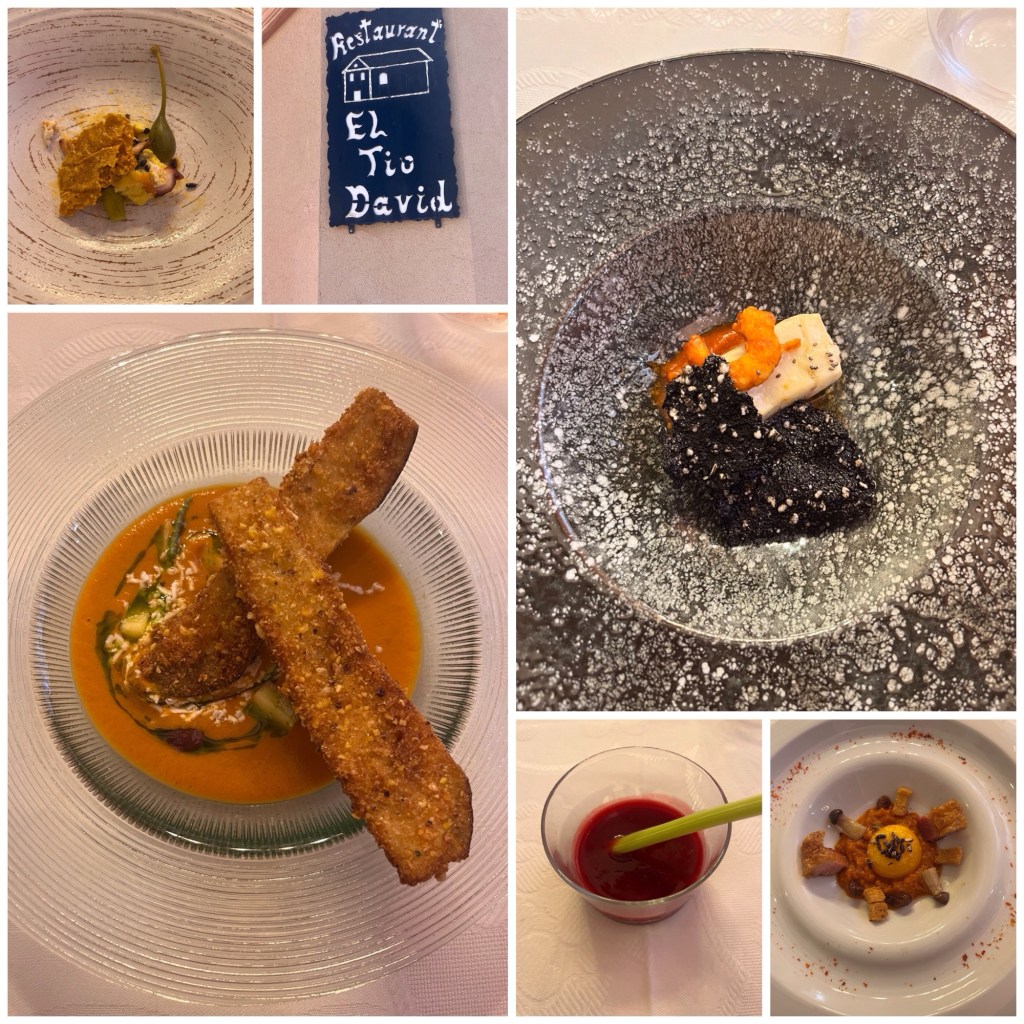
And there are plenty of top-notch restaurants hidden away in these little towns — we were surprised at the number of Michelin stars within a half an hour or so, including one where we had probably the best meal of the trip.
The area is also known for its excellent wines—not as famous as Rioja or Penedes—but very good and at prices that astounded us. A glass of excellent red at restaurant was often less than bottled water. The local grape, bobal, produces a fine red wine comparable to a Cotes du Rhône.

So “Why here??” Great sightseeing, beaches, hiking, wonderful food, good wine, fewer crowds, great accommodations, and, by the way, perfect weather in October. We think the answer is pretty clear.
Paella: Is the Original Best?

We’ve had bacalao (reconstituted salted cod) in Lisbon, cassoulet in Carcassonne, haggis in Scotland, ratatouille in Provence, buckwheat crepes in Brittany, khachapuri in Tbilisi, sushi in Tokyo, bouillabaisse in Marseilles, sauerkraut soup in Slovenia, and many other local dishes in the their place of origin. Being foodies, we assume that locals know best and the place where the dish originated will make the best version. And in most cases, it’s true.

But sometimes, the authentic version disappoints. Not because of the quality of the food or preparation, but because our pre-conceived notions are wildly wrong. For us, the bouillabaisse in Marseilles, in one of the top bouillabaisse restaurants, Chez Fon Fon, was a case in point. We expected a San Francisco style cioppino (our ignorance) and got a strong, fishy, gray-brown broth as a first course and then the fish that was stewed in the broth for a second course, followed by the potatoes that had cooked with the fish. All served with a trio of mayonnaise based sauces on the side. The fish had been caught that morning and was presented to us before cooking to allow us to confirm its freshness. End result to our palates? Overly fishy, not particularly attractive in appearance. Glad we experienced the meal, but not our cup of tea.

So, in Spain, just outside of Valencia, on a huge freshwater lagoon, the L’Albufera, surrounded by rice paddies, is a small town—El Palmar. It is reputedly the birthplace of paella—the ubiquitous rice dish that can be found in food carts, public markets, restaurants and bars all over Europe. It is probably the only Spanish dish that most Americans can name. And yet just like barbecue purists might scoff at a Texas BBQ product in Anchorage, a restaurant we walked into in Madrid had big sign in English “This is Madrid! We do NOT have paella.” We’ve had so many bad versions of the dish (one in Barcelona allegedly at one of the top paella restaurants) we were worried about what we might get. We had also heard that paella in Spain is often mass produced, frozen, sent off to restaurants to be reheated. There are so many bastardized variants—we wouldn’t be surprised to find a pineapple and ham Hawaiiana version.

We made the foodie pilgrimage to El Palmar anyway. We had to know.

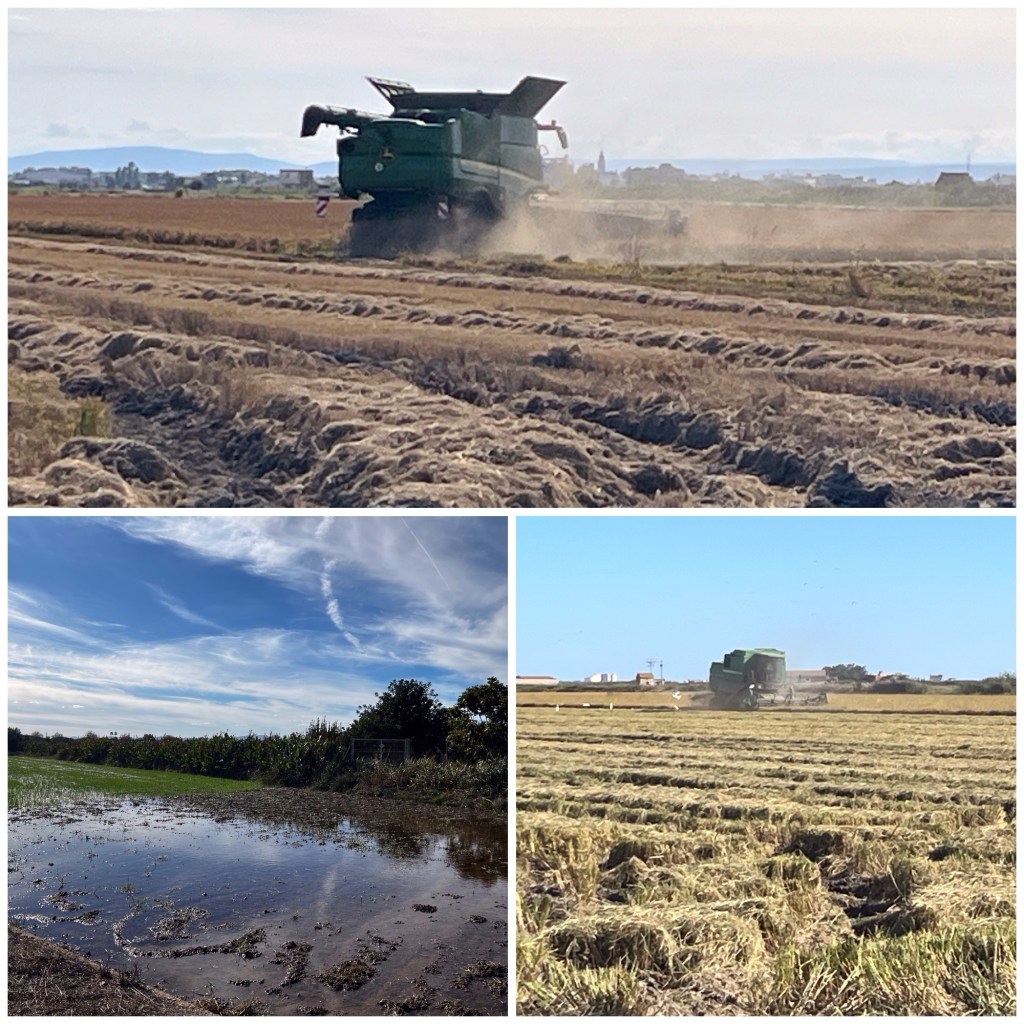
Driving in from the south, once we got off the A-7 freeway, and as we got close to El Palmar, rice paddies and irrigation canals everywhere. Promising.

El Palmar itself is not much—dusty, a bit run down, one long main street along a canal that empties into the L’Albufera, a few quaint old fishermans’ huts (A-frames with thatched roofs restored to add some small character to the town), and dozens of paella restaurants. And signs everywhere announcing Paseos de Barca—boat rides on the lagoon.

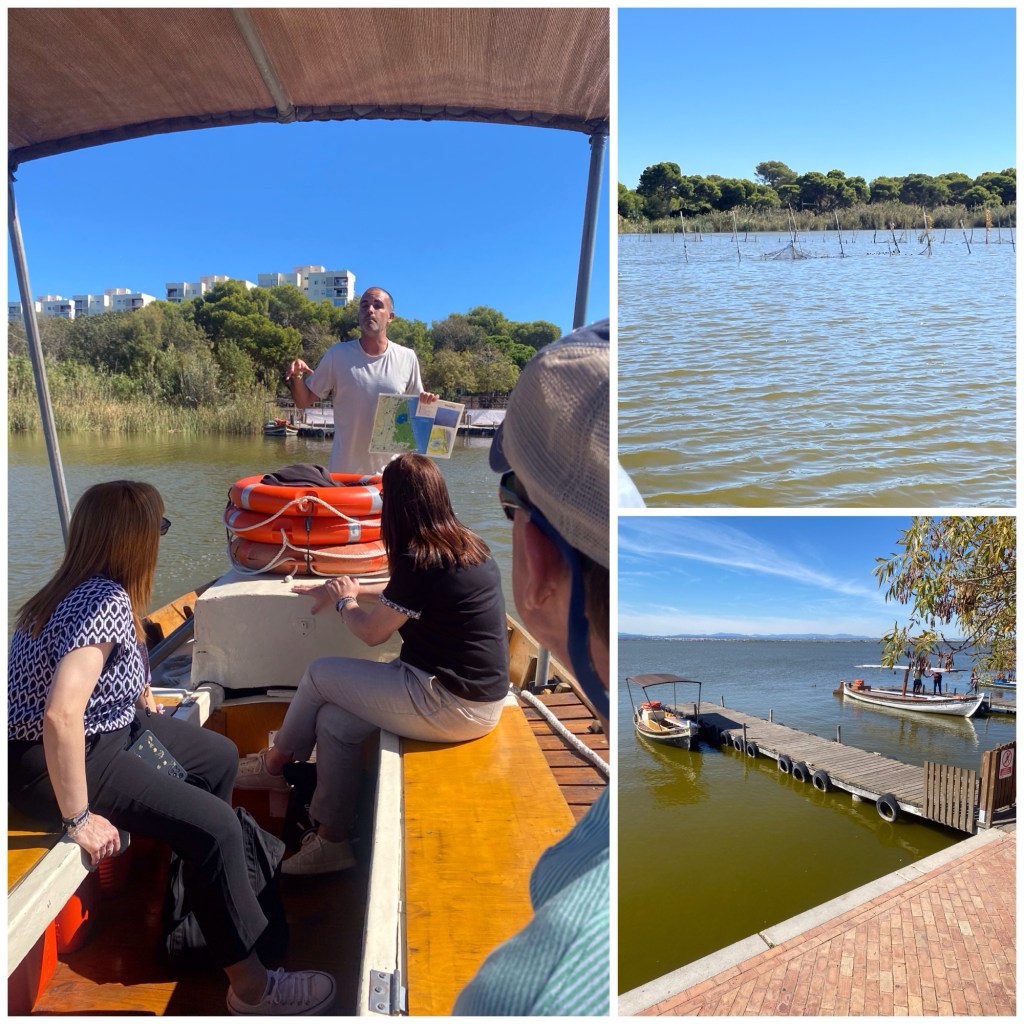
Yes, we did take a boat ride on the lagoon. We stumbled onto a small boat—there were 8 passengers and it was delightful. 5 euros a person. A steal.

Lots of good information written in multiple languages. Our boatman also spoke English and told us the lagoon is now polluted even though fisherman still work the nets, it’s a meter deep, that it is flushed from time to time into the ocean. We wandered through narrow channel and chased the mallards and moorhens out of our way.

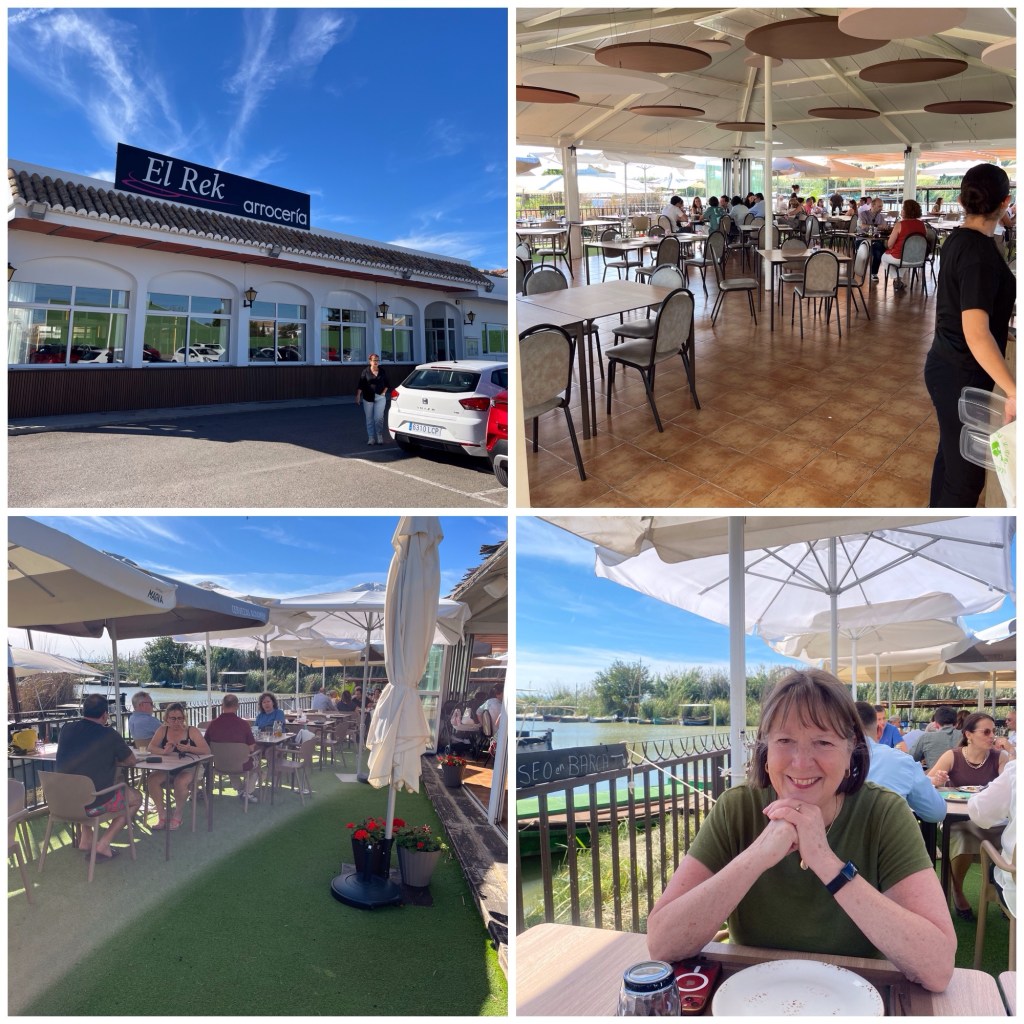
Then it was time. With some trepidation we led our friends to a restaurant with a good reputation and good reviews, El Rek. https://www.arroceriaelrek.com/ The sight of a bus load of tourists coming out of the huge restaurant as we went in was not encouraging. Uh-oh, tourist trap? Well, at least they were Spanish tourists.

Once in the restaurant we were encouraged to see several long tables of locals, dressed for a celebration, enjoying their meal. Very promising.

The waiter asked us as we walked in “Did we order the paella in advance.” “No.” I said. “No worries.” he said. When we looked at the menu, it said, in Spanish, “If not ordered in advance, the paella will take an hour.” Very, very promising.

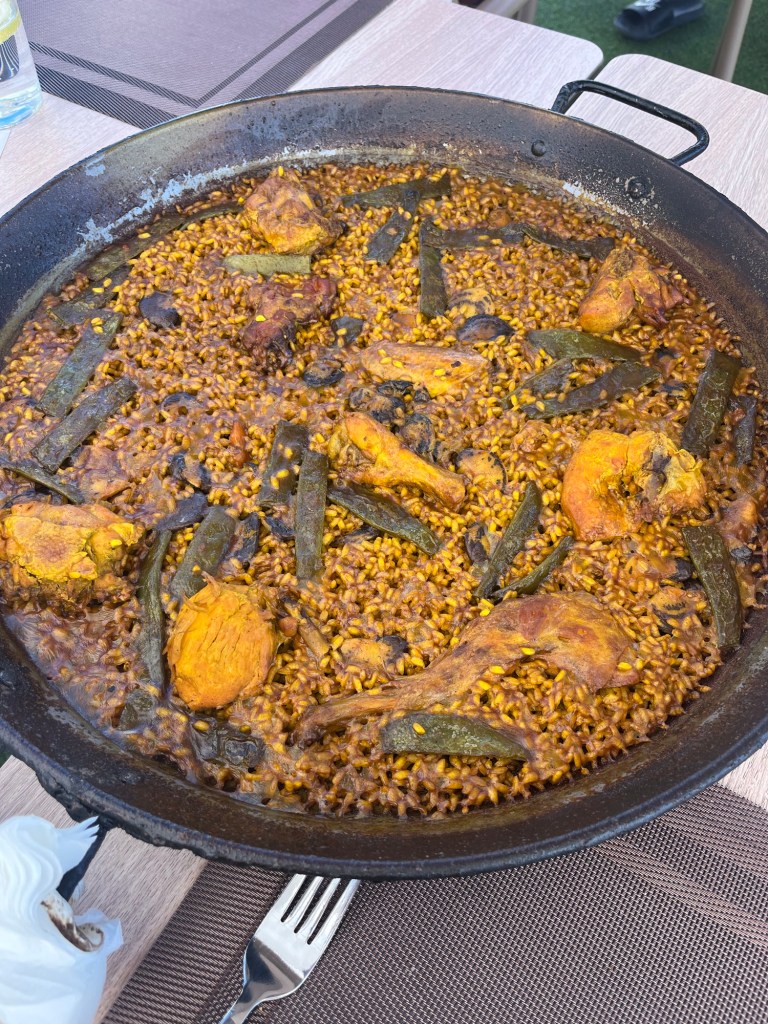
When we looked at the menu (on our phones from a QR code like many restaurants we have been in here), the first paella listed was the traditional Valencia paella—rabbit and chicken. Yes, there were variants, including a version with local snails (not escargot) several seafood versions. The smallest size was for two people.

We ordered a bottle of white wine and the house green salad to sustain us as we waited the one hour for our traditional chicken and rabbit paella and the seafood in shells version. Maybe 45 minutes later the long-anticipated paellas were placed in front of us.

Paella is really all about the rice. The mark of a good paella, we have been told, is the crispy, deeply brown edges. And it is generally eaten communally, with a spoon from the cooking pan — in fact, paella means pan in Spanish — and we saw locals scraping every last morsel of rice from the pan. We opted for serving spoons and separate plates. American style, perhaps?

The chicken and rabbit version came with a few mature fava and romano beans. Less meat and fewer vegetables than what I have been served at home. Rice was cooked through, but not the least bit mushy, obviously enhanced by a very rich stock. No sweet red peppers, or chunks of ham, pork or decorative peas. But tasty. Very tasty.

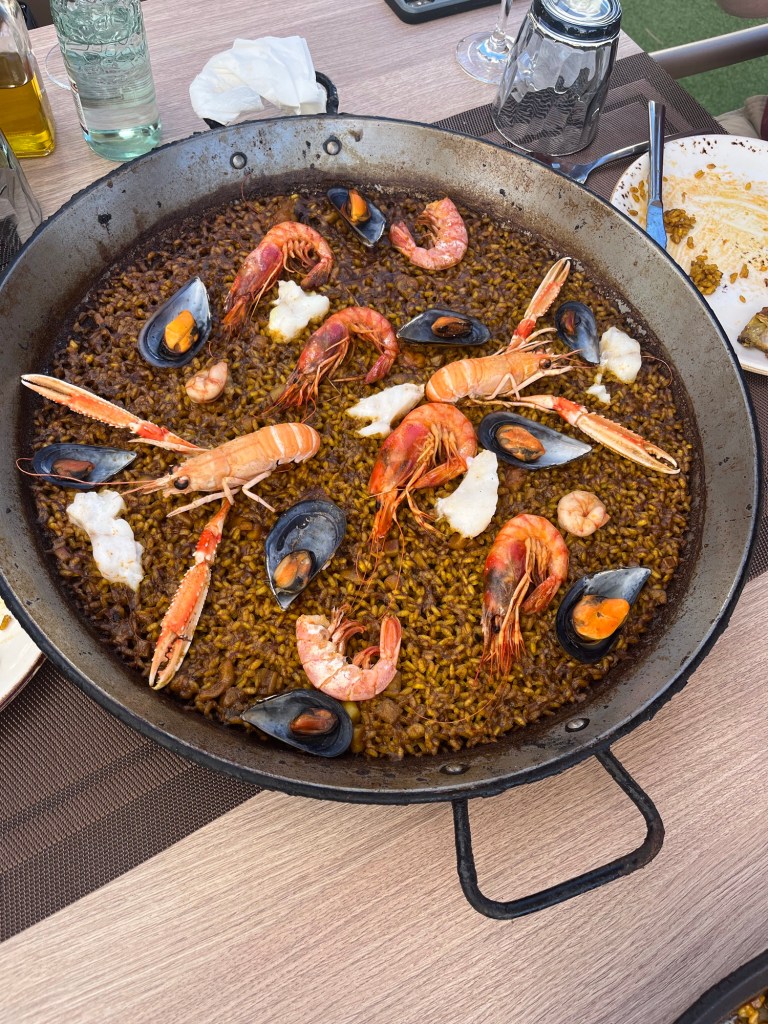
The fish version fell into the same category as our first sample of authentic bouillabaisse. If you like canned sardines and anchovies, you might like it. A bit fishy for us. The shellfish was a bit overdone and underwhelming. However, we have to acknowledge, coming from the Pacific Northwest, catching our own crab, salmon, and shrimp, we’re spoiled when it comes to seafood.

Still, we ate every bit. We concluded that traditional version is really the way to go.

And did the paella, prepared and served in the traditional way with the traditional ingredients using the locally grown rice in the town that originated the dish, live up to its reputation? The answer is a resounding “Si!”

Valencia: More than Oranges

We had allotted three days in Valencia itself. We were staying for two weeks an hour outside the city so we thought it would be plenty of time to get acquainted with the town. Mistake! Clearly not enough time. We never made it to the Jardin du Turia, the 9 mile long river park, the Ciudad de las Artes y las Ciencias with its space age designed buildings, the port and its beaches. Instead we ate, drank and laughed our way through the city with expat friends who now live in Valencia.

It all started with Peter’s former colleague who just two weeks ago moved to Valencia with her husband, her mother and three dogs. We reached out and set up a rendezvous with her for our first full day in the city. Next thing we knew, she had arranged an “American luncheon” with four other formerly Seattle based expats. We arrived at restaurant to a warm welcome — hugs all around — and quickly after exchanging names, establishing we had friends in common back home and had visited the same restaurants and neighborhoods in Seattle, the laughter and stories started. And we certainly took advantage of their knowledge of the city. One couple had been here for over two years and knew the city well. Where do we go to buy kitchen knives? (Our travel kitchen knives had been confiscated by the train security people on our trip from Madrid.)  Where can we get good coffee? (Spain offers lots of great food and wine, but the coffee is spotty — particularly for coffee obsessed Seattlelites.) What should we be sure to see? We learned the morning discount at the local gym went from 9am to 3pm! Noon is Seattle translates to 3pm in Spain. We asked for advice on a good food/city tour. One of our new friends, David, a very knowledgeable amateur historian, offered to show us around the next day instead. Bingo! We were delighted by his generosity.

We met at 9:00am the next morning at a favorite local coffee shop with breakfast foods. Decent cappuccinos as promised.

David approached Valencia’s historic core from a chronological perspective — from Roman times to modern day so we started at L’Almoina.  This square was dead center of Roman Valencia where the two main Roman roads intersected


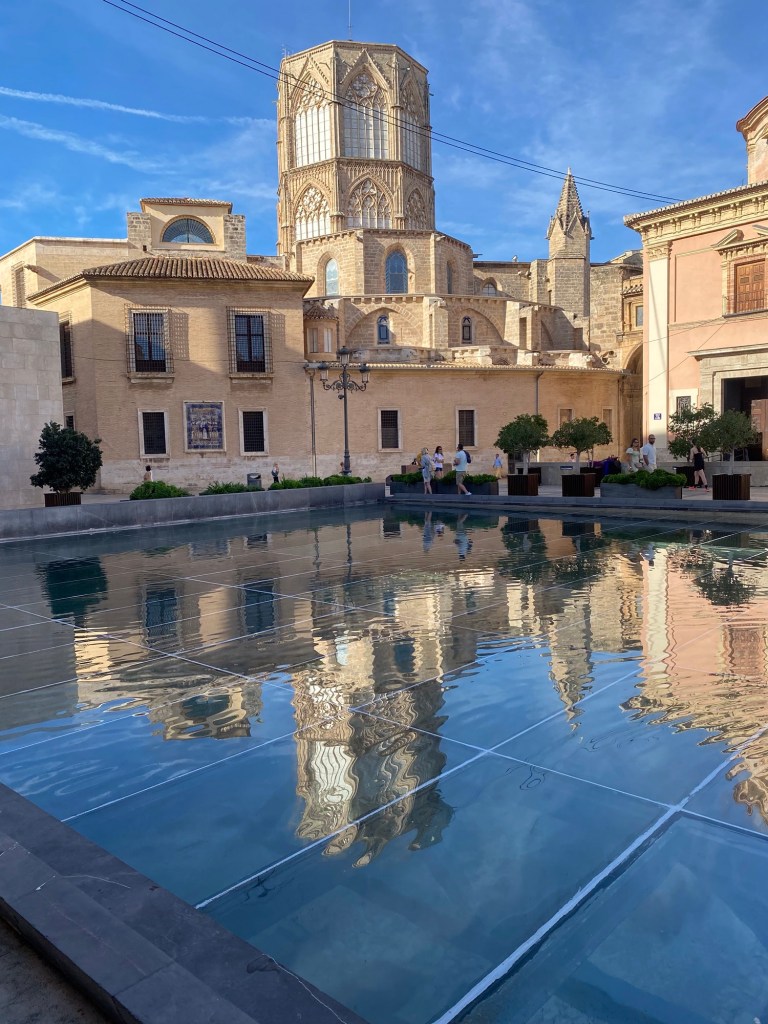
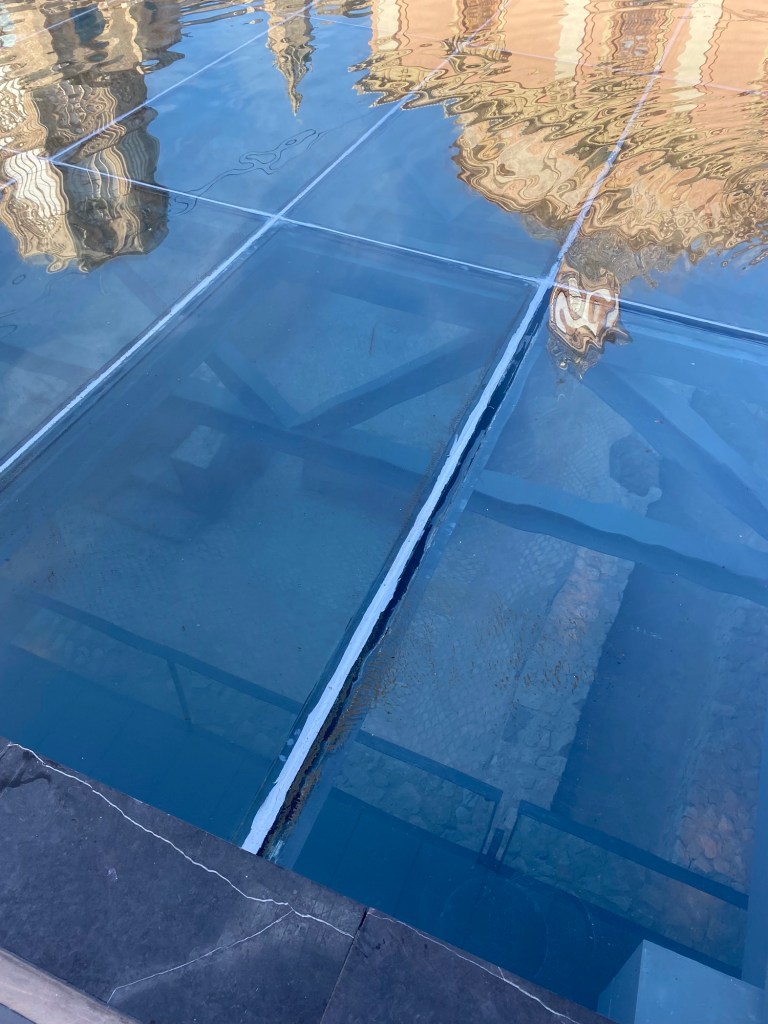
Beneath a square  through a reflecting pool you can just make out the Roman, Visigothic and Islamic ruins. 

The Roman ruins through the reflecting pool.

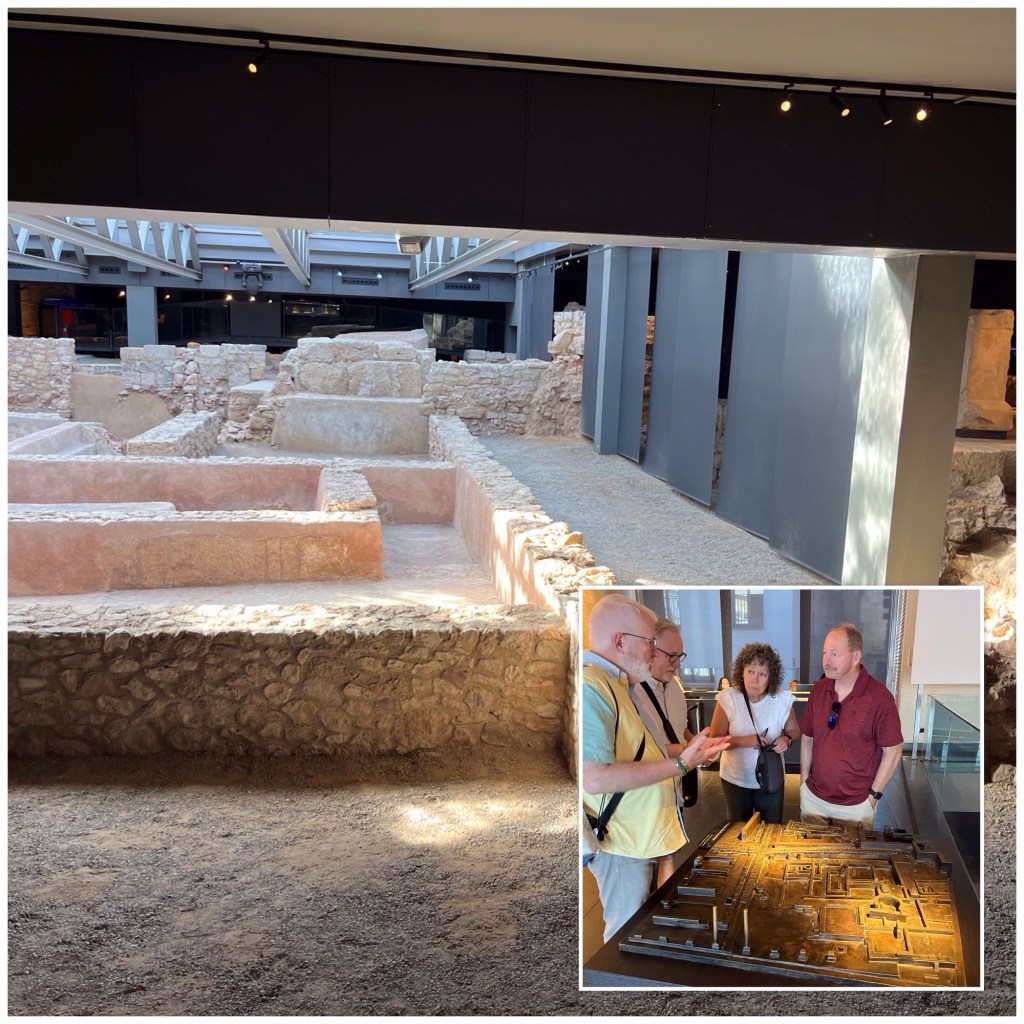
Once down the stairs inside the museum, you can see the remains of the baths, forum and city life on what was once an island in the Rio Turia.  Fascinating glimpse into the city’s ancient past and a reminder of how extensive the Roman world was.

Roman ruins and a scale model of what has been excavated

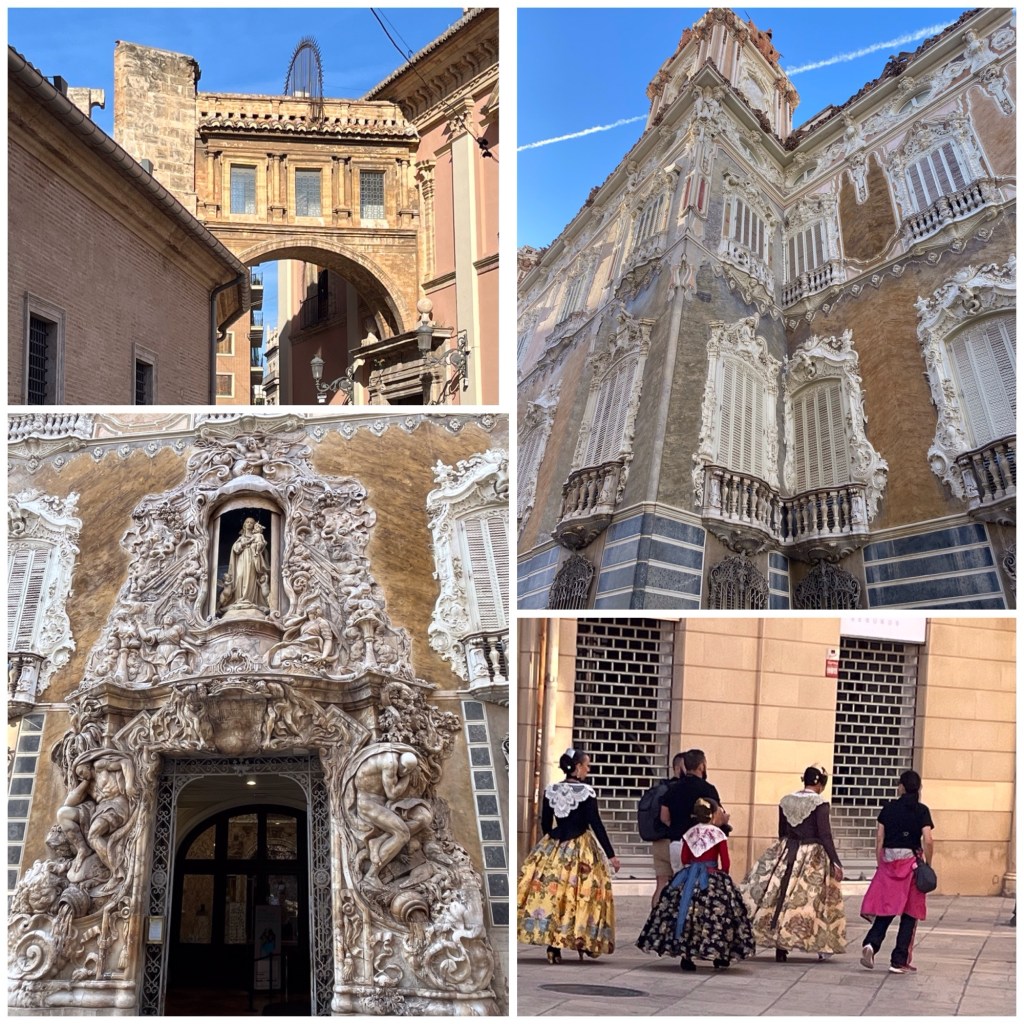
From there we hit to top medieval  tourist sites –  at the Palace  of the Marquis of Aguas we laughed at the over-the- top baroque decorations, including a statue of the Samari on the top of building, the grand Cathedral with the “real” Holy Grail, Plaza de La Virgen and so much more.

Baroque Rococo palace the scenes around the historic center of Valencia

The biggest oh’s and ah’s were probably reserved for the Silk Market, a UNESCO World Heritage site.  Beautiful twisting columns, originally painted to look like palms beneath a blue sky (you get mere glimpses of the colors today) and the second floor of the Consulado Del Mar where the merchants’ court sat beneath a fifteenth century carved ceiling moved into the structure after it was constructed. And the gargoyles!

Silk Market

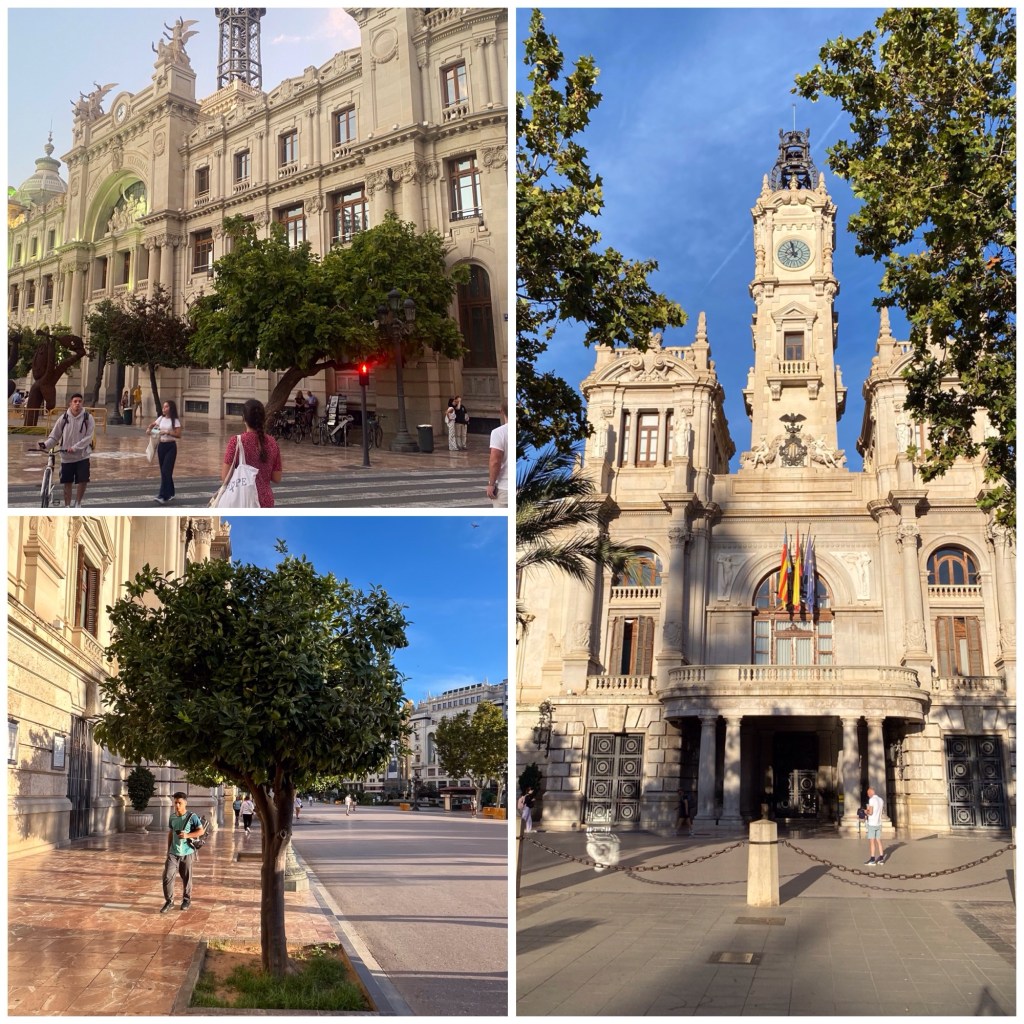
We ended our tour back where most start, between the city hall and the post office and telegraph building.

Post and Telegraph build, city hall and an ubiquitous sour orange tree planted through out the city

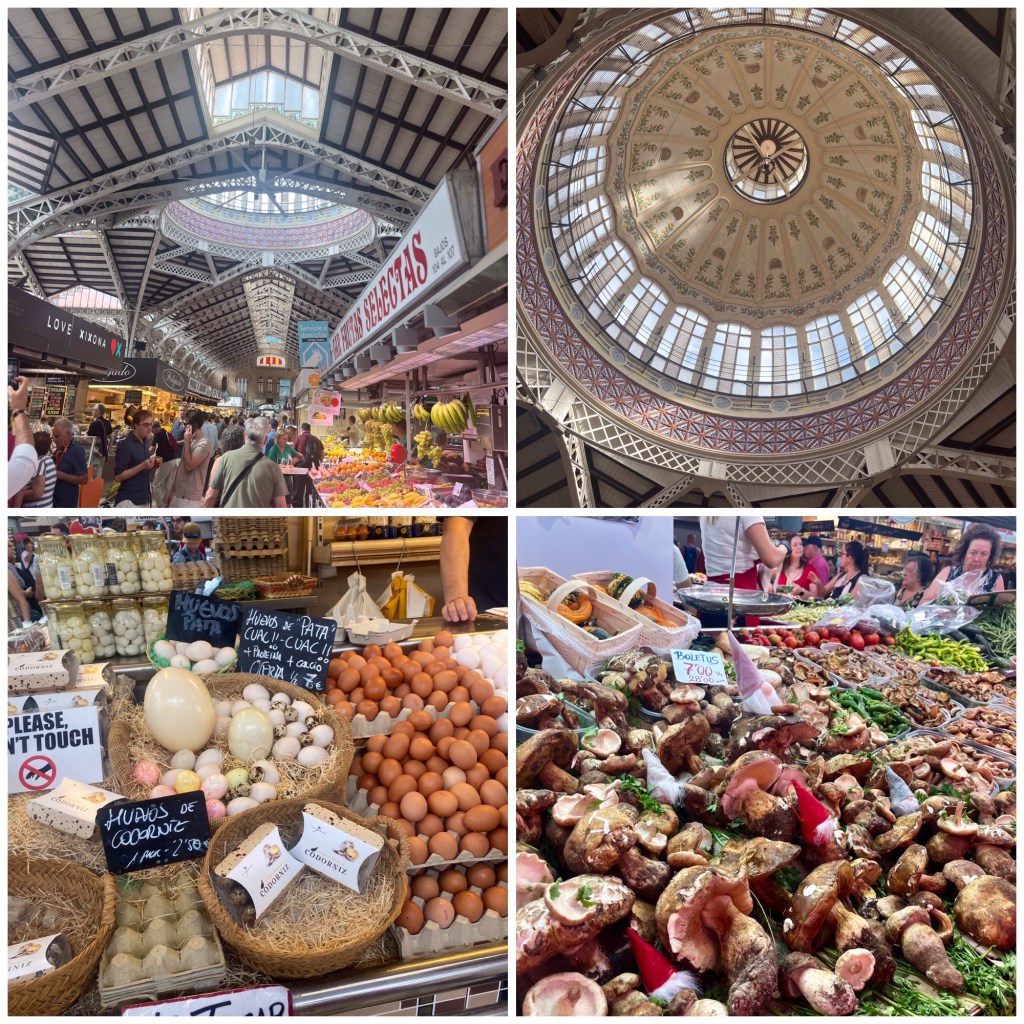
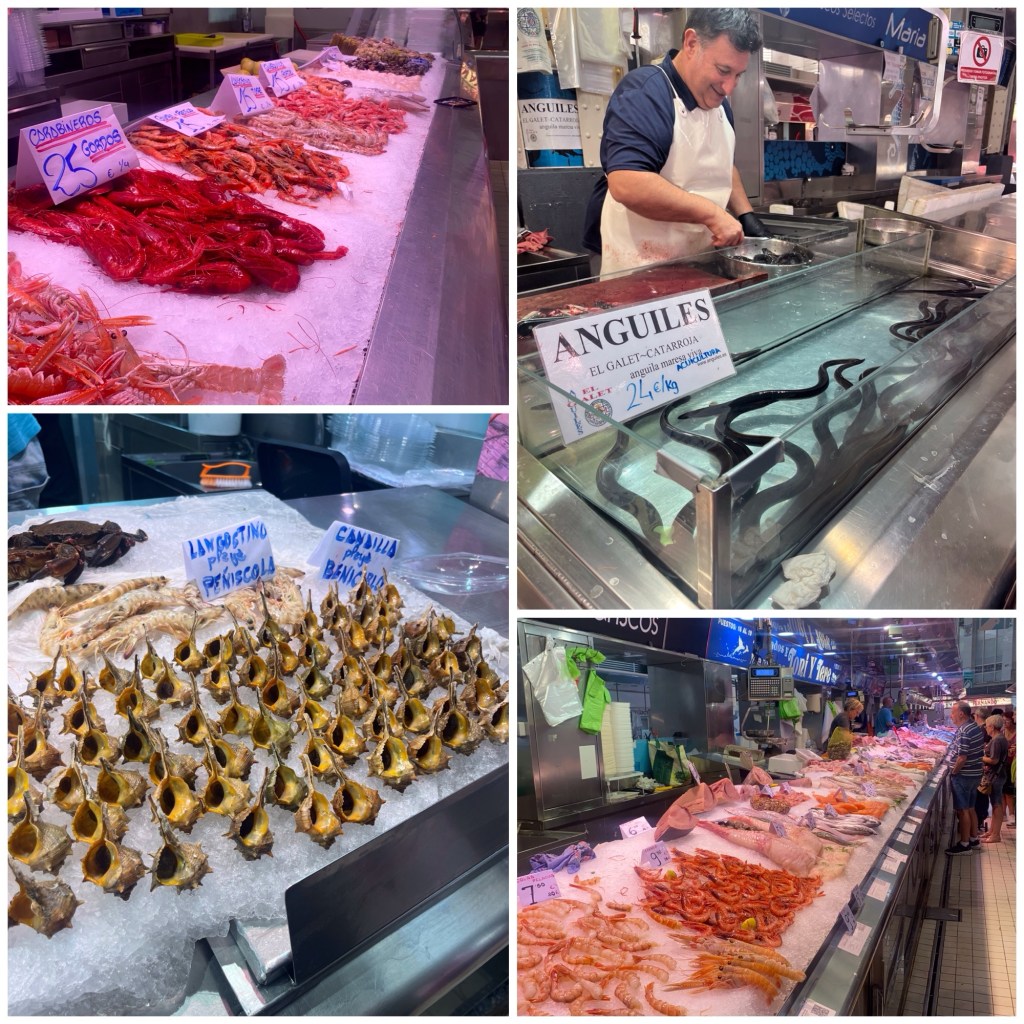
We skipped the Central Market — a not to be missed site — as we had seen it the day before.  The largest covered market in Europe—over a 1,000 stalls. Foodies that we are, it was almost our first stop in Valencia and worth every crowded moment we spent among the tourists and the locals doing their shopping. 

Central Market

And while we mainly purchased cheeses and cured meats for snacking, the vegetables, fruits and fish made us wish we had time to cook a couple of dinners.

And in true Valencian style, we ended city tour with a three hour lunch with our friends.  More good food, more good wine and more good laughs as we sat and enjoyed the company of these old and new friends.  Quite an introduction to the city!    

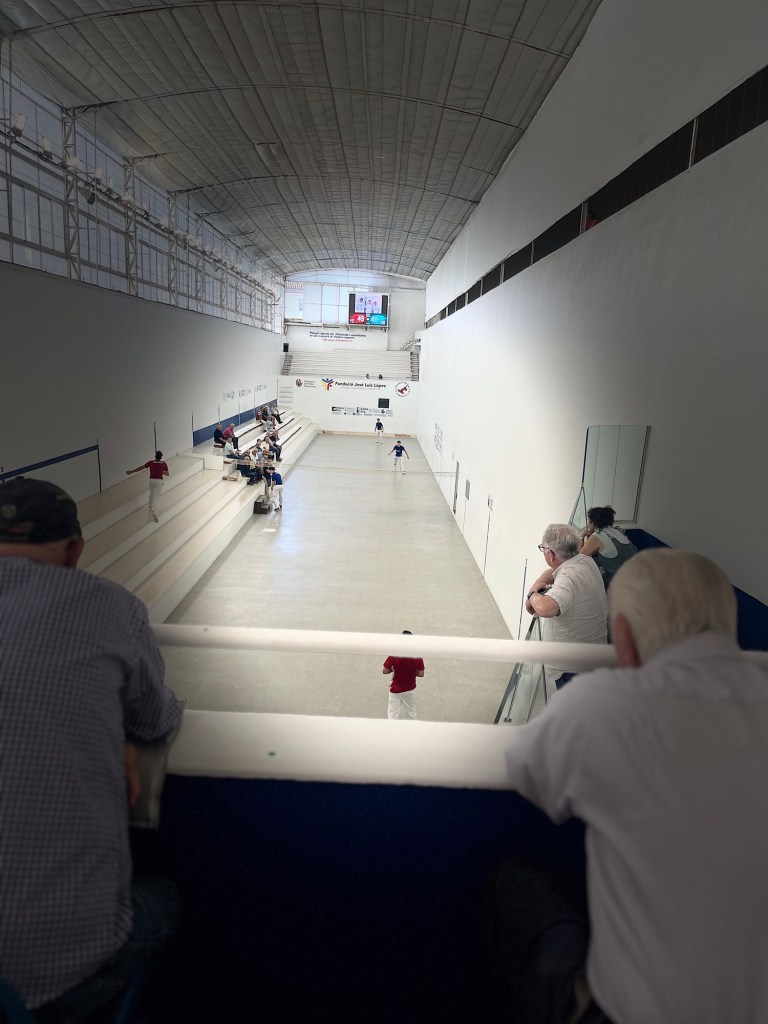
We managed to squeeze in a few other special moments in Valencia. Just happened our temporary home was right next door to a restaurant recommended by our host and we discovered attached to the restaurant was a Pelayo court—a game that is a cross between tennis and handball. We bought tickets for an amateur match. The mother of one of the players explained the game to us — the scoring was like tennis, but the rules were wildly different. Every surface of the court was playable, including any spectator who got in the way of the ball, as long as the ball fell back onto the floor of the court. Wild!

 Historically, the game had been played in the streets of Valencia and still retained a bit of the rough and tumble feel of a street game. With mom beside us, we cheered on her son to victory.

Our three short days were not enough to fully enjoy Valencia! We are beginning to understand why our new and old friends have chosen to make this place their new home. We will be back for a much longer stay.