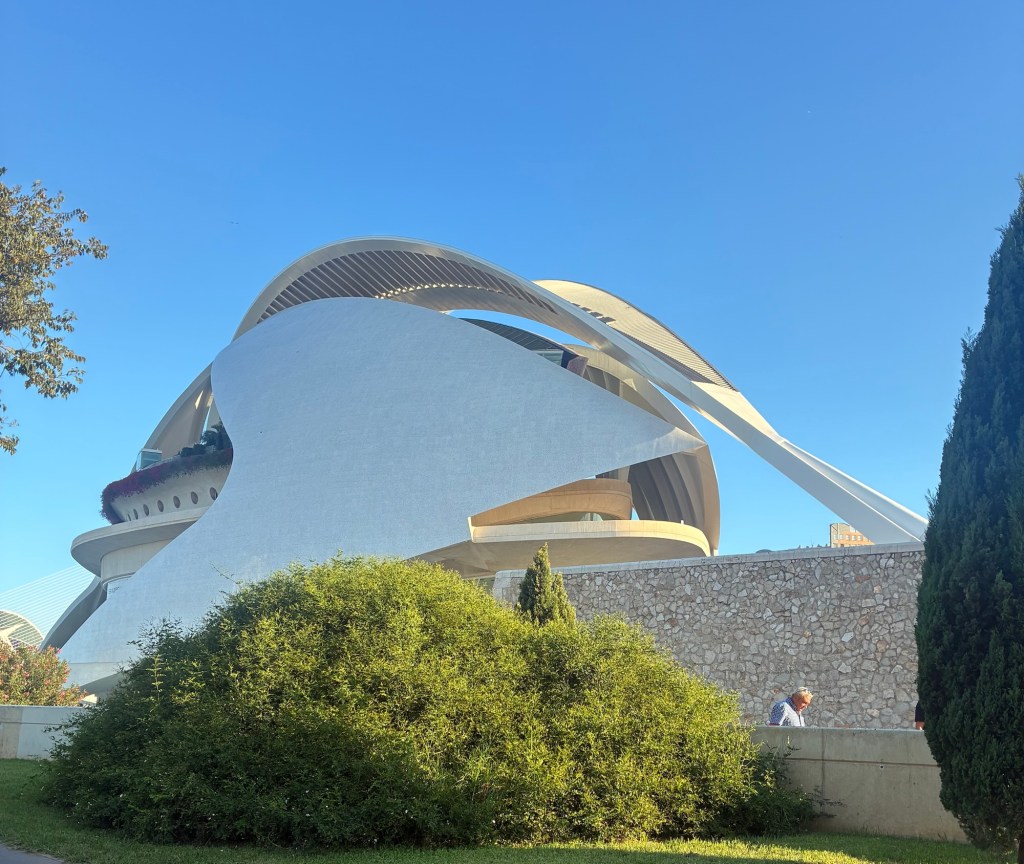
OK. We’ve seen some weirdo versions of operas—“Carmen” with characters in 30’s Nazi outfits riding motorcycles, “Aida” where the triumphal march consisted of dozens trays of what looked like Oscars paraded around the stage, modern clothes and settings in Mozart operas, etc. We understand the desire to make the old standards fresh and relevant.
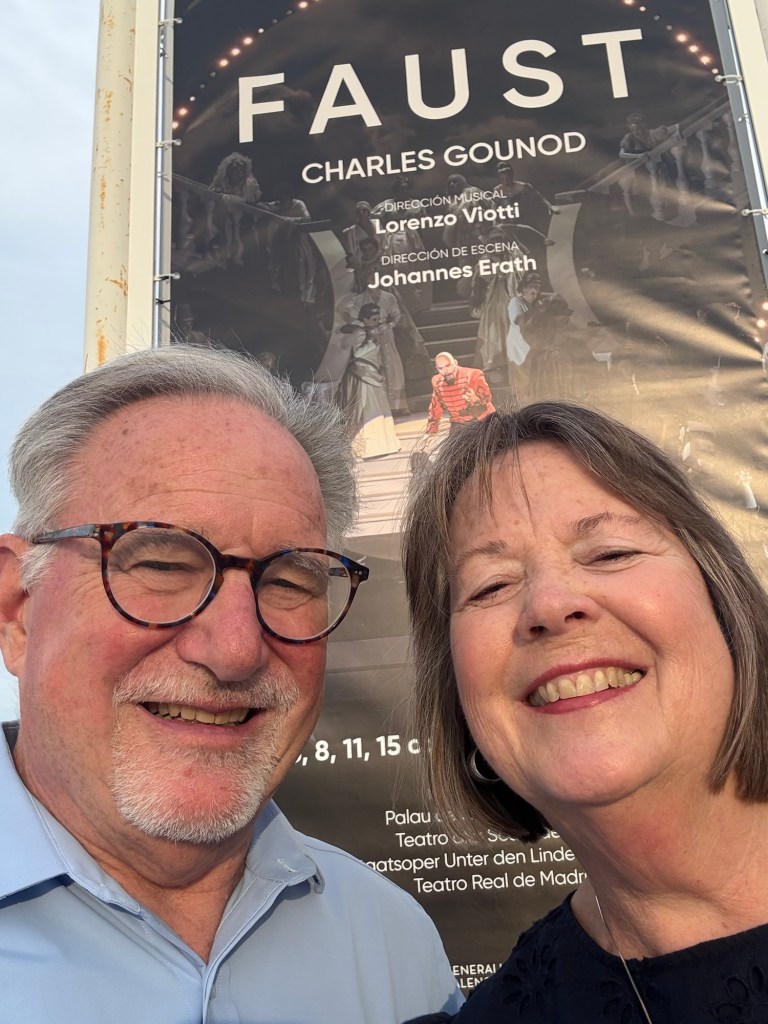
But this version of “Faust” at the Valenica Opera House takes the cake. This “Faust”—the opera where Faust makes a pact with devil for youth and love — was absolutely bizarre. Beyond bizarre.
The set was largely made up of various circles ringed with flashing lights, images projected almost like holograms from time to time, boxes that moved from back of the stage. Lots of smoke machines, too. The colors were black and gray, mostly subdued with a few brightly lit objects like a staircase that appeared and disappeared. Some of the effects were actually pretty amazing but we’re not sure how they tied into the opera.
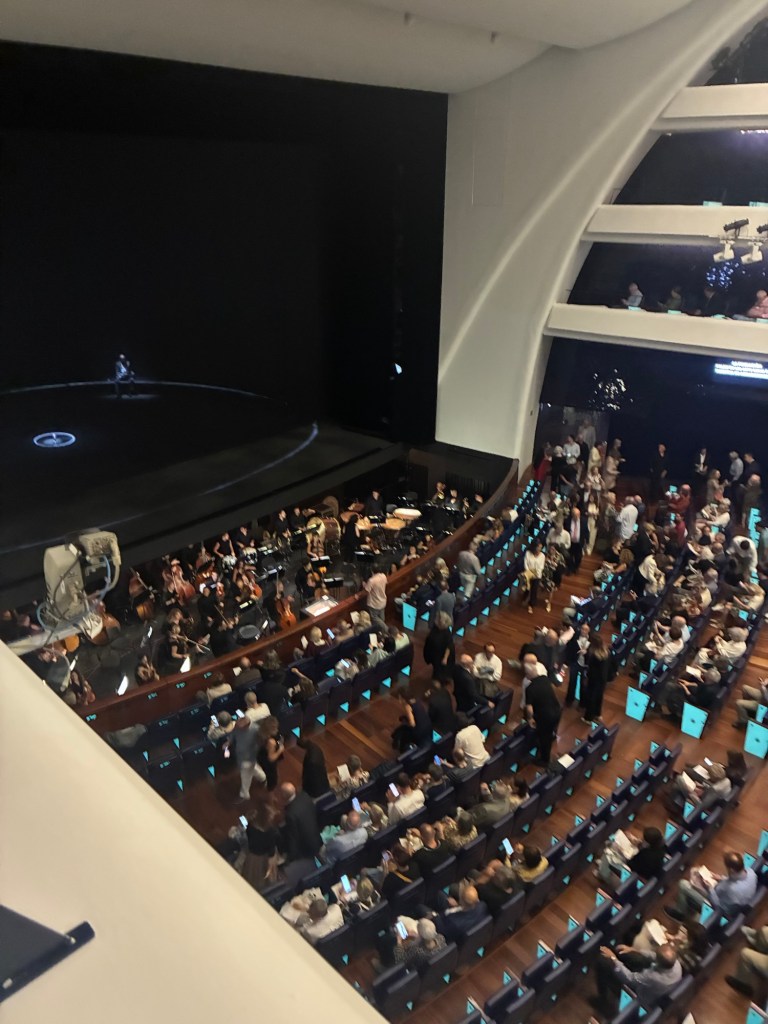
Costuming, well, impossible to say what the “era” was. There was no “era”. Maybe lots of eras? A timeless setting? Perhaps. Lots of folks in whiteish outfits of various eras. Several of the female characters including Marguerite, the heroine, were dressed in white tutus and ballet slippers or wedding veils. Faust wore a modified zoot suite most of the time. Marte, the heroine’s neighbor and friend, appeared in what looked like a nun’s habit. Valentine, Marguerite’s brother, was in a white clown outfit complete with turned up slippers and a sequined cone shaped hat.

The fair scene, Act II, took it to a new level of bizarre. Sequined people on stilts, circus barker outfits, lots of acrobats in gaudy tights somersaulting and back flipping around the stage. There was a large wheel like those used in knife throwing carnival acts with doppelgänger of the heroine strapped to it. From time to time, they spun it so she was upside down with her underwear showing under the tutu.
Then there were the flying tutu ladies suspended on trapezes in a later scene. And in another segment, giant black top hats appeared that covered all but the feet of the performers as they danced around. Why? Not clear. In the debauchery scene, suddenly three men in US navy outfits showed up to seduce the heroine. Later they appeared with fake muscles tops to make them look sexier, we guess. In the last act, Mephistopheles is dressed in a surgeon’s gown complete with bloody rubber gloves as a surgical gurney is rolled on to the stage with body on it.
If the costuming and sets weren’t enough, there was the over the top interpretation. Lots of apparently meaningful symbolism that was completely lost on us and maybe most of the audience. Maybe if we had program notes, or attended a pre-performance lecture, we might have had a better understanding. Or not. Of course, then there was the language barrier. A Valencian production in a Spanish country of a French opera based on German play. What possibly could get lost in translation?
One character appeared on stage throughout the opera (he was actually sitting on stage before the opera started and the house lights dimmed)— but he never sang. He sat next to Faust during the opening scene. Why? Who knows. Who was he? Who knows? In later scenes he died several times and literally lay there on the stage floor for long patches with the performers singing their arias while stepping over him or around him. He got a big applause at the curtain call.
And then there were the doppelgängers. The heroine and her brother, Valentine, had several performers dressed in exactly the same costumes who followed them around the stage—they weren’t singers—but you never knew who was actually singing. Sometimes they mouthed the arias with the singers. Why? Who knows. But we’re sure it’s meaningful.
And if this all wasn’t weird enough—the coup de grâce! At the end of Act IV, the building started shaking. There were huge, loud rumblings. We thought it was lightning storm. There was no scheduled intermission but the house lights went on and the orchestra started to leave. A terrorist attack? People pushed through the closed house doors to get out. What did they know that we didn’t?
It was a huge, monster fireworks display right next to the Opera House. Enormous explosions. The Valencians are experts in fireworks. It is, after all, the home the Fallas festival where the town goes insane with fire and fireworks. The audience stood on the balconies and watched. Some went outside. Gunpowder smoke surrounded the opera house. Turns out it’s the city’s Oct 9 celebration, Valencian Independence Day. The fireworks were scheduled to go off at midnight but because of the predicted bad weather, officials moved it up to ten. There was never any announcement. After about 20 minutes of teeth rattling explosions, the ushers shooed us back in to finish the opera. There was a faint aroma of sulpher in the auditorium and visible smoke in the spotlights projecting onto the stage. Seemed very appropriate for the last scene with Faust going off to hell.
If you could get by all the craziness, we have to say the singing and music were absolutely superb. The singers top rate. The orchestra world class. The acoustics in the Opera House are out of this world. And the building itself is an architectural masterpiece. Worth the price of admission on its own. Our seats had built in screens where you could follow the libretto in what ever language you chose. And tickets prices were half of what we might pay in our home town of Seattle. The crowd reflected that. Not quite the same as the wealthy gray haired set that dominate our local opera.
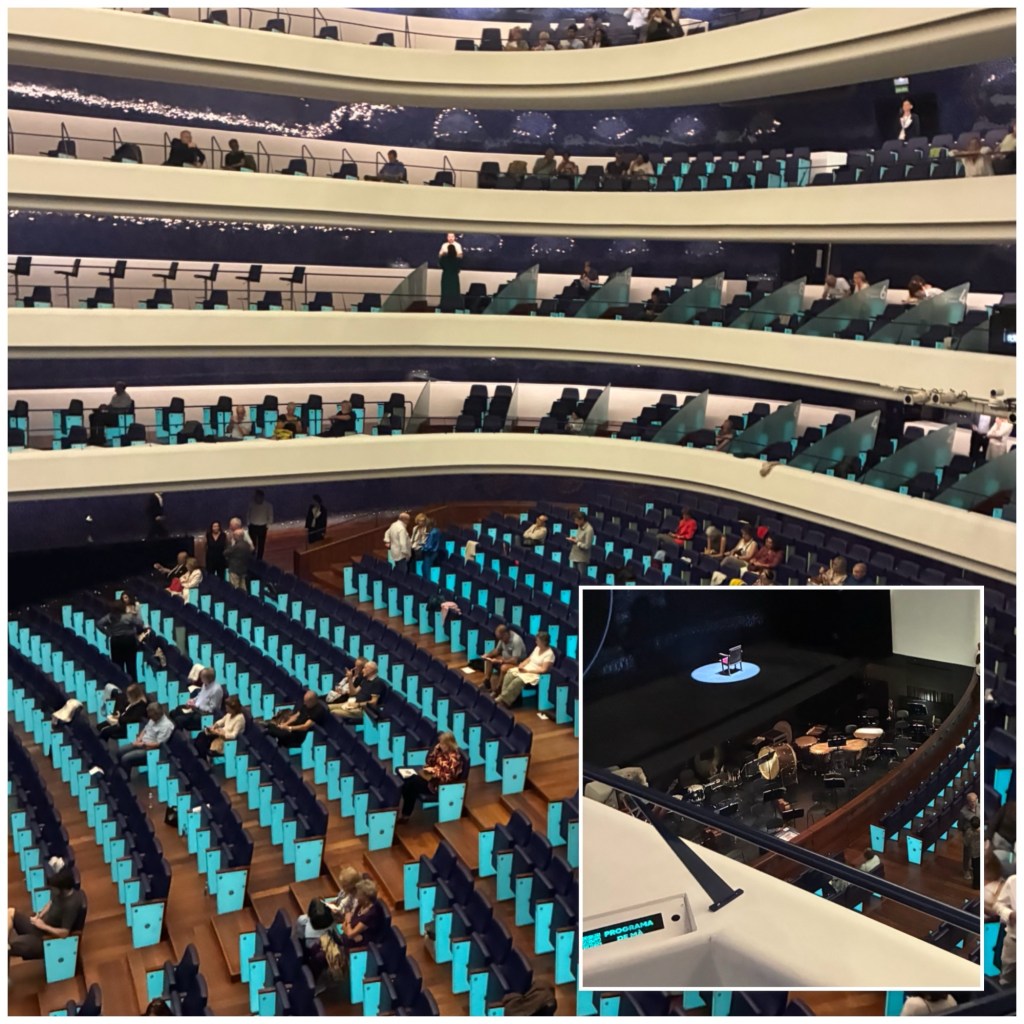
Did we enjoy the opera? Maybe not so much as a performance. But as an experience? Yes! Absolutely, yes!
 Chasing the Good Life