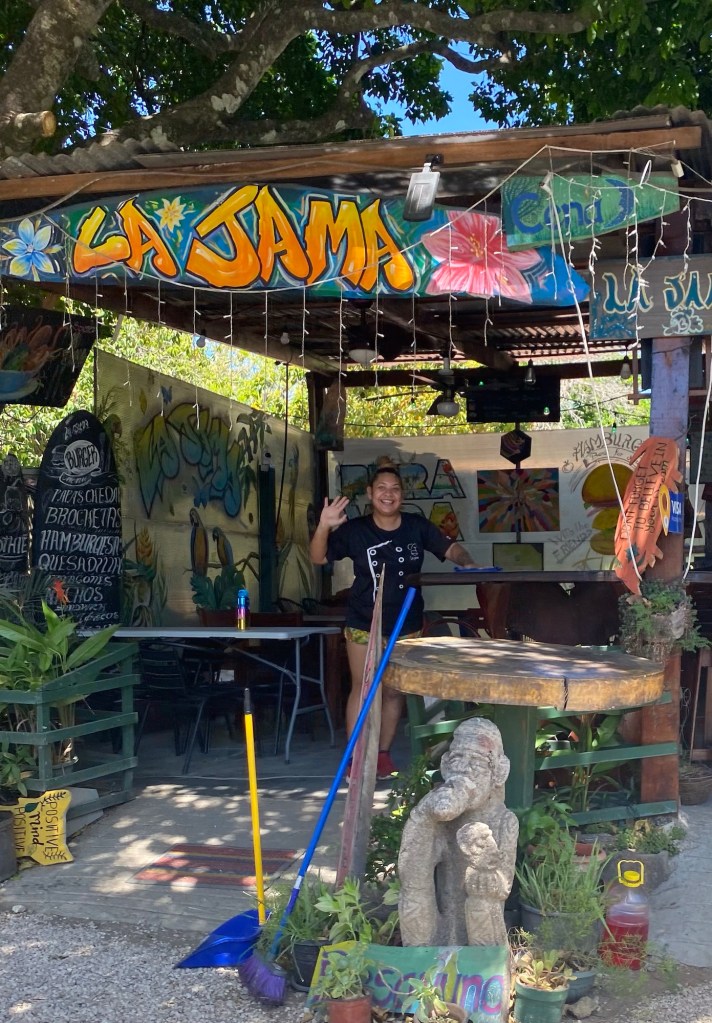
Monkey Wars

So, so cute!  Really, who couldn’t love monkeys?

They are definitely part of the Costa Rican nature experience.  Every other time we’ve been to Costa Rica we’ve encountered them.  In nature preserves and national parks, next to our rentals, near restaurants, hanging on the power lines.  Even watched them from an infinity pool on the Osa peninsula.   They are everywhere. We’ve seen three of the four species in the country—howlers, white-faced, and spiders. The only one we haven’t seen is the very rare squirrel monkey.

But this trip we’ve only had a fleeting glimpse of them — very disappointing.  In fact, one of our travel companions, Denise, an animal lover, was quite upset and worried that she would get back home never having seen a monkey.  And we were coming to the end of our visit. It was our last four days and we were now up near Monteverde in the Cloud Forest. Desperation time!
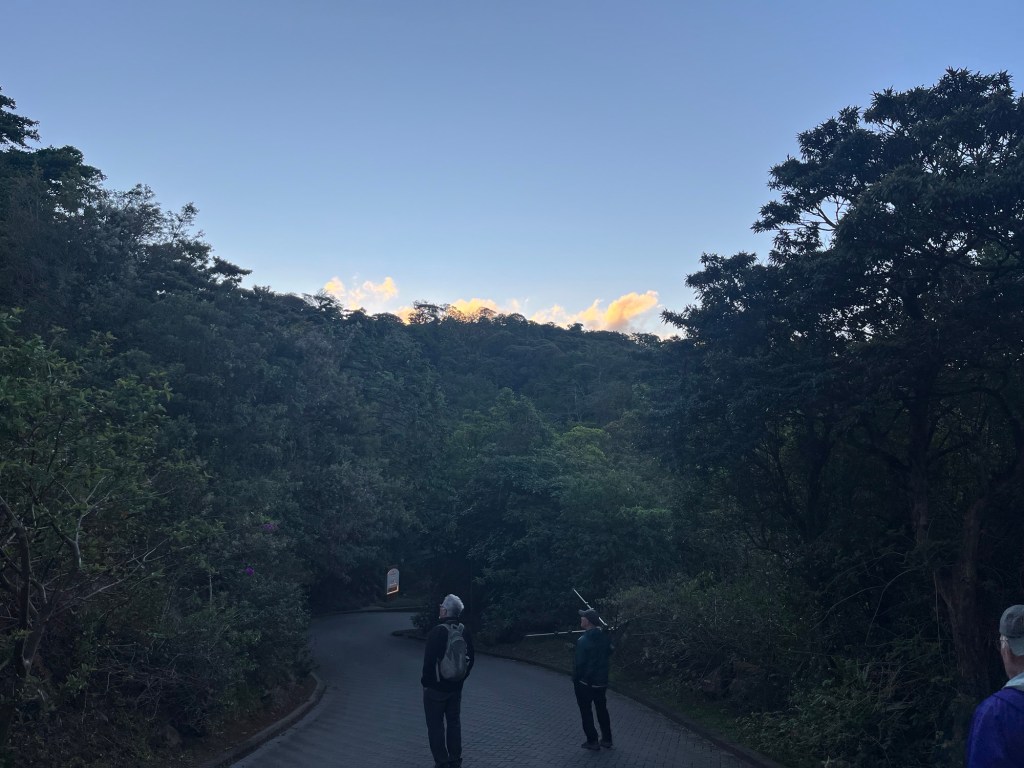
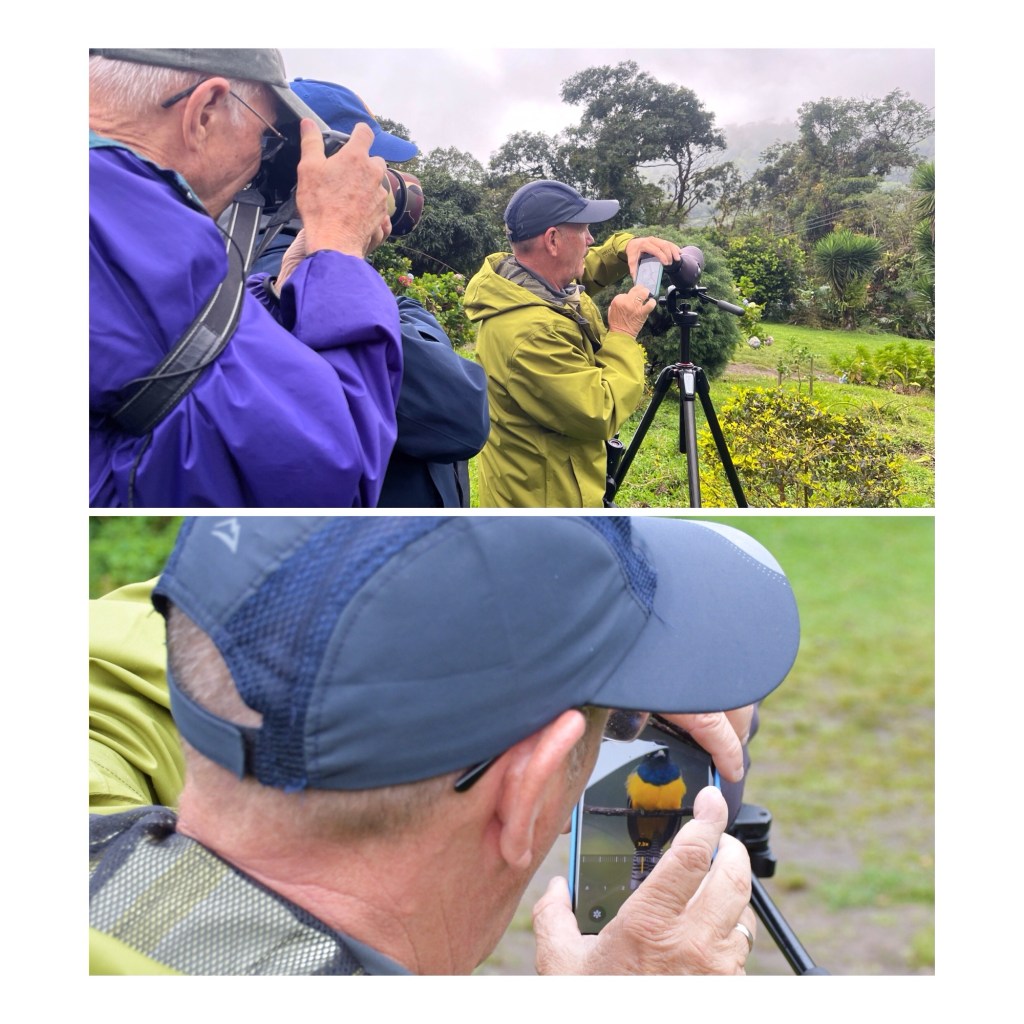
Early morning birding near Curi-Concha Reserve, but no monkeys

We had an easy solution.  We’d been told by our favorite birding guide, Adrian Mendez, [adrianmendez@hotmail.com] if you want to see the white-faced monkeys, go to Stella’s, a local coffee shop. You’ll definitely see them there busily trying to steal food from unsuspecting patrons eating outside.  It reminded us of our first encounter years ago when they tried to grab our backpacks in Manual Antonio National Park. The park now bans tourists from bringing in any food because the monkeys got so used to human food they couldn’t feed themselves and died off during Covid when the park was closed for two years.  So we were all set to head to Stella’s for a lunch for our up close and personal encounter with monkeys.

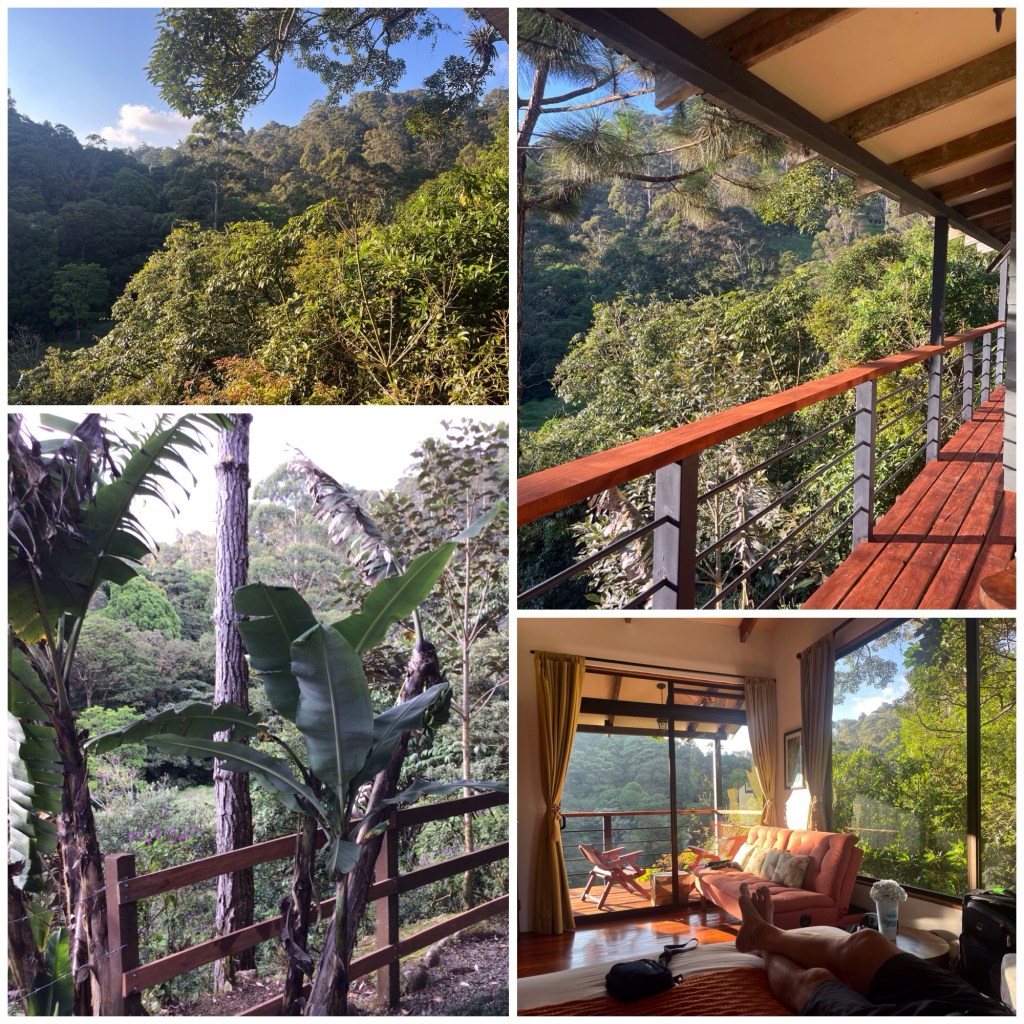
But as luck would have it, we didn’t have to leave our vacation rental at all. We had booked a lovely rental outside of Santa Elena.  Beautiful serene setting, lovely views of trees complete with a stream just below our house, and surrounded by the Cloud Forest jungle.  We could sit on our wrap around  balcony and bird watch from armchairs. 
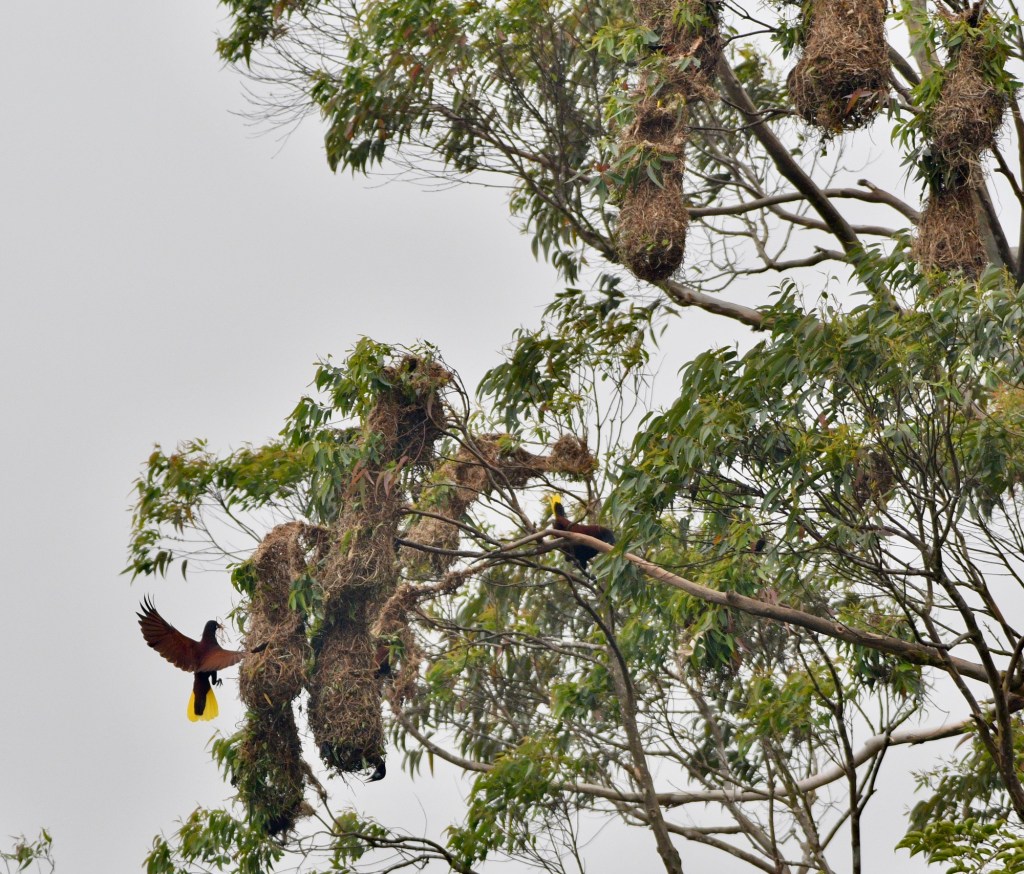
Nearby there was a large colony of Montezuma oropendolas. It is a spectacularly beautiful bird with a very unpleasant, noisy call.  The birds build large hanging nests high up trees—an amazing feat of engineering given the high winds in this region. 
Peter was outside watching the oropendolas when he yelled “Monkeys!” “Denise, come quick!”  We all grabbed our cameras and phones and ran outside.  From the yard we could see several white-faced monkeys, snapping off the bromeliads in the trees and eating the juicy base of each plant.  Cute.  So cute. 

We keep moving around to get a better look—first outside the house under the trees and then on to the balcony as the monkeys got closer and closer. 

Now we realized there weren’t just several monkeys, but a lot of monkeys. 
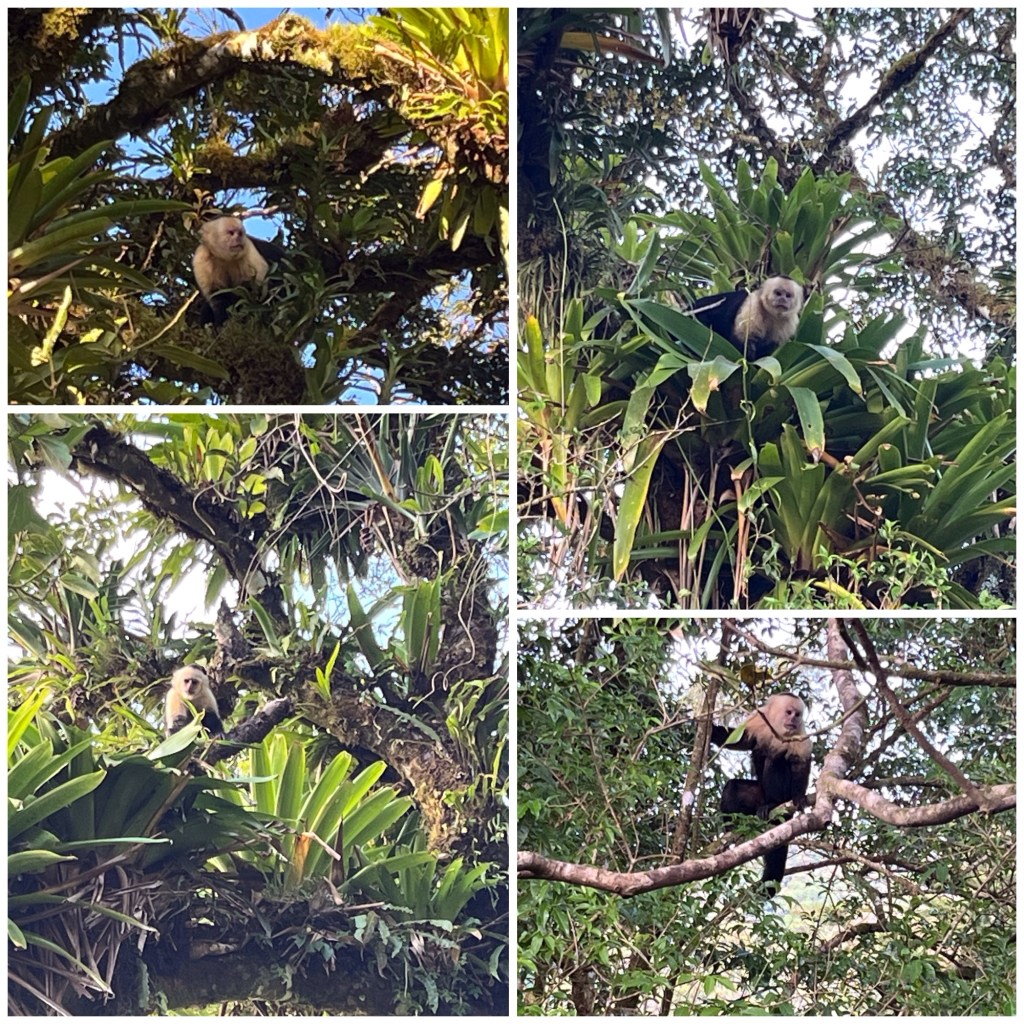
They rip off the bromeliads and eat the base of each plant

We were happily snapping photos and taking videos when we saw a large male getting closer and closer.  He was focused on us.  Maybe even glaring at us.  We just kept taking pictures of the cute ones.
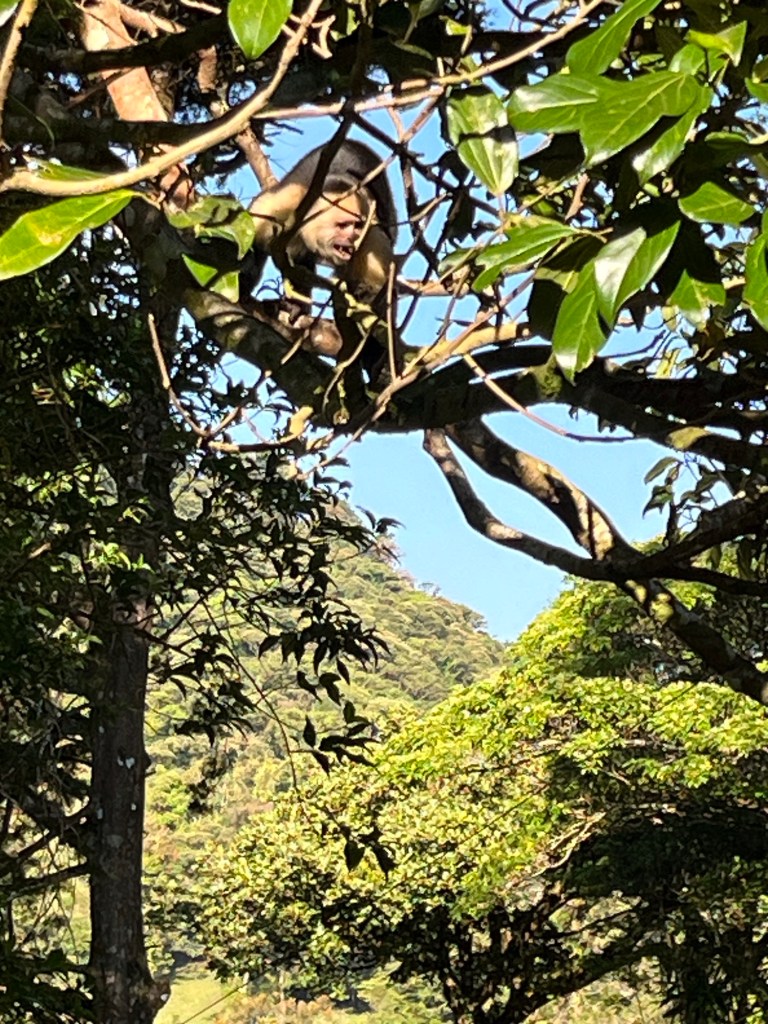
And he kept moving closer until he was on a branch just ten feet or so from our balcony viewing point.  We continued taking pictures. Obviously, we missed his message.  The fangs came out, the snarling began.  He started charging up and down the branch very excitedly now only a few feet from us. 
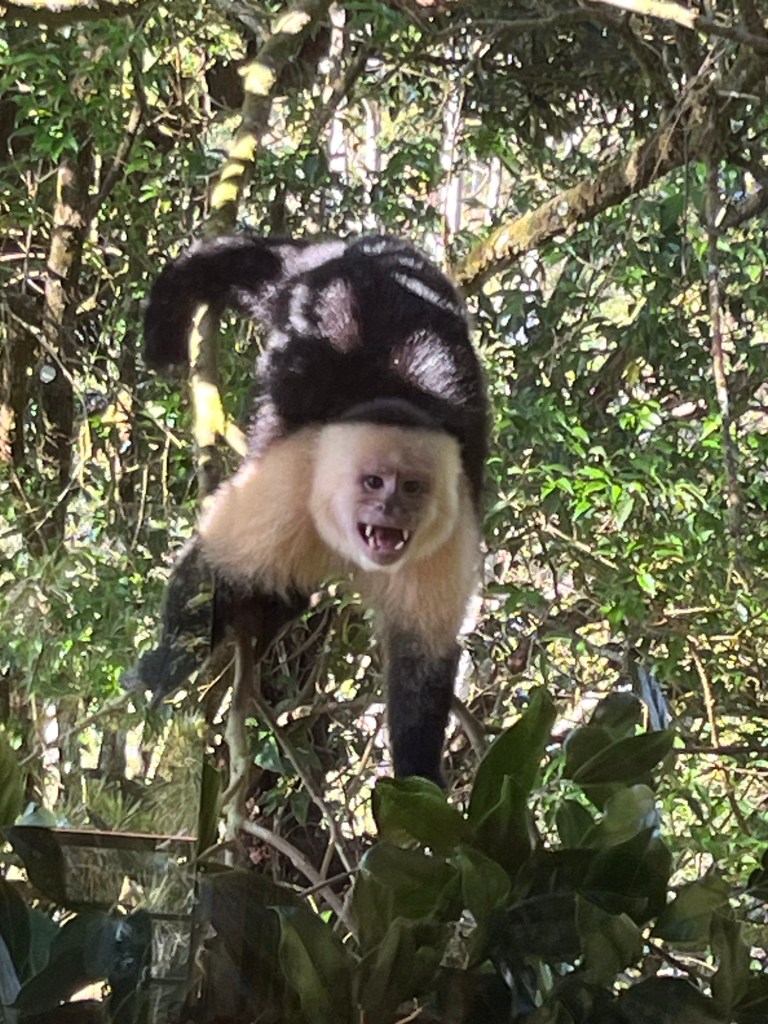
Wisely, we quickly retreated inside, closed and locked the sliding glass door, and watched from a  large bedroom window. He glared at us through the window, and then for emphasis he snapped a large branch off and threw to the ground. 
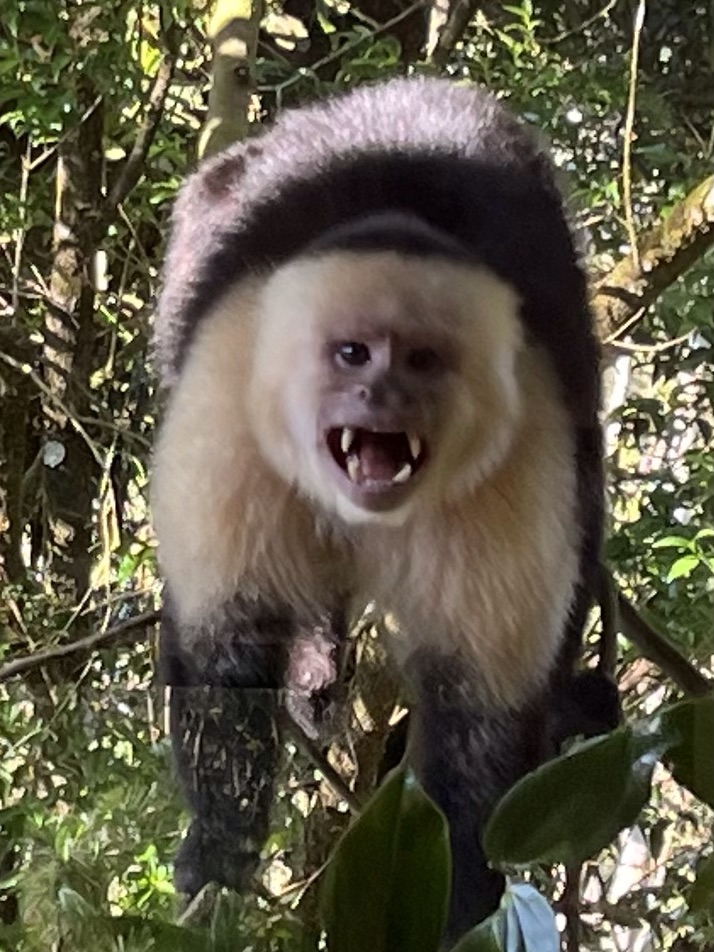
But as a final parting gesture, he turned around, pointed his ass at us, and shit.  Yes, we did indeed get the message.  

About a half an hour later, we were in the kitchen retelling the story when he showed up again outside the sliding glass door, snarling at us. He broke another branch off an ornamental tree. And then with special emphasis grabbed the lid off the recycle bin and tossed to the ground looking straight at us! So there! Just in case we hadn’t received the earlier message. We locked the kitchen sliding glass door, and every other door and window in the house. 
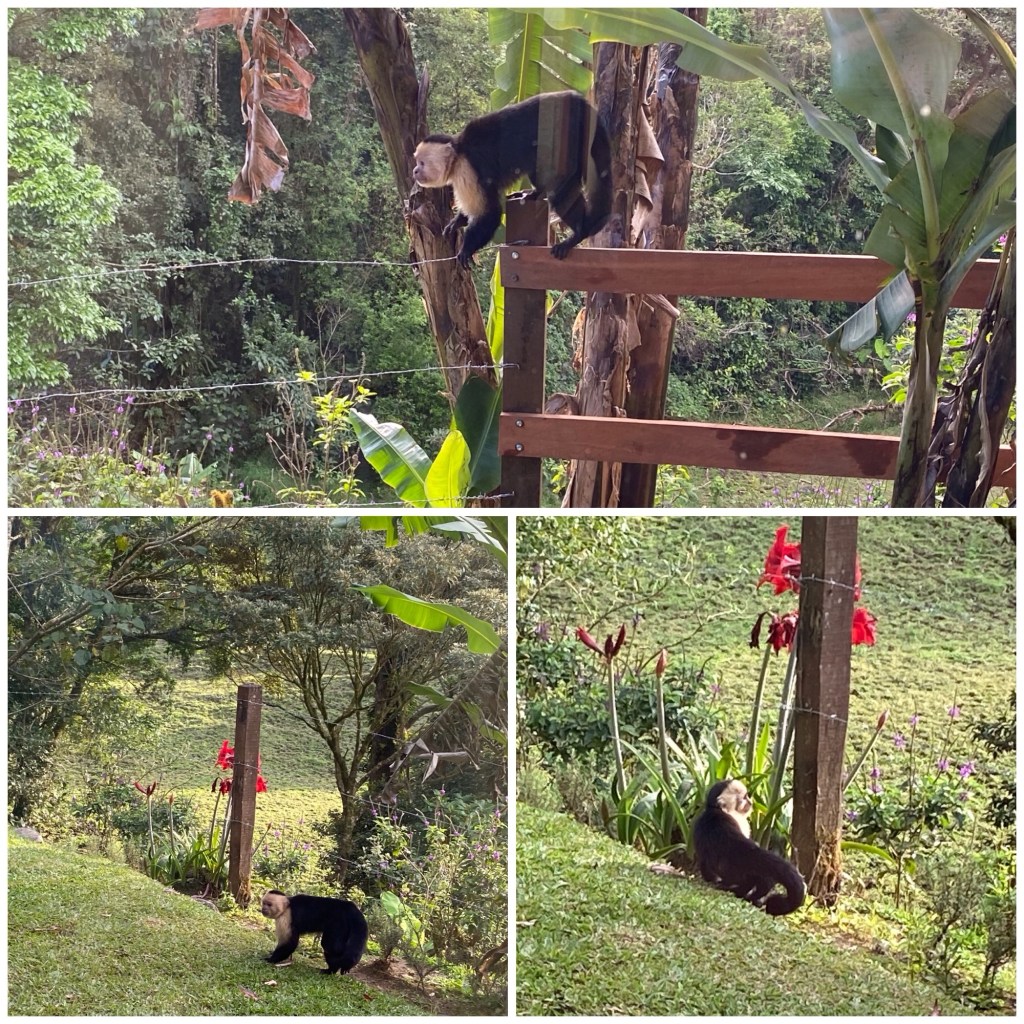
Sitting in the living room, we watched the whole troop march by, babies and all, as though they were patrolling the perimeter of their territory.

We worried. Could we make it to the car to go to dinner? As we left that evening we were startled to see a white faced monkey sitting by the car.  Was it him?  Waiting in ambush?  The monkey ran to the other side of the car. We drew straws to see who had to go out first.  

That night Denise didn’t sleep very well.  Every unidentified sound might be a monkey trying to break in.  

But she had seen her monkeys.  
Changes

Change is good, right?  Progress is important, right?   New is better, right?  

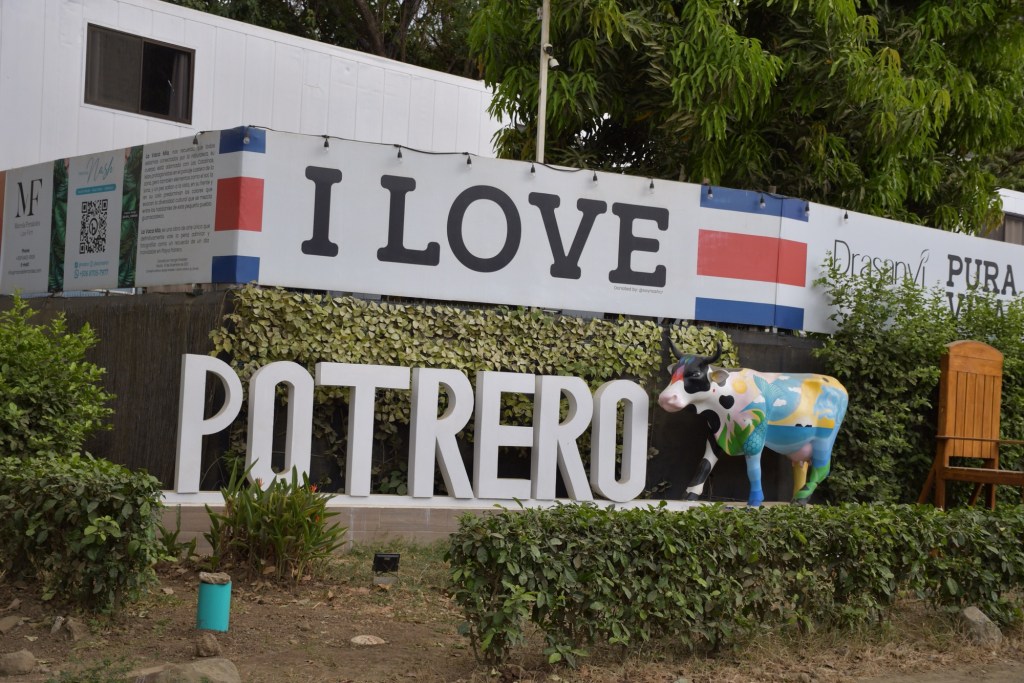
Coming back to our favorite corner of Costa Rica, Potrero and Playa Flamingo on the Nicoya Peninsula for the fifth time in eight years, we’re not so sure.  Maybe.  

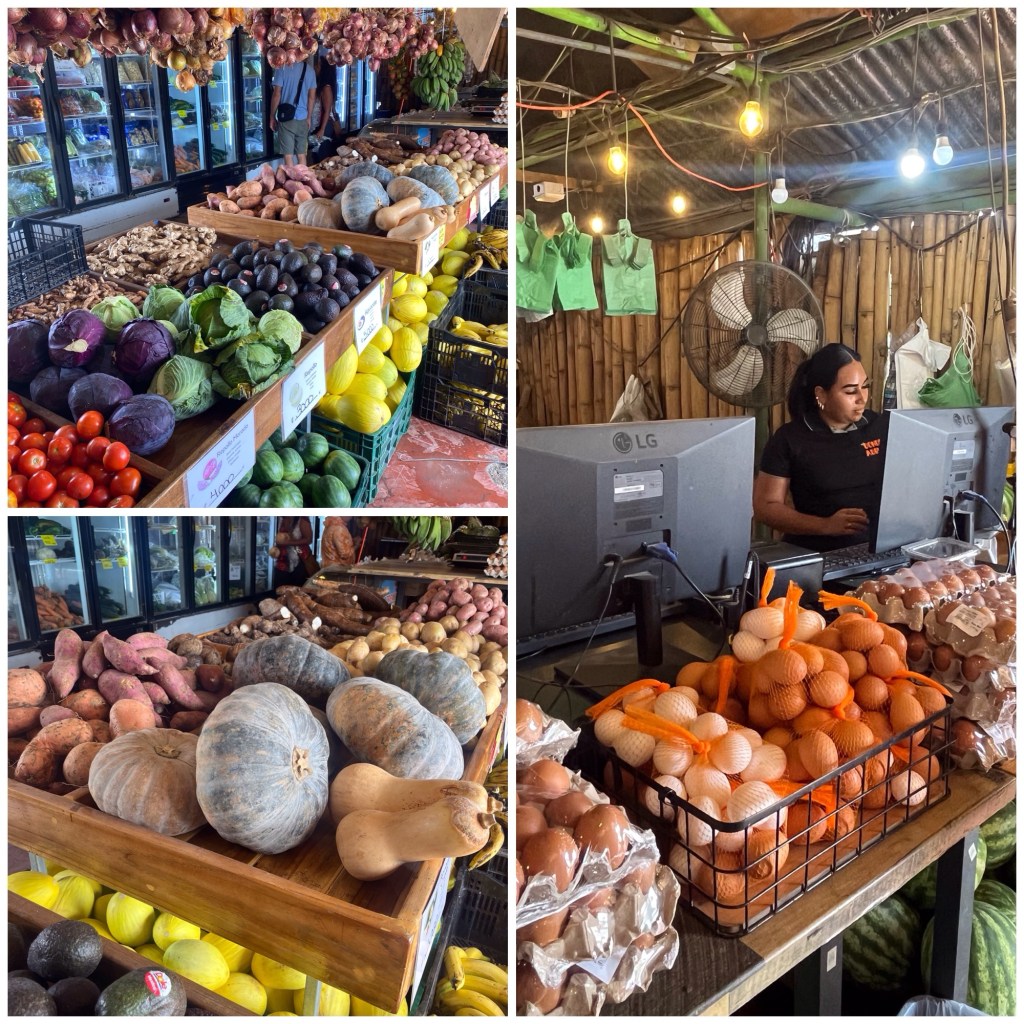
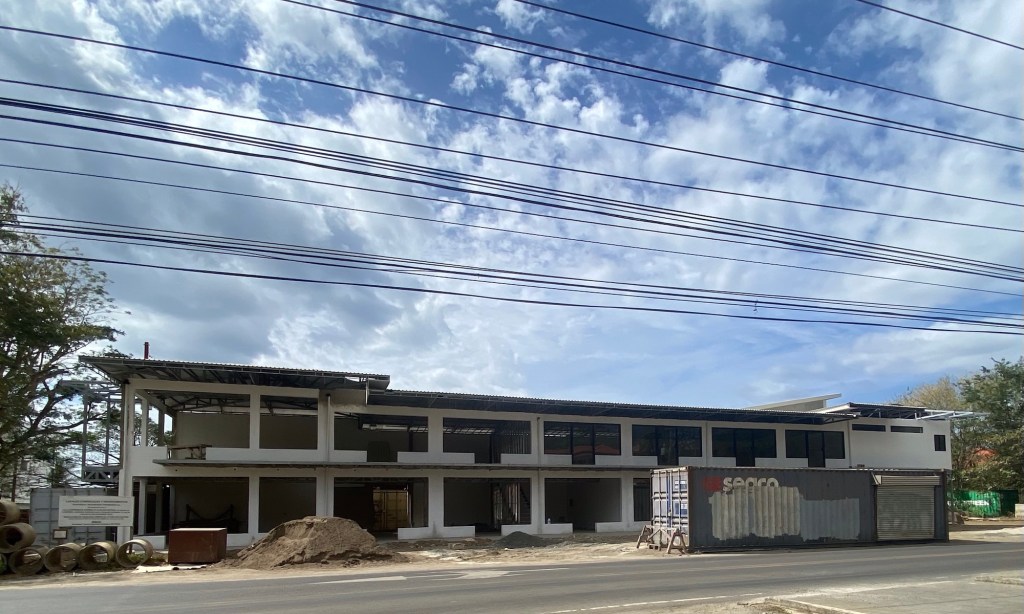
Gone are the two little funky stands where we bought our wonderful fresh fruits and vegetables.  One is being replaced by a modern office complex.  The other is permanently closed.  

Our favorite little fruit stand used to be here. 

Now we have to drive 20 minutes south to the closest produce stand.

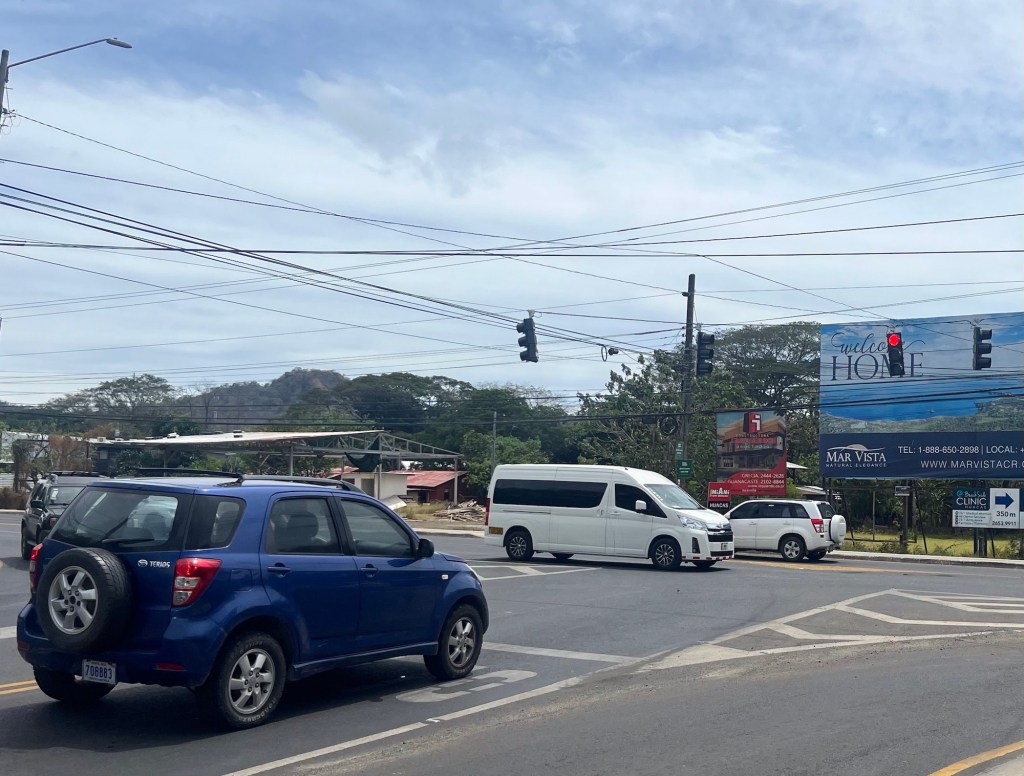
Why did the local fruit stands close? Why did several of the smaller soda restaurants we liked disappear?  Probably the land was too valuable for mom and pop businesses. New homes, office complexes, storage units, medical facilities, and a huge new gas station have sprung up in the last year.  We even have the first ever stop light in the region in nearby Huacas!  And God knows, with the increase in traffic that was one change that was really needed.  

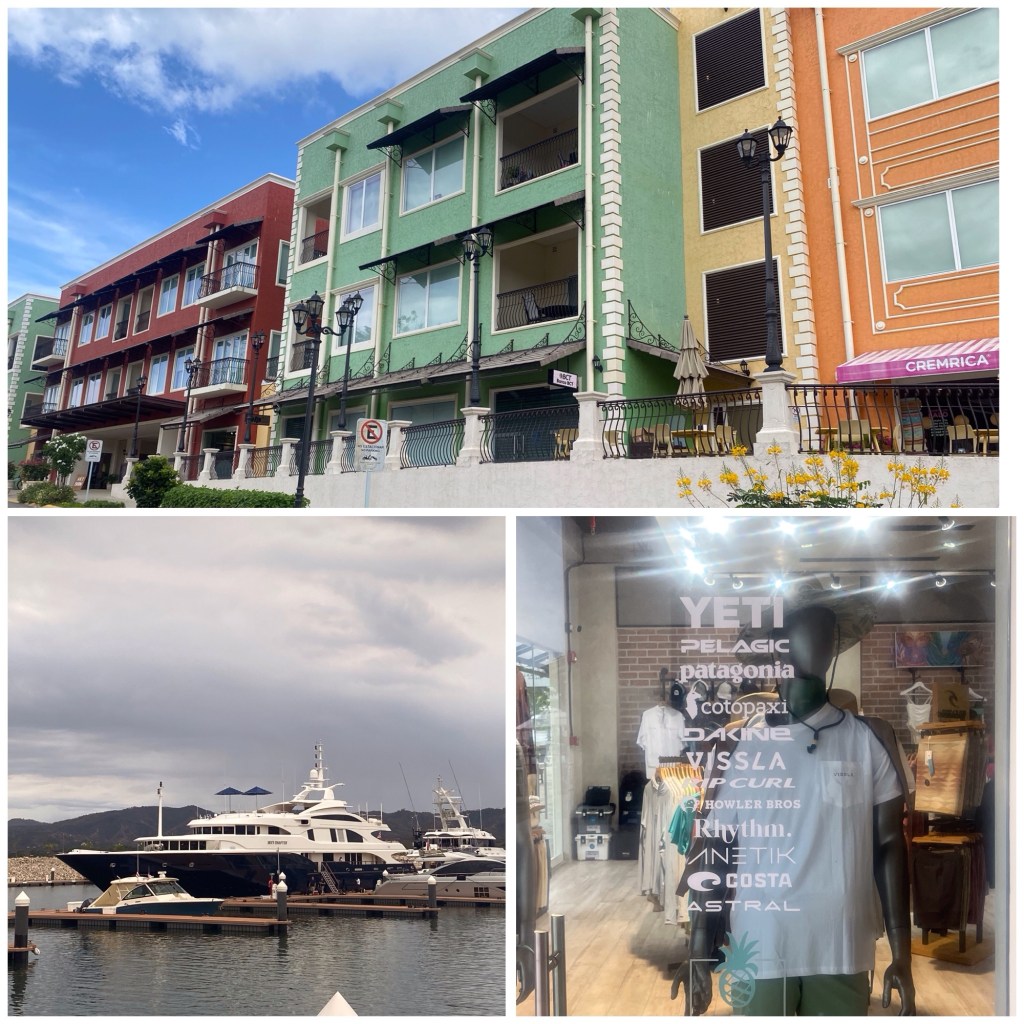
The very upscale Playa Flamingo Marina is finally open with an elegant collection of shops and restaurants, and, yes, a helicopter pad that seems quite busy ferrying in guests. 

The new Marina which will be doubled in size in a year or two with even more upscale products for tourists and the yacht crowd

When we first came eight years ago, the bay was filled with humble pangas and a few fishing charters—all moored on buoys.  Now there are a few mega yachts and dozens of smaller yachts in the new marina. The super mega yachts are too big for the marina and have to drop anchor in the bay and send their tenders in. We have seen a few of those lately, including Starbuck’s Howard Schultz’s 254 ft yacht Pi. But no worries, there are plans in the near future to provide super mega yacht moorage, double the size of the marina’s commercial space and add a 200 “key” hotel (not 200 rooms because apparently the each unit will have several rooms).
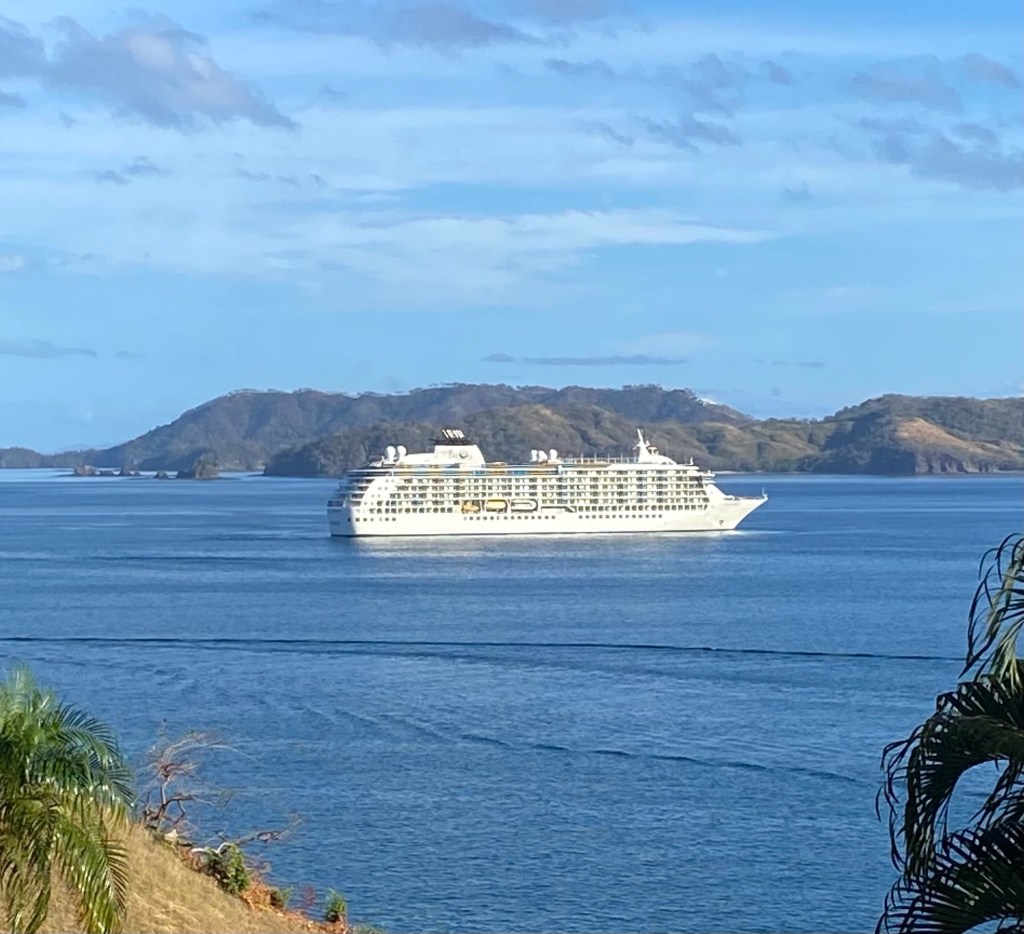
Just today the first ever cruise ship, The World,  pulled into Potrero Bay—it’s a luxury residential ship where “condos” start 2.3 million.  But no where to dock…yet.  

“The World” a floating condo in Potrero Bay

And with the all the new development, prices have risen accordingly.  A casado plate (the typical Costa Rican meal of rice, beans, some protein, plantains and a salad) in a local soda, a small family run restaurant, was $4-$6 dollars a few years ago is now typically $8-10.  A regular restaurant meal with a drink was $10-15 is now $20-25. Yes, still a bargain compared to our hometown Seattle prices—but not the incredible deal it used to be. And should you go to a “tourist” restaurant you will be paying nearly Seattle prices.

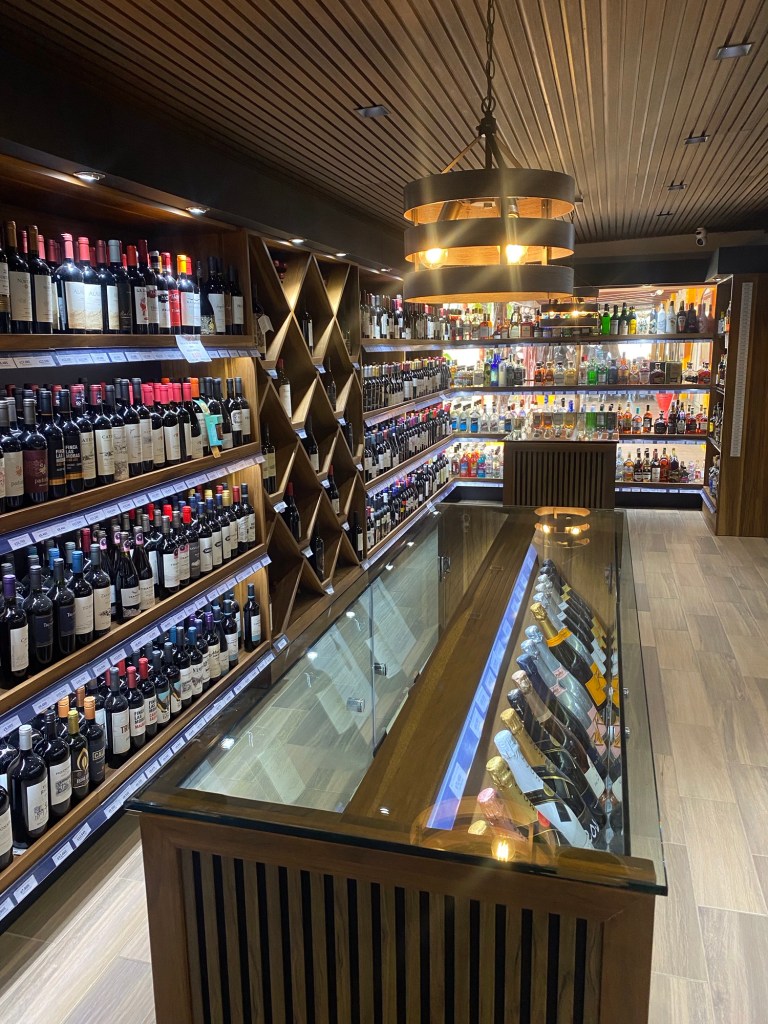
Our local grocery, the Massai Market always catered to the gringo crowd, but we also saw a fair number of Ticos as well. Now gringos dominate. The market has been upscaled and has a new, large refrigerated wine and spirits room—the selection would rival most U.S. stores.  Single malt whiskies, pricey bourbons, expensive grand cru wine, champagnes.  All at US prices. 
There is also another brand new grocery store — this one away from most of the new development and closer to the Tico area of town. It’s clientele is mainly locals so the changes aren’t just for the gringo crowd.

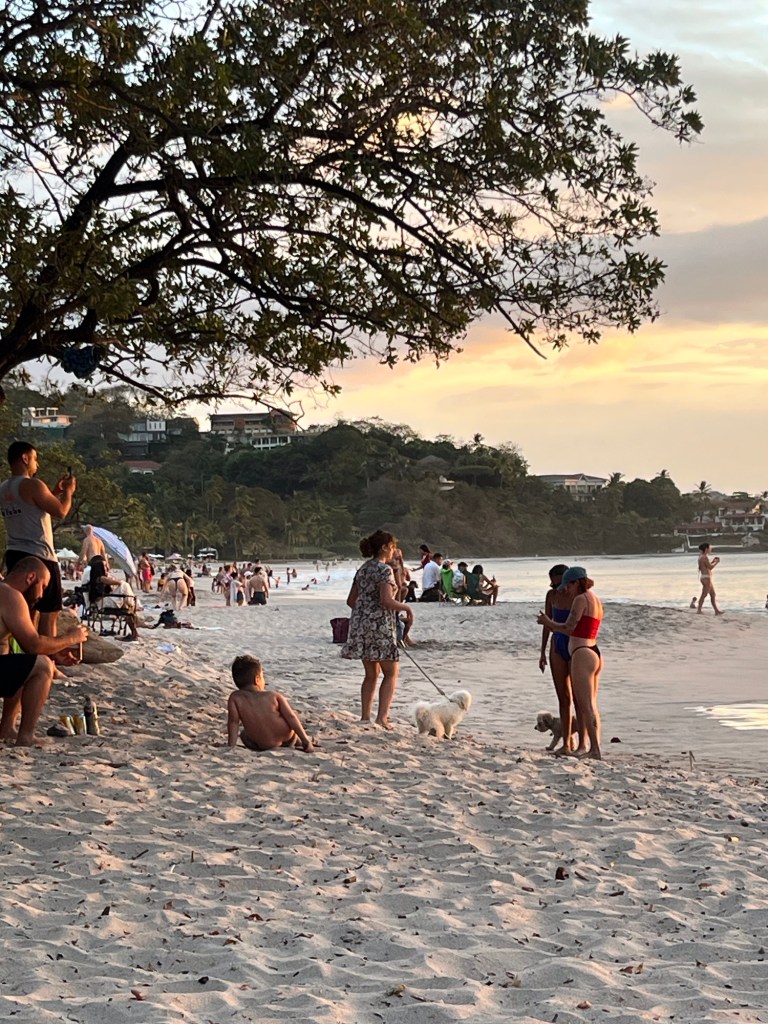
Maybe the good news is that despite all that is changed, much has remained as it always was.  The beaches are still uncrowded, particularly for our morning walks. We watch the sunset from the beach surrounded by locals—nary a gringo in sight. 

The Ticos are still warm, friendly people, the food is great, and the natural beauty of the area still awes. 

We also know that while we maybe missing the quaintness of mom and pop fruit stands, sodas, and a bay filled with pangas bobbing on mooring buoys, the Ticos here see more jobs, better pay, better infrastructure, better housing.  The biggest source of foreign income in Costa Rica is tourism.  Since we’ve been coming here we’ve seen a dramatic improvement the roads, cell coverage and internet. All huge pluses for the locals.  

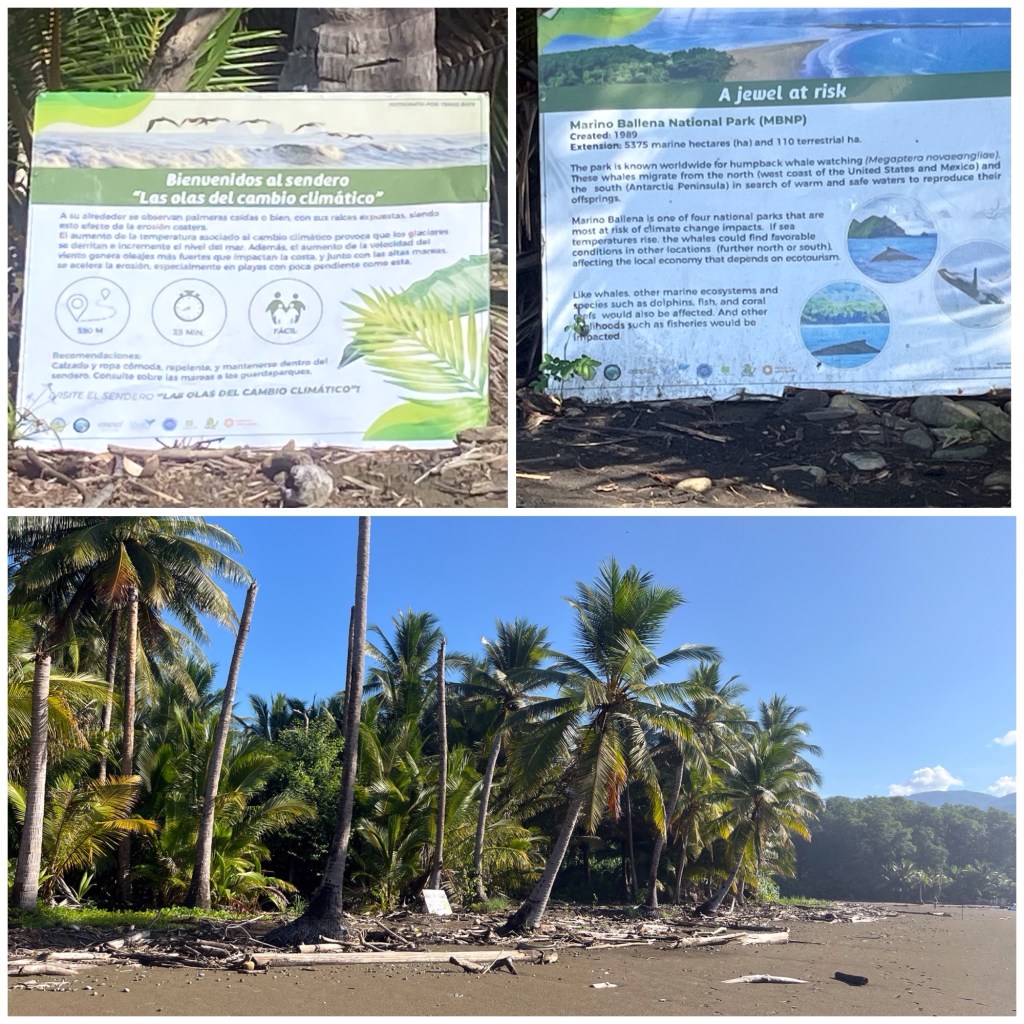
One change that is not welcome by the locals and the tourists alike is climate change.  On our way up to Potrero and Playa Flamingo, we stopped in Uvita at the Ballena Marine Park.  Along the beach there were signs in Spanish and English warning that rising seas were threatening pristine coastal areas and swaths of coconuts trees that lined the shore showed the damage.

Warning in Spanish about the “waves of climate change” and in English about the risk to the beaches while the damage to the trees is evident.

In Potrero last November, it rained for 21 straight days, causing massive flooding and cutting off whole communities for weeks.  Tourism came to grinding halt—causing a number of businesses to fold. The climatic forces that created the Cloud Forest are out of balance, potentially leading to loss of this precious ecosystem. Our guide in Santa Elena this year told us “summer” came just two days before we got here. And every year we come, Potrero seems to be a degree or two hotter.  The beaches here show the signs of high tides and storms eating into the headlands.  

Will we come back to Playa Flamingo and Potrero?  Probably.  Our thinking now is that we will continue to make forays into different parts of Costa Rica next year, looking for a bit of what captivated us on our first trip here and has lured us back again and again.  

Serendipity

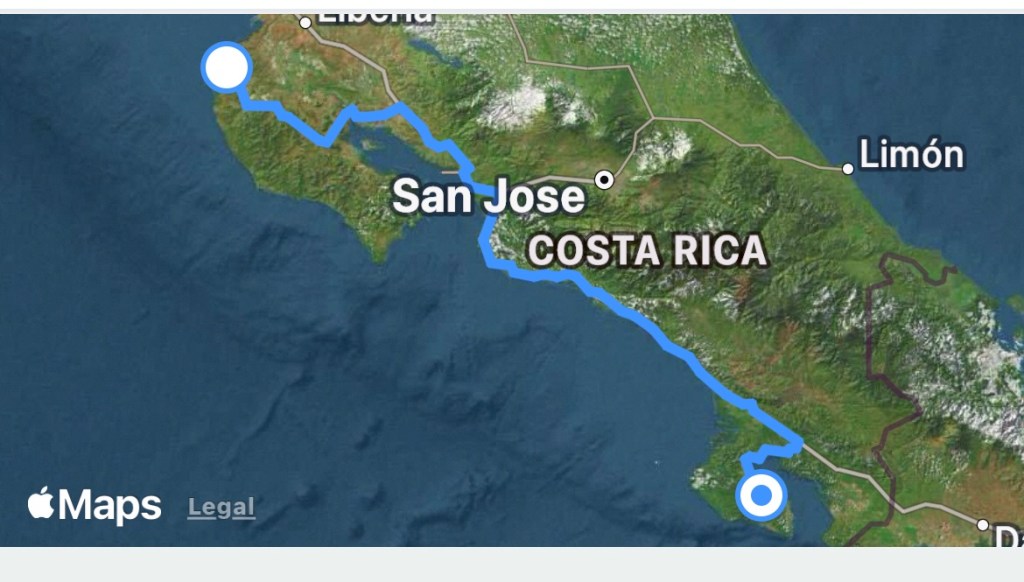
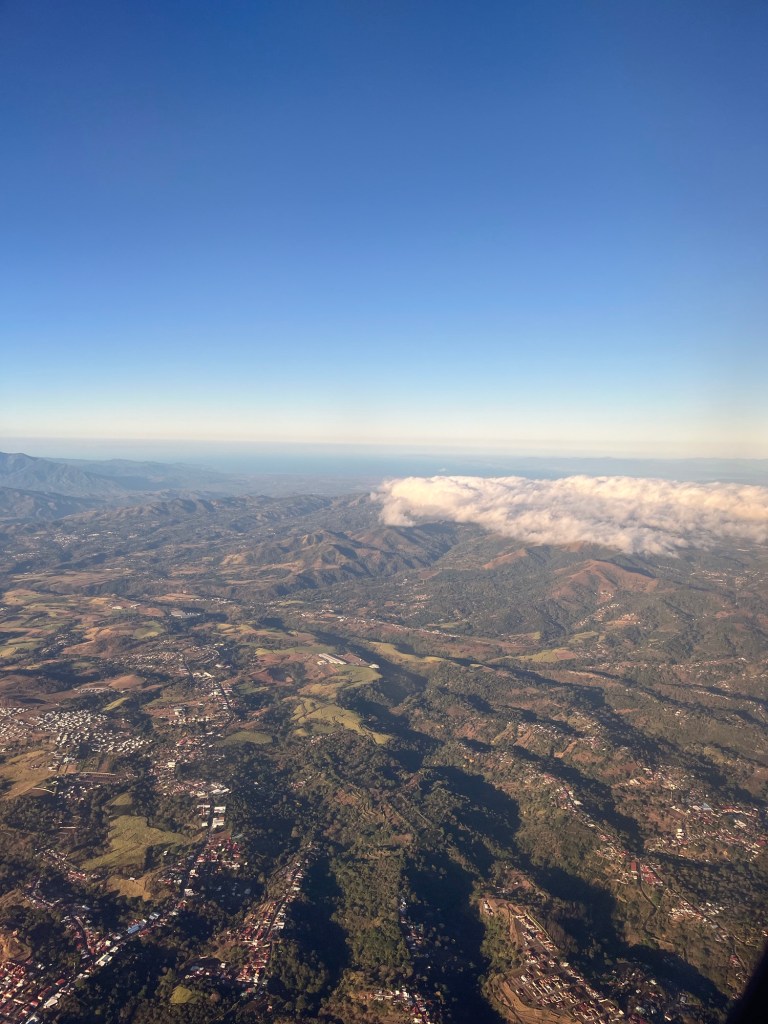
We left sea level about an hour into the drive from the Pacific coast. 98 degrees the car thermometer read. After three weeks in the tropical jungle and tropical desert of Costa Rica, we were heading to the mountains where the forecast said the high temperature would be 75 degrees. A mere 66 miles from Playa Flamingo to Monteverde in the mountains if we were crows, but by road— 122 miles. Three and half hours to go 122 miles. Normal in Costa Rica.

We’ve learned to shy away from the “major” roads — almost all of which are only two lanes inevitably clogged by the hundreds of slow moving trucks that transport goods. Costa Rica lacks navigable rivers and has almost no railroads .Everything goes by road. And given the many mountain ranges, there is rarely a direct road from point A to point B. The smaller roads may be narrower and more potholed, sometimes gravel, but ultimately your speed is the same. The traffic is more manageable and driving through the hamlets and villages much more interesting.

Our plan was to drive until the temperature dropped out of the 30+ Celsius range and then break up the drive with a quick bite to eat. Our rental car was all wheel drive so we weren’t overly concerned about the steep, narrow and rutted roads we knew were part of the day’s drive. It always amazed us that the road to a major tourist destination like the Monteverde Cloud forest could be so bad.

About half way up the Tilaran Mountains, after passing a few scattered homes tucked into the mountain sides, a warning light came on in our rental saying the transmission was overheating. Panic! This was a new car. And the manual that came with it was all in Spanish!

Luckily, almost simultaneously we came to a wider spot in the road with a covered parking area beside what looked to be an abandoned restaurant. As soon as we stopped the “abierto” came on. It didn’t look too promising from the outside and the livestock pen underneath might have put off some people, but we were hungry and we had to let the car sit and cool down…so why not!

Inside it looked, well, okay. Empty, completely empty, but tidy and clean. We were pretty sure the owner/waiter spoke no English, but Peter could speak a little tourist Spanish so we knew we’d muddle through. The menu wasn’t big. Mainly familiar Tico fare—casados, arroz con pollo, some grilled meats — all,big meals. The fast food page (comida rapida) had hamburgers, hot dogs, tacos which seemed more appropriate for lunch. And, of course, Imperial beer, because it had already been that kind of day. Our expectations were pretty low until we began to smell the beef for the hamburgers grilling.

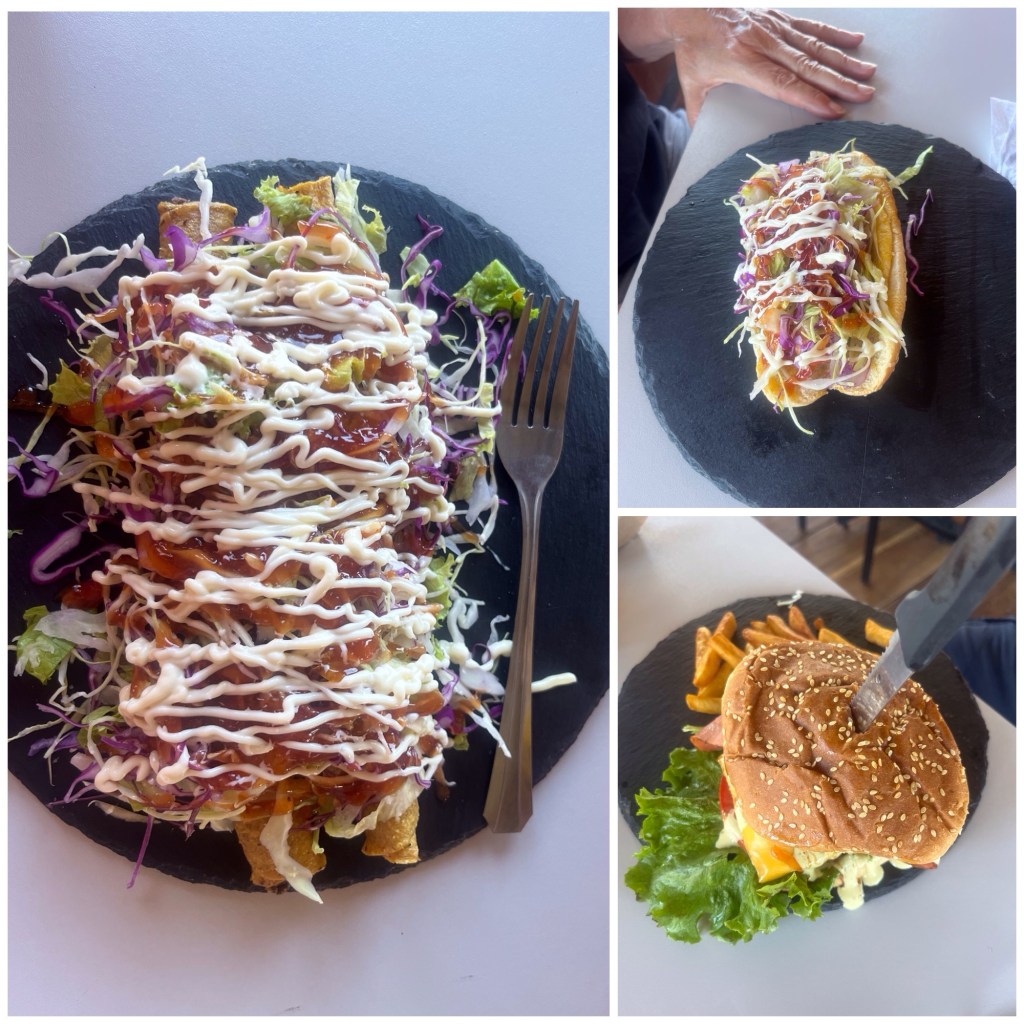
When the food arrived, we were wowed! It could have come out of a high priced gastro-pub anywhere back home. Elegant presentation. Fresh ingredients. Cooked to order. (Tacos were $5 US and hamburgers just a bit more.) The tacos were four fried cylinders of ground beef under a pile of sliced vegetables dressed with a cheesy white sauce and slightly spicy sweet tomato sauce. The hotdog came with the same treatment, and the hamburgers had two kinds of cheese, slices of ham and were as juicy as you want them to be. Messy but wonderful. Definitely a knife and fork burger. Service was efficient and attentive.

Oh, and the view!

The mountains above us
The Gulf of Nicoya in the distance below us

The transmission cooled down. And we were off once again, headed to our rental outside of Santa Elena. However, our day of surprises was not quite over. With fewer than ten miles to go our GPS told us we would arrive in 40 minutes. But first we had to pause for a small group of dairy cows to be driven across the road.

We knew going into it that the day was likely to be challenging — travel days usually are. And we had been on these roads before. But good old fashion dumb luck had landed us at Rancho El Corral for a very memorable meal. Serendipity. Almost makes us wish we were going back on that awful road when we leave here in a few days! Almost….

New Horizons in Costa Rica

We wrote a blog several years ago about how comforting it was to travel back to the familiar.  You know the stores, restaurants, the roads.  What to see, what to avoid.  And yet we also usually find something or some place new to explore.  This was our fifth trip to Costa Rica and again, we were planning on spending part of our time in Potrero, our home base, on the Nicoya peninsula on the Pacific side.   Lovely beaches, decent tourist infrastructure, but not over taken by souvenir shops  Then a few days in Monteverde chasing birds. But this time we would add a trip down south to the Osa Peninsula.  A new horizon. 

What is stunning about Costa Rica is how many completely different climatic and geographic regions are packed into a small country.  Dry, almost desert on the North Pacific coast, tropical rain forest on the mid Pacific coast, even more dense, hot tropical forests further south, the temperate central valley, the cool Cloud Forest in the mountains, the Caribbean lowlands, and the high southern mountains. 

Osa is a long drive from San Jose. Even longer because you inevitably find lots of construction zones and a very slow truck or two to follow for tens of miles. So we decided to stop in Uvita on the central Pacific coast along the way to break up the trip.  

Some suggest our first stop, Uvita, is an alternative to the more touristy Quepos and Manuel Antonio, just a bit further down the road. It’s a town with no main square or center, and has one main attraction—the Ballena Marine national park. This very unusual park has a huge sand spit that from above looks exactly like a whale’s tail.  Unfortunately we were there at high tide; no whales tail but a gorgeous beach.

It was also prime time for the humpback whale migration so dozens of small whale watching boats were being launched through the rough, heavy surf, occasionally dumping a tourist or two into the water.

We spent two days there exploring the national park, looking for monkeys, watching birds and walking the beautiful local beaches. A good stop along the way to the Osa Peninsula.

The Osa Peninsula is one of the more remote parts of Costa Rica—very different than where we’ve been before. We read that this area was less developed, less touristed than our previous haunts. It’s in the far south, super tropical, on the Golfo Dulce (the only tropical fjord in the northern hemisphere). The peninsula is almost entirely a national park, the Corcovado National Park, and mostly inaccessible except by boat or long hikes, as in three and four day long hikes with a ninety minute boat ride from Puerto Jimenez before you even start to walk. Spectacular wildlife—birds, monkeys, sloths, tapirs, jaguars, and snakes—lots of snakes.  One of the real natural treasures of the world—it said to be the most biodiverse place on the planet. 

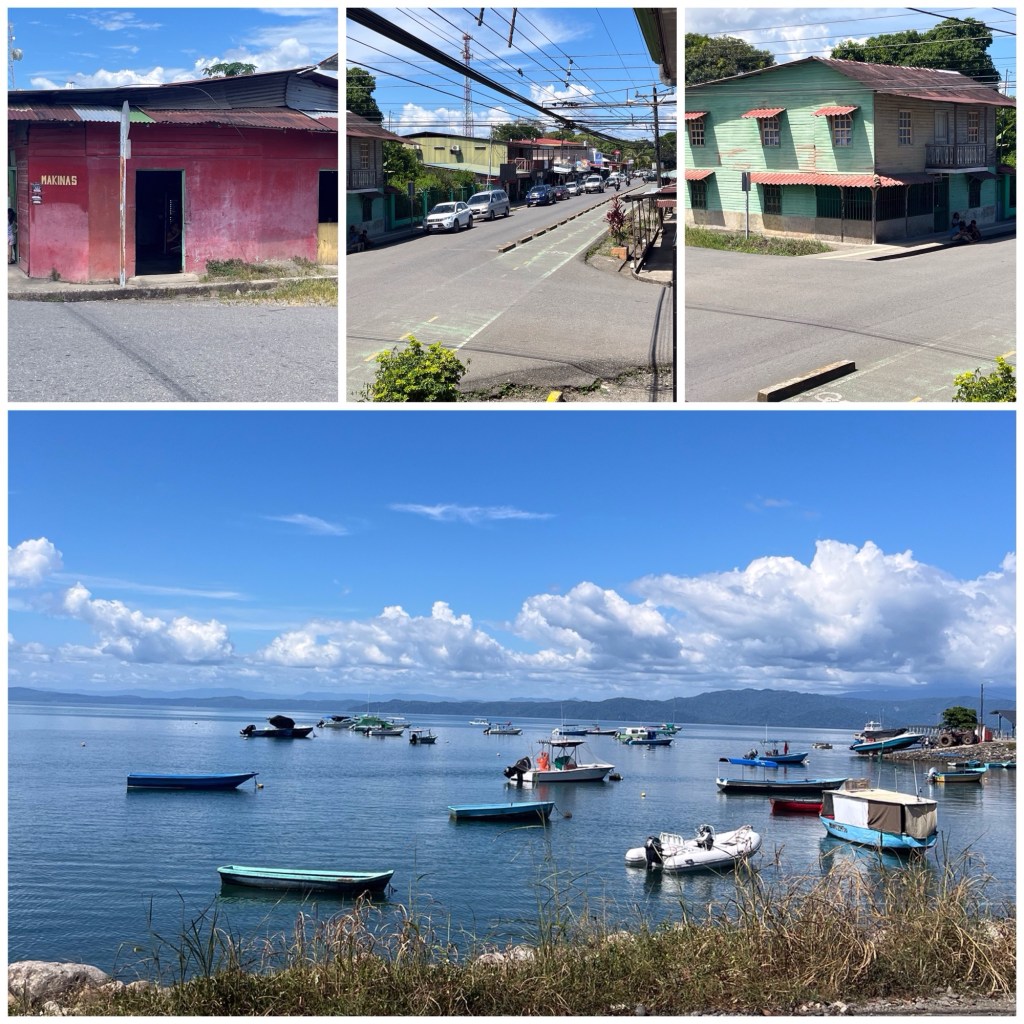
Fortunately, it is possible to drive down the eastern side of the peninsula to Puerto Jimenez, a little run down village of mostly Ticos, some expat hippy/yoga types, and a few serious eco tourists/birders/hikers. You can drive further south on a dirt road with multiple stream crossings to Carate, but we wisely chose to end our drive at Puerto Jimenez. The town houses the main information center for the national park and you book your tours there—you must have a guide to get into the park.  There is also a small airstrip with flights from San Jose, Liberia and Quepos should you not want to make the long drive.  It was little disconcerting when we were sitting at a local restaurant at the port when a small plane buzzed by seemingly inches over our heads.  We noticed none of the locals flinched.

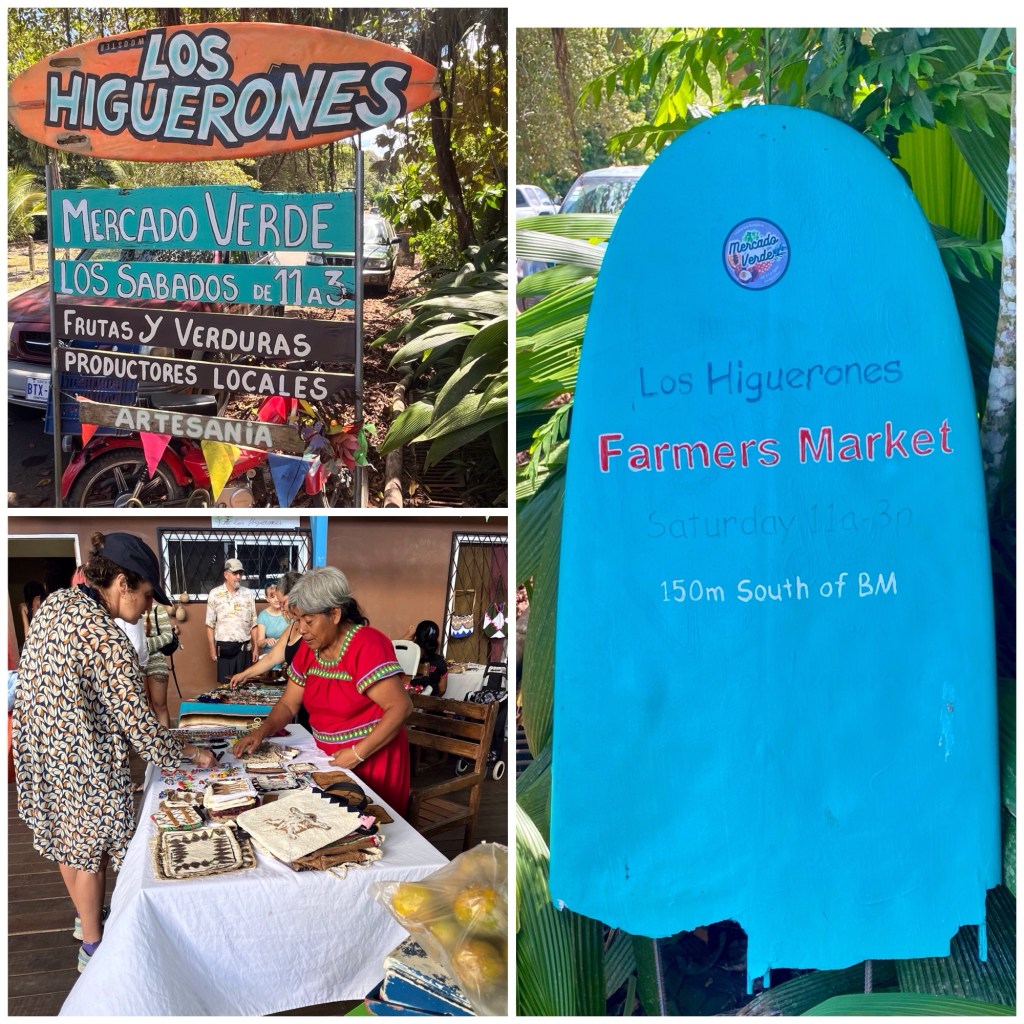
There’s not much else to the town. A few restaurants, couple of yoga studios, a gas station, a BM grocery store, and a heavily advertised Saturday farmers market that takes five minutes to see but includes some indigenous people’s crafts..

Just a few but very rugged miles outside of town is another of Costa Rica’s gorgeous beach’s—Playa Preciosa. From here you can almost see Panama.

Part of Osa’s charm is its lack of serious tourist infrastructure.  So we had a hard time finding a place to stay except for a few very upscale eco resorts.  We wound up in the Corcovado Private Villas.  We think it might have been an eco resort that fell on hard times in during Covid. We had been warned a four-wheeled vehicle was required. The website gave us a GPS waypoint that took us up a steep dirt road that reinforced the idea we needed four wheels.  Unfortunately when the GPS announced “you have arrived”  we were in front of nothing but a barbed wire fence.  So, of course we drove on, using all four wheels on our car, as the road became progressively worse.  Back home we would have called it a mountain logging road. Luckily, a kind local on a motorbike recognized we were somewhere we didn’t belong and led us back to civilization.  Of course, this part of Costa Rica lacks reliable cell reception as in we had no “bars”.   We had to backtrack several miles to get cell service and a new set of directions — different but only slightly better.  We finally arrived.  Our traveling partner in the backseat had her eyes closed most of the way up to resort, muttering occasionally “oh my goodness.”  The “check in” guy, Esteban, listened rather calmly to our annimated story about getting lost and told us he too had gotten lost a few days before using the original directions.  We suggested that maybe they might want to delete those directions from their website.  

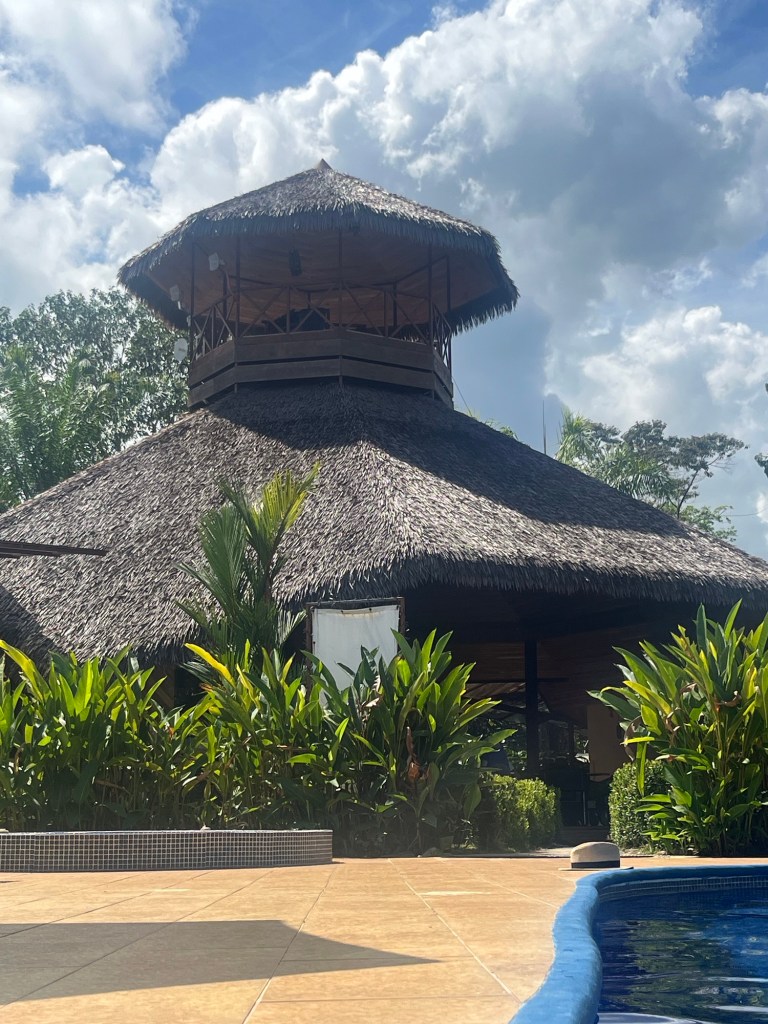
The complex consisted of a dozen or so separate units spaced some distance from each other along the steep trail to the top of the hill. There we found the pool, hot tub and “restaurant”  which served an inclusive breakfast and you could order a dinner in advance with a very limited  menu.  Oh, and the whole stay was cash only and it was very unclear who you paid and when. Nobody seemed to be in charge but we figured somebody, sometime, somewhere would take our money.

The villas themselves were a bit run down, with few amenities, but very serviceable.  And with gorgeous views of the green jungle teeming with birds and a few monkeys just a few feet from our balcony.

The upside, and it was a huge upside: the 70 acres of amazing tropical forest right adjacent to the national park.  Some of reviews said the wildlife here was better than what they saw in the park.  While we are not truly serious birders, what we experienced in the few days on the property could change our minds.  Toucans, fiery billed arcaries, multiple varieties of parrots, lineated woodpeckers, and dozens more.  At least several new life birds for us. 

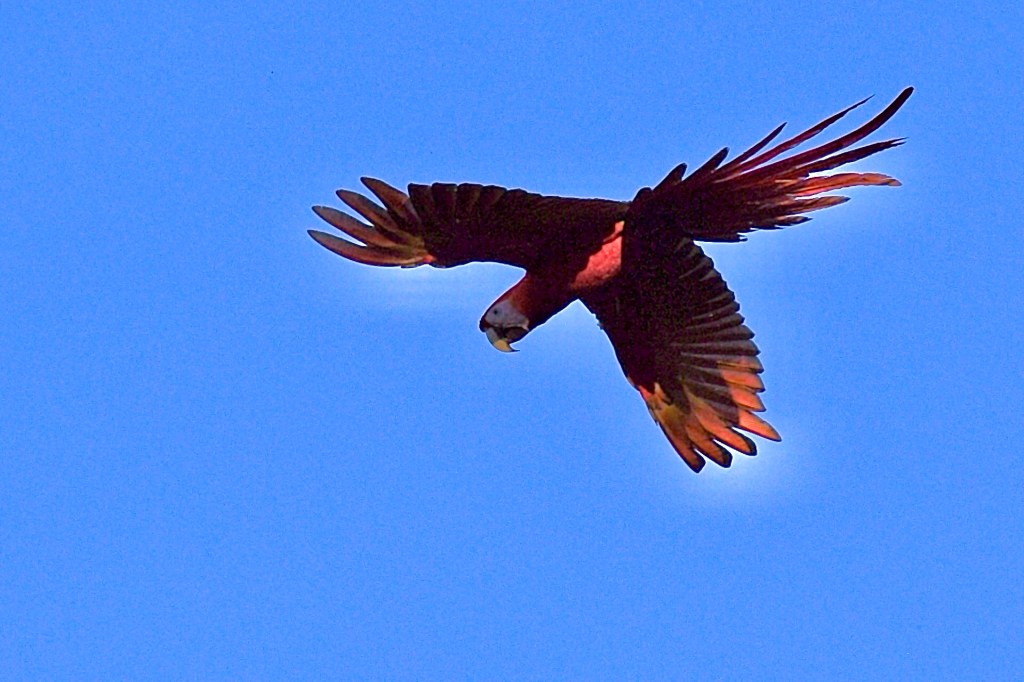
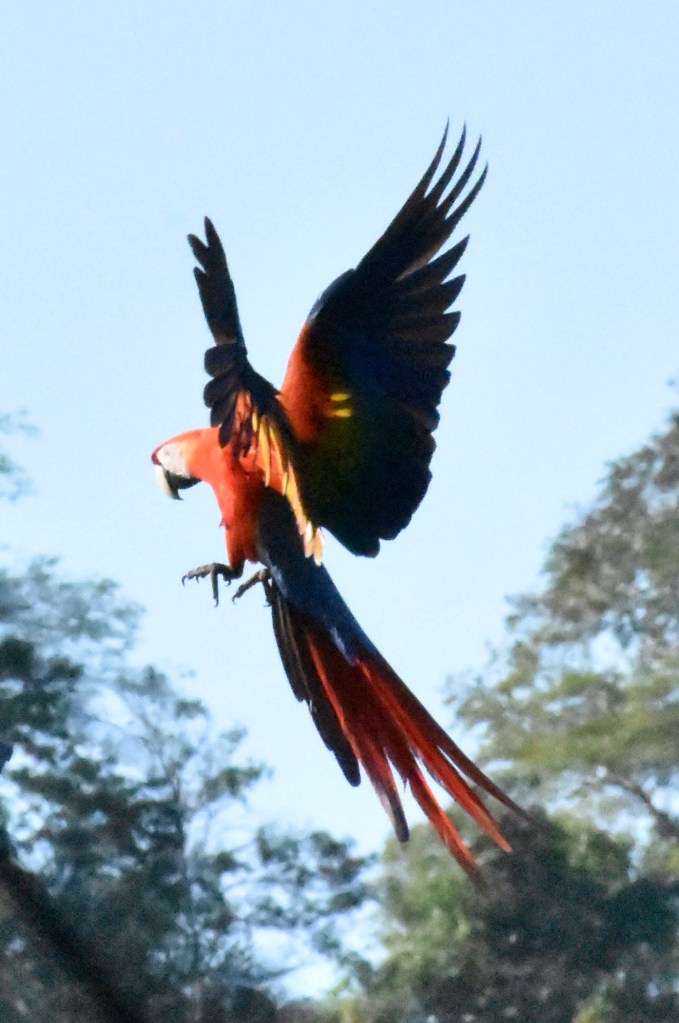
But the star attraction were the scarlet macaws—a very large bright red, yellow, blue parrot with the most awful loud sqwauk of a call which you could hear for miles.  Our villa and common area seemed to be a macaw freeway with birds flying over all day, stopping to rest in the nearby trees.  What a show.  A very loud show.

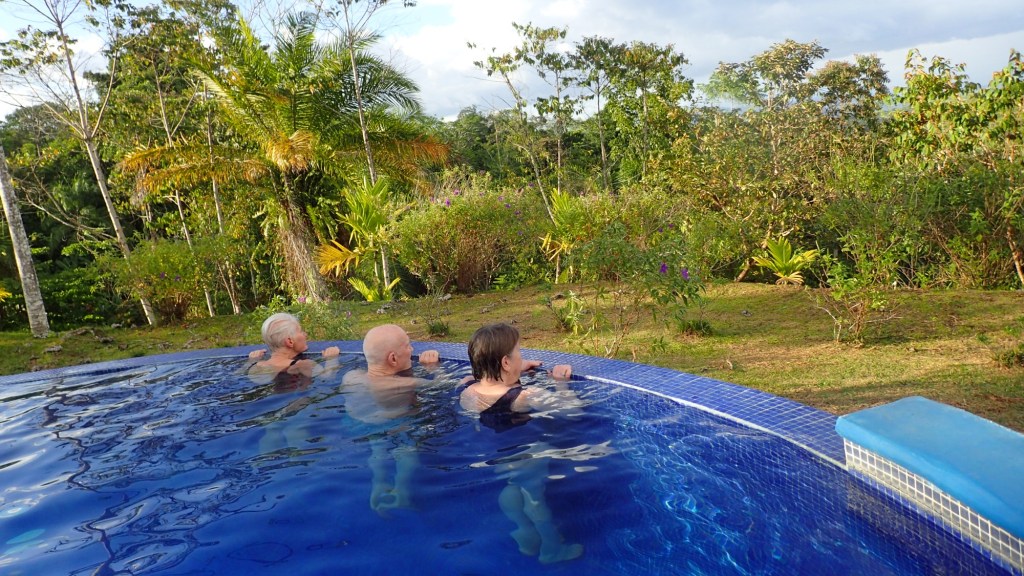
And you could see most of this from a magnificent infinity pool at the top of the property.  In one 45 minutes stint in the pool, we saw white faced monkeys, yellowed throated toucans, green parrots and, of course, lots of scarlet macaws, plus monkeys just a few yards away peeking through the foliage. Pool birding was a new experience for us. As we said, we aren’t serious birders. 

And the dinner, humble as it was (arroz con pollo) was very good. However, the parting comment from our young server as we walked home to our villa was a little disturbing, “Be careful of the snakes.”  We walked with all four iPhone flashlights focused on the ground.

Yes, the property needs work and serious investment.  But if they ever upgraded to a high-end eco resort, we probably couldn’t afford it.  By the way, while writing this in our villa some white-faced monkey is having a shit fit not far away.

The Osa Peninsula surprised us by living up to its reputation — a natural wonder, still largely pristine, a biodiverse sanctuary, and one Costa Rica’s many different climatic and geographic regions. It’s also a great example of Costa Rica’s commitment to preserving natural habitats by setting aside huge areas as national and provincial parks.  

It gave us a lot to think about on the 10 hour drive back north to Potrero— basically nearly the entire length of the country.

For the Birds

Our third trip to the Cloud Forest in Costa Rica was probably our best. Maybe because we were ready for a break from the unseasonably hot weather on the Pacific Coast. Maybe because the roads were familiar, and now much improved from earlier trips. Maybe it was simply because the area is so gorgeous.

The Cloud Forest is special even for nature-rich Costa Rica. The wind from the warm Caribbean side blows the clouds up and over the continental divide, keeping the jungle below cool and wet. The clouds just hang on the mountain tops.

There was a 30 degree temperature difference between the Cloud Forest and the lowlands a few miles away when we were there this year. 98F vs 68F. We heard that climate change and the rising sea temperatures are changing this pattern a bit, meaning less rain fall in the mountains and more on the costal plains. It is worrisome—so much flora and fauna are dependent on the very specific micro climates of the Cloud Forest.

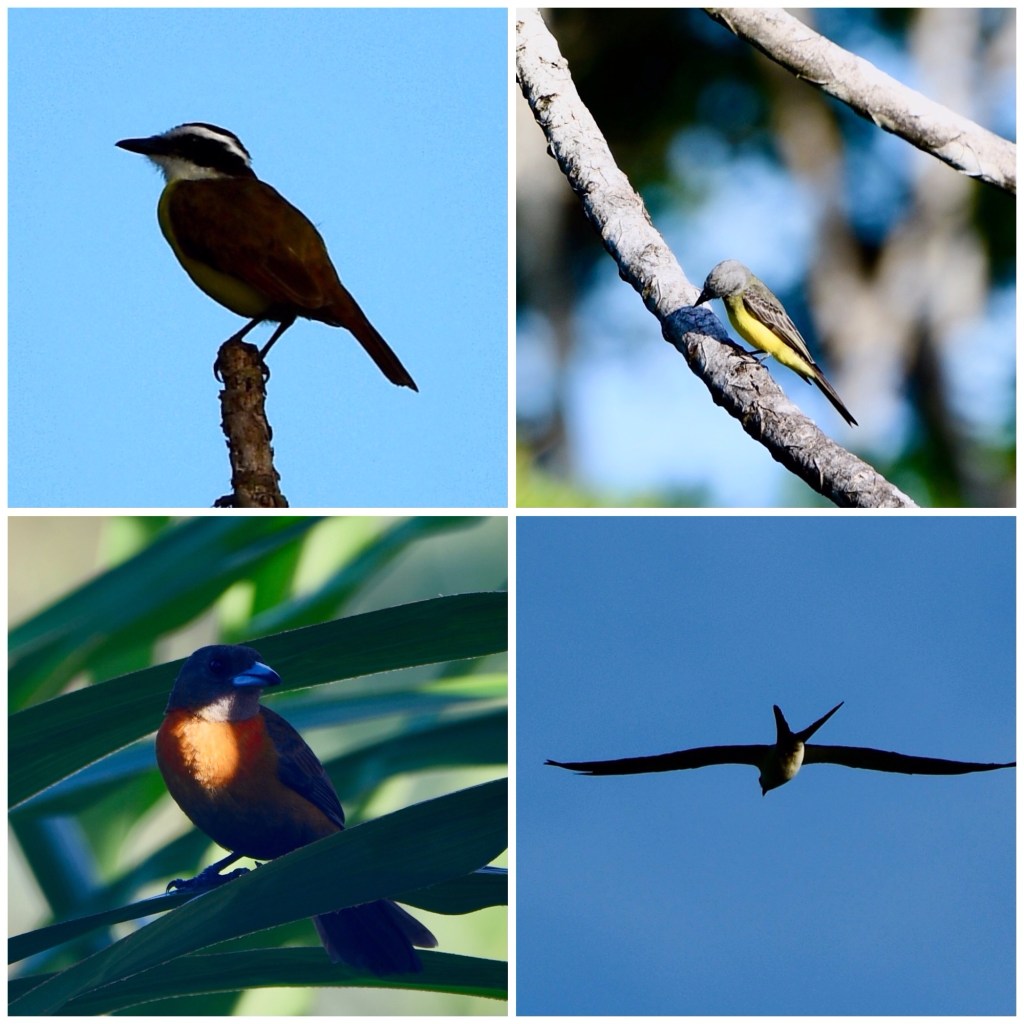
The big draw in the Cloud Forest are birds! Birders from all over the world flock here (pardon the awful pun). Situated between North and South America, Costa Rica is known for its incredible biodiversity and the amazing number of different birds reflects that richness. 918 at last count.

A disclaimer—we aren’t really serious birders. A passionate birder friend gradually sucked us in years ago when we traveled together. At first, we saw birding as an excuse to take a walk in the woods, green belts, or seashores. Then we began keeping track of the birds we saw. Technology, of course, made it easier with finger tip accessibility to information on birds and help identifying them. We were hooked. Now where ever we travel, we try to take a walk and look for birds. But in a place like Costa Rica’s Cloud Forest, you don’t need a book or a life list. Just grab a pair of binoculars and enjoy.

Seven years ago we birded in the Monteverde National Reserve, the most famous of the many Cloud Forest sites. We hired Adrian Menendez, an outstanding local guide. We haven’t been back to that park since, but have reconnected with Adrian. He’s led us up remote mountain roads, through other regional reserves and into private parks.

Over two mornings with Adrian this year, we saw nearly a hundred different species!

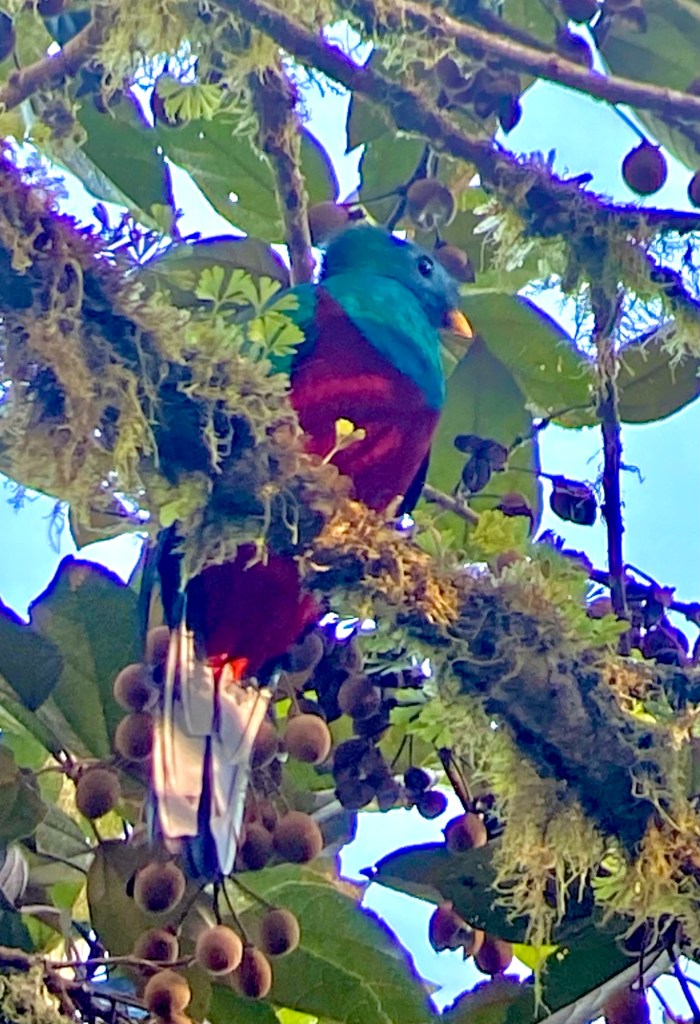
Of course, we would see very few birds without him. Not only does he know the sounds of birds and can locate them primarily by sounds, he also knows where the different species hang out. These mountains have been his birding territory for 31 years. He knows where an owl hangs out, or under what bush you’ll find the shyest of birds or where the wild avocado trees are found that the Resplendent Quetzal likes to eat.

On our first day, we drove just barely over the continental divide and walked along a mountain road not far from the Santa Elena Reserve. And there was a Resplendant Queztal just waiting for us. And the Red-faced Spinetail with its precarious hanging nest. And 39 other species!

Red-faced Spinetail and its nest

From there we went into the Reserva Bosque Nuboso, where many of the paths were paved to allow handicapped access. And benches are provided for seniors. It was later in the day so fewer birds were active. At the highest point we were 5608 feet above sea level, roughly the same elevation as Paradise on Mount Rainier. No wonder there was a bit of huffing and puffing!

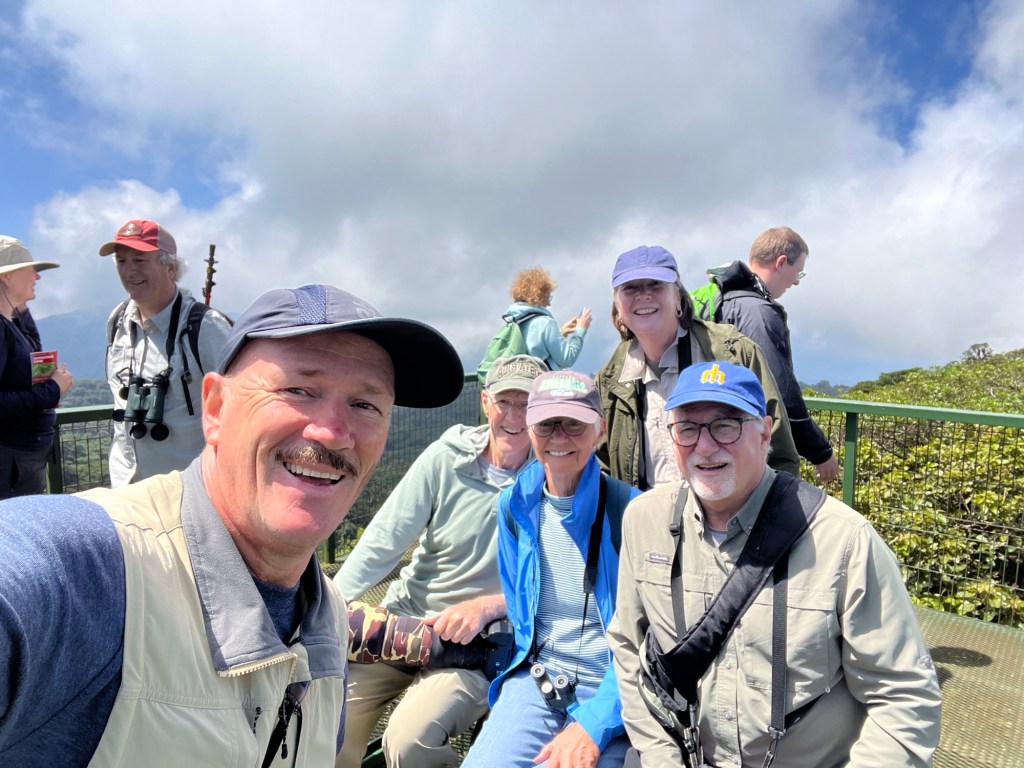
Sitting on top of the world with Arenal Volcano behind the clouds

The highlight of the day came when an Ornate Hawk Eagle flew over head followed by the American Swallowtail Kite, on its migration north. From a platform tower we could see several of Costa Rica’s volcanoes, including Arenal which last erupted in 2010 (because of the threat of another potential eruption, all cars are required to back into parking spots to expedite an emergency exit — not a comforting thought)

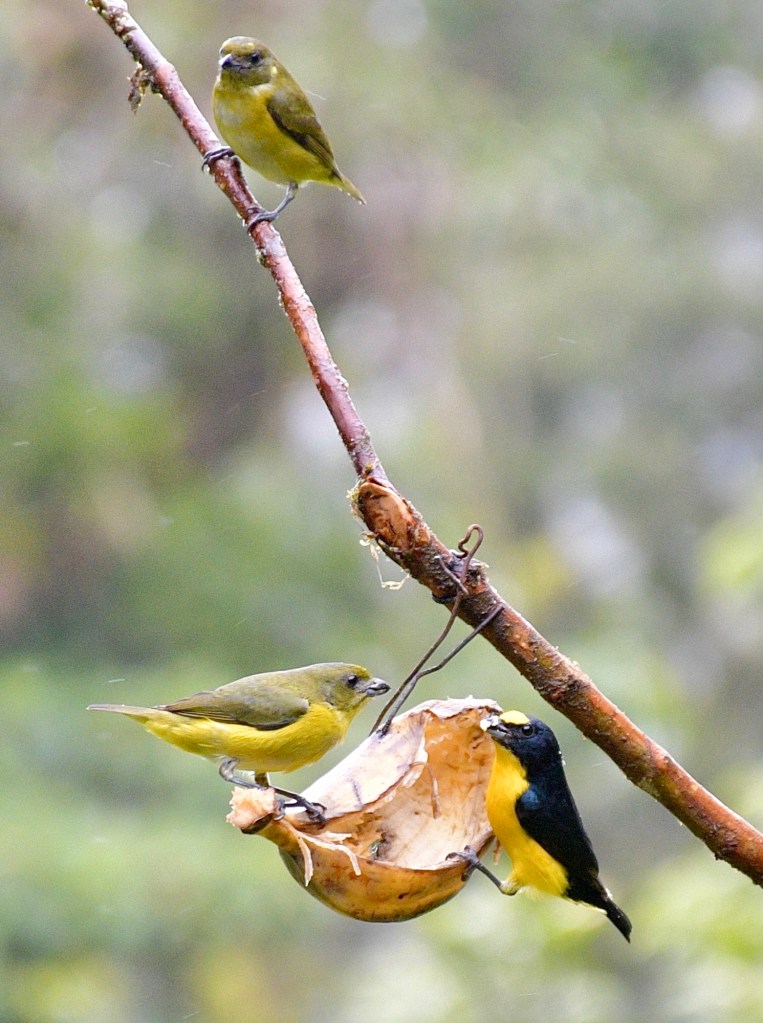
We woke up the second day to fierce winds and rain. Not a good day for birding. Adrian, however, had a plan. We drove about 20 minutes south of Santa Elena and a bit lower on the western slopes of the mountains to Finca Ecológica San Luis, a private reserve run by Adrian’s cousins. Some birding purists might scoff at the feeding stations around the reserve that lures the wild birds in. We didn’t care. We appreciated sitting in rustic shelters, dry, and up close and personal with our avian friends.

Some of the birds we had seen before — White-fronted Parrot, Chachalaca, Montezuma Orependola, Baltimore Oriole.

But most of the birds we were seeing for the first time — Lessen’s Motmot, Broadwinged Hawk. Gartered Trogon, and the big draw of the area—the unusual looking Three-wattled Bellbird with a song that sounded either like a brass gong or an ET alien that could be heard a half a mile away.

The Cloud Forest is truly one of the world’s magical places whether you’re there for the birds or simply for a walk in the woods. And that’s why we keep coming back.

[Full disclosure: we have to share photo credits for this post with Malcolm and Adrian.]

Parroting

We first saw scarlet macaws seven years ago on the Oso Peninsula in Costa Rica sitting in wild almond trees beside a lagoon. Last year when we were staying near Manuel Antonio Park, we spent a lot of time watching these magnificent tropical birds fly by our balcony.

Scarlet Macaw near Quepos, Costa Rica

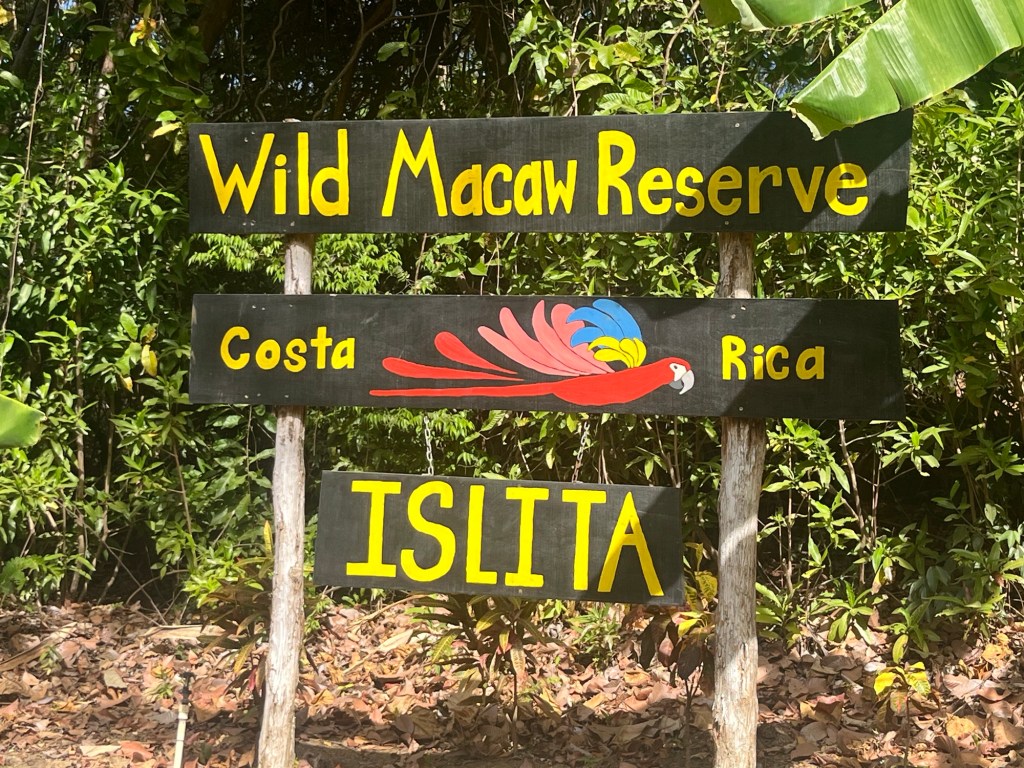
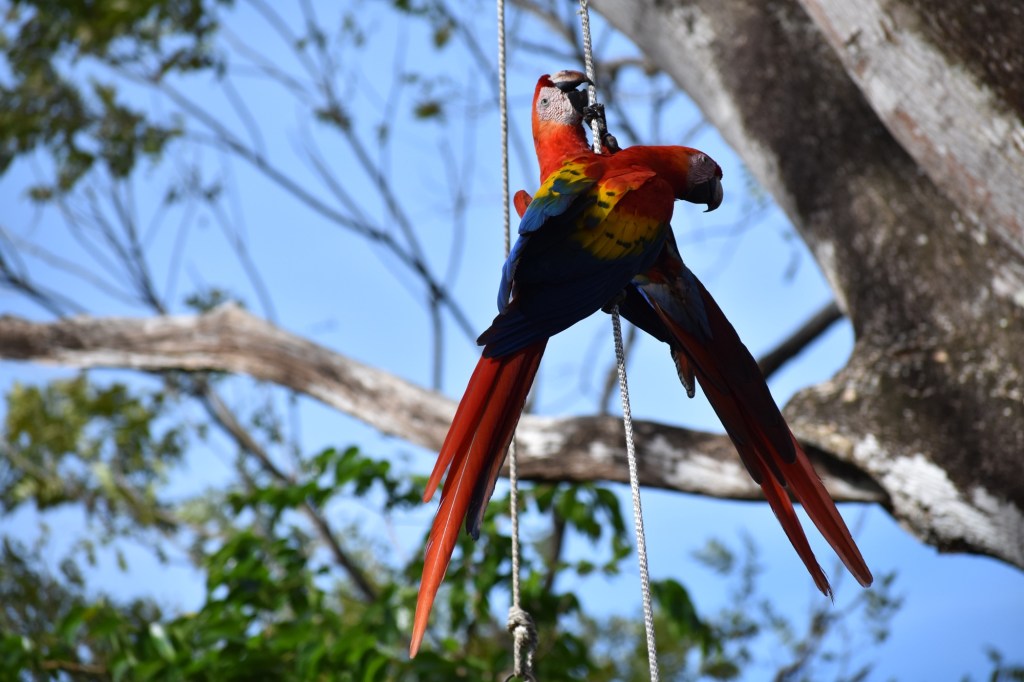
This year a went a bit further north to the Macaw Recovery Network south of Sámara at Islita on the Nicoya Peninsula. And what a show—up close and personal with the birds.

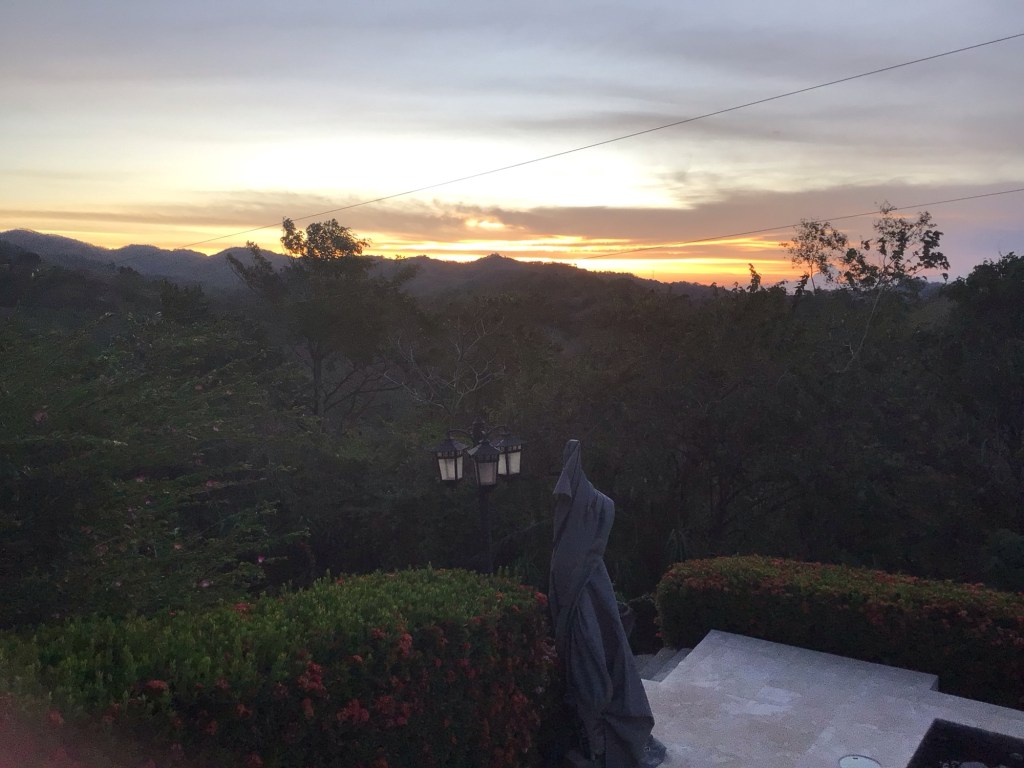
The reserve offers tours but only takes a limited number of people, 12-15, twice a day, early mornings or late afternoons. Reservations are required (but easy to do and pay for online). We opted for the early morning session which meant up in time to see the sunrise and a 45 minute drive to make the 7:30 feeding.

It was a bit of a harrowing drive — much of it a roller coaster of rather heavily traveled dirt roads. Can’t imagine how anyone can find the place without GPS — we had three devises tracking the way using both Google maps and Waze which, for once, agreed with each other. We still took a wrong turn. (Over and over again we were encouraged by locals to use Waze— old Google habits die hard.)

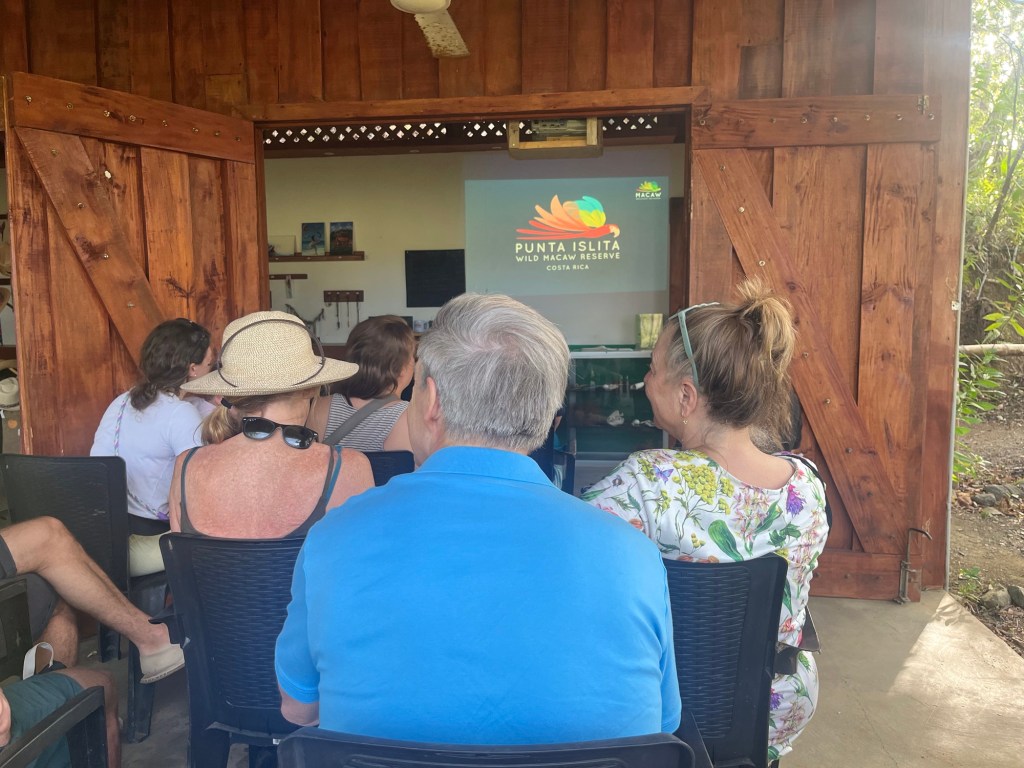
A modest open air structure served as reception area, a gift shop, and auditorium for the video. Several scarlet macaws posed for us around the edges of the building, waiting to be fed. Apparently, after being being trained how to survive in the wild and released, some birds stay near the reserve for a year or two until they are comfortable fending for themselves. After snapping a few pictures, we settled into the back row, more interested in spending time watching the birds than a video. Nonetheless, we were impressed.

In addition to working to restore the bird populations (macaws were extinct in the Islita region 30 years ago) the Network also works to restore habitat and educate Costa Ricans about conservation.

The Network raises scarlet and the even rarer green macaws to be released to the wild. Currently, they believe only four thousands scarlet macaws exist in Costa Rica and only three hundred green macaws. Even fewer Yellow-napped Parrots which the refuge is just starting to breed. With the results of several years of breeding scarlet macaws, 64 banded birds have been released and had produced offspring “naturally” —bringing the total birds in this area to over 100. Impressive, given that macaws were extinct in the Islita region 30 years ago. This year the Network will release the green macaws in the north eastern part of Costa Rica for the first time.

Not surprising in the animal kingdom, the birds have dominant and submissive members, so two feeding stations are filled — one for the big guys and gals — females as well as males display aggressive behaviors — and a second to give the other birds a chance. Incidentally, the sex of these birds can only be determined by a blood test, we were told.

Sometimes fights break out as the birds feed. But mainly they seemed to move around, slide up and down the pulley lines and take turns feeding.

The groups of birdwatchers are limited to minimize the stress on the feeding birds. This is breeding season and while we could hear but not see the pairs, the staff was particularly interested in keeping those birds calm. The breeders are fed as the same time as the wild birds and created quite a cacophony.

The iguanas also come out at feeding time, waiting for bits of fruit and nuts to be dropped on the ground by the birds.

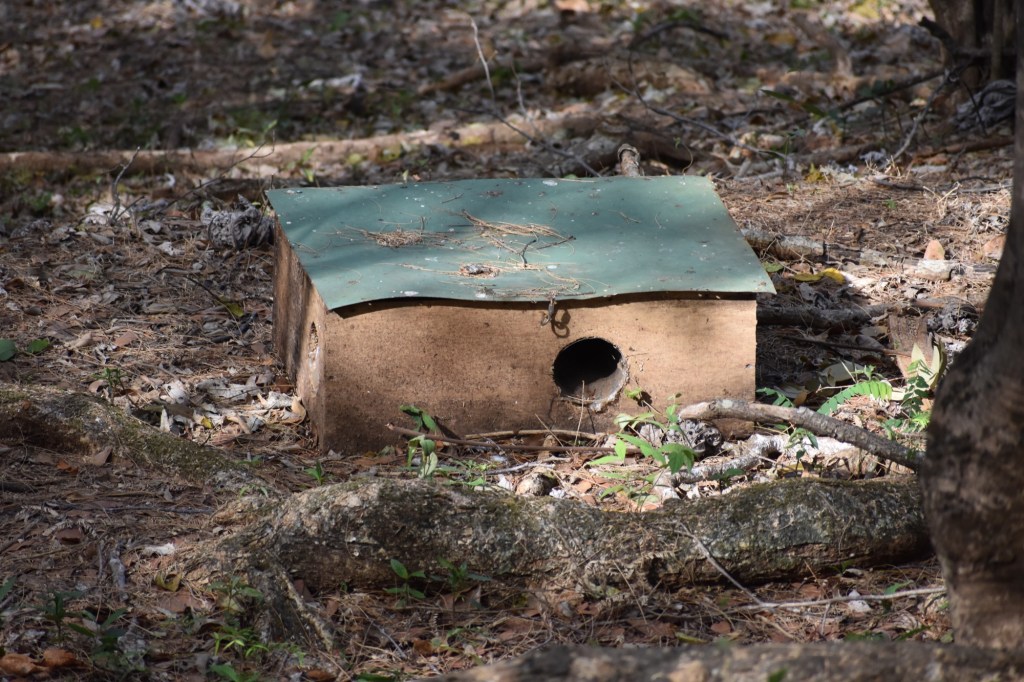
Snakes pose a danger to the breeding program, particularly boa constrictors. The reptiles love to feed on the baby chicks. So traps are set around the grounds to lure boas in with the scent of wood chips used in the breeding nests. We were told the trapped snakes are then released into the wild some distance away. Some in our group were skeptical — or maybe hopeful the snakes met a different fate.

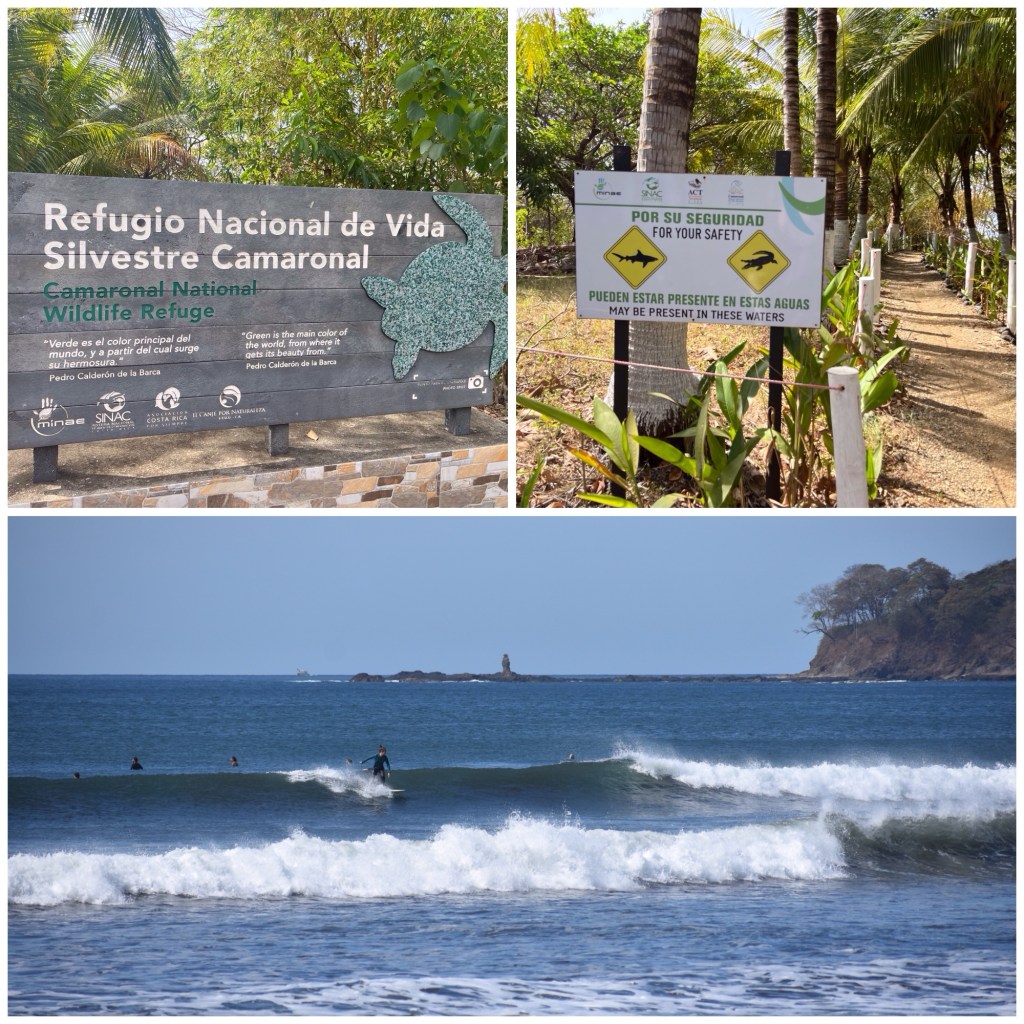
On our way home there were signs along the road indicating where nesting pairs of macaws had taken up residence. A clear indication of the success of the program. We also stopped by another nature reserve adjacent to a beautiful beach— Costa Rica is filled with reserves. While there were plenty of signs warning about crocodiles and sharks, we only saw surfer dudes, discussing the quality of the waves, clearly not worried about the danger.

A soda is not a soft drink…in Costa Rica

Sometimes we’re a little slow. Well, maybe a lot slow.

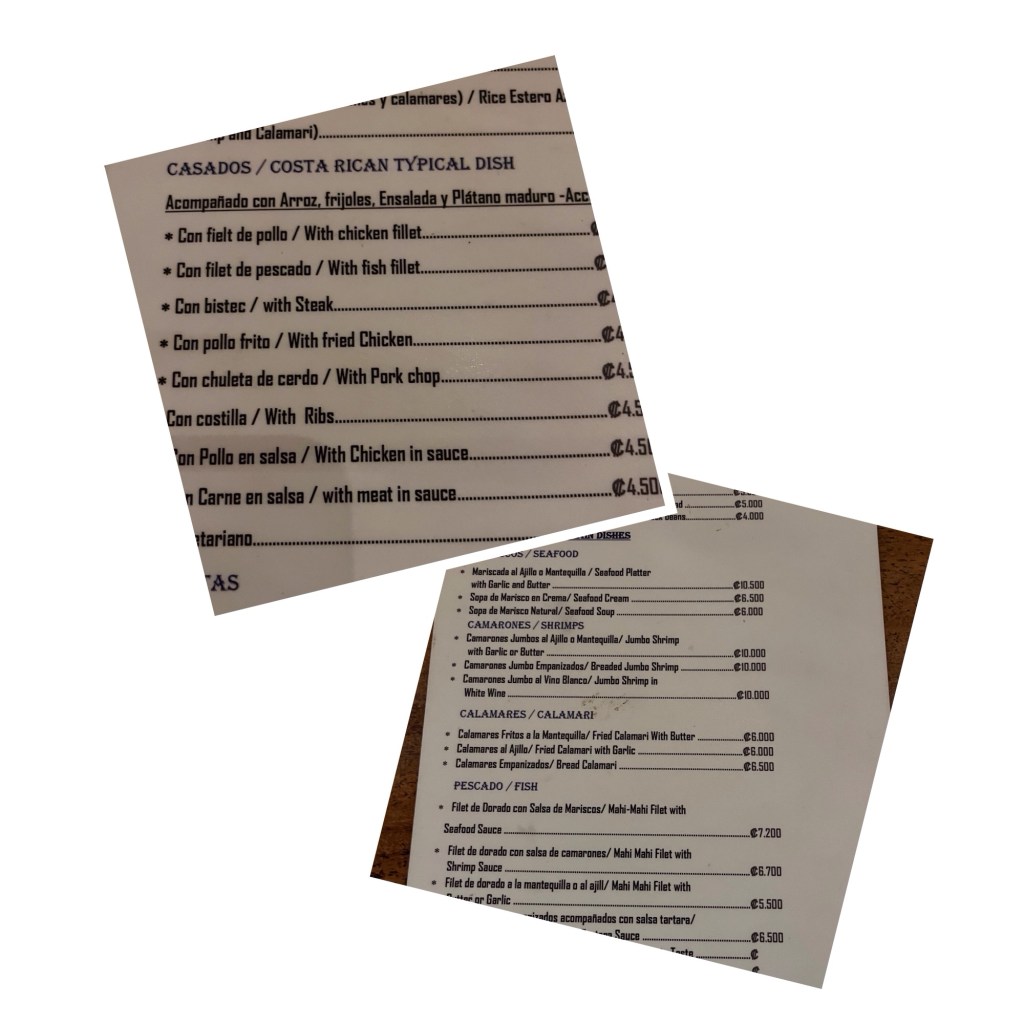
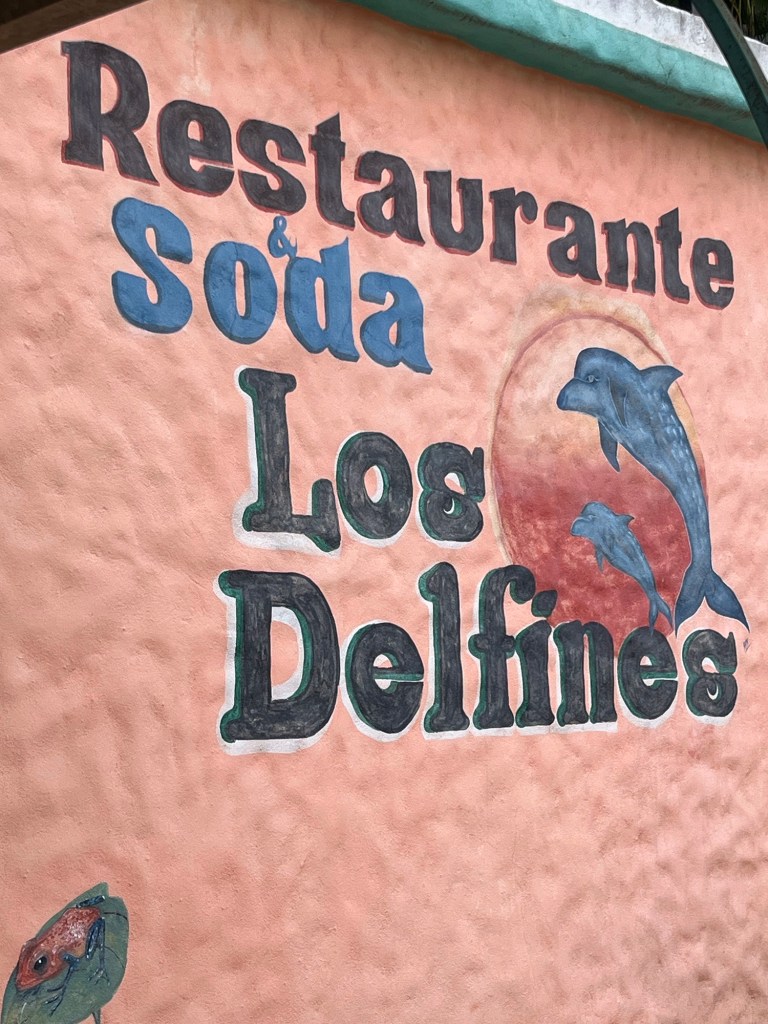
The first time we were in Costa Rica seven years ago we kept driving by modest roadside establishments with signs advertising “soda” this or “soda” that. Of course, we thought they were selling local soft drinks to thirsty Ticos and tourists. Only, when by chance, we actually stopped to get a cold soda, did we realize that a “soda” was actually a restaurant—more specifically, a small family run restaurant with a limited local menu. And we soon found out these “sodas” were often gems of local cuisine serving great food at ridiculously cheap prices. Yes, the menu is limited. Yes, the ambience is sometimes is missing (but not always—we’ve eaten in sodas on the beach with sand under foot and up in the mountains with stunning views of volcanos). But you are likely eating with locals, maybe being served by someone whose grandma is cooking in the back.

And the food! Almost always fresh local ingredients, always prepared to order. The limited menus in most sodas usually features Costa Rica’s star menu item—the casado plate (which translates as “the husband’s plate” or “married plate”). Rice, beans, plantains, salad, maybe some fresh fruit and a choice of protein—fish, pork, or chicken. The protein can be grilled, stewed, or braised. Big portions meant to serve the very hungry.

The typical price is between 2000 CRC and 4000 CRC or $4 to $8. And most sodas take US dollars in addition to Costa Rican colones, and many accept credit cards. A few only take cash. Other local dishes include arroz con pollo, (rice and chicken, sometimes in a tomato sauce), gallo pinto (rice and beans), ceviche. Almost all serve the local beer (Imperial), sodas (Fanta orange soda is ubiquitous), and fruit juices. Whether is a result of widespread tourism or simply the influence of North American culture on the locals, hamburgers and margaritas are often on the menu as well.

You will almost always be eating outside on a covered patio with a kitchen tucked in a small space in the back. No air conditioning here. Most will be filled with locals. Often there are small children playing near by, and an occasional dog or two strolling through the soda. Once, up in the mountains, as we ate, the waitress called a dozen or so children playing in the field next to the soda to serve them their lunch on paper plates which they promptly ran off with to eat under a nearby tree, dodging the local cattle as they went.

The owners of one soda, in a very, very remote area up in the mountains when we were staying on a small coffee plantation across the dirt road, would wait until we drove by their home on the long driveway, then run down from their home to the soda to open up just for us. We were clearly their only business for the night. Mom would cook and her young daughter would happily sit at the next table, coloring. The food was absolutely amazing—and as you can imagine, cooked to order. Best pollo y arroz ever! We ate there three times and, despite the language barrier, began to feel like part of the family.

You’ll never have to worry about finding sodas in Costa Rica—they are everywhere. Really, everywhere. Big towns, small villages, remote rural areas, industrial zones. In the more upscale resort communities such as Playa Flamingo or Samara on the Pacific coast, they are often located just outside the town centers on the roads that lead into to town or in the nearby little Tico villages.

Recently we were in Samara on the Nicoya Peninsula in a beautiful AirBnB in the hills above the town. Our wonderful hosts recommended a number of local restaurants. They were all lovely beachfront establishments with spectacular sunset views, music, and tropical cocktails. But the food was very ordinary and at US prices $20-40 for an entrée. The clientele was almost exclusively gringos—not surprising for a tourist town. And, yes, of course, we are in fact gringo tourists. So we fit right in.

The next night we were off in search of a soda….pura vida!