Brittany Reality Check

Sometimes you just get it wrong.

We had an image of Brittany, France, as a wild, rural region, sparsely populated, with a rocky coastline filled with quaint stone fishing villages. Hilly, maybe covered with heather or wind blown pines. Something like the Ireland’s wild Atlantic way or the coast of Maine. But with dairy cows everywhere, happily producing the world famous Breton butter and cream. After all it is “finisterre”—the end of the world.

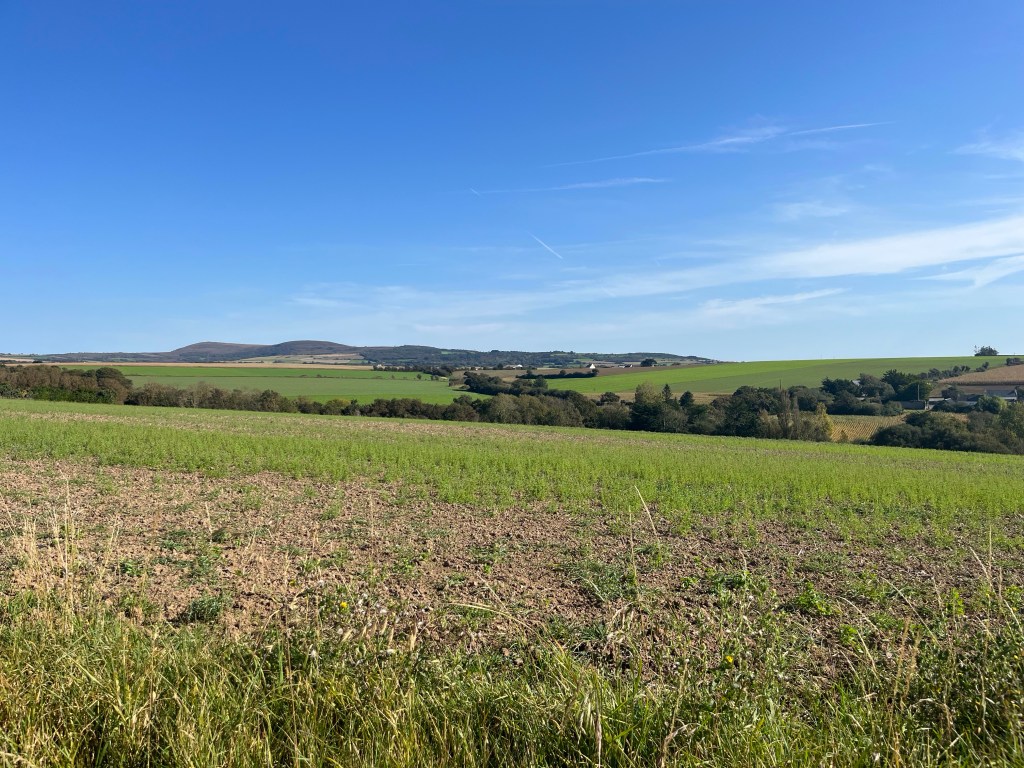
What we found was nothing like that…still beautiful, still fascinating, but something entirely different (as the Monty Python crew used to say). The south coast is mostly flat, maybe a few rolling hills, and dotted with beautiful white sand beaches in between low rocky outcroppings. Southern England, maybe, not western Ireland.
Many beach towns with their white washed houses had sprung up to take advantage of the mild climate, luring hordes of Parisians wanting sun, sand, and water. Instead of pines and heather, we saw palm trees, clearly planted to help enhance the beach aesthetic.
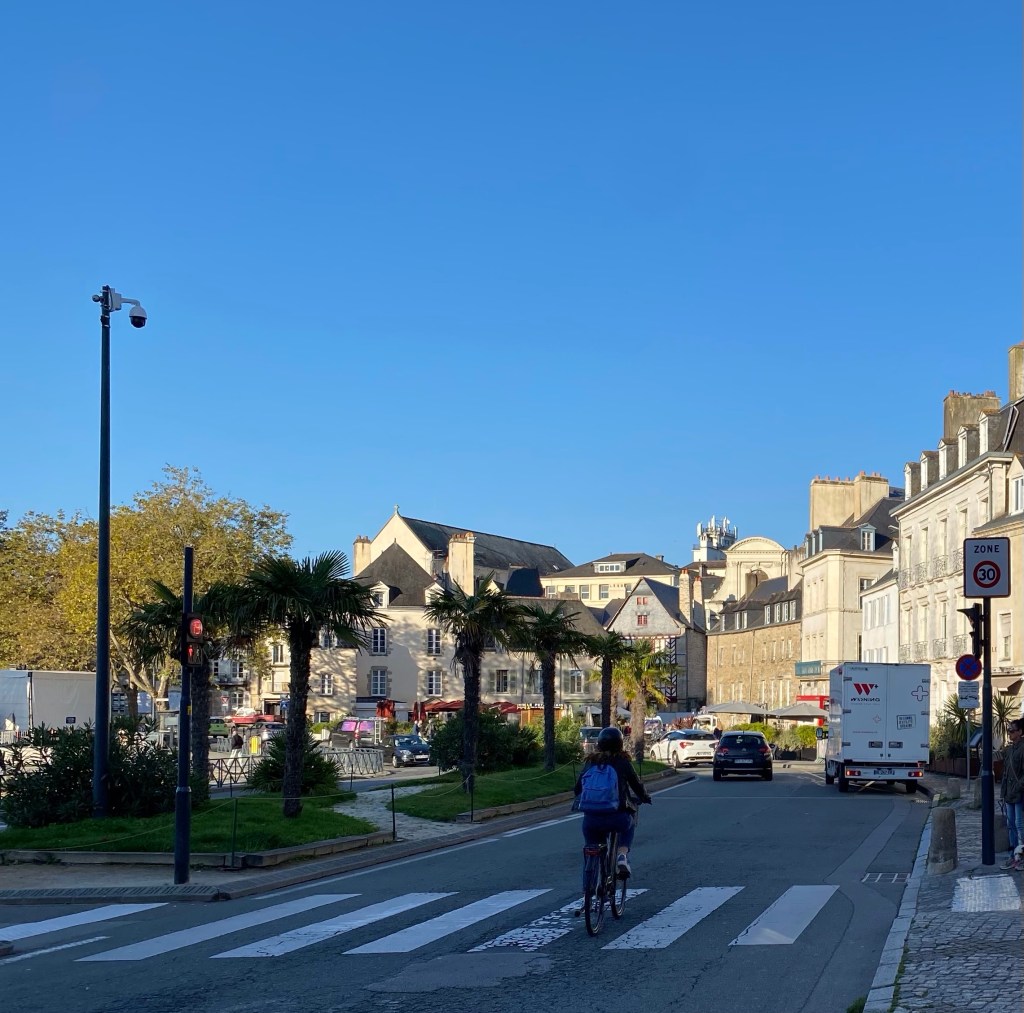
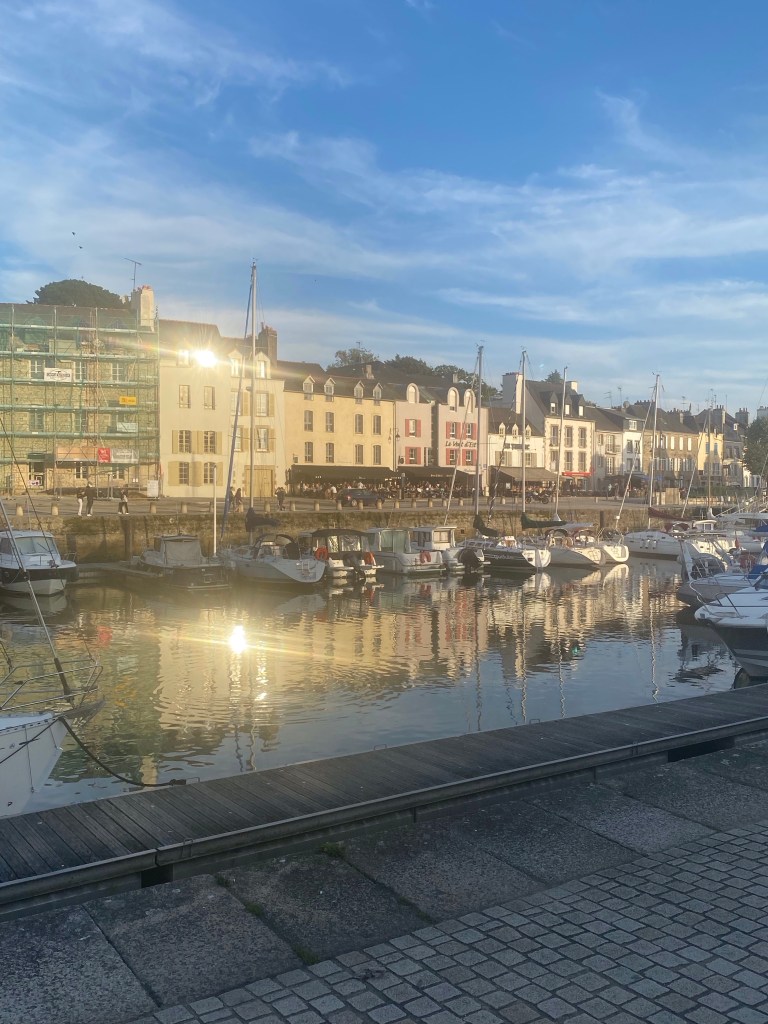
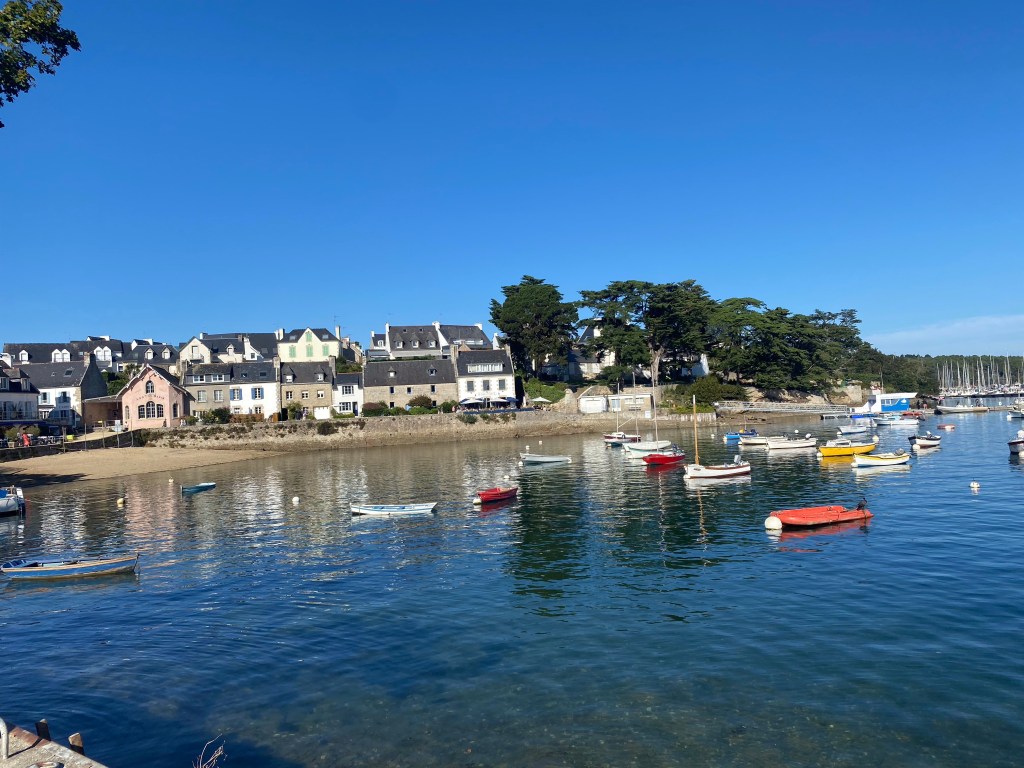
Vannes beside the harbor

And lots of yachts and sailboats.

Vannes harbor

And in the middle of October, when we were there, people were still swimming. We were tempted! A definite surf vibe with a French accent and slightly Victorian look.

We were also surprised at how densely populated the south coast is. Suburban developments everywhere, done in a Breton style but clearly modern. Retirement communities? We weren’t sure, but judging from the age of locals, highly likely.

Quiberon, with a parking lot for summer tourists almost as big as this beach

Many towns like Vannes, Quimper, and St. Malo all had beautiful historic centers filled with half timbered buildings, cobblestone streets, and gorgeous churches and cathedrals—which we did expect.
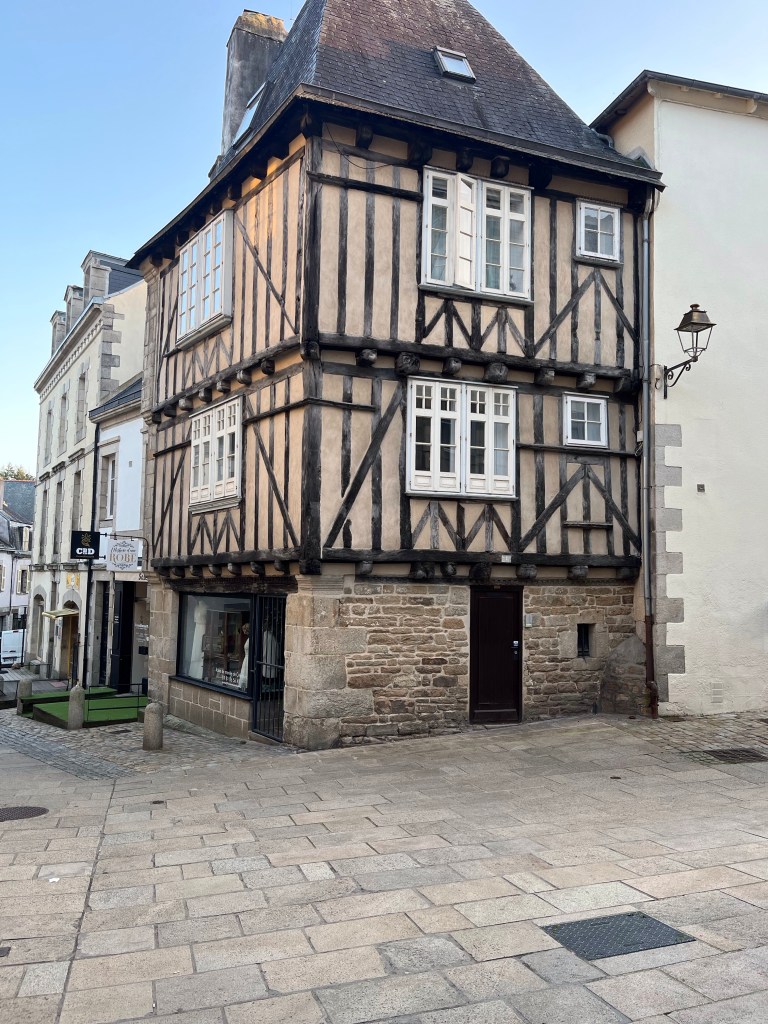
But it turns most had to be rebuilt stone by stone after the massive bombings following the Allied invasion of France in 1944. That explained why you often saw a modern monstrosity next to a beautiful medieval building. The coastal cities and towns of Brittany, like Normandy, were heavily fortified by the Germans and fighting here was ferocious. Some cities like L’Orient and Brest never really recovered. L’Orient, for example, was subject of repeated attacks because of the giant German submarine base located there. The base was so well built it survived all efforts to destroy it, and later became a French naval installation. There is an excellent museum and you can tour a decommissioned French submarine.

The northern coast looks more like our misguided expectations—a little more rural, more rolling hills, and rockier. Small rock islands dotted the bays. But still far from the wild Brittany of our imagination.

Near Pointe du Grouin

What we did find were some real gems. St. Malo with its massive walls behind which lies a gorgeous old city—even if it was painstakingly rebuilt over 35 years after the war. It has a great maritime past with connections to explorers like Jacques Cartier (who sailed up the St. Lawrence river and founded Montreal, Canada), and privateers and pirates like Robert Roscouf.
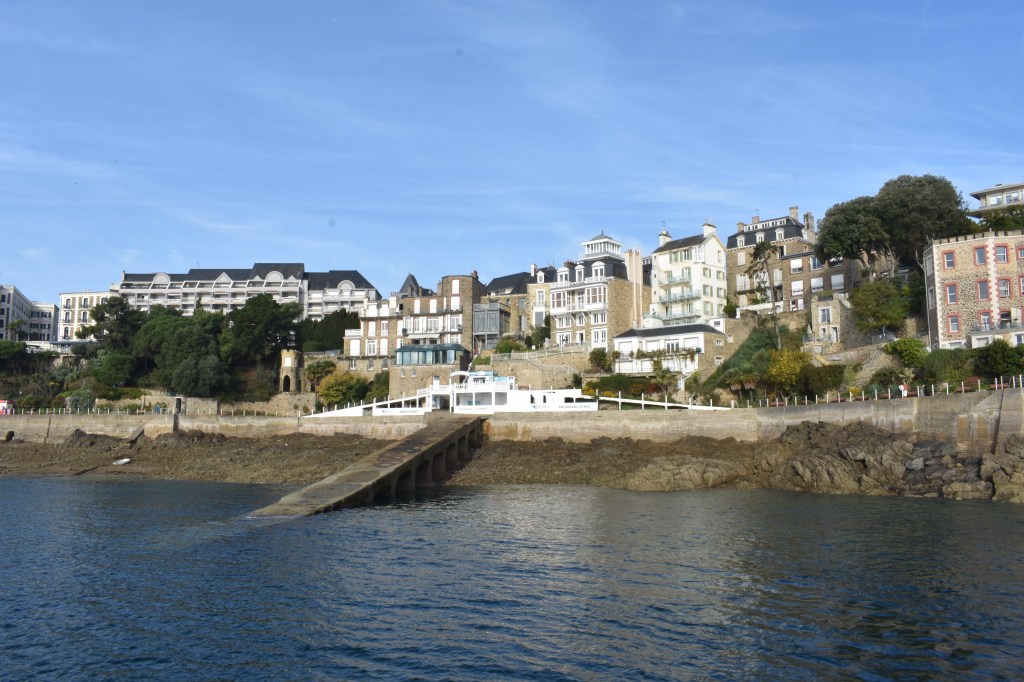
Town of Dinard, a short ferry ride from St. Malo

Vannes had lovely medieval center with a narrow picturesque boat harbor on a river inlet. There were the little gems like St. Marine, a tiny seaside village, where we had lunch with a cousin of a friend, and Locranan, a picture perfect stone village in the heart of Brittany outside Quimper.
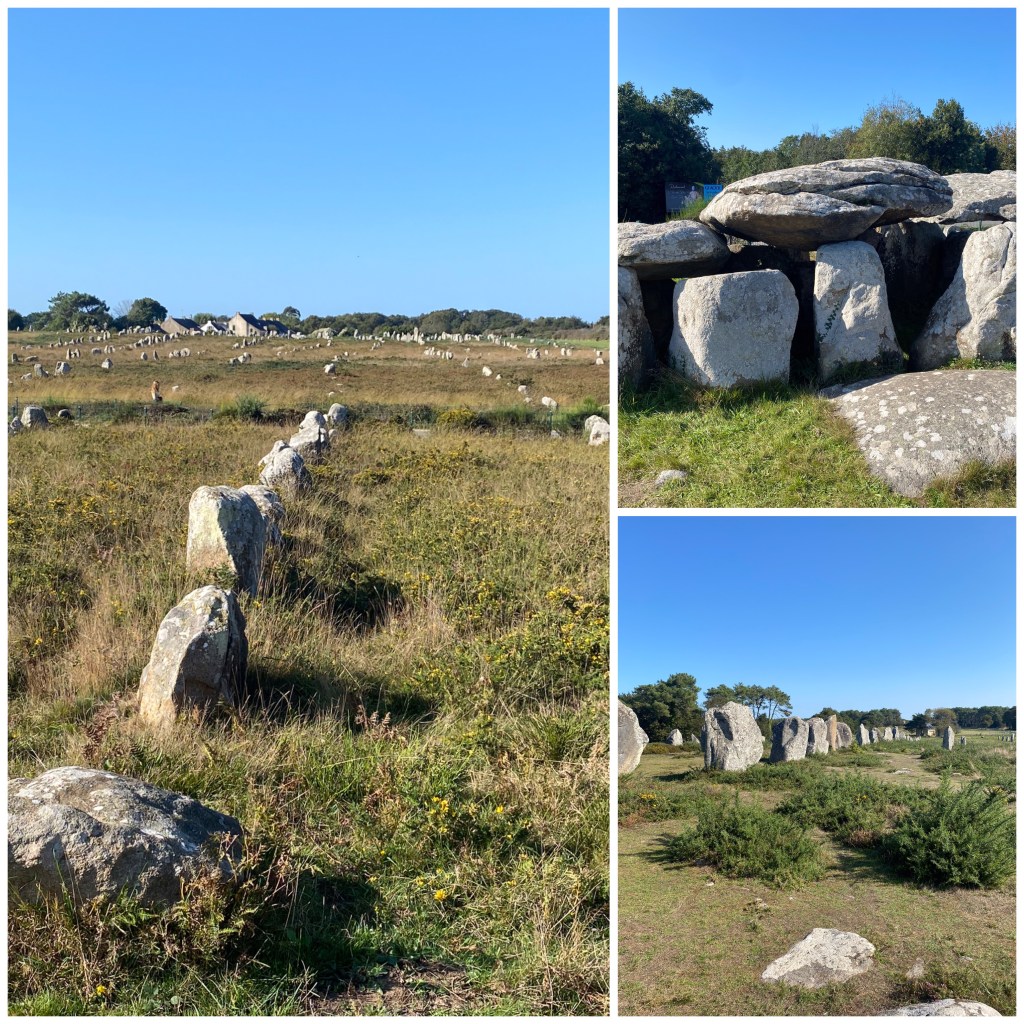
And then there were prehistoric stones at Carnac. The scale and size of of the “alignments”, as they’re called, dwarfs anything we had ever seen, including Stonehenge. Literally thousands of monoliths in long rows, stretching for several kilometers. Of course, no one really knows their purpose or really much about them, except it was a massive building project even by today’s standards. We had read about the stones so it wasn’t really unexpected, but the sheer scope was.

.
Not everything surprised us—we did get some things right. The food, particularly the seafood and dairy products—cream, butter, cheese—lived up to our every expectations. Creperies on every corner. Wonderful specialty shops. And the people were every bit as open and friendly as we thought they’d be, and the Breton culture was strong and clearly a focus of local pride.
We found Brittany a wonderful corner of France even if our expectations met a different reality. Sometimes a surprise is a good thing.
Brittany on Our Stomachs

Anybody that know us, or reads this blog, knows we are always interested in food, first and foremost. So as we started this trip over five weeks ago with a food tour in Bordeaux, we ended the trip with a food tour in St. Malo, Brittany.

Our guide was from Normandy, whose specialty was, not surprisingly, the beaches of Normandy. He said he was happy do our food tour, one he loves, but doesn’t get to do that often. We then proceeded to go on a whirlwind shopping trip with him.

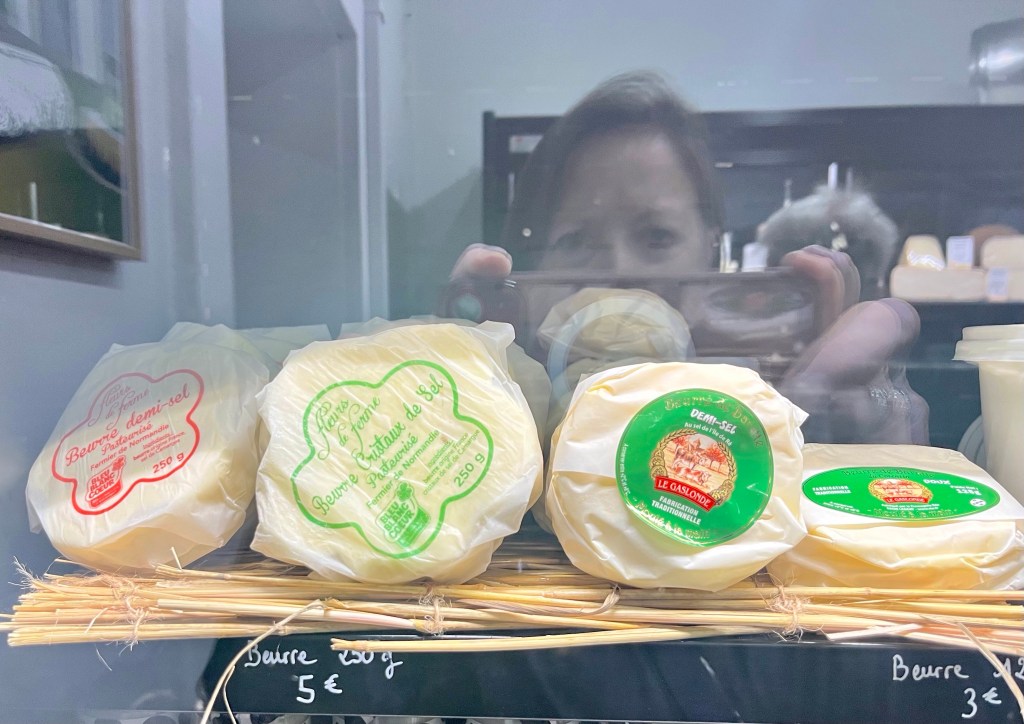
First stop was a cheese and butter store [http://www.lesfromagersmalouins]. Brittany is known for its butter, crammed with as much richness and salt as possible. We had tasted good Breton butter from a supermarket in St Cyprien. Definitely better than anything at home, including the Amish butter we splurge on during the holidays. Unfortunately the store in St. Malo was out of Breton butter so we had to settle for Norman butter. The staff asked me if we wanted deux butter (little salt) semi-sel or regular and nodded approvingly when we bought the entire inventory of “full salt” butter — 2 packages to take home to savor.

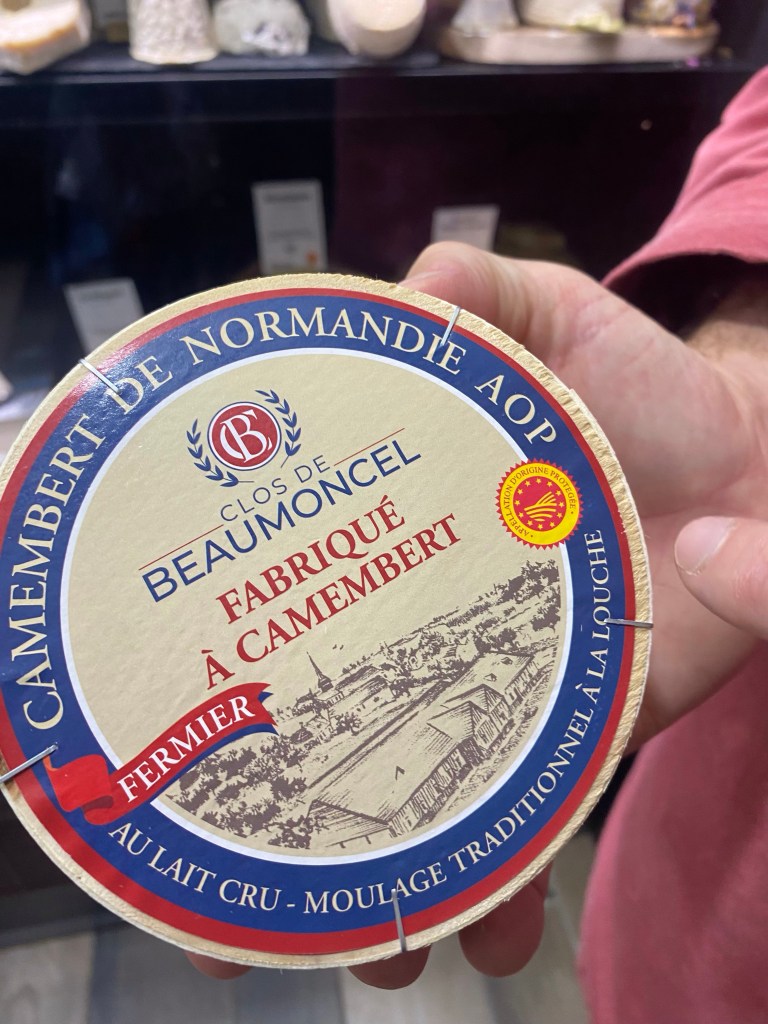
He also guided us to try several cheeses to eat with a baguette and espresso before we continued the tour — a brie (with a layer of a curry spice mix that started as a medicinal remedy. Unfortunately, our quest to find the spice was unsuccessful despite checking in several shops). Then a Timanoix (a semi- soft cheese with an edible rind washed in a walnut liqueur) and finally, a Camembert, again a Norman cheese. Did we detect a cultural bias?

We also opted the take some cheese home to enjoy later — a great Roquefort, some more of the Timanoix and the curry Brie.

Fortified with espresso and a “light” breakfast we headed to a spice shop. St. Malo has always been a trading center and home to privateers and pirates, and unfortunately slave traders.

Window display in an antique shipping crate

It was the center the East India Company’s continental trading post. Epices Roellinger, started by a retired 3 star Michelin chef and now run by his family offered a mind boggling assortment of spices. The selection of peppers alone — Vietnamese, Cambodian, multiple Indian, Sichuan and many more overwhelmed us. All with a different degree of heat and different tastes. We bought a red black pepper from Cambodia simply because it seemed the most unusual, but still fit within the foods we cook at home.

The choices of a dozen or so different vanilla beans (we smelled several and were amazed at the differences) blended curries, shelf after shelf of other spices and variety of dried herbs were too much to take in. We needed hours here to take full advantage of the options.

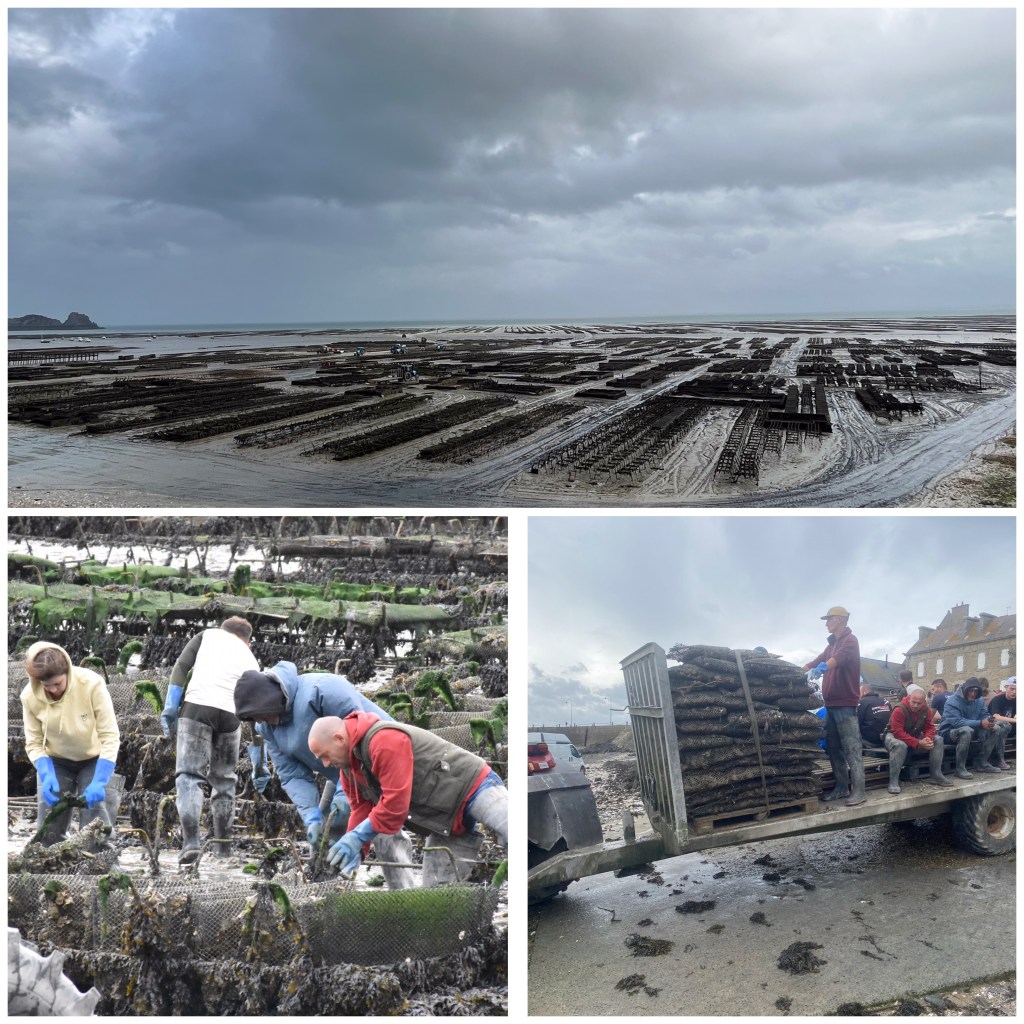
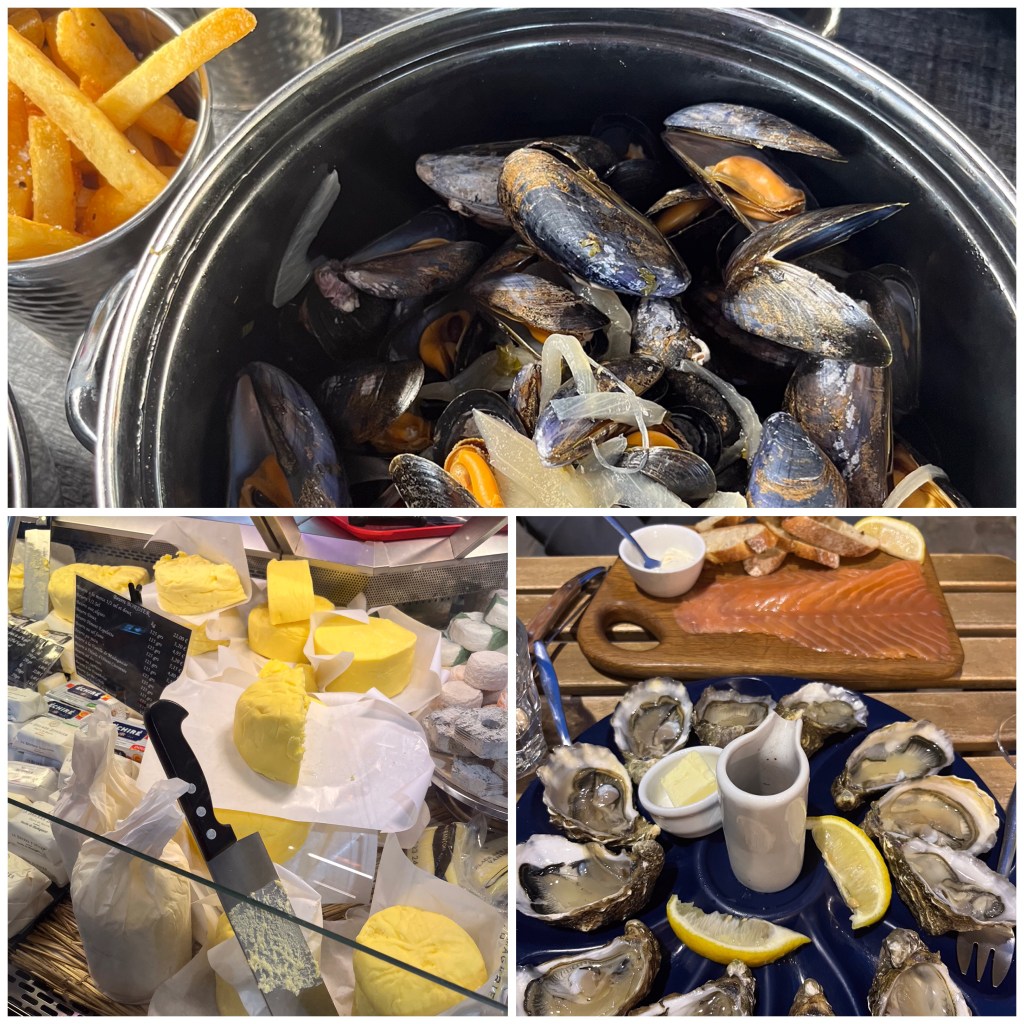
Of course, Brittany is famous for its oysters. We have been sampling them since we arrived in Nantes almost two weeks ago. But the size of the operation in Cancale — just one of many such operations along the Brittany coast — was astonishing.

The bags of oyster are cleared of seaweed, loaded onto trailers and moved into different areas for exposure to different parts of the sea, we were told.

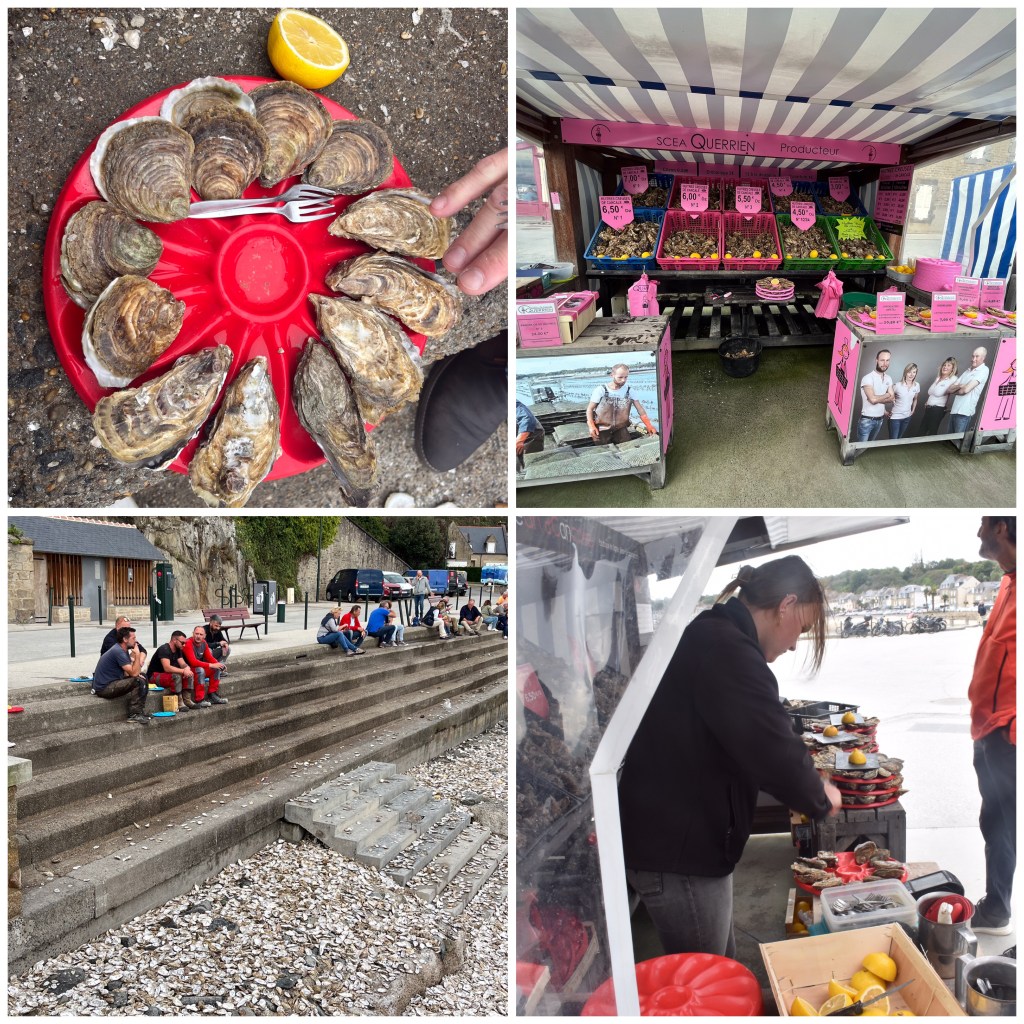
Just above the oyster beds, a collection of striped tents offered local oysters for sale, shucked right in front of us. Of course, we had to share a plate of oysters — a variety pack. Unlike at home, the smaller oysters are considered a rip-off (too little meat for the price) and French connoisseurs prefer the four year old #4’s. Actually the #4’s were pretty small and delicate. We joined the workers on the steps by the beach, slurping away and tossing the empty shells for the seagulls.

Then we headed across the street to lunch.

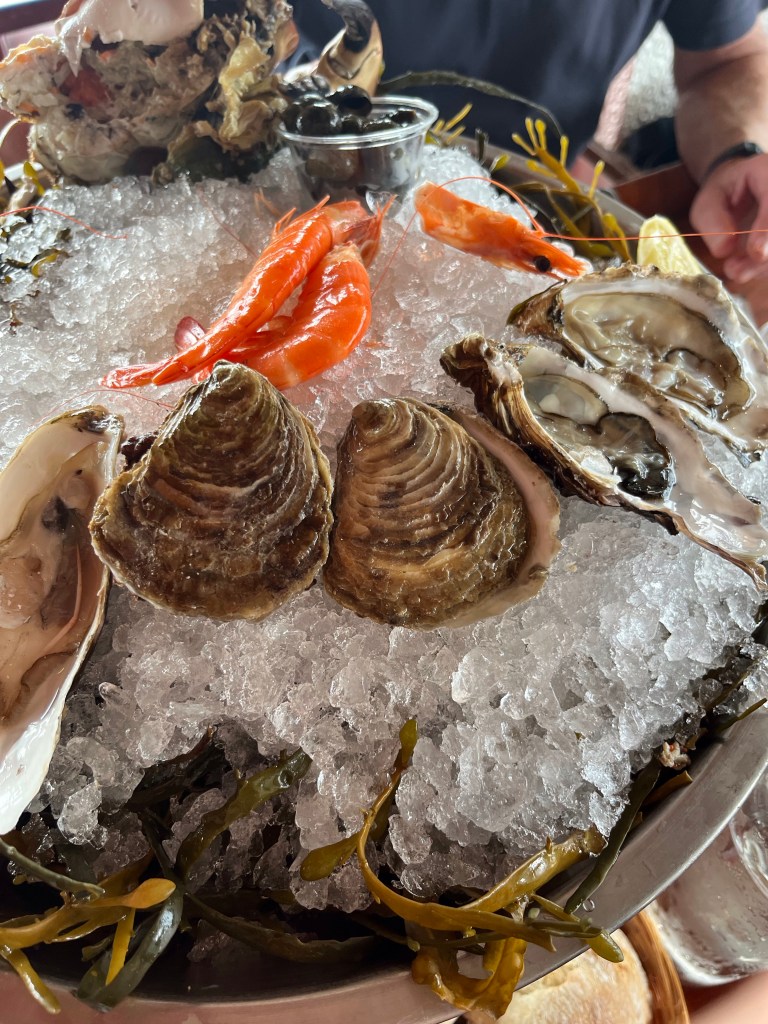
Unfortunately we had half devoured the platter before we remembered to take a picture — langoustines, more oysters, a local crab, periwinkles, cockles and more.

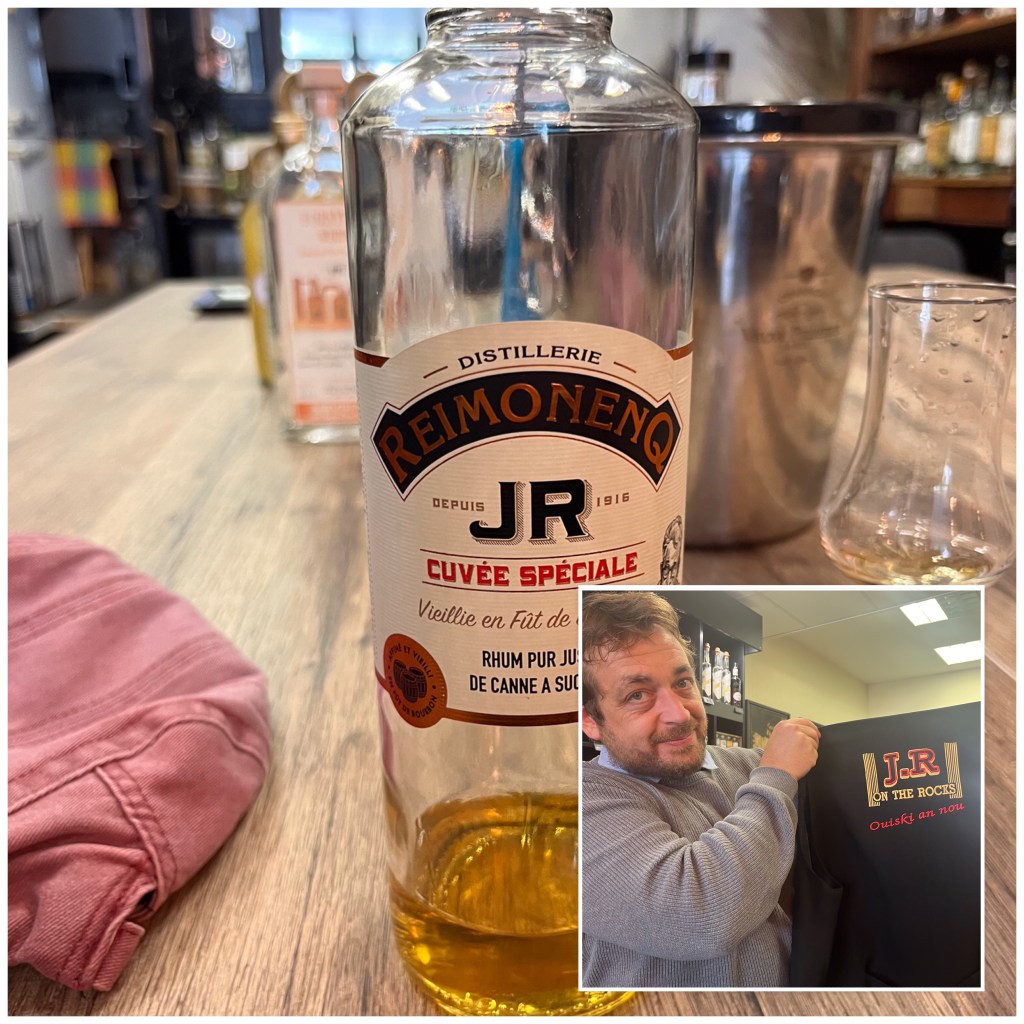
Stuffed from a platter of fresh seafood, we headed for a rummery. Yes, a rum store—filled with artisanal rum from the French West Indies.[https://www.officinearhum.fr/]. What we didn’t expect was a lesson in rum tasting (quite different from wine tasting) and a locally produced sipping rum named after the character JR from the TV show Dallas. We had to buy a bottle. Wish we had more time to talk more with the owner-distiller whose shop resembled a science lab with hand labeled specimen bottles stored in an old apothecary cabinet. Several small casks of spirits being aged. A delightful man with a clear passion for rum! If you’re ever in St Malo, look him up.

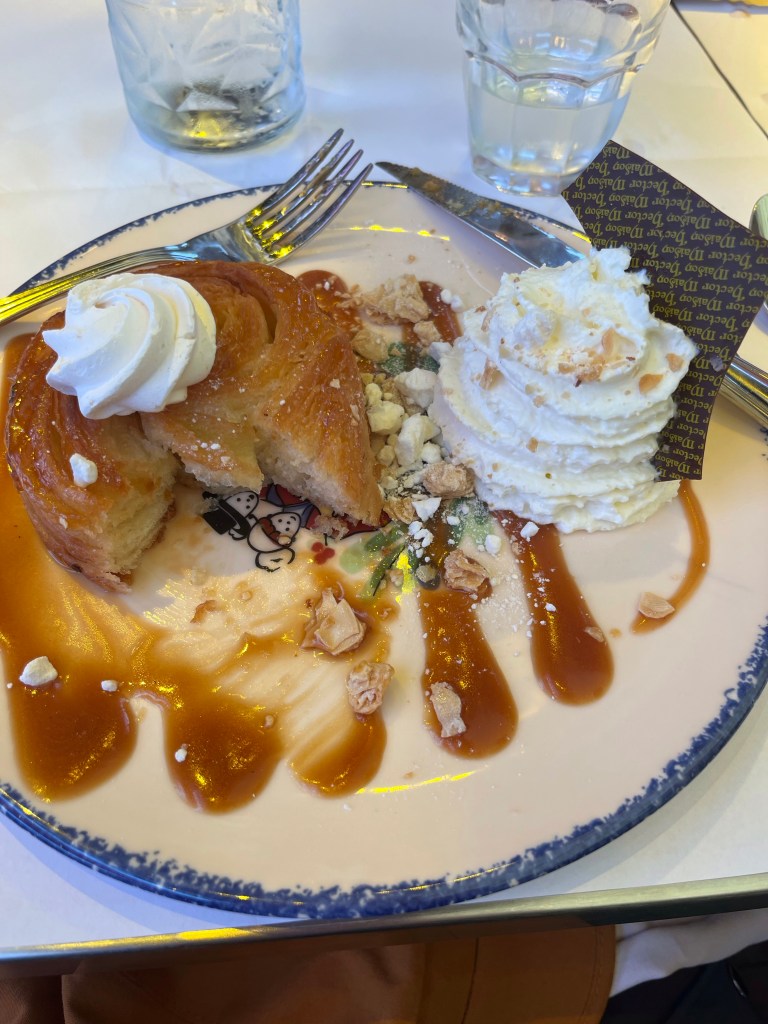
With full stomachs and a bit of rum, we were ready for a nap. But we had one more stop on our food tour. We had read about a Breton specialty, Kouign-amann. Butter and carmelized sugar — what’s not to love. Again, the food tempted us before we remembered to record its beauty. A cross between puff pastry, a croissant and a cinnamon roll.

Needless to say, we skipped dinner that night.

Between these various treats we learned a lot about the region and France. Our guide, a former teacher, proudly told us about his one daughter studying at a vocational school to become a jockey and horse trainer. His other daughter was on track to become a dancer or a veterinarian! Typical eleven year old anywhere! He also provided a historical context to the towns we had visited — St Malo, Cancale, Dinard — which were all largely destroyed like much of the Breton sea coast after the allied landing at Normandy. Their pre-war appearance was largely replicated in the postwar era. And, of course, we talked politics — he’s no fan of Macron, France’s president, and politicians in general, except for DeGaulle. In turn, he wanted to know more about tenure for teachers and how our schools worked. [https://www.normandytour.fr]. He had learned his English as an exchange student in the California and on several subsequent trips to the US.

That’s one of the things we like about a food tour — as much as the food itself — talking while you share food and sometimes a meal gives you a chance to build some mutual cultural understanding.