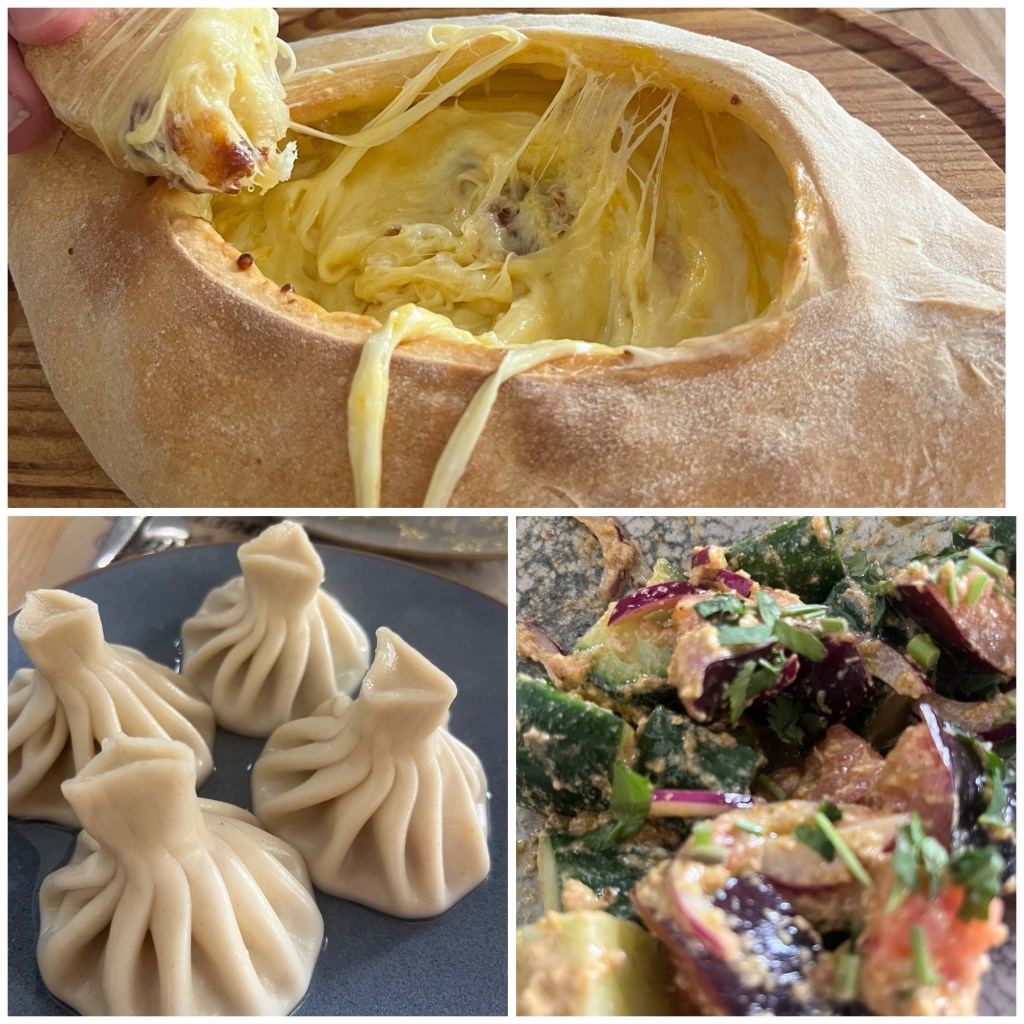
We are in a restaurant paradise. Ruzafa, Valencia. Can’t think of a place we’ve been that has a better variety and greater density of eating places. Nothing we’ve experienced compares to this place for sheer volume, quality and price. In an unremarkable stretch of three blocks near our apartment, we counted twenty-five restaurants and bars. And the variety is crazy. We’ve eaten Sardinian, Sicilian, generic Italian, Georgian (the country, not the state), Irish, Moroccan, French, Japanese, Asian fusion, Lebanese, Turkish. And, of course, Spanish—Valencian, Basque, Andalusian, Galician, Castilian.

We could live in this neighborhood for ten years and not exhaust all our restaurant choices. At one naive moment we thought we would count all the restaurants in the Ruzafa — an area of about 3 square miles. Foolish and impossible idea. We do have a friend here who maintains an annotated map of her top restaurants in the neighborhood, currently at 37. We need to start our own list.
So what’s the deal with all the restaurants?
What creates this incredible density of eating places?
We are trying to figure all this out. We have some thoughts.
Ruzafa is NOT tourist central. There are tourist traps and international big name chains in the old historic part town where all the major sights are — McDonalds, Burger King, Starbucks and HardRock. In tourist central, the signs outside are often in English. They hawk the Spanish tourist favorites—PAELLA, TAPAS, SANGRIA! But in Ruzafa, not so much. It’s not tourists that keep these restaurants hopping. These are small, locally owned places. The restaurants depend on return customers, not volume, and the price has to be right. We’ve sung the praises of the prices here—everything is dirt cheap by comparison to the US and Northern Europe. A good red wine last night at an outstanding Moroccan restaurant was 2.50€ a glass. Crazy! And the quality has to be really good with so many options to choose from.
Ruzafa is also diverse with lots of immigrants and expats. So many nationalities. So many different cuisines. Another lure to diners.

But still, why so many restaurants in such a small neighborhood?
Is it that Ruzafa is reputed to be “hip and trendy”? Attractive to those looking for a lively, fun area to dine. Near enough to historic center for those adventurous tourists willing to take a hike. And also walking distance from neighborhoods of upscale apartments and neighborhoods of hundreds, maybe thousands, of mid-century high rise apartments. That helps fill restaurant seats.
It’s also a real neighborhood where locals stay close to home to hang with their families and friends. In Ruzafa itself, lots of street level space for restaurants and shops, and customers living in the apartments above.
Ruzafa was a run down neighborhood a few decades ago. In a pattern many cities have seen, in moved the artists looking for cheap space. The gay community found a home here, too. Pretty soon the bohemian vibe brought in small bars and restaurants. And “suddenly” it’s hip and trendy corner of Valencia. We’ve been told rents here for commercial properties remain relatively low. So the take-away kebab places stand next to Michelin star restaurants. Both benefitting from low rent. It’s definitely a mixed up jumble of high end, low brow and everything in between.

Like many European cities, particularly in the south, Valencia has an outdoor culture. People live in the streets. And that is certainly apparent in Ruzafa. The street corners are often cut-outs like in the L’Eixample in Barcelona, creating more space for outside dining.
Many of the restaurants have only five or six tables inside and another five or six outside. Families or friends shove the tables together and hang out for hours, drinking beer, wine and spritzers — often with a play area for the kids in sight of the tables.
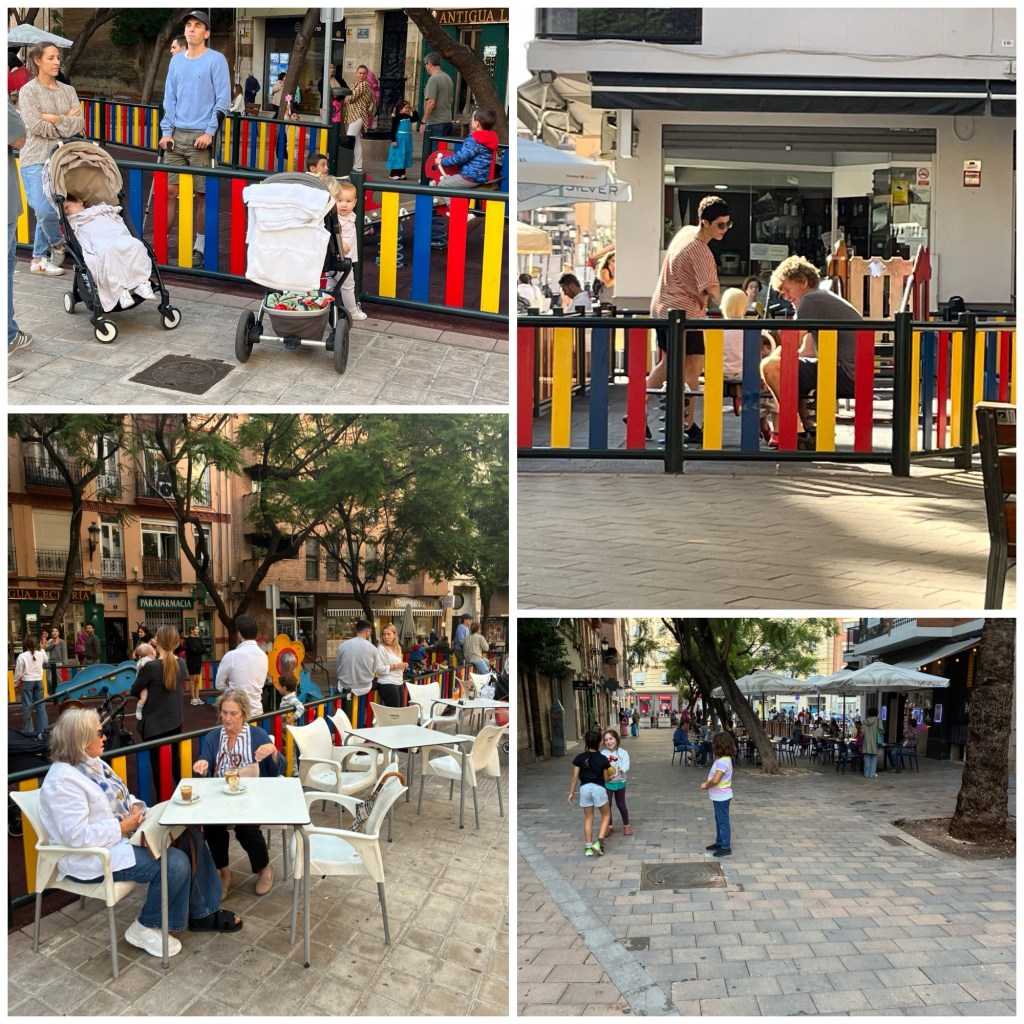
With only a few tables, one seating a night, you’d think these restaurants couldn’t possibly survive. And yet they seem to flourish. We thought when we first arrived and saw all the restaurants we could just wander out at night and grab a table. Not so. You need reservations almost anywhere other than the most casual places on a weekend night, and, by the way, the weekend here seems to include Thursdays and Sundays.
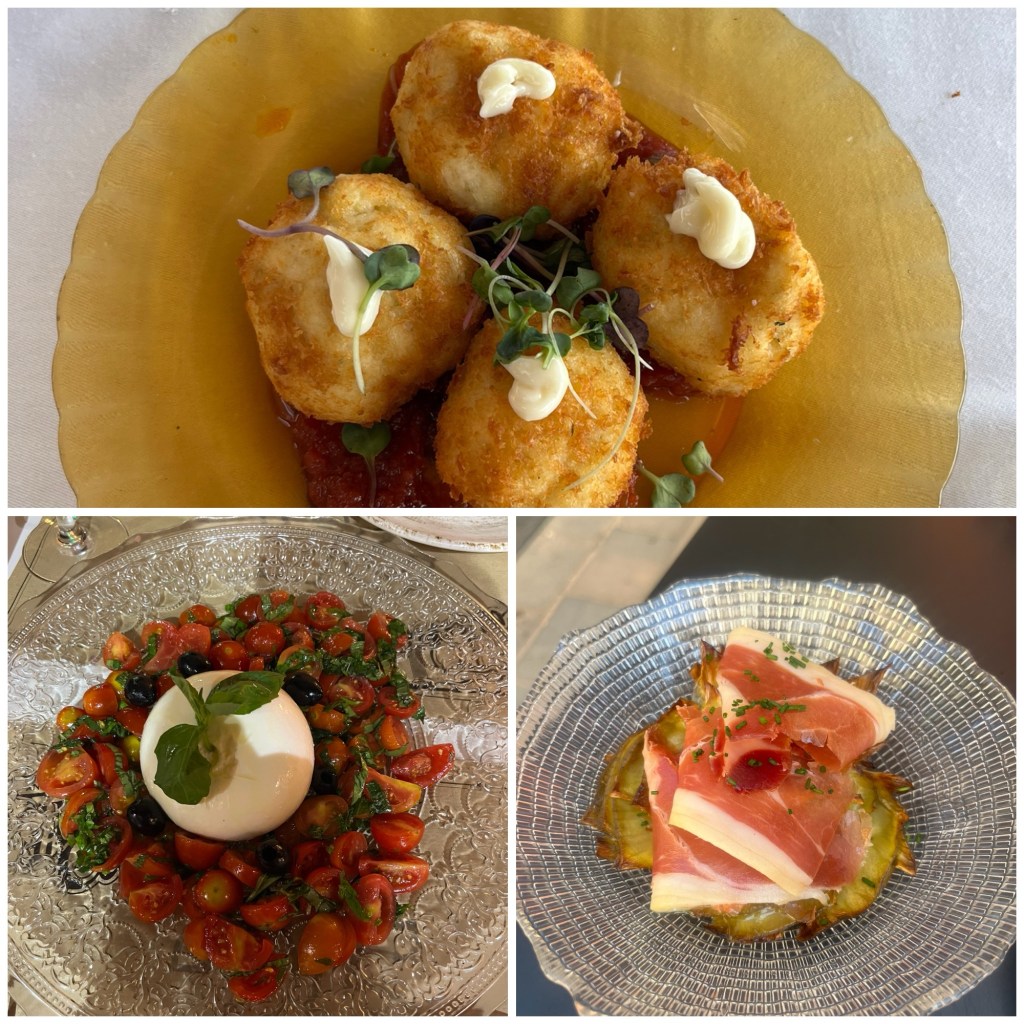
And then there is the quality of the food. Another draw. The restaurants rely on local ingredients. A short bus ride outside the urban center takes you past small truck farms that nudge up against the city high rises. The government and to some extent the EU subsidize the local farmers keeping quality high and prices low.

Across from our apartment in the Mercado, there are 29 butcher and charcuterie shops. Twenty-nine! 19 fish stalls! Everything is fresh. We asked at one stall for oranges. Come back in 10 days or two weeks and the local oranges will be in, the lady said. Maybe that’s why most restaurants change their menus with the seasons. And, in some cases, like our local osteria, the menu changes every day depending on what the chef finds that day.
Does good seasonal food keep folks coming back? Is that enough to keep all these places going?
We don’t really know. We’re here for two months, with several weeks to go. So we still have time to try to answer the question, ask our expat friends for more information and formulate more theories. In the meantime, we’ll enjoy another meal out.

 Chasing the Good Life
Great pics of wonderful food! Yes, the gym membership was a very good idea!
LikeLike