A different way

Hotel rooms are a drag when you’re gone for several weeks.  Dinky little bathroom sinks for washing clothes.  Sitting and sleeping on the bed.  The noise of doors up and down the hallway slamming.  That’s why we prefer plunking down in one spot,  renting a house and doing day trips.  But sometimes that isn’t practical, or sometimes you have more ground to cover than a day trip allows.

This is the first extended trip we’ve done entirely by airbnb’s. We have used them before here and there, for short stays in the states or as one option for a night or two on longer trips. But in Sicily we chose five airbnb’s and one agriturismo. No hotels. Here are our take-always.

There’s a bit of anxiety when you’re in a country where you don’t speak the language, the phone system isn’t familiar and there’s no front desk to greet you. While each place gave us good directions (sometimes too detailed) and adequate contact info (addresses, emails, phone numbers) one way streets, driveways that shot off at 180 degrees from the main road and country roads caused some confusion. No real problems, just a tense moment or two. In a three week trip, no big deal. If you only have a week, maybe you don’t want the hassle. 

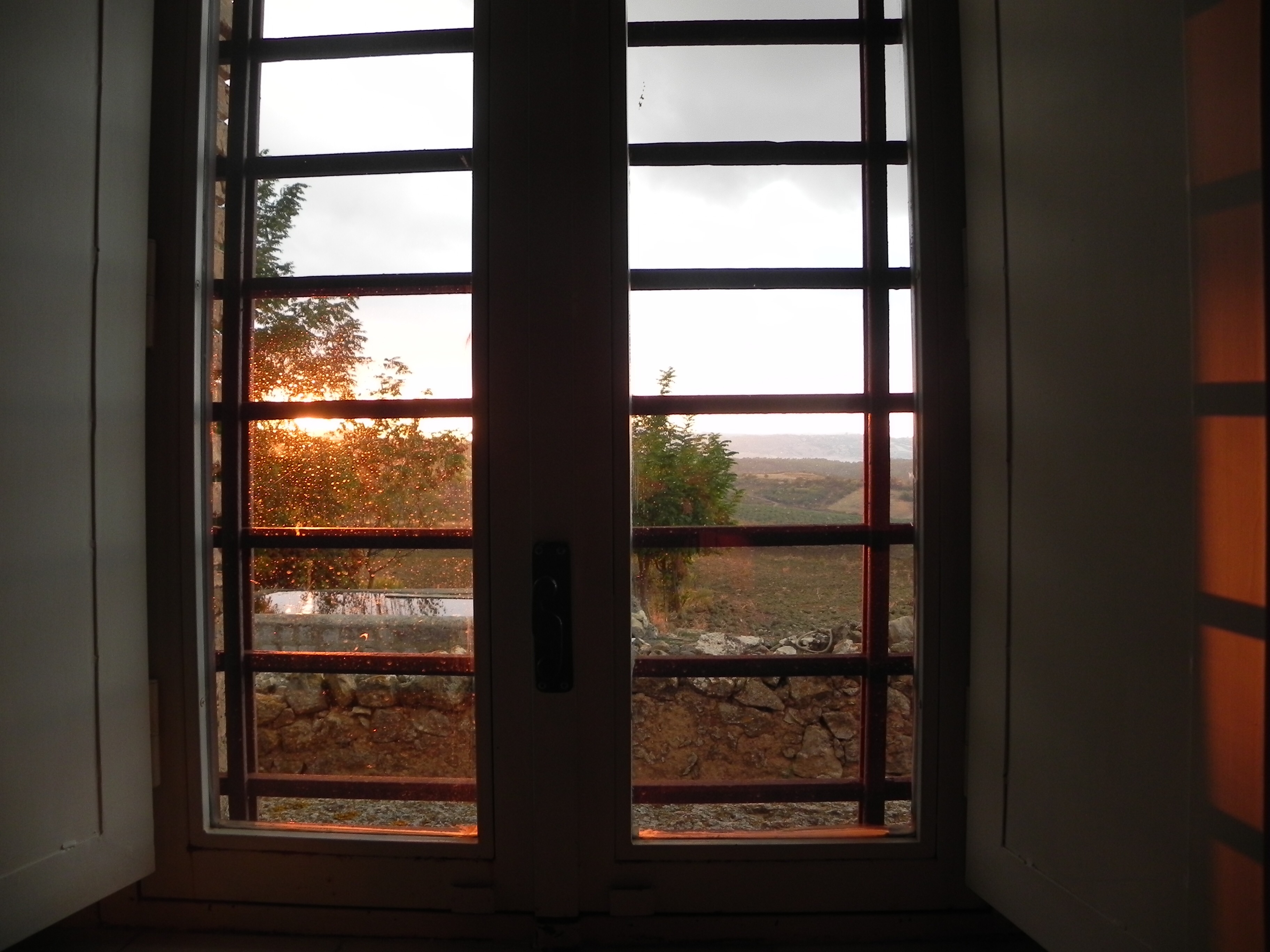
Not all airbnb’s were what they appeared to be online. While all were good — modern or historic, or someplace in between — they were not always quite what we had anticipated.  It didn’t seem to matter if the units were one in huge complex, or just the ground floor of an old farm house, each had its surprises.  One had a drop dead view not quite captured online.  And we didn’t expect to be awakened by the construction sounds.  Figuring out the locks and keys was more complicated than a hotel key generally is.

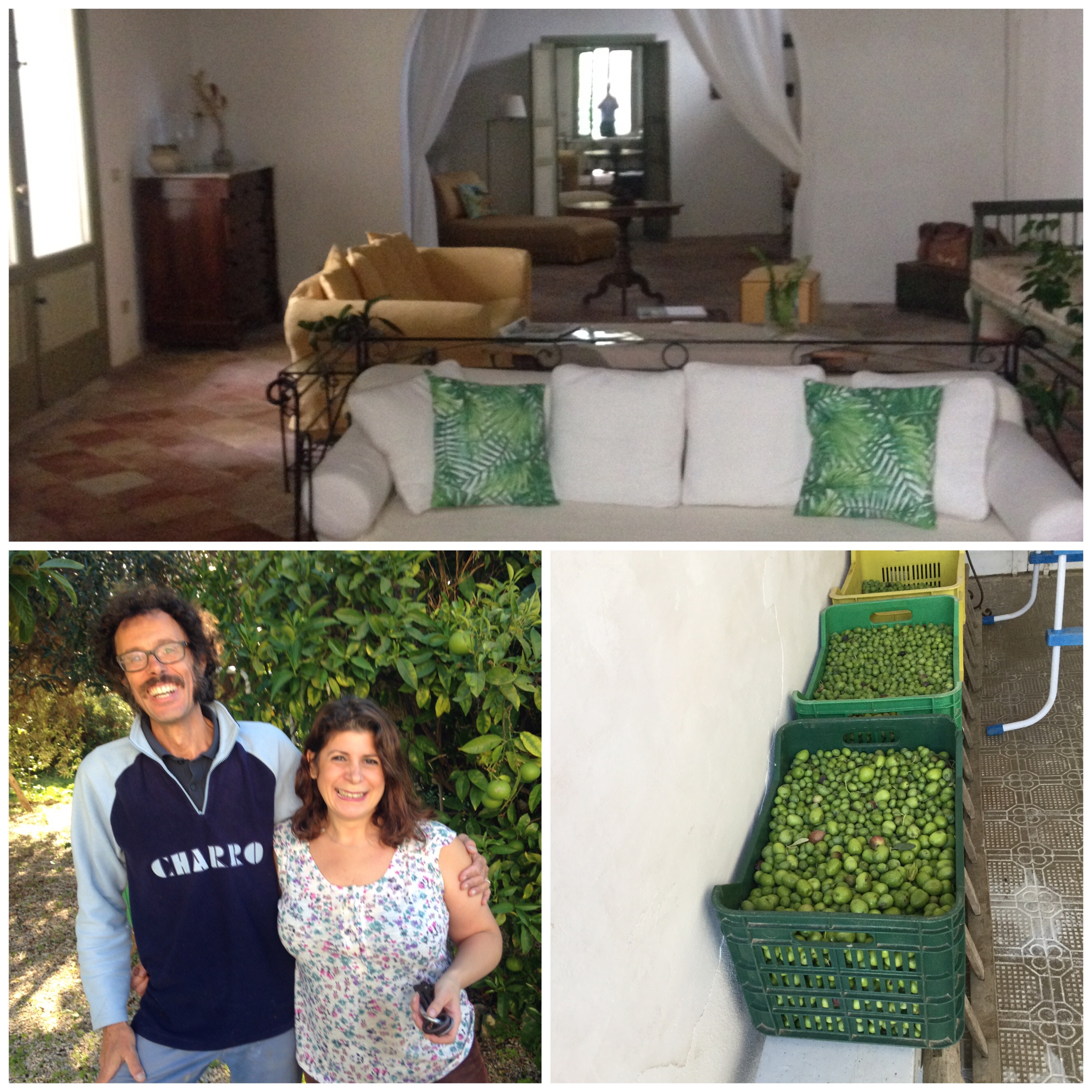
Our hosts often made our day!  A retired woman in Cefalu who left us three umbrellas in case it rained, (it did — a torrential downpour while we lunched under patio umbrellas) beach towels for swimming and pointed out on the map all best markets. In Palermo, we talked schools and education with our host. In Trapani we got to watch the family harvest their olives (some huge ones for eating and smaller ones to be pressed for oil) and enjoy their home that had been in the family for 300 years.
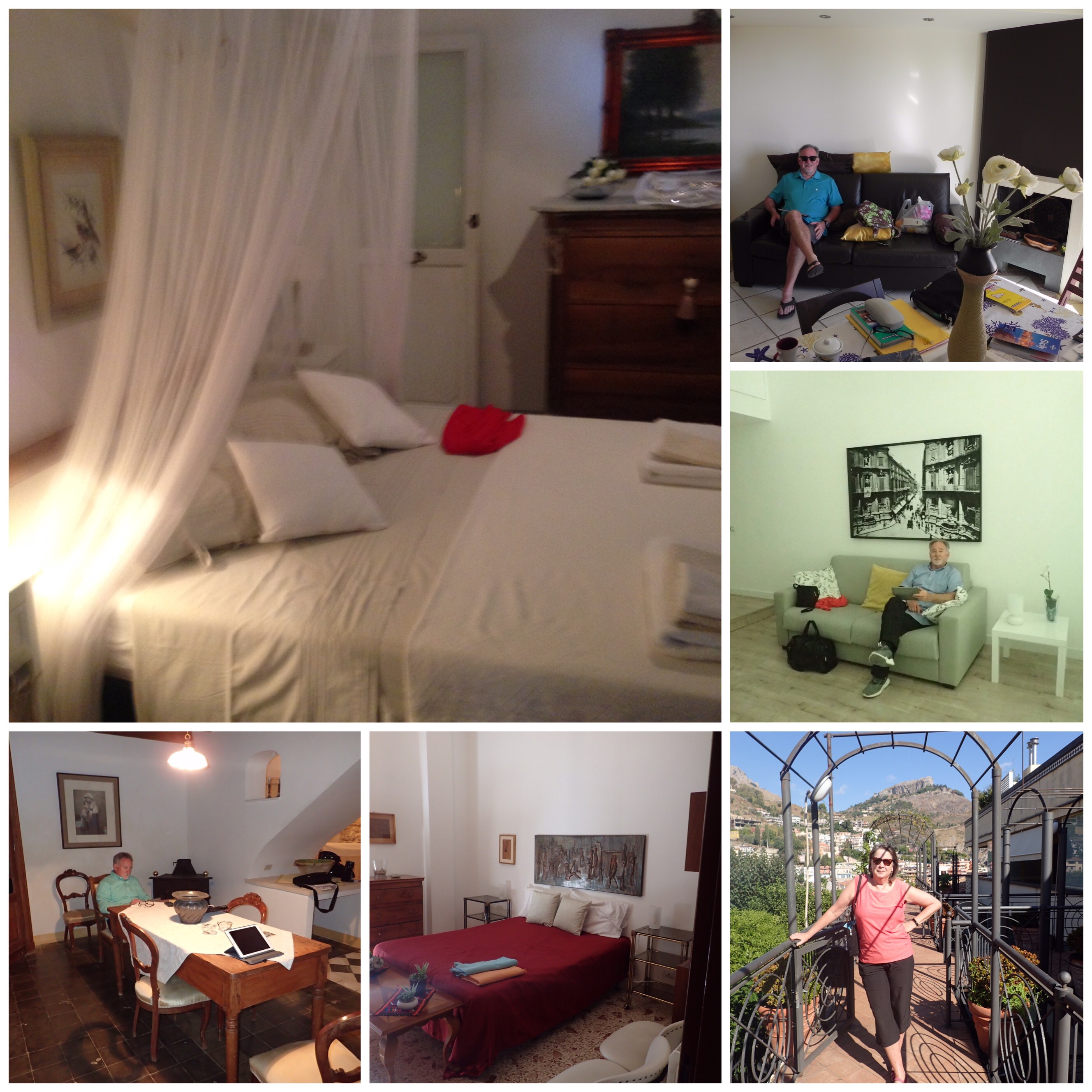
We stayed two to five nights at each airbnb. And when we weren’t out touring, we had a table for writing, places to layout the map and comfortable chairs for sitting. Just like home. We love the space of an apartment over a hotel room. And we loved being able to fix a breakfast before we ventured out each day. And sometimes we almost felt like a local, nodding to the neighbors who were also sitting breakfasting on the balcony  or enjoying an evening glass of wine.  And doing laundry in a real machine instead of the sink was heaven.  Having a pool, sometimes even a private pool, made us feel decadent.

Except for three places, wifi was a problem. Sicily’s infrastructure may be the real problem. And while we’ve had connection issues before in a hotel, at times we were frustrated on several occasions on this trip, unable to stay connected. In a hotel there might have been some recourse. In an airbnb you go with the flow or lack of a flow. However, we were always able to find a cafe or restaurant that had wifi (and a very entertaining evening at a bowling alley in search of connectivity) so we were able to do e-mail, check the news and do a little writing.

The  key to successful stays at airbnb’s is very careful reading of the online description.  Do your homework!  Pour over whatever pictures are available and note what they don’t show you.  We not only read the descriptions, and re-read the descriptions but also read the reviews, looking for our specific red flags — noise, location, accessibility of host.   Locate the unit on google maps.  Check out the neighborhoods online or in guidebooks.  And know what you want.  Elevator or are you willing to up up flights of stairs?  Check on parking if you’re renting a car.  Gotta have all the conveniences of home?  Go for a modern place.  Want charm?  Look at older buildings.  It’s hard to find charm and all the conveniences we’re accustomed to at home in one place, at least on our budget.  And be ready to roll with quirks you find in any home.  If you want predictability, stick with hotels.

Of course, one of the big advantages is the cost. Often airbnb’s cost a third to half of what a hotel room might be. It seems like a really good value to us — more local flavor, more room, and ability to do some simple cooking.  
Palermo

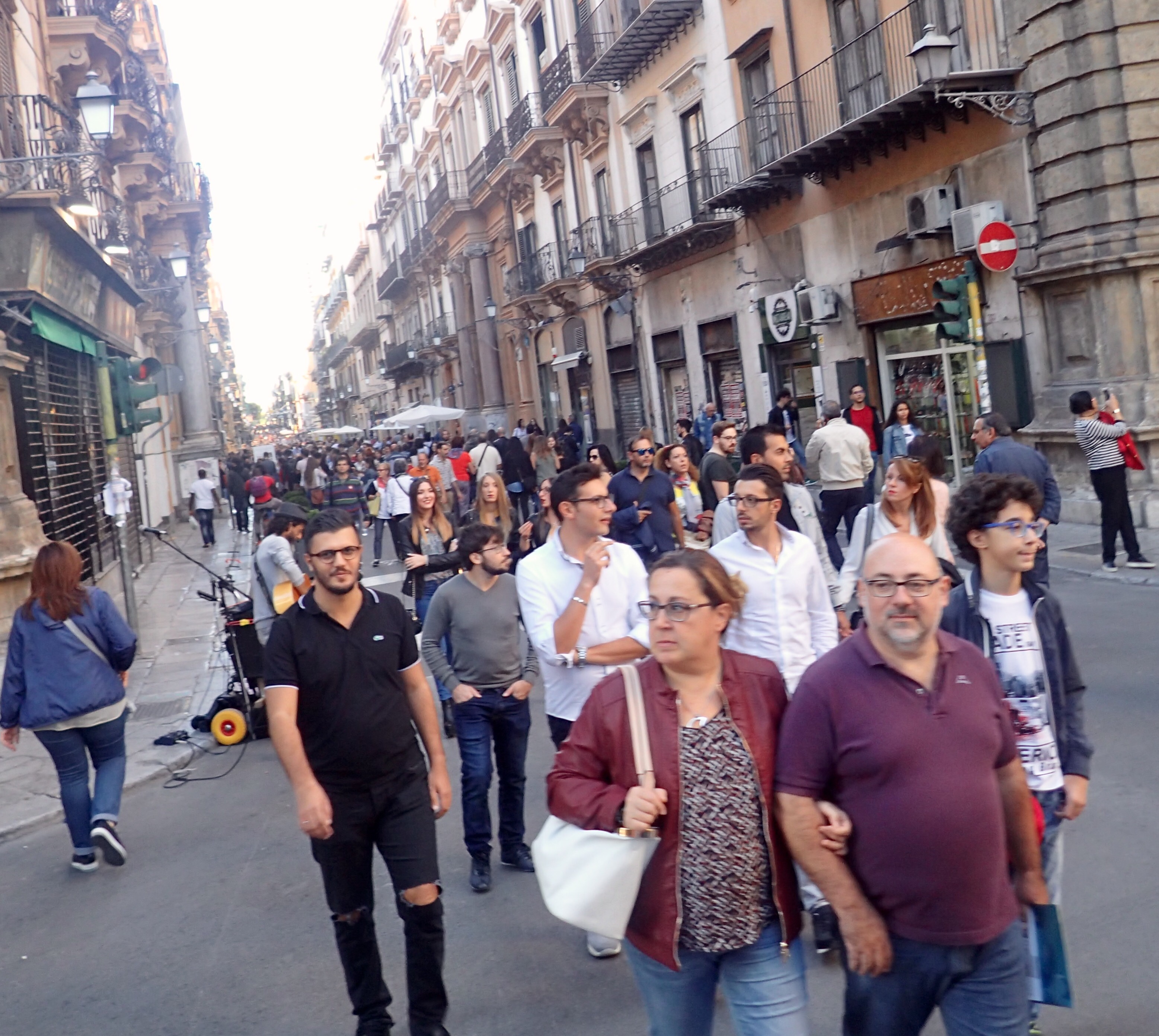
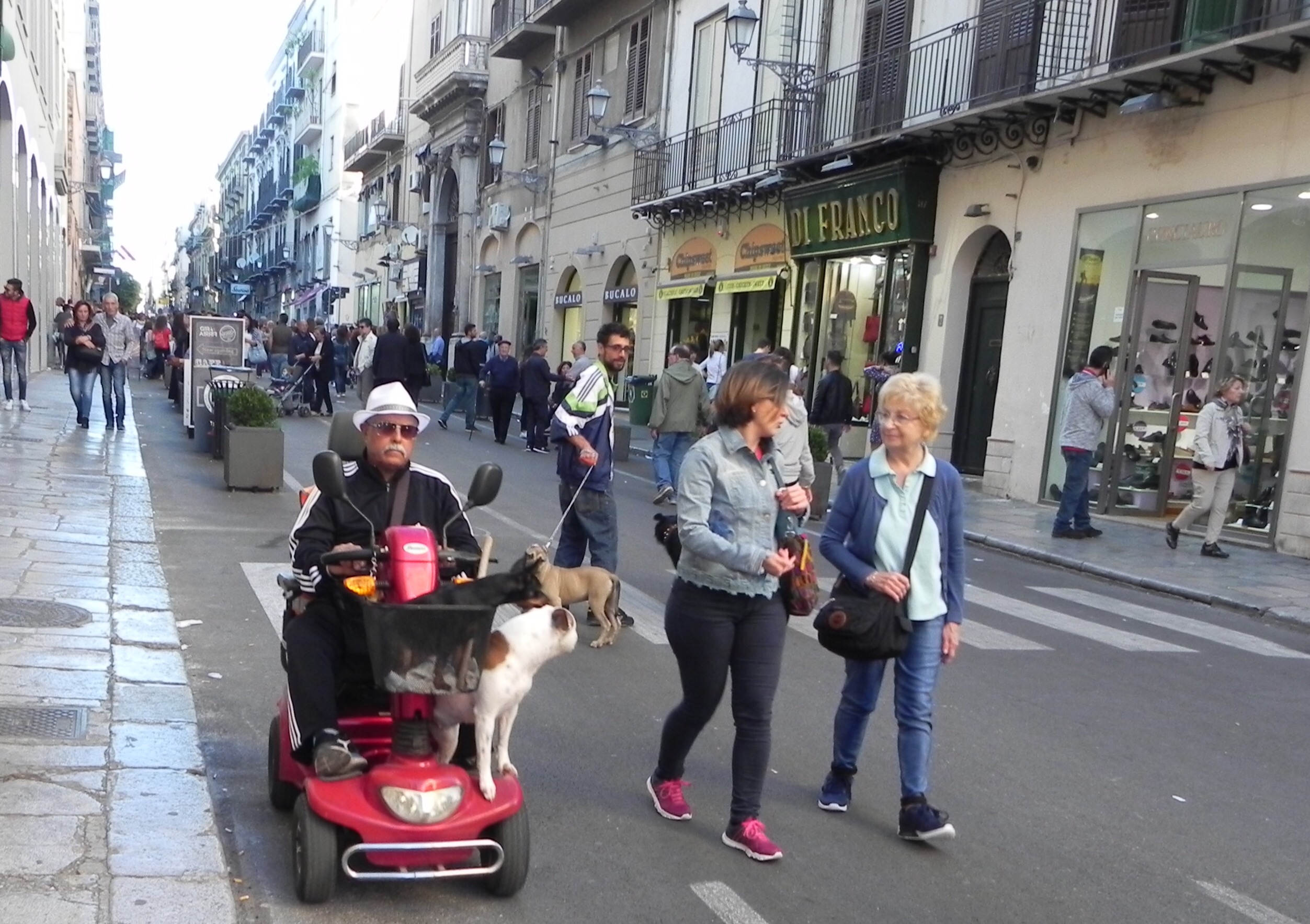
Palermo is a hard city to categorize. Our first impressions of the city on a Sunday afternoon were very positive. If a million plus people live in Palermo, at least half of them were out doing the passiegetta, the long, slow stroll Italians everywhere do to see and be seen. Palermo closes one of its main streets, Via Marqueda,  to traffic for a kilometer or more. Just pedestrians, and a random bike or Vespa or two.  


Groups of teenagers, elderly couples, families with strollers.  Folks walking their dogs.  About every block or so a street musician, including a skinny blond singing Elvis’s greatest hits. Lively and crowded, it reminded me of a carnival or street fair.   

 
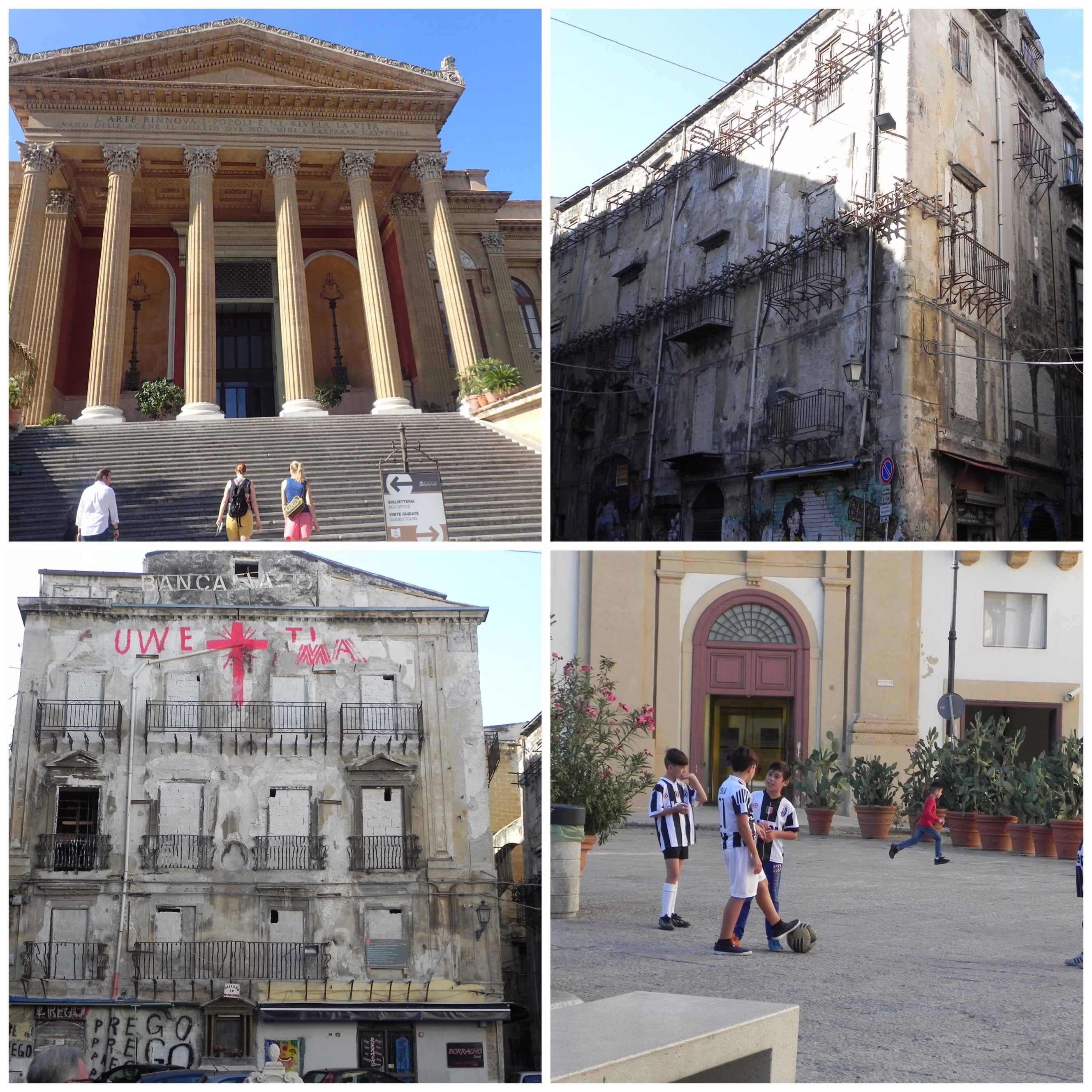
Monday morning showed a more subdued town and much more of the dust and grit Palermo is famed for. The old historic part of town is relatively small and imminently walkable. But Palermo is not a provincial Rome, despite the Roman, Norman, and Arab history. There doesn’t seem to be separate sections of town — either a “good” or tourist, or run down neighborhoods. All are mingled together. We wandered from one street corner to another, never knowing what we would find around the bend — derelict buildings, a street of cafes, or a magnificent palazzo or church, or kids playing.


We had heard Palermo described as the litter capital of Europe. And while we saw a few informal garbage dumps in the countryside, and some dried up fountains were used as garbage receptacles, the capital didn’t strike us as any more littered than any other densely packed city.  In fact, better than some we’d seen. More graffiti perhaps.   

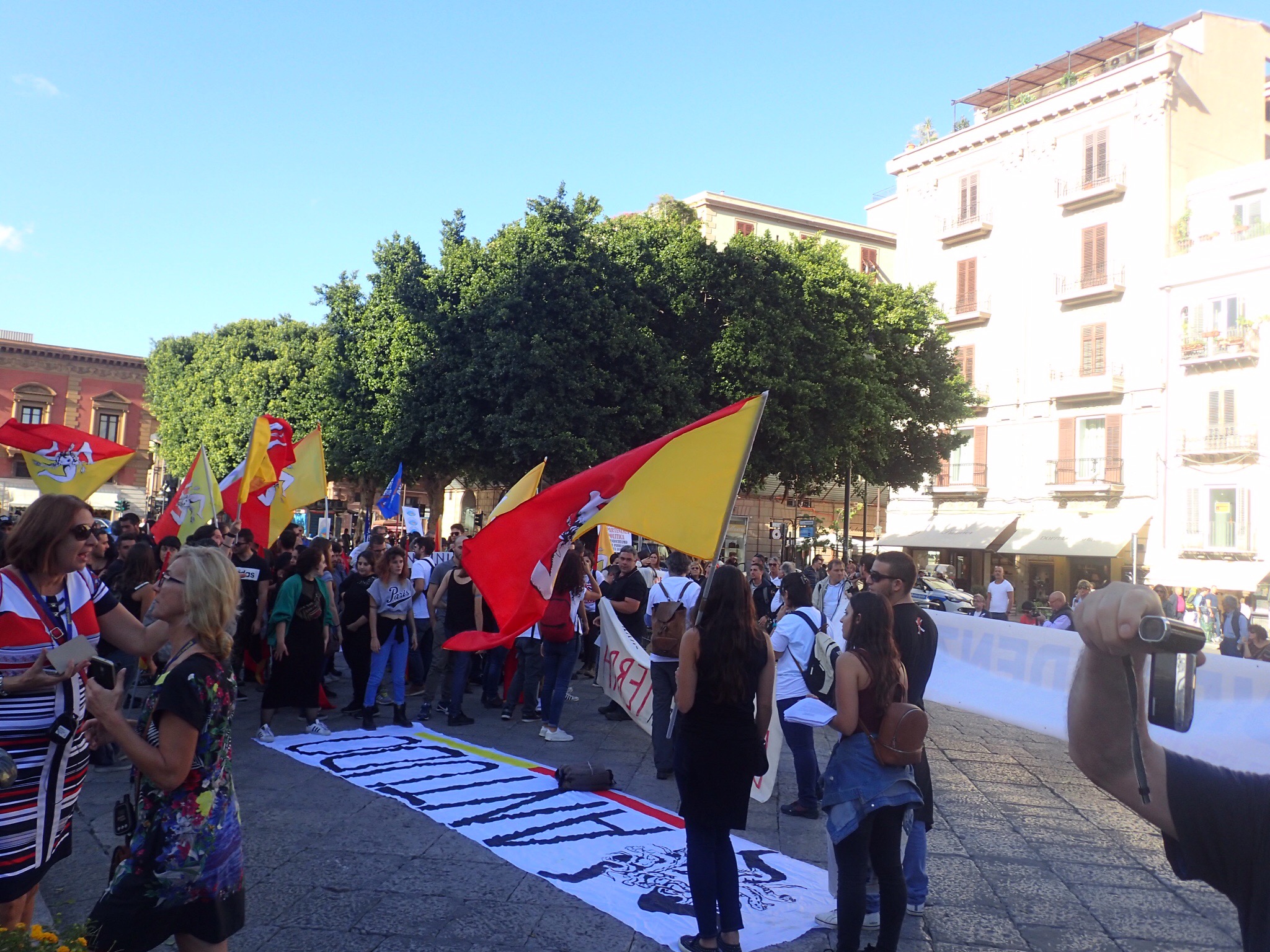
The piazza around the opera house seemed to be the center of the city and a hotbed of activity. Prince Albert of Monaco arrived one afternoon with an entourage and a long motorcade. The next day, protestors assembled, complete with Sicilian flags, banners and a sound system on a shopping cart. We took a lot of pictures. Speculated about the issue. Sicilian independence? Anti mafia? Political party march? 


Finally, we asked a young woman and she explained it was an environmental protest — objecting to the burning of garbage by the local provincial government. Okay. Would never have guessed that. There were almost more police than protesters. And plenty of police cars and paddy wagons for hauling away unruly enviros. Never saw anything to justify the concern. 

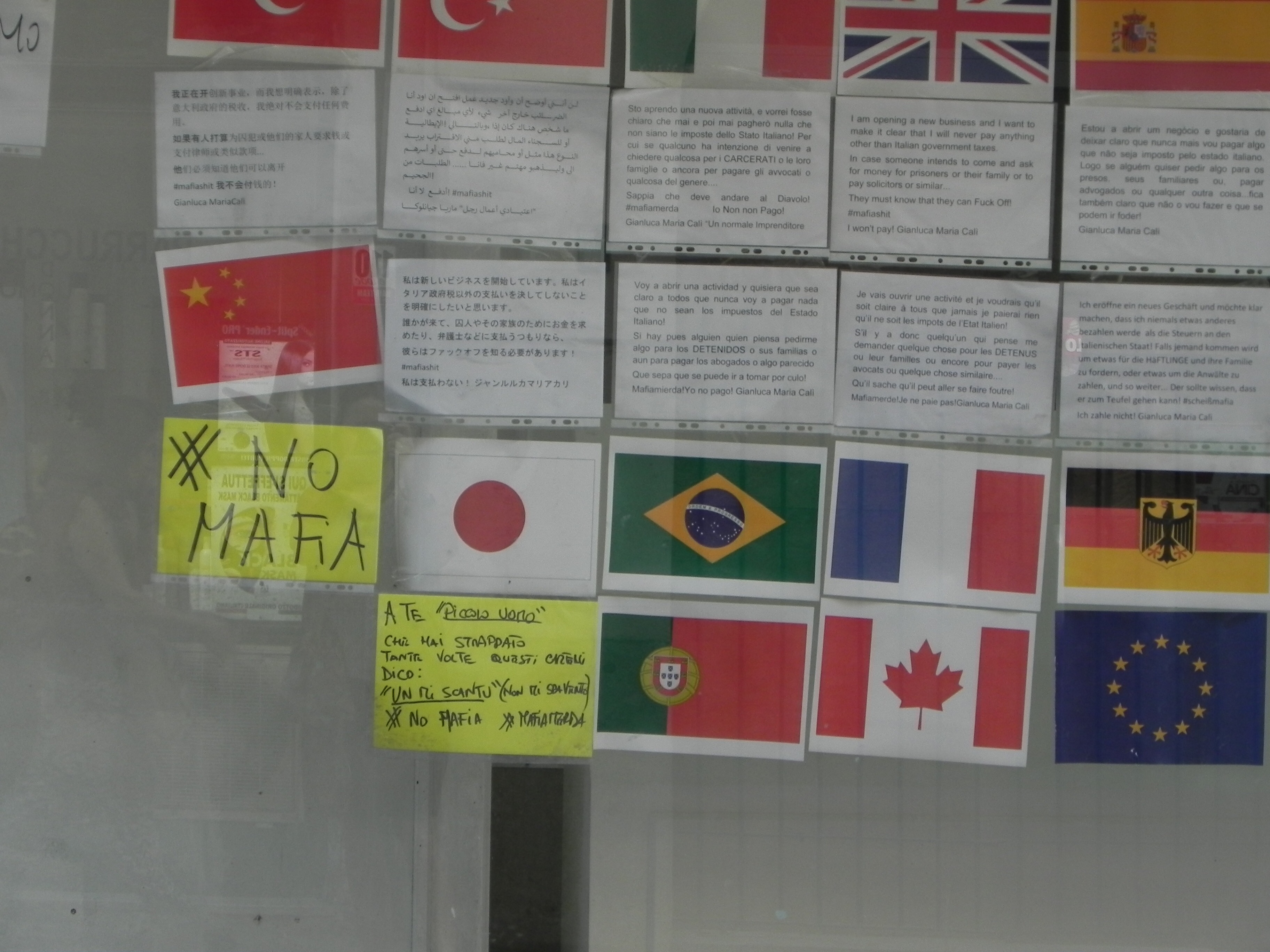
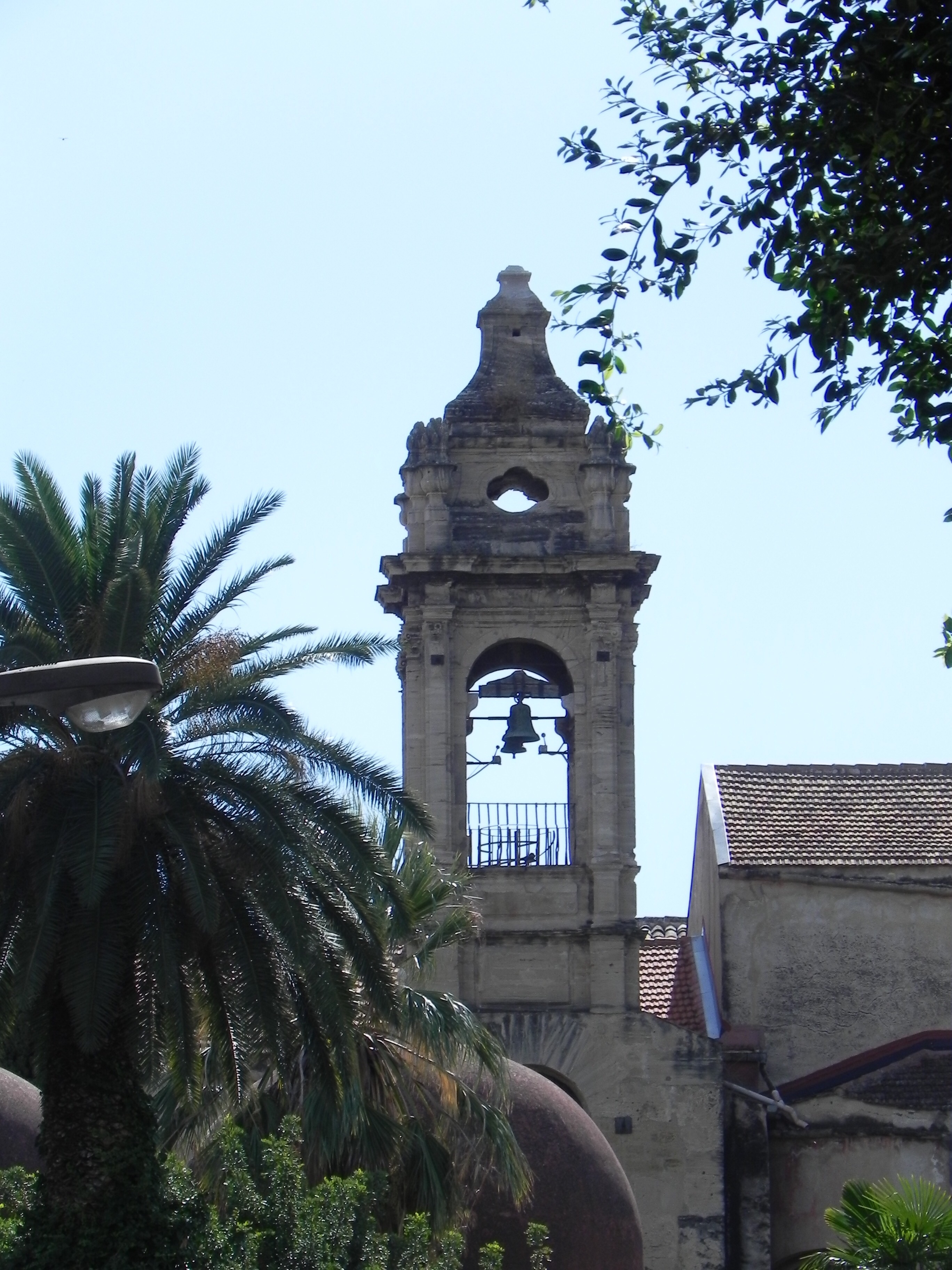
This city was heavily bombed during World War II. Signs marking how historic buildings were damaged & repaired only referred to the war by date, “heavily damaged by bombs in 1943….”.  As a result baroque era churches or seventeenth century buildings stand next to modern boxy apartment complexes.  We saw several signs posted in storefront windows, saying “No Mafia” plus there are a couple shops that only sell local goods & foods produced by folks who won’t pay protection money.


Of course, aside from what we’ve read, and most of that says the mafia has been marginalized, we’ve seen no indication of any criminal activity. Except as we snapped pictures in front of a grand local municipal building, an old guy walked past us and said very clearly to us,  “Palazzo di Mafia”.

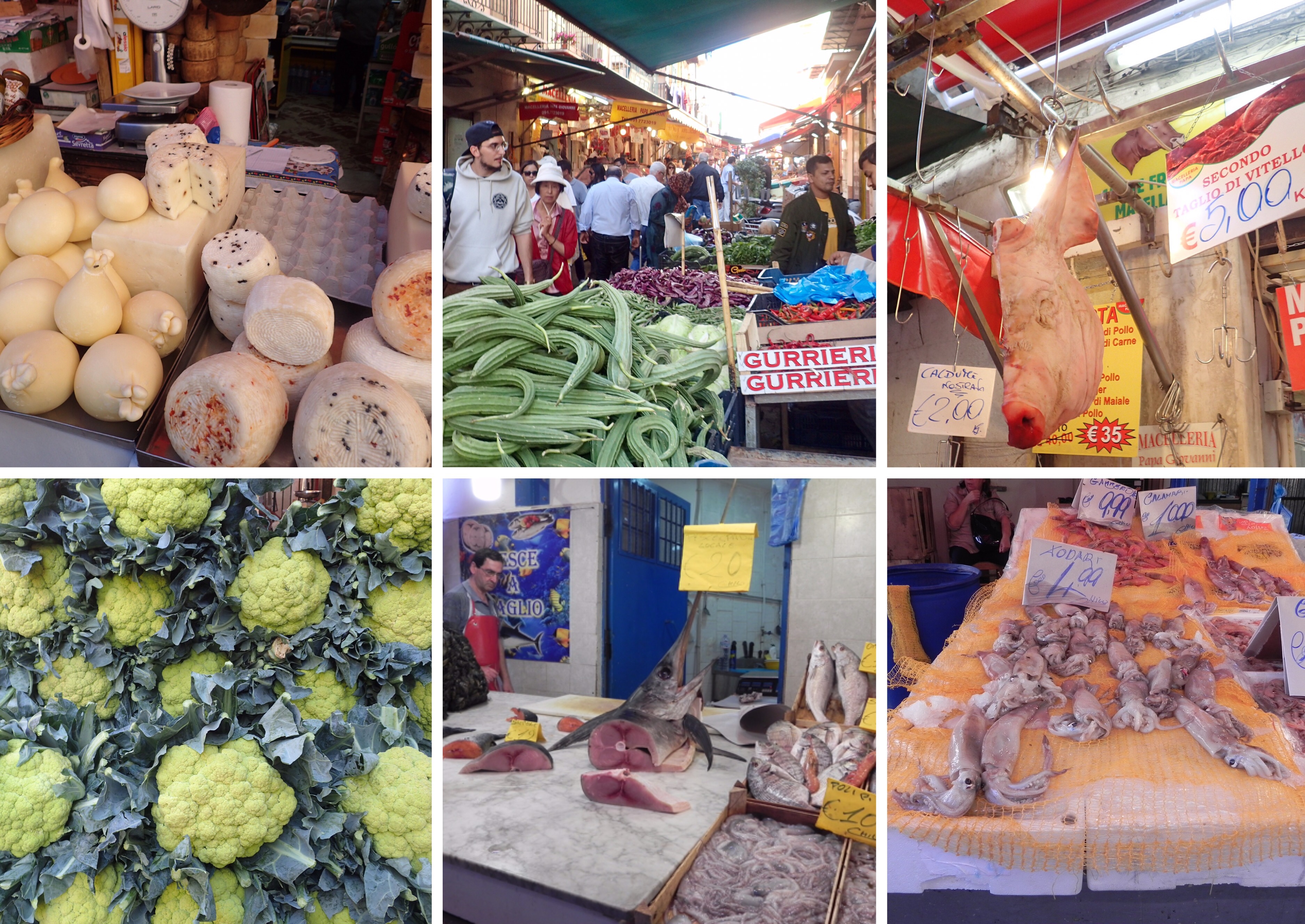
The streets markets in Palermo are pure Sicilian. Hawkers shouting they offer the best fish in Sicily or the freshest produce in Palermo.  Swordfish, squid, lobster, eels, beef sides, pigs’ heads, every kind of sausage and cheese, tomatoes, summer squash and green cauliflower, olives, spices, and much more.  The air smelled of the fish, but also curry, citrus and spices.


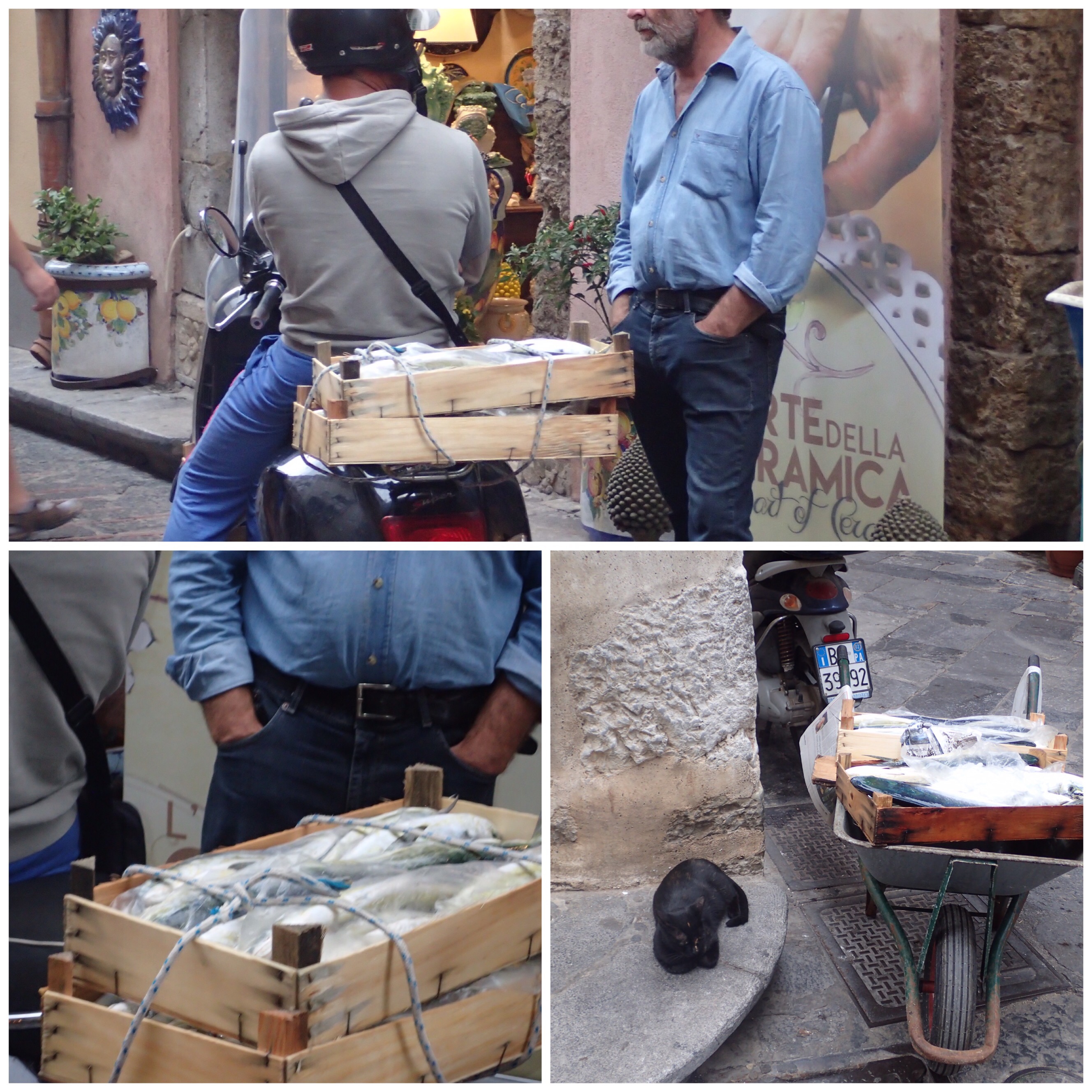
Messy, crowded and loud. But filled with more locals than tourists, the markets clearly are part of life here in Palermo and the other bigger cities of Sicily.  Of course, there are grocery stores, mini-marts, too.  But in small towns like Trapani, we saw residents buying their produce & fresh fish off trucks stationed around the city.  Or the fish was sold out of a wooden box on the back of a bike as we saw in Cefalu.  


Outside the historic district, Palermo may be a very different place, just as the suburbs differ from the hearts of Rome and Paris.  Old Palermo is a mixed bag, but definitely worth a visit.

Country life

Agriturismo, they’re called in Italy. They give you a chance to stay in a rural setting and, maybe if you’re lucky, become part of the family for a day or two. They give small family farmers an financial option other than selling to big farming operations or to developers. Often the owners get a tax break for keeping the farm going and raising a traditional crop — olives in our agriturismo in Italy, truffles in the farmhouse in France, coffee in Costa Rica — and make a profit by opening the farm up to tourists. But as our host said in Provence, the money from tourists is easier than farming with a higher return!

In Sicily we stayed in a masseria, a term to describe a farm community in remote areas that belonged to a pardone or landed gentry, and included everything and everybody needed for self-sufficiency. Housing for the men who did the actual work —- the plowing, harvesting, who built and maintained the wagons and plows, who tended the horses and cows — plus their families who probably worked as cooks, grooms and gardeners. Space for building wagons, storing crops, and maybe forging tools.


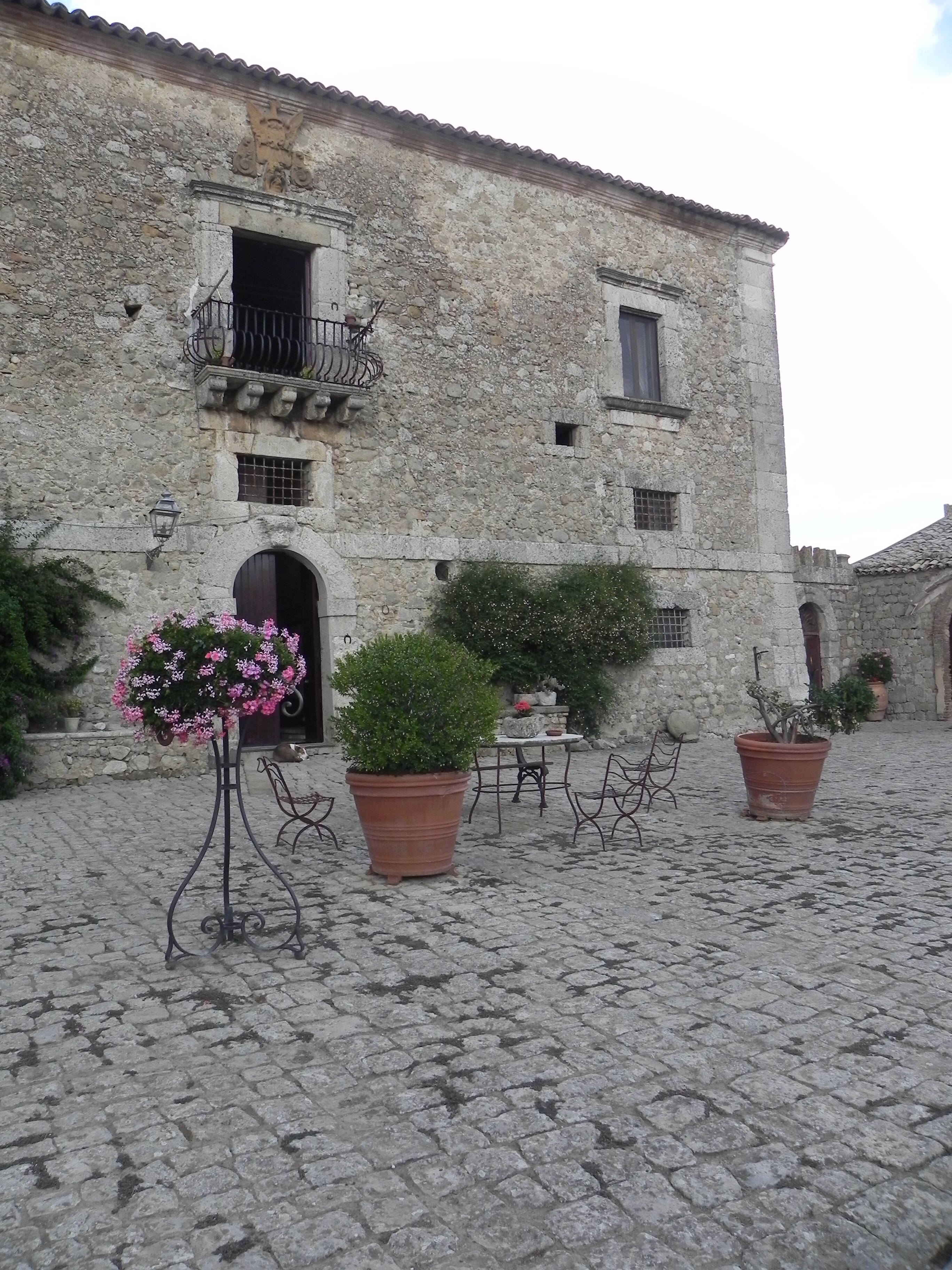
In our masseria, near Enna in central Sicily, the main house formed one side of a large square courtyard that opened to the long drive up a hill lined with trees. The entrance, I suspect, was meant to impress. The remaining three sides of the courtyard were storage and work rooms, facing into the courtyard. Perhaps originally for grain or hay storage, stables for the padrone’s horses or laundry rooms. Today those rooms had been converted into banquet facilities and a breakfast room for the guests.
The other necessary farm buildings were outside the main courtyard and behind the big house — including the workers quarters. As paying guests we stayed in the workers apartments, although transforming stable into bedrooms for guests is not uncommon. Our room had been beautifully restored and modernized with all the amenities including air-conditioning. Certainly better than the farm workers had it 200 years ago.

The best part of an agriturismo usually the host, often gregarious and charming as someone in the tourist industry must be. They are loaded with information about their region. They can give you insider tips on sites and restaurants you might otherwise miss. They can fill you in on the lore of their often historic homes. And they’ll probably share with you the wine, or olive oil or crops their farm produces. The highlight of our stay in Sicily was the evening of wine, bread and olives with our host. Friends raved about the day they got to help with the grape harvest in Umbria on an agriturismo. Riding in a truck to the coffee co-op with our hosts at a Costa Rican coffee farm was not something the average tourist gets to do.


Breakfast is almost always included in an agriturismo. Some even include dinners as well. I was a bit surprised to be presented a hardcooked egg, cut in half along side a thick slice of fresh ricotta cheese and over both was a good amount of olive oil, salt and pepper. Divine. The cheese completely lacked the chalky consistency I associate with ricotta and the egg was farm fresh. And of course, breakfast included bread and homemade orange and tangerine marmalade, as well as honey.

The down side of an agriturismo is they are often in more rural regions where quiet can be too much of a good thing. And because these places are often somewhat remote and isolated, guests may find the wifi is slow or non-existent, cell phone coverage is spotty and televisions aren’t included. And if meals aren’t served, the drive to dinner can be long and tricky though country roads and into poorly lit villages.

But we prefer to think about the inconveniences as adventures and one way to keep pieces of country life alive.

Saturday night in Trapani


Since we arrived in Trapani, we’ve seen signs for Villa Martinez, but could never see the restaurant. Signs, like many in Sicily, measure the distance to the advertised place in minutes, not kilometers or yards. From all indications the place was within a hundred or so yards of our home base. Finally on our last day, we explored the side roads around our airbnb and found the restaurant, in a development of new homes, the kind of encroachment on the farmland our host vowed to resist. So tonight we returned to Villa Martinez for dinner.  And so glad we did.


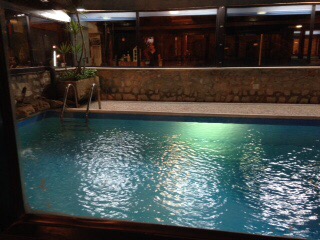
Villa Martinez is clearly a neighborhood, but an upscale neighborhood, joint. And it is kind of strange. The restaurant sort of wraps around an outdoor swimming pool, which became  the hangout for smokers as the evening progressed. We were among the first three or four couples to arrive, quickly followed over the next hour by parties of young parents, kids in tow, and dozens of people of all ages heading to a banquet hall on the opposite of the pool from where we sat. Pretty sure we were the only non-Italians speakers there, and more strongly suspect we were the only tourists of any nationalities this place has seen.

And the food? Great plate of grilled vegetables. Great salad of tomatoes and mozzarella cheese. Nicely grilled meats and fried calamari. It all arrived at once. No courses. No pretensions. But as good as the food was, it was surpassed by being part of an Italian Saturday night dinner scene. Loud, raucous, filled with good cheer and very little drinking, mainly coke and beer. We ordered the only bottle of wine we saw on any table. But babies in strollers. Kids playing hide and seek under the tables. Two young guests had brought their dolls to dinner. At the big table men sat on one end & women at the other with the kids. And almost everyone but us had pizza.

The wait staff bent over backwards to get our order right and to make sure all was well, but like most of the wait staff in Sicily, they ran most of the night, from table to kitchen and kitchen to table.  The banquet also added to the hustle as trolley loads of pasta were rolled out of the kitchen at one end to the banquet room at the far side of the pool.

Guess the moral to the story is get out of the tourist parts of town. Find the neighborhood restaurants (harder to do in Sicily than some other places) and enjoy.

Let’s talk Sicilian food

Anyone who travels to Italy should be thinking about food. Pasta, pizza, fresh tomatoes, and good wine. Sicily is a bit different. For sure, there is plenty of good food to be had; it just doesn’t all fit into what we think we know about food in Italy.

The food in Sicily reflects the history. The Spanish brought tomatoes, prickly pears and corn. Arabs brought citrus, all kinds of citrus, nuts and couscous. Greeks brought olives and grapes. Add those ingredients to the Roman cuisine and you get Sicilian food.

Of course, there is pasta. In fact, some think Sicily invented dried pasta. And given that Sicily is an island, lots of the pasta comes with seafood (for the record, I’ve been to lots of islands, however, where fish has been fished out and is hardly available). Pasta with sardines is traditional. Pasta misto mare (pasta with mixed seafood) is on most menus. Pasta with mussels or clams tempted us. Pasta Trapenese, a wonderful pesto sauce of almonds, tomatoes, garlic and eggplant, available only on the west coast, wowed us. With breadcrumbs in Erice may have been the best. But most restaurants offer only a handful of Sicilian pasta dishes, heavy on the seafood. The pasta dishes Americans know, Bolognese or traditional pesto, are rare.

Squid came grilled or fried and octopus was often offered as a salad. Couscous with fish reflects the Arab influence on Sicily. And like many of the fish dishes was dominated by the canned sardines or anchovy flavor that doesn’t appeal to every palate. Appetizers or antipasti also lean heavily on fish.

Insalata mista was a staple for us, often the only fresh vegetables we saw on the menu. Usually local lettuce & arugula, cherry tomatoes and corn. Yes, corn. Sicilians apparently put corn kernels in their green salads. And sometimes add mozzarella and/canned tuna. The other vegetable dish we saw on almost every menu was caponata, a mix of sautéed eggplant, tomatoes, zucchini, garlic and olive oil. It ranged from outstanding to very good, and was usually offered as an antipasto, more rarely with meat..

We’re not big into sweets, but generally enjoyed the couple we tried. Heavy on the use pistachios or almonds and lighter on the sugar suited us just fine. And, of course, gelato. Pistachio gelato has a rather unappetizing color, but the taste is divine. Cannoli still on our list to try, but only with riccotta.

As for wines, Etna red wines were the best. We drank the Trapenese simply because we were there. Stick with Etna wines.

Sicily seems to offer fewer farmers’ or peasant markets than we saw in Tuscany, Umbria or Provence. Instead, particularly in the northeast, small trucks sell farm fresh produce. What we saw there surpassed in variety anything we saw in the restaurants. A pale green cauliflower, not romanesco, but shaped like our traditional cauliflower. Several kinds of green beans, including romano. And several kinds of summer squash. But none of these made it into the menus.

Pomegranates are big, particularly in western Sicily. A symbol of fertility and bounty, many small towns had stands set up to squeeze you a fresh glass of juice, sometimes mixed with oranges. That, too, is on our list to try.

BTW, do not miss the arincini, the deep fried rice cakes, often in a cone shape.  We met a woman in Rome going through passport control who told us the best arincini are in Taormina. So following her advice we tried them there. And in Cefalu. And in Trapani. Basically they fall into two categories, great and good. Fresher is better. Beware of the places that have them sitting out on display and then heat them up for you in a microwave. They’re just good. We learned to prefer the meat variety – a stuffing of beef, tomatoes and cheese. The other option is ham and cheese which seemed bland. One was often enough for a light lunch.

Espresso! Espresso. Don’t know how the Italians do it, but without a doubt the best coffee we’ve had anywhere. From road side gas stations to uptown restaurants, coffee rocks.

When it come to food, perhaps the best advice is a sign we saw in Marsala: